mermaidcamp
Keeping current in wellness, in and out of the water
You can scroll the shelf using ← and → keys
You can scroll the shelf using ← and → keys
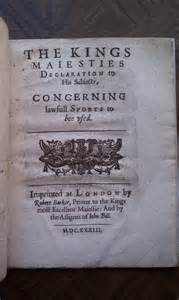
Book of Sports
When James I of England published the Book of Sports in 1617 it caused an uproar from the Puritans. The belief that no work or pleasure should take place on the sabbath was much debated at that time in Britain. The book was published after King James had his very own translation of the Bible released. Trouble was brewing in the British Isles that would eventually lead to the settlement of Plymouth Colony. The Puritans believed that all citizens must be required to attend religious services on Sunday, and they wanted them mandatory morning and evening on that day. Many of my own ancestors left England to live in Holland for a decade about that time, before sailing on the Mayflower to America. All the countries in Europe posed problems to their ideals except the Netherlands. There they could practice their severe brand of religion. There they built up strength to go to the new world.
The concept is taught to American children that these people came to America for religious freedom. That is only partially the case. They wanted to be free to dominate others and force them to follow Puritan rules. The freedom was just for their own religious beliefs, but did not apply to the beliefs of others. They were convinced of the righteousness of their logic. This made life in the new colony very contentious. It was easy to run afoul of the Pilgrim fathers who were all about sabbath and strict adherence.
Charles I reissued the Declaration of Sports in 1633, continuing the tradition of requiring attendance to religious services (in the Church of England) to qualify to dance, leap, or play sports on Sunday. There were a few sports not permitted on the sabbath such as bear and bull baiting and bowling. Charles I expanded the merriment to include local fairs and festivals on the list of sanctioned Sunday activities. England was trending Puritan in the 1630’s. In 1643 the book was publicly burned. When Charles II was restored to the throne after the English Civil War in 1660 the country was liberated from the strict sabbath rules and could once again party on Sunday afternoons.
When we think about sports and religion in America today we observe a very different story. Church attendance and membership are dropping off dramatically, but sports dominate the public attention. It is ironic to think that our initial colony was founded to make sure that Sunday would be sport free for everyone. I wonder what the Pilgrim fathers would think of the NFL and the NBA.

TPD
In a co-dependent relationship each side wants the other to be different. One striking example today is the relationship between the public and the cops. Police departments across the country are found to be engaging in all kinds of costly and illegal practices that are not in the best interest of the taxpayers. One such practice is the use of public safety disability systems to pay off and retire problem (and criminal) cops. We foot the bill for all the retirement and disability payments retired cops are given, whether they are valid or not. Obviously we want to protect, heal and compensate those who are legitimate victims of on the job injuries. To do otherwise would be irresponsible and thoughtless.
Since this system is so easily deceived by bogus medical claims it only makes sense to examine the system for fraud. Tucson has unreasonably high disability figures compared to the national average for cops, which drains our coffers in an unsustainable way. Either we are really doing something that injures our employees more than other cities, or we are being taken for a ride much more than other cities. I sense that it may be a little of each. If they do nothing to take care of themselves they will not be healthy as they go through their careers. Obesity, drug addiction, depression, mental health issues, and low back problems would naturally arise from a work life sitting in a patrol car all day or wearing a bullet proof vest to compress the spine. There are significant risks to health besides getting shot or killed. I think this problem needs to be addressed. They have direct exposure to the worst of general public all day, every day. None of us could do that without experiencing a loss of optimism and bliss. PTSD is as real for the cops as it is for the people who go to war.
In Tucson our police department is drastically understaffed by the city council. They loose more to retirement and atrophy then they can replace by training because they are so far behind in the process. The lack of personnel leads to highly impaired service. I hear people say they can’t get through to 911 after holding for 5 minutes to report gun shots next to their home. I don’t try to call 911 because I have never had a response, and am not expecting that situation to improve by itself. I do report and send in pictures of suspicious activity and crime I see on a phone app. This is a way for me to contribute to better law enforcement without wasting my own time. I think most of the crime in my neighborhood goes unreported. People have no faith that there will be a response or a solution.
To provide protection under the law for our city Tucson needs:

TPD
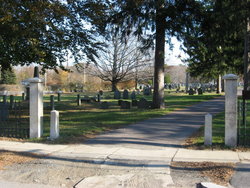
Rowley burial ground
My 9th great-grandfather was a Puritan who came to Rowley, Massachusetts with a religious community. Rowley was one of New England’s earliest settlements, founded in 1639. Like Haverill, it was originally inhabited by a small group of Puritans who emigrated from England. A Puritan minister named Ezekiel Rogers founded Rowley. He gathered together 20 families, including the Grants, from his Yorkshire parish of Rowley in England to establish the American Rowley. Edward arrived with his first wife Elizabeth, who died in 1649. He then married my 9th great-grandmother, Hannah Grant.
Edward Hazen (1614 – 1683)
is my 9th great grandfather
Lt Thomas HAZEN (1658 – 1735)
son of Edward Hazen
John Hazen (1687 – 1772)
son of Lt Thomas HAZEN
Caleb Hazen (1720 – 1777)
son of John Hazen
Mercy Hazen (1747 – 1819)
daughter of Caleb Hazen
Martha Mead (1784 – 1860)
daughter of Mercy Hazen
Abner Morse (1808 – 1838)
son of Martha Mead
Daniel Rowland Morse (1838 – 1910)
son of Abner Morse
Jason A Morse (1862 – 1932)
son of Daniel Rowland Morse
Ernest Abner Morse (1890 – 1965)
son of Jason A Morse
Richard Arden Morse (1920 – 2004)
son of Ernest Abner Morse
Pamela Morse
I am the daughter of Richard Arden Morse
Edward Hazen b:1614
THE IDENTIFICATION OF EDWARD HAZEN
What are the reasons for concluding that Edward Hazen of Rowley, Massachusetts, the founding ancestor of the American family, was the same ‘Edwardus Hasson filius Thomae’ who ‘fuit baptizatur 24 die Decembris 1614’ as entered in the registers of Cadney, Lincolnshire?1. The surname was not a very common one in England, and a great deal of research in Northumberland and Lincolnshire has not disclosed any otherEdward Hazen of suitable age.2. No other history has been found for Edward Hazen (baptized 24 Dec. 1614), who was living in 1628 when his father made his will. No record ofburial has been found in the search of many Parish registers of Lincolnshire. In July 1641, Parliament passed an act that Every clergyman shouldtake a census of males over eighteen in his Parish, presenting tothem for signature a paper upholding the Protestant faith. ; This ‘ProtestationRoll’ is very compete for Lincolnshire. It shows at Cadney, William Hassen, first cousin of Edward; at Great Limber, Richard Hason, Edward’sbrother; and at South Ferraby, a Thomas Hason, servant to William Bromby. Edward does not appear in this Roll, indicating that unlesshe had diedwith record, he had left Lincolnshire before 1641.3. The date of birth is about what we should expect for Edward of Rowley, and makes him in his sixty-nineth year at death.4. The names which Edward of Rowley gave his children are very significant. The first child was Elizabeth named after his mother, and also hisgrandmother who lived until he was fifteen years old. The next child, Hannah, was named for Edward’s wife. Then came John, the eldest son, whichwas the name of Edward’s grandfather and elder brother. The next child, Thomas, was named after both grandfather, Edward’s father andHannah’sfather both bearing the name of Thomas. The next son, Edward, was named for himself, and the youngest, Richard, for Edward’s brother of that name.The names of the other children, who were daughters, are not significant, since Edward had no sisters for whom they could have been named.5. Other settlers in Rowley were from Lincolnshire, and after Edward Hazen married Hannah Grant, her sister Anna married Robert Emerson, who was,like Hazen, a native of Cadney.This from the records of Tracy Elliott Hazen.In the political life of the town also, the Rowley records show that Edward Hazen was a man of influence and importance.On 3 Jan. 1650, at a town meeting, Edward Hazen was chosen as on of the four overseers, and was again chosen to this office, 19 Dec. 1651 and 12 Dec.1654. He was also overseer for the years 1660, 1661, and 1662, and was a selectman for the year 1669. These overseers were not the same asselectmen, as sometimes has been stated, but were always named after and in addition to the select men, or ‘prudentiall men,’ and in 1649aredescribed as ‘ouerseers for the execution of towne orders and Hy wayes.’ On 10 Jan. 1660/70, ‘Thomas Tene’ and ‘Edward Hasne’ werre chosen’ouerseers for vuiin fences and hywayes and vuiin Chimneys.’ Among the ‘Towne Charges for the year past 1651: for John Smith for going to Court0-4-6: alsoe for Edward Hasen the lyke worke 0-3-6.’ ‘Town charges 1665: Edward hasen a Day Jury Man.’ The Ipswich Court Records and Files showthat Ed. Hassen served on Trial Jury 30: 7: 1651 and also 26:7:1654. On 9 Jan. 1665/66, Edward Hazon was chosen one of the four judges ofdelinquents ‘for not comeing to towne meetings’; 9 Jan. 1666/67, ‘Edward hasen Judge for yeare ensuing.’ In a list [of town charges?] 1662: ‘Edhason 0-10-2.’ Towne charges 1667: ‘Edward Hason for ueiwinge fence 0-3-0.’ In an undated record probably referring to King Phillip’s War and toEdward Hazen’s sone: ‘Work done for Samuel person in ye war–James Tenny 1 day: Thomas Hasen and Edward each a day.’ [Early Records of the Town ofRowley (1894), pp 70, 71, 73, 91, 106, 118, 132, 146, 159, 162, 165, 185, 200, 205, 224; Quarterly Courts of Essex County, 1:232, 362.]The follow account of the settlement of Edward Hazen’s estate is taken from the original papers, in two sheets, on file at Salem, and differssomewhat from the clerk’s book copy.Edward Hazen and his wife Hannah appear in the following deeds:Peter Eyers and wife Hannah of Haverhill convey to Edward Hasen of Rowley 6 1/2 acres of puland, Peter Eyers’ 3d division, with land abutting on theMerrimack River, (date not give in copy). Witnesses, Jno. Carlton, Jno. Gryffyn [Old Norfolk Co. Deeds, 3:336, p. 367 in copy.]Edward Hassen and wife Hannah of Rowley convey to John Tennie of Rowley100 acres in the division called ‘Merimake land,’ the northwest end abuttingon the Merrimack River, and 4 acres of meadow called Crane meadow; also a parcel of land granted to John Harris, John Tod, Richard Longhorne,Richard Holmes, and Edward Hassen by the town of Rowley, dated 20 May 1664. Witnesses, Ezekiell Jewit, Thomas Tenny.The name was signed ‘Hasin.’ Edward acknowledged 16 June 1673. [Ipswich Deeds, 4:41.]John Pearly and wife Mary of Newbury convey to Edward Hazen of Rowley 7acres of upland in Rowley Village-land of Thomas Pearly, Daniel Wood, andEzekiel Northen mentioned, (date not given in copy). Witnesses, Benjamin Rolfe, Thomas Hale. John and Mary acknowledged on 19 Feb. 1684 and sheresigned her right of dower to Edward Hazen’s administrators. [Ibid., 5:371.]’Hanah ye Relict and late wife of said Edward Hason deceased & Edward Hason son of ye said Edward Hason Joynt administrators’ confirm to ThomasHason land in Rowley Village where he now lives and which his father Edward before his death settled upon him as his portion-land bought of JohnPearly of Rowley Village and on 19 Feb. 1684 acknowledged by him, dated 14 May 1685. No witnesses. Signed ‘Hannah Hazzen alias Browne.’ Hannah acknowledged 19 May 1685; Edward, 4 Nov. 1685. [Ibid., 5:371.]Hannah Browne of Haverhill, widow and relict of Capt. George Browne, ‘for & in consideration of natural & christian love & afection which I beare unto my loving & beloved sonns Thomas & Edward wch I had by my former Husband Edward Hazen long time deceased at Rowley,’ conveys to them all theinterest in the estate of her brother John Grant of Rowley, dec’d; 1 Mar. 1699 or 1700. Witnesses, Thomas Eaton, Senr., Richard Saltonstall. [EssexCo. Deeds, 14:37.]Capt. George Brown and wife Hannah of Haverhill convey to Thomas Carlton of Bradford 76 acres laid out to her former husband Edward Hazzen ofRowley, dec’d, and her part of the estate of Edward Hazzen in Bradford-widow Smith, widow Hobson mentionsed, 3 Apr. 1697. Witnesses, AbrahamPerkins, Solomon Reves, Senr., Jacob Perkins, 3d. Acknowledged 3 Dec. 1698. [Ibid.,30:44,45.]Richard Hazzen, Thomas Hazzen, Edward Hazzen, Daniel Wicom, Junr., Nathaniel Storey, children of Edward Hazzen and Hannah, now wife of Capt. GeorgeBrowne, quitclaim to Thomas Carlton, 3 Apr. 1697. Witnesses, Edward Carleton, Nath. Walker, Solomon Keyes, Senr., Jacob Perkins, tertius. [Ibid.,30:45.]An agreement concerning some land that was their father Edward Hazen’s and that after his death was laid out to his wife for her thirds, was made by Thomas Hazen of Norwich, John Wood of Bradford, Timothy Perkins of Topsfield, Edward Hazzen of Boxford, Richard Hazzen of Haverhill; first, thatEdward Hazzen is satisfied with 16 pounds already received, one ox gate in east end of ox pasture, and 5 pounds which his brothers promise to pay;secondly, that the others are satisfied with a lpiece of march, call cowbridge marsh, and a piece of land called cowbridge lot, and another piece ofland in Symond’s new field from their mother’s thirds, taking in brother Jeremy Person, brother Harris’ children, brother Gibson’s children, andbrother Wicom’s children, they having their sharewith the others; dated 20 June 1716. Witnesses, Thomas Perley, Junr., Nathaniel Perley.d [Ibid.,34:189]On 4 July a ‘Hanah Hazen’ was a witness to the will of Ann Swan, relictof Richard Swan of Rowley. [Essex Co. probate files, Docket 268976.] It is highly probable that she was the wife of Edward Hazen, as his daughter Hannah was presumably married before that date.From Hazen family in America by Tracy Elliott Hazen[Hazen21404.FTW] SiteMap | Visitors: 772 | TribalPages Forum
Family History
http://www.angelfire.com/journal/pondlilymill/heisende.htmlThe Hazen Family in AmericabyTracy Elloit HazenTHE ORIGIN OF THE ENGLISH HAZENS
There is a township in Northumberland, England, near Alnwick, and Warworth Castle, now called Hazon (or Hazen). In early records it was written Heisende, and philiolgists beleive it was derived from Hegges ende (softened into Heies ende), meaning end of the hedge. To this day there are miles of hedge by the roadside in the township.From this town, the surname was derived. Hugh of Heisende [in the Latin form, Hugo de Heisende] made an agreement 8 Sept. 1202 regarding 100 acres of wood in Heisende [Feet of Fines, John Northumberland, case 180, file 2, no. 8]; a Hugo de Heisende is also found in 1256, in an Assize Roll of Northumberland, and in another Roll in 1277 he appears as “Hugo Heisand [Surtees Society Pub. 88: 64,387].Men removing from the town and settling elsewhere, during the period when surnames were coming into use, would be called “de Heisende” – from Heisende- to identify them by their place of origin, and their offspring would become plain Heisende. The name seems to have worked down through Yorkshire, south into Linconshire, all on the eastern coast of England. Many records have been found, in both printed and documentary sources, of the occurrence of the name. It has been decided not to include full mention of these records, partly because of space limitations, and even more because no descent or generation sequence can be established, so that the sporadic occurrance of the surname, variously spelled, is of importance solely as indicating the continutity of appearance of the surname in the northeast counties. It cannot be proved that all who bore the surname in this region were of the same blood, since more than one family deriving from the town of Heisende may have adopted the name.In Northumberland, more than a century after Hugh de Heisende, we fine Will Haysand mentioned in 1376 [De Banco Roll, Michaelmas Term, 49 Edward III]. In 1455 one Willaim Haysand of Newcastle, Northumberland, claimed part of the manor of Dopmanford, co. Huntingdon, being son of Hugh, son of Thomas (born in Haysand, Northumberland), son of William Haysand, brother and heir of Gilbert Haysnad who married the heiress of Dopmanford and died without issue [De Branco Roll, Easter Term, 33 Henry VI, memb. no. 128]. Before 1399 John of Gaunt granted the leper hospital at Warenford to a hermit named Richard Hayzaund [John Crawford Hodgson, History of Northumberland, 1:251].In Yorkshire is found the will (in Latin) of Willaim Hassand of Watton, dated 11 August 1484, which mentions his father and eldest son, both named Thomas [Reg. Test. Edor., 5:243]. John Hasande late of Watton died 22 October 1515; and John Hassand of Kirkburne died interstate before 13 April 1559 [Act Book for the Deanery of Harhill and Hull with Beverley].In 1535 Richard Hasande was bailiff, paid for collecting the rents, in the Deanery of Ludburghe, Lincolnshire [Valor Ecclesiasticus, 4:59]. He may be the Richard Hassand with whom the proved ancestry of Edward Hazen beginning in the section. The known ancestors of Edward Hazen were husbandmen of the better class, of sufficient substance to make wills. The family was not armigerous, and no Hazen coat of arms is known.NOTE: There are similar sounding names in Dutch (Haas) and German (Haassen) with a Jack-Rabbitt on a family Coat of Arms, there is no family connection. So don’t be fooled by misleading family Coat of Arms. Hazzan is the Hebrew spelling which means a cantor, one who crys out the truth. Hazen is a common first name in Isreal. Jews were not allowed to be armigerous. All the Hazen’s in America and Canada are decended from Edward Hazen who came from Cadney, Lincolnshire, England to Rowley, Massachusetts in 1638,. There is two recent arivals from England who are related to the family back in England. Where the family name is still spelled Hason.
In 2008 on the programme ‘Who do you think you are?’ the story of the model Jodie Kidd’s family history was featured As he sory unfolded it was revealed that Jodie was descendent from Edward. This part of the programme explained how the Hazen family had orginally been one of the founding family of America. Edwrd had moved the family from the nearby settlement Rowley to Haverill. The story of the family’s struggles was told and Jodie was able to work backward thrugh her family history from Rowley and back to England to Rowley in Yorkshire. The programme brought Edward’s family’s story back to life and explained why they had left England.Edward’s wife Hannah (Hannah was Edward’s second wife whom he married after his first wife died in 1649) parents Thomas and Jane Grant were among the original settlers who founded Rowley in 1639. This group of settlers were Puritans and were led by their minister Ezekiel Rogers. He had gathered together 20 families from his parish of Rowley in Yorkshire, England and they had set out to the new world to find religous freedom as Puritans were being persecuted in England when the King, Charles 1, had banned the puritan clergy from preaching.Thomas and Jane Grant were amongst 20,000 British Puritans who travelled to the new world. This new life was extremely hard to begin with and many died making the journey or from stravation, disease or the severe cold winter. The surviours through great sacrifce gradully established themselves in the new world and craved out there settlements.
Sources:
U.S., Sons of the American Revolution Membership Applications, 1889-1970
New England Marriages Prior to 1700
The Hazen family in America : a genealogy
History of Essex County, Massachusetts. : with biographical sketches of many of its pioneers and prominent men
Vital records of Rowley, Massachusetts to the end of the year 1849
Vital records of Rowley, Massachusetts to the end of the year 1849
Massachusetts, Town and Vital Records, 1620-1988
The Granberry family and allied families : including the ancestry of Helen (Woodward) Granberry
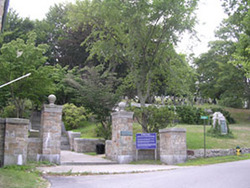
buried in Plymouth
My 13th great-grandmother arrived in Plymouth Colony in 1623 on the ship Ann. Her husband was a Mayflower Compact signer. She lived a long and, for her time, independent life. We know a lot about her:
A WOMAN OF VALOR : ELIZABETH WARREN OF PLYMOUTH COLONY by Peggy M. Baker
Director & Librarian, Pilgrim Society & Pilgrim Hall Museum
“A woman of valor, who can find? Far beyond pearls is her value… Give her the fruit of her hands, and she will be praised at the gates by her very own deeds.”
Proverbs 31:10
The “Pilgrim Mothers” are mysteries. These intrepid women of 17th century Plymouth Colony are known by their husbands and known by their children. Their own lives, however, are seen only in glimpses, pale images reflected off the activities of the families which revolved around them. The women themselves are almost invisible. While the court records of Plymouth Colony reveal much about the daily activities of the law-abiding men of the Colony, they tell us little about the women (except for those few women who broke the law). There was, in fact, no officially recognized role for the law-abiding married woman. The activities and contributions of those women, although vital to the survival and success of the Colony, are nowhere registered or officially acknowledged.
According to the accepted legal convention of the times, all married women, even those conducting business independently, were regarded as representatives of their husbands. Only widows could be legally recognized as agents in their own right. Very few widows availed themselves of the privileges and the responsibilities that such independent status would entail.
One Pilgrim woman, however, breaks through the patriarchal conventions of 17th century society. By the longevity of her widowhood and by the independence of her actions, Elizabeth Warren emerges from the collective category of “Pilgrim Mother” as a highly individual woman.
Elizabeth Warren appears full-grown on the shores of American history. Nothing is known of her English background, apart from her marriage to Richard Warren. Richard was one of the 102 passengers on the Mayflower, that sailed into Plymouth Harbor in December 1620.
Many of the Mayflower passengers traveled as families. Some families, however, with many young children or other family responsibilities, or those thought (in Pilgrim William Bradford’s words) “most unfit to bear the brunt of this hard adventure,” separated. The men sailed in 1620 and the women and children delayed their sailing, planning on joining their menfolk after the Colony was established. Richard Warren was among the men who sailed alone in 1620.
According to family tradition, Richard Warren brought with him on the Mayflower a particularly treasured (and very portable) family possession – a large linen damask napkin, woven in the Netherlands c.1600, now on display at Pilgrim Hall Museum in Plymouth, Massachusetts.
The napkin’s woven design forms horizontal bands. One band shows a series of symbols – maces encircled by laurel branches and flanked by winged cherubs — representing the city of Amsterdam, with the words “Amster Dam” appearing beneath each symbol. Another band shows the city with houses, churches and canal bridges. The harbor below has rows of small boats with festive figures that appear to be dancing among barrels and boxes on the near shore.
The Warren family was separated for three years. One small ship, the Fortune, arrived in Plymouth in 1621 carrying a number of “lusty young men, and many of them wild enough” to supplement the fledgling Colony’s manpower. It was not until 1623 that two ships, the Anne and the Little James, arrived in Plymouth carrying 80-some new immigrants to Plymouth Colony, including members of the separated families. Among them were Fear and Patience Brewster, the daughters of Mayflower passengers William and Mary Brewster, as well as Samuel Fuller’s wife Bridget. Francis Cooke, who had voyaged on the Mayflower with his teenage son John, was joined by his wife, Hester, and their three younger children Jane, Jacob and Hester. Richard Warren was reunited by his wife Elizabeth and the five Warren daughters, Mary, Anna, Sarah, Elizabeth and Abigail.
The Warrens joined in the life of the small but growing agricultural community : Richard would have played a role in public affairs and worked the fields. Elizabeth would have run the large household that included not only the immediate family but also their farm workers and hired help. On occasion, she would have joined Richard in the fields. The Warren home would have been small and modestly furnished.
Very little furniture survives from the early years of Plymouth Colony. Most pieces were simple and sturdy, suited to life in a frontier community. The Warren “joint stool,” so-named for its joined mortise-and-tenon construction, would have been used both as seating furniture and as a table. The Warren stool is now in the collections of Pilgrim Hall Museum.
Two sons were born to the Warrens after Elizabeth’s 1623 arrival in Plymouth Colony. Their birth dates are not recorded but evidence of their presence can be found in the “1627 Division of Cattle.”
In 1627, the Colony’s livestock, formerly held in common, was divided among the Colony’s residents. Every person living in Plymouth in 1627 was assigned to a “Lot,” generally arranged by family group, and the name of every resident was individually recorded in Plymouth Colony Records Volume I. Listed there we find not only Richard and Elizabeth and their five daughters, but also the names of their two young sons, Nathaniel and Joseph Warren.
Richard Warren died in 1628. Elizabeth, left a widow with 7 children (five young women, ranging from early teens to probably early twenties, and two small boys under the age of 5), never remarried. Elizabeth outlived her husband Richard by 45 years.
Unlike the majority of Plymouth Colony women, Elizabeth Warren’s name appears regularly in the records of Plymouth Colony during the long period of her widowhood. She appears first as paying the taxes owed by all heads of household. She appears next as executor of her husband’s estate.
Elizabeth then appears as one of the Plymouth Colony “Purchasers.” In 1626, 53 (male) citizens of Plymouth Colony agreed to underwrite some of the Colony’s debt in a complicated arrangement with its financial backers. Richard Warren was one of the original 1626 Purchasers. The list of the names of the Purchasers did not appear in the Plymouth Colony Records, however, until several years had passed. During that time, Richard Warren had died. In a startling break with tradition, the list of Purchasers does not contain the name of Richard Warren but, instead, “Elizabeth Warren, widow.” The Court felt it necessary to explain this unprecedented move, noting that Elizabeth was listed in Richard’s stead because Richard, “dying before he had performed the bargain, the said Elizabeth performed the same after his decease.”
In 1635, Elizabeth Warren appears in the Records of Plymouth Colony in a totally new role. No longer seen as acting to fulfill the obligations of her long-deceased husband Richard, Elizabeth now enters the recorded life of the Colony as a totally independent agent. We have not only a court case involving Elizabeth, we hear an echo of her actual words.
Elizabeth brought her servant Thomas Williams before the Court for “speaking profane & blasphemous speeches against the majesty of God.” In a disagreement between mistress and servant, Elizabeth Warren had exhorted Thomas Williams “to fear God and do his duty. He answered, he neither feared God, nor the devil.” Although Governor William Bradford advocated “bodily punishment,” the judgment of the Court was that a reproof was sufficient, Williams having “spoken in passion and distemper,” and making “humble acknowledgment of his offense.”
Elizabeth’s activities continue to be documented to an unusual extent in theRecords of Plymouth Colony. In the late 1630s, she appears in the Records deeding land from the Warren holdings in Plymouth’s Eel River Valley to her sons-in-law.
The Warren daughters had matured and married: Mary to Anne passenger Robert Bartlett, Anna to Thomas Little, Sarah to Mayflower passenger John Cooke, Elizabeth to Richard Church and Abigail to Anthony Snow. Relations within the large extended family seemed amicable.
In 1652, however, trouble suddenly loomed! Elizabeth’s deeds to her sons-in-law, deeds that had been executed 15 years previously, were challenged by persons unnamed. The Plymouth Colony Records report a petition brought by Elizabeth’s son-in-law Robert Bartlett asking for clarification of Elizabeth’s right to deed land because “sundry speeches have passed from some who pretend themselves to be the sole and right heirs unto the lands on which the said Robert Bartlett now liveth, at the Eel River, in the township of Plymouth, which he, the said Robert, had bestowed on him by his mother-in-law Mistress Elizabeth Warren.”
The Court decided, unequivocally, in Elizabeth’s favor, finding that she had the power to give the land, since she had been “by an order of Court bearing date March the 7th, 1637, and other acts of the Court before, invested into the state and condition of a Purchaser.”The Court once again ratified and confirmed her status as a Purchaser and specifically ruled that Elizabeth Warren had the right to dispose of her lands, including the gifts of land she had made to her sons-in-law. Even this clear-cut Court ruling was insufficient to settle the quarrel. And as the dispute continued, the identity of those “who pretend themselves to be the sole and right heirs” was revealed to be Elizabeth’s own son Nathaniel Warren and his grandmother-in-law Jane Collier.
Nathaniel, now married and in his mid-to-late 20s, claimed that he “hath right unto as heir unto the lands of Mr. Richard Warren, deceased.” The two sides in the quarrel agreed to submit the argument to arbitration, each choosing 2 members to sit on the 4-man arbitration panel. Elizabeth Warren chose William Bradford and Thomas Willett. Nathaniel Warren chose Thomas Prence and Myles Standish.
The arbitration panel came swiftly to its unanimous conclusion. Nathaniel Warren received an acknowledgment of his right to share in the Warren lands. The panel confirmed what had never seemed to be in doubt, namely that Nathaniel could continue to hold the land he currently possessed. Nathaniel was also granted 2/3 of the Warren “Purchase Lands” which had not as yet been assigned and possession, after Elizabeth’s death, of 3 acres of land near his current holdings.
The major finding of the arbitration panel, however, must have come as a severe shock to young Nathaniel! The expected outcome by law and by custom would certainly have favored Elizabeth’s son. But, far from vindicating his patriarchal claims, the panel issued a stunning and resounding confirmation of Elizabeth’s status as head of her household and of her authority to act as an independent agent. The panel not only found that she “shall enjoy all the rest of her lands and all of them to whom she hath already at any time heretofore disposed any part thereof by gift, sale or otherwise, or shall hereafter do the same, to them and their heirs for ever without any trouble or molestation” but severely rapped Nathaniel’s unfilial knuckles. The Court concluded by bidding Nathaniel to
forever cease all other or further claims, suits, questions, or any molestations or disturbance at any time hereafter concerning the premises, but that his said mother and all her children, or any other to whom she has any way disposed any lands or shall hereafter do the same, but that they may quietly and peaceably possess and enjoy the same.
Elizabeth Warren seems, indeed, to have quietly and peaceably enjoyed the remainder of her days. When she died in 1673, this remarkable woman received the unprecedented but well-earned tribute of a eulogy in the Records of Plymouth Colony
Mistress Elizabeth Warren, an aged widow, aged above 90 years, deceased on the second of October, 1673. Who, having lived a godly life, came to her grave as a shock of corn fully ripe.

layout of the plots
Elizabeth Jouatt Walker (1583 – 1673)
is my 13th great grandmother
Nathaniel Warren (1624 – 1667)
son of Elizabeth Jouatt Walker
Sarah Warren (1649 – 1692)
daughter of Nathaniel Warren
Elizabeth Blackwell (1662 – 1691)
daughter of Sarah Warren
Thomas Baynard (1678 – 1732)
son of Elizabeth Blackwell
Deborah Baynard (1720 – 1791)
daughter of Thomas Baynard
Mary Horney (1741 – 1775)
daughter of Deborah Baynard
Esther Harris (1764 – 1838)
daughter of Mary Horney
John H Wright (1803 – 1850)
son of Esther Harris
Mary Wright (1816 – 1873)
daughter of John H Wright
Emiline P Nicholls (1837 – )
daughter of Mary Wright
Harriet Peterson (1856 – 1933)
daughter of Emiline P Nicholls
Sarah Helena Byrne (1878 – 1962)
daughter of Harriet Peterson
Olga Fern Scott (1897 – 1968)
daughter of Sarah Helena Byrne
Richard Arden Morse (1920 – 2004)
son of Olga Fern Scott
Pamela Morse
I am the daughter of Richard Arden Morse
Richard & Elizabeth Warren appear often in the records of the 17th century:
Richard Warren : Mayflower passenger
“The names of those which came over first, in the year 1620, and were by the blessing of God the first beginners and in a sort the foundation of all the Plantations and Colonies in New England ; and their families … “Mr. Richard Warren, but his wife and children were left behind and came afterwards.”
William Bradford, Of Plymouth Plantation 1620-1647, ed.
Samuel Eliot Morison (New York : Knopf, 1991), p. 441-3.
It is possible that Elizabeth Warren and her daughters were also part of the original group that meant to travel to America. William Bradford notes that, when the Speedwell was determined to be unseaworthy,
“…it was resolved to dismiss her [the Speedwell] and part of the company, and proceed with the other ship [the Mayflower]. The which (though it was grievous and caused great discouragement) was put into execution. So after they had took out such provision as the other ship could well stow, and concluded both what number and what persons to send back, they made another sad parting; the one ship [the Speedwell] going back for London and the other [the Mayflower] was to proceed on her voyage. Those that went back were for the most part such as were willing so to do, either out of some discontent or fear they conceived of the ill success of the voyage, seeing so many crosses befall, and the year time so far spent. But others, in regard of their own weakness and charge of many young children were thought least useful and most unfit to bear the brunt of this hard adventure; unto which work of God, and judgment of their brethren, they were contented to submit.”
William Bradford, Of Plymouth Plantation 1620-1647, ed. Samuel Eliot Morison (New York : Knopf, 1991), p. 53.
Richard Warren : Signer of the Mayflower Compact
“I shall … begin with a combination made by them before they came ashore; being the first foundation of their government in this place. Occasioned partly by the discontented and mutinous speeches that some of the strangers amongst them had let fall from them in the ship: That when they came ashore they would use their own liberty, for none had power to command them, the patent they had being for Virginia and not for New England … And partly that such an act by them done, this their condition considered, might be as firm as any patent, and in some respects more sure. “The form was as followeth : IN THE NAME OF GOD, AMEN. We whose names are underwritten, the loyal subjects of our dread Sovereign Lord King James, by the Grace of God of Great Britain, France and Ireland King, Defender of the Faith, etc. Having undertaken, for the Glory of God and advancement of the Christian Faith and Honour of our King and Country, a Voyage to plant the First Colony in the Northern parts of Virginia, do by these presents solemnly and mutually in the presence of God and one of another, Covenant and Combine ourselves together into a Civil Body Politic, for our better ordering and preservation and furtherance of the ends aforesaid; and by virtue hereof to enact, constitute and frame such just and equal Laws, Ordinances, Acts, Constitutions and Offices, from time to time, as shall be thought most meet and convenient for the general good of the Colony, unto which we promise all due submission and obedience. In witness whereof we have hereunder subscribed our names at Cape Cod, the 11th of November, in the year of the reign of our Sovereign Lord King James, of England, France and Ireland the eighteenth, and of Scotland the fifty-fourth. Anno Domini 1620.”
William Bradford, Of Plymouth Plantation 1620-1647, ed. Samuel Eliot Morison (New York : Knopf, 1991), p. 75-76.
Richard Warren and the “First Encounter”
This story appears both in Mourt’s Relation, published in London in 1622, and (in a condensed version) in William Bradford’s Of Plymouth Plantation.
“Wednesday, the sixth of December [1620]. It was resolved our discoverers should set forth … So ten of our men were appointed who were of themselves willing to undertake it, to wit, Captain Standish, Master Carver, William Bradford, Edward Winslow, John Tilley, Edward Tilley, John Howland, and three of London, Richard Warren, Stephen Hopkins, and Edward Doten, and two of our seamen, John Alderton, and Thomas English. Of the ship’s company there went two of the master’s mates, Master Clarke and Master Coppin, the master gunner, and three sailors …
Mourt’s Relation, ed. Jordan D. Fiore (Plymouth, Mass. :
Plymouth Rock Foundation, 1985), p. 27-28.
” … the 6th of December [1620] they sent out their shallop again with ten of their principal men and some seamen, upon further discovery, intending to circulate that deep bay of Cape Cod. The weather was very cold and it froze so hard as the spray of the sea lighting on their coats, they were as if they had been glazed. Yet that night betimes they got down into the bottom of the bay, and as they drew near the shore they saw some ten or twelve Indians very busy about something. They landed about a league or two from them … they made themselves a barricado with logs and boughs as well as they could in the time, and set out their sentinel and betook them to rest, and saw the smoke of the fire the savages made that night. When morning was come they divided their company, some to coast along the shore in the boat, and the rest marched through the woods to see the land, if any fit place might be for their dwelling. They came also to the place where they saw the Indians the night before, and found they had been cutting up a great fish like a grampus …
“So they ranged up and down all that day, but found no people, nor any place they liked. When the sun grew low, they hasted out of the woods to meet with their shallop … of which they were very glad, for they had not seen each other all that day since the morning. So they made them a barricado as usually they did every night, with logs, stakes and thick pine boughs, the height of a man, leaving it open to leeward, partly to shelter them from the cold and wind (making their fire in the middle and lying round about it) and partly to defend them from any sudden assaults of the savages, if they should surround them; so being very weary, they betook them to rest. But about midnight they heard a hideous and great cry, and their sentinel called “Arm! arm!” So they bestirred them and stood to their arms and shot off a couple of muskets, and then the noise ceased. They concluded it was a company of wolves or such like wild beasts, for one of the seamen told them he had often heard such noise in Newfoundland.
“So they rested till about five of the clock in the morning; for the tide, and their purpose to go from thence, made them be stirring betimes. So after prayer they prepared for breakfast, and it being day dawning it was thought best to be carrying things down to the boat …
“But presently, all on the sudden, they heard a great and strange cry, which they knew to be the same voices they heard in the night, though they varied their notes; and one of their company being abroad came running in and cried, “Men, Indians! Indians!” And withal, their arrows came flying amongst them. Their men ran with all speed to recover their arms, as by the good providence of God they did. In the meantime, of those that were there ready, two muskets were discharged at them, and two more stood ready in the entrance of their rendezvous but were commanded not to shoot till they could take full aim at them. And the other two charged again with all speed, for there were only four had arms there, and defended the barricado, which was first assaulted. The cry of the Indians was dreadful, especially when they saw their men run out of the rendezvous toward the shallop to recover their arms, the Indians wheeling about upon them. But some running out with coats of mail on, and cutlasses in their hands, they soon got their arms and let fly amongst them and quickly stopped their violence …
“Thus it pleased God to vanquish their enemies and give them deliverance; and by his special providence so to dispose that not any one of them were either hurt or hit, though their arrows came close by them and on every side [of] them; and sundry of their coats, which hung up in the barricado, were shot through and through. Afterwards they gave God solemn thanks and praise for their deliverance, and gathered up a bundle of their arrows and sent them into England afterward by the master of the ship, and called that place the FIRST ENCOUNTER.”
William Bradford, Of Plymouth Plantation 1620-1647, ed. Samuel Eliot Morison (New York : Knopf, 1991), p. 68-72.
Richard Warren & the 1623 Division of Land
The 1623 Division of Land marked the end of the Pilgrims’ earlier system of land held in common by all. Governor Bradford explains it in this way: “And so assigned to every family a parcel of land, according to the proportion of their number, for that end, only for present use (but made no division for inheritance) and ranged all boys and youth under some family. This had very good success, for it made all hands very industrious, so as much more corn was planted than otherwise would have been by any means the Governor or any other could use, and saved him a great deal of trouble, and gave far better content. The women now went willingly into the field, and took their little ones with them to set corn; which before would allege weakness and inability; whom to have compelled would have been thought great tyranny and oppression.” William Bradford, Of Plymouth Plantation 1620-1647, ed.
Samuel Eliot Morison (New York : Knopf, 1991) p. 120
Plymouth Colony Records, Deeds, &c Vol. I 1627-1651 is the oldest record book of the Plymouth settlement. It begins with the 1623 Division of Land, recorded in the handwriting of Governor William Bradford. The lands of Richard Warren were among those designated as “their grounds which came first over in the May Floure, according as thier lotes were case” and are described in this way “these lye one the north side of the towne next adjoyning to their gardens which came in the Fortune.”
Richard Warren & the 1627 Division of Cattle
Plymouth Colony Records, Deeds, &c, Vol. I 1627-1651 also tells of the 1627 Division of Cattle:
“At a publique court held the 22th of May it was concluded by the whole Companie, that the cattell wch were the Companies, to wit, the Cowes & the Goates should be equally devided to all the psonts of the same company … & so the lotts fell as followeth, thirteene psonts being pportioned to one lot … ” “The ninth lot fell to Richard Warren & his companie Joyned with (2) him his wife Elizabeth Warren (3) Nathaniell Warren (4) Joseph Warren (5) Mary Warren (6) Anna Warren (7) Sara Warren (8) Elizabeth Warren (9) Abigall Warren (10) John Billington (11) George Sowle (12) Mary Sowle (13) Zakariah Sowle. To this lott fell one of the 4 black heyfers that came in the Jacob caled the smooth horned Heyfer and two shee goats.”
Richard Warren : a 1626 Purchaser
In 1621, King James I authorized the Council for New England to plant and govern land in this area. This Council granted the Peirce Patent, confirming the Pilgrims’ settlement and governance of Plymouth. Peirce and his associates, the merchant adventurers, were allotted 100 acres for each settler the Company transported. The Pilgrims had a contract with the Company stating all land and profits would accrue to the Company for 7 years at which time the assets would be divided among the shareholders. Most of the Pilgrims held some stock. The Pilgrims negotiated a more favorable contract with the Company in 1626. In 1627, 53 Plymouth freemen, known as “The Purchasers,” agreed to buy out the Company over a period of years. In turn, 12 “Undertakers” (8 from Plymouth and 4 from London) agreed to pay off Plymouth’s debts in return for trade benefits.
The list we have of the 1626 Purchasers comes from the Plymouth Colony Records (Vol. 2, p. 177). Because of some discrepancies in the names, it is usually assumed that the list was compiled several years after the actual agreement was negotiated. The Plymouth Colony Records do not list Richard Warren; instead “Elizabeth Warren, widdow” is listed even though Richard Warren was still living in 1626/1627.
Richard Warren : his death
“And seeing it hath pleased Him to give me [William Bradford] to see thirty years completed since these beginnings, and that the great works of His providence are to be observed, I have thought it not unworthy my pains to take a view of the decreasings and increasings of these persons and such changes as hath passed over them and theirs in this thirty years … “Mr. Richard Warren lived some four or five years and had his wife come over to him, by whom he had two sons before [he] died, and one of them is married and hath two children. So his increase is four. But he had five daughters more came over with his wife, who are all married and living, and have many children.”
William Bradford, Of Plymouth Plantation 1620-1647, ed.
Samuel Eliot Morison (New York : Knopf, 1991), p. 443-7.
“1628.
“This year died Mr. Richard Warren, who hath been mentioned before in this book, and was an useful instrument ; and during his life bore a deep share in the difficulties and troubles of the first settlement of the plantation of New Plimouth.”
Nathaniel Morton, New England’s Memorial
(Boston : John Usher, 1669)
Richard Warren’s burial site is unknown.
Elizabeth Warren in the Records of Plymouth Colony
1631 [a bequest in the will of Mary Ring] : “I give unto mrs Warren one woodden cupp with a foote as a token of my love.”
Mayflower Descendant, Vol. 1, p. 29-30.
1633 : “a misted [meerstead] that was granted formerly to Richard Warren, deceased, & forfeited by a late order, for want of building, the said misted was granted to Mr. Raph Fog & his heires forever, provided the said Raph w’thin twelve moneths build a dwelling howse upon the same, & allow the widow Warren so much for her fence remayning thereon …”
Plymouth Colony Records, Vol. 1, p. 18.
1633 : “According to an order in Court held the 2d of January, in the seaventh yeare of the raigne of o’r soveraigne lord, Charles, by the grace of God King of Engl., Scotl., France, & Irel., defendr of the faith, &c, the psons heere under menconed were rated for publike use … to be brought in by each pson as they are heere under written, rated in corne at vi [pence] bushell … Widow Warren … 12 s[hilling]s.”
Plymouth Colony Records, Vol. I, p. 9-10.
In 1634, she was also “rated” : “Widow Warren …. 9 [shillings].”
Plymouth Colony Records, Vol. 1, p. 26-27.
1633 [inventory] : “John. Thorp debtor to … To mrs Warren 01 10 08.”
Mayflower Descendant, Vol. 1, p. 160.
1635 : “At this Court, Thomas Williams, ye sarvant of widow Warren, was accused for speaking profane & blasphemous speeches against ye mauestie of God, which wer these : ther being some discention betweene him & his dame, shee, after other things, exhorted him to fear God & doe his duty ; he answered, he neither feared God, nor the divell ; this was proved by witneses, and confesed by himselfe. This, because ye Courte judged it to be spoken in passion & distemper, with reprove did let him pass, upon humble acknowledgmente of his offence ; though ye Gove’r would have had him punished wth bodly punishmente, as ye case seemed to require.”
Plymouth Colony Records, Vol. 1, p. 35.
1635 : “Thomas Clarke was plaintive against widow Warren, for taking a boat of his, which was lost in ye Eele River, wher she left it, by an extraordinary storme, in ye same place ; for which he demanded 15 [pounds] damage ; but ye jury aquite ye defendante, finding ye boat to be borowed, & laid in an ordinary place of saftie ; yet, for other considerations, they gave ye said Thomas Clarke 30 [shillings].”
Plymouth Colony Records, Vol. 1, p. 36.
1636/37 : “It is agreed upon, by the consent of the whole Court, that Elizabeth Warren, widdow, the relict of Mr. Richard Warren, deceased, shalbe entred, and stand, and bee purchaser instead of her said husband, as well because that (hee dying before he had pformed the said bargaine) the said Elizabeth pformed the same after his decease, as also for the establishing of the lotts of land given formly by her unto her sonnes in law, Richard Church, Robert Bartlett, and Thomas Little, in marriage with their wives, her daughters.”
Plymouth Colony Records, Vol. 1, p. 54.
1637 : “That Mrs Elizabeth Warren of the Eele River Widdow for and in consideracon of a Marriage already solempnized betwixt John Cooke the yeonger of the Rockey Noocke and Sarah her daughter doth acknowledge that shee hath given granted enfeoffed and confirmed unto the said John Cooke one lot of land lying at the Eele River containeing eighteene acrees or thereabouts and lying on the North side of Robert Bartletts lott formly also given the said Robert in Marriage w’th Mary another of the sd Mrs Warrens daughters …”
Plymouth Colony Records, Vol. 12, p. 27.
1637 : “whereas John Cooke hath a lott of land at the Eele River lying next to Robert Barlet containeing by estimacon eighteene acrees or thereabout given him by Mrs. Elizabeth Warren in marriage w’th his wyfe and Robte Bartlett hath a lott of land of like quantitie lying on the Duxborrow side … the said John Cooke & Robert Bartlett have exhcaunged the said lotts w’th eich other …”
Plymouth Colony Records, Vol. 12, p. 28.
1639 : “M’ris Elizabeth Warren Widdow for and in consideracon of a marriage already consummate betwixt Anthony Snow & Abigall her daughter Hath freely & absolutely given granted assigned & made over unto the said Anthony Snow All that her house scituate nere the place called Wellingsly (alis) Hobs Hole …”
Plymouth Colony Records, Vol. 12, p. 53.
1640 : “Richard Church, Robte Bartlett, Thomas Little, & Mrs Elizabeth Warren are graunted enlargement at the head of their lotts to the foote of the Pyne Hills, leaveing a way betwixt them and the Pyne Hills, for cattell & cart to passe by.”
Plymouth Colony Records, Vol. 1, p. 152.
1644 [from the will of Stephen Hopkins] : “I do bequeath by this my will to my sonn Giles Hopkins my great Bull w’ch is now in the hands of m’ris Warren Also I do give to Stephen Hopkins my sonn Giles his sonne twenty shillings in m’ris Warrens hands for the hire of the said Bull”
Mayflower Descendant, Vol. 2, p. 12.
1651 : “The Names of those that have Interest and proprieties in the Townes land att Punchkateesett over against Road Iland … Mistris Elizabeth Warren.”
Records of the Town of Plymouth, Vol. 1, p. 36
1652 : “petition was prefered by Robert Bartlet unto the Court holden att Plymouth the 7th of October, 1652, therin requesting that wheras sundry speeches have pased from som who pretend themselves to bee the sole and right heires unto the lands on which the said Robert Barlet now liveth, at the Eelriver, in the townshipp of Plymouth, which hee, the said Robert, had bestowed on him by his mother in law, Mis Elizabeth Warren, in marriage with her daughter … doe therby find that Mis Elizabeth Warren, who gave the said lands unto the said Robert and others in like condicion, had power soe to doe, as being by an order of Court bearing date March the 7th, 1637, and other actes of Court before, envested into the state and condicon of a purchaser, as in the said order is expressed ; the said Court doth by these presents, therefore, further ratify and confeirme the aforesaid actes of Court wherby the said Elizabeth Warren is declared to have right to despose of the aforsaid lands, approveing and allowing of the abovesaid gift of land unto the said Robert Barlet and others in like condicon with him, to bee called …”
Plymouth Colony Records, Vol. 3, p. 19.
1653 : “An Obligation appointed to bee recorded ;
“Wheras there hath been a Difference Depending betwixt Mis Elizabeth warren and her sonn Nathaniell Warren about certaine lands which the said Nathaniell conceiveth hee hath right unto as heire unto the lands of Mr Richard Warren Deceased ; These are therfore to Declare and certify unto the court by Mis Jane Collyare in the behalfe of her grandchild Sara the wife of the said Nathaniell Warren and an other petition formerly prefered to the court by Robert Bartlett sonn inlaw of the said Elizabeth wArren by each petitions the prties requesting Justice in the prmises ; the said Mis Elizabeth Warren and Mis Jane Collyare and Nathaniell Warren haveing agreed to refer the said Difference unto such of the bench as they have chosen ; viz Mis Elizabeth Warren hath chosen Mr William Bradford and captaine Willett and Mis Jane Collyare and Nathaniell Warren haveing Chosen Mr Thomas Prence and capt : Myles Standish and they the said Elizabeth Jane and Nathaniell Doe bind them selves heerby videlecett Elizabeth Warren in the summe of an hundred pounds and the said Jane Collyare and Nathaniell Warren in the summe of an hundred pounds to stand to whatsoever they shall Doe and finally Determine in the prmises or the Maior prte of them ; and incase they can not agree they are to chose a fift to bee Umpire in the case In Witnesse wherof they have heerunto sett theire hands The eleventh of June 1653.”
Mayflower Descendant, Vol. 2, p. 64.
1653 : “These are to signifye that upon a claime made by Nathaniell Warren as heire to the lands of Richard Warren late of Plymouth and by Reason alsoe of a petition prefered to the court held att Plymoth the seaventh of June 1653 by mis Jane Collyare in behalfe of her grandchild the wife of the said Nathaniell Warren conserning sundry passages and Discourses between her and mis Elizabeth Warren ye mother of the said Nathaniell Warren about the time of theire contract ; by which the said mis Collyare Did conceive her grandchild should by promise have been Invested and entersed in more lands then the said mis Warren Doth now acknowlidge By Reason wherof many great and sad Differences were like to arise between the prties abovsaid and the said mis Warren and her other children to whom shee had Desposed som prte of her lands to theire great Discontent if not undoeing ; The case was Refered by both prties ; videlecett the said Nathaniell Warren and mis Jane Collyare on the one prtie and mis Elizabeth Warren on the other prtie To Mr Willam Bradford Mr Thomas Prence captaine Myles Standish and captaine Thomas Willett as arbetrators chosen Indiffrently by them to end Deside Issue and finnally Determine all contraversies Differences and claimes about this matter that hath arisen or may for ever arise heerafter for which end the prties abovesaid were all and every of them bound in an assumsett of an hundred pounds apeece to stand to theire award which is as followeth
“first That the said Nathaniell Warren shall enjoy to him and his heires for ever all that land which hee is now possess of ; and moreover shall have two thirds of those lands called purchase lands as yett unlayed out ;
“2’condly And mis Warren shall enjoy that three acres of land bee it more or lesse lying neare to the lotts of Nathaniell Warren ; Dureing his life ; but after her Decease it shall come to Nathaniell Warren
“3’dly shee and her children (viz mis Warren aforsaid) shall quietly enjoy all the Rest of her lands and all of them to whom shee hath alreddy att any time heer(to)fore Desposed any prte therof by gift sale or otherwise or shall heerafter Doe the same To them and theire heires for ever without any trouble or molestacon ;
“4’ly Lastly the said Nathaniell Warren shall for ever cease all other or further claimes suites questions or any molestations or Disturbance att any time heerafter conserning the pr’mises ; but that his said mother and all her children or any other to whom shee hath any way Desposed any lands or shall heerafter Doe the same ; But that they may quietly and peacably posesse and enjoy the same they and theire heires for ever without any molestation from him and his att any time heerafter ; This Determination and award wee have signed under our hands The eleventh of June 1653.
Willam Bradford, Thomas Prence, Myles Standish, Thomas Willett.”
Mayflower Descendant, Vol. 3, p. 141-142.
1660 re the Purchasers of Dartmouth : “Att a generall meeting of the Purchasers att Plymouth the seaventh of march 1652 It was ordered and fully agreed unto and Concluded by the whole that all that Tract and tracts of lands lying from the Purchassers bounds on the west side of Acoughcusse to a river called Accusshaneck and three miles to the Eastwards of the same ; with all Ilands meddows woods waters rivers Creekes and all appurtenances therunto belonging Should bee given to those whose names are heerunder written Containing thirty four shares and was then given alloted Assigned and sett over to them by the whole to have and to hold to them and their heires and Assignes for ever ; to Devide and Dispose of the same as they should see good ; and they are to Satisfy the Indians for the Purchase therof and to beare all other Due Charges that shall any way arise about the same According to their severall proportions… mistris Warren, [et al.]…Wheras these Purchasers whoe by agreement of the whole had theire proportions of Purchase land falling unto them in the places above mencioned whoe by agreement had theire severall names entered into a list (together with some other old Comers) under the hand of the honored Gov’r : late Deceased they Did Desire that the list of theire Names might bee recorded ; but the above written originall list of Names and the agreement Could not bee found in some yeares ; soe that it was Judged lost These purchasers notwithstanding still Desiring that what was theire right might bee recorded ; wherupon order was given by the aforsaid Gov’r that it might bee Done …
“The names of those whoe by order of the Purchasers mett att Plymouth the seaventh Day of march 1652 whoe by Joyne consent and agreement of the said purchasers are to have theire prtes shares or proportions att the place or places commonly called and knowne by the names of Acushena alias acquessent which entereth in att the western end of Neckatay and to Coaksett alisa acoakius and places adjacent ; the bounds of which Tract fully to extend… The said Tract or tract[s] of Land soe bounded as abovesaid which is purchased of the Indians which were the right propriators therof ; as appeers by a Deed under theire hands with all the mershes meddows rivers waters woods Timbers ; and all other profitts privilidges emunities comodities and appurtenances belonging to the said Tract or Tracts above expressed or any prte or prcell therof to belonge unto the prties whose names are underwritten (whoe are in number thirty four whole prtes or shares and noe more) to them and their heires and assignes for ever …Mis Warren one whole share, [et al.]”
Mayflower Descendant, Vol. 4, p. 185-188.
1673 : “Mistris Elizabeth Warren, an aged widdow, aged above 90 yeares, deceased on the second of October, 1673, whoe, haveing lived a godly life, came to her grave as a shocke of corn fully ripe. Shee was honorably buried on the 24th of October aforsaid.” Plymouth Colony Records, Vol. 8, p. 35.

orchid
Woods dripping with Spanish moss and voodoo shrines
Down the hill from the oracle cave the hermit still declines
To give you the secret magic word you use to save the day
Find the sorcerer’s manuscripts then interpret what they say
Squandered youth, wild stormy stories, hidden truth of night
Dreams bring colorful vibrant myths, strong psychic insight
The realm inhabited by poetry and poets, invisible to some
Portrays life more intensely, gives clues to why we have come

flora

NaPoWriMo 2015
It has been a real privilege to inhabit the place of the poets this April. Thanks to all who contributed and read.

field of sunflowers
Early years fill with nursery rhymes, stories designed to teach
Suspended between fictional characters dialog is made to preach
Current popular opinion, political outrage hidden between the lines
The villain and the hero match wits whilst the wicked witch opines
These morality plays change very little with the passage of time
Forces of good conquer evil and the story is set to rhyme
When you meet a character who comes straight from Mother Goose
You have discovered archetypal imagery that will help you to deduce
If you are the victim or the hero, the popular victor or the slimy creep
We all have parts to play, ego hiding under shadowy cover of sleep

field of sunflowers
NaPoWriMo 2015
The poetry train has almost arrived at the destination…May. Hop aboard for a poetic ride here.

Thorny issues
The candidates align on left and right with eager well lit faces
Chirping sound bites with sincere well tested spinning phrases
They will sprawl all over the airwaves, call your home and send mail
Proclaiming vague tattered arguments that strike everyone as stale
We will resume campaigns for presidential power through bribery
Lavish spending on election shenanigans supports the corrupt dynasty
To protect yourself from Republicans and Democrats you must be firm
Political parties spend like sailors spreading untruths to make you squirm
As they trot out their make up and their speeches, reject the fallacious
Look at the images they are projecting and recognize the mendacious
After the spending and insincere rhetoric we elect the same jerks
As if nobody has been paying attention to the way this all works
NaPoWriMo 2015
Enjoy poetry this month here. Take time to read and write some poems in April.

Snapdragon
On stage alone declaring how holy is everything
Drama and grit in bohemian glory, unafraid, uncensored
Blazing through the living backwoods of words, bongos,
Coffeehouse in some village overflowing with reform
Of letters, of institutions, of all the powers who regulate
On fat asses that be in charge of declinations that articulate
Judgements for society not listening, nor daring to perform
Shocking truthful rage behind the masks worn as uniforms
Marching single file, lost in the mass shuffle of minds in thought
Keep the beat, a tribute to those poets who knew not what they taught
NaPoWriMo 2015
Ride the poetry train in April by boarding here. Enjoy reading writing and listening to diverse poets and beatnik bards.

thorny issues
Renew belief in daily magic and mystical retreat
Throw caution over the cliff into the turgid water far below
If time waits and your ideals simmer on low heat for too long
Regret and confiscated creativity will overshadow your talents
Hourglass of weakening resolve spills multi colored sands
Through the narrow opening, sliding down toward eternity
With clear, smooth and unequivocably final gravitas
NaPoWriMo 2015
Find poetry fun all month here.
I have the Confederate army records of my 2nd great-grandfather, William Ellison Taylor. Both he and his father in law applied and received Confederate pensions in Texas late in life. They came from the vicinity of what is now Selma, Alabama. The new movie about Selma has intrigued me although I have not seen it. I was alive to witness those events, and my mother’s family had a long history in Selma about which I recently learned. In fact, my 3rd great-grandmother owned a large tract of land in Old Town, Dallas, also known as Cahawba. She moved there from Georgia with her husband when it was the county seat, and maybe when it was still the capital of Alabama. It was a happening river port with a large warehouse. The area is now an archeological park with ongoing restoration projects. Elizabeth lived through the Civil War in Alabama, then moved to Texas with her son and extended family.

Old Town

Cahawba
Elizabeth Langley (1790 – 1885)
is my 3rd great grandmother
Thomas Armer (1825 – 1900)
son of Elizabeth Langley
Lucinda Jane Armer (1847 – 1939)
daughter of Thomas Armer
George Harvey Taylor (1884 – 1941)
son of Lucinda Jane Armer
Ruby Lee Taylor (1922 – 2008)
daughter of George Harvey Taylor
Pamela Morse
I am the daughter of Ruby Lee Taylor
Elizabeth was born in South Carolina and died in Texas. Her husband died before the Civil War. She obtained a land patent from the BLM. She sheltered her family there during the war.

When the Armer family arrived in Waller, Texas they bought land with gold, then donated some of it to found the Shiloh Baptist Church, where Elizabeth is buried. I always wonder why they had gold since the men in the family were working in the service of the Confederacy, for Confederate money. When it became worthless the family must have had some tricks up the sleeves, or been able to sell the Alabama land for gold. They executed the move in oxcarts. They went to an area known for cotton farming, but I don’t think they grew cotton. In fact, the records do not reflect that the Armers owned slaves before the war. They were part of Confederate society, but either too poor or too religious to own slaves. In Texas they were preachers and subsistence farmers.
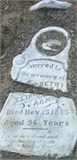
Elizabeth Langley, Texas
The parallel between what happened during Elizabeth’s life and the Civil Rights march in 1965 is striking. This story comes from the informative Facebook page of Cahawba:
In Gen’l James Wilson’s autobiography, he wrote that after meeting with Gen’l Forrest at Cahawba (after the Battle of Selma), they parted ways, and he returned to Selma then crossed the Alabama River and headed his Federal troops toward Montgomery. Here’s what he had to say about the enslaved African Americans that started to follow him: ” a great number of fugitives from the surrounding country flocked into the town and our march to the eastward had hardly begun when it became apparent that new crowds were following us, which made vigorous measures necessary for getting rid of them. The rear guard could keep them behind, but could not prevent them from taking the “ROAD TO FREEDOM.” Wow! The goosebumps started forming when I realized that this ROAD TO FREEDOM was exactly the same route that marchers for voting rights took exactly 100 years later! I can’t think of a better example of Selma’s tourism tag line, “Civil War to Civil Rights.”
FYI. Gen’l Wilson eventually organized, armed and equipped the able-bodied men and found them valuable additions to his force.
This is an amazing story and not a coincidence. I had not planned to go to Alabama again in my life, but now that they have put so much effort into uncovering the history of my 3rd great-grandmother’s lifetime in this place, I might need to visit. They specialize in birding, which is pretty cool. Visitors can participate in guided bird outings. Civil War to Civil Rights is a very interesting subject, still in progress.

