mermaidcamp
Keeping current in wellness, in and out of the water
You can scroll the shelf using ← and → keys
You can scroll the shelf using ← and → keys

Home in Rhode Island
My 8th great-grandmother was born in 1609 in Cornwall, England and died in Rhode Island in 1681. She sailed to America with her mother, step father, and husband in 1633. The group left Roxbury for Rhode Island because they probably were already Quakers. The Pilgrims made life hard for Quakers.
Sarah ODDYN or ODDING, daughter of William ODDYN or ODDING and Margaret Lang (parents from England). Details on vitals still being confirmed: Birth 05 Feb 1609 in Madron, Cornwall, England; Death 05 Feb 1681 in Kingston, Washington Co., Rhode Island.
Sarah Odding (1609 – 1681)
is my 8th great grandmother
Eber Sherman (1634 – 1706)
son of Sarah Odding
Mary Sherman (1688 – 1751)
daughter of Eber Sherman
Thomas Sweet (1732 – 1813)
son of Mary Sherman
Thomas Sweet (1765 – 1844)
son of Thomas Sweet
Valentine Sweet (1791 – 1858)
son of Thomas Sweet
Sarah LaVina Sweet (1840 – 1923)
daughter of Valentine Sweet
Jason A Morse (1862 – 1932)
son of Sarah LaVina Sweet
Ernest Abner Morse (1890 – 1965)
son of Jason A Morse
Richard Arden Morse (1920 – 2004)
son of Ernest Abner Morse
Pamela Morse
I am the daughter of Richard Arden Morse – (not you?)
Sarah married Phillip Sherman (Shearman), son of Samuel Sherman and Philippa Ward.
Mr Phillip Shearman was one of the 23 signers of the Portsmouth Compact dated 07 March 1638 (13th signer) … a document 138 years older than our Declaration of Independence in 1776.
Sarah and Phillip had perhaps 12 children (other source says they had 11 children and all survived to adulthood):
Eber Sherman1634 – 1706
Sarah (md Mumford) Sherman1636 – 1718
Peleg Sherman Sr. 1638 – 1719
Mary Sherman1639 – 1700
Samson Sherman1641 – 1718
Edmund Sherman1641 – 1718
Sarah Sherman1641 – ?
William Sherman1643 – 1646
John Sherman1644 – 1734
Hannah Sherman1647 – 1717
Samuel Sherman1648 – 1717
Mary (2nd one) Sherman1652 – 1729
Philip Sherman1652 – 1731
*Source: Ancestry.com
References to Phillip Shearman and his wife Sarah Odding (Oddyn) being Quakers:
• “After Phillip Shearman went to Rhode Island he left the Congregational Church and united with the Society of Friends.” (Representive of Men and Old Families of Rhode Island, Volume 1, publisher Jeff Beers & Co, Chicago c1908, page 210).
• “In the meantime, Phillip Shearman, became a member of another religious order, the Society of Friends (Quakers).” (Going to Palmyra: Sherman Deeds, by Margaret Sherman Lutzvick, 1997, page 38).
• “Philip and Sarah Sherman joined the Society of Friends as did their children and their children’s children for two hundred years.” (A New England Heritage, by Frederick Barreda Sherman, c1969, page 64).
• “After he removed to Rhode-Island he left the Congregational Church and united with the Society of Friends.” (New England Historic Genealogical Society, Vol 24 Jan 1870 page 66: Article titled The Sherman Family, By Rev David Sherman).
*SOURCE: Alonzo Sherman (descendant)
Family and descendants:
While still living in Roxbury, in the Massachusetts colony, Sherman married Sarah Odding, the daughter of William and Margaret Odding. He and Sarah had a large family of at least 11 children, most of whom survived childhood, married, and had large families.
Sherman’s mother-in-law, Margaret Odding, married secondly John Porter, another signer of the Portsmouth Compact. With Margaret, Porter had one child, Hannah, who married Samuel Wilbur, Jr., whose father, Samuel Wilbore was another signer of the compact.
Among the many descendants of Philip and Sarah Sherman are former United States Presidents George H. W. Bush and George W. Bush. Other descendants include James S. Sherman, Susan B. Anthony, Janis Joplin, Sir Winston Churchill, Lyndon LaRouche, Conrad Aiken, Mamie Eisenhower, and possibly Marilyn Monroe.
*Source: Wikipedia summary of sources.
Family links:
Spouse:
Phillip Sherman (1610 – 1687)
Burial:
Portsmouth Friends Churchyard
Portsmouth
Newport County
Rhode Island, USA
SARAH ODDING
In the list of admissions to Roxbury church, member #95 was “Sarah Odding. She was step daughter to John Porter & came with her parents & was after married to Philip Sharman of this church”.
COMMENTS: This admission was late in 1633, but her parents were much earlier in the list, and the family probably came to New England on one of the ships that arrived during the early summer. See JOHN PORTER and PHILIP SHERMAN.
In 1998 Patricia Law Hatcher discovered that Sarah Odding was born by 1612, daughter of “William Oddyn” of Braintree, Essex.

politics as usual
One skill that is central to peace of mind and well being is listening. We hear sounds all the time. People talk to us with varying degrees of sincerity and interest. Our job is to distinguish and sort the grain from the chaff. By paying attention it is possible to harvest harmony from the symphony of sounds and sentences we hear. To listen with compassion is a difficult task. Defending our own position rather than truly comprehending other points of view is one of the most common substitutes for listening. Understanding others is not a sign of weakness but a sign of maturity. We can’t agree with everyone, but we can look for ways to increase loving kindness in our lives. To love thy neighbor as thyself involves a degree of allowing that neighbor to express himself. As we in the United States fall deeper into the political season each day I expect some wild rhetoric. To remain happy, detached and centered is my goal. I am setting guidelines for myself ignored to keep my cool and enjoy life while those around me might loose it.
By conscious meditative contemplation I will not only survive but will find my center during the presidential election hoo-ha. I can admit that the last two elections disturbed and distracted me. I became enraged at the robo calls and the parties making them. Now I know that this too shall pass. I am gearing up to listen with compassion and a distinct sense of humor during the political crazy season. I wish you a sane election season, gentle reader. Best of luck.

party
Americans are not financially literate as a group. The depressing collapse of the markets in 2008 followed by a bank bail out has left the country with gross inequity. Working folks with real estate holdings, retirement plans and other investments took big hits while the banks returned to business as usual. Regulations designed to curb the abuses of financial institutions, like Dodd/Frank have not been implemented. We are still in a situation dominated by lenders, bankers, and mortgage brokers. Stock brokers have been able to operate under an assumption that suitable, reasonable investments were the only offers made to clients. In reality any system that is commission based encourages transactions. The broker makes a cut from each trade, and wants to maximize the client’s contribution to his total commission. His company also rewards him for selling in house products by offering a higher commission for the sale than competitive products may have. The client becomes the least of the broker’s concern within this structure.
I switched to a fiduciary to manage my investments years ago. I am much more secure and happy with my portfolio since I made the change. I worked with brokers from different brokerages in the past, but never found one with my interests in mind. There is a simple reason for that. The rewards were structured against my financial well being and in favor of trades to create commission. Now I split the profits with my fiduciary firm, which works perfectly. I make as much money as they make. If they make nothing for me I pay them nothing. This incentive to make good decisions for both of us carries weight and works like a charm. I do discuss the strategy a few times a year to make sure we are on the same page, but my involvement is very light. We are in the same financial boat which makes me feel happy.
Brokerages are starting to lobby the public with misleading ads about this new proposed regulation. I urge you to take some time to understand the issues. Brokers pretend that fiduciary responsibility to you will somehow cut you off from good advice. What it will do is make it illegal to sell you products that are not the best investment or the best deal in terms of fees for your situation. This is a protection Americans need to stay financially stable into retirement. Caveat emptor, gentle reader.
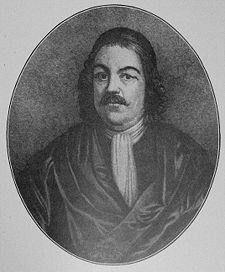
Rev. Simon Bradstreet
My 10th great-grandfather was a well educated and rebellious Puritan vicar in England. His son Simon and daughter-in-law Ann Dudley would carry his Puritan streak all the way to America.
Simon Bradstreet was on of the first Fellows of Emanuel College, Cambridge University, England and Vicar of Horbling Lincolnshire from 1596 to 1621.
Simon Bradstreet (1580 – 1621)
is my 10th great grandfather
Governor Simon Bradstreet (1604 – 1697)
son of Simon Bradstreet
John Bradstreet (1652 – 1718)
son of Governor Simon Bradstreet
Mercy Bradstreet (1689 – 1725)
daughter of John Bradstreet
Caleb Hazen (1720 – 1777)
son of Mercy Bradstreet
Mercy Hazen (1747 – 1819)
daughter of Caleb Hazen
Martha Mead (1784 – 1860)
daughter of Mercy Hazen
Abner Morse (1808 – 1838)
son of Martha Mead
Daniel Rowland Morse (1838 – 1910)
son of Abner Morse
Jason A Morse (1862 – 1932)
son of Daniel Rowland Morse
Ernest Abner Morse (1890 – 1965)
son of Jason A Morse
Richard Arden Morse (1920 – 2004)
son of Ernest Abner Morse
Pamela Morse
I am the daughter of Richard Arden Morse
He may have left England for Holland as the “Great Migration” moved toward America, but this information is unproven:
From “History of Newfield” page 447. He was a non-conformist minister in Lincolnshire, England, and Middelburg, Holland; married and died about 1617.
His death date is probably 1620-21, and some believe he died in England.
Blue laws in Plymouth Colony were created to keep Sabbath exactly the way the Puritans wanted it to be kept. The Puritans had no tolerance for other religious views, or for slacker Puritans. The criminal justice system was used to fine and persecute those found guilty of profaning the Lord’s day. It did not take much to arouse the ire of these founding fathers. The laws evolved very slowly over time, but still represent a will to control what happens on Sunday. In Plymouth you would be fined for walking anywhere but to church from Saturday at sundown until Sunday at sundown. This was a no laughing/no smiling kind of religious day and they were serious about preserving it. The Pilgrims of the Mayflower would freak right out about the televised football games, a tradition many associate with Thanksgiving.

Hammond Coat of Arms
My 10th great-grandfather was an early settler of Watertown, Massachusetts. His father died and he was declared bankrupt in England before he emigrated. William brought part of his family to America to settle before sending for his wife and younger children. By April 1634 they had all arrived in the colony. He frequently was fined for religious infractions and may have been a secret Quaker.
William Hammond
Birth: 1575, Lavenham, Suffolk, England.
Baptized: 30 Oct 1575, Lavenham, Suffolk, England.
Death: 8 Oct 1662, Watertown, Massachusetts. “Aged about ninety-four.
Father: Thomas Hammond, born and died in England.
Mother: Rose Trippe, born and died in Lavenham, Suffolk, England.
1629: On 26 Feb 1629/30, William Hammond was declared bankrupt in England.
1629: On “the 20th of November after that date, he departe[d] the land and fleeth into New England. Information from a 1656 law suit against William Hammond, citing this occurance. This would place him on the “Lyon” which sailed from Bristol on 1 Dec 1630/1631, and arriving in New England the following February.
Emigration: 1631. See above.
The Hammond family came to New England in at least three stages. In late 1630 or early 1631, John Winthrop Jr. noted receipt of £7 5s. from “Goody Hammond to send her husband.” This supports the conclusion that William Hammond was a passenger on the “Lyon” when it sailed from Bristol in late 1631.
On 26 Sept 1633, Governor John Winthrop, wrote to Sir Simonds D’Ewes, informing him that “Yours by young Hamond I received,” indicating that William Hammond Jr. probably sailed for New England in one of the ships that arrived in the fall of 1633. His sister Anne and brother Thomas may also have come at this time, because they are not included, a year later, in the passenger list of the “Francis”, which sailed from Ipswich, in the spring of 1634, with Elizabeth Hammond, (aged 47); Elizabeth Hammond, (aged 15); Sarah Hammond, (aged 10); and John Hammond, (aged 7) on board.
First Residence: William’s first residence was Watertown, Massachusetts.
Occupation: Husbandman.
Religion: Admitted to Watertown Church prior to 25 May 1636, (implied by freemanship.)
1636: Admitted as a Freeman, 25 May 1636.
1636: In his record of admissions to Scituate Church, Rev. John Lathrop, entered on 14 Apr 1636, “Elizabeth Hammon, my sister, having a dismission from the church at Watertown.”
1636: On 25 Jul 1636, William Hammond was granted forty acres in the Great Dividend.
1637: Granted eight acres in the Remote Meadows, 26 Jun 1637.
1641: Granted a farm of one hundred fifty-five acres, 10 May 1642.
1645: In the “year 1645 Rose his mother dyeth … but now in the year 1647 his son Thomas come from New England to be admitted to the land.”
1647: On 22 Nov 1647, “W[illia]m Hamond granted a letter of attorney unto Thomas Hamond, his son, to ask demand of the lord of the manor the possession of certain lands in Lavenham, in Suffolk which were the possession of Rose Steward, his mother.”
1647: William was a Watertown Selectman, 8 Nov 1647.
1656: Along with Isaac Stearns, William was an arbiter in a dispute between John Wincoll and Benjamin Crisp.
1656: “Old Goodman Hammond” was appointed to a committee to assign seats in the meeting house, 17 Nov 1656.
1660: On 6 Non 1660, Watertown Selectmen sent the constables to “Old Hamond to let him know, that contrary to order of town, he had entertained into his family such a person as is likely to prove chargeable, do therefore desire him to rid the town of such an encumbrance or otherwise to bear the burden thereof himself.”
In William’s will, dated 1 Jul 1662 and proved 16 Dec 1662:
“William Hammond of Watertowne … now about ninety years of age” bequeathed to “my loving dear wife Elizabeth Hammond my whole estate” for life;
and after her death, to “my son John Hammond all my houses, lands;”
to “Thomas Hammond son of my son Thomas Hammond, deceased,” £40 when twenty-one, but if he dies before that then “the £40 to be equally divided between the children of my daughter House, daughter Barnes, [i.e., Barron’s], children”; to “daughter Barnes” £30;
to “the four children of my daughter Elizabeth House deceased” £5 apiece; to “Adam Smith son of my daughter Sarah … one mare colt”
and to “my daughter Sarah Smith” £5.
The inventory of the estate of William Hammond totalled £467 16s. 9d., including £318 in real estate:
one dwelling house, an orchard £24;
23 acres of pasture land, £69;
11 acres of broken-up land, £48;
15 acres of meadow, £90;
8 acres of meadow remote, £15;
18 acres of land in lieu of township, £6;
1 Great Dividend, 40 acres, £40;
1 farm, 160 acres, £20; and
a part of a barn, £6.
His inventory also included “one great Bible and 3 other books” valued at 13s.
Married: Elizabeth Paine, baptized in Lavenham 22 Sep 1586. She was the daughter of William and Agnes Neves Paine. Elizabeth arrived in New England in 1634 on the “Francis” with her three youngest children. Elizabeth died 27 Sep 1670, in Watertown, Massachusetts, “aged about ninety years .”
Marriage: 9 Jun 1605, in Lavenham, Suffolk, England.
Children of William Hammond and Elizabeth Paine Hammond:
William Hammond (1575 – 1662)
is my 10th great grandfather
Elizabeth Hammond (1620 – 1703)
daughter of William Hammond
Elishua Crowell (1643 – 1708)
daughter of Elizabeth Hammond
Yelverton Gifford (1676 – 1772)
son of Elishua Crowell
Ann Gifford (1715 – 1795)
daughter of Yelverton Gifford
Frances Congdon (1738 – 1755)
daughter of Ann Gifford
Thomas Sweet (1765 – 1844)
son of Frances Congdon
Valentine Sweet (1791 – 1858)
son of Thomas Sweet
Sarah LaVina Sweet (1840 – 1923)
daughter of Valentine Sweet
Jason A Morse (1862 – 1932)
son of Sarah LaVina Sweet
Ernest Abner Morse (1890 – 1965)
son of Jason A Morse
Richard Arden Morse (1920 – 2004)
son of Ernest Abner Morse
Pamela Morse
I am the daughter of Richard Arden Morse
WILLIAM HAMMOND – ELIZABETH PAINE
(1575-1662) (1586-1676)
William, the emigrant ancestor of this branch of the family in America, was born in Lavenham, County of Suffolk, England, where he was baptized October 30, 1575. He was the only surviving son of Thomas Hammond and Rose Trippe, his younger brother, Thomas, having died in infancy. He was left an orphan by the death of his father in 1589. He married Elizabeth there June 9, 1605 and their children were all born in Lavenham. Elizabeth was born 1586, also in Lavenham, daughter of William Paine.
William, along with his older children, came to America before his wife and younger children, though the exact year is not known. Elizabeth, aged 47 years, with children Elizabeth, aged 15, Sarah, aged 10 and John, aged 7 years embarked at Ipswich, England, in the ship, “Francis,” John Cutting, Master, in April, 1634, and joined her husband in New England.
William Hammond was admitted freeman in Watertown, May 25, 1636, and was grantee of seven lots and purchaser of three lots before 1644. His homestead of 40 acres was situated on the west of Common Street. It was bounded on the east and north by lands of his brother-in-law, Dr. Simon Eire, on the west by John Simson, Isaac Sterne and John Warren, and on the south by Thomas Boyden. Bond’s Hist. of Watertown (p. 1088) says, “It is probable that William Hammond settled first on the Cambridge Road, very near the Cambridge line. Whether this was a grant to him the records do not show. He sold it early and settled on his 40-acre homestall, situated east of Pequusset meadow. He also owned three small lots in Pequusset meadow, one of these granted to him and the other two purchased. This homestall passed to his son (grandson) Thomas.” March 10, 1642, in the division of lands, he was granted lot No. 76, in the 4th Division, containing 165 acres, and this, with his other holdings, made him one of the largest land owners in the town.
The records do not show that he was often an office holder in the town and this may have been due to his independence in religious matters, which may have made him unpopular with his more puritanical neighbors, although he does not appear to have been so unpopular as some of his most intimate friends. His near neighbor and most intimate friend appears to have been John Warren, who came from the same locality in Suffolk County, England, and between whose family and his own there appears to have been considerable intimacy for several generations prior to the settlement in America.
On occasion there were fines “for an offense against the laws concerning baptism,” and “for neglect of publick worship” 14 Sabbaths at 5 shillings each. Warnings were given “for not attending publick worship”.
May 27, 1661, the houses of “old Warren and goodman Hammond” were ordered to be searched for Quakers, for whom they were known to have considerable sympathy. Considerable independence in religious matters, great love of liberty and sympathy for all who are persecuted for conscience sake seem to have been inherent family traits for generations past. It is probable that William Hammond and his intimate friend, Warren, were both inclined toward the religious teaching of Roger Williams, but were too conservative to subject themselves to the persecution that his more radical followers were compelled to endure. This view is supported by the fact that many of their descendants were rigid adherents of the Baptist Church. The tendency, however, in this family has been toward great liberty of thought in religious matters and many of the descendants have been connected with the Unitarian and Universalist denominations, while many in the later generations have held membership in no church.
The will of William Hammond is on file at East Cambridge, Mass., (Middlesex Probate No. 7167), dated July 1662; proved Dec. 16, 1672. He leaves to wife Elizabeth his whole estate during her life. To son, John, all lands, & after her death. To Thomas Hamond, “sonne of my sonne, Thomas Hamond, deceased,” œ40 at the age of 21 years. “If said Thomas, or any for him, oppose this will,” then he is not have the œ40. “Unto daughter (Hannah) Barnes, œ30, the same to remain unto her children.” “In case she again become a widow” she to have wood from his lands during her widowhood. To four children of my daughter, Elizabeth House, deceased, various sums of money. “To Adam Smith, son of daughter, Sarah, if he behave obediently to my wife after my decease, one mare, colt and œ20.” To daughter, Sarah Smith, œ5. Appoints widow, Elizabeth and John executors.
Witnesses– Matthew Bridge and Thomas Longhorne.
Inventory by Hugh Mason and Thomas Hastings, Dec. 16, 1662; œ457-16-9. Contains the following list of real estate:
25 acres of fallow land, 15 acres of broken land, 15 acres of meadow, 60 acres of meadow, &c.,
16 acres of land in low of ye town right, 40 acres in great dividend, 160 acres in a farm. Total, 331 acres.
Each week I will talk about some history of medicine and folklore. Today I am featuring ginger.

grapefruit and calamondin
It is time for the Food Conspiracy Coop’s eat local challenge. The concept is key to saving the planet in my opinion. I do some gardening and shop at farmers’ markets, but I can’t say I eat 100% locally grown or produced food. When I turn my attention to this challenge, as I have in the past years, I notice how much I still buy in jars and bottles. By shipping my food around in heavy glass containers I add to the cost, but not really to the value, of my selections. I make an effort to use less and less from jars, and I very rarely buy any product in a can. If I can start form scratch I prefer it. Some condiments and ethnic delicacies are beyond my abilities to create at home, so I take pleasure in selecting tasty treats from foreign lands that are either a new sensation, or a serious favorite from the past. Truth be told some of those exotic pricey packaged products are sold at the coop along with locally sourced groceries. That is why the 1-14 of July is an extra special time to head down to Food Conspiracy.
First Fridays are always a day of 10% discounts throughout the store. This month in addition to that discount, all local foods will be on sale for 10% off for two weeks, 1-14 July. This is a chance to kick start the local eating habit with some helpful discounts. A contest will also be held on instagram. Using the hashtag #TucsonEatsLocal, and tagging @foodconspiracy contestants can enter shots of gardens, markets, and dishes prepared with local ingredients to win prizes. The t shirts and $50 gift certificate to the store are cool prizes, but the real prize is the satisfaction of starting a habit that is good for everyone. If this concept caught on in a big way factory farming would become obsolete. Processed foods would give way to fresh and organic because the costs in the long run are lower. By participating in the eat local challenge we bring our attention to how easy it is to do. Have you ever tired to be a locavore, gentle reader? Some places it is much easier than others. I still have citrus vodka I made from our fruits last winter..waste not want not.

citrus hootch

White House
The United States is reeling from yet another mass shooting. The prayer group interrupted by violence is etched into the soul of the country, no matter where we live, no matter what our own religious affiliations. The idea that sanctuaries are not safe is a chilling reminder. While the world watched the church showed the meaning of Christianity and compassion. The city of Charleston displayed solidarity and strength in the face of the tragedy in one of the most significant structures in town. This flow of forgiveness and faith witnessed from the victims’ friends and families has been powerful in its simplicity. They managed to overcome the natural feelings of betrayal and loss by practicing what they preach. They defer judgement to God and pray for peace that surpasses all understanding. I am overwhelmed with gratitude to the congregation of Mother Emmanuel for teaching the country how to mourn, and how to move past sorrow into great compassion. We all need to heed this lesson. These people seem like saints, and indeed they may be. They have a powerful message of hope for us. Nothing is black and white. Nothing is really even under our control. Remember the first commandment when you think you might need to right some wrongs…this is clearly not your personal job.
Meanwhile, right before Gay Pride Weekend in many parts of the country, same sex marriage has become the law of the land. With rainbows flying and floating and projecting everywhere the party to celebrate these new civil rights began. The rainbows appeared early in the morning on Friday and by nightfall the projected rainbows fell on buildings and natural wonders of the world. Other countries celebrated with us by lighting structures to tweet with the hashtag #LoveWins. Twitter supplies a rainbow heart for each #LoveWins, adding to the colorful festive digital fiesta. I found the switch from our black and white racial and political divides to an all out rainbow nation to be refreshing. We need to have a reason to be proud, to embrace the happiness of others, and to actually celebrate equality. Rainbows signify our diversity and our harmony. Let us keep the faith that this nation still has the spirit and the will to make sure that #LoveWins in our future.
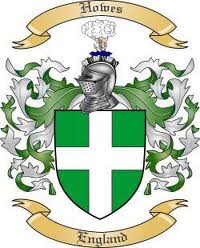
Howes Coat of Arms
My 13th great-grandmother was arrested in London for her religious beliefs. She moved to Barnstable, on Cape Cod with her extended family.
It is claimed that this family descends from one John de Huse who had a large manorial property in Basthorpe, Norfolk, England in 1065.
Penninahs father was a Reverend, Rector of Eastwell, Kent. Penninah and her brother Samuel Howes were arrested in 1632 in London in connection with the prosecution of Rev John Lothrop and his flock of Dissenters who had been meeting in Blackfriars, London. Penninah Howes was called and required to take her oath but she refused. The prosecutor asked “Will you trust Mr Lathropp and believe him rather than the Church of England?” She replied “I referre myself to the Word of God, whether I maie take this oath or now.”
Jemimah Peninah Howse (1589 – 1633)
is my 13th great grandmother
Sarah Linnell (1603 – 1652)
daughter of Jemimah Peninah Howse
Thomas Ewer (1593 – 1638)
son of Sarah Linnell
Mary Ewer (1637 – 1693)
daughter of Thomas Ewer
Mehitable Jenkins (1655 – 1684)
daughter of Mary Ewer
Isaac Hamblin (1676 – 1710)
son of Mehitable Jenkins
Eleazer Hamblin (1699 – 1771)
son of Isaac Hamblin
Sarah Hamblin (1721 – 1814)
daughter of Eleazer Hamblin
Mercy Hazen (1747 – 1819)
daughter of Sarah Hamblin
Martha Mead (1784 – 1860)
daughter of Mercy Hazen
Abner Morse (1808 – 1838)
son of Martha Mead
Daniel Rowland Morse (1838 – 1910)
son of Abner Morse
Jason A Morse (1862 – 1932)
son of Daniel Rowland Morse
Ernest Abner Morse (1890 – 1965)
son of Jason A Morse
Richard Arden Morse (1920 – 2004)
son of Ernest Abner Morse
Pamela Morse
I am the daughter of Richard Arden Morse
The Howes, Lothrops, and Linnells of Kent and London, England, and Scituate
and Barnstable, Massachusetts
By Dan R. McConnell
Published by the Cape Cod Genealogical Society Bulletin, Fall 2007
The family of Reverend John Howes [also House, Howse], whose children, kin, and friends, were brought before the Royal Court of the High Commission in London, England in the 1630’s, were persecuted and imprisoned for their religious beliefs. These beliefs also had political effects, which we will explain. Some fled to America, first to Scituate, then Barnstable, both of which were in Plymouth Colony in that time, a place friendly to their Separatist beliefs. Others remained in England and played a key role in the emergence of non-conformist churches, the disputes in Parliament, and the English Civil War.
In the 17th Century, for ordinary people, a lengthy confinement in London prisons such as Newgate, Clink, Fleet or Bridewell was tantamount to a death sentence due to crowded, filthy, disease-ridden conditions. Such dangerous confinement, for religious non-conformity, under the arbitrary rules of the High Commission, became a driving force for like minded people to flee to America. English resentment to the many breaches of Common Law led to the rise of Parliament in opposition, and ultimately to the abolishment of the High Commission in 1641 and the Civil war in the 1640’s. After the “Glorious Revolution’ in 1688, the English Bill of Rights was enacted to specifically forbid such practices, echoed famously in our own Bill of Rights, the First Ten Amendments to the U.S Constitution.
For the Howes family and their kin, the road to prison and to America began in Kent. The Reverend John Howes matriculated at St. John’s College, Cambridge in 1590. He is listed in the Alumni Cantabrigienes as such with the further note that he was rector at Eastwell, Kent in 1610. In the Bishop’s Transcripts for Canterbury he is also given as Curate for Egerton, 1592-6. From his location at the time of the baptism of his children, he is likely to have also been Curate for Eastwell from 1603 to his death in 1630. He performed the marriage ceremony for his daughter Hannah, in her marriage to Rev. John Lothrop [also Lothropp] in Eastwell, 16 October, 1610. In his will, dated 1630, he is described as Minister, Eastwell. In his will, his wife’s name is given as Alice.
Children of the Reverend John Howes:
Elizabeth Howes, Bapt, unkn. Married, Eastwell to John Champion, of Little Chart, 28 September 1607
Hannah Howes, Bapt. Egerton, 5 May, 1595. Died between 1632 and 1634, London, while her husband, Rev Lothrop, was in prison. Married,Eastwell to Rev. John Lothrop, 16 October 1610.
Peninah Howes, Bapt, Egerton, 11 April, 1596. Died after 1669, Barnstable, Massachusetts.
Married between 1632 and 1638 to Robert Linnell, probably in London.[The will of her brother Thomas Howes, in 1643 gives her name as Peninah Linnell [also Lynell]. In the High Commission proceedings in 1632, she is given as Peninah Howes].
Druscilla Howes. Bapt., unkn. Married, Eastwell, to Simon Player 17 April 1637 John Howes. Bapt. Eastwell 19 June, 1603. Married Eastwell to Mary Osborn of Ashford, 18 September, 1623.
Priscilla Howes. Bapt Eastwell 25 August, 1605. Buried, Eastwell 28 Nov 1618
Thomas Howes. Bapt. Eastwell, 21 August, 1608. Died 1644 London. In his will, dated 18 October 1643, he lists his wife Elizabeth, his brother Samuel [of Scituate and Barnstable, Mass. See Great Migration Series, Vol. III, I634-5, page 424-8], his sister Peninah Lynell, his sister Druscilla Player.
He also lists as administrators, the famous Puritan Praise God Barbon [Speaker of Parliament during the Commonwealth period, known as “Barebones Parlaimant”, and William Granger, who was brought up before the High Commission along with Barbon’s wife Sara. All were members of Rev. Lothrop’s congregation in London]
Samuel Howes. Bapt Eastwell, 10 June, 1610. Died 12 September 1667, Mass. Married about April 1636 to Ann Hammond of Watertown, Mass. He emigrated to America in 1634, joined Rev Lothrop’s church in Scituate then Barnstable, and returned to Scituate.
Henry Howes. Bapt. Eastwell, 28 June, 1612.
Note. There has been great confusion in the American record to the effect that Robert Linnell’s first wife was a Jemimah Howes, presumably another daughter to Rev. John Howes. This has been compounded by an LDS record of the supposed marriage of a Jemimah Howes to Robert Linnell in 1621 in Ashford, Kent. There are no records to support this.
John Lothrop, son of Thomas Lothrop, bapt, Etton, Yorkshire, 20 Dec, 1584, first entered Oxford, then withdrew and matriculated at Queen’s College, Cambridge, graduating with a B.A 1606, M.A. 1609. He was curate at Little Chart 1609, Egerton 1610, serving until his resignation between 1621 and 1624. In 1625, he succeeded Henry Jacob as Minister to the first Independent Church in London, founded in 1616, and one of the five oldest independent [non-conformist]
churches in England. The principles or covenant of the Jacob/Lothrop church were essentially Separatist and were very close to those of the Rev. John Robinson in Leiden [Pilgrims]. During a period of exile before 1616, Henry Jacob resided with the Robinson congregation in Leiden. These
churches were illegal, as the Church of England, under the King and his appointed Archbishop of Canterbury was the only legal church. The Jacob/Lothrop church met in private, in the homes of congregants. These secret meetings for the purpose of praying preching and interpreting the Bible, were called conventicles.
In 1632, Rev. Lothrop was arrested in the house of one of his congregants along with 42 of his congregation, and was brought before the Court of the High Commission. He, and they, were charged with sedition and holding conventicles. The political nature of the charge of sedition [“an insurrection against established authority”], and the antique language of “conventicle’ [ a
private meeting to hear illegal preaching] renders the charges unclear to modern ears. The charges were, however, deadly serious and the court proceedings unimaginable. The accused had none of the rights of modern citizens. The court was an inquisition, where the accused were forced to testify against themselves, with our counsel. The process was so intimidating that many people were driven to flee. It was one of the driving forces in the Great Migration to New England.
It was no dispute over prayer books and vestments. It was about life, death, and salvation. First, what was the Court of the High Commission? It, along with the Court of the Star Chamber, was a Royal Prerogative Court [King’s Rights], originally created in the time of Henry VII [1485-1509]. These courts were separate from the Civil Courts, or Common Law Courts, which
operated on the basis of precedent, and the rights of English people under the Common Law.
Originally, these courts were established under the King’s right to protect individuals from abuse in Common Law Courts. Under the Elizabeth I and the Stuart Kings [James I and Charles I], these courts were used by the Church of England to suppress those who sought to reform the church, or to seek a different path to salvation, using court rules that were in clear violation with the Common Law. They came down, with extreme severity, on Separatists in particular. Because of
their covenant relationship, Separatists believed that every congregation could be a church unto itself, and could elect it’s own Ministers, by vote of it’s elders, based upon the model of the early Christian church [pre-Constantine]. To do so meant they had no need of the Church of England, and did not accept the authority of the Bishops. This was unacceptable to the Crown. As famously said by King James I, “ No Bishop, no King”. Since the King was the head of the Church of England,
and appointed the Archbishop, he wanted one church with order and conformity. To the King, the Separatists position implied anarchy and chaos, and must be stopped. As James I said further, “ I will harry them out of the land”.
Under Charles I and his Archbishop, William Laud, the screws were tightened much more. Laud was the Chief Judge of the High Commission. In his zeal to suppress nonconformists, he scrapped several principles of English Common Law, including [1] protection against selfincrimination, 2] the right to confront one’s accusers, [3] the right to produce witnesses in one’s
own defense, [4] the right to a prompt hearing in court, so one did not languish in a dangerous jail without a trial, and [5] cruel and unusual punishments. All of these rights were suspended for those, such as the members of Rev. Lothrops congregation, who were brought before the Court of the High Commission in May 1632.
The Ministers and there flock faced brutal treatment. For the high crime of publishing tracts critical of the Bishops many ministers had their ears cut off, their faces branded and were confined to prison for life, which meant death within a few months or a few years at most. When one was brought before the court, the requirement was to sign an oath of Allegiance to the
Church of England, to forswear any contrary belief or practice and to answer any question posed by the judges,consisting of Laud and five other Bishops. To do so meant to abandon their right to choose their own Minister, to hear preaching and to attend Bible study with a Minister of their choice. They believed their own souls to be at stake. They were not allowed any of the basics of a fair trial, and certainly faced cruel punishment. So what did they do? They refused to swear the oath and were jailed. Some died in prison, some were released and fled to America, and some fought for Parliament in the English Civil War.
Now, hear the voices of Archbishop Laud, of Rev. John Lothrop and of the Howes and their friends [from the Proceedings of the Court of the High Commission]:
“ 5 May, 1632. This day were brought to the court out of prison diverse persons whixh were taken on Sunday last at a conventicler met at the House of Barnet, a brewer’s clerk, dwelling in the precinct of Black Friars: By name, John Lothrop, their Minister, Humphrey Barnard, Henry Dod, Samuel Eaton, William Granger, Sara Jones, Sara Jacob, Peninah Howes, Sara Barbon, Susan Wilson and diverse others”—
Statement by the Archbishop—“ You show your selves to be unthankful to God, to the King and to the Church of England, that when, God bbe praised, through his Majesties care and ours that you have preaching in every church, and men have liberty to join in prayer and participation in the sacrements and have catechizing to enlighten you, you in an unthankful manner cast off all this yoke, and in private unlawfully assemble yourselves together making rents and divisions in the church.—You are unlearned men that seek to make up a religion of your own heads!”—“you are desperately heretical”
“Then came in Mr. Lothrop, who is asked by what authority he had to preach and keep this conventicler.” Laud,–“How many women sat cross legged upon the bed, while you sat on one side and preached and prayed most devoutly?” Lothrop. “I keep no such evil company” “Will you lay your hand upon the book and take your oath?’ Lothrop. “I refuse the oath.”
Peninah Howes “ I dare not swear this oath till I am better informed of it, for which I desire time”;;;”I will give an answer of my faith, if I be demanded, but not willingly forswear myself”
Sara Barbon “ I dare not swear, I do not understand it. I will tell the truth without swearing”
Then they were then all taken to the New Prison.
“8 May, 1632. Laud to Sara Jones—“ This you are commanded to do of God who says you must obey your superiors.” Sara Jones “That which is of God is according to God’s Word and the Lord will not hold him guiltless that takes His name in vain”
‘Lothrop. I do not know that that I have done anything which might cause me justly to be brought before the judgement seat of man, and for this oath, I do not know the nature of it”
Laud “You are accused of Schism”
To Samuel Howes ‘Will you take your oath?’ Howes I am a young man and do not know what this oath is”
Peninah Howes is then asked to take the oath, but she refused. Laud “Will you trust Mr Lothrop and believe him rather than the Church of England?’
Because women were not able to hold property she had to sue the court in 1669 for her husband’s estate:
Robert, called “my Brother,” by Mr. John Lothrop, adm. chh. scituate with his wife Sept. 16. 1638, “having a letter of dismission from the church in London.: Took oath of allegaince 1 Feb. 1638. Propr. at Barnstable 22 jan 1638-9. ch. Hannah (m. 15 March, 1648, John Davis of Bar.,) Abigail, (m. May 1650, Joshua Lombard,) David, (m. March 9, 1652, Hannah Shelley).
He made will 23 Jan. 1662, prob. 12 March, 1662-3; beq. to wife; to son David; to Abigail and Bethys; to John Davis. The widow Penninnah petitioned the Court 29 Oct. 1669, to recover the house her husband had left her from the hands of David L.

