mermaidcamp
Keeping current in wellness, in and out of the water
You can scroll the shelf using ← and → keys
You can scroll the shelf using ← and → keys

Palm, symbol of victory
I think most people vote based on the state of their own economic situation. If they are feeling confident about their prospects and security they tend to choose the party that is in power at the moment. When insecurity and unhappy circumstances arise political elections become a way to express unease. This election year is full of wild rhetoric and many dramatic moments. Citizens are freaking out in all directions. The focus on our elected officials and policies of the government is never so intense as it is during the presidential season. Tension builds and money is spent like water on all sides. Anger, suspicion, and all the worst in our society, rears its’ ugly head to predict the future. We all think we know how the future will be if we elect one candidate or another.
We do not know what will happen after any election, and this time we seem to know less than ever. Many of the public institutions that have crumbled and decayed will need a total reform or rehab in order to once again serve the public. Politicians tend to protect and defend status quo, just because they exist within it, and that is the easy way to go. A body at rest tends to stay at rest. The GOP is finding it difficult to stay at rest, being challenged from within and by the candidacy of Donald Trump. In this era we do not remember any politics this rowdy or malicious. It is impossible to predict the outcome.
The reality is that after the election we will all go about our business without the suspense or the drama of politics in our faces. The only real change is managed on a personal local level with constant and uninterrupted effort. Figure heads and governing bodies have only so much power to implement or enforce laws and systems. The grass-roots, named for the front yard, is where either weeds or lush green comfort is cultivated. It is a mistake to put so much emphasis on elections while we turn away from our own neighbors and local issues. Like Smokey says, “Only YOU can prevent forest fires.” I believe this philosophy applies to reality and politics just as well. Only YOU can prevent the dismemberment of society, gentle reader. Think small, local, and real. Don’t let these political loonies stress your mind. Act like you want others to act, do unto others what you want done to you.

yellow rose, symbol of joy
I am a revolutionary. I am in flashback mode during this political season. When I watched the PBS documentary about the Black Panther Party my mind was blown thinking about the similar tactics employed by our government today. Police are still outside the law, are still involved in brutality rather than community protection. In my neighborhood the police force protects criminals and refuses to respond to those who want to stop crime. I think it is scary that abuse of power continues to be our greatest obstacle to peace and prosperity. In 1968 J Edgar Hoover had absolute power to invade privacy and snuff Americans at will. Today the FBI is asking Apple to give them a back door to everyone’s iPhones. Today we have drones out killing people for our “freedom and democracy”. Have we ever had freedom and democracy for all our citizens? I think not.
I was involved, but not old enough to vote, in the 1968 election that sent Tricky Dick Nixon to the White House. I was in the audience at the University of Texas at Austin to listen to Eugene McCarthy, and later to Hubert Humphrey, during my freshman year on campus. I decided to register to vote as a Libertarian as soon as I was 21. The Democrats were more to my liking but both parties struck me as corrupt anachronisms dedicated to keeping war and prejudice alive around the globe. I was not alone in this belief. I am still not the only person who sees our system as dangerously off course.
We all feel that things have gotten out of hand, and we all want a better future for our country. I know that is true, even though the campaign rhetoric has become vile and toxic. With the new twist of a Supreme nomination stakes are high and emotions are higher. If we the people allow super pacs and nasty grudges to continue to drive our political outcomes we will all continue to feel let down by our government. This election, very much like the election of 1968, will have profound consequences on our image around the world as well as our own economy. No matter how you feel (Bern or no Bern) it is time to register to vote and exercise your right to elect officials you trust. History is being made very rapidly. Get out the vote, gentle readers. Do it now before all the hippies drop dead from exhaustion.

revolutionary pension
My third great-grandfather served in the Revolutionary War. On his pension his rank is listed as Dragoon, which is a name for cavalry soldier. After the war all of the cavalry units were disbanded. His wife Joanna received $50 twice a year from 1836-1850 to compensate for his service. He married at the age of 26 and died in South Carolina at the age of 60.
Jonathan Aaron Taylor (1760 – 1820)
3rd great-grandfather
John Samuel Taylor (1798 – 1873)
son of Jonathan Aaron Taylor
William Ellison Taylor (1839 – 1918)
son of John Samuel Taylor
George Harvey Taylor (1884 – 1941)
son of William Ellison Taylor
Ruby Lee Taylor (1922 – 2008)
daughter of George Harvey Taylor
Pamela Morse
I am the daughter of Ruby Lee Taylor
Jonathan Taylor enlisted in service in Cumberland County, Virginia. He was discharged at Cambridge in South Carolina on June 9, 1781. He was wounded at the Battle of Herrington, N. J., and also was in the Battles of Brandywine and Monmouth in New Jersey. He served under Col. Bailee and Col. William Washington.
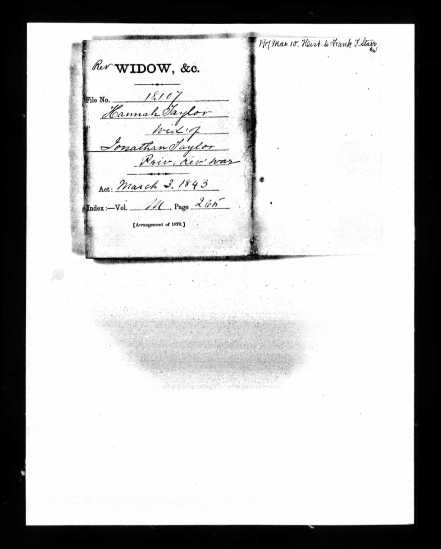
revolutionary pension

rhetorical triangle
The role of rhetoric in politics is to convince voters to take action. Politicians make speeches and conduct public meetings in order to share their views and opinions for the voters’ consideration. There is a difference between absolute empirical truth and rhetorical “truth”. Words meant to sway opinions are crafted carefully to leave impressions on the reader or listener. Theory rather than fact is the realm of rhetoric. Theoretic situations and projections onto the future can not be measured. They are emotional and unpredictable in their very nature. When a candidate tells us what will be happening when he becomes president he is using rhetoric to stimulate our imagination.
Cultural beliefs can’t be proven, but are held by a group to be factual. Prejudice is one of the many forms of cultural belief. Santa Claus and the Easter Bunny are another kind of cultural belief. Now in American politics there are at least two camps with firm and opposing views about the Constitution. When a lawyer goes to court his arguments are built on rhetorical truths, but his emotional appeal to a judge or jury is often aimed at changing cultural beliefs. Tribal or group dynamics are hard to predict. Our two party system is going through a test in this election cycle. I wonder which way the cookie will crumble in November. I urge the gentle readers to vote and consider carefully all the facts while making a decision. This election is already a game changer. Your vote matters more than it did in the past. Please register to vote, and show up to make your voice heard.
This election of 2016 gives us an unprecidented opportunity to change our federal government for the better. The American people have been through the economic ringer while banks “recovered” nicely with taxpayer assistance. The real estate market where I live is still on a very slow track to recovery, and the stock market is tanking right now over the price of oil. Ordinary tax payers have felt powerless and probably resentful to see the way our government conducts itself and spends our treasury’s money. Various movements from #OccupyWallStreet to #BlackLivesMatter have coalesced to express rage against the system. As these feelings and political movements grow the ability to share our thoughts has expanded exponentially.
This election may be televised, but the instant power of twitter has changed the way the candidates compete. The playing field is more open to view than the games in the past that decided our national political future. Anyone with a twitter account is free to comment, disclose, and persuade. It reminds me of the University of Texas tower (site of the very first famous mass shooting by a veteran at a school), which says “You shall know the truth and the truth will set you free” (John 8:32) Truth and freedom have been generally under siege from all corners. Each of us has personal truth and freedom, but it gets very gnarly trying to decode the nation’s truth and freedom. These words evoke talk of war and the military, always used to protect our national freedom. The irony now that the veterans of our freedom wars are in bad shape and need care and attention sends a signal that all is not well. All is not revealed. Truth about what happens to our troops, and in our wars has been buried under a giant pile of PTSD. The brave men and women of our armed forces have taken the biggest hit to their freedom and security. Someone has lied to us about the entire nature of this war business.
The economy may or may not be in peril for banks and the super wealthy Americans. The economic outlook for the middle class looks gloomy to me at the moment. Poverty is spreading among the senior population and children. Homelessness and addiction is common for the hero veterans we sent to fight for our “freedom”. These truths should motivate the voters of this nation to look for a better solution. I endorse Bernie Sanders for president because #WeAreBernie. I believe the truth will set us free from unreasonable government, but we need to face the truth together to make this happen. How do you feel, gentle reader? Do you think we can come clean and make the government work for the people? No matter what you think I hope you will vote and make your voice heard.
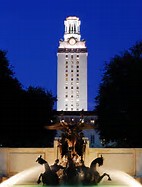
UT tower

fermenting beverages
Our bodies alert us to imbalance and disease long before a diagnosis can be made. I have always had excellent digestion, but a couple of years ago I had to make some dietary changes to stem some new symptoms I had acquired in my digestive tract. My thermogram showed inflammation all along the digestive system, but the real issue was that I felt bad. I had become a burping bubbling mess. I eliminated wine and beer, which made a huge difference in the problem. I also decreased, but did not totally stop, my consumption of bread. These changes, together with some attention to adding the foods that heal the spleen, helped me conquer my indigestion.
During the time I was studying my spiritual path as it coincided with all this unexpected indigestion in my body. I believe there is always some soul element of every physical manifestation. Indeed, I had unresolved, undigested issues about my home and environment that had serious consequences. Stress from trying unsuccessfully to put a stop to crime in our neighborhood had become a permanent drag. I was really sick and tired of reporting crime with no response and no effort made by authorities to stop it. The culture of willful blindness had won the day, and no progress was possible. Now there is a breakthrough!!!
This week our new police chief, Chris Magnus, starts his job running the Tucson Police Department. I have very high hopes that his new energy will uplift the community and bring people together to improve conditions in our Tucson neighborhoods. His reputation for community policing and success in reducing violence precedes him. We need to improve the working relationship between the cops and the citizens here. His experience should prove very valuable to improve the culture of TPD.
My new hobby is fermenting raw foods. I have tried concocting several beverages that are super simple to make and taste great. They have the added benefit of probiotic culture which boosts immunity and assists digestion. Over time the healthy bacteria growing in my beautiful beverages will improve my health, but for now I just love the flavors. At the moment I am fermenting some red cabbage kraut juice, a batch of swizzle, and a batch of ginger beer. When the ginger beer is ready I want to try a second fermentation to add more fizz. The possibilities of delicious new ways to digest the past are endless. Here are directions for you if you want to try making your own switchel, packed with electrolytes from the apple cider vinegar. To your health, gentle reader!!!

Third Haven Meeting House
My 9th great-grandfather sailed to America with his parents in 1685. His family may have been fleeing religious persecution, common for Quakers in England. He seems to have prospered in his new home in Maryland.
Jeffrey was called a planter as were most of the early English immigrants; they were here to plant a new nation. Jeffrey and Elizabeth were in Easton, Maryland in 1685, and were of the Nicholite pursuasion (sometimes called Quakers or reffered to as Friends.) Jeffrey Horney assisted in Erecting the Friends Meeting House in 1685, the Third Haven Friends Meeting.
Jeffrey owned land in Kent (now Queen Anns) Co., Maryland on the north side of Chester River and on the west side of Unicorn Branch of Willmore’s Fork, which was called “Dixon’s Gift.” A tract of 900 acres known as “cottingham” was purchased from Isaac Abrams 20 Nov 1712. Other Maryland land records show him with 200 acres, “the Freshes”, surveyed 15 May 1681. Talbot Co. records show “… the provisiions for workmen to be pressed at Jeffrey Horney’s July 25, 1685.”
Jeffrey Horney (1675 – 1738)
is my 9th great-grandfather
Jeffrey Horney (1723 – 1779)
son of Jeffrey Horney
Mary Horney (1741 – 1775)
daughter of Jeffrey Horney
Esther Harris (1764 – 1838)
daughter of Mary Horney
John H Wright (1803 – 1850)
son of Esther Harris
Mary Wright (1816 – 1873)
daughter of John H Wright
Emiline P Nicholls (1837 – )
daughter of Mary Wright
Harriet Peterson (1856 – 1933)
daughter of Emiline P Nicholls
Sarah Helena Byrne (1878 – 1962)
daughter of Harriet Peterson
Olga Fern Scott (1897 – 1968)
daughter of Sarah Helena Byrne
Richard Arden Morse (1920 – 2004)
son of Olga Fern Scott
Pamela Morse
I am the daughter of Richard Arden Morse
Jeffrey Horney I was born. circa 1675, in England. He was the son of Geoffrey Horney and Juliana . Jeffrey Horney I emigrated in 1685 from England. He married Elizabeth Harwood, daughter of Elizabeth Garey, circa 1696 at Talbot, Maryland. Jeffrey Horney I died before 27 March 1738 at Talbot, Maryland.8
Family
Elizabeth Harwood b. c 1680, d. b Jan 1737/38
Children
William Horney b. 1718
Jeffery Horney II+ b. 1720, d. b 8 Jun 1779
Phillip Horney b. c 1723
James Horney b. c 1725
Prisillia Horney b. c 1726
Jane Horney b. c 1728
Liddy Horney b. c 1728
Ann Horney b. c 1729
The hedonist archetype is both admired and disrespected in our society. We receive mixed messages about fun, enjoyment, and merchandise. “How much is too much?”, is a question we are in the process of answering. During our holiday season excess is encouraged in all things. We see images of over decorating, over eating, over indulging in sweets and alcohol as mandates to celebrate with certain products. If we give in to the marketing engines we will let our health and finances go in order to buy holiday goods. There is a fine line between genuine appreciation that brings joy and repetitive addictive habits that have flatlined. The solution is not to give up pleasure or fine things in life. To find balance we each need to find our own specific definitions of pleasure. We also need to monitor exactly how much pleasure is still left in long standing habits. We may be fooling ourselves sometimes.
Since I am a hedonist in the first house it is important for me to evaluate and stay aware of the ways in which I indulge myself. I am attached to sensuality and leisure which could easily lead to lack of discernment. In order to stay healthy I must stay clear about how much time, money and effort I spend to feel good. A feeling of wellbeing and good energy is the reward for putting health first. The shadow hedonist is like the cartoon red devil sitting on a shoulder acting as the conscience. This little delusion devil is persuasive. The dark side of hedonism is ironically anhedonia. The pursuit of pleasure to one’s detriment eventually results in a complete inability to experience pleasure. Addictions that require treatment are common now in America. What starts as a good time ends frequently in heartache.
When you think of the hedonist does someone you know come to mind? Do you recognize a hedonist in yourself? Calibrate the Fun-O-Meter to make sure you are still having some.
And all the men and women merely players;
They have their exits and their entrances,
And one man in his time plays many parts,
His acts being seven ages.
William Shakespeare sets out seven ages of man in this monologue from As You Like it. Carl Jung used characters as archetypes to describe the different aspects of one human life. These archetypes are played out in ancient Greek drama and mythology. From biblical proverbs to modern fiction characters based on eternal qualities of humanity are employed to tell stories. We embody different characters during our journey toward the end of life, sometimes joyous and other times somber. We act as students and as guides, as teachers and as pilgrims. Our energies are spent on our greatest passions, and we become known for our most obvious traits. Both our view of the world and the world’s view of us is constantly changing. The way we relate to one group may be different from the way we act toward another one.
Before we die we play parts that we have never considered. The soul is intricate and connected to the past as well as the future. Spirit and soul demand that our basic clay be sculpted into figures that arise from our dreams. The figures are fired in a kiln of experience and discernment. We are asked to step out on a ledge of unknowing in order to satisfy our inner longings. Some of our feelings come from the ancestors and some from our society. By observing our inner lives we can make the acquaintance of our own archetypes at work. By looking into patterns from the past and present we may notice how we fit into the story with other archetypes, the other players on the stage with us.
October is time for costuming and honoring the dead. Let us notice which characters cross our paths, and which ones we are playing. We are the casting directors of our own dramas….scary, isn’t it?

miniature Halloween

Fulk III, Count of Anjou
My 30th great-grandfather was an extreme personality. He was a crusader and founder of religious orders. He was also a completely furious nut with little restraint. He left his mark on history.
Fulk III The Black Count of Anjou ( – 1040)
is my 30th great grandfather
Ermengarde Blanche D Anjou Countess Gastinois (1018 – 1076)
daughter of Fulk III The Black Count Anjou of
Fulk Le Rechin Rude Anjou (1043 – 1109)
son of Ermengarde Blanche D Anjou Countess Gastinois
FULK V The Younger King of Jerusalem ANJOU * (1092 – 1143)
son of Fulk Le Rechin Rude Anjou
Sibilla Anjou (1105 – 1165)
daughter of FULK V The Younger King of Jerusalem ANJOU *
Marguerite De LORRAINE (1135 – 1194)
daughter of Sibilla Anjou
Isabelle De Hainault (1170 – 1190)
daughter of Marguerite De LORRAINE
Louis VIII France (1187 – 1226)
son of Isabelle De Hainault
Charles I King of Jerusalem and Naples (1227 – 1285)
son of Louis VIII France
Charles NAPLES (1254 – 1309)
son of Charles I King of Jerusalem and Naples
Marguerite Sicily Naples (1273 – 1299)
daughter of Charles NAPLES
Jeanne DeVALOIS (1294 – 1342)
daughter of Marguerite Sicily Naples
Philippa deHainault (1311 – 1369)
daughter of Jeanne DeVALOIS
John of Gaunt – Duke of Lancaster – Plantagenet (1340 – 1399)
son of Philippa deHainault
Elizabeth Plantagenet (1363 – 1425)
daughter of John of Gaunt – Duke of Lancaster – Plantagenet
John Holland (1395 – 1447)
son of Elizabeth Plantagenet
Henry Holland (1430 – 1475)
son of John Holland
Henry Holland (1485 – 1561)
son of Henry Holland
Henry Holland (1527 – 1561)
son of Henry Holland
John Holland (1556 – 1628)
son of Henry Holland
Gabriell Francis Holland (1596 – 1660)
son of John Holland
John Holland (1628 – 1710)
son of Gabriell Francis Holland
Mary Elizabeth Holland (1620 – 1681)
daughter of John Holland
Richard Dearden (1645 – 1747)
son of Mary Elizabeth Holland
George Dearden (1705 – 1749)
son of Richard Dearden
George Darden (1734 – 1807)
son of George Dearden
David Darden (1770 – 1820)
son of George Darden
Minerva Truly Darden (1806 – 1837)
daughter of David Darden
Sarah E Hughes (1829 – 1911)
daughter of Minerva Truly Darden
Lucinda Jane Armer (1847 – 1939)
daughter of Sarah E Hughes
George Harvey Taylor (1884 – 1941)
son of Lucinda Jane Armer
Ruby Lee Taylor (1922 – 2008)
daughter of George Harvey Taylor
Pamela Morse
I am the daughter of Ruby Lee Taylor
Fulk III, Count of Anjou
Foulques III “the Black” Count of Anjou (d’Anjou), Comte de AnjouFulk III “the Black”, born circa 966, was the son of Geoffrey Grisegonelle “Greymantle” or “Grey Tunic”. He one of the most remarkable figures of his period and the most powerful member of the dynasty. Fulk ruled Anjou for 53 years. He was both cruel and devotional, and had a violent and pious temperament. He was partial to acts of extreme cruelty and penitence. A temperamental, passionate and unbalanced character, his most heinous act was having his first wife (and cousin), Elisabeth of Vendôme, burned at the stake in her wedding dress, after discovering her with a goatherder in December 999. Fulk came into conflict with the Counts of Rennes, he conquered and slew Conan I of Rennes at the Battle of Conquereuil on 27 June 992. He then extended his power over the Counties of Maine and Touraine. He died at Metz, while on pilgrimage. Fulk was an old man when he decided to make what might be his last pilgrimage, as penance for his sins. The first night he stayed at the abbey of St. Maur-sur-Loire, where he learned more about the life of St. Maur. Fulk became overcome with passion and devotion in the Holy Lands. Previously Fulk was known as “the Black.” Fulk died in Metz while returning from his last pilgrimage. He is buried in the chapel of his monastery at Beaulieu. By his first wife Elisabeth, he left one daughter, Adela. By his second wife (1001), Hildegard of Sundgau, he had two children, Geoffrey Martel, who was his successor, and Ermengard. A writer said of Fulk III that “he was a plunderer, murderer, robber, and swearer of false oaths, a truly terrifying character of fiendish cruelty, founded not one but two large abbeys. This Fulk was filled with unbridled passion, a temper directed to extremes. Whenever he had the slightest difference with a neighbor he rushed upon his lands, ravaging, pillaging, raping, and killing. Nothing could stop him, least of all the commandments of God.” Fulk III (972 – 21 June 1040), called Nerra (that is, le Noir, “the Black”) after his death, was Count of Anjou from 21 July 987 to his death. He was the son of Geoffrey Greymantle and Adelaide of Vermandois. Fulk Nerra’s castle keep at LochesFulk III was the founder of Angevin power. He was only fifteen when he succeeded his father, and had a violent but also pious temperament, was partial to acts of extreme cruelty as well as penitence. In his most notorious act, he had his first wife (and cousin) Elisabeth of Vendôme burned at the stake in her wedding dress, after he discovered her in adultery with a goatherd in December 999. On the other hand, he made four pilgrimages to the Holy Land in 1002, 1008, and 1038 and, in 1007, built the great abbey at Beaulieu-lès-Loches. As a result, historiography has this to say about him: “ Fulk of Anjou, plunderer, murderer, robber, and swearer of false oaths, a truly terrifying character of fiendish cruelty, founded not one but two large abbeys. This Fulk was filled with unbridled passion, a temper directed to extremes. Whenever he had the slightest difference with a neighbor he rushed upon his lands, ravaging, pillaging, raping, and killing; nothing could stop him, least of all the commandments of God.[1]Fulk fought against the claims of the counts of Rennes, defeating and killing Conan I of Rennes at the Battle of Conquereuil on 27 June 992. He then extended his power over the Counties of Maine and Touraine.Fulk’s enterprises came up against the no less determined and violent ambitions of Odo II of Blois, against whom he made an alliance with the Capetians. On 6 July 1016, he defeated Odo at the Battle of Pontlevoy. In 1025, after capturing and burning the city of Saumur, Fulk reportedly cried, “Saint Florentius, let yourself be burned. I will build you a better home in Angers.” However, when the transportation of the saint’s relics to Angers proved difficult, Fulk declared that Florentius was a rustic lout unfit for the city, and sent the relics back to Saumur.Fulk also commissioned many buildings, primarily for defensive purposes. While fighting against the Bretons and Blesevins, protecting his territory from Vendôme to Angers and from there to Montrichard, he had more than a hundred castles, donjons, and abbeys constructed, including those at Château-Gontier, Loches (a stone keep), and Montbazon. He built the donjon at Langeais (990), one of the first stone castles. These numerous pious foundations, however, followed many acts of violence against the church.Fulk died in Metz while returning from his last pilgrimage. He is buried in the chapel of his monastery at Beaulieu. By his first wife, Elisabeth, he left one daughter, Adela. By his second wife (1001), Hildegard of Sundgau, he had two children, Geoffrey Martel, his successor, and Ermengarde, through whom he was an ancestor of Geoffrey Plantagenet and the Plantagenet kings of England. http://en.wikipedia.org/wiki/Fulk_III,_Count_of_AnjouHe was born on 21 Jun 967 in Anjou, France. He died on 21 Jun 1040 in Metz, France.115 He was buried on 21 Jun 1040 in , Beaulieu-Lès-Loches, 37.16 He was also known as Le Noir The Black. Known as a terrifying character of fiendish cruelty. Plunderer, murderer, robber, and swearer of false oaths. Made 3 or 4 pilgrimages to Jerusalem to atone for his sins . When taken w/ remorse he abandoned himself to incredible penances. Buried at Abbey de St. Pier re de Beaulieu, France.” Not all founders [of monasteries] were known for their kindness. Fulk of Anjou, plunderer, murderer, robber, and swearer of false oaths, a truly terrifying character of fiendish cruelty, founded not one but two large abbeys. This Fulk was filled with unbridled passion, a temper directed to extremes. Whenever he had the slightest difference with a neighbor he rushed upon his lands, rav aging, pillaging, raping, and killing; nothing could stop him, least of all the commandments of God. This appalling man had countless crimes upon his conscience, but when seized with a fit of remorse he abandoned himself to incredible penances. Thus the very tomb of St. Martin, whose monks he had ill-treated, saw him prostrate, with bare feet and in penitent’s dress; and four times during his life he went to Jerusalem as a devout pilgrim, treading half-naked the sorrowful road of the passion while two of his servants flogged him until the blood flowed, crying, “Lord, receive thy perjured Fulk!” ” — Richard Erdoe s, *AD 1000: Living on the Brink of Apocalypse*, 1988 (reprint 1995) p 121 _FA2Parents: Count Of Anjou Geoffroi Ier Grisegonelle D’ANJOU and Countess Anjou Adelaide De VERMANDOIS. Parents: Count Of Anjou Geoffroi Ier Grisegonelle D’ANJOU and Adelaide De Chalon DE VERMANDOIS. Parents: Count Of Anjou Geoffroi Ier Grisegonelle D’ANJOU and Of Vermandois ADELAIDE.Spouse: Hildegarde Of Lotharingia. Count Of Fulk III The BLACK and Hildegarde Of Lotharingia were married after 1000 in , , Anjou, France.115,263 Children were: Comtesse Ermengarde D’ANJOU.Spouse: HILDEGARDE. Count Of Fulk III The BLACK and HILDEGARDE were married. Children were: 1st Baron Of Kendal Ivo Fitzrichard TAILLEBOIS DE REUMAR, Ermengarde Ou Blanche D’ANJOU.Children were: Comtesse Ermengarde D’ANJOU.Spouse: Elizabeth De VENDOME. Count Of Fulk III The BLACK and Elizabeth De VENDOME were married before 989 in , , , France. Children were: Adele De ANJOU.Spouse: Hildegarde De ANJOU. Count Of Fulk III The BLACK and Hildegarde De ANJOU were married in 1000 in Anjou, France.15,20,314,707 Children were: Geoffrey Of Anjou MARTEL, Elizabeth De ANJOU, Geoffroy II De ANJOU, Comtesse Ermengarde D’ANJOU. http://freepages.genealogy.rootsweb.ancestry.com/~lzrslong/b351.htm#P187727 ——————–
Geoffrey’s successor Fulk III Nerra [d.1040], one of the most remarkable figures of his period and the most powerful member of the dynasty, ruled from 987 to 1040. He finally drove his encroaching neighbours back beyond the frontiers of Anjou and built strongly fortified castles along the border of his territory. Fulk’s son Geoffrey II ‘Martel’ (1040-60) pursued the policy of expansion begun by his father and annexed the Vendômois and a part of Maine to Anjou. Because he left no sons, his two nephews, Geoffrey III the Bearded [le Barbu] and Fulk IV ‘the Rude’ [le Réchin], shared the succession. However, they soon came into armed conflict, and Fulk defeated Geoffrey in 1068. Nevertheless, he had to give up most of the lands that Fulk III Nerra had acquired to defend his fief against the claims of the Duke of Normandy. ——————– Fulk III (972 – 21 June 1040), called Nerra (that is, le Noir, “the Black”) after his death, was Count of Anjou from 21 July 987 to his death. He was the son of Geoffrey Greymantle and Adelaide of Vermandois.Fulk III was the founder of Angevin power. He was only fifteen when he succeeded his father, and had a violent but also pious temperament, was partial to acts of extreme cruelty as well as penitence. In his most notorious act, he had his first wife (and cousin) Elisabeth of Vendôme burned at the stake in her wedding dress, after he discovered her in adultery with a goatherd in December 999. On the other hand, he made four pilgrimages to the Holy Land in 1002, 1008, and 1038 and, in 1007, built the great abbey at Beaulieu-lès-Loches. As a result, historiography has this to say about him: “ Fulk of Anjou, plunderer, murderer, robber, and swearer of false oaths, a truly terrifying character of fiendish cruelty, founded not one but two large abbeys. This Fulk was filled with unbridled passion, a temper directed to extremes. Whenever he had the slightest difference with a neighbor he rushed upon his lands, ravaging, pillaging, raping, and killing; nothing could stop him, least of all the commandments of God.[1] . . . un des batailleurs les plus agités du Moyen Âge.[2] ” Fulk fought against the claims of the counts of Rennes, defeating and killing Conan I of Rennes at the Battle of Conquereuil on 27 June 992. He then extended his power over the Counties of Maine and Touraine. Fulk’s enterprises came up against the no less determined and violent ambitions of Odo II of Blois, against whom he made an alliance with the Capetians. On 6 July 1016, he defeated Odo at the Battle of Pontlevoy. In 1025, after capturing and burning the city of Saumur, Fulk reportedly cried, “Saint Florentius, let yourself be burned. I will build you a better home in Angers.” However, when the transportation of the saint’s relics to Angers proved difficult, Fulk declared that Florentius was a rustic lout unfit for the city, and sent the relics back to Saumur. Fulk also commissioned many buildings, primarily for defensive purposes. While fighting against the Bretons and Blesevins, protecting his territory from Vendôme to Angers and from there to Montrichard, he had more than a hundred castles, donjons, and abbeys constructed, including those at Château-Gontier, Loches (a stone keep), and Montbazon. He built the donjon at Langeais (990), one of the first stone castles. These numerous pious foundations, however, followed many acts of violence against the church. Fulk died in Metz while returning from his last pilgrimage. He is buried in the chapel of his monastery at Beaulieu. By his first wife, Elisabeth, he left one daughter, Adela. By his second wife (1001), Hildegard of Sundgau, he had two children, Geoffrey Martel, his successor, and Ermengarde, through whom he was an ancestor of Geoffrey Plantagenet and the Plantagenet kings of England.——————– Fulk III (972 – 21 June 1040), called Nerra (that is, le Noir, “the Black”) after his death, was Count of Anjou from 21 July 987 to his death. He was the son of Geoffrey Greymantle and Adelaide of Vermandois . . . un des batailleurs les plus agités du Moyen Âge.Fulk died in Metz while returning from his last pilgrimage. He is buried in the chapel of his monastery at Beaulieu. By his first wife Elisabeth, he left one daughter, Adela. By his second wife , Hildegard of Sundgau, he had two children, Geoffrey Martel, his successor, and Ermengard. ——————– From Wikipedia, the free encyclopediaFulk died in Metz while returning from his last pilgrimage. He is buried in the chapel of his monastery at Beaulieu. By his first wife, Elisabeth, he left one daughter, Adela. By his second wife (1001), Hildegard of Sundgau, he had two children, Geoffrey Martel, his successor, and Ermengarde, through whom he was an ancestor of Geoffrey Plantagenet and the Plantagenet kings of England.[edit] Notes 1. ^ Erdoes. 2. ^ Achille Luchaire.[edit] Sources * Bachrach, Bernard S. Fulk Nerra, the Neo-Roman Consul, 987-1040: a Political Biography of the Angevin Count. University of California Press, 1993. * Erdoes, Richard. AD 1000: Living on the Brink of Apocalypse, 1988 * Fichtenau, Henry. Living in the Tenth Century, 1991.——————– http://en.wikipedia.org/wiki/Fulk_the_Black ——————– Fulk III, Count of Anjou From Wikipedia, the free encyclopediaBachrach, Bernard S. Fulk Nerra, the Neo-Roman Consul, 987-1040: a Political Biography of the Angevin Count. University of California Press, 1993. Erdoes, Richard. AD 1000: Living on the Brink of Apocalypse, 1988 Fichtenau, Henry. Living in the Tenth Century, 1991.THE ORDER OF SAINT JOHN:”Pilgrimage to sites regarded as holy is as old as mankind” (Riley-Smith, 3). Surviving accounts of journeys to Jerusalem date from the year 333. After Jerusalem fell to the Muslims, in 638, there were fewer visitors because of the uncertainy of safety. By the time of the first millenium, in the year 1000, people tried to again make these pilgrimages to the Holy Lands. This was most likely because of the omens about the world ending with the return of the anti-Christ and the return of their Savior to oust the Devil.Early in the 11th century (in the 1030s) many more people were making pilgrimages to the holy city of Jerusalem. By this period in time, Count Fulk III (972-June 21, 1040) of Anjou was taking his last pilgrimage.Fulk had ruled Anjou for fifty-three (53) years. Fulk was both cruel and devotional. He had a violent and pious temperament. He was partial to acts of extreme cruelty and penitence. His most heinous act was having his first wife (and cousin), Elisabeth of Vendôme, burned at the stake in her wedding dress, after discovering her with a goatherder in December 999.Fulk was an old man when he decided to make what might be his last pilgrimage, as penance for his sins. The first night he stayed at the abbey of St. Maur-sur-Loire, where he learned more about the life of St. Maur. Fulk became overcome with passion and devotion in the Holy Lands. Previously Fulk was known as “the Black.” Fulk died in Metz while returning from his last pilgrimage. He is buried in the chapel of his monastery at Beaulieu. By his first wife Elisabeth, he left one daughter, Adela. By his second wife (1001), Hildegard of Sundgau, he had two children, Geoffrey Martel, who was his successor, and Ermengard.A writer said of Fulk III:Fulk of Anjou [was] plunderer, murderer, robber, and swearer of false oaths, a truly terrifying character of fiendish cruelty, founded not one but two large abbeys. This Fulk was filled with unbridled passion, a temper directed to extremes. Whenever he had the slightest difference with a neighbor he rushed upon his lands, ravaging, pillaging, raping, and killing; nothing could stop him, least of all the commandments of God (un des batailleurs les plus agités du Moyen Âge and Wikipedia.The First Crusade began in the 1090s. Pilgrimages led some Italian merchants to obtain, from the city’s Muslim rulers, the right to maintain a Roman Catholic Church there. In connection with this church, a hospital was established for the pilgrims who contracted various diseases on their journey. When the Crusaders took Jerusalem, the master of the hospital was Gerard de Martignes (d. 1120), from Provencial France. Blessed Gerard, as founder, acquired territory and revenues for his order throughout the Kingdom of Jerusalem and beyond. The pilgrim’s hospital was dedicated to St. John the Baptist and founded around 1070 as part of a Benedictine monastery.Gerard was director of the Hospital of Notre Dame in the Holy City sometime before the Crusaders conquered Jerusalem in 1099. At first, Gerard directed the Hospital under the authority of the Abbot of St. Mary. Later he and his companions left and created a special congregation, adopted a Rule, took vows and were accredited by the Popes. The first papal bull, in their favor, is dated 15 February 1113 and refers to “Gerard, Founder and Governor of the Hospital at Jerusalem and his Legitimate Successors”. This document was adminstered by Pope Paschal II (1099-1118). A sub-order was called “The Canons of the Holy Sepulchre.” They were responsible for guarding the tomb of Christ. Each knight of the Hospitallers was allowed his own four horses and two esquires, while a sergeant had two horses and, from 1302, a sergeant was also allowed one squire. Blessed Gerard’s skull is precerved in the convent of St. Ursula, in Vallette, Malta.Valletta is the capital city of Malta, and is built on the northern half of the Sciberras peninsula, which separates the Grand Harbour from Marsamxett Harbour. Valletta was conceived by Grand Master Jean de la Valette, of the Knights of Saint John. When the knights agreed to make Malta their headquarters, they realized that they needed a defensible city to protect the island against the Turkish hordes. The Turks had already been driven them out of Rhodes, and the they followed them to Malta.At the Grand Master’s request, the Pope sent his own architect, Francesco Laperelli, to plan this city. Laparelli was the great Michelangelo’s assistant. Laparelli arrived in Malta on December 28th, 1565. His plans, for the city, were drawn up within three days. On March 28th, 1565, Valette was officially born. Their new city was christened “Valletta” after the Grand Master Jean de la Valette.Towards the end of 1568, a Maltese architectural engineer, Gerolamo Cassar, took charge of the building of the city. Grand Master Laparelli left for active service in Crete, and died. The body of Jean de la Valette was entombed in the church, called Our Lady of Victory, until St. John’s Co-Cathedral was built. St. John the Baptist is the Patron Saint of the Order. St. John’s was the Order’s church and was accorded the status of Co-Cathedral in 1882 along with the Cathedral at Mdina.Then The Order of the Knights Templar was established in 1119-1120. In 1128, the Order of the Knights Templar is recognized by the Catholic Church. These two Orders were united in the same cause, which was to protect and heal the Christians as they made their pilgrimage to the Holy Lands. Somewhere around 1135-1154, the Hospitallers were made independent of local religious authorities (The Muslims).Pilgrimages were an important part of religious life in the Middle Ages. Out of devotion or penance, men and women made their way to the various shrines of Europe to pay homage to the saints or holy places. The most popular destinations were Santiago de Compostela in Spain, to Rome, and to Jerusalem. Trips to Jerusalem were dangerous, since Jerusalem had been in Muslim hands since the seventh century. In 1016, Caliph Hakin began to persecute Christians, and he tore down the Church of the Holy Sepulchre. Hakim declared himself divine in the same year, and even began to kill his own subjects. Most thought him a madman.In 1095, the Emperor of Bzyantium, Alexius I, Comnenus (1081-1118), asked the Roman Pope to send Christian knights to help him to reconquer eastern Turkey. Eastern Turkey was lost at the Battle of Manzikert in 1071. Thus began the war on God’s behalf.The main “Soldiers of God” were the Hospitallers and the Knights Templars. However, for some reason of dispute, by the thirteenth century, the Templars and Hospitallers were fighting each other in Acre.The Order was also called the “Knights of Malta” and then became the “Knights of Rhodes.” The “Sovereign Military and Hospitaller Order of St. John of Jerusalem,” followed the rule of St. Augustine. After the fall of Acre, in 1291, the Order transferred to Cyprus, then to Rhodes (in 1310), and in 1530 to Malta after being driven out of Rhodes by the forces of Sulieman, “The Magnificent,” in 1530. Note that Sulieman is “Solomon” in English. Sulieman was the sultan of the Ottoman Empire from 1520-1566. The Hospitallers were a major military force in the Meditteranean until they were defeated by Napoleon in 1789. The Order was given protection by Russian Emperor Paul I (1796-1801), and by 1834 it moved its headquarters to Rome with the help of Pope Leo XIII.http://www.ffish.com/family_tree/Descendants_Charlemagne/D1.htm#90http://www.celtic-casimir.com/webtree/2/25579.htm
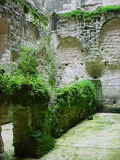
Fulk III castle keep at Loches

