mermaidcamp
Keeping current in wellness, in and out of the water
You can scroll the shelf using ← and → keys
You can scroll the shelf using ← and → keys
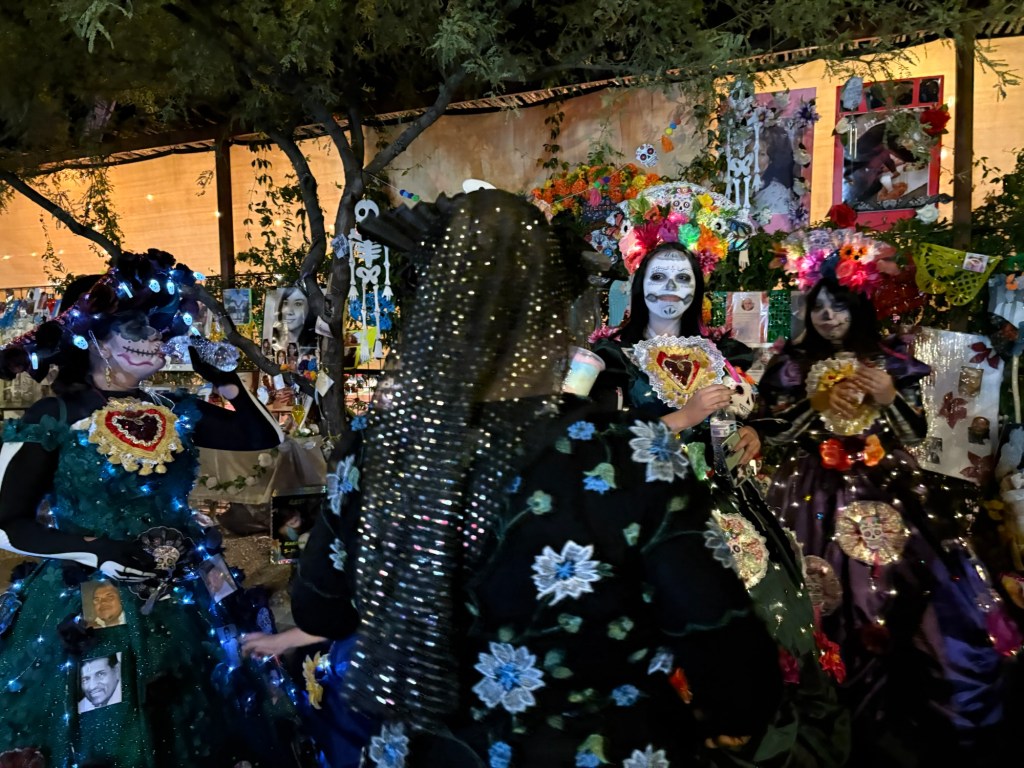
What interior means to the outer layer
Death means to the busy nature of life
Glory, fame, earthly power and pleasure
Disintegrate instantly at the end
Proceed with caution, proceed with care


To what extent does unconscious consent
Rule your decisions?
If you don’t design your life
It will happen by default


Recently public discourse has been a great concern of mine. Some on line acquaintances have chosen to leave platforms or go dark. When one of my friends of many years announced his departure he published an excellent essay about living presence as opposed to on line activity. His words moved me but I was unhappy to lose a view of his daily life.
After consideration of his well written thoughts on privacy and awareness I decided to stay but make new use of the platform I have now. The poet who writes here is a part of my archetypal make up. It’s an artistic skill I want to develop as a tribute to my famous poet ancestor, Anne Dudley Bradstreet. I decided to channel myself into this practice in order to extract myself from the current political debate. I have not found participation in on line politics to be fruitful use of my time or energy. It seems to be a catalyst for social collapse.
I’m sticking with the idea that writing poetry is the most effective method of self care I know. It’s my current way to communicate on the internet without generating vexation. I certainly hope I become better at it, but for now it’s what I do. When I take care of dogs I sing improvisation dog songs in which my current client is the star. They often begin with so and so is a good dog, a funky good dog. They always get it and have no criticism of my work.


These phony fellows and the lies they bellow
Are harshing my mellow
Spurious claims of innocence
Fall flat
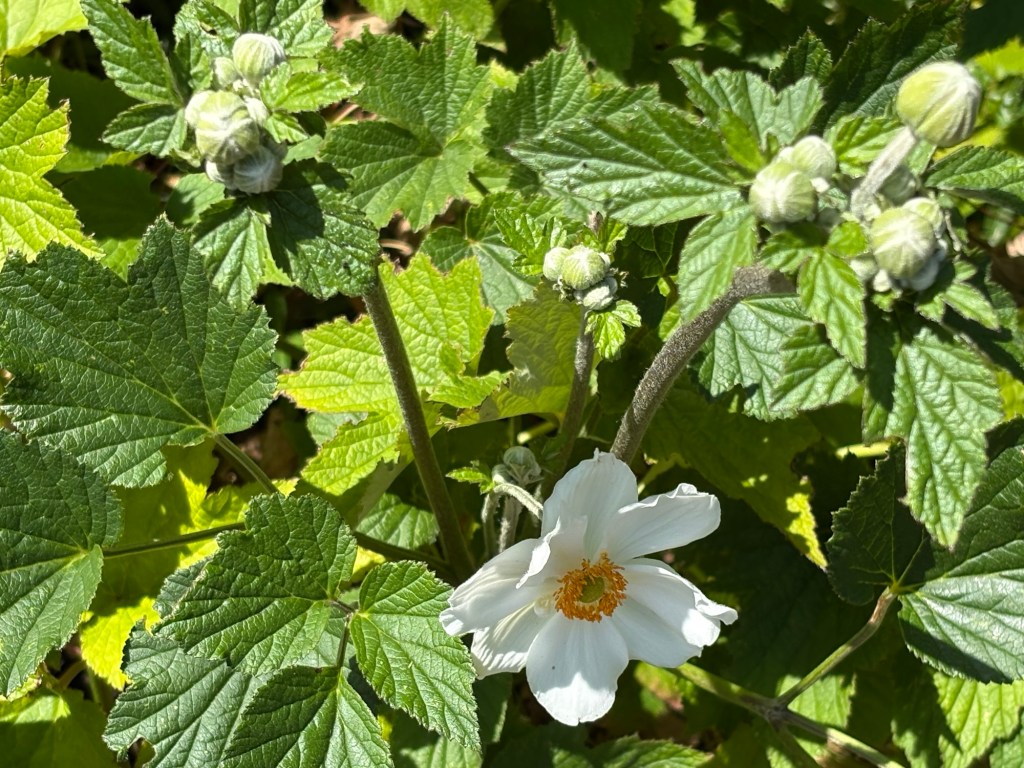

Editing the content keeps the story tight
Bringing on conclusions that lead to nowhere
Mendacious fables crowd out the truth
Offering colorful excuses for deprivation


Accumulating karma is hard to avoid
Bringing to the surface the drama of secrets
Watching objectively as things claim space
Allowing debris from life to settle
We find fantastic reasons to let go

Sneaking up on us is an ominous sign
Shadows of ancient trespasses cloud the landscape
Which one of these aging issues
Is ready to explode into flames of violence
For the repressed ideas it represents?


Wonder into history for a glimpse
Into the way our ancestors were treated
Review how little was considered luxury
Remind yourself how they traveled
Imagine being part of the Wild West
Congratulations are in order for those
Who survived so we can be alive today


My eighth great-grandfather was born in Glamorganshire, Wales in 1678. Rev. Henry Nicholls received a B.A.in 1703 and an M.A. in 1705 from Jesus College, Oxford, Wales. He was sent to Pennsylvania, 1702-1708, during the reign of King James II. In 1707 he married my eighth great-grandmother, Elizabeth Gatchell of Chester, Pennsylvania.
Henry Nichols was the first residential missionary to Pennsylvannia for the “Society for Propagation of the Gospel in Foreign Parts”, arriving in 1703. His churches were located in Chester, Concord, Radnor, and Montgomery. The Chester Church is described as of good brick fabric, one of the neatest on the continent, furnished with handsome furniture and rews. The members were regular and constant in divine worship, and they contributed 60 pounds a year toward their pastor’s support. The Radnor Church is still in excellent preservation, known as St. David’s Church and has been in use since 1708. Rev Nichols requested a transfer in 1708 and became rector at St. Michael’s Parish Church. Talbot Co., MD – a post he occupied until his death. For years, all records of his life were lost. The early church books had disappeared! Until June 1878 when workmen, employed to demolish the old church building, found his tomb under the Chancel in good preservation.
The following is a translation of the Latin inscription found on the slab over his tomb: “Here lies the remains of Henry Nicols, M. A., formerly a Fellow of Jesus College, Oxford, England, and a pastor of this church for 41 years – most unworthy. Born April 1st, 1678; died Feb. 12, 1748. Save his soul, O Christ for Thy own merits. Tread upon salt without savor.” (Henry has ordered these works to be inscribed before his death.) A number of his descendents still worship at St. Michael’s Church. They placed a tablet there to his memory where he ministered for so long. (From the Historical Magazine of the Protestant Episcopal Church, 1943, by Mary Clement, M. A., Principal of the Girls County School Board, Bridgend, Glamorganshire, Wales.)
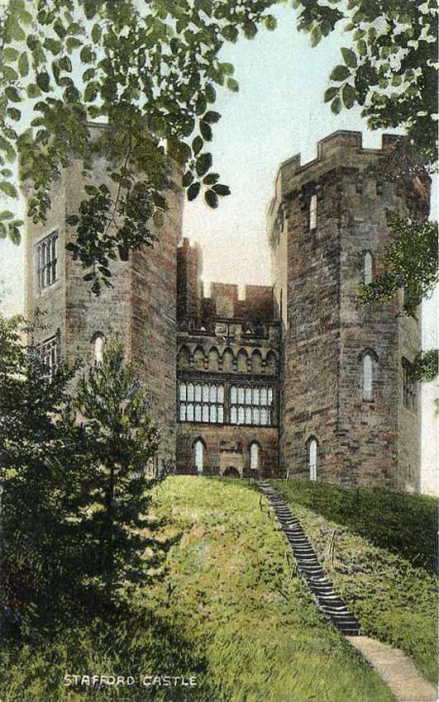 Stafford Castle
Humphrey married Margaret Beaufort, daughter of Edmund Beaufort, 2nd Duke of Somerset and Eleanor Beauchamp. Her maternal grandparents were Richard de Beauchamp, 13th Earl of Warwick and his first wife, Elizabeth Beauchamp, 4th Baroness Lisle. She was also a first cousin to Anne Neville, 16th Countess of Warwick and through her cousin-by-marriage to Richard Neville, 16th Earl of Warwick, the so-called “Kingmaker” during the Wars of the Roses. Humphrey and Margaret had a single son Henry Stafford, 2nd Duke of Buckingham (4 September 1455 – 2 November 1483).
Humphrey fought under his father-in-law in support of the House of Lancaster during the First Battle of St Albans. He appears to have been badly wounded at this battle but actually survived for a least another 2–3 years. This may account for his disappearance from the contemporary records of the time. In 1458 he died from the plague.
The First Battle of St Albans, fought on 22 May 1455 at St Albans, 22 miles (35 km) north of London, traditionally marks the beginning of the Wars of the Roses. Richard, Duke of York and his ally, Richard Neville, Earl of Warwick, defeated the Lancastrians under Edmund, Duke of Somerset, who was killed. York also captured Henry VI, who appointed him Constable of England.
The Lancastrian army of 2,000 troops arrived at St Albans first, and proceeded to defend it by placing troops along the Tonman Ditch and at the bars in Sopwell Lane and Shropshire Lane. The 3,000-strong Yorkist army arrived and camped in Keyfield to the east. Lengthy negotiations ensued with heralds moving back and forth between the rival commanders. After several hours, Richard, despairing of a peaceful solution, decided to attack. The bulk of Henry’s forces were surprised by the speed of Richard’s attack; most of the army was expecting a peaceful resolution similar to the one at Blackheath in 1452. However, two frontal assaults down the narrow streets against the barricades made no headway and resulted in heavy casualties for the Yorkists.
Warwick took his reserve troops through an unguarded part of the town’s defences, through back lanes and gardens. Suddenly the Earl appeared in the Market Square where the main body of Henry’s troops were talking and resting. There is evidence they were not yet expecting to be involved in the fighting, as many were not even wearing their helmets. Warwick charged instantly with his force, routing the Lancastrians and killing the Duke of Somerset.
On the Earl’s orders, his archers then shot at the men around the King, killing several and injuring the King and the Duke of Buckingham. The Lancastrians manning the barricades realised the Yorkists had ouflanked them, and fearing an attack from behind abandoned their positions and fled the town.
The First Battle of St Albans was relatively minor in military terms, but politically was a complete victory for York and Warwick: York had captured the King and restored himself to complete power, while his rival Somerset and Warwick’s arch-enemies Henry Percy, 2nd Earl of Northumberland, and Lord de Clifford both fell during the rout.

.
His maternal grandparents were Ralph de Neville, 1st Earl of Westmorland and Joan Beaufort, Countess of Westmorland. His maternal uncles included (among others) Richard Neville, 5th Earl of Salisbury (father ofWarwick, the Kingmaker), Robert Neville who was first Bishop of Salisbury and then Bishop of Durham, William Neville, 1st Earl of Kent and Edward Nevill, 3rd Baron Bergavenny. His most prominent maternal aunt was Cecily Neville, wife of Richard Plantagenet, 3rd Duke of York and mother to among others Edward IV of England, Edmund, Earl of Rutland, George Plantagenet, 1st Duke of Clarence and Richard III of England.
Lord Stafford fought under his father-in-law in support of the House of Lancaster during the First Battle of St Albans. He appears to have been badly wounded at this battle, but either eventually died of his wounds or from the plague, predeceasing his own father in 1458.
Stafford married Lady Margaret Beaufort, daughter of Edmund Beaufort, 2nd Duke of Somerset and Lady Eleanor Beauchamp. Her maternal grandparents were Richard de Beauchamp, 13th Earl of Warwick and his first wife Elizabeth Berkeley. By her father, she was a niece of Joan Beaufort, Queen of Scots and a cousin to Lady Margaret Beaufort (mother of King Henry VII). By her mother, Lady Margaret was a niece of Anne de Beauchamp, 16th Countess of Warwick and as such, a cousin to Isabel, Duchess of Clarence and queen consort Anne Neville.
Lord and Lady Stafford had a single son, Henry (4 September 1455 – 2 November 1483). Henry was styled Earl of Stafford on his father’s death, and succeeded his paternal grandfather as Duke of Buckingham in June 1473, following the latter’s death at the Battle of Northampton on 10 July 1460.
 mermaidcamp