mermaidcamp
Keeping current in wellness, in and out of the water
You can scroll the shelf using ← and → keys
You can scroll the shelf using ← and → keys
And all the men and women merely players;
They have their exits and their entrances,
And one man in his time plays many parts,
His acts being seven ages.
William Shakespeare sets out seven ages of man in this monologue from As You Like it. Carl Jung used characters as archetypes to describe the different aspects of one human life. These archetypes are played out in ancient Greek drama and mythology. From biblical proverbs to modern fiction characters based on eternal qualities of humanity are employed to tell stories. We embody different characters during our journey toward the end of life, sometimes joyous and other times somber. We act as students and as guides, as teachers and as pilgrims. Our energies are spent on our greatest passions, and we become known for our most obvious traits. Both our view of the world and the world’s view of us is constantly changing. The way we relate to one group may be different from the way we act toward another one.
Before we die we play parts that we have never considered. The soul is intricate and connected to the past as well as the future. Spirit and soul demand that our basic clay be sculpted into figures that arise from our dreams. The figures are fired in a kiln of experience and discernment. We are asked to step out on a ledge of unknowing in order to satisfy our inner longings. Some of our feelings come from the ancestors and some from our society. By observing our inner lives we can make the acquaintance of our own archetypes at work. By looking into patterns from the past and present we may notice how we fit into the story with other archetypes, the other players on the stage with us.
October is time for costuming and honoring the dead. Let us notice which characters cross our paths, and which ones we are playing. We are the casting directors of our own dramas….scary, isn’t it?

miniature Halloween

Pickens Coat of Arms
My 8th great-grandfather was born in 1644 in France. He died in 1700 in
County Limerick, Ireland. He was a Protestant who fled from religious persecution in France.
Robert Andrew Pickens (1644 – 1699)
is my 8th great grandfather
William Henry Pickens (1670 – 1735)
son of Robert Andrew Pickens
Andrew Sr Pickens (1699 – 1756)
son of William Henry Pickens
Jean Pickens (1738 – 1824)
daughter of Andrew Sr Pickens
Margaret Miller (1771 – 1853)
daughter of Jean Pickens
Philip Oscar Hughes (1798 – 1845)
son of Margaret Miller
Sarah E Hughes (1829 – 1911)
daughter of Philip Oscar Hughes
Lucinda Jane Armer (1847 – 1939)
daughter of Sarah E Hughes
George Harvey Taylor (1884 – 1941)
son of Lucinda Jane Armer
Ruby Lee Taylor (1922 – 2008)
daughter of George Harvey Taylor
Pamela Morse
I am the daughter of Ruby Lee Taylor
The following information was compiled by Mrs. Wendell Pickens, Costa Mesa, California.
The old, old story of Robert Pickens I, handed down to us by tradition, tells us that in the last half of the seventeenth century there was a man in France, probably of Scottish birth, by the name of Robert Pickens, who, it is said, held an official position as Chief Justice of the Court, and who was probably a Protestant of the Presbyterian Church. In this account of the Pickens family, he will be known to us as Robert Pickens I.
The name of his wife has been handed down to us as Esther Jane Bonneau, who, it is said, was a widow, possessing unusual beauty and was of the Huguenot faith.
When the Edict of Nantes was unwisely and unjustly revoked 22 October 1685, the persecution of the Protestants in France became so intense that large numbers of useful, as well as rich inhabitants of France, were forced to leave their native land and seek a place of safety in other countries where their industry, wealth and skill found a hearty reception. Robert Pickens I and his wife, with a large number of other refugees, fled to Scotland leaving France by way of La Rochelle, a fortified city of about eighteen thousand people, on the west coast of France.
We do not know how long Robert Pickens I lived in Scotland; but, after a time, we find his living at Limerick, Ireland, where he was living at the end of the seventeenth century.
We have no record of how many children Robert Pickens I had; but tradition tells us that at least three sons came to America to seek their fortunes in the New World, which at that time was being settled.
The names of the three sons of Robert Pickens I, who, we were told came to America, were: Andrew Pickens, John Pickens, Robert Pickens. We do not know the dates of birth of Andrew and John Pickens, but Robert Pickens was born at Limerick, Ireland, in 1697. It is known that these three brothers came to America; but is believed they did not come at the same time, because they did not settle at the same place in the New World. Robert Pickens I and his wife, it is said, were buried at Limerick, Ireland.
A son of Andrew [aka Andre’ Picon] and Isobell (Matthisone) Picken(s), Robert [aka Rob’ert Andre’ Picon] married widow Lady Ester Jeanne (le Benoit) le Bonneau in 1665 in La Rochelle, Charente-Maritime, France.
Known child:
1) William Henry Picken(s) (1669-1735), m: Margaret Pike.
NOTE: This ancestor is still being researched. Available sources have some conflicting information, but the facts seem to hold up that the Pickens family was originally from Ireland by way of Scotland. At some point, some family members fled to France and records show a French spelling of the name; i.e. Henri’ Picon. Some members were actually born in France during this time period, which most likely caused the confusion of ancestral roots.
Excerpt from General Andrew Pickens (1739-1817) letter to General Lee in 1811:
“There seems to be some support for the claim that one ROBERT PICON, a Scotchman or Briton at the court of France was a Protestant who fled from Scotland in 1661 to avoid persecution of Charles II. In France he is said to have married Madam Jean Bonneau, also a Protestant. They fled France after the revocation of the Edict of Nantes by King Louis XIV in 1685. Tradition continues that they went to Scotland, later to North Ireland.”
Miss Eliza Pickens, a gr-granddaughter of General Andrew Pickens, in a paper prepared for D.A.R., said: “General Andrew Pickens’ first home was in Bucks Co PA. The Pickens were French Huguenots and left France after the revocation of the Edict of Nantes by King Louis XIV in 1685. General Pickens’ gr-grandfather, Robert Pickens held a good position in France and with every inducement to remain, but he refused to live under Roman Catholic rule. He married an accomplished young widow, Madam Bonneau.”
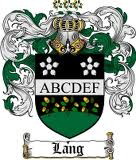
Lang Coat of Arms
My 9th great-grandmother was born in Dedham, Essex, England and died in Portsmouth, Rhode Island. She arrived in Salem with her second husband by 1630, but had a hard life in the new world. Her husband abandoned her, but she won a suit against him for support in Rhode Island:
June 5, 1665 Rhode Island Records
“ Wheras ther hath ben a petition presented to this presant Asembly margrett porter the wife of John porter of This jurisdicyion of Rhod Iland &c; in which The said margrett doth most sadly Complaine that her said husband is destitute of all Conjugall Love towards her, and sutable Care of her; is gone from her and hath Left her in such a nessesetous stat that unavoydably she is Brought to a meane dependance upon her Children for her Dayly suply, to her very great griffe of heart. and the Rather Considering that ther is in the hands of her said husband a very Competant Estat for both ther subsistance; and Thervpon the said margrett hath most Earnnestly Requested this gennerall asembly to take Care of her and to take her deplorable Estate Into your serious Consideration, as to make some sutable provition for her Reliefe out of the Estate of her husband, and that spedily before both hee and it be Convayed away.
“The Court therfore Taking the matter in to ther serioues Consideration and being Thoroughly satisfied, both by Common fame and otherwise, That the Complaints are True; and that the feares premised of convaying at least his Estate away are not without grownds; and haueing a deep sence upon ther hearts of this sad Condition which this poore anciante matrone is by this menes Reduced into…bee it by the said Court and the authority thereof decreed and Enacted that all the Estate, bothe personall and Reall of the above said John porter, Lying and Being in this Jurisdiction is hearby secured as if actually seazed upon and deposited for The Reliefe of the aforesaid Complainant…untill hee hath settled a Competent Reliefe upon his ageed wife to her full satisfaction…”
Rhode Island colonial records
The following is excerpted from an article in The American Genealogist, July, 1998, Vol. 73, No. 3, p.180,
“Reconstructing Sarah (Odding) Sherman, wife of Philip Sherman of Portsmouth, Rhode Island,” by Patricia Law Hatcher :
The life of Margaret Lang Odding Porter was not one of stability. She was probably born by 1590 and married by 1610 to William Oddyn, a weaver.
In 1612 she was left with a small daughter, Sarah. Sometime before 1633, probably before 1629, she married John Porter, likely in Braintree. John and Margaret had a daughter, Hannah, probably born in England.
John, Margaret, Sarah and Hannah came to Roxbury during 1633, where they joined the church late that year. John Porter and his son-in-law, Philip Sherman ( Sarah’s husband ) were amongst those who broke from the Roxbury church.
Margaret was uprooted again, moving to Portsmouth, RI by 1638. Her life there was not a happy one as John abandoned her by 1665, moving to Pettaquamscutt and apparently taking up with another woman. Margaret was obliged to petition the court for relief. This court action was the last mention of her in the records.”
Margaret Lang (1590 – 1671)
is my 9th great grandmother
Sarah Odding (1609 – 1681)
daughter of MARGARET Lang
Eber Sherman (1634 – 1706)
son of Sarah Odding
Mary Sherman (1688 – 1751)
daughter of Eber Sherman
Thomas Sweet (1732 – 1813)
son of Mary Sherman
Thomas Sweet (1765 – 1844)
son of Thomas Sweet
Valentine Sweet (1791 – 1858)
son of Thomas Sweet
Sarah LaVina Sweet (1840 – 1923)
daughter of Valentine Sweet
Jason A Morse (1862 – 1932)
son of Sarah LaVina Sweet
Ernest Abner Morse (1890 – 1965)
son of Jason A Morse
Richard Arden Morse (1920 – 2004)
son of Ernest Abner Morse
Pamela Morse
I am the daughter of Richard Arden Morse

Fulk III, Count of Anjou
My 30th great-grandfather was an extreme personality. He was a crusader and founder of religious orders. He was also a completely furious nut with little restraint. He left his mark on history.
Fulk III The Black Count of Anjou ( – 1040)
is my 30th great grandfather
Ermengarde Blanche D Anjou Countess Gastinois (1018 – 1076)
daughter of Fulk III The Black Count Anjou of
Fulk Le Rechin Rude Anjou (1043 – 1109)
son of Ermengarde Blanche D Anjou Countess Gastinois
FULK V The Younger King of Jerusalem ANJOU * (1092 – 1143)
son of Fulk Le Rechin Rude Anjou
Sibilla Anjou (1105 – 1165)
daughter of FULK V The Younger King of Jerusalem ANJOU *
Marguerite De LORRAINE (1135 – 1194)
daughter of Sibilla Anjou
Isabelle De Hainault (1170 – 1190)
daughter of Marguerite De LORRAINE
Louis VIII France (1187 – 1226)
son of Isabelle De Hainault
Charles I King of Jerusalem and Naples (1227 – 1285)
son of Louis VIII France
Charles NAPLES (1254 – 1309)
son of Charles I King of Jerusalem and Naples
Marguerite Sicily Naples (1273 – 1299)
daughter of Charles NAPLES
Jeanne DeVALOIS (1294 – 1342)
daughter of Marguerite Sicily Naples
Philippa deHainault (1311 – 1369)
daughter of Jeanne DeVALOIS
John of Gaunt – Duke of Lancaster – Plantagenet (1340 – 1399)
son of Philippa deHainault
Elizabeth Plantagenet (1363 – 1425)
daughter of John of Gaunt – Duke of Lancaster – Plantagenet
John Holland (1395 – 1447)
son of Elizabeth Plantagenet
Henry Holland (1430 – 1475)
son of John Holland
Henry Holland (1485 – 1561)
son of Henry Holland
Henry Holland (1527 – 1561)
son of Henry Holland
John Holland (1556 – 1628)
son of Henry Holland
Gabriell Francis Holland (1596 – 1660)
son of John Holland
John Holland (1628 – 1710)
son of Gabriell Francis Holland
Mary Elizabeth Holland (1620 – 1681)
daughter of John Holland
Richard Dearden (1645 – 1747)
son of Mary Elizabeth Holland
George Dearden (1705 – 1749)
son of Richard Dearden
George Darden (1734 – 1807)
son of George Dearden
David Darden (1770 – 1820)
son of George Darden
Minerva Truly Darden (1806 – 1837)
daughter of David Darden
Sarah E Hughes (1829 – 1911)
daughter of Minerva Truly Darden
Lucinda Jane Armer (1847 – 1939)
daughter of Sarah E Hughes
George Harvey Taylor (1884 – 1941)
son of Lucinda Jane Armer
Ruby Lee Taylor (1922 – 2008)
daughter of George Harvey Taylor
Pamela Morse
I am the daughter of Ruby Lee Taylor
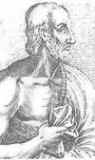
Fulk III, Count of Anjou
Foulques III “the Black” Count of Anjou (d’Anjou), Comte de AnjouFulk III “the Black”, born circa 966, was the son of Geoffrey Grisegonelle “Greymantle” or “Grey Tunic”. He one of the most remarkable figures of his period and the most powerful member of the dynasty. Fulk ruled Anjou for 53 years. He was both cruel and devotional, and had a violent and pious temperament. He was partial to acts of extreme cruelty and penitence. A temperamental, passionate and unbalanced character, his most heinous act was having his first wife (and cousin), Elisabeth of Vendôme, burned at the stake in her wedding dress, after discovering her with a goatherder in December 999. Fulk came into conflict with the Counts of Rennes, he conquered and slew Conan I of Rennes at the Battle of Conquereuil on 27 June 992. He then extended his power over the Counties of Maine and Touraine. He died at Metz, while on pilgrimage. Fulk was an old man when he decided to make what might be his last pilgrimage, as penance for his sins. The first night he stayed at the abbey of St. Maur-sur-Loire, where he learned more about the life of St. Maur. Fulk became overcome with passion and devotion in the Holy Lands. Previously Fulk was known as “the Black.” Fulk died in Metz while returning from his last pilgrimage. He is buried in the chapel of his monastery at Beaulieu. By his first wife Elisabeth, he left one daughter, Adela. By his second wife (1001), Hildegard of Sundgau, he had two children, Geoffrey Martel, who was his successor, and Ermengard. A writer said of Fulk III that “he was a plunderer, murderer, robber, and swearer of false oaths, a truly terrifying character of fiendish cruelty, founded not one but two large abbeys. This Fulk was filled with unbridled passion, a temper directed to extremes. Whenever he had the slightest difference with a neighbor he rushed upon his lands, ravaging, pillaging, raping, and killing. Nothing could stop him, least of all the commandments of God.” Fulk III (972 – 21 June 1040), called Nerra (that is, le Noir, “the Black”) after his death, was Count of Anjou from 21 July 987 to his death. He was the son of Geoffrey Greymantle and Adelaide of Vermandois. Fulk Nerra’s castle keep at LochesFulk III was the founder of Angevin power. He was only fifteen when he succeeded his father, and had a violent but also pious temperament, was partial to acts of extreme cruelty as well as penitence. In his most notorious act, he had his first wife (and cousin) Elisabeth of Vendôme burned at the stake in her wedding dress, after he discovered her in adultery with a goatherd in December 999. On the other hand, he made four pilgrimages to the Holy Land in 1002, 1008, and 1038 and, in 1007, built the great abbey at Beaulieu-lès-Loches. As a result, historiography has this to say about him: “ Fulk of Anjou, plunderer, murderer, robber, and swearer of false oaths, a truly terrifying character of fiendish cruelty, founded not one but two large abbeys. This Fulk was filled with unbridled passion, a temper directed to extremes. Whenever he had the slightest difference with a neighbor he rushed upon his lands, ravaging, pillaging, raping, and killing; nothing could stop him, least of all the commandments of God.[1]Fulk fought against the claims of the counts of Rennes, defeating and killing Conan I of Rennes at the Battle of Conquereuil on 27 June 992. He then extended his power over the Counties of Maine and Touraine.Fulk’s enterprises came up against the no less determined and violent ambitions of Odo II of Blois, against whom he made an alliance with the Capetians. On 6 July 1016, he defeated Odo at the Battle of Pontlevoy. In 1025, after capturing and burning the city of Saumur, Fulk reportedly cried, “Saint Florentius, let yourself be burned. I will build you a better home in Angers.” However, when the transportation of the saint’s relics to Angers proved difficult, Fulk declared that Florentius was a rustic lout unfit for the city, and sent the relics back to Saumur.Fulk also commissioned many buildings, primarily for defensive purposes. While fighting against the Bretons and Blesevins, protecting his territory from Vendôme to Angers and from there to Montrichard, he had more than a hundred castles, donjons, and abbeys constructed, including those at Château-Gontier, Loches (a stone keep), and Montbazon. He built the donjon at Langeais (990), one of the first stone castles. These numerous pious foundations, however, followed many acts of violence against the church.Fulk died in Metz while returning from his last pilgrimage. He is buried in the chapel of his monastery at Beaulieu. By his first wife, Elisabeth, he left one daughter, Adela. By his second wife (1001), Hildegard of Sundgau, he had two children, Geoffrey Martel, his successor, and Ermengarde, through whom he was an ancestor of Geoffrey Plantagenet and the Plantagenet kings of England. http://en.wikipedia.org/wiki/Fulk_III,_Count_of_AnjouHe was born on 21 Jun 967 in Anjou, France. He died on 21 Jun 1040 in Metz, France.115 He was buried on 21 Jun 1040 in , Beaulieu-Lès-Loches, 37.16 He was also known as Le Noir The Black. Known as a terrifying character of fiendish cruelty. Plunderer, murderer, robber, and swearer of false oaths. Made 3 or 4 pilgrimages to Jerusalem to atone for his sins . When taken w/ remorse he abandoned himself to incredible penances. Buried at Abbey de St. Pier re de Beaulieu, France.” Not all founders [of monasteries] were known for their kindness. Fulk of Anjou, plunderer, murderer, robber, and swearer of false oaths, a truly terrifying character of fiendish cruelty, founded not one but two large abbeys. This Fulk was filled with unbridled passion, a temper directed to extremes. Whenever he had the slightest difference with a neighbor he rushed upon his lands, rav aging, pillaging, raping, and killing; nothing could stop him, least of all the commandments of God. This appalling man had countless crimes upon his conscience, but when seized with a fit of remorse he abandoned himself to incredible penances. Thus the very tomb of St. Martin, whose monks he had ill-treated, saw him prostrate, with bare feet and in penitent’s dress; and four times during his life he went to Jerusalem as a devout pilgrim, treading half-naked the sorrowful road of the passion while two of his servants flogged him until the blood flowed, crying, “Lord, receive thy perjured Fulk!” ” — Richard Erdoe s, *AD 1000: Living on the Brink of Apocalypse*, 1988 (reprint 1995) p 121 _FA2Parents: Count Of Anjou Geoffroi Ier Grisegonelle D’ANJOU and Countess Anjou Adelaide De VERMANDOIS. Parents: Count Of Anjou Geoffroi Ier Grisegonelle D’ANJOU and Adelaide De Chalon DE VERMANDOIS. Parents: Count Of Anjou Geoffroi Ier Grisegonelle D’ANJOU and Of Vermandois ADELAIDE.Spouse: Hildegarde Of Lotharingia. Count Of Fulk III The BLACK and Hildegarde Of Lotharingia were married after 1000 in , , Anjou, France.115,263 Children were: Comtesse Ermengarde D’ANJOU.Spouse: HILDEGARDE. Count Of Fulk III The BLACK and HILDEGARDE were married. Children were: 1st Baron Of Kendal Ivo Fitzrichard TAILLEBOIS DE REUMAR, Ermengarde Ou Blanche D’ANJOU.Children were: Comtesse Ermengarde D’ANJOU.Spouse: Elizabeth De VENDOME. Count Of Fulk III The BLACK and Elizabeth De VENDOME were married before 989 in , , , France. Children were: Adele De ANJOU.Spouse: Hildegarde De ANJOU. Count Of Fulk III The BLACK and Hildegarde De ANJOU were married in 1000 in Anjou, France.15,20,314,707 Children were: Geoffrey Of Anjou MARTEL, Elizabeth De ANJOU, Geoffroy II De ANJOU, Comtesse Ermengarde D’ANJOU. http://freepages.genealogy.rootsweb.ancestry.com/~lzrslong/b351.htm#P187727 ——————–
Geoffrey’s successor Fulk III Nerra [d.1040], one of the most remarkable figures of his period and the most powerful member of the dynasty, ruled from 987 to 1040. He finally drove his encroaching neighbours back beyond the frontiers of Anjou and built strongly fortified castles along the border of his territory. Fulk’s son Geoffrey II ‘Martel’ (1040-60) pursued the policy of expansion begun by his father and annexed the Vendômois and a part of Maine to Anjou. Because he left no sons, his two nephews, Geoffrey III the Bearded [le Barbu] and Fulk IV ‘the Rude’ [le Réchin], shared the succession. However, they soon came into armed conflict, and Fulk defeated Geoffrey in 1068. Nevertheless, he had to give up most of the lands that Fulk III Nerra had acquired to defend his fief against the claims of the Duke of Normandy. ——————– Fulk III (972 – 21 June 1040), called Nerra (that is, le Noir, “the Black”) after his death, was Count of Anjou from 21 July 987 to his death. He was the son of Geoffrey Greymantle and Adelaide of Vermandois.Fulk III was the founder of Angevin power. He was only fifteen when he succeeded his father, and had a violent but also pious temperament, was partial to acts of extreme cruelty as well as penitence. In his most notorious act, he had his first wife (and cousin) Elisabeth of Vendôme burned at the stake in her wedding dress, after he discovered her in adultery with a goatherd in December 999. On the other hand, he made four pilgrimages to the Holy Land in 1002, 1008, and 1038 and, in 1007, built the great abbey at Beaulieu-lès-Loches. As a result, historiography has this to say about him: “ Fulk of Anjou, plunderer, murderer, robber, and swearer of false oaths, a truly terrifying character of fiendish cruelty, founded not one but two large abbeys. This Fulk was filled with unbridled passion, a temper directed to extremes. Whenever he had the slightest difference with a neighbor he rushed upon his lands, ravaging, pillaging, raping, and killing; nothing could stop him, least of all the commandments of God.[1] . . . un des batailleurs les plus agités du Moyen Âge.[2] ” Fulk fought against the claims of the counts of Rennes, defeating and killing Conan I of Rennes at the Battle of Conquereuil on 27 June 992. He then extended his power over the Counties of Maine and Touraine. Fulk’s enterprises came up against the no less determined and violent ambitions of Odo II of Blois, against whom he made an alliance with the Capetians. On 6 July 1016, he defeated Odo at the Battle of Pontlevoy. In 1025, after capturing and burning the city of Saumur, Fulk reportedly cried, “Saint Florentius, let yourself be burned. I will build you a better home in Angers.” However, when the transportation of the saint’s relics to Angers proved difficult, Fulk declared that Florentius was a rustic lout unfit for the city, and sent the relics back to Saumur. Fulk also commissioned many buildings, primarily for defensive purposes. While fighting against the Bretons and Blesevins, protecting his territory from Vendôme to Angers and from there to Montrichard, he had more than a hundred castles, donjons, and abbeys constructed, including those at Château-Gontier, Loches (a stone keep), and Montbazon. He built the donjon at Langeais (990), one of the first stone castles. These numerous pious foundations, however, followed many acts of violence against the church. Fulk died in Metz while returning from his last pilgrimage. He is buried in the chapel of his monastery at Beaulieu. By his first wife, Elisabeth, he left one daughter, Adela. By his second wife (1001), Hildegard of Sundgau, he had two children, Geoffrey Martel, his successor, and Ermengarde, through whom he was an ancestor of Geoffrey Plantagenet and the Plantagenet kings of England.——————– Fulk III (972 – 21 June 1040), called Nerra (that is, le Noir, “the Black”) after his death, was Count of Anjou from 21 July 987 to his death. He was the son of Geoffrey Greymantle and Adelaide of Vermandois . . . un des batailleurs les plus agités du Moyen Âge.Fulk died in Metz while returning from his last pilgrimage. He is buried in the chapel of his monastery at Beaulieu. By his first wife Elisabeth, he left one daughter, Adela. By his second wife , Hildegard of Sundgau, he had two children, Geoffrey Martel, his successor, and Ermengard. ——————– From Wikipedia, the free encyclopediaFulk died in Metz while returning from his last pilgrimage. He is buried in the chapel of his monastery at Beaulieu. By his first wife, Elisabeth, he left one daughter, Adela. By his second wife (1001), Hildegard of Sundgau, he had two children, Geoffrey Martel, his successor, and Ermengarde, through whom he was an ancestor of Geoffrey Plantagenet and the Plantagenet kings of England.[edit] Notes 1. ^ Erdoes. 2. ^ Achille Luchaire.[edit] Sources * Bachrach, Bernard S. Fulk Nerra, the Neo-Roman Consul, 987-1040: a Political Biography of the Angevin Count. University of California Press, 1993. * Erdoes, Richard. AD 1000: Living on the Brink of Apocalypse, 1988 * Fichtenau, Henry. Living in the Tenth Century, 1991.——————– http://en.wikipedia.org/wiki/Fulk_the_Black ——————– Fulk III, Count of Anjou From Wikipedia, the free encyclopediaBachrach, Bernard S. Fulk Nerra, the Neo-Roman Consul, 987-1040: a Political Biography of the Angevin Count. University of California Press, 1993. Erdoes, Richard. AD 1000: Living on the Brink of Apocalypse, 1988 Fichtenau, Henry. Living in the Tenth Century, 1991.THE ORDER OF SAINT JOHN:”Pilgrimage to sites regarded as holy is as old as mankind” (Riley-Smith, 3). Surviving accounts of journeys to Jerusalem date from the year 333. After Jerusalem fell to the Muslims, in 638, there were fewer visitors because of the uncertainy of safety. By the time of the first millenium, in the year 1000, people tried to again make these pilgrimages to the Holy Lands. This was most likely because of the omens about the world ending with the return of the anti-Christ and the return of their Savior to oust the Devil.Early in the 11th century (in the 1030s) many more people were making pilgrimages to the holy city of Jerusalem. By this period in time, Count Fulk III (972-June 21, 1040) of Anjou was taking his last pilgrimage.Fulk had ruled Anjou for fifty-three (53) years. Fulk was both cruel and devotional. He had a violent and pious temperament. He was partial to acts of extreme cruelty and penitence. His most heinous act was having his first wife (and cousin), Elisabeth of Vendôme, burned at the stake in her wedding dress, after discovering her with a goatherder in December 999.Fulk was an old man when he decided to make what might be his last pilgrimage, as penance for his sins. The first night he stayed at the abbey of St. Maur-sur-Loire, where he learned more about the life of St. Maur. Fulk became overcome with passion and devotion in the Holy Lands. Previously Fulk was known as “the Black.” Fulk died in Metz while returning from his last pilgrimage. He is buried in the chapel of his monastery at Beaulieu. By his first wife Elisabeth, he left one daughter, Adela. By his second wife (1001), Hildegard of Sundgau, he had two children, Geoffrey Martel, who was his successor, and Ermengard.A writer said of Fulk III:Fulk of Anjou [was] plunderer, murderer, robber, and swearer of false oaths, a truly terrifying character of fiendish cruelty, founded not one but two large abbeys. This Fulk was filled with unbridled passion, a temper directed to extremes. Whenever he had the slightest difference with a neighbor he rushed upon his lands, ravaging, pillaging, raping, and killing; nothing could stop him, least of all the commandments of God (un des batailleurs les plus agités du Moyen Âge and Wikipedia.The First Crusade began in the 1090s. Pilgrimages led some Italian merchants to obtain, from the city’s Muslim rulers, the right to maintain a Roman Catholic Church there. In connection with this church, a hospital was established for the pilgrims who contracted various diseases on their journey. When the Crusaders took Jerusalem, the master of the hospital was Gerard de Martignes (d. 1120), from Provencial France. Blessed Gerard, as founder, acquired territory and revenues for his order throughout the Kingdom of Jerusalem and beyond. The pilgrim’s hospital was dedicated to St. John the Baptist and founded around 1070 as part of a Benedictine monastery.Gerard was director of the Hospital of Notre Dame in the Holy City sometime before the Crusaders conquered Jerusalem in 1099. At first, Gerard directed the Hospital under the authority of the Abbot of St. Mary. Later he and his companions left and created a special congregation, adopted a Rule, took vows and were accredited by the Popes. The first papal bull, in their favor, is dated 15 February 1113 and refers to “Gerard, Founder and Governor of the Hospital at Jerusalem and his Legitimate Successors”. This document was adminstered by Pope Paschal II (1099-1118). A sub-order was called “The Canons of the Holy Sepulchre.” They were responsible for guarding the tomb of Christ. Each knight of the Hospitallers was allowed his own four horses and two esquires, while a sergeant had two horses and, from 1302, a sergeant was also allowed one squire. Blessed Gerard’s skull is precerved in the convent of St. Ursula, in Vallette, Malta.Valletta is the capital city of Malta, and is built on the northern half of the Sciberras peninsula, which separates the Grand Harbour from Marsamxett Harbour. Valletta was conceived by Grand Master Jean de la Valette, of the Knights of Saint John. When the knights agreed to make Malta their headquarters, they realized that they needed a defensible city to protect the island against the Turkish hordes. The Turks had already been driven them out of Rhodes, and the they followed them to Malta.At the Grand Master’s request, the Pope sent his own architect, Francesco Laperelli, to plan this city. Laparelli was the great Michelangelo’s assistant. Laparelli arrived in Malta on December 28th, 1565. His plans, for the city, were drawn up within three days. On March 28th, 1565, Valette was officially born. Their new city was christened “Valletta” after the Grand Master Jean de la Valette.Towards the end of 1568, a Maltese architectural engineer, Gerolamo Cassar, took charge of the building of the city. Grand Master Laparelli left for active service in Crete, and died. The body of Jean de la Valette was entombed in the church, called Our Lady of Victory, until St. John’s Co-Cathedral was built. St. John the Baptist is the Patron Saint of the Order. St. John’s was the Order’s church and was accorded the status of Co-Cathedral in 1882 along with the Cathedral at Mdina.Then The Order of the Knights Templar was established in 1119-1120. In 1128, the Order of the Knights Templar is recognized by the Catholic Church. These two Orders were united in the same cause, which was to protect and heal the Christians as they made their pilgrimage to the Holy Lands. Somewhere around 1135-1154, the Hospitallers were made independent of local religious authorities (The Muslims).Pilgrimages were an important part of religious life in the Middle Ages. Out of devotion or penance, men and women made their way to the various shrines of Europe to pay homage to the saints or holy places. The most popular destinations were Santiago de Compostela in Spain, to Rome, and to Jerusalem. Trips to Jerusalem were dangerous, since Jerusalem had been in Muslim hands since the seventh century. In 1016, Caliph Hakin began to persecute Christians, and he tore down the Church of the Holy Sepulchre. Hakim declared himself divine in the same year, and even began to kill his own subjects. Most thought him a madman.In 1095, the Emperor of Bzyantium, Alexius I, Comnenus (1081-1118), asked the Roman Pope to send Christian knights to help him to reconquer eastern Turkey. Eastern Turkey was lost at the Battle of Manzikert in 1071. Thus began the war on God’s behalf.The main “Soldiers of God” were the Hospitallers and the Knights Templars. However, for some reason of dispute, by the thirteenth century, the Templars and Hospitallers were fighting each other in Acre.The Order was also called the “Knights of Malta” and then became the “Knights of Rhodes.” The “Sovereign Military and Hospitaller Order of St. John of Jerusalem,” followed the rule of St. Augustine. After the fall of Acre, in 1291, the Order transferred to Cyprus, then to Rhodes (in 1310), and in 1530 to Malta after being driven out of Rhodes by the forces of Sulieman, “The Magnificent,” in 1530. Note that Sulieman is “Solomon” in English. Sulieman was the sultan of the Ottoman Empire from 1520-1566. The Hospitallers were a major military force in the Meditteranean until they were defeated by Napoleon in 1789. The Order was given protection by Russian Emperor Paul I (1796-1801), and by 1834 it moved its headquarters to Rome with the help of Pope Leo XIII.http://www.ffish.com/family_tree/Descendants_Charlemagne/D1.htm#90http://www.celtic-casimir.com/webtree/2/25579.htm
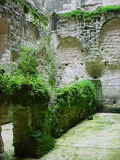
Fulk III castle keep at Loches

Ermengarde Blanche D Anjou Countess Gastinois
My 29th great-grandmother, Ermengarde of Anjou (c. 1018 – 18 March 1076), daughter of Count Fulk III of Anjou and Hildegarde of Sundgau, was born in Angers and was murdered at the Church of Fleurey-sur-Ouche, Côte-d’Or.
Ermengarde-Blanche of Anjou was a French noblewoman who was first Countess of Chateau-Landon and secondly Duchess of Burgundy. She is also called Hermangarde in some sources. Ermengarde-Blanch was the heiress of the countship of Anjou and is an ancestress of the House of Plantagenet.
Ermengarde-Blanc he was the daughter of Count Fulk III of Anjou and Hildegarde. She was involved in two marriage alliances that greatly benefited her father and brother as counts of Anjou. She was first contracted to marry Geoffrey II, Count of Gâtinais, called Ferréol , who was also lord of Château-Landon. It was important marriage to return Château-Landon to the counts of Anjou. It took between twelve and eighteen months to arrange the marriage. Meanwhile Fulk paid a great deal of attention to Château-Landon. He and his wife, Hildegarde, founded the abbey of Le Ronceray. Originally a church dedicated to St. Mary, Hildegard was very active in its rebuilding into an abbey. They gave the abbey many gifts including the forest of Lattay. They gave more gifts to this abbey than any other church or religious house. Her two sons of this marriage, Geoffrey III and Fulk both became counts of Anjou after her brother Geoffrey II Martel. Among her descendants are the Plantagenet (or Angevin) kings of England.
After her husband Geoffrey died Ermengarde-Blanche married Robert I Capet, Duke of Burgundy. Robert was the son of King Robert II of France. Because both Ermengarde and her second husband Robert Capet were both descendants of Ingelger, they were related by blood. This was found in charts prepared at the monastery of Saint-Aubin at Angers between 1048 and 1052. The ancestral charts show how closely the Angevin and Capet families were related. The charts were probably created over concerns of who Ermengarde and Robert’s daughter Hildegarde could or could not marry. Ermengarde-Blanche died at Fleury-sur-Ouche on 18 March 1076. Robert died three days later at the same place on 21 March 1076.
Ermengarde Blanche D Anjou Countess Gastinois (1018 – 1076)
is my 29th great grandmother
Fulk Le Rechin Rude Anjou (1043 – 1109)
son of Ermengarde Blanche D Anjou Countess Gastinois
FULK V The Younger King of Jerusalem ANJOU * (1092 – 1143)
son of Fulk Le Rechin Rude Anjou
Sibilla Anjou (1105 – 1165)
daughter of FULK V The Younger King of Jerusalem ANJOU *
Marguerite De LORRAINE (1135 – 1194)
daughter of Sibilla Anjou
Isabelle De Hainault (1170 – 1190)
daughter of Marguerite De LORRAINE
Louis VIII France (1187 – 1226)
son of Isabelle De Hainault
Charles I King of Jerusalem and Naples (1227 – 1285)
son of Louis VIII France
Charles NAPLES (1254 – 1309)
son of Charles I King of Jerusalem and Naples
Marguerite Sicily Naples (1273 – 1299)
daughter of Charles NAPLES
Jeanne DeVALOIS (1294 – 1342)
daughter of Marguerite Sicily Naples
Philippa deHainault (1311 – 1369)
daughter of Jeanne DeVALOIS
John of Gaunt – Duke of Lancaster – Plantagenet (1340 – 1399)
son of Philippa deHainault
Elizabeth Plantagenet (1363 – 1425)
daughter of John of Gaunt – Duke of Lancaster – Plantagenet
John Holland (1395 – 1447)
son of Elizabeth Plantagenet
Henry Holland (1430 – 1475)
son of John Holland
Henry Holland (1485 – 1561)
son of Henry Holland
Henry Holland (1527 – 1561)
son of Henry Holland
John Holland (1556 – 1628)
son of Henry Holland
Gabriell Francis Holland (1596 – 1660)
son of John Holland
John Holland (1628 – 1710)
son of Gabriell Francis Holland
Mary Elizabeth Holland (1620 – 1681)
daughter of John Holland
Richard Dearden (1645 – 1747)
son of Mary Elizabeth Holland
George Dearden (1705 – 1749)
son of Richard Dearden
George Darden (1734 – 1807)
son of George Dearden
David Darden (1770 – 1820)
son of George Darden
Minerva Truly Darden (1806 – 1837)
daughter of David Darden
Sarah E Hughes (1829 – 1911)
daughter of Minerva Truly Darden
Lucinda Jane Armer (1847 – 1939)
daughter of Sarah E Hughes
George Harvey Taylor (1884 – 1941)
son of Lucinda Jane Armer
Ruby Lee Taylor (1922 – 2008)
daughter of George Harvey Taylor
Pamela Morse
I am the daughter of Ruby Lee Taylor

Anjou Coat of Arms

sunrise
Many of my ancestors came to North America seeking refuge. Most of them had religious problems in the old country that caused their exodus. My Irish family fled the potato famine in the 19th century. I don’t think any of my family came to escape war. When I consider the conditions on a sailing ship in the 17 or 18th century I am amazed that so many survived the journey across the ocean. The earliest arrivals had the most difficult time establishing their culture and society on land that had previously belonged to native peoples. The European settlers conquered the continent and took control of all natural resources to create comfortable lives for themselves. Slave labor was one of the practices that made the cultural dominance swift and complete. The Europeans enslaved Africans and made war on the native people to “win” and develop the land we now occupy. In some places a natural alliance between slaves, former slaves, and native people developed based on strong mutual distrust of the ruling culture.
In school the manifest destiny business is taught to children as if European culture had been sponsored by European God to spread across the North America. Very little mention is made of the treatment of the tribes who opposed the conquest. By the time I was born we had taken all the land we would claim, but had not yet made Hawaii or Alaska states. We still have territories around the world, including in the South Pacific. Our political reach extends beyond the boundaries of our nation in obvious ways. Our military and our intelligence community reach across the globe. In the name of defending democracy the United States has made many enemies. In the precarious balance of worldwide power we play the role of peace keeper. In this role we have fought and are fighting wars on other people’s homeland. No matter which side eventually may surrender the residents who must flee or live in a battle are the real victims of these wars.
Every action has an equal and opposite reaction. The refugees arriving in Europe will not be stopped until the war that they want to escape is contained. The situation is complicated and strained in every way. We can see no winners anywhere from London to Afghanistan. Chaos and suffering are moving across very large landscapes with no remedy in sight. There is not enough money, infrastructure, or housing to deal with the crisis that will continue to flow into Europe. This is the most serious issue in the world right now. Containing the disaster and stopping the violence deserves all civilization’s attention. Compassion is the only responsible response.
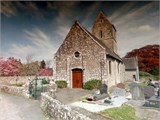
parish church in LaRachelle Normandy
My 8th great-grandfather was born in Normandy, France circa 1670, and died circa 1735 in Pennsylvania. His parents fled after the Edict of Nantes to escape religious persecution. Many Scots-Irish, including these, immigrated to Pennsylvania and joined Dutch Reform churches. My branch of the Pickens family continued on to South Carolina where they formed a Presbyterian congregation.
William Pickens (1670 – 1735)
is my 8th great grandfather
Anne Pickens (1680 – 1750)
daughter of William Pickens
Nancy Ann Davis (1705 – 1763)
daughter of Anne Pickens
Jean PICKENS (1738 – 1824)
daughter of Nancy Ann Davis
Margaret Miller (1771 – 1853)
daughter of Jean PICKENS
Philip Oscar Hughes (1798 – 1845)
son of Margaret Miller
Sarah E Hughes (1829 – 1911)
daughter of Philip Oscar Hughes
Lucinda Jane Armer (1847 – 1939)
daughter of Sarah E Hughes
George Harvey Taylor (1884 – 1941)
son of Lucinda Jane Armer
Ruby Lee Taylor (1922 – 2008)
daughter of George Harvey Taylor
Pamela Morse
I am the daughter of Ruby Lee Taylor
William Pickens was the son of Robert (Andre) Pickens and Esther Jane Benoit. He married Margaret, traditionally Margaret Pike, in Northern Ireland. He died circa 1735 in Bucks County, Pennsylvania.
Traditionally it is said that William Pickens was born in France and was taken to Scotland, then to Northern Ireland, by his parents when the Huguenots fled following the Revocation of the Edict of Nantes in 1685. His mother was French; his father was, according to various theories, either Scot or French. But regardless of his actual ancestry, it is fair to say that William was Scots-Irish.
When James I of England ascended to the throne in 1603, among his main objectives was to Protestantism Northern Ireland. To that end he began an extensive colonization plan that encouraged Protestants from England, Scotland, and even France and Germany, to emigrate to the Ulster Plantation (Northern Ireland). The vast majority of Protestants who settled there during the 17th century were lowland Scots, but those we now call Scots-Irish were not exclusively Scot. What they were, were Presbyterian; what they were not, were Irish.
Well, the Irish Catholics hated the Presbyterians, the Presbyterians hated the Irish Catholics; and the English crown hated both. Over the next 100 years or so, the Scots-Irish Presbyterians had to deal with the Irish who wanted them out of the country, English landlords who charged ever-higher rents, and Anglican ministers who made most of their income by imposing tithes. There was a constant struggle for religious tolerance, civil liberties and political rights. For example, the Scots-Irish could not hold office and were denied representation in government. The “Great Migration” of the Scots-Irish to America began in 1717 and occurred in waves over the next 58 years. With them, the emigrants brought a deep-seated resentment toward the English that would lead to the Revolutionary War and Independence.
It is thought that William and Margaret Pickens arrived in America with their children about 1719. Although the majority of Scots-Irish immigrants to Pennsylvania arrived at the Port of Philadelphia, a significant number came through New Castle, Delaware. It is probably safe to say that William and family arrived at one or the other. Apparently, they settled first in Bensalem, Bucks County, where William Pickens and his wife, and Israel and Margaret Pickens are found in the records of the Low Dutch Reformed Church. On a list of “Newcomers from Earlandt” who joined the church are found.
1719 – Willem Pecken and his wife, by certificate.
1720 – Iserell Pecken by profession.
1722 – Margaret Picken by Profession.6,7
And under “New Church Members from Ireland, Nov. 4, 1724. . .”
The new members from Ireland have been received on letter of attestation and have now become chosen Elders – William Pickens
and his wife.
Also. . .
Israel Pickens by profession of faith.
Margaret Pickens, communicant, June 6, 1724.
The Low Dutch Reformed Church at “Bensalem & Shammenji” was established on 20 May 1710 as a Dutch speaking Reformed congregation under Presbyterian authority. (The Low Dutch should not be confused with “Pennsylvania Dutch” who were German, not Dutch). The early Scots-Irish immigrants to Pennsylvania, having no churches of their own, joined Dutch Reformed churches. In the years that followed they came to outnumber the Dutch at Bensalem. Fearing the loss of their identity, the Dutch congregants withdrew to form a new Dutch Reformed congregation, and by 1730, the Bensalem church was clearly a Scots-Irish Presbyterian Church.
According to Sharp, William’s death in 1735 is recorded in Bucks County and his estate was administered there.

Home in Rhode Island
My 8th great-grandmother was born in 1609 in Cornwall, England and died in Rhode Island in 1681. She sailed to America with her mother, step father, and husband in 1633. The group left Roxbury for Rhode Island because they probably were already Quakers. The Pilgrims made life hard for Quakers.
Sarah ODDYN or ODDING, daughter of William ODDYN or ODDING and Margaret Lang (parents from England). Details on vitals still being confirmed: Birth 05 Feb 1609 in Madron, Cornwall, England; Death 05 Feb 1681 in Kingston, Washington Co., Rhode Island.
Sarah Odding (1609 – 1681)
is my 8th great grandmother
Eber Sherman (1634 – 1706)
son of Sarah Odding
Mary Sherman (1688 – 1751)
daughter of Eber Sherman
Thomas Sweet (1732 – 1813)
son of Mary Sherman
Thomas Sweet (1765 – 1844)
son of Thomas Sweet
Valentine Sweet (1791 – 1858)
son of Thomas Sweet
Sarah LaVina Sweet (1840 – 1923)
daughter of Valentine Sweet
Jason A Morse (1862 – 1932)
son of Sarah LaVina Sweet
Ernest Abner Morse (1890 – 1965)
son of Jason A Morse
Richard Arden Morse (1920 – 2004)
son of Ernest Abner Morse
Pamela Morse
I am the daughter of Richard Arden Morse – (not you?)
Sarah married Phillip Sherman (Shearman), son of Samuel Sherman and Philippa Ward.
Mr Phillip Shearman was one of the 23 signers of the Portsmouth Compact dated 07 March 1638 (13th signer) … a document 138 years older than our Declaration of Independence in 1776.
Sarah and Phillip had perhaps 12 children (other source says they had 11 children and all survived to adulthood):
Eber Sherman1634 – 1706
Sarah (md Mumford) Sherman1636 – 1718
Peleg Sherman Sr. 1638 – 1719
Mary Sherman1639 – 1700
Samson Sherman1641 – 1718
Edmund Sherman1641 – 1718
Sarah Sherman1641 – ?
William Sherman1643 – 1646
John Sherman1644 – 1734
Hannah Sherman1647 – 1717
Samuel Sherman1648 – 1717
Mary (2nd one) Sherman1652 – 1729
Philip Sherman1652 – 1731
*Source: Ancestry.com
References to Phillip Shearman and his wife Sarah Odding (Oddyn) being Quakers:
• “After Phillip Shearman went to Rhode Island he left the Congregational Church and united with the Society of Friends.” (Representive of Men and Old Families of Rhode Island, Volume 1, publisher Jeff Beers & Co, Chicago c1908, page 210).
• “In the meantime, Phillip Shearman, became a member of another religious order, the Society of Friends (Quakers).” (Going to Palmyra: Sherman Deeds, by Margaret Sherman Lutzvick, 1997, page 38).
• “Philip and Sarah Sherman joined the Society of Friends as did their children and their children’s children for two hundred years.” (A New England Heritage, by Frederick Barreda Sherman, c1969, page 64).
• “After he removed to Rhode-Island he left the Congregational Church and united with the Society of Friends.” (New England Historic Genealogical Society, Vol 24 Jan 1870 page 66: Article titled The Sherman Family, By Rev David Sherman).
*SOURCE: Alonzo Sherman (descendant)
Family and descendants:
While still living in Roxbury, in the Massachusetts colony, Sherman married Sarah Odding, the daughter of William and Margaret Odding. He and Sarah had a large family of at least 11 children, most of whom survived childhood, married, and had large families.
Sherman’s mother-in-law, Margaret Odding, married secondly John Porter, another signer of the Portsmouth Compact. With Margaret, Porter had one child, Hannah, who married Samuel Wilbur, Jr., whose father, Samuel Wilbore was another signer of the compact.
Among the many descendants of Philip and Sarah Sherman are former United States Presidents George H. W. Bush and George W. Bush. Other descendants include James S. Sherman, Susan B. Anthony, Janis Joplin, Sir Winston Churchill, Lyndon LaRouche, Conrad Aiken, Mamie Eisenhower, and possibly Marilyn Monroe.
*Source: Wikipedia summary of sources.
Family links:
Spouse:
Phillip Sherman (1610 – 1687)
Burial:
Portsmouth Friends Churchyard
Portsmouth
Newport County
Rhode Island, USA
SARAH ODDING
In the list of admissions to Roxbury church, member #95 was “Sarah Odding. She was step daughter to John Porter & came with her parents & was after married to Philip Sharman of this church”.
COMMENTS: This admission was late in 1633, but her parents were much earlier in the list, and the family probably came to New England on one of the ships that arrived during the early summer. See JOHN PORTER and PHILIP SHERMAN.
In 1998 Patricia Law Hatcher discovered that Sarah Odding was born by 1612, daughter of “William Oddyn” of Braintree, Essex.

politics as usual
One skill that is central to peace of mind and well being is listening. We hear sounds all the time. People talk to us with varying degrees of sincerity and interest. Our job is to distinguish and sort the grain from the chaff. By paying attention it is possible to harvest harmony from the symphony of sounds and sentences we hear. To listen with compassion is a difficult task. Defending our own position rather than truly comprehending other points of view is one of the most common substitutes for listening. Understanding others is not a sign of weakness but a sign of maturity. We can’t agree with everyone, but we can look for ways to increase loving kindness in our lives. To love thy neighbor as thyself involves a degree of allowing that neighbor to express himself. As we in the United States fall deeper into the political season each day I expect some wild rhetoric. To remain happy, detached and centered is my goal. I am setting guidelines for myself ignored to keep my cool and enjoy life while those around me might loose it.
By conscious meditative contemplation I will not only survive but will find my center during the presidential election hoo-ha. I can admit that the last two elections disturbed and distracted me. I became enraged at the robo calls and the parties making them. Now I know that this too shall pass. I am gearing up to listen with compassion and a distinct sense of humor during the political crazy season. I wish you a sane election season, gentle reader. Best of luck.

party
Americans are not financially literate as a group. The depressing collapse of the markets in 2008 followed by a bank bail out has left the country with gross inequity. Working folks with real estate holdings, retirement plans and other investments took big hits while the banks returned to business as usual. Regulations designed to curb the abuses of financial institutions, like Dodd/Frank have not been implemented. We are still in a situation dominated by lenders, bankers, and mortgage brokers. Stock brokers have been able to operate under an assumption that suitable, reasonable investments were the only offers made to clients. In reality any system that is commission based encourages transactions. The broker makes a cut from each trade, and wants to maximize the client’s contribution to his total commission. His company also rewards him for selling in house products by offering a higher commission for the sale than competitive products may have. The client becomes the least of the broker’s concern within this structure.
I switched to a fiduciary to manage my investments years ago. I am much more secure and happy with my portfolio since I made the change. I worked with brokers from different brokerages in the past, but never found one with my interests in mind. There is a simple reason for that. The rewards were structured against my financial well being and in favor of trades to create commission. Now I split the profits with my fiduciary firm, which works perfectly. I make as much money as they make. If they make nothing for me I pay them nothing. This incentive to make good decisions for both of us carries weight and works like a charm. I do discuss the strategy a few times a year to make sure we are on the same page, but my involvement is very light. We are in the same financial boat which makes me feel happy.
Brokerages are starting to lobby the public with misleading ads about this new proposed regulation. I urge you to take some time to understand the issues. Brokers pretend that fiduciary responsibility to you will somehow cut you off from good advice. What it will do is make it illegal to sell you products that are not the best investment or the best deal in terms of fees for your situation. This is a protection Americans need to stay financially stable into retirement. Caveat emptor, gentle reader.
 mermaidcamp