mermaidcamp
Keeping current in wellness, in and out of the water
You can scroll the shelf using ← and → keys
You can scroll the shelf using ← and → keys
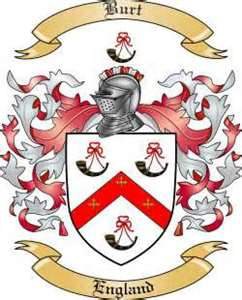
Burt Coat of Arms
Henry Burt (1595 – 1662)
Henry Burt was born about 1595 at Harberton, Devon Co, probably the second son of Henry. He married Ulalia March at Dean Prior, Devon County on December 28, 1619. He came to New England in the Spring or Summer of 1639, and with his wife and seven children settled at Roxbury, MA. Shortly after he settled there, his house was burned, for whatever reason, and, in November of 1639, the General Court made a grant to the town in the amount of 8 Pounds because of the loss . He moved to Springfield in 1640 and was Clerk of the writs (aparently the town recorder). But it is strange that his own childrens’ births are not recorded in the town. He died in Springfield, April 30, 1662.
Henry Burt, Jr
Born: About 1595 in: Harberton, Devon, England Married: December 28, 1619 in: Dean Prior, Devon, England Died: April 30, 1662 in: Springfield, MA
Ulalia March Born: About 1598 in: England Died: August 29, 1690 in: Springfield, MA
We know a lot about his life:
Documented events in his life were:

Aesculapius
I: And the crown? Solve the riddle of the crown for me!”
Soul Bird: “The crown and serpent are opposites, and are one. Did you not see the serpent that crowned the head of the crucified?”
I: “What, I don’t understand you.”
Soul Bird: “What words did the crown bring you?
“Love never ends”-that is the mystery of the crown and the serpent.” ~Carl Jung; Red Book.
Carl Jung was the son of a reform minister who grappled with his own religion throughout his life. He had high aspirations and did some deep Dante style soul searching. His final spiritual expression was the Red Book, published after his death. In it he links symbols to deeper meaning. He was a student not only of mythology and history, but also of the ancient sciences. He studied the astrologers and the work of the alchemists to find clues to the collective consciousness as it has passed down through history. He was interested in Kundalini, the serpent coiled at the base of the energetic spine.
During the time of Christ the GrecoRoman god of healing Aesculapius was still popular. Cures and diagnosis in the cult of this demi god involved dreams and dream healing. His symbol, and indeed his assistants in healing temples, were the snakes. They were deemed to be powerful psychics. The symbol of the snake as natural healer was traded for the image of snake, the temptation of Eve, which got everyone thrown out of the Garden of Eden, reptiles included. We are not sure who lives there now..
If you have dreams of crowns or serpents, pay special attention. Something may be attempting rebirth within your soul.
Andrew Carnegie wrote an essay he called The Gospel of Wealth. This idea came to him after Carnegie had become the wealthiest man in the world. As we check the biblical Gospel for Easter, we should check the reality gospel that is practiced in our nations and neighborhoods. The most disgraceful have been hogging the assets of society, and ultimately of the planet. Symbols of power and politics today are all about over consumption. It does not matter which one— fraud, health care scandals, or useless government busy work are the source of the waste. The point is that our wealth is being used to destroy the general good of the entire society. Our assets are spent to promote shameless partisan destruction of our best interests. We are going morally broke. In 1889 Carnegie wrote:
Thus is the problem of Rich and Poor to be solved. The laws of accumulation will be left free ; the laws of distribution free. Individualism will continue, but the millionaire will be but a trustee for the poor; intrusted for a season with a great part of the increased wealth of the community, but administering it for the community far better than it could or would have done for itself. The best minds will thus have reached a stage in the development of the race in which it is clearly seen that there is no mode of disposing of surplus wealth creditable to thoughtful and earnest men into whose hands it flows save by using it year by year for the general good. This day already dawns. But a little while, and although, without incurring the pity of their fellows, men may die sharers in great business enterprises from which their capital cannot be or has not been withdrawn, and is left chiefly at death for public uses, yet the man who dies leaving behind many millions of available wealth, which was his to administer during life, will pass away ” unwept, unhonored, and unsung,” no matter to what uses he leaves the dross which he cannot take with him. Of such as these the public verdict will then be : “The man who dies thus rich dies disgraced.” ~Andrew Carnegie
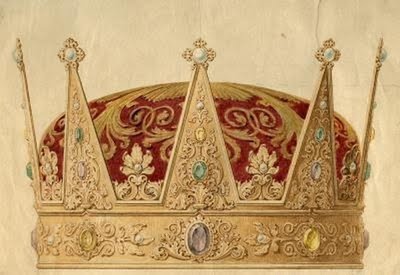
crown
My 26th great-grandmother was born in Wales and died in France. Her mother was a princess of Wales, who also died in France. Her son married a princess of England. Wales in those days was in dispute since the Romans had withdrawn. The various royals were military rivals. The language and ,most of all, the names make the ancient people of Wales funny to research. These are the most confusing names in my tree. As usual, they have various spellings and titles that are used for the same person, so scrutiny is important.
Margred Verch Madog (1150 – 1198)
is my 26th great grandmother
Llewelyn Ap Iorwerth (1173 – 1240)
son of Margred Verch Madog
Elen Verch Llewelyn (1206 – 1253)
daughter of Llewelyn Ap Iorwerth
Isabell Mar (1278 – 1296)
daughter of Elen Verch Llewelyn
Marjorie Bruce (1297 – 1316)
daughter of Isabell Mar
Scotland Stewart Robert (1316 – 1390)
son of Marjorie Bruce
Katherine Stewart (1366 – 1446)
daughter of Scotland Stewart Robert
Margaret Maxwell (1368 – 1443)
daughter of Katherine Stewart
Joanna Montgomery (1390 – 1469)
daughter of Margaret Maxwell
Thomas Boyd (1405 – 1439)
son of Joanna Montgomery
Robert Boyd (1425 – 1470)
son of Thomas Boyd
Annabella Boyd (1449 – 1476)
daughter of Robert Boyd
Robert Lord Gordon (1475 – 1525)
son of Annabella Boyd
CATHERINE GORDON (1497 – 1537)
daughter of Robert Lord Gordon
Lady Elizabeth Ashton (1524 – 1588)
daughter of CATHERINE GORDON
Capt Roger Dudley (1535 – 1585)
son of Lady Elizabeth Ashton
Gov Thomas Dudley (1576 – 1653)
son of Capt Roger Dudley
Anne Dudley (1612 – 1672)
daughter of Gov Thomas Dudley
John Bradstreet (1652 – 1718)
son of Anne Dudley
Mercy Bradstreet (1689 – 1725)
daughter of John Bradstreet
Caleb Hazen (1720 – 1777)
son of Mercy Bradstreet
Mercy Hazen (1747 – 1819)
daughter of Caleb Hazen
Martha Mead (1784 – 1860)
daughter of Mercy Hazen
Abner Morse (1808 – 1838)
son of Martha Mead
Daniel Rowland Morse (1838 – 1910)
son of Abner Morse
Jason A Morse (1862 – 1932)
son of Daniel Rowland Morse
Ernest Abner Morse (1890 – 1965)
son of Jason A Morse
Richard Arden Morse (1920 – 2004)
son of Ernest Abner Morse
Pamela Morse
I am the daughter of Richard Arden Morse
One of my gentle readers, Rick, brought the movie It’s Always Fair Weather to my attention in our discussion of the femme fatale archetype. This 1955 production features some superb dancing, including Gene Kelly doing an early version of Stomp, tap dancing with trash can cover on one foot. WWII changed social roles and put women into the workplace for the war effort. After the war they were expected to be housewives without careers, and without support other than from the man of the house. I can imagine how the most popular actresses who portrayed femme fatale roles must have envied by every housewife in America. Who did not want to be Marilyn Monroe? Cyd Charisse, dancing above, plays a powerful business woman in the movie. She vamps a bit in her dance with the boxers, but she is only a warm up for the real feminist power performance.
The amazing dance number Rick pointed out from the movie is much more outlandish than Diamonds are a Girl’s Best friend or anything Marilyn ever did. Midnight with Madeline is the funniest camp vamp tribute to this character stereotype I have ever seen. Dolores Gray is over the top marvelous in this spoof (??) on Broadway musical style. There had to be at least a few women who enjoyed watching her take control of all the guys in suits. A romp through Hollywood history shows us that the femme fatale role can include socio-political meaning, and satire. Thank you, Rick, for bring this to my attention. It is classic.
Simon Crosby signature on indenture
Simon Crosby, perhaps a brother of Thomas of Cambridge and Rowley, embarked from England in the ship “Susan and Ellen,” April 13, 1635, being then twenty-six years old, with his wife Ann, aged twenty-five, and infant son Thomas, eight weeks old. He settled in Cambridge, Mass., where he was a husbandman and was a proprietor as early as February 8, 1636. He was admitted a freeman in that year, and served as selectman in 1636 and 1638. He had several grants of land, and his estate, later known as the “Brattle place,” passed into the hands of Rev. William Brattle, his residence being at what is now the corner of Brattle street and Brattle square. He died in September, 1639, at the early age of thirty-one years, leaving sons Thomas, born in England; Simon, born in 1637, in Cambridge; and Joseph, 1639, at the same place. The widow married, in 1646, Rev. William Thompson, minister at Braintree, and became the second time a widow at his death, Dec. 10, 1666. She died Oct 8, 1676.
Simon Crosby (1608 – 1639)
is my 10th great-grandfather
Thomas Crosby (1635 – 1702)
son of Simon Crosby
Sarah Crosby (1667 – 1706)
daughter of Thomas Crosby
Sarah Sears (1697 – 1785)
daughter of Sarah Crosby
Sarah Hamblin (1721 – 1814)
daughter of Sarah Sears
Mercy Hazen (1747 – 1819)
daughter of Sarah Hamblin
Martha Mead (1784 – 1860)
daughter of Mercy Hazen
Abner Morse (1808 – 1838)
son of Martha Mead
Daniel Rowland Morse (1838 – 1910)
son of Abner Morse
Jason A Morse (1862 – 1932)
son of Daniel Rowland Morse
Ernest Abner Morse (1890 – 1965)
son of Jason A Morse
Richard Arden Morse (1920 – 2004)
son of Ernest Abner Morse
Pamela Morse
I am the daughter of Richard Arden Morse
Ernest Howard Crosby, In the portion of the family history taken from the October New York Genealogical and Biograpical Record, Surmises that Simon Crosby ‘may have come to America as one of the company of the Rev. Thomas Shepard, who crossed the ocean in that year (1635) and settled at Newtown, now Cambridge, Massachusetts. This Mr. Shepard was preceeded or accompanied by a large number of his freinds and acquaintances. He had taken orders in the Church of England, and had held livings in Yorkshire and Northumberland, but he enertained conscientious scruples regarding the ceremonies of his church, and was consequently so harassed by those in authority that he left England, and became one of the most eminent clergymen in New England. The Chief reason for establishing Harvard College at Cambridge is that he lived there.’
This record goes on to state that before the end of 1635 we find Simon Crosby living at Newtown (Cambridge). He was admitted as a freeman on March 3, 1636 and chosen as a selectman in the fall of that year. In September of 1637 he was elected surveyor of highways; was selectman again in 1638, and in October of that year was elected constable.
On Dec. 5, 1636 land was granted to him and six others for pasture. He died in Cambridge in September 1639, at only 31 years of age. The cause of his death is not known, but we can surmise that his death may have been fairly sudden, since he died intestate. An addendum to Ernest Howard Crosby’s record quoted above says that the original inventory of the estate of Simon Crosby, signed by his widow Anne, is on file in the archives of Massachusetts.
Your dreams are personal and they arise from the collective unconscious as well as your own. We all share a foundation of unknown mythology that our ancestors built into our beliefs. We share, and sometimes rebel against, cultural practices and teachings. To deeply analyze our own psychological types dream work is necessary. The setting and the characters portrayed in dreams are metaphorical players in our spiritual lives. Deeper understanding of our own unconscious leads to better understanding and appreciation for all of life.
There has been an attempt to hijack the word dream and turn it into a house or a car, or that illusive American Dream. The big consumer consciousness promotes purchases of certain items in order to fulfill a dream. It also spotlights outer image as the key to dreaminess. I think it is important to note that marketing experts use the personality types to design ad campaigns and sales persons use them to craft the appropriate pitch for the prospect. The archetype technique is being used strategically to manipulate you and your dreams. If you submit willingly you will buy a lot of stuff with dubious dream fulfillment. Take the reigns, gentle reader. Design your own dreamscapes and accept no substitutes.
In literature and mythology the prince is an archetypal figure. In drama or our lives the prince represents one who must take the mysterious and trying journey to become king. His dark shadow companion is the wanderer, who never accepts reposnsibility and continues to avoid the dignity and responsibility of his royal inheritance. They look a bit like William and Harry, honestly. The prince can be charming or dark in his presentation. He may complete his journey and become king, but there is no guarantee.
Carl Jung identified 4 masculine archetypes, and made the assertion that to be whole man must be in touch with all of them. He also explained the bi-polar potential inherent in each character. They are described as shadow and positive qualities. The soul embarks on an epic journey to mature on earth. The heroes and Prince Charmings of our lives have lessons to teach as well as to learn. When you think of this archetype who pops into your thoughts? Americans have some pretty wild versions of the prince from Disney to the artist formerly and once again known as Prince. How do we know when our American prince becomes a king? tricky..
Elizabeth Bessiles
She was the only child and heiress of William Bessiles, whose family had been settled at Besils Leigh, Berks as Leland says in his quaint language, ‘syns the time of Edward the first’. The Bessells cam out of Provence in France and were ‘men of activitye in feates of arms as it appearith in monuments at Legh; how he faught in listes with a straunge knyghte that challengyd hym, at the whitche deade the kynge and quene at that time of England were present’. (source – http://www.tudorplace.com.ar)
She married Sir Richard Fettiplace.
Elizabeth Bessiles (1465 – 1511)
is my 14th great grandmother
Anne Fettiplace (1496 – 1567)
daughter of Elizabeth Bessiles
Mary Purefoy (1533 – 1579)
daughter of Anne Fettiplace
Susanna Thorne (1559 – 1586)
daughter of Mary Purefoy
Gov Thomas Dudley (1576 – 1653)
son of Susanna Thorne
Anne Dudley (1612 – 1672)
daughter of Gov Thomas Dudley
John Bradstreet (1652 – 1718)
son of Anne Dudley
Mercy Bradstreet (1689 – 1725)
daughter of John Bradstreet
Caleb Hazen (1720 – 1777)
son of Mercy Bradstreet
Mercy Hazen (1747 – 1819)
daughter of Caleb Hazen
Martha Mead (1784 – 1860)
daughter of Mercy Hazen
Abner Morse (1808 – 1838)
son of Martha Mead
Daniel Rowland Morse (1838 – 1910)
son of Abner Morse
Jason A Morse (1862 – 1932)
son of Daniel Rowland Morse
Ernest Abner Morse (1890 – 1965)
son of Jason A Morse
Richard Arden Morse (1920 – 2004)
son of Ernest Abner Morse
Pamela Morse
I am the daughter of Richard Arden Morse

Berkshire flag

Cybele drives the lion chariot
At the Equinox everyone on earth has about the same amout of darkness and light. The sun is close to the equator as it shines for about 12 hours on all parts of the earth for a day. This seasonal shift is of significance to most native cultures. It signals either a lengthening or a shortening of daylight in the months ahead. It creates the conditions for spring planting or fall harvest, depending on the hemisphere in which you live. For a single day, however, we all have the same amount of light and dark in our experience. The literal meaning of the word equinox is equal night. Many calendars begin around the vernal equinox. Romans began the new year on the Ides of March, Astrology uses 21 March as the first of the year, as the Sun moves into Aires. A new year celebration makes sense at this time, as do celebrations to honor rebirth.
The Roman goddess Cybele was associated with rebirth in one of the first Spring break resurrection parties ever held. Romans were all about blood, so they used real bull blood…no chalice of red wine for them. Hilaria was a celebration of resurrection and eternal life held in Rome on the vernal equinox to honor Cybele. She ruled dangerous animals, fertility, and rebirth. She protects civilization. The fact that she is resurrecting her son, Attis, who is also her lover is not a big deal in Roman terms. These things happen in pantheons all the time. After all was ceremonially brought safely back to life Hilaria commenced in a frenzy of joy and mirth. We do not have any evidence of chocolate bunnies, but they were festive in their own Roman way, with orgies, and chariots drawn by lions, castration, and other stuff they liked. Violets are the flower of the day, since the blood of Attis when he died the first time became the violet we pick in the spring. Do not hesitate to decorate your eggs with violets if you want to get down Roman style this year. Unlike our own Virgin Mary, this mother drives a lion chariot, while holding a pineapple, and is on the violent side, so, caveat emptor.
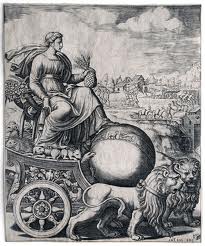
Roman goddess Cybele

Cybele with her lions
 mermaidcamp