mermaidcamp
Keeping current in wellness, in and out of the water
You can scroll the shelf using ← and → keys
You can scroll the shelf using ← and → keys
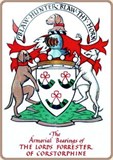
Forrester coat of arms
My 20th great-grandfather, Adam Forrester, was the founder of a clan in Scotland. He became wealthy trading, and had permission to import grain into Scotland without paying duty. His castle no longer exists, but there are parts of the churches he erected in his time that can be seen today. He and his son John held important political offices. The both were Keepers of the Great Seal of Scotland. The clan is without a chief and has been waiting for one for centuries. I want to visit someday, but I do not think they will hand over any clan power to an American woman.
Adam Forrester (1360 – 1405)
is my 20th great-grandfather
John Forrester (1390 – 1448)
son of Adam Forrester
Janet Forrester (1410 – 1488)
daughter of John Forrester
John MAXWELL (1404 – 1484)
son of Janet Forrester
Mariota Maxwell (1430 – 1472)
daughter of John MAXWELL
Annabella Boyd (1449 – 1476)
daughter of Mariota Maxwell
Robert Lord Gordon (1475 – 1525)
son of Annabella Boyd
CATHERINE GORDON (1497 – 1537)
daughter of Robert Lord Gordon
Lady Elizabeth Ashton (1524 – 1588)
daughter of CATHERINE GORDON
Capt Roger Dudley (1535 – 1585)
son of Lady Elizabeth Ashton
Gov Thomas Dudley (1576 – 1653)
son of Capt Roger Dudley
Anne Dudley (1612 – 1672)
daughter of Gov Thomas Dudley
John Bradstreet (1652 – 1718)
son of Anne Dudley
Mercy Bradstreet (1689 – 1725)
daughter of John Bradstreet
Caleb Hazen (1720 – 1777)
son of Mercy Bradstreet
Mercy Hazen (1747 – 1819)
daughter of Caleb Hazen
Martha Mead (1784 – 1860)
daughter of Mercy Hazen
Abner Morse (1808 – 1838)
son of Martha Mead
Daniel Rowland Morse (1838 – 1910)
son of Abner Morse
Jason A Morse (1862 – 1932)
son of Daniel Rowland Morse
Ernest Abner Morse (1890 – 1965)
son of Jason A Morse
Richard Arden Morse (1920 – 2004)
son of Ernest Abner Morse
Pamela Morse
I am the daughter of Richard Arden Morse

Astrological Man
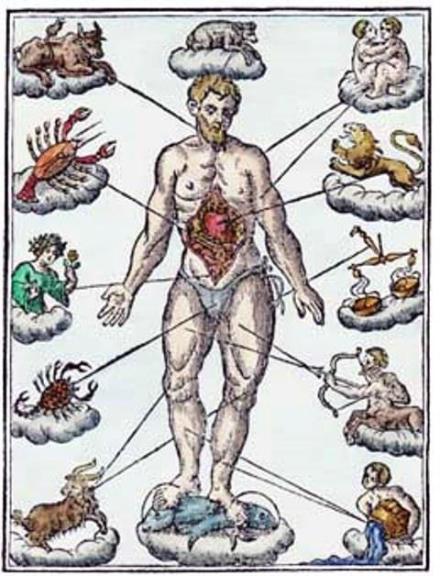
planetary rulers of organs
In the history of medicine the planets and cosmos were the guiding clues that were used to discover treatments and cures. All plants are ruled by planets as are parts of the body. Before YouTube people studied the heavens and did lots of praying. They reached a number of conclusions about cosmology of which most humans today are unaware. Pharmacists, medical doctors and healers used astrology in practice as a matter of course. Everything depended on seasons and the sun. Before we dug coal and oil from the ground civilizations rose and fell because of food supply. Knowing how to make, prepare, gather, and preserve food for the seasons was a matter of life and death. It stands to reason that knowledge of farming and nature was also the only means to improve diet, hygiene and health. Plants are the medicine from which drugs are synthesized now. Plants are the food from which processed foods are prepared today.
Plants were gathered and cultivated to be used as food and medicine. The phases of the moon were and still are important in plant cultivation. More detailed information about the meaning and use of plants was studied by the ancients. In fact, in Basel, Switzerland, arguably the big pharma capital of the world, the botanical garden is smack dab in the middle of the medical school campus. This was the same medical school from which my man Paracelsus was expelled for being a heretic. We like to think we are all that today with our science. I believe we have allowed a much narrower view of life to reign. I think we are made whole and healthy by the cosmos. Smaller, short term thinking is not all that healthy. Taking drugs of unknown origin is the new normal. You might look at these planet guys and think they are silly, but they would not pop pills without any rational reason. We cannot return soon enough to growing, knowing, and using plants as food and medicine. That is what nature intended, gentle readers.
Tara is the magical center of the Emerald Isle. Maeve is the goddess of Tara. A self affirming magical Irish legend, Maeve was the sensual primal woman. Her name means intoxicated woman. She rules sovereignty as well as sexuality. As a symbol of the sovereign, she temporarily married the Kings of Ireland, and rejected those not up to the job. She is perhaps all legend and may have been a real queen.
Celtic women did not suffer the same unequal status as other Euro women. They held property and went to war. Queen Maeve granted sexual favors to the most valiant members of her army as part of standard operating procedures. She, like Cleopatra, was said to have had a multitude of lovers. Her husband had extramarital activity also. They went to war with each other over a bull. She felt the need to have exactly as much property as her husband, and allowed her lusty passion to turn to war. Her story, not recorded, but passed down in Celtic mythology, warns that hot passion can go either way. This wild, drunken, sexy queen had her way with Ireland, and perhaps still does.

Wemyss castle
Mine is a lowland clan derived from the McDuffs. My 21st great- grandmother was born in her own castle in Fife in 1322. It has been rebuilt, but is still privately owned by my family in Fife. I know someone who went to her ancestral castle in Scotland, and was invited in and treated very well by the contemporary royal inhabitants. These clansmen can have a broad idea of family, if you are truly in the bloodline. I am not really expecting the Wemyss clan to welcome and embrace me, but I would not mind seeing the gardens open to the public that have been created by my clan.
Margaret Wemyss (1322 – 1342)
from Electronic Scotland Com. The Scottish Nation – Wemyss:
This Sir David Wemyss, the elder son of Sri Michael, had a son, Sir David Wemyss, who was one of the guarantees for the release of David II., and this baron’s son, also named Sir David, was one of the hostages for that monarch’s ransom. The latter left a daughter, Margaret, married to Sir Patrick de Inchmartine, and by him had a daughter, Isabel de Inchmartine, heiress of that barony. This last married Sir Alan Erskine, and had two daughters, his co-heiresses, Margaret, wife of Sir John Glen, and Isabel, married to Sir John Wemyss of Rires and Kincaldrum, the heir male of the family. Besides the lands he held from his father, and those disponed to him by his father-in-law, he had extensive grants of lands in Fife and elsewhere, from Robert II. and Robert III. He had three sons, the second of whom, Duncan, was one of the hostages on the liberation of James I., and the third, Alexander, was ancestor of the family of Wemyss of Lathocar

Tulsa race riot 1921

Race riot Tulsa 1921
My father, Richard Arden Morse, was a bit of a racist, but did not have any idea of his own pedigree. His great-grandfather came to New York from Ireland during the potato famine with his O’Byrne parents and siblings, who dropped the O’ to assimilate. When asked, my father would say he was Scots Irish. This American term refers to the Ulster Scots, who have all those Orange issues in Northern Ireland. A little flash of orange ribbon drives these people, and their neighbors, completely batty. You would need to be born in Ulster to understand this, I think. The troubles are a completely local phenomena, although both sides have supporters elsewhere.
Richard Arden was born in Independence, Kansas on Feb 18, 1920. In December of 1920 armed violence broke out between white and black citizens of that town. It was a very small town, and this had to be a big impact on the area. In 1921 the city of Tulsa, where I was born, was host to one of the most violent of race wars of all time. The Tulsa racial violence of 2 June, 1921 was distinctly ignored by Oklahoma official history until very recently. I only lived in Tulsa for about 4 years, and my dad also left Independence with his family to live near Ponca City, Oklahoma during his school years.
He was for sure Irish, and when Mr. Scott married Ms Byrne, he was trending Scot again. However, I do not think he knew what any of this meant. I believe that my father’s racial prejudice was a karmic and cultural affliction. He did not openly dislike anyone because of race, but his actions betrayed his deeper ethics. To his credit, he and my mom made an effort not to pass the racist culture on to my brother and me.
Bridget OByrne (1808 – 1880)
is my 3rd great grandmother
James Oscar Byrne (1840 – 1879)
son of Bridget OByrne
Sarah Helena Byrne (1878 – 1962)
daughter of James Oscar Byrne
Olga Fern Scott (1897 – 1968)
daughter of Sarah Helena Byrne
Richard Arden Morse (1920 – 2004)
son of Olga Fern Scott
Pamela Morse
I am the daughter of Richard Arden Morse
Bridget O’Byrne was typical, but lucky. She survived the passage to New York, and most of her kids did also. She had a home in upstate New York. Sarah Helena, her daughter in law, wrote the notes I used to start my tree. The O’Byrnes of Wilna, Jefferson, NY gave their estate to a Catholic church there, and left the records of their family history with that church. A treasure hunt awaits me in upstate New York that may reveal all the Irish information I can handle, including Bridget’s family name. The Catholics of Wilna have my bingo card, and I am grateful.

Grandmothers
The lady on the far right, Emiline P Nichols, was born in Pennsylvania in 1837, moved to Ohio, and then to Kansas. Her daughter, Harriet Peterson (to her left) married an Irishman, James Oscar Byrne, of County Meath. James died the year his daughter, Sarah Helena Byrne (big lady in the middle) was born. He is buried in a Catholic graveyard in Kansas. Without the hardship and adventure endured by James O’Byrne I would not have the luck of the Irish, so I am eternally grateful.

PA and Penn State Teach Fracking
In 1947 you could obtain from the Pennsylvania Mineral Industries Experiment Station a paper written by my father. It cost 25 cents to learn the science behind water flooding from The School of Mineral Industries. He and his friend, Pete Terwillager, a co-author of this paper, would go on to work together to frack many a well.

Science Behind Fracking
This was the work my father did to earn his masters degree before I was born. Water flooding is the subject of this research. When he graduated with his masters he went to work in Tulsa for Stanolind, and so did Pete Terwillager. He obtained a patent for fracking together with Stanolind. Now they were done with water injection as the displacement method, and had moved on to an oil like substance.
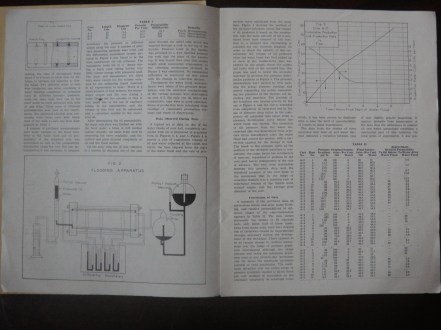
Fracking explained
My father grew up on the Cherokee Strip seeing all kinds of explosions done to procure petroleum. His father, Ernest Morse, drilled for oil with a crew before the invention of the rotary bit, so they were desperate. The fact that he eventually became the first man to make a numerical model of an oil field on a computer made him brilliant. It did not change his relationship with the resources of the earth. The wild-wild west, boomer sooner attitude is the reason they both lost and won. These barons of resources saw themselves as saviors of society. It was years after my father’s death in 2004 that fracking became a subject the public discussed. It came up as if the practice had recently been invented and applied. Not hardly.
Erskine Coat of Arms
My 19th great grandmother was born in Scotland in 1357. Her father married an heiress to become lord of a castle. In a quirk of fate the children were all girls, which devolved the castle to their husbands when they married. Since they had some real estate and political power they married well. Her husband and my 19th great grandfather, John Glen, may or may not be an ancestor of the astronaut.
Margaret Erskine (1357 – 1419)
Little is known regarding the proprietary history of Balhall until shortly before the year 1440. At, and for some time previous to that period, it was possessed by Sir John Glen of Inchmartin, in the barony of Longforgan, which the family de, Inclimartin held from an early date. The first of those who figured conspicuously was John, one of the ten barons selected to make the peace of Scotland with Edward L in 1305; and, on the first appointment of sheriffs in that year, he was chosen for the county of Perth.In the following year, his son Sir David, who had been one of the original followers of Bruce, was hanged, with several other patriots, by order of Edward. His successor — perhaps a son — had a charter from Bruce of the lands of his sires; and about 1376, Sir Allan de Erskyne of Wemyss succeeded to the estates on marrying the heiress. Sir Allan died in 1401, leaving an only daughter, who married Sir John Glen, and the estate of Inchmartin devolved on that knight. He also left co-heiresses, one of whom married Sir Walter de Ogilvy, who succeeded to the half of Inchmartin, and other properties belonging to Glen, of which ” Balhalwell ” (Balhall) formed a part.
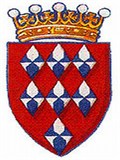
De Burgh Coat of Arms
My 20th great grandmother was born in Ulster, and died in Kildare, Ireland. Her father,Richard Og, was Earl of Ulster and a very powerful man:
Richard Og de Burgh, 2nd earl of Ulster (1259 – July 29, 1326), called The Red Earl, was one of the most powerful Irish nobles of the late 13th and early 14th centuries, a son of Walter de Burgh, the 1st Earl of Ulster (of the second creation) and Lord of Connacht.[1] His name, “Richard Og”, meant Richard the Young, probably a reference to his youth when he became earl in 1271, or to differentiate him from his grandfather, Richard Mor. He was also known as the Red Earl.
Richard Og was the most powerful of the de Burgh Earls of Ulster, succeeding his father in Ulster and Connacht upon reaching his majority in 1280.[1] He was a friend of King Edward I of England, and ranked first among the Earls of Ireland. Richard’s wife Marguerite de Guînes was the cousin of King Edward’s queen. He pursued expansionist policies that often left him at odds with fellow Anglo-Irish lords.
His daughter Elizabeth was to become the second wife of King Robert the Bruce of Scotland. However, this did not stop him leading his forces from Ireland to support England’s King Edward I in his Scottish campaigns and when the forces of Edward Bruce invaded Ulster in 1315, the Earl led a force against him, but was beaten at Connor in Antrim. The invasion of Bruce and the uprising of Felim O’Connor in Connacht left him virtually without authority in his lands, but O’Connor was killed in 1316 at the Second Battle of Athenry, and he was able to recover Ulster after the defeat of Bruce at Faughart.[1]
He died July 29, 1326 at Athassel Priory, near Cashel, County Tipperary.
Children and family
Lady Joan De Burgh, Baroness Darcy (1290 – 1359)
Lady Joan de Burgh was the daughter of Richard de Burgh, 2nd Earl of Ulster and Margaret.1 She married, firstly, Thomas FitzJohn FitzGerald, 2nd Earl of Kildare, son of John FitzThomas FitzGerald, 1st Earl of Kildare and Blanche de la Roche, on 16 August 1312 at Greencastle, County Down, Ireland.2 She married, secondly, Sir John Darcy, 1st Lord Darcy de Knayth, son of Sir Roger Darcy and Isabel d’Aton, on 3 July 1329.3 She died on 23 April 1359.1 From 16 August 1312, her married name became FitzGerald.1 As a result of her marriage, Lady Joan de Burgh was styled as Countess of Kildare on 12 September 1316. From 3 July 1329, her married name became Darcy.3
Children of Lady Joan de Burgh and Thomas FitzJohn FitzGerald, 2nd Earl of Kildare
· John FitzGerald2 b. 1314, d. 1323
· Maurice FitzThomas FitzGerald, 4th Earl of Kildare+1 b. 1318, d. 15 Aug 1390
· Richard FitzGerald, 3rd Earl of Kildare2 b. c 1319, d. 7 Jul 1333
Children of Lady Joan de Burgh and Sir John Darcy, 1st Lord Darcy de Knayth
· Elizabeth Darcy+3
· Aymer Darcy3
· Roger Darcy3
· Sir William D’Arcy+3 b. 1330
Citations
1. G.E. Cokayne; with Vicary Gibbs, H.A. Doubleday, Geoffrey H. White, Duncan Warrand and Lord Howard de Walden, editors, The Complete Peerage of England, Scotland, Ireland, Great Britain and the United Kingdom, Extant, Extinct or Dormant, new ed., 13 volumes in 14 (1910-1959; reprint in 6 volumes, Gloucester, U.K.: Alan Sutton Publishing, 2000), volume VII, page 222. Hereinafter cited as The Complete Peerage.
2. Charles Mosley, editor, Burke’s Peerage, Baronetage & Knightage, 107th edition, 3 volumes (Wilmington, Delaware, U.S.A.: Burke’s Peerage (Genealogical Books) Ltd, 2003), volume 2, page 2298. Hereinafter cited as Burke’s Peerage and Baronetage, 107th edition.
3. Charles Mosley, Burke’s Peerage and Baronetage, 107th edition, volume 1, page 1027.
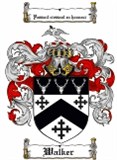
Walker Coat of Arms
My 10th great grandmother was 17 years old when she sailed from London to Salem, MA. She married John Brown soon after arrival in America and moved to New Hampshire. Her husband, who had been a baker, became a ship builder and a very wealthy man. Her sons were all farmers who fought against the Native people in King Philip’s War.
John Brown was born about 1589 in London, England. He emigrated on APR 17 1635 from London, England. *Genealogy of John Brown : “He sailed out of London on the ‘Elizabeth’, 17 April, 1635.” He immigrated in JUN 1635 to Boston, MA. (2646) *Genealogy of John Brown : They arrived in Boston in June 1635 and he remained, as tradition says, in Salem, Massachusetts, until 1638. He died on FEB 28 1687 in Hampton, NH. He is my 9th great grandfather. 9th great grandfather
*Genealogy of John Brown : “John Brown was born in London, England, in 1589 of Scottish parents. For several years he ran a bakery in London and at age fourty-six years decided to go to American Plantations. He sailed out of London on the ‘Elizabeth’, 17 April, 1635. Among his fellow passengers were Sarah Walker, age 17, (later to become his wife) and her brother, James Walker, age 15, who was formerly employed by John in the bakery. John registered at customs as a baker and they registered as servants. Sarah had been in the employ of William Brazey, a linen Draper in Cheapside.
They arrived in Boston in June 1635 and he remained, as tradition says, in Salem, Massachusetts, until 1638. Then John went to Hampton, New Hampshire, where he was one of the first settlers to receive a grant, a tract of four acres, for a house lot, lying near a branch of the river afterwards called Brown’s River. [ Note: This referrs to Browns River, along the Seabrook / Hampton Falls border.]
In 1640 he married Sarah Walker. She was born in 1618, and presumably, left London as a servant to John.” “…the fact that John Brown signed his own name, instead of a mark, shows that his education was not limited, and since he was a single man of fourty-six years when he came to this country, it is presumed that he did not leave London entirely destitute of property but was a man of considerable wealth. This may be one reason why Sarah married a man so much older than herself…”
”John built the first ‘barque’ (small boat) ever built in Hampton in 1641 or 1642 at the river near Perkins Mill.” “… it would seem that this barque was the one that John Green Wittier mentions in his poem, ‘The Wreck of River Mouth’.”
”John was a sober, industrious, hard-working and enterprising man, having made purchases of large additions to his four acres of land in various transactions in the different parts of town. He became one of the largest land owners and the third man of wealth in Hampton, being owner of four farms. He bought of John Sanders in March 1645 house and houselot with 12 acres of upland in the north field next to Morris Hobbs, six acrea of fresh meadow lying by the Great Boar’s Head next to William Fifield’s meadow.
Even though John was a selectman in 1651 and 1656, he never seemed to have taken an active part in town or church affairs. From the records of the court, it appears that John and his sons were engaged considerably in stock, and in 1654 they sued Thomas Swetman for a debt due for two fat oxen, for the want of which money they claimed to have been much damaged.
In 1673 and 1674 he and his eldest son, John, brought suit against the’prudential men’ and also against the Town of Hampton for not causing a road to be built to his farm near the Falls River toward Salisbury, Mass. (now Seabrook, NH). The courts decided in his favor and Landing Raod was built.
All five of John’s sons were farmers and were all engaged in conflict with the Indians in King Philip’s War.”…
*History of Hampton : “John Brown, born in England in 1588 or ’89, emigrated in 1635, and is said to have settled in Hampton as early as 1639. A tract of four acres, for a house-lot, lying near a branch of the river, afterward bearing his own name, was granted to him, though he seems not to have settled there. His residence was on a ten-acre lot bought of John Sanders, on which Zacceus Brown, a lineal descendant of the seventh generation, now resides. He afterward, by purchase, made large additions to this lot, and obtained various other tracts in different parts of the town.”
Note: This refers to Browns River, along the Seabrook/Hampton Falls border.
*E-Mail : “John Browne of Hampton, said to be the son of Sir Angus Browne of Scotland, came to the American colonies from London, England, where he was a baker of considerable means. Embarked on the ship “Elizabeth de London” in April 1635. While on board, he met Sarah Walker, age 17, with her brother, James, age 15, also of London. Reached Salem, Mass. in June 1635. After a few weeks residence there married Sarah and went with the first company of settlers to Hampton, N.H. Was one of richest men in the community. Was a ship builder and made several voyages to England to induce colonists to come to New England.” He was married to * Sarah Walker in 1640.
“In 1669, her brother, John, became violently ill and she cared for him in her home for several years. Sarah died 28 December, 1678 at the age of thirty-five years, being one of the fourty victims of smallpox in Charlestown.”
 mermaidcamp