mermaidcamp
Keeping current in wellness, in and out of the water
You can scroll the shelf using ← and → keys
You can scroll the shelf using ← and → keys
Southworth Coat of Arms

Plimouth Colony
My 9th great-grandmother was born and died in Plymouth Colony. She married Joseph Howland, who was also born in Plymouth.
Joseph Howland [Parents] was born about 1637 in Plymouth, Mass.. He died in Jan
1703 in Plymouth, Mass.. He married Elizabeth Southworth on 7 Dec 1664 in
Plymouth, Ma..
  NOTE: Hubert Kinney Shaw, Families Of The Pilgrims; ; Massachusetts Society of
  Mayflower Descendants; pg. 6; ;
  MARRIAGE:Hubert Kinney Shaw, Families Of The Pilgrims; ; Massachusetts
  Society of Mayflower Descendants; pg. 6; ;
Elizabeth Southworth [Parents] was born in 1645. She died in Mar 1717 in
Plymouth, Ma.. She married Joseph Howland on 7 Dec 1664 in Plymouth, Ma..
  NOTE: Hubert Kinney Shaw, Families Of The Pilgrims; ; Massachusetts Society of
  Mayflower Descendants; pg. 6; ;
  MARRIAGE:Hubert Kinney Shaw, Families Of The Pilgrims; ; Massachusetts
  Society of Mayflower Descendants; pg. 6; ;
They had the following children:
         MiThomas Howland
         MiiJames Howland
         FiiiSarah Howland was born in 1673 in Plymouth, Ma.. She died on 23 Dec
        1703 in Plymouth, Ma..
         FivLydia Howland
         FvElizabeth Howland
         FviMercy Howland
         MviiNathaniel Howland
         MviiiBenjamin Howland was born on 7 Sep 1689 in Plymouth, Ma.. He died
        on 7 Sep 1689 in Plymouth, Ma..
         MixJoseph Howland was born on 8 Jul 1689 in Barnstable, Ma.. He died on
        8 Jul 1689 in Barnstable, Ma..
         FxMary Howland
         FxiElizabeth Howland was born in 1665 in Plymouth, Ma.. She died on 15
        Feb 1723.
Elizabeth Southworth (1645 – 1716)
is my 9th great grandmother
Elizabeth Howland (1673 – 1724)
daughter of Elizabeth Southworth
Eleazer Hamblin (1699 – 1771)
son of Elizabeth Howland
Sarah Hamblin (1721 – 1814)
daughter of Eleazer Hamblin
Mercy Hazen (1747 – 1819)
daughter of Sarah Hamblin
Martha Mead (1784 – 1860)
daughter of Mercy Hazen
Abner Morse (1808 – 1838)
son of Martha Mead
Daniel Rowland Morse (1838 – 1910)
son of Abner Morse
Jason A Morse (1862 – 1932)
son of Daniel Rowland Morse
Ernest Abner Morse (1890 – 1965)
son of Jason A Morse
Richard Arden Morse (1920 – 2004)
son of Ernest Abner Morse
Pamela Morse
I am the daughter of Richard Arden Morse
We see that she is a progenitor of Teddy Roosevelt, and that her roots are Plantagenetial:
1. Theodore Delano Roosevelt 1882-1945 32nd United States President
2. James Roosevelt 1828-1900
3. Mary Rebecca Aspinwall 1809-1886
4. Susan Howland 1779-1852
5. Joseph Howland 1749-1836
6. Nathaniel Howland 1705-1766
7. Nathaniel Howland 1671-1746
8. Elizabeth Southworth 1645-1717
9. Thomas Southworth 1616-1669
10. Edward Southworth 1590-1621
11. Thomas Southworth 1548-1616
12. Sir John Southworth 1526-1595
13. Margarey Boteler 1500-1546
14. Sir Thomas Boteler 1461-1522
15. Margaret Stanley 1433-1481
16. Joan Goushill 1404-1460
17. Elizabeth Fitzalan 1366-1385
18. Elizabeth De Bohun 1350-1385
19. William De Bohun 1312-1360
20. Elizabeth Plantagenet 1282-1316
21. Edward I Longshanks King of Enlgand, Plantagenet 1239-1397
22. Henry III King of England, Plantagenet 1207-1272
23. John of Lackland King of England, Plantagenet 1167-1216
24. Henry II King of England, Plantagenet 1132-1189
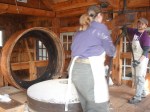
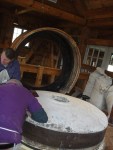

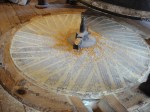


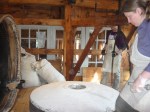



One of the most fascinating displays maintained by Plimouth Plantation is the grist mill. A recent acquisition, the mill grinds corn to show visitors how water powered mills made life possible in the colonies. Because the space is intimate the employees can be very helpful and informative. I learned a lot from my brief visit, and was given some good references to lean more. They employees are very well trained and seem to enjoy working with the visiting public.
If I learned one thing on my ancestry quest in Massachusetts it is that the record keeper is the author of history. I have realized this by finding census and other documents that conflict with each other while studying my ancestors. Never has it been so clear. I believed that the tribe would have the information on the tribe in Mashpee, so I went straight to the museum to inquire. Because they rely on records kept by the Europeans the family trees are reconstructed using English last names. They use what they have. The records looked like they started in the 1800’s.


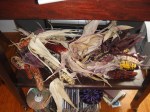


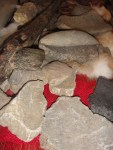
I was unhappy about the state of affairs. The tiny tribal museum has little funding, and can open only a few hours, a couple of days a week. I then traveled to the big well funded museum at Plimouth Plantation. Wow, what a difference!!!



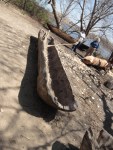



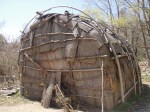

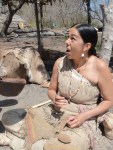


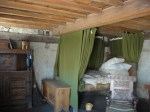


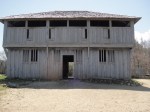

The museum at Plimouth Plantation is doing some revisionist history in order to correct many of the assumptions and erroneous stories that exist about the Mayflower and the native people. The Pilgrims play characters in period costume, expressing the beliefs of the time and place. The Pilgrims were religious prudes who considered themselves religiously superior to all other religions. They also felt entitled to take anything they wanted from the native people because they had permission from the King of England. Their church was fortified on top with cannons in all directions. I guess they felt that God and the King needed some back up. Although I had a few Pilgrims and only one ( I think) Wampanoag ancestor, I distinctly disliked the pretend Pilgrims when I met them. I am, however, glad they kept some records at the time.
Travel is an adventure. I like to take just the right amount of stuff from home to give me extra room in my suitcase. I typically find something I want to buy and bring back home with me. Since I am on a long trip this time I am including an extra duffel bag inside the suitcase for large finds. I have arranged my accommodations, except for the last 3 nights, which I can decide when I get to that. I am meeting friends at the beach, planning a party, and going to a performance. What do I need? What do I want to purchase in New England?
I always take:
I enjoy shopping for or finding:
I know Cape Cod will have all manner of souvenirs, but I typically like things that are out of the ordinary. My friend who lives there makes wampum out of shells, so I look forward to purchasing a special commemorative set of jewels to go with the setting. I doubt that Plymouth Rock, Colony, etc. will have the kind of item I like to buy. I expect the Wampanoag tribe may have some crafts or books at the museum in Mashpee that will interest me. I love to collect stories and history. Since I am visiting many of my ancestors I expect to find some facts I do not know now. I am excited and open for a new culture, new cuisine, new (old) cities and towns, and friends I have not yet met. I have been gardening, supervising a construction project in my home, and working in the office to clear the desk and put all business in order. One thing I never take with me when I travel is my day-to-day concerns. My work is finished here for a couple of weeks. I will bring you along for the fun, gentle reader, as I to discover what is special about Rhode Island and Massachusetts.

My 9th great-grandmother was a published poet. She was born in England and died in Massachusetts. Much is known about her because of her famous father and husband, but for a Pilgrim she was a feminist. Her poems were about cosmology and the elements. She was an intellectual in her own right. This is a good account from http://www.famouspoetsandpoems.com:
Anne Bradstreet
Anne Bradstreet was born in 1612 to a nonconformist former soldier of Queen Elizabeth, Thomas Dudley, who managed the affairs of the Earl of Lincoln. In 1630 he sailed with his family for America with the Massachusetts Bay Company. Also sailing was his associate and son-in-law, Simon Bradstreet. At 25, he had married Anne Dudley, 16, his childhood sweetheart. Anne had been well tutored in literature and history in Greek, Latin, French, Hebrew, as well as English.The voyage on the “Arbella” with John Winthrop took three months and was quite difficult, with several people dying from the experience. Life was rough and cold, quite a change from the beautiful estate with its well-stocked library where Anne spent many hours. As Anne tells her children in her memoirs, “I found a new world and new manners at which my heart rose [up in protest.]”a. However, she did decide to join the church at Boston. As White writes, “instead of looking outward and writing her observations on this unfamiliar scene with its rough and fearsome aspects, she let her homesick imagination turn inward, marshalled the images from her store of learning and dressed them in careful homespun garments.”Historically, Anne’s identity is primarily linked to her prominent father and husband, both governors of Massachusetts who left portraits and numerous records. Though she appreciated their love and protection, “any woman who sought to use her wit, charm, or intelligence in the community at large found herself ridiculed, banished, or executed by the Colony’s powerful group of male leaders.”Her domain was to be domestic, separated from the linked affairs of church and state, even “deriving her ideas of God from the contemplations of her husband’s excellencies,” according to one document.This situation was surely made painfully clear to her in the fate of her friend Anne Hutchinson, also intelligent, educated, of a prosperous family and deeply religious. The mother of 14 children and a dynamic speaker, Hutchinson held prayer meetings where women debated religious and ethical ideas. Her belief that the Holy Spirit dwells within a justified person and so is not based on the good works necessary for admission to the church was considered heretical; she was labelled a Jezebel and banished, eventually slain in an Indian attack in New York. No wonder Bradstreet was not anxious to publish her poetry and especially kept her more personal works private.Bradstreet wrote epitaphs for both her mother and father which not only show her love for them but shows them as models of male and female behavior in the Puritan culture.An Epitaph on my dear and ever honoured mother, Mrs. Dorothy Dudley, Who deceased December 27, 1643, and of her age, 61Here lies/ A worthy matron of unspotted life,/ A loving mother and obedient wife,/ A friendly neighbor, pitiful to poor,/ Whom oft she fed, and clothed with her store;/ To servants wisely aweful, but yet kind,/ And as they did, so they reward did find:/ A true instructor of her family,/ The which she ordered with dexterity,/ The public meetings ever did frequent,/ And in her closest constant hours she spent;/ Religious in all her words and ways,/ Preparing still for death, till end of days:/ Of all her children, children lived to see,/ Then dying, left a blessed memory.Compare this with the epitaph she wrote for her father:Within this tomb a patriot lies/ That was both pious, just and wise,/ To truth a shield, to right a wall,/ To sectaries a whip and maul,/ A magazine of history,/ A prizer of good company/ In manners pleasant and severe/ The good him loved, the bad did fear,/ And when his time with years was spent/ In some rejoiced, more did lament./ 1653, age 77There is little evidence about Anne’s life in Massachusetts beyond that given in her poetry–no portrait, no grave marker (though there is a house in Ipswich, MA). She and her family moved several times, always to more remote frontier areas where Simon could accumulate more property and political power. They would have been quite vulnerable to Indian attack there; families of powerful Puritans were often singled out for kidnapping and ransom. Her poems tell us that she loved her husband deeply and missed him greatly when he left frequently on colony business to England and other settlements (he was a competent administrator and eventually governor). However, her feelings about him, as well as about her Puritan faith and her position as a woman in the Puritan community, seem complex and perhaps mixed. They had 8 children within about 10 years, all of whom survived childhood. She was frequently ill and anticipated dying, especially in childbirth, but she lived to be 60 years old.Anne seems to have written poetry primarily for herself, her family, and her friends, many of whom were very well educated. Her early, more imitative poetry, taken to England by her brother-in-law (possibly without her permission), appeared as The Tenth Muse Lately Sprung Up in America in 1650 when she was 38 and sold well in England. Her later works, not published in her lifetime although shared with friends and family, were more private and personal–and far more original– than those published in The Tenth Muse. Her love poetry, of course, falls in this group which in style and subject matter was unique for her time, strikingly different from the poetry written by male contemporaries, even those in Massachusetts such as Edward Taylor and Michael Wigglesworth.Although she may have seemed to some a strange aberration of womanhood at the time, she evidently took herself very seriously as an intellectual and a poet. She read widely in history, science, and literature, especially the works of Guillame du Bartas, studying her craft and gradually developing a confident poetic voice. Her “apologies” were very likely more a ironic than sincere, responding to those Puritans who felt women should be silent, modest, living in the private rather than the public sphere. She could be humorous with her “feminist” views, as in a poem on Queen Elizabeth I:Now say, have women worth, or have they noneOr had they some, but with our Queen is’t gone?Nay, masculines, you have taxed us long;But she, though dead, will vindicate our wrong.Let such as say our sex is void of reason,Know ’tis a slander now, but once was treason.One must remember that she was a Puritan, although she often doubted, questioning the power of the male hierarchy, even questioning God (or the harsh Puritan concept of a judgmental God). Her love of nature and the physical world, as well as the spiritual, often caused creative conflict in her poetry. Though she finds great hope in the future promises of religion, she also finds great pleasures in the realities of the present, especially of her family, her home and nature (though she realized that perhaps she should not, according to the Puritan perspective).Although few other American women were to publish poetry for the next 200 years, her poetry was generally ignored until “rediscovered” by feminists in the 20th century. These critics have found many significant artistic qualities in her work.
Anne Dudley (1612 – 1672)
is my 9th great grandmother
John Bradstreet (1652 – 1718)
son of Anne Dudley
Mercy Bradstreet (1689 – 1725)
daughter of John Bradstreet
Caleb Hazen (1720 – 1777)
son of Mercy Bradstreet
Mercy Hazen (1747 – 1819)
daughter of Caleb Hazen
Martha Mead (1784 – 1860)
daughter of Mercy Hazen
Abner Morse (1808 – 1838)
son of Martha Mead
Daniel Rowland Morse (1838 – 1910)
son of Abner Morse
Jason A Morse (1862 – 1932)
son of Daniel Rowland Morse
Ernest Abner Morse (1890 – 1965)
son of Jason A Morse
Richard Arden Morse (1920 – 2004)
son of Ernest Abner Morse
Pamela Morse
I am the daughter of Richard Arden Morse
Here is an example her work:
Part of the poem “Contemplations” said to be the finest of Anne Dudley Bradstreet’s poems:
“Sometimes now past in the autumnal tide,
When Phoebus wanted but hour to bed,
The trees all richly clad, yet void of pride,
Were gilded O’er by his rich golden head.
Their leaves and fruits seemed painted, but was true
of green, of red, of yellow, mixed hue,
Rapt were my senses at this delectable view
I wist not what to wish, yet sure, thought I
If so much excellence abide below,
How excellent is He that dwells on high,
Whose power and beauty by His works we know,
Sure He is goodness, wisdom, glory, light,
That hath this underworld so rightly sight,
More Heaven than Earth was her, no winter & no night.”

grave of Elizabeth Henchman
Elizabeth Henchman has a birthplace on file of Plymouth, MA. I doubt this is true, since in 1612 the Mayflower had not yet landed. She came from England with her parents, I believe. She married my 10th great grandfather in Plymouth in 1634. Her second husband, Richard Hildreth, was prominent in Cambridge, MA. They married in Cambridge in 1645. Her grave can still be located in Malden, MA.
The origin of the name is really from being a royal henchmen in history:
ENGLISH ORIGINS
The origin, genealogy, history, and traditions of the Henchman, Hensman, Hinchman, and Hincksman families are known to many family members today, because of the research and dedication of Robert Hinchman, Jr. (1921-1996), of Dallas, Texas, the founder and first president of the Hinchman Heritage Society. It is from this beginning in England that we may someday find connections to The Hinchman Family in America. The following two paragraphs were written by Robert for the October 1992 Hinchman Heritage Week in England.
“Legend has it that Thomas Crosborough of Magna Doddington, Northamptonshire, saved the life of King Henry VII during a hunt. Upon being rescued from the tusks of a wild boar the King said to him: “Truly, thou art my veritable henchman.” Thomas thereupon, changed his name to Henchman, and thus, the family began. His great grandson, Thomas, was apprenticed at the age of 12 to William Cokayne, Master of the Skinners’ Guild, and subsequently became a prominent merchant and Freeman of the City of London during the latter part of the reign of Elizabeth I. Thomas was the father of Humfry who was instrumental in aiding Charles II escape to France during the English Civil War. Thus, two Henchmans have helped save the lives of two English kings.”
“The scions of Thomas Crosborough Henchman are the progenitors of the Henchman/Hinchman and Hensman Families of today. The variations in spellings began to stabilize during the reign of James I and by the time of the restoration of Charles II in 1660, the orthography had become almost set .. but as a Hinchman, you well know that confusion still exists. The family began its migration to New England in 1637, to Maryland in 1664, and to Australia in the 1860’s. And, of course, English members continued down to this day. Our generation, wherever we live, are descendants of Thomas Crosborough Henchman, his sons and grandsons. It is an adventure for each of us to discover our particular origins.”
Elizabeth Henchman (1612 – 1693)
is my 10th great grandmother
Mercy Vaughn (1630 – 1675)
daughter of Elizabeth Henchman
Sarah Carr (1682 – 1765)
daughter of Mercy Vaughn
John Hammett (1705 – 1752)
son of Sarah Carr
MARGARET HAMMETT (1721 – 1753)
daughter of John Hammett
Benjamin Sweet (1722 – 1789)
son of MARGARET HAMMETT
Paul Sweet (1762 – 1836)
son of Benjamin Sweet
Valentine Sweet (1791 – 1858)
son of Paul Sweet
Sarah LaVina Sweet (1840 – 1923)
daughter of Valentine Sweet
Jason A Morse (1862 – 1932)
son of Sarah LaVina Sweet
Ernest Abner Morse (1890 – 1965)
son of Jason A Morse
Richard Arden Morse (1920 – 2004)
son of Ernest Abner Morse
Pamela Morse
I am the daughter of Richard Arden Morse
I will soon have the opportunity to learn about the history of my ancestors in the museum at Plymouth, MA. This young man named Philip eloquently describes the first world war, which he believes happened on his homeland. I agree with him. The culture that introduced war rather than ball games for conflict resolution not only wiped out the Wampanoag population, but disrespected all aspects of the sovereignty of the nations who lived here. Forcing them from Eden is a pretty accurate way to describe what the Euro colonists did. They had everything (except yellow fever) before the colonists landed. Now a remnant of the culture is reenacted at Plymouth for tourists. There is also a small museum at Mashpee which I plan to visit. I am getting very excited about seeing it all in person.
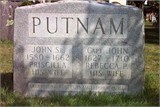
Priscilla Gould Putnam
The family feud between the Goulds and the Putnams (my 12th gg parents) of Salem sparked the famous witch trials. All the living children of my 12th great grandmother, Priscilla Gould, were accused of witchcraft during the hysteria. It is well documented in old English:
Priscilla Gould (1590 – 1662)
is my 12th great grandmother
Salem Witch Trials Notes from the “Topsfield Historical Collection”:
The marriage of John Wild and Sarah Averill within a year of the death of Priscilla (Gould) Wild, seems to have caused trouble between Wild and two relatives of his first wife, Lieut. John Gould, her brother, and Mary, wife of John Reddington, her sister, who lived on an adjoining farm. The first intimation of this state of affairs, appears in the statement John Wild, Jr., made in his will, regarding his Gould inheritance, in order that his father might not be troubled by any claims of his uncle Gould. In 1686 the breach was widened by the testimony of John Wild against John Gould on the charge of treason. Shortly after this episode, Mary Reddington began to spread witchcraft stories about Sarah Wild through the town and it is to her authority that most of the evidence against Sarah Wild may be traced. When John Wild threatened to sue her husband for slander, she denied her previous statements, but evil had already been wrought. Now the Goulds were related to the Putnam family of Salem Village, in whose home the delusion originated and who were the chief accusers in the trials to come and it is probable that the accusations brought against Sarah Wild by their Topsfield connections, were brought to the willing ears of the afflicted girls of the Putnam family and proved the immediate cause of her arrest. On April 21, 1692, the following warrant was issued, casting terrible affliction upon several Topsfield homes, none more so than that of John Wild, for the warrant named not only his wife but his daughter and son-in-law, Edward and Sarah Bishop of Salem Village. “Salem Aprill the 21th 1692. “There being Complaint this day made (before vs) by Thomas Putnam and John Buxton of Salem Village Yeomen, in behalfe of theire Majests, for themselves and also for severall of theire neighbours Against William Hobs husbandman Delive his wife, Nehemiah Abot junior weaver, Mary Easty, the wife of Isaac Easty and Sarah Wilds the wife of John Wilds, all of the Towne of Topsfield or Ipswitch and Edward Bishop husbandman and Sarah his wife of Salem Village and Mary Black A negro of Leut. Nath Putnams of Salem Village also. And Mary English the wife of Philip English Merchant in Salem for high Suspition of Sundry acts of witchcraft donne or Committed by them Lately vpon the Bodys of Anna putnam and Marcy Lewis belonging to the famyly of ye abouesd Thomas Putnam complaint and Mary Walcot ye daughter of Capt Jonathn Walcot of sd Salem Village and others, whereby great hurt and dammage hath beene donne to ye bodys of said persons abouenamed therefore craued Justice. “You are therefore in theire Majestis names here by Comrequired [sic] to Apprehend and bring before vs William Hobs husbandman and (???) his wife Nehemian A bot Junr weaver Mary Easty and all the rest abouenamed tomorrow aboute ten of the clocke in the forenoon at the house of Lieut Nathll Ingersalls in Salem Village in order to theire examination Relaiting to the premises abouesayd and here of you are not to faile. Dated Salem Aprill 21th 1692 John Hatorne Jonathan Corwin Assists. “To George Herrick Marshall of Essex: and or all of ye Constables in Salem or Topsfield or any other Towne.” On the next morning marshal Herrick arrived at the Wild home in Topsfield. By the irony of fate, Ephraim Wild, the only son of John and Sarah, was the constable of Topsfield that year, and the marshal brought the warrant to him. What a tragedy is laid bare in these old and musty records–the young man finding his mother’s name upon the warrant, witnessing her arrest and sad departure from her home and family, never to return and then slowly turning to his duty–the arrest of the remaining victims. His first petition for the release of his mother gives some details of the scene at the house of William Hobbs:–“the woman did show a ueriey bad spirit when I sezed: on might almost se revenge in har face she looked so malishosly on mee.” At her examination, which apparently occurred before that of Sarah Wild, Deliverance Hobbs confessed herself a witch, and “to be revenged of mee” as Ephraim Wild says, accused his mother of tormenting her. She declared that the shape of Mrs. Wild tore her nearly to pieces, and passed her the Devil’s book to sign, bribing her with promises of new clothes. The account of the examination of Sarah Wild is still preserved: The examination of Sarah Wilds at a Court held at Salem village 1692. by the wop = John Hathorn & Jonathan Corwin The Suffers were seized with sou [fits as soon as] the accused came into the Court Hath this woman hurt you Oh she is vpon the beam Goody Bibber that never saw her before says she saw her now vppon the beam & then said Bibber fell into a fit What say you to this are you guilty or not? I am not guilty. Sir. Is this ye woman? speaking to the afflicted. They all or most said yes, and then fell into fits. What do you say are you guilty I thank God, I am free. Here is clear evidence that you have been not only a Tormenter but that you have caused done (some) to signe the book the night before last. What you say to this? I never saw the book in my life and I never saw these persons before. Some of the afflicted fell into fits. Do you deny this thing that is? All fell into fits and confirmed that the accused hurt them. Did you never consent that these should be hurt? Never in my life She was charged by some with hurting John Herrick’s mother. The accused denied it. Capt. How gave in a relation and conformation of the charge made. She was ordered to be taken away and they all cryed out that she was on the beam and fell into fits. The evidence of the witnesses that appeared against her has been lost, but from other papers the names of some of them may be learned. “John Herrick’s mother,” mentioned in the examination, was probably Mary Reddington, whose daughter Mary had married John Herrick. This same Mary Reddington, whose hatred seems to have been insatiable, was responsible for the testimony of the wife of Samuel Simonds of Topsfield, with whose daughter Ephraim Wild had made a marriage engagement which had been broken when the girl’s mother believed the gossip circulated by Mary Redington. “And now she will reward me” the heart-broken son says in a petition. The only other witness, of whom there is any record, is the little daughter of Martha Carrier, one of the accused. She tells the story of a witches’ meeting, held at night in Mr. Parris’s field, at which Sarah Wild and many others were present, pledging the Devil in wine cups filled with blood, a story which received full credit from the most learned and serious men of the time. Mrs. Wild was taken to Boston gaol on May 13. In the interval of over two months which elapsed before her execution, her husband and son did everything in their power to prove the evidence against her false and save her from death. Three of their petitions are preserved and are as follows: “John Wiells testifieth that he did hear yt Mary the wife of Jno Reddington did raise a report yt my wife had bewitched her and I went to ye saide Jno Reddington and told him I would arest him for his wife: defaming of my wife but ye said Reddington desired me not to do it for it would but waste his estate and yt his wife would a done wth it in tyme and yt he knew nothing she had against mye wife–after this I gotmy brother Averill to goe to ye said Sarah Reddington and my sd Bror told me yt he told ye said Sarah Reddington yt if she had anything agst my wife yt he would be a means and would help her to bring my wife out: and yt ye said Sarah Reddington replyed yt she new no harm mye wife had done her. “The testimony of Ephraim Willdes aged about 27 or therabouts testifieth and saith that about fouer yers agoe there was som likly hode of my hauing one of Goody Simonds dafter and as the maid towld me hur mother and father were ueriey willing I should haue her but after some time I had a hint that Goodeey Simonds had formerly said she beleud my mother had done her wrong and I went to hare and toch Marke how that is now dead who dyed at the Eastward: along with me and before both of us she denied that euer she had eneey grounds to think any halme of my mother only from what Goodiey Redington had saide and afterwards I left the house and went no more and euer since she (has) bene ueriey angriey with me and now she will reward mee. Ephraim Willdes” “This may inform this Honered Court That I Ephraim Wildes being constabell for topsfield this yere and the Marshall of Sallem coming to fetch away my mother he then showed me a warrant from authority directed to the constabel of topsfelld wherein was William Hobbs and Deliverence his wife with many others and the Marshall did then require me forthwith to gow and aprehend the bodyes of William hobs and his wife which acordingly I did and I have had sereous thoughts many times sence whether my sezing of them might not be some case of here thus a cusing my mother thereby in some mesure to be revenged of me the woman did show a ueriey bad spirit when I sezed: on might allmost se revenge in har face she looked so malishosly on me as fore my mother I neuer saw any harm by har upon aniey such acout neither in word nor action as she is now acused for she hath awlwais instructed me well in the christian religon and the wais of God euer since I was abell to take instructions and so I leve at all to this honored Cort to consider of it Ephraim Willdes” All the efforts of the family were in vain, however, and Sarah Wildes was executed on July 19, with Sarah Good, Rebecca (Towne) Nurse, Elizabeth How and Susannah (North) Martin. Edward and Sarah Bishop managed to make their escape from prison, and Phoebe (Wild) Day, the other daughter of John Wild, who was imprisoned on the same charge at Ipswich, was apparently never tried.

Gov Thomas Dudley
Birth: Oct. 12, 1576, England,Death: Jul. 31, 1653BostonSuffolk CountyMassachusetts, USA Colonist, Colonial Governor. He was the second Governor of Massachusetts Bay Colony and member of the first Board of Overseers for Harvard “College.” Born in Northahmpton, England he married Dorothy Yorke and came to the colonies in 1626 as many did to follow the teachings of Reverend John Cotton. He and his wife came to the New World on the “Arabella” and after feeling that Plymouth was too vulnerable for attack by sea he and other members, most notably John Winthrop and Simon Bradstreet traveled up the river to higher ground. They traveled up the river and climbed a hill on the North shore. Local legend states that Dudley then thrust his came into the ground and declared “This is the place.” The location is now the corner of John F. Kennedy and Mount Auburn Streets. It is through this story that Thomas Dudley is considered the founder of Cambridge. Thomas’s wife Dorothy died in 1643 and the next year he married Katherine (Dighton) Hackburne, a widow. They moved from Cambridge and settled in nearby Roxbury. Thomas had eight children in all, five by Dorothy Yorke and three by Katherine Dighton. The most notable of his offspring was Joseph Dudley (born 1647) who became the future royal governor of Massachusetts. Joseph was born when Thomas was 70 years of age. In 1650 as one of his first acts as governor, he signed the charter to Harvard College, establishing the guidelines in which the University still uses for operation today. Harvard’s famed Dudley House is named for him as is Dudley Station in Roxbury on the commuter train line. He also established the Roxbury Latin School during the years he lived in that section of the city, the school is still open today and is considered one of the first public schools in America. He was a founder of the First Church at Boston, where a tablet honoring him was place. (bio by: R. Digati)
Gov. Thomas Dudley (1576 – 1653)
is my 10th great grandfather
Anne Dudley (1612 – 1672)
daughter of Gov Thomas Dudley
John Bradstreet (1652 – 1718)
son of Anne Dudley
Mercy Bradstreet (1689 – 1725)
daughter of John Bradstreet
Caleb Hazen (1720 – 1777)
son of Mercy Bradstreet
Mercy Hazen (1747 – 1819)
daughter of Caleb Hazen
Martha Mead (1784 – 1860)
daughter of Mercy Hazen
Abner Morse (1808 – 1838)
son of Martha Mead
Daniel Rowland Morse (1838 – 1910)
son of Abner Morse
Jason A Morse (1862 – 1932)
son of Daniel Rowland Morse
Ernest Abner Morse (1890 – 1965)
son of Jason A Morse
Richard Arden Morse (1920 – 2004)
son of Ernest Abner Morse
Pamela Morse
I am the daughter of Richard Arden Morse
Thomas was taken in as an orphan by by his great uncle, Richard Purefoy, brother of his mother’s mother. He lived with them at the Manor Faxton, about 20 miles from Yardley Hastings. At the age of 21 he was commissioned by Queen Elizabeth as a Captain to go to the aid of Henry IV of France at the seige of Amiens by the Spanish. He raised a company of 80 men, but by the time he reached France, the fighting had ended. He worked as steward (business manager) for the Earl of Lincoln, eventually leaving in 1627 (his soon to be son-in-law Simon Bradstreet took the position). He moved to Boston, Lincolnshire, England, and came under the influence of the Rev. John Cotton. He became a Nonconformist, a zealous Puritan and interested in settling in New England with the Mass. Bay Company. In 1629, he was one of the few who established the Mass. Bay Colony.He returned to manage the Earl of Lincoln’s estate until the Earl was imprisoned. Because of the continued persecution of non-conformists, he joined Winthrop’s expedition and sailed to New England aboard the flagship Arbella as Deputy Governor.The fleet arrived at Salem on 12 June 1630 where Governor Endicott and a group of settlers who had emigrated in 1628 had set up a colony but had few supplies. He moved to Charlestown and was one of the signers of the covenant of the First Church of Charlestown. In 1631 he moved to Newtowne (now Cambridge) and eventually moved to Ipswich. By 1639 he had moved to Roxbury to be nearer to Boston, the capital of the colony.The first general election by Freemen in the colony was held in May 1634 and Thomas Dudley was elected governor (John Winthrop had been governor since the founding of the colony – the people turned against him when it was discovered that he was holding the legislative powers amongst his court of assistants in contradiction to the charter). Dudley was reelected in 1640, 1645 and 1650 and was Deputy Governor for 13 years as well. All offices were for one year terms.
ref:above information copied from Owings Stone Family genealogy site.

Harvard Charter

Wampanoag dwelling
I am proud to be a descendant, even though there are 10 generations between my tribe and me. Massasoit, my 11th great uncle, was the Sachem who made a treaty with the Pilgrims in 1621. His father, Wasanequin, is the last link I have found, but I hope when I go to Cape Cod my tribe will know more.
The Wampanoag/Pilgrim Treaty
About an hour after noon on a fair, warm day on March 22/April 1, 1621, Samoset and Squanto appeared in the village of Plymouth with some skins and newly caught and dried herrings to trade. They told the colonists that the great Sachem Massasoit was nearby with his brother Quadequina and all their men. About an hour later Massasoit came to the top of the hill with some sixty of his men. However, the Pilgrims were not willing to send their governor to meet them, and the Indians were unwilling to come to them. Squanto went again to Massasoit and brought back word that Massasoit wished to have trade and peace with them, asking the Pilgrims to send someone to parley with him.
Edward Winslow agreed to serve as diplomatic ambassador and went to Massasoit. The scene was described by Winslow in his Journal as follows:
“We sent to the King a payre of Knives, and a Copper Chayne, with a jewell at it. To Quadequina we sent likewise a Knife and a Jewell to hang in his eare, and withall a Pot of strong water, a good quantity of Bisket, and some butter, which were all accepted: our Messenger [Winslow] made a speech unto him, that King James saluted him with words of love and Peace, and did accept him as his Friend and Alie, and that our Governour desired to see him and to trucke with him, and to confirme a Peace with him, and his next neighbour: he liked well of the speech and heard it attentively, though the Interpreters did not well expresse it; after he had eaten and drunke himselfe, and given the rest to his company, he looked upon his messengers sword and armour which he had on, with intimation of his desire to buy it, but on the other side, our messenger shewed his unwillingness to part with it: In the end he left him in the custodie of Quadequina his brother, and came over the brooke, and some twentie men following him, leaving all their Bowes and Arrowes behind them. We kept six or seaven as hostages for our messenger.”
Captain Standish and William Brewster met the king at the brook with half a dozen musketeers, where they saluted him and he them. With Standish on one side of Massasoit and Brewster on the other, they escorted Massasoit to a house which was just being built. On the floor, the Pilgrims had placed a green rug and three or four cushions.
Winslow described Massasoit and his men as “…a very lustie [strong] man, in his best yeares, an able body, grave of countenance, and spare of speech: In his Attyre little or nothing differing from the rest of his followers, only a great Chaine of white bone Beades about his neck, and at it behind his necke, hangs a little bagg of Tobacco, which he dranke and gave us to drinke; his face was paynted with a sad [dark] red like murray, and oyled both head and face, that he looked greasily: All his followers were likewise, were in their faces, in part or in whole painted, some blacke, some red, some yellow, and some white, some with crosses and other Antick [antique] workes, some had skins on them, and some naked, all strong, tall, all men in appearance…”
Immediately, Governor Carver came to the house with drum and trumpet after him and a few musketeers. Governor Carver kissed the hand of Massasoit and Massasoit kissed Carver before they sat down.
Governor Carver called for some strong water, and made a toast to Massasoit. Massasoit drank deeply of the liquor which made him sweat. Then, Carver called for fresh meat, which Massasoit ate and shared with his followers. Later in the text, Winslow remembered additional details:“…one thing I forgot, the King had in his bosome hanging in a string, a great long knife, hee marvelled much at out Trumpet, and some of his men would sound it as well as they could…”
TERMS OF THE TREATY
Following the introductory ceremonies, Carver and Massaoit agreed upon the terms of a peace treaty between the Pilgrims and the Wampanoags. The treaty of mutual support they negotiated said in part:
1. That he nor any of his should do hurt to any of their people.
2. That if any of his did hurt any of theirs, he should send the offender, that they might punish him.
3. That if anything were taken away from any of theirs, he should cause it to be restored; and they should do the like to his.
4. If any did unjustly war against him, they would aid him; if any did war against them, he should aid them.
5. He should send to his neighbors confederates to certify them of this, that they might not wrong them, but might be likewise compromised in the conditions of peace.
6. That when their men came to them, they should leave their bows and arrows behind them.
7. That King James would esteem Massasoit as his friend and ally.
Winslow concluded his account of the treaty signing as follow: “Wee cannot yet conceive, but that he is willing to have peace with us, for they have seene our people sometimes alone two or three in the woods at worke and fowling, when as they offered them no harme as they might easily have done, and especially because hee hath a potent Adversary the Narowhiganseis [Narragansetts], that are at warre with him, against whom hee thinkes wee may be some strength to him…”
Pokanoket is a tribe of Native Americans who trace their their lineage back thousands of years beyond the colonial days of the United States of America. We trace our ancestry through the bloodlines and the written and oral history of our people. We are the people of Massasoit Ousamequin, Massasoit Wamsutta, and Massasoit Metacom. We are Philip’s people, the people of Metacom. We are the people who celebrated the First Thanksgiving with the Pilgrims in 1621. We are the people who have endured much and who have returned, after a long journey through history to the present day and continue to look forward to the future.
Pokanoket is also a Nation. The Nation of Tribes you may have heard of referred to as Wampanoag ( pronounced wahm – peh – noe – ahg ) was known to our ancestors as the Pokanoket Nation. The Pokanoket Nation, also known as the Pokanoket Confederacy or Pokanoket Country, was comprised of a multitude of Tribes.
Each Tribe was comprised of Bands and Villages and the Pokanoket Tribe was the Headship of the Pokanoket Nation.
Pokanoket is also our home. Prior to the time of the pilgrim’s arrival in Plymouth, which used to be Patuxet, the realm of the Pokanoket included portions of Rhode Island and much of southeastern Massachusetts, including the surrounding islands around Cape Cod and Martha’s Vineyard.
The Pokanoket social organization developed in a manner that differed from neighboring Native American Tribes, since Pokanoket was more socially structured and layered, as well as more politically complex.
Unique to the Pokanoket Tribe were the spirtual and military elite, know as the Pineese (Pineese Warrior), who protected and served the Massasoit (Great Leader). They are the spiritual guardians of Pokanoket Nation.
Pokanoket believed seven to be the perfect number of completeness, for we still believe in the Seven Spirits of the Creator.
 mermaidcamp