mermaidcamp
Keeping current in wellness, in and out of the water
You can scroll the shelf using ← and → keys
You can scroll the shelf using ← and → keys

space
Inside the circular passage the whispers bounced
Off the reflections of the insinuations left by the past
Inner balance outer strength come with hard choices
When clouds obscure the top of the peak it is unclear
If there is a reason to climb today to the higher ground
Did pioneers or invaders carve this path on which we travel?

heard it through the grapevine

heard it through the grapevine
Social media has a way of consuming more time than anticipated. The phone is a silent thief vibrating in your pocket, distracting you from whatever you are doing. There are now special programs at hotels for folks who want to do a detox. The deal is that the front desk will keep your phone locked up for you while you try to go cold turkey. You pay a fee for this service. This example from 2009 is listed as a detox package for just $199 a day ( that is per person) at a fancy place just outside Washington, DC. They were probably pioneers in the growing market, and DC probably does generate a lot of social media anxiety.
The terem social media management is normally used to refer to the marketing of a business using the various platforms. What I mean is personal management and strategy. You don’t need an expert to help you design a strategy. You are the only person who knows how far social media has slipped into every aspect of your day. You are the only one who really can asses your need for “likes” and what that need represents. This is not a relationship with your phone, although it seems to be. This social media presence is a self image, crafted by you.
There are now businesses designing custom social media detox retreats. This is a high growth industry. Just like the opioid crisis, the social media addiction problem can be treated with mindfulness and meditation for a long term cure. Staying “clean” after one of these intentional cleanse periods will require a plan. But why wait until you need an expensive intervention? Now is an excellent time to find balance between life and digital devices.
My own strategy, which works pretty well, is to have no relationship with my phone. I don’t give out my cell phone number, and ignore my phone most of the time. I have a land line to talk to people, and I don’t text. I use the phone for GPS and to make calls when I travel. I sit at my desk (like now) to write or read on the laptop. I limit the desk time just because I am not the type who likes to sit for long periods of time. When I finish my tasks on the computer, which include a couple of platforms, I leave it behind while I move around and do the rest of my day. This keeps my focus on the task at hand, both at the desk (because I want to finish) and on the go. I occasionally get sucked in for short times, but basically this system creates a functional boundary. Have you ever thought about where your digital boundary is….or where you want it to be? Take care of your time, gentle reader…it is a terrible thing to waste.

peaceful paradise
At the most stressful times she could remove herself from the action by calling on her ability to go into a trance. She had been a captive since her early childhood. She can barely remember her own abduction and the long ride down the mountain out of the forrest. They crossed barren plains scarred with the remnants of war to the camp where she remained. She never saw her family again, and was taught a new language, full of harsh sounds and concepts. In her few hours of rest she remained faithful to her tribe’s values, trying to keep the few sacred words of her mother tongue alive in her mind. There was no speaking around in that forbidden language, for the camp was used to erase culture and tribal belief. The process was a special kind of stripping of confidence that left them all exhausted.
Her skill to call down the moon was still in tact. She spent the full moon nights in reverie, practicing the trances and the dances she had been taught as a little girl. She felt her own power grow as her values changed. She knew the secret of taking responsibility. The people brought to the camp were stripped of their identity and culture, then programmed for menial and dehumanizing work. They were hoodwinked into thinking they had no choices in life, that this awful slavery was a punishment for something they had done.
In her meditation she saw the logs in the forest that her grandmother used for an altar. She could pull in every detail of that scene, and even hear the voices of her people chanting to bring her back home. Finally one night in her dream the path to return to her village was revealed. A strong bold figure opened the gates and brought all the people into freedom. She ran quickly up the hill with an unlimited energy she had never had. Her steps were swift and sure as she climbed the last hill. She saw her whole family gathered around the altar, dancing slowly, chanting sweetly. When she awoke and found herself safely snuggled in her own hammock she knew she had been taken on a special dream journey. She ran to her grandmother for an explanation. All her grandmother would say was, “You have been chosen. Now you must choose which path you will use.” She was not sure which one, if any, was real.

#writephoto
This story is a response to the Thursday photo prompt on Sue Vincent’s Echo. Please join each week for poems and stories on a photo theme. It is fascinating to read the different ways writers interpret the picture.

best wishes
To whom can we look for guidance in crisis?
The sea is full of troubled waters and dying fish
Our battles and embroiled excuses do not end with ISIS
Our future floats lifelessly on the surface, a futile wish
For earth to find the harmony needed to stay alive
While we argue viciously about every possible decision
Blindly contradicting truth only helps ignorance thrive
Time leaves us with fewer options to complete our mission
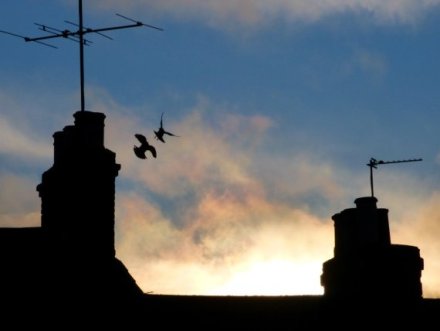
flight of fancy
Her troubled mind had conjured up some frightening scenarios. She sat for hours wringing the hands that had once been so productive and accomplished. Her memory played cruel tricks on her as she tried to survive without her husband. Ernie had taken care of certain aspects of life that had always been a mystery to her. Although my grandparents ran a farm together, sharing the heavy work load, my grandmother was in the dark about the family finances. When she became a widow and could no longer stay alone at her farm it had been sold. Her life of relative freedom came to an end. She lived in institutions or at her children’s homes, never really settling. She missed independence even though she could barely manage daily tasks without a great deal of assistance. She disliked the feeling of being a houseguest, or even a child, of her son’s family. She had lost her matriarch status, and had to defer to her daughter-in-law. This life in suburban Pittsburgh was foreign, and cold. She rarely went out, and when she did she was fearful, even with her family. She lost her ability to relax. Anxiety was her only companion.
When the sun set she sat in the back yard in silence. This time to herself was spent every day engaging in bird watching. She had little sensitivity to human emotions, but was tuned into nature like a trance. She could feel the spirits of each bird soaring. Their playful flight brought a rush of feelings from her youth, from her most sorrowful, as well as her brightest times. She could sense that her own spirit was close to a threshold. She sometimes thought her spirit left her body and explored the sky above her for a while. As darkness fell the caregiver arrived to guide her into the building. Her lightness of being vanished as the door closed behind her. Perhaps tomorrow will be the day she finally takes off for eternity. She feels as if she has already spent an eternity here.
#writephoto
This fiction is written in response to this week’s photo prompt from Sue Vincent’s Echo. Join us each week to read, write, or submit your own take on the Thursday prompt.

apparition
Crawling on our bellies through the mud, James Bond style, we quietly exited the castle. Our scuba gear was hidden in the brush at the end of the tunnel. We had the documents we needed to prove the identity of the spy we had come to investigate. Her tricky double agent status had fooled us into thinking she was interested in helping us. As we proceeded with some caution we discovered her true intention was theft and subsequent sale of our defense plan. Ever since that covert meeting at the tavern she had turned up in curious ways. We sensed that we were being followed, and took pains to put her off our scent. Finally we discovered the source of her power and wealth. She was fully funded by the Inquisitors, and was expected by her masters to defeat us through espionage.
Our island was infiltrated by the Inquisitors without our knowledge. The slow trickle of foreign settlers all claimed to be loyal to our mission. The last island in the sea that was not ruled by a conglomerate was to be our Eden. We planned to live in harmony with nature, cultivating the plants, the social customs, and the laws that would preserve our tiny paradise. Refugees from all over the world had journeyed to our island to take part in this bold social experiment. Science and politics had failed us when they combined to dominate the world. Our diet had been reduced to just corn, potatoes, and animal fat. We were starving on many levels. The abundance and freedom we once cherished had been sold. Humanity had sold itself for secure employment in a mysterious system that enslaved the populace. Now our survival would depend on our ability to weed out those who intend to destroy our culture.
The justice system had been corrupted, but there was a single official who retained both integrity and power. The Judge Most High still had the ability to rule in favor of morality. He told us that with evidence he could convince the other rulers to allow our culture to survive in freedom. Some of the most powerful rulers had started to think they had gone too far with the total control of agriculture, environment, and religion. They feared creativity had been wiped out forever to feed the factory machine. They feared the automaton nation might eventually become too weak to survive under the strict and repressive circumstances. They wondered if nature was angry at the killing of all her diverse species for the sake of “markets”.
We managed to sneak away, but wondered if we could make it to the Judge Most High without being caught. We saw a hazy figure blocking the end of the tunnel that lead out to the beach. At first we could not distinguish if the figure was man or woman, friend, or foe. We continued in silence with deep anxiety, wishing for the best. Finally we saw that the Judge Most High was waiting for us. Our fate was sealed. Either the Judge Most High was truly an ethical figure, or we were about to turn over evidence to a double agent. There was only one way out of this predicament. It was show time.
#writephoto
This story is written in response to Sue Vincent’s Daily Echo photo prompt this week. Tune in to read, write, and comment here. It is fun to see how many differences there are in the responses.

London
Sarah Allerton was born in London in 1588, and died in Plymouth Colony in 1633. She arrived in the new world on the ship Anne with her third husband in 1632 after my 13th great-grandfather had sailed on the Mayflower then died shortly after arrival in the colony. Her brother Isaac was a signer of the Mayflower Compact as well, and assistant to Governor Bradford in America. Isaac later disgraced himself, moved to New Amsterdam, and became known as the first Yankee trader.
Sarah Allerton’s parents are not given but information is provided by unknown sources. Her parents would have been Edward Allerton, b. 1555 St. Dionis, Backchurch, London, England, died 1590 England, and Rose Davis, b. ca. 1559 in St. Peters, Corningshire, died June 1596 in England. Edward’s father was William Allerton, b. 1529. Sarah however certainly had at least two brothers. Isaac’s will also mentions a “brother Breuster”. The two siblings were:
1) Isaac Allerton, b. ca. 1586. He was one of the more famous of the Pilgrim Fathers. He was originally a tailor in London and was married in Leyden, the same day as his sister, 4 November 1611, to Mary Norris of Newbury, England, b. ca. 1588.
He came over on the Mayflower, with his wife and three children, and became First Assistant (1621 to ca. 1631) to Governor Bradford. Mary Norris died in childbirth, with a stillborn son, the first winter. She died 25 February 1620/1 on the Mayflower, while the first houses were still being built at Plymouth. In ca. 1626 he married Fear Brewster, b. 1606 at Scrooby, England , daughter of William and Mary Brewster, William being one of the most famous Pilgrims. Fear had arrived in Plymouth in July 1623, on the Anne, the same ship that brought Mary Priest and her two children.
Isaac was well known for his unscrupulous dealings with fellow Pilgrims and eventually left the colony in disgrace in the 1630’s when he lost the support of William Brewster. “A most enterprising man, he engaged in commercial pursuits at Marblehead and in Maine and later resided at New Amsterdam.” . He is often remembered as “the first Yankee trader”. Fear died in Plymouth before 12 December 1634. Isaac Allerton was probably married a third time to Joanna Swinnerton, before 1644, probably New Haven, CT. There were no known children from this marriage. He died insolvent between 1 and 12 February 1658/9 in New Haven, CT. Joanna was still living in 1684. Isaac’s children were (Sarah and Isaac were by his second wife):
Bartholomew, b. ca. 1612, in Leyden, Holland. Bartholomew returned to England. He first married Margaret _____ and then Sarah Fairfax, prob. in Rumbough, Suffolk, England. He died between 15 October 1658 and 19 February 1658/9, prob. at Bramfield, Suffolk, England. Four children are recorded.
Remember, b. ca. 1614 in Leyden. She m. Moses Maverick, before 6 May 1635 and died between 12 Sept. 1652 and 22 Oct. 1656. Moses lived in Lynn, Salem, and at Marblehead (all MA) in the time they were married. They had seven children, born at Lynn and Salem. Moses remarried in Boston to Eunice (Cole) Roberts by whom he had four children.
Mary, b. June 1616, m. Thomas Cushman, ca. 1636, in Plymouth, MA. Cushman came to Plymouth in 1621 on the Fortune. They had eight children. She died 28 November 1699, Plymouth, MA, the last survivor of those who came on the Mayflower. One of her grandchildren, Allerton Cushman, married in 1726 to Elizabeth Sampson, cousin of Benjamin Sprague.
Child, buried St. Peters, Leyden, 5 February 1620.
Stillborn son, b. 22 December 1620 on the Mayflower, Plymouth Harbor.
Sarah, b. ca. 1627 in Plymouth, died young before 1651.
Isaac Allerton, Jr., b. between 22 May 1627 and 1630, Plymouth, MA. He married first to Elizabeth _____, ca. 1652 (2 children) and then to Elizabeth Willoughby, a widow of Overzee and Colclough, ca. 1663, in Norfolk County, VA. Elizabeth was born in 1635 in England (12). They had three children, all born in Westmoreland Co, VA. Isaac became the first Plymouth student at Harvard (he graduated according to in 1650) and later went into business and made a fortune himself. He died Westmoreland Co., VA in 1702.
As is the case for Degory Priest, a General Society of Mayflower Descendents book is available on the first five generations of Isaac Allerton’s descendents. A somewhat earlier and shorter version, covering four generations, was published in 1996. Isaac Allerton has apparently a relatively small number of descendants compared to other Mayflower passengers, but is an ancestor to Presidents Zachary Taylor and Franklin D. Roosevelt (the latter also descended from Degory Priest through Sarah). The presidents are both thus our very remote (!) relatives: President Zachary Taylor (1784-1850), through Isaac Allerton Jr., was a 5th cousin to Mary (Scott) Wisdom; President Franklin D. Roosevelt (1882-1945), through Degory Priest, was an 8th cousin to Paul Graham.
2) Sarah Allerton, b. ca. 1588 at London . She was first married to John Vincent and then married to Degory Priest as noted above. Having received word of her husband’s death, she remarried on 13 November 1621 in Leyden, to Godbert Godbertson (name used in but also often called Cuthbert Cuthbertson). They arrived in July-August of 1623 on the Anne with their three children (two by Degory Priest). It is possible that there were two additional children with them by the first marriage of Godbertson (I think there is a reference to five children that arrived with them in and see also mention of three Cuthbertson below). Francis Sprague, another of my ancestors, was also a passenger. Godbert (ca. 1590-633), a Dutch Walloon, was a hat-maker in Leyden. He had been married previously in 1617 to Elizabeth Kendall. He became a “purchaser”, i.e., a shareholder in the Pilgrim Company when it was formed in 1626. He died seven years later, in Plymouth, of “infectious fever”. She died in Plymouth before 24 October 1633. On 11 November 1633 their son-in-law Phineas Pratt was appointed “to take possession of the personal property of Cuthbert Cuthbertson and his wife Sarah”.

pool with reflection
If we were having coffee this weekend in Tucson I would bring a pitcher of water and another of iced beverage of your choice out to the pool. The only place to be on a day when the temperature reaches 106 degrees is in the pool. I have all manner of flotation devices, and there is a table in the shade where we can sit for a chat after we get wet. If you feel energetic we could chat while we do some exercise in the water. I have taught swimming and water exercise for years, and although I am not currently certified in lifesaving I will keep you safe. Come on in. The water is perfect.
This week was relatively uneventful, if you exclude all the political action in Washington, DC. I do watch with interest while Micheal Bloomberg, the states, and cities step up to fight climate change. I am happy to see all the marchers for science but in Arizona this is not possible at the moment. We must protest fro the pool. I think the best way for me to contribute to the entire issue of environmental protection is to act personally. I think I am carbon conservative, but there are probably a few more items I could buy locally or go without for the good of the planet. Rather than review the international scene, although that is of interest, I am looking for ways I can reduce my personal consumption of water, gasoline, and electricity.
While I fill your ice water glass again please tell me about your writing projects and your week. Did you finish or start any new writing? I admire those of you who write long works of fiction. I may attempt it someday, inspired by your success. It takes discipline as well as talent to do a long write. I have written a few short pieces of fiction, but this week I created a poem in response to Sue Vincent’s photo prompt. It was about death, and was fully depressing like the previous week’s. I do wonder at my creative self when I come up with all this dark gloomy haunted stuff. I also wonder if that is a direction I should try to go for a longer story..haunted and creepy is a genre, after all. I also wrote about my ancestors and tea, so it was not all gloom and doom…except the ancestors are dead, of course. I wrote about some from the Byzantine Empire this week.
I think perhaps I am haunted by the politics playing out before me, but that does not matter. Creative responses to horror and terror have always been used to change things. Satirists are having a having a hay day with all the crazy times in which we live. I wish I could draw cartoons, but I think this talent will be for another lifetime. I will have to stick to poems to express my distaste, rage, or general revolt. How do you best protest, gentle reader?Do tell, what makes you revolt (silently or otherwise)?
If you are in the mood, feel free to cannonball before you go. Hydrate fully, and stay safe. Please join the coffee party on the weekend hosted by Emily at Nerd in the Brain. Contribute a post, or read, comment, and visit here.

Weekend-Coffee-Share-Pic

On the 26th, Love is Wise. It’s the answer for everything. Oh, and ignore the darkness, your fear of change, and the Powers-That-Be; just for today, they can’t touch you. And you’re welcome. (That’s my answer to you thanking me for not posting an MC Hammer video). Instead we’ve got Today’s word image:a Tarot card […]
via Your Week 26 May-1 June 2017 A Thousand Suns — Julie Demboski’s ASTROLOGY
This is inspired by Sue Vincent’s Thursday photo prompt

ruin
The building bitterly fell down around them in the end. They refused to move when the epidemic wiped out the neighbors and all the businesses. They decided to stay since they were the sole surviving members of the cult. The bishops foretold of a great sickness, and built shelters to hide from the inevitable. The underground bunkers that had been designed to save the people from harm turned out to be the source of the deadly mold that infected their lungs and spread like wild fire. After almost a year of suffering and loss the difficult decision was made to seal the enclosures with the infected population trapped inside.
Very few of the elders knew about the plan to bury those who were carrying the mold in order to save the few who remained healthy. The stone house was the headquarters of the operation. The six members of the board carried out their plan with precision and cold blooded planning. While the people in the bunkers slept they set off canisters of poison gas and closed the entrances. They were all killed as they dreamed. Those in charge knew they had murdered their own believers in what they decided was self defense. There was no excuse, and there would be no remorse from these reprobates. They only cared for their own survival at any cost.
Although they had years of food stored for the future of the community, when they opened the storehouse they found it swarming with all kinds of bugs. The seeds had been devoured by the hungry insects who now jumped out and started to eat the rest of the humans. They took refuge back in the stone house until the building itself heaved and crumbled to the ground. There was no earthquake or storm. The stones of the walls and the clay tiles on the roof rebelled against giving shelter to these selfish plotting fools. In an act of revenge they crushed the elders as they slept. Nature had the last word. Only a ruin stands now as a reminder of human greed and folly gone awry.
Please visit the photo prompt round up to read the entires from last week. Read, write, comment, contribute!
#writephoto
 mermaidcamp