mermaidcamp
Keeping current in wellness, in and out of the water
You can scroll the shelf using ← and → keys
You can scroll the shelf using ← and → keys


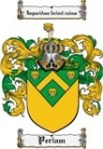
My 13th great-grandfather was an English judge who, in 1593, rose to the top position of Lord Chief Baron of the Exchequer and was knighted by Queen Elizabeth I. He was one of the judges who tried Mary Queen of Scots in 1586, and was involved in several other big treason trials of the age and was given the office of Chief Baron of the Exchequer in 1593. He was a Governor of Crediton Church and twice church warden. educated in Exeter and then at Exeter College, Oxford where on 25 April 1551 he was elected fellow. He resigned his fellowship some months later and went to London where he eventually studied law at the Middle Temple, being called to the bar in 1565. A slight wobble in his career occurred in 1568 when, after being summoned to Ireland by Sir Peter Carew to help him prosecute an ultimately successful claim to an Irish barony, he received an unexpected appointment as judge under the prospective President of Munster, Sir John Pollard. By writing to Sir William Cecil and earnestly petitioning the Privy Council, mentioning his wife and children and delicate state of health, he seems to have been able to avoid the transfer to Ireland altogether. Thereafter his rise through the legal ranks was steady—in 1575 he became serjeant-at-law for the Michaelmas term, and on 13 February 1581, a Judge of the Common Pleas. The ultimate honor came in January 1593, when he was promoted to Lord Chief Baron of the Exchequer, and knighted.
William Periam (1534 – 1604)
is my 13th great grandfather
John Periam (1510 – 1573)
son of William Periam
Mary Periam (1531 – 1552)
daughter of John Periam
Robert Sweet (1552 – 1578)
son of Mary Periam
John Issac Sweet (1579 – 1637)
son of Robert Sweet
James Sweet (1622 – 1695)
son of John Issac Sweet
Benoni Sweet (1663 – 1751)
son of James Sweet
Dr. James Sweet (1686 – 1751)
son of Benoni Sweet
Thomas Sweet (1732 – 1813)
son of Dr. James Sweet
Thomas Sweet (1759 – 1844)
son of Thomas Sweet
Valentine Sweet (1791 – 1858)
son of Thomas Sweet
Sarah LaVina Sweet (1840 – 1923)
daughter of Valentine Sweet
Jason A Morse (1862 – 1932)
son of Sarah LaVina Sweet
Ernest Abner Morse (1890 – 1965)
son of Jason A Morse
Richard Arden Morse (1920 – 2004)
son of Ernest Abner Morse
Pamela Morse
I am the daughter of Richard Arden Morse
Crediton Parish Church
Sir William Peryam
1534 – 1604Introduction
On the north side of the chancel of the church (on the left-hand side, looking towards the altar), is the big tomb of Sir William Peryam, an important individual both in local and national terms in the last years of the reign of Elizabeth I. Peryam was one of the judges who tried Mary Queen of Scots in 1586, was involved in several other big treason trials of the age and was given the office of Chief Baron of the Exchequer in 1593. He was a Governor of Crediton Church and twice church warden; he bought the estate of Little Fulford, east of Crediton in the 1580′s and built a manor house there, the estate being renamed Shobroke Park in the early eighteen-hundreds.
The Tomb
The tomb shows the judge reclining, his head arms propped up with his right hand, beneath him the seven ladies of his life – his three wives and four daughters (he had no sons); above him are the Peryam arms.
Family
William Peryam was born in Exeter in 1534, second son of John and Elizabeth Peryam. His family was a well-connected one, he was a cousin of Sir Thomas Bodley, founder of the famous Bodlean Library in Oxford. His father was a man of means and was twice mayor of Exeter (he died during his second term of office in 1572).William’s brother, John, was also twice mayor of the city and was in office when the Spanish Armada appeared off Devon in 1588.
Education & Career
William Peryam was educated at Exeter College, Oxford, where he was elected fellow in 1551 at the age of 17.
A Lawyer Still Quoted Today
In 1553 he was admitted to the Middle Temple and was one of Plymouth’s MP’s from 1562 until 1567, being called to the bar whilst at Westminster – the duties the average backbencher weren’t particularly arduous in Tudor times! His arms, which can be seen at the top of the tomb, are still to be found in the hall of the Middle Temple. There are records of his involvement in some mid-Devon cases around the time of he became a QC; in one (1566) he became a trustee of the locally important Dowrish estate in Sandford. In 1568 he was appointed as a justice in Ireland, serving Sir John Pollard, President of Munster. Quite a lot of correspondence from his time in Ireland survives in State Papers. An amusing letter tells of his reluctance to return to Ireland without Sir John, who was suffering from gout. Also on record from this time is the successful attempt he made (with the help of John Hooker, the Exeter antiquary) in 1569, to reclaim the Barony of Odrone on behalf of Sir Peter Carew – from whose family he was to buy his land in Crediton ten years later. He was made a serjeant-at-law in Michaelmas term of 1579 and in February 1581 was appointed a Judge of the Court of Common Pleas. In 1586 he was one of the judges at the trial of Mary Queen of Scots . When Sir Christopher Hatton retired from office in 1591, Peryam was named as one of the Judges of the Chancery Court and during the last two decades of the sixteenth century and the first years of the seventeenth was involved in a number of “show” trials of State offenders including, among others, those of the Earl of Arundel (originally imprisoned in 1585 for helping Mary, then accused of having a mass said in support of the Armada in the Chapel of the Tower of London in 1588 and tried for, and found guilty of, treason – although the death sentence was never carried out, in 1589), Sir John Perrot (tried and found guilty for what could be described as “mild” treason in 1592, but not executed) and that of the Earl of Essex (found guilty of treason for organising an attempted coup; he was tried and executed in 1601). The precedents Peryam set and legal decisions made in these and other cases are still quoted in the legal textbooks. In 1593 Peryam was appointed Chief Baron of the Exchequer, where he presided for twelve years. He received the knighthood which was usual with that office.
Peryam’s Death
He died at Fulford Park on 9th October, 1604. The date of his death is shown on his tomb inscription as 1605. It seems likely that the tomb was erected as many as fifteen years after his death (ie during the lifetime of his widow), by which time her memory may have been fading a little because, although the Parish Registers for 1603 – 7 are missing from the Devon Record Office, papers in the National Archive clearly show that the grant of his office of Chief Baron of the Exchequer was made void on October 9th, 1604, so the earlier date of death should be taken as the valid one.
Wives
Peryam married three times. His first wife was Margery, daughter of John Holcot of Berkshire; there were no children of this marriage.
His second wife was Anne, daughter of John Parker of North Molton by whom he had four daughters, Mary, Elizabeth, Jane and Anne who all married “well”.
His last wife was Elizabeth, a daughter of Sir Nicholas Bacon (a fellow government law officer) – who outlived William by twenty years. She was related by marriage to William Cecil, Lord Burghley – in fact, Peryam was related either directly, or by marriage, to many court figures of Elizabeth’s reign.
Shobroke & Holy Cross
Peryam had bought Little Fulford, or Fulford Park (which became Shobroke Park) from Sir Richard Carew in the early 1580′s and had constructed “a fayre dwelling house” there – a predecessor of the Georgian house which was burnt down in the 1940′s. He left the house and the estate to his daughters who sold it to his brother, Sir John Peryam. He in turn sold it to the Tuckfields, whose descendants, the Shelleys, still own the estate. Peryam was a churchwarden of Holy Cross in 1589 and 1600 and was also a Governor. In 1578 he leased a manor in Sidmouth from Sir Walter Raleigh and his two sons, Carew and Walter The document still survives in the Devon Record Office. It is carefully preserved because the signatures of the Raleighs are on it! That house is now the Woodlands Hotel in Sidmouth, which, although it was substantially altered in the early nineteenth century, preserves much of the Elizabethan fabric. His widow, Elizabeth, endowed a fellowship and two scholarships in his name in Balliol College, Oxford in 1620. William Peryam’s only sibling, his brother, John, also had a very distinguished career. He was mayor of Exeter in 1587/8 and in 1598/9. Also knighted, he was a liberal benefactor to the city and to Exeter College, Oxford – and his widow endowed fellowships and scholarships to that college A panel portrait of an enrobed Sir William hangs in the National Portrait Gallery.
He can be found buried with his family. The inscription on his elaborate tomb says:
Heere lyeth the body of Sr. William Peryam, knight, who in AD 1579 was made one of the justices of the Court of Comon Pleas & from thence in AD 1592 was called to bee Lord Cheefe Baron of the Exchequer. He married first Margery daughter & heir of Jo(hn) Holcott of Berk(shire) Esqr. widow of Richadr(sic) Hutchenson of Yorksheire Esqr.; secondly Anne daughter of John Parker of Devon Esqr.; lastly Elizabeth daughter of Sr. Nic(holas) Bacon knig. Lord Keeper of the Great Seale. Hee hadd only yssue by his second wife, 4 daughters & heires, viz, Mary theldest (sic) married to Sr. Will(iam) Pole of Devon knig.; Elizabeth the 2 married to Sr. Ro(bert) Bassett of Devon knig.; Jane the 3 first married to Thomas Poyntz Esqr. son & heir of Sr. Gabriell Poyntz of Ess(ex) knig.; afterward to Tho(mas) Docwra of Hertf(ordshire) Esqr.; Anne the youngest married to Will(iam) Williams Esq. son & heir of Sr. Jo(hn) Williams of Dorsett knig. All wch. his daughters & heirs have yssu now lyvinge by their severall husbands. He dyed 9 octo(ber) Ao.Do. 1605 (sic) in the 70the yeere of his age much & worthely reverenced for his religeous zeale, integrity & profound knowledge in the lawes of the realme. Dormit non est mortuus (he sleeps, he is not dead).

Bringham coat of arms

headstone
My 10th great-grandmother came to America on the ship Suzan and Ellen in 1635. She was born in Spaulding Moor, Yorkshire, England. Her profession on the ship’s log is listed as vixor (a word for which I find no definition) , her husband’s as a husbandman, and my 9th great-grandfather, Thomas Crosby, was 8 weeks old. He was lucky to survive the crossing at such a tender age. Ann’s husband died young, and she married a minister who went broke and died of melancholia. This was a huge drag for Ann. Lucky for me they survived.
Ann Brigham (1606 – 1675)
is my 10th great grandmother
Thomas Crosby (1635 – 1702)
son of Ann Brigham
Sarah Crosby (1667 – 1706)
daughter of Thomas Crosby
Sarah Sears (1697 – 1785)
daughter of Sarah Crosby
Sarah Hamblin (1721 – 1814)
daughter of Sarah Sears
Mercy Hazen (1747 – 1819)
daughter of Sarah Hamblin
Martha Mead (1784 – 1860)
daughter of Mercy Hazen
Abner Morse (1808 – 1838)
son of Martha Mead
Daniel Rowland Morse (1838 – 1910)
son of Abner Morse
Jason A Morse (1862 – 1932)
son of Daniel Rowland Morse
Ernest Abner Morse (1890 – 1965)
son of Jason A Morse
Richard Arden Morse (1920 – 2004)
son of Ernest Abner Morse
Pamela Morse
I am the daughter of Richard Arden Morse
Ernest Howard Crosby, In the portion of the family history taken from the October New York Genealogical and Biograpical Record, Surmises that Simon Crosby ‘may have come to America as one of the company of the Rev. Thomas Shepard, who crossed the ocean in that year (1635) and settled at Newtown, now Cambridge, Massachusetts. This Mr. Shepard was preceeded or accompanied by a large number of his freinds and acquaintances. He had taken orders in the Church of England, and had held livings in Yorkshire and Northumberland, but he enertained conscientious scruples regarding the ceremonies of his church, and was consequently so harassed by those in authority that he left England, and became one of the most eminent clergymen in New England. The Cheif reason for establishing Harvard College at Cambridge is that he lived there.’
This record goes on to state that before the end of 1635 we find Simon Crosby living at Newtown (Cambridge). He was admitted as a freeman on March 3, 1636 and chosen as a selectman in the fall of that year. In September of 1637 he was elected surveyor of highways; was selectman again in 1638, and in October of that year was elected constable.
On Dec. 5, 1636 land was granted to him and six others for pasture. He died in Cambridge in September 1639, at only 31 years of age. The cause of his death is not known, but we can surmise that his death may have been fairly sudden, since he died intestate. An addendum to Ernest Howard Crosby’s record quoted above says that the orginal inventory of the estate of Simon Crosby, signed by his widow Anne, is on file in the archives of Massachuetts at Boston. It places the value of his property at 433 pounds.
Holme-on-Spaulding-Moor, in York Co., England is an extensive Parrish located 15 miles SE of the city of York.
Simon and his wife came over in the ship “Susan and Ellen.”
Notes for ANNE BRIGHAM:
It is from Thomas 7, the firstborn, that our line descends, but before proceeding to his generation, it may be of interest to record some of the facts of the later life of the widowed Anne Crosby. In 1646 or l647, she married the Rev. William Tompson, aa distinguished clergyman in Braintree (now Quincy), Mass., who apparentlly pursued his religious duties with zeal but with little regard for financial gain. Ernest Howard Crosby’s record says that in Aug. of 1652 she sold the Crosby house4 with six acres adjoining, and also 147 acres of land in the neighborhood. Mr. Tompson’s health was finally undermined ‘by melancholia’, and he retired from preaching in 1659. He died in 1666, leaving his family in straitened circumstances. In 1668 Anne petitioned the General Court, complaining that moneys due her for his services were witheld. She died in 1675 and was buried in the Quincy churchyard. We have no record of what became of her daughter Ann, her only child by Mr. Tompkins.
At this point, it may be as well to record what is known of two other brothers, both younger than Thomas:
Simon Jr., born 1637, moved early in life to Billerica, Mass. and was the first innkeeper in that town. He was Representative in the General Court in 1691, 1697, and 1698. (Indications are that it is from him that the Alonzo Crosby descent is traced.)
Joseph, the third son, is the ancestor from which Ernest Howard Crosby descends. Born in 1639, he was just 7 months old when his father, Simon the Emigrant, died. When his mother remarried, he was taken by her to live with his stepfather’s family. He passed his life there as a farmer, but was always prominent in town affairs, frequently serving on committees.
Children of SIMON CROSBY and ANNE BRIGHAM are:
ii. SIMON CROSBY, b. Aug 1637, CAMBRIDGE, MA.; d. Unknown.
iii. JOSEPH CROSBY, b. Abt. 1639, CAMBRIDGE, MA.; d. Unknown.
Here are the notes from the ship on which they arrived in Salem:
In the Ship Suzan And Ellen EDWARD PAYNE Mr for New-England Theis pties herevnder
expressed have brought Certificates from the Minister of Justices of their Conformitie and that they
are no Subsidy Men.
Columns represent: name, occupation, and age of each passenger.
1 Procter, John Husbandman 40
2 Proctor, Martha 28
3 Proctor, John 3
4 Proctor, Marie 1
5 Street, Alice 28
6 Thorton, Walter Husbandman 36
7 Thorton , Johanna 44
8 North, John 20
9 Pynder, Mary 53
10 Pynder, Francis 20
11 Pynder, Marie 17
12* Pinder, Katherine 10
13 Pynder, Jo: 8
14 Skofield, Richard 22
15 Weeden, Edward 22
16 Wilby, George 16
17 Hawkins, Richard 15
18 Parker, Tho: 30
19 Burd, Symon 20
20 Mansfield, Jo: 34
21 Cole, Clement 30
22 Jones, Jo: 20
23 Burrow, Wm 19
24 Atwood, Phillip 13
25 Snowe, Wm 18
26 Lumus, Edward 24
27 Saltonstall, Richard Husbandman 23
28 Saltonstall, Merriall 22
29 Saltonstall, Merriall 9 mos.
30 Wells, Tho: 30
31* Coop, Peter 28
32 Lambart, Wm 26
33 Podd, Samvel 25
34 Belcher, Jeremy 22
35 Clifford, Marie 25
36 Coe, Jane 30
37 Riddlesden, Marie 17
38 Pellam, Jo: 20
39 Hitchcock, Matthew 25
40 Nicholls, Elizabeth 25
41 Carpenter, Tomazin 35
42 Fowle, Ann 25
43 Gordon, Edmond 18
44 Sydlie, Tho: 22
45 Leach, Margaret 22
46 Smith, Marie 21
47 Swayne, Elizabeth 16
48 Wells, Ann 20
49 Bewile, Grace 30
50 Taylor, Dvonis 48
51 Smith, Hanna 30
52 Backley, Jo: 15
53 Battrick, Wm 18
Theis vnder written names are to be transported to New-England imbarqued in the
Suzen And Ellen
EDWARD PAYNE Mr:
the pties have brought Certificates from ye Ministers of Justices of the peace
yt they are no Subsidy Men: and are conformable to ye orders and discipline of
the Church of England.
54 Hudson, Ralph A Drap 42
55 Hudson, Marie vixor 42
56 Hudson, Hanna children 14
57 Hudson, Eliz: children 5
58 Briggham, Tho: 32
59 Thwing, Ben: servant 16
60 Gibson, Ann servant 34
61 Kirk, Judith servant 18
62 Moore, Jo: servant 41
63 Knowles, Henry servant 25
64 Richardson, Geo 30
65 Thomlins, Ben: 18
66 Thomlins, Edward 30
67 Ford, Barbara 16
68 Broomer, Joan 13
69 Brooke, Richard 24
70 Brooke, Tho: 18
71 Crosby, Symon husbandman 26
72 Crosby, Ann vixor 25
73 Crosby, Tho: child 8 weeks
74 Rowton, Ric: husbandman 36
75 Roswton, Ann vixor 36
76 Rowton, Edmond child 6
77 Greene, Percivall husbandman 32
78 Greene, Ellin vixor 32
79 Trane, Jo: servant 25
80 Dix, Margaret servant 18
81 Atherson, Jo: 24
82 Blason, Ann 27
83 Buckley, Ben: 11
84 Buckley, Daniell 9
85 Corrington, Jo: 33
86 Corrington, Mary 33


My 10th great-grandmother was born near Venice and died in London. Her husband was a musician from a musical family hired by Henry VIII to play and compose music in court. She and her husband were probably Jewish in origin. She is buried in All Hallows Barking, a very old church in London.
Elena DeNazzi (1515 – 1571)
is my 10th great grandmother
Lucreece Lucretia Bassano (1556 – 1632)
daughter of Elena DeNazzi
John Thomas Lanier (1631 – 1719)
son of Lucreece Lucretia Bassano
Sampson Lanier (1682 – 1743)
son of John Thomas Lanier
Elizabeth Lanier (1719 – 1795)
daughter of Sampson Lanier
Martha Burch (1743 – 1803)
daughter of Elizabeth Lanier
David Darden (1770 – 1820)
son of Martha Burch
Minerva Truly Darden (1806 – 1837)
daughter of David Darden
Sarah E Hughes (1829 – 1911)
daughter of Minerva Truly Darden
Lucinda Jane Armer (1847 – 1939)
daughter of Sarah E Hughes
George Harvey Taylor (1884 – 1941)
son of Lucinda Jane Armer
Ruby Lee Taylor (1922 – 2008)
daughter of George Harvey Taylor
Pamela Morse
I am the daughter of Ruby Lee Taylor
Elina DE NAZZI died on 23 Sep 1571 in All Hallows By The Tower, London, England. She was born in Bassano Del Grappa, Italy
BIOGRAPHY: Elina (Ellen) was the daughter of Beneditto de Nazzi. She was born in Venice, Italy, probably as that is where she married Anthony Bassano on Aug. 10, 1536. He stayed there until their daughter, Angelica was born In Nov. of 1537. One can not help but wonder about the name of their daughter. At least three of the brothers named daughters, Angelica, Angell and Angela, possibly indicating that could be the name of their mother. BIOGRAPHY: Beneditto de Nazzi is considered to possibly be a Jewish name because Nasi or Nasis means ‘leader’ or ‘prince’ in Hebrew. So this makes both families Bassano and de Nazzi probably Jewish.
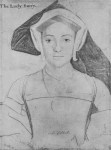


My 15th great-grandmother was lady in waiting to Anne Boleyn when she was married at the age of 15. She managed to stay alive during the shaky royal shake downs that caused her husband to be beheaded. To be in court with Henry VIII was a treacherous position. She wrote poetry like her more well educated husband.
Frances de Vere was the daughter of John de Vere, 15th earl of Oxford (1490-March 21,1540) and Elizabeth Trussell (1496-c.1527). She had no fortune, but in April 1532, she married Henry Howard, earl of Surrey (1517-x.January 19,1547). They lived apart until 1535 because of their youth. Alison Weir in Henry VIII: The King and his Court, states that Anne Boleyn arranged the match over the objections of the duchess of Norfolk and that Frances was at court as one of Anne’s ladies from 1533. She was also at court when Catherine Howard was queen, but not, apparently, afterward. Catherine gave her a brooch set with tiny diamonds and rubies. According to one of her grandson’s biographers, Frances, in common with her more famous husband, wrote poetry. Her children were clever and well educated, although Frances did not have charge of their education. They were Jane (1537?-1593), Thomas (March 10, 1538-June 2,1572), Catherine (1539?-April 7,1596), Henry (February 1540-1614), and Margaret (January 1543-March 17,1592). Frances miscarried in 1547, the year her husband was executed for treason. She was ill for some time afterward. Alternatively, Robert Hutchinson in House of Treason states that Frances gave birth to daughter Jane three weeks after Surrey was executed and names Catherine as the eldest daughter. W. A. Sessions in Henry Howard The Poet Earl of Surrey gives the birth order as Thomas (March 12, 1536), Henry (February 25, 1538), Jane, Catherine, and Margaret (1547). By 1553, Frances had married Thomas Steyning of Woodbridge, Suffolk (d. October 20, 1575+), where she owned the manor of East Soham near Framlingham Castle. She was granted nine manors in all by the duke of Norfolk, her father-in-law, after his restoration in 1553. In July 1554, Frances represented Queen Mary at the christening of the French ambassador’s son and in December 1557 she was chief mourner at the funeral of her sister-in-law, Mary Howard. She was also chief mourner for her daughter-in-law, Margaret Audley, on January 17, 1563. Frances had two children by her second husband, Henry and Mary. She died at East Soham. Portrait: sketch by Hans Holbein, 1535.
source: http://www.kateemersonhistoricals.com
Frances DeVere (1517 – 1577)
is my 15th great grandmother
Thomas Howard (1536 – 1572)
son of Frances DeVere
Margaret Howard (1561 – 1591)
daughter of Thomas Howard
Lady Ann Dorset (1552 – 1680)
daughter of Margaret Howard
Robert Lewis (1574 – 1645)
son of Lady Ann Dorset
Robert Lewis (1607 – 1644)
son of Robert Lewis
Ann Lewis (1633 – 1686)
daughter of Robert Lewis
Joshua Morse (1669 – 1753)
son of Ann Lewis
Joseph Morse (1692 – 1759)
son of Joshua Morse
Joseph Morse (1721 – 1776)
son of Joseph Morse
Joseph Morse III (1752 – 1835)
son of Joseph Morse
John Henry Morse (1775 – 1864)
son of Joseph Morse III
Abner Morse (1808 – 1838)
son of John Henry Morse
Daniel Rowland Morse (1838 – 1910)
son of Abner Morse
Jason A Morse (1862 – 1932)
son of Daniel Rowland Morse
Ernest Abner Morse (1890 – 1965)
son of Jason A Morse
Richard Arden Morse (1920 – 2004)
son of Ernest Abner Morse
Pamela Morse
I am the daughter of Richard Arden Morse
Frances deVere was from a prestigious family, but one without great wealth. She was one of Anne Boleyn’s ladies-in-waiting and Anne probably arranged the match between Frances and Henry Howard, Earl of Surrey, whose mother would not have approved the choice of a bride with no dowry otherwise. Because of her young age (they married in 1532, when she was only 15), Frances continued her role as lady-in-waiting before joining her husband at his home – which is why she was at court to be sketched by Holbein in 1535. Frances shared her husband’s love of the arts, and also wrote poetry. She was traumatized by the 1547 execution of her husband, suffering a miscarriage and spending the next few years in delicate health.

effigy at Church of St Nicholas, Castle Hedingham, Essex
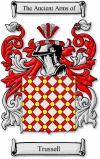
Trussel coat of arms
I have yet another buried in the church ancestor to seek and find when I go to Britain on the dead people tour. My 16th great-grandmother was sold into marriage at age 13, but she became a countess and has an effigy in a church.
Elizabeth de Vere (née Trussel), Countess of Oxford (1496 – before July 1527) was an English noblewoman. Through her daughter Frances, she was the mother-in-law of celebrated poet Henry Howard, Earl of Surrey.
Elizabeth was born in Kibblestone, Staffordshire, England on an unknown date in 1496 to Sir Edward Trussel and Margaret Dun. On 10 April 1509 at the age of about thirteen, she became the second wife of John de Vere, 15th Earl of Oxford. His first wife, Christian Foderingey had died about ten years earlier without having produced children. Together John and Elizabeth had seven children.
Elizabeth Trussell, born in 1496,was the daughter of Edward Trussell (c.1478 – 16 June 1499) of Elmesthorpe, Leicestershire, only son of Sir William Trussell (d. before 24 June 1480) of Elmesthorpe, Knight of the Body for King Edward IV, by Margaret Kene. The Trussells were a “very ancient Warwickshire family”;Elizabeth’s ancestor, Sir Warin Trussell, was of Billesley, Warwickshire.
Elizabeth Trussell’s mother was Margaret Donne, the daughter of Sir John Donne (1450–1503) of Kidwelly, Carmarthenshire, and Elizabeth Hastings (c.1450 – 1508), daughter of Sir Leonard Hastings and Alice Camoys, and sister of William Hastings, 1st Baron Hastings.[6] Sir John Donne’s mother, Joan Scudamore, was the granddaughter of the Welsh rebel, Owain Glyndŵr.
Elizabeth had a brother, John Trussell (d.1499), to whom she was heir.
Through her father’s family, Elizabeth was a descendant of King Henry II by his mistress, Ida de Tony.
Elizabeth Trussell’s grandfather, Sir John Donne, from the Don triptych by Hans Memling.
Elizabeth’s father, Edward Trussell, had been a ward of William Hastings, 1st Baron Hastings, and at Hastings’ death in 1483 was still a minor. In his will, Hastings expressed the wish that Trussell’s wardship be purchased by Hastings’ brother-in-law, Sir John Donne:
Also I will that mine executors give to my sister Dame Elizabeth Don 100 marks . . . Also where I have the ward and marriage of Edward Trussell, I will that it be sold and the money employed to the performing of this my will and for the weal of my soul; and if my brother Sir John Don will buy the said ward, I will that he be preferred therein before any other by £10.
After her father’s death on 16 June 1499 and the death of her brother, John, in the same year, Elizabeth Trussell became a royal ward. Her wardship and marriage were initially purchased from King Henry VII by George Grey, 2nd Earl of Kent (d. 21 December 1503), who intended her as a bride for Sir Henry Grey (d. 24 September 1562), the 2nd Earl’s son by his second marriage to Katherine Herbert, daughter of William Herbert, 1st Earl of Pembroke, by Anne Devereux, the daughter of Sir Walter Devereux. However after the 2nd Earl’s death, Richard Grey, 3rd Earl of Kent, the 2nd Earl’s eldest son and heir by his first marriage to Anne Woodville, abducted Elizabeth Trussell, a crime for which the King levied a heavy fine against him:
Aged at least twenty-five when he succeeded his father in 1503, [the 3rd Earl] wasted his family’s fortunes — possibly, as Dugdale says, he was a gambler. In a striking series of alienations he gave away or sold most of the lands, principally in Bedfordshire, that he had inherited . . . The earl also fell quickly into debt to the king: he failed to pay livery for his father’s lands, and he was fined 2500 marks for abducting Elizabeth Trussell, whose wardship the second earl had left to Richard’s half-brother Henry; he then failed to keep up the instalments laid down for the payment of the fine.
As a result of these events Elizabeth Trussell’s wardship and marriage again came into the hands of the King, who sold it on 29 April 1507 to John de Vere, 13th Earl of Oxford, and his cousin John de Vere, later 15th Earl of Oxford, for an initial payment of 1000 marks and an additional £387 18s to be paid yearly, less £20 a year for Elizabeth’s maintenance. The annual value of Elizabeth’s lands had been estimated in the inquisition post mortem taken after her brother John’s death at £271 12s 8d a year.
Marriage and issue
Between 29 April 1507 and 4 July 1509 Elizabeth became the second wife of John de Vere, 15th Earl of Oxford, whose first wife was Christian Foderingey (born c. 1481, died before 4 November 1498), the daughter and co-heiress of Thomas Foderingey (c. 1446 – 1491) of Brockley, Suffolk, by Elizabeth Doreward (c. 1473 – 1491), daughter of William Doreward of Bocking, Essex, by whom the 15th Earl had no issue.
By her marriage to the 15th Earl of Oxford, Elizabeth had four sons and three daughters:
John de Vere, 16th Earl of Oxford (1516 – 3 August 1562), who married firstly, Dorothy Neville (died c. 6 January 1548),[16] second daughter of Ralph Neville, 4th Earl of Westmorland, by whom he had a daughter, Katherine de Vere, who married Edward Windsor, 3rd Baron Windsor. The Earl married secondly, Margery Golding (d. 2 December 1568),[17] by whom he had a son, Edward de Vere, 17th Earl of Oxford, and a daughter, Mary de Vere.
Aubrey de Vere (d. 1580), who married firstly Margaret Spring, the daughter of John Spring of Lavenham, by whom he had a daughter, Jane, who married Henry Hunt of Gosfield,Essex, and a son, Hugh Vere,[18] who married Eleanor Walsh, the daughter of William Walsh. Hugh Vere and Eleanor Walsh had a son, Robert, who inherited the title as 19th Earl of Oxford. Aubrey de Vere married secondly, Bridget Gibbon, the daughter of Sir Anthony Gibbon of Lynn, Norfolk.[19]
Robert de Vere (died c. 1598), who married firstly, Barbara Berners, by whom he had a son, John Vere,[20] and a daughter, Mary Vere, and secondly, Joan Hubberd, sister of Edward Hubberd (d. 1602), by whom he had no issue.
Geoffrey Vere (d. 1572), who in 1556 married Elizabeth Hardekyn (d. December 1615), daughter of Richard Hardekyn (d. 1558) of Wotton House near Castle Hedingham, by whom he had four sons, John Vere (c. 1558 – 1624) of Kirby Hall near Castle Hedingham, Sir Francis Vere (born c. 1560), Robert Vere (b. 1562), and Sir Horatio Vere (b. 1565), and a daughter, Frances Vere (born 1567), who married, as his second wife, the colonial adventurer and author, Sir Robert Harcourt (1574/5–1631), of Nuneham on 20 March 1598.
Elizabeth de Vere (born c. 1512), who married, as his second wife, Thomas Darcy, 1st Baron Darcy of Chiche (d. 28 June 1558), by whom she had three sons, John Darcy, 2nd Baron Darcy of Chiche (d. 3 March 1581), Aubrey (d. 1558–68) and Robert (died c. 1568), and two daughters, Thomasine and Constance, of whom the latter married Edmund Pyrton (died c. 1609).
Anne de Vere, (born c. 1522, died c. 14 February 1572), who married firstly, Edmund Sheffield, 1st Baron Sheffield of Butterwick, Lincolnshire, second but eldest surviving son of Sir Robert Sheffield by Margaret Zouche, by whom she had a son and three daughters. Edmund Sheffield was slain 31 July 1549 during the suppression of Kett’s rebellion. Anne de Vere married secondly, John Brock, esquire, of Colchester, Essex, son and heir of John Brock of Little Leighs, Essex, by Agnes Wiseman, by whom she had no issue.
Frances de Vere (c. 1517 – 30 June 1577), who married firstly, Henry Howard, Earl of Surrey, by whom she was the mother of Jane Howard, Thomas Howard, 4th Duke of Norfolk, Margaret Howard, Henry Howard, 1st Earl of Northampton, and Katherine Howard. Frances de Vere married secondly, Thomas Steynings, by whom she had no issue.
Elizabeth died before July 1527, and was buried in the Church of St Nicholas, Castle Hedingham, Essex, where her effigy can be seen on the black marble tomb erected for Elizabeth and her husband, the 15th Earl.
Footnotes
Jump up^ She is usually said to have been born at the Trussell manor of Cubleston or Kibblestone near Barlaston and Stone, Staffordshire.
Elizabeth Trussel (1494 – 1527)
is my 16th great grandmother
Frances DeVere (1517 – 1577)
daughter of Elizabeth Trussel
Thomas Howard (1536 – 1572)
son of Frances DeVere
Margaret Howard (1561 – 1591)
daughter of Thomas Howard
Lady Ann Dorset (1552 – 1680)
daughter of Margaret Howard
Robert Lewis (1574 – 1645)
son of Lady Ann Dorset
Robert Lewis (1607 – 1644)
son of Robert Lewis
Ann Lewis (1633 – 1686)
daughter of Robert Lewis
Joshua Morse (1669 – 1753)
son of Ann Lewis
Joseph Morse (1692 – 1759)
son of Joshua Morse
Joseph Morse (1721 – 1776)
son of Joseph Morse
Joseph Morse III (1752 – 1835)
son of Joseph Morse
John Henry Morse (1775 – 1864)
son of Joseph Morse III
Abner Morse (1808 – 1838)
son of John Henry Morse
Daniel Rowland Morse (1838 – 1910)
son of Abner Morse
Jason A Morse (1862 – 1932)
son of Daniel Rowland Morse
Ernest Abner Morse (1890 – 1965)
son of Jason A Morse
Richard Arden Morse (1920 – 2004)
son of Ernest Abner Morse
Pamela Morse
I am the daughter of Richard Arden Morse
My 23rd great-grandfather was a knight in Scotland who inherited power and a castle by marrying his wife Isabell. The family did well.
Sir Gilchrist Mure
Born: Cir 1200
Marriage: Isabel Cumming
Died: 1280 aged 80
General Notes:
Rowallan had been in possession of the Mures previous to the reign of Alexander III., from which they were dispossessed by the powerful house of Cuming, and the owner, Sir Gichrist More, was ” redacted for his safty to keep close in his castle of Pokellie.” After the battle of Largs, however, upon which occasion Sir Gilchrist received the honour of Knighthood in reward of his bravery, he “was reponed to his whole inheritance.” ” Sir Gilchrist,” continues the author, ” for preventing of more creation of trouble, and for settling of his owne securitie and firmer peace made allyance with this partie of power, and married Isabell, his only daughter and heire, by accession of whose inheritance, to witt of the lands of Cuminside, Draden, and Harwoods, his estate being enlarged.” The editor, however, remarks, that it is ” fully as probable, even from his own showing, that Polkelly was the more ancient inheritance of his family, and that Rowallan was acquired solely by the marriage of the heiress, Isabell, as is generally held.” But to follow our author – ” After the death of Sir Walter Cumine, Sir Gilchrist now secured not onlie in the title and full possession of his old inheritance, but also in his border lands wherein he succeeded to Sir Walter forsaid within the Sheriffdom of Roxburgh, being sensible and mindfull of the deserving of his freinds and followers in time of his troubles, deals with all of them as became a man of honour, bestowing upon each some parcell of land according to his respect, interest or (happly) promise to the person. He disponed to his kinsman Ranald More, who had come purposlie from Ireland for his assistance in time of his troubles, and tooke share with him of the hazard of the battell, the lands of Pokellie,” &c. Now there is evidently a complete jumbling of times and circumstances here. In the reign of David II Maurice Mur- ray had a charter “of the waird of Walter Cuming of Rowallan, in vic. de Roxburgh, with the lands thereof.” It is thus apparent that the Rowallan lands in Roxburghshire were not in possession of Sir Gilchrist at this period and it is next to impossible that the same Sir Gilchrist Mure, who fought at the battle of Largs, could have been alive in the reign of David II. Indeed he is stated by the author to have died in 1280. No reliance, therefore, is to be placed on the “Historie” by Sir William farther back than can be corroborated by concurrent testimony.
He is said, as already mentioned, to have disponed the lands of Polkelly to his kinsman, Ranald More, but of this there is no evidence. The author of the “Historie” refers to a charter ” extant, granted by him to his daughter Anicia, of the lauds of Cuthsach, Gulmeth, Blaracharsan, with the woods thairof purchast from Molid, together with Garnegep and Calder, rowmes now not knowne by these names. The pasturage thairin specifyed being bounded upon the north side from Drwmbwy dicth by Swinstie burne, rnaks evident that the lands of Pokellie have been at that time in the hands of the disponer, and a proper part of the mure of Rowallane,” &e. With his daughter Anicia, married to Richard Boyle of Kelbume, he is said to have given the lands of Polruskane, ” for payment of ane pound of Comine seed in name of blensch ferme yearlie from these times, till by God’s good providence they are now brought in againe, to the house by lawfull purchase. He gifted likewise the lands of Ardoeh (now Crawfurdland,) to Johne Crawfurd and aires, for service of waird and reliefe, and to Edward Arnot the two finnicks for yearlie payment of ane pair of gloves at St Lawrence Chapelland of ane pair of spurs at St Michaell’s Chapell, embleames of reddie service. Last it is recorded that he builded the Mures Ile at Kilmarnock, and decored the same with funerall monuments, and mortified for maintainance of the Priest who did officiat at the altar thairin, to the Abacie of Killwining, the lands of Skirnalland, for which reasone the nomination of the priest forsaid (a custome which constantlie continued till the restoring of religion) was proper to him and his successors.” Sir Gilchrist, who had evidently been the means of vastly increasing the family estates, although there is no evidence of his being in the possession of Rowallan, is said to have died “about the year 1280, neer the 80 year of his age.” He was buried, says the historian, “with his forfathers in his owne buriell place in the Mures Isle at Kilmarnock,” a statement certainly involving an anachronism. If he was the builder of the Isle, he could not well have been buried with his forefathers, unless they had been disinhumed for the purpose. He had, by his lady, Isabcll Cumine:-
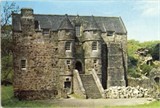
Rowallan Castle
Gilchrist Mure (1200 – 1280)
is my 23rd great grandfather
ARCHIBALD Mure (1231 – 1297)
son of Gilchrist Mure
William Mure (1265 – 1348)
son of ARCHIBALD Mure
Adam More (1290 – 1380)
son of William Mure
Elizabeth Mure (1320 – 1355)
daughter of Adam More
Robert Scotland Stewart (1337 – 1406)
son of Elizabeth Mure
James I Scotland Stewart (1394 – 1434)
son of Robert Scotland Stewart
Joan Stewart (1428 – 1486)
daughter of James I Scotland Stewart
John Gordon (1450 – 1517)
son of Joan Stewart
Robert Lord Gordon (1475 – 1525)
son of John Gordon
Catherine Gordon (1497 – 1537)
daughter of Robert Lord Gordon
Lady Elizabeth Ashton (1524 – 1588)
daughter of Catherine Gordon
Capt Roger Dudley (1535 – 1585)
son of Lady Elizabeth Ashton
Gov Thomas Dudley (1576 – 1653)
son of Capt Roger Dudley
Anne Dudley (1612 – 1672)
daughter of Gov Thomas Dudley
John Bradstreet (1652 – 1718)
son of Anne Dudley
Mercy Bradstreet (1689 – 1725)
daughter of John Bradstreet
Caleb Hazen (1720 – 1777)
son of Mercy Bradstreet
Mercy Hazen (1747 – 1819)
daughter of Caleb Hazen
Martha Mead (1784 – 1860)
daughter of Mercy Hazen
Abner Morse (1808 – 1838)
son of Martha Mead
Daniel Rowland Morse (1838 – 1910)
son of Abner Morse
Jason A Morse (1862 – 1932)
son of Daniel Rowland Morse
Ernest Abner Morse (1890 – 1965)
son of Jason A Morse
Richard Arden Morse (1920 – 2004)
son of Ernest Abner Morse
Pamela Morse
I am the daughter of Richard Arden Morse


My 19th great-grandfather was Speaker of the House of Commons, and asked the king to excuse him from that duty. Richard II refused to excuse him. He is buried on the north side of the parish church St. Mary at Bures in Essex. These Waldegraves must be added to the buried in church tour of Europe I need to make someday.
Sir Richard II Lord Bures De Waldegrave (1335 – 1401)
is my 19th great grandfather
Sir Richard III Lord Bures Silveste DeWALDEGRAVE (1370 – 1434)
son of Sir Richard II Lord Bures De Waldegrave
Sir John William deWaldegrave (1397 – 1454)
son of Sir Richard III Lord Bures Silveste DeWALDEGRAVE
Lady Anne De Waldegrave (1429 – 1454)
daughter of Sir John William deWaldegrave
Knight Edmond Bedingfield (1450 – 1496)
son of Lady Anne De Waldegrave
Edmund Bedingfield (1483 – 1552)
son of Knight Edmond Bedingfield
Henry Bedingfield (1509 – 1583)
son of Edmund Bedingfield
Edmund Bedingfield (1534 – 1585)
son of Henry Bedingfield
Nazareth Bedingfeld (1561 – 1622)
daughter of Edmund Bedingfield
Elishua Miller Yelverton (1592 – 1688)
daughter of Nazareth Bedingfeld
Yelverton Crowell (1621 – 1683)
son of Elishua Miller Yelverton
Elishua Crowell (1643 – 1708)
daughter of Yelverton Crowell
Yelverton Gifford (1676 – 1772)
son of Elishua Crowell
Ann Gifford (1715 – 1795)
daughter of Yelverton Gifford
Frances Congdon (1738 – 1755)
daughter of Ann Gifford
Thomas Sweet (1759 – 1844)
son of Frances Congdon
Valentine Sweet (1791 – 1858)
son of Thomas Sweet
Sarah LaVina Sweet (1840 – 1923)
daughter of Valentine Sweet
Jason A Morse (1862 – 1932)
son of Sarah LaVina Sweet
Ernest Abner Morse (1890 – 1965)
son of Jason A Morse
Richard Arden Morse (1920 – 2004)
son of Ernest Abner Morse
Pamela Morse
I am the daughter of Richard Arden Morse
Sir Richard Waldegrave (died 2 May 1401) was a member of Parliament for Lincolnshire in 1376, and Speaker of the House of Commons from 1381 to 1382, during the reign of King Richard II.
Life
His father Sir Richard Waldegrave was returned to parliament in 1335 for Lincolnshire. Richard the son resided at Smallbridge in Suffolk, and was returned to parliament as a knight of the shire in the parliament of February 1376. He was elected to the first and second parliaments of Richard II and to that of 1381. In 1381 he was elected speaker of the House of Commons, and prayed the king to discharge him from the office; the first instance, according to James Alexander Manning, of a speaker desiring to be excused. The king, however, insisted on his fulfilling his duties.
During his speakership parliament was chiefly occupied with the revocation of the charters granted to the villeins by Richard during Wat Tyler’s rebellion. It was dissolved in February 1382. Waldegrave represented Suffolk in the two parliaments of 1382, in those of 1383, in that of 1386, in those of 1388, and in that of January 1389–90.
He died at Smallbridge on 2 May 1402, and was buried on the north side of the parish church of St. Mary at Bures in Essex. He married Joan Silvester of Bures, by whom he had a son, Sir Richard Waldegrave.
Referenc es
” Waldegrave, Richard”. Dictionary of National Biography, 1885–1900. London: Smith, Elder & Co.
Attribution
This article incorporates text from a publication now in the public domain: “Waldegrave, Richard”. Dictionary of National Biography, 1885–1900. London: Smith, Elder & Co.
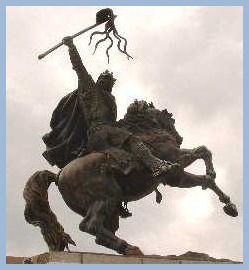
William the Conqueror
My 26th great-grandfather is famous for bringing big changes to England. He died from injuries sustained when he fell from his horse in battle. He became king of England in 1066. He was too fat to fit into his burial sarcophagus. His grave was vandalized several times, including during the French Revolution. Although the memorial remains, almost none of his remains are in the grave.

William the Conqueror
William I ‘ the Conqueror’ of Normandy (1024 – 1087)
is my 26th great grandfather
King Henry I of England Beauclerc (1068 – 1135)
son of William I ‘ the Conqueror’ of Normandy
Mathilda Roesa (1090 – 1110)
daughter of King Henry I of England Beauclerc
Lady Gilberta Godiva le Becket (1100 – 1186)
daughter of Mathilda Roesa
Hervey Butler (Boteler) (1130 – 1190)
son of Lady Gilberta Godiva le Becket
Theobald I FitzWalter, 1st Chief Butler of Eng & Ire, de Butler (Boteler) (1170 – 1206)
son of Hervey Butler (Boteler)
Theobald II le Boteler (1200 – 1230)
son of Theobald I FitzWalter, 1st Chief Butler of Eng & Ire, de Butler (Boteler)
Lady Maud Matilda DeVerdun Countess DeBoteler Countess Arundel (1225 – 1283)
daughter of Theobald II le Boteler
Matilda Tideshall FitzAlan Baroness Corbet De Arundel (1244 – 1309)
daughter of Lady Maud Matilda DeVerdun Countess DeBoteler Countess Arundel
Sir Thomas Corbet of Moreton, Knight of The Bath Corbet (1281 – 1310)
son of Matilda Tideshall FitzAlan Baroness Corbet De Arundel
Knight Sir Robert XII Corbet, Lord of Moreton Corbet (1304 – 1375)
son of Sir Thomas Corbet of Moreton, Knight of The Bath Corbet
Sir Roger XIII (Lord of Morton) Corbet (1330 – 1396)
son of Knight Sir Robert XII Corbet, Lord of Moreton Corbet
Robert Corbet (1383 – 1440)
son of Sir Roger XIII (Lord of Morton) Corbet
Blanche Corbet (1423 – 1458)
daughter of Robert Corbet
Humphrey Coningsby (1458 – 1535)
son of Blanche Corbet
Amphyllis Coningsby (1478 – 1533)
daughter of Humphrey Coningsby
Margaret Tyndale (1510 – 1555)
daughter of Amphyllis Coningsby
Thomas Taylor (1548 – 1588)
son of Margaret Tyndale
Thomas Taylor (1574 – 1618)
son of Thomas Taylor
James Taylor (1608 – 1698)
son of Thomas Taylor
John Taylor (1685 – 1776)
son of James Taylor
John Taylor (1727 – 1787)
son of John Taylor
John Taylor (1747 – 1781)
son of John Taylor
John Nimrod Taylor (1770 – 1816)
son of John Taylor
John Samuel Taylor (1798 – 1873)
son of John Nimrod Taylor
William Ellison Taylor (1839 – 1918)
son of John Samuel Taylor
George Harvey Taylor (1884 – 1941)
son of William Ellison Taylor
Ruby Lee Taylor (1922 – 2008)
daughter of George Harvey Taylor
Pamela Morse
I am the daughter of Ruby Lee Taylor
William I (1027[1] – 9 September 1087), better known as William the Conqueror (French: Guillaume le Conquérant), was Duke of Normandy from 1035 and King of England from 1066 to his death. William is also referred to as “William II” in relation to his position as Duke of Normandy. In particular, before his conquest of England, he was known as “William the Bastard” (French: Guillaume le Bâtard) because of the illegitimacy of his birth.[2]
To claim the English crown, William invaded England in 1066, leading an army of Normans to victory over the Anglo-Saxon forces of Harold Godwinson (who died in the conflict) at the Battle of Hastings, and suppressed subsequent English revolts in what has become known as the Norman Conquest.[3]
His reign, which brought Norman culture to England, had an enormous impact on the subsequent course of England in the Middle Ages. In addition to political changes, his reign also saw changes to English law, a programme of building and fortification, changes to the vocabulary of the English language, and the introduction of continental European feudalism into England.
Early life
William was born in Falaise, Normandy, the illegitimate and only son of Robert I, Duke of Normandy, who named him as heir to Normandy. His mother, Herleva (among other names), who later had two sons to another father, was the daughter of Fulbert, most probably a local tanner. William had a sister, Adelaide of Normandy, another child of Robert and Herleva. Later in his life, the enemies of William are said to have commented derisively that William stank like a tannery, and the residents of besieged Alençon hung skins from the city walls to taunt him.
William is believed to have been born in either 1027 or 1028, and more likely in the autumn of the latter year.[1] He was born the grandnephew of Queen Emma of Normandy, wife of King Ethelred the Unready and later of King Canute the Great.[4]
William’s illegitimacy affected his early life and he was known to contemporaries as ‘William the Bastard’. Nevertheless, when his father died, he was recognised as the heir.[5]
Duke of Normandy
By his father’s will, William succeeded him as Duke of Normandy at age eight in 1035 and was known as Duke William of Normandy (French: Guillaume, duc de Normandie; Latin: Guglielmus Dux Normanniae). Plots by rival Norman noblemen to usurp his place cost William three guardians, though not Count Alan III of Brittany, who was a later guardian. William was supported by King Henry I of France, however. He was knighted by Henry at age 15. By the time William turned 19 he was successfully dealing with threats of rebellion and invasion. With the assistance of Henry, William finally secured control of Normandy by defeating rebel Norman barons at Caen in the Battle of Val-ès-Dunes in 1047, obtaining the Truce of God, which was backed by the Roman Catholic Church.
Against the wishes of Pope Leo IX, William married Matilda of Flanders in 1053 in the Cathedral of Notre Dame at Eu, Normandy (Seine-Maritime). At the time, William was about 24 years old and Matilda was 22. William is said to have been a faithful and loving husband, and their marriage produced four sons and six daughters. In repentance for what was a consanguine marriage (they were distant cousins), William donated St-Stephen’s church (l’Abbaye-aux-Hommes) and Matilda donated Sainte-Trinité church (Abbaye aux Dames).
Feeling threatened by the increase in Norman power resulting from William’s noble marriage, Henry I attempted to invade Normandy twice (1054 and 1057), without success. Already a charismatic leader, William attracted strong support within Normandy, including the loyalty of his half-brothers Odo of Bayeux and Robert, Count of Mortain, who played significant roles in his life. Later, he benefitted from the weakening of two competing power centers as a result of the deaths of Henry I and of Geoffrey II of Anjou, in 1060. In 1062 William invaded and took control of the county of Maine, which had been a fief of Anjou.
English succession
Upon the death of the childless Edward the Confessor, the English throne was fiercely disputed by three claimants — William, Harold Godwinson, the powerful Earl of Wessex, and the Viking King Harald III of Norway, known as Harald Hardraada. William had a tenuous blood claim, through his great aunt Emma (wife of Ethelred and mother of Edward). William also contended that Edward, who had spent much of his life in exile in Normandy during the Danish occupation of England, had promised William the throne when William visited Edward in London in 1052. Finally, William claimed that Harold had pledged allegiance to him in 1064. William had rescued the shipwrecked Harold from the count of Ponthieu, and together they had defeated Conan II, Count of Brittany. On that occasion, William knighted Harold. He also deceived Harold by having him swear loyalty to William over the concealed bones of a saint.[7]
In January 1066, however, in accordance with Edward’s last will and by vote of the Witenagemot, Harold Godwinson was crowned King by Archbishop Aldred.
Norman Invasion
Meanwhile, William submitted his claim to the English throne to Pope Alexander II, who sent him a consecrated banner in support. Then, William organized a council of war at Lillebonne and openly began assembling an army in Normandy. Offering promises of English lands and titles, he amassed at Saint-Valery-sur-Somme a considerable invasion force of 600 ships and 7,000 men, consisting of Normans, Bretons, French mercenaries, and numerous foreign knights. In England, Harold assembled a large army on the south coast and a fleet of ships to guard the English Channel.
Fortuitously for William, his crossing was delayed by weeks of unfavourable winds. William managed to keep his army together during the wait, but Harold’s was diminished by dwindling supplies and falling morale with the arrival of the harvest season.[8] Harold also consolidated his ships in London, leaving the English Channel unguarded. Then came the news that the other contender for the throne, Harald III of Norway, allied with Tostig Godwinson, had landed ten miles from York; Harold was forced to march against them.
Before he could return south, the wind direction turned and William crossed, landing his army at Pevensey Bay (Sussex) on 28 September. Thence he moved to Hastings, a few miles to the east, where he built a prefabricated wooden castle for a base of operations. From there, he ravaged the hinterland and waited for Harold’s return from the north.
William chose Hastings as it was at the end of a long peninsula flanked by impassable marshes. Battle was on the isthmus. William at once built a fort at Hastings to guard his rear against potential arrival of Harold’s fleet from London. Having landed his army, William was less concerned about desertion and could have waited out the winter storms, raided the surrounding area for horses and started a campagn in the spring. Harold had been reconnoitering the south of England for some time and well appreciated the need to occupy this isthmus at once.
Battle of Hastings
Main article: Battle of Hastings
Harold, after defeating his brother Tostig and Harald Hardrada in the north, marched his army 241 miles to meet the invading William in the south. On 13 October, William received news of Harold’s march from London. At dawn the next day, William left the castle with his army and advanced towards the enemy. Harold had taken a defensive position atop the Senlac Hill/Senlac ridge, about seven miles from Hastings, at present-day Battle, East Sussex.
The Battle of Hastings lasted all day. Although the numbers on each side were about equal, William had both cavalry and infantry, including many archers, while Harold had only foot soldiers and few if any archers.[10] Along the ridge’s border, formed as a wall of shields, the English soldiers at first stood so effectively that William’s army was thrown back with heavy casualties. William rallied his troops, however — reportedly raising his helmet, as shown in the Bayeux Tapestry, to quell rumors of his death. Meanwhile, many of the English had pursued the fleeing Normans on foot, allowing the Norman cavalry to attack them repeatedly from the rear as his infantry pretended to retreat further. Norman arrows also took their toll, progressively weakening the English wall of shields. A final Norman cavalry attack decided the battle irrevocably, resulting in the death of Harold, killed by an arrow in the eye. Two of his brothers, Gyrth and Leofwine Godwinson, were killed as well. At dusk, the English army made their last stand. By that night, the Norman victory was complete and the remaining English soldiers fled in fear.
March to London
For two weeks, William waited for a formal surrender of the English throne, but the Witenagemot proclaimed the quite young Edgar Ætheling instead, though without coronation. Thus, William’s next target was London, approaching through the important territories of Kent, via Dover and Canterbury, inspiring fear in the English. However, at London, William’s advance was beaten back at London Bridge, and he decided to march westward and to storm London from the northwest. After receiving continental reinforcements, William crossed the Thames at Wallingford, and there he forced the surrender of Archbishop Stigand (one of Edgar’s lead supporters), in early December. William reached Berkhamsted a few days later where Ætheling relinquished the English crown personally and the exhausted Saxon noblemen of England surrendered definitively. Although William was acclaimed then as English King, he requested a coronation in London. As William I, he was formally crowned on Christmas day 1066, in Westminster Abbey, by Archbishop Aldred.[7]
English resistance
Although the south of England submitted quickly to Norman rule, resistance in the north continued for six more years until 1072. During the first two years, King William I suffered many revolts throughout England (Dover, western Mercia, Exeter) and Wales. Also, in 1068, Harold’s illegitimate sons attempted an invasion of the south western peninsula, but William defeated them.
For William I, the worst crisis came from Northumbria, which had still not submitted to his realm. In 1068, with Edgar Ætheling, both Mercia and Northumbria revolted. William could suppress these, but Edgar fled to Scotland where Malcolm III of Scotland protected him. Furthermore, Malcolm married Edgar’s sister Margaret, with much éclat, stressing the English balance of power against William. Under such circumstances, Northumbria rebelled, besieging York. Then, Edgar resorted also to the Danes, who disembarked with a large fleet at Northumbria, claiming the English crown for their King Sweyn II. Scotland joined the rebellion as well. The rebels easily captured York and its castle. However, William could contain them at Lincoln. After dealing with a new wave of revolts at western Mercia, Exeter, Dorset, and Somerset, William defeated his northern foes decisively at the River Aire, retrieving York, while the Danish army swore to depart.
William then devastated Northumbria between the Humber and Tees rivers, with his Harrying of the North. This devastation included setting fire to the vegetation, houses and even tools to work the fields. He also burnt crops, killed livestock and sowed the fields and land with salt, to stunt growth. After this cruel treatment the land did not recover for more than 100 years. The region ended up absolutely deprived, losing its traditional autonomy towards England. However it may have stopped future rebellions, scaring the English people into obedience. Then, the Danish king disembarked in person, readying his army to restart the war, but William suppressed this threat with a payment of gold. In 1071, William defeated the last rebellion of the north through an improvised pontoon, subduing the Isle of Ely, where the Danes had gathered. In 1072, he invaded Scotland, defeating Malcolm, who had recently invaded the north of England. William and Malcolm agreed to a peace by signing the Treaty of Abernethy and Malcolm gave up his son Duncan as a hostage for the peace. In 1074, Edgar Ætheling submitted definitively to William.
In 1075, during William’s absence, the Revolt of the Earls was confronted successfully by Odo. In 1080, William dispatched his half brothers Odo and Robert to storm Northumbria and Scotland, respectively. Eventually, the Pope protested that the Normans were mistreating the English people. Before quelling the rebellions, William had conciliated with the English church; however, he persecuted it ferociously afterwards.
Reign in England English RoyaltyHouse of NormandyWilliam I Robert II Curthose, Duke of Normandy Richard, Duke of Bernay William II Rufus Adela, Countess of Blois Henry I Beauclerc
Events
As would be habit for his descendants, William spent much of his time (11 years, since 1072) in Normandy, ruling the islands through his writs. Nominally still a vassal state, owing its entire loyalty to the French king, Normandy arose suddenly as a powerful region, alarming the other French dukes who reacted by attacking the duchy persistently. William became focused on conquering Brittany, and the French King Philip I admonished him. A treaty was concluded after his aborted invasion of Brittany in 1076, and William betrothed Constance to the Breton Duke Hoel’s son, the future Alan IV of Brittany. The wedding occurred only in 1086, after Alan’s accession to the throne, and Constance died childless a few years later.
The mischief of William’s elder son Robert arose after a prank of his brothers William and Henry, who doused him with filthy water. The situation became a large scale Norman rebellion. Only with King Philip’s additional military support was William able to confront Robert, who was based at Flanders. During the battle in 1079, William was unhorsed and wounded by Robert, who lowered his sword only after recognizing him. The embarrassed William returned to Rouen, abandoning the expedition. In 1080, Matilda reconciled both, and William revoked Robert’s inheritance.
Odo caused many troubles to William, and he was imprisoned in 1082, losing his English estate and all royal functions, except the religious ones. In 1083, Matilda died, and William became more tyrannical over his realm.
Reforms
William initiated many major changes. He increased the function of the traditional English shires (autonomous administrative regions), which he brought under central control; he decreased the power of the earls by restricting them to one shire apiece. All administrative functions of his government remained fixed at specific English towns, except the court itself; they would progressively strengthen, and the English institutions became amongst the most sophisticated in Europe. In 1085, in order to ascertain the extent of his new dominions and to improve taxation, William commissioned all his counselors for the compilation of the Domesday Book, which was published in 1086. The book was a survey of England’s productive capacity similar to a modern census.
William also ordered many castles, keeps, and mottes, among them the Tower of London’s foundation (the White Tower), to be built throughout England. These ensured effectively that the many rebellions by the English people or his own followers did not succeed.
His conquest also led to French (especially, but not only, the Norman French) replacing English as the language of the ruling classes for nearly 300 years. Furthermore, the original Anglo-Saxon culture of England became mingled with the Norman one; thus the Anglo-Norman culture came into being.
William is said to have eliminated the native aristocracy in as little as four years. Systematically, he despoiled those English aristocrats who either opposed the Normans or who died without issue. Thus, most English estates and titles of nobility were handed to the Norman noblemen. Many English aristocrats fled to Flanders and Scotland; others may have been sold into slavery overseas. Some escaped to join the Byzantine Empire’s Varangian Guard, and went on to fight the Normans in Sicily. By 1070, the indigenous nobility had ceased to be an integral part of the English landscape, and by 1086, it maintained control of just 8% of its original land-holdings.[15] However, to the new Norman noblemen, William handed the English parcels of land piecemeal, dispersing these wide. Thus nobody would try conspiring against him without jeopardizing their own estates within the so unstable England. Effectively, this strengthened William’s political stand as a monarch.
William also seized and depopulated many miles of land (36 parishes), turning it into the royal New Forest region to support his enthusiastic enjoyment of hunting.
Death, burial, and succession
In 1087 in France, William burned Mantes (50 km west of Paris), besieging the town. However, he fell off his horse, suffering fatal abdominal injuries by the saddle pommel. On his deathbed, William divided his succession for his sons, sparking strife between them. Despite William’s reluctance, his combative elder son Robert received the Duchy of Normandy, as Robert II. William Rufus (his third son) was next English king, as William II. William’s youngest son Henry received 5,000 silver pounds, which would be earmarked to buy land. He also became King Henry I of England after William II died without issue. While on his deathbed, William pardoned many of his political adversaries, including Odo.
William died at age 59 at the Convent of St Gervais in Rouen, capital city of Normandie, France, on 9 September 1087. William was buried in the Abbaye-aux-Hommes, which he had erected, in Caen, Normandy.
According to some sources, a fire broke out during the funeral; the original owner of the land on which the church was built claimed he had not been paid yet, demanding 60 shillings, which William’s son Henry had to pay on the spot; and, in a most unregal postmortem, William’s corpulent body would not fit in the stone sarcophagus.
William’s grave is currently marked by a marble slab with a Latin inscription; the slab dates from the early 19th century. The grave was defiled twice, once during the French Wars of Religion, when his bones were scattered across the town of Caen, and again during the French Revolution. Following those events, only William’s left femur remains in the tomb and some skin particles
Legacy
William’s invasion was the last time that England was successfully conquered by a foreign power. Although there would be a number of other attempts over the centuries, the best that could be achieved would be excursions by foreign troops, such as the Raid on the Medway during the Second Anglo-Dutch War, but no actual conquests such as William’s. There have however been occasions since that time when foreign rulers have succeeded to the English/British throne, notably the Dutch Stadtholder William III of Orange in 1688 after a successful invasion of England by Dutch troops (see Glorious Revolution) and George of Hanover b. 1660, who acceded by virtue of the exclusion of Roman Catholics from the succession.
As Duke of Normandy and King of England he passed the titles on to his descendants. Other territories would be acquired by marriage or conquest and, at their height, these possessions would be known as the Angevin Empire.
They included many lands in France, such as Normandy and Aquitaine, but the question of jurisdiction over these territories would be the cause of much conflict and bitter rivalry between England and France, which took up much of the Middle Ages, including the Hundred Years War and, some might argue, continued as far as the Battle of Waterloo of 1815.
An example of William’s legacy even in modern times can be seen on the Bayeux Memorial, a monument erected by Britain in the Normandy town of Bayeux to those killed in the Battle of Normandy during World War II. A Latin inscription on the memorial reads NOS A GULIELMO VICTI VICTORIS PATRIAM LIBERAVIMUS – freely translated, this reads “We, once conquered by William, have now set free the Conqueror’s native land” .
Physical appearance
No authentic portrait of William has been found. Nonetheless, he was depicted as a man of fair stature with remarkably strong arms, “with which he could shoot a bow at full gallop”. William showed a magnificent appearance, possessing a fierce countenance. He enjoyed an excellent health until old age; nevertheless his noticeable corpulence in later life augmented eventually so much that French King Philip I commented that William looked like a pregnant woman.
Descendants
Family tree
William is known to have had nine children, though Agatha, a tenth daughter who died a virgin, appears in some sources. Several other unnamed daughters are also mentioned as being betrothed to notable figures of that time. Despite rumours to the contrary (such as claims that William Peverel was a bastard of William)[19] there is no evidence that he had any illegitimate children,[20]
Robert Curthose (1054–1134), Duke of Normandy, married Sybil of Conversano, daughter of Geoffrey of Conversano.
Richard (c. 1055 – c. 1081), Duke of Bernay, killed by a stag in New Forest.
Adeliza (or Alice) (c. 1055 – c. 1065), reportedly betrothed to Harold II of England.
Cecilia (or Cecily) (c. 1056 – 1126), Abbess of Holy Trinity, Caen.
William “Rufus” (c. 1056 – 1100), King of England.
Agatha (c. 1064 – 1079), betrothed to Alfonso VI of Castile.
Constance (c. 1066 – 1090), married Alan IV Fergent, Duke of Brittany; poisoned, possibly by her own servants.
Adela (c. 1067 – 1137), married Stephen, Count of Blois.
Henry “Beauclerc” (1068–1135), King of England, married Edith of Scotland, daughter of Malcolm III, King of the Scots. His second wife was Adeliza of Leuven.

Isabell Harvey
My 14th great grandmother is buried with her husband in a church in England. She met her husband and married him before she knew he was the son of an earl. Their meeting was very romantic:
Isabel Hervey was the daughter of Edmund Hervey (b.1492) and Margaret Wentworth (c.1492-1511). Her father was a wealthy London merchant with a house in Cheapside. According to the legend, Isabel and her father were visiting friends in the village of Kensington when the earl of Sussex and his retinue rode past. In her eagerness to see the cavalcade, Isabel leaned too far out a window and dropped her glove. Sir Humphrey Radcliffe (c.1509-August 13,1566), third son of the earl, dipped his lance, impaled the glove, and returned it to its owner. Struck by her beauty, he left his father’s company and offered his services to Hervey to escort him and his daughter back to London. Humphrey represented himself as one of the earl’s men, but did not tell them he was Sussex’s son until, some versions of the tale insist, he and Isabel had been married for some time. They lived at Elstow in Bedfordshire and Edgworth, Lancashire. They were the parents of four daughters and two sons, including Mary (d.1616/17), a maid of honor to Queen Elizabeth, Edward (1552-1643), Martha, and Frances (b.1545). Portrait: the Hans Holbein the Younger drawing at Windsor inscribed “The Lady Ratclif” may be Isabel Hervey, although neither the date of her marriage nor the date of the drawing are known. Other likely candidates (Elizabeth Howard, Lady Fitzwalter; Margaret Stanley, countess of Sussex; Mary Arundell, countess of Sussex) would not have been called Lady Radcliffe.
Isabell Harvey (1510 – 1594)
is my 14th great grandmother
Edward Radcliffe (1535 – 1643)
son of Isabell Harvey
Lady Eleanor Elizabeth Radcliffe (Whitebread) (1550 – 1628)
daughter of Edward Radcliffe
Elizabeth Whitbread (1538 – 1599)
daughter of Lady Eleanor Elizabeth Radcliffe (Whitebread)
Thomas Spencer (1571 – 1631)
son of Elizabeth Whitbread
Thomas Spencer (1596 – 1681)
son of Thomas Spencer
Margaret SPENCER (1633 – 1670)
daughter of Thomas Spencer
Moses Goodwin (1660 – 1726)
son of Margaret SPENCER
Martha Goodwin (1693 – 1769)
daughter of Moses Goodwin
Grace Raiford (1725 – 1778)
daughter of Martha Goodwin
Sarah Hirons (1751 – 1817)
daughter of Grace Raiford
John Nimrod Taylor (1770 – 1816)
son of Sarah Hirons
John Samuel Taylor (1798 – 1873)
son of John Nimrod Taylor
William Ellison Taylor (1839 – 1918)
son of John Samuel Taylor
George Harvey Taylor (1884 – 1941)
son of William Ellison Taylor
Ruby Lee Taylor (1922 – 2008)
daughter of George Harvey Taylor
Pamela Morse
I am the daughter of Ruby Lee Taylor
In the chancel of the old parish church of Elstow, near Bedford–so famous for its associations with the childhood of John Bunyan— a monument recording Sir Humphry Radcliffe of that place, and his wife, Dame Isabella Radcliffe.

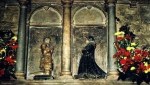


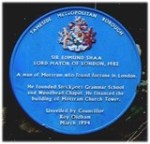
My 13th great-grandfather was Lord Mayor of London and a wealthy, influential goldsmith. My mother was always crazy about gold and jewelry. She would have been pretty excited to learn one of her ancestor’s healing rings is in the British Museum. I am excited myself.
Edmund Shaw (1434 – 1487)
is my 13th great grandfather
Elizabeth Shaw (1460 – 1493)
daughter of Edmund Shaw
Thomas Poyntz (1480 – 1562)
son of Elizabeth Shaw
Lady Susanna Elizabeth Poyntz (1528 – 1613)
daughter of Thomas Poyntz
Elizabeth Saltonstall (1557 – 1621)
daughter of Lady Susanna Elizabeth Poyntz
Henry Wyche (1604 – 1678)
son of Elizabeth Saltonstall
Henry Wyche (1648 – 1714)
son of Henry Wyche
George Wyche (1685 – 1757)
son of Henry Wyche
Peter Wyche (1712 – 1757)
son of George Wyche
Drury Wyche (1741 – 1784)
son of Peter Wyche
Mary Polly Wyche (1774 – 1852)
daughter of Drury Wyche
John Samuel Taylor (1798 – 1873)
son of Mary Polly Wyche
William Ellison Taylor (1839 – 1918)
son of John Samuel Taylor
George Harvey Taylor (1884 – 1941)
son of William Ellison Taylor
Ruby Lee Taylor (1922 – 2008)
daughter of George Harvey Taylor
Pamela Morse
I am the daughter of Ruby Lee Taylor
Dictionary of National Biography, 1885-1900, Volume 51Shaw, Edmund
by Charles Welch
SHAW or SHAA, Sir EDMUND (d 1487?), lord mayor of London, was the son of John Shaa of Dunkerfield in Cheshire. He was a wealthy goldsmith and prominent member of the Goldsmiths’ Company, of which he served the office of master. He was elected sheriff in 1474, and on his presentation the members of his company escorted him to Westminster (Herbert, Twelve Great Livery Companies, ii. 219). Shaa became alderman, and in 1485 migrated to the ward of Cheap, on the death of Sir Thomas Hill through the ‘sweating sickness.’ He was elected mayor in 1482, and towards the close of his mayoralty he took an active part in influencing the succession to the crown on the death of Edward IV. Shaa probably had financial dealings with the crown, and his intimacy with Edward IV appears from a bequest in his will for an obit for the soul of that ‘excellent prince’ and his sister, the Duchess of Exeter. He became nevertheless a strong supporter of Richard III, who made him a privy councillor, and whose claims to the throne he and his brother (see below) were doubtless largely instrumental in inducing the citizens to adopt. Shaa appears to have resided in Foster Lane, where, and in the neighbouring West Chepe, the goldsmiths kept their shops. He possessed, and probably occupied, the great mansion, with its adjoining tenements, in Foster Lane, in which Sir Bartholomew Reid had lived (ib. ii. 253).
He died about 1487, and was buried in the church of St. Thomas of Acon, where he founded a chantry for the souls of his wife Juliana (who died in 1493), his son Hugh, and others (Sharpe, Calendar of Husting Wills, ii. 612). This trust, with many singular injunctions attached, he placed under the charge of the Mercers’ Company (Watney, Account of the Hospital of St. Thomas of Acon, pp. 51–3). His will, dated 20 March 1487, was proved in the P. C. C. (Milles 12). Full effect was given to his intentions under the will of Stephen Kelk, goldsmith, who administered Shaa’s bequest under an agreement with his executors (Watney, p. 53; Prideaux, Goldsmiths’ Company, i. 33–4). One of these executors, John Shaa, goldsmith, may have been the Sir John Shaa (knighted on Bosworth Field and made a banneret by Henry VII) who was lord mayor in 1501, or a near relative. By another will, not enrolled, Shaa left four hundred marks for rebuilding Cripplegate, which was carried out by his executors in 1491. He also left property in charge of the Goldsmiths’ Company, producing an annual sum of 17l., to found a school ‘for all boys of the town of Stockport and its neighbourhood,’ in which place his parents were buried. This school was considerably developed and its advantages extended by the Goldsmiths’ Company (Herbert, ii. 252–3). Shaa also directed by his will that sixteen gold rings should be made as amulets or charms against disease, chiefly cramp. One of these rings, found in 1895 during excavations in Daubeney Road, Hackney, is now in the British Museum. On the outside are figures of the crucifixion, the Madonna, and St. John, with a mystical inscription in English; the inside contains another mystical inscription in Latin.
The lord mayor’s brother, Ralph or John Shaw (d. 1484), styled John by More and Holinshed, and Raffe by Hall and Fabyan, may without much doubt be identified with Ralph Shaw, S. T. B., who was appointed prebendary of Cadington Minor in the diocese of London on 14 March 1476–7, and was esteemed a man of learning and ability. He was chosen by the Protector (afterwards Richard III) to preach a sermon at St. Paul’s Cross on 22 June 1483, when he impugned the validity of Edward IV’s marriage with Elizabeth Woodville, and even asserted, according to More, that Edward IV and his brother Clarence were bastards. Fabyan states that he ‘lived in little prosperity afterwards,’ and died before 21 Aug. 1484 (Gairdner, Life of Richard III, 1878, pp. 100–4; FFabyan, Chronicle, 1811, p. 669; More, Life of Richard III, ed. Lumby, pp. 57, 70; Holinshed, Chronicles, ed. Hooker, iii. 725, 729; Hall, Chronicle, 1809, p. 365; Le Neve, Fasti Ecclesiæ Anglicanæ, ii. 372).
[Orridge’s Citizens of London and their Rulers, pp. 116–20; Sharpe’s London and the Kingdom, i. 320–2; Price’s Historical Account of the Guildhall, p. 186; Watney’s Hospital of St. Thomas of Acon, pp. 51–3; Sharpe’s Calendar of Husting Wills, ii. 612–17; Prideaux’s Memorials of the Goldsmiths’ Company, 1896, passim; Notes and Queries, 8th ser. xii. 345.]
 mermaidcamp