mermaidcamp
Keeping current in wellness, in and out of the water
You can scroll the shelf using ← and → keys
You can scroll the shelf using ← and → keys

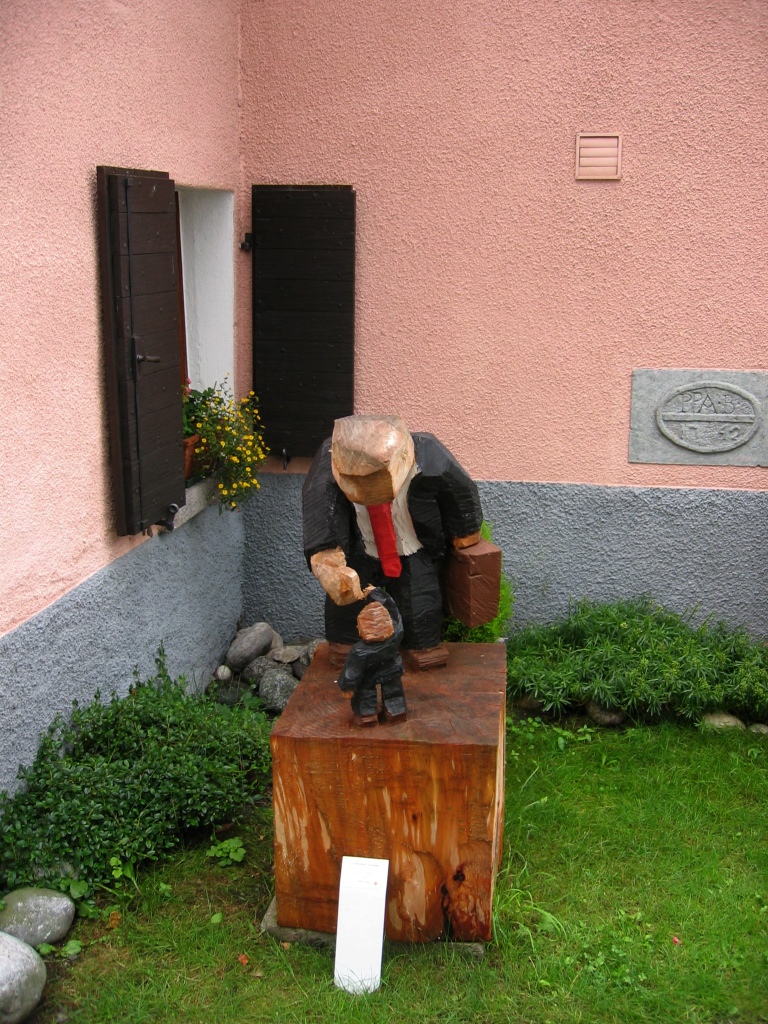
Big man Little man
I grew up in heavily industrialized Pittsburgh in the 1950s. Coal Mines, steel mills, and other factories were staffed by union labor. The cruel and unusual history of Andrew Carnegie vs. the labor unions was close to the surface and burned into the memory of the workers. They had decent wages and retirement benefits won through very tough negotiation, but they would not guess how the tables would turn on both the workers and the owners of steel mills. Today the city has a strong economy based in part on the petroleum industry boom, but the mills went under, stripping the retirement benefits from the workers as they went into bankruptcy. The old way of creating and defining value no longer exists.
Today the new magazine from Chris Brogan, my first and favorite SoMe teacher has launched. The free publication is called Owner, and I subscribed instantly since Chris has never let me down in the past. His good friend and fellow entrepreneur, S Anthony Innarino, has written an excellent article for the first issue which takes a good look at value and expectations. Welcome to the Disruptive Age tells it like it is and invites the reader to take ownership of his or her own time and energy. We have entered a time in which it is not only extremely important to define and create value, but also to find ways to harvest more value for ourselves. This will involve knowing both what is most valuable to your customers and what you value most. Time is not money; It never has been, but the contracts of the past created a structure in which labor, time and money seemed hard to disentangle. In today’s economy disruption is the key to value.
business

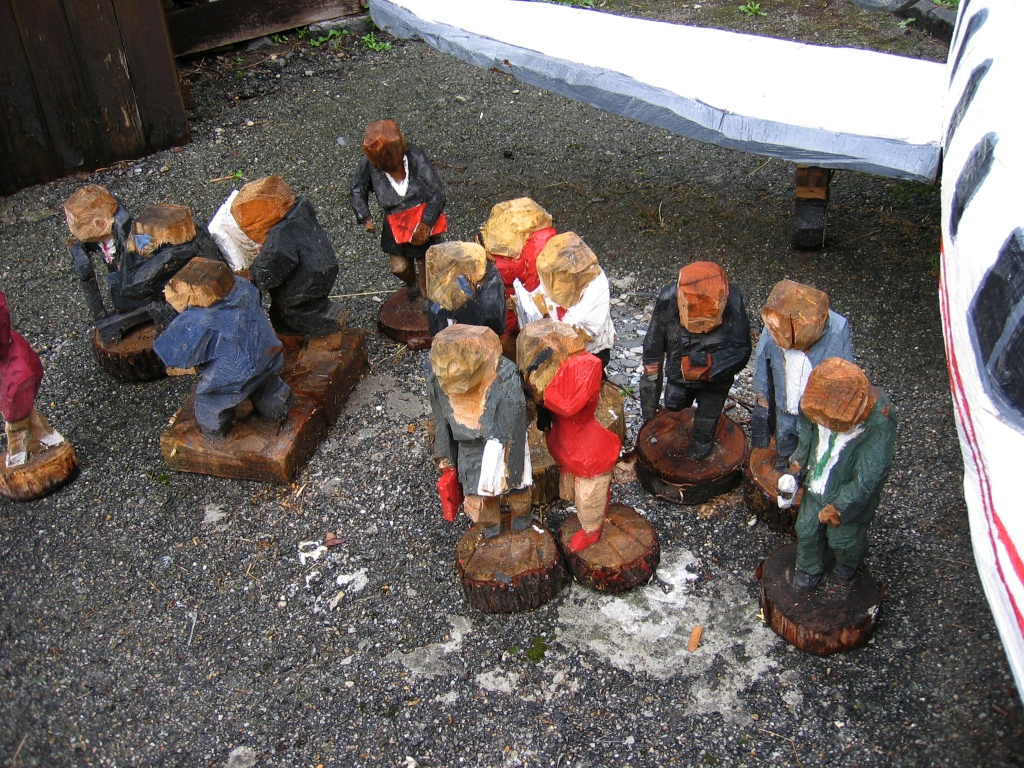
business pigs

Seal of Virginia
Sara Rebecca Lewis, my 7th great grandmother, was born in colonial Virginia. She married James Jones in 1665.
Sarah Rebecca Lewis (1643 – 1725)
When her husband died she was given 4 human beings and the right to live on the plantation for life. Reading her husband’s will I notice how all the slaves, even the unborn ones, are willed as chattel to the members of the Jones family. The document starts with Almighty God and then moves directly into slavery. This is how Virginia was colonized:
Will of James Jones (I) (Chappell, Dickie & Other Kindred Families, p.63-4)
In the name of God. Amen. I James Jones (I) being weake and sick but of sound and perfect mind and memory, praise be therefore given to God, doe make and ordain this my present Last Will and Testament in the manner and form following, that is to say. First and principally I commend my soul into the hands of Almighty God, hoping through the merritts, Death and passion of my savior Jesus Christ to have full and free pardon of all my sins and to inherit everlasting life; and my body I commit to the earth to be decently buried at the discretion of my Executor, hereinafter named, and as touching the Disposition of all such temporal estate as it hath pleased Almighty God to bestow on me I give and dispose thereof as follows:
First. I will that all my debts and funeral expenses shall be paid and discharged.
Item. I will that my loving wife have the Labour of four negroes during her natural life, they are named Will, Robin, Maria and Betty. Provided they are not removed off the plantation I now live upon, if they are, then Immediately to return to my executor, which plantation I will my wife shall live Upon during her life.
Item. I give my wifes two sons two Negro children, one named James, the other unborn, the first child that either Betty or Maria shall bring to be the other, which two negro children to be Disposed of to my wifes two sons as she shall think fit, the unborn and the born child James to be and remain with their mothers till they come to the age of two years and a half year. My will is likewise that my wife have during her life what household stuff my executor shall see fit and that she have a reasonable yearly maintenance out of my stock.
Item. I give to my daughter Mary Dardin my negro man Jo –during her life.
Item. I give to my daughter Elizabeth a negro named Hanna to be at her disposal to do as she sees fit.
Item. I give to my daughter Hanna one negro named Jack to be at her disposal at her death or before as she sees fit.
Item. I give to my daughter Rebecca two hundred acres of land, lying in Surrey county, beginning from the Swamp up by the Spring, South, to the outline, that to be the headline, to her and her heirs forever.
Item. I give to my Granddaughter Eliza Glover, one hundred acres of land on the south side of Pond Runn, to be her and her heirs forever.
Item. I give to my grandson James Jones, this my plantation I live upon after my wifes Decease and all my land in Prince George county, after his father and mothers Decease, to him and his heirs forever.
Item. I give to my Grandson Thomas Chappell (Thomas Chappell Sr. (III)) one hundred acres of land lying in Surrey county from the Swamp South, joining upon William Cocke above the outline, to him and his heirs forever.
Item. I give to my Granddaughter Jane Cocke, daughter of John Cocke, one negro named Amy to her and her heirs forever as also one feather bed and bolster, one rug and one blanket, and if the ticke be bad Lett a new ticke be bought, as also two young cows, one young mair, One Iron Pot, two Pewter Dishes and one Doz.of Spoons.
All the rest and Residue of my personal Estate, goods and chattel whatsoever, I do give and bequeath to my Loving son James Jones, full and sole Executor of this my last Will and testament and I do hereby revoke, disannul and make void all former wills and Testaments by me heretofore made.
In Witness whereof I, the said James Jones (I) to this my last will and testament do set my hand and seal this the 6th day of April A.D.1719.
James Jones Seal (Sealed with wafer)
Signed and sealed in the presence of: Gilbert Hay Edward Prince Thomas Temple
At a Court held at Merchant’s Hope for Prince George County on the second Tuesday, in May, being the twelfth day of said month, A.D.1719, the above written last will of James Jones, deceased, was exhibited in Court by James Jones, his Executor, who made oath thereto and it being proven by the oaths of the witnesses thereto a certificate was granted to the said James Jones for obtaining a Probate in due form. Teste: Wm. Hamlin, Clerk
Wife’s letter to the Court:
Worthy Sirs: Having seen and heard read the Last Will of my late husband, James Jones, deceased, I therefore think fit to acquaint your W.p.T. that I think myself justly dealt by therein and to prevent further disputes I desire the will probated, I being willing to rely on the Legacy left me in said will. Given under my hand and seale this 20th April 1719.
Her Sarah X Jones Mark Seal (Sealed with red wafer)
Teste: E. Goodrich Mary Loyd
To the Worshipfull: His Majesty’s Justice of the Peace for Prince George County
I attended the services of the Sikh gurdwara to see and hear my friend Nirviar Kaur Khalsa play her instrument, the taus. She showed me the beautifully carved string instrument a few weeks ago after the services had concluded. She practices on the taus about two hours daily to create the background ragas for the shabads she chants for the ceremony. Her voice is very well practiced to paint these musical pictures of the one, the friend, the eternal guru. The message reminded me of the Sufis, but the service reminded me a lot of Jews and Catholics. The music is all in minor keys (like Jewish music) , and there is no written vocal music. This technique is passed down in person in the same way the Torah is taught in person. The music itself is the prayer and the meditation for the congregation, not unlike chanting in Latin or Hebrew. Her vocation to study and revive some of the most ancient shabads is now her passion. She shares this talent and hard work because she wants to embody inner peace in the Sikh tradition. Although I am not a Sikh I can appreciate her historical preservation efforts as well as the ideas she promotes in her practice.
I asked some of the congregation how they feel about her dedication to master this ancient art and religious practice from India. She is very highly praised by everyone. One lady I had met on my previous visit told Nirvair as she left she wished she could leave a tip for the music, which is a common practice in India. It is remarkable that she is so committed to her vocation to preserve this tradition here in the United States. I learned that professional ragis from Phoenix charge $500 a visit to come to your gurdwara and do the music. Since the entire service is sung the importance of the musical accompaniment is central to the experience.
My tribal sister Rayshay has attended a training offered by the Justice department to teach individuals how to have a conversation about race. I admire her courage and conviction in stepping up to the plate on this issue. She lives in Philly, and I live near the Mexican border in Tucson, so we have different perceptions of where we are today. I am also older, and lived in Texas in 1967-70, when civil rights were a really big deal, not in a good way. I would not take up this subject on my own. This is the first time I have responded to a prompt, but I think this discussion is important, so I hope some of my readers will decide to write a piece this week also.
In response to Rayshay’s next question: Where are we now? Where I live the strong elements of denial and us vs them mentality are damaging our quality of life. Racism is unfortunately integrated into politics and business. If you think national politics looks magnetized to the extreme, just take a walk on the wild side down here at the Mexican border of Arizona.
Here in Tucson racism is very likely to be emotionally bound to the border and immigration. The race/language/culture issues we have are about being Mexican and or Native American in a land once exclusively owned by your ancestors. Arizona became a state in 1912, so very different from Pennsylvania, one of the 13 colonies. The border itself is an unnatural place to stop anything or anyone. A long stretch of the Arizona border is on tribal land, which is a sovereign nation belonging to the people who were undoubtably here first, the Tohono O’odam. Arizona was part of Mexico; some land ownership in Arizona is documented by Spanish land grant. Rich mines belonged to the Apache tribes, and there were resources to create a thriving economy. Now we suffer from a water shortage that is unsustainable. Golf, cows, and general waste of our water has left the southwest in a pickle…literally. The salty groundwater leaves minerals in the ground that eventually make plant growth impossible. It is late in the game to decide who took what from whom; the resource of water has been depleted for everyone.
Politics in Arizona are tied to race, language, and Mexico. The school district in Tucson has been ordered to stop teaching a curriculum in ethnic studies. This complex and emotional issue brought out the worst in everyone. Some of the books from the program were apparently banned from all the libraries after the closure. There is bitterness on both sides of this issue. If public education becomes a reason to bicker, all students loose. Where we are in Arizona is nowhere near the place we need to be for a thriving and honest economy that serves the best interest of society.
I recently joined instagram when I learned the 15 second videos became truly instant. I enjoy the challenge of making a real statement in that period of time. I haven’t done it yet, but have seen others who do. It will be challenging to story board and shoot some funny, informative, or entertaining 15 second shows. I have just entered the zone, but can see the potential. I do do see some feet and selfies, but there are also cool things and places I want to see. However, after hearing this song, I feel pressure to stop posting grams of my food and be purposeful and creative with the new toy. We shall see how that goes. It seems like the wave of the future. Careful preproduction has never meant so much.
Writing twenty-five hundred years ago, the Greek philosopher Protagoras (c. 490-420 BCE) might provide wise counsel to our troubled, conflicted age, and offer some hope: “Concerning the gods,” he wrote, “I have no means of knowing whether they exist or not, nor of what form they are; for there are many obstacles to such knowledge, including the obscurity of the subject and the shortness of human life.”
When a pantheon ruled many dramatic events took place between gods and goddesses, as well as between the immortals and the mortals; life was more exciting. The potential for anything to happen was greater in the collective consciousness before pesky science invaded religious belief. Philosophy turned a corner when Protagoras, a sophist who died when Plato was young, brought forth his teachings. He wrote and taught from 490-420 BC, and is reputed to be the first Greek to make money in higher education. His fees were reputedly very steep. He wrote, but none of his written work survived. He was itinerant, traveling all over Greece to find students. The new ideas he fostered and taught were:
This has meaning today as we see those who defend absolute truth of any kind. Modern courts of law have their foundations in these three ideas. Law schools teach orthoepeia as part of trial training. Reasonable doubt is relativism. Before Protagoras all earthly events were explained by relating nature to the gods’ whims. Once there was reasonable doubt of that, the world started to look more controllable. Justice, however, is not served when these valuable teachings are not spread equally and given to all citizens. We still have giant problems with democracy and education. What would Protagoras teach the Congress of the US???
I have been advised by Vizify that I am failing personal branding by not using my key words. I could not be more thrilled to hear this news. If there is one thing I want to avoid it is personal branding. This word counting cousin of Klout wants to publish yet another profile and share it all over the place. I have had other analytics of my public content which arrived at the conclusion that I was an expert in mangos. I am an expert in swimming and aquatic exercise, but am not intending to make all of my content prove that point.
I wanted to be a travel writer long ago when one had to actually get published by someone else. Now that I can say and do what I like when I like, I prefer to take up more than one subject. Travel still interests me, but I stay home more than I did when I was an agent in the good old days. I am a scribe, an historian, a reporter with my own beat. I sometimes write political opinions, but think it would be boring to do that regularly. I feature my ancestors, one at a time, to show my direct relationship to history. Botany is a passion, so I often photograph plants to share in this blog. I try not to create a diary of my life, but to share what I think others want to know. I am scribe at large.
I appreciate the chance to meet others and exchange thoughts and information. I have been very lucky to make the acquaintance of other family members here who have offered data about our common ancestors. That has been a happy unintended consequence of writing in public. Triberr has introduced me to a world of bloggers I enjoy reading as well as posting in my twitter stream. Our system allows us to syndicate each other through Triberr. It facilitates the flow of ideas, art, and information. I am pleased to live in a time that gives us this access to the previously closed world of publishing. I appreciate every gentle reader who reads, shares, and comments here. Thank you all for helping me fail personal branding.
My single Wampanoag ancestor, Quadequina is the only true American in my tribe. My DNA tests out at 96% from the British Isles. My pedigree is what is known in the US as blue blooded. My ancestors almost all left Europe in the early 1600’s to colonize America. They had a religious problem with the locals who were freaking out all over Europe in different religious ways. Suffice it to say the move to Plymouth or Jamestown was done with more than a little religious arrogance. The locals here had a perfectly adequate religious practice, but the Pilgrims and Virginians were bound to convert and enslave them in an exciting new monotheistic way. The God who sailed over with the Pilgrims was that angry, vengeful ,all by himself God who just had no patience or tolerance for the beliefs of others. This God provided for the English on American soil by making sure the king back home had power to scare the beJesus out of any non-believer.
Imagine the dismay of the locals in Massachusetts when they learned that the colonists not only sucked down their erstwhile property and hunting rights, but planned to take more of the same. King Philip , AKA my great uncle, planned and executed a revolution against the colonists, which is when things got ugly quickly and forever. When I visited Mashpee, the land that was given by the English to the tribe, by arrangement with the King in 1655, I thought I would see the graves of the elders who started Thanksgiving. I was mighty upset with my Pilgrim ancestors, even though one of them married into the tribe, the group in general was highly rude and creepy. I saw the graves of the Mayflower passengers, and their church….but not a clue as to the location of Quadequina’s resting place. Bury my heart at Mashpee.
I learned much about the way American history has been reconstructed, but I also got to meet some young Wampanoag people who have great pride and are reviving the language. I became very angry again when I found out the wampum belts that document this history are in England…and the tribe asked them to return the property to Mashpee. Wampum is a shell currency used to create agreements and make purchases. The belt was a form of contract used to define, for instance, real estate deals made with Brits. The state of Rhode Island was purchased with wampum. I have no power to get the wampum artifacts returned, or change the facts of history. I just wear the wampum I got on Cape Cod as a reminder of by beloved American tribe. On behalf of 96% of my blood, I apologize.

hot dog
Fast food has been known to the Euros for ages. They demand fast food everywhere all the time, but it is local and superb. They are all about the grilled wurst. It s everywhere, grilled outside and served with a piece of bread, but no hot dog bun. This snack/meal is the basic on the go food for German-speaking peeps, including the Swiss. Everywhere you go with Swiss people they end up with a wurst. It is not what I eat, but there are plenty of street foods that I adore. My favorite dish on earth is vegetarian tandooori schnitzel at Hiltl. The oldest vegetarian restaurant in Europe is in Zurich, in the heart of downtown Switzerland; the schnitzel calls to me in my dreams.
How we fell so far from the wurst grilling street vendors to the Wienerschnitzel chili dog is a sad story of linguistic and culinary decline. A schnizel is a filet of pork sirloin, and not a hot dog in any way. Wiener refers to Vienna, a culinary hub where I assure you nobody would consider eating the chili dog or our famous canned Vienna sausage. They just would not do that to their taste buds and bodies. Beanie Weenies would be scorned as well because food that rides around in a can is simply not fast. The first ingredient in these alleged fast foods is petroleum, since they are shipped great distances in freezing conditions or heavy packaging.
Ironically, on the most important weenie weekend of the year, 4th of July, I probably pay more for my vegetarian apple smoked sausage which I will eat with organic sauerkraut than most people pay for the meat hot dog, corn dog, or burger. It too has traveled far in the so called health food supply chain. I have bought these because I am lazy and have not made my own, which are always better than store bought. At least when I want a chili dog I make the chili. Truly taking care of body earth and soul means saying good bye, or at least see you later to processed foods that cost too much to produce. These well traveled weenies are not good for anyone. To heal the politics of the nation we need to pass on the used Weiners, and get back to basic whole civilization.


I spent my school career through the 8th grade in the small town of Oakmont, PA, a suburb of Pittsburgh. This tiny, close knit (nosey) community was about the Oakmont Country Club and Edgewater Steel, and some other stuff. For kids it was paradise with millionaire robber baron neighbors providing lavish recreational opportunities. My parents were Republicans who disliked JFK and did not play golf. On one hand they were non conformist, and on the other, very concerned with image. I had a running battle with my mother for my entire grade school career about bangs, permanent waves, and white socks. These symbols of culture and control were so important to my mother that my wishes were never considered. She stuck my hair in the sink and put stinky stuff and curlers in it against my will, and with loud protest. She always cut my bangs off, mullet style. The most important symbol to Ruby Morse was the little girl’s need to wear white anklet socks. This was truly the most hated of all conditions, the white sock purgatory. Ruby Morse believed that wearing stockings was a sign of loose morals. I believed she inflicted the white socks as a crazed statement of micro management. We had deep, basic irreconcilable fashion differences.
Management of any kind was about to fly out the window when the family moved to San Tomé, Venezuela in 1963. My father became the general manager for Mene Grande ( Gulf Oil) for eastern Venezuela. This meant that I lived in a big house with servants and my father was the boss of everyone in the town where I lived. My teachers in school worked for my father, as did all my friends’ parents. Strangers constantly gave me lovely gifts, and it was obviously too hot to wear white socks. I was the lucky imperialist 13-year-old with everything. I lived in a remote place so radio was a lot less available than it had been in Pittsburgh. The strongest reliable signal came from Radio Havana. Fidel would hold forth for hours and then they played some music. Live music was everywhere. I had a harp serenade at my window by a guy who wrote the song for me. This could not have happened in Pennsylvania. Although San Tomé had a golf course, there was no other commonality with Oakmont, PA. Nothing could have been more drastic, really. I loved it, but when given the chance to choose where I would go abroad for 10th grade, I chose PA because I still thought of it as my US home. I have not visited Oakmont since 1964.
I will return to Oakmont to see some of my school friends in a couple of months. We have all traveled different paths, but mine diverged drastically and forever. I am bringing back memories and enjoying the stories that my classmates remember. Some scenes are vivid as I think of them, and some are gone. I hardly remember any of the parents. Our personalities are in tact, from what I can detect on our Facebook page. We will go and physically be in the building where we went to elementary grades together. I think it will be amazing..our own versions of what we remember. I look forward to it with great anticipation.