mermaidcamp
Keeping current in wellness, in and out of the water
You can scroll the shelf using ← and → keys
You can scroll the shelf using ← and → keys
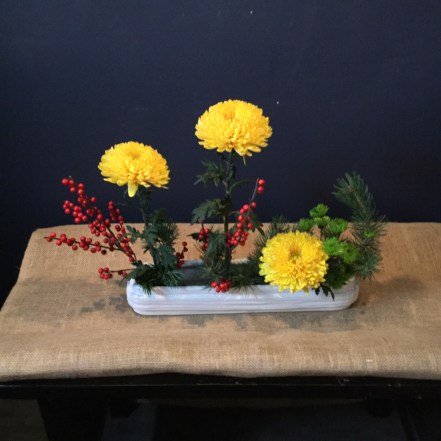
Ohara School

outdoor exhibit

outdoor exhibit

outdoor exhibit
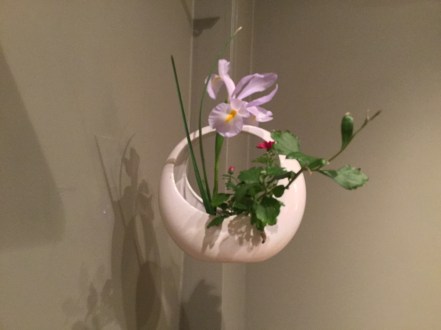
indoor exhibit
Tomorrow is the last day of the annual Ikebana event at Yume Japanese Gardens of Tucson. This delightful addition to the garden’s peaceful atmosphere is wonderfully worth a visit. The works are displayed in all parts of the gardens as well as in two interior galleries. There are well defined spaces that allow contemplation or mindfulness practice at Yume any time you visit. To see these adorned with Ikebana is a real invitation to deep meditation. The work itself is done as a meditative practice, finding the best way to use the plant materials to express art. The relatively short life of the materials is an element of the contemplative experience for me. Like sand mandala they will be discarded in the future, with less ceremony.
I was very lucky to be invited to the arranging pre party where I met artists and teachers working on the show. The universe of Ikebana was unknown to me, but it took a very enjoyable guided tour. It was clear to me that in the group situation some found it more difficult than others to be immersed in the creative process. I asked questions but did not want to get carried away and become a big distraction. Once I tuned in to what was happening it reminded me of yoga. The teacher comes around and gives assistance and guidance to to student while the work is in progress. There is a reverent attitude toward the plant materials, and quiet concentration. When I saw all the finished pieces in the show I was impressed with the work in all of them. They caught a seasonal natural harvest in whimsical harmony with the moment in which it was created. The curation of the show is done so that every piece looks natural and harmonious with the surroundings. For this Thanksgiving weekend Yume, which means dream, is one big flower arrangement containing many arrangements. It is the perfect place to be one with nature right in the center of the city of Tucson.
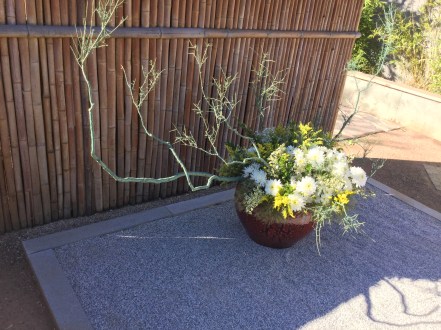
Ikebana in the garden
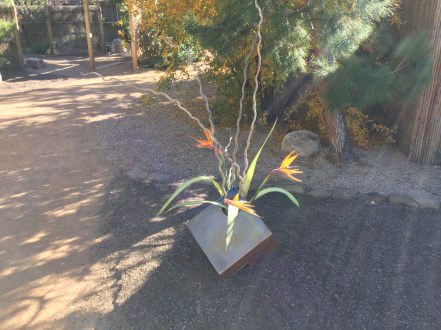

Ikebana in the garden
Make sure you take a look around all the corners because there are arrangements tucked into the gardens like a treasure hunt. The indoor galleries are also very well curated to show a range of styles. I am a happy newcomer to this exciting form of art and meditation.
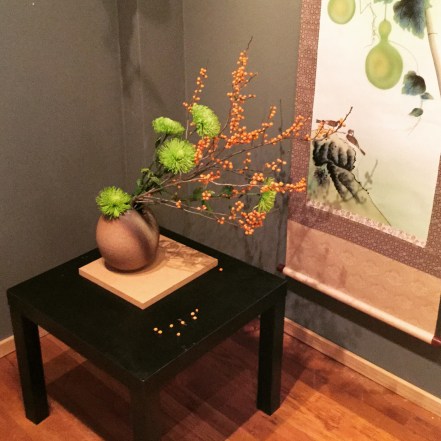
indoor gallery
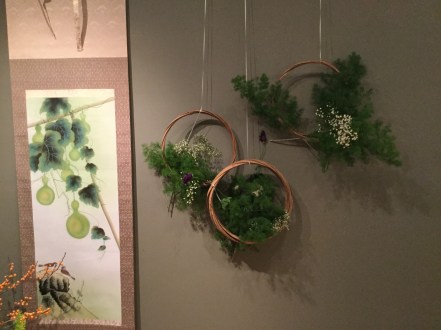
indoor gallery

indoor gallery
I was lucky to catch up with Patricia Deridder at the Yume Japanese Gardens of Tucson as she prepares for this weekend’s big Ikebana exhibit. She is the founder of the gardens, a teacher, and still a student, of Ikebana. She has organized a group of masters who will show their work over the weekend in the gardens. This very special treat will give the public an idea of the different schools of Ikebana and the individuals who live here and practice these special arts. There are monks in Japan who do this practice as meditation. Anyone involved in this way of looking at flower arranging will discover elements of mediation or merging with nature.
I am thrilled to have this artful peaceful alternative to Black Friday shopping offered in my neighborhood. If you happen to be in Tucson this event is offered with the regular entry fee, or to members as part of our membership. This is a wonderful opportunity to be immersed in nature carefully and beautifully crafted by artists. I am excited to learn more and enjoy the show. The three pieces I watched in progress all came out beautifully.
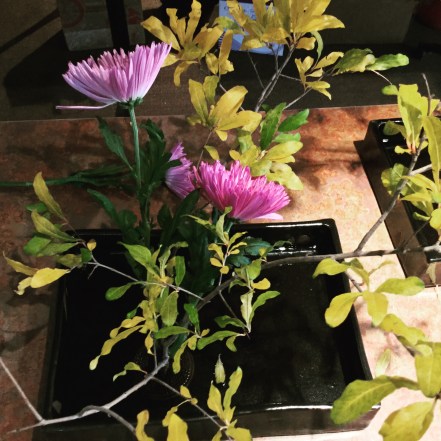
flower show in progress

freestyle
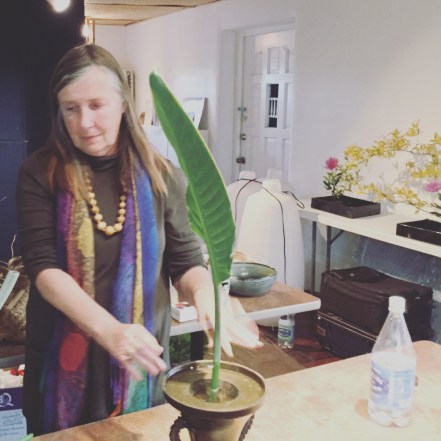
formal arrangement
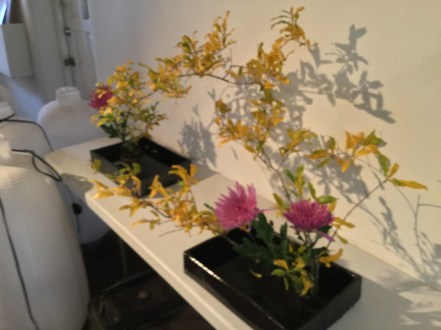
flower show in progress
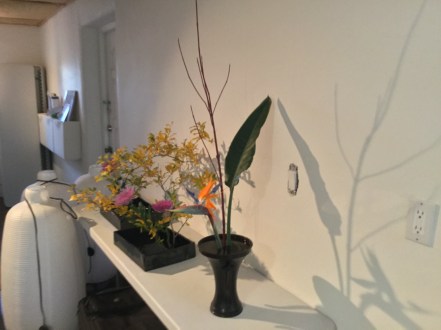
flower show in progress
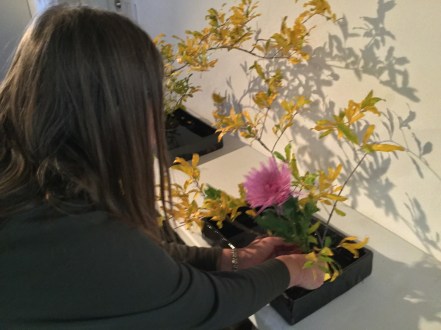
Patricia does a final edit
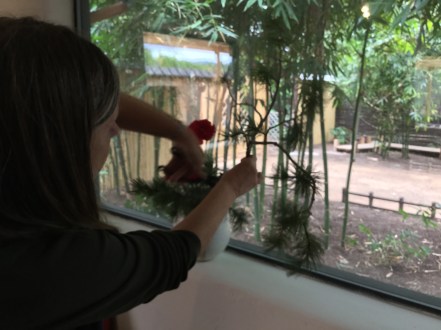
freestyle
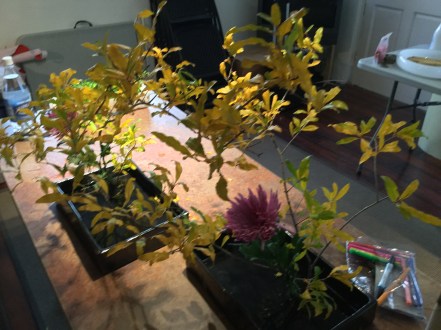
flower show in progress
Today we enjoyed the beautiful weather for family fun at the Tucson Village Farm Harvest Festival. This wonderful working and teaching farm regularly hosts kids on field trips and in special camps. Kids as young as toddlers come with parents to learn about gardening through educational programs designed for them. Food to eat from the site is always included and is often a hands on part of the kids’ experience. I have been to the garden when kids were in a class. The reaction of the students was unanimously delighted. The environment is perfectly created to make the educational impact young students need to improve diets and maybe even the health practices of the entire family. Today many families came out to be part of the festivities which were delightfully focused on farming fun.
University of Arizona students on the farm staff were on hand today selling produce, directing traffic, and being helpful and informative. They were clearly enjoying this day of celebration with the public. The ratio of very young children to adults was high, and the youngsters were all having a real blast. Special activities such as popcorn shucking were ongoing during the day to give families a chance to do some farming/playing with the kids. I believe the farm always does a good job of fulfilling the important educational mission they undertake. This party went above and beyond the everyday excellence. Staff and volunteers did an excellent job of planning and executing a wonderful public event.
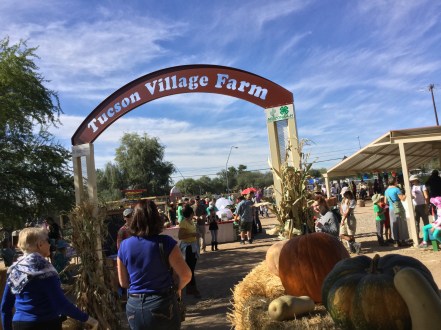
entrance

pomegranate

queen’s wreath

teaching garden

rose with bee

student volunteer

garden

student volunteers
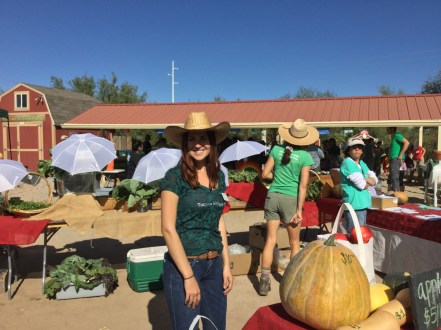
student farmers

garden

student farmer
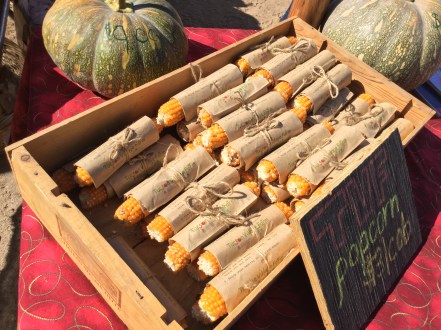
popcorn

garden activities
I had a fire in the wood stove last night, officially welcoming the winter to our house. This week we welcomed the nutcracker and some mixed nuts to the kitchen. I am not sure why I feel so much satisfaction in nut cracking, but I do. It slows down the process and makes me appreciate the taste of my nutty prize when I manage to crack the shell and extract it. This time of year we start to eat nuts more often because they are featured in seasonal fall dishes as part of a healthy harvest. Arizona grows wonderful pecans and pistachios, two of my favorite crops. Both are healthy and add rich flavor to all kinds of dishes.
We are big fans of cheese and pear combinations, so this month I will make us a pear pecan roquefort cheesecake. That has to be a winner with those ingredients. Brussels sprouts have arrived on the stalk as a favorite vegetable, so we will try the pistachio cranberry sprouts as a savory treat as well. Nuts always make appearances in cookies and sweets, but this year I want to try the extravagant pumpkin pecan cobbler. This will be right up our alley for dessert, and a new way to use both November favorites, pumpkin and pecans.
This weekend we have a neighborhood potluck party. I plan to take some soup, but this pineapple cream cheese spread covered with pecans is so cute I think I will make one of those for the party too. It is simple, but looks really festive.
Trader Joe’s brings out small cans of exotic nut oils this time of year which I enjoy using to add rich flavor to all kinds of dishes. Using walnut or pistachio oils for roasting vegetables delivers fabulous punch. Gravy based in nut oil is lovely and mysteriously rich. I still like butter, but like to variations that nut oils can bring to the fall table. Evidence keeps piling in about the benefits of including nuts in the diet. While I do believe the research I am nuts for nuts because they taste so great. Do you have a favorite nut, gentle reader?

fall harvest
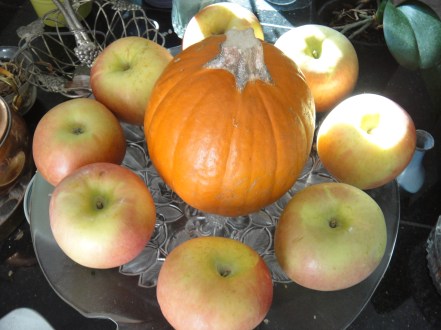
apples and pumpkin
The month of November is a gateway to winter and festivities. In Tucson we have had a very mild warm fall season with generous amounts of rain. It is predicted to be an El Nino winter which will bring additional rain to the dessert. Our desert is green and lush right now and the weather has been superb for a string of lovely outdoor parties and events. We look forward to a neighborhood pot luck gathering this weekend to savor the place and the people where we live. This is the season to be jolly outside in Arizona. It is perfect for bike riding grilling or hiking.
At this time of year we switch wardrobes and perhaps change our activities. I began a tradition of cleaning and clearing for the holiday season last year. The big purge of wardrobe items was by far the best gift I gave myself because it keeps on giving in the form of a happy closet. This year I have fewer things to discard, but am taking a look at using and appreciating absolutely everything I own. There is no reason to store and care for stuff that no longer is useful. I also need to be aware of all the memberships and subscriptions I have that need to be rationalized. I need to evaluate to be sure I am not over cluttering my membership reality. Like clothing in the closet, if subscriptions are crammed in and too crowded they will not be noticed or appreciated.
This Thanksgiving I want to feel grateful for my extreme good fortune without creating too much waste. I want to prepare highly gourmet cuisine for the whole month that thrills, satisfies, and does not end up in the compost bin. I have improved my food prep skills to avoid waste but can still step up my game. I still need to cut down on portion size for the two of us. I believe that pulling off a month of healthy tasty meals we both enjoy will be a better use of my talents than making one big meal with too many leftovers. We like to go to Govinda’s vegetarian buffet for the Thanksgiving meal because it is good and you can usually have a photo shoot with a live turkey on the patio. That sets me free to find ways to make the rest of the month delicious. If you have any seasonal recipes you want to share, please send them this way. I will be cooking up a storm, just not an excess. Stay grateful, gentle reader.

blood oranges

squash and tomatoes
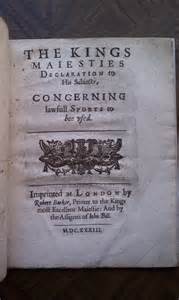
Book of Sports
When James I of England published the Book of Sports in 1617 it caused an uproar from the Puritans. The belief that no work or pleasure should take place on the sabbath was much debated at that time in Britain. The book was published after King James had his very own translation of the Bible released. Trouble was brewing in the British Isles that would eventually lead to the settlement of Plymouth Colony. The Puritans believed that all citizens must be required to attend religious services on Sunday, and they wanted them mandatory morning and evening on that day. Many of my own ancestors left England to live in Holland for a decade about that time, before sailing on the Mayflower to America. All the countries in Europe posed problems to their ideals except the Netherlands. There they could practice their severe brand of religion. There they built up strength to go to the new world.
The concept is taught to American children that these people came to America for religious freedom. That is only partially the case. They wanted to be free to dominate others and force them to follow Puritan rules. The freedom was just for their own religious beliefs, but did not apply to the beliefs of others. They were convinced of the righteousness of their logic. This made life in the new colony very contentious. It was easy to run afoul of the Pilgrim fathers who were all about sabbath and strict adherence.
Charles I reissued the Declaration of Sports in 1633, continuing the tradition of requiring attendance to religious services (in the Church of England) to qualify to dance, leap, or play sports on Sunday. There were a few sports not permitted on the sabbath such as bear and bull baiting and bowling. Charles I expanded the merriment to include local fairs and festivals on the list of sanctioned Sunday activities. England was trending Puritan in the 1630’s. In 1643 the book was publicly burned. When Charles II was restored to the throne after the English Civil War in 1660 the country was liberated from the strict sabbath rules and could once again party on Sunday afternoons.
When we think about sports and religion in America today we observe a very different story. Church attendance and membership are dropping off dramatically, but sports dominate the public attention. It is ironic to think that our initial colony was founded to make sure that Sunday would be sport free for everyone. I wonder what the Pilgrim fathers would think of the NFL and the NBA.
Jupiter is by far the most massive planet in our solar system. The Roman god Jupiter was worshiped as the purveyor of the universe. He was the ruler of the daytime sky, the god of lightning and thunder, and the political deity of the Roman state. As king of the gods he administered the cosmos. He is the son of Saturn, known for his jovial nature. Jove, as in by Jove the English expression, refers to the god Jupiter. Thursday is his day and protection of the state is his mission. He was the main man in the pantheon when Jesus was born in a Roman colony. He was revered for his reputation for abundance and good fortune, as well as very fine organizational and judicial skills. He was known for bringing chaos to order.
The fifth planet from the sun is now retrograde from the point of view of the earth. This means that due to our orbits around the sun, Jupiter appears from the earth to travel in reverse. This phenomena has significance in astrology, representing a chance to go over events in the past and make improvements. The Jupiter retrograde period will last until April, ending just as US taxes will be due. It represents a chance to review our organization and abundance issues. This time is a portal to edit and remake your own movie that has been running since last September. You do not have to believe in the power of Jupiter to know that good fortune regularly follows good organization. There is no need to worship the god of the daytime sky to use this time to significantly improve your own judgement and organization. Americans need to review the year for the IRS, if not for Jupiter. Take your habits through an honest evaluation aimed at creating more joviality and order. We all have room for improvement, Gentle Readers. What did you start last September that is not properly organized? Imagine jolly Jupiter guiding you through tax preparation and New Year’s resolutions. Redirect your attention to all that brings you joy. Rigorously remove disorder and chaos that clutter your life. Finish what you started, either by discarding it or completing it.

festive headgear
Christmas is such an anticipated holiday in America that it leaves lasting impressions on children. If I dig deeply into my memories of Christmas past there are certain phases that marked my history of celebrating.
The house was small and the farm very big. My grandmother made bread and cookies all the time. At Christmas she cranked up the volume and included cinnamon rolls. We played Chinese checkers, regular checkers, and Parcheesi. Between baking with my grandma and playing games with my grandpa all my wishes came true. I don’t know what my parents did, but I was always thrilled to be in Lincoln, Arkansas at the farm.
Pittsburgh had excellent quality building snow, so my friends and I constructed forts and had snowball wars. We had sleds, toboggans, and ice skates. At holiday break we were free to slip and slide all over town in our preferred method. We did have caroling in the 50’s with people showing up at your house singing and very cold. You were to invite them inside and give them hot chocolate. My mother made fruitcake (of which I was never a fan) and pralines (which were the best).
Special songs of the season, often with no religious connotations, are sung by bands of traveling musicians. The parranda grows as the host at each home visited joins the group and travels to the next home. Sometimes extemporaneous lyrics are created to flatter the host or the neighborhood. My parents were huge appreciators of the art form, and my dad was the boss of all the people in the petroleum camp. For this reason our house was the last stop of the night. The bar would open and the musicians would stay for hours, playing harps, rhythm instruments, cuatros, and guitars.
I had neither funds nor interest in entertaining like my parents had done. I did still like the large crowd festivities, but preferred to make the occasion pot luck. I still love this form of celebrating because each cook showcases something special that they want to prepare. I also like the progressive dinner, which goes from house to house for each course. Those seem to have fallen out of favor today, but they were fun while they lasted.
There is something excellent about paying others to do all the preparations and clean up for holidays. I spent wonderful holidays all over the world, in Chamonix, Swiss ski resorts, and one superb Christmas in Maui. If you have the extra cash and don’t mind traveling at peak times (when I did it the peak was not so hard to take) being in another land with room service can be a really good way to make the holiday season. Instead of making effort at home, the energy and money is spent on the travel itself.
We like to stay close to home and make very little fuss about our December now. I am working hard to clear space and give away old items rather than acquire any new ones. I use seasonal plants for decorations these days because I just don’t bother with electric lights and other time consuming ways to change the decor. We have no tree, and each year I give away more ornaments and outdoor decorative items. Not only are we happier during the season, we have nothing much to strike in January. This year we may zip up to Scottsdale for a meal at Posh and the farmers’ market. This is our family trip with our dog, who adores the FireSky Resort. The low key way to celebrate suits our lifestyle and our budget.

tropical

first box to go
I have a rather animistic relationship with my possessions and potential possessions. I find them in a somewhat psychic shopping style, and buy them in a love at first sight condition. This happens on a regular basis with jackets..and other items of clothing. I adore costuming and potential costuming. I like it way too much. When I first find the unusual jacket/prom dress/beaded top I believe we are meant to be a pair. I see us as fabulous fashion partners stunning and shocking our fans. This is where the delusion begins..but not at all where it ends. It ends in my closet, my garage, and alas, gentle readers, in my barn. The truth is that after a brief romance, all these dazzling duds live a life of drudgery, never seeing any action or fun. I need to set them free for their own self realization. They need to party as their original construction intended. No clothing is happy in the bottom of the drawer or the back of the closet.
Yesterday on PBS radio a lady was reviewing a book about Japanese style tidying up and animistic treatment of the objects in the home. The author had been a Shinto shrine maiden in Japan in her youth, so she really knew a lot about space and ritual. Her method of cleansing starts with a realization that we are not treating our objects with love and respect if we allow them to pile up and collect dust. She emphasizes the feeling of happiness an object must evoke in order to stay in our presence. She aptly notes that old papers never give us feelings of happiness. By keeping so many objects that do not make us happy (any more) we restrict our own spacious feeling and daily comfort. I listened in the car to this radio interview and felt very personally touched by this message. I recently chipped the glass on vase containing fake amaryllis that my mother gave me about 15 years ago. It has been on display in my living room in a prominent place all those years and we have enjoyed it. It is not by any means the only gift I have that she gave me, but I do feel an attachment. My partner and I talked it over and joked about it, and I am ready to part with the object, for the good of all involved. Someone may recycle it if I set it free. It has served its purpose and now it can do something new.
Today my friend is going to visit while I go through my clothing to determine which items truly contain joy for me now. I do not dare to estimate how much needs to go, but I now see my wardrobe as a family. I have cramped the pieces into prison quarters with no light or air. How could they possibly be happy as my wardrobe, overcrowded and starved for attention? The majority of these items need to live in another person’s wardrobe, where they can be loved and treated well. Then I will have a well ordered place for the happy items that will remain with me. The Japanese method suggests that while our socks are in a drawer, they are on holiday. We want them to rest and feel good for the next time they go on our feet. We must pay attention to the state of the holiday resort by assuring proper order and visibility for the resting clothing. I totally love this whole concept, and am sure my clothing will applaud the good news. I just told a friend that by the end of the year I plan to make my closet look like a Shinto shrine. He said, “Send me a picture.” Now I have made a true commitment, and at this point nothing looks less like a shrine than my closet. I have a goal and a deadline. I look forward to making the clothing that makes the cut very happy in the future.

Howland home in Plymouth
Mayflower passengers John Howland and Elizabeth Tilley were married in 1623/4. John was about thirty-one and Elizabeth was about sixteen. They spent their entire lives in Plymouth, and between them participated in every aspect of the Pilgrim experience from its beginning in Leiden up to the merger of the Bay and Plymouth colonies. This article is a retrospective summary of their lives and their contribution to Plymouth.
John was born about 1592 to Henry and Margaret Howland of Fenstanton, nine miles northeast of Cambridge, England. Elizabeth Tilley was the youngest of several children born to John and Joan (Hurst) Tilley. She was baptized in 1607 in Henlow, Huntingdonshire, England. John Tilley and his family, and the family of his brother Edward Tilley and wife Ann (Cooper), were members of John Robinson’s congregation in Leiden.
John Howland, John and Joan and Elizabeth Tilley, and Edward and Ann Tilley were passengers on the Mayflower. John Howland had at least five siblings. Arthur (d. 1675), his older brother, arrived in Plymouth after 1627 while Henry (d. 1671), his younger brother, arrived as early as 1633. Arthur Howland soon moved to Marshfield where he became a major landholder. Henry Howland was one of the original settlers of Duxbury and was chosen constable in 1635.
At age twenty-eight John Howland was recruited in England by John Carver to join his household and be his assistant in moving the Leiden congregation to America. Also included in Carver’s household were a servant-girl Desire Minter (age fifteen), a servant-lad, William Lantham, and several other servants. During a storm in the crossing, John Howland was pitched overboard, but luckily was able to catch hold of a halliard and was hauled back aboard the Mayflower. John was the thirteenth signer of the Mayflower Compact. While in Cape Cod Harbor, John Howland, John and Edward Tilley and others explored the New England coast for several days and chose Plymouth to begin a settlement.
Elizabeth Tilley’s parents and aunt and uncle died in the winter of 1621. John Carver took Elizabeth in as one of his household. After John and Katherine Carver died in the spring of 1621, John Howland became the head of the household containing Elizabeth Tilley, Desire Minter, and William Lantham. The living arrangements for this household are unknown. After John married Elizabeth, he received four acres of land as the head of household in the 1623 Division of Land.
Desire Minter was the daughter of William and Sarah Minter, members of the Leiden congregation. Desire’s father died in 1618, and she joined John Carver’s family. Her mother remarried in 1622, and her new parents established an endowment that Desire would inherit at the age of twenty-one. After a few years in Plymouth, Desire returned to England to assume her inheritance. John and Elizabeth Howland were very fond of Desire and named their first child Desire in her honor. They had ten children: Desire, John, Hope, Elizabeth, Lydia, Hannah, Joseph, Jabez, Ruth and Isaac.
In 1625 John Howland accompanied Edward Winslow on an expedition of the Kennebec River in Maine to explore trading opportunities with the Indians. In 1626 John was asked to be one of the “Undertakers” to buy out the colony’s debt to the “Merchant Adventurers” who had invested in the venture to establish Plymouth Colony.
In the 1627 division of Cattle agreement, John Howland acquired twenty acres for each member of his household. In addition, the colonists were organized in “companies” of thirteen members each. The livestock of the colony was divided equally among the companies. Listed in John’s “company” were John and Elizabeth and their two children, John and Priscilla Alden and their two children, and five unattached men.
Isaac Allerton (1586-1658/9) negotiated a patent that granted Plymouth the exclusive right to trade with the Indians and to establish a trading station on the Kennebec River. In 1627 Governor Bradford placed John Howland in charge. In 1628 a trading station was built at Cushnoc (now called Augusta) on the east side of the Kennebec River. A year later, a permanent log-house was built, and Howland, then Assistant Governor, was asked to manage the trading station. For approximately seven years John Howland was in charge of the station. It is not known if Elizabeth and their family of three children lived at the station permanently or for short periods of time. During the time that John operated the station Elizabeth gave birth to three more children, but it is not known whether she gave birth while she was living at the trading station or in Plymouth.
The trading station in Cushnoc was very successful. The Pilgrims traded corn and manufactured goods with the Indians for beaver, otter and other furs. The proceeds of this trade enabled the Undertakers to settle their debts with the Merchant Adventurers. In 1643 a colony in Piscataqua at the mouth of the Kennebec River under the control of London investors attempted to trade with Indians on the Kennebec River. Howland and men from Plymouth told the Piscataqua men under the command of John Hocking to leave since they were trespassing and the patent granted Plymouth exclusive trading rights. The Piscataqua men refused to pull up anchor and leave, and John Hocking shot and killed one of Howland’s men. One of Howland’s men returned fire and killed John Hocking. A meeting called by the General Courts of Plymouth and Bay Colony established that the Piscataqua men were trespassers and that Hocking’s killing was justified. Following this, the two colonies agreed to honor each other’s patents and to curtail the activities of settlements poaching on these patents. It was feared that if the issue was not resolved satisfactorily, Parliament might appoint a single governor of all New England, which none of the colonies wanted.
In 1633 John (age forty-one) was admitted a freeman in Plymouth. John and Elizabeth acquired land and in time became major landholders in Plymouth and the surrounding towns. For nearly forty years, John Howland was actively involved in the governance of Plymouth through elected or appointed positions, viz. one of the seven Plymouth Assistant Governors—1632-35, 1638-39; one of the four Plymouth Deputies to the General Court for nearly thirty years—1641, 1645, 1647-56, 1658, 1659, 1661-68, 1670; one of the five selectmen of Plymouth—1665-66; one of the Plymouth Assessors—1641, 1644, 1647-51; committee on fur trading—1659; surveyor of highways—1650.
In 1637 John received forty acres of land, and in 1639 he was given a choice of additional land for himself or his heirs around Yarmouth, Dartmouth and Rehoboth. Part of the land he chose was in Yarmouth, which he gave to his son John and daughters Desire and hope and their respective families. In 1639 John purchased land and a house in Rocky Nook, where he spent the rest of his life. Also living in Rocky Nook were Thomas and Mary (Allerton) Cushman and their family.
Quaker missionaries arrived in Plymouth between 1655 and 1662 and attracted a considerable number of converts. Quakers opposed Puritan authority and religious beliefs and practices. They refused to attend church services, would not recognize ministers and magistrates or fidelity oaths, and would not support the church financially. They criticized Puritan beliefs and practices publicly and in such scathing terms as to anger the General Court. Governor Bradford had died in 1657 and was succeeded by Thomas Prence (1600-73), who would not tolerate Quaker criticism and took unusually strong measures to suppress Quaker activities, through fines, whipping, excommunication and expulsion from the colony. In the Bay Colony punishment was more severe, and included hangings.
Quakers wished to separate themselves from the prevailing religious beliefs and practices, just as the Pilgrims had done some fifty years earlier in England. Thus, the Quakers were to Plymouth what the Separatists were to England, except that now the Pilgrims were on the receiving end. Governor Prence and the General Court punished Plymouth residents who attended Quaker services or gave them support and protection.
The families of John Howland’s brothers, Arthur and Henry, were two Plymouth families most identified as practicing Quakers. The families ceased attending Plymouth religious services and allowed their homes for the conduct of Quaker meetings. Arthur, Henry and Henry’s son Zoeth were called before the General Court in 1657 and fined for using their homes for Quaker meetings. In 1660 Henry was again fined. In 1659 Arthur Jr.’s freeman status was revoked and in 1684 he was imprisoned in Plymouth. Throughout his life, John Howland remained faithful to Separatist belief and practice, but his compassion for Quakers is not known.
John and Elizabeth were highly respected citizens of Plymouth. In 1657 and again in 1664, serious issues concerning members of John Howland’s family came before the Court of Governor’s Assistants that resulted in judicial sanctions. John Howland was only a deputy for Plymouth to the General Court, and while he did not have to act on these cases personally, there is not way his standing in Plymouth could avoid being affected.
Governor Prence’s actions toward Quakers took an ironic twist that can be appreciated by parents today. In 1657 Arthur Howland Jr., an ardent Quaker, was brought before the court. Thomas Prince’s daughter and Arthur Howland Jr., fell in love. The relationship blossomed and matrimony seemed inevitable. However, it was illegal and punishable by court sanction for couples to marry without parental consent. Thomas Prence urged Elizabeth to break off the relationship, but to no avail. He then used powers available to him as Governor. Arthur Howland, Jr., was brought before the General Court and fined five pounds for “inveigling of Mistris Elizabeth Prence and making motion of marriage to her, and prosecuting the same contrary to her parents likeing, and without theire mind and will…[and] in speciall that hee desist from the use of any meanes to obtaine or retaine her affections as aforesaid.” On July 2, 1667 Arthur Howland, Jr., was brought before the General Court again where he “did sollemly and seriously engage before the Court, that he will wholly desist and never apply himself for the future as formerly he hath done, to Mistris Elizabeth Prence in reference unto marriage.” Guess what happened! They were married on December 9, 1667 and in time had a daughter and four sons. Thus a reluctant Thomas Prence acquired a Quaker son-in-law, Quaker grandchildren and innumerable Quaker in-laws of Henry Howland.
The second case involving John Howland’s family occurred in 1664 when Ruth Howland (b. 1646), his youngest daughter, was the subject of a morals case brought before the Court of Governor’s Assistants. Sexual mores, including chastity before marriage, were issues about which were strict codes of conduct. Ruth Howland fell in love with Thomas Cushman, Jr. (1637-1726), the first son of Plymouth’s Ruling Elder Thomas Cushman (1607-91), and Mary (Allerton) Cushman (1616-1699), a Mayflower passenger. In 1664/5 Thomas Jr. was fined five ponds by the Court for carnal behavior “before marriage, but after contract.” Once again John Howland was Deputy to the General Court for Plymouth and not involved personally in sentencing. Twenty-five years earlier punishment could have been severe, e.g. excommunication, fines, stocks for women and whipping for men. However, in 1664 harsh physical sentencing had been relaxed, and the social meeting of the parties became a factor in sentencing. In 1664 Thomas Jr. and Ruth were married. In addition to John Howland’s embarrassment, Thomas Cushman, Jr. squandered the opportunity to be considered to succeed his father as Ruling Elder. In 1694, Thomas’ younger brother Isaac was chosen to succeed his father as Ruling Elder. Thomas Jr. and Ruth remained in Plymouth. Ruth died as a young woman sometime after 1672, and Thomas Jr. married Abigail Fuller in 1679.
John Howland died either in his home at Rocky Nook or at his son Jabez’ house on February 23, 1672/3 at the age of eighty. He was buried in an unmarked grave in Burial Hill. In 1897, a headstone was erected on Burial Hill by the Howland Society. Elizabeth Howland spent her declining years and died on December 21, 1687 at the age of eighty in the home of her daughter Lydia Brown, in Swansea. Elizabeth is buried in East Providence, Rhode Island, with a memorial marker.
While not political leaders of Plymouth, John and Elizabeth were pillars of the community and played a major part in the colony’s governance and development. They lived through every aspect of the Pilgrim experience beginning in Leiden—the Mayflower, the harsh first winter, the Undertakers, the trading station in Maine, the Quakers, King Philip’s War—up to the merger of the Bay and Plymouth colonies. Descendants of John, Henry and Arthur Howland multiplied in number and influence to become one of New England’s famous pioneer families.–by Robert Jennings Heinsohn, PhD
John Howland (1601 – 1673)
is my 10th great grandfather
Joseph Howland (1640 – 1703)
son of John Howland
Elizabeth Howland (1673 – 1724)
daughter of Joseph Howland
Eleazer Hamblin (1699 – 1771)
son of Elizabeth Howland
Sarah Hamblin (1721 – 1814)
daughter of Eleazer Hamblin
Mercy Hazen (1747 – 1819)
daughter of Sarah Hamblin
Martha Mead (1784 – 1860)
daughter of Mercy Hazen
Abner Morse (1808 – 1838)
son of Martha Mead
Daniel Rowland Morse (1838 – 1910)
son of Abner Morse
Jason A Morse (1862 – 1932)
son of Daniel Rowland Morse
Ernest Abner Morse (1890 – 1965)
son of Jason A Morse
Richard Arden Morse (1920 – 2004)
son of Ernest Abner Morse
Pamela Morse
I am the daughter of Richard Arden Morse
Because John and Elizabeth were so well known they are also well documented. We have a copy of his last will and testament:
Last Will & Testament of John Howland, 1672
The Last Will and Testament of mr John howland of Plymouth late Deceased, exhibited to the Court held att Plymouth the fift Day of March Anno Dom 1672 on the oathes of mr Samuell ffuller and mr William Crow as followeth
Know all men to whom these prsents shall Come That I John howland senir of the Towne of New Plymouth in the Collonie of New Plymouth in New England in America, this twenty ninth Day of May one thousand six hundred seaventy and two being of whole mind, and in Good and prfect memory and Remembrance praised be God; being now Grown aged; haveing many Infeirmities of body upon mee; and not Knowing how soon God will call mee out of this world, Doe make and ordaine these prsents to be my Testament Containing herein my last Will in manor and forme following;
Imp I Will and bequeath my body to the Dust and my soule to God that Gave it in hopes of a Joyfull Resurrection unto Glory; and as Concerning my temporall estate, I Dispose thereof as followeth;
Item I Doe give and bequeath unto John howland my eldest sonne besides what lands I have alreddy given him, all my Right and Interest To that one hundred acres of land graunted mee by the Court lying on the eastern side of Tauton River; between Teticutt and Taunton bounds and all the appurtenances and privilidges Therunto belonging, T belonge to him and his heirs and assignes for ever; and if that Tract should faile, then to have all my Right title and Interest by and in that Last Court graunt to mee in any other place, To belonge to him his heires and assignes for ever;
Item I give and bequeath unto my son Jabez howland all those my upland and Meadow That I now posesse at Satuckett and Paomett, and places adjacent, with all the appurtenances and privilidges, belonging therunto, and all my right title and Interest therin, To belonge to him his heires and assignes for ever,
Item I Give and bequeath unto my son Jabez howland all that my one peece of land that I have lying on the southsyde of the Mill brooke, in the Towne of Plymouth aforsaid; be it more or lesse; and is on the Northsyde of a feild that is now Gyles Rickards senir To belonge to the said Jabez his heirs and assignes for ever;
Item I give and bequeath unto Isacke howland my youngest sonne all those my uplands and meddows Devided and undivided with all the appurtenances and priviliges unto them belonging, lying and being in the Towne of Middlebery, and in a tract of Land Called the Majors Purchase near Namassakett Ponds; which I have bought and purchased of William White of Marshfeild in the Collonie of New Plymouth; which may or shall appeer by any Deed or writinges Together with the aformentioned prticulares To belonge to the said Isacke his heirs and assignes for ever;
Item I give and bequeath unto my said son Isacke howland the one halfe of my twelve acree lott of Meddow That I now have att Winnatucsett River within the Towne of Plymouth aforsaid To belonge to him and said Isacke howland his heires and assignes for ever,
Item I Will and bequeath unto my Deare and loveing wife Elizabeth howland the use and benifitt of my now Dwelling house in Rockey nooke in the Township of Plymouth aforsaid, with the outhousing lands, That is uplands uplands [sic] and meddow lands and all appurtenances and privilidges therunto belonging in the Towne of Plymouth and all other Lands housing and meddowes that I have in the said Towne of Plymouth excepting what meddow and upland I have before given To my sonnes Jabez and Isacke howland During her naturall life to Injoy make use of and Improve for her benifitt and Comfort;
Item I give and bequeath unto my son Joseph howland after the Decease of my loveing wife Elizabeth howland my aforsaid Dwelling house att Rockey nooke together with all the outhousing uplands and Medowes appurtenances and privilidges belonging therunto; and all other housing uplands and meddowes appurtenances and privilidges That I have within the aforsaid Towne of New Plymouth excepting what lands and meadowes I have before Given To my two sonnes Jabez and Isacke; To belong to him the said Joseph howland To him and his heires and assignes for ever;
Item I give and bequeath unto my Daughter Desire Gorum twenty shillings
Item I give and bequeath To my Daughter hope Chipman twenty shillings
Item I give and bequeath unto my Daughter Elizabeth Dickenson twenty shillings
Item I give and bequeath unto my Daughter Lydia Browne twenty shillings
Item I give & bequeath to my Daughter hannah Bosworth twenty shillings
Item I give and bequeath unto my Daughter Ruth Cushman twenty shillings
Item I give to my Grandchild Elizabeth howland The Daughter of my son John howland twenty shillings
Item my will is That these legacyes Given to my Daughters, be payed by my exequitrix in such species as shee thinketh meet;
Item I will and bequeath unto my loveing wife Elizabeth howland, my Debts and legacyes being first payed my whole estate: vis: lands houses goods Chattles; or any thing else that belongeth or appertaineth unto mee, undisposed of be it either in Plymouth Duxburrow or Middlbery or any other place whatsoever; I Doe freely and absolutly give and bequeath it all to my Deare and loveing wife Elizabeth howland whom I Doe by these prsents, make ordaine and Constitute to be the sole exequitrix of this my Last will and Testament to see the same truely and faithfully prformed according to the tenour therof; In witness whereof I the said John howland senir have heerunto sett my hand and seale the aforsaid twenty ninth Day of May, one thousand six hundred seaventy and two 1672
Signed and sealed in the
prsence of Samuel ffuller John Howland
William Crow And a seale

man overboard
John Howland survived falling off the Mayflower, and all the perils of colonial life to be the last of the Mayflower Pilgrim fathers to die. His headstone in Plymouth reads:
“Here was a godly man and an ancient professor in the ways of Christ. Hee was one of the first comers into this land and was the last man that was left of those that came over in the Shipp called the Mayflower that lived in Plymouth.”

headstone

