mermaidcamp
Keeping current in wellness, in and out of the water
You can scroll the shelf using ← and → keys
You can scroll the shelf using ← and → keys

Thanksgiving SOS
This year No Kid Hungry is prepared to provide 100 holiday meals for every $49 donated. They use volume and organization to be very cost efficient, but they are also supported by large food companies. This nationwide effort is a system to end childhood hunger, which is much more common than most Americans might believe. If we start to consider the amount of waste and overindulgence set to transpire this week ( and last for some time) we might carve out $49 from our budget to feed children who do not have much security in their lives. I don’t know how much you can afford, but I know all of us are on one side or another of a great divide. The disparity of wages, privilege, civil rights, and dare I say, justice, is a major freak out. The symbol of children going hungry while some spend with lavish abandon is an embarrassment in the United States. It represents the worst of what we have allowed to happen to our society.
We can freak out all we want, but that is an unhelpful response to our crisis of inequality. Unless you are yourself in need of assistance (and sometimes even if you are) there is something you can do to be of service to others on earth. You can bring the gift of a smile if that is all you have to give. You can volunteer or quietly help someone you know is in need. An easy way to participate in the big feast of Thanksgiving is to be sure hungry kids have a seat at some table and something to eat. Bon appetite, gentle readers. Pass the equality, please.

Fill the Plate

Mayflower seal
My 15th great-grandfather was a big adventurer in the New World. He sailed to Jamestown in 1609, and was on the ill fated voyage to Bermuda that inspired William Shakespeare to write the Tempest. His wife died while he was in Virginia, so he returned to England to care for his three children. He brought his family to Plymouth on the Mayflower. As an experienced colonist he was an important part of the Pilgrim’s diplomatic mission to the Wampanoag tribe. He fell from grace when he opened a shop selling alcohol. He went down a slippery slope from allowing drinking and shuffleboard playing on Sunday to selling beer for twice what it was worth. He managed to stay in town, but did some jail time for defying the court. I am thankful to you, Grandpa Stephen, for attempting so many grand adventures and defying your odds of survival.
Stephen Hopkins was from Hampshire, England. He married his first wife, Mary, and in the parish of Hursley, Hampshire; he and wife Mary had their children Elizabeth, Constance, and Giles all baptized there. It has long been claimed that the Hopkins family was from Wortley, Gloucester, but this was disproven in 1998. Stephen Hopkins went with the ship Sea Venture on a voyage to Jamestown, Virginia in 1609 as a minister’s clerk, but the ship wrecked in the “Isle of Devils” in the Bermudas. Stranded on an island for ten months, the passengers and crew survived on turtles, birds, and wild pigs. Six months into the castaway, Stephen Hopkins and several others organized a mutiny against the current governor. The mutiny was discovered and Stephen was sentenced to death. However, he pleaded with sorrow and tears. “So penitent he was, and made so much moan, alleging the ruin of his wife and children in this his trespass, as it wrought in the hearts of all the better sorts of the company”. He managed to get his sentence commuted. Eventually the castaways built a small ship and sailed themselves to Jamestown. How long Stephen remained in Jamestown is not known. However, while he was gone, his wife Mary died. She was buried in Hursley on 9 May 1613, and left behind a probate estate which mentions her children Elizabeth, Constance and Giles. Stephen was back in England by 1617, when he married Elizabeth Fisher, but apparently had every intention of bringing his family back to Virginia. Their first child, Damaris, was born about 1618. In 1620, Stephen Hopkins brought his wife, and children Constance, Giles, and Damaris on the Mayflower (child Elizabeth apparently had died). Stephen was a fairly active member of the Pilgrims shortly after arrival, perhaps a result of his being one of the few individuals who had been to Virginia previously. He was a part of all the early exploring missions, and was used almost as an “expert” on Native Americans for the first few contacts. While out exploring, Stephen recognized and identified an Indian deer trap. And when Samoset walked into Plymouth and welcomed the English, he was housed in Stephen Hopkins’ house for the night. Stephen was also sent on several of the ambassadorial missions to meet with the various Indian groups in the region. Stephen was an assistant to the governor through 1636, and volunteered for the Pequot War of 1637 but was never called to serve. By the late 1630s, however, Stephen began to occasionally run afoul of the Plymouth authorities, as he apparently opened up a shop and served alcohol. In 1636 he got into a fight with John Tisdale and seriously wounded him. In 1637, he was fined for allowing drinking and shuffleboard playing on Sunday. Early the next year he was fined for allowing people to drink excessively in his house: guest William Reynolds was fined, but the others were acquitted. In 1638 he was twice fined for selling beer at twice the actual value, and in 1639 he was fined for selling a looking glass for twice what it would cost if bought in the Bay Colony. Also in 1638, Stephen Hopkins’ maidservant got pregnant from Arthur Peach, who was subsequently executed for murdering an Indian. The Plymouth Court ruled he was financially responsible for her and her child for the next two years (the amount remaining on her term of service). Stephen, in contempt of court, threw Dorothy out of his household and refused to provide for her, so the court committed him to custody. John Holmes stepped in and purchased Dorothy’s remaining two years of service from him: agreeing to support her and child. Stephen died in 1644, and made out a will, asking to be buried near his wife, and naming his surviving children.
Pilgrim Stephen Hopkins (1581 – 1644)
is my 15th great grandfather
Constance HOPKINS (1600 – 1677)
daughter of Pilgrim Stephen Hopkins
Sarah Snow (1632 – 1704)
daughter of Constance HOPKINS
Sarah Walker (1622 – 1700)
daughter of Sarah Snow
Sarah Warren (1649 – 1692)
daughter of Sarah Walker
Elizabeth Blackwell (1662 – 1691)
daughter of Sarah Warren
Thomas Baynard (1678 – 1732)
son of Elizabeth Blackwell
Deborah Baynard (1720 – 1791)
daughter of Thomas Baynard
Mary Horney (1741 – 1775)
daughter of Deborah Baynard
Esther Harris (1764 – 1838)
daughter of Mary Horney
John H Wright (1803 – 1850)
son of Esther Harris
Mary Wright (1816 – 1873)
daughter of John H Wright
Emiline P Nicholls (1837 – )
daughter of Mary Wright
Harriet Peterson (1856 – 1933)
daughter of Emiline P Nicholls
Sarah Helena Byrne (1878 – 1962)
daughter of Harriet Peterson
Olga Fern Scott (1897 – 1968)
daughter of Sarah Helena Byrne
Richard Arden Morse (1920 – 2004)
son of Olga Fern Scott
Pamela Morse
I am the daughter of Richard Arden Morse
Richard and his second wife had a child born at sea on the Mayflower. They named her Oceanus.
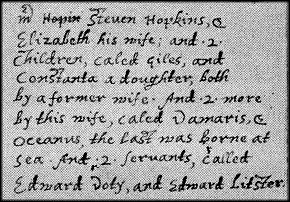
Mayflower record
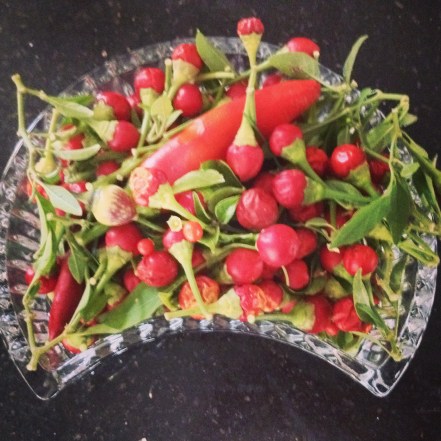
chiles from the garden

Tucson winter
I am pleased that our household is free to interpret holidays in our own way, which might include not at all. When I was younger I had many family gatherings at my house with heavy responsibility and expense. I am thankful that I am free of that kind obligation now. Good or bad, the traditions that my parents embraced are not my own. Bob and I live in a city with wonderful dining and entertainment options. We like the idea of supporting those local business owners who provide happy hours, dinners, and delicious lunches. We normally buy some gift cards this time of year when the restaurants offer discounts. It is a fun way for us to make plans to do something special together and save a few bucks at the same time. This year the restaurant we chose is excluding the use of the gift card on holidays and special occasions. At first I was miffed because we had planned to go on Thanksgiving. Upon consideration we realized we don’t even like to celebrate on the real day because it is always crowded with all the servers stressed. We will just go the night before or the day after the real holiday for our party and have the restaurant to ourselves.
This philosophy is catching on quickly here. Rather than bring out lots of decorations for the house I am doing a full deep cleaning and clearing of our home. We have very little space now because we have crammed things into every corner and cabinet. We love art, but can’t find a place to display what we already own. It makes no sense for us to acquire more. The most impressive and useful gift I can think of for our home is a serious removal of clutter and junk from top to bottom. We need a big haul to the Goodwill much more than any shopping trip for new items. We are not cutting corners on anything we like, want, or need. We just don’t want or need a busy expensive winter season. I am ready for the holidays because I don’t build any false obligations or social pressure.
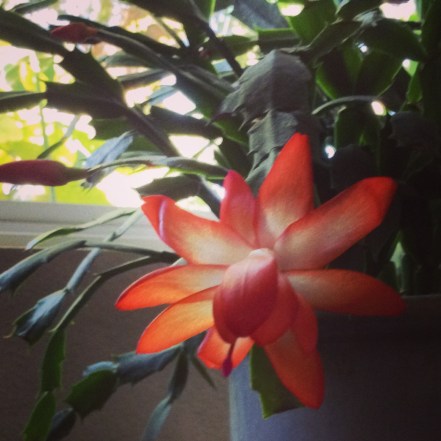
Christmas cactus
Here at our house we celebrate by:
I am thankful for my stress free life. Less is the best for me. Is there anything you could easily eliminate to make this time of year less stressful?
Tucson sunset
Professional pumpkin carving has reached a high level of skill and art. I admire food art of all kinds, and am used to seeing intricate melons and fruits carved by Asians into extremely detailed shapes. Now we can boast of our own home grown American food carver who creates extreme masterpiece pumpkin carvings. While others are hoisting and throwing them Ray is turning the autumn symbols into amazing sculptures. Like a sand mandala, a pumpkin sculpture is born to die. The ephemeral nature of the craft makes it all the more special. Ray shares his technique with kids in school in hopes of nurturing the next pumpkin Da Vinci. If you have considered carving a jack o lantern this year, why not attempt a bust of your mail carrier, or of your child’s teacher? Good luck! Happy Halloween, Gentle Readers.

Cheers!
I am a hedonist. This archetype is a prominent part of my persona. I don’t mind being considered to be a Sybarite. I think I might inspire some people to experiment with allowing a little bit more pleasure into life when they see it does not seem to do me any harm. Art, taste, harmony of elements are all of great importance to me. Often it is much better for me to go to a museum alone because I normally want to stay at least twice as long as most others. I also adore very long, lingering dining experiences that are memorable because of the good company and good cheer. My good friend and fellow hedonist Eric Ellenberg and I once went to the restaurant at the top of the World Trade Center for lunch (long before 9-11). The food and the view were grand. We stayed for hours and I remember it vividly. I have always been happy we went because now we could not if we tried. Most full on pleasurable experiences can’t be repeated. The synchronicity of the moment and all its glory comprise the ecstasy we feel, but that does not mean we should not plan and create pleasurable times. Authenticity is the main ingredient of truly memorable fun times. Holiday excess and obligation often conflict with inner peace and joy. Here are some ways to be festive without breaking the bank or cramming the schedule full of stressful events:
This season many Americans go into deeper debt. From now until next year we will be bombarded with advertising designed to drive the economy. This year you can avoid buyer’s remorse and debt by lighting your own way through the cold winter’s night. Be particular instead of excessive. Use discernment to create gifts and experiences that show how much you appreciate individual taste. I wish all the Gentle Readers good health and financial freedom this winter. Stay solvent, my friends. It is much more festive in the long run.
October brings ancient celebrations and rituals to life. Samhain, Halloween, Guy Fawkes Day,as well as Divali, fall at the end of October and beginning of November. They have in common ritual use of fire as part of the celebrations. As we enter the darkest part of the year in the northern hemisphere we honor the dead and invite them to partake in their former earthly pleasures. Day of the Dead is only one of the cultural holidays designed around remembering. The season is the right time to let go, to clean, clear, and remember. This is possible without any formal outward practice. You don’t have to dress up or build an altar to honor this change of season.
We all go through dark times in life. Lighting up the sky with fires and fireworks reminds us of energy shared, passed on, and finally no longer needed. You don’t need to be religious to understand the sacred nature of the inheritance of our human life. To be able to walk on the earth is not a small gift. Without the generations that survived before us we would not exist. We may notice a feeling of guidance from the ancestors, or simply a reverence for those who created our existence out of their own. I sometimes feel a deep sense of regret when I consider the lives of my ancestors. Who knows if that comes from me or from them. What can be known is that our connection to our ancestors is permanent. What we can learn from knowing about them and from imagining the way they lived gives us some insight into our own strengths and weaknesses. The ancestors know about those strengths and follies because they had them before we did, under different circumstances. I believe they would like for us to learn from their experiences.
Pecans grow abundantly in Arizona, with large commercial groves to be found both north and south of the city of Tucson. Green Valley Pecan Company is the largest pecan farm in the world. I love the organic pecans from our neighbors just 20 minutes south of Tucson. They sponsor the Sahuarita Pecan Festival to celebrate the harvest and get festive with the local population. This year the festival will take place Nov. 8, 2014 from 9 am to 5 pm at the farm. Parking is free until 8:30 am, and $5 per car after that time. I adore food festivals. I am a bigger fan of nuts than I am of wine, so this local festival is particularly appealing to me. I am not waiting to start eating my organic Green Valley pecans. I have already polished off half of the first bag I purchased eating them straight up. That is honestly my favorite way to have them. I do cook with them, and when I was in Austin this summer I heard about a pecan syrup being used in bourbon cocktails that intrigued me. My friend made a wonderful concoction of bitters by using a whole pecan in the shell as one of the local ingredients she was testing. The flavor of the nut came out nicely in the final product, the shell lending some bitter notes. My mother used to shell loads of pecans each year and give them to me as a holiday gift. It was the best thing she gave me, and she kept doing it until she was very old. She would spend a month or so shelling pecans in the fall for her holiday gifting. She was from Texas, so I imagine this came from her childhood. She made a decent pecan pie, but my mother, Ruby, specialized in pralines. She made no other kind of candy, and it only happened once a year (for the holiday gifts). She put pecans in her fruitcakes too, but then she ruined them with fruitcake (I was never a fan of this extremely labor intensive preparation).
Here are some savory examples of pecans for fall festivities:
Most of the classic pecan recipes are for sweets:
If you have made the ice cream you can them have a:
What is your favorite way to enjoy pecans, Gentle Reader?
Durga is the mother goddess capable of killing demons. She was born from the anger of Brahma, Vishnu, and Shiva and outfitted with every weapon of the gods. She was brilliant, and extremely bad assed. She is the very angry mother who drives demons from the earth and puts the fear of retribution in all her children. She has nine different forms she may assume in her motherly duties. During the festival of Navaratri she is worshiped in three of her forms. First Durga the destroyer purifies for three days as only wrathful mother can. Then Lakshmi takes over for three days of bestowing spiritual wealth. The final three days are ruled by Saraswati, the mother of wisdom. To skip any one of the three mothers is to fail to grasp the whole meaning of the creative essence. The feminine spark, or Shakti, does all the work and holds all the energy. In 2014 Navaratri lasts from 25 September until the 3 October. The Durga puja is an affirmation of good over evil, a classic version of mother knows best. She will remove the miseries of life and chase the demons out of the building. Respect her in all her forms…..you want to stay on her good side.

fall colors
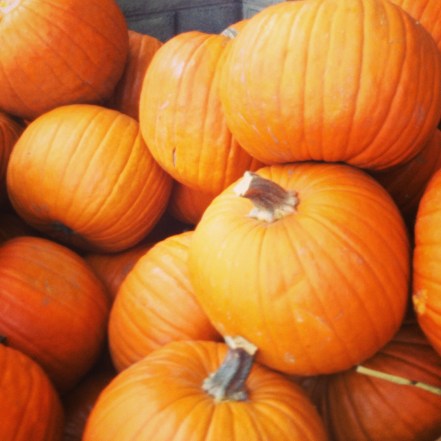
pumpkins in the house
The Fall Equinox is a time to reflect, budget, delete, and take stock of what we have. In modern times our personal harvest is less crucial to our survival than it was hundreds of years ago. We import and ship what we want all over the world. Because so much of our food costs are transportation related this might be a time to take stock of what we have in our local market or garden that can be a substitute for imported or processed foods. We like convenience, but may be able to find better priced locally made foods, goods, and services of superior quality. We like to be served, but can save money and enhance creativity by doing more of our own food preparation and preservation. It is time to create, prosper and appreciate. Do you have practices to note the day when the whole world has an equal amount of darkness and light? Normally the moon rises about 50 minutes later than the previous night. On the equinox it rises only about 10 minutes later, and the effect is that of almost standing still for a few days.
In ancient Greece this time of year was the time for grand rituals known as the Eleusian rites. From the equinox until the end of the month processions and rites to the goddess Demeter were performed. The elaborate rites involved bathing in the sea, building an altar around a tree, blessing the earth with wine and special potions, and a giant party to honor Demeter, goddess of the earth. Holy Night, on September 28, when the goddess Koré would turn from maiden to krone, and then into the young queen of the underworld. Some of the celebrants were granted the chance to see their own deaths on the Holy Night in order to free themselves from fear of the afterlife. The following day was a sports and games day before the final eighth day of the festival returns to solemn ritual to signify spiritual rebirth. This was very different from football season or American festivities for fall because everything was viewed as sacred. The rituals were believed to be an important spiritual gift to mankind. Can you find a way to honor that seasonal shift in your life this year? I would love to hear any ideas you have, gentle readers. I believe we have instinctive spiritual patterns that evolve, but are also part of historical beliefs and rites. We are still connected to Demeter even if we don’t know who she is.
When September sends kids back to school everyone starts to prepare for winter holidays. I was at the grocery store yesterday and saw the entire seasonal section ready for Halloween. It is still August but the candy, the costumes, and all the yard decorations are on display to get us in the mood. Americans spend about 7 billion dollars annually on Halloween, according to the National Retail Federation. More money is spent on adult consumes than on children’s costumes. The season that begins Nov 1 and runs through Dec 16, known as the holiday shopping season results in 52 billion dollars in spending. You might say that the slow warm up in both celebration time and money spent on Halloween is a drop in the bucket compared to the rest of the spending year. People get very wound up with lists and crafts and party planners as New Years finally approaches. The typical diet/fitness regime begins on January 1, along with new credit card redemption plans. The remorse about over spending and over eating lasts about a month until Super Bowl time.
Fall is a natural time to store things and preserve them for winter. Our ancestors endured heavy hardship if they did not prepare and store enough food for the winter months. Harvest was a time of joy and celebration (perhaps not exactly like modern Day of the Dead) when neighbors came together and gave thanks for the crops they had grown. They had to be mindful to keep enough and share enough to make it as community through the cold months. Today we let the food banks worry about feeding society. We follow an unnatural cycle of spending just when we should be doing some saving for future needs. I suggest a few changes we can make to give the earth a better holiday season:

pumpkin spice

glitter pumpkins

