mermaidcamp
Keeping current in wellness, in and out of the water
You can scroll the shelf using ← and → keys
You can scroll the shelf using ← and → keys

grilling goodness
I am extremely happy to see the popularity and creativity devoted each week to #MeatlessMonday. This idea is catching on fast with all kinds of people. I am not sure why this trend has caught the attention of everyone. Do they notice because they want better health, the end to the suffering of the animals, or because they want a better outcome for the planet? Whatever it is, the world is starting to understand the benefits of plant based diets. When I gave up eating animals in North Carolina in 1969 I was viewed as subversive at the very least. I have eaten some fish and a few bites of a chili dog (circa 1970) since my decision on Easter of 1969 to become a vegetarian. Since that time the regular diet of my fellow Americans has steadily slid down a very unhealthy slope of factory farming and addiction to foods and drinks devoid of nutrients and full of chemicals.
I credit my good health to my dietary regime, although it has not been perfect. Too much strict avoidance of anything sets up a magnetic attraction to the forbidden. Meat is not forbidden for me, but I would never want to eat a dead animal. I still eat dairy, honey and eggs although I do see the vegan alternatives as better and worth trying. I do make more vegan cuisine than ever before, and may someday embrace it fully. For now, Monday will suffice for inspiration and dedication to the vegan cause. What I love about this trend is the ease with which anyone can find information, recipes, and guidance. I love the website TryVeg.com, full of helpful tips for anyone interested in the subject.
I have never found that bugging people to follow my diet was an effective way to approach this. I am a great cook, and would rather seduce them with gourmet succulence than beat them over the head with the cruelty issue. I encourage you to find a recipe today, or any day, under the hashtag #MeatlessMonday. See why the vegans are all the rage. Bon Appetit, gentle reader.

Marriage of Henry I of England (1068-1135) to Princess (Eadgyth) Matilda of Scotland. Engraving c1880.
My 27th great-grandmother was Princess of Alba/Albany. She was christened Edith, but adopted the name Matilda upon her marriage to Henry. It was thought the Norman barons might not respect a queen with a Saxon name.
The marriage to Henry represented the union of Norman & Saxon royal lines.
She was crowned Queen Consort 11/14 Nov 1100 at Westminster Abbey.
Henry married Matilda (daughter of Margaret) to appease his Saxon subjects. She is interred at Westminster Abbey, London, England (or Winchester).
Christened Edith, but adopted the name Matilda upon her marriage to Henry I. It was thought the Norman barons might not respect a queen with aSaxon name. The marriage to Henry represented the union of the Norman &Saxon royal lines. She is also known by the diminutive of that name – Maud (which had been the name of Henry’s mother). She was the sister of Edgar, King of Scotland 1098-1107.
Edith – Margaret (Matilda) of Scotland, born in 1080 and died in 1118, married Henry I. Beauclerc, King of England, son of William I The Conqueror (ruler from 1066 to 1087) and his wife, Matilda of Flanders,who died in 1083… Matilda was educated at Wilton and Romsey Abbey where she said that her aunt, Christina, forced her to wear a black veil. She threw it on the ground whenever left alone, in spite of beatings. When her mother died she came to England to Edgar Atheling, her uncle. She was a sister of King David of Scotland; she was a correspondent of Anselm and Hildebert, Bishop of Le Mans, who wrote poetry about her. She was asymbol of the union of Saxon and Norman. She was Henry’s Queen for seventeen years and six months, and died in her prime like most of herfamily. Henry and Matilda had a son and a daughter.

Matilda Princess of Scotland
Matilda of Scotland (born Edith; c. 1080 – 1 May 1118) was the first wife and queen consort of Henry I of England. Matilda was born around 1080 in Dunfermline, the daughter of Malcolm III of Scotland and Saint Margaret. She was christened Edith, and Robert Curthose stood as godfather at her christening. Queen Matilda was also present at the font and may have been her godmother.When she was about six years old, Matilda (or Edith as she was then probably still called) and her sister Mary were sent to Romsey, where their aunt Cristina was abbess. During her stay at Romsey and Wilton, the Scottish princess was much sought-after as a bride; refusing proposals from William de Warenne, 2nd Earl of Surrey, and Alan Rufus, Lord of Richmond. Hermann of Tournai even claims that William II Rufus considered marrying her.She had left the monastery by 1093, when Anselm, Archbishop of Canterbury, wrote to the Bishop of Salisbury ordering that the daughter of the king of Scotland be returned to the monastery that she had left. After the death of William II Rufus in August 1100, his brother, Henry, soon seized the royal treasury and crown. His next task was to marry and Henry’s choice was Matilda. Because Matilda had spent most of her life in a convent, there was some controversy over whether she was a nun and thus ineligible for marriage. Henry sought permission for the marriage from Archbishop Anselm of Canterbury, who returned to England in September 1100 after a long exile. Professing himself unwilling to decide so weighty a matter on his own, Anselm called a council of bishops in order to determine the legality of the proposed marriage. Matilda testified that she had never taken holy vows, insisting that her parents had sent her and her sister to England for educational purposes, and her aunt Cristina had veiled her to protect her “from the lust of the Normans.” Matilda claimed she had pulled the veil off and stamped on it, and her aunt beat and scolded her for it. The council concluded that Matilda was not a nun, never had been and her parents had not intended that she become one, giving their permission for the marriage. Matilda and Henry seem to have known one another for some time before their marriage — William of Malmesbury states that Henry had “long been attached” to her, and Orderic Vitalis says that Henry had “long adored” Edith’s character.Her mother was the sister of Edgar the Ætheling, proclaimed but uncrowned King of England after Harold, and through her, Matilda was descended from Edmund Ironside and thus from the ancient royal family of Wessex, which in the 10th century, became the royal family of a united England. This was very important as Henry wanted to make himself more popular with the English people and Matilda represented the old English dynasty. In their children, the Norman and English dynasties would be united. Another benefit was that England and Scotland became politically closer; three of her brothers became kings of Scotland and were unusually friendly to England during this period.After Matilda and Henry were married on 11 November 1100 at Westminster Abbey by Archbishop Anselm of Canterbury, she was crowned as “Matilda”, a fashionable Norman name. She gave birth to a daughter, Matilda, in February 1102, and a son, William, in November 1103.As queen, she maintained her court primarily at Westminster, but accompanied her husband on his travels around England, and, circa 1106–1107, probably visited Normandy with him. She also served in a vice-regal capacity when Henry was away. Her court was filled with musicians and poets; she commissioned a monk, probably Thurgot, to write a biography of her mother, Saint Margaret. She was an active queen and, like her mother, was renowned for her devotion to religion and the poor. William of Malmesbury describes her as attending church barefoot at Lent, and washing the feet and kissing the hands of the sick. She also administered extensive dower properties and was known as a patron of the arts, especially music.After Matilda died on 1 May 1118 at Westminster Palace, she was buried at Westminster Abbey. The death of her only adult son and Henry’s failure to produce a legitimate son from his second marriage led to the succession crisis of The Anarchy.After her death, she was remembered by her subjects as “Matilda the Good Queen” and “Matilda of Blessed Memory”, and for a time sainthood was sought for her, though she was never canonized.Matilda and Henry had four children:
Matilda of England (c. February 1102 – 10 September 1167), Holy Roman Empress, Countess consort of Anjou, called Lady of the English
William Adelin, (5 August 1103 – 25 November 1120), sometimes called Duke of Normandy, who married Matilda (d.1154), daughter of Fulk V, Count of Anjou.
Euphemia, died young.
Richard, died young.
She is known to have been given the name “Edith” (the Old English Eadgyth, meaning “Fortune-Battle”) at birth, and was baptized under that name. She is known to have been crowned under a name favored by the Normans, “Matilda” (from the Germanic Mahthilda, meaning “Might-Battle”), and was referred to as such throughout her husband’s reign. It is unclear, however, when her name was changed, or why. Accordingly, her later name is used in this article. Historians generally refer to her as “Matilda of Scotland”; in popular usage, she is referred to equally as “Matilda” or “Edith”. References
Chibnall, Marjorie. The Empress Matilda: Queen Consort, Queen Mother, and Lady of the English, 1992
Hollister, Warren C. Henry I, 2001
Parsons, John Carmi. Medieval Mothering, 1996
Parsons, John Carmi. Medieval Queenship, 1997
Huneycutt, Lois L. “Matilda of Scotland: A Study in Medieval Queenship”.” 2004.
Matilda Princess of Scotland (1079 – 1118)
27th great-grandmother
Matilda, Empress of England Beauclerc (1102 – 1167)
daughter of Matilda Princess of Scotland
Henry II “Curtmantel” PLANTAGENET, “King of England” (1133 – 1189)
son of Matilda, Empress of England Beauclerc
Eleanor Spain Plantagenet (1162 – 1214)
daughter of Henry II “Curtmantel” PLANTAGENET, “King of England”
Berenguela CASTILE LEON (1181 – 1244)
daughter of Eleanor Spain Plantagenet
Saint Ferdinand Castile amp Leon (1199 – 1252)
son of Berenguela CASTILE LEON
Alfonso X Wise Castile Leon amp Galicia (1221 – 1284)
son of Saint Ferdinand Castile amp Leon
Sancho Brave Castile Leon (1258 – 1295)
son of Alfonso X Wise Castile Leon amp Galicia
Beatrice Sanchez Infanta Castile (1293 – 1359)
daughter of Sancho Brave Castile Leon
Peter I Portugal Cruel Algarve (1320 – 1367)
son of Beatrice Sanchez Infanta Castile
John I DePinto (1358 – 1433)
son of Peter I Portugal Cruel Algarve
Beatrix DePinto (1403 – 1447)
daughter of John I DePinto
John Fettiplace (1427 – 1464)
son of Beatrix DePinto
Richard Fettiplace (1460 – 1511)
son of John Fettiplace
Anne Fettiplace (1496 – 1567)
daughter of Richard Fettiplace
Mary Purefoy (1533 – 1579)
daughter of Anne Fettiplace
Susanna Thorne (1559 – 1586)
daughter of Mary Purefoy
Gov Thomas Dudley (1576 – 1653)
son of Susanna Thorne
Anne Dudley (1612 – 1672)
daughter of Gov Thomas Dudley
John Bradstreet (1652 – 1718)
son of Anne Dudley
Mercy Bradstreet (1689 – 1725)
daughter of John Bradstreet
Caleb Hazen (1720 – 1777)
son of Mercy Bradstreet
Mercy Hazen (1747 – 1819)
daughter of Caleb Hazen
Martha Mead (1784 – 1860)
daughter of Mercy Hazen
Abner Morse (1808 – 1838)
son of Martha Mead
Daniel Rowland Morse (1838 – 1910)
son of Abner Morse
Jason A Morse (1862 – 1932)
son of Daniel Rowland Morse
Ernest Abner Morse (1890 – 1965)
son of Jason A Morse
Richard Arden Morse (1920 – 2004)
son of Ernest Abner Morse
Pamela Morse
I am the daughter of Richard Arden Morse

Joshua Tree National Park

Joshua Tree National Park

Joshua Tree National Park
2016 is a special year for the National Park Service in the US. To celebrate the 100th anniversary of the founding of the service the American people are being gifted extra free admission days to discover our parks. I am the lucky owner of a senior pass, which I purchased last year for $10. It entitles me and a car full of my guests to visit the National Parks gratis for as long as I live. This is, by far, my favorite benefit of being an American senior citizen. The value of a visit to any of our majestic National Parks is incalculable.
The theme for this birthday year is Find Your Park. My friend Eric treated me to a visit to Joshua Tree National Park last September. We had a wonderful time and enjoyed the exotic scenery very much. It was still hot a blazes up there, so our photo shoots consisted of running quickly back and forth to and from the car to snap some of the landscape for posterity. One can easily see why it is known to rock climbers all over the world who flock to it as soon as the temperatures allow outside recreation without frying to a crisp. It must be a fabulous place to hike, especially in the spring. If you have a chance to discover this amazing gem of a park I highly recommend it. I plan to return to discover more of the dramatic beauty of this place.

Tamacacori National Historic Park

Tamacacori National Historic Park
Tamacacori National Historic Park

Tamacacori National Historic Park
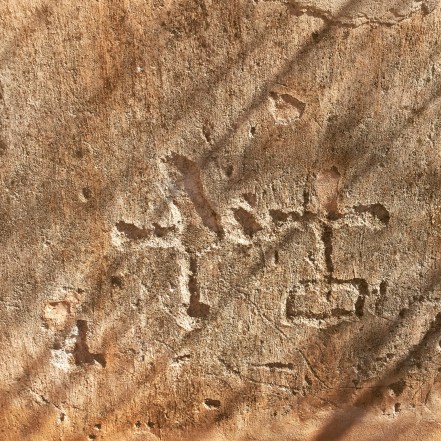
Very near our home in Tucson is a special park dedicated to history, Tumacacori National Historic Park. I love to go there for any reason, but their educational programs are exceptional. We attended a full moon lecture last fall at the mission park that was taught by a ranger. She told us in great detail about Padre Kino and the history of the area and native peoples. She was knowledgable about the never ending restoration work done to preserve the original structures. We all learned new things about the history and culture of this region while taking a candle lantern tour around the grounds and inside the church.
The Centennial of the Park Service is indeed something in which we can take pride. I hope all of the gentle readers will have a chance to find your park in 2016. There is a very cool way to share your experience and those of others at findyourpark.com. The extra free admission days around the country take place during the last two weeks of August, 2016. If you are in vacation planning mode please consider taking advantage of this generous offer to Find Your Park. Bon Voyage.
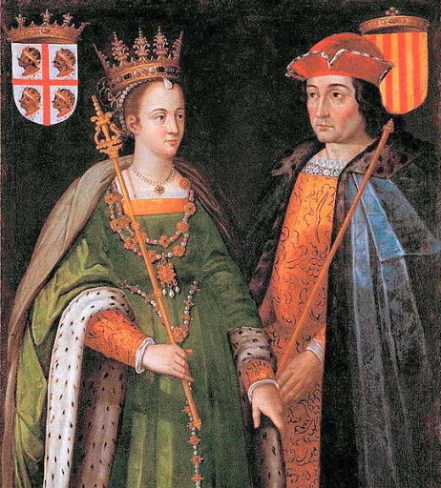
Ramon Berenguer & Beatrice of Savoy
My 23rd great grandfather was a nobleman born in France in 1198. He died Jul. 19, 1245 and is buried at Eglise Saint Jean de Malte, Aix-en-Provence, Departement des Bouches-du-Rhone, Provence-Alpes-Cote d’Azur, France. I want to visit his grave someday. I love the Cote d’Azur.
Ramon was Count of Provence and Forcalquier. He was the only son of Alfonso II de Provence, who died 1209 during an epidemic in Palermo and Gersend de Sabran, Countess of Forcalquier. He married Beatrice of Savoy in 1220 who bore him five children. Their only son Raymond died young and their four daughters Marguerite, Eleanor, Sanchia and Beatrice were all married to kings.
Ramon Berenguer IV de Provence Saint (1195 – 1245)
23rd great-grandfather
Eleanor Berenger (1223 – 1291)
daughter of Ramon Berenguer IV de Provence Saint
Edward I “the Longshanks” Plantagenet (1239 – 1307)
son of Eleanor Berenger
Elizabeth of Rhuddlan Princess of England Plantagenet (1282 – 1316)
daughter of Edward I “the Longshanks” Plantagenet
William Earl of Northampton De Bohun (1312 – 1360)
son of Elizabeth of Rhuddlan Princess of England Plantagenet
Lady Elizabeth Countess Arundel Countess DeBohun (1350 – 1385)
daughter of William Earl of Northampton De Bohun
Elizabeth Duchess Norfolk Fitzalan (1366 – 1425)
daughter of Lady Elizabeth Countess Arundel Countess DeBohun
Lady Joan De Goushill Baroness Stanley (1402 – 1459)
daughter of Elizabeth Duchess Norfolk Fitzalan
Countess Elizabeth Sefton Stanley (1429 – 1459)
daughter of Lady Joan De Goushill Baroness Stanley
Thomas Sir 8th Earl of Sefton Molyneux (1445 – 1483)
son of Countess Elizabeth Sefton Stanley
Lawrence Castellan of Liverpool Mollenaux (1490 – 1550)
son of Thomas Sir 8th Earl of Sefton Molyneux
John Mollenax (1542 – 1583)
son of Lawrence Castellan of Liverpool Mollenaux
Mary Mollenax (1559 – 1598)
daughter of John Mollenax
Gabriell Francis Holland (1596 – 1660)
son of Mary Mollenax
John Holland (1628 – 1710)
son of Gabriell Francis Holland
Mary Elizabeth Holland (1620 – 1681)
daughter of John Holland
Richard Dearden (1645 – 1747)
son of Mary Elizabeth Holland
George Dearden (1705 – 1749)
son of Richard Dearden
George Darden (1734 – 1807)
son of George Dearden
David Darden (1770 – 1820)
son of George Darden
Minerva Truly Darden (1806 – 1837)
daughter of David Darden
Sarah E Hughes (1829 – 1911)
daughter of Minerva Truly Darden
Lucinda Jane Armer (1847 – 1939)
daughter of Sarah E Hughes
George Harvey Taylor (1884 – 1941)
son of Lucinda Jane Armer
Ruby Lee Taylor (1922 – 2008)
daughter of George Harvey Taylor
Pamela Morse
I am the daughter of Ruby Lee Taylor
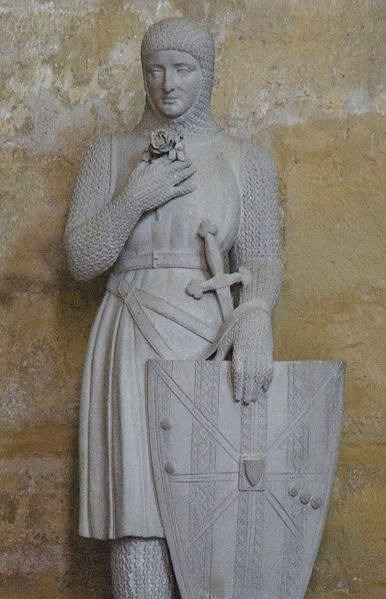
in Church Saint-Jean-de-Malte, Aix-en-Provence, France
Ramon Berenguer IV (1195 – 19 August 1245), Count of Provence and Forcalquier, was the son of Alfonso II of Provence and Garsenda of Sabran, heiress of Forcalquier. After his father’s death (1209), Ramon was imprisoned in the castle of Monzón, in Aragon until he was able to escape in 1219 and claim his inheritance. He was a powerful and energetic ruler who added Forcalquier to his domain. Giovanni Villani in his Nuova Cronica had this to say about Raymond:
Count Raymond was a lord of gentle lineage, and kin to them of the house of Aragon, and to the family of the count of Toulouse, By inheritance Provence, this side of the Rhone, was his; a wise and courteous lord was he, and of noble state and virtuous, and in his time did honourable deeds, and to his court came all gentle persons of Provence and of France and of Catalonia, by reason of his courtesy and noble estate, and he made many Provençal coblas and canzoni of great worth.
On 5 June 1219, Ramon married Beatrice of Savoy, daughter of Thomas I of Savoy. She was a shrewd and politically astute woman, whose beauty was likened by Matthew Paris to that of a second Niobe. Along with two stillborn sons (1220 & 1225), Ramon and Beatrice had four daughters, all of whom married kings.
Margaret of Provence (1221–1295), wife of Louis IX of France
Eleanor of Provence (1223–1291), wife of Henry III of England
Sanchia of Provence (1228–1261), wife of Richard of Cornwall, king of Germany
Beatrice of Provence (1234–1267), wife of Charles I of Sicily
Ramon Berenguer IV died in Aix-en-Provence. At least two planhs (Occitan funeral laments) of uncertain authorship (one possibly by Aimeric de Peguilhan and one falsely attributed to Rigaut de Berbezilh) were written in his honour.

Elizabeth’s pedigree
Both of my parents appear to descend from the Plantagenets of England. The princess daughters of Edward I, Joan and Elizabeth, are my 22nd and 21st great-grandmothers. I have found double ancestry before in my tree in the past. I am not so concerned about inbreeding since this happened to my parents’ families in the 1200’s and they did not marry until 1942.
Princess Joan was born in Syria while her parents were on a crusade to the holy land. Elizabeth was born in Wales. There is a 10 year difference in their ages. Joan and Elizabeth both married twice. After her first husband died young Joan married a commoner, my ancestor, who would be killed in battle.
Princess Elizabeth Plantagenet of England
Youngest Daughter of Edward I
Not much is written about Elizabeth. In medieval times, unless she became queen, a woman had little hope of being remembered in history. Rich or poor, most women faded into obscurity upon their death, never to be thought of again. So, what can be drawn from the known tidbits of Elizabeth’s life as a princess?
All little girls at one time or another dream of being a princess -no matter which country, culture, language, or religion; around the world, this is a universal fantasy for very young girls. Oddly enough however, the fantasy has nothing to do with the realities of medieval life, which was arguably coarse, unpaved, and uncomfortable for several hundred years. Rather, in a little girl’s mind, being a princess would mean spendiing money like it was going out of style, buying lavish wardrobes, dating all the good looking guys who always hang around the king in those ‘not particularly accurate’ movies about the middle ages -not to mention that we’d have a maid, meaning we’d never have to do household chores again. But, the lives of medieval noble women in actuality were far from idyllic.
A Princess’s Life
Elizabeth Plantagenet was born in August of 1282 at Rhuddlan Castle in North Wales. Her father, King Edward I, was on a millitary campaign in Wales, and Queen Eleanor had accompanied him, as was her custom.
Like moons locked in orbit around a domineering star, generally their fathers or husbands, there was no escape for medieval noble women. Their lives were often planned years in advance.
Frankly, it was the men in Elizabeth’s life who shaped her as a person. Fist, her father Edward, whom she loved dearly. Like all the other possessions belonging to her father, as a princess, Elizabeth was a tool in the making of Edward’s foreign policy.
But then, a Princess was not consulted with regard to her feelings on the matter. After all, in her father’s eyes, it was none of her business who she married. She was simply expected to do as the king requested.
Elizabeth Plantagenet was first married to John I, Count of Holland, in 1297.
After his death, she married Humphrey de Bohun on Nov. 14th, 1302. Although never done in continental royalty, a few daughters of the English Plantagenet Kings did marry commoners, such as in the case of Elizabeth. This fact is what permits any of the commoners of today to have a royal line of descent. Elizabeth had 6 sons and 4 daughters with Humphrey de Bohun, which included the twins William and Edward.
Elizabeth is reported to have been the most strong-headed of her sisters. She could be stuborn, confrontational, and openly argumentative, qualities that are traditionally discouraged in a princess. But, Elizabeth also knew how to get at least some of what she wanted in life -through superficial charm and flattery.
In fact, when Elizabeth and her other sisters wanted something, they used to gang up on their father the king, complimenting him, capitalizing on topics they knew to be ego boosters for him, turning him into malleable taffy, all the better to wrap him around their fingers. Poor Edward was a sucker for a beautiful girl, batting her eyes, fawning over him, making him feel like a pampered man. But, the decisions he made concerning his daughters’ futures were sober, carefully thought out ones. He was determined to have them married to his choice of men, for his reasons only -personal feelings notwithstanding.
Husband #1 -John I, Count of Holland
John I (1284-1299) was count of Holland and son of Count Floris V. After a campaign in 1287-1288 Cloris finally defeated the Frisians. In the meantime he had received Zeeland-bewester-Schelde (the area that controls access to the Scheldt river) as a loan from the Holy Roman King in 1287, but the local nobility sided with the count of Flanders who invaded in 1290. Floris arranged a meeting with count Guy of Flanders, but he was taken prisoner and was forced to abandon his claims and then set free.
Floris immediately wanted to resume war, but King Edward I of England, who had an interest in access to the great rivers for wool and other English goods, convinced Floris to stop hostilities with Flanders. Then Edward I moved his trade in wool from Dordrecht in Holland to Mechelen in Flanders and, in 1296. he prohibited all English trade on Holland and conspired with count Guy of Flanders to have Floris kidnapped and taken to France.The humiliated lords Gijsbrecht IV of Amstel and Hendrik of Woerden enter the scene again as part of the conspiracy.
Together with Gerard of Velzen they capture Count Floris during a hunting party. The news of his capture spreads quickly and the small group of knights is stopped by an angry mob of local peasants. In panic Gerard of Velzen kills the count, and the knights flee. Gerard of Velzen is later captured and killed in Leiden.
Having rid himself of both these irritants, Edward then arranges Elizabeth’s marriage to the dead man’s son John. In many ways, Edward I outdid his predescessors by developing his own dispicable brand of viciousness.
Elizabeth was the most strong willed of her sisters and was not afraid to argue with her father. Nonetheless, whether or not she agreed with the decision, she did as she was asked and married John, Count of Holland. And he wasn’t that bad of a catch for her. John inherited the county in 1296 after Edward practically arranged for the murder of his father. In the following year, he married Princess Elizabeth. At the wedding, Edward I threw her coronet into the fire, apparently unhappy at some aspect of wedding planning.
The marriage was not to last as John died soon afterwards in 1299, only fifteen years-old. With his death without descendents, Elizabeth was free to marry again.
Husband #2 -Earl Humphrey VIII of Hereford-Essex
The marriage of Humphrey VII to Elizabeth Plantagenet, daughter of Edward I was the very pinnacle of the DeBohun dynastic rise to power. Sir Humphrey was a favorite of Edward’s. Like the Claypools to follow, the DeBohun’s were Social climbers. They were among the people who sought their fortune by getting as close as they possibly could to the sovreign on the throne at any given time. Indeed, many fortunes were made and lost in just this way throughout the centuries in England.
Although he may have loved her, Humphrey was more concerned with how his marriage improved his social standing and the extent to which it could improve his landholdings and profits. This worked out great when Edward I was king. Unfortunately, when Edward II -Elizabeth’s brother- took the helm, Humphrey suddenly had some stiff competition in the way of Piers Gaveston and the Despencers. (The Claypooles also share a line with the Despencers.)
Needless to say Sir Humphrey did a great deal of complaining. Although he was married to Edward II’s sister and carried the sceptre with the cross at his coronation, Humphrey was to die, a proclaimed traitor, from the thrust of a Welshman’s lance at the battle of Boroughbridge. This would be the ignoble end of Elizabeth’s second and final husband.
Brotherly Influence -Edward II and His Sister Elizabeth
Close to the same age, Elizabeth had a strong sibling relationship with her brother Edward, later to be the ill-fated King Edward II. Elizabeth Plantagenet died c. May 5, 1316, and was buried at Walden Priory in Essex. King Edward I was born on June 17th, 1239, the son of King Henry III and Eleanor of Provence. He acceded to the throne on Nov. 16th, 1272. During Edward’s long reign, he became the outstanding English king of the middle ages.
He married Eleanor, daughter of King Ferdinand III of Castile and Leon, at Las Huelgas in 1254. Edward and Eleanor had 14 children, with Elizabeth being the 12th, and the future Edward II the 13th. Eleanor of Castile died in 1290; and after her funeral procession from Lincolnshire marked by the famous Eleanor Crosses, she was buried in London at Westminster Abbey. Edward I later married Margaret of France as his second wife in 1299. While on a military campaign against the Scots, Edward I died July 7th, 1307, at the border site of Burgh-on-the-Sands near Carlisle. He also was buried at Westminster Abbey. The tombs of Edward and Eleanor can be visited at the Abbey to the present day.
Edward II was more than just an ineffectual king, he was a jerk and people simply didn’t like him. England suffered under many ineffectual leaders in the middle ages, but a monarch who committed what his subjects viewed as ‘abominible acts’ was something the English couldn’t stomach. Without the hearts and minds of the people, such a monarch is doomed, no matter how good or bad a sovreign he or she may be. Elizabeth was on her brother’s side for quite a while. However, Edward’s behavior eventually got completely out of hand, and her continued support for him made things increasingly awkward for her, considering her marriage into the DeBohun family. So, what exactly did Edward do that was so terrible?
Was it that he was a murderer? No. While murder is a heinous thing, his subjects did not consider it an ‘abominible act’ for a king to commit. Instead, what Edward did was thought to be a sin against nature and God -Edward II was openly homosexual. Not that there hadn’t been gay princes and kings in the past -Richard I was notoriously attracted to same sex relationships. It’s the idea that he was not discreet about it. He didn’t do what princes of the past had done -marry and keep any extracurricular relationships, whether they be with men or women, out of the public eye. Edward pushed the bounds of decency, even at formal events when the eyes of the world were upon him.
At his own coronation in 1324, Edward horrified the nobility and visitiing French royalty with he blatently flirted with Piers Gaveston, completely ignoring his wife, Queen Isabella. Not that his preferring the company of a man his own age to that of his twelve-year-old spouse was so strange, but he wasn’t just conversing with him. Edward was treating Gaveston as if he were talking to the opposite sex.
It was extremely embarrassing for his family members present. Such behavior dangerously flauted social convention of the day, which was heavily influenced by the Church and its draconian notions of propriety and sin. Elizabeth, who had been on her brother’s side, was placed in an awkward postion. She loved Edward her brother, but she was also married to one of the chief plaintiffs where Gaveston and the Despencers were concerned. That, coupled with the openess with which Edward displayed his sexuality, made the world nervous and ultimately forced her to withdraw her support as well. [Above and Left: Edward II, King of England]
Like many kings before him, Edward II’s reign was perverted by the counsel of evil favorites. Favorites were, in any case, a considerable threat to magnates’, such as Sir Humphrey, possibilities of bettering themselves, or of even surviving. Those magnates rich and important enough to frequent the court were always haunted by the fear that their power, based on a quasi-monopoly of royal favor and patronage, might be eroded by the arrival of newcomers or monopolized by one or two individuals.
This meant not only the loss of land grants but of possibilities of finding the best marriages for themselves and their children. And these favorites -are they gracious to others in their new found fortune? -Hardly. Favorites tend to not only absorb a lot of royal wealth, but also develop a hostility or contemptuous attitude toward the nobility. This portrait of ugliness is a perfect depiction of Piers Gaveston and the Despencers.
The Plantagenet Bloodline
Although the women of the king’s household never were allowed to wield any actual power per se over the kingdom, oddly enough, because of wars, assassinations, and sometimes just general bad luck, it was the women who were the ones, more often than not, to carry on the family bloodline. In the case of Edward and his sister Elizabeth, it was Elizabeth who would become the great progenetor of subsequent generations of noble children through her marriage to Humphrey DeBohun.
Edward, was eventually imprisoned at Kenilworth Castle, and a parliament met at Westminster in January 1327, which chose his son to be king as Edward III. It was thought prudent to compel the captive king to resign the crown, and on January 20 Edward was forced to renounce his office before a committee of the estates.
The government of Isabella, Edward’s wife, and Mortimer, a former baronial exile, was so precarious that they dared not leave the deposed king alive. On April 3 he was secretly removed from Kenilworth and entrusted to the custody of two dependants of Mortimer. After various wanderings he was imprisoned at Berkeley Castle in Gloucestershire. Every indignity was inflicted upon him, and he was systematically ill-treated in the hope that he would die of disease. When his strong constitution seemed likely to prevail he was secretly put to death on September 21. The popular legend is that his murder was by a red-hot poker thrust up his anus through a hollow tube, considered by his captors as an appropriate punishment for his homosexuality, which would show no outward signs of violence. It was announced that he had died a natural death, and he was buried in St Peter’s Abbey at Gloucester, now the cathedral, where his son afterwards erected a magnificent tomb.
Elizabeth, on the other hand, went on to bear her husband, Humphrey, several children, one of which was William DeBohun, 1st Earl of Northampton, who in turn had a daughter named Elizabeth DeBohun, who married Richard Fitalan KG, 11th/4th Earl of Arundel, Earl of Surry, English nobleman, naval and miltary commander. Richard was the grandson of Baron Hugh Despencer, fierce rival of Humphrey DeBohun, who was his wife’s grandfather. In this way, marriage and money held powerful sway over family aliances and enmities. Quite often the need to increase fortunes and landholdings led natural enemies to eventually join households, pursuant to building an exponentially more powerful noble house than the two ever could have been as separate entities.
My paternal line looks like this:
Joan Plantagenet (1272 – 1307)
22nd great-grandmother
Lady Margaret De Clare Baroness Audley (1292 – 1342)
daughter of Joan Plantagenet
Lady Alice De Audley Baroness Neville (1315 – 1373)
daughter of Lady Margaret De Clare Baroness Audley
Sir John ‘3rd Baron de Raby’ Neville, Admiral of the Kings Fleet (1341 – 1388)
son of Lady Alice De Audley Baroness Neville
Thomas De Neville (1362 – 1406)
son of Sir John ‘3rd Baron de Raby’ Neville, Admiral of the Kings Fleet
Maude de Neville (1392 – 1421)
daughter of Thomas De Neville
John Talbot (1413 – 1460)
son of Maude de Neville
Isabel Talbot (1444 – 1531)
daughter of John Talbot
Sir Richard Ashton (1460 – 1549)
son of Isabel Talbot
Sir Christopher Ashton (1493 – 1519)
son of Sir Richard Ashton
Lady Elizabeth Ashton (1524 – 1588)
daughter of Sir Christopher Ashton
Capt Roger Dudley (1535 – 1585)
son of Lady Elizabeth Ashton
Gov Thomas Dudley (1576 – 1653)
son of Capt Roger Dudley
Anne Dudley (1612 – 1672)
daughter of Gov Thomas Dudley
John Bradstreet (1652 – 1718)
son of Anne Dudley
Mercy Bradstreet (1689 – 1725)
daughter of John Bradstreet
Caleb Hazen (1720 – 1777)
son of Mercy Bradstreet
Mercy Hazen (1747 – 1819)
daughter of Caleb Hazen
Martha Mead (1784 – 1860)
daughter of Mercy Hazen
Abner Morse (1808 – 1838)
son of Martha Mead
Daniel Rowland Morse (1838 – 1910)
son of Abner Morse
Jason A Morse (1862 – 1932)
son of Daniel Rowland Morse
Ernest Abner Morse (1890 – 1965)
son of Jason A Morse
Richard Arden Morse (1920 – 2004)
son of Ernest Abner Morse
Pamela Morse
I am the daughter of Richard Arden Morse
The maternal line is:
Elizabeth of Rhuddlan Princess of England Plantagenet (1282 – 1316)
20th great-grandmother
William Earl of Northampton De Bohun (1312 – 1360)
son of Elizabeth of Rhuddlan Princess of England Plantagenet
Lady Elizabeth Countess Arundel Countess DeBohun (1350 – 1385)
daughter of William Earl of Northampton De Bohun
Elizabeth Duchess Norfolk Fitzalan (1366 – 1425)
daughter of Lady Elizabeth Countess Arundel Countess DeBohun
Lady Joan De Goushill Baroness Stanley (1402 – 1459)
daughter of Elizabeth Duchess Norfolk Fitzalan
Countess Elizabeth Sefton Stanley (1429 – 1459)
daughter of Lady Joan De Goushill Baroness Stanley
Thomas Sir 8th Earl of Sefton Molyneux (1445 – 1483)
son of Countess Elizabeth Sefton Stanley
Lawrence Castellan of Liverpool Mollenaux (1490 – 1550)
son of Thomas Sir 8th Earl of Sefton Molyneux
John Mollenax (1542 – 1583)
son of Lawrence Castellan of Liverpool Mollenaux
Mary Mollenax (1559 – 1598)
daughter of John Mollenax
Gabriell Francis Holland (1596 – 1660)
son of Mary Mollenax
John Holland (1628 – 1710)
son of Gabriell Francis Holland
Mary Elizabeth Holland (1620 – 1681)
daughter of John Holland
Richard Dearden (1645 – 1747)
son of Mary Elizabeth Holland
George Dearden (1705 – 1749)
son of Richard Dearden
George Darden (1734 – 1807)
son of George Dearden
David Darden (1770 – 1820)
son of George Darden
Minerva Truly Darden (1806 – 1837)
daughter of David Darden
Sarah E Hughes (1829 – 1911)
daughter of Minerva Truly Darden
Lucinda Jane Armer (1847 – 1939)
daughter of Sarah E Hughes
George Harvey Taylor (1884 – 1941)
son of Lucinda Jane Armer
Ruby Lee Taylor (1922 – 2008)
daughter of George Harvey Taylor
Pamela Morse
I am the daughter of Ruby Lee Taylor
Both families landed in America in the 1600’s.

effigy and grave
My 20th great grandfather was born c. 1276, at Pleshey Castle, Essex, England
He died on Mar. 16, 1322, in the battle of Boroughbridge, in Yorkshire, England. He is buried at Friars Preachers Church, York, Yorkshire, England.
4th Earl of Hereford. Born the son of Humphrey de Bohun, 3rd Earl of Hereford and Maud de Fiennes at Pleshy Castle in Essex. In November 1302 he married King Edward I’s daughter, Elizabeth Plantagenet, with whom he had at least eleven children. He held the office of Lord High Constable. He took part in the king’s Scottish campaigns in the early 1300s. After the flight of Robert Bruce, de Bohun received many of Bruce’s confiscated properties. At the battle of Bannockburn in 1314, he charged the Bruce, and his nephew Henry de Bohun was killed, but he was taken and held for ransom. He was eventually exchanged for Bruce’s wife and daughter. He numbered among the peers who opposed Edward II’s excesses and banished the royal favorite, Piers Gaveston. In 1316 he successfully led the suppression of the revolt of Llywelyn Bren. By 1322, however, he fell in with Lancaster’s rebellion against Edward II, and as the rebels approached Boroughbridge in Yorkshire, de Bohun led an attempt to storm the bridge held by royal pike men. The Earl, however, was run through by pike men secreted beneath the bridge and died in the field, his gruesome death breaking the advance, and spelling failure for the rebels. (bio by: Iola)
Humphrey VIII Earl Hereford amp DeBohun (1276 – 1322)
20th great-grandfather
William Earl of Northampton De Bohun (1312 – 1360)
son of Humphrey VIII Earl Hereford amp DeBohun
Lady Elizabeth Countess Arundel Countess DeBohun (1350 – 1385)
daughter of William Earl of Northampton De Bohun
Elizabeth Duchess Norfolk Fitzalan (1366 – 1425)
daughter of Lady Elizabeth Countess Arundel Countess DeBohun
Lady Joan De Goushill Baroness Stanley (1402 – 1459)
daughter of Elizabeth Duchess Norfolk Fitzalan
Countess Elizabeth Sefton Stanley (1429 – 1459)
daughter of Lady Joan De Goushill Baroness Stanley
Thomas Sir 8th Earl of Sefton Molyneux (1445 – 1483)
son of Countess Elizabeth Sefton Stanley
Lawrence Castellan of Liverpool Mollenaux (1490 – 1550)
son of Thomas Sir 8th Earl of Sefton Molyneux
John Mollenax (1542 – 1583)
son of Lawrence Castellan of Liverpool Mollenaux
Mary Mollenax (1559 – 1598)
daughter of John Mollenax
Gabriell Francis Holland (1596 – 1660)
son of Mary Mollenax
John Holland (1628 – 1710)
son of Gabriell Francis Holland
Mary Elizabeth Holland (1620 – 1681)
daughter of John Holland
Richard Dearden (1645 – 1747)
son of Mary Elizabeth Holland
George Dearden (1705 – 1749)
son of Richard Dearden
George Darden (1734 – 1807)
son of George Dearden
David Darden (1770 – 1820)
son of George Darden
Minerva Truly Darden (1806 – 1837)
daughter of David Darden
Sarah E Hughes (1829 – 1911)
daughter of Minerva Truly Darden
Lucinda Jane Armer (1847 – 1939)
daughter of Sarah E Hughes
George Harvey Taylor (1884 – 1941)
son of Lucinda Jane Armer
Ruby Lee Taylor (1922 – 2008)
daughter of George Harvey Taylor
Pamela Morse
Name: HUMPHREY VIII de Bohn
Given Name: HUMPHREY VIII de
Surname: Bohn
Suffix: Earl Of Hereford & Essex
Birth: 1275-1276 in Pleshey Castle, Essex, England
Death: 16 Mar 1321-1322 in Boroughbridge, Yorkshire, Eng
Burial: Aft 16 Mar 1321-1322 Friars Preachers Church, York, Yorkshire, England 1 1
Event: Alt. Birth 1275 Pleshey Castle, Essex, England
Event: Alt. Death 16 Mar 1321-1322 Boroughbridge, Yorkshire, England
Event: Killed Try To Force Boroughbridge, Yorkshire Death
Humphrey de Bohun VIII, born c1276, slain at Boroughbridge 16 Mar 1321/2,Earl of Hereford and Essex, Lord High Constable of England; married 14Nov 1302, Elizabeth Plantagenet, born Aug 1282, died 5 May 1316, daughterof King Edward I of England and Eleanor of Castile. [Magna Charta Sureties]
Humphrey de Bohun,Earl of Hereford, Earl of Essex, and Lord HighConstable. In the 30th Edward I[1302-3], this nobleman gave and granted unto the king, by a formal conversance, the inheritances of al his landsand lordships, as also of his earldoms of Hereford and Essex, and the constableship of England, which, upon his marriage with Elizabeth Plantagenet, widow of John, Earl of Holland, and dau. of the king, were regranted to him and entailed upon his issue lawfully begotten by thatlady; in default thereof, and from and after the death of himself and wife, then the lordship of Plessets and certain other lordships in Essexand elsewhere, together with the constableship, should remain wholly tothe king and his heirs forever.
In the 34th of the same reign he had a grant similarly entailed of the whole territory of Annandale, in Scotland. After this his lordship was in the wars of Scotland and was taken prisoner in the 7th Edward II(1313-14), at the disastrous battle (to the English) of Stryvelin. But he was exchanged for the wife of Robert Bruce, who had long been captive in England. From this period we find him constantly engaged in the service of the crown until the14th year of the king’s reign [1321-22], when Edward learning that the earl was raising forces in the marches of Wales against Hugh de Spencer the younger, sent him a peremptory command to forbear, which his lordship not only refused obeying but forthwith joined Thomas,Earl of Lancaster, in the great insurrection then incited by that nobleman for the redress of certain grievances and the banishment of the Spencers.In his proceeding, however, he eventually lost his life, being run through the body by a soldier at the battle of Boroughbridge, in Yorkshire, where his party received so signal a defeat on 16 March, 1321.
The earl had issue five surviving sons and two surviving daus., viz.,John, Humphrey, Edward, William, Humphrey, Alianore, and Margaret. The earl was s. by his eldest son, Sir John de Bohun, K.B. [Sir Bernard Burke, Dormant and Extinct Peerages, Burke’s Peerage, London, 1883, p.57, Bohun, Earls of Hereford, Earls of Essex, Earls of Northampton, and High Constables of England]
21st century
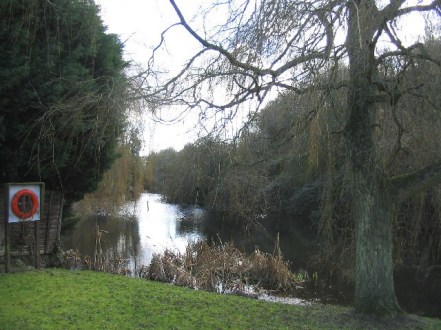
The moat, all that remains of Pleshey Castle
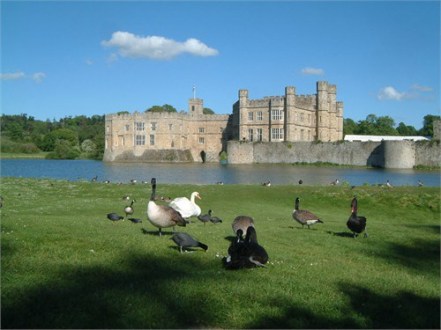
Badlesmere Castle
My 19th great-grandmother was born in the castle above, located in Kent, England, in 1313. She died in London in 1356 and is buried in the Black Friars Churchyard.
Baroness Elizabeth de Badlesmere de Mortimer de Bohun
Wife and widow of Sir Edmund de Mortimer, son of Sir Roger de Mortimer and Joan de Geneville. They were married 27 June 1316 in the chapel at the manor of Ernwood in Kinlet, Shropshire and had two sons; Sir Roger and John. Sir Edmund would die at Stanton Lacy in early 1332.
Secondly, wife of Sir William de Bohun, son of Sir Humphrey de Bohun and Elizabeth of England, the daughter of King Edward I. They were married by papal dispensation dated 13 Nov 1335, being related in the 4th degree, and had one son, Sir Humphrey, Earl of Hereford and Essex, and one daughter, Elizabeth, who married Sir Richard de Arundel.
Elizabeth died testate 08 June 1355, buried at Black Friars, London.
Inscription:
Church destroyed in the Great Fire of London. Graves predating 1660 did not survive. AKA St. Ann’s Black Friars.
Elizabeth Countess of Northampton 3rd Baroness of Badlesmere De Badlesmere (1313 – 1356)
19th great-grandmother
Lady Elizabeth Countess Arundel Countess DeBohun (1350 – 1385)
daughter of Elizabeth Countess of Northampton 3rd Baroness of Badlesmere De Badlesmere
Elizabeth Duchess Norfolk Fitzalan (1366 – 1425)
daughter of Lady Elizabeth Countess Arundel Countess DeBohun
Lady Joan De Goushill Baroness Stanley (1402 – 1459)
daughter of Elizabeth Duchess Norfolk Fitzalan
Countess Elizabeth Sefton Stanley (1429 – 1459)
daughter of Lady Joan De Goushill Baroness Stanley
Thomas Sir 8th Earl of Sefton Molyneux (1445 – 1483)
son of Countess Elizabeth Sefton Stanley
Lawrence Castellan of Liverpool Mollenaux (1490 – 1550)
son of Thomas Sir 8th Earl of Sefton Molyneux
John Mollenax (1542 – 1583)
son of Lawrence Castellan of Liverpool Mollenaux
Mary Mollenax (1559 – 1598)
daughter of John Mollenax
Gabriell Francis Holland (1596 – 1660)
son of Mary Mollenax
John Holland (1628 – 1710)
son of Gabriell Francis Holland
Mary Elizabeth Holland (1620 – 1681)
daughter of John Holland
Richard Dearden (1645 – 1747)
son of Mary Elizabeth Holland
George Dearden (1705 – 1749)
son of Richard Dearden
George Darden (1734 – 1807)
son of George Dearden
David Darden (1770 – 1820)
son of George Darden
Minerva Truly Darden (1806 – 1837)
daughter of David Darden
Sarah E Hughes (1829 – 1911)
daughter of Minerva Truly Darden
Lucinda Jane Armer (1847 – 1939)
daughter of Sarah E Hughes
George Harvey Taylor (1884 – 1941)
son of Lucinda Jane Armer
Ruby Lee Taylor (1922 – 2008)
daughter of George Harvey Taylor
Pamela Morse
I am the daughter of Ruby Lee Taylor

Central Burial Grounds Boston
My 10th great-grandfather was banished from the colony of Massachusetts, and signed the Portsmouth Compact. He did not stay in Rhode Island for very long, but returned to live in Boston, where he was one of the citizens who purchased the Boston Common and donated it to the town. I am not sure how he became un-banished, but his case is not the only un-banishment in our family. He kept his property in Rhode Island and had extensive holdings in Boston as well. He was in the wool business.

Portsmith Compact
Samuel Wilbore and wife Ann, came to America before 1 December, 1633 and lived in Boston. May have come 4 September, 1633 on ship “Griffin” He was a merchant, had a ship, probably sold cloth and lumber and was in the wool business.
He and 6 men under him guarded the gate at Roxbury. He sold his home on what is now Washington St. to Samuel Sherman. In 1634, he and William Blackstene bought “Boston Commons” and gave it to the town. Made “Freeman” 4 March 1633/4 and with John Porter and Philly Sherman bought Aquidneck Island, (Rhode Island). He was banished from Boston 30 August 1637, and disarmed 20 November 1637 and went to Portsmouth, R.I. because of his association with a religious group lead by Anne Hutchinson, Mr. Wheelwright and possibly Roger Williams. Anne Hutchinson was the unauthorized Puritan preacher of a dissident church discussion group.
Rhode Island had become a haven for persecuted religious sects. These people, called Antinomians, believed that the moral laws as taught by the Church of England were of no value and that the only law that should be followed was that of the Gospel. Quakers, who eventually merged with the Antinomians, established a meeting house on Aquidneck in 1657.
11 January 1638/9 he was constable at Portsmouth. He owned land at Nt. Wolliston (now Quincy). With Ralph Earle he built a planing mill at Portsmouth,1640. By 1645 was back in Boston, though he kept his Portsmouth and Taunton land, and lived on Mill Street. He was wealthy and gave to the 1st free school in America. The early spelling was “Welleboro”, a Norman name. In 1626 he was a “juror” in Sible Hedington, Essex, England.
Samuel Wilbore (1595 – 1656)
10th great-grandfather
Dorothy Wilbore (1617 – 1696)
daughter of Samuel Wilbore
Elizabeth Albro (1646 – 1720)
daughter of Dorothy Wilbore
Benjamin Congdon (1676 – 1756)
son of Elizabeth Albro
William Congdon (1711 – 1755)
son of Benjamin Congdon
Frances Congdon (1738 – 1755)
daughter of William Congdon
Thomas Sweet (1765 – 1844)
son of Frances Congdon
Valentine Sweet (1791 – 1858)
son of Thomas Sweet
Sarah LaVina Sweet (1840 – 1923)
daughter of Valentine Sweet
Jason A Morse (1862 – 1932)
son of Sarah LaVina Sweet
Ernest Abner Morse (1890 – 1965)
son of Jason A Morse
Richard Arden Morse (1920 – 2004)
son of Ernest Abner Morse
Pamela Morse
Samuel Wilbore was born in Jan 1595 in Sible Hedingham, Essex, England. He died on 29 Sep 1656 in Boston, Suffolk, Massachusetts. Samuel married Ann Smith on 13 Jan 1619/1620 in Sible, Hedingham, Essex, England.
Samuel Wildbore, said to have been born in 1585, came to Boston not later than 1633, and was admitted to the First Church of Boston on December 1/1633. His house was on the neck of land between the island and the mainland, now called Washington St. and later Milk Street. In 1634 Samuel and others bought the Boston Common for the town, from William Blackstone whose ownership was acknowledged by an entry in the Town Records as early as 1633 by which it was agreed that William Blackstone shall have 50 acres set off to him near his house in Boston. The Town Records have the following statement in reference to Samuel Wildbore’s share in the purchase of the Common. “The 10th day of the 9th month 1654: Item, Edmund Quinsey, Samuel Wildbore, William Baulston, Edward Hutchinson the elder, and William heesborough, constable, shall make and assess all the rates, viz, a rate of œ30 to William Blackstone”. Blackstone sold the whole parcel of land except 6 acres immediately adjoining his house. On August 6/1635, Samuel gave œ10 towards a free school, the first in America. Governor Winthrop gave a like amount, and none other gifts exceeded this amount. Samuel also had a piece of land on Essex St., near where the Touraine Hotel now stands. Samuel married in 1620, at Sibley Hedringham, England, Ann Smith. Most genealogies wrongly give her name as Ann Bradford. Samuel was made freeman on March 4/1634. He bought much property in Taunton and likewise possessed considerable holdings in Boston, evidently dividing his place of residence between the two places. While in Taunton, he with others, embraced the “dangerous doctrines” as they were then called, of Cotton and Wheelwright, for which in 1637 he was banished from the Massachusetts Colony. Acting upon the advice of Roger Williams, he and seventeen others fled to Providence, R.I., where they purchased the island of Aquidnec, (now Rhode Island) from the Naragansett Indians, and early in 1638 moved his family there and formed a colony on March 7/1638. Full details of the purchase and history of this action is contained in the Genealogies quoted, but too long to insert here. He did not remain in Rhode Island for long, and returned to Boston in 1645 and built the first iron furnace in New England at Taunton, now Raynham, on the main road from Tilicut to Taunton. He was clerk of the town board in 1638, Constable in 1639, Sergeant in 1644. He married, 2nd, before November 29/1645, Elizabeth Lechford, widow of Thomas Lechford. Date of his second marriage and date of death of his first wife Ann are not known. Samuel died July 24/1656. After his death Elizabeth married, 2nd, on December 20/1656, Henry Bishop who died in 1664: Elizabeth died in 1665. Samuel was a man of wealth and he was of very respectable standing in society, exerting a wide influence in each of the places he dwelt. His will was dated April 30/1656.
Ann SMITH-8832 was born on 13 Jan 1598 in Sible, Hedingham, Essex, England. She died on 24 Sep 1636 in Taunton, Bristol, Massachusetts. Ann married Samuel WILDBORE-8833 on 13 Jan 1619/1620 in Sible, Hedingham, Essex, England.
They had the following children.
MiSamuel WILBORE-8830 was born on 10 Apr 1622. He died in 1697. MiiWilliam WILBORE-8838 was born on 21 May 1630. He died on 15 Apr 1710.

Mars/male gender symbol
Mars will be so close to the earth next week that it will visibly outshine our brightest star, Sirius. The red planet is retrograde in Scorpio as it appears shining brightly in the night sky. The planets (as well as recently demoted Pluto) are named for Roman gods because they have certain qualities the ancients identified with them. Mars rules battle and martial arts. The word martial is derived from his name. He was the father of legendary Romulus and Remus who founded Rome. Thus he is the true god-father of Rome. Citizens of Rome referred to themselves as sons of Mars and worshipped him copiously. Indeed, war was perhaps the best talent of the Romans as a civilization. They certainly developed the first global takeover strategy. Sure, they had common currency and governance from the emperor in Rome, but none of that would have been possible without their military conquests. Mars was their main man.
The famous adulterous affair between Mars and Venus has been immortalized in many ways. The symbol for Mars the planet is the same one used for the male gender and the element iron. Similarly the symbol used for Venus is the same for the planet, the female gender, and the element copper. Men actually have more iron in their blood than women, while women have more copper in the bloodstream than men. Chemically this is just a fact. There are the theories in psychiatry about communication styles and the conflicts they naturally engender between the sexes. From Roman mythology to pop culture the planets Mars and Venus represent archetypal male/female roles. In reality nobody is made up of a single archetype, although we usually have one that is more developed than the others. The Mars archetype is aggressive and militaristic. It is protective of farmers and soldiers. In the Roman Empire Mars was a unifying factor, linked to local gods in order to strengthen the empire. I can see how Mars has been the god we share with all of our war partners around the globe.
We can no longer live without war on earth. Security forces are needed to prevent all out chaos. However, as Mars approaches the earth this Memorial Day to salute his people, let us give some thought to our use of his powers. Military suicides are highest in the time before deployment because Mars is one scary boss. The general public generally hides from the gruesome details of the horror of war. This year as you pass the potato salad look to the sky as Mars passes by look directly into his flaming red eyes and take an oath to direct his energies to a higher purpose. As protector of farmers he has work to do on global warming. Happy Memorial Day, gentle reader. I wish you a cloud free sky and a clear view of his majesty, Mars, in all his glory.

Parcheesi board
We are at the end of our Hulu month, and I am fairly binged out on my TV watching. I freeze the membership for the maximum amount of time, 12 weeks, in between months of using it. That works around here since we already have Amazon and cable. There is only so much TV you can watch without loosing your mind. This time I have found a lot of new comics and seen some very funny as well as kinky new series. Warcraft is one of the shows we have not seen, although it is super popular. When an ad came on for the show last night it sparked a conversation between my partner and me. He is younger, but neither of us has ever been into computer gaming. I never even played Pac Man, and have not held a joy stick. Bob did play a few games like Pac Man and Nintendo in his youth, but his interest died in these things. We have not played World of Warcraft and don’t know anything about the story line even though it is a cultural and marketing fad of giant proportions. I never developed a taste for games that take place in imaginary worlds, neither farms nor planets. They are not my style…unless they are based on an imaginary stock market.
As a child I played dominos, Chinese checkers, checkers, and Parcheesi with my grandparents. I looked forward to going to their farm and being involved in these games. I remember them going non-stop at my insistence. I liked to keep the board out when we slept and finish in the morning. My grandma was the Parcheesi freak. When she was around we played that with a group. Most of the time my grandpa and I went one on one in dominos or checkers. My father did not play much, but at home he and I played Gin Rummy a lot. He also played Gin with his friends. I loved to play cards, and took them with me in order to play at the pool or wherever I went. War and Spit were very popular games in elementary school, similar in nature. We played board games too, but they were less portable. I was into portable. I traveled with my bag of marbles and/or jacks to pick up games wherever I went. I seriously played jacks, and had no problem finding enthusiastic players, at my college dorm in 1968 at UT Austin. As I reminisce I think jacks may have been my all time favorite game. Since there is so little investment I feel like ordering a set from Amazon to see if I still have my chops.
Computers have been on my home desk for decades, but no computer games ever called to me. My brother gave me a trivia game once called “You Don’t Know Jack”. I was highly amused with it for a couple of times, then never played it again. The whole world swooned over computer gaming, but I was not interested. I still don’t know jack about gaming. I have found my adult game. It is called EmpireKred. It mimics the stock market, which is really fun for me. You may have heard of it as Empire Avenue, the original name of the game. On this avenue you purchase stock and pay dividends based on social media value. I love being able to speculate without using real money. My real money is safe in the care of a fiduciary, but I am high rolling success playing EmpireKred.
The reason this game has held my interest for years is the social side effect inherent in being a regular player. By playing we meet each other and read each others’ content. Many internet groups do the same thing, sometimes with only quid pro quo support, and no genuine interaction. I have met many extremely cool people from around the world with whom I engage on different platforms in different ways. I got into playing because I loved the statistics on my own on-line activity and the stock market metaphor. I am a huge fan of graphs and charts. I stayed for the supportive and interesting friendships I have found. Once I am holding shares in someone I want them to thrive, so I pay attention to them. I also feel very obliged to produce a high dividend for all my shareholders. Dividends are based on social media scores. An effort is made to score quantity as well as quality, which is hard to do with a mathematical algorithm. What is sure is that if you just walked away from all your social media platforms for a while your dividends would drop from both lack of quality and quantity in your social media presence.
During my lifetime I have moved from dominos, an obvious math game, to EmpireKred, a simulated stock market based on math game. My father was a heavy stock market gambler for his entire adult life, so this may be my natural inherited disposition. My dad called his broker early every morning on the phone, like calling a bookie, to place his bets. I do like to speculate, but am keeping my investments and my gaming completely separate. It is fine to get caught up in the social stock market. I happen to be a great investment, and like all great investments I make sure I earn the trust of my shareholders. By using this method I meet and enjoy the friendship of many like minded investments (people) all around the world.
We sometimes play games within our game. I am very pleased to support a very cool effort This Memorial Day weekend that involves computer gaming. By purchasing imaginary balloons which we drop full of imaginary EAVs (our imaginary currency) on our fellow players we will contribute in real life to Operation Supply Drop. They live up to their motto, making fun where there is none, by distributing care packages of games and game related gear to deployed soldiers. I am all over this creative idea. We get to have fun within our gaming universe and share it with deployed soldiers in various alternate gaming universes. How cool is that? If you are a player already do come on out and launch a few balloons. If you have not played this is a great weekend to join. To play the game is free, but if you decide to buy balloons you will be thrilled at the exchange rate of Eav’s to real currency. You get a lot of bang for your real bucks, and for this event 20% goes to the soldiers. I plan to stay home and send balloons all weekend.

game over

