mermaidcamp
Keeping current in wellness, in and out of the water
You can scroll the shelf using ← and → keys
You can scroll the shelf using ← and → keys
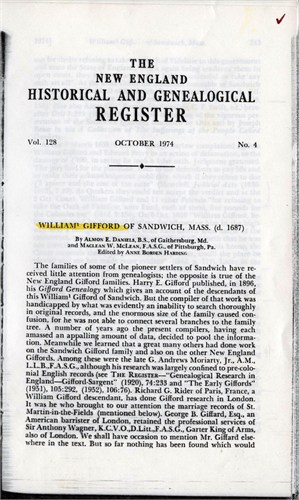
Gifford Genealogy
My 9th great grandfather was born in England and died in Sandwich, MA. He was a Quaker who was persecuted for his faith. He refused to sign the oath of fidelity to England, so he hd a hard time with the colonial authorities.
There is a record in England of a “Guilielm Gifford” (i.e., William Gifford) who married Elizabeth Grant on 11 February 1635 in St. Martin-in-the-Fields, London. Also, the London Merchant Taylors’ Guild shows a record: “William Gifford, son of Anthi (sic) Gifford of Dublin in the kingdom of Ireland, gentleman, apprenticed to Thomas Southerne of New Exchange, London, for a period of seven years from 7 December 1628.” Apprentices were forbidden to marry, so this would mean the apprenticed William Gifford would have been given his freedom 7 December 1635, in perfect time to be the one who married 11 February 1635/1636. Also, the records of St. Martin-in-the-Fields show that an Ananias Gifford married Maria Read on 18 November 1621. Ananias (also spelled Hananias, Hannaniah and Annaniah) is a relatively rare name. William named one of his sons Hannaniah, and the name has been carried down in the family. Also, the name occurs in the Giffords of Dry Drayton, county Cambridge, England. But it cannot be proven that these English records apply to the family of William Gifford of Sandwich.
Nor can the English ancestry of William Gifford of Sandwich be proven, according to Daniels & McLean. “English Giffords can be traced back to Normandy at the time of William the Conqueror when most branches usually spelled the name Giffard. Inevitably the temptation to connect the Sandwich Giffords with these celebrated families has produced a rash of printed accounts in which the connection is stated as fact but without solid references. (Cutter’s “Genealogical History of Western New York,” 2:901; “History of Bristol County, Mass.;” “Vineland (N.J.) Historical Magazine,” 3:32; “Seabury-Gifford Families,” Hartford (Conn.) 1941) In view of the fact that highly skilled professional genealogists have found no proof as yet of such connections, it can only be said that evidence has yet to be found to confirm these wishful thoughts.”
William Gifford of Sandwich was a Quaker, and as such, suffered persecution for his faith. “Little Compton Families” says “It is supposed that he was the William Gifford who in 1647 or earlier was ordered by the court at Stanford to be whipped and banished.” On 1 June 1658, he was one of a dozen men who “all of Sandwich were summoned, appeared to give a reason for theire refusing to take the Oath of Fidelitie to this government and unto the State of England, which again being tendered them in open court, they refused, saying they held it unlawful to take any oath att all.” At the court held 2 October 1658, they were fined L5 each. At the court held 1 March 1658/1659 George Barlow, Marshall for Sandwich, Barnstable and Yarmouth, complained against William Gifford and Edward Perry in an action of defamation, asking damages of L100, in saying he took a false oath. The defendants were ordered to pay 50s and make their acknowledgement publically, or else be fined L5 plus costs. As Quakers, they could not accept the verdict, and at the 2 October court William Gifford and 11 other Friends were fined L5 for refusing to take the Oath of Fidelitie. At the June 1660 court Gifford was again summoned to take the oath, again refused, and was again fined L5. In October 1660, for persisting in his refusal and for attending Quaker meeting, he was fined L57 — an enormous sum for those times. At this point he disappears from the records, and may have left Plymouth colony, but where he went is unknown. It has been suggested that he went to New Jersey which, like New Amsterdam, was then under the control of the Dutch. On 8 April 1665 William Gifford was one of the signers of the Monmouth (NJ) Patent, but there is no evidence he actually settled there; his sons Christopher and Hannaniah did, however. In a deed by his son Christopher William was described as a tailor.
On 10 November 1670 Mr. Gifford bought from mistress Sarah Warren of Plymouth, widow of Richard Warren, one half her share in the land at Dartmouth, which he gave equally to his sons Christopher and Robert by deed dated 6 May 1683. In 1673 William Gifford purchased land in Suckanesset (Falmouth) from the Indian Sachem, Job Noantico. Gifford continued to appear in Sandwich town records and in records of the Sandwich Friends meeting, and he married Mary Mills, also of Sandwich, at the Friends Meeting of 16 day 5 mo: 1683. Thirty witnesses signed the certificate, but none of William Gifford’s children signed the document, nor did James Mills, Mary’s brother.

Dr Kenny
In May I was asked to draw a time line of my spiritual life. The participants in Thomas Moore’s workshop at Kripalu gathered in small groups to discuss what we found drawing the timelines. The brief discussion among 3 students was revealing and gave me much to ponder. One of us had been drawn to church and attending mass by herself as a child, with no particular parental support for her daily devotion to Catholic ritual. The other woman in my group had been influenced heavily by her environment and felt trapped without a known exit strategy. My own timeline referred to my parents and briefly to church (because I only had to be a Sunday school student for a couple of years) but after the age of 16 had nothing to do with formal religion. The exercise was quite challenging, finding the major spiritual events or pivotal points in the soul’s journey.
My studies in Sacred Contracts with Carolyn Myss also includes assignments to create archetype timelines. I am finding this practice to be the most powerful of all the exercises I have ever used. It seems we warp the past and forget much of what seems extraneous, storing symbols that represent the events or people rather than storing an accurate version of reality in the past. I went to my elementary school a few months ago in the company of the people with whom I attended elementary school. We reminded each other of the past, but we had different versions edited and stored in our vaults of memory. When we toured the auditorium I knew it was the scene of one of my first encounters with the rebel archetype. On the occasion of my third polio shot I became violent with the nurse, principal and staff who were trying to inoculate me. I curled up in a chair in the front row and used my feet to strike out at the adults. I won the battle and did not get that shot. The school never informed my parents, so I was 3rd vaccination free until the oral type came out and we all took it again. Victory was sweet, and I felt that I had vanquished a dangerous and vicious foe. It was Valentine’s Day. I returned to my classroom uninoculated in my little red and white dress. A rebel was born.
When I saw the auditorium as an adult I found myself walking next to a classmate who has become a medical doctor. I also found myself giving Dr. Kenny, who was extremely popular and cool as a kid, a very hard time about his decision to practice medicine. I don’t dislike Kenny at all, but was completely involved in a highly displaced freak out over medical procedures I do not trust. This rebel theme continues throughout my life with a special concern over medical professionals and everything they do. Rational or not, my mistrust for all things allopathic has grown and I believe it has served me well. What I have discovered by creating timelines to assist my memory is that these themes that started early in life have shaped our lives and decisions in profound ways. Opposite my rebel archetype is the teacher archetype who wants to teach others healthy alternatives and self care. Duality is inherent in looking into the past. We are the actor, director, and the script writer of our own dramas. Once we have edited the memory of events it is likely we have hidden our own shadow qualities from ourselves. To make peace with past agreements and commitments gone sour it is necessary to find what part one played at the time. Timelines are like story boards that illustrate the flow of events and emotions that created our past. Our futures will be defined by our understanding of the past. I think I am having a big breakthrough realizing that Kenny would never hurt me, and maybe I have vexed myself unnecessarily over fear of medical professionals giving me shots. I can probably stop striking out at the adults with my patent leather shoes. Thanks, Dr. Kenny, for the fabulous Jungian analysis. I feel much better now.

Theobald at rest
My 21st heat-grandfather was the first butler in Ireland. This position granted him the prisage of wines. His father had been the hereditary butler of England before him. He lost his butler position for a couple of years because of irregularities as a sheriff. He seems to be descended from William the Conqueror, which brings us to the Doomsday book, but there is much to investigate to know if that is true conclusively. For one thing Henry II had so many oral bastards that he is the all time champ of British monarchs, I believe.
The ancestry of Theobald FitzWalter, the first Butler of Ireland, has been a fruitful theme for genealogists. No fewer than eight versions have been advanced at various times, including one that his mother was a sister of St. Thomas à Becket. This claim was put forward by the 4th Earl of Ormonde in 1444, when he procured an Act of Parliament declaring his descent from the martyred Archbishop. Despite this legislative authority, doubt has been cast on the claim by irreverent modern genealogists, who have pointed out that if the legend were true, the Butler ancestress would have been a grandmother at the age of eight! But while the descent from Agnes à Becket must be rejected, there is reason to believe that she was closely connected by marriage to Theobald FitzWalter, which may have given rise to the family tradition.
In 1937, the Hon. Patrick Butler (now lord Dunboyne) wrote a monograph in which he summarised the various versions of the early ancestry of the Butler family. This was followed in 1939 by Mr. T. Blake Butler’s Origin of the Butlers of Ireland. In this erudite and well-documented paper, Mr. Butler, showed that Theobald FitzWalter’s father, Hervey Walter (with whom the Ormonde pedigree commences in Burke’s Peerage) was grandson of Walter, who is mentioned in Doomsday Book as holding 27 manors in Norfolk and Suffolk, and who, Mr. Butler surmised, was connected with the Malet family. Further researchers made by him have confirmed this conjecture, and established that the above-mentioned Walter was in fact Walter de Caen, whom genealogists identify as a brother of William Malet, the great East Anglian landowner who fought at Hastings, and is said to have been the only companion of the Conqueror who was half English. It was perhaps for this reason that he was entrusted by William with the task of burying the body of King Harold on the seashore after the battle. As a result of Mr. Blake Butler’s researches, the house takes its place among the very few families in the Peerage who can trace their ancestry in the male line to the Norman Conquest.
L’envoi“The history of the illustrious house of Butler of Ormonde”, wrote Sir Bernard Burke, “is in point of fact, the history of Ireland from the time of the Anglo-Norman invasion. At the head of the great nobility of that country have ever stood the Butlers and the Geraldines, rivals in power and equals in renown.”
The families who are the subject of this memoir were cadet branches of that famous house, and they are not of course comparable in historical importance to the main line of the Ormonde earls. But the story unfolded in these pages shows that they too, played a part in historic events in Ireland which should not be lost in oblivion.
Theobald I FitzWalter, 1st Chief Butler of Eng & Ire, de Butler (Boteler) (1170 – 1206)
Theobald Walter or Theobald Butler or Theobald Walter le Boteler was the first Baron Butler and the first Chief Butler of Ireland. He also held the office of Butler of England and was the High Sheriff of Lancashire for 1194.[1] Theobald was the ancestor of the Butler family of Ireland. He was involved in the Irish campaigns of King Henry II of England and John of England. His eldest brother Hubert Walter became the Archbishop of Canterbury and justiciar and Lord Chancellor of England.
Family
Theobald was the son of Hervey Walter and his wife Maud de Valoignes, who was one of the daughters of Theobald de Valoignes.[2] Their children were Theobald, Hubert – future Chief Justiciar and Archbishop of Canterbury, Walter, Roger and Hamon. Theobald Walter and his brother Hubert were brought up their uncle Ranulf de Glanvill, the great justiciar of Henry II of England who had married his mother’s sister Bertha.
Career
On 25 April 1185, Prince John, in his new capacity as “Lord of Ireland” landed at Waterford and around this time granted the hereditory office of butler of Ireland to Theobald. Theobald’s father had been the hereditary holder of the office of butler of England. Some time after, King Henry II of England granted him the prisage of wines, to enable him, and his heirs, the better to support the dignity of that office. By this grant, he had two tons of wine out of every ship, which broke bulk in any trading port of Ireland, and was loaded with 20 tons of that commodity, and one ton from 9 to 20.[3] Theobald accompanied John on his progress through Munster and Leinster. At this time he was also granted a large section of the north-eastern part of the Kingdom of Limerick. The grant of five and a half cantreds was bounded by:
“…the borough of Killaloe and the half cantred of Trucheked Maleth in which it lay, and the cantreds of Elykarval, Elyochgardi, Euermond, Aros and Wedene, and Woedeneoccadelon and Wodeneoidernan.”
These are the modern baronies of Tullough (in County Clare), Clonlisk and Ballybritt (in County Offaly), Eliogarty, Ormond Upper, Ormond Lower, Owney and Arra (in North Tipperary), Owneybeg, Clanwilliam and Coonagh (in County Limerick).[
Theobald was active in the war that took place when Ruaidrí Ua Conchobair attempted to regain his throne after retiring to the monastery of Cong, as Theobald’s men were involved in the death of Donal Mór na Corra Mac Carthaigh during a parley in 1185 near Cork. In 1194 Theobald supported his brother during Hubert’s actions against Prince John, with Theobald receiving the surrender of John’s supporters in Lancaster. Theobald was rewarded with the office of sheriff of Lancaster, which he held until Christmas of 1198. He was again sheriff after John took the throne in 1199.
In early 1200, however, John deprived Theobald of all his offices and lands because of his irregularities as sheriff. His lands were not restored until January 1202.[9] A manuscript in the National Library of Ireland points to William de Braose, 4th Lord of Bramber as the agent of his restoration:
“Grant by William de Braosa, (senior) to Theobald Walter (le Botiller) the burgh of Kildelon (Killaloe) … the cantred of Elykaruel (the baronies of Clonlisk and Ballybrit, Co. Offaly), Eliogarty, Ormond, Ara and Oioney, etc. 1201.”
“Elykaruel” refers to the Gaelic tuath of “Ely O’Carroll”, which straddled the southern part of County Offaly and the northern part of Tipperary (at Ikerrin). The other cantreds named are probably the modern baronies of Eliogarty, Ormond Upper, Ormond Lower and Owney and Arra in North Tipperary.
Theobald founded the Abbey of Woney,[11] in the townland of Abington (Irish: Mainistir Uaithne, meaning “the monastery of Uaithne”), of which nothing now remains,[12] near the modern village of Murroe in County Limerick Ireland around 1200.[11] He also founded the Cockersand Abbey in Lancaster, Abbey of Nenagh in County Tipperary, and a monastic house at Arklow in County Wicklow.
Issue
Theobald married Maud le Vavasour, heiress of Robert le Vavasour, a baron of Yorkshire,[2] John Lodge in the Peerage of Ireland in 1789 gave the year as 1189, but on no apparent authority, as no other author follows him on this. He died between 4 August 1205 and 14 February 1206, and was buried at Owney abbey. Their children were Theobald le Botiller, 2nd Chief Butler of Ireland and a daughter Maud who married Gerard de Prendergast who had an only daughter who married John de Cogan.
I like this ad for Brits drinking tea so much I wanted to share it with you. I noticed the tea comes from a company called Taylors…I do hope these are the folks from my ancestral family, but there were and are a whole lot of Taylors. Either way the ad makes me very happy. Enjoy!!
St George Cross
My 23rd great grandmother was the sister of Saint Thomas Becket, Archbishop of Canterbury. She is the ancestor of Margaret Tyndale, whose husband was burned at the stake for reading the bible in English. Although they spend several generations as the official bottlers to the royal Brits (a much more entertaining and lucrative employment), they revert to religion like salmon swimming upstream. They go on crusades and get crazy over the crown and religion. My own great grandfather Taylor was a preacher and a Confederate soldier. You might say it is in the blood.
Lady Gilberta Godiva le Becket (1100 – 1186)
my 23rd great grandmother
Hervey Butler (Boteler) (1130 – 1190)
son of Lady Gilberta Godiva le Becket
Theobald I FitzWalter, 1st Chief Butler of Eng & Ire, de Butler (Boteler) (1170 – 1206)
son of Hervey Butler (Boteler)
Theobald II le Boteler (1200 – 1230)
son of Theobald I FitzWalter, 1st Chief Butler of Eng & Ire, de Butler (Boteler)
Lady Maud Matilda DeVerdun Countess DeBoteler Countess Arundel (1225 – 1283)
daughter of Theobald II le Boteler
Matilda Tideshall FitzAlan Baroness Corbet De Arundel (1244 – 1309)
daughter of Lady Maud Matilda DeVerdun Countess DeBoteler Countess Arundel
Sir Thomas Corbet of Moreton, Knight of The Bath Corbet (1281 – 1310)
son of Matilda Tideshall FitzAlan Baroness Corbet De Arundel
Knight Sir Robert XII Corbet, Lord of Moreton Corbet (1304 – 1375)
son of Sir Thomas Corbet of Moreton, Knight of The Bath Corbet
Sir Roger XIII (Lord of Morton) Corbet (1330 – 1396)
son of Knight Sir Robert XII Corbet, Lord of Moreton Corbet
Robert Corbet (1383 – 1440)
son of Sir Roger XIII (Lord of Morton) Corbet
Blanche Corbet (1423 – 1458)
daughter of Robert Corbet
Humphrey Coningsby (1458 – 1535)
son of Blanche Corbet
Amphyllis Coningsby (1478 – 1533)
daughter of Humphrey Coningsby
Margaret Tyndale (1510 – 1555)
daughter of Amphyllis Coningsby
Thomas Taylor (1548 – 1588)
son of Margaret Tyndale
Thomas Taylor (1574 – 1618)
son of Thomas Taylor
James Taylor (1608 – 1698)
son of Thomas Taylor
John Taylor (1685 – 1776)
son of James Taylor
John Taylor (1727 – 1787)
son of John Taylor
John Taylor (1747 – 1781)
son of John Taylor
John Nimrod Taylor (1770 – 1816)
son of John Taylor
John Samuel Taylor (1798 – 1873)
son of John Nimrod Taylor
William Ellison Taylor (1839 – 1918)
son of John Samuel Taylor
George Harvey Taylor (1884 – 1941)
son of William Ellison Taylor
Ruby Lee Taylor (1922 – 2008)
daughter of George Harvey Taylor
Pamela Morse
I am the daughter of Ruby Lee Taylor

Order of the Bath
My 17th great grandfather, Sir Thomas Corbet, was a knight. His father was a sheriff in Shropshire, a job that would be passed down through the family. His roots could be traced to Normandy before the Doomesday survey, but I have not yet followed my branches back to that date. Shropshire was near Wales, where they had quite a bit of trouble with the Welch who did some nasty castle destruction.
01. Hugo Le Corbet, Cevalier of Pays de Caux, Normandy, flourished from 1040 and 1076, and was dead before the Domesday survey of 1086.
02. Roger Fitz Corbet, Domesday Baron of Cause, formerly Alretone, Shropshire, England, as it was called in Domesday, was born about 1050 to 1056, and died about 1134 as Pagan Fitz John, sheriff and governor of Shropshire, having succeeded Richard de Belmeis, held Cause in 1134, and would not have dared to take it during Roger’s lifetime; the castle was destroyed by the Welsh attacking Pagan Fitz John. It had been one of the strongholds along the Welsh border between the rivers Dee and Wye. He married the heiress of Talsey.
03. William Corbet, second Baron of Caus, lived in Wattlesborough as the Castle of Cause was destroyed by the Welsh attack on Pagan Fitz John.
04. Simon Corbet, of Pontesburie, close to the Welsh frontier, and probably died before his father, William.
05. Thomas Corbet, called the Pilgrim.
06. Sir Richard Corbet, of Wattlesborough flourished in 1217 and 1222. May be the same person as #7, Richard Corbet below.
07. Sir Richard Corbet of Wattlesborough died before 1255. He married probably by 1196 to Joanna Toret, coheir of Bartholomew Toret of Moreton Toret, Salop, who flourished in 1196-1229 and also had lands in Yorkshire.
08. Sir Richard Corbet, son of Richard, knight of Wattesborough, flourished 1225-1248, and was Lord of Morton at the Inquest of Bradfort Hundred taken in 1255. He married Petronilla, lady of Edge Baldenham and Booley, who was living in 1272, made a grant to Buildwas Abbey in 1223, succeeded his grandfather Bartholomew Toret, and was Jusiciar of Shropshire.
09. Sir Robert Corbet, son of Richard and Petronilla was born abt 1234 in Morton Corbet, Shropshire, England. He married 2nd, Mathilda De Arundel in about 1280. He was of full age in 1255, and apparently served as the Sheriff of Shropshire (1288-1289). He died in 1300 and was buried in the chapal at Alberbury which he had built.
10. Thomas Corbet, son of Robert and Matilda was born abt 1281. He married Amice, possibly Hussey, daughter of Ralph Hussey. Thomas died in 1310 at age 29.
11. Sir Robert Corbet, son of Thomas and Amice was born on Decmeber 25, 1304. He married Elizabeth Le Strange, daughter of Fulk le Strange and Eleanor Giffard before March 1323. He was noted as lord of the Vill of Moreton Corbet in 1316, but had not been granted knighthood by 1326. He purchased Shawbury from Giles de Erdington, which property was conveyed to Thomas Gery, vicar of Morton, and Thomas de Lee of Southbache. He went to some lengths to pass his lands to Roger Corbet’s heirs. Robert died on Decmeber 3, 1375.
12. Sir Thomas Corbet, son of Robert and and Elizabeth died about 1359. He married Elizabeth (Amice).
13. Sir Roger Corbet, son of Thomas and Elizabeth was born abt 1330 in Moreton Corbet. He married Margaret De Erdington, daughter of Giles De Erdington abt 1363. He died abt. 1394.
14. Sir Robert Corbet, son of Roger and Margaret was born on December 8, 1383. He married Margaret abt 1400 whose last name is not known. As his parents were both dead when he was eleven, his wardship and marriage were granted by King Richard II to Thomas Percy, Earl of Worcester, who was obliged at the beginning of the reign of Henry IV to hand over the wardship to John Burley I of Broncroft. Robert proved his age in 1405. He served as Justice of Shropshire from March 14, 1410 to February 1416, and served the county in Parliament in 1413 and 1419. In May 1413 he and Richard Lacon (who held office on the Fitz Alan estates) joined David Holbache and Urian St. Pierre (both of whom represented Shrewsbury) in acting sureties for a Matthew ap Maredudd. In 1413 problems with tax collections were blamed on the dislike of Robert Corbet and Richard Lacon for their nominees as tax collectors. As a result indictments were brought agains Robert and Roger Corbet, Richard Lacon, John Burley II and other esquires of the Earl of Arundel. In 1415 Robert and Roger Corbet served in King Henry V’s first expedition to France. Robert was Sheriff of Shropshire in from November 23, 1419 until he died.
15. Sir Roger Corbet, son of Robert and Margaret was born about 1415. He married Elizabeth Hopton in 1450, the daughter of Thomas Hopton and Eleanor Lucy. Roger died on June 8, 1467.
16. Sir Richard Corbet, son of Roger and Elizabeth was born in 1451 in Moreton Corbet. He married Elizabeth Devereux before 1478. Elizabeth is the daughter of Sir Walter Devereux and Agnes Ferrers. Richard died on Decmeber 6, 1493.
17. Sir Robert Corbet, son of Richard and Elizabeth was born in 1477. Robert married Elizabeth Vernon, daughter of Sir Henry Vernon and Anne Talbot. He died on April 11, 1513 and was buried in Moreton Corbet. His wife Elizabeth survived him by fifty years and was called the “old Lady Corbet of Shawbury.”
18. Dorothy Corbet, daughter of Robert and Elizabeth was born abt. 1511. She married Sir Richard Mainwaring of Ightfield.
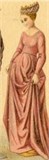
Maud
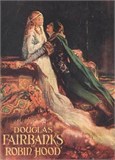
Maud as Maid Marian
My 21st grandmother married two husbands, the second of which (not my grandfather), was Robin Hood:
Maud le Vavasour, Baroness Butler
Following the death of Theobald in early February 1206, Maud returned to England into the custody of her father, who, having bought the right of marrying her at the price of 1200 marks and two palfrys, gave her in marriage, on 1 October 1207, to Fulk FitzWarin.[3] Fulk was the son of Fulk FitzWarin and Hawise de Dinan, who subsequent to a violent quarrel with King John of England, sought refuge in the woods and became an outlaw. Maud accompanied him. The legendary figures of Robin Hood and Maid Marian are said to be based on Fulk and Maud.
By FitzWarin, Maud had a son and a daughter:
DeathMaud le Vavasour died sometime before 1226. She had numerous descendants including the Earls of Ormond, the Earls of Arundel, Anne Boleyn, Mary Boleynand Elizabeth I.In fiction
Maud is the main protagonist in Elizabeth Chadwick’s The White Castle, which relates in highly fictional form, her life and adventures as the wife of Fulk FitzWarin.
References
Maud le Vavasour (1187 – 1282)
is my 21st great grandmother
Theobald II le Boteler (1200 – 1230)
son of Maud le Vavasour
Lady Maud Matilda DeVerdun Countess DeBoteler Countess Arundel (1225 – 1283)
daughter of Theobald II le Boteler
Matilda Tideshall FitzAlan Baroness Corbet De Arundel (1244 – 1309)
daughter of Lady Maud Matilda DeVerdun Countess DeBoteler Countess Arundel
Sir Thomas Corbet of Moreton, Knight of The Bath Corbet (1281 – 1310)
son of Matilda Tideshall FitzAlan Baroness Corbet De Arundel
Knight Sir Robert XII Corbet, Lord of Moreton Corbet (1304 – 1375)
son of Sir Thomas Corbet of Moreton, Knight of The Bath Corbet
Sir Roger XIII (Lord of Morton) Corbet (1330 – 1396)
son of Knight Sir Robert XII Corbet, Lord of Moreton Corbet
Robert Corbet (1383 – 1440)
son of Sir Roger XIII (Lord of Morton) Corbet
Blanche Corbet (1423 – 1458)
daughter of Robert Corbet
Humphrey Coningsby (1458 – 1535)
son of Blanche Corbet
Amphyllis Coningsby (1478 – 1533)
daughter of Humphrey Coningsby
Margaret Tyndale (1510 – 1555)
daughter of Amphyllis Coningsby
Thomas Taylor (1548 – 1588)
son of Margaret Tyndale
Thomas Taylor (1574 – 1618)
son of Thomas Taylor
James Taylor (1608 – 1698)
son of Thomas Taylor
John Taylor (1685 – 1776)
son of James Taylor
John Taylor (1727 – 1787)
son of John Taylor
John Taylor (1747 – 1781)
son of John Taylor
John Nimrod Taylor (1770 – 1816)
son of John Taylor
John Samuel Taylor (1798 – 1873)
son of John Nimrod Taylor
William Ellison Taylor (1839 – 1918)
son of John Samuel Taylor
George Harvey Taylor (1884 – 1941)
son of William Ellison Taylor
Ruby Lee Taylor (1922 – 2008)
daughter of George Harvey Taylor
Pamela Morse
I am the daughter of Ruby Lee Taylor
The Celtic holiday Samhain is still celebrated by some on October 31. The city of Dublin is embracing the ancient holiday in new ways. Poetry is a way to create connection with the future and also with the past. Some poems and songs survive from anonymous authors, while ancient Greeks are preserved in drama, ode and epic. Translation is a tricky thing, especially when translating Pagan rituals to Catholic practices. My ancestors, the O’Byrnes, came from County Meathe where Samhain was and is celebrated. I hope someday to visit Dublin to see these Irish in action with their ancient tradition.
Since I am in Tucson, with a strong and popular All Souls’ Day party I plan to add poetry this year by attending the reading on Friday night at the U of A Poetry Center by our new poet laureate. He is from the border, our own very specific and special place. This border has been directly responsible for plenty of death, and plenty of opportunity. In a spiritual sense our border has never been real, but artificial, setting a trap, catching little prey. It makes crime irresistible to the desperate. It works to incentivize illegal behavior. If the dead are visiting this week they will have no trouble crossing the border, even though they may have died trying. I look forward to the experience.



This holiday season I have decided to create a diet plan. Each year we splurge eating outside of our normal diet to enjoy some seasonal goodies both at home and out and about. I think it is silly to deny yourself all relatively unhealthy foods since it creates a special power around the food. You can taste almost anything, then put it down and walk away without harming yourself. Moderation in all things may seem stingy in comparison to the commercial holiday cheer with merchandise at the base of it all. Gifting or not gifting is easy at our house. We like experiences better than items so very few presents are given unless they are special yard sale finds. We love art, but filled our home already, so we have to go to galleries and museums to see anything new. Our tradition involves making treats and attending special events. This season I am mindfully setting a budget, not so much in dollars, but in calories, alcohol, and fat.
If I allow myself to be mindless at the supermarket I end up with a lot of unhealthy treat ingredients that will become cookies, etc. I have become a creative bartender and now have a vast array of interesting liquor with which to mix cocktails. The idea of the taste profile of the cocktail is to enhance your snacks or meal. I enjoy creating new cocktails from recipes and sometimes by experiment. Since I enjoy taking risks in the kitchen, my bar tending is a natural extension of that exploratory spirit. I am carried away with using seasonal ingredients and the fruit from my garden in cocktail recipes. I could not work at a bar since I know few classic drinks, but in terms of kinky creations I get better all the time. Therein lies the problem. These tasty spirits take over the situation and decide that moderation is out the window for the night. One good taste leads to another. Last winter I did allow the spirit of alcohol to leave the barn door open for the spirit of sugar and other inferior foods to enter my body in mass quantities. My general health suffered from this overdose, and required reform of my diet in order to recover.
This winter as the nights grow longer and the wood stove glows I am starting a written log of what I eat and drink. This is not for publication, but for my own information. I will not allow sneaky spirits, holiday or otherwise, make me fat this winter. They have no power over me. I never drank hard alcohol until a couple of years ago when I bought some cheap bourbon to pour on my dad’s grave on All Soul’s Day. My parents both loved to cocktail way too much, which was responsible for many of their health problems. I have chosen to have a different relationship with alcoholic spirits. Cheers! Happy Holidays! Think before you drink!!!
Tethys was a titan, which means an original goddess, before Zeus and the Olympians took over the pantheon. Her sisters were Nyx and Gaia, who ruled darkness and the earth. She was Mother of the Sea, ruling clouds, springs, rivers, and streams. Her children were called Oceanids. Water is the emotional element; Tides, currents and undertows closely resemble human emotional forces. The energy or wave of an emotion passes through the body as well as the life of the person involved. Tethys is known as the goddess of nursing, and if you think of feeding the earth with clean water, her services are needed more than ever today. To get in touch with Tethys realize that flow and currents can be ridden, but it is folly to fight against them. Emotional problems are the same; Denial or repression will not end them, but can make the ride much rougher. You can not change the waves, but you can learn to surf.
 mermaidcamp