mermaidcamp
Keeping current in wellness, in and out of the water
You can scroll the shelf using ← and → keys
You can scroll the shelf using ← and → keys
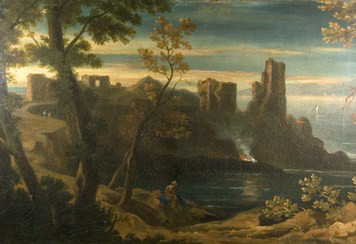
birthplace, Turnberry Castle


This is one of the ways I descend from the famous badass, Robert the Bruce:
Robert Bruce (1274 – 1329)
21st great-grandfather
Marjorie Bruce (1297 – 1316)
daughter of Robert Bruce
Robert II, King of Scotland, Stewart (1316 – 1390)
son of Marjorie Bruce
Robert Scotland Stewart (1337 – 1406)
son of Robert II, King of Scotland, Stewart
James I Scotland Stewart (1394 – 1434)
son of Robert Scotland Stewart
Joan Stewart (1428 – 1486)
daughter of James I Scotland Stewart
John Gordon (1450 – 1517)
son of Joan Stewart
Robert Lord Gordon (1475 – 1525)
son of John Gordon
Catherine Gordon (1497 – 1537)
daughter of Robert Lord Gordon
Lady Elizabeth Ashton (1524 – 1588)
daughter of Catherine Gordon
Capt Roger Dudley (1535 – 1585)
son of Lady Elizabeth Ashton
Gov Thomas Dudley (1576 – 1653)
son of Capt Roger Dudley
Anne Dudley (1612 – 1672)
daughter of Gov Thomas Dudley
John Bradstreet (1652 – 1718)
son of Anne Dudley
Mercy Bradstreet (1689 – 1725)
daughter of John Bradstreet
Caleb Hazen (1720 – 1777)
son of Mercy Bradstreet
Mercy Hazen (1747 – 1819)
daughter of Caleb Hazen
Martha Mead (1784 – 1860)
daughter of Mercy Hazen
Abner Morse (1808 – 1838)
son of Martha Mead
Daniel Rowland Morse (1838 – 1910)
son of Abner Morse
Jason A Morse (1862 – 1932)
son of Daniel Rowland Morse
Ernest Abner Morse (1890 – 1965)
son of Jason A Morse
Richard Arden Morse (1920 – 2004)
son of Ernest Abner Morse
Pamela Morse
I am the daughter of Richard Arden Morse
Robert The Bruce was born on 11 July 1274, probably in Turnberry Castle. He was descended from Scots, Gaelic and English nobility. His mother, Countess Marjorie of Carrick, was heir to a Gaelic earldom.
Robert’s grandfather, Robert Bruce ‘The Competitor’, was one of the claimants to the Scots throne. Bruce’s father, Robert de Brus of Annandale, fought in Wales for Edward I, was made governor of Carlisle Castle and fought on Edward’s side at the Battle of Dunbar in 1296. The Bruces refused to support John Balliol’s kingship and stayed close to Edward I. Balliol gave Bruce lands to the Comyns.
In 1298 Robert the Bruce became a guardian of Scotland alongside his great rival John ‘Red’ Comyn of Badenoch, and William Lamberton, Bishop of St Andrews. When Bruce and Comyn quarrelled Bruce resigned as guardian. In 1302 Bruce submitted to Edward I and returned ‘to the King’s peace’. Bruce married Elizabeth de Burgh.
Robert the Bruce’s father died in 1304. Bruce now had a viable claim to the throne. On 10 February 1306 Bruce met John Comyn of Badenoch at Greyfriars Kirk in Dumfries. A fight broke out, daggers were drawn and Bruce killed Red Comyn by the altar. The Pope excommunicated Bruce but Robert Wishart, Bishop of Glasgow, absolved him and made plans for Bruce to quickly take the throne. On 27 March 1306, Isobel of Fife, Countess of Buchan, crowned Bruce at Scone. His inauguration was small and hastily arranged but Robert Bruce was now King of Scots.
To Edward I the usurper King Robert was a rebel to be crushed. Edward’s reprisals were swift and brutal. Bruce was defeated at Methven. His wife, daughter and sisters were captured and imprisoned in England. Countess Isobel was locked in an iron cage at Berwick while Bruce’s brothers were hanged, drawn and beheaded. Bruce fled Edward’s wrath and spent a long winter hiding on the islands off the west coast and Ireland.
Bruce began a guerrilla war and struck at his enemies. His forces defeated Edward’s men at Glen Trool and Loudon Hill, then Edward I finally died in July 1307 – Bruce now faced Longshanks’ son, Edward II.
Bruce attacked his Scots enemies – destroying Comyn strongholds along the Great Glen and harrowing Buchan and the north east. His men cut a bloody swathe through Galloway and the south west.
One by one Scotland’s castles fell to Bruce and his supporters. Bruce had the castles ‘slighted’ – walls were torn down and defences were raised to the ground – the fortresses were made useless to an invading English army. As more castles fell more nobles pledged support to Bruce.
In 1314 Bruce watched Edward II’s army march toward Stirling Castle. Edward II had been given a year to relieve the besieged English force at Stirling or surrender the castle. Their forces met at the Battle of Bannockburn on 23 and 24 June 1314. Thousands died as the Scots defeated Edward’s army. The river was choked with the dead as Edward II fled the field and returned to England.
Bannockburn was not the end of Bruce’s struggle but it was a turning point. Captured English nobles were traded for his family and King Robert I gained international recognition. The Scots took the final English stronghold at Berwick in 1318 but Edward II still claimed overlordship of Scotland. Two years later the Scots sent a letter to the Pope – the Declaration of Arbroath – as part of an ongoing battle of words.
In 1327 Edward II was deposed by his Queen, Isabella. He was murdered in captivity. The English made peace with the Scots and renounced their claim of overlordship. The Black Rood, taken by Edward I, was returned to the Scots. It seemed that Bruce had finally won.
Robert the Bruce retired to Cardross near Dumbarton on the Firth of Clyde. He lived peacefully in a comfortable mansion house until his death on 7 June 1329. He asked that James Douglas take his heart on crusade. Bruce’s body was buried at Dunfermline Abbey, by his wife Elizabeth’s side, beneath an alabaster tomb. Bruce’s heart was finally buried at Melrose Abbey.
In the 1370s the Scots poet John Barbour wrote of Bruce, the hero-king, in ‘The Brus’.
Robert I, known as Robert the Bruce, was the king of the Scots who secured Scotland’s independence from England.
Here is another lineage:
Robert I “The Bruce” Bruce, King of Scotland (1274 – 1329)
21st great-grandfather
Margaret Bruce (1307 – 1346)
daughter of Robert I “The Bruce” Bruce, King of Scotland
John Glen (1349 – 1419)
son of Margaret Bruce
Isabel Glen (1380 – 1421)
daughter of John Glen
Isabel Ogilvie (1406 – 1484)
daughter of Isabel Glen
Elizabeth Kennedy (1434 – 1475)
daughter of Isabel Ogilvie
Isabella Vaus (1451 – 1510)
daughter of Elizabeth Kennedy
Marion Accarson (1478 – 1538)
daughter of Isabella Vaus
Catherine Gordon (1497 – 1537)
daughter of Marion Accarson
Lady Elizabeth Ashton (1524 – 1588)
daughter of Catherine Gordon
Capt Roger Dudley (1535 – 1585)
son of Lady Elizabeth Ashton
Gov Thomas Dudley (1576 – 1653)
son of Capt Roger Dudley
Anne Dudley (1612 – 1672)
daughter of Gov Thomas Dudley
John Bradstreet (1652 – 1718)
son of Anne Dudley
Mercy Bradstreet (1689 – 1725)
daughter of John Bradstreet
Caleb Hazen (1720 – 1777)
son of Mercy Bradstreet
Mercy Hazen (1747 – 1819)
daughter of Caleb Hazen
Martha Mead (1784 – 1860)
daughter of Mercy Hazen
Abner Morse (1808 – 1838)
son of Martha Mead
Daniel Rowland Morse (1838 – 1910)
son of Abner Morse
Jason A Morse (1862 – 1932)
son of Daniel Rowland Morse
Ernest Abner Morse (1890 – 1965)
son of Jason A Morse
Richard Arden Morse (1920 – 2004)
son of Ernest Abner Morse
Pamela Morse
I am the daughter of Richard Arden Morse
Both connect with Anne Dudley, my famous poet ancestor. One went through the Gordons for many generations, and the other went though the Kennedy family.
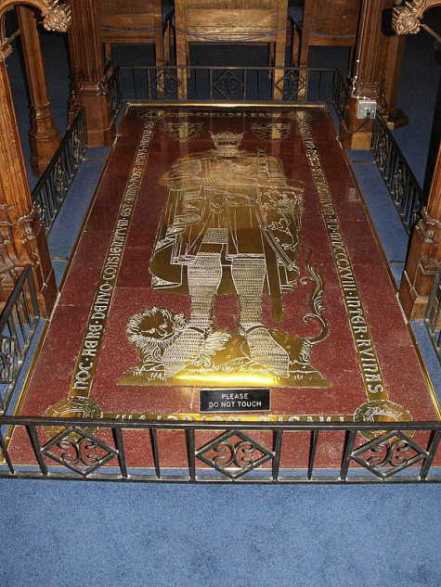
Robert’s grave
Robert was born on 11 July 1274 into an aristocratic Scottish family. Through his father he was distantly related to the Scottish royal family. His mother had Gaelic antecedents. Bruce’s grandfather was one of the claimants to the Scottish throne during a succession dispute in 1290 – 1292. The English king, Edward I, was asked to arbitrate and chose John Balliol to be king. Both Bruce and his father refused to back Balliol and supported Edward I’s invasion of Scotland in 1296 to force Balliol to abdicate. Edward then ruled Scotland as a province of England.
Bruce then supported William Wallace’s uprising against the English. After Wallace was defeated, Bruce’s lands were not confiscated and in 1298, Bruce became a guardian of Scotland, with John Comyn, Balliol’s nephew and Bruce’s greatest rival for the Scottish throne In 1306, Bruce quarrelled with Comyn and stabbed him in a church in Dumfries. He was outlawed by Edward and excommunicated by the pope. Bruce now proclaimed his right to the throne and on 27 March was crowned king at Scone. The following year, Bruce was deposed by Edward’s army and forced to flee. His wife and daughters were imprisoned and three of his brothers executed. Robert spent the winter on the island off the coast of Antrim (Northern Ireland).
Returning to Scotland, Robert waged a highly successful guerrilla war against the English. At the Battle of Bannockburn in June 1314, he defeated a much larger English army under Edward II, confirming the re-establishment of an independent Scottish monarchy. Two years later, his brother Edward Bruce was inaugurated as high king of Ireland but was killed in battle in 1318. Even after Bannockburn and the Scottish capture of Berwick in 1318, Edward II refused to give up his claim to the overlordship of Scotland. In 1320, the Scottish earls, barons and the ‘community of the realm’ sent a letter to Pope John XXII declaring that Robert was their rightful monarch. This was the ‘Declaration of Arbroath’ and it asserted the antiquity of the Scottish people and their monarchy.
Four years later, Robert received papal recognition as king of an independent Scotland. The Franco-Scottish alliance was renewed in the Treaty of Corbeil, by which the Scots were obliged to make war on England should hostilities break out between England and France. In 1327, the English deposed Edward II in favour of his son and peace was made with Scotland. This included a total renunciation of all English claims to superiority over Scotland. Robert died on 7 June 1329. He was buried at Dunfermline. He requested that his heart be taken to the Holy Land, but it only got as far as Spain. It was returned to Scotland and buried in Melrose Abbey.

President Donald Trump embraces several political stances important to his conservative evangelical base. This includes support for “religious liberty” legislation and exempting evangelicals from laws upholding lesbian, gay, transgender and bisexual rights. However, Trump does not demonstrate any of the beliefs that have historically characterized evangelicalism. Unlike the majority of American evangelicals, he does not…
via This 19th Century Movement Could Explain Donald Trump’s Faith — TIME


When Lawrence Washington and his twin brother Robert were born in 1568 in Sulgrave, Northamptonshire, England, their father, Robert, was 24, and their mother, Elizabeth, was 21. He married Lady Margaret Butler on August 3, 1588. Lady Margaret was heiress to a wool fortune. Her father helped Lawrence prosper in the wool trade and become a prominent citizen. He was mayor of Northhampton from 1532-1545, and acquired a manor house known as Sulgrave. Lawrence and Margaret has 17 children, 8 sons and 9 daughters. They married well and created an illustrious lineage, that includes George Washington, the first US president….and me. Lawrence died on December 13, 1616, at the age of 48. He is buried at St Mary the Virgin with St John Churchyard, Great Brington, Daventry District, Northamptonshire, England His plot: Grave is below a stone slab in the chancel of the church.
Lawrence Washington (1568 – 1616)
11th great-grandfather
Richard Washington (1592 – 1642)
son of Lawrence Washington
John Washington (1632 – 1677)
son of Richard Washington
Richard Washington (1660 – 1725)
son of John Washington
Elizabeth Washington (1689 – 1773)
daughter of Richard Washington
Elizabeth Lanier (1719 – 1795)
daughter of Elizabeth Washington
Martha Burch (1743 – 1803)
daughter of Elizabeth Lanier
David Darden (1770 – 1820)
son of Martha Burch
Minerva Truly Darden (1806 – 1837)
daughter of David Darden
Sarah E Hughes (1829 – 1911)
daughter of Minerva Truly Darden
Lucinda Jane Armer (1847 – 1939)
daughter of Sarah E Hughes
George Harvey Taylor (1884 – 1941)
son of Lucinda Jane Armer
Ruby Lee Taylor (1922 – 2008)
daughter of George Harvey Taylor
Pamela Morse
I am the daughter of Ruby Lee Taylor

Sulgrave Manor


The lunar year of the fire rooster begins today. In many parts of the world this is the most significant and superstitious time of the year. The lunar calendar was widely used around the world before Pope Gregory of the Roman Catholic Church had his way with time keeping, creating the solar Gregorian calendar in 1582. It has become the most widely used, but plenty of people are still on the lunar system. Jewish calendars and Asian calendars are lunar, as they have been forever. Countries varied greatly in adopting the system:
Adoption of Gregorian Calendar
1582: Spain, Portugal, France, Italy,
Catholic Low Countries, Luxemburg, and colonies
1610: Prussia 1700: ‘Germany’, Swiss Cantons, Protestant Low Countries, Norway, Denmark 1873: Japan 1912: China, Albania
1584: Kingdom of Bohemia 1648: Alsace 1752: Great Britain and colonies 1875: Egypt 1915: Latvia, Lithuania
1682: Strasbourg 1753: Sweden and Finland 1896: Korea 1916: Bulgaria
1918: USSR, Estonia
1919: Romania, Yugoslavia
1923: Greece
1926: Turkey
Greek and other Eastern orthodox churches celebrate Easter on the lunar calendar, which explains why it does not match the Roman Catholic date. When you look up your Chinese year on the placemat at the restaurant you may be in error because our western new year is never the same as the one in Asia. Ours is January 1 every year. Theirs falls between the end of January and the middle of February. The significance of the animal of the year is considered to be a big deal to those who celebrate this holiday. A change is expected in luck and finances, and much attention is given to enhancing both at this time. Gifts of currency with symbols and pictures of the animal are given to increase good fortune. Adjustments are made to the feng shui to make the most of the new energy that will flow. You may not personally believe that astrology or calendars have any significance, but a very large part of the world’s population does believe it. It can’t hurt to learn a little bit about it. This is a time to reinvent whatever needs to be changed.
The year of the cock is not expected to be the lucky year for those born under the sign of the rooster themselves. Their trademark weaknesses, boastfulness and vanity, will get them into more trouble than usual this year. Their active, talkative nature will cause problems. They will be challenged to put up or shut up, which is hard for them to handle. Everyone turning 60 this year is a fire rooster. They include famous fire Roosters Dawn French, Donny Osmond, Martin Luther King III, Stephen Fry, Hans Zimmer, Dolph Lundgren, and Jools Holland. This year the new moon in Aquarius begins the reign of the rooster over good luck and chance. I wish all my gentle readers a healthy, prosperous, and happy year. I appreciate your presence here.

waiting
Beneath the staircase of the palace, lurking silently in the dark
The master’s old Tudor dynasty armor stands guard as if alive
Little has changed in the basement rooms since jousting was the sport
The aristocrat concerns himself with wealth and status in the court
Royal drifters follow in the entourage of holy soldiers and servant slaves
In service of some magic majesty that never showed up when expected
We thought time would both heal wounds and protect us from the ravages of injustice
The clock of destiny has not been kind to the greedy crusaders
Marking time with the shattered bones of their broken glory
There are no knights left to tell the end of this frightening story
Their legacy has been buried, lost all meaning of chivalry and grace
The names fade fast in history’s book, vanishing without a trace
Don’t trust armor from an ancient time to protect you from the storm
It may be impenetrable and conductive, but it is anything but warm
The photo prompt comes from Sue Vincent’s blog and is used as inspiration for writing short fiction and poetry. Try your own hand if you like. Please visit Sue, or use the hashtag #writephoto on twitter to find other interpretations of this image. Thanks for visiting, gentle reader.

#writephoto
The Chinese tradition of the spring festival celebrates the new year for two weeks around 4 February each year. In 2017 the celebrations will begin 28 January with the first official day of the rooster year falling on the 3 February. There is a custom of making a wish then throwing it up into a ” wishing tree”. The wish to carry us through the year is similar to a resolution, but also resembles a letter to Santa. We can celebrate this cool custom in our own private ways. If planning the year at the start includes a fresh start in health, wealth, career, family, and community, what will your wish be? The rooster is a confident, well dressed and chivalrous. He will not back down in a fight. He is known to, in fact, go beyond reason to get his way. The cock wakes up crowing and does not hold back criticism and domineering attitude toward others. Feathers will fly during this year, and egos will be bruised. The rooster is the most misunderstood sign of the Chinese zodiac, a heroic Don Quixote, taking on windmills of gigantic proportions. I wish that during the cock year you will learn to do less, but do it with precision and passion. Cock-a-doodle-dooooooooo
Virginia Colony
My seventh great-grandmother’s grandfather was John Washington of Surry Co, VA. (See the Washington information from Louise Ingersoll’s book.) She inherited 200 acres of Surry Co. land from her father. That land was sold 2/19/1734. After Sampson died, she went into NC to live with her son James. On 22 Nov 1757 Edward Goodrich, Isaac Rowe Walton and John Maclin, gentlemen, laid off and assigned to Elizabeth Lanier, widow of Sampson Lanier, deceased her dower of said Sampson’s estate.
She remarried after Sampson died. Marriage bond, dated 23 July 1758 on file Brunswick Co, VA, shows Elizabeth Lanier,widow, marrying Cuthbert Smith, and an order dated
27 Feb 1759 appointed Cuthbert Smith guardian of Rebecca Lanier,orphan of Sampson Lanier, and an order dated 5 Sept 1759 appointing Lemuel Lanier as guardian for Burwell Lanier, Buckner Lanier, Winifred Lanier, Martha Lanier and Anne Lanier.
My seventh great-grandfather, Sampson Lanier, was born in 1681 and died in 1743.
Third son of John Lanier, Jr. born Charles City County 1681 (by deposition made in Surry Co. March 21, 1738), first appears in contemporary records as a “Tithable” in the upper end of Surry County above Stony Run in 1701. Richard Washington’s will leaves 200 acres of land to his daughter, Elizabeth, and leaves to his son-in-law, 200 acres lying in the Isle of Wight. Sampson Lanier sold this land which is now a part of Southhampton County; in February of 1734, Sampson
and Elizabeth Lanier sold the 200 acres of land given her by her father. They moved to Brunswick County before 1740. Sampson Lanier was a Justice, a Vestryman of St. Andrews, and, at one time, on the School Board. His will, dated 8 Jan. 1743, was proved on 5 May 1743. It lists their children as Thomas, Lemuel, Sampson, Richard, Elizabeth, and James. He married about 1706 in Surry, Elizabeth, daughter of Richard Washington (1660 Virginia – 1725 Virginia) & Elizabeth Jordan of Surry County, VA, and granddaughter of Major John Washington (born England 1632) of Surry County, VA. (See pp 40-41, Ingersoll.) She died in Pitt County, NC. Major John Washington was first cousin to Colonel John Washington of Westmoreland County, VA and was the Great Grandfather of George Washington, first President of the United States.
Elizabeth Washington (1689 – 1773)
7th great-grandmother
Elizabeth Lanier (1719 – 1795)
daughter of Elizabeth Washington
Martha Burch (1743 – 1803)
daughter of Elizabeth Lanier
David Darden (1770 – 1820)
son of Martha Burch
Minerva Truly Darden (1806 – 1837)
daughter of David Darden
Sarah E Hughes (1829 – 1911)
daughter of Minerva Truly Darden
Lucinda Jane Armer (1847 – 1939)
daughter of Sarah E Hughes
George Harvey Taylor (1884 – 1941)
son of Lucinda Jane Armer
Ruby Lee Taylor (1922 – 2008)
daughter of George Harvey Taylor
Pamela Morse
I am the daughter of Ruby Lee Taylor
Richard Washington’s will, dated November 9, 1724, leaves 200 acres of land to his daughter Elizabeth Lanier, “land where she now lives”; he leaves to his son-in-law, Sampson Lanier, 200 acres lying in the Isle of Wight. On March 23, 1732, Sampson Lanier sold the above 200 acres to the Vestry of Nottingham Parish, now Southampton County. On February 19, 1734, Sampson and Elizabeth Lanier sold the 200 acres of land given her by her father, and before 1740 they had moved to Brunswick County, Virginia. Sampson was a Justice, a Vestryman of St. Andrews, and at one time he was on the school board.
Sampson Lanier died about May 15, 1743 in Brunswick County, Virginia. Elizabeth died about 1773 in Pitt County, North Carolina.

Around daybreak the Leo Moon gets some love from Jupiter in Libra and a little over an hour later she makes her monthly trine to Saturn in Sagittarius before going void-of-course until this evening. The day does start off on an upbeat, energetic note and we may be inspired to plan all sorts of things […]
via Lazy VOC Leo Moon day ends with Moon bustling into Virgo 1-14-2017 — Libra Seeking Balance
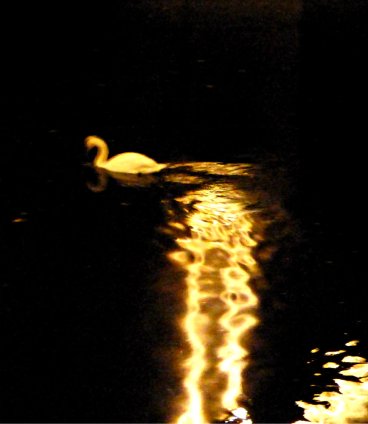
Ghost Swan
There is a ghost swan that appears on the eve of Robert Burn’s Day on the Loch above the ancient castle. The apparition sails across the water following the course of the boat that sailed from the shore in 1235 with a small band of rogue fighters. The land was under attack from the neighboring clan, and the family honor was in dire straights. Survival depended on their ability to take the foe in the middle of the night by stealth. They had little ammunition left to defend their home, and food supplies were dwindling. They were desperate and hungry for victory when they quietly shoved off from the muddy shore, rowing quietly through the night. They were in pitch black darkness, no light to guide their way. Cloudy moonless skies hung heavily with damp and deadly signs. They wished for a miracle.
As the clan gathered strength to cross the loch to meet their fate a white swan appeared before them. They perceived the bird as friendly, a guide and advisor for the battle to come. The glow from the swan created streams of light in the water in front of the rickety little boat. Reflecting in the light the vessel looked bigger than it was. The enemy was afraid of being outnumbered by the crew being lead by a magical swan. They were scared that the swan itself was a monster with powers to drown or burn them to death. They packed up quickly and ran for their lives, never to return. Peace was guaranteed by the fear of they had of the ghost swan.
People say when there is an appearance of the swan these days is a reminder to stand up for what is yours. It is a symbol of protection and self defense. Magic helps them that help themselves.
#writephoto
Please visit Sue Vincent’s blog to see more submissions, and maybe write one of your own. Thank you, Sue, for an excellent image with which to begin.

#WeekendCoffeeShare
If we were having coffee this weekend I would tell you my life is healthy and happy with few exceptions. I had a quiet week experimenting with historical fiction and multi camera live streaming on Facebook. I produced nothing of great artistic import, but have challenged myself to develop these skills in order to do so. I wrote one very undeveloped story in which I mixed some outrageous truths about my paternal great-grandfather with some embellishment I created. It was short and kind of silly, but I feel happy to have started down this path. I published it. I have studied my genealogy for a long time, and have many factual stories on which to base my future efforts. I believe in time I will write longer and more involved stories, but also have been reading and studying flash fiction. This burning hot brief format insists on an outstanding title, a perfect last line, and usually the events presented out of chronological order. I want to work up to that too. I started a bullet journal and joined a Facebook group on the subject. This calendar system is a brilliant way for me to incorporate my new writing styles into my regular blogging. I have much to learn from the Bu-Jo peeps, as they call themselves. They are inspiring and highly educational, much like the food preppers.
If you are here in Tucson at my home today I will invite you to drink a hot cup of coffee or tea of your choice. I had a big fire in the stove last night so the house is staying warm this morning. We have not had our first real freeze, so the flowers are still in bloom. Help yourself to fresh grapefruit juice from the giant crop I am harvesting in the garden this year. I am serving a large fruit salad with berries and watermelon. Enjoy our sunny day and some fresh fruit flavors while you tell me how your week has been. I so appreciate sharing this time will all of you on the weekends. In fact, many of my new efforts as a writer have been inspired by all of you. I love to learn about your writing studios, the writing challenges you accept, and the way you make it work with daily life. I admire the fiction writers and poets who tell stories from imagination. I also love to see the photography from your own environments. I get to travel without leaving my office. I look forward to your visits. You have encouraged and inspired me to transform and expand my writing skills. It reminds me of being in beginners’ ski school, where you see that everyone falls down, but with practice they get better. You fiction writers are like the intermediate skiers who make me want to be that good someday. Starting is key.
If you want to share some digital coffee and some relaxation with a group of writers go to Diana’s weekend party link. She holds this regular gathering of inspiring individuals from her home in New Orleans. Please join us to read, write, or comment on your week. Thank you all for stopping by today.
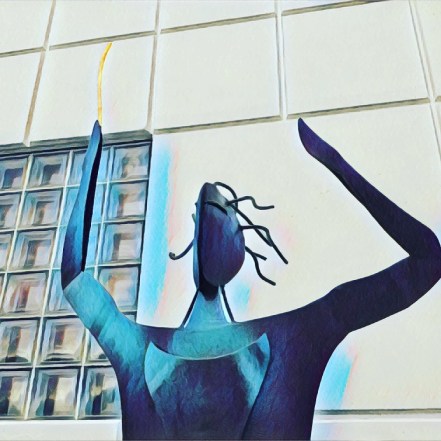
poet

