mermaidcamp
Keeping current in wellness, in and out of the water
You can scroll the shelf using ← and → keys
You can scroll the shelf using ← and → keys

Joan Fitzalan
My 18th paternal great-grandmother is also the ancestor of my famous poet, Anne Dudley Bradstreet. Her father was beheaded at the Tower of London by Richard II. I wonder if I have a record number of ancestors beheaded at the Tower. When Henry IV came to the throne Joan and her sisters were restored to wealth and power. Her sister Elizabeth is my mother’s ancestor, so this cozy castle was once home to both my bloodlines:

Arundel Castle
Joan Fitzalan (1360 – 1435)
is my 18th great grandmother
Joan Elizabeth Beauchamp (1396 – 1430)
daughter of Joan Fitzalan
Elizabeth Butler (1420 – 1473)
daughter of Joan Elizabeth Beauchamp
Isabel Talbot (1444 – 1531)
daughter of Elizabeth Butler
Sir Richard Ashton (1460 – 1549)
son of Isabel Talbot
Sir Christopher Ashton (1493 – 1519)
son of Sir Richard Ashton
Lady Elizabeth Ashton (1524 – 1588)
daughter of Sir Christopher Ashton
Capt Roger Dudley (1535 – 1585)
son of Lady Elizabeth Ashton
Gov Thomas Dudley (1576 – 1653)
son of Capt Roger Dudley
Anne Dudley (1612 – 1672)
daughter of Gov Thomas Dudley
John Bradstreet (1652 – 1718)
son of Anne Dudley
Mercy Bradstreet (1689 – 1725)
daughter of John Bradstreet
Caleb Hazen (1720 – 1777)
son of Mercy Bradstreet
Mercy Hazen (1747 – 1819)
daughter of Caleb Hazen
Martha Mead (1784 – 1860)
daughter of Mercy Hazen
Abner Morse (1808 – 1838)
son of Martha Mead
Daniel Rowland Morse (1838 – 1910)
son of Abner Morse
Jason A Morse (1862 – 1932)
son of Daniel Rowland Morse
Ernest Abner Morse (1890 – 1965)
son of Jason A Morse
Richard Arden Morse (1920 – 2004)
son of Ernest Abner Morse
Pamela Morse
I am the daughter of Richard Arden Morse
Joan FitzAlan, Baroness Bergavenny (1375 – 14 November 1435) was an English noblewoman, and the wife of William de Beauchamp, 1st Baron Bergavenny of the Welsh Marches.
Family and Lineage
Lady Joan FitzAlan was born in 1375, at Arundel Castle, Sussex, England, one of the seven children of Richard Fitzalan, 11th Earl of Arundel, Earl of Surrey, and his first wife Elizabeth de Bohun. Her only surviving brother was Thomas Fitzalan, 12th Earl of Arundel, of whom Joan was his co-heiress. She had an older sister Lady Elizabeth FitzAlan who married as her second husband Thomas Mowbray, 1st Duke of Norfolk. Her paternal grandparents were Richard Fitzalan, 10th Earl of Arundel and Eleanor of Lancaster, and her maternal grandparents were William de Bohun, 1st Earl of Northampton and Elizabeth de Badlesmere. On 3 April 1385, her mother died. Joan was about ten years old. Her father married secondly, Philippa Mortimer on 15 August 1390, by whom he had a son, John Fitzalan, who was born in 1394. John died sometime after 1397.
On 21 September 1397, Joan’s father, the Earl of Arundel, who was also one of the Lords Appellant, was beheaded on Tower Hill, London, on charges of high treason against King Richard II of England. The Earl had always enjoyed much popularity with the citizens of London. His titles and estates were forfeited to the Crown.
In October 1400, the new king Henry IV who had ascended the throne following Richard’s deposition in 1399, restored the titles and estates to Thomas Fitzalan, Joan’s brother. He became the 12th Earl of Arundel and Earl of Surrey. Although he married Beatrice, an illegitimate daughter of King John I of Portugal and Inez Perez Esteves, he died childless on 13 October 1415. The Earldom and castle of Arundel passed to a cousin John Fitzalan, 13th Earl of Arundel, the rest of his inheritance was divided among Joan and her two surviving sisters, Elizabeth and Margaret.
Marriage and Issue
On 23 July 1392, Joan was married to William de Beauchamp, 1st Baron Bergavenny (c.1344- 8 May 1411) the son of Thomas de Beauchamp, 11th Earl of Warwick and Katherine Mortimer. He was more than thirty years Joan’s senior.
The marriage produced a son and a daughter:
· Richard de Beauchamp, 1st Earl of Worcester, 2nd Baron Bergavenny (born before 1397- 1422), married Isabel le Despenser, daughter of Thomas le Despenser, 1st Earl of Gloucester and Constance of York, by whom he had one daughter Elizabeth de Beauchamp, Lady of Abergavenny.
· Joan de Beauchamp (1396- 3 August 1430), married on 28 August 1413 James Butler, 4th Earl of Ormond, son of James Butler, 3rd Earl of Ormond and Anne Welles, by whom she had five children, including Thomas Butler, 7th Earl of Ormond. Anne Boleyn and Mary Boleyn were notable descendants.
Joan FitzAlan died on 14 November 1435, at the age of sixty. She was buried in Black Friars, Hereford.
References
Charles Cawley,Medieval Lands, Earls of Arundel 1289–1580 (Fitzalan).
Thomas B. Costain,The Last Plantagenets, pages 196–201
thePeerage.com
Charles Cawley,Medieval Lands, Earls of Arundel 1289- 1580 (Fitzalan)

PA and Penn State Teach Fracking
My grandfathers both worked in the oil business, so my parents were very much in favor of petroleum as the way of the future. My father went to Oklahoma University and Penn State to study petroleum engineering. He later got his PHD at Texas A&M in computers (industrial engineering). He was a big deal in the oil business before and after his professional career. After serving as president of the World Petroleum Congress in the 60’s he went on a lecture tour he referred to as the extinguished (distinguished) lecture circuit. He was speculative and relied too much on his own beliefs when investing. This worked out well for them in the glory days of petroleum. They rode the wave of high dividends and capital gains. Their investments did very well.
At the end of his life my dad was seriously demented as well as invested in some wild speculative oil fields in Texas and New Mexico. I had always considered my parents’ finances to be a private matter, but I started to be concerned that they could be left broke as a result of my father’s wildcat mentality. Indeed, when I discovered how far he had gone into these non liquid investments I saw they could brake the bank any day. The first thing I tried was to legally sell all my father’s holdings in these oil fields for $10 to my erstwhile husband, who had persuaded my dad to go deeper into this stuff. When he refused to buy them I knew there was big trouble. I actually left the unmentionable one when I discovered how awful my parents position was in terms of risk. He was willing to financially abuse my parents, which was not a huge surprise, but it was the very last surprise I was willing to have. I went about getting my parents’ assets in trust, which required that my father own the oil folly on his own so none of us could inherit it. It was a legal hassle and expense, but it was accomplished. The week before my father died his lawyer had convinced the partners in Texas to let him off the legal hook. They signed documents to free him, and he instantly died. The documents had not yet been recorded in Texas when he expired. The drama was heavy, but the ending was the best I could have desired. My mom still had plenty of money to live and none of us had an obligation to spend big, risk everything in the oil business. Whew!!
My mom had a happy and easy end to her life. She died at home on Jan. 4, 2008. On that day oil hit $100 a barrel. We figured this was the sign for which she had waited because my parents had always wanted $100 oil. They believed that the price might fluctuate, but it would always go up, no matter what. They invested their lives, careers, and life savings into the big petroleum idea. We just celebrated my mother’s death day, and noticed that on Jan 4, 2015 oil had reached $50 a barrel. During the last 7 years the US has developed the ability to produce oil at around $50 a barrel. It costs the Saudis around $12 to produce a barrel. All price wars are intended to eliminate competition for the market. The Saudis say they can go $30 if they feel like it, and the whole world will have to follow. The benefits of this global price war go chiefly to the Chinese government. Hold back on those selfies with the low gas prices. There are consequences not yet discovered, and they are not all good.
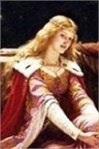
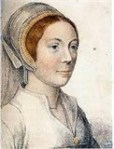
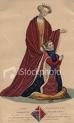
My 22nd great grandmother was born in Syria while her parents were on a crusade.
Joan Plantagenet (1272 – 1307)
is my 22nd great grandmother
Lady Margaret De Clare Baroness Audley (1292 – 1342)
daughter of Joan Plantagenet
Lady Alice De Audley Baroness Neville (1315 – 1373)
daughter of Lady Margaret De Clare Baroness Audley
Sir John ‘3rd Baron de Raby’ Neville, Admiral of the Kings Fleet (1341 – 1388)
son of Lady Alice De Audley Baroness Neville
Thomas De Neville (1362 – 1406)
son of Sir John ‘3rd Baron de Raby’ Neville, Admiral of the Kings Fleet
Maude de Neville (1392 – 1421)
daughter of Thomas De Neville
John Talbot (1413 – 1460)
son of Maude de Neville
Isabel Talbot (1444 – 1531)
daughter of John Talbot
Sir Richard Ashton (1460 – 1549)
son of Isabel Talbot
Sir Christopher Ashton (1493 – 1519)
son of Sir Richard Ashton
Lady Elizabeth Ashton (1524 – 1588)
daughter of Sir Christopher Ashton
Capt Roger Dudley (1535 – 1585)
son of Lady Elizabeth Ashton
Gov Thomas Dudley (1576 – 1653)
son of Capt Roger Dudley
Anne Dudley (1612 – 1672)
daughter of Gov Thomas Dudley
John Bradstreet (1652 – 1718)
son of Anne Dudley
Mercy Bradstreet (1689 – 1725)
daughter of John Bradstreet
Caleb Hazen (1720 – 1777)
son of Mercy Bradstreet
Mercy Hazen (1747 – 1819)
daughter of Caleb Hazen
Martha Mead (1784 – 1860)
daughter of Mercy Hazen
Abner Morse (1808 – 1838)
son of Martha Mead
Daniel Rowland Morse (1838 – 1910)
son of Abner Morse
Jason A Morse (1862 – 1932)
son of Daniel Rowland Morse
Ernest Abner Morse (1890 – 1965)
son of Jason A Morse
Richard Arden Morse (1920 – 2004)
son of Ernest Abner Morse
Pamela Morse
I am the daughter of Richard Arden Morse
Joan of Acre (April 1272 – 23 April 1307) was an English princess, a daughter of King Edward I of England and Queen Eleanor of Castile. The name “Acre” derives from her birthplace in the Holy Land while her parents were on a crusade.
She was married twice; her first husband was Gilbert de Clare, 7th Earl of Gloucester, one of the most powerful nobles in her father’s kingdom; her second husband was Ralph de Monthermer, a squire in her household whom she married in secret.
Joan is most notable for the claim that miracles have allegedly taken place at her grave, and for the multiple references to her in literature.
Birth and childhood
Joan (or Joanna, as she is sometimes called) of Acre was born in the spring of 1272 in Syria, while her parents, Edward I and Eleanor of Castile, were on crusade. At the time of Joan’s birth, her grandfather, Henry III, was still alive and thus her father was not yet king of England. Her parents departed from Acre shortly after her birth, traveling to Sicily and Spain before leaving Joan with Eleanor’s mother, Joan, Countess of Ponthieu, in France. Joan lived for several years in France where she spent her time being educated by a bishop and “being thoroughly spoiled by an indulgent grandmother.” Joan was free to play among the “vine clad hills and sunny vales” surrounding her grandmother’s home, although she required “judicious surveillance.”
As Joan was growing up with her grandmother, her father was back in England, already arranging marriages for his daughter. He hoped to gain both political power and more wealth with his daughter’s marriage, so he conducted the arrangement in a very “business like style”. He finally found a man suitable to marry Joan (aged 5 at the time), Hartman, son of King Rudoph I, of Germany. Edward then brought her home from France for the first time to meet him. As she had spent her entire life away from Edward and Eleanor, when she returned she “stood in no awe of her parents” and had a fairly distanced relationship with them.
Unfortunately for King Edward, his daughter’s suitor died before he was able to meet or marry Joan. The news reported that Hartman had fallen through a patch of shallow ice while “amusing himself in skating” while a letter sent to the King himself stated that Hartman had set out on a boat to visit his father amidst a terrible fog and the boat had smashed into a rock, drowning him.
First marriage
Edward arranged a second marriage almost immediately after the death of Hartman.[12] Gilbert de Clare, Earl of Gloucester, who was almost thirty years older than Joan and newly divorced, was his first choice. The earl resigned his lands to Edward upon agreeing to get them back when he married Joan, as well as agreed on a dower of two thousand silver marks.[14] By the time all of these negotiations were finished, Joan was twelve years old. Gilbert de Clare became very enamored with Joan, and even though she had to marry him regardless of how she felt, he still tried to woo her. He bought her expensive gifts and clothing to try to win favor with her. The couple were married on 30 April 1290 at Westminster Abbey, and had four children together. They were:
Gilbert de Clare, 7th Earl of Hertford
Eleanor de Clare
Margaret de Clare
Elizabeth de Clare
Joan’s first husband, Gilbert de Clare died on 7 December 1295.[18]
Secret second marriage
Joan had been a widow for only a little over a year when she caught the eye of Ralph de Monthermer, a squire in Joan’s father’s household. Joan fell in love and convinced her father to have Monthermer knighted. It was unheard of in European royalty for a noble lady to even converse with a man who had not won or acquired importance in the household. However, in January 1297 Joan secretly married Ralph. Joan’s father was already planning another marriage for Joan to Amadeus V, Count of Savoy, to occur 16 March 1297. Joan was in a dangerous predicament, as she was already married, unbeknownst to her father.
Joan sent her four young children to their grandfather, in hopes that their sweetness would win Edward’s favor, but her plan did not work. The king soon discovered his daughter’s intentions, but not yet aware that she had already committed to them, he seized Joan’s lands and continued to arrange her marriage to Amadeus of Savoy. Soon after the seizure of her lands, Joan told her father of that she had married Ralph. The king was enraged and retaliated by immediately imprisoning Monthermer at Bristol Castle. The people of the land had differing opinions on the princess’ matter. It has been argued that the ones who were most upset were those who wanted Joan’s hand in marriage.
With regard to the matter, Joan famously said, “It is not considered ignominious, nor disgraceful for a great earl to take a poor and mean woman to wife; neither, on the other hand, is it worthy of blame, or too difficult a thing for a countess to promote to honor a gallant youth.” Joan’s statement in addition to a possibly obvious pregnancy seemed to soften Edward’s attitude towards the situation. Joan’s first child by Monthermer was born in October 1297; by the summer of 1297, when the marriage was revealed to Edward I, Joan’s condition would certainly have been apparent, and would have convinced Edward that he had no choice but to recognize his daughter’s marriage. Edward I eventually relented for the sake of his daughter and released Monthermer from prison in August 1297.[17] Monthermer paid homage 2 August, and being granted the titles of Earl of Gloucester and Earl of Hertford, he rose to favour with the King during Joan’s lifetime.
Monthermer and Joan had four children:
Mary de Monthermer, born October 1297. In 1306 her grandfather King Edward I arranged for her to wed Duncan Macduff, 8th Earl of Fife. (Ancestor of Harry S Truman, 33rd President of the USA).
Joan de Monthermer, born 1299, became a nun at Amesbury.
Thomas de Monthermer, 2nd Baron Monthermer, born 1301.
Edward de Monthermer, born 1304 and died 1339.
Relationship with family
Joan of Acre was the seventh of Edward I and Eleanor’s fourteen children. Most of her older siblings died before the age of seven, and many of her younger siblings died before adulthood. Those who survived to adulthood were Joan, her younger brother, Edward of Caernarfon (later Edward II), and four of her sisters: Eleanor, Margaret, Mary, and Elizabeth.
Joan, like her siblings, was raised outside her parents’ household. She lived with her grandmother in Ponthieu for four years, and was then entrusted to the same caregivers who looked after her siblings. Edward I did not have a close relationship with most of his children while they were growing up, yet “he seemed fonder of his daughters than his sons.”
However, Joan of Acre’s independent nature caused numerous conflicts with her father. Her father disapproved of her leaving court after her marriage to the Earl of Gloucester, and in turn “seized seven robes that had been made for her.” He also strongly disapproved of her second marriage to Ralph de Monthermer, a squire in her household, even to the point of attempting to force her to marry someone else. While Edward ultimately developed a cordial relationship with Monthermer, even giving him the title of Earl, there appears to have been a notable difference in the Edward’s treatment of Joan as compared to the treatment of the rest of her siblings. For instance, her father famously paid messengers substantially when they brought news of the birth of grandchildren, but did not do this upon birth of Joan’s daughter.
In terms of her siblings, Joan kept a fairly tight bond. She and Monthermer both maintained a close relationship with her brother, Edward II, which was maintained through letters. After Edward II became estranged from his parents and lost his royal seal, “Joan offered to lend him her seal” .
Death
Joan of Acre died on 23 April 1307, at the manor of Clare in Suffolk. The cause of her death remains unclear, though one popular theory is that she died during childbirth, a common cause of death at the time. While Joan’s age in 1307 (about 35) and the chronology of her earlier pregnancies with Ralph de Monthermer suggest that this could well be the case, historians have not confirmed the cause of her death.
Less than four months after her death, Joan’s father, Edward I died. Joan’s widower, Ralph de Monthermer, lost the title of Earl of Gloucester soon after the deaths of his wife and father-in-law. The earldom of Gloucester was given to Joan’s son from her first marriage, Gilbert, who was its rightful holder. Monthermer continued to hold a nominal earldom in Scotland, which had been conferred on him by Edward I, until his death.
Joan’s burial place has been the cause of some interest and debate. She is interred in the Augustinian priory at Clare, which had been founded by her first husband’s ancestors and where many of them were also buried. Allegedly, in 1357, Joan’s daughter, Elizabeth De Burgh, claimed to have “inspected her mother’s body and found the corpse to be intact which in the eyes of the Roman Catholic Church is an indication of sanctity. This claim was only recorded in a fifteenth-century chronicle, however, and its details are uncertain, especially the statement that her corpse was in such a state of preservation that “when her paps [breasts] were pressed with hands, they rose up again.” Some sources further claim that miracles took place at Joan’s tomb, but no cause for her beatification or canonization has ever been introduced.
Joan in fiction
Joan of Acre makes an appearance in Virginia Henley’s historical romance, entitled Infamous. In the book, Joan, known as Joanna, is described as a promiscuous young princess, vain, shallow and spoiled. In the novel she is only given one daughter, when she historically has eight children. There is no evidence that supports this picture of Joan.
In The Love Knot by Vanessa Alexander, Edward the II’s sister, Joan of Acre is an important heroine. The author portrays a completely different view of the princess than the one in Henley’s novel. The Love Knot tells the story of the love affair between Ralph de Monthermer and Joan of Acre through the discovery of a series of letters the two had written to each other.
Between historians and novelists, Joan has appeared in various texts as either an independent and spirited woman or a spoiled brat. In Lives of the Princesses of England by Mary Anne Everett Green, Joan is portrayed as a “giddy princess” and neglectful mother. Many have agreed to this characterization; however, some authors think there is little evidence to support the assumption that Joan of Acre was a neglectful or uncaring mother.

Dorset Coat of Arms
Robert Sackville, 2nd Earl of Dorset, served in the House of Commons. Like the Downton Abbey family, the Sackvilles have two last names..Dorset is the name for the Earldom and Sackville is the family name. It is confusing, but the entire peer business is hard to understand. This family was heavily entwined with royalty at a dangerous time to be so. His wife was suspected of being crypto-Catholic, a very highly punishable offense in Tudor times. She survived by hiding her religion.
Robert Dorset (1525 – 1609)
is my 13th great grandfather
Lady Ann Dorset (1552 – 1680)
daughter of Robert Dorset
Robert Lewis (1574 – 1645)
son of Lady Ann Dorset
Robert Lewis (1607 – 1644)
son of Robert Lewis
Ann Lewis (1633 – 1686)
daughter of Robert Lewis
Joshua Morse (1669 – 1753)
son of Ann Lewis
Joseph Morse (1692 – 1759)
son of Joshua Morse
Joseph Morse (1721 – 1776)
son of Joseph Morse
Joseph Morse III (1752 – 1835)
son of Joseph Morse
John Henry Morse (1775 – 1864)
son of Joseph Morse III
Abner Morse (1808 – 1838)
son of John Henry Morse
Daniel Rowland Morse (1838 – 1910)
son of Abner Morse
Jason A Morse (1862 – 1932)
son of Daniel Rowland Morse
Ernest Abner Morse (1890 – 1965)
son of Jason A Morse
Richard Arden Morse (1920 – 2004)
son of Ernest Abner Morse
Pamela Morse
I am the daughter of Richard Arden Morse
Robert Sackville, 2nd Earl of Dorset (1561–1609) was an English aristocrat and politician, with humanist and commercial interests.
Life
He was the eldest son of Thomas Sackville, 1st Earl of Dorset, by Cecily, daughter of Sir John Baker. His grandfather, Sir Richard Sackville, invited Roger Ascham to educate Robert with his own son, an incident inn 1563 that Ascham introduced into his pedagogic work The Scholemaster (1570) as prompting the book. He matriculated from Hart Hall, Oxford, 17 December 1576, and graduated B.A. and M.A. on 3 June 1579; it appears from his father’s will that he was also at New College.
He was admitted to the Inner Temple in 1580 but not called to the bar, and was elected to the House of Commons in 1585 as member for Sussex, aged 23, by his father’s influence. In 1588 he sat for Lewes, but represented the county again in 1592–3, 1597–8, 1601, and 1604–8. He was a prominent member of the Commons, serving as a chairman of several committees. At the same time he engaged in trading ventures, and held a patent for the supply of ordnance.
He succeeded to the earldom of Dorset on the death of his father on 19 April 1608. He inherited from his father manors in Sussex, Essex, Kent, and Middlesex, the principal seats being Knole and Buckhurst. Dorset survived his father less than a year, dying on 27 February 1609 at Dorset House, Fleet Street, London. He was buried in the Sackville Chapel at Withyham, Sussex, and left money for the building and endowment of Sackville College.
Family
Dorset married first, in February 1580, Lady Margaret, only daughter of Thomas Howard, 4th Duke of Norfolk, then suspected as a crypto-Catholic. By her he had six children, including:
Richard who became third earl;
Edward, fourth earl;
Anne, married Sir Edward Seymour, eldest son of Edward Seymour, Viscount Beauchamp,
Cecily, married Sir Henry Compton, K.B.
Lady Margaret, in fact a devout Catholic, died on 19 August 1591; Robert Southwell, who never met her, published in her honour, in 1596, Triumphs over Death, with dedicatory verses to her surviving children.
Dorset married, secondly, on 4 December 1592, Anne (d. 22 September 1618), daughter of Sir John Spencer of Althorp, and widow of, first, William Stanley, 3rd Baron Monteagle, and, secondly, Henry Compton, 1st Baron Compton. In 1608–9 Dorset found reason to complain of his second wife’s misconduct, and was negotiating with Archbishop Richard Bancroft and Lord Ellesmere for a separation from her when he died.
Notes
^ Lawrence V. Ryan, Roger Ascham (1963), pp. 252–3.
^ J. E. Neale, The Elizabethan House of Commons (1963), p. 63 and p. 293.
^ Scott R. Pilarz, Robert Southwell and the Mission of Literature, 1561-1595 (2004), p. 204.
Attribution
This article incorporates text from the entry Sackville, Robert in the Dictionary of National Biography (1885–1900), a publication now in the public domain.
Political officesPreceded by
The Earl of NottinghamThe Earl of NorthumberlandLord Lieutenant of Sussex
1608–1609Vacant
Title next held by
The 3rd Earl of DorsetPeerage of EnglandPreceded by
Thomas Sackville Earl of Dorset
1608–1609Succeeded by
Richard Sackville

John Vowell Hooker
John Hooker, John Hoker or John Vowell (c. 1527–1601) was an English writer, solicitor, antiquary, civic administrator and advocate of republican government. He wrote an eye-witness account of the siege of Exeter that took place during the Prayer Book Rebellion in 1549. From 1555 to his death he was chamberlain of that city, though he spent several years in Ireland as legal adviser to Sir Peter Carew during his claim to lands there. He was, for short periods, a member of both the Irish and English parliaments and wrote an influential treatise on parliamentary procedure. He was one of the editors of the second edition of Raphael Holinshed’s Chronicles, published in 1587. His last, unpublished and probably uncompleted work was the first topographical description of the county of Devon.
John Vowell Hooker (1526 – 1601)
is my 11th great grandfather
Mary Hooker (1567 – 1617)
daughter of John Vowell Hooker
John (Dr) Greene (1597 – 1659)
son of Mary Hooker
Mary Greene (1633 – 1686)
daughter of John (Dr) Greene
Benoni Sweet (1663 – 1751)
son of Mary Greene
Dr. James Sweet (1686 – 1751)
son of Benoni Sweet
Thomas Sweet (1732 – 1813)
son of Dr. James Sweet
Thomas Sweet (1759 – 1844)
son of Thomas Sweet
Valentine Sweet (1791 – 1858)
son of Thomas Sweet
Sarah LaVina Sweet (1840 – 1923)
daughter of Valentine Sweet
Jason A Morse (1862 – 1932)
son of Sarah LaVina Sweet
Ernest Abner Morse (1890 – 1965)
son of Jason A Morse
Richard Arden Morse (1920 – 2004)
son of Ernest Abner Morse
Pamela Morse
I am the daughter of Richard Arden Morse
Hooker was born at Bourbridge Hall in Exeter, Devon, England. He was the second son of Robert Vowell or Hooker and Agnes Doble, his third wife. The Vowell family had acquired the name Hooker in the 15th century, but usually retained the earlier name; in fact John Hooker was known as John Vowell for much of his life. By the time he was born the family had been prominent in Exeter for several generations. Hooker received an excellent classical education, reading Roman law at Oxford followed by a period in Europe studying with leading Protestant divines, notably Pietro Martire Vermigli.
In the 1540s he married Martha, daughter of Robert Tucker of Exeter and they had three sons and two daughters. By 1586, Martha had died and he had married Anastryce (c. 1540–1599), daughter of Edward Bridgeman of Exeter. They had seven sons and five daughters. In later life his health failed and he died in Exeter some time between 26 January and 15 September in 1601 and was probably buried in the cathedral. He was the uncle of Richard Hooker, the influential Anglican theologian.
“
[I denounce those who chose] to supporte the authoritie of the Idoll of Rome whome they never sawe in contempte of their trewe & lawfull kinge, whom they knewe and oughte to obeye.
”
— Hooker, on the siege of Exeter, in The description of the citie of Excester, 1.67
During the Prayer Book Rebellion in 1549 he experienced at first hand the siege of Exeter, leaving a vivid account of its events in which he made no effort to conceal his religious sympathies. From 1551 to 1553 he was employed by Myles Coverdale during his short incumbency as Bishop of Exeter; and then in 1555 he became the first chamberlain of Exeter, a post that he held until his death.
As chamberlain he was responsible for the city’s finances, he dealt with disputes between guilds and merchants, oversaw the rebuilding of the high school, planted many trees in the city, and collected and put in order the city’s archives. He used these archives to compile his “Annals” of the City in which he details the characteristics of every Tudor mayor of Exeter, and in 1578 he also wrote and published The Lives of the Bishops of Exeter. In 1570/71 he was the MP for Exeter.
At a time when it was deemed essential for cities and nations to have ancient lineage, Hooker described the foundation of Exeter by Corinaeus, nephew of Brutus of Britain, son of Aeneas. He advocated emulating the governmental institutions of the Roman Republic which, in his opinion, brought Rome to greatness, and held the municipal government of Exeter up as a model republican commonwealth worthy of emulation.
Ireland
In 1568, possibly because he regarded himself as underpaid for the work he was doing for the city, Hooker was persuaded by Sir Peter Carew to go with him to Ireland to be his legal adviser. He also organised Carew’s papers in support of his claim for the barony of Idrone, a task to which he committed himself so deeply that in 1569 he was returned to the Irish parliament as member for Athenry. Hooker later wrote a biography of Carew, The dyscourse and dyscoverye of the lyffe of Sir Peter Carew, in which he almost certainly understated the deceit and aggression behind Carew’s Irish venture.
Until Carew’s death in 1575, Hooker spent much time in Ireland, but he had also been returned to the English parliament in 1571 as one of the burgessesof Exeter. The session had only lasted a few weeks, but he kept a journal in which he accurately recorded the proceedings. His experiences in the Irish and English parliaments led him to write a treatise on parliamentary practice, The Order and Usage how to Keepe a Parlement in England, which was published in two editions in 1572. One edition had a preface addressed to William FitzWilliam, the Lord Deputy of Ireland and was clearly intended to bring order to the Irish assembly; the other was addressed to the Exeter city authorities, presumably to aid his successor burgesses. In writing his treatise Hooker took much inspiration from the Modus Tenendi Parliamentum, a treatise from the early 14th century.
In 1586 Hooker again represented Exeter in parliament. At this time he was one of the editors of the second edition of Raphael Holinshed’s Chronicles, which was published in 1587. Hooker’s Order and Usage was included and he contributed an updated history of Ireland, including parts of his Life of Carew and a translation of Expugnatio Hibernica (“Conquest of Ireland”) by Gerald of Wales. In his Irish section he again made his religious and political sympathies very clear, repeatedly denouncing the Catholicism of the native Irish, seeing it as the cause both of their poverty and rebelliousness. Rome, he wrote, is “the pestilent hydra” and the pope “the sonne of sathan, and the manne of sinne, and the enimie unto the crosse of Christ, whose bloodthirstiness will never be quenched”.
Later life
“
a verye ancient towne … and maye be equall with some cities for it is the cheffe emporium of that countrie and most inhabited with merchantes whose cheffest trade in tyme of peace was with Spayne … it is a clene and sweete towne, very well paved…
”
— Hooker, on Barnstaple, in Synopsis Corographical, 261-262
Hooker continued to serve Exeter in his later years, becoming coroner in 1583 and recorder in 1590. He was also appointed as steward of Bradninch by Sir Walter Raleigh in 1587.[1] By this time he was involved in the long task of organising and writing his historically-based description of his home county that he called Synopsis Corographical of the county of Devon. He probably started work on this before his friend Richard Carew began writing his similar Survey of Cornwall.[2]In writing his Synopsis, Hooker was influenced by the style and structure of William Harrison’sDescription of England, which had been published in 1577 as part of the first edition of Holinshed’sChronicles.[1]
Although Hooker revised Synopsis many times, he probably never completed it to his satisfaction. The work exists today as two almost identical manuscripts which were used as source material for many later topographical descriptions of the county: Thomas Westcote’s Survey of Devon of 1630, and Tristram Risdon’s Chorographical Description or Survey of the County of Devon (c. 1632) are examples.
Works
Orders Enacted for Orphans and for their Portions within the Citie of Exeter, London, 1575
The Antique Description and Account of the City of Exeter: In Three Parts, All Written Purely by John Vowell, Alias Hoker
The order and usage of the keepingng of a parlement in England, 1572
A pamphlet of the offices and duties of everie particular sworned officer of the citie of Excester (sic) 1584
The Life and Times of Sir Peter Carew
We all have shadow elements in our personalities. The attributes that reside in our blind side are clear to others but never to ourselves. Nations have not only espionage in the dark, but also shadow aspects of culture, hidden from the national personality. This explains why nationalism often leads to irrational pride as well as prejudice against people we do not know. We learned about torture by the CIA and without examination of the facts most Americans decided it was okay under the circumstances. What is so odd about that is they knew nothing about the circumstances. When the news broke that Cuba and the US would begin to talk about resuming relations, many Americans recoiled in horror because they don’t understand what the status quo entails. Nobody else in the world has an embargo against Cuba, and the US dollar is the official currency of the island. They make lots of money from tourism, including from plenty of Americans who travel on flights through Mexico, or on their big fat yachts. There is nothing to loose by resuming a diplomatic relationship, and much to gain.
I went to Havana through Miami in about 1995. I bought my package through a tour agency but did not apply for a special visa. I went to the airport and was allowed to board the plane with the Cubans from Miami who had permission in those days to visit a couple of times a year. There was a grand inquisition at the Miami airport and the CIA busted some people in the holding room who had money..more cash than was permitted. Dogs were brought in and detected the extra currency. I had a ticket but no specific study agenda in Cuba. The immigration officer at Miami international asked me what I was going to do in Cuba. I responded that I planned to study dance. I produced a tiny slip of note paper with my teacher’s address in Havana. He asked where I had met her. I told him in a dance workshop in Tucson. He turned to the dozen or so CIA dudes there and said, “If you believe her, she can go”. I went!! The Cubans on the flight were quite amazed that I made it on the flight. I was the last one out of the Havana airport because I was not carrying a “gusano”, a giant duffle bag full of goods, which are taxed by Cuba. They were puzzled when I told them I did not know anyone in Cuba and would not give away my things. I flew back to Miami with nothing at all. I gave away all my clothes, toothpaste, pens, and the suitcase itself.
I spent 4 days, and visited both my dance teacher and the family of a Cuban friend of mine. She gave me cash and asked me to take them out to a fancy dinner. It was all arranged at the buffet in my hotel. Only foreign tourists are allowed in the hotels. Since I had invited them, they had the rare privilege to experience the tourist facilities in their own city. They dressed up heavily and came at all hours of the day to see me. Since we were sitting in the lobby or in the dining room I had no problems with the staff. When I asked about bringing my dance teacher to the pool for a swimming lesson, that was quite another matter. The pool staff and the housekeeper in my room told me I would NEVER get a Cuban into that pool. This housekeeper had been invited by her own aunt, who was a hotel guest visiting from Spain, but was not permitted to sit poolside. I took this as a challenge, and convinced the concierge that it would be too embarrassing for me to retract the swim invitation I had already made to my friend. I whipped out the Spanish word pena, and wallowed in it. The argument took a while, but eventually I wore her down and was given a special permission to borrow a kick board for the use of a Cuban in the hotel pool. We had our lesson with many hotel staff members looking on in both shock and admiration. I won my personal little social revolution in the pool, and felt very satisfied.
I learned a lot while I was there. Since that time much has changed, and is obviously soon will change more rapidly. What struck me about the Cuban people was their resourcefulness and affection for life. They are the kings cariño, and the soul musicians and dancers of the Caribbean. They cook, they laugh, they party, they dance, in seriously limited circumstances. They accept the fact that their revolution has resulted in repression and dictatorship, and yet they still have pride in that revolution. They suffer from economic problems we do not imagine, and respond with creativity. I thought when I went that the relations between our countries would be resolved soon. Then Elian Gonzalez came to Miami in 2003, and was deported back to Cuba. Laws changed, visiting rights were withdrawn, and we slipped into another decade of the same separatist policy. I am not sure I will go to Cuba again, but do recommend it for anyone interested in music, architecture or tropical culture. There is no need for us to remain clueless about Cuba. There is much to learn about the rise and fall of communism. While we were busy being excessive about capitalism, they were busy with their communist revolution. The results vary, gentle readers. Neither communism nor capitalism has yielded such fabulous peace on earth. Let’s get over our ancient political categories to examine the potential for good. This deal was brokered by the cutest Pope in the Vatican, my man Francis. I am pleased that higher logic is being used to resolve this issue.

unique bloom
The way you do one thing is the way you do everything. This is the theory that detectives use when they construct a modus operandi for criminals they want to catch and crimes that may be linked. In business it is helpful to know the M.O. of your customers or clients in order to better serve them. This way of observing things applies to politics and daily life just as much as it does to business and law enforcement. In our world today it is often necessary to construct a modus vivendi between individuals or groups just to survive. The U.S Congress is engaged in just such a desperate way of doing business. We look at big institutions and see these conflicts but rarely do we bring it down to a personal scale. How do I know what my own M.O. is? How do others perceive my communication? Do I poison the conversation with preconceived notions?
Normally we start be assuming we are right and entitled to our opinion. In conflict, however, both sides usually reveal some irrational thinking that arises from prejudice. If we bring some reflection to the subject beliefs often cloud all evidence to the contrary. We may not be able to start from the position that we might be wrong, but by asking some simple questions we may discover our own ulterior motives and intellectual weakness.
Each of us has a unique way of doing business, and patterns are engrained in all of us. We could all do with less mendacity and obstruction in our lives. To do that we have to identify the ways we create that obstruction through our thoughts words and deeds. Look within, Gentle Readers. You are your own answer.

unique bloom

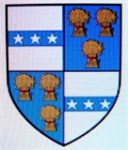
My 20th great grandmother was born in Scotland and married Sir Adam Mure. She gave birth to her daughter, Elizabeth, who became queen of Scotland, at Rowallan Castle.

Rowallan Castle
The surname of MURE was derived from the Old French word ‘more’ – a nickname given to one with a swarthy complexion. The name was brought into England in the wake of the Norman Conquest of 1066. There are also places of the name in Cheshire, from which the name may have been derived. Early records of the name mention Johannes filius More, 1185 County Kent. More Kalendrer was documented in County Surrey in 1332, and Thomas Mor was recorded in the year 1340
Elizabeth Mure, daughter of Sir Adam Mure of Rowallan, became Queen of King Robert 11 in 1347. Alicia del More of Yorkshire was listed in the Yorkshire Poll Tax of 1379. Henry More married Alice Simpson in London in the year of 1578. Francis Moore (1656-1715) was an Astrolger and quack physician. He advertised his pills by publishing an almanac, forecasting the weather. George Moore (1852-1933) was the Irish novelist, the author of Esther Water, The Brook of Kerith, Heloise and Abelard. The name was taken to Ireland at an early date, and is one of the twenty most popular names in Ireland. Of the several thousand Moore families, some are of settler descent, their forebears being immigrants from England, who have come to Ireland in considerable numbers over the centuries since the Anglo-Norman invasion.
Lady Joanna Danzielstour, Baroness More of Rowallan (1275 – 1330)
is my 20th great grandmother
Elizabeth Mure (1320 – 1355)
daughter of Lady Joanna Danzielstour, Baroness More of Rowallan
Robert Scotland Stewart (1337 – 1406)
son of Elizabeth Mure
James I Scotland Stewart (1394 – 1434)
son of Robert Scotland Stewart
Joan Stewart (1428 – 1486)
daughter of James I Scotland Stewart
John Gordon (1450 – 1517)
son of Joan Stewart
Robert Lord Gordon (1475 – 1525)
son of John Gordon
Catherine Gordon (1497 – 1537)
daughter of Robert Lord Gordon
Lady Elizabeth Ashton (1524 – 1588)
daughter of Catherine Gordon
Capt Roger Dudley (1535 – 1585)
son of Lady Elizabeth Ashton
Gov Thomas Dudley (1576 – 1653)
son of Capt Roger Dudley
Anne Dudley (1612 – 1672)
daughter of Gov Thomas Dudley
John Bradstreet (1652 – 1718)
son of Anne Dudley
Mercy Bradstreet (1689 – 1725)
daughter of John Bradstreet
Caleb Hazen (1720 – 1777)
son of Mercy Bradstreet
Mercy Hazen (1747 – 1819)
daughter of Caleb Hazen
Martha Mead (1784 – 1860)
daughter of Mercy Hazen
Abner Morse (1808 – 1838)
son of Martha Mead
Daniel Rowland Morse (1838 – 1910)
son of Abner Morse
Jason A Morse (1862 – 1932)
son of Daniel Rowland Morse
Ernest Abner Morse (1890 – 1965)
son of Jason A Morse
Richard Arden Morse (1920 – 2004)
son of Ernest Abner Morse
Pamela Morse
I am the daughter of Richard Arden Morse
https://twitter.com/jasonjross/status/540250505256005632
While protests on American streets continue a new protest movement is taking place on twitter. White people are discussing white privilege as experienced by them. It captures the other side of the policing story from the point of view of the beneficiaries of a highly prejudiced system. I think most of us know being white is an advantage, but we are not aware of how much of a boon it is to white criminals. Equal protection under the law, if it were to be equal, would extend all the way from safe, secure protected living environments for all to criminal justice that deals out fair and equal sentencing. If you take a look at this trending hashtag you will see some shocking examples of system failure.
I am white to the WASPiest extreme. See my super Brit ancestors to validate my whiteness. I live my life in such a way as to avoid all contact with doctors, lawyers, and police. I have been highly successful with this plan, in part because I am white. I have no crimes to report, pre se, except that I was an undocumented worker in Tecate, Baja California, Mexico, off and on for many years. As a wetback gringa all privilege and courtesy was bestowed on me by the migra on both sides of the border. There was never any problem. I have not crossed the border since 2003 because things just became too complicated after 2001. The era of the #WetbackGringa, wild and free, became a thing of the past.
I think the #CrimingWhileWhite phenomena comes from unconscious prejudice embedded in our culture. I don’t think there is willful or criminal intent by police to treat citizens by different standards. That is why the grand jury is able to rule that there is no probable cause to try the cops who ended lives while on duty. These preferences, or assumptions that white people are not threatening society, are not consciously accepted by the individuals dealing out the uneven justice and protection. Systemic privilege as well as systemic prejudice exist in the collective beliefs of a culture. Just as people have shadow qualities of which they are unaware, so do institutions. Institutional shadow qualities are even harder to nail because there is no institutional Jungian shrink to assist the patient in seeing its whole being. The very nature of shadow prejudice is to hide and stay hidden because nobody wants to believe we are acting from such base instincts. I have been a petroleum princess in Venezuela and a wetback gringa in Mexico. I can tell you from experience the only thing better than being a white woman is being a bilingual blonde white woman. We are automatically above suspicion and nobody ever suspects we understand Spanish, so they say anything in front of us, assuming we will not know what they are saying. Have you ever had an experience of white supremacy or privilege, gentle reader?
America has major authority issues. If we look at law enforcement as a human body with a single anatomy we see ailing, weak systems. Eric Holder is the lame duck head of the brain of the body. He will leave office without prosecuting bankers who drove the country over the financial edge with gambling and mendacity. The next US Attorney General will serve for a couple of years and then we presume another will be appointed by the next president. The brain function at a national level seems fuzzy if not corrupt. Balance is impaired as a result. The core strength seems very weak and lacking integrity. The voice is breaking as it speaks. We do not trust people in authority to tell the truth or follow a code of ethics. We rely on the institutions of law enforcement and justice, but do not believe they are functional. This is a highly unsustainable situation. I live in the state of Arizona, famous for making our own immigration laws. We are also famous for Joe Arpaio, the Maricopa County Sheriff who loves to defy the Feds. The Tucson sector of the US border, named for my home city, is responsible for a high volume of traffic in smuggling of drugs and people. This has been true traditionally for many reasons. The geography here favors the smuggler, and Mexico does not lack tunnel engineers or builders. Cartel power trumps Mexican law enforcement to the point that it is dangerous to expose or oppose the profitable business of smuggling on the other side. It would be crazy to believe that there is not some corruption in the US that smoothes the way for contraband to flow through Arizona. This is a very complex economy that existed long before the border wall or the concept known as “Homeland Security”. Economic security in Arizona had long depended on a whole lot of unreported income and undocumented workers to stay afloat. To reverse this trend is a very difficult task. How can we restore trust and build integrity within our law enforcement institutions now? I do not accept the idea that crime and injustice must continue to blight the nation. I believe all of us, in and out of authority positions, have been complacent and apathetic. If we view the crisis in law enforcement as a Missouri thing, with no impact on our daily lives, we will perpetuate our current problems. I am not optimistic about change, but feel strongly that we must attempt it. Do you trust the police where you live, gentle reader? Do you feel protected by the courts? Does America feel like the land of the free and the home of the brave to you?

