mermaidcamp
Keeping current in wellness, in and out of the water
You can scroll the shelf using ← and → keys
You can scroll the shelf using ← and → keys
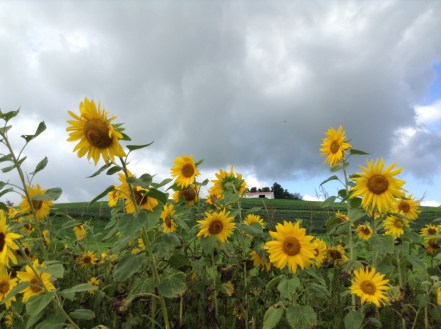
field of sunflowers
Early years fill with nursery rhymes, stories designed to teach
Suspended between fictional characters dialog is made to preach
Current popular opinion, political outrage hidden between the lines
The villain and the hero match wits whilst the wicked witch opines
These morality plays change very little with the passage of time
Forces of good conquer evil and the story is set to rhyme
When you meet a character who comes straight from Mother Goose
You have discovered archetypal imagery that will help you to deduce
If you are the victim or the hero, the popular victor or the slimy creep
We all have parts to play, ego hiding under shadowy cover of sleep

field of sunflowers

NaPoWriMo 2015
The poetry train has almost arrived at the destination…May. Hop aboard for a poetic ride here.

Thorny issues
The candidates align on left and right with eager well lit faces
Chirping sound bites with sincere well tested spinning phrases
They will sprawl all over the airwaves, call your home and send mail
Proclaiming vague tattered arguments that strike everyone as stale
We will resume campaigns for presidential power through bribery
Lavish spending on election shenanigans supports the corrupt dynasty
To protect yourself from Republicans and Democrats you must be firm
Political parties spend like sailors spreading untruths to make you squirm
As they trot out their make up and their speeches, reject the fallacious
Look at the images they are projecting and recognize the mendacious
After the spending and insincere rhetoric we elect the same jerks
As if nobody has been paying attention to the way this all works
NaPoWriMo 2015
Enjoy poetry this month here. Take time to read and write some poems in April.

light in that dark
Authority can be dangerous when it is placed in the hands of bullies and punks
Thugs enjoy the feeling they have when they frighten and terrify the public
It is time to call out dishonesty and extortion by law enforcement officials
Who break the law and take the law as an excuse to rob society of basic dignity
Hiding behind their badges they misrepresent reality to emphasize their abilities
They have no relationship with the truth, but are overcome with corrupt power
NaPoWriMo 2015
Enjoy reading and creating poetry during the month of April here. Both dark and light poetry can be found. Mine is a bit dark today.

dawn
Mandolin trills with sad sounds of distant hills
Waltzing to tunes that copy ancient steps
Taken by ancestors then followed by custom
Hard times in remote poverty stricken hollow
Grist for the mill of class distinction and politics
Strength reserved for the fight against outside
Influences, foreign thinking, radical ideas of justice
Mountain fog and shadows crawl along the valley
Softening the view, keeping it narrow and dark
NaPoWriMo 2015
April is for poetry writing. Join the fun by reading or contributing here. Enjoy!!!!

iris only looks up
There are three separate kinds of truth in the world:
Empirical has backing of indisputable evidence, proven fact
Cultural is believed by everyone in our group without question
Rhetorical is instilled through language, debated into being
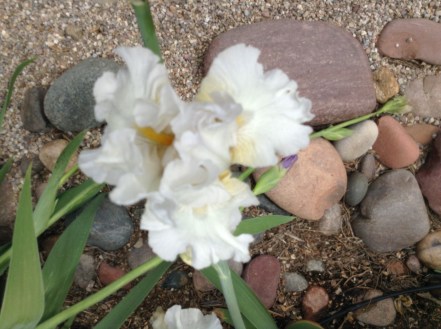
iris only looks up
These tributaries of veracity flow from different mountains:
Facts fall vertically from the highest peaks of observed reality
Tribal beliefs are instilled from birth with social hill climbing
The waterfall of rhetoric is loud and impressively massive

iris only looks up
Politicians are dealers in rhetoric designed to sway opinions
Cultures have blind spots that obscure parts of the total picture
Empirical truth is obvious, amplifying proof, ignoring prejudice
The well of pure truth will quench your thirst only if you draw from it
NaPoWriMo 2015
Ride the poetry train with some very creative and witty folk here during the month of April.
ROW80
Our 80 day writing exercise has flown by quickly for me. I planned to write a poem every day, but have managed to do so about half the time. I am not at all discouraged by this result because I have also managed to expand my repertoire of subjects and formats in my poetry. Last April I wrote daily and all of my poems were inspired by works of art, ekphrastic in nature. This was fun because I visited artist friends and took photos to use as the subjects. When I began this challenge all of my poems were ekphrastic, but I created the art myself rather than finding it. First I tired making the art followed by the words, then I tried it in reverse. It does not seem to matter which way I do it now, which is sort of silly to me. If you are inspired by it, it seems like it should exist before you write…but I am practicing both ways, trying them both to monitor results.
Lately I am happy because I attempted very unusual subjects and did some slightly representational drawing about them. I wrote about a lady who was ditched by her Euro-spy boyfriend in a restaurant. She was presented with a giant plate of raw meat, steak tartare, and a note saying her boyfriend had never existed. Now this might seem macabre or in bad taste, and perhaps it is. What is interesting is that I finally put a character and plot into a poem. My first attempt at this involved a swarm of ladybugs around a cabin. These might not have come up if I had not been following my fiction writing friends who work on plot and character all the time. My desire to make poems from historical figures and history itself lends itself to this practice. If I want to turn my dead ancestors into epic poems I need to employ some of the devices used to flesh out characters and thicken the plot. Since I endeavor to bring dream images into my poetry my technique will now expand to outlining plots and characters, then working on lucid dreaming to give me some vivid imagery with which to work. I can embellish the true stories of my family in my dreams and use the impressions to create poetic versions of historical events.
As the solar eclipse tomorrow brings us a dramatic illustration of light and shadow, I see a metaphor for the known and the unknown. What is obscured from view is often the most important part of the plot, and revealing it is the point of the story. What I do not know about my ancestors leaves room for invention and fancy. Here are some of the real people I think can become interesting poems:
I also have a true contemporary story I want the public to hear and remember. The Emperor’s New Neighborhood Watch is a rap poem about city government running amok. If I do this with rhyme and humor it will be more impactful. A good (digital) friend of mine told me this week that hexameter was the form used by Homer in his classic epics, not because it was great language, but so the actors could easily remember it. I have written about just the facts in this case for years, but what this story needs is some memorable rhyming truth. After the solar eclipse I will start outlining these stories for Poetry Month in April. It is a fun new way for me to paint with words. I am grateful to my fellow writers for teaching my some of their process. Check out the diversity of this group here. There is a lot of talent in this creative group of people. Thanks for sharing these 80 days with a beginner. Your support has been very inspirational. I aspire to be like you.

reaching higher
ROW80
This week I bought a book of poetry that has been created by illiterate women in Pakistan and Afghanistan. These cultural specialties of the Pashtun tribe are biting commentary on life. Since they live in a war-torn state, to say the least, and their rights are severely limited because they are female, their point of view contains irony and stinging truth about love, war, grief, homeland, and separation. They tackle these subjects with depth and witty metaphor which they have learned from other women. The special right to express themselves is frequently withdrawn if the males in a family learn about it. The book I am reading, I am the Beggar of the World, was inspired by a young girl’s suicide when she was forbidden to create landays and share them on a telephone hot line in Kabul. The journalists who composed the images and couplets are veteran reporters who had been in the area during years of war, covering just the facts. They were emotionally and creatively blown away by the density and artfulness of this pastime/folk literature. The Poetry Foundation helped fund the expedition and Poetry magazine published some of the works. The response from the magazine’s readers was overwhelming. People want to see more of this kind of primal undiscovered poetry that is hidden and unknown to outsiders. It has touched me deeply and makes excellent meditation material.
As a writer I am taking on new subjects. My poems are still simplistic, but I am stretching to find subjects, characters, and perhaps real events that spark my imagination. I have considered how fresh and essential the landays are because of the restrictions of illiteracy and the need to remain anonymous. They are wisecracks, jokes, and political farce all rolled into a few words, like a comic distillation of the concept. Like the work of Dorothy Parker which I am reading, admire, and want to emulate, these jokes are intricate and require some practice to make them work. They pack a lot of editorial punch into 22 syllables, as Mrs. Parker did in her short witty quips. Subjects that are taboo can be handled with humor in such a way as to make emphatic points without confronting issues directly. The discovery of landays and the women who create them leads me to want to take on more difficult subjects. Politics, art and poetry overlap in any era, and the result can be revealing. I am working to develop some good cosmic jokes that resonate with my gentle readers on many levels.
As a practice writing poems is revealing and confidence building. I take zero risks typing away on my iPad saying anything that pops into my mind. In comparison to the Pashtun ladies I suffer very little for my art. I can publish it, tweet it, change it, illustrate it, and it is free to travel wherever people care to read it. I am starting to have an appreciation of the opportunity as well as the responsibility that situation creates. I wonder if I can say something funny and profound that has the power to stick in the mind and change it. For me the ROW80 challenge continues to be more about what I read and learn than it is about what I am writing now. The stepping stones to better work are contained in the works of other poets. They inspire me to look for subjects that matter.
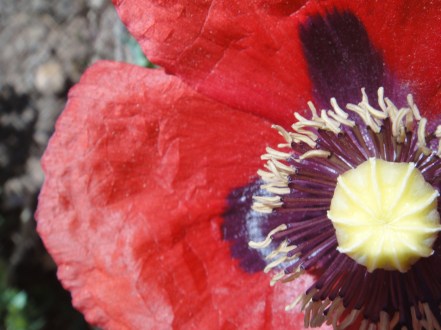
poppy



My week has been graced by the presence of a real writer. I went to hear the poet Simon Ortiz who was in Tucson for a reading of his work. I was deeply moved and highly impressed with his writing, which he delivered with lavish explanations about his process. He is now writing an epic poem, an idea he joked about by saying there is no real rule about exactly how long an epic has to be. He will include within the epic some of his older works, which he shared with the group who had come to the U of A Poetry Center to listen to him. I purchased his book, Sand Creek, which he signed for me after the reading. I told him how much I loved hearing him and he responded that he really loved reading to us. His genuine joy in sharing his work was evident. We were all truly blessed to be there. Some of his poems are funny, and some carry tragic stories from history, like Sand Creek.
The Poetics and Politics of Water series has evolved. Dr. Ofelia Zepeda is a poet and professor who collaborates to put together this very special program of Native American writers. She and her colleague Larry Evers introduced Politics and Poetics in 1992. I look forward to the next reading which will be given by Dr. Zepeda herself. She uses her native language from this region, Tohono O’odham, to welcome the visitors to her land and bless the participants. It is beautiful. She translates the traditional greeting in to English when she is done.

Ofelia Zepeda introduction
I have written and read some this week with mixed results. I believe the most profound thing that happened to set my poetic self on the path was my chance to hear Mr Ortiz. He said prose and poetry are all the same, and in the end, all language is poetry. He certainly was all poetic in every part of his being. He talked about his own recovery from alcoholism, and his father’s inability to recover from it. His identity as Acoma with deep religious and cultural heritage is important to him. His father exposed Simon to sorrow through addiction, but he also taught him his traditional language and mystical history. The last poem he read to us was about his father’s death. It was sung as a song, a chant, a rhythmic tribute to the spirit of his father and all he had inherited. It was a wonderful way to show his talent and end on a solemn, serious, meaningful note.
ROW80
I have achieved one of the goals I stated in my first post here. I have been to the U of A Poetry Center this week. The free reading on Thursday evening was part of series on the poetics and politics of water. Sherwin Bitsui, a Navajo poet, read from his works. The were haunting and evocative of desert landscapes. He was generous in his explanation of the background and muse for the works he presented to us. This gave us both biographical information about him, and a sense of how long he worked on the books he had published. Mr Bitsui is now a professor of creative writing in San Diego, but he comes form the Navajo reservation. In his introduction he was recognized for his support of other Native American poets. He mentored and helped a number of people during his time at the University of Arizona who have gone on to publish books of poetry. I thoroughly enjoyed listening to him read. Ideas from the reading have been resonating and reverberating in my mind…a good sign that those poems hit home in ways I have yet to understand.
Yesterday, for Valentine’s Day the Poetry Center docents presented a reading at the Tucson Botanical Gardens. Poetry in the Garden is a regular series open to the public held in the natural setting of the gardens. Our broad subject this month was birds as symbols of love. These readings are enjoyable for all ages and stages of poetic interest. The docents compile a packet of poems and read from the collection. The audience is invited to read too, and discussion takes place after each reading. The docents encourage the audience to express thoughts and feelings about the meaning or the sounds in the readings. The discussion is broad and not academic. The programs are very well prepared and produced, this one being no exception. We heard from e.e. cummings, Emily Dickinson, some other well known writers, and less famous poets with all kinds of styles. The setting and weather were ideal as we were visited by singing birds before and after the session. They seemed to be voicing approval or applause.
Both of these very well produced events are an example of the very good luck it is to live near the Poetry Center. Having access to these high quality readings is a gift. Some of the attendees at the evening readings are enrolled in a University of Arizona seminar on the poetics and politics of water. They spend class time with these visiting poets as well as the public reading time. There will be 3 more in this series. I plan to go to all of them because they touch a very serious subject for us in Arizona…water. The fact that they are all Native American is meaningful. In history tribes respected natural resources while the invaders worked to deplete them. Our situation today is precarious. We have less security about water every minute. The scientists involved in this seminar agree that poets bring something to the study that pure science can not.
I am still writing, listening and learning about the lives of poets in my own practice. I have expanded my subject matter a little, but nothing too impressive. The best thing I discovered through listening at these readings is that you can write poetry any way you want. There are no forms that are rejected. Free verse is square, some poems are drawings of shapes with the lines, some use sound with mysterious meaning, still others rhyme and are held together in quartrians. It is all good. I still notice my preference to hear the sound rather than see it written on the page. The garden readings are particularly pleasurable for me because I am sitting in a favorite spot with someone reading stories to me. It is a big luxury to glance around the gardens and take in the poems. It is like having a limousine instead of driving yourself. Do you like to listen to spoken word, gentle reader, or do you like to read it in print? My dad used to read to me, and he did recite a few poems, so I think this reminds me of my childhood in a good way.





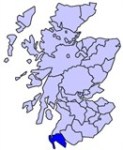
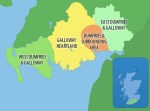
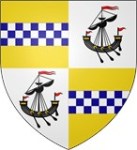
My 21st great-grandfather was the last of the independent Lords of Galloway, in Scotland. He married three or four times and is buried at Dundrennan Abbey in Galloway. He was mentioned in the Magna Carta, which is a big deal in English history. I like his outrageously long name.
Alan MacDonal FitzRoland MacFergus, Constable of Scotland, Lord Galloway (1186 – 1234)
is my 21st great grandfather
Helen Elena McDonald of Worcester Countess Galloway (1207 – 1245)
daughter of Alan MacDonal FitzRoland MacFergus, Constable of Scotland, Lord Galloway
Lady Helen Elena La Zouche Quincy (1222 – 1296)
daughter of Helen Elena McDonald of Worcester Countess Galloway
Eudo LaZouche (1245 – 1279)
son of Lady Helen Elena La Zouche Quincy
Elizabeth La Zouche (1274 – 1297)
daughter of Eudo LaZouche
Nicholas Poyntz (1303 – 1376)
son of Elizabeth La Zouche
Nicholas Poyntz (1355 – 1372)
son of Nicholas Poyntz
Pontius Poyntz (1372 – 1393)
son of Nicholas Poyntz
John Poyntz (1412 – 1447)
son of Pontius Poyntz
William Poyntz (1455 – 1494)
son of John Poyntz
Thomas Poyntz (1480 – 1562)
son of William Poyntz
Lady Susanna Elizabeth Poyntz (1528 – 1613)
daughter of Thomas Poyntz
Elizabeth Saltonstall (1557 – 1621)
daughter of Lady Susanna Elizabeth Poyntz
Henry Wyche (1604 – 1678)
son of Elizabeth Saltonstall
Henry Wyche (1648 – 1714)
son of Henry Wyche
George Wyche (1685 – 1757)
son of Henry Wyche
Peter Wyche (1712 – 1757)
son of George Wyche
Drury Wyche (1741 – 1784)
son of Peter Wyche
Mary Polly Wyche (1774 – 1852)
daughter of Drury Wyche
John Samuel Taylor (1798 – 1873)
son of Mary Polly Wyche
William Ellison Taylor (1839 – 1918)
son of John Samuel Taylor
George Harvey Taylor (1884 – 1941)
son of William Ellison Taylor
Ruby Lee Taylor (1922 – 2008)
daughter of George Harvey Taylor
Pamela Morse
I am the daughter of Ruby Lee Taylor
Alan, lord of Galloway (b. before 1199, d. 1234), magnate, was the eldest son of Roland, lord of Galloway (d. 1200), and Helen de Morville (d. 1217), sister and heir of William de Morville, lord of Lauderdale and Cunningham and royal constable. He had two brothers and two sisters, of whom Thomas (d. 1231) became earl of Atholl in right of his wife, Ada married Walter Bisset of Aboyne, and Dervorguilla married Nicholas de Stuteville of Liddel in Cumbria.
Alan contracted three marriages: to a daughter of Roger de Lacy, constable of Chester; to Margaret (d. before 1228), eldest daughter of David, earl of Huntingdon, in 1209; and, c.1229, to Rose, daughter of Hugh de Lacy, earl of Ulster. The first two marriages produced children, but only daughters attained adulthood. Helen, his daughter by his first marriage, married Roger de Quincy, while Christina (or Christiana) and Dervorguilla [see Balliol, Dervorguilla de], the children of Alan and Margaret, married William de Forz and John de Balliol respectively. Alan had one bastard son, Thomas.
Cross-border landholding and kinship with King John of England made Alan a man of consequence in both realms. His relationship with the king of Scots, based on loose overlordship rather than feudal subordination, allowed freedom of manoeuvre where his actions did not conflict with Scottish interests. Galloway’s military resources and substantial fleet gave added influence; Alan’s aid was courted unsuccessfully by John for his 1210 campaign against the Ulster Lacys, but he agreed to send one thousand men for the abortive Welsh campaign of 1212. A grant of estates in Antrim in 1212 was designed to draw him actively into the defence of Angevin Ulster against the native Irish. Despite such favours from John, when Alexander II entered the civil war in England in 1215, aligning himself with John’s baronial opponents, Alan joined the Scottish king and was his chief lieutenant in the occupation of Cumberland and Westmorland from 1215 to 1217.
From 1225 Alan used the freedom afforded by the loose overlordship of the Scottish crown to interfere in the feud between King Ragnvald of Man and his half-brother, Olaf. His private interest, arising from efforts to secure Antrim with Ragnvald’s support against the threat of a Lacy restoration, coincided at first with Anglo-Scottish policy towards the region and received the tacit support of his Scottish overlord. The prospect of a pro-Scottish client in Man led Alexander II to acquiesce to the marriage in 1226 of Alan’s bastard son, Thomas, to Ragnvald’s daughter, but the marriage provoked revolt against Ragnvald. Despite the support of Galwegian galleys and warriors, Ragnvald was overthrown and slain in 1229 by Olaf. Alan’s ensuing attempts to conquer Man for Thomas destabilized the Hebrides and western highlands, thereby threatening Scottish territorial interests, and in 1230–31 prompted active Norwegian support for Olaf. Joint action by Alan and Alexander averted catastrophe, but Scottish and Galwegian interests had diverged and the 1231 campaign marked the end of further Galwegian involvement in the Manx succession; Alan’s dynastic ambitions had caused an undesirable war with a major foreign power.
Uncertainty over the succession to Galloway shadowed Alan’s later years. His nearest legitimate male heir was Patrick of Atholl [see under Thomas, earl of Atholl], son of his younger brother, Thomas, who had died in 1231, but, although Celtic practice did not debar his bastard son, Thomas, Alan’s closest heirs by feudal law were his three daughters, all married to important Anglo-Scottish noblemen. To King Alexander, the crisis precipitated by Alan’s Manx ventures made partition, and the attendant opportunity to replace the loose overlordship enjoyed by Alan with a more tightly defined relationship, an attractive proposition, for succession by Thomas threatened a revival of Galwegian interests in Man and so of risks to Scottish security. Alan died about 2 February 1234 and was buried in Dundrennan Abbey, where his mutilated tomb effigy survives. Partition of the lordship followed and, despite a rebellion in 1235 in favour of Thomas, was successfully enforced.
OXFO RD DNB
Alan FitzRoland (c. 1175 – 1234) was the last of the MacFergus dynasty of quasi-independent Lords of Galloway. He was also hereditary Constable of Scotland.
He was the son of Roland, or Lochlann, Lord of Galloway and Helen de Morville. His date of birth is uncertain, but he was considered an adult in 1196.
In right of his mother he inherited the de Morville Lordship of Lauderdale. as well as others in that vicinity: West of Blainslie, in Lauderdale, but in the Lordship of Melrose, are the lands of Threepwood, which were granted by Alan, Constable of Scotland, to the monks of Melrose between 1177 and 1204.
In 1212 Alan responded to a summons from King John I of England by sending 1,000 troops to join the war against the Welsh. In this year he also sent one of his daughters to England as a hostage. She died in 1213 in the custody of her maternal uncle. Alan is listed as one of the 16 men who counseled King John regarding the Magna Carta.
Alan, like his forebears, maintained a carefully ambiguous relationship with both the English and Scottish states, acting as a vassal when it suited his purpose and as an independent monarch when he could get away with it. His considerable sea power allowed him to supply fleets and armies to aid the English King John in campaigns both in France and Ireland.
In 1228 he invaded the Isle of Man and fought a sea-war against Norway in support of Reginald, Prince of Man, who was engaged in a fratricidal struggle with his brother Olaf for possession of the island.
Alan died in 1234 and is buried at Dundrennan Abbey in Galloway.
He married three or four times: ?? an unnamed daughter of John, Baron of Pontefract and Constable of Chester, who had died by 1209. They had one daughter:
Female, (d. 1213).
He married Hilda (Helen) de L’Isle (b.abt1174 d.after 11/0/1245) m.1205 Carrick, Ayrshire, Scotland. She was the daughter of Rognvald Sumarlidasson, Lord of the Isles and Fonia of Moray.
Child of Alan of Galloway and Helen de l’Isle:
Helen of Galloway (b.c1208) Carrick, Ayrshire, Scotland, who married Roger de Quincy, 2nd Earl of Winchester.
He remarried Margaret of Huntingdon, daughter of David I of Scotland. By this marriage he had:
Dervorguilla of Galloway, who married John de Balliol, 5th feudal baron of Barnard Castle and founder of Balliol College, Oxford. Their son became King John of Scotland.
Christina of Galloway (d. 1246), who married William de Fortibus, Earl of Albemarle, but had no issue.
Thomas, possibly alive in 1220, but certainly dead by 1234
Alan married his last wife, (3) Rohese de Lacy, in 1229, the daughter of Hugh de Lacy, 1st Earl of Ulster.
Alan also had an illegitimate son, who was also named Thomas.
With Alan’s death his holdings were divided between his three daughters and their husbands. A popular attempt was made within Galloway to establish his illegitimate son, Thomas, as ruler, but this failed, and Galloway’s period as an independent political entity came to an end.
Wikipedia, The Free Encyclopedia @en.wikipedia.org
Additional Royal Descents; “A Line of Descent from Malcolm II, King of Scots, to the Rev. George Burroughs of Danvers, Mass. by Frederick Lewis Weis, Th. D., of Dublin, NH., NEHGR, 1954. Vol. 108, pg 174
ALAN of Galloway, son of ROLAND Lord of Galloway & his wife Helen de Moreville (-[2] Feb 1234, bur Dundraynan). He succeeded his father in 1200 as Lord of Galloway. “Alanus filius Rollandi de Galwythia” donated “partem terre in territorio de Gillebeccokestun…de Widhope” to Melrose abbey, for the souls of “Ricardi de Morevill avi mei et Willemi avunculi mei, Rollandi patris mei et…mea et Helene matris mee”, by undated charter. “Thomas de Colevilla cognomento Scot” donated “quartam partam de Almelidum…Keresban” to Melrose abbey by undated charter witnessed by “…Alano filio Rolandi de Galewai, Fergus filio Uctredi, Edgaro filio Douenad, Dunkano filio Gilbti comite de Carric…”. “Alanus fili Rolandi de Galweia constabularius dni regis Scottorum” donated property “in Ulkelyston” to Kelso monastery, for the souls of “patris mei Rolandi, avi mei Huhtredi”, by charter dated to [1206]. The Annals of Dunstable record that “dominus Galwinæ” died in 1235. The Liber Pluscardensis records the death in [1234] of “Alanus de Galway filius Rotholandi de Galway…qui…fuit constabilarius Scociæ” and his burial “apud Dundranan”. The Chronicle of Lanercost records the death “circa purificacionem beatæ Virginis” [2 Feb] in 1233 of “Alanus dominus Galwydiæ”. On his death Galway was divided between his daughters, but the people of Galway invited Alexander II King of Scotland to become their sole lord but he refused. The king finally defeated the insurgents after Jul 1235.
[m firstly (before [19 Dec 1200/1206]) — de Lacy, daughter of ROGER de Lacy Constable of Chester & his wife Maud de Clare (-[1201/06]). Keith Stringer says that “one of the daughters of Roger de Lacy was evidently Alan´s first wife” and that “the manor of Kippax” was her dowry, quoting a charter, dated to [19 Dec 1200/1206], under which “Alanus filius Rollandi, dominus Galuuaith Scotie constabularius…et heredibus meis” gave quitclaim to “Rogero de Lascy Cestrie constabularius et heredibus suis” for “advocationem ecclesie de Kipeis”.]
m [secondly] — [of the Isles, daughter of REGINALD Lord of the Isles & his wife Fonie —] (-before 1209). Balfour Paul says that Alan Lord of Galloway married first “a lady unknown, said to be a daughter of Reginald Lord of the Isles by whom he had two daughters”. The primary source which confirms her parentage and marriage has not yet been identified.
m [thirdly] (Dundee 1209) MARGARET of Huntingdon, daughter of DAVID of Scotland Earl of Huntingdon & his wife Matilda of Chester ([1194]-[after 6 Jan 1233]). The Chronicle of Melrose records the marriage in 1209 of “Alan FitzRoland” and “the daughter of earl David, the brother of the king of Scotland”. The Annales Londonienses name “Margaretam, Isabellam, Matildam, et Aldam” as the four daughters of “comiti David”, recording the marriage of “la primere fille Davi” and “Aleyn de Gavei”. John of Fordun´s Scotichronicon (Continuator) records the marriage in 1208 “apud Dunde” of “Alanus magnus de Galweyia, filius Rotholandi” and “Margaretam filiam David comitis de Huntingtona”. The primary source which confirms her appearance in Jan 1233 has not been identified. The date is inconsistent with Alan´s subsequent marital history, unless his marriage to Margaret was dissolved.
m [fourthly] (before 30 Mar 1222, annulled for consanguinity [1225/29]) JULIANA, daughter of —. Anderson records that Pope Honorius III wrote to the archbishop of Canterbury and others 30 Mar 1222 informing them that Alan constable of Scotland and his wife were related in a prohibited degree of affinity, and wrote again 28 Feb 1225 reported the hearing before the abbot of Bruern of the marriage of “Alan knight and Juliana”. Anderson states that Alan continued to litigate and that Juliana appeared in Rome before the Pope who “bade the archbishop examine the original acts and decide the case if Alan would not accept the woman as his wife”, and adds that “Juliana seems to have lost the case”.
m [fifthly] ([1228/29]) ROSE de Lacy, daughter of HUGH de Lacy & [his first wife Lesceline de Verdun] (-after 1237). According to Matthew of Paris, the wife of Alan of Galloway “iam defunctus” was the (unnamed) daughter of “Hugonem de Lasey”. The Chronicle of Lanercost records in 1229 that “Alan the lord of Galloway…set out for Ireland and there married the daughter of Hugh de Lacy”. John of Fordun´s Scotichronicon (Continuator) records that “Alanus de Galweia profectus in Hiberniam” married “filiam Hugonis de Lacy” in 1228. If her parentage and marriage is correctly stated in the two sources quoted, the chronology suggests that this daughter must have been born from Hugh´s first marriage, assuming that she was legitimate. She is named “Rose de Lacy” by Keith Stringer, who cites a charter of St Bees which indicates that she was still alive in 1237.
Lord Alan & his [first/second] wife had two children
http://fmg.a c/Projects/MedLands/SCOTTISH%20NOBILITY.htm#HelenGallowaydiedafter21Nov1245
Excert from The Magna Charta Sureties, 1215 by Frederick Lewis Weis
Excert from: Ancestral Roots of Certain American Colonists Who Came to America Before 1700. Author: Weis, Frederick Lewis Date of Publication: 2004
Offord Manor
An inquiry was held in 1199 on behalf of Roland de Galloway, whose wife Ellen was daughter of Richard de Moreville, whether Richard had forfeited for his adherence to ‘the young king’Henry, son of Henry II. Alan, son of Roland and Ellen, was pardoned a debt regarding this inquiry in 1213.
A History of the County of Huntingdon: Volume 2

