mermaidcamp
Keeping current in wellness, in and out of the water
You can scroll the shelf using ← and → keys
You can scroll the shelf using ← and → keys
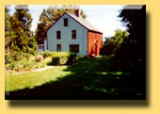
Philip Sherman’s home in Rhode Island
My 8th great-grandfather was kicked out of the Puritan’s church at Roxbury and became a Quaker. He moved to Rhode Island, as many of my ancestors did, to practice his religion. He was influential and prosperous in Rhode Island.

Portsmouth compact
Philip Sherman (1610 – 1687)
is my 8th great grandfather
Eber Sherman (1634 – 1706)
son of Philip Sherman
Mary Sherman (1688 – 1751)
daughter of Eber Sherman
Thomas Sweet (1732 – 1813)
son of Mary Sherman
Thomas Sweet (1765 – 1844)
son of Thomas Sweet
Valentine Sweet (1791 – 1858)
son of Thomas Sweet
Sarah LaVina Sweet (1840 – 1923)
daughter of Valentine Sweet
Jason A Morse (1862 – 1932)
son of Sarah LaVina Sweet
Ernest Abner Morse (1890 – 1965)
son of Jason A Morse
Richard Arden Morse (1920 – 2004)
son of Ernest Abner Morse
Pamela Morse
I am the daughter of Richard Arden Morse – (not you?)
In Bertha L. Stratton’s book, “Sherman and Other Families,” she made the statement that Philip Sherman intended to settle in New Hampshre, but the climate proved too severe and so the lands there were abandoned. Upon discussion with Roger Williams at Providence, Rhode Island, the other people from Massachusetts bought Aquidneck Island in Narraganset Bay. Nineteen men signed the compact for the town in 1638. Upon leaving the church in Roxbury, Philip joined with the Friends. The Massachusetts Court ordered Philip to appear before them on 12 Mar 1638, he did not go. But he continued as a prominent figure in Rhode Island; he was the General Recorder in 1648-1652 & the Deputy to the Assembly in 1665-1667. Tradition says he was a “devout and determined man, and he was also a “neat and expert penman & an educated man,” and his Last Will & Testament “shows that he was wealthy for those times.”
Philip Sherman immigrated to Roxbury, MA and married Sarah Odding shortly after his arrival. He might have felt pressured to marry quickly, because bachelors especially of such an advanced age as 23 were looked upon with suspicion, and their single state could even effect business opportunities and social acceptance.
According to Representative Men of Old Families of Southeastern Massachussets, by J. H. Beers & Company, in a biographical entry of one of Philip’s descendants, Philip Sherman “took the side of Anne Hutchinson,” a brave woman in Salem, MA who maintained that women should be allowed to hold prayer meetings as well as men, and proceeded to hold such meetings in her home in defiance of the rules of the time and demands that she quit. She, with some members of her family including young grandchildren, were driven out of Salem into the wilderness of Rhode Island. Families in sympathy for her or in fear of retaliation for their past support and/or defense of her beliefs soon followed to Rhode Island, and Philip Sampson and his family were among the group that left Salem following her ouster.
In Providence, Philip met Roger Williams, founder of Rhode Island promising religious freedom to it’s citizens. Williams advised Philip andthe members of his party to purchase Aquidneck from the Indians, which they did on 1 Jul 1639. They created their own government with Coddington chosen to be the first governor of Rhode Island, and Philip chosen to be secretary.
Some historians believe that the death of Anne Hutchinson with most of her family during an attack of native Americans was the first act in several that led to the end of the Puritan Church. Members of the communities in all the colonies were horrified that she was banished for her beliefs and suffered so. Many felt banished themselves from England when their Puritan faith had been banned, and her treatment forced them to recognize their own harshness.
Philip left what is now called “the Congressional Church” and joined the Society of Friends, or Quakers.
He was the father of 13 children, and many of his descendants served America as congressmen and soldiers.
We have his will:
WILL of PHILIP SHEARMAN, of Portsmouth, RI
In the name of God Amen, I, Philip Shearman, yeoman, aged seventy-one years, of the Town of Portsmouth in the colony of Rhode Island and Providence Plantations in New England, being in good memory, praise be therefor given to Almighty God, do make and ordain this my Last Will and Testament in the manner and form following: (that is to say); first and principally I commend my soul into the hands of Almighty God and my body to the earth to be decently buried by my executor hereafter named. And as for the disposition of my worldly estate, it is in manner and form following; first I give to Sarah my loving wife the use and her dwelling in the first room at the west end of my now dwelling house & bed and bedding with the furniture thereto belonging now standing in the aforenamed room. Also I do here by ordaine and appoint my son Samuel my sole Executor to this my last will and testament truely performed; and to b__ himself, heirs, Executors and Administrators for the true performance hereof; furthermore my will is that my executor shall sufficiently maintain my loving wife with food and raiment and all necessaries whatsoever during her natural life and at her decease decently to bury her; furthermore, I do give unto Sarah mywife ten good ewe sheep to be marked out of my flock for the sole use and dispose both of bodie and wool yearly, wch said number shall be kept by my said Executor during the natural life of Sarah my said wife free and without any charge to my wife.
Item: I do give unto Eber my Eldest son that which I have already given him, ten acres of land in the bounds of Portsmouth aforesaid at a place called Briggs swamp joining to a parcel of land of his own to him and his heirs forever. And all my horse flesh in the Narragansett country except one mare, the scond best; such excepted mare, I give to Thomas Mumford and Peleg Mumford my Grandchildren.
Item: I give unto my son Peleg five ewe sheep.
Item: I give unto my son Edmund a quarter share of meadow and a sixteenth part of a share of upland lying in Ponagansett within the Township of Dartmouth in the colony of New Plymouth in New England with all the privileges th__ to belonging or any wards appertaining. And also my whole right in the purchase of Squamscutt now called Westerly by thecollony to the said Edmund and his heirs.
Item: I give unto my son Samson after the decease of my said wife his half of the breadth of my farm wch I now dwell upon from the westward end to the sea and three Rood more in breadth of the whole length of the aforesaid land and bounded southward upon a straight line Eastward from the south west corner of that orchard now called Sampson’s upon a straight line to a lande marke about a rood short of the cart way that goes from my dwelling house to my barn in Portsmouth aforesaid. And from the said land marke upon a sloap line five Rood westwardly of my barn until it comes to the lineof the aforesaid half-breadth of the aforesaid farm to him and his heires forever and to have the third part of any hay and grass yearly of the aforesaid farm. And my son Samson and my son Samuel to have equal privileges in the arible land of the aforesaid farm during the natural life of Sarah my wife.
Item: I give unto my son Samuel all the remaining of my aforesaid farm with my now dwelling house and all the other buildings upon the said part of the land lying southward of the other part of my farm now given to my son Samson as aforesaid to him and his heirs forever after the decease of Sarah my wife and to have two parts of the grass and the hay during the natural life of Sarah my wife.
Item: All my neat cattle, hors kind, sheep kind and swine I do give unto my son Samuel aforenamed Executor, (excepting two oxen and a fatting cow.) And also all my moveable goods (Excepting two great chests with lock and key to each of them, which said chests I give unto my wife Sarah) he my aforesaid executor paying the several legacies herein this my will specified both the aforementioned and what shall hereafter be exprest in this my will.
Item: I givee unto my son Samson aforenamed one white faced mare with her foale and all those four Indians wch we jointly bought.
Item: I give unto my son Samson and my son Samuel my draught horse and two draught steers equally betwixt them.
Item: I give unto my son John my bay mare.
Item: I give unto my son Benjamin all the remaining __art of of my land at Brigg’s Swamp whereupon the said Benjamin’s house now stands, being by estimation twentie acres be the same more or less to him and his heires forever.
Item: I give unto my daughter Sarah ten ewe sheep to be paid her the year after my decease.
Item: I give unto my daughter Mary ten ewe sheep to be paid her the year after my decease.
Item: I give unto my daughter Hannah fivee pounds of New England silver money for the proper use of her selfe and children to be paid the year after my decease.
Item: I give unto my daughter Hannah five ewe sheep to be paid to her the year after my decease.
Item: I give unto my daughter Philip ten ewe sheep to be paid to her the year after my decease.
Item: I give unto Benjamin Clarke to my son Edmund until he comes of age of one & twenty years, the said Edmund finding the said Benjamin with sufficient food and clothing duting the terme aforesaid.
Item: I the above said Philip Shearman do ordain and appoint this to be my last will and testament, making void all former wills and testaments heretofore by me made.
In witness whereof I have hereunto sett my hand and seal this one and thirtyeth day of the month comonly called July, Anno Domino on thousand six hundred and Eightie one.
Philip Shearman (Seal)
Before the signing and sealing of this my will and testament, I the aforesaid Philip Shearman do declare that wheras the word Assigns is omitted in the giving of the several parcels of land to my children:
That it is my true intent and meaning that I do give the said several parcels of land specified in my above written will to my children to their heires and Assigns forever.
Signed and sealed in the presence of:
Job Almy
Philip Phettiplace
Elias Williams
Proved March 22, 1686/7.
Recorded on page 260 of “Land Evidence, 2nd Book, No. 1”
New England Families Genealogical and Memorial: Third Series, Volume IV
(The Sherman Line).
(IV) Philip Sherman, son of Samuel Sherman, was named after his mother. He was born in Dedham, England, February 5, 1610. He came to America when he was twenty-three, and settled at Roxbury, Massachusetts. He was made freeman there, May 14, 1634, standing next on the list after Governor Haynes. He married Sarah Odding, in the year after his arrival; she was stepdaughter of John Porter, of Roxbury, and her mother, Margaret Porter, was widow of (???) Odding. He returned to England in 1635 for a short time. On November 20, 1637, he and others were warned to give up all arms, because “the opinions and revelations of Mr. Wheelwright and Mrs. Hutchinson have seduced and led into dangerous errors many of the people here in New England.” The Church record says he was brought over to “Familism” by Porter, his wife’s stepfather. In 1638 he was in Portsmouth, Rhode Island, but the Massachusetts authorities evidently thought he had not left, for on March 12, 1638, though he had license to leave, he had summons to appear at the next court if they had not yet gone, to “answer such things as shall be objected.” He did not answer these summons, but continued to be a prominent figure in Rhode Island affairs. In 1639 he was secretary of the colony; made freeman, March 16, 1641; was general recorder, in 1648 to 1652; deputy from 1665 to 1667. On April 4, 1676, he was among sixteen persons who were requested to be at the next meeting of the deputies to give advice and help in regard to the Narragansett campaign. He died in March, 1687. His will, dated July 30, 1681, showed that he was wealthy for the times. He had thirteen children, eight boys and five girls, their dates of birth being between the years 1634 and 1652.
=========================================================================
from: “The Great Migration Begins”
PHILIP SHERMAN
ORIGIN: Unknown
MIGRATION: 1633
FIRST RESIDENCE: Roxbury
REMOVES: Portsmouth 1638
CHURCH MEMBERSHIP: “Phillip Sherman. He came into the land in the year 1623 [sic], a single man, & after married Sarah Odding, the daughter o[f] the wife of John Porter by a former husband. This man was of a melancholy temper, he lived honestly & comfortably among us several years, upon a just calling went for England & returned again with a blessing: but after his father-in-law John Porter was so carried away with these opinions of familism & schism he followed them & removed with them to the Iland, he behaved himself sinfully in these matters (as may appear in the story) & was cast out of the church” [RChR 78-79].
FREEMAN: 14 May 1634 [MBCR 1:368]. 16 March 1640/1 [RICR 1:111].
EDUCATION: Sufficient to be General Recorder of Rhode Island. His inventory included “four old Bibles & other small books” valued at £1.
OFFICES: General Recorder, 16 May 1648, 22 May 1649, 23 May 1650 [RICR 1:209, 217, 230, 236]. On 4 November 1651 colony records were demanded of Philip Sherman “late recorder of this colony” [RICR 236].
Attended Portsmouth town meeting, 13 May 1638, 20 May 1638, 20 August 1638, 5 November 1638, 2 January 1638/9 [RICR 1:53, 54, 58, 61, 63]. Selectman, 30 April 1639 [RICR 1:71]. Committee to build fences, 20 May 1638 [RICR 1:54]. Surveyor, 1640 [RICR 1:102]. Town clerk, 1649-1656 [PoTR 42, 45, 49, 50, 57, 60, 62, 67, 71]. Town Council, 1649, 1650, 1653, 1654, 1656, 1657, 1670-1673 [PoTR 42, 45, 61, 62, 71, 76, 152, 161, 169, 176]. Portsmouth commissioner to Rhode Island General Court, 21 May 1656 [PoTR 70; RICR 1:337]. Committee to audit treasurer’s accounts, 21 May 1661 [RICR 1:442]. Portsmouth deputy to Rhode Island General Court, 3 May 1665, 25 October 1665 [PoTR 130; RICR 2:96, 130].
ESTATE: On 10 February 1639/40 he was granted 200 acres at Portsmouth [RICR 1:73].
On 28 August 1650 Samuel Gorton of Warwick sold to Philip Sherman of Portsmouth seven acres in Portsmouth [PoTR 304-05].
On 3 October 1677 Philip Sherman Senior of Portsmouth deeded to “Pelegg Sherman my son” fourteen acres in Portsmouth [PoLE 1:148]. On 15 April 1678 Philip Sherman Senior of Portsmouth deeded to “Benjamin Chase my son-in-law and my daughter Philip his wife” four acres and a half in Portsmouth [PoLE 1:150].
In his will, dated 31 July 1681 and proved 22 March 1686/7, “Philip Shearman, yeoman, aged seventy-one years, of the Town of Portsmouth,” bequeathed to “Sarah my loving wife the use and her dwelling in the first room at the west end of my now dwelling…”; “my son Samuel my sole executor” and to provide “my loving wife with food and raiment and all necessaries whatsoever during her natural life and at her decease decently to bury her”; to “Sarah my wife ten good ewe sheep”; to “Eber my eldest son that which I have already given him, ten acres of land in the bounds of Portsmouth … at a place called Briggs swamp … and all my horse flesh in the Narragansett country excepting one mare, the second best, such excepted mare, I give to Thomas Mumford and Peleg Mumford my grandchildren”; to “my son Peleg five ewe sheep”; to “my son Edmund a quarter share of meadow and a sixteenth part of a share of upland lying in Ponagansett within the township of Dartmouth … also my whole right in the purchase of Squamscutt now called Westery”; to “my son Samson after the decease of my said wife his half of the breadth of my farm which I now dwell upon … my son Samson and my son Samuel to have equal privileges in the aerable land of the aforesaid farm during the natural life of Sarah my wife”; to “my son Samuel all the remaining part of my aforesaid farm with my now dwelling house and all the other buildings … and to have two parts of the grass and the hay during the natural life of Sarah my wife”; to “my son Samson … one white faced mare with her foal and all those four Indians which we jointly bought”; to “my son John my bay mare”; to “my son Benjamin all the remaining part of my land at Briggs’ Swamp whereupon the said Benjamin’s house now stands”; to “my daughter Sarah ten ewe sheep”; to “my daughter Mary ten ewe sheep”; to “my daughter Hannah £5 of New England silver money for the proper use of herself and children”; to “my daughter Hannah five ewe sheep”; to “my daughter Philip ten ewe sheep”; “I give Benjamin Clarke to my son Edmund until he comes of age of one & twenty years, the said Edmund finding the said Benjamin with sufficient food and clothing during the term aforesaid” [Roy V. Sherman, Some Descendants of Philip Sherman The First Secretary of Rhode Island, hereafter Sherman Anc, citing PoLE 2:260-61].
The inventory of the estate of Philip Sherman, dated 19 March 1686/7, totalled £100, with no real estate included [Portsmouth Scrapbook 17].
BIRTH: Baptized Dedham, Essex, 5 February 1610/1, son of Samuel Sherman [Sherman Gen 95].
DEATH: Portsmouth before 19 March 1686/7 (date of inventory).
MARRIAGE: Roxbury about 1633 Sarah Odding, daughter of Margaret (_____) (Odding) Porter [RChR 78-79; TAG 73:176-80].
CHILDREN:
i EBER, b. say 1634; m. Mary _____. (She has been called Mary Wilcox, daughter of Edward [Transatlantic Shermans 114; Philip Sherman 28], but there is no room for her in the family of Edward Wilcox [NEHGR 147:190-91].)
ii SARAH, b. say 1636; m. by about 1656 Thomas Mumford [Austin 136].
iii PELEG, b. say 1637; m. Portsmouth 26 July 1657 Elizabeth Lawton, daughter of Thomas Lawton [RIVR 4:Portsmouth:37].
iv EDMUND, b. 1641; m. by 1674 Dorcas Hicks, daughter of Samuel Hicks and granddaughter of ROBERT HICKS [Harriet Woodbury Hodge, Hicks (Hix) Families of Rehoboth and Swansea, Massachusetts (Winnetka, Illinois, 1976), p. 59].
v SAMSON, b. 1642; m. Portsmouth 4 March 1674/5 Isabel Tripp, daughter of John Tripp [RIVR 4:Portsmouth:37; TG 4:62].
vi JOHN, b. 1644; by about 1674 Sarah Spooner, daughter of William Spooner (in his will of 8 March 1683[/4] William Spooner made a bequest to “my daughter Sarah Sherman” [PCPR 4:2:71]).
vii MARY, b. 1645; living on 31 July 1681 (father’s will). (Austin says she married Samuel Wilbore, son of Shadrach, but this Samuel was born in 1663 [Austin 228], so this identification seems highly unlikely.)
viii HANNAH, b. 1647; m. by about 1678 William Chase, son of William Chase [NEHGR 87:51-52; Austin 178-79].
ix SAMUEL, b. 1648; m. Portsmouth 23 February 1680/1 Martha Tripp [RIVR 4:Portsmouth:37; TG 4:62].
x BENJAMIN, b. 1650; m. Portsmouth 3 December 1674 Hannah Mowry, daughter of ROGER MOWRY [Austin 179].
xi PHILIP, b. 1652; m. by about 1674 Benjamin Chase, son of WILLIAM CHASE [PoLE 1:150; Austin 178-79; NEHGR 87:51].

Ophelia Camera Shy
In Tucson we have a harsh climate and sparse rain, both of which make gardening a challenge. Arizona had thriving agricultural crops until the ground water became too scarce and too deep to pump to the surface for many growers. Around Phoenix one can find large citrus groves abandoned, full of dead mature trees. It is a sad sight. Our large pecan groves are starting to compete for water with the surrounding residential users. Since the water is finite this problem will only increase with time. Our state needs to be very conservative with water, finding solutions to feed the population without depleting the water table. We are lucky that Nogales, Arizona is the main port for Mexican produce into the states. Most of the year we are able to buy deeply discounted produce from Mexico which is brought to Tucson by the Santa Cruz County Food Bank to save it from the landfill.
In Tucson there is a thriving urban agriculture movement. Small growers and producers are encouraged to bring produce to market through some innovative programs operated by the Community Food Bank Southern Arizona . The Food Conspiracy and Native Seed Search are strong supporters of local gardens as well as purveyors of local products. This enriches our community by supporting options that decrease food waste and the costs of food storage and transport. What could be better than allowing fruits to ripen on the vine, then harvesting them for dinner in your own back yard? Not everyone can have a garden, but those who do add to the beauty and sustainability of the neighborhood.
I like to garden, but many folks around town enjoy keeping hens for eggs. My neighbor Heidi had 6 lovely chickens in her back yard for many years. Suddenly the city zoning department demanded that she remove the chickens and tear down their home. This was in response to some complaint which can’t be traced to any neighbor. There are laws on the books that are never enforced unless somebody complains. The chicken rules have been ignored, then randomly enforced when complaints are made. This has become some kind of political football. Finally after many years of working on a new proposal that is more friendly to small time egg farmers the issue will come to a vote by our city council. The final touches of the zoning committee will be presented to the mayor and council for review and decisions. The Tucson Clucks are organizing and hoping that all their illicit coops will be permitted to stay in place. I think it is not only reasonable, but good for the city to promote food growing that does not disturb neighbors. Roosters will still be outlawed because of the potential noise, but responsible chicken owners will no longer be outlaws.

Congdon Coat of Arms
There are conflicting versions of my 8th great-grandfather’s birth. Some believe he was born in Wales, and others think he was born in Rhode island. My research points to Wales, but I have not worked very hard on his parents. Each generation needs scrutiny to make sure there are no mistakes before proceeding backwards. I have made plenty of family tree errors in the past, and wish to avoid it in future. We are without proof, but I think young Benjamin sailed from Wales when he was very young, perhaps with his parents. He was in Rhode Island early enough to buy land from the native people:
The first notice found of Benjamin Congdon is in the Records of Portsmounth, R.I., under date of June 16th 1670, where he is proposed to become a freeman (or voter). He married Elizabeth Albro, the daughter of Major John Albro; she received as a bequest from her father 50 shillings in English money, 1 bolster case, 1 pair of sheets and 2 pewter platters. Benjamin Congdon bought land of the original proprietors (the Indians) at Potaquamscut, R.I., Sept. 22nd 1671. In his will whihc is dated July 2d, 1715, he mentions his wife, Elizabeth Congdon and his loving sons William, John, Benjamin and James. His daughters were Elizabeth Wells and Susannah Anthony.
Benjamin Congdon (1642 – 1718)
is my 8th great grandfather
Benjamin Congdon (1676 – 1756)
son of Benjamin Congdon
William Congdon (1711 – 1755)
son of Benjamin Congdon
Frances Congdon (1738 – 1755)
daughter of William Congdon
Thomas Sweet (1765 – 1844)
son of Frances Congdon
Valentine Sweet (1791 – 1858)
son of Thomas Sweet
Sarah LaVina Sweet (1840 – 1923)
daughter of Valentine Sweet
Jason A Morse (1862 – 1932)
son of Sarah LaVina Sweet
Ernest Abner Morse (1890 – 1965)
son of Jason A Morse
Richard Arden Morse (1920 – 2004)
son of Ernest Abner Morse
Pamela Morse
I am the daughter of Richard Arden Morse
Benjamin Congdon appears to have first settled in Rhode Island, where, on the 20th day of Sepctember, 1671, he bought of William Brenton, Benedict Arnold, and others, 230 acres of land in Narragansett, but did not occupy it for several years after. He was a made freeman in 1677, being born about 1650. It is not ascertained who his parents were, or whether he was born in this country. In 1679 he received a deed of 200 acres of land in Narragansett, being part of 7,630 acres laid out by Samuel Wilber to Jirch Bull and 24 others. On the 20th day of October, 1683, he sold to John Sheldon the 230 acres he purchased of William Brenton and Benedict Arnold, for 7 pounds. in the deed he styled himself, “late of Porsmouth, planter.”
His signature was made to deeds, etc., by mark Z while his son Benjamin signed by mark O. His will was executed July 2, 1715, and proved in the Probate Court Dec. 10, 1718. His executors were his wife, Elizabeth, and son, John. To sons William, John, Benjamin, and James, 5s. each, they having had their portions. To daughter Elizabeth Wells and Sussanna Northup three cows each, and to granddaughter Elizabeth Wells, a co w at deceased of his wife. To his wife, the household goods at her disposal, and the farm, orchard, and housing for life. To so John, two cows and a heifer. Benjamin Congdon married Elizabeth Albro, dau. of John Albro and Dorothy . He died Jan. 19, 1718. She died Nov. 15, 1720. Both were buried in the Congdon burial ground at Congdon Hill, near Wickford, R.i.
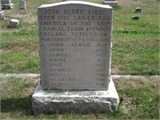
monument
My 9th great-grandfather sailed to America in 1634 when he was only 17. He lived a long and productive life in Rhode Island.
John* (Quaker John) Albro was born 14 JAN 1617 in Warwickshire, England and died 17 DEC 1712 in Portsmouth, Newport Co. Rhode Island at the Quaker settlement (date of death given as November 1, 1712 in “The Greene Family and Its Branches” by Lora S. LaMance, Chapter XXXV, page 220)
John Albro came on the ship “Francis” in 1634 from Ipswich to New England under the care of William Freeborn. His age was called 14, which was not exact but as near as was often the case in making returns to the officials. In 1638 he accompanied William Freeborn to Rhode Island. In 1639 John Albro was a granted a lot if he would build in one year. In 1644 he was made a corporal, rising successively in after years to the office of Lieutenant, Captain and Major. Sometime in 1649 he was made a member of the Town Council, and served frequently as Moderator of town meetings, even into old age.
In 1655, John became a freeman, and a commissioner from 1660-61. On August 24, 1676, he was a member of the court martial held at Newport for the trial of certain Indians. (From the Genealogical Dictionary of Rhode Island) He is an ancestor of Gilbert Stuart (painter of George Washington).
John Albro (1617 – 1712)
is my 9th great grandfather
Elizabeth Albro (1646 – 1720)
daughter of John Albro
Benjamin Congdon (1676 – 1756)
son of Elizabeth Albro
William Congdon (1711 – 1755)
son of Benjamin Congdon
Frances Congdon (1738 – 1755)
daughter of William Congdon
Thomas Sweet (1765 – 1844)
son of Frances Congdon
Valentine Sweet (1791 – 1858)
son of Thomas Sweet
Sarah LaVina Sweet (1840 – 1923)
daughter of Valentine Sweet
Jason A Morse (1862 – 1932)
son of Sarah LaVina Sweet
Ernest Abner Morse (1890 – 1965)
son of Jason A Morse
Richard Arden Morse (1920 – 2004)
son of Ernest Abner Morse
Pamela Morse
I am the daughter of Richard Arden Morse
Major John Albro was one of the most active and influential settlers of Portsmouth, RI. He came from Ipswich, Eng., in the ship Francis, sailing from Ipswich Apr 30, 1634. He was born in England in 1617. He came under the care of William Freeborn and was only seventeen years of age. They landed at Boston and four years later (1638) came to Portsmouth RI. John then being 21 yrs. of age. His fellow townsmen soon began to give him much to do with the affairs of the community. In 1649 he was a member of the town council and he often served as moderator of the town meetings. even into old age. In 1686 King James appointed him as a member of Sir Edmund Andros’ Council for New Eng. and he attended the first meeting of this council in Boston, Dec. 30th of that year. He served as one of the commissioners of the Colony to lay out the W/Eastern? line of the Colony in 1678. During King Phillip’s War he was one of the commissioners to order, watch and ward the the island. He died at Portsmouth, Dec. 14, 1712, and in the 95th years of his age. The Friends’ Records, in recording the death of this useful man state that he “was buried in his own orchard”.

Rev. Robert Miller, patriot
My 5th great-grandfather was a Presbyterian minister from Scotland who served as chaplain in South Carolina during the Revolutionary War. The Presbyterians were active during the war because they had no love for the Brits or their religion. The following passage gives us insight into his early life:
The following is a sketch of the life of Rev. Robert Miller, which according to Minos E. Miller was written by himself and which was copied from the original by Hugh Reid Miller several years before the Civil War.
“I was born of religious and creditable parents, my father possessed of a small fortune in land not far from where I was born. Early they bestowed an education upon me. At nine years of age I went to school to Mr. Patrick Reid, Schoolmaster, at Aberdeen, and then began to read Latin. Continued at school with some few intermissions till I was about the age of eighteen. I then proposed to apply myself to some lawful calling, for support in the world and to [?] daily bread. Being engaged with a Physician in aldy, he desired my father to send me to school to learn Greek, to qualify more for the business I was engaged in. I therefore went to school; and in the meantime contracted such a desire to stay still at school, my father consented, and after I had read Latin and Greek some time, he sent me to the college, where I continued till I had gone through my studies in Philosophy, after which by the advice of some, I applied myself to the study of Divinity, and attended the Lectures of the Rev. Mr. Mear Mon[?] Professor of Divinity. In which Profession I made such Proficiency, as at last, after trials by him, was approved and presented by him to the Presbytery for future trials; after going through the ordinary course in the Presbytery of Edinburgh.
I pretty early began to think much, and was privileged with the blessing of a valuable gospel minister, as well as a pious example set before by my parents, with many good advices and instructions from both. I went along to a solemn occasion at Glendovan, when I heard Mr. Wardrobe preach upon that text, Eph. 6:13-14 “having done all to stand, stand therefore,”

Presbyterians and the revolution
Patriotism depends on the sentiment at the time. When Protestant thinking set Europe on a path toward political change, the wheels started rolling toward America. The Brits represented the past and corruption of religion. Factions create patriotism. It is an emotional trend that surpasses logic. My very badass 5th great-grandfather was an example of early American patriotism. His descendants would fight for the Confederacy against the United States. After the Civil War those descendants moved to East Texas to start new lives and found a Baptist church. Religion played a strange part in all that patriotic and anti-patriotic behavior. I still do not grasp how heavy-duty Christians own slaves. Today patriotism comes dangerously close to fear and suspicion of foreigners and nothing more.
Rev. Robert Miller (1730 – 1821)
is my 5th great-grandfather
Margaret Miller (1771 – 1853)
daughter of Rev. Robert Miller
Philip Oscar Hughes (1798 – 1845)
son of Margaret Miller
Sarah E Hughes (1829 – 1911)
daughter of Philip Oscar Hughes
Lucinda Jane Armer (1847 – 1939)
daughter of Sarah E Hughes
George Harvey Taylor (1884 – 1941)
son of Lucinda Jane Armer
Ruby Lee Taylor (1922 – 2008)
daughter of George Harvey Taylor
Pamela Morse
I am the daughter of Ruby Lee Taylor
SGT. ROBERT MILLER, CHAPLAIN IN THE AMERICAN REVOLUTIONARY WAR 1) Sgt. Robert Miller served as a Presbyterian minister, in civilian life. During the American Revolutionary War, he served as a Chaplain. The photo above is from an online pamphlet which is short, and easy to read. It gives a good overview of how the people of the Presbyterian Church in America played a vital role in the American Revolutionary War. It also explains how the Protestant Reformation of the 1500’s in France, led to Protestant French Huguenots emigrating away from France and over to England, Scotland, and other countries in Europe. Later on some of their descendants left Europe and immigrated into America. The Protestant religions in America have always had deep roots to the northwestern area of France, especially the area around the Province of Normandy. This can be puzzling, and complicated. One connection can be seen between the various Protestant religions in the USA, leading back to the work of a young man who was named Jehan Cauvin. http://en.wikipedia.org/wiki/John_Calvin He was born in 1509 in Noyon, Picardie, France. When he grew up, he lived in Switzerland, where he was known as John Calvin. His religious ideas had a profound effect in many other countries in Europe, such as Germany and the Netherlands. Perhaps this is part of the reason why America has always had such a complicated relationship with France, especially in times of war. The photo of the ebook is entitled: Presbyterians and the Revolution. By the Rev. W. P. Breed. Published 1876 by Presbyterian Board of Publication in Philadelphia. The copyright on this book has now expired, and it is now in the public domain. Source: https://archive.org/stream/presbyteriansrev01bree#page/82/mode/2up/search/pickens *** 2) Here is a link to a short article that provides a good background history for Mecklenburg County, NC and the counties to the south of it in SC during the American Revolutionary War. Rev. Robert Miller was in a part of SC that saw some serious fighting, to the east of Abbeville County. The article can be found here: http://www.sciway3.net/clark/revolutionarywar/1780-Huck_noframes.html The title of this article is “THE 1780 PRESBYTERIAN REBELLION AND THE BATTLE OF HUCK’S DEFEAT” by Sam Thomas, Curator of History, Culture & Heritage Commission of York County. *** 3) There were many different families named Miller who lived in Scotland in the 1700’s, and they are virtually impossible to untangle. Many of these families appear to have adopted the last name of Miller as a means of indicating a political alliance, and they did not originally use the family surname of Miller/Millar. Family surnames were not used in Europe prior to the 1800’s the same way they are now used in modern Europe and in America. People were much more casual about their last names back then, and many families changed their last names in order to indicate the geographical place where they lived, or what political group/clan they were affiliated with at the moment. When Rev. Robert Miller immigrated to America, he visited Bucks County, PA, which was located near Philadelphia, PA and Baltimore, MD. Bucks County was a popular area for Presbyterian immigrants from Scotland and Ulster to settle in colonial America. At least three early Presbyterian settlements were in Bucks County, PA: the HUNTER SETTLEMENT, NESHAMINY, and the IRISH/CRAIG SETTLEMENT. See memorial page number 129350647 for a history of the area, including some links to ebooks. Rev. Robert Miller married a young lady whose parents lived near the Scots-Irish settlement of NESHAMINY, PA. Her name was Jean Pickens. They were married in Paxton Township of Bucks County, PA, which was about halfway between the HUNTER SETTLEMENT to the north, and the town of NESHAMINY to the south. Later on the name of this part of Bucks County, PA changed to Northampton County, PA. After he and his bride married in PA, they joined a large Scots-Irish expedition of colonists who moved down to a new Scots-Irish settlement called the Waxhaws, around the year 1751. His in-laws were part of the same expedition. At the time the Waxhaws was located in Anson County, NC, but later on the boundary survey between NC and SC was determined to be incorrect. At that point the Waxhaws became part of Abbeville County, SC. During the American Revolutionary War, he served as Chaplain in his brother-in-law’s military unit in SC. Presbyterian ministers played a vital role in the war. In addition to playing a role as a Chaplain, many of them were also elected by their men to serve as active duty officers. They were popular leaders, who were good at planning and strategy. *** 4) 300 ACRE LAND GRANT “34. Land plat for ROBERT MILLER for a tract of land containing 300 acres and surveyed by Patrick Calhoun 7 DEC 1762 on the waters of Long Cain in the county of Granville, said Long Canes being waters of the Savannah River and lands bounded by the lands of the Hamilton Grant and by lands of Robert Pickens. “I am sure that this must be the Rev. ROBERT MILLER who came first to the Waxhaws and later to Abbeville on the Long Canes. He was for a time in Tennessee and as a Presbyterian minister. He was married to Jane Pickens sometime prior to 1758. (Land grant indicates a wife and 4 children.)” Author: LEONARDO ANDREA Source: http://trees.ancestry.com/tree/15555824/person/20076042723/storyx/2ac4d7e4-69de-4719-b4f8-c9e7851c3f86?src=search *** RIP Added by: MarthaHopscotch 9/05/2014

White House
The United States is reeling from yet another mass shooting. The prayer group interrupted by violence is etched into the soul of the country, no matter where we live, no matter what our own religious affiliations. The idea that sanctuaries are not safe is a chilling reminder. While the world watched the church showed the meaning of Christianity and compassion. The city of Charleston displayed solidarity and strength in the face of the tragedy in one of the most significant structures in town. This flow of forgiveness and faith witnessed from the victims’ friends and families has been powerful in its simplicity. They managed to overcome the natural feelings of betrayal and loss by practicing what they preach. They defer judgement to God and pray for peace that surpasses all understanding. I am overwhelmed with gratitude to the congregation of Mother Emmanuel for teaching the country how to mourn, and how to move past sorrow into great compassion. We all need to heed this lesson. These people seem like saints, and indeed they may be. They have a powerful message of hope for us. Nothing is black and white. Nothing is really even under our control. Remember the first commandment when you think you might need to right some wrongs…this is clearly not your personal job.
Meanwhile, right before Gay Pride Weekend in many parts of the country, same sex marriage has become the law of the land. With rainbows flying and floating and projecting everywhere the party to celebrate these new civil rights began. The rainbows appeared early in the morning on Friday and by nightfall the projected rainbows fell on buildings and natural wonders of the world. Other countries celebrated with us by lighting structures to tweet with the hashtag #LoveWins. Twitter supplies a rainbow heart for each #LoveWins, adding to the colorful festive digital fiesta. I found the switch from our black and white racial and political divides to an all out rainbow nation to be refreshing. We need to have a reason to be proud, to embrace the happiness of others, and to actually celebrate equality. Rainbows signify our diversity and our harmony. Let us keep the faith that this nation still has the spirit and the will to make sure that #LoveWins in our future.
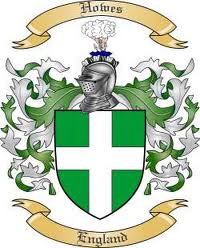
Howes Coat of Arms
My 13th great-grandmother was arrested in London for her religious beliefs. She moved to Barnstable, on Cape Cod with her extended family.
It is claimed that this family descends from one John de Huse who had a large manorial property in Basthorpe, Norfolk, England in 1065.
Penninahs father was a Reverend, Rector of Eastwell, Kent. Penninah and her brother Samuel Howes were arrested in 1632 in London in connection with the prosecution of Rev John Lothrop and his flock of Dissenters who had been meeting in Blackfriars, London. Penninah Howes was called and required to take her oath but she refused. The prosecutor asked “Will you trust Mr Lathropp and believe him rather than the Church of England?” She replied “I referre myself to the Word of God, whether I maie take this oath or now.”
Jemimah Peninah Howse (1589 – 1633)
is my 13th great grandmother
Sarah Linnell (1603 – 1652)
daughter of Jemimah Peninah Howse
Thomas Ewer (1593 – 1638)
son of Sarah Linnell
Mary Ewer (1637 – 1693)
daughter of Thomas Ewer
Mehitable Jenkins (1655 – 1684)
daughter of Mary Ewer
Isaac Hamblin (1676 – 1710)
son of Mehitable Jenkins
Eleazer Hamblin (1699 – 1771)
son of Isaac Hamblin
Sarah Hamblin (1721 – 1814)
daughter of Eleazer Hamblin
Mercy Hazen (1747 – 1819)
daughter of Sarah Hamblin
Martha Mead (1784 – 1860)
daughter of Mercy Hazen
Abner Morse (1808 – 1838)
son of Martha Mead
Daniel Rowland Morse (1838 – 1910)
son of Abner Morse
Jason A Morse (1862 – 1932)
son of Daniel Rowland Morse
Ernest Abner Morse (1890 – 1965)
son of Jason A Morse
Richard Arden Morse (1920 – 2004)
son of Ernest Abner Morse
Pamela Morse
I am the daughter of Richard Arden Morse
The Howes, Lothrops, and Linnells of Kent and London, England, and Scituate
and Barnstable, Massachusetts
By Dan R. McConnell
Published by the Cape Cod Genealogical Society Bulletin, Fall 2007
The family of Reverend John Howes [also House, Howse], whose children, kin, and friends, were brought before the Royal Court of the High Commission in London, England in the 1630’s, were persecuted and imprisoned for their religious beliefs. These beliefs also had political effects, which we will explain. Some fled to America, first to Scituate, then Barnstable, both of which were in Plymouth Colony in that time, a place friendly to their Separatist beliefs. Others remained in England and played a key role in the emergence of non-conformist churches, the disputes in Parliament, and the English Civil War.
In the 17th Century, for ordinary people, a lengthy confinement in London prisons such as Newgate, Clink, Fleet or Bridewell was tantamount to a death sentence due to crowded, filthy, disease-ridden conditions. Such dangerous confinement, for religious non-conformity, under the arbitrary rules of the High Commission, became a driving force for like minded people to flee to America. English resentment to the many breaches of Common Law led to the rise of Parliament in opposition, and ultimately to the abolishment of the High Commission in 1641 and the Civil war in the 1640’s. After the “Glorious Revolution’ in 1688, the English Bill of Rights was enacted to specifically forbid such practices, echoed famously in our own Bill of Rights, the First Ten Amendments to the U.S Constitution.
For the Howes family and their kin, the road to prison and to America began in Kent. The Reverend John Howes matriculated at St. John’s College, Cambridge in 1590. He is listed in the Alumni Cantabrigienes as such with the further note that he was rector at Eastwell, Kent in 1610. In the Bishop’s Transcripts for Canterbury he is also given as Curate for Egerton, 1592-6. From his location at the time of the baptism of his children, he is likely to have also been Curate for Eastwell from 1603 to his death in 1630. He performed the marriage ceremony for his daughter Hannah, in her marriage to Rev. John Lothrop [also Lothropp] in Eastwell, 16 October, 1610. In his will, dated 1630, he is described as Minister, Eastwell. In his will, his wife’s name is given as Alice.
Children of the Reverend John Howes:
Elizabeth Howes, Bapt, unkn. Married, Eastwell to John Champion, of Little Chart, 28 September 1607
Hannah Howes, Bapt. Egerton, 5 May, 1595. Died between 1632 and 1634, London, while her husband, Rev Lothrop, was in prison. Married,Eastwell to Rev. John Lothrop, 16 October 1610.
Peninah Howes, Bapt, Egerton, 11 April, 1596. Died after 1669, Barnstable, Massachusetts.
Married between 1632 and 1638 to Robert Linnell, probably in London.[The will of her brother Thomas Howes, in 1643 gives her name as Peninah Linnell [also Lynell]. In the High Commission proceedings in 1632, she is given as Peninah Howes].
Druscilla Howes. Bapt., unkn. Married, Eastwell, to Simon Player 17 April 1637 John Howes. Bapt. Eastwell 19 June, 1603. Married Eastwell to Mary Osborn of Ashford, 18 September, 1623.
Priscilla Howes. Bapt Eastwell 25 August, 1605. Buried, Eastwell 28 Nov 1618
Thomas Howes. Bapt. Eastwell, 21 August, 1608. Died 1644 London. In his will, dated 18 October 1643, he lists his wife Elizabeth, his brother Samuel [of Scituate and Barnstable, Mass. See Great Migration Series, Vol. III, I634-5, page 424-8], his sister Peninah Lynell, his sister Druscilla Player.
He also lists as administrators, the famous Puritan Praise God Barbon [Speaker of Parliament during the Commonwealth period, known as “Barebones Parlaimant”, and William Granger, who was brought up before the High Commission along with Barbon’s wife Sara. All were members of Rev. Lothrop’s congregation in London]
Samuel Howes. Bapt Eastwell, 10 June, 1610. Died 12 September 1667, Mass. Married about April 1636 to Ann Hammond of Watertown, Mass. He emigrated to America in 1634, joined Rev Lothrop’s church in Scituate then Barnstable, and returned to Scituate.
Henry Howes. Bapt. Eastwell, 28 June, 1612.
Note. There has been great confusion in the American record to the effect that Robert Linnell’s first wife was a Jemimah Howes, presumably another daughter to Rev. John Howes. This has been compounded by an LDS record of the supposed marriage of a Jemimah Howes to Robert Linnell in 1621 in Ashford, Kent. There are no records to support this.
John Lothrop, son of Thomas Lothrop, bapt, Etton, Yorkshire, 20 Dec, 1584, first entered Oxford, then withdrew and matriculated at Queen’s College, Cambridge, graduating with a B.A 1606, M.A. 1609. He was curate at Little Chart 1609, Egerton 1610, serving until his resignation between 1621 and 1624. In 1625, he succeeded Henry Jacob as Minister to the first Independent Church in London, founded in 1616, and one of the five oldest independent [non-conformist]
churches in England. The principles or covenant of the Jacob/Lothrop church were essentially Separatist and were very close to those of the Rev. John Robinson in Leiden [Pilgrims]. During a period of exile before 1616, Henry Jacob resided with the Robinson congregation in Leiden. These
churches were illegal, as the Church of England, under the King and his appointed Archbishop of Canterbury was the only legal church. The Jacob/Lothrop church met in private, in the homes of congregants. These secret meetings for the purpose of praying preching and interpreting the Bible, were called conventicles.
In 1632, Rev. Lothrop was arrested in the house of one of his congregants along with 42 of his congregation, and was brought before the Court of the High Commission. He, and they, were charged with sedition and holding conventicles. The political nature of the charge of sedition [“an insurrection against established authority”], and the antique language of “conventicle’ [ a
private meeting to hear illegal preaching] renders the charges unclear to modern ears. The charges were, however, deadly serious and the court proceedings unimaginable. The accused had none of the rights of modern citizens. The court was an inquisition, where the accused were forced to testify against themselves, with our counsel. The process was so intimidating that many people were driven to flee. It was one of the driving forces in the Great Migration to New England.
It was no dispute over prayer books and vestments. It was about life, death, and salvation. First, what was the Court of the High Commission? It, along with the Court of the Star Chamber, was a Royal Prerogative Court [King’s Rights], originally created in the time of Henry VII [1485-1509]. These courts were separate from the Civil Courts, or Common Law Courts, which
operated on the basis of precedent, and the rights of English people under the Common Law.
Originally, these courts were established under the King’s right to protect individuals from abuse in Common Law Courts. Under the Elizabeth I and the Stuart Kings [James I and Charles I], these courts were used by the Church of England to suppress those who sought to reform the church, or to seek a different path to salvation, using court rules that were in clear violation with the Common Law. They came down, with extreme severity, on Separatists in particular. Because of
their covenant relationship, Separatists believed that every congregation could be a church unto itself, and could elect it’s own Ministers, by vote of it’s elders, based upon the model of the early Christian church [pre-Constantine]. To do so meant they had no need of the Church of England, and did not accept the authority of the Bishops. This was unacceptable to the Crown. As famously said by King James I, “ No Bishop, no King”. Since the King was the head of the Church of England,
and appointed the Archbishop, he wanted one church with order and conformity. To the King, the Separatists position implied anarchy and chaos, and must be stopped. As James I said further, “ I will harry them out of the land”.
Under Charles I and his Archbishop, William Laud, the screws were tightened much more. Laud was the Chief Judge of the High Commission. In his zeal to suppress nonconformists, he scrapped several principles of English Common Law, including [1] protection against selfincrimination, 2] the right to confront one’s accusers, [3] the right to produce witnesses in one’s
own defense, [4] the right to a prompt hearing in court, so one did not languish in a dangerous jail without a trial, and [5] cruel and unusual punishments. All of these rights were suspended for those, such as the members of Rev. Lothrops congregation, who were brought before the Court of the High Commission in May 1632.
The Ministers and there flock faced brutal treatment. For the high crime of publishing tracts critical of the Bishops many ministers had their ears cut off, their faces branded and were confined to prison for life, which meant death within a few months or a few years at most. When one was brought before the court, the requirement was to sign an oath of Allegiance to the
Church of England, to forswear any contrary belief or practice and to answer any question posed by the judges,consisting of Laud and five other Bishops. To do so meant to abandon their right to choose their own Minister, to hear preaching and to attend Bible study with a Minister of their choice. They believed their own souls to be at stake. They were not allowed any of the basics of a fair trial, and certainly faced cruel punishment. So what did they do? They refused to swear the oath and were jailed. Some died in prison, some were released and fled to America, and some fought for Parliament in the English Civil War.
Now, hear the voices of Archbishop Laud, of Rev. John Lothrop and of the Howes and their friends [from the Proceedings of the Court of the High Commission]:
“ 5 May, 1632. This day were brought to the court out of prison diverse persons whixh were taken on Sunday last at a conventicler met at the House of Barnet, a brewer’s clerk, dwelling in the precinct of Black Friars: By name, John Lothrop, their Minister, Humphrey Barnard, Henry Dod, Samuel Eaton, William Granger, Sara Jones, Sara Jacob, Peninah Howes, Sara Barbon, Susan Wilson and diverse others”—
Statement by the Archbishop—“ You show your selves to be unthankful to God, to the King and to the Church of England, that when, God bbe praised, through his Majesties care and ours that you have preaching in every church, and men have liberty to join in prayer and participation in the sacrements and have catechizing to enlighten you, you in an unthankful manner cast off all this yoke, and in private unlawfully assemble yourselves together making rents and divisions in the church.—You are unlearned men that seek to make up a religion of your own heads!”—“you are desperately heretical”
“Then came in Mr. Lothrop, who is asked by what authority he had to preach and keep this conventicler.” Laud,–“How many women sat cross legged upon the bed, while you sat on one side and preached and prayed most devoutly?” Lothrop. “I keep no such evil company” “Will you lay your hand upon the book and take your oath?’ Lothrop. “I refuse the oath.”
Peninah Howes “ I dare not swear this oath till I am better informed of it, for which I desire time”;;;”I will give an answer of my faith, if I be demanded, but not willingly forswear myself”
Sara Barbon “ I dare not swear, I do not understand it. I will tell the truth without swearing”
Then they were then all taken to the New Prison.
“8 May, 1632. Laud to Sara Jones—“ This you are commanded to do of God who says you must obey your superiors.” Sara Jones “That which is of God is according to God’s Word and the Lord will not hold him guiltless that takes His name in vain”
‘Lothrop. I do not know that that I have done anything which might cause me justly to be brought before the judgement seat of man, and for this oath, I do not know the nature of it”
Laud “You are accused of Schism”
To Samuel Howes ‘Will you take your oath?’ Howes I am a young man and do not know what this oath is”
Peninah Howes is then asked to take the oath, but she refused. Laud “Will you trust Mr Lothrop and believe him rather than the Church of England?’
Because women were not able to hold property she had to sue the court in 1669 for her husband’s estate:
Robert, called “my Brother,” by Mr. John Lothrop, adm. chh. scituate with his wife Sept. 16. 1638, “having a letter of dismission from the church in London.: Took oath of allegaince 1 Feb. 1638. Propr. at Barnstable 22 jan 1638-9. ch. Hannah (m. 15 March, 1648, John Davis of Bar.,) Abigail, (m. May 1650, Joshua Lombard,) David, (m. March 9, 1652, Hannah Shelley).
He made will 23 Jan. 1662, prob. 12 March, 1662-3; beq. to wife; to son David; to Abigail and Bethys; to John Davis. The widow Penninnah petitioned the Court 29 Oct. 1669, to recover the house her husband had left her from the hands of David L.

Elizabeth Stafford
My 15th great-grandmother was married to a duke who treated her very badly. She was involved with court intrigue during the reign of Henry VIII.
Elizabeth Stafford was the daughter of Edward, 3rd duke of Buckingham (February 3,1478-May 17,1521) and Eleanor Percy (1470-1530). Robert Hutchinson’s House of Treason gives alternate life dates as 1493-September 4, 1558. Elizabeth was to have married one of her father’s wards, Ralph Neville, earl of Westmorland, at Christmas 1512, but shortly before that she acquired a new suitor in the person of the recently widowed Thomas Howard, earl of Surrey (1473-August 25,1554).
Buckingham offered his other daughters to Sussex, but the earl was determined to have Elizabeth, described by Jessie Childs in Henry VIII’s Last Victim: The Life and Times of Henry Howard, Earl of Surrey as “…passably pretty, with soft features, light colouring and a distinguished forehead….”
Early in 1513, Elizabeth married Surrey, bringing with her a dowry of 2,000 marks. They had five children:
Henry (1517-x.January 19,1547),
Mary (1519-December 9,1557),
Charles (d.yng),
Thomas (1528-1582), and a fifth child who died young and may have been named Muriel.
Elizabeth was often at court and became close friends with Catherine of Aragon. She carried Princess Mary to the font at the princess’s christening in 1516 and was a patron of the poet John Skelton, who describes Elizabeth and her ladies making a chapelet in the poem “A Goodly Garlande or Chapelet of Laurell.” When the earl of Surrey was appointed Lord Lieutenant of Ireland in 1520, he was ordered to take his entire family with him.
There they were exposed to war, disease, crowded conditions, and severe shortages of just about everything. To make matters worse, during their sojourn in Ireland, Elizabeth’s father was accused of treason and beheaded. In 1524, with the death of her father-in-law, Elizabeth became duchess of Norfolk. She continued to serve as a lady-in-waiting to the queen, at court for months at a time, but with the king’s growing determination to obtain a divorce, her role changed.
By 1530, Elizabeth was spying on her own husband, on the lookout for any information that would help Queen Catherine. By then, there were also problems in Elizabeth’s marriage. In 1526, Norfolk took Bess Holland, daughter of his chief steward, as his mistress, a long-term relationship which he did not trouble to keep secret from his wife.
Elizabeth continued to be vocal in her support of Catherine of Aragon. Norfolk, and most of the Howard family, favored the king’s plan to marry Anne Boleyn, whose mother was a Howard. Elizabeth went so far as to refuse to bear Anne’s train at her investiture as Marchioness of Pembroke and was conspicuously absent from both Anne’s coronation and the christening of Princess Elizabeth. In May,1533, Norfolk wrote to Elizabeth’s brother, Henry Stafford, asking him to take her in. Stafford refused, expressing the fear that “…her accustomed wild language…” would place him and his family in danger if he did so.
The matter came to a head on Tuesday of Passion Week, 1534. Norfolk arrived at Kenninghall, his principal residence, to find his wife in a rage because he was still keeping Bess Holland as his mistress. Norfolk’s response was to lock Elizabeth in her chamber, then banish her to Redbourne, a manor in Hertfordshire. Elizabeth referred to this as imprisonment, even though she had twenty servants and an allowance of three hundred marks per annum.
Legally Norfolk was within his rights to do as he wished with her. She tried three times for a reconciliation, but to no avail. Norfolk was not about to forgive some of the claims she had made, including one that he had assaulted her when she was pregnant with their daughter in 1519. Some of the charges may indeed have been “false and abominable lies,” but Norfolk was known to have a temper, too. In 1541, Elizabeth was still trying to regain freedom of movement, as well as a bigger allowance.
Her children, to her distress, sided with their father. Indeed, most people did. Wives were expected to put up with their husbands’ infidelities, not make a fuss about them. Upon Mary Tudor’s accession, Elizabeth returned to court and there was reunited with her husband, who had been in the Tower of London since 1547. He died at Kenninghall the following August.
Although both Elizabeth and Norfolk appear in effigy on the same monument in Framlingham, completed in 1559, only he is buried there. She was interred in the Howard Chapel in St. Mary’s Church, Lambeth, in December 1558. The epitaph written by her brother lauds her kindness and says she was to him “a mother, sister, a friend most dear.”
Biography:
“Marriage Sixteenth-Century Style: Elizabeth Stafford and the Third Duke of Norfolk” by Barbara J. Harris in Journal of Social History, 15/3 (1982).
Source– A WHO’S WHO OF TUDOR WOMEN: Stafford
Elizabeth Dutchess Norfolk Stafford Howard (1497 – 1558)
is my 15th great grandmother
Lady Katherine Howard Duchess Bridgewater (1495 – 1554)
daughter of Elizabeth Dutchess Norfolk Stafford Howard
William ApRhys (1522 – 1588)
son of Lady Katherine Howard Duchess Bridgewater
Henry Rice (1555 – 1621)
son of William ApRhys
Edmund Rice (1594 – 1663)
son of Henry Rice
Edward Rice (1622 – 1712)
son of Edmund Rice
Lydia Rice (1649 – 1723)
daughter of Edward Rice
Lydia Woods (1672 – 1738)
daughter of Lydia Rice
Lydia Eager (1696 – 1735)
daughter of Lydia Woods
Mary Thomas (1729 – 1801)
daughter of Lydia Eager
Joseph Morse III (1756 – 1835)
son of Mary Thomas
John Henry Morse (1775 – 1864)
son of Joseph Morse III
Abner Morse (1808 – 1838)
son of John Henry Morse
Daniel Rowland Morse (1838 – 1910)
son of Abner Morse
Jason A Morse (1862 – 1932)
son of Daniel Rowland Morse
Ernest Abner Morse (1890 – 1965)
son of Jason A Morse
Richard Arden Morse (1920 – 2004)
son of Ernest Abner Morse
Pamela Morse
I am the daughter of Richard Arden Morse
Elizabeth Howard (nee Stafford) (1494- 30 November1558) was the daughter of Edward Stafford, 3rd Duke of Buckingham and the wife of Thomas Howard, 3rd Duke of Norfolk.
Elizabeth was born in 1494, the eldest daughter of Edward Stafford, 3rd Duke of Buckingham (3 September1478-1521 and Eleanor Percy. Her paternal grandparents were Henry Stafford, 2nd Duke of Buckingham and Catherine Woodville. Her maternal ancestors were Henry Percy, 4th Earl of Northumberland and Maud Herbert. Her grandfather, the Duke of Buckingham, was executed in 1483 by King Richard III for treason, and in 1521, her own father suffered the same fate when he was beheaded on Tower Hill for treason against his king, Henry VIII. Elizabeth had two sisters, Mary, Lady Bergavenny and Catherine, Countess Westmoreland, and a brother, Henry Stafford, 1st Baron Stafford.
On 8 January1513, Elizabeth married Thomas Howard, earl of Surrey, who in 1524, would become the 3rd Duke of Norfolk. The marriage was his second. His first wife had been Anne of York, the daughter of Edward IV, but none of their children had lived beyond early infancy. Elizabeth bore her husband four surviving children but their marriage was unhappy and violent. He had taken as his mistress Bess Holland, who was her own laundress, and when Elizabeth protested, calling her “a churl’s daughter who was but a washer in my nursery for eight years” Howard savagely beat her. She later accused his mistress of striking her. They separated in 1533, the year Howard’s niece, Anne Boleyn, was crowned Queen of England. Elizabeth did not like Anne and was staunchly partisan in favour of Catherine of Aragon. In 1530, Elizabeth smuggled letters received from Italy to Catherine concealed in oranges Elizabeth also later told the Spanish Ambassador, Eustace Chapuys, that Howard had confided in her that “Anne would be the ruin of all her family”.. Anne, however, managed to win the favour of Elizabeth by arranging brilliant matches for the Howard children. Henry was married to the daughter of the Earl of Oxford, while Mary married the King’s illegitimate son, Henry FitzRoy, 1st Duke of Richmond and Somerset. Appeased, Elizabeth stopped plotting against Anne and returned to Court. She died on 30 November 1558 in Lambeth, London at the age of sixty-four. Elizabeth was the Dowager Duchess of Norfolk at the time of her death, her estranged husband, the Duke, having died four years earlier. She was buried on 7 December 1558 in Lambeth.
Elizabeth was often at court and became close friends with Catherine of Aragon. She carried Princess Mary to the font at the princess’s christening in 1516.
Elizabeth Stafford, Duchess of Norfolk, wife of Anne Boleyn’s uncle Thomas Howard, Duke of Norfolk

Elizabeth Stafford

TPD
In a co-dependent relationship each side wants the other to be different. One striking example today is the relationship between the public and the cops. Police departments across the country are found to be engaging in all kinds of costly and illegal practices that are not in the best interest of the taxpayers. One such practice is the use of public safety disability systems to pay off and retire problem (and criminal) cops. We foot the bill for all the retirement and disability payments retired cops are given, whether they are valid or not. Obviously we want to protect, heal and compensate those who are legitimate victims of on the job injuries. To do otherwise would be irresponsible and thoughtless.
Since this system is so easily deceived by bogus medical claims it only makes sense to examine the system for fraud. Tucson has unreasonably high disability figures compared to the national average for cops, which drains our coffers in an unsustainable way. Either we are really doing something that injures our employees more than other cities, or we are being taken for a ride much more than other cities. I sense that it may be a little of each. If they do nothing to take care of themselves they will not be healthy as they go through their careers. Obesity, drug addiction, depression, mental health issues, and low back problems would naturally arise from a work life sitting in a patrol car all day or wearing a bullet proof vest to compress the spine. There are significant risks to health besides getting shot or killed. I think this problem needs to be addressed. They have direct exposure to the worst of general public all day, every day. None of us could do that without experiencing a loss of optimism and bliss. PTSD is as real for the cops as it is for the people who go to war.
In Tucson our police department is drastically understaffed by the city council. They loose more to retirement and atrophy then they can replace by training because they are so far behind in the process. The lack of personnel leads to highly impaired service. I hear people say they can’t get through to 911 after holding for 5 minutes to report gun shots next to their home. I don’t try to call 911 because I have never had a response, and am not expecting that situation to improve by itself. I do report and send in pictures of suspicious activity and crime I see on a phone app. This is a way for me to contribute to better law enforcement without wasting my own time. I think most of the crime in my neighborhood goes unreported. People have no faith that there will be a response or a solution.
To provide protection under the law for our city Tucson needs:

TPD

Truckload sale
Tucson, the city I call home, is a large sprawling city in a valley. Development has taken place in spurts, causing a race to the distant suburbs, followed by a race back to downtown. There are significant advantages to life in a university town with a very mild climate. Economic opportunity as well as cultural and educational enrichment are the city’s gifts from the University of Arizona and even from Pima College. I live in a neighborhood close to the university and downtown as yet untouched by urban renewal that has vastly improved the city center. Our new trolley system and upscale development along the route it serves has revitalized a sagging economic scene downtown. I am pleased that we finally have desirable business and residential options for students and others who want to live close to the university. With a long history of serving the community, the Food Conspiracy has grown to meet the needs of the downtown neighborhood.
The Food Conspiracy Coop was founded in 1971 by a small group of people who met in the alley behind the present storefront once a month to divide bulk food. We used the bed of a pick up truck, in which the food was delivered, to weigh out and package our orders. It was as crude and basic as you might imagine, but it worked. Soon we rented the building, but had no store. Later we opened the storefront to the public, but retained the values of our cooperative. Today the Coop is a vibrant and vital part of the new downtown. By sticking to the Roachdale pioneer Principles developed in 1837, the business has survived, thrived, and expanded. The statement of cooperative identity defines the purpose: “A cooperative is an autonomous association of people united voluntarily to meet their common economic, social, and cultural needs and aspirations, through a jointly-owned and democratically controlled enterprise.”
This weekend we have a chance to see how well this mission is working at a Truckload Sale. I love the idea that on May 16 and 17 the truck will offer special deals for purchase from approximately the same spot on which we started this co-op 44 years ago in a truck. There are now gardens, a full kitchen, and an educational space. In honor of the 7th Rochdale Principle, Concern for Community, the sale will feature a beer garden to benefit BICAS. The store will offer 10% off, while the beef and veggie hot dogs and beer will flow in the back yard (parking lot). Garden tours will be offered both days at noon and 5 pm. Come on downtown to celebrate the ongoing success of the co-op.
Truckload sale

