mermaidcamp
Keeping current in wellness, in and out of the water
You can scroll the shelf using ← and → keys
You can scroll the shelf using ← and → keys

Dropping the truth bomb
In Tucson we experience a major dilution of our tattle as it passes through needless layers of middlemen to reach law enforcement central. We report one thing and the bureaucrats report quite another, which results in chronic problems that might be solved by collecting really reliable intelligence in the first place. Pure tattle goes from your lips to the ears of the principal. It does not travel through the teachers, the students, or the PTA. Tattle, and the need to deliver pure, unadulterated tattle, is not only a basic human right, but a basic human instinct. To make use of this instinct one simply needs to direct and manage it professionally. A vessel, a place, and a time must be established for the task of collecting pure intelligence from citizens and using it to both prevent and stop chronic crime.
I am urging my police department to initiate a program on-line as well as in person at the station near me to give folks a chance to express themselves for ten minutes at ten a.m. each Tuesday. I am choosing this increment of time because they always say they are too busy to try new communication methods. They can’t possibly argue that they don’t have 10 minutes a week. Citizens in my neighborhood have gone to the station with evidence of black tar heroin in a vial and a report of on going crime near their home, but were turned away at the window of the cop shop and the vial of evidence was thrown in the trash in front of the two ladies. We need a system that works much better than that. We need to trust that what we report and evidence we submit is used to help solve the crime problems here. I think a funnel that directs intelligence to the attention of the police live on a regular basis will make a difference to the level of trust in the whole operation. I believe intelligence is the most valuable commodity police can have. It protects both them and us.
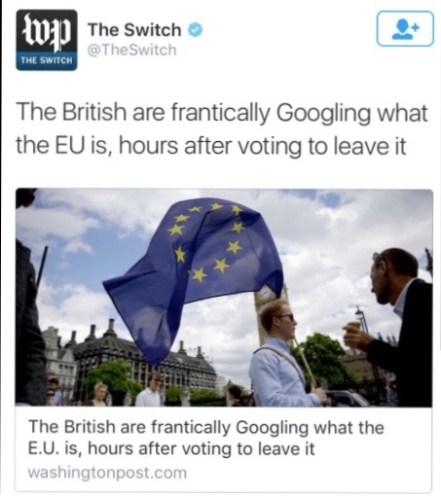
Brits become curious
https://twitter.com/biancatesfaye1/status/746394668485742593
The British voted to leave the European Union and then started to google “What is the EU?” They also started to inquire into getting Irish passports, since Ireland is in the EU. The vote was dramatically divided between young and old in the electorate. Scotland is furious because they stayed in Great Britain recently because the Brits told them that by leaving Britain they would leave the EU. Now they voted overwhelmingly to stay, and feel mighty baited and switched. To add insult to injury Donald Trump flew to Scotland to “celebrate” the Brexit with his peeps. Ever the party boy, he started tweeting his glee to the horror of Scottish people. He has run into controversy in that country with conservation groups. Now he is indicating he is thrilled at the collapse of the currency because more people will visit his golf course. He knows how to make a point. Sometimes the only way to deal with current events is to laugh at them.
https://twitter.com/Jenn_Abrams/status/746388211195248641
https://twitter.com/RosieBlackadder/status/746392996682285058
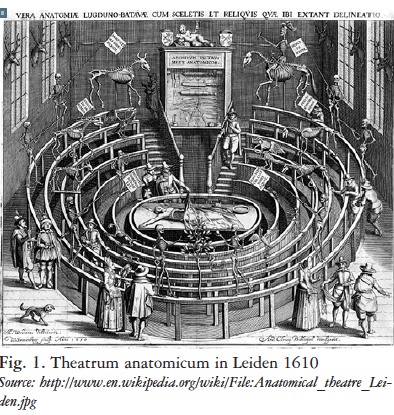
Anatomical theater Leiden 1610

Anatomical theater in Padua 1594
The dead teach the living is the meaning of the phrase mortui vivos docent. It was used to justify dissection of human bodies for science. In the middle ages there was fear of dead bodies that, coupled with real danger present in corpses, made dissection dangerous. The biggest danger faced by science, however, was the long arm of Catholic Church. Miguel Serveto (1511-1553), was a physician and theologist who studied medicine in Paris at Sylvius’. He published work describing post mortem examinations of corpses. For this sin Serveto was burnt at the stake along with his books, both medical and religious, sentenced to death by the Holy Inquisition.
The Greek physician Gallen taught anatomy in the second century, teaching by direct empirical observation. Ironically, his teachings were used to dissect one or two executed prisoners a year in the Middle Ages, but this practice was done more for theater than for research. In 1543 of Andreas Vesalius published his masterpiece, De Humani Corporis Fabrica. Vesalius, a young physician and professor at the University of Padua, changed the course of medical history. He demonstrated the importance of direct observation, creating illustrations of anatomy in action, teaching the secrets of the inner workings of the human body. Public dissection for educational purposes became popular.
The Middle Ages were plagued by the black death. Those dark ages were characterized by superstition and ignorance. The Renaissance occurred when science, art, and humanism gave rise to new philosophies. Some of these same ideas drove my ancestors to colonial America in the 1600’s. One of my ancestors, Dr John Greene, was perhaps the first surgeon in America. I have to wonder if he ever did any dissection in his training. I have not. I puked in the clay bucket for the art class (located right next to the science lab) in the 10th grade and was excused for frog dissection. It was never mentioned again, and boy was I glad.
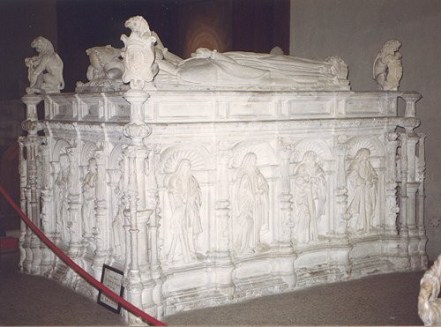
Tomb of Thomas Howard – 3rd Duke of Norfolk St. Michael’s Church; Suffolk,England Thomas Howard was buried here after his death on Aug. 25, 1554. It is possibly the best preserved ornate stonework in Europe. Although both Thomas and his wife, Elizabeth Stafford appear on the same monument, only he is buried there. She was interred in the Howard Chapel in St. Mary’s Church, Lambeth. This was due to the unhappy marriage and final separation.
Thomas Howard, 3rd Duke of Norfolk (1473 – 25 August 1554) was a prominent Tudor politician. He was uncle to two of the wives of Henry VIII, Anne Boleyn and Catherine Howard, and played a major role in the machinations behind these relationships. After falling from favor he was imprisoned in the Tower of London with his dukedom forfeit, and was released on the accession of Mary I. He aided in securing Mary’s throne, setting the stage for alienation between his Catholic family and the Protestant royal line that would be continued by Elizabeth I.
As with all the Dukes of Norfolk, Thomas Howard was descended from Edward I. He was the son of Thomas Howard, 2nd Duke of Norfolk, and Elizabeth Tilney. Thomas Howard succeeded his younger brother Edward as Lord High Admiral in 1513. Until 1524 he was styled Earl of Surrey.
Norfolk first married Anne of York, daughter of Edward IV of England and Elizabeth Woodville on 4 February 1494 at Greenwich Palace. The couple had at least two children: Thomas Howard (c. 1496-1508) and a stillborn child (c. 1499). There are also suggestions of short-lived Henry Howard and William Howard resulting from this marriage.
Following Anne’s death in 1511 he married Elizabeth Stafford, daughter of Edward Stafford, 3rd Duke of Buckingham and Alianore Percy on 8 January 1512. They had three children: Lady Mary Howard (c. 1513-1555) who married Henry Fitzroy, illegitimate son of Henry VIII; Henry Howard (1517-1547) was one of the founders of Renaissance poetry; and Thomas Howard (c.1520-1582). The marriage with Elizabeth was unhappy. When Elizabeth complained about his mistress, Bess Holland, the Duke beat her. The couple remained estranged until Norfolk’s death.
On his father’s death in 1524 he inherited the dukedom of Norfolk and was named Lord High Treasurer and Earl Marshal, making Howard one of the most premier nobles in the kingdom. He distinguished himself many times in battle, and was an able soldier. His power increased somewhat after his niece Anne Boleyn became Henry VIII’s mistress, sometime around 1527. However, their relationship was fraught with difficulty since Anne found her uncle to be selfish and untrustworthy. Although they were political allies throughout the late 1520s alongside Howard’s brother-in-law Thomas Boleyn, Anne’s father, Norfolk once complained that Anne used words to him “that one would not use to a dog.” She was crowned queen in 1533, and was probably influential along with Queen Anne in securing the marriage of Norfolk’s daughter Mary to Henry Fitzroy.
Queen Anne’s religious and political vision was more radical than Norfolk’s, and their relationship deteriorated throughout 1535 and 1536 as Henry VIII became increasingly unfaithful, including with Anne’s cousin, Mary Shelton. Putting his own security before family loyalties, he presided over Queen Anne’s trial in 1536, giving a death sentence despite her probable innocence. The next day, he condemned to death his nephew, Anne’s brother George for the crime of incest with his own sister, the Queen.
After the death of Jane Seymour he used another of his nieces, the teenaged Catherine Howard to strengthen his power at court by orchestrating an affair between her and the 48 year-old king. He used Henry’s subsequent marriage to Catherine as an opportunity to dispose of his long-term enemy Thomas Cromwell, who was beheaded in 1540. Queen Catherine’s reign was a short one, however, since Thomas Cranmer, the Archbishop of Canterbury, discovered that she was already secretly betrothed before her marriage to Henry and had been extremely indiscreet since. Catherine was beheaded in February 1542, and numerous other Howards were imprisoned in the Tower – including the duke’s stepmother, brother, two sisters-in-law and numerous servants.
Catherine Howard’s execution was his downfall, despite Norfolk’s desperate efforts to heal the rift. He had become the leader of the premier family in England; as the uncle of Anne Boleyn and Catherine Howard, and the great-uncle of Jane Seymour[1] He had also benefited from the influence of several of the King’s mistresses, his nieces Mary Boleyn and Elizabeth Carew and his wife’s aunt, Anne Stafford, Countess of Huntingdon. In 1546, Norfolk allegedly hatched a plot to make his daughter, Mary Howard, the King’s mistress, even though she was the widow of Henry’s illegitimate son.[2] In December 1546, he was arrested in company with his son Henry and charged with treason. Henry VIII died the day before the execution was due to take place, and Norfolk’s sentence was commuted to imprisonment. The Earl of Surrey was less fortunate and had been executed a few days previously.
Norfolk remained in the Tower throughout the reign of Edward VI of England and his dukedom remained forfeit. He was released by Mary I in 1553, due to the Howards being an important Catholic family, and the dukedom was restored. The Duke showed his gratitude by leading the forces sent to put down the rebellion of Thomas Wyatt, who had protested against the Queen’s forthcoming marriage to Philip II of Spain and had planned to put Anne Boleyn’s daughter, the future Elizabeth I on the throne in Mary’s place. The result of Norfolk’s suppression of the Wyatt Rebellion was Princess Elizabeth’s imprisonment in the Tower (although there was not enough evidence to convict her on treason, since she clearly had not been party to the rebels’ precise intentions) and the execution of the Queen’s cousin Lady Jane Grey. Norfolk died not long after the Wyatt Rebellion and was succeeded by his grandson Thomas. The 4th Duke, also a Catholic, was executed on Elizabeth’s orders for illegally plotting to marry Mary Queen of Scots.
Thomas Howard’s tomb is situated in Framlingham Church, Suffolk. It is among the best preserved example of ornate stonework in Europe
Lord Thomas Howard (1473 – 1554)
15th great-grandfather
Lady Katherine Howard Duchess Bridgewater (1495 – 1554)
daughter of Lord Thomas Howard
William ApRhys (1522 – 1588)
son of Lady Katherine Howard Duchess Bridgewater
Henry Rice (1555 – 1621)
son of William ApRhys
Edmund Rice (1594 – 1663)
son of Henry Rice
Edward Rice (1622 – 1712)
son of Edmund Rice
Lydia Rice (1649 – 1723)
daughter of Edward Rice
Lydia Woods (1672 – 1738)
daughter of Lydia Rice
Lydia Eager (1696 – 1735)
daughter of Lydia Woods
Mary Thomas (1729 – 1801)
daughter of Lydia Eager
Joseph Morse III (1756 – 1835)
son of Mary Thomas
John Henry Morse (1775 – 1864)
son of Joseph Morse III
Abner Morse (1808 – 1838)
son of John Henry Morse
Daniel Rowland Morse (1838 – 1910)
son of Abner Morse
Jason A Morse (1862 – 1932)
son of Daniel Rowland Morse
Ernest Abner Morse (1890 – 1965)
son of Jason A Morse
Richard Arden Morse (1920 – 2004)
son of Ernest Abner Morse
Pamela Morse
I am the daughter of Richard Arden Morse
My 15th great-grandfather, Thomas Howard, 3rd Duke of Norfolk, KG (1473 – 25 August 1554) aided Mary in securing her throne, which ended him and his family in a world of trouble. He was fully immersed in the politics of Henry VIII, and paid the price for it. Those were treacherous times to be close to the king.

Thomas Howard
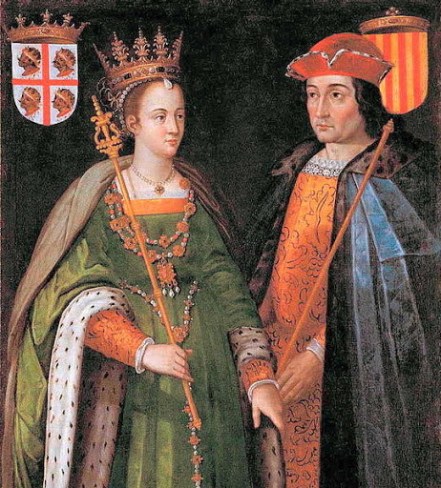
Ramon Berenguer & Beatrice of Savoy
My 23rd great grandfather was a nobleman born in France in 1198. He died Jul. 19, 1245 and is buried at Eglise Saint Jean de Malte, Aix-en-Provence, Departement des Bouches-du-Rhone, Provence-Alpes-Cote d’Azur, France. I want to visit his grave someday. I love the Cote d’Azur.
Ramon was Count of Provence and Forcalquier. He was the only son of Alfonso II de Provence, who died 1209 during an epidemic in Palermo and Gersend de Sabran, Countess of Forcalquier. He married Beatrice of Savoy in 1220 who bore him five children. Their only son Raymond died young and their four daughters Marguerite, Eleanor, Sanchia and Beatrice were all married to kings.
Ramon Berenguer IV de Provence Saint (1195 – 1245)
23rd great-grandfather
Eleanor Berenger (1223 – 1291)
daughter of Ramon Berenguer IV de Provence Saint
Edward I “the Longshanks” Plantagenet (1239 – 1307)
son of Eleanor Berenger
Elizabeth of Rhuddlan Princess of England Plantagenet (1282 – 1316)
daughter of Edward I “the Longshanks” Plantagenet
William Earl of Northampton De Bohun (1312 – 1360)
son of Elizabeth of Rhuddlan Princess of England Plantagenet
Lady Elizabeth Countess Arundel Countess DeBohun (1350 – 1385)
daughter of William Earl of Northampton De Bohun
Elizabeth Duchess Norfolk Fitzalan (1366 – 1425)
daughter of Lady Elizabeth Countess Arundel Countess DeBohun
Lady Joan De Goushill Baroness Stanley (1402 – 1459)
daughter of Elizabeth Duchess Norfolk Fitzalan
Countess Elizabeth Sefton Stanley (1429 – 1459)
daughter of Lady Joan De Goushill Baroness Stanley
Thomas Sir 8th Earl of Sefton Molyneux (1445 – 1483)
son of Countess Elizabeth Sefton Stanley
Lawrence Castellan of Liverpool Mollenaux (1490 – 1550)
son of Thomas Sir 8th Earl of Sefton Molyneux
John Mollenax (1542 – 1583)
son of Lawrence Castellan of Liverpool Mollenaux
Mary Mollenax (1559 – 1598)
daughter of John Mollenax
Gabriell Francis Holland (1596 – 1660)
son of Mary Mollenax
John Holland (1628 – 1710)
son of Gabriell Francis Holland
Mary Elizabeth Holland (1620 – 1681)
daughter of John Holland
Richard Dearden (1645 – 1747)
son of Mary Elizabeth Holland
George Dearden (1705 – 1749)
son of Richard Dearden
George Darden (1734 – 1807)
son of George Dearden
David Darden (1770 – 1820)
son of George Darden
Minerva Truly Darden (1806 – 1837)
daughter of David Darden
Sarah E Hughes (1829 – 1911)
daughter of Minerva Truly Darden
Lucinda Jane Armer (1847 – 1939)
daughter of Sarah E Hughes
George Harvey Taylor (1884 – 1941)
son of Lucinda Jane Armer
Ruby Lee Taylor (1922 – 2008)
daughter of George Harvey Taylor
Pamela Morse
I am the daughter of Ruby Lee Taylor
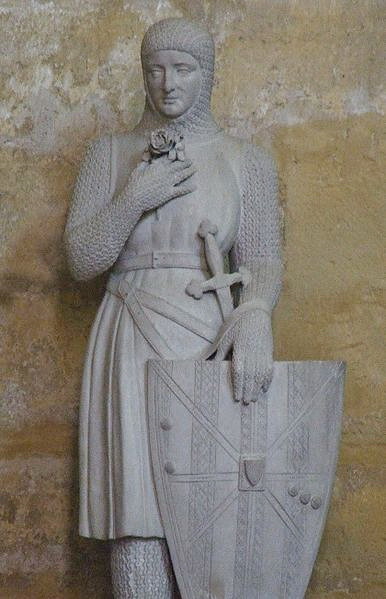
in Church Saint-Jean-de-Malte, Aix-en-Provence, France
Ramon Berenguer IV (1195 – 19 August 1245), Count of Provence and Forcalquier, was the son of Alfonso II of Provence and Garsenda of Sabran, heiress of Forcalquier. After his father’s death (1209), Ramon was imprisoned in the castle of Monzón, in Aragon until he was able to escape in 1219 and claim his inheritance. He was a powerful and energetic ruler who added Forcalquier to his domain. Giovanni Villani in his Nuova Cronica had this to say about Raymond:
Count Raymond was a lord of gentle lineage, and kin to them of the house of Aragon, and to the family of the count of Toulouse, By inheritance Provence, this side of the Rhone, was his; a wise and courteous lord was he, and of noble state and virtuous, and in his time did honourable deeds, and to his court came all gentle persons of Provence and of France and of Catalonia, by reason of his courtesy and noble estate, and he made many Provençal coblas and canzoni of great worth.
On 5 June 1219, Ramon married Beatrice of Savoy, daughter of Thomas I of Savoy. She was a shrewd and politically astute woman, whose beauty was likened by Matthew Paris to that of a second Niobe. Along with two stillborn sons (1220 & 1225), Ramon and Beatrice had four daughters, all of whom married kings.
Margaret of Provence (1221–1295), wife of Louis IX of France
Eleanor of Provence (1223–1291), wife of Henry III of England
Sanchia of Provence (1228–1261), wife of Richard of Cornwall, king of Germany
Beatrice of Provence (1234–1267), wife of Charles I of Sicily
Ramon Berenguer IV died in Aix-en-Provence. At least two planhs (Occitan funeral laments) of uncertain authorship (one possibly by Aimeric de Peguilhan and one falsely attributed to Rigaut de Berbezilh) were written in his honour.

Burial: Abbey of Valloires Argoules Departement de la Somme Picardie, France
My 23rd great-grandmother was born Apr. 19, 1199. She was a noblewoman. Her title was Countess of Ponthieu and Montreuil. She was the only child and heiress of Guillaume II de Ponthieu and Alix de France. She married Simon de Dammartin and bore him four daughters. In 1241 she remarried Matthieu de Montmorency who was killed in the Battle of Mansurah in 1250. She died Sep.,1250


Maria Jeanne, Countess of Ponthieu & Montreuil, Dammartin (1199 – 1250)
23rd great-grandmother
Queen Consort Joan (Castile and León) (Countess Ponthieu) DeDammartin (1216 – 1279)
daughter of Maria Jeanne, Countess of Ponthieu & Montreuil, Dammartin
Eleanor Castille Princess of Castille and Leon (1241 – 1290)
daughter of Queen Consort Joan (Castile and León) (Countess Ponthieu) DeDammartin
Elizabeth of Rhuddlan Princess of England Plantagenet (1282 – 1316)
daughter of Eleanor Castille Princess of Castille and Leon
William Earl of Northampton De Bohun (1312 – 1360)
son of Elizabeth of Rhuddlan Princess of England Plantagenet
Lady Elizabeth Countess Arundel Countess DeBohun (1350 – 1385)
daughter of William Earl of Northampton De Bohun
Elizabeth Duchess Norfolk Fitzalan (1366 – 1425)
daughter of Lady Elizabeth Countess Arundel Countess DeBohun
Lady Joan De Goushill Baroness Stanley (1402 – 1459)
daughter of Elizabeth Duchess Norfolk Fitzalan
Countess Elizabeth Sefton Stanley (1429 – 1459)
daughter of Lady Joan De Goushill Baroness Stanley
Thomas Sir 8th Earl of Sefton Molyneux (1445 – 1483)
son of Countess Elizabeth Sefton Stanley
Lawrence Castellan of Liverpool Mollenaux (1490 – 1550)
son of Thomas Sir 8th Earl of Sefton Molyneux
John Mollenax (1542 – 1583)
son of Lawrence Castellan of Liverpool Mollenaux
Mary Mollenax (1559 – 1598)
daughter of John Mollenax
Gabriell Francis Holland (1596 – 1660)
son of Mary Mollenax
John Holland (1628 – 1710)
son of Gabriell Francis Holland
Mary Elizabeth Holland (1620 – 1681)
daughter of John Holland
Richard Dearden (1645 – 1747)
son of Mary Elizabeth Holland
George Dearden (1705 – 1749)
son of Richard Dearden
George Darden (1734 – 1807)
son of George Dearden
David Darden (1770 – 1820)
son of George Darden
Minerva Truly Darden (1806 – 1837)
daughter of David Darden
Sarah E Hughes (1829 – 1911)
daughter of Minerva Truly Darden
Lucinda Jane Armer (1847 – 1939)
daughter of Sarah E Hughes
George Harvey Taylor (1884 – 1941)
son of Lucinda Jane Armer
Ruby Lee Taylor (1922 – 2008)
daughter of George Harvey Taylor
Pamela Morse
I am the daughter of Ruby Lee Taylor
Marie de Ponthieu (before 17 Apr 1199-Sep 1250). Daughter of Guillaume II “Talvas” de Ponthieu and Alix de France. The De Rebus Hispaniæ of Rodericus Ximenes names “Mariam…mater Joannæ Reginæ Castellæ et Legionis” as the daughter of “Comitis de Pontivo” and his wife “Adelodis” daughter of “Ludovico Regi Francorum” (and his wife “Elisabeth”, an error for Constanza). “Willelmus comes Pontivi et Monstreoli” donated property to the church of Saint Giosse, with the consent of “Marie filie mee et Aelis uxoris mee”, by charter dated 1205. “Willelmus comes Pontivi et Monstreoli…et Aalais uxor mea comitissa Pontivi et Maria filia mea” granted concessions by charter dated 1207. “Willelmus comes Pontivi et Monstreoli” granted rights to one of his vassals, with the consent of “Aalis, uxoris mee Ludovici regis filie et Marie filie mee”, by charter dated Aug 1208. “Renaldus comes Bolonie” confirmed the marriage contract between “Guillelmum comitem Pontivi et Mariam eiusdem comitis filiam” and “Simonem fratrem meum” by charter dated Sep 1208. “Willelmus comes Pontivi et Monstreoli” granted rights to the commune of Maioc, with the consent of “Aalis, uxoris mee et Symonis de Bolonia, generis mei, et Marie filie mee, uxoris eius”, by charter dated 1209. “Guilelmus comes Pontivi et Monstrolii” donated property to Saint-Maurice d’Agaune, for the souls of “Alaidis uxoris meæ et Mariæ filiæ meæ”, by charter dated Mar 1210. “Willaume comte de Pontieu et de Montreuil” agreed a concession made by one of his vassals, with the consent of “Aalis sa femme et de Marie leur fille” by charter dated Nov 1211.
She succeeded her father in 1221 as Countess de Ponthieu. Louis VIII King of France confirms an agreement with “consanguinea nostra Maria comitissa Pontivi” related to rights of her “filios et filios quos susceperat a Simone fratre comitis Renaldi Bolonie” by charter dated 1225. “Symon comes Pontivi et Monsteroli et Maria uxor mea” confirmed a donation of property to the abbey of Notre-Dame d’Ourscamp by “Johannes comes Pontivi” by charter dated 2 Mar 1230. “Maria comitissa Pontivi et Monstreoli” donated property to the church of Boulogne in memory of “Symon comes Pontivi et Monstreoli…maritus meus” by charter dated Oct 1239. “Matheus comes Pontivi et Monstreoli et Maria uxor eius, comitissa” noted property sales by charter dated Sep 1242. “Matheus de Montemorenc. comes Pontivi et Monsterolii dominus de Atechi” donated property, with the consent of “Maria comitissa Pontivi et Monsterolii uxor mea”, by charter dated Feb 1246.
Married firstly (contract Sep 1208) Simon de Dammartin, Comte de Aumale, son of Aubry II, Comte de Dammartin & his wife Mathilde [Mabile] de Clermont-en-Beauvaisis ( – 21 Sep 1239). Comte Simon & his wife had four children: Jeanne, Mathilde, Phillipa and Marie.
Married secondly (Sep 1240/15 Dec 1241) Mathieu de Montmorency, Seigneur d’Attichy, son of Mathieu II, Seigneur de Montmorency ( – killed in Battle Mansurah 8 Feb 1250).

Central Burial Grounds Boston
My 10th great-grandfather was banished from the colony of Massachusetts, and signed the Portsmouth Compact. He did not stay in Rhode Island for very long, but returned to live in Boston, where he was one of the citizens who purchased the Boston Common and donated it to the town. I am not sure how he became un-banished, but his case is not the only un-banishment in our family. He kept his property in Rhode Island and had extensive holdings in Boston as well. He was in the wool business.

Portsmith Compact
Samuel Wilbore and wife Ann, came to America before 1 December, 1633 and lived in Boston. May have come 4 September, 1633 on ship “Griffin” He was a merchant, had a ship, probably sold cloth and lumber and was in the wool business.
He and 6 men under him guarded the gate at Roxbury. He sold his home on what is now Washington St. to Samuel Sherman. In 1634, he and William Blackstene bought “Boston Commons” and gave it to the town. Made “Freeman” 4 March 1633/4 and with John Porter and Philly Sherman bought Aquidneck Island, (Rhode Island). He was banished from Boston 30 August 1637, and disarmed 20 November 1637 and went to Portsmouth, R.I. because of his association with a religious group lead by Anne Hutchinson, Mr. Wheelwright and possibly Roger Williams. Anne Hutchinson was the unauthorized Puritan preacher of a dissident church discussion group.
Rhode Island had become a haven for persecuted religious sects. These people, called Antinomians, believed that the moral laws as taught by the Church of England were of no value and that the only law that should be followed was that of the Gospel. Quakers, who eventually merged with the Antinomians, established a meeting house on Aquidneck in 1657.
11 January 1638/9 he was constable at Portsmouth. He owned land at Nt. Wolliston (now Quincy). With Ralph Earle he built a planing mill at Portsmouth,1640. By 1645 was back in Boston, though he kept his Portsmouth and Taunton land, and lived on Mill Street. He was wealthy and gave to the 1st free school in America. The early spelling was “Welleboro”, a Norman name. In 1626 he was a “juror” in Sible Hedington, Essex, England.
Samuel Wilbore (1595 – 1656)
10th great-grandfather
Dorothy Wilbore (1617 – 1696)
daughter of Samuel Wilbore
Elizabeth Albro (1646 – 1720)
daughter of Dorothy Wilbore
Benjamin Congdon (1676 – 1756)
son of Elizabeth Albro
William Congdon (1711 – 1755)
son of Benjamin Congdon
Frances Congdon (1738 – 1755)
daughter of William Congdon
Thomas Sweet (1765 – 1844)
son of Frances Congdon
Valentine Sweet (1791 – 1858)
son of Thomas Sweet
Sarah LaVina Sweet (1840 – 1923)
daughter of Valentine Sweet
Jason A Morse (1862 – 1932)
son of Sarah LaVina Sweet
Ernest Abner Morse (1890 – 1965)
son of Jason A Morse
Richard Arden Morse (1920 – 2004)
son of Ernest Abner Morse
Pamela Morse
Samuel Wilbore was born in Jan 1595 in Sible Hedingham, Essex, England. He died on 29 Sep 1656 in Boston, Suffolk, Massachusetts. Samuel married Ann Smith on 13 Jan 1619/1620 in Sible, Hedingham, Essex, England.
Samuel Wildbore, said to have been born in 1585, came to Boston not later than 1633, and was admitted to the First Church of Boston on December 1/1633. His house was on the neck of land between the island and the mainland, now called Washington St. and later Milk Street. In 1634 Samuel and others bought the Boston Common for the town, from William Blackstone whose ownership was acknowledged by an entry in the Town Records as early as 1633 by which it was agreed that William Blackstone shall have 50 acres set off to him near his house in Boston. The Town Records have the following statement in reference to Samuel Wildbore’s share in the purchase of the Common. “The 10th day of the 9th month 1654: Item, Edmund Quinsey, Samuel Wildbore, William Baulston, Edward Hutchinson the elder, and William heesborough, constable, shall make and assess all the rates, viz, a rate of œ30 to William Blackstone”. Blackstone sold the whole parcel of land except 6 acres immediately adjoining his house. On August 6/1635, Samuel gave œ10 towards a free school, the first in America. Governor Winthrop gave a like amount, and none other gifts exceeded this amount. Samuel also had a piece of land on Essex St., near where the Touraine Hotel now stands. Samuel married in 1620, at Sibley Hedringham, England, Ann Smith. Most genealogies wrongly give her name as Ann Bradford. Samuel was made freeman on March 4/1634. He bought much property in Taunton and likewise possessed considerable holdings in Boston, evidently dividing his place of residence between the two places. While in Taunton, he with others, embraced the “dangerous doctrines” as they were then called, of Cotton and Wheelwright, for which in 1637 he was banished from the Massachusetts Colony. Acting upon the advice of Roger Williams, he and seventeen others fled to Providence, R.I., where they purchased the island of Aquidnec, (now Rhode Island) from the Naragansett Indians, and early in 1638 moved his family there and formed a colony on March 7/1638. Full details of the purchase and history of this action is contained in the Genealogies quoted, but too long to insert here. He did not remain in Rhode Island for long, and returned to Boston in 1645 and built the first iron furnace in New England at Taunton, now Raynham, on the main road from Tilicut to Taunton. He was clerk of the town board in 1638, Constable in 1639, Sergeant in 1644. He married, 2nd, before November 29/1645, Elizabeth Lechford, widow of Thomas Lechford. Date of his second marriage and date of death of his first wife Ann are not known. Samuel died July 24/1656. After his death Elizabeth married, 2nd, on December 20/1656, Henry Bishop who died in 1664: Elizabeth died in 1665. Samuel was a man of wealth and he was of very respectable standing in society, exerting a wide influence in each of the places he dwelt. His will was dated April 30/1656.
Ann SMITH-8832 was born on 13 Jan 1598 in Sible, Hedingham, Essex, England. She died on 24 Sep 1636 in Taunton, Bristol, Massachusetts. Ann married Samuel WILDBORE-8833 on 13 Jan 1619/1620 in Sible, Hedingham, Essex, England.
They had the following children.
MiSamuel WILBORE-8830 was born on 10 Apr 1622. He died in 1697. MiiWilliam WILBORE-8838 was born on 21 May 1630. He died on 15 Apr 1710.
TPD SWATTER Salisbury
I want to convince the commander of my local police station to learn more about the progressive use of social media. Controversy and conflict spread like wildfire on all platforms today. This is a reflection of our relationships in real life. It is easy to get into a political argument but not so easy to locate community spirit. We drastically need dialog and understanding to build better neighborhoods. The tension between police and citizens must be treated. Lack of trust must be brought to light and replaced with understanding. We need better communication, and I believe it can be achieved with judicious use of social media. I believe twitter has the power to prevent crime if used with imagination and good strategy, just as it has influenced some to fight for ISIS. The only way to stop an evil force with a twitter account is with a loving force with a twitter account.
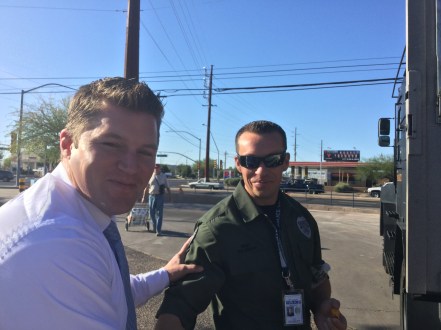
In the photo above a young detective is joking around with SWAT Officer Salisbury, who was working showing off the SWAT stuff at the station the other day. I had just asked him what he detected about Officer Salisbury. He was telling me he that his colleague is very speedy. Their camaraderie is evident and the good nature of the joking between them was fun to see. These young men are charming and professional, but I certainly hope I will not require their services. It is fine to hang out in the parking lot, but I don’t want them to come to my house in the middle of the night.
It was all fun and games until I said, “I know you saw the PBS special last week about SWAT.” They didn’t really say much, but they indicated that this PBS reference had bummed them out. I don’t blame them because it is another blow to the already ragged respect for police across the country. News coverage brings scary evidence that violence is escalating in certain cities. Tucson is one of them. These young cops face ever-growing danger with no hope of a pay raise in sight. For them, as well as for all of us, we need to find ways to communicate to prevent crime of all kinds, particularly crimes against cops. We will find ourselves unable to recruit people who are willing to take the job if we don’t kick in and help them reduce crime and violence.
I believe social media has the potential to transform crime prevention because
What do you think, gentle reader, is the answer to the social disorder we are experiencing today?

SWATTER Stoner
my ethnicity map
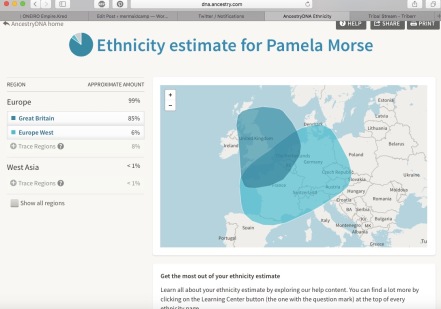
My research into family history started after both my parents had died. They each left some written material about their families, but neither parent had been particularly interested in genealogy. My father said he was Scots-Irish, which is in part true. Both parents had ancestors who immigrated to America from the British Isles in the 1600s. The DNA survey on ancestry shows that my DNA is 85% from Great Britain. When the survey was much younger and fewer participants had contributed my ethnicity was estimated at 99% from the British Isles. My “trace region” is the Caucasus area of Asia. The Asian genes may be a fluke, as explained in the accompanying material.
my tree
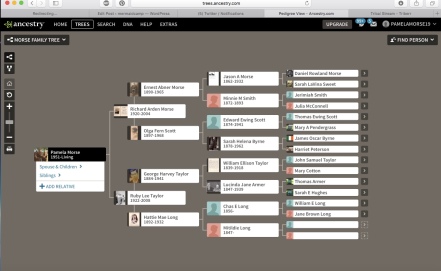
I am sure about the first three generations I have listed, but my maternal grandmother was an orphan adopted in Mississippi in a county where the courthouse burned to the ground. We have no way to find records of her natural parents. She moved to Texas with her adoptive family. Some of the branches are easy to research and verify. Others have me at dead ends. My most irksome dead end is my third great-grandfather, Thomas Peterson, born in Indiana in 1825. I keep looking for answers about his parentage but have not found any records of his birth. More official historical records are digitally added all the time, so I could still find something new that would break the case for me. It bugs me that I can trace his nephew’s line back in time, but not Thomas’.
Along the way I have discovered my own mistakes, and have also had problems pointed out to me by other ancestry enthusiasts. It is always a drag to find errors because it means you need to remove the phantom family and start again at the point you can verify the data. I have lost a few big limbs this way. I had become fond of many of the members of my unverified people. It is funny to give them up with such great emotion, since they were not really my ancestors, but I can tell you that this feels awful. I still think about them in history too. Sometimes I am angry that I made such mistakes in my research, but usually I am glad I met them (historically) and held them in my memory. When my first cousin gave me the news that I had the wrong John Taylor as my 3rd great-grandfather I was very upset. I had to admit that she had a point. This involved chopping down a limb that I had built back to the middle ages in England, with many illustrious stories along the way. Alas, they were all built on specious data. Now I am back to Jonathan Aaron Taylor, who fought in the Revolutionary War and was discharged in South Carolina..not born there. I suppose I am happy to have him even though he is not who I thought he was.
Jonathan Aaron Taylor (1760 – 1820)
3rd great-grandfather
John Samuel Taylor (1798 – 1873)
son of Jonathan Aaron Taylor
William Ellison Taylor (1839 – 1918)
son of John Samuel Taylor
George Harvey Taylor (1884 – 1941)
son of William Ellison Taylor
Ruby Lee Taylor (1922 – 2008)
daughter of George Harvey Taylor
Pamela Morse
I am the daughter of Ruby Lee Taylor
Have you ever attempted an ancestry study? It is really easy now that Ancestry.com is there to guide you. Just be careful as you roam around in that data. Not all of it can be verified, especially the family trees. Don’t copy another person’s data until you examine it carefully for errors. The ancestors have much to teach us..and one of the lessons is VERIFY your facts before you swallow them whole. Save yourself the heartache of saying good-bye to bogus relatives.
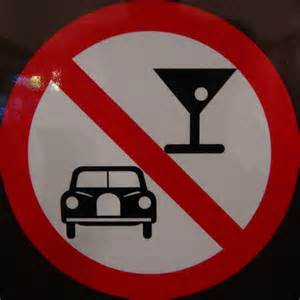
Don’t Drink and Drive
After a long career in public service Ann Day had retired from the Board of Supervisors in Pima County. The 77-year-old was driving alone on Saturday morning when a drunk driver crossed a raised median and slammed head on into her vehicle. The car behind could not stop in time, and crashed into the back of her car. She was pronounced dead at the hospital shortly after the accident. This tragic death took place at 7:40 am. We don’t know if the driver woke up and started drinking or was still drunk from Friday night. He has been charged with manslaughter for this senseless death.
Ann and her older sister Sandra Day O’Connor grew up on a cattle ranch founded by her paternal grandfather in 1880 near the New Mexico border. Henry Clay Day was a homesteader on his ranch when Geronimo was still roaming that land. The family history is Arizona history, with an emphasis on education. Henry Clay Day served as chairman of the board of supervisors of Graham County, setting an example that Ann and her esteemed sister would follow. Ann served 10 years in the state senate and 12 years on the Pima County Board of Supervisors. She was a Republican who was known for her independent streak. She was well-respected by colleagues and constituents, many of whom are expressing their grief about this tragedy.
She was killed near the shopping center where Gabby Giffords was shot. My own parents were shoppers at that center. They might have been at the Safeway had the shootings happened a few years earlier. My mom and dad took the transport to that center, operated by assisted living facility where they rented an apartment. My dad loved to drive the Safeway carts inside the store because it was the only driving he was allowed to do at that point. Jarred Laughlin could have gunned down my parents had timing been different. That is exactly the thought I have when I drive past that center.
The irony of public servants loosing life to loose canons of various kinds is not lost on me. Ann Day was not targeted for her political service like Gabby. She was randomly selected to die as the result of one of our society’s ugliest problems, drunk driving. Jarrad Barnes, 24 years old, is charged for taking the life of a woman he did not know. Since her family and her history are prominent we can only hope this will bring much-needed attention and solutions to the drunk driving epidemic in America. We can’t take away everyone’s cars, so we need to change public behavior. This common habit has touched too many families in this country. We need to solve this serious problem.

Don’t Drink and Drive

