mermaidcamp
Keeping current in wellness, in and out of the water
You can scroll the shelf using ← and → keys
You can scroll the shelf using ← and → keys
Tomorrow, 5 March, 2014, use #VenezuelaMuereTuCallas to share concern for the violence in Venezuela. Brutality has broken out all around the globe lately, and none of it was spontaneous. The seeds of ugly war have been planted long before they bear fruit this bitter and horrid. It is hard to know if violence has been reduced or increased as a result of YouTube, twitter, and all digital formats. What is surely true is that we are exposed to it in direct ways that were not possible in the past. We shall know the truth and the truth will set us free…That is what I learned from reading the University of Texas tower, and I believe it.
The call to action bringing attention to the expanding crisis in this Caribbean nation with petroleum and a history of corruption is close to my heart. I still have friends who live there. With the violence heating up I am concerned for their safety. It is the least I can do to spend some time tomorrow tweeting leaders in Washington. You can use hash tags now on Facebook too, for those of you who don’t tweet. You just type it all as one word #VenezuelaMuereTuCallas. It means Venezuela is dying and you are mute. Please speak up and become informed, gentle readers.
Cyclovia Tucson is looking for a few good volunteers. This twice a year event is held to encourage the use of our public streets for alternative uses. I used to travel to Lugano, Switzerland in the summer to visit the lakeside city. Once a week for an evening the center of town was closed to motor traffic and skates, skateboards, bikes, and other self propelled transportation filled the streets. This was a great opportunity to get out and share the warm nights with locals as they rolled. Now Tucson has joined an American movement to follow a similar plan. Last year I was out of town for Cyclovia, but my friends who attended told me it was excellent. On April 6, 2014 a route that will include downtown will be opened for Cyclovia. Super volunteers can assist during the event and others are invited to participate by rolling through all or part of the route. Entertainment and local color are on display. It will be fun to join the moveable feast. I hope the concept catches on and becomes a more frequent part of our culture in Tucson.

Albert I King of Germany
My 19th great grandfather was born in current day Switzerland and married well:
Albert I of HabsburgKing of Germany
(formally King of the Romans)Reign27 July 1298 – 1 May 1308CoronationUncrownedGermanAlbrecht I, römisch-deutscher König, Herzog von Österreich und der Steiermark, Markgraf von MeißenTitlesDuke of Austria
Duke of Styria
Margrave of MeißenBornJuly , 1255
Rheinfelden, Free Imperial CityDiedMay 1, 1308 (aged 52)
Königsfelden, Breisgau, Further AustriaPredecessorAdolf of NassauSuccessorHenry VII, Count of LuxembourgConsortElisabeth of Gorizia-TyrolOffspringRudolph I, King of Bohemia
Frederick the Fair, King of the Romans
Leopold I, Duke of Austria
Albert II, Duke of Austria
Anna, Duchess of Brieg
Agnes, Queen of Hungary
Elisabeth, Duchess of Lorraine
Catherine, Duchess of Calabria and three others Royal HouseHouse of HabsburgFatherRudolph I, King of the RomansMotherGertrude of Hohenburg
Albert I of Habsburg (German: Albrecht I) (July 1255 – May 1, 1308) was King of the Romans, Duke of Austria, and eldest son of German King Rudolph I of Habsburg and Gertrude of Hohenburg.
He was the founder of the great house of Habsburg invested with the duchies of Austria and Styria, together with his brother Rudolph II, in 1282. In 1283 his father entrusted him with their sole government, and he appears to have ruled them with conspicuous success. Rudolph I was unable to secure the succession to the German throne for his son, and on his death in 1291, the princes, fearing Albert’s power, chose Adolf of Nassau-Weilburg as king. A rising among his Swabian dependents compelled Albert to recognize the sovereignty of his rival, and to confine himself for a time to the government of the Habsburg territories.
He did not abandon his hopes of the throne, however, which were eventually realised. In 1298, he was chosen German king by some of the princes, who were dissatisfied with Adolf. The armies of the rival kings met at the Battle of Göllheim near Worms, where Adolf was defeated and slain. Submitting to a new election but securing the support of several influential princes by making extensive promises, he was chosen at Frankfurt on July 27, 1298, and crowned at Aachen on August 24.
Albert married Elisabeth, daughter of Meinhard II, count of Gorizia and Tyrol, who was a descendant of the Babenberg margraves of Austria who predated the Habsburgs’ rule. The baptismal name Leopold, patron saint margrave of Austria, was given to one of their sons. Elisabeth was in fact better connected to mighty German rulers than her husband: a descendant of earlier kings, for example Emperor Henry IV, she was also a niece of dukes of Bavaria, Austria’s important neighbors.
Although a hard, stern man, Albert had a keen sense of justice when his own interests were not involved, and few of the German kings possessed so practical an intelligence. He encouraged the cities, and not content with issuing proclamations against private war, formed alliances with the princes in order to enforce his decrees. The serfs, whose wrongs seldom attracted notice in an age indifferent to the claims of common humanity, found a friend in this severe monarch, and he protected even the despised and persecuted Jews. Stories of his cruelty and oppression in the Swiss cantons did not appear until the 16th century, and are now regarded as legendary.
Albert sought to play an important part in European affairs. He seemed at first inclined to press a quarrel with France over the Burgundian frontier, but the refusal of Pope Boniface VIII to recognize his election led him to change his policy, and, in 1299, he made a treaty with Philip IV of France, by which his son Rudolph was to marry Blanche, a daughter of the French king. He afterwards became estranged from Philip, but in 1303, Boniface recognized him as German king and future emperor; in return, Albert recognized the authority of the pope alone to bestow the imperial crown, and promised that none of his sons should be elected German king without papal consent.
Albert had failed in his attempt to seize Holland and Zeeland, as vacant fiefs of the Empire, on the death of Count John I in 1299, but in 1306 he secured the crown of Bohemia for his son Rudolph on the death of King Wenceslaus III. He also renewed the claim made by his predecessor, Adolf, on Thuringia, and interfered in a quarrel over the succession to the Hungarian throne. His attack on Thuringia ended in his defeat at Lucka in 1307 and, in the same year, the death of his son Rudolph weakened his position in eastern Europe. His action in abolishing all tolls established on the Rhine since 1250, led the Rhenish archbishops and the count palatine of the Rhine to form a league against him. Aided by the towns, however, he soon crushed the rising.
He was on the way to suppress a revolt in Swabia when he was murdered on May 1, 1308, at Windisch on the Reuss River, by his nephew John of Swabia, afterwards called “the Parricide” or “John Parricida”, whom he had deprived of his inheritance.
Titles
Albert, by the grace of God king of the Romans, duke of Austria and Styria, lord of Carniola, over the Wendish Mark and of Port Naon, count of Habsburg and Kyburg, landgrave of Alsace
Family
Albert and his wife Elizabeth had twelve children:
Rudolph III (ca. 1282 – 4 July 1307, Horažďovice), Married but line extinct and predeceased his father.
Frederick I (1289 – 13 January 1330, Gutenstein). Married but line extinct.
Leopold I (4 August 1290 – 28 February 1326, Strassburg). Married, had issue.
Albert II (12 December 1298, Vienna – 20 July 1358, Vienna).
Heinrich (1299 – 3 February 1327, Bruck an der Mur). Married but line extinct.
Meinhard, 1300 died young.
Otto (23 July 1301, Vienna – 26 February 1339, Vienna). Married but line extinct.
Anna 1280?, Vienna – 19 March 1327, Breslau), married:
in Graz ca. 1295 to Herman, Margrave of Brandenburg-Salzwedel;
in Breslau 1310 to Duke Henry VI the Good.
Agnes (18 May 1281 – 10 June 1364, Königsfelden), married in Vienna 13 February 1296 King Andrew III of Hungary.
Elisabeth (d. 19 May 1353), married 1304 Frederick IV, Duke of Lorraine.
Catherine (1295 – 18 January 1323, Naples), married Charles, Duke of Calabria in 1316.
Jutta (d. 1329), married Ludwig V, Count of Öttingen in Baden, 26 March 1319.
Ancestry
Ancestors of Albert I of Germany 16. Albert III, Count of Habsburg 8. Rudolph II, Count of Habsburg 17. Ida von Pfullendorf 4. Albert IV, Count of Habsburg 18. Gottfried von Staufen 9. Agnes of Staufen 2. Rudolph I of Germany 20. Hartmann III, Count of Kiburg and Dillingen 10. Ulrich, Count of Kiburg and Dillingen 21. Richenza von Lenzburg 5. Heilwig of Kiburg 22. Berthold IV, Duke of Zähringen 11. Anna von Zähringen 23. Heilwig of Frohburg 1. Albert I of Germany 24. Burckhard III, Count of Hohenburg 12. Burckhard IV, Count of Hohenburg 6. Burckhard V, Count of Hohenburg 3. Gertrude of Hohenburg 28. Rudolph I, Count Palatine of Tübingen 14. Rudolph II, Count Palatine of Tübingen 29. Mechtild of Gleiberg, Countess of Giessen 7. Mechtild of Tübingen 30. Henry, Margrave of Ronsberg 15. unnamed 31. Udilhild of Gammertingen [edit] References and external linksWikimedia Commons has media related to: Albert I of Habsburg
This article incorporates text from a publication now in the public domain: Chisholm, Hugh, ed (1911). Encyclopædia Britannica (Eleventh ed.). Cambridge University Press.
Albert I of Germany
House of Habsburg
Born: 1255 Died: 1308German royaltyRegnal titlesPreceded by
AdolfKing of Germany(formally King of the Romans)
1298–1308Succeeded by
Henry VIIMargrave of Meißen
1298–1307
With: Dietrich II (1291–1307)Friedrich I (1291–1323)Succeeded by
Friedrich IIPreceded by
King Rudolph IDuke of Austria and Styria
1282–1308
With: Rudolph II (1282–83)Rudolph III (1298–1307)Succeeded by
Frederick III the Fairand Leopold I
Albert I King of Germany Habsburg (1248 – 1308)
is my 19th great grandfather
Albrecht Albert II ‘The Wise’ Duke of Austria Habsburg (1298 – 1358)
son of Albert I King of Germany Habsburg
Leopold III “Duke of Austria” Habsburg (1351 – 1386)
son of Albrecht Albert II ‘The Wise’ Duke of Austria Habsburg
Ernst I “Ironside” Archduke of Austria Habsburg (1377 – 1424)
son of Leopold III “Duke of Austria” Habsburg
Katharina Archduchess Austria Von Habsburg (1420 – 1493)
daughter of Ernst I “Ironside” Archduke of Austria Habsburg
Christof I VanBaden (1453 – 1527)
son of Katharina Archduchess Austria Von Habsburg
Beatrix Zahringen (1492 – 1535)
daughter of Christof I VanBaden
Sabine Grafin VonSimmern (1528 – 1578)
daughter of Beatrix Zahringen
Marie L Egmond (1564 – 1584)
daughter of Sabine Grafin VonSimmern
Richard Sears (1590 – 1676)
son of Marie L Egmond
Silas Sears (1638 – 1697)
son of Richard Sears
Silas Sears (1661 – 1732)
son of Silas Sears
Sarah Sears (1697 – 1785)
daughter of Silas Sears
Sarah Hamblin (1721 – 1814)
daughter of Sarah Sears
Mercy Hazen (1747 – 1819)
daughter of Sarah Hamblin
Martha Mead (1784 – 1860)
daughter of Mercy Hazen
Abner Morse (1808 – 1838)
son of Martha Mead
Daniel Rowland Morse (1838 – 1910)
son of Abner Morse
Jason A Morse (1862 – 1932)
son of Daniel Rowland Morse
Ernest Abner Morse (1890 – 1965)
son of Jason A Morse
Richard Arden Morse (1920 – 2004)
son of Ernest Abner Morse
Pamela Morse
I am the daughter of Richard Arden Morse
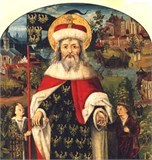
Leopold III
I was trained by Austrian Tourism as an expert in Austria. The training included classroom study for two full days and extensive travel around the country. In the classroom we learned about the Habsburgs who married all the most eligible monarchs in Europe to expand their holdings. I did not suspect at the time that these were my people. However, I specifically noticed that Austrian over-the-top castles and music halls thrilled me, whereas French over-the-top design always made me think of them as wasteful. I did have a certain strong feeling for the architecture, especially in Vienna and Salzburg.
Monarchs of the House of Habsburg
A word about the coats of arms: the Habsburg Empire was never composed of a single unified and unitary state as Bourbon France, Hohenzollern Germany, or Great Britain was. It was made up of an accretion of territories that owed their historic loyalty to the head of the house of Habsburg as hereditary lord. The Habsburgs had mostly married the heiresses of these territories, most famously of Spain and the Netherlands. They used their arms then as a statement of their right to rule all these territories. As there were many territories, so their arms were complex and reflected the waxing and waning position of the Habsburgs within European power politics. It was not until the 19th century (see below Arms of Dominion of the Austro-Hungarian Empire) that the arms began to take on their own life as symbols of a state which may have an existence outside of the Habsburg dynasty.

Leo
Leopold III “Duke of Austria” Habsburg (1351 – 1386)
is my 17th great grandfather
Ernst I “Ironside” Archduke of Austria Habsburg (1377 – 1424)
son of Leopold III “Duke of Austria” Habsburg
Katharina Archduchess Austria Von Habsburg (1420 – 1493)
daughter of Ernst I “Ironside” Archduke of Austria Habsburg
Christof I VanBaden (1453 – 1527)
son of Katharina Archduchess Austria Von Habsburg
Beatrix Zahringen (1492 – 1535)
daughter of Christof I VanBaden
Sabine Grafin VonSimmern (1528 – 1578)
daughter of Beatrix Zahringen
Marie L Egmond (1564 – 1584)
daughter of Sabine Grafin VonSimmern
Richard Sears (1590 – 1676)
son of Marie L Egmond
Silas Sears (1638 – 1697)
son of Richard Sears
Silas Sears (1661 – 1732)
son of Silas Sears
Sarah Sears (1697 – 1785)
daughter of Silas Sears
Sarah Hamblin (1721 – 1814)
daughter of Sarah Sears
Mercy Hazen (1747 – 1819)
daughter of Sarah Hamblin
Martha Mead (1784 – 1860)
daughter of Mercy Hazen
Abner Morse (1808 – 1838)
son of Martha Mead
Daniel Rowland Morse (1838 – 1910)
son of Abner Morse
Jason A Morse (1862 – 1932)
son of Daniel Rowland Morse
Ernest Abner Morse (1890 – 1965)
son of Jason A Morse
Richard Arden Morse (1920 – 2004)
son of Ernest Abner Morse
Pamela Morse
I am the daughter of Richard Arden Morse

Leopold III
Duke Leopold III of Austria (November 1, 1351 – July 9, 1386) from the Habsburg family, was Duke of Austria from 1365 to 1379, and Duke of Styria and Carinthia (Inner Austria) in 1365–1386.
Life
Born in Vienna, Leopold was a younger son of Duke Albert the Wise, and younger brother of the Dukes Rudolf the Founder and Albert the Pigtail. His mother, Joanna of Pfirt, was 51 when she gave birth to him and died shortly after. He was firstly the administrator of Tyrol, and was jointly charged with the rule of the Habsburg lands with Albert after Rudolf’s death. However, by the Treaty of Neuberg of September 9, 1379, he became the exclusive ruler of Styria (including Wiener Neustadt), Carinthia, Carniola, the Windic March, Gorizia, the Habsburgs’ possessions in Friuli, Tyrol and Further Austria. In 1368 he acquired Freiburg im Breisgau, in 1375 Feldkirch and in 1382 Trieste.
However, his attempts to expand his position in Switzerland and Swabia failed, when he died in the Battle of Sempach in 1386.
Family and children
He was married, on 23 February 1365, to Viridis Visconti (1352–1414), second daughter of Barnabò Visconti, Lord of Milan, and Beatrice Regina della Scala, and had the following children:
William the Courteous
Leopold the Fat
Ernest the Iron
Frederick of the Empty Pockets
Elisabeth (1378–1392)
Catherine (1385–?), Abbess of St. Klara in Vienna
He was succeeded by his eldest son William. Other sons included Leopold, future Duke of Further Austria, Ernest the Iron, future Duke of Inner Austria, and Frederick, future Duke of Further Austria.
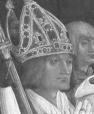
Jakob I
My 16th great-grandfather was from Baden-Baden, Germany. I have been to Baden by Vienna and Baden by Zurich, both fabulous historical hot springs. I have not visited the fancy German double Baden, but have always wanted to go. Now I have all the more reason:
Jacob I of Baden (15 March 1407, Hachberg–13 October 1453, Mühlburg), was Margrave of Baden-Baden from 1431 to 1453.
He was the elder son of Bernard I, Margrave of Baden-Baden and Anna von Oettingen. Jacob I was a man of deep religious beliefs, well-known as a founder of churches. He founded the monastery at Fremersberg and was a major benefactor of the Stiftskirche at Baden-Baden.
According his father’s precepts, only two of his sons were to be considered heirs of the margravate. Therefore only Karl and Bernhard received a secular education; the other children had a strict religious upbringing. Georg, after making a religious profession in his youth, returned briefly to the world, but in 1454 reverted to holy orders and later became Bishop of Metz.
Jacob I was the opposite of his father; Enea Silvio de Piccolomini (Pope Pius II) characterized him as famous among the Germans for his justice and intelligence.
In his early years he was ruler of the family possessions in Hohenberg, until at the age of 24 he succeeded to the government of Baden. He was described as a pugnacious knight and a frugal father of the state and was popular among the princes as a mediator. Both Emperor Sigismund and Emperor Frederick III, under whom he served, thought highly of him.
When as the result of a miscarriage his sister Agnes fled in the middle of a conflict about inheritance, the Margrave lost his claim to the Duchy of Schleswig. He was so angry that he confined Agnes for the rest of her life in the castle of Alt-Eberstein. (The incident is remembered as the “Double Disaster of Gottorf”).
When in 1427 the Treaty of Sponheim came into force, he gained possessions on the Moselle. In 1442 he bought for 30,000 guilders from the descendants of Walter von Geroldseck half the lordship of Lahr and Mahlberg.
Family and children
He married 25 July 1422 Catherine of Lorraine, daughter of Charles II, Duke of Lorraine and Margaret of the Palatinate. They had the following children:
Charles I, Margrave of Baden-Baden (d. 24 February 1475, Pforzheim).
Bernard II, Margrave of Baden-Baden (later beatified) (1428–12 July 1458, Moncalieri).
Johann (1430–9 February 1503, Ehrenbreitstein), Archbishop of Trier.
George (1433–11 February 1484, Moyen), Bishop of Metz.
Markus (1434–1 September 1478), abbot in Liège.
Margarete (1431–24 October 1457, Ansbach), married 1446 to Albert III, Margrave of Brandenburg.
Matilde (d. 1485), Abbess of Trier.
He also had an illegitimate son, Rudolf of Baden.

castle of birth
Jakob I Von Baden (1407 – 1453)
is my 16th great grandfather
Karl I Von Baden (1424 – 1475)
son of Jakob I Von Baden
Christof I VanBaden (1453 – 1527)
son of Karl I Von Baden
Beatrix Zahringen (1492 – 1535)
daughter of Christof I VanBaden
Sabine Grafin VonSimmern (1528 – 1578)
daughter of Beatrix Zahringen
Marie L Egmond (1564 – 1584)
daughter of Sabine Grafin VonSimmern
Richard Sears (1590 – 1676)
son of Marie L Egmond
Silas Sears (1638 – 1697)
son of Richard Sears
Silas Sears (1661 – 1732)
son of Silas Sears
Sarah Sears (1697 – 1785)
daughter of Silas Sears
Sarah Hamblin (1721 – 1814)
daughter of Sarah Sears
Mercy Hazen (1747 – 1819)
daughter of Sarah Hamblin
Martha Mead (1784 – 1860)
daughter of Mercy Hazen
Abner Morse (1808 – 1838)
son of Martha Mead
Daniel Rowland Morse (1838 – 1910)
son of Abner Morse
Jason A Morse (1862 – 1932)
son of Daniel Rowland Morse
Ernest Abner Morse (1890 – 1965)
son of Jason A Morse
Richard Arden Morse (1920 – 2004)
son of Ernest Abner Morse
Pamela Morse
I am the daughter of Richard Arden Morse
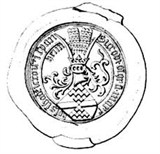
seal of Jakob I
We attended the Southern Arizona Craft Brew Festival yesterday at Maker House. We received tickets and glasses at the door to taste the many offerings at the brewers’ booths. The music was excellent, the weather perfect for February, and the crowd very cheery. That is the thing about beer and its’ fans….they tend to be jolly and care free. Members of our group all enjoy dark beer so we gravitated to stouts and darker brews. One of my faves was the salted caramel stout. After about 3 hours of beer tasting we all had tickets left when we were ready to leave. We had sampled so many robust and complex flavors that we were both full and sated. I enjoyed a plate of Yakisoba from the Bam Bam food truck to go with my brews. A good time was had by all, and the beer scene is growing with gusto.









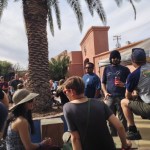






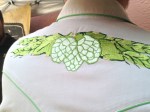

I lived in Venezuela in the early 1960s. My father was manager of operations for Mene Grande Oil Company, aka Gulf Oil. I lived in San Tomé in a remote petroleum camp in the llanos. I lived as a petroleum princess and listened to Radio Havana because it was the only station that came in clearly. We lived an opulent life surrounded by fences and guards. Trinidadians usually worked as servants in our homes because they were bilingual. We had one very high lifestyle in every respect.
John Kennedy was shot before I moved to South America, which was unsettling. Race riots were taking place in the states, but we were isolated from that reality hanging out at our private social club in the tropics. We lived in extreme segregation, but thought nothing of it. The seeds of revolution are planted many years before they mature. The wealth discrepancy in South America was shocking, but since it was all to our advantage we were told it was inevitable. These experiences all became part of my knowledge of the world and later part of my politics. I distrust all imperialists and their motives.
With a simplistic agenda to end unbearable insecurity the students began to march last week in all the cities in Venezuela. The outcome of this battle will be significant and was long in the making.

MGO employee handbook
I did not start studying genealogy with the expectation of spending years involved with my family tree. I did not expect to find much data, and thought I would be finished in a couple of weeks. In my sixth year of tracing my family back in time I could not imagine life without this research. I have now relearned history by tracing my own DNA through it. Believe me it becomes more interesting when you picture your own ancestors in events. The timeline is an important tool in life to assess progress and enlightenment. The same can be said of a much longer timeline, such as human history. I am starting to understand the mass migrations caused by religions that have shaped the political world. My people were motivated to take great risks and leave their known environments to follow religious convictions. They crossed the Atlantic in rickety boats with nothing but beer to drink. They froze and starved in the early American colonies. They adventured way out west to Ohio and beyond after the Revolutionary War. They fought on both sides of every British and American war, which is most revealing.
Ancestry.com is run by humans and therefore human error is part of it. The site has gathered and continues to gather public records to share as well as trees published by members who make them public. Often an unsubstantiated piece of data will be shared and repeated in the public tree arena. Fortunately there are also wizards who find some errors, and advise the owners of bogus trees to double check the data. I have twice needed to erase several generations of mistaken identity when I was given more information by a fellow family member. Bittersweet, erasing..I had become fond of the ancestors who were not really my own. It was a horrible blow to be wrong about them, but this study is about verification and facts, not just being up in your tree.
I have been asked which are my favorite ancestors, to which I generally reply I like them all for surviving so I could be here now. There are a few that I might love more than the others:
They are either well known or unknown, but all important to me and my existence. If you take the two week trial I bet you will find something remarkable in your own family history.








I am happy I do not need to go to Babylon to savor the flavors of Iraq. The Babylon Market has all the groceries and deli items I could possibly desire. I enjoy learning to prepare new ethnic foods, and the ingredients I found make it easy for my to try my hand. I purchased $50 worth of groceries to get $5 credit at the deli. I had a great time searching around the store while my lunch was prepared. The store has a bakery and a butcher shop as well as a deli in the back. The store is stacked to the rafters with all things Mediterranean. I bought those red picked turnips, some canned stuffed grape leaves, some fresh Turkish bread, cheese stuffed pastry, honey, nuts, and spices. The atmosphere is friendly and buzzing as customers patronize the deli and shop like I did. The store is very popular for a good reason. The proprietors are helpful and happy, and the offer a wonderland of grocery and deli delights. I will surely return to this excellent and exotic establishment. My partner agreed that our lunch was outstanding.


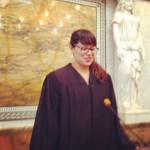

I had a magical experience that changed my life last year. During the government shut down my friends and I were treated to a tour of a working monument to justice in San Francisco. The very special building, which is owned by the taxpayers, was still open for business while the irresponsible part of the federal government was having an irrational fit at the taxpayers’ expense. We each had a chance to put on a robe and pose with the babes of justice, as my friend who works with them calls them. We all felt very special and talked later about being so lucky and having so much fun that day. Sometimes events take on more meaning as time reveals a larger meaning. I was being baptized on that bench and accepting a big mission that I recognize now. We were joking and laughing, really being free and happy, but a vow to liberate others through justice was happening at the same time. Let me explain:
My first teacher of Buddhism was Claude D’Estree, a monk who hangs tight with the Dalai Lama of Tibet. When we were lucky enough to receive teachings from his holiness in September of 1993 Claude flew down from Denver once a month for a year before his arrival to initiate us to Tibetan Buddhist teachings in preparation. We had classes at St Phil’s in the Hills Episcopal Church, and held retreats on that beautiful campus to learn about the three jewels. The subject was new to me, but Claude is an excellent teacher. From the dedication of merit to dependent arising, he covered the material in such a way that very complex concepts became clearer. I will never forget an example he used to explain compassion, using his own personal life experience.
He had worked as a federal prosecutor, who has the obvious job of defending justice and fighting evil. This job exposed him to egregious wrongdoing. As a monk he has the job of using compassion to save the world from pride, delusion, and anger by practicing patience. This seems like a paradox, and it is. He taught us that the most compassionate thing to do for people who are delusional, destructive and angry is to stop them. The trick about doing it as a prosecutor-monk, or monk-prosecuter is to do it without any attachments or aversions, in other words, without anger. Compassion turns anger into patience, an alchemical process that takes much dedication and study to achieve. He had to prosecute very serious criminals in the line of duty. He had also taken the Bodhisattva vow to return to earth until all beings are free and happy. He has undertaken this giant mission to meditate and cultivate diligence for those whose minds are slack and wondering ( a seemingly unending group). Since we all were given the rare opportunity to tread the path of buddhahood Claude was showing us how to meditate and turn our own merit into bliss for others who are suffering. I think of him and his teaching often when my patience is challenged.
The year of study and retreat was a deeply religious experience, but did not require the student to become a proclaimed Buddhist, or join any group or movement. The teachings were given to help us comprehend the even deeper experience of our time with his holiness. We were initiated to Green Tara and introduced to Shantideva. These are deep teachings that can take lifetimes to comprehend, but the Dalai Lama encouraged the women in the class by telling us that we have a better chance of spontaneous or instant enlightenment than the guys. We learned the mantra for Green Tara, who has the specialty of speed. She is the Mother of all Buddhas who saves us from our envy, wrong view and avarice.
For years I have been involved in an anger/patience/justice drama about my home. Now I am going to have to do some serious patience practice while I sue the flaming pants off the city of Tucson for violating federal revenue law and obstructing justice like crazy fire. I am calling on Green Tara to save me from attachment and doubt in order to liberate our neighborhood from evil. I have taken the vows too, and have a responsibility. Green Tara and I are now both babes of justice. Wish me luck as I walk through the valley of the shadow of anger.
 mermaidcamp