mermaidcamp
Keeping current in wellness, in and out of the water
You can scroll the shelf using ← and → keys
You can scroll the shelf using ← and → keys
trucks

classic

classic

VW camper
Woody

Woody

T Bird

T Bird

T Bird

TPD Bomb Squad

bomb squad gear
bomb robot
bomb dude

TPD SWAT

trucks

cop-o copter

cop truck

Ford

Ford

the dude
baterior

batmobile

Bat guy

Karmann Ghia

Karmann Ghia
electric Karmann Ghia

electric

cute

hot rod

vintage

racer
Pontiac

fun

kids enjoy

fire engine
fire engine

fire engine

pick up

VW club

classy
logo
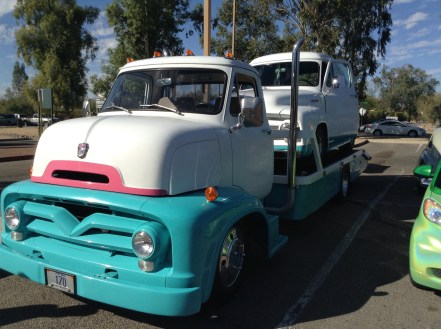
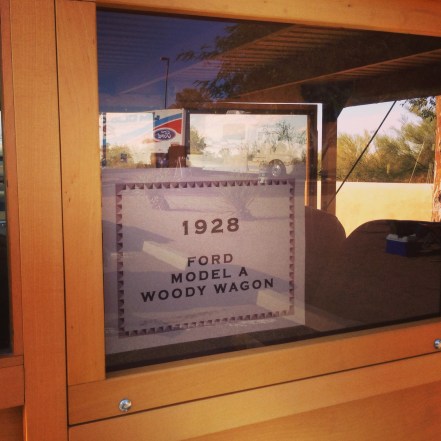
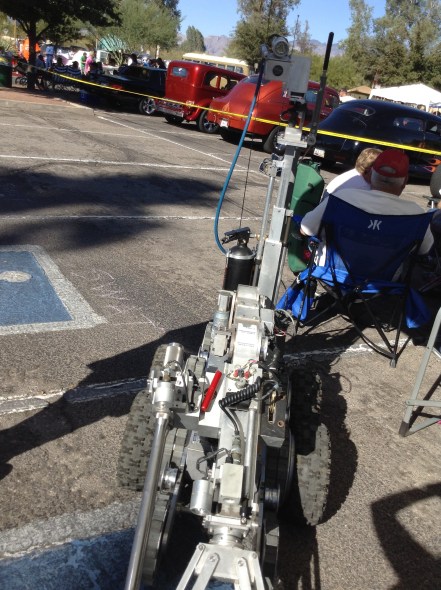
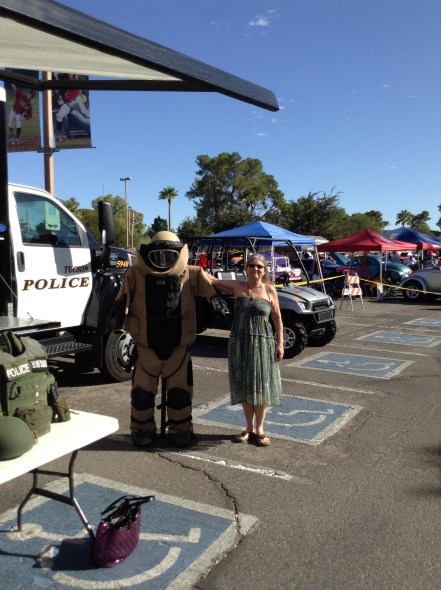
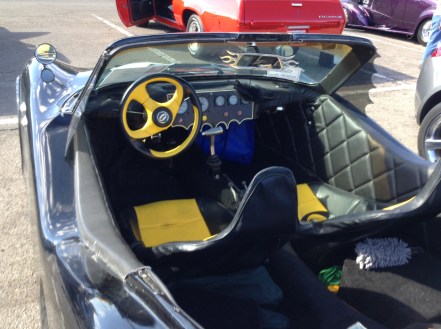
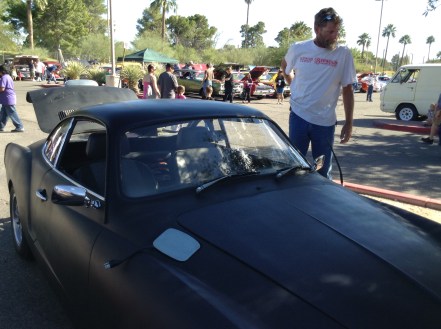
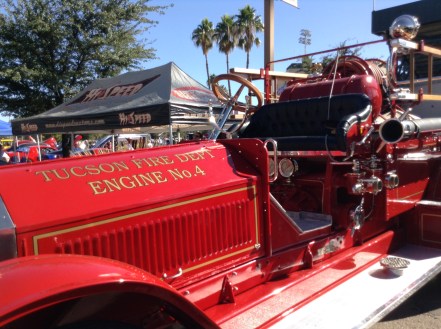
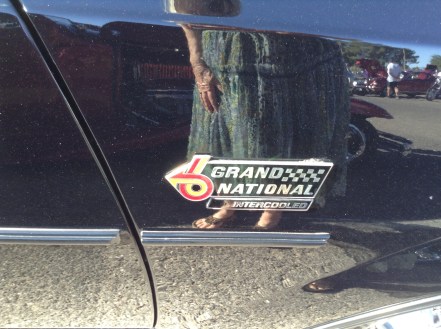
The Tucson Police Foundation produces a great car show at Reid Park every year. This year was no exception. The Cops and Rodders show provided entertainment and a fabulous social setting for meeting enthusiasts who share a love for vehicles. I enjoy seeing all the variety and the extreme care that has gone into restoring and decorating the vehicles. I sometimes go to the Volkswagon show, but this one is my favorite because they have everything from old panel trucks and fire engines, to low riders. The paint jobs impress, and the creativity amuses. If you live in Arizona you might like to attend next year. It is always free to the public. The Police Foundation raises money through raffles and entry fees. It is almost always perfect sunny weather here in November, so the paint jobs shine and glow. To me it is like an art gallery, curated by the individual car clubs. I love it.


My father read Tom Sawyer and Huck Finn aloud to me when I was very young. There were other books that followed, but he really loved those two stories, and made them come alive while reading them. He liked to sing and recite poetry. We sang at parities all the time. Since we had a player piano, talent was no barrier to musical contribution. I pumped happily away for hours singing with the piano rolls. I still know the words to most of those songs, or could with some prompting, remember the lyrics. I wrote songs myself as a teen, but do not remember them at all, which is funny. I do remember The Cremation of Sam McGee by Robert W Service, which my father knew by heart. As an Okie in Pennsylvania I know he identified heavily with Sam McGee because he frequently and randomly said “Since I left Plumtree, down in Tennessee, it’s the first time I’ve been warm.”
My dad was a funny troubadour of sorts who did not know that his 8th great grandmother was Mistress Bradstreet, Pilgrim poet. He did often say,” You’re a poet, your feet show it, they’re Longfellows.” Now that I have discovered the Bradstreet connection I am revising the rhyme:
Keep the beat,
Think on your feet,
You’re a Bradstreet.
Since I found Mistress Bradstreet at the Poetry Center I am wondering about my own relationship to words and poetry. Do I have any poetic DNA that I need to develop? Curious, I attended the inauguration of Arizona’s new poet laureate, Alberto, Tito, Rios of Nogales, AZ. He addressed the crowd, read some poems, then answered some questions from the audience. He is a professor so he found it easy to teach the group. His style includes plenty of comedy, which holds the attention. An audience question was, “What is the difference between writing poetry and writing prose?” His answer was perfect and memorable. He said, ” Each line in a poem should be able to stand by itself. If one of my poems shattered and all the lines were left alone, each should be strong enough to get a good job in another poem.” I love that. I also love the Poetry Center which is very near my home. I don’t really think the lines in my poem above could find work elsewhere, but if I work on it, perhaps the spirit of Mistress Bradstreet will guide me to achieve better outcomes.
The other fine advice Mr Rios gave, which he illustrated with a story from his youth, was that you observe events and happenings in your life that will die without a story if you do not tell them. His attitude is that all of us have the potential to use words in a poetic way, and the experience enhances our own lives when we do it. We also liberate objects and events that want their stories to be told. This magical reality view of the objects comes naturally from his bilingual and bicultural background. In Spanish reflexive verbs make the world a highly animated place in which things take action. I believe Tito Rios is the perfect artistic and cultural representative who could have been chosen as our official poet. I am pleased to have been in the special inaugural audience.





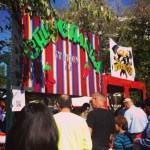



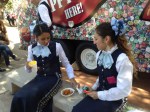
I attended the anual chili cook off to support our local firefighters union. Each station designs a booth and makes a chili dish. The chili is judged by a panel, and the booth design is judged by popular Facebook vote. The annual event is a really fun way to meet locals and enjoy time downtown. The creativity of the booth design and the costumes always amuse. This year the Drexel Heights Station outdid themselves with a Duck Dynasty theme. I took my calendar with me and was able to find four of the guys to give me autographs on their pictures. They serve beer and play live music, but it differs from other community events in that the firefighters union uses all the proceeds to adopt families in need to help them. We don’t have the opportunity to see our firefighters all together at the same time very often. Seeing them enjoy themselves so much and serve the community too is a blast. We love our firefighters in Tucson. They keep us safe and represent the spirit of the town in a friendly and creative way. I bought a tee shirt for Bob which he will like a lot, and an apron for myself, to remind me not to burn down the house.














Last night I took Bob on a dining date featuring his favorite beverage, beer. I used to drink beer, but have all but given it up these days. I still like the taste, so the beer and food pairing was very appealing to me. I drove, so after the taste, I generally gave the rest of the glass to Bob. There was one exception, the Imperial stout. It was my favorite of the evening so I wanted to drink all of it. They poured 4 ounces for each course because the beers were very high in alcohol content.
The chef worked with Mission Brewery of San Diego to create tastes that paired with these strong beer flavors. I did write on my reservation request a few weeks ago that I am vegetarian, but to make sure I mentioned it to our server when we arrived at the dinner. It became obvious that they did not have the information. I am not sure if the server did not mention it, or they do not read the reservations that people write down on paper. I give them points for thinking on their feet and kicking out very good samples for me. The favorite of all the people at our table was the corn and ricotta fritter, which was a veg. item anyhow. My plates were visually as good as Bob’s real street food with meat. The ruben sandwich was superb; Mine had kale instead of corned beef. The meal ended with a very light beer that I delivered straight to Bob. We thought the meal and the company, as well as the education we got from the chef and beermeister were well worth the price and the short drive from our home. This is our second theme dinner at Zona. Our new beer drinking buddies at the table had been to dinners there featuring other craft brewers, which they enjoyed. The reasons we will return to Zona 78 for special dinners in the future:

burial place

coat of arms
William Walker received a grant of land in 1639 in Hingham, Massachusetts and was among the first settlers there. He was with Richard, James, and Sarah Walker when they came to New England in the “Elizabeth” in April 1635. He later removed to Eastham where he was admitted to freedom June 3, 1656.
William Walker was born in 1620 at England. He immigrated in 1635. He immigrated in 1643 to Plymouth, MA. He married Sarah Snow, daughter of Nicholas Snow and Constance Hopkins, on 25 February 1654 at Eastham, MA (25 Jan 1655 per #494). William Walker’s name is on the list of those able to bear arms in 1643 and he was admitted as a freeman 8 June 1656 at Eastham, Barnstable, MA. He was in COURT/CIVIL on 3 March 1663 at Plymouth Colony: Ralph Smith of Eastham, fined 3s, 4p for breaking the peace in striking William Walker. He was in COURT/CIVIL on 5 June 1671 at Plymouth: William Walker was charged with stealing cloth from Thomas Clark, “of Boston” and was sentenced to pay double for the cloth and for telling a lie about it, was fined 10 Pounds. He died in 1703.













I stayed recently in the town of Burlingame, CA for a 5 day visit to the Bay Area. I chose the spot for the convenience to the airport and the great little guest cottage I had found on air bnb. The dueña is a designer, of both the interior and the landscape kinds. The space and garden are so secluded and private that I enjoyed the instant retreat when I stepped into my yard. I had planned to spend time in San Francisco and the East Bay during my 5 day stay. The CalTrain 6 blocks from my cottage made the transport into town simple and fast. I spent two days without leaving the town of Burlingame because the first was exploration, and the second was enjoying the town with my friend from Berkeley. I was pleased to introduce locals to the fabulous La Corneta Taqueria downtown, where the salsa bar is second to none anywhere. When my friend Donna came to visit she gave me an intuitive reading, which was excellent. After that we just did not feel like going out to town, so we took the advice of the landlady and tried GrubHub for food delivery. While we drank the wine my landlady had provided a nearby Indian restaurant prepared a feast and delivered it to the cottage. We dined in my lovely backyard dining area, savoring the food and the private setting.
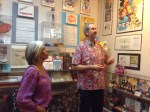
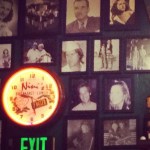
The downtown shopping area of Burlingame is full of cute individual businesses and a few key chains like Starbucks. The two extreme star businesses are the PEZ museum, near the train station down town, and Nini’s Cafe, which was only a couple of blocks from my house. Nini’s is the only place in California where you can look around and see absolutely nobody looking at a cell phone. The atmosphere is maintained by three generations of family proprietors who run the business in person, taking very good care of loyal customers. After my giant Popeye omelet, I am now a loyal customer myself. I found the town of Burlingame to have everything I like and nothing that I don’t like. I would recommend the garden cottage to anyone for a layover or a retreat in the San Francisco area. It is charming, extra comfortable, and designed for serene privacy. The neighborhood is just lovely.
While visiting in California I had an osteopathic adjustment at Celina’s office. I am accustomed to all the best in body work all the time, so I appreciate the careful and professional way she addressed my issues. The only doctor I ever trusted was Dr. Robert Fulford. He practiced only manipulative medicine, as Celina does. Today in the US most DOs (osteopathic physicians) do not use manipulative medicine, but have followed the MDs into pimping for big pharma. I asked Dr. Fulford when he was my doctor what is wrong with most medical practices that they make patients wait and treat them with no respect. I always remember his answer. He said “It is their training.” This is true more than ever.
I experienced loads of negligence while taking care of my parents’ medical issues in their last years. I was shocked by heavier abuse when I volunteered for the VA and saw how the Vets are treated. I have stayed away from all drugs because I think they are the cause and not the cure for most of the folks who are on them. I don’t want to have to go to a doctor who believes drugs are the answer. After the treatment I was inspired to find a real osteopath in Tucson. Lucky for me Teresa Cisler, DO is still in practice here and was trained by Dr. Fulford himself. The goddess of healing provided a cancellation in her schedule so that I may go next Monday to enroll as her patient. Normally she is in such high demand that it takes months to get on the books for time with her. I am so pleased to follow up here at home on the work that Celina began. The treatment and analysis she did with me was pleasurable at the time, but most important is the healing that continues. She was trained in Canada where the osteopaths are still doing osteopathy. In California her work is classified as body work. The reason she stands out as more knowledgeable and professional than most body workers? Is is her training. Sensitivity is developed in the hand to feel pulses, heat, and the tiniest differences in tissues under the skin. By looking at your alignment and gait, then feeling the systems at work she is able to determine what your body needs the most. The focus is on the client, 100%, a rare and very effective strategy for a healer. It worked very well for me.
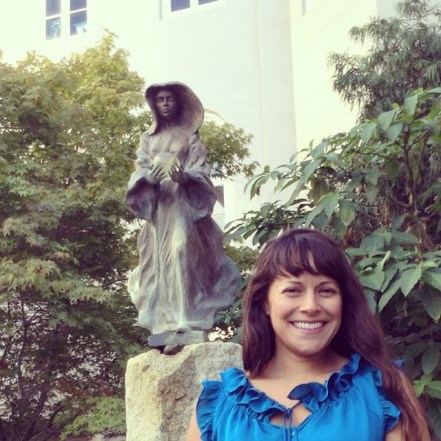
Celina Trevino
Last week in San Francisco my friends and I attended Blind Cafe, an enlightening evening in the dark. This is a show that travels around the country, gathering local volunteers and donations in each city in order to put on the production. None of us knew what to expect, other than a blind tasting and some music. It turned out to be amazing on many levels. Happy hour was in dim light with the guests drinking wine and meeting each other as well as the visiting puppies in training and their guardian/trainers. The two darling golden retriever mix pups were loving and enthusiastic about partying with everyone. Our tickets were arranged in tables with seating numbers so when the time came for us to go into the darkness we lined up with a hand on the shoulder in front of us to be guided to our places. Our group of three briefly met some of our table mates while we were in line.
The room was pitch black and very loud. It seems that when we have no sight we begin to turn up the volume in order to stay in touch. The plate of delicious vegetarian food was set in front of each chair, but the table also was full of other items in the center that could only be discovered by feeling. We were given plastic forks, but they did not last very long for most of us. I was happy to find water bottles in the center, and friends passed me some exquisite bites from other places in the table. Most of the talk was about the food and how to find it, but somehow the person across the table from me started talking about his ultra special diet. Before you could say gluten intolerant I was involved in a heated argument with this stranger in the dark. We were already in an organic vegetarian situation, so I did not want to hear that eating one of the goat cheese roll ups would cause him to become bipolar. Quickly I determined that he took bipolar drugs as well as LSD and copious amounts of alcohol, but that was not enough. He explained that he had a masters’ degree in interpersonal shamanism and was therefore totally aware of the incongruities he presented. He said he agreed that LSD might make him think he is bipolar/bisexual. My friend seated next to me asked me why I was freaking out at this man, and I asked myself the same question. Luckily it was time for us to all do active listening during the comedy and music entertainment, so we had to end the fight. I have wondered why this bipolar/bisexual LSD person was there for me, and what archetypes we both represented in the food fight. I maintained that orthorexia is damaging, and he maintained that goat cheese can potentially cause in his life temporary states of mental breakdown. I will not know his name, and I was careful when we left not to look to see his face. He is a mystery shadow that completely engaged my shadow, but in the dark!!! Who was that????
If you go I doubt that you will encounter any transpersonal analysis sitting across the dinner table from you. This had to be some special San Francisco thing that could not happen again. The food and the fun were beyond compare; Who knew it came with an archetypal lesson?

Quaker
Jeffrey Horney was a Quaker born in Maryland. His father was a planter who left his estate to his children in 1738. Jeffrey inherited “Cottingham”:
Horney, Jeffery, planter,Talbot Co.,11th Jan., 1737;
27th Mch., 1738.
To son William and hrs., “Dixon’s Gift,” Queen Anne’s Co.; and personalty.
To son Jeffery and hrs., “Cottingham,” sd. son dying without issue sd. tract to son Philip and hrs.; and personalty.
To sons Philip, James and daus. Jane and Prissillia, personalty, some of which des. as bou. of John Carslake. Residue of personal estate to 4 sons and 4 daus. divided equally.
Son Jeffery, ex., to have care of sons Philip and James until they come to age of 18.
Test: Robert Harwood, John Regester, Edward Perkins. 21. 861. MARYLAND CALENDAR OF WILLS: Volume 7
Since I have ancestors born in Maryland named Nichols, I was very interested to learn about the Nicholite movement, also known as New Quakers. The Nichols in my tree marry into the family about 100 years later in Pennsylvania.
Jeffrey Horney (1723 – 1779)
is my 8th great grandfather
Mary Horney (1741 – 1775)
daughter of Jeffrey Horney
Esther Harris (1764 – 1838)
daughter of Mary Horney
John H Wright (1803 – 1850)
son of Esther Harris
Mary Wright (1816 – 1873)
daughter of John H Wright
Emiline P Nicholls (1837 – )
daughter of Mary Wright
Harriet Peterson (1856 – 1933)
daughter of Emiline P Nicholls
Sarah Helena Byrne (1878 – 1962)
daughter of Harriet Peterson
Olga Fern Scott (1897 – 1968)
daughter of Sarah Helena Byrne
Richard Arden Morse (1920 – 2004)
son of Olga Fern Scott
Pamela Morse
I am the daughter of Richard Arden Morse
Jeffrey Horney [III] was born before 1720 in Talbot County, Maryland. He married Deborah Baynard outside of the Quaker faith without the consent of the Friends. Their marriage license was dated October 6, 1739 in Talbot County, Maryland. Eight years later in 1747, Jeffrey and Deborah Horney would sell their land in Talbot County and move to Dorchester [now Caroline] County. On the 27th of October 1747, Jeoffery and Deborah Horney sold fifty acres of Cottingham in Talbot County to William Thomas, Gentleman. Less than one month later, on the 12th of November 1747, Jeffrey Horney of Talbot County purchased Piersons Chance [Pearsons Chance] from John Pierson of Dorchester County, formerly laid out for Thomas Pierson. The property was in two parts; one part contained 100 acres and the other part contained 50 acres. The land was located on Watts Creek, off of the Choptank riverjust south of Denton in what is now Caroline County, Maryland. As the crow flies, Piersons Chance was less than 15 miles northeast of Cottingham and was about 5 miles from the Delaware line of Kent County, Delaware.
Nov 12, 1747 John Pierson of Dor Co, planter, to Jeofrey Horney of Talb co, planter: two parts of a tract formerly laid out for Thomas Pierson called “Piersons Chance,” conveyed by said Thomas to said John by separate deeds, on Watts Creek, one part containing 100 a. and the other part containing 50 a. more or less. Wit: T. Waite, Jno. Caile, Hall Caile. Ackn by John Pierson and Elizabeth his wife before Thos. Foster abd Benj Keene, Justices. (See receipt, Dorchester County Land Records 14 Old 169).
For the first seven years of their marriage, Jeffrey and Deborah Horney lived at Cottingham, and any of their children born within the first seven years between 1740 and 1747 were born at Cottingham in Talbot County. After November 1747 when Jeffrey and Deborah purchasedPiersons Chance in Dorchester County, any subsequent children they may have had were born in Dorchester County, Maryland. This land now lies in Caroline County Maryland which was not established until 1773 from parts of Dorchester and Queen Anne’s Counties. This explains why Jeffrey and Deborah Horney and their children are subsequently found in Caroline County records. The land on which they were living from November 1747 onward,Pierson’s Chance, was once in Dorchester County in an area that became Caroline County in 1773. At least three of their children, John, Philip and William Horney, left Maryland between the 1780s and 1790’s when they may have followed the Nicholite movement into the Deep River section of Guilford County, North Carolina. Some lines would remain in North Carolina while others would move onto Ohio, Illinois and beyond.
There is a local legend surrounding the area on Watts Creek where Jeffrey and Deborah settled. It was believed that in the 1600s and early 1700s notorious pirates and privateers, such as Captain William Kidd and Edward Teach [Thatch, Thach, Thache], otherwise known asBlackbeard, may have hid or buried treasure along the shores of Watts Creek. A local legend began to circulate (or re-circulate) in 1916 when Swepson Earle wrote Manor houses on the Eastern Shore. He claimed that “Tradition says [Watts Creek, south of Denton] once provided refuge for Captain Kidd, whose ‘buried treasure’ has been sought on its banks.” Later, in the 1940s when Hulbert Footner wrote his book, Rivers of the Eastern Shore, he related that“There is such a hole near the mouth of Watts Creek that is ninety feet deep. It is called Jake’s Hole. Its exact depth is known because it’s been sounded often enough, and I’ll tell you why. There was aplenty pirates round here in the old time. The one that mostly cruised in these waters was Blackbeard; Edward Teach was his right name. Well, Blackbeard picked Jake’s Hole for one of his caches, and dropped an oaken chest bound round with copper bands in there. It’s still there. God knows what’s inside it!”However, according to Donald Shomette who more recently wrote Pirates of the Chesapeake, neither Blackbeard or Captain Kidd ever sailed into the Bay, but their legends did.
Whether or not the legends of Watts Creek spun by the old-timers were fact or fiction, there were pirates and privateers who sailed in and around the Chesapeake Bay. Among them, Roger Makeele, was found in Maryland records in 1685 when he and his band of pirates lured the crews of tobacco sloops to their camp on Watts Island. They would seize the crew and confiscate their sloops before leaving the men in the Marshes of Dorchester County. Makeele sailed the Choptank river which separated Dorchester County from Talbot County where the early Horney’s lived. Incidentally, that same year Jeffrey Honey [Horney] was testator to the will of Emanuel Jenkinson of Talbot County Maryland. It is likely the early Horney men, as well as other settlers in the area, heard of these pirates and were in peril of loosing their tobacco crops and their sloops to the pirates of the Chesapeake.
During this time, local Indians lived in the area. Their ancestors arrived in the area long before the European settlers. When John Burnyeat appointed a general meetingfor all of the Friends in the province of Maryland. George Fox wrote about that meeting in his journal, (Two Years in America 1671-1673 Chapter XVIII) It was upon me from the Lord to send to the Indian emperor and his kings to come to that meeting. The emperor came and was at the meeting. His kings, lying further off, could not reach the place in time. Besides the Horneys who married into Quaker families, other religions would later play a part in their lives. Among the early churches and societies, early Horney families were or became Puritans, Anglicans and Episcopalians. In 1760, when Joseph Nichols of Kent County, Maryland and Delaware founded the Nicholites [New Quakers], at least one branch of Horney’s were found in Nicholite Petitions. [Most likely Jeffrey and Deborah Horney and/or their descendants.] The early Horney’s also became Methodist and Methodist-Episcopal. On June 17, 1703 John Wesley, the founder of Methodism, was born in Epworth, Lincolnshire, England. By 1771, John Wesley’s teachings reached the Eastern Shore of Maryland. When Francis Asbury came to Maryland to spread Wesley’s word, the Methodist religion took a strong hold in Maryland. More than a few Horney families converted to Methodism. However, Wesley’s Tory beliefs may not have sat well with the Horney’s who served [on the American side] in the Revolutionary War.
The rivers on Maryland’s Eastern Shore defined the early transportation routes of religion. During their lifetime, the settlers of the area, did much of their traveling on the rivers, tributaries, creeks and branches which crossed the Eastern Shore of Maryland, east of the Chesapeake Bay. They lived near and traveled many of these waterways including the Choptank, Wye, St. Michaels, (now Miles),Tred Avon (Third Haven), and Tuckahoe Rivers. The Tred Avon was and still is the location of Third Haven Meeting House near what is now Easton, Talbot County, Maryland. The St. Michaels, (now Miles) River was the location ofBetty’s Cove Meeting House.
To see photos of the Choptank and Tuckahoe river areas in Talbot and Caroline counties where the Horney families lived and traveled, select the pdf file from the Upper Choptank and Tuckahoe River Cultural Resources Inventory. Another helpful tool is the Choptank and Tuckahoe Rivers Sections Map. Take a two day canoe trip on the Choptank River Sojourn, a journey of Maryland’s Eastern Shore through areas where the earliest Horneys settled and the route that Jeffrey Horney III and his wife Deborah Baynard traveled and settled after 1747. Areas mentioned throughout this river journey are Choptank, Denton, Dover Bridge, Greensboro, Hillsboro, Tuckahoe and Watts Creek. All of these locations were found in 1600 – 1700 HORNEY records in Caroline, Talbot, and Dorchester Counties, Maryland. The journey described was a likely route traveled by Jeffrey Horney III and his wife, Deborah Baynard and their children as they left Talbot County, Maryland and settled in Dorchester [now Caroline] County, Maryland.

jet
I have learned to budget time by planning many trips for myself and travel clients. When tour companies take groups out on an excursion the itinerary is published to give all a sense of unity. Planning time for commuting in a city or check in at a strange terminal must be done with precision and plenty of lead time. I think travelers are often too optimistic about the amount of time it really takes to get across town or out of town. Being on time for appointments or performances is essential to enjoying a visit. I also think free unstructured time to explore is an important element of happy tourism.
Here are the ways I like to expand my world when I travel. I use time in new ways:
I learn before I go. My research into options can take weeks for some destinations. I study maps and transit systems, look up details and make notes if there is something I want to make sure I see. No matter what I learn from reference materials I always ask for a local’s opinion if I can. Once I have made the arrangements for the elements of the trip, lodging, transportation, dining, and exploration I believe it is important to give in to serendipity as much as possible. I find that being open in both mood and schedule allows the magic of the place to speak to me. Sometimes I meet cool people who inform me; other times I am called by special architecture or botany. I find that when I plan and inform myself just enough to know where I am, but not too much to make assumptions, time is my ally. It expands and allows me to turn a few days into an exciting yet easy to accomplish new adventure of discovery. I am working on turning next week in San Francisco into just that. If you know about something special I need to know before I go, please pipe up, gentle reader. I do enjoy the unusual, and already know about many of the usual highlights of the bay area. I am open to learn more.
 mermaidcamp