mermaidcamp
Keeping current in wellness, in and out of the water
You can scroll the shelf using ← and → keys
You can scroll the shelf using ← and → keys

Rare Virgo Gang up August 30 Mars, Venus, Mercury, the Sun, and the Moon don’t all meet in Virgo very often to chat around the office cooler.
via Rare Virgo New Moon alignment — Tara Greene,Tarot Reader, Astrology, Psychic
Emotional Attachment is something we all experience in life. In the first house of Aries we make an emotional attachment to certain belief systems, concepts, theories, and thinking patterns passed down from generation to generations. This may be religious/spiritual, political, psychological, educational, social class, and we take-action based on what knowledge, wisdom, and insight is […]
via Emotional Attachments & the Twelve Houses of Astrology — Fushion ~ Light
There is a tide of turning thoughts that create deeds
The makers come out of the dark with new patterns
They see no lighted path from the past to the moment
In which we now find ourselves seeking some truth
Time has been passing while cultural fads take up space
The crossing of streams, all vivid reality with pastel dreams
Days turn to seasons we speed up, then slow down the pace

Oct 1, 2018 | Posted by Archeia Aurora | 5D Daily Updates, Astrology Updates FCGCT Commentary: We are moving from the mind, to the Heart… not the balancing of the two. The mind conflicts with the Heart, and is the cause for imbalance, pain, fear, suffering and more. The mind… the ego, blocks the Heart, […]
New Moon brings new opportunity

Oh, give us pleasure in the flowers to-day;
And give us not to think so far away
As the uncertain harvest; keep us here
All simply in the springing of the year.
Robert Frost
I recently spent some special time in the Cape and had the incredible opportunity of hanging out with the wild flowers on the West Coast, something that’s been on my bucket list forever. I felt as if I had been dropped onto a magic carpet of diverse new life, joy and abundance! Mother Nature really does teach us everything we need to know, if we take time to immerse ourselves in her bounty.
Saturn finally moves direct on the 6th September, after a long and rather arduous retrograde period, which, along with all the other retrograde energy of late, has been challenging for many of us. Here’s hoping that from the New…
View original post 687 more words
Bloomberg — Constellation Brands Inc., which for seven decades has made its money off beer, wine and whiskey, sees its future in a marijuana leaf. In the biggest (legal) cannabis deal, the Victor, New York-based beverage company will spend about $3.8 billion to boost its stake in Canadian grower Canopy Growth Corp., betting legalization will…
via The Company Behind Corona Beer Is Investing Nearly $4 Billion in Legal Pot — TIME
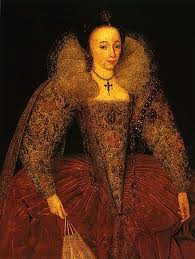
Eleanor Dutchess Buckingham Percy
Eleanor Percy, Duchess of Buckingham (ca. 1474 – 13 February 1530), also known as Alianore, was a daughter of Henry Percy, 4th Earl of Northumberland by his wife Lady Maud Herbert, herself a daughter of the first Earl of Pembroke. She married Edward Stafford, 3rd Duke of Buckingham, who was beheaded in 1521 on false charges of plotting to overthrow the king, Henry VIII. As a result, the Buckingham title and estates were forfeited, and her children lost their inheritance.
She was born about 1474 in Leconfield, Yorkshire. On 14 December 1490, at about sixteen years of age, Eleanor married Edward Stafford, 3rd Duke of Buckingham, who was five years old when his father, the rebellious 2nd Duke of Buckingham, was attainted and executed for high treason. Edward Stafford’s mother, Catherine Woodville, went on to marry the first Duke of Bedford and thirdly, Richard Wingfield. Two years after his father’s execution, when Henry VII ascended the throne, the attainder was reversed, and the title and estates of Edward’s father were restored to him. At seven, Edward became the third Duke of Buckingham and also the ward of King Henry VII’s mother, Lady Margaret Beaufort.
After Edward’s death, Eleanor remarried to John Audley. Her second marriage was childless.
Eleanor bore her husband, Edward Stafford, four children:
Mary (born abt. 1495), married George Nevill, 5th Baron Bergavenny, parents of Mary Nevill, Baroness Dacre
Elizabeth (1497 – 30 November 1558), married Thomas Howard, 3rd Duke of Norfolk.
Catherine (born abt. 1499 – 14 May 1555), married Ralph Neville, 4th Earl of Westmorland.
Henry (18 September 1501 – 30 April 1563), 1st Baron Stafford, married Ursula Pole, daughter of Margaret Pole, 8th Countess of Salisbury.
Eleanor Dutchess Buckingham Percy (1474 – 1530)
16th great-grandmother
Elizabeth Dutchess Norfolk Stafford Howard (1497 – 1558)
Daughter of Eleanor Dutchess Buckingham Percy
Lady Katherine Howard Duchess Bridgewater (1495 – 1554)
Daughter of Elizabeth Dutchess Norfolk Stafford Howard
William ApRhys (1522 – 1588)
Son of Lady Katherine Howard Duchess Bridgewater
Henry Rice (1555 – 1621)
Son of William ApRhys
Edmund Rice (1594 – 1663)
Son of Henry Rice
Edward Rice (1622 – 1712)
Son of Edmund Rice
Lydia Rice (1649 – 1723)
Daughter of Edward Rice
Lydia Woods (1672 – 1738)
Daughter of Lydia Rice
Lydia Eager (1696 – 1735)
Daughter of Lydia Woods
Mary Thomas (1729 – 1801)
Daughter of Lydia Eager
Joseph Morse III (1756 – 1835)
Son of Mary Thomas
John Henry Morse (1775 – 1864)
Son of Joseph Morse III
Abner Morse (1808 – 1838)
Son of John Henry Morse
Daniel Rowland Morse (1838 – 1910)
Son of Abner Morse
Jason A Morse (1862 – 1932)
Son of Daniel Rowland Morse
Ernest Abner Morse (1890 – 1965)
Son of Jason A Morse
Richard Arden Morse (1920 – 2004)
Son of Ernest Abner Morse
Pamela Morse
I am the daughter of Richard Arden Morse
Rewriting the script

It’s important to be deliberate and specific in what we want – often our stories have been shaped unconsciously. As a child you may have been told that you were lazy, selfish, useless, dumb, not creative, weak, pathetic… I know I was. It has taken me a long time to go over all these implanted limiting thoughts and re-examine them, discarding them when I realised that they were both untrue and harmful.
With Mars retrograde in Aquarius from now until September 2018, this is a great time to re-invent your story and re-write your narrative. Words are spells, and the stories we tell ourselves about our lives are powerful in shaping our experience. Limiting beliefs often stand in the way of us accomplishing what we want and need to accomplish in our lives. In this post I will share with you my ritual for re-writing my narrative this Mars retrograde.
View original post 1,935 more words
When I graduated from high school in Texas I went to work for the summer in an outdoor drama called “Unto These Hills” produced in Cherokee, North Carolina. I was a singer in the chorus and a costumer. It was my first job, and I enjoyed it very much. I was 17 years old, the youngest and the lowest paid member of the company. I learned about the history of the Cherokee people, since the play was all about that. I can still sing the eagle dance in Cherokee language, if required (but usually when it is neither required nor requested). I spent a lot of time and money chasing clues about my father’s Cherokee heritage, which has no legs. My grandfather lived on the Cherokee res in Oklahoma in 1900, but our ancestors on my father’s side did not marry Native Americans. Now I am discovering that my mother’s side descends from the east coast Cherokee people, before the trail of tears forced them to Oklahoma Indian Territory. I was born in Tulsa. People tell me I look like a Native American–just as many tell me I look like a Russian. I always liked the idea of Native ancestors. Now, thanks to DNA clues I received from ancestry.com about common lineage, I am happy to say I found some.
This Englishman who sailed to Jamestown and married my eleventh great-grandmother was trained to be a water witch!!!! His progeny inherited the skill to find water. I LOVE that. I think it is wonderfully ironic that his grave is a few miles from the place I worked when I was 17. I can also recite the 23rd psalm in Cherokee, which now seems perfectly apt. It pays to study your ancestors.
Thomas Pasmere “Corn Planter” Carpenter (1607 – 1675)
12th great-grandfather
Trader Tom Amatoya Carpenter Moytoy (1635 – 1693)
son of Thomas Pasmere “Corn Planter” Carpenter
Aganonitsi Quatsy Woman Wolf ClanTellico Cherokee Tellico (1650 – 1692)
daughter of Trader Tom Amatoya Carpenter Moytoy
Delaware Indian Fivekiller (1674 – 1741)
son of Aganonitsi Quatsy Woman Wolf ClanTellico Cherokee Tellico
Solomon John Cherokee Kimborough (1665 – 1720)
son of Delaware Indian Fivekiller
Mourning Kimbrough (1689 – 1756)
daughter of Solomon John Cherokee Kimborough
Jane Jeanette Little (1713 – 1764)
daughter of Mourning Kimbrough
Andrew Armour (1740 – 1801)
son of Jane Jeanette Little
William Armor (1775 – 1852)
son of Andrew Armour
William Armer (1790 – 1837)
son of William Armor
Thomas Armer (1825 – 1900)
son of William Armer
Lucinda Jane Armer (1847 – 1939)
daughter of Thomas Armer
George Harvey Taylor (1884 – 1941)
son of Lucinda Jane Armer
Ruby Lee Taylor (1922 – 2008)
daughter of George Harvey Taylor
Pamela Morse
I am the daughter of Ruby Lee Taylor
Thomas Pasmere Carpenter was descended from the noble Anglo-Norman family of Vicomte Guillaume de Melun le Carpentier. Thus, Moytoy’s European lineage can be traced to the Frankish Duke Ansegisel of Metz Meroving, Peppin II, and Charles Martel. This ancestry also makes the Cherokee Moytoys cousins to the Carpenter Earl of Tyrconnell, and thus related to the current British royal family.
The Carpenter family of Devonshire & Plymouth England were small sailing ship owners, many of which were leased out to the East India Trading Company, an affiliation dating to the formation of that company December 31, 1600. Documented ownership of fifteen different ships owned by the Carpenter family, those of which were involved with moving furs between the Gulf Ports & Glasgow, or Dublin, and trade goods for North America. These ships usually made stops both directions at Barbados where the family had banking connections set up. These ships were small and fast, often able to make the crossing from Scotland and Ireland in less than thirty days. They were shallow draft ships, capable of handling shallow water ports with ease. The first documented trip made by Thomas Pasmere Carpenter occurred April 1640, sailing from Maryland to Barbados aboard the Hopewell, and returning on the Crispian in September 1640. He made another trip in March 1659 departing Charleston South Carolina aboard the Barbados Merchant, returning on the Concord in August 1659.
Twenty year old Thomas Pasmere Carpenter came to Jamestown, Virginia from England in 1627, living in a cave near the Shawnee. Thomas was called “Cornplanter” by the Shawnee, derived from their sign language that matched as near as possible to the work of a carpenter. He married a Shawnee woman named “Pride” and bore a son around 1635 named Trader Carpenter.
Trader was taught to “witch” for water with a willow stick by the Shawnee. He married a Shawnee named Locha in 1658 and the clan grew quickly. In 1660, they were driven south by the Iroquois. They moved along the Tennessee River, starting the villages of Running Water (where Thomas died in 1675), Nickajack, Lookout Mountain, Crowtown and Chota. He was Chief of Chota, which was created as a merging place of refuge for people of all tribes, history or color. It became similar to a capital for the Cherokee nation. These villages grew to about 2000 people by 1670 when the Carpenter clan moved to Talikwa (Great Tellico) where the Tellico River emerges from the Appalachian Mountains. Here Trader married a Cherokee, Quatsy of the Wolf Clan in 1680. He had become so adept at water witching that the Cherokee called him “water conjurer” or Ama Matai (Ama is Cherokee for water). Ama Matai eventually became pronounced as Amatoya. It was later shortened to “Moytoy”, so he is known as Moytoy I.
In 1730, his son, Trader-Tom (Moytoy II) took over as Chief, receiving what was described as the “Crown of Tannassy”. Tanasi was where the previous Chief resided and the traditional headdress was passed on to him. The fur trading Carpenter family owned many ships. Though he served as Cherokee Chief, Thomas made several trips to Barbados over the years where the Carpenters did banking, and even to Scotland and Ireland. On occasion he took Trader, and Trader Tom with him. They traded furs and healing herbs brought from America.
Cherokee traded furs for cloth. The cloth was not only used for clothing, but also to pay the Shamans for treatment. Though the medicine men did not charge for medical practice, they required a form of payment for performing love charms, hunting ceremonials, and other conjures. Beads were used in many instances, which the patient was required not only to furnish the beads, but also a certain quantity of new cloth upon which to place them. At the close of the ceremony the medicine man would roll up the cloth, beads and all, and take it with him. Custom required that he not use the cloth, but had to be sold. The practice was sometimes repeated over a period of days, each time requiring new cloth. Some Shamans would sell the required cloth to the patient himself, then take the used cloth with him.
The Cherokee, Shawnee and other Shamans (medicine men) traded secrets when they met. These were passed on orally before the Sequoya method of writing was developed. According to archeologist James Mooney “It was the practice when one shaman met another whom he thought might give him some valuable information, would say to him, “Let us sit down together.” This was understood by the other to mean, “Let us tell each other our secrets.” It was necessary to cultivate a long memory, as none were repeated more than once for his benefit. It was considered that one who failed to remember after the first hearing was not worthy to be accounted a shaman.”[1] When illness struck the white settlers and traditional methods of healing failed, they sometimes turned to friendly Cherokee nearby. This also provided the medicine men with new opportunities to obtain cloth and other goods from them in return. These methods were soon incorporated into the beliefs the settlers brought with them from Europe.
The Cherokee believed in at least two types of witches. The “Night Goer” or “sûnnâ’yï edâ’hï “ came at night to bring to the home. Alternatively, what might be called a good witch, “u’ya igawa’stï “ saturated the medicine given by the medicine man and by counteracting the spell, killed the Night Goer.[2] The settlers absorbed these ideas into their lives to the point that even milk that soured could be caused by the “evil eye” or the look of a witch. Soured milk came to be called “blinked milk”.
The settlers combined elements of their own witchcraft traditions with those of the native Cherokee. Some witches in this tradition specialized in dowsing, or healing and midwifery.
The isolation of mountain communities protected the traditions of Appalachian Granny Magic from alteration or persecution from outside. The people of the Appalachians lived a farming life that changed little from the 1700s to the 1900s, and their close connection to the earth kept Appalachian Granny Magic relevant throughout this time.
Beliefs and Traditions
The Scottish and Irish settlers believed that their fairy folk and leprechauns followed them to the new country. In addition, the Cherokee had little neighbors of their own who were called “Yunwi Tsunsdi,” meaning “The Little People.” The Appalachian Mountain Witches give offerings to the wee people daily. A granny woman will make offerings by leaving a bowl of cream at the back door. She will throw a bit of cornbread cake out of her window before serving the rest to her family. The Appalachian Witches also believe in spirits of the dead and seek out the guidance of ancestral spirits. One type of ancestral spirit that is feared are the angry “Haints”. One spell that protects a home against haints requires that its doors be painted Haint Blue, which is a baby blue color with a slight tint of periwinkle.
Many of the older Granny Magic spells are sung and danced; clogging is one of the forms of dance. Appalachian spells are also known to have chants, gigs, and lullabies. During Samhain and funerals the song “Auld Lang Syne” is sung. It is also sung during the secular new year.
Divination is popular with Granny Witches. Appalachian Granny Witches read tea leaves, tarot cards and regular playing cards, and clouds. They will also use bowls of dirt, sand, or water for scrying. Rods made from dogwood or other types of flowering tree such as an apple or peach tree are used for water dowsing, and metal rods are used for energy dowsing. A cauldron is usually preferred over a chalice by an Appalachian Witch. A cauldron displayed in a granny witch’s front yard lets people know that her services are available. Brooms, pottery, candles, mirrors and baskets, all made by hand in the home, are other tools used in this tradition. Appalachian witches have usually considered ritual clothing to be impractical, but some modern Appalachian Witches have begun to use ritual clothing in order to preserve their way of life and religion for future Appalachian Granny Witches.
^ Sacred Forumulas of the Cherokee Shamans by James Mooney. Cherokee Heritage Documentation Center (2008). Retrieved on 2008-06-22.
^ Sacred Formulas of the Cherokees by James Mooney. Cherokee Heritage Documentation Center (2008). Retrieved on 2008-06-22.
Retrieved from “http://en.wikipedia.org/wiki/Appalachian_Granny_Magic”
June 2018 began with Jon Stewart returning to stand-up (with Dave Chappelle). It ended with a takeover of The Late Show with Stephen Colbert, where the former Daily Show host addressed Donald Trump directly: “We will prevail.” For nearly six minutes in Thursday night’s episode, Stewart gave an unbroken monologue, touching on everything from the…
via A Fiery Jon Stewart Took Over ‘The Late Show’ To Address Trump Directly: ‘We Will Prevail’ — UPROXX


