mermaidcamp
Keeping current in wellness, in and out of the water
You can scroll the shelf using ← and → keys
You can scroll the shelf using ← and → keys
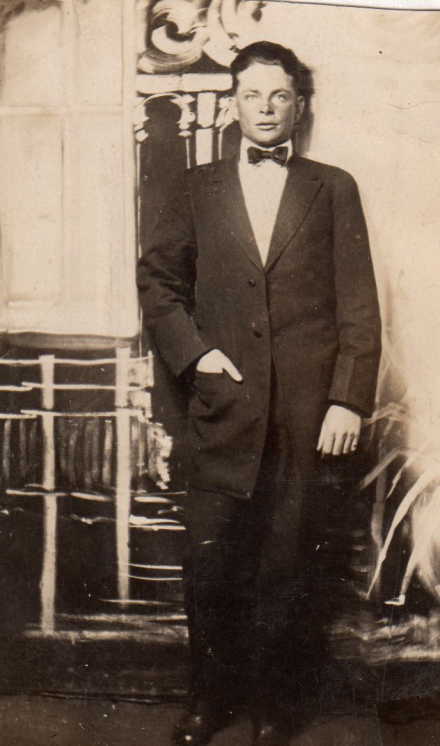
Ernie in Coffeeville
The perfectly manicured green grass shimmers in the bright morning sun as we take out the lawn bowling set that belonged to our great-grandfather. He was both a lawn perfectionist and a lawn bowler, a rare combination none of his children or grandchildren has encountered again in life. He took great pains to keep the crabgrass out and the healthy green grass trimmed evenly. His yard was his pride and joy. His children were enslaved in landscaping work during the time they lived in their father’s home. Like Claude Monet it appeared that Jason cared more about his garden than he did about his children’s happiness. Because of his particular love of lawn perfection and startling indifference to humans his children called him Crab Grass behind his back.
When my grandfather was young he left home with his brother because they were not fond of Crab Grass, and even less fond of his wife, their stepmother. She claimed to be a witch , but she was known as a con artist. She was a Cherokee woman who would arrive in a town saying she knew where Tecumseh had buried gold in the vicinity. She would then scam the townspeople to bankroll an expedition to find the hidden treasure, then leave. When she met our great-grandfather he was a snake oil salesman. He peddled patent medicine and introduced his second wife to his family as a witch capable of harming them. The boys’ birth mother had died young, leaving them with old Crab Grass and this con woman/witch, living on the Cherokee Nation. Ernie and his brother Ralph ran away to become migrant workers, picking corn and doing other agricultural work all over the Midwest. They worked in the season, then returned to their grandparents’ farm in Kansas during the winters. They rarely visited their father, who lived in a nearby town in Oklahoma.
When great-grandfather Jason died his wife wanted to get rid of the lawn bowling set because she said it was haunted. Nobody recalls which member of our family accepted the large burlap bag full of heavy balls that he had used almost every day of his life. The family did not give it a second thought until the spooky feeling that accompanied the bag became obvious. A family meeting had been called to decide what to do with this creepy inherited game set. It was decided that the bag would travel from home to home, staying for a period of a year each time. Since 1927 this lawn bowling set has brought tragedy, mystery, and wealth to our family. It has acted as a Ouija board, seeming to be directed by spooks, to foretell the future. It seems to be inhabited by the spirit of our ancestor. His restless soul still wants to play his favorite game. Since he is not longer incarnate we figure it can’t hurt to keep the game going for his amusement. As we play on our own lawns now we wonder exactly what we inherited from all our relations. It is far from clear.

In this inventory- Jeanette Armour gets a years support-Her son Andrew is the person who did the inventory.
My seventh great-grandfather was born in Surry, Virginia in 1685. His father, William Sr, was born in Massachusetts Colony and migrated to Virginia. There is a William Little in Surry County by 1687 when he and Edward Napkin are convicted of not going to church. Even earlier, in 1673, a William Little is listed in those who took part in the Lawne’s Creek Church uprising, the first tax strike. According to Elizabeth Wright, a William Little is found on the tax rolls as early as 1674. A John Little appears in 1688.
William Little Sr. was involved in the early colonial tax strike in Surry County, Virginia in 1674. Upon his death, he left his son, William Little II, his plantation and 200 acres upon which William II lived. He also set his slaves free (source: Michael C. Little, 2004).
William Little Jr. was born about 1685. He is listed in his father’s will as the oldest son. Thigpen Tribe lists his birth in 1685. He owned Bought land in 1738 in Surry Co. VA. He owned land that sold on 18 Feb 1755 in Surry Co. VA. William sold 100 acres to Buford Pleasant ” it being part of a tract of land granted by patent to Phillip Hunniford bearing date the 17 Day of May 1666 which was left to the said John Little by his Father in his last will and testament it is part of the tract of land which William Little the father of the sd John Little purchased of Edward Napkin junr” on 5 Jan 1709. He was living on 23 Jun 1755 in Surry Co. VA. 10 Jan 1755 William Little and wife Mourning of Surry Co. to Thomas Davis of Elizabeth City Count 300 acres (being the land William Hart sold him on 16 Mar 1738) bounded by the Mill Swamp, the Meadow Branch, Mile Branch, Benjamin Bell, and the Hog Pen Branch. Witnesses were Thomas Wilson, Benjamin Little, Jacob Little, Joseph Holleman.
On 23 Jun 1755 Mourning Little, wife of William Little, relinquished her Right of Dower in the 300 acres sold to Thomas Davis of Elizabeth City County
In the 1755 tax list for Beaufort; Wm. Little, Abraham Little, James Little, John Little, and Thomas Little were listed. William and Abraham were listed together with only 2 polls (themselves). Amos Atkinson was also listed.
In 1762; Isaac, James, John, Joseph, and Robert Little were listed. He moved before Sep 1755 to Beaufort Co. NC. September 1755, William Little of Surry Co. VA received 300a on Cheeks Mill Swamp to pay a 40 pound obligation from James Cheek in Halifax precinct NC. Deed was witnessed by Amos Atkinson and Abraham Little. He died in Mar 1756 in Beaufort Co. NC. Beaufort Co. NC March Court, 1756. Son Abraham 100 acres where he now dwells, Thos Sharp, Cheek’s Mill Creek, James Hearn; 12lb to survey the land I bought from James Cheek & then to make a title to his 2 brothers. Son William & James – the remainder of sd tract of land which I bought from James Cheek. Son Jacob – 100 acres where I now dwell joining the Dividing Branch. Son John – 100 acres on north side of sd Dividing Branch except my daughter Jane Moring to have the use of where she now dwells during her lifetime. Son Isaac – pot. Son Joseph 10L VA. Wife Morning – rest of my estate during her lifetime & then to my 5 youngest sons Jacob, William, James, Joseph & John. Wife: Morning. Executors sons Isaac and Jacob Little. Witnesses Amos Atkinson, Mary Judkins, Jane Atkinson
He was married to Morning Kimborough . It is likely that Morning is not the mother of Abraham, Isaac, and Jane. William’s will gives Abraham the land where he now lives, Isaac only a pot, and Jane the right to live where she is now living. He makes other specific requests to Jacob and John. He then gives the balance to Morning as long as she lives and then to be divided between his youngest 5 sons. I believe this indicates these are Morning’s children and the other three are not.
(Notes from Jane M. Lindsay 1/3/99 and updated 2002)
William II was involved as a North Carolina commissioner helping settle the Virginia/North Carolina border in 1728, resulting in North Carolina becoming a royal colony.
William Little Jr (1685 – 1756)
7th great-grandfather
Jane Jeanette Little (1713 – 1764)
daughter of William Little Jr
Andrew Armour (1740 – 1801)
son of Jeanette Little
William Armor (1775 – 1852)
son of Andrew Armour
William Armer (1790 – 1837)
son of William Armor
Thomas Armer (1825 – 1900)
son of William Armer
Lucinda Jane Armer (1847 – 1939)
daughter of Thomas Armer
George Harvey Taylor (1884 – 1941)
son of Lucinda Jane Armer
Ruby Lee Taylor (1922 – 2008)
daughter of George Harvey Taylor
Pamela Morse
I am the daughter of Ruby Lee Taylor


the watcher
I have joined Chris Brogan for several years in pronouncing three theme words for the year as it begins. I have had some random success with this method, but sometimes I completely forget the words. I could look them up, but I don’t know what the words I chose were last year, so it did little good to decide on them. Ironically, I usually have a word on my inspiration list that reminds me to practice regularly, or stay consistent. I believe I have not been specific enough about exactly what I would consistently do or practice. My approach to this year’s words, which I almost did not even do, relate to my wellness and creativity goals. Both wellness and creativity are the summation of small but consistent practices. This year I want to put in minimal effort for maximal results. I want to waste no time, money or effort on anything that does not serve me. If what I find myself doing does not pass the three word test in 2016 I will change my actions. I want to do exclusively three things:
I think this year I will print the list of words and keep it in my office where I will see it. That is probably the easiest and best way to stick to it. I wish all my gentle readers a healthy and fortunate year.

Hygge
I have started to read about the Danish version of minimalism known as hygge. I purchased a few books on sale and have started to read Hygge: A Danish Concept of Cozy Simple Living, by Noah Neilsen. This simple but elegant lifestyle is core value centered as opposed to consumer centric. Keeping a mindful ritualistic pace as well as a clean clear space leads to happiness and contentment with life. This Danish version of minimalism is more multi dimensional than the similar Spark Joy book about tidying up, Japanese style. I believe the lessons and the system proposed by Marie Kondo in her joy through tidying books, but I have not yet managed to follow through with the whole system. Her books have guided me to vastly improve my tidying and set a long term goal of carrying out the system from the first step to the last. She has outlined what I know will be the final solution to clutter in the space and on the schedule.
I am successful at keeping my time to myself and my schedule light and easy to accomplish. I begin early on most chores, like filing taxes. I have certain ritualistic practices at the end of the year designed to make the first of the next year run smoothly. I clear my desk and clean out my files. There is always a pile of paper I can use for starting first in my wood stove. I keep an IRS pertinent file which I carefully fill for my trip to the accountant. I file as soon as possible in order to experience the great feeling of relief from having finished it. I never let it slide because the reward is to be basically finished with the year in taxes until my property taxes are due in November. That is a wonderful vacation from concern. I don’t make resolutions. I work for an early tax return in order to liberate myself from that drudgery for an extended period.
I like the elements of Hygge that go beyond cleaning and clearing clutter. Meditation, simple hospitality, and artistic self expression are part of the Danish happiness template. Dedicating time to pleasurable shareable activities is stressed over using time to consume things. A monk like attention to the meditative qualities of daily work and life creates a person who is fully present. Yoga is designed to train the mind to focus in spite of distractions. There are other practical ways to unplug from the constant clammer of commercial interests to be closer to nature and to friends and family. Any chore can become a source of pride and contentment. The satisfaction in doing little things adds up to a content way of living.
I practice a few rituals upon which I can build my hygge. My gym time, followed by steam room is a part of my life that reward me directly and over time. I also exercise at home in my community hot tub. Few others use it, so I virtually always have the pool deck to myself for a morning or evening stretch and relax in the water. In summer I enjoy using the big pool as well. This lifts my spirits and keeps me flexible. I incubate ideas, but do not allow any worry or distress to enter my work out time. The movement is a remedy which needs to be applied in a pure state. The steam room and personal grooming time that follows the gym time is part of my daily ritual that makes me feel good as well as look a little better. I leave refreshed, relaxed, and ready to face any task. The gym love is probably my strongest positive practice.
I believe the key to happiness is to find contentment in every moment, the face of God wherever one looks. In 2017 I plan to hone and perfect some rituals I love, as well as find some new helpful ways to be present and find joy. I believe that less is more and that simple pleasures are always abundantly available. Here are some examples I find very pleasurable:
The Danes are some of the happiest people on earth. I had heard that this was because they have low expectations. Now that I am intrigued by the hygge concept I see that they have very high expectations for presence, for authenticity, and for intimacy. I have a couple of other books to read on the subject, but I have already embraced this idea. I believe that coziness and simple abundance are much overlooked sourced of fulfillment in our society. It is no wonder these Danish writers are all the rage now. We need a big dose of it in the United States. How is your own hygge situation, gentle reader? Can you think of ways to leave bad habits in the dust by taking up purposeful happiness?

rest awhile

Bryshnikov speaks
I was at the Metropolitan Opera on the 4th of July, 1986, the day after Misha became an American citizen. He danced in the ballet Giselle, and leapt into the air with what appeared to be the greatest of ease, but was the result of a lifetime of training. He was young and stunningly talented. American Ballet Theater gave the people an outstanding show, starring the rock star, movie star, ballet star who came to us as a gift from Russia “with love”. The crowd went wild and threw hundreds of roses while giving a standing ovation after the performance. The audience showed how deeply his presence, and now his citizenship, was appreciated in New York. It was an exquisite moment in history to witness. He made his stage debut at the Mariinsky Theatre in 1967, featuring in a production of Giselle. He was born in Riga, present day Latvia. He was trained in ballet in Riga and St. Petersburg in his youth. He defected from the Soviet Union in 1974 after a performance of the Kirov Ballet in Toronto. He moved to New York and became the director of American Ballet Theater.
I was also lucky enough to see him on stage in Paris in the 1990’s when he was dancing to his own choreography in the White Oak Project. His leaping had been somewhat subdued, but he chose younger dancers for his company who could still hit the very high leaps. His own style had only mellowed and perfected itself then dancing his own creations. He has performed around the world with many different troupes. His talents and achievements are legendary. His training by and defection from the former Soviet Union made his gift even sweeter. Now his birth land of Latvia is voting to confer Latvian citizenship on their famous son. He has applied for it and the parliament is scheduled to take it under consideration. It would be ironic and odd if he were to need to defect to Latvia once his dual citizenship has been conferred.
Last week it was Prince Charles of the British monarchy warning us that he feels a 1930’s vibe. Now Misha tells us he is feeling a cold war. We should take heed, gentle readers. Experience and history are talking to us.
The Latin phrase a posteriori refers to the process of inductive reasoning. It means “from what comes after” or a proposition based on experience. A close relative, also used in philosophical arguments, is a priori, which is knowledge based on previous understanding of the concept. It means literally from what comes before. A priori can be a mathematical equation, or any other agreed upon fact deriving from the agreement. It would be correct to call the statement “It is cloudy outside.” a posteriori because I looked outside and can see the fact that it is cloudy now. The statement, “Cumulous clouds are the harbinger of rain.” is an assumption based on scientific agreement, and therefore is a priori. We agree on the definition of cumulous clouds without the need to experience them directly. “That bow is red” is another a priori belief. We all have agreed on what red is (except the colorblind).
A posteriori is based on empirical evidence, direct contact with the facts. A priori is based on logic previously accepted as sound. On the surface it might seem that a posteriori is the only valid way to defend a position. I have learned from my studies of ancestry and history that both methods can fail miserably. My grandmother thought she knew her birth year, but there was no certificate. Later in life she forgot, and then nobody really knew, or bothered to look it up because it did not matter. She had no way to remember her own birth, so her a priori birthday was a year off the real date. Many “facts” in records from the past have been recorded incorrectly. Census records that list step mothers as natural parents, step children as children, and other errors can throw a wrench in the works for investigators trying to follow a lineage.
Be careful, gentle reader. Logic and truth are tricky subjects. Check your logic, and double-check your data before you make any big conclusions. Caveat emptor.

red
My 9th great-grandfather was a baker who arrived in Connecticut in 1638. He was an original settler in that colony. He landed in Massachusetts then moved to New Haven. He signed the New Haven Plantation Covenant on June 4, 1639.
“The Story of the Early Settlers of Stamford, Connecticut, 1641 – 1700” by Jeanne Majdalany (including genealogies comp. with Edith M. Wicks), page 152: “Peter Brown was born 1610, died 1658, married 1 Elizabeth Smith(d1657); m2 1658 Unice/Unica Buxton…Peter Brown was of Concord, MA in 1632 and of New Haven in 1639 where he was a baker. In 1647 he was in Stamford. He probably was a brother of Francis. He lived on the west side of “River Street”.

Brown Coat of Arms
Peter Brown (1610 – 1658)
9th great-grandfather
Deliverance Brown (1656 – 1727)
son of Peter Brown
Rachel Brown (1700 – 1716)
daughter of Deliverance Brown
Mary Mead (1724 – 1787)
daughter of Rachel Brown
Abner Mead (1749 – 1810)
son of Mary Mead
Martha Mead (1784 – 1860)
daughter of Abner Mead
Abner Morse (1808 – 1838)
son of Martha Mead
Daniel Rowland Morse (1838 – 1910)
son of Abner Morse
Jason A Morse (1862 – 1932)
son of Daniel Rowland Morse
Ernest Abner Morse (1890 – 1965)
son of Jason A Morse
Richard Arden Morse (1920 – 2004)
son of Ernest Abner Morse
Pamela Morse
You are the daughter of Richard Arden Morse
Peter Brown was one of the Governor Theophilus Eaton and Rev. John Davenport Company, that made a settlement at New Haven in the spring of 1638. This company was partly from the City of London, where Rev. John Davenport had been a celebrated minister, and partly from the counties of York, Hertford, Kent, Surry and Sussex, and sailed from London, England, in the ship Hector, which arrived at Boston on the twenty-sixth day of June, 1637. Peter Brown signed the compact appertaining to the government of the New Haven Colony, in 1639. He sold out in 1647, and removed to Stamford, Connecticut, where his wife, Elizabeth, died Sept. 21, 1657, and his son, Ebenezer, Aug. 19, 1658. He married again at Stamford, May 25, 1658, Unity, widow of Clement Buxton, and died there Aug. 22, 1658. His widow afterwards married, March 9, 1659, Nicholas Knapp.
From the book One Life at a Time: A New World Narrative by R. Thomas Collins, Joseph Wood
Peter Brown was born 1610 in Hastings, England. A baker, Peter was a member of the immigrant company organized by London merchant Theophilus Eaton and the Puritan divine, Rev. John Davenport. Peter Brown was one of the signatories of the New Haven Plantation Covenant on June 4, 1639.
Peter Brown was one of the many townsmen to seek opportunity elsewhere after the failure of the Great Shippe. In 1647, Peter moved to Stamford. Peter, who died in 1648, and his first wife had at least one son, Hackaliah (#51). Peter’s second wife, Unity, widowed, later married Nicholas Knapp (#2) in Stamford.

There are many more gastronomically interesting options available at Christmas time, but I’m still always drawn to the reassuringly traditional sage and onion stuffing. Nowadays, in addition to stuffing poultry, sage is most commonly used to flavour other meat dishes (particularly sausages in British cuisine). However, its scientific name, Salvia officinalis, shows its heritage as a […]
via #AdventBotany – Getting stuffed at Christmas: Sage — Herbology Manchester

Kirk Douglas
Kirk Douglas celebrates his 100th birthday today. He is not only a piece of cinema history, but has portrayed historical roles, the most famous of which was Spartacus. He wrote a warning recently to the American people. He shared the wisdom of his perspective as a boy who joined the navy after Pearl Harbor to fight. He is married to a woman who was born in Belgium. They have both been shocked by the rhetoric of the recent election and the resulting prevailing unrest and distrust. They have direct experience with the dangers of extremism and hate based politics. He opposed the Hollywood blacklists, and lived to tell about it.
I urge you to read his entire statement. Here is an excerpt to tempt you to do so:
“Until now, I believed I had finally seen everything under the sun. But this was the kind of fear-mongering I have never before witnessed from a major U.S. presidential candidate in my lifetime.
I have lived a long, good life. I will not be here to see the consequences if this evil takes root in our country. But your children and mine will be. And their children. And their children’s children.
All of us still yearn to remain free. It is what we stand for as a country. I have always been deeply proud to be an American. In the time I have left, I pray that will never change. In our democracy, the decision to remain free is ours to make.
My 100th birthday is exactly one month and one day after the next presidential election. I’d like to celebrate it by blowing out the candles on my cake, then whistling “Happy Days Are Here Again.”
As my beloved friend Lauren Bacall once said, “You know how to whistle don’t you? You just put your lips together and blow.”
I wish Kirk and his friends a very festive day. His doctor promised him a shot of vodka if he made it to 100 years. He plans to take the offer at an afternoon party for 150 or so of his closest friends. Cheers to a happy birthday! Twitter is all a twee with #IamSpartacus today in tribute.

movie star

The Pantone Color Institute has spoken: at a time when it seems everybody is in need of some hope, the bright “greenery” should help provide some as the 2017 Color of the Year. The idolized color authority announced its choice of the shade Pantone 15-0343 (generally called “greenery”) on Thursday. Pantone chooses a color each…
via Pantone’s Color of the Year for 2017 Is Greenery — TIME This is the green that will lead 2017. Greenery will sprout in the spring of the year, bringing brightness, merriment and cheer. Despair not, lose the fear. Pantone Color Institute is here to perk up our year.

