mermaidcamp
Keeping current in wellness, in and out of the water
You can scroll the shelf using ← and → keys
You can scroll the shelf using ← and → keys


I know why I love museums. They contain great art and beauty not for sale. Taking in an exhibition is different from going to a gallery opening with a possibility of purchasing something to take home. Botanical gardens and flower conservatories are even more attractive because they are maintained in ways I could never do at home. The extravagance of collections on display to the public makes me very happy. I never mind paying a fee to tour a museum because I know the expense for the establishment goes far beyond what they can collect at the door. Volunteers, donors, patrons and members keep the bills paid and the events continuing. Plans are made years in advance to show collections and feature artists at special opening galas. What does this have to do with my regular life at home?
In December I cleared out my bedroom, giving my closet an extreme make over. I jettisoned mass quantities of clothing to make my surroundings both pleasant and well-organized. This purge of possessions has proven to be very satisfying and easy to maintain. I am not tempted to over fill my space with objects or delay dusting. I feel great about my five star hotel style bedroom. We bought a new bed, new covers and pillows which add to the comfort. I am sure I don’t miss all the clothes I gave away, and am still loaded with wardrobe items for all occaisions.
I have turned my attention to my office now. I started to look for something recently and found many useless things stuffed into my office closet. I began to eliminate, file, move, and generally tidy up my work space finding art, art supplies, sewing, fabric, patterns, and all manner of buttons, remnants and sequin trim. I also have stored both framed and unfinished art I have created by stuffing it into spaces on the bookshelf. The place is a mess, but it will not require as much work to reform as my clothing did. I finished my taxes today and feel I need to do this organizing task. I don’t honestly need to keep papers all over my desk while I organize taxes, but I seem to do that each year. Now there is no excuse. Next week I will have a clearly organized office that reflects my highly organized life. I believe that the space can create more order or more disorder all by itself. If I have a tiny pile of mail it becomes a big pile just because there is a place to stick envelopes I don’t want to open at the moment. I will turn this tide of unruly ownership of items into a fabulous collection of art and art supplies that would thrill any muse. I want to be able to find, use, then easily store everything in its place, just as Maria Montessori wants me to do. It would have been too shocking to show before and after shots of my clothes, but I am showing you the disgraceful state of my belongings now. I will impress you next week with the spanking new space. I am acting in time before they find me and put my office closet on one of those hoarder shows. Wish me luck on my new museum quality office.
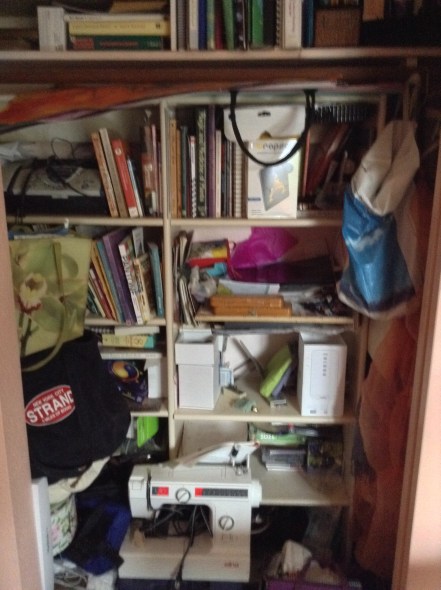
closet in question
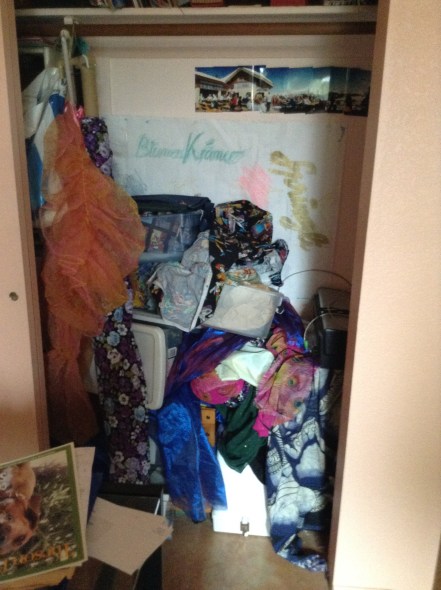
closet in question
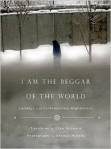
The book I am the Beggar of the World is a collaborative effort by Eliza Griswold and Seamus Murphy. Last night at the U of A Poetry Center Seamus was present for the opening of an exhibit on the book. He spoke to the audience about the process they had followed to find the landays in the book. He explained the cultural significance and historical tradition of these spoken couplets specific to Pashtun women in Pakistan and Afghanistan. The two journalists had served in the region as reporters. They wanted to bring a deeper insight into culture and life than they could offer in a news story. Their investigative trip involved finding women who know the poems and convincing them to share them. Ms. Griswold handled the interview tasks while Mr Murphy shot photos and video footage of the region. They did not attempt to shoot the women reciting themselves for various reasons. This poetry is spoken, forbidden, and often critical. Any image of the women identified with landay might cause them great danger.
There are about 40,000 landays in use at any given time. They are 22 syllables, 9 in the first line, and 13 in the second. They are general statements on life from a woman’s point of view. They remind me of the Mexican dicho, a short philosophical statement that explains the situation at hand. My favorite dicho (saying) is, “Cuando hay dinero baila el perro.” When there is money the dog dances (anything is possible). Landays do sometimes contain great humor, but in general I think they are more haunting and pithy than dichos. Here is one example translated into English: “When sisters sit together, they always praise their brothers. When brothers sit together they sell their sisters to others.” The repression of women is a theme, since this real problem plagues family life. The landay is a way to express emotions as well as outrage at the political systems that are unfair to women.
One of my favorite poets, Piet Hein, wrote short works like these called Grooks. He started in Danish, and worked his way into English. The reception last night was catered with beautiful food and wine for the guests. They had outrageously ripe strawberries and chunks of fresh pineapple, which I enjoyed immensely while standing in line to purchase a copy of the book. I was reminded of what may be my favorite poem of all time, a Grook. “Love is like a pineapple, sweet and undefinable.” I had amazing dreams in my sleep last night. I was wandering around in some other ethnic zone searching for poets, just like in the book. I found some and there was great dreamy party about saving the poems and being anthropologically correct. I was in a fancy tent with a spread that look suspiciously like the food at the reception. I woke up with no pineapple, but a distinct taste of liberation in my mouth. I have my copy of the book to savor and enjoy. I would recommend it to anyone. This is a story of inspiration from history and daily life. The most important thing to remember about them is that their authors are illiterate. This sentiment is shot straight from the heart with no filter, publisher, or even permission. This is the birthplace of all poetry. Edited over centuries, these couplets reflect an accurate and poignant view of Pashtun women and their culture. I believe any reader would enjoy the book.

book cover
ROW80
I still publish short quickly composed poems with art. This practice that I set up here has been a good platform for discovery of my strengths and weaknesses. I need to keep the mojo going by posting a poem almost daily. This is the first step to being constant and nourishing to my poet persona. First of all I need to convince myself that creative writing is within my ability. In order to move up from my current level of unpolished, slightly redundant writing I need to follow more steps and enjoy deleting at least as much as I enjoy first drafting. I improvise well in many modes. In real life this leads to using creativity to approach many things that I do. I like to play chef and meet the creative challenge of using all the left-overs to make something delicious. I like to eat the result and start on something new. My preference for finishing fast is an impediment to becoming a better writer. I don’t need to count words as much as I need to spend more time editing and improving the initial writing. I have learned that from both my own critique of my situation as a poet, and from reading the works and works in progress presented by my fellow ROW80 writers.
The time we have spent has gone by quickly, with only a couple of weeks left in our 80 day challenge. Each writer has a different style of check in. Some are describing works in progress and sometimes sharing excerpts. There are novelists, poets and fantasy writers here, each with a different point of view, environment, and level of experience. As one of the least experienced participants I am lucky to hear from those of you who have wisdom to share. You give me confidence as well as tools for the job before me. After the challenge has ended your inspiration will still be with me forever. I believe I can go right into NaPoWriMo, the poetry challenge for April, with better preparation than ever before. This challenge is simply to write a poem daily during National Poetry Month (April). I started as a fluke two years ago, but last year I thought I needed to do it again. Now I am looking forward to it this time with happy anticipation. It will not be a chore, but part of this regular practice I have established.
Thank you all for inspiring and challenging me to discover more about the crafty and powerful world of words!! The fun has just begun. As a tribute to the importance of editing I am going on a big clean/clear/organize binge in my office. I did this to my bedroom in December with spectacular results. I expect cleaning out the office can only bring joy and space to operate. This is a spring cleaning of both a physical and mental kind. This edit is a metaphor for the editing I will do in my process in the future. Less really is more.
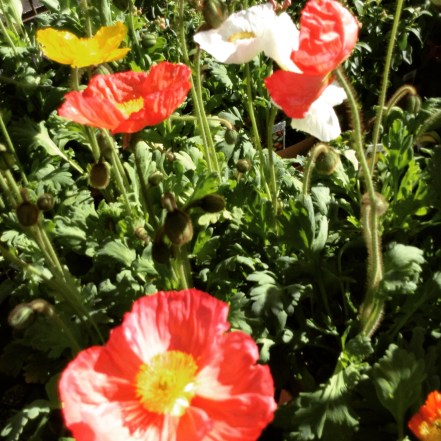
icelandic poppies


My week has been graced by the presence of a real writer. I went to hear the poet Simon Ortiz who was in Tucson for a reading of his work. I was deeply moved and highly impressed with his writing, which he delivered with lavish explanations about his process. He is now writing an epic poem, an idea he joked about by saying there is no real rule about exactly how long an epic has to be. He will include within the epic some of his older works, which he shared with the group who had come to the U of A Poetry Center to listen to him. I purchased his book, Sand Creek, which he signed for me after the reading. I told him how much I loved hearing him and he responded that he really loved reading to us. His genuine joy in sharing his work was evident. We were all truly blessed to be there. Some of his poems are funny, and some carry tragic stories from history, like Sand Creek.
The Poetics and Politics of Water series has evolved. Dr. Ofelia Zepeda is a poet and professor who collaborates to put together this very special program of Native American writers. She and her colleague Larry Evers introduced Politics and Poetics in 1992. I look forward to the next reading which will be given by Dr. Zepeda herself. She uses her native language from this region, Tohono O’odham, to welcome the visitors to her land and bless the participants. It is beautiful. She translates the traditional greeting in to English when she is done.

Ofelia Zepeda introduction
I have written and read some this week with mixed results. I believe the most profound thing that happened to set my poetic self on the path was my chance to hear Mr Ortiz. He said prose and poetry are all the same, and in the end, all language is poetry. He certainly was all poetic in every part of his being. He talked about his own recovery from alcoholism, and his father’s inability to recover from it. His identity as Acoma with deep religious and cultural heritage is important to him. His father exposed Simon to sorrow through addiction, but he also taught him his traditional language and mystical history. The last poem he read to us was about his father’s death. It was sung as a song, a chant, a rhythmic tribute to the spirit of his father and all he had inherited. It was a wonderful way to show his talent and end on a solemn, serious, meaningful note.
ROW80
I am amazed to find such a vast network of poets and poetry exchanges on the internet. This #ROW80 has enlightened me, encouraged me, and introduced me to resources I might never have discovered on my own. One of the most interesting sites I have found for writers is Mindlovemisery’s Menagerie. This group creates a daily writing challenge of a different nature. Today a short story about an imaginary dinner party in 500 words or less stimulates the imagination, but other days poetry or fairy tales are featured. The regular assignments are all geared toward teaching participants to improve their skills, exactly like this literary soiree in which we find ourselves. I believe the best result for me here is the idea of stepping outside my comfort zone, reporting facts. I sometimes include opinions in my posts, but I see the merit in using creative writing to express both opinions and emotions. Strong impressions can be made by using literary devices. “Just the facts, ma’am” can become kind of flat, especially after a while.
When I was in 9th grade I attended a small school run by an oil company in Venezuela. The teachers came from the US and were all vastly more eccentric that the teachers I had known in Pennsylvania. Our English teacher, the memorable Pina Sue Sturdavant, was also our physical education instructor. She was from the panhandle of Texas and had such a strong and ridiculous accent that it would have been impossible not to make fun of it. She was unpopular with the students because she was just too weird for us. She announced we would study propaganda in our English class for 6 weeks. We thought she was insane because in the 1960’s propaganda was something we thought was for Russians who lied to the public. She proceeded to teach us the principals of advertizing, which have served me well since that time. She explained that certain methods of persuasion could convince us to want things we did not naturally want. This is, of course, rhetorical truth, of which we hear so much around political election time. Not all of it is subliminal. Alliteration is a favorite device because it sticks in the mind and on the tongue. Libby’s, Libby’s Libby’s on the label, label, label was the example Pina Sue used to illustrate successful use of alliteration. Dr Seuss is a liberal user of this device, to great effect.
Marketing logans and jingles are carefully designed to be catchy. In the old days rhyme was used more profusely than it is today: Winston tastes good like a cigarette should. These marketing devices also work in poetry. A poem sells an idea, or a personal glimpse of reality, an interpretation. Tonight I will attend another reading at the Poetry Center on the politics and poetics of water…they have already used alliteration in the title of the seminar. My goal this week is to continue writing poems and work to use alliteration within them. It was always my favorite device. Starting with this one, I may continue to enjoy other structural restraints. It would be fitting if I could write a poem about Pina Sue herself…We shall see. She does have those two S sounds at the end of her name, and I remember her vividly.


Words make things happen. In most cultures spoken ceremonies are repeated verbatim purposefully. The sacred nature of both written and spoken language is celebrated around the world. The Torah, Koran, and Bible are viewed as sacred texts to be studied, read and taught. Art depicting religious stories was used to teach in the times before reading was common. Art and design of a religious nature is preserved to demonstrate to future generations the devotion the ancestors had to their beliefs. Sites that are sacred to people for thousands of years become inundated with the energy of pilgrims and believers who have visited throughout history.
In the fast paced and highly saturated language designed to sell products we experience subliminal suggestions buried beneath images and characters. Appeals contain images and voices that speak to our deep unconscious. The investment and energy required to sell Coca Cola around the world now is probably greater than investments in creating sacred art and literature. Political campaigns burn resources and overwhelm the public awareness. Messages bombard the audio and the visual landscapes. The plentiful access to information is both miraculous and sinister. The power of the published word, once reserved for exclusive use by a small group, has been granted to a much wider population. This expansion has created a deluge of spoken and written language available in the blink of an eye on the internet. The cascade of words never ends.
I think it is important to remember that everything we read, write, say, hear, and repeat (or retweet) is power. How do you filter the words you give and receive? I limit the number of ads I see by not watching much commercial television. I don’t buy magazines, and rarely buy papers. Most marketing messages reach me by internet. This makes it simple to delete, unsubscribe, block many of the unwanted communications. The companies that continue to fill my mailbox with catalogs after I ask them to stop sending them invoke my ire. I decide they are too rude to have my business if they will not manage one simple customer service request to stop bombarding me with glossy paper. The world has changed, and so should the unwanted advertisers who think they are reaching me by mail.
Lately I have discovered the vast selection of poetry available free on-line. This filter, which includes several apps for my phone and the voca library, has changed the kind of words I receive on a regular basis. The essence of the poets who crafted those words is portrayed in print and audio. I am making the acquaintance on-line of poets writing now that I like to read. It is fun to be able to comment in real-time on a poet’s blog. By shifting my attention to poems and the use of words to capture time I am pleased to report that my own world is richer and more creative. Words are magical, indeed. My magic words for the year 2015, patience, persistence, and poetry are proving to have the ability to open new realities to me. The are providing a portal into a place of poets, and are just the medicine I needed. Do you believe in magic words, gentle reader?
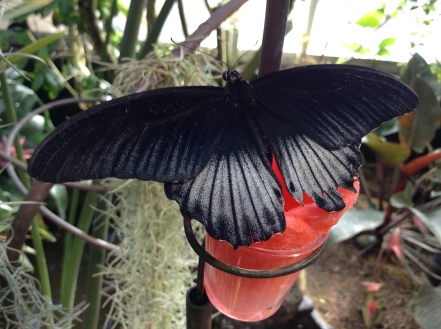
butterfly
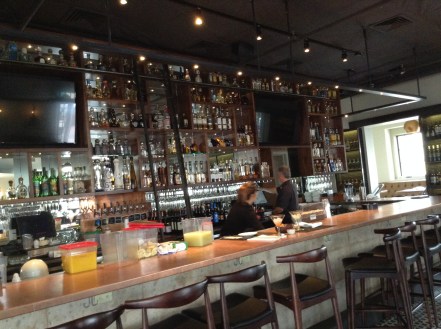
bar
We tried a new Mexican restaurant this weekend in Tucson. Competition is stiff for Mexican food here, so to be popular there must be some specific advantage to keep customers returning. Reforma has many features that set it apart from other dining options in the area. The sleek modern decor and elaborate bar are urban, with nothing indicating that this is Mexican. There are no sombreros on the wall, or folkloric costumes for the servers. The ambience they want to create is Mexico City, or Chilango style. I like the newly completed renovation if the interior space, but we chose to dine on the patio. On the weekends St. Philip’s Plaza hosts farmer and artisan markets. The sellers were packing to leave as we arrived, but it was still a lively scene, fun to watch from the dinner table.
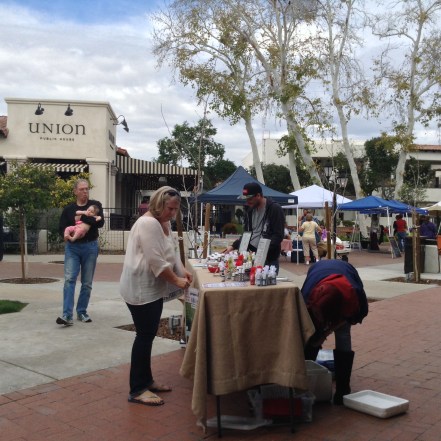
St Philip’s Plaza market
The cantina has an incredible collection of tequilas. The list of tequilas is presented on a digital tablet, and there are hundreds of choices. The house cocktails all feature tequila as well. I don’t drink much tequila, but decided to try a vampiro (vampire) which was an excellent idea.
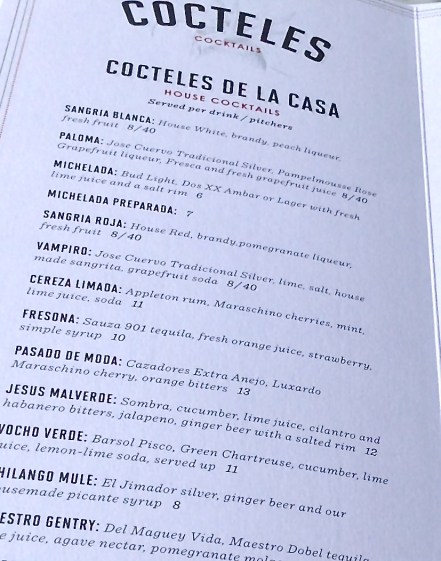
house cocktails

cheers
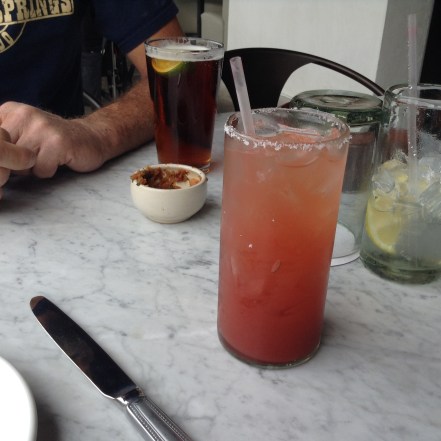
Vampiro
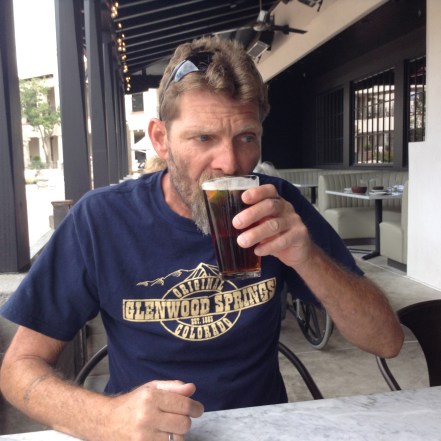
Bob and brew
The salsa is very thick and smokey. The tortilla chips are either made in-house or procured very fresh. When the salsa agrees with my taste I know I will probably like the rest of the food. Our server John was quick to bring our drinks, answer our questions and take the order. Bob enjoyed a craft beer while we quickly polished off the first salsa serving. When I asked for more we were given two extra bowls of the delicious spicy paste. This won my affection for the server. I can be kept very happy for a long time with sufficient salsa, but when I have chips and no salsa I become the cranky customer quickly. We had only a few minutes before our meals arrived this time, barely enough to break into the second bowl of salsa.
We tried two sides rather than order appetizers because there were some interesting choices for vegetarians. The pickled vegetables were a sharp and flavorful accompaniment to my salad. Green beans, two kinds of chiles, carrots, and red onions were in the mix. The other side was esquites, dish neither of us had tasted in the past. This corn/ onion/crema combination was our favorite. Both of the side dish portions were so ample that we needed to take some home with us. Part of my salad with black beans, guacamole and fresh vegetables was also brought back to the house. Bob managed to eat all the beef with chile, green onions and lime. He really liked it. We both decided this is a place we want to try again. There are many other menu items that look tasty, including a great happy hour taco menu. We passed on dessert, but I noticed there are adult popsicles. If you like tortillas, tequila, and innovative cuisine I believe you will enjoy dining at Reforma. John is an attentive and competent server. He will make sure you do not run out of salsa.
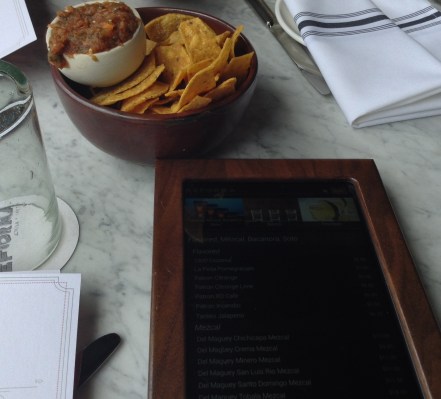
chips, salsa, tequila list
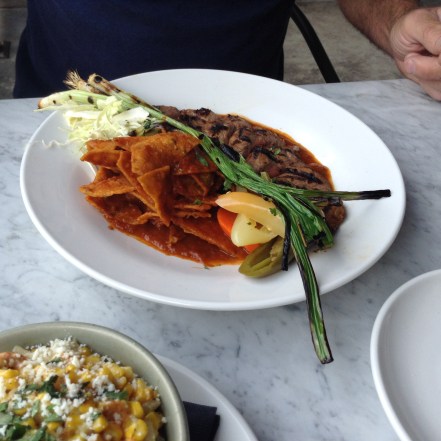
beef for Bob
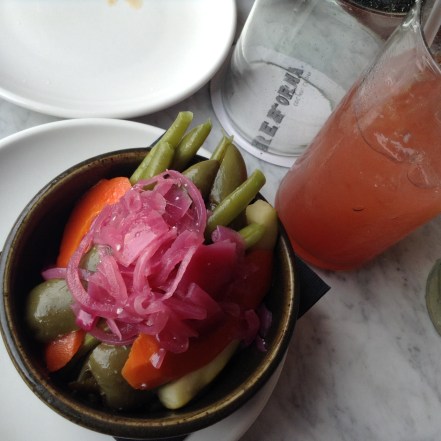
pickled vegetables

ensalada completa

esquites
ROW80
I have achieved one of the goals I stated in my first post here. I have been to the U of A Poetry Center this week. The free reading on Thursday evening was part of series on the poetics and politics of water. Sherwin Bitsui, a Navajo poet, read from his works. The were haunting and evocative of desert landscapes. He was generous in his explanation of the background and muse for the works he presented to us. This gave us both biographical information about him, and a sense of how long he worked on the books he had published. Mr Bitsui is now a professor of creative writing in San Diego, but he comes form the Navajo reservation. In his introduction he was recognized for his support of other Native American poets. He mentored and helped a number of people during his time at the University of Arizona who have gone on to publish books of poetry. I thoroughly enjoyed listening to him read. Ideas from the reading have been resonating and reverberating in my mind…a good sign that those poems hit home in ways I have yet to understand.
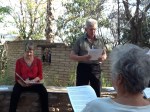
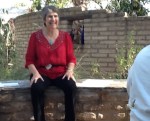
Yesterday, for Valentine’s Day the Poetry Center docents presented a reading at the Tucson Botanical Gardens. Poetry in the Garden is a regular series open to the public held in the natural setting of the gardens. Our broad subject this month was birds as symbols of love. These readings are enjoyable for all ages and stages of poetic interest. The docents compile a packet of poems and read from the collection. The audience is invited to read too, and discussion takes place after each reading. The docents encourage the audience to express thoughts and feelings about the meaning or the sounds in the readings. The discussion is broad and not academic. The programs are very well prepared and produced, this one being no exception. We heard from e.e. cummings, Emily Dickinson, some other well known writers, and less famous poets with all kinds of styles. The setting and weather were ideal as we were visited by singing birds before and after the session. They seemed to be voicing approval or applause.
Both of these very well produced events are an example of the very good luck it is to live near the Poetry Center. Having access to these high quality readings is a gift. Some of the attendees at the evening readings are enrolled in a University of Arizona seminar on the poetics and politics of water. They spend class time with these visiting poets as well as the public reading time. There will be 3 more in this series. I plan to go to all of them because they touch a very serious subject for us in Arizona…water. The fact that they are all Native American is meaningful. In history tribes respected natural resources while the invaders worked to deplete them. Our situation today is precarious. We have less security about water every minute. The scientists involved in this seminar agree that poets bring something to the study that pure science can not.
I am still writing, listening and learning about the lives of poets in my own practice. I have expanded my subject matter a little, but nothing too impressive. The best thing I discovered through listening at these readings is that you can write poetry any way you want. There are no forms that are rejected. Free verse is square, some poems are drawings of shapes with the lines, some use sound with mysterious meaning, still others rhyme and are held together in quartrians. It is all good. I still notice my preference to hear the sound rather than see it written on the page. The garden readings are particularly pleasurable for me because I am sitting in a favorite spot with someone reading stories to me. It is a big luxury to glance around the gardens and take in the poems. It is like having a limousine instead of driving yourself. Do you like to listen to spoken word, gentle reader, or do you like to read it in print? My dad used to read to me, and he did recite a few poems, so I think this reminds me of my childhood in a good way.





#Weekendcoffeeshare
Because we are meeting for a Valentine’s Day coffee today, a special chocolate destination has been chosen for our visit. Transporter cloaks will not only situate us in the supreme location for chocolate shopping, but also provide us each with hundreds of digital Swiss francs to spend. Prepare yourself and your Valentine for an extravagant and elegant new level of confectionary excellence. We are meeting at Conditorei Cafe Schober, in the old town (niederdorf) Zurich. The building, the decor, the coffee and the treats will be out of this world, and completely digital, so feel free to order anything you fancy. I noticed that some of the weekend coffee group is very partial to chocolate, so this should ring your culinary bell.
The niederdorf is worth exploration. I love this part of the city on a steep incline above the river. These buildings are ancient and have housed millions of coffee meetings just like ours. If you stroll in this area you will find other equally interesting cafes, bars, and small individual retailers. There is a specialty button store that I adore. For me this is a very romantic place. It is not the chocolate that attracts my interest. It is the history and the culture that have been passing through here for centuries. The Swiss are not only masters of chocolate. They are the masters of preservation, privacy, and peace. They are pretty good at timekeeping and banking too. I admire them for keeping their environment clean and their people employed. They own the last clean water in Europe, since they own the sources of the Rhone as well as the Rhine.
After our time together here in the old town I urge you to walk to the lake, then shop your way up the Bahnhofstrasse to the main station. There are so many choices for wonderful coffee and chocolate here, as you might imagine. What you cannot imagine until you see and taste it firsthand is how wild these people get about candy, pastries and all things chocolate. They do not slouch in the coffee department, either. In fact one of my favorite museums on earth is the Museum of Coffee right down the hill in Seefeld. You will learn a lot about the history of coffee around the world and see some stunning antique coffee service sets. This museum is housed in a mansion next to the lake, which itself is worth seeing. I hope you will enjoy your tour of my favorite city in the world. It has the most dense public transportation service on earth, so you can hop on a tram and zip all over town with ease…or you could just use your cloak.
I look forward to hearing the stories from your week. Mine has been sad because our hound has end of life issues. We have faced this fact for months, but the end only gets nearer. It is good to have the chance to get out for a treat and a visit with you. It distracts me from the gloomy reality of what comes next. I am over-ordering all kinds of sweet digital treats, and advise you to do the same. I plan to drown a little doggy sorrow in these over the top pastries. A little imaginary whipped cream never hurt anyone. Happy Valentine’s Day, gentle reader. May your overindulgence be purely digital.
ROW80
As a public speaker or teacher I specialize in improvisation. I like to joke on my feet and consider myself to be a bit of a wit. Now as I attempt to transfer my in person energy into the written word, I notice the same tendency. I want to wing it, then do it again if that did not work well. My urge to edit and refine has been absent from this process. I told you I want to be like all of these highly productive and impressive writers in #ROW80 by adding more editing and revision to each piece of poetry I write. I still am not attracted to the revision part of the deal, but am at least thinking more about structure up front.
I have a curiosity about trying to match a piece of poetry with a prose short story about a character (or characters) in my family tree. I am thinking hard about my Confederate family history as it relates to the Civil Rights movement, and our political situation today. I grew up in Pennsylvania but my cousins in Texas were taught to racially discriminate at the same time they were given strict religious rules. I didn’t know how lucky I was to escape early racist brainwashing until I moved to Texas as a 15-year-old. I was never confused by religious bigotry because it was not presented to me, but my classmates seemed very afflicted with some ancient hatred issues I just did not understand. I moved to the Brazos Valley, a place where cotton had been king and the population had once been around 90% enslaved Africans. I now know that this place was close to the homestead my ancestors settled after the Civil War. I am dreaming and obsessing about this time and what happened to my family, so I might as well use this to attempt my first twin set of prose/poetry. I will also use this occasion to debut a first draft!!!! I am doing this in an attempt to follow it with both a prose story and more refined and interesting drafts of this work in progress. Mind you, this is the first time I am using this phrase (WIP) because I never allowed much progress before moving on to another piece. I have no working title..unless it is maybe “Civil”:

DNA a wheel
The pendulum of social equality swings back and forth without fail
Generations carry the scars of hatred inherited without question
Blindly absorbing the sins of the past, each individual has been primed
To live in a time of upheaval and grief, suspecting it has been created by others
Dark secretive layers of cultural denial manage to influence consciousness
Seeping up from beneath the floor supporting our structure is a sticky tar
It reeks of rancid promotions and snake oil promises recorded in history
If we only knew the source of this gunk, this oozing mendacity of pride,
We might confront it and uncover the essence of the buried truth inside
If you, gentle readers, have any revisions you want to send my way, please feel free. You are probably much better at that than I am. Not to worry about my pride as a poet…I can honestly say I have none..because you need some progress to make you proud, and this is my first jaunt into this territory. I plan to start the prose story in the next week, but do not expect that to be published before much ado. Thanks for all the insight into what writers really do. It is extremely helpful.

