mermaidcamp
Keeping current in wellness, in and out of the water
You can scroll the shelf using ← and → keys
You can scroll the shelf using ← and → keys
On September 21 the ancient Greek feast celebrating life, beauty, death, and rebirth began. The Rites of Eleusis resembled All Saints/Thanksgiving/Christmas is some obvious ways. Harvest celebrations started on the equinox and continued until the end of September, with ritual and a secret sacred mystery school. The drama of Demeter and Persephone was reenacted to symbolize the descent of the queen of the underworld every fall, and her rebirth every spring. These celebrations were well attended by people from all over Europe who came to participate in a secret initiation. Rituals celebrating goddess power continued day and night until September 30 when the last of the initiations were performed, deep in caves of the temple.
The British occultist Aleister Crowley produced his own version in 1910 in London, which later seems to have become a rock opera:
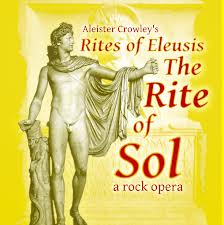
Rites of Eleusis
How do you celebrate the end of summer and the return of darkness? Octoberfest?
At the end of summer when I teach kids to swim I like to hold a show off party so they can impress themselves and others. I had two students this year who worked hard, and came to lessons almost every weekend day all summer. The mermaid blue belt was awarded and the official last call for swimmers to enjoy a dip took place. Conquering fear of water is a metaphor for all new environments that will face these young ladies for the rest of their lives. Being safe and cooperative are the key elements of water fun. Performance skills are not as important as the news that practice works and changes everything. They are in the deep end with appropriate safety measures having a good time, which was not possible in June when they began.

oldest Veteran’s memorial in the US
My 9th great grandfather was killed by my 11th great uncle. King Philip’s War was fought between the Wampanoag people and the colonists of Plymouth. This is the first, but not the last, war on American soil in which I had ancestors on both sides of the conflict. The memorial that commemorates this event is in preset day Providence, RI. It is the oldest Veterans memorial in the US. The vanquished native people were sent to the West Indies and sold into slavery. Nobody knows where the graves of my Wampanoag ancestors are.
Captain Michael Pierce was born in 1615 and died in1676. He and his descendants form the first American generation of Pierces in our family tree. Michael Pierce immigrated to the New World in the early 1640s from Higham, Kent, England to Scituate, in what later became Massachusetts. The ten year period from 1630 to 1640 is know as The Great Migration. During this period, 16,000 people, immigrated to the East Coast of North America.
Brother of famous Colonial Sea Captain, William Pierce. Captain Michael Pierce was the brother of the famous Colonial sea captain, William Pierce, who helped settle Plymouth Colony. Captain Michael Pierce played a significant role in the Great Migration. Historical records show that this one sea captain crossed the Atlantic, bringing settlers and provisions to the New World more frequently than any other. He had homes in London, the Bahamas and Rhode Island. He played a central role in the government of the early colonies. He was killed at Providence, one of the Bahama Islands, in 1641.
There were actually four Pierce brothers who made their mark on the New World: John Pierce (the Patentee), Robert Pierce, Captain William Pierce, and Captain Michael Pierce. All were grandsons of Anteress Pierce, and sons of Azrika Pierce and his wife Martha.
Marries Persis Eames. In 1643, Michael Pierce married Persis Eames of Charleston Massachusetts. His wife was born in Fordington, Dorsetshire England 28 October 1621. She was the daughter of Anthony Eames and Margery Pierce.
Pierce Family Moves to Scituate. Michael and Persis Pierce’s first child, a daughter, was born in 1645 and named Persis in honor of her mother. Unfortunately, their first child died in 1646 at one year of age. The new family settled first in Higham, but moved in 1676 to Scituate, where the Pierce family continued to reside for most of the next century. Scituate is located some 10 miles north of the original Plymouth colony. It was settled as early as 1628 by a group of men from Kent, England.
In 1646, Benjamin Pierce, their second child, a son and heir, was born. This son, Benjamin Pierce, fathered the second Pierce generation in this family tree. Twelve other children were born over the coming years: Ephraim, Elizabeth, Deborah, Sarah, Mary, Abigail, Anna, Abiah, John, Ruth and Peirsis.
Erected First Saw-Mill. Michael Pierce resided on a beautiful plain near the north river and not far form Herring brook. He assisted in erecting the first saw-mill. The mill was the first one erected in the colony. It is believed that Samuel Woodworth (1784-1842) wrote the song, “The Old Oaken Bucket,” concerning this river and mill in Scituate. Samuel Woodworth’s grandfather, Benjamine Woodworth, witnessed the signing of Captain Michael Pierce’s will, on January 1675. The lyrics to this classic American folk tune are given below:
How dear to this heart are the scenes of my childhood, When fond recollection presents them to view, The orchard, the meadow, the deep tangled wildwood, And ev’ry lov’d spot which my infancy knew. The wide spreading stream, the mill that stood near it, The bridge and the rock where the cataract fell. The cot of my father, the dairy house by it, And e’en the rude bucket that hung in the well. The old oaken bucket, the ironbound bucket, The moss-covered bucket that hung in the well. The moss-covered bucket I hail as a treasure, For often at noon when returned from the field, I found it the source of an exquisite pleasure, The purest and sweetest that nature can yield. How ardent I seized it with hands that were glowing, And quick to the white pebbled bottom it fell. Then soon with the emblem of truth overflowing, And dripping with coolness it rose from the well. The old oaken bucket, the ironbound bucket, The moss-covered bucket that hung in the well. How soon from the green mossy rim to receive it, As poised on the curb it reclined to my lips, Not a full flowing goblet could tempt me to leave it, Tho’ filled with the nectar that Jupiter sips. And now far removed from the loved situation, The tear of regret will intrusively swell. As fancy reverts to my father’s plantation, And sighs for the bucket that hung in the well. The old oaken bucket, the ironbound bucket, The moss-covered bucket that hung in the well.
Captain in the Local Militia Fighting the Indians. Unlike his famous brother, Captain William Pierce, Michael Pierce was not a sea captain. He attained the title, Captain, from the Colony court in 1669. Historical records show that he was first given the rank of Ensign under Captain Miles Standish, then later, in 1669, he was made Captain. These titles reflects his role as a leader in the local militia formed to protect the colony from the Indians.
Honored for Heroism in King Phillip’s War. Captain Michael Pierce’s memory is well-documented in American history. He is honored for the brave manner in which he died in defense of his country. The exact manner in which he died is repeated in more than 20 books and letters detailing the military history of the King Phillip’s War. This war took place between 1675 and 1676, and remains one of the bloodiest conflicts in American history. It was also a pivotal point in early American history. Although the English colonists were ultimately victorious over the Indians, it took the colonies over 100 years to recover from the economic and political catastrophy brought about by this conflict.
The battle in which Captain Michael Pierce lost his life is detailed in Drakes Indian Chronicles (pp. 220-222) as follows:
“Sunday the 26th of March, 1676, was sadly remarkable to us for the tidings of a very deplorable disaster brought into Boston about five o’clock that afternoon, by a post from Dedham, viz., that Captain Pierce of Scituate in Plymouth Colony, having intelligence in his garrison at Seaconicke, that a party of the enemy lay near Mr. Blackstorne’s, went forth with sixty-three English and twenty of the Cape Indians (who had all along continued faithful, and joyned with them), and upon their march discovered rambling in an obscure woody place, four or five Indians, who, in getting away from us halted as if they had been lame or wounded. But our men had pursued them but a little way into the woods before they found them to be only decoys to draw them into their ambuscade; for on a sudden, they discovered about five hundred Indians, who in very good order, furiously attacked them, being as readily received by ours; so that the fight began to be very fierce and dubious, and our men had made the enemy begin to retreat, but so slowly that it scarce deserved the name, when a fresh company of about four hundred Indians came in; so that the English and their few Indian friends were quite surrounded and beset on every side. Yet they made a brave resistance for about two hours; during which time they did great execution upon their enemy, who they kept at a distance and themselves in order. For Captain Pierce cast his sixty-three English and twenty Indians into a ring, and six fought back to back, and were double – double distance all in one ring, whilst the Indians were as thick as they could stand, thirty deep. Overpowered with whose numbers, the said Captain and fifty-five of his English and ten of their Indian friends were slain upon the place, which in such a cause and upon such disadvantages may certainly be titled “The Bed of Honor.” However, they sold their worthy lives at a gallant rate, it being affirmed by those few that not without wonderful difficulty and many wounds made their escape, that the Indians lost as many fighting men in this engagement as were killed in the battle in the swamp near Narragansett, mentioned in our last letter, which were generally computed to be above three hundred.”
Today, in Scituate, there is a Captain Pierce Road.
In Cumberland, Rhode Island, there is a monument called Nine Men’s Misery. A tablet near the monument reads:
NINE MEN’S MISERYON THIS SPOT WHERE
THEY WERE SLAIN
BY THE INDIANS
WERE BURIED
THE NINE SOLDIERS
CAPTURED IN
PIERCE’S FIGHT
MARCH 26, 1676
The monument is located in a dark, place in the woods, near a former monastery. The monastery is now a public library. The monument consists of little more than a pile of stones cemented together by a monk and marked with a plaque. However, this site is of major historical significance because it is concidered to be the oldest monument to veterans in the United States.
1. Captain Michael Pierce born 1615; died 3/26/1676.
married Persis Eames, 1643 (born. Oct. 28, 1621; died Dec. 31,1662). Micheal Pierce and Persis Eames had these 13 children:
2. Persis Pierce, born 1645. Persis died 1646 at 1 year of age. 3. >>>Benjamin Pierce, born 1646. 4. Ephraim Pierce, born 1647. Ephraim died 1719 at 72 years of age. 5. Elizabeth Pierce, born 1649. She married a Holbrook and gave birth to Captain Michael Pierce’s only two grandchildren at the time of his death who are mentioned in his will: Elizabeth Holbrook and Abigail Holbrook. 6. Deborah Pierce, born 1650. 7. Sarah Pierce, born 1652. 8. Mary Pierce, born 1654. She married Samuel Holbrook, 23 June 1675. Samuel was born in Weymouth, Mass 1650. Samuel was the son of William Holbrook and Elizabeth Pitts. Samuel died 29 October 1712 at 62 years of age. Mary Pierce and Samuel Holbrook had the following six children: Persis, Elizabeth, Bethiah, Samuel, Elizabeth, and Mary. 9.Abigail Pierce, born 1656. Abigail died 1723 at 67 years of age. 10. Anna Pierce, born 1657. 11. Abiah Pierce, born 1659. She married Andrew Ford. 12. John Pierce, born 1660. John died 28 June 1738 at 77 years of age. He married Patience Dodson 12 December 1683. 13. Ruth Pierce, born 1661. 14. Peirsis Pierce, born 1662. Persis 3 December 1695. She married Richard Garrett, 3rd, who was born in 1659. They lived in Scituate, Mass. and had three children: John (born 1706), Anna, and Deborah.
married Mrs. Annah James sometime soon after 1662. They had no children. Captain Michael Pierce remained married to Annah Pierce until his death. Annah Pierce is well provided for in his will.
Michael Pierce (1615 – 1676)
is my 9th great grandfather
Ann Pierce (1640 – 1655)
daughter of Michael Captain Pierce
Sarah Kinchen (1655 – 1724)
daughter of Ann Pierce
Philip Raiford (1689 – 1752)
son of Sarah Kinchen
Grace Raiford (1725 – 1778)
daughter of Philip Raiford
Sarah Hirons (1751 – 1817)
daughter of Grace Raiford
John Nimrod Taylor (1770 – 1816)
son of Sarah Hirons
John Samuel Taylor (1798 – 1873)
son of John Nimrod Taylor
William Ellison Taylor (1839 – 1918)
son of John Samuel Taylor
George Harvey Taylor (1884 – 1941)
son of William Ellison Taylor
Ruby Lee Taylor (1922 – 2008)
daughter of George Harvey Taylor
Pamela Morse
I am the daughter of Ruby Lee Taylor
When I read that he’d died during the Great Swamp Fight, it peaked my interest so I bought a book called King Philip’s War The History and Legacy of America’s Forgotten Conflict, by Eric B. Schultz and Michael J. Tougias. The following is an excerpt from the book describing Michael Pierce’s involvement in the conflict.
KING PHILIP’S WAR
PIERCE’S FIGHT, CENTRAL FALLS, RHODE ISLAND
The ambush of Captain Michael Pierce and his Plymouth Colony soldiers
occurred on Sunday, March 26, 1676, in the present-day city of Central
Falls, Rhode Island. Sometimes attributed to the Narragansett sachem
Canonchet, this ambush was in many respects a textbook military operation.
Several friendly natives escaped the engagement, but only nine English
survived, and these nine men were later discovered dead several miles
north of Central Falls in present-day Cumbedand, Rhode Island, a site now
known as Nine Men’s Misery. Not only was the ambush deadly for Pierce
and his men, but it was devastating to the morale of the colonies which, on
the very same day, witnessed the murder of settlers in Longmeadow, Massachusetts,
the burning of Marlboro, Massachusetts, and the destruction of
Simsbury, Connecticut.
Pierce, a resident of Scituate, Massachusetts, had gathered in Plymouth
a force of Englishmen from Scituate, Marshfield, Duxbury, Eastham, and
Yarmouth, supported by twenty friendly natives from Cape Cod. Together,
this band marched to Taunton, then along the Old Seacuncke Road
(Tremont Street) to Rehoboth (now East Providence, Rhode Island).
There, they were joined by several men from Rehoboth, expanding their total
number to sixty-three English and twenty friendly natives.
Reports indicated that a large group of the enemy had gathered in the
area of Pawtucket Falls, an ideal location from which to catch alewives,
salmon, and shad, and a natural fording spot in the river.149Pierce and his
men set out in pursuit. On Saturday, March 25, they skirmished with the
Narragansett, perhaps north of the falls, where, historian Leonard Bliss
concludes, Pierce “met with no loss, but judged he had occasioned considerable
to the enemy.”
It is not unreasonable to think that Pierce had skirmished with a small
patrol sent intentionally to meet and test the English-an exercise broken
off by the natives once they had gathered information on the size and”
strength of their opponent. In any event, Pierce met no other natives and returned
for the night to the garrison at Old Rehoboth. Meanwhile, armed
with information from the skirmish, native leaders undoubtedly set to work
devising a trap for the English troops.
On Sunday, March 26, Pierce and his troops returned to the field, probably
marching from present-day East Providence, north along the Seekonk
River (which becomes the Blackstone River), back toward Pawtucket Falls.
It is said that as they marched, they were watched by Narragansett from
Dexter’s Ledge, now the site of Cogswell Tower in Jenks Park, Central Falls
(rough distance and heavily wooded terrain made this questionable).
Somewhere close to the Blackstone, perhaps near a fording spot where
Roosevelt Avenue now crosses the river, in what Bliss describes as an
“obscure woody place,” they spotted four or five Narragansett fleeing as
if wounded or hurt. Had a more experienced commander witnessed this
show, he might have immediately fallen back. However, Pierce and his
troops charged after the bait, suddenly finding themselves surrounded by
“about 500 Indians, who, in very good order, furiously attacked them.”
Pierce apparently met the ambush on the eastern side of the Blackstone,
but crossed to the western side, where the natives were engaged in force. A
contemporary account of the battle by an anonymous Boston merchant,
paraphrased by Bliss, made the English out to be as heroic as possible, but
the devastation was complete:
Our men had made the enemy retreat, but so slowly, that it scarce deserved
the name; when a fresh company of about 400 Indians came in,
so that the English and their few Indian friends, were quite surrounded
and beset on every side. Yet they made a brave resistance for above two
hours, during all which time they did great execution upon the enemy,
whom they kept at a distance, and themselves in order. For Captain
Pierce cast his 63 English and 20 Indians into a ring and fought back to
back, and were double-double distance all in one ring, whilst the Indians
were as thick as they could stand thirty deep: overpowered with
whose numbers, the said captain, and 55 of his English, and 10 of their
Indian friends were slain upon the place; which, in such cause, and
upon such disadvantages, may certainly be styled the bed of honour.
It is unlikely, of course, that nine hundred natives participated in the ambush.
Nor does it seem logical that eighty-three men, disadvantaged by surprise,
terrain, and numbers, would have much chance of forcing even four
hundred warriors to retreat. (Contemporary writers reported that Pierce
and his men killed 140 of their enemy, a figure undoubtedly inflated.)
However, if Pierce and his troops crossed the Blackstone near present-day
Roosevelt Avenue, the battle may have moved northward along the river to
a spot near present-day Macomber Field on High Street, where a commemorative
marker was placed in 1907. The marker reads:
PIERCE’S FIGHT
NEAR THIS SPOT
CAPTAIN MICHAEL PIERCE
AND HIS COMPANY OF
PLYMOUTH COLONISTS
AMBUSHED AND OUTNUMBERED WERE
ALMOST ANNIHILATED
By THE INDIANS
MARCH 26 1676
ERECTED By THE STATE OF RHODE ISLAND
IN 1907
A visit to this site today places the traveler in a heavily industrialized area
surrounded by factories and baseball fields. It is worth remembering, however,
that Central Falls was once the “North Woods” of Providence and
remained only sparsely settled throughout the eighteenth century.
Marching along, Pierce would have seen a wooded land of oak, walnut,
chestnut, and birch trees with three falls (Pawtucket to the south, Valley to
the north, and Central near the crossing at Roosevelt Avenue) supplying the
Narragansett with rich fishing grounds. ’59Bycontrast, present-day Central
Falls is so densely built that the Blackstone River is all but invisible from
nearby Cogswell Tower.
Not all of Pierce’s troops died in the ambush. Several of the friendly natives
devised ingenious means of escape. One blackened his face with powder
like the enemy and passed through their lines without incident.16oAnother
pretended to chase his comrade with a tomahawk, the two running past
their enemies and on to safety.161It appears also that nine English soldiers
escaped death during the ambush, though the details of their story are conjecture
only. One tradition holds that they had gone ahead of the main body
of troops and were chased into present-day Cumberland, where they made
their stand against a large rock and all perished.161
A more plausible explanation is that these nine survived the ambush,
were taken prisoner, and were marched northward about three miles to a
piece of upland surrounded by swamp known as Camp Swamp. Here, upon
a large rock, they were executed. It was several weeks before their bodies
were found, scalped and uncovered, on this rock. The men were buried
some seventy yards northeast of the rock in a common grave. Above this
grave a heap of small stones was used to construct a fourteen-foot-Iong
stone wall, some three feet high and one foot wide at the base. To this
day, residents know this place as Nine Men’s Misery.
In the early twentieth century a cairn of stones (since damaged) was
placed over the spot, and in 1928 a granite marker was set by the Rhode Island
Historical Society. The marker reads:
NINE MEN’S MISERY
ON THIS SPOT
WHERE THEY WERE SLAIN BY
THE INDIANS
WERE BURIED THE NINE SOLDIERS
CAPTURED IN PIERCE’S FIGHT
MARCH 26, 1676
The cairn and marker can be found near the former Cistercian Monastery
on Diamond Hill Road, about six-tenths of a mile south of Route 295 in
Cumberland. (These grounds are now home to the Hayden Library, the
Northern Rhode Island Collaborative School, the Cumberland Senior Citizens
Department, and other city services.) A dirt road, heading northnortheast
from the northeast corner of the grounds, leads directly to the
site, which requires about a quarter-mile walk. (Many residents walk and
jog in this area and are able to point a visitor in the right direction.)
Around the time of the American Revolution a physician dug up remains
from the grave, identifying one skeleton as that of Benjamin Buckland
of Rehoboth by its large frame and double set of teeth.r65 When the
Catholic Order of Monks purchased the land, remains of the men killed at
Nine Men’s Misery were dug up and given to the Rhode Island Historical
Society. During the 1976 bicentennial celebration, after the land had been
turned over to the town of Cumberland for its use, the bones were reburied
at their original site.
Today we watch another mass shooting unfold in DC like the reality show that it is. The constant reminder of violence must have something to do with the growth and spread of violence. Lovingkindnessis the remedy for our growing epidemic of right and wrong. If everyone is busy deciding to be right and seek vengeance from those who are wrong who will get in touch with reality? Have we given up reality to watch it on television and tweet it live? How riveting will it be to live tweet the IPO of twitter? While some see gun control or calorie control as the way to solve of cultural problems, I believe we are highly delusional as a society. The guns and the health issues are symptoms of systems that do not work. Our distraction is killing us as individuals and as a culture.
Numb and nihilistic as we witness weather and violent torrents of human hatred wash over our land, we twist the truth by looking for the single issue or party on which to place blame. The events in the world must blur for those who play computer games as well as absorb world tragedy as it unfolds. The digital distance we have from other other humans and the truth is dragging us in a downward spiral of delusion. I wonder if people can wake up and think they are in the World of Warcraft…or some variation on it. We are cultivating violence and maya, when our only hope is in truth and lovingkindness. Each of us generates energy that fuels the hatred; none of us is perfect. On an individual basis we must take responsibility to feed and care for the soul of the world until al beings are free. This will require centering. This will require a shift in focus and a pivot in the direction of our thinking.
Julia Keller is a skilled and talented bodyworker with a specialty not often found. She is a licensed aesthetician and massage therapist, but her passion is Ayurvedic medicine. I enjoyed a beautiful 90 minutes of bliss on her table yesterday during my shirodara treatment. Her office space is quiet, spacious, and inviting. The feeling in the body after the treatment is spacious and free. I left the sesame oil in my long hair until bed time, which was a very healthy drink for my hair and scalp. A day after I enjoyed the lovely feelings of being on the table I still notice a mental peace and a revived sense of energy in my thoughts and body. The only part of shirodara that is difficult is the end. Eventually all the oil runs out of the vessel, just when the only thing you want for the rest of your life is to have the stream flow on your forehead. It is like the end of a fireworks show; it has to end. Lucky for me, Julia practices near my home in Tucson. This treatment is very beneficial after a cleanse or a trauma, jet lag, or a shock. It has a very balancing and stress reducing effect. You can find Julia’s business, A Glowing You, near River Road and First Avenue in Tucson.




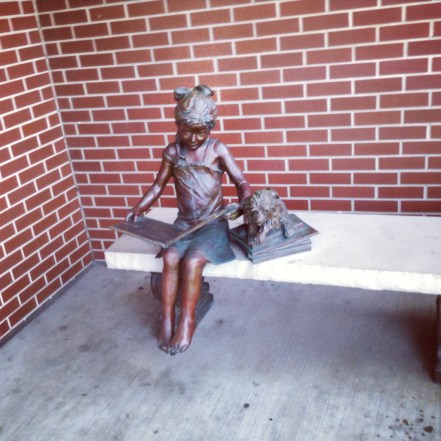
library girl
I went along with a fad diet started by one of my social media teachers, Chris Brogan. Last November he proposed that limiting the number of books one read would change the way one learns and absorbs the art and information in the books. As a proud and profuse library addict I looked at my own reading habits and wondered if I might benefit from reading less and studying more. The Three Book Diet commenced with a bang and ended with a whimper very shortly after it was begun. I, however, had chosen three very deep books that deserve a lifetime of reflection and contemplation, as well as physical homework, so I stayed in.
The Sacred Contracts book is the text used in an on line course I have enrolled in to do deeper study in archetypal psychiatry. I have an extensive and comprehensive set of video lectures and appropriate homework assignments in the course. The student is required to look very deeply into the past and identify archetypal patterns and write about them in detail. The self analysis is heavy, and the written work required to make progress is lengthy and serious. I have started the work, but see that it could require a lifetime.
The Leonardo book has been on my shelf for years, as has the workbook with active homework assignments to help the reader become more like Leo. It ranks as one of my favorites, so I knew I could stay busy in these books easily for a year without scratching the surface. I was right about that; 10 months into this diet and I do not seem to be the least bit more brilliant or innovative. It is for the same reason it always is….because I do not do my homework to rebel. At least the Sacred Contract study has taught me that this rebel is a teacher and my teacher is a rebel, so maybe I will soon break out of my will to avoid my own assigned homework. That would be such a fabulous breakthrough!!
Impact Equation is a great book that I read once and looked at a couple of times during the diet. Chris is the new kind of guru. Perhaps I think this because he is my guru of social media and disruptive positive change. I subscribe to his newsletter and correspond with him all the time, so his voice and his attitude are very well known to me. I am actually happy he gave up the diet; I told him he was too young for it. Now he has launched a new magazine/biz school, Owner, which is very exciting, so obviously this was not his year to diet. I have learned from Sacred Contracts that Chris is my teacher and visionary. He doesn’t need a contract with me, but I am signed up to learn and emulate. It will end when I have done my homework. This brings me to the brilliance of the diet for me. I needed to blog and develop my own skills, but while consuming hundreds of books a year I had no time dedicated to my own writing. Now I have a small but growing group of Gentle Readers that I love very much. I would never have found them, or my discipline to write, had I not gone on the book diet.
When I break the fast I will decide what is prudent. I have a pile of books I bought and had signed by my favorite author of all time, Thomas Moore. I have preordered his new book, which will be released into my Kindle in January. I will read A Religion of One’s Own with great gusto. Chris Brogan is my guru of worldly wisdom, but Thomas Moore is my idol. He is teaching the world to be monastic….in a good way…in a meditative way….in a kind way. Contemplative reading is one way to meditate. The book diet has taught me the great value of learning more by consuming less. I may go on a One Book Diet next year..it could be fabulous.
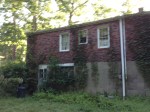
I spent a lot of time in the basement of this house in Oakmont, PA as a child. It contained a player piano, a bar, a collection of dress up clothing, a record player with records, bottles of pigment, some prisms, a Teslacoil, and some fluorescent lights. In the garage my dad kept bottles of crude oil he admired and chemicals he brought home from the lab to to experiments with me. I had to practice on the piano daily and I often played with my friends in the playroom downstairs and out in the back yard. We loved to play with the prisms, which my mom had made during WWII at an optics plant where she had worked. We also enjoyed grabbing the electric end of the Teslacoil and lighting up the over head lights with our other hand. How my parents decided that kids could play with the Teslacoil is a mystery, but they did not mind.
Before I left Oakmont I had a conversation with the doctor who presently lives in the house, Merrill D Bowan, O D who specializes in neurological optometry. He told me about his studies with brain injury patients using prisms. He has remarkable results helping people correct problems with proprioception and balance. His work all made perfect sense to me, although I had just met him in the driveway and asked if he minded if I took a picture in the backyard of the basketball backboard my grandfather put up over 50 years ago. When I looked around and stirred the memories I knew this was always a unique house in this neighborhood. Our house was special and different because my father was a mad scientist who enjoyed teaching me to make hydrogen bombs for recreation. The science energy is still there, alive in the brilliant and progressive mind of Dr. Bowan. It is somehow very natural. I am glad I had the chance to meet and talk to him.

squash blossom
Although this well produced story is actually an ad for Chipotle Mexican Grill I believe it is worth sharing with everyone who buys and eats food. I believe cruelty and waste are built into the American economy and fed to all of us; this is not inevitable or even reasonable. Cruelty and waste are the root cause of our environmental problems, including the human obesity epidemic. While I would love to see more whole foods produced and eaten locally, just stepping away from heavily processed and transported foods is the first baby step to liberate the energy we spend freezing, storing and shipping our nutrients. American kids are not familiar with the sources of food, other than the drive up window. The entire society pays for the ignorance in the form of what is known as health care. It is time to put self-care and prehabilitaion on the menu in the United States. It is easy, clean, and leads to tastier dining. Stop feeding the industrialized food monster and start nourishing your home and family. Eat something raw and local today, Gentle Reader. Sorry it is so hard for most of you Americans to find.

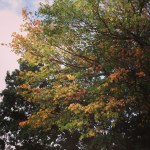








A visit to the north at the change of seasons can be very beautiful. I went to New England when the leaves and flowers were bursting out on the trees in May. Now I said goodbye to the deciduous trees as they begin to change and fall. I do appreciate the colors and the architectural style of Oakmont, PA, where I grew up and went to school until the end of 8th grade. While I am not ready to be there in winter, seeing the pretty yards and houses bursting with color is a treat.
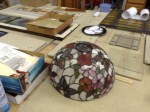
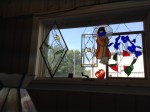
I was surprised to find my old school friend, Marcia Irwin, in her glass studio in Oakmont, PA, the Glass Kaleidoscope. She has become a skilled master of stained glass art. I bought out the earrings an found a nice gift for our hostess of the weekend reunion party. I did not know who the glass artist was when I decided to check out the shop. It was really fun to see her as well as her art. She does custom work and has all kinds of beautiful pieces on hand at her shop for gifting or treating yourself..I enjoyed both.










 mermaidcamp