mermaidcamp
Keeping current in wellness, in and out of the water
You can scroll the shelf using ← and → keys
You can scroll the shelf using ← and → keys
Any unexpected twist that makes a story intriguing demands our attention. We expect certain things to happen in context, so when they do not we begin to wonder about the nature of things. The term poetic justice was coined between 1720-1730. Much drama and some poetry contains this magical distribution of perfect reward and retribution in exactly the right proportion to all parties. Rarely do we see this in action in real life. It is more common to witness social, political, or just plain crazy injustice.
We can write stories and poems that highlight our own particular brand of justice. Simply focus and spotlight on causes like nature, environmental awareness, or animal cruelty can change hearts and minds. You can be a spokesperson for the things that matter to you. The impact you have may never be known to you, but that is not a good reason not to create and share your own version of poetic justice. If you bother to bring your message artfully and with grace you may hit the target you hoped to find in the gentle reader.
This month many writers are writing a poem a day in NaPoWriMo..the poetry challenge. I am accomplished in a few expressive ways, but I have not visited my poet for years. I was a prolific song writer as a teenager, and wrote poetry every day of some kind. I am a language fan, loving words because they sound funny or because they have obscure specific meanings. Being poetic, or even doing rhymes as improvisational humor, sharpens the wit, grows the vocabulary and enhances connections and metaphoric images.
When I was young I heard my father recite the Cremation of Sam McGee by Robert W Service. He knew it by heart. After a couple of drinks he liked to sing, dance or recite that poem. It was always entertaining. He was a research scientist by profession, but my parents loved music and dance more than anything. We had a player piano which was the scene of many sing a long parties. What was truly admirable about my parents was their artistry. They had regular suburban lives, but my dad was an accomplished musician, and my mother designed and executed both landscape environments and fashion with amazing professionalism. My mother was a prize-winning floral arranger, and avid flower show horticulturist.
I was encouraged , and in some cases forced, to practice art. Piano was a mandatory 30 minutes every day of my life, and a legal pad sheet of cursive handwriting had to be inspected by my father each night. I eventually realized I could recycle some of the handwriting, but there was no faking the piano. My guitar and voice lessons came with mandatory practice sessions when I was in high school. I learned the power of practice at a very young age. Discipline is never natural to kids and maybe my parents overdid the whole rigidity thing. Today, however, I thank Dick and Ruby Morse, the living artists, who gave me the self confidence to know that I can be any kind of artist I care to be. My art will reflect my practice, and with practice I will improve. All poems, all songs, all dances are alive and need to be brought forth. Practice is the vehicle in which they travel into the light.
Refinement of all the senses leads to a full and more interesting life. Leonardo da Vinci was a student of all phenomena. His seven guiding principals for living were at the heart of all his work. They are his core values, upon which his reputation rests. By reading his notebooks and studying his drawings we can see that his constant eagle eye was at work observing nature. Sensazione, or the development of all the senses, was a big reason Leonardo became as productive as he did. He felt that by making notes and drawings of his sensual observations he grasped more of the meaning around him. He used his notebooks to create, invent, and make beautiful art.
He gives advise on keeping a listener engaged by carefully noting his posture, body language, and facial expressions. By focus and intent to see clearly sight can be developed into insight. The training of all the senses to be more apt, more receptive, and more able to understand reality was a lifetime practice of the master. Vision, hearing, smell, taste, touch and synesthesia (the ability to describe one sense in terms of another) were all parts of this whole. Sight became the best developed of his abilities, which contributed to his artistic talent.
How do you use your senses to take in the world? Have you ever tried to improve on what you have in the sense department? I was a potter for many years, so my sense of touch was developed beyond the others during that time. I had to feel the center of the wheel, and the thickness of the clay with precision or….no pot was made…back to mud. Taste and smell may be my most developed senses now. I cook, bake, and experiment as a cocktail creator. I like making a variety of teas and baths with my garden herbs. Do you have one particular sense that is your strongest? We know what Leonardo would do. He would forever practice to refine them all.
Paying attention is the first step to wellness. Our individual health is like a bank account. We deposit good constitution and healthy habits such as whole fresh food and solid rest. When things go wrong it is impossible to tell which check has overdrawn the account. If you take out more than you put in this will always be the result. Rather that be too crazy about diagnosis and specific remedies, a good overview can help sort out the most crucial from the unimportant. How and why do you use your own resources to damage your health?

Our bodies consist of an advanced bundle of cells and energy connected to create this network of life, feeling and emotion. We are a conduit to something fantastic and sometimes unimaginable; a Responsive Universe…. Our bodies are our best friends. We need to listen to our bodies signals – wellness is the only true focus. Are you listening?
Please check out my latest article published at MindBodyGreen which focuses on listening to our bodies and how we can positively respond to those signals…
Do You Listen To Your Body’s Signals?
John C. Bader
About the Book: www.responsiveuniverse.com
Now Available: Amazon Barnes & Noble
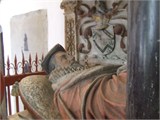
Thomas Forster monument
The Monument to Sir Thomas Forster A.D. 161 shows him in his judge’s robes, is a perfect example of the period with fine contemporary wrought-iron railings. He was born in 1548 and joined the Inner Temple in 1571 and was made Sergeant before Elizabeth’s death in 1603. He was knighted ii 1604 and appointed Judge of Common Pleas in 1607. Sir Thomas was one of the first Governors of Charterhouse and was counsel to Queen Ann and Prince Henry. He died on May 18th, 1612 at Clerkenwell and was buried in Hunsdon on May 20th, 1612.
Sir Thomas Forster (1548 – 1612)
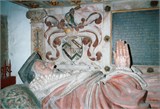
Judge in grave
F orsters continued to serve the Kings of England. Sir Richard Forster fought in the Hundred Years’War against France with King Edward III at Bordeaux and Crecy. Richard participated in the Battle ofPoictiers in 1356 and was knighted for his part in the battle.Sir Richard’s son, William, was born about 1355 and married Elizabeth De Orde about 1400 inBuckton, Northumberland, England. William was knighted for service to King Henry V and served asa General in the battle against France.Their son Thomas Forster married Joan De Elmerdon about 1430. Thomas and Joan’s son, alsonamed Thomas Forster, married Elizabeth Featherstone of Stanhope Hall, Durham, England. Theyhad Roger Forster, although records show that he spelled the name Foster rather than Forster.Roger Foster married Joan Hussey in 1540.
A Genealogy of the Descendants of Roger Foster of Edreston, Northumberlandwas compiled by Alkman Henryson Foster-Barham and published in London in 1897. Roger was 17 when he fled from Northumberland, as explained in a letter from Sir John Forster of Bamburgh, dated 17 April 1590. The letter below was written by Sir John to Roger Foster’s grandson, Thomas Foster of Hunsdon.
” Dear Cousin, After right hearty commendations unto you, ye shall understand I have received yourletter wherein you desire to know of your pedigree. Your grandfather, as ye havelearned, was descended out of the house of Etherstone – whether he was the elder,second, or third, or fourth brother – and fled the country of Northumberland. I assure you I can truly satisfy you therein. Your grandfather, called Roger Foster,was my great uncle. His father was called Thomas Forster and his mother’s namewas Featherstonehaugh. His eldest son was called Thomas Forster, my greatgrandfather. It happened that four of the said brethren had been at a-hunting and were ridinghomeward through a town called Newham. They and a company of Scottish Kerrs fellout and there began bloodshed and feuds which continued until there was but oneKerr living. During this time my grandfather and yours and another brother of theirs calledNicholas Forster (mine being twenty years old, yours 17 years, and Nicholas, a childof 14) being a-hunting – were waited upon by one of the Kerrs and two of theiralliance called Too and King. They set upon the three brothers and were thought tohave slain them at a place near Branton where a cross still stands.Two were slain there and Kerr fled. After the slaughter my grandfather fled toRidsdale in the county because he was safe there and yours fled to southern parts.” At my house near Alnwick, 17th April 1590, your loving cousin,John Forster.”
Roger Foster’s son was Thomas Foster (1515-1599) of Hunsdon, Hertfordshire, England, whomarried Margaret Browning (1520-1599). Thomas and Margaret had a son who was also named Thomas Foster (1548-1612), who married Susannah Forster(1555-1625).










We had the best time at brunch yesterday with our neighbor Mindy. We arrived as service began and enjoyed wonderful attentive wait staff, a great ambiance, and most of all, delicious food. The Lodge on the Dessert is our new total favorite place to celebrate holiday meals. Christmas was good, and Easter perfect. I do not enjoy all you can eat buffet, or anything that resembles it. I don’t even want to see other people eating like that. Tucson’s Iron Chef, Ryan Clark, rocked the a la carte cuisine for the omnivores and also for me, a nice lacto-ov0 vegetarian girl. We were too full to finish our desserts, so we packed it to take home. As we headed out many families were arriving with eggs, baskets, kids and some darling fashion. We will be back..hungry.

Aesculapius
I: And the crown? Solve the riddle of the crown for me!”
Soul Bird: “The crown and serpent are opposites, and are one. Did you not see the serpent that crowned the head of the crucified?”
I: “What, I don’t understand you.”
Soul Bird: “What words did the crown bring you?
“Love never ends”-that is the mystery of the crown and the serpent.” ~Carl Jung; Red Book.
Carl Jung was the son of a reform minister who grappled with his own religion throughout his life. He had high aspirations and did some deep Dante style soul searching. His final spiritual expression was the Red Book, published after his death. In it he links symbols to deeper meaning. He was a student not only of mythology and history, but also of the ancient sciences. He studied the astrologers and the work of the alchemists to find clues to the collective consciousness as it has passed down through history. He was interested in Kundalini, the serpent coiled at the base of the energetic spine.
During the time of Christ the GrecoRoman god of healing Aesculapius was still popular. Cures and diagnosis in the cult of this demi god involved dreams and dream healing. His symbol, and indeed his assistants in healing temples, were the snakes. They were deemed to be powerful psychics. The symbol of the snake as natural healer was traded for the image of snake, the temptation of Eve, which got everyone thrown out of the Garden of Eden, reptiles included. We are not sure who lives there now..
If you have dreams of crowns or serpents, pay special attention. Something may be attempting rebirth within your soul.
Andrew Carnegie wrote an essay he called The Gospel of Wealth. This idea came to him after Carnegie had become the wealthiest man in the world. As we check the biblical Gospel for Easter, we should check the reality gospel that is practiced in our nations and neighborhoods. The most disgraceful have been hogging the assets of society, and ultimately of the planet. Symbols of power and politics today are all about over consumption. It does not matter which one— fraud, health care scandals, or useless government busy work are the source of the waste. The point is that our wealth is being used to destroy the general good of the entire society. Our assets are spent to promote shameless partisan destruction of our best interests. We are going morally broke. In 1889 Carnegie wrote:
Thus is the problem of Rich and Poor to be solved. The laws of accumulation will be left free ; the laws of distribution free. Individualism will continue, but the millionaire will be but a trustee for the poor; intrusted for a season with a great part of the increased wealth of the community, but administering it for the community far better than it could or would have done for itself. The best minds will thus have reached a stage in the development of the race in which it is clearly seen that there is no mode of disposing of surplus wealth creditable to thoughtful and earnest men into whose hands it flows save by using it year by year for the general good. This day already dawns. But a little while, and although, without incurring the pity of their fellows, men may die sharers in great business enterprises from which their capital cannot be or has not been withdrawn, and is left chiefly at death for public uses, yet the man who dies leaving behind many millions of available wealth, which was his to administer during life, will pass away ” unwept, unhonored, and unsung,” no matter to what uses he leaves the dross which he cannot take with him. Of such as these the public verdict will then be : “The man who dies thus rich dies disgraced.” ~Andrew Carnegie
It has been more than 10 years since I have been ticketed, but last week I was caught by a camera zooming on River Road over the speed limit. The ticket arrives in the mail and the options are basically the same. However, there is a wonderful new way to complete your bad driving pennance course…online. Hallelujah! I did not bother a cop to get the ticket and I will not have to go in person to take a class to do my duty. Even and fair, I think. I was techno trapped, but I am currently blogging on my iPad while a complete the required time on chapter 2 to go on to the quiz. The other much more efficient feature of the IMPROV driving school (for real) is the comedy clips in each chapter to help you use the extra time. If I have to be updated on my driving skills, I am happy to do it at home. I learned already that the knowledge of traffic rules in the US is decreasing. Younger people know less than their elders. I am not sure if digital driving school is a good or bad influence in this arena. There are just 2 questions at the end of each chapter, so a total of 20 questions. I have to keep the site live, but there is nobody who knows if I look at it. I am a little old lady with a nice car who has excellent habits, but the information in my class is making me increase my defensive feeling about all the drivers on the road. There are more of them and they know less than ever!
One of my gentle readers, Rick, brought the movie It’s Always Fair Weather to my attention in our discussion of the femme fatale archetype. This 1955 production features some superb dancing, including Gene Kelly doing an early version of Stomp, tap dancing with trash can cover on one foot. WWII changed social roles and put women into the workplace for the war effort. After the war they were expected to be housewives without careers, and without support other than from the man of the house. I can imagine how the most popular actresses who portrayed femme fatale roles must have envied by every housewife in America. Who did not want to be Marilyn Monroe? Cyd Charisse, dancing above, plays a powerful business woman in the movie. She vamps a bit in her dance with the boxers, but she is only a warm up for the real feminist power performance.
The amazing dance number Rick pointed out from the movie is much more outlandish than Diamonds are a Girl’s Best friend or anything Marilyn ever did. Midnight with Madeline is the funniest camp vamp tribute to this character stereotype I have ever seen. Dolores Gray is over the top marvelous in this spoof (??) on Broadway musical style. There had to be at least a few women who enjoyed watching her take control of all the guys in suits. A romp through Hollywood history shows us that the femme fatale role can include socio-political meaning, and satire. Thank you, Rick, for bring this to my attention. It is classic.

 mermaidcamp