mermaidcamp
Keeping current in wellness, in and out of the water
You can scroll the shelf using ← and → keys
You can scroll the shelf using ← and → keys
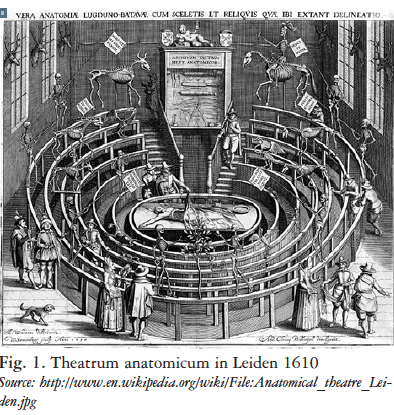
Anatomical theater Leiden 1610

Anatomical theater in Padua 1594
The dead teach the living is the meaning of the phrase mortui vivos docent. It was used to justify dissection of human bodies for science. In the middle ages there was fear of dead bodies that, coupled with real danger present in corpses, made dissection dangerous. The biggest danger faced by science, however, was the long arm of Catholic Church. Miguel Serveto (1511-1553), was a physician and theologist who studied medicine in Paris at Sylvius’. He published work describing post mortem examinations of corpses. For this sin Serveto was burnt at the stake along with his books, both medical and religious, sentenced to death by the Holy Inquisition.
The Greek physician Gallen taught anatomy in the second century, teaching by direct empirical observation. Ironically, his teachings were used to dissect one or two executed prisoners a year in the Middle Ages, but this practice was done more for theater than for research. In 1543 of Andreas Vesalius published his masterpiece, De Humani Corporis Fabrica. Vesalius, a young physician and professor at the University of Padua, changed the course of medical history. He demonstrated the importance of direct observation, creating illustrations of anatomy in action, teaching the secrets of the inner workings of the human body. Public dissection for educational purposes became popular.
The Middle Ages were plagued by the black death. Those dark ages were characterized by superstition and ignorance. The Renaissance occurred when science, art, and humanism gave rise to new philosophies. Some of these same ideas drove my ancestors to colonial America in the 1600’s. One of my ancestors, Dr John Greene, was perhaps the first surgeon in America. I have to wonder if he ever did any dissection in his training. I have not. I puked in the clay bucket for the art class (located right next to the science lab) in the 10th grade and was excused for frog dissection. It was never mentioned again, and boy was I glad.
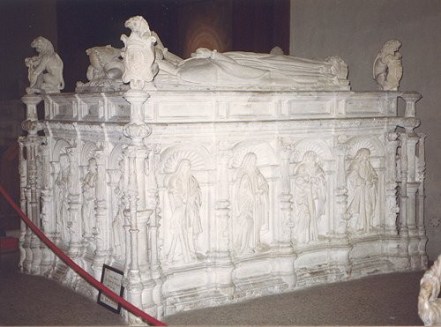
Tomb of Thomas Howard – 3rd Duke of Norfolk St. Michael’s Church; Suffolk,England Thomas Howard was buried here after his death on Aug. 25, 1554. It is possibly the best preserved ornate stonework in Europe. Although both Thomas and his wife, Elizabeth Stafford appear on the same monument, only he is buried there. She was interred in the Howard Chapel in St. Mary’s Church, Lambeth. This was due to the unhappy marriage and final separation.
Thomas Howard, 3rd Duke of Norfolk (1473 – 25 August 1554) was a prominent Tudor politician. He was uncle to two of the wives of Henry VIII, Anne Boleyn and Catherine Howard, and played a major role in the machinations behind these relationships. After falling from favor he was imprisoned in the Tower of London with his dukedom forfeit, and was released on the accession of Mary I. He aided in securing Mary’s throne, setting the stage for alienation between his Catholic family and the Protestant royal line that would be continued by Elizabeth I.
As with all the Dukes of Norfolk, Thomas Howard was descended from Edward I. He was the son of Thomas Howard, 2nd Duke of Norfolk, and Elizabeth Tilney. Thomas Howard succeeded his younger brother Edward as Lord High Admiral in 1513. Until 1524 he was styled Earl of Surrey.
Norfolk first married Anne of York, daughter of Edward IV of England and Elizabeth Woodville on 4 February 1494 at Greenwich Palace. The couple had at least two children: Thomas Howard (c. 1496-1508) and a stillborn child (c. 1499). There are also suggestions of short-lived Henry Howard and William Howard resulting from this marriage.
Following Anne’s death in 1511 he married Elizabeth Stafford, daughter of Edward Stafford, 3rd Duke of Buckingham and Alianore Percy on 8 January 1512. They had three children: Lady Mary Howard (c. 1513-1555) who married Henry Fitzroy, illegitimate son of Henry VIII; Henry Howard (1517-1547) was one of the founders of Renaissance poetry; and Thomas Howard (c.1520-1582). The marriage with Elizabeth was unhappy. When Elizabeth complained about his mistress, Bess Holland, the Duke beat her. The couple remained estranged until Norfolk’s death.
On his father’s death in 1524 he inherited the dukedom of Norfolk and was named Lord High Treasurer and Earl Marshal, making Howard one of the most premier nobles in the kingdom. He distinguished himself many times in battle, and was an able soldier. His power increased somewhat after his niece Anne Boleyn became Henry VIII’s mistress, sometime around 1527. However, their relationship was fraught with difficulty since Anne found her uncle to be selfish and untrustworthy. Although they were political allies throughout the late 1520s alongside Howard’s brother-in-law Thomas Boleyn, Anne’s father, Norfolk once complained that Anne used words to him “that one would not use to a dog.” She was crowned queen in 1533, and was probably influential along with Queen Anne in securing the marriage of Norfolk’s daughter Mary to Henry Fitzroy.
Queen Anne’s religious and political vision was more radical than Norfolk’s, and their relationship deteriorated throughout 1535 and 1536 as Henry VIII became increasingly unfaithful, including with Anne’s cousin, Mary Shelton. Putting his own security before family loyalties, he presided over Queen Anne’s trial in 1536, giving a death sentence despite her probable innocence. The next day, he condemned to death his nephew, Anne’s brother George for the crime of incest with his own sister, the Queen.
After the death of Jane Seymour he used another of his nieces, the teenaged Catherine Howard to strengthen his power at court by orchestrating an affair between her and the 48 year-old king. He used Henry’s subsequent marriage to Catherine as an opportunity to dispose of his long-term enemy Thomas Cromwell, who was beheaded in 1540. Queen Catherine’s reign was a short one, however, since Thomas Cranmer, the Archbishop of Canterbury, discovered that she was already secretly betrothed before her marriage to Henry and had been extremely indiscreet since. Catherine was beheaded in February 1542, and numerous other Howards were imprisoned in the Tower – including the duke’s stepmother, brother, two sisters-in-law and numerous servants.
Catherine Howard’s execution was his downfall, despite Norfolk’s desperate efforts to heal the rift. He had become the leader of the premier family in England; as the uncle of Anne Boleyn and Catherine Howard, and the great-uncle of Jane Seymour[1] He had also benefited from the influence of several of the King’s mistresses, his nieces Mary Boleyn and Elizabeth Carew and his wife’s aunt, Anne Stafford, Countess of Huntingdon. In 1546, Norfolk allegedly hatched a plot to make his daughter, Mary Howard, the King’s mistress, even though she was the widow of Henry’s illegitimate son.[2] In December 1546, he was arrested in company with his son Henry and charged with treason. Henry VIII died the day before the execution was due to take place, and Norfolk’s sentence was commuted to imprisonment. The Earl of Surrey was less fortunate and had been executed a few days previously.
Norfolk remained in the Tower throughout the reign of Edward VI of England and his dukedom remained forfeit. He was released by Mary I in 1553, due to the Howards being an important Catholic family, and the dukedom was restored. The Duke showed his gratitude by leading the forces sent to put down the rebellion of Thomas Wyatt, who had protested against the Queen’s forthcoming marriage to Philip II of Spain and had planned to put Anne Boleyn’s daughter, the future Elizabeth I on the throne in Mary’s place. The result of Norfolk’s suppression of the Wyatt Rebellion was Princess Elizabeth’s imprisonment in the Tower (although there was not enough evidence to convict her on treason, since she clearly had not been party to the rebels’ precise intentions) and the execution of the Queen’s cousin Lady Jane Grey. Norfolk died not long after the Wyatt Rebellion and was succeeded by his grandson Thomas. The 4th Duke, also a Catholic, was executed on Elizabeth’s orders for illegally plotting to marry Mary Queen of Scots.
Thomas Howard’s tomb is situated in Framlingham Church, Suffolk. It is among the best preserved example of ornate stonework in Europe
Lord Thomas Howard (1473 – 1554)
15th great-grandfather
Lady Katherine Howard Duchess Bridgewater (1495 – 1554)
daughter of Lord Thomas Howard
William ApRhys (1522 – 1588)
son of Lady Katherine Howard Duchess Bridgewater
Henry Rice (1555 – 1621)
son of William ApRhys
Edmund Rice (1594 – 1663)
son of Henry Rice
Edward Rice (1622 – 1712)
son of Edmund Rice
Lydia Rice (1649 – 1723)
daughter of Edward Rice
Lydia Woods (1672 – 1738)
daughter of Lydia Rice
Lydia Eager (1696 – 1735)
daughter of Lydia Woods
Mary Thomas (1729 – 1801)
daughter of Lydia Eager
Joseph Morse III (1756 – 1835)
son of Mary Thomas
John Henry Morse (1775 – 1864)
son of Joseph Morse III
Abner Morse (1808 – 1838)
son of John Henry Morse
Daniel Rowland Morse (1838 – 1910)
son of Abner Morse
Jason A Morse (1862 – 1932)
son of Daniel Rowland Morse
Ernest Abner Morse (1890 – 1965)
son of Jason A Morse
Richard Arden Morse (1920 – 2004)
son of Ernest Abner Morse
Pamela Morse
I am the daughter of Richard Arden Morse
My 15th great-grandfather, Thomas Howard, 3rd Duke of Norfolk, KG (1473 – 25 August 1554) aided Mary in securing her throne, which ended him and his family in a world of trouble. He was fully immersed in the politics of Henry VIII, and paid the price for it. Those were treacherous times to be close to the king.

Thomas Howard
The phases of the moon influence tides and other liquid phenomena. Farmers have traditionally used the moon phases to plan planting and harvest schedules. The Farmer’s Almanac, formerly very widely used, is still published. It still distributes information about the moon to all the gentle readers of the publication. In 2016, the solstice falls on June 20 at 6:34 p.m. EDT. This is the “summer” solstice in the Northern Hemisphere. For the first time in 70 years the solstice is coinciding with the full strawberry moon.
This year the Farmer’s Almanac is hosting a live stream of the full moon event on Monday evening 20 June. Bob Berman will be looking through a giant telescope at the Moon, courtesy of Slooh, and streaming it live to any and all visitors here. We have come a long way since Galileo took a walk on the wild side and had to face the Catholic church for his efforts.

Galileo before the Holy Office
Step outside to enjoy this special moon event, or watch it stream live on your computer. This is the right night to toast Galileo with a strawberry daiquiri. Cheers, gentle reader.
Richard Arden Morse snoozing
My dad loved to smoke food outside on his Hasty Bake. He collected his hickory wood in Arkansas and cured it by soaking it in water in small pieces. He was serious about his ribs, but smoked lots of fish too because he was a fisherman. In fact, fishing and cooking were my dad’s only hobbies until he took up hot air ballooning with my mom in his 60’s. We lived blocks from a famous golf club, and our town was golf obsessed, but my parents did not play the game. They were dancers. They like to have friends over to sing at the player piano.
He did not play competitive sports except when he was on a bolas criollas (bocce) team in Venezuela for a few years. He never went hunting, owned no guns, and had very poor eyesight. He was obsessed with catching fish. Money was no object when fishing was involved. Deep sea, tropical jungle, or lake..it made no difference to my dad. He did not fly fish..that was not his thing. He flew to South America and spent tons of money to go on jungle fishing trips with his friends. I did some fishing with him in my childhood, but not very much. I took up fishing seriously later in life with a hand line in the Bahamas. I never liked the rod and reel system. I did not like the complication of it. You can feel the fish on a hand line, but your choices are fewer. His parents both liked to fish, and there are written reports I have that his mother was an expert angler in her childhood in Kansas.
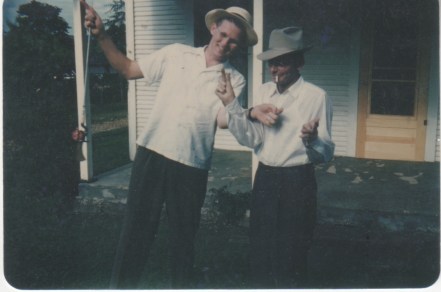
My father and his father

Dick on a family fishing grip
What I remember doing as a team sport with my father was brunch. We made crepes Suzettes and broiled grapefruit from his Wolf in Chef’s Clothing cookbook. We had a small kitchen so there was just enough room for the two of us to make the crepes and the set them on fire in a chafing dish. Our regular menu had nothing so exciting as flambé food. I used to beg for that brunch, but it only came around on very rare occasions. The other popular dish, for which my dad got credit but was actually concocted by my mom, was home-made ice cream. We had the only ice cream freezer in my immediate neighborhood, so this memorable dish made my back yard a very popular place to be. My friends and I would sit on the top of the freezer when it got harder to turn the handle. This usually happened during a barbecue while he was watching the smoker.
I have some very fond memories of cooking with my dad. His repertoire was small, but each dish was very special. Did you cook with your father in your childhood, gentle reader?

sunset
Celeritas et veritas is my new favorite Latin phrase. It means promptness and truth. My father had a catch phrase by which he was known during his career which was, “Hurry every chance you get.” I think hurrying is overrated, and truth underrated. If I create my own coat of arms I will make Celeritous et Veritas my motto. I have been very attached to my 3 P’s for decades. They are:
In my mind these are the tenants that apply to best practices in business, pleasure, and civic matters. I judge people on their ability to be prompt, allowing for circumstances. Some folks have erratic schedules and responsibility loads based on family or career. I have been in that position myself, juggling multiple tasks. We are not always able to be perfectly prompt, but if tardiness is a chronic habit politeness and professionalism are completely destroyed. Those who never show up on time are passively aggressive and are shunned in my world after a reasonable trail period. All relationships would benefit from more promptness and truth. What is your Latin motto, gentle reader?
I have been a client and fan of Justine Robbins for many years. She is a very talented and skilled cranio-sacral therapist as well as a lymphatic drainage expert. She knows my body well, and has always helped me keep my health in balance. I believe regular lymphatic drainage by a competent therapist is one of the best investments I can make to my long-term well-being. The lymphatic system is an often overlooked key player in the body’s defense against disease. The lymph carries away inflammation and infection. When it is out-of-order consequences can be very serious our health. The lymphatic flow can heal itself and rebuild pathways to bring back function to the area. If it is damaged therapy relieves swelling and inflammation by rerouting the lymphatic fluid. In time the body establishes working routes for this crucial drainage.
Any time you have an incision you will cut and disrupt the lymphatic system. I recently had a surgery on my arm that resulted in some puffiness around the site. It is not serious or painful, but I wanted to test Justine’s new laser system. Her new office is close to home, which I love. The treatment consists of socially catching up with Justine (in my case) while she runs the laser over the area for about 10 minutes. She has discovered the therapy works best if short consecutive sessions are used. Of course I can’t know how my arm would be if I had done nothing, but I can see and feel a difference in the swelling present today. I will continue the series to speed the healing on my incision. I am pleased to know that this space age treatment is available to me in the future. Theralase is my new best friend.
If you live in Tucson you can visit Justine’s practice, LightSpeed Therapy at 3333 N. Campbell Ave, Suite 2. She can be reached at 520-908-8907. I highly recommend her services and this new cool tool. Some Canadian insurance covers this kind of treatment, and we hope in time the US will discover the efficacy of this non invasive therapy.
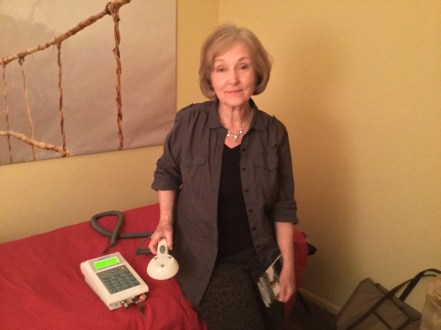
Justine and Theralase

grilling goodness
I am extremely happy to see the popularity and creativity devoted each week to #MeatlessMonday. This idea is catching on fast with all kinds of people. I am not sure why this trend has caught the attention of everyone. Do they notice because they want better health, the end to the suffering of the animals, or because they want a better outcome for the planet? Whatever it is, the world is starting to understand the benefits of plant based diets. When I gave up eating animals in North Carolina in 1969 I was viewed as subversive at the very least. I have eaten some fish and a few bites of a chili dog (circa 1970) since my decision on Easter of 1969 to become a vegetarian. Since that time the regular diet of my fellow Americans has steadily slid down a very unhealthy slope of factory farming and addiction to foods and drinks devoid of nutrients and full of chemicals.
I credit my good health to my dietary regime, although it has not been perfect. Too much strict avoidance of anything sets up a magnetic attraction to the forbidden. Meat is not forbidden for me, but I would never want to eat a dead animal. I still eat dairy, honey and eggs although I do see the vegan alternatives as better and worth trying. I do make more vegan cuisine than ever before, and may someday embrace it fully. For now, Monday will suffice for inspiration and dedication to the vegan cause. What I love about this trend is the ease with which anyone can find information, recipes, and guidance. I love the website TryVeg.com, full of helpful tips for anyone interested in the subject.
I have never found that bugging people to follow my diet was an effective way to approach this. I am a great cook, and would rather seduce them with gourmet succulence than beat them over the head with the cruelty issue. I encourage you to find a recipe today, or any day, under the hashtag #MeatlessMonday. See why the vegans are all the rage. Bon Appetit, gentle reader.

Marriage of Henry I of England (1068-1135) to Princess (Eadgyth) Matilda of Scotland. Engraving c1880.
My 27th great-grandmother was Princess of Alba/Albany. She was christened Edith, but adopted the name Matilda upon her marriage to Henry. It was thought the Norman barons might not respect a queen with a Saxon name.
The marriage to Henry represented the union of Norman & Saxon royal lines.
She was crowned Queen Consort 11/14 Nov 1100 at Westminster Abbey.
Henry married Matilda (daughter of Margaret) to appease his Saxon subjects. She is interred at Westminster Abbey, London, England (or Winchester).
Christened Edith, but adopted the name Matilda upon her marriage to Henry I. It was thought the Norman barons might not respect a queen with aSaxon name. The marriage to Henry represented the union of the Norman &Saxon royal lines. She is also known by the diminutive of that name – Maud (which had been the name of Henry’s mother). She was the sister of Edgar, King of Scotland 1098-1107.
Edith – Margaret (Matilda) of Scotland, born in 1080 and died in 1118, married Henry I. Beauclerc, King of England, son of William I The Conqueror (ruler from 1066 to 1087) and his wife, Matilda of Flanders,who died in 1083… Matilda was educated at Wilton and Romsey Abbey where she said that her aunt, Christina, forced her to wear a black veil. She threw it on the ground whenever left alone, in spite of beatings. When her mother died she came to England to Edgar Atheling, her uncle. She was a sister of King David of Scotland; she was a correspondent of Anselm and Hildebert, Bishop of Le Mans, who wrote poetry about her. She was asymbol of the union of Saxon and Norman. She was Henry’s Queen for seventeen years and six months, and died in her prime like most of herfamily. Henry and Matilda had a son and a daughter.

Matilda Princess of Scotland
Matilda of Scotland (born Edith; c. 1080 – 1 May 1118) was the first wife and queen consort of Henry I of England. Matilda was born around 1080 in Dunfermline, the daughter of Malcolm III of Scotland and Saint Margaret. She was christened Edith, and Robert Curthose stood as godfather at her christening. Queen Matilda was also present at the font and may have been her godmother.When she was about six years old, Matilda (or Edith as she was then probably still called) and her sister Mary were sent to Romsey, where their aunt Cristina was abbess. During her stay at Romsey and Wilton, the Scottish princess was much sought-after as a bride; refusing proposals from William de Warenne, 2nd Earl of Surrey, and Alan Rufus, Lord of Richmond. Hermann of Tournai even claims that William II Rufus considered marrying her.She had left the monastery by 1093, when Anselm, Archbishop of Canterbury, wrote to the Bishop of Salisbury ordering that the daughter of the king of Scotland be returned to the monastery that she had left. After the death of William II Rufus in August 1100, his brother, Henry, soon seized the royal treasury and crown. His next task was to marry and Henry’s choice was Matilda. Because Matilda had spent most of her life in a convent, there was some controversy over whether she was a nun and thus ineligible for marriage. Henry sought permission for the marriage from Archbishop Anselm of Canterbury, who returned to England in September 1100 after a long exile. Professing himself unwilling to decide so weighty a matter on his own, Anselm called a council of bishops in order to determine the legality of the proposed marriage. Matilda testified that she had never taken holy vows, insisting that her parents had sent her and her sister to England for educational purposes, and her aunt Cristina had veiled her to protect her “from the lust of the Normans.” Matilda claimed she had pulled the veil off and stamped on it, and her aunt beat and scolded her for it. The council concluded that Matilda was not a nun, never had been and her parents had not intended that she become one, giving their permission for the marriage. Matilda and Henry seem to have known one another for some time before their marriage — William of Malmesbury states that Henry had “long been attached” to her, and Orderic Vitalis says that Henry had “long adored” Edith’s character.Her mother was the sister of Edgar the Ætheling, proclaimed but uncrowned King of England after Harold, and through her, Matilda was descended from Edmund Ironside and thus from the ancient royal family of Wessex, which in the 10th century, became the royal family of a united England. This was very important as Henry wanted to make himself more popular with the English people and Matilda represented the old English dynasty. In their children, the Norman and English dynasties would be united. Another benefit was that England and Scotland became politically closer; three of her brothers became kings of Scotland and were unusually friendly to England during this period.After Matilda and Henry were married on 11 November 1100 at Westminster Abbey by Archbishop Anselm of Canterbury, she was crowned as “Matilda”, a fashionable Norman name. She gave birth to a daughter, Matilda, in February 1102, and a son, William, in November 1103.As queen, she maintained her court primarily at Westminster, but accompanied her husband on his travels around England, and, circa 1106–1107, probably visited Normandy with him. She also served in a vice-regal capacity when Henry was away. Her court was filled with musicians and poets; she commissioned a monk, probably Thurgot, to write a biography of her mother, Saint Margaret. She was an active queen and, like her mother, was renowned for her devotion to religion and the poor. William of Malmesbury describes her as attending church barefoot at Lent, and washing the feet and kissing the hands of the sick. She also administered extensive dower properties and was known as a patron of the arts, especially music.After Matilda died on 1 May 1118 at Westminster Palace, she was buried at Westminster Abbey. The death of her only adult son and Henry’s failure to produce a legitimate son from his second marriage led to the succession crisis of The Anarchy.After her death, she was remembered by her subjects as “Matilda the Good Queen” and “Matilda of Blessed Memory”, and for a time sainthood was sought for her, though she was never canonized.Matilda and Henry had four children:
Matilda of England (c. February 1102 – 10 September 1167), Holy Roman Empress, Countess consort of Anjou, called Lady of the English
William Adelin, (5 August 1103 – 25 November 1120), sometimes called Duke of Normandy, who married Matilda (d.1154), daughter of Fulk V, Count of Anjou.
Euphemia, died young.
Richard, died young.
She is known to have been given the name “Edith” (the Old English Eadgyth, meaning “Fortune-Battle”) at birth, and was baptized under that name. She is known to have been crowned under a name favored by the Normans, “Matilda” (from the Germanic Mahthilda, meaning “Might-Battle”), and was referred to as such throughout her husband’s reign. It is unclear, however, when her name was changed, or why. Accordingly, her later name is used in this article. Historians generally refer to her as “Matilda of Scotland”; in popular usage, she is referred to equally as “Matilda” or “Edith”. References
Chibnall, Marjorie. The Empress Matilda: Queen Consort, Queen Mother, and Lady of the English, 1992
Hollister, Warren C. Henry I, 2001
Parsons, John Carmi. Medieval Mothering, 1996
Parsons, John Carmi. Medieval Queenship, 1997
Huneycutt, Lois L. “Matilda of Scotland: A Study in Medieval Queenship”.” 2004.
Matilda Princess of Scotland (1079 – 1118)
27th great-grandmother
Matilda, Empress of England Beauclerc (1102 – 1167)
daughter of Matilda Princess of Scotland
Henry II “Curtmantel” PLANTAGENET, “King of England” (1133 – 1189)
son of Matilda, Empress of England Beauclerc
Eleanor Spain Plantagenet (1162 – 1214)
daughter of Henry II “Curtmantel” PLANTAGENET, “King of England”
Berenguela CASTILE LEON (1181 – 1244)
daughter of Eleanor Spain Plantagenet
Saint Ferdinand Castile amp Leon (1199 – 1252)
son of Berenguela CASTILE LEON
Alfonso X Wise Castile Leon amp Galicia (1221 – 1284)
son of Saint Ferdinand Castile amp Leon
Sancho Brave Castile Leon (1258 – 1295)
son of Alfonso X Wise Castile Leon amp Galicia
Beatrice Sanchez Infanta Castile (1293 – 1359)
daughter of Sancho Brave Castile Leon
Peter I Portugal Cruel Algarve (1320 – 1367)
son of Beatrice Sanchez Infanta Castile
John I DePinto (1358 – 1433)
son of Peter I Portugal Cruel Algarve
Beatrix DePinto (1403 – 1447)
daughter of John I DePinto
John Fettiplace (1427 – 1464)
son of Beatrix DePinto
Richard Fettiplace (1460 – 1511)
son of John Fettiplace
Anne Fettiplace (1496 – 1567)
daughter of Richard Fettiplace
Mary Purefoy (1533 – 1579)
daughter of Anne Fettiplace
Susanna Thorne (1559 – 1586)
daughter of Mary Purefoy
Gov Thomas Dudley (1576 – 1653)
son of Susanna Thorne
Anne Dudley (1612 – 1672)
daughter of Gov Thomas Dudley
John Bradstreet (1652 – 1718)
son of Anne Dudley
Mercy Bradstreet (1689 – 1725)
daughter of John Bradstreet
Caleb Hazen (1720 – 1777)
son of Mercy Bradstreet
Mercy Hazen (1747 – 1819)
daughter of Caleb Hazen
Martha Mead (1784 – 1860)
daughter of Mercy Hazen
Abner Morse (1808 – 1838)
son of Martha Mead
Daniel Rowland Morse (1838 – 1910)
son of Abner Morse
Jason A Morse (1862 – 1932)
son of Daniel Rowland Morse
Ernest Abner Morse (1890 – 1965)
son of Jason A Morse
Richard Arden Morse (1920 – 2004)
son of Ernest Abner Morse
Pamela Morse
I am the daughter of Richard Arden Morse

Joshua Tree National Park

Joshua Tree National Park

Joshua Tree National Park
2016 is a special year for the National Park Service in the US. To celebrate the 100th anniversary of the founding of the service the American people are being gifted extra free admission days to discover our parks. I am the lucky owner of a senior pass, which I purchased last year for $10. It entitles me and a car full of my guests to visit the National Parks gratis for as long as I live. This is, by far, my favorite benefit of being an American senior citizen. The value of a visit to any of our majestic National Parks is incalculable.
The theme for this birthday year is Find Your Park. My friend Eric treated me to a visit to Joshua Tree National Park last September. We had a wonderful time and enjoyed the exotic scenery very much. It was still hot a blazes up there, so our photo shoots consisted of running quickly back and forth to and from the car to snap some of the landscape for posterity. One can easily see why it is known to rock climbers all over the world who flock to it as soon as the temperatures allow outside recreation without frying to a crisp. It must be a fabulous place to hike, especially in the spring. If you have a chance to discover this amazing gem of a park I highly recommend it. I plan to return to discover more of the dramatic beauty of this place.
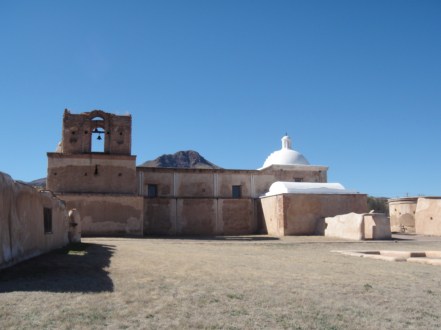
Tamacacori National Historic Park

Tamacacori National Historic Park
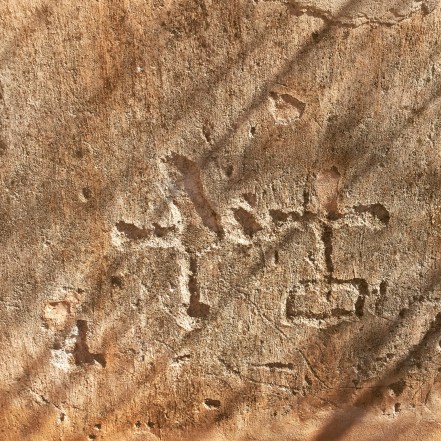
Tamacacori National Historic Park

Tamacacori National Historic Park
Very near our home in Tucson is a special park dedicated to history, Tumacacori National Historic Park. I love to go there for any reason, but their educational programs are exceptional. We attended a full moon lecture last fall at the mission park that was taught by a ranger. She told us in great detail about Padre Kino and the history of the area and native peoples. She was knowledgable about the never ending restoration work done to preserve the original structures. We all learned new things about the history and culture of this region while taking a candle lantern tour around the grounds and inside the church.
The Centennial of the Park Service is indeed something in which we can take pride. I hope all of the gentle readers will have a chance to find your park in 2016. There is a very cool way to share your experience and those of others at findyourpark.com. The extra free admission days around the country take place during the last two weeks of August, 2016. If you are in vacation planning mode please consider taking advantage of this generous offer to Find Your Park. Bon Voyage.

Burial: Abbey of Valloires Argoules Departement de la Somme Picardie, France
My 23rd great-grandmother was born Apr. 19, 1199. She was a noblewoman. Her title was Countess of Ponthieu and Montreuil. She was the only child and heiress of Guillaume II de Ponthieu and Alix de France. She married Simon de Dammartin and bore him four daughters. In 1241 she remarried Matthieu de Montmorency who was killed in the Battle of Mansurah in 1250. She died Sep.,1250


Maria Jeanne, Countess of Ponthieu & Montreuil, Dammartin (1199 – 1250)
23rd great-grandmother
Queen Consort Joan (Castile and León) (Countess Ponthieu) DeDammartin (1216 – 1279)
daughter of Maria Jeanne, Countess of Ponthieu & Montreuil, Dammartin
Eleanor Castille Princess of Castille and Leon (1241 – 1290)
daughter of Queen Consort Joan (Castile and León) (Countess Ponthieu) DeDammartin
Elizabeth of Rhuddlan Princess of England Plantagenet (1282 – 1316)
daughter of Eleanor Castille Princess of Castille and Leon
William Earl of Northampton De Bohun (1312 – 1360)
son of Elizabeth of Rhuddlan Princess of England Plantagenet
Lady Elizabeth Countess Arundel Countess DeBohun (1350 – 1385)
daughter of William Earl of Northampton De Bohun
Elizabeth Duchess Norfolk Fitzalan (1366 – 1425)
daughter of Lady Elizabeth Countess Arundel Countess DeBohun
Lady Joan De Goushill Baroness Stanley (1402 – 1459)
daughter of Elizabeth Duchess Norfolk Fitzalan
Countess Elizabeth Sefton Stanley (1429 – 1459)
daughter of Lady Joan De Goushill Baroness Stanley
Thomas Sir 8th Earl of Sefton Molyneux (1445 – 1483)
son of Countess Elizabeth Sefton Stanley
Lawrence Castellan of Liverpool Mollenaux (1490 – 1550)
son of Thomas Sir 8th Earl of Sefton Molyneux
John Mollenax (1542 – 1583)
son of Lawrence Castellan of Liverpool Mollenaux
Mary Mollenax (1559 – 1598)
daughter of John Mollenax
Gabriell Francis Holland (1596 – 1660)
son of Mary Mollenax
John Holland (1628 – 1710)
son of Gabriell Francis Holland
Mary Elizabeth Holland (1620 – 1681)
daughter of John Holland
Richard Dearden (1645 – 1747)
son of Mary Elizabeth Holland
George Dearden (1705 – 1749)
son of Richard Dearden
George Darden (1734 – 1807)
son of George Dearden
David Darden (1770 – 1820)
son of George Darden
Minerva Truly Darden (1806 – 1837)
daughter of David Darden
Sarah E Hughes (1829 – 1911)
daughter of Minerva Truly Darden
Lucinda Jane Armer (1847 – 1939)
daughter of Sarah E Hughes
George Harvey Taylor (1884 – 1941)
son of Lucinda Jane Armer
Ruby Lee Taylor (1922 – 2008)
daughter of George Harvey Taylor
Pamela Morse
I am the daughter of Ruby Lee Taylor
Marie de Ponthieu (before 17 Apr 1199-Sep 1250). Daughter of Guillaume II “Talvas” de Ponthieu and Alix de France. The De Rebus Hispaniæ of Rodericus Ximenes names “Mariam…mater Joannæ Reginæ Castellæ et Legionis” as the daughter of “Comitis de Pontivo” and his wife “Adelodis” daughter of “Ludovico Regi Francorum” (and his wife “Elisabeth”, an error for Constanza). “Willelmus comes Pontivi et Monstreoli” donated property to the church of Saint Giosse, with the consent of “Marie filie mee et Aelis uxoris mee”, by charter dated 1205. “Willelmus comes Pontivi et Monstreoli…et Aalais uxor mea comitissa Pontivi et Maria filia mea” granted concessions by charter dated 1207. “Willelmus comes Pontivi et Monstreoli” granted rights to one of his vassals, with the consent of “Aalis, uxoris mee Ludovici regis filie et Marie filie mee”, by charter dated Aug 1208. “Renaldus comes Bolonie” confirmed the marriage contract between “Guillelmum comitem Pontivi et Mariam eiusdem comitis filiam” and “Simonem fratrem meum” by charter dated Sep 1208. “Willelmus comes Pontivi et Monstreoli” granted rights to the commune of Maioc, with the consent of “Aalis, uxoris mee et Symonis de Bolonia, generis mei, et Marie filie mee, uxoris eius”, by charter dated 1209. “Guilelmus comes Pontivi et Monstrolii” donated property to Saint-Maurice d’Agaune, for the souls of “Alaidis uxoris meæ et Mariæ filiæ meæ”, by charter dated Mar 1210. “Willaume comte de Pontieu et de Montreuil” agreed a concession made by one of his vassals, with the consent of “Aalis sa femme et de Marie leur fille” by charter dated Nov 1211.
She succeeded her father in 1221 as Countess de Ponthieu. Louis VIII King of France confirms an agreement with “consanguinea nostra Maria comitissa Pontivi” related to rights of her “filios et filios quos susceperat a Simone fratre comitis Renaldi Bolonie” by charter dated 1225. “Symon comes Pontivi et Monsteroli et Maria uxor mea” confirmed a donation of property to the abbey of Notre-Dame d’Ourscamp by “Johannes comes Pontivi” by charter dated 2 Mar 1230. “Maria comitissa Pontivi et Monstreoli” donated property to the church of Boulogne in memory of “Symon comes Pontivi et Monstreoli…maritus meus” by charter dated Oct 1239. “Matheus comes Pontivi et Monstreoli et Maria uxor eius, comitissa” noted property sales by charter dated Sep 1242. “Matheus de Montemorenc. comes Pontivi et Monsterolii dominus de Atechi” donated property, with the consent of “Maria comitissa Pontivi et Monsterolii uxor mea”, by charter dated Feb 1246.
Married firstly (contract Sep 1208) Simon de Dammartin, Comte de Aumale, son of Aubry II, Comte de Dammartin & his wife Mathilde [Mabile] de Clermont-en-Beauvaisis ( – 21 Sep 1239). Comte Simon & his wife had four children: Jeanne, Mathilde, Phillipa and Marie.
Married secondly (Sep 1240/15 Dec 1241) Mathieu de Montmorency, Seigneur d’Attichy, son of Mathieu II, Seigneur de Montmorency ( – killed in Battle Mansurah 8 Feb 1250).
 mermaidcamp