mermaidcamp
Keeping current in wellness, in and out of the water
You can scroll the shelf using ← and → keys
You can scroll the shelf using ← and → keys
Jupiter is by far the most massive planet in our solar system. The Roman god Jupiter was worshiped as the purveyor of the universe. He was the ruler of the daytime sky, the god of lightning and thunder, and the political deity of the Roman state. As king of the gods he administered the cosmos. He is the son of Saturn, known for his jovial nature. Jove, as in by Jove the English expression, refers to the god Jupiter. Thursday is his day and protection of the state is his mission. He was the main man in the pantheon when Jesus was born in a Roman colony. He was revered for his reputation for abundance and good fortune, as well as very fine organizational and judicial skills. He was known for bringing chaos to order.
The fifth planet from the sun is now retrograde from the point of view of the earth. This means that due to our orbits around the sun, Jupiter appears from the earth to travel in reverse. This phenomena has significance in astrology, representing a chance to go over events in the past and make improvements. The Jupiter retrograde period will last until April, ending just as US taxes will be due. It represents a chance to review our organization and abundance issues. This time is a portal to edit and remake your own movie that has been running since last September. You do not have to believe in the power of Jupiter to know that good fortune regularly follows good organization. There is no need to worship the god of the daytime sky to use this time to significantly improve your own judgement and organization. Americans need to review the year for the IRS, if not for Jupiter. Take your habits through an honest evaluation aimed at creating more joviality and order. We all have room for improvement, Gentle Readers. What did you start last September that is not properly organized? Imagine jolly Jupiter guiding you through tax preparation and New Year’s resolutions. Redirect your attention to all that brings you joy. Rigorously remove disorder and chaos that clutter your life. Finish what you started, either by discarding it or completing it.

festive headgear
Christmas is such an anticipated holiday in America that it leaves lasting impressions on children. If I dig deeply into my memories of Christmas past there are certain phases that marked my history of celebrating.
The house was small and the farm very big. My grandmother made bread and cookies all the time. At Christmas she cranked up the volume and included cinnamon rolls. We played Chinese checkers, regular checkers, and Parcheesi. Between baking with my grandma and playing games with my grandpa all my wishes came true. I don’t know what my parents did, but I was always thrilled to be in Lincoln, Arkansas at the farm.
Pittsburgh had excellent quality building snow, so my friends and I constructed forts and had snowball wars. We had sleds, toboggans, and ice skates. At holiday break we were free to slip and slide all over town in our preferred method. We did have caroling in the 50’s with people showing up at your house singing and very cold. You were to invite them inside and give them hot chocolate. My mother made fruitcake (of which I was never a fan) and pralines (which were the best).
Special songs of the season, often with no religious connotations, are sung by bands of traveling musicians. The parranda grows as the host at each home visited joins the group and travels to the next home. Sometimes extemporaneous lyrics are created to flatter the host or the neighborhood. My parents were huge appreciators of the art form, and my dad was the boss of all the people in the petroleum camp. For this reason our house was the last stop of the night. The bar would open and the musicians would stay for hours, playing harps, rhythm instruments, cuatros, and guitars.
I had neither funds nor interest in entertaining like my parents had done. I did still like the large crowd festivities, but preferred to make the occasion pot luck. I still love this form of celebrating because each cook showcases something special that they want to prepare. I also like the progressive dinner, which goes from house to house for each course. Those seem to have fallen out of favor today, but they were fun while they lasted.
There is something excellent about paying others to do all the preparations and clean up for holidays. I spent wonderful holidays all over the world, in Chamonix, Swiss ski resorts, and one superb Christmas in Maui. If you have the extra cash and don’t mind traveling at peak times (when I did it the peak was not so hard to take) being in another land with room service can be a really good way to make the holiday season. Instead of making effort at home, the energy and money is spent on the travel itself.
We like to stay close to home and make very little fuss about our December now. I am working hard to clear space and give away old items rather than acquire any new ones. I use seasonal plants for decorations these days because I just don’t bother with electric lights and other time consuming ways to change the decor. We have no tree, and each year I give away more ornaments and outdoor decorative items. Not only are we happier during the season, we have nothing much to strike in January. This year we may zip up to Scottsdale for a meal at Posh and the farmers’ market. This is our family trip with our dog, who adores the FireSky Resort. The low key way to celebrate suits our lifestyle and our budget.

tropical

first box to go
I have a rather animistic relationship with my possessions and potential possessions. I find them in a somewhat psychic shopping style, and buy them in a love at first sight condition. This happens on a regular basis with jackets..and other items of clothing. I adore costuming and potential costuming. I like it way too much. When I first find the unusual jacket/prom dress/beaded top I believe we are meant to be a pair. I see us as fabulous fashion partners stunning and shocking our fans. This is where the delusion begins..but not at all where it ends. It ends in my closet, my garage, and alas, gentle readers, in my barn. The truth is that after a brief romance, all these dazzling duds live a life of drudgery, never seeing any action or fun. I need to set them free for their own self realization. They need to party as their original construction intended. No clothing is happy in the bottom of the drawer or the back of the closet.
Yesterday on PBS radio a lady was reviewing a book about Japanese style tidying up and animistic treatment of the objects in the home. The author had been a Shinto shrine maiden in Japan in her youth, so she really knew a lot about space and ritual. Her method of cleansing starts with a realization that we are not treating our objects with love and respect if we allow them to pile up and collect dust. She emphasizes the feeling of happiness an object must evoke in order to stay in our presence. She aptly notes that old papers never give us feelings of happiness. By keeping so many objects that do not make us happy (any more) we restrict our own spacious feeling and daily comfort. I listened in the car to this radio interview and felt very personally touched by this message. I recently chipped the glass on vase containing fake amaryllis that my mother gave me about 15 years ago. It has been on display in my living room in a prominent place all those years and we have enjoyed it. It is not by any means the only gift I have that she gave me, but I do feel an attachment. My partner and I talked it over and joked about it, and I am ready to part with the object, for the good of all involved. Someone may recycle it if I set it free. It has served its purpose and now it can do something new.
Today my friend is going to visit while I go through my clothing to determine which items truly contain joy for me now. I do not dare to estimate how much needs to go, but I now see my wardrobe as a family. I have cramped the pieces into prison quarters with no light or air. How could they possibly be happy as my wardrobe, overcrowded and starved for attention? The majority of these items need to live in another person’s wardrobe, where they can be loved and treated well. Then I will have a well ordered place for the happy items that will remain with me. The Japanese method suggests that while our socks are in a drawer, they are on holiday. We want them to rest and feel good for the next time they go on our feet. We must pay attention to the state of the holiday resort by assuring proper order and visibility for the resting clothing. I totally love this whole concept, and am sure my clothing will applaud the good news. I just told a friend that by the end of the year I plan to make my closet look like a Shinto shrine. He said, “Send me a picture.” Now I have made a true commitment, and at this point nothing looks less like a shrine than my closet. I have a goal and a deadline. I look forward to making the clothing that makes the cut very happy in the future.

Constance VonHohenstaufen
My 21st great-grandmother was born in Sicily and died in Barcelona. Her grandfather was Holy Roman Emperor. Her husband died so she became a nun, as many of the queen consorts did. I think it was the only safe place to be. She is buried in Barcelona Cathedral, with some of my other ancestors, in a royal urn.

urns Barcelona Cathedral
After her original interment Constance was moved to Urns containing the bodies of multiple nobles. Urns Barcelona Cathedral with the remains of: In the other box: – Alphonse Franc, Count of Barcelona and King of Aragon – Jaume d’Urgell, Count of Urgell and Frederick of Aragon, both sons of en: Alphonse Benign In the other: – Constance of Sicily, wife of en: Peter the Great – Cyprus Maria, wife of en: James the Just – Sybil Fort, fourth wife of en: Peter of Aragon – Eleanor of Aragon (+1416), second wife of en: Peter I of Cyprus, King of Cyprus and Jerusalem. The sculptures are by Frederic Seas
Constance of Sicily Queen consort of Aragon, Sicily, and Valencia; Countess consort of Barcelona Tenure 1276–1285 Spouse Peter III of Aragon
Issue Alfonso III of Aragon
James II of Aragon
Elisabeth, Queen of Portugal
Frederick III of Sicily
Yolanda, Duchess of Calabria
Pedro of Aragon House Hohenstaufen Dynasty (by birth)
House of Aragon (by marriage) Father Manfred of Sicily Mother Beatrice of Savoy Born 1249
Sicily Died 9 April 1302 (aged 52 or 53)
Barcelona, Spain Burial Cathedral of Santa Eulalia, Barcelona
Constance (or Constantia) (1249 – 9 April 1302) was the Queen consort of Peter III of Aragon.
Family
She was the only daughter of Manfred of Sicily and his first wife Beatrice of Savoy. Her paternal grandparents were Frederick II, Holy Roman Emperor and his mistress Bianca Lancia. Her maternal grandparents were Amadeus IV of Savoy and his first wife Anne of Burgundy.
Marriage
On 13 June 1262, Constantia married Prince Peter of Aragon, eldest son of James I of Aragon and his second wife Violant of Hungary.
Manfred was killed in the Battle of Benevento (26 February 1266) while fighting against his rival Charles of Anjou, son of Louis VIII of France and Blanche of Castile. As his eldest daughter she could be considered his heiress but did not pursue her claim at this time.
James I died on 27 July 1276 and Peter succeeded to the throne. Constance became his Queen consort. With the War of the Sicilian Vespers (1282–1302), at first Peter and then their sons claimed the throne of Sicily in her right. The War resulted in the partition of the Kingdom of Sicily to the “Kingdom of Trinacria” (the island of Sicily) under her descendants and the Kingdom of Naples under the descendants of Charles of Anjou.
Peter III died on 2 November 1285 and Constantia remained a widow. She ended her days as a nun in Barcelona.
Children
Constantia and Peter III of Aragon had six children:
Alfonso III of Aragon (1265 – 18 June 1291).
James II of Aragon (10 August 1267 – 2 November 1327).
Elizabeth of Aragon (1271 – 4 July 1336). Married Denis of Portugal.
Frederick III of Sicily (13 December 1272 – 25 June 1337).
Yolanda of Aragon (1273 – August, 1302). Married Robert of Naples.
Infante Pedro of Aragon (1275 – 25 August 1296). Married Guillemette of Béarn, daughter of Gaston VII of Montcada, Viscount of Béarn.
Constantia’s ancestors in three generations Constantia of Sicily Father:
Manfred of Sicily Paternal Grandfather:
Frederick II, Holy Roman Emperor Paternal Great-grandfather:
Henry VI, Holy Roman Emperor Paternal Great-grandmother:
Constance of Sicily Paternal Grandmother:
Bianca Lancia Paternal Great-grandfather:
Unknown Paternal Great-grandmother:
Unknown Mother:
Beatrice of Savoy Maternal Grandfather:
Amadeus IV of Savoy Maternal Great-grandfather:
Thomas I of Savoy Maternal Great-grandmother:
Marguerite of Geneva Maternal Grandmother:
Anne of Burgundy Maternal Great-grandfather:
Hugh III, Duke of Burgundy Maternal Great-grandmother:
Béatrice of Albon
Constance of Sicily, Queen of Aragon
House of Hohenstaufen
Born: circa 1249 Died: 9 April 1302 Royal titles Preceded by
Teresa Gil de Vidaure Queen consort of Aragon
1276–1285 Succeeded by
Isabella of Castile Countess consort of Barcelona, Girona, Osona and Besalú
1276–1285 Queen consort of Valencia
1276–1285 Preceded by
Margaret of Burgundy Queen consort of Sicily
1282–1285 Succeeded by
Isabella of Castile [edit] External links
A listing of descendants of the Hohenstaufen Dynasty
Constance VonHohenstaufen (1249 – 1302)
is my 21st great grandmother
Isabella Pedra Aragon (1271 – 1336)
daughter of Constance VonHohenstaufen
Alphonso Dinisez Portugal (1290 – 1357)
son of Isabella Pedra Aragon
Peter I Portugal Cruel Algarve (1320 – 1367)
son of Alphonso Dinisez Portugal
John I DePinto (1358 – 1433)
son of Peter I Portugal Cruel Algarve
Beatrix DePinto (1403 – 1447)
daughter of John I DePinto
John Fettiplace (1427 – 1464)
son of Beatrix DePinto
Richard Fettiplace (1460 – 1511)
son of John Fettiplace
Anne Fettiplace (1496 – 1567)
daughter of Richard Fettiplace
Mary Purefoy (1533 – 1579)
daughter of Anne Fettiplace
Susanna Thorne (1559 – 1586)
daughter of Mary Purefoy
Gov Thomas Dudley (1576 – 1653)
son of Susanna Thorne
Anne Dudley (1612 – 1672)
daughter of Gov Thomas Dudley
John Bradstreet (1652 – 1718)
son of Anne Dudley
Mercy Bradstreet (1689 – 1725)
daughter of John Bradstreet
Caleb Hazen (1720 – 1777)
son of Mercy Bradstreet
Mercy Hazen (1747 – 1819)
daughter of Caleb Hazen
Martha Mead (1784 – 1860)
daughter of Mercy Hazen
Abner Morse (1808 – 1838)
son of Martha Mead
Daniel Rowland Morse (1838 – 1910)
son of Abner Morse
Jason A Morse (1862 – 1932)
son of Daniel Rowland Morse
Ernest Abner Morse (1890 – 1965)
son of Jason A Morse
Richard Arden Morse (1920 – 2004)
son of Ernest Abner Morse
Pamela Morse
I am the daughter of Richard Arden Morse

Constance of Sicily Queen consort of Aragon
https://twitter.com/jasonjross/status/540250505256005632
While protests on American streets continue a new protest movement is taking place on twitter. White people are discussing white privilege as experienced by them. It captures the other side of the policing story from the point of view of the beneficiaries of a highly prejudiced system. I think most of us know being white is an advantage, but we are not aware of how much of a boon it is to white criminals. Equal protection under the law, if it were to be equal, would extend all the way from safe, secure protected living environments for all to criminal justice that deals out fair and equal sentencing. If you take a look at this trending hashtag you will see some shocking examples of system failure.
I am white to the WASPiest extreme. See my super Brit ancestors to validate my whiteness. I live my life in such a way as to avoid all contact with doctors, lawyers, and police. I have been highly successful with this plan, in part because I am white. I have no crimes to report, pre se, except that I was an undocumented worker in Tecate, Baja California, Mexico, off and on for many years. As a wetback gringa all privilege and courtesy was bestowed on me by the migra on both sides of the border. There was never any problem. I have not crossed the border since 2003 because things just became too complicated after 2001. The era of the #WetbackGringa, wild and free, became a thing of the past.
I think the #CrimingWhileWhite phenomena comes from unconscious prejudice embedded in our culture. I don’t think there is willful or criminal intent by police to treat citizens by different standards. That is why the grand jury is able to rule that there is no probable cause to try the cops who ended lives while on duty. These preferences, or assumptions that white people are not threatening society, are not consciously accepted by the individuals dealing out the uneven justice and protection. Systemic privilege as well as systemic prejudice exist in the collective beliefs of a culture. Just as people have shadow qualities of which they are unaware, so do institutions. Institutional shadow qualities are even harder to nail because there is no institutional Jungian shrink to assist the patient in seeing its whole being. The very nature of shadow prejudice is to hide and stay hidden because nobody wants to believe we are acting from such base instincts. I have been a petroleum princess in Venezuela and a wetback gringa in Mexico. I can tell you from experience the only thing better than being a white woman is being a bilingual blonde white woman. We are automatically above suspicion and nobody ever suspects we understand Spanish, so they say anything in front of us, assuming we will not know what they are saying. Have you ever had an experience of white supremacy or privilege, gentle reader?
“Little do ye know your own blessedness; for to travel hopefully is a better thing than to arrive.”
Robert Louis Stevenson
“El Dorado” (essay)
Thanksgiving is a celebration of the travel, arrival, and survival of the Pilgrims. The Mayflower voyage in 1620 set the precedent for many more European travelers to venture across the Atlantic to the New World. Desire and curiosity are the two eyes, Robert Louis Stevenson says in this essay, of human nature. It took a great deal of both to decide to sail to America to practice religion. They had aspirations to convert the locals to their way of worship in the same way the Crusaders thought they needed to conquer the Holy Land. They were invaders who, like the Spanish Conquistadores, saw themselves as saviors rather than brutal destroyers of culture. The believed in the superiority of their own orthopraxy, and set about building a hierarchy to enforce religious orthodoxy as they saw fit.
All of us have built rigid obstacles into our lives without intending to do so. For many people nationalism contains beliefs that our own superior country is infallible. This creates national enemies of whom we know little, but are encouraged to conquer for the good of mankind. These beliefs enflame emotions and distract us from contentment. They also overshadow our own mortality and our individual mission and talent. We must follow our desire and curiosity to develop our skills while we are alive because our time as humans is limited. Our journey is individual because each of us creates our own version of El Dorado, the mythical place of great abundance. We also actively create our own hellish conditions, both real and imaginary. If you have traveled or had visitors from out of town during the holiday week you joined in a mutual vision of never-ending abundance. Some of you endured hardship on the journey, perhaps not like the Mayflower Pilgrims, but unpleasant nonetheless.
“There is only one wish realisable on the earth; only one thing that can be perfectly attained: Death. And from a variety of circumstances we have no one to tell us whether it be worth attaining.” Mr Stevenson concludes in his essay praising the pursuit of ultimate land of plenty.
A wishlist for travelers:
Bon Voyage, gentle readers. May your trip be merry and bright.

Howland home in Plymouth
Mayflower passengers John Howland and Elizabeth Tilley were married in 1623/4. John was about thirty-one and Elizabeth was about sixteen. They spent their entire lives in Plymouth, and between them participated in every aspect of the Pilgrim experience from its beginning in Leiden up to the merger of the Bay and Plymouth colonies. This article is a retrospective summary of their lives and their contribution to Plymouth.
John was born about 1592 to Henry and Margaret Howland of Fenstanton, nine miles northeast of Cambridge, England. Elizabeth Tilley was the youngest of several children born to John and Joan (Hurst) Tilley. She was baptized in 1607 in Henlow, Huntingdonshire, England. John Tilley and his family, and the family of his brother Edward Tilley and wife Ann (Cooper), were members of John Robinson’s congregation in Leiden.
John Howland, John and Joan and Elizabeth Tilley, and Edward and Ann Tilley were passengers on the Mayflower. John Howland had at least five siblings. Arthur (d. 1675), his older brother, arrived in Plymouth after 1627 while Henry (d. 1671), his younger brother, arrived as early as 1633. Arthur Howland soon moved to Marshfield where he became a major landholder. Henry Howland was one of the original settlers of Duxbury and was chosen constable in 1635.
At age twenty-eight John Howland was recruited in England by John Carver to join his household and be his assistant in moving the Leiden congregation to America. Also included in Carver’s household were a servant-girl Desire Minter (age fifteen), a servant-lad, William Lantham, and several other servants. During a storm in the crossing, John Howland was pitched overboard, but luckily was able to catch hold of a halliard and was hauled back aboard the Mayflower. John was the thirteenth signer of the Mayflower Compact. While in Cape Cod Harbor, John Howland, John and Edward Tilley and others explored the New England coast for several days and chose Plymouth to begin a settlement.
Elizabeth Tilley’s parents and aunt and uncle died in the winter of 1621. John Carver took Elizabeth in as one of his household. After John and Katherine Carver died in the spring of 1621, John Howland became the head of the household containing Elizabeth Tilley, Desire Minter, and William Lantham. The living arrangements for this household are unknown. After John married Elizabeth, he received four acres of land as the head of household in the 1623 Division of Land.
Desire Minter was the daughter of William and Sarah Minter, members of the Leiden congregation. Desire’s father died in 1618, and she joined John Carver’s family. Her mother remarried in 1622, and her new parents established an endowment that Desire would inherit at the age of twenty-one. After a few years in Plymouth, Desire returned to England to assume her inheritance. John and Elizabeth Howland were very fond of Desire and named their first child Desire in her honor. They had ten children: Desire, John, Hope, Elizabeth, Lydia, Hannah, Joseph, Jabez, Ruth and Isaac.
In 1625 John Howland accompanied Edward Winslow on an expedition of the Kennebec River in Maine to explore trading opportunities with the Indians. In 1626 John was asked to be one of the “Undertakers” to buy out the colony’s debt to the “Merchant Adventurers” who had invested in the venture to establish Plymouth Colony.
In the 1627 division of Cattle agreement, John Howland acquired twenty acres for each member of his household. In addition, the colonists were organized in “companies” of thirteen members each. The livestock of the colony was divided equally among the companies. Listed in John’s “company” were John and Elizabeth and their two children, John and Priscilla Alden and their two children, and five unattached men.
Isaac Allerton (1586-1658/9) negotiated a patent that granted Plymouth the exclusive right to trade with the Indians and to establish a trading station on the Kennebec River. In 1627 Governor Bradford placed John Howland in charge. In 1628 a trading station was built at Cushnoc (now called Augusta) on the east side of the Kennebec River. A year later, a permanent log-house was built, and Howland, then Assistant Governor, was asked to manage the trading station. For approximately seven years John Howland was in charge of the station. It is not known if Elizabeth and their family of three children lived at the station permanently or for short periods of time. During the time that John operated the station Elizabeth gave birth to three more children, but it is not known whether she gave birth while she was living at the trading station or in Plymouth.
The trading station in Cushnoc was very successful. The Pilgrims traded corn and manufactured goods with the Indians for beaver, otter and other furs. The proceeds of this trade enabled the Undertakers to settle their debts with the Merchant Adventurers. In 1643 a colony in Piscataqua at the mouth of the Kennebec River under the control of London investors attempted to trade with Indians on the Kennebec River. Howland and men from Plymouth told the Piscataqua men under the command of John Hocking to leave since they were trespassing and the patent granted Plymouth exclusive trading rights. The Piscataqua men refused to pull up anchor and leave, and John Hocking shot and killed one of Howland’s men. One of Howland’s men returned fire and killed John Hocking. A meeting called by the General Courts of Plymouth and Bay Colony established that the Piscataqua men were trespassers and that Hocking’s killing was justified. Following this, the two colonies agreed to honor each other’s patents and to curtail the activities of settlements poaching on these patents. It was feared that if the issue was not resolved satisfactorily, Parliament might appoint a single governor of all New England, which none of the colonies wanted.
In 1633 John (age forty-one) was admitted a freeman in Plymouth. John and Elizabeth acquired land and in time became major landholders in Plymouth and the surrounding towns. For nearly forty years, John Howland was actively involved in the governance of Plymouth through elected or appointed positions, viz. one of the seven Plymouth Assistant Governors—1632-35, 1638-39; one of the four Plymouth Deputies to the General Court for nearly thirty years—1641, 1645, 1647-56, 1658, 1659, 1661-68, 1670; one of the five selectmen of Plymouth—1665-66; one of the Plymouth Assessors—1641, 1644, 1647-51; committee on fur trading—1659; surveyor of highways—1650.
In 1637 John received forty acres of land, and in 1639 he was given a choice of additional land for himself or his heirs around Yarmouth, Dartmouth and Rehoboth. Part of the land he chose was in Yarmouth, which he gave to his son John and daughters Desire and hope and their respective families. In 1639 John purchased land and a house in Rocky Nook, where he spent the rest of his life. Also living in Rocky Nook were Thomas and Mary (Allerton) Cushman and their family.
Quaker missionaries arrived in Plymouth between 1655 and 1662 and attracted a considerable number of converts. Quakers opposed Puritan authority and religious beliefs and practices. They refused to attend church services, would not recognize ministers and magistrates or fidelity oaths, and would not support the church financially. They criticized Puritan beliefs and practices publicly and in such scathing terms as to anger the General Court. Governor Bradford had died in 1657 and was succeeded by Thomas Prence (1600-73), who would not tolerate Quaker criticism and took unusually strong measures to suppress Quaker activities, through fines, whipping, excommunication and expulsion from the colony. In the Bay Colony punishment was more severe, and included hangings.
Quakers wished to separate themselves from the prevailing religious beliefs and practices, just as the Pilgrims had done some fifty years earlier in England. Thus, the Quakers were to Plymouth what the Separatists were to England, except that now the Pilgrims were on the receiving end. Governor Prence and the General Court punished Plymouth residents who attended Quaker services or gave them support and protection.
The families of John Howland’s brothers, Arthur and Henry, were two Plymouth families most identified as practicing Quakers. The families ceased attending Plymouth religious services and allowed their homes for the conduct of Quaker meetings. Arthur, Henry and Henry’s son Zoeth were called before the General Court in 1657 and fined for using their homes for Quaker meetings. In 1660 Henry was again fined. In 1659 Arthur Jr.’s freeman status was revoked and in 1684 he was imprisoned in Plymouth. Throughout his life, John Howland remained faithful to Separatist belief and practice, but his compassion for Quakers is not known.
John and Elizabeth were highly respected citizens of Plymouth. In 1657 and again in 1664, serious issues concerning members of John Howland’s family came before the Court of Governor’s Assistants that resulted in judicial sanctions. John Howland was only a deputy for Plymouth to the General Court, and while he did not have to act on these cases personally, there is not way his standing in Plymouth could avoid being affected.
Governor Prence’s actions toward Quakers took an ironic twist that can be appreciated by parents today. In 1657 Arthur Howland Jr., an ardent Quaker, was brought before the court. Thomas Prince’s daughter and Arthur Howland Jr., fell in love. The relationship blossomed and matrimony seemed inevitable. However, it was illegal and punishable by court sanction for couples to marry without parental consent. Thomas Prence urged Elizabeth to break off the relationship, but to no avail. He then used powers available to him as Governor. Arthur Howland, Jr., was brought before the General Court and fined five pounds for “inveigling of Mistris Elizabeth Prence and making motion of marriage to her, and prosecuting the same contrary to her parents likeing, and without theire mind and will…[and] in speciall that hee desist from the use of any meanes to obtaine or retaine her affections as aforesaid.” On July 2, 1667 Arthur Howland, Jr., was brought before the General Court again where he “did sollemly and seriously engage before the Court, that he will wholly desist and never apply himself for the future as formerly he hath done, to Mistris Elizabeth Prence in reference unto marriage.” Guess what happened! They were married on December 9, 1667 and in time had a daughter and four sons. Thus a reluctant Thomas Prence acquired a Quaker son-in-law, Quaker grandchildren and innumerable Quaker in-laws of Henry Howland.
The second case involving John Howland’s family occurred in 1664 when Ruth Howland (b. 1646), his youngest daughter, was the subject of a morals case brought before the Court of Governor’s Assistants. Sexual mores, including chastity before marriage, were issues about which were strict codes of conduct. Ruth Howland fell in love with Thomas Cushman, Jr. (1637-1726), the first son of Plymouth’s Ruling Elder Thomas Cushman (1607-91), and Mary (Allerton) Cushman (1616-1699), a Mayflower passenger. In 1664/5 Thomas Jr. was fined five ponds by the Court for carnal behavior “before marriage, but after contract.” Once again John Howland was Deputy to the General Court for Plymouth and not involved personally in sentencing. Twenty-five years earlier punishment could have been severe, e.g. excommunication, fines, stocks for women and whipping for men. However, in 1664 harsh physical sentencing had been relaxed, and the social meeting of the parties became a factor in sentencing. In 1664 Thomas Jr. and Ruth were married. In addition to John Howland’s embarrassment, Thomas Cushman, Jr. squandered the opportunity to be considered to succeed his father as Ruling Elder. In 1694, Thomas’ younger brother Isaac was chosen to succeed his father as Ruling Elder. Thomas Jr. and Ruth remained in Plymouth. Ruth died as a young woman sometime after 1672, and Thomas Jr. married Abigail Fuller in 1679.
John Howland died either in his home at Rocky Nook or at his son Jabez’ house on February 23, 1672/3 at the age of eighty. He was buried in an unmarked grave in Burial Hill. In 1897, a headstone was erected on Burial Hill by the Howland Society. Elizabeth Howland spent her declining years and died on December 21, 1687 at the age of eighty in the home of her daughter Lydia Brown, in Swansea. Elizabeth is buried in East Providence, Rhode Island, with a memorial marker.
While not political leaders of Plymouth, John and Elizabeth were pillars of the community and played a major part in the colony’s governance and development. They lived through every aspect of the Pilgrim experience beginning in Leiden—the Mayflower, the harsh first winter, the Undertakers, the trading station in Maine, the Quakers, King Philip’s War—up to the merger of the Bay and Plymouth colonies. Descendants of John, Henry and Arthur Howland multiplied in number and influence to become one of New England’s famous pioneer families.–by Robert Jennings Heinsohn, PhD
John Howland (1601 – 1673)
is my 10th great grandfather
Joseph Howland (1640 – 1703)
son of John Howland
Elizabeth Howland (1673 – 1724)
daughter of Joseph Howland
Eleazer Hamblin (1699 – 1771)
son of Elizabeth Howland
Sarah Hamblin (1721 – 1814)
daughter of Eleazer Hamblin
Mercy Hazen (1747 – 1819)
daughter of Sarah Hamblin
Martha Mead (1784 – 1860)
daughter of Mercy Hazen
Abner Morse (1808 – 1838)
son of Martha Mead
Daniel Rowland Morse (1838 – 1910)
son of Abner Morse
Jason A Morse (1862 – 1932)
son of Daniel Rowland Morse
Ernest Abner Morse (1890 – 1965)
son of Jason A Morse
Richard Arden Morse (1920 – 2004)
son of Ernest Abner Morse
Pamela Morse
I am the daughter of Richard Arden Morse
Because John and Elizabeth were so well known they are also well documented. We have a copy of his last will and testament:
Last Will & Testament of John Howland, 1672
The Last Will and Testament of mr John howland of Plymouth late Deceased, exhibited to the Court held att Plymouth the fift Day of March Anno Dom 1672 on the oathes of mr Samuell ffuller and mr William Crow as followeth
Know all men to whom these prsents shall Come That I John howland senir of the Towne of New Plymouth in the Collonie of New Plymouth in New England in America, this twenty ninth Day of May one thousand six hundred seaventy and two being of whole mind, and in Good and prfect memory and Remembrance praised be God; being now Grown aged; haveing many Infeirmities of body upon mee; and not Knowing how soon God will call mee out of this world, Doe make and ordaine these prsents to be my Testament Containing herein my last Will in manor and forme following;
Imp I Will and bequeath my body to the Dust and my soule to God that Gave it in hopes of a Joyfull Resurrection unto Glory; and as Concerning my temporall estate, I Dispose thereof as followeth;
Item I Doe give and bequeath unto John howland my eldest sonne besides what lands I have alreddy given him, all my Right and Interest To that one hundred acres of land graunted mee by the Court lying on the eastern side of Tauton River; between Teticutt and Taunton bounds and all the appurtenances and privilidges Therunto belonging, T belonge to him and his heirs and assignes for ever; and if that Tract should faile, then to have all my Right title and Interest by and in that Last Court graunt to mee in any other place, To belonge to him his heires and assignes for ever;
Item I give and bequeath unto my son Jabez howland all those my upland and Meadow That I now posesse at Satuckett and Paomett, and places adjacent, with all the appurtenances and privilidges, belonging therunto, and all my right title and Interest therin, To belonge to him his heires and assignes for ever,
Item I Give and bequeath unto my son Jabez howland all that my one peece of land that I have lying on the southsyde of the Mill brooke, in the Towne of Plymouth aforsaid; be it more or lesse; and is on the Northsyde of a feild that is now Gyles Rickards senir To belonge to the said Jabez his heirs and assignes for ever;
Item I give and bequeath unto Isacke howland my youngest sonne all those my uplands and meddows Devided and undivided with all the appurtenances and priviliges unto them belonging, lying and being in the Towne of Middlebery, and in a tract of Land Called the Majors Purchase near Namassakett Ponds; which I have bought and purchased of William White of Marshfeild in the Collonie of New Plymouth; which may or shall appeer by any Deed or writinges Together with the aformentioned prticulares To belonge to the said Isacke his heirs and assignes for ever;
Item I give and bequeath unto my said son Isacke howland the one halfe of my twelve acree lott of Meddow That I now have att Winnatucsett River within the Towne of Plymouth aforsaid To belonge to him and said Isacke howland his heires and assignes for ever,
Item I Will and bequeath unto my Deare and loveing wife Elizabeth howland the use and benifitt of my now Dwelling house in Rockey nooke in the Township of Plymouth aforsaid, with the outhousing lands, That is uplands uplands [sic] and meddow lands and all appurtenances and privilidges therunto belonging in the Towne of Plymouth and all other Lands housing and meddowes that I have in the said Towne of Plymouth excepting what meddow and upland I have before given To my sonnes Jabez and Isacke howland During her naturall life to Injoy make use of and Improve for her benifitt and Comfort;
Item I give and bequeath unto my son Joseph howland after the Decease of my loveing wife Elizabeth howland my aforsaid Dwelling house att Rockey nooke together with all the outhousing uplands and Medowes appurtenances and privilidges belonging therunto; and all other housing uplands and meddowes appurtenances and privilidges That I have within the aforsaid Towne of New Plymouth excepting what lands and meadowes I have before Given To my two sonnes Jabez and Isacke; To belong to him the said Joseph howland To him and his heires and assignes for ever;
Item I give and bequeath unto my Daughter Desire Gorum twenty shillings
Item I give and bequeath To my Daughter hope Chipman twenty shillings
Item I give and bequeath unto my Daughter Elizabeth Dickenson twenty shillings
Item I give and bequeath unto my Daughter Lydia Browne twenty shillings
Item I give & bequeath to my Daughter hannah Bosworth twenty shillings
Item I give and bequeath unto my Daughter Ruth Cushman twenty shillings
Item I give to my Grandchild Elizabeth howland The Daughter of my son John howland twenty shillings
Item my will is That these legacyes Given to my Daughters, be payed by my exequitrix in such species as shee thinketh meet;
Item I will and bequeath unto my loveing wife Elizabeth howland, my Debts and legacyes being first payed my whole estate: vis: lands houses goods Chattles; or any thing else that belongeth or appertaineth unto mee, undisposed of be it either in Plymouth Duxburrow or Middlbery or any other place whatsoever; I Doe freely and absolutly give and bequeath it all to my Deare and loveing wife Elizabeth howland whom I Doe by these prsents, make ordaine and Constitute to be the sole exequitrix of this my Last will and Testament to see the same truely and faithfully prformed according to the tenour therof; In witness whereof I the said John howland senir have heerunto sett my hand and seale the aforsaid twenty ninth Day of May, one thousand six hundred seaventy and two 1672
Signed and sealed in the
prsence of Samuel ffuller John Howland
William Crow And a seale
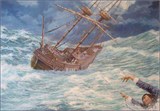
man overboard
John Howland survived falling off the Mayflower, and all the perils of colonial life to be the last of the Mayflower Pilgrim fathers to die. His headstone in Plymouth reads:
“Here was a godly man and an ancient professor in the ways of Christ. Hee was one of the first comers into this land and was the last man that was left of those that came over in the Shipp called the Mayflower that lived in Plymouth.”

headstone

Thanksgiving SOS
This year No Kid Hungry is prepared to provide 100 holiday meals for every $49 donated. They use volume and organization to be very cost efficient, but they are also supported by large food companies. This nationwide effort is a system to end childhood hunger, which is much more common than most Americans might believe. If we start to consider the amount of waste and overindulgence set to transpire this week ( and last for some time) we might carve out $49 from our budget to feed children who do not have much security in their lives. I don’t know how much you can afford, but I know all of us are on one side or another of a great divide. The disparity of wages, privilege, civil rights, and dare I say, justice, is a major freak out. The symbol of children going hungry while some spend with lavish abandon is an embarrassment in the United States. It represents the worst of what we have allowed to happen to our society.
We can freak out all we want, but that is an unhelpful response to our crisis of inequality. Unless you are yourself in need of assistance (and sometimes even if you are) there is something you can do to be of service to others on earth. You can bring the gift of a smile if that is all you have to give. You can volunteer or quietly help someone you know is in need. An easy way to participate in the big feast of Thanksgiving is to be sure hungry kids have a seat at some table and something to eat. Bon appetite, gentle readers. Pass the equality, please.

Fill the Plate

Mayflower seal
My 15th great-grandfather was a big adventurer in the New World. He sailed to Jamestown in 1609, and was on the ill fated voyage to Bermuda that inspired William Shakespeare to write the Tempest. His wife died while he was in Virginia, so he returned to England to care for his three children. He brought his family to Plymouth on the Mayflower. As an experienced colonist he was an important part of the Pilgrim’s diplomatic mission to the Wampanoag tribe. He fell from grace when he opened a shop selling alcohol. He went down a slippery slope from allowing drinking and shuffleboard playing on Sunday to selling beer for twice what it was worth. He managed to stay in town, but did some jail time for defying the court. I am thankful to you, Grandpa Stephen, for attempting so many grand adventures and defying your odds of survival.
Stephen Hopkins was from Hampshire, England. He married his first wife, Mary, and in the parish of Hursley, Hampshire; he and wife Mary had their children Elizabeth, Constance, and Giles all baptized there. It has long been claimed that the Hopkins family was from Wortley, Gloucester, but this was disproven in 1998. Stephen Hopkins went with the ship Sea Venture on a voyage to Jamestown, Virginia in 1609 as a minister’s clerk, but the ship wrecked in the “Isle of Devils” in the Bermudas. Stranded on an island for ten months, the passengers and crew survived on turtles, birds, and wild pigs. Six months into the castaway, Stephen Hopkins and several others organized a mutiny against the current governor. The mutiny was discovered and Stephen was sentenced to death. However, he pleaded with sorrow and tears. “So penitent he was, and made so much moan, alleging the ruin of his wife and children in this his trespass, as it wrought in the hearts of all the better sorts of the company”. He managed to get his sentence commuted. Eventually the castaways built a small ship and sailed themselves to Jamestown. How long Stephen remained in Jamestown is not known. However, while he was gone, his wife Mary died. She was buried in Hursley on 9 May 1613, and left behind a probate estate which mentions her children Elizabeth, Constance and Giles. Stephen was back in England by 1617, when he married Elizabeth Fisher, but apparently had every intention of bringing his family back to Virginia. Their first child, Damaris, was born about 1618. In 1620, Stephen Hopkins brought his wife, and children Constance, Giles, and Damaris on the Mayflower (child Elizabeth apparently had died). Stephen was a fairly active member of the Pilgrims shortly after arrival, perhaps a result of his being one of the few individuals who had been to Virginia previously. He was a part of all the early exploring missions, and was used almost as an “expert” on Native Americans for the first few contacts. While out exploring, Stephen recognized and identified an Indian deer trap. And when Samoset walked into Plymouth and welcomed the English, he was housed in Stephen Hopkins’ house for the night. Stephen was also sent on several of the ambassadorial missions to meet with the various Indian groups in the region. Stephen was an assistant to the governor through 1636, and volunteered for the Pequot War of 1637 but was never called to serve. By the late 1630s, however, Stephen began to occasionally run afoul of the Plymouth authorities, as he apparently opened up a shop and served alcohol. In 1636 he got into a fight with John Tisdale and seriously wounded him. In 1637, he was fined for allowing drinking and shuffleboard playing on Sunday. Early the next year he was fined for allowing people to drink excessively in his house: guest William Reynolds was fined, but the others were acquitted. In 1638 he was twice fined for selling beer at twice the actual value, and in 1639 he was fined for selling a looking glass for twice what it would cost if bought in the Bay Colony. Also in 1638, Stephen Hopkins’ maidservant got pregnant from Arthur Peach, who was subsequently executed for murdering an Indian. The Plymouth Court ruled he was financially responsible for her and her child for the next two years (the amount remaining on her term of service). Stephen, in contempt of court, threw Dorothy out of his household and refused to provide for her, so the court committed him to custody. John Holmes stepped in and purchased Dorothy’s remaining two years of service from him: agreeing to support her and child. Stephen died in 1644, and made out a will, asking to be buried near his wife, and naming his surviving children.
Pilgrim Stephen Hopkins (1581 – 1644)
is my 15th great grandfather
Constance HOPKINS (1600 – 1677)
daughter of Pilgrim Stephen Hopkins
Sarah Snow (1632 – 1704)
daughter of Constance HOPKINS
Sarah Walker (1622 – 1700)
daughter of Sarah Snow
Sarah Warren (1649 – 1692)
daughter of Sarah Walker
Elizabeth Blackwell (1662 – 1691)
daughter of Sarah Warren
Thomas Baynard (1678 – 1732)
son of Elizabeth Blackwell
Deborah Baynard (1720 – 1791)
daughter of Thomas Baynard
Mary Horney (1741 – 1775)
daughter of Deborah Baynard
Esther Harris (1764 – 1838)
daughter of Mary Horney
John H Wright (1803 – 1850)
son of Esther Harris
Mary Wright (1816 – 1873)
daughter of John H Wright
Emiline P Nicholls (1837 – )
daughter of Mary Wright
Harriet Peterson (1856 – 1933)
daughter of Emiline P Nicholls
Sarah Helena Byrne (1878 – 1962)
daughter of Harriet Peterson
Olga Fern Scott (1897 – 1968)
daughter of Sarah Helena Byrne
Richard Arden Morse (1920 – 2004)
son of Olga Fern Scott
Pamela Morse
I am the daughter of Richard Arden Morse
Richard and his second wife had a child born at sea on the Mayflower. They named her Oceanus.
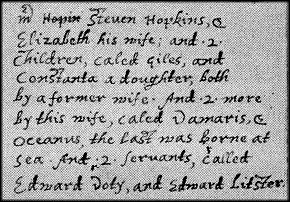
Mayflower record
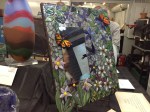


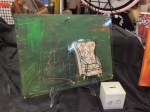
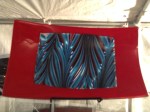



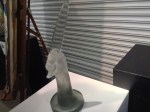










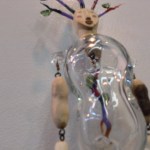
Last week I attended a very special event at The Sonoran Glass School in Tucson. The auction and live art in the making was designed as a fundraiser for the non-profit school. By inviting artists and others to design a piece of glass art to be executed by the students and faculty of the school they added an extra layer of creativity to the pieces. Lupin Murillo, a local broadcaster, designed a high heeled shoe with fancy trimmings. The fun really heats up when they auction the piece off before it is finished. The shoe was well received and fetched a nice price in the auction. The next live creation was done by a well-known photographer in Tucson, Bill Lesch. I had an excellent seat to see the forming of Bill’s globe. It was blown and shaped by the glass artists, with manipulations and creative decisions made by Bill. The collaboration had 4 people involved full-time in the making of the piece. Non-stop action and careful choreography was a real thrill to watch. I was sitting so close that I had to remove a layer of my outfit because I was right in the hot seat near the fire. It was exciting and unlike any event I have attended in the past. I will go again if they hold it next year. The food was catered by Blu, and was out of this world good. The items for auction were diverse examples of the breadth of glass art. I enjoyed seeing all of the work and meeting some of the artists. I am now interested in joining and taking some classes. The school is a great asset to our community. Our next flaming glass art event will be the Flame Off at the Fox Theater, the high point of Gem Show. If you have not seen a live glass event, I urge you to try one.
 mermaidcamp