mermaidcamp
Keeping current in wellness, in and out of the water
You can scroll the shelf using ← and → keys
You can scroll the shelf using ← and → keys

#Weekendcoffeeshare
If we were meeting for coffee we would use our teleporting cloaks to visit different parts of the world. This is a weekend to take an imaginary trip to a Paris coffee house. The pace of current events has been swift and frightening. Sophisticated cosmopolitan citizens are shaken. Let us sit in the corner with scarves drinking dark roast coffee with hot frothy milk. At this moment let’s take in the vibe of our fellow customers and feel the anxiety flowing through the waiter, and into the pastries on the counter. Our conversation is hushed and our gazes are focused on each other. I feel a refuge in the stories you tell me about your week, your writing, your will to survive in grace and beauty. We are comfortable gently criticizing or joking about our private lives, but are concerned about public life. This is a propitious time in history.
I often think about history because of my study of my family tree. This hobby/obsession has improved my knowledge and sense of history by revealing the stories of my ancestors. I frequently notice the differences as well as the similarities between my ancestors alive at the same time. This week I have done research on two topics that have given me superb insights into historical events. I learned that my 15th great-grandfather was a famous poet who was executed by Henry VIII on 19 Jan., 1547 at the Tower of London. I read and listened to his poetry, which I admire and like. I decided to write a poem in honor of his beheading. I hoped to create a Monty Python or Dorothy Parker style witty ditty about Henry Howard, Earl of Surrey to commemorate the 1468th anniversary of his death. Nothing rhymes with beheading. Howard and Surrey both summon up a set of unflattering words that are not very funny at all. This comedy execution poem haunted me for a couple of days before I gave up the limerick format. I wrote one today, but it contains no humor.
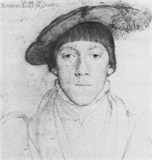
Henry Howard, Earl of Surrey
The other subject of my genealogy research this week has been my own Confederate soldier ancestors and the ownership of slaves. I have searched through census records before the Civil War and learned that my 3rd great-grandmother owned land before the war in Old Cahawba, Alabama. This is now suburban Selma. Her husband died young and she had a patent on119.91 acres of land in the old capital of Dallas County. Her family lived with her until after the war, when they all moved to Texas. The family arrived in Texas by oxcart and bought land with gold. Her son and grandson both served the Confederacy, but there is no sign that this family ever owned slaves. I looked back in time until I did find slaves in Mississippi on the maternal side, but the Taylors were too poor or morally opposed to the idea. When they moved to Texas they started a church and deeded part of their property to the church. I have wondered a lot about the journey and the gold, but now that I know how difficult story poems are to write, have not dedicated myself to telling this history in a poem.

Elizabeth Armer’s land
Thanks for hanging out this weekend in our imaginary coffee house. I look forward to hearing your stories and finding out how you are feeling this week. I appreciate sharing this delicious time with you, gentle reader.


This week in #ROW80 I found a world of information and poetry in apps and podcasts. This vast free library of poems and poets would keep me occupied forever, but I have started a new ritual that is intended to create an atmosphere conducive to creating poetry. I now listen to my daily podcast poems while I draw my first art piece of the day. I am also, for an unrelated reason, soaking my feet in hot water with epsom salts for about an hour while I drink tea and coffee. I am not sure which element is most important, but I am enjoying the soaking in both hot water and poetic streams first thing in the morning. The Poetry Foundation features information about poets’ lives. I was curious to find Frances DeVere, wife of Henry Howard, in the data base. She is missing, but he is a very big figure in the history of poetry. I started to read his work and study the details of his life. His maternal grandfather was beheaded before him in the Tower. His father narrowly escaped death because the king died the day before his scheduled execution. This non-fiction story is full of twists. There is shocking drama in this real history of my DNA.
In the court of Henry VIII life could be very opulent, but all that could turn in the blink of an eye. Henry was capricious to say the least. The most famous of all the English monarchs wielded power with great vigor. In the year 1547 my was charged with treason. He was beheaded on Tower Hill after a one day trial. When he was under house arrest he wrote poetry. When he was sentenced to die, he wrote poetry and translated the Bible. He was a real troubadour in Tudor England. Some scholars believe he created the sonnet and was first to use free verse in English. His wife Frances was also a poet, but I have not found any of her work. I think the double whammy of dualing poets in the Tudor court should be a big advantage to me. I should be able to make some poems about them, or somehow inspired by their lives. During the next week I plan to make some stabs at this idea. The anniversary of his beheading is in 5 days. Maybe I can come up with a tribute of sorts.
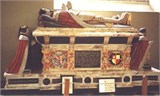
St Michael’s at Framlingham
Henry Howard (1517 – 1547)
is my 15th great grandfather
Thomas Howard (1536 – 1572)
son of Henry Howard
Margaret Howard (1561 – 1591)
daughter of Thomas Howard
Lady Ann Dorset (1552 – 1680)
daughter of Margaret Howard
Robert Lewis (1574 – 1645)
son of Lady Ann Dorset
Robert Lewis (1607 – 1644)
son of Robert Lewis
Ann Lewis (1633 – 1686)
daughter of Robert Lewis
Joshua Morse (1669 – 1753)
son of Ann Lewis
Joseph Morse (1692 – 1759)
son of Joshua Morse
Joseph Morse (1721 – 1776)
son of Joseph Morse
Joseph Morse III (1752 – 1835)
son of Joseph Morse
John Henry Morse (1775 – 1864)
son of Joseph Morse III
Abner Morse (1808 – 1838)
son of John Henry Morse
Daniel Rowland Morse (1838 – 1910)
son of Abner Morse
Jason A Morse (1862 – 1932)
son of Daniel Rowland Morse
Ernest Abner Morse (1890 – 1965)
son of Jason A Morse
Richard Arden Morse (1920 – 2004)
son of Ernest Abner Morse
Pamela Morse
I am the daughter of Richard Arden Morse
On this day in history, the 19th January 1547, the poet, courtier and soldier Henry Howard, Earl of Surrey and son of Thomas Howard, 3rd Duke of Norfolk, was executed by beheading on Tower Hill. He was laid to rest at All Hallows-by-the-Tower (All Hallows Barking) but was moved in 1614 by his son Henry, Earl of Northampton, to a beautiful tomb in the family church, St Michael’s at Framlingham.
He had been found guilty of treason on the 13th January 1547 at a common inquest at Guildhall, where evidence was given “which concerned overt conspiracy as well as the usurpation of the royal arms”1. It was alleged that “he had on 7 October 1546 at Kenninghall displayed in his own heraldry the royal arms and insignia, with three labels silver, thereby threatening the king’s title to the throne and the prince’s inheritance”2, yet when he had been arrested in December the questions had focused on “his determination for the rule of the prince; his procuring his sister to be the royal mistress; his slandering of the royal council; and his plans to flee the realm”3, not his use of the royal arms and insignia. His trial lasted a day and he gave a spirited defence but it was no good, he was found guilty and sentenced to death.
Historian Susan Brigden writes of how Surrey spent his last days in the Tower writing, paraphrasing Psalms 55, 73 and 88, “the prayers of the psalmist abandoned and betrayed, thinking upon death and judgment”4. His work showed not only his sense of betrayal but also his evangelical religious beliefs.
He was executed on Tower Hill on the 19th January 1547 but his father, the Duke of Norfolk, who had also been setenced to death for treason, escaped execution because Henry VIII died before his scheduled execution. Norfolk was released and pardoned by Mary I in 1553 and died naturally on 25th August 1554.
Susan Brigden writes of how Surrey was “the first poet in English to explore what might be said without rhyme” and he is viewed as one of the founders of English Renaissance poetry and “Father of the English Sonnet”, along with Thomas Wyatt and, I believe, George Boleyn. You can find Surrey’s poetry and also his paraphrases of Psalms 55 and 88 at Luminarium: Anthology of English Literature5. I’ll leave you with one if his poems:-
Set me whereas the sun doth parch the green…
Set me whereas the sun doth parch the greenOr where his beams do not dissolve the ice,
In temperate heat where he is felt and seen;
In presence prest of people, mad or wise;
Set me in high or yet in low degree,
In longest night or in the shortest day,
In clearest sky or where clouds thickest be,
In lusty youth or when my hairs are gray.
Set me in heaven, in earth, or else in hell;
In hill, or dale, or in the foaming flood;
Thrall or at large, alive whereso I dwell,
Sick or in health, in evil fame or good:
Hers will I be, and only with this thought Content myself although my chance be nought.
Notes and Sources
Susan Brigden, ‘Howard, Henry, earl of Surrey (1516/17–1547)’, Oxford Dictionary of National Biography, Oxford University Press, 2004
Luminarium: Anthology of English Literature
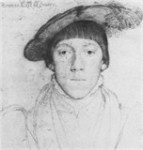

Bird Cafe in Japan…Adorable!!

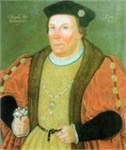
My 16th great-grandfather was beheaded for listening to prophecies of Henry VIII’s death. The king was personally involved in convicting him.
Edward Richard Buckingham Stafford (1479 – 1521)
is my 16th great grandfather
Elizabeth Dutchess Norfolk Stafford Howard (1497 – 1558)
daughter of Edward Richard Buckingham Stafford
Lady Katherine Howard Duchess Bridgewater (1495 – 1554)
daughter of Elizabeth Dutchess Norfolk Stafford Howard
William ApRhys (1522 – 1588)
son of Lady Katherine Howard Duchess Bridgewater
Henry Rice (1555 – 1621)
son of William ApRhys
Edmund Rice (1594 – 1663)
son of Henry Rice
Edward Rice (1622 – 1712)
son of Edmund Rice
Lydia Rice (1649 – 1723)
daughter of Edward Rice
Lydia Woods (1672 – 1738)
daughter of Lydia Rice
Lydia Eager (1696 – 1735)
daughter of Lydia Woods
Mary Thomas (1729 – 1801)
daughter of Lydia Eager
Joseph Morse III (1752 – 1835)
son of Mary Thomas
John Henry Morse (1775 – 1864)
son of Joseph Morse III
Abner Morse (1808 – 1838)
son of John Henry Morse
Daniel Rowland Morse (1838 – 1910)
son of Abner Morse
Jason A Morse (1862 – 1932)
son of Daniel Rowland Morse
Ernest Abner Morse (1890 – 1965)
son of Jason A Morse
Richard Arden Morse (1920 – 2004)
son of Ernest Abner Morse
Pamela Morse
I am the daughter of Richard Arden Morse
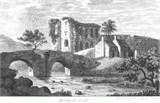
Born
3 February 1478
Brecon Castle, Wales
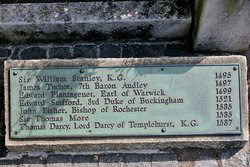
Died
17 May 1521 (aged 43)
Tower Hill
Edward Stafford, 3rd Duke of Buckingham, KG (3 February 1478 – 17 May 1521) was an English nobleman. He was the son of Henry Stafford, 2nd Duke of Buckingham, and Katherine Woodville, whose sister, Queen Elizabeth Woodville, was the wife of King Edward IV. He was convicted of treason, and executed on 17 May 1521.
Edward Stafford, born 3 February 1478 at Brecon Castle in Wales, was the eldest son of Henry Stafford, 2nd Duke of Buckingham, and Katherine Woodville, the daughter of Richard Woodville, 1st Earl Rivers, by Jacquetta of Luxembourg, daughter of Pierre de Luxembourg, Count of St. Pol, and was thus a nephew of Elizabeth Woodville, queen consort of King Edward IV.
By his father’s marriage to Katherine Woodville, Stafford had a younger brother, Henry Stafford, 1st Earl of Wiltshire, and two sisters, Elizabeth, who married Robert Radcliffe, 1st Earl of Sussex, and Anne, who married firstly, Sir Walter Herbert (d. 16 September 1507), an illegitimate son of William Herbert, 1st Earl of Pembroke, and secondly, George Hastings, 1st Earl of Huntingdon.
After the execution of the 2nd Duke of Buckingham, his widow, Katherine Woodville, married Jasper Tudor, second son of Owen Tudor and King Henry V’s widow, Catherine of Valois. After Jasper Tudor’s death on 21 December 1495, Katherine Woodville married Sir Richard Wingfield (d. 22 July 1525). Katherine Woodville died 18 May 1497. After her death, Sir Richard Wingfield married Bridget Wiltshire, daughter and heiress of Sir John Wiltshire of Stone, Kent.
In October 1483 Stafford’s father participated in a rebellion against King Richard III. He was beheaded without trial on 2 November 1483, whereby all his honours were forfeited. Stafford is said to have been hidden in various houses in Herefordshire at the time of the rebellion, and perhaps for the remainder of Richard III’s reign. However after Richard III’s defeat at Bosworth on 22 August 1485, and King Henry VII’s accession to the crown, Stafford was made a Knight of the Order of the Bath on 29 October 1485 as Duke of Buckingham, and attended Henry VII’s coronation the following day, although his father’s attainder was not formally reversed by Parliament until November. The young Duke’s wardship and lands were granted, on 3 August 1486, along with the wardship of his younger brother, Henry Stafford, to the King’s mother, Margaret Beaufort, and according to Davies it is likely Buckingham was educated in her various households.
Buckingham was in attendance at court at the creation of Henry VII’s second son, the future King Henry VIII, as Duke of York, on 9 November 1494, and was made a Knight of the Order of the Garter in 1495. In September 1497 he was a captain in the forces sent to quell a rebellion in Cornwall.
According to Davies, as a young man Buckingham played a conspicuous part in royal weddings and the reception of ambassadors and foreign princes, ‘dazzling observers by his sartorial splendour’. At the wedding of Henry VII’s then eldest son and heir Arthur, Prince of Wales, and Catherine of Aragon in 1501, he is said to have worn a gown worth £1500. He was the chief challenger at the tournament held the following day.
At the accession of King Henry VIII, Buckingham was appointed on 23 June 1509, for the day of the coronation only, Lord High Constable, an office which he claimed by hereditary right. He also served as Lord High Steward at the coronation, and bearer of the crown. In 1509 he was made a member of the King’s Privy Council. On 9 July 1510 he had licence to crenellate his manor of Thornbury, Gloucestershire, and according to Davies rebuilt the manor house as ‘an impressively towered castle’ with ‘huge oriel windows in the living-quarters in the inner court’.
In 1510 Buckingham was involved in a scandal concerning his sister, Anne. After hearing rumours concerning Anne and Sir William Compton, Buckingham found Compton in Anne’s room. Compton was forced to take the sacrament to prove that he and Anne had not committed adultery, and Anne’s husband, George Hastings, 1st Earl of Huntingdon, sent Anne away to a convent 60 miles distant from the court. There is no extant evidence establishing that Anne and Sir William Compton were guilty of adultery. However in 1523 Compton took the unusual step of bequeathing land to Anne in his will, and directing his executors to include her in the prayers for his kin for which he had made provision in his will.
From June to October 1513 Buckingham served as a captain during Henry VIII’s invasion of France, commanding 500 men in the ‘middle ward’. About 1517 he was one of twelve challengers chosen to tilt against the King and his companions, but excused himself on the ground that he feared to run against the King’s person. He and his wife, Eleanor, attended the Field of the Cloth of Gold in 1520.
Although Buckingham was appointed to commissions of the peace in 1514 and charged, together with other marcher lords, with responsibility for keeping order in south Wales, he was rebuked by the King in 1518 for failing to achieve the desired results. According to Davies, in general Buckingham exercised little direct political influence, and was never a member of the King’s inner circle.
Buckingham fell out dramatically with the King in 1510, when he discovered that the King was having an affair with the Countess of Huntingdon, the Duke’s sister and wife of the 1st Earl of Huntingdon. She was taken to a convent sixty miles away. There are some suggestions that the affair continued until 1513. However, he returned to the King’s graces, being present at the marriage of Henry’s sister, served in Parliament and being present at negotiations with Francis I of France and Charles V, Holy Roman Emperor.
Buckingham was one of few peers with substantial Plantagenet blood and maintained numerous connections, often among his extended family, with the rest of the upper aristocracy, which activities attracted Henry’s suspicion. During 1520, Buckingham became suspected of potentially treasonous actions and Henry VIII authorised an investigation. The King personally examined witnesses against him, gathering enough evidence for a trial. The Duke was finally summoned to Court in April 1521 and arrested and placed in the Tower. He was tried before a panel of 17 peers, being accused of listening to prophecies of the King’s death and intending to kill the King. He was executed on Tower Hill on 17 May. Buckingham was posthumously attainted by Act of Parliament on 31 July 1523, disinheriting most of his wealth from his children.
Guy (1988) concludes this was one of the few executions of high personages under Henry VIII in which the accused was “almost certainly guilty”. However Sir Thomas More complained that the key evidence from servants was hearsay.
Buckingham’s literary patronage included two translations, a printed translation of Helyas, Knyghte of the Swanne, which he commissioned in 1512, and A Lytell Cronicle, a translation of an account of the Middle East which he may have commissioned in 1520 in connection with his proposed pilgrimage to Jerusalem.
In 1488 Henry VII had suggested a marriage between Buckingham and Anne of Brittany, but in December 1489 the executors of Henry Percy, 4th Earl of Northumberland, paid the King £4000 for Buckingham’s marriage to Percy’s eldest daughter Eleanor (d. 1530). They had a son and three daughters:
Lord Henry Stafford, 1st Baron Stafford (18 September 1501 – 30 April 1563), who married Ursula Pole, daughter of Sir Richard Pole by his second wife, Margaret, Countess of Salisbury, daughter of George, Duke of Clarence.
Lady Elizabeth Stafford, Duchess of Norfolk (c. 1497 – 30 November 1558), who married, as his second wife, before 8 January 1513, Thomas Howard, 3rd Duke of Norfolk.
Lady Katherine Stafford (c. 1499 – 14 May 1555), who married Ralph Neville, 4th Earl of Westmorland.
Lady Mary Stafford, the youngest daughter, who married, about June 1519, as his third wife, George Neville, 5th Baron Bergavenny.
Buckingham is also said to have had three illegitimate children: George Stafford, Henry Stafford, Margaret Stafford (c. 1511 – 25 May 1537), whom Buckingham married to his ward, Thomas Fitzgerald of Leixlip, half-brother to the Earl of Kildare.

ROW80
The Round of Words in 80 Days challenge is a wonderful new experience for me. I joined last week by setting goals I intend to accomplish during the following 80 days. By joining this group I am entering a zone designed to support and entertain writers looking to learn new skills as well as improve on old ones. In the few and far between workshops I have taken in creative writing I did learn from my fellow students in many ways. First, it is comforting to see that many share the exact same creative obstacles and follies. Once we see that writing has certain difficult passages we feel less isolated. It cheers us up to find out others get stuck around the same places that we do. Many of the participants have much more experience and education, which does reflect in the way they put their words together to express themselves. It matters little how large your vocabulary is, or how much you know about crafting dialog for a story if you are out of ideas. We all have to go to the well of creativity and draw water to keep our writing alive. In #ROW80 we share this mutual idea of renewing our source of inspiration. The group is much more powerful than the sum of its parts.
My new devotion to write, read and immerse myself in poetry stems from my ancestry. I have some famous poets in my family tree. This, more than any other accomplishment of my ancestors, has made me think about my own creative legacy. I don’t care to be famous, but think it is very cool to read the handwritten poems of my famous 9th great-grandmother. They are the work of a religious Pilgrim in America, not exactly my cup of tea. I still treasure the poems because they have a life of their own, staying in publication for hundreds of years. I can hear her “voice” because she recorded it (as best she could in the 1600s). She inspires me to refine, discover, and expand my own poetic voice.
I have done the ground work I agreed to do by publishing a poem daily. This is starting to be natural. Usually I do the drawing and poem first thing in the morning, which makes me feel good. I don’t get too critical of the work, I just make an attempt to prime the pump and get a constant flow of words. I will be happy when I become more fluent and need to edit with more thought and specificity. For the present I am pleased just to keep that daily beat. I stay with the images as well as the words while I do my daily routine. I think pondering the colors and the words I have used works to inspire the next day’s creation.
My goal to expose myself to the work of poets with whom I am not familiar is made incredibly easy by the fabulous podcasts and poetry apps available at little or no cost. I have also downloaded a couple of apps that help you create poems, and even record your work. There are many good options to read and to hear. These are a just a few of the new resources for poets and poetry fans:
I am using these and a few other mobile apps to make it easy to find and lean about poets. I particularly like the translated work because the reading is done first in English, followed by the poem in the language in which it was written. I like to hear the sounds and the cadence of the original language after I know what it means. I have been pleasantly surprised by how easy and fun it is to discover poets and enjoy a variety of styles. I like the funny subjects the best.
I skipped the reading last week at the U of A Poetry Center. The schedule arrived in the mail for all the readings, events, classes and workshops to be presented in the spring semester. There is a series called the Poetics and Politics of Water which is very interesting to me. I have marked my calendar to be ready to attend all four parts of this collaboration with the American Indian Studies Program. I am also looking forward to an exhibition of photos from Afghanistan to accompany a presentation on oral folk poetry of the women of the Pashtun tribe, living on the border of Pakistan and Afghanistan. There is tremendous technical excellence built into all the work done at the Poetry Center. I cherish to the academic and aesthetic rewards of living very close to this special institution. It is my hope that with the inspiration of my dead poet ancestors and the living poets right around the corner I will be staking a claim to an identity as a writer. A lot can happen in 80 days!!

Bulletproof
This week I decided to try this fad about which I have heard so much..butter in black coffee. The admirers think this produces a perfect high. Some people have told me about using coconut oil in black coffee, but I decided to go with dairy butter for my taste test. I began with a very small dab of butter, slightly afraid of what it might do. It was hardly perceivable, so I used about a tablespoon total in a cup. I was hankering after the taste that was described in the literature by the proponents. The taste of dark rye toast with butter, dipped in coffee was, more or less, the flavor of the drink. It felt greasy, but I think cream in coffee too slick and thick, so that was similar. It was rich, but not in a way I appreciated. For me, this was something I could do without for the rest of my life. Nothing ventured, nothing gained. When both butter and coconut oil are added this drink is called bulletproof coffee. People are going wild for it.
The morning at my desk produced two different reasons to call my banks..somehow both of them had issues on line the same day. Both issues with both banks took much longer to resolve on the phone than I had expected. My cranky attitude swelled as I listened to too much phone hold music for dummies. I noticed that I was full of angst at these trivial problems. I wondered if this high level of anxiety had something to do with that wonder coffee. My gut feeling was distinctly unpleasant waiting for the bankers to take care of my accounts. I was in no real danger, but had a high level freak out in mind and body.
I recently declared patience to be one of my three words for 2015. The assault to test my patience began as soon as I made the statement. Events aligned to make me wait for everything, not just this banking. The high performance bulletproof life is a conflict of interest with my patient, persistent, poetic self. I have returned to sipping small cups of coffee and milk that I keep nearby in a thermos all morning. I like the light, steady dose of tasty hot richness for hours. I do not aspire to be bulletproof in any way. I leave that to those who want to take off like rockets and feel invincible in the morning. Invincibility is just not poetic.
I was lucky to find an apartment to rent in Paris in Montmartre. The landlord lived in Belgium, and the local woman who managed and cleaned the flat lived in the same block. This was long before Air bnb, but I found the place to be perfect for me. My block was a highly Arabic space, including an Egyptian convenience mart on the main floor of my building. I shopped there first, finding all kinds of delights and basic grocery items. All the merchants, particularly the Egyptian grocer, were helpful and ultra polite. My metro stop was Barbès – Rochechouart, right in front of a large Tati store. Tati is a Parisian version of a low price emporium. Since they are French, rather than have a giant “big box” arrangement, they have zillions of tiny specific departments, from which you must pay and check out before proceeding. I had a hysterical incident at that Tati store when I tried to buy paper plates from a Chinese guy who spoke French about as well as I did (pas bien). I was using the word plate, which he translated into prepared dish of food . He told me many times they did not have what I wanted, but I persisted. Finally he showed me plastic replicas of food, toys for kids. This showed me what had gone wrong and I managed to score those paper plates. I never felt threatened or out-of-place in my neighborhood, although I was experiencing the rare feeling of being a minority. I always heard French people were snooty, but I did not notice any of that. They even seemed to like to speak English when they had the chance.
When I think of the city of lights in the current state of shock I know I would be afraid to be there now. In fact, the last time I had reserved that Montmartre flat for a holiday I canceled and forfeited my rent because 9/11 had occurred and I felt uncertain about being single and American in my old neighborhood. My French had not improved and I did not see the reason to risk arriving and feeling unsafe. Like other cities where I had created beautiful and lasting memories I let it Paris go as a destination. I remain attached to the places and the experiences, even to the people whose names I never learned. Paris stays in my heart as sophisticated, artful, cosmopolitan, highly civilized and full of history. Recent events leave La France in trauma, in need of healing. I can’t say I feel the pain of the French people, but I do feel terrible loss. Parisians had managed to live in harmony with all kinds of ethnic and cultural deviations. Their cosmopolitan way of seeing the world served as a foundation for tolerance. The city has lost an innocence that can’t be replaced. The world grieves. Cartoonists reach into their deepest wells of talent and art to express outrage. The next New Yorker cover will depict the Eiffel Tower with a pencil top to show defiance. France has elevated the meaning of art for centuries. Freedom of expression is essential to the regular French citizen. This may be a time when art and politics merge for the better. In the words of Jean Paul Sartre, “There may be more beautiful times, but this one is ours.”

cocktail that wants to be a poem
People walk through the doors of your expectations. This has been my belief for most of my life, and has proven to be a valid one. I have high standards, but notice how I am much more likely to apply them to others than to myself. I do set goals and make commitments, but not usually in a public way. This is why the #ROW80 challenge is perfect for me. I have set myself an expectation of working more creatively and do a daily bit to achieve that goal. I want to practice being more poetic in all aspects of life, so the drawing, photography and poetry are intended to build on themselves . I expect to become more observant in all aspects of my habitual life. There are already a few good results:
The addition of the art has made this exercise natural and easy for me. I have written poetry before, and even looked for art to use as inspiration. Making the art myself is a new and interesting way to tie my attention to a written project. Usually I write the prose, then add the visuals. Starting with color and form is a good way for me to see action and hue within the emotional tone I want to set. I have not attempted to draw anything realistic. My best work is not representational, but based on geometry and color. I am not afraid to try, and am considering going to the botanical garden and trying to do a depiction of the cactus section. Words to go with the cactus poem have been rattling around in my brain as a think about the idea. Although I do publish my work, the purpose of this venture outside my normal writing style is completely personal. I am not seeking adulation or followers. I am curious to see if my writing practice can expand and include more comedy, enlightenment, and beauty. So far, so good!! Now, for the poetry of others:
In general the poetic life is off to a fine start here. I have also started a food preparation calendar, which I think of as an extension of poetic thinking. I want my home life, my cuisine, and my fitness regime to reflect creativity and artful planning. The food preparation trip is actually a very good foundation because it concentrates kitchen time and frees me to wander off into the world of visual art and poetry. I have had some funny thoughts about food and drink poems I want to write. I think a cocktail series could be pretty funny. Asking “What would Dorothy Parker say?” is a fabulous prompt I am using. In my heart of hearts I want the ROW80 to turn me into a glib, sophisticated observer of the details of living. I don’t think that is too much to expect in 80 days.

cornbread that wants to be a poem

PA and Penn State Teach Fracking
My grandfathers both worked in the oil business, so my parents were very much in favor of petroleum as the way of the future. My father went to Oklahoma University and Penn State to study petroleum engineering. He later got his PHD at Texas A&M in computers (industrial engineering). He was a big deal in the oil business before and after his professional career. After serving as president of the World Petroleum Congress in the 60’s he went on a lecture tour he referred to as the extinguished (distinguished) lecture circuit. He was speculative and relied too much on his own beliefs when investing. This worked out well for them in the glory days of petroleum. They rode the wave of high dividends and capital gains. Their investments did very well.
At the end of his life my dad was seriously demented as well as invested in some wild speculative oil fields in Texas and New Mexico. I had always considered my parents’ finances to be a private matter, but I started to be concerned that they could be left broke as a result of my father’s wildcat mentality. Indeed, when I discovered how far he had gone into these non liquid investments I saw they could brake the bank any day. The first thing I tried was to legally sell all my father’s holdings in these oil fields for $10 to my erstwhile husband, who had persuaded my dad to go deeper into this stuff. When he refused to buy them I knew there was big trouble. I actually left the unmentionable one when I discovered how awful my parents position was in terms of risk. He was willing to financially abuse my parents, which was not a huge surprise, but it was the very last surprise I was willing to have. I went about getting my parents’ assets in trust, which required that my father own the oil folly on his own so none of us could inherit it. It was a legal hassle and expense, but it was accomplished. The week before my father died his lawyer had convinced the partners in Texas to let him off the legal hook. They signed documents to free him, and he instantly died. The documents had not yet been recorded in Texas when he expired. The drama was heavy, but the ending was the best I could have desired. My mom still had plenty of money to live and none of us had an obligation to spend big, risk everything in the oil business. Whew!!
My mom had a happy and easy end to her life. She died at home on Jan. 4, 2008. On that day oil hit $100 a barrel. We figured this was the sign for which she had waited because my parents had always wanted $100 oil. They believed that the price might fluctuate, but it would always go up, no matter what. They invested their lives, careers, and life savings into the big petroleum idea. We just celebrated my mother’s death day, and noticed that on Jan 4, 2015 oil had reached $50 a barrel. During the last 7 years the US has developed the ability to produce oil at around $50 a barrel. It costs the Saudis around $12 to produce a barrel. All price wars are intended to eliminate competition for the market. The Saudis say they can go $30 if they feel like it, and the whole world will have to follow. The benefits of this global price war go chiefly to the Chinese government. Hold back on those selfies with the low gas prices. There are consequences not yet discovered, and they are not all good.

Globe
There is no way to separate the effect the body has on the mind or the mind on the body. This intricate interaction is centered around self image, accurate or not. We may not see ourselves as we are. In fact, the yoga sutras begin by addressing this subject:
1.1 Now, instruction in Union.
1.2. Union is restraining the thought-streams natural to the mind.
1.3. Then the seer dwells in his own nature.
1.4. Otherwise he is of the same form as the thought-streams.
1.5. The thought-streams are five-fold, painful and not painful.
1.6. Right knowledge, wrong knowledge, fancy, sleep and memory.
This was written in Sanskrit and has been translated in many ways since Patanjali wrote it. This translation is by BonGiovanni. We learn by reading this ancient text how the mind works. It is very specific and detailed. Meditation is offered as remedy for confusion and lack of clarity of purpose. Westerners have flocked to yoga as the perfect fitness activity, enjoying all kinds of variations on yogic teachings. Here in the western hemisphere we have trouble integrating mind and body, consciousness with soul and spirit. We want to have landmarks and rewards for success as we progress. Yoga as a strictly physical practice, even if you include pramayama, or breath control, does not align with the purpose, which is to control the mind. If we are successful yogis we will not only dwell in our own nature, but we will be free of identifying with thought streams. This requires constant and uninterrupted practice. Thought streams arise from ourselves, from the opinions of others, from cultural belief, and from circumstances. To acknowledge them and let them go is a powerful and uplifting act. You are not your thought streams!! This idea is the basis of meditative practice. Learning to execute the perfect tree pose takes full concentration. Presumably there is no attention left for thought streams while you balance on one leg and stay aligned. Asana is not the only way to bring the mind into focus by using the body:
The easiest (and therefore perhaps the most difficult) breathing practice I know is just a simple counting of breath. Count to ten, marking each inhale and each exhale with a mental number. This seems so simple that you will be surprised how often you can’t make it to ten without the mind drifting off onto some thought form. When you observe the interruption, simply start again with a silent number one on the next breath. Don’t struggle with the thought; just let it go. Resume counting and breathing. Do you have a practice to focus the mind and keep it focused? Do tell.
 mermaidcamp