mermaidcamp
Keeping current in wellness, in and out of the water
You can scroll the shelf using ← and → keys
You can scroll the shelf using ← and → keys

ROW80
I have managed to slip out of my creativity rut, just a bit. I admire the way so many writers in this program work on several books or projects at once. I rarely start a post that I do not finish in a day, so this longer attention span on a written piece is intriguing. I heard an interview on PBS radio with a professor of creative writing. He shall remain nameless, in part because I do not remember his name. He described two distinct ways of working on a story. He starts by just grinding out the words, and later in the day he edits them. He says the later session in which he edits can be relaxing and easy. I see this advice as a basic guide for me to expand my ability to tackle different subjects and new kinds of forms. I not only need to just do it, as they say at Nike. I also need to just edit it. I have written poetry this week that is not all about soul and butterflies, so that is a start. I spun a little story into a poem about real life. This is something I might try with matching prose and poetry posts. Starting with beheading was just too tricky, but I did relate to my grandmother’s craft work and extreme busy-ness with a short tribute. I still reserve judgement because I have not been doing this for very long.
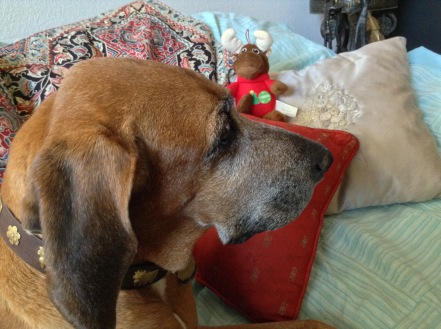
Two goals are eluding me, but I think I can find ways to accomplish them. I want to be loyal to my dream journal by writing before I get out of bed, or even stir. This worked well for a while, but during the last week my dog, who has end of life issues, needed me to let her out during the night 4 or 5 times, including first thing in the morning. I can keep a little bit of the memory while I walk down the stairs and give her the relief she needs, but it is difficult. I have tried to capture specific words and colors from dreams to inspire the poems. I am sad about the kidney failure of my darling dog, so a certain sorrow takes over as soon as I think about how often she needs to go and how much water she is drinking. She has had a good life, and is not in pain, but this is a shadow covering the early morning dream memory. Maybe I need to write about my dog. I have also failed to physically visit the U of A Poetry Center. I keep planning to dedicate Friday to Venus, to revere all things of beauty and love. I think sitting around the Poetry Center reading is a total dedication to beauty, but my daily routine has not capitulated enough to allow this to occur. I will overcome, although maybe not on a Friday. I know that once I establish a habit, a ritual, I will enjoy it. I do love the podcasts and the apps that read to me in the comfort of my home, but I believe the pilgrimage to the poets’ place will change my perspective. I am not taking these failures too much to heart because the whole point was to write poems, and I am doing that. Onward and upward..
I am chiming in one day later than some because yesterday I made a stunning discovery in my family tree. I do think that since many of my real family members have been the subjects of fiction and even operas and poems, I should look more closely at making stories based on fact, or even on imagination. These characters are already alive in my thoughts and dreams and do some predictable stuff. I enjoy all the time I spend learning about the family facts and the supporting evidence. I notice that fiction writers develop their characters out of thin air, perhaps with a culture or time in history in mind. I can start with facts and the skeleton of what is known to make my stories real. I can also write about my dog and stop whining about my precious dream journal. Soon enough she will be only in my dreams. Now is my chance to see her in real life and help her with her dreams.

Artemisia the wonder hound
Artemisia the wonder hound

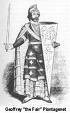

My 27th great-grandfather is buried in a very famous church. I have been inside this church, but was completely unaware that there were graves of other people at the Church of the Holy Sepulchre in Jerusalem. Orthodox religions say that Jesus of Nazareth was buried here, and arose from the dead in this location. Protestant churches have another site for their resurrection, which is outside of the city. My ancestor was there in the capacity of King of Jerusalem. Since he was knight from France the idea seems preposterous, but the history of the Crusades and the people who created them is a wild and crazy story. After Fulk’s wife died he hit the road for the Holy Land because it was totally the thing to do for rich Euros at the time. He found fame and fortune through his wife, whom he did not defy. She ruled and he did her bidding, as it was reported. He died in a hunting accident on holiday, which does sound normal for a Euro monarch.
Count of Anjou
Fulk was born in Angers between 1089 and 1092, the son of Count Fulk IV of Anjou and Bertrade de Montfort. In 1092, Bertrade deserted her husband and bigamously married King Philip I of France.
He became count of Anjou upon his father’s death in 1109. In the next year, he married Erembourg of Maine, cementing Angevin control over the County of Maine.
He was originally an opponent of King Henry I of England and a supporter of King Louis VI of France, but in 1118 or 1119 he had allied with Henry when Henry arranged for his son and heir William Adelin to marry Fulk’s daughter Matilda. Fulk went on crusade in 1119 or 1120, and became attached to the Knights Templar. (Orderic Vitalis) He returned, late in 1121, after which he began to subsidize the Templars, maintaining two knights in the Holy Land for a year. Much later, Henry arranged for his daughter Matilda to marry Fulk’s son Geoffrey of Anjou, which she did in 1127 or 1128.
Crusader and King
By 1127 Fulk was preparing to return to Anjou when he received an embassy from King Baldwin II of Jerusalem. Baldwin II had no male heirs but had already designated his daughter Melisende to succeed him. Baldwin II wanted to safeguard his daughter’s inheritance by marrying her to a powerful lord. Fulk was a wealthy crusader and experienced military commander, and a widower. His experience in the field would prove invaluable in a frontier state always in the grip of war.
However, Fulk held out for better terms than mere consort of the Queen; he wanted to be king alongside Melisende. Baldwin II, reflecting on Fulk’s fortune and military exploits, acquiesced. Fulk abdicated his county seat of Anjou to his son Geoffrey and left for Jerusalem, where he married Melisende on 2 June 1129. Later Baldwin II bolstered Melisende’s position in the kingdom by making her sole guardian of her son by Fulk, Baldwin III, born in 1130.
Fulk and Melisende became joint rulers of Jerusalem in 1131 with Baldwin II’s death. From the start Fulk assumed sole control of the government, excluding Melisende altogether. He favored fellow countrymen from Anjou to the native nobility. The other crusader states to the north feared that Fulk would attempt to impose the suzerainty of Jerusalem over them, as Baldwin II had done; but as Fulk was far less powerful than his deceased father-in-law, the northern states rejected his authority. Melisende’s sister Alice of Antioch, exiled from the Principality by Baldwin II, took control of Antioch once more after the death of her father. She allied with Pons of Tripoli and Joscelin II of Edessa to prevent Fulk from marching north in 1132; Fulk and Pons fought a brief battle before peace was made and Alice was exiled again.
In Jerusalem as well, Fulk was resented by the second generation of Jerusalem Christians who had grown up there since the First Crusade. These “natives” focused on Melisende’s cousin, the popular Hugh II of Le Puiset, count of Jaffa, who was devotedly loyal to the Queen. Fulk saw Hugh as a rival, and it did not help matters when Hugh’s own stepson accused him of disloyalty. In 1134, in order to expose Hugh, Fulk accused him of infidelity with Melisende. Hugh rebelled in protest. Hugh secured himself to Jaffa, and allied himself with the Muslims of Ascalon. He was able to defeat the army set against him by Fulk, but this situation could not hold. The Patriarch interceded in the conflict, perhaps at the behest of Melisende. Fulk agreed to peace and Hugh was exiled from the kingdom for three years, a lenient sentence.
However, an assassination attempt was made against Hugh. Fulk, or his supporters, were commonly believed responsible, though direct proof never surfaced. The scandal was all that was needed for the queen’s party to take over the government in what amounted to a palace coup. Author and historian Bernard Hamilton wrote that the Fulk’s supporters “went in terror of their lives” in the palace. Contemporary author and historian William of Tyre wrote of Fulk “he never attempted to take the initiative, even in trivial matters, without (Melisende’s) consent”. The result was that Melisende held direct and unquestioned control over the government from 1136 onwards. Sometime before 1136 Fulk reconciled with his wife, and a second son, Amalric was born.
Securing the borders
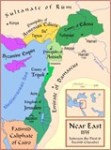
Jerusalem’s northern border was of great concern. Fulk had been appointed regent of the Principality of Antioch by Baldwin II. As regent he had Raymund of Poitou marry the infant Constance of Antioch, daughter of Bohemund II and Alice of Antioch, and niece to Melisende. However, the greatest concern during Fulk’s reign was the rise of Atabeg Zengi of Mosul.
In 1137 Fulk was defeated in battle near Barin but allied with Mu’in ad-Din Unur, the vizier of Damascus. Damascus was also threatened by Zengi. Fulk captured the fort of Banias, to the north of Lake Tiberias and thus secured the northern frontier.
Fulk also strengthened the kingdom’s southern border. His butler Paganus built the fortress of Kerak to the south of the Dead Sea, and to help give the kingdom access to the Red Sea, Fulk had Blanche Garde, Ibelin, and other forts built in the south-west to overpower the Egyptian fortress at Ascalon. This city was a base from which the Egyptian Fatimids launched frequent raids on the Kingdom of Jerusalem and Fulk sought to neutralise this threat.
In 1137 and 1142, Byzantine emperor John II Comnenus arrived in Syria attempting to impose Byzantine control over the crusader states. John’s arrival was ignored by Fulk, who declined an invitation to meet the emperor in Jerusalem.
Death
In 1143, while the king and queen were on holiday in Acre, Fulk was killed in a hunting accident. His horse stumbled, fell, and Fulk’s skull was crushed by the saddle, “and his brains gushed forth from both ears and nostrils”, as William of Tyre describes. He was carried back to Acre, where he lay unconscious for three days before he died. He was buried in the Church of the Holy Sepulchre in Jerusalem. Though their marriage started in conflict, Melisende mourned for him privately as well as publicly. Fulk was survived by his son Geoffrey of Anjou by his first wife, and Baldwin III and Amalric I by Melisende.
Depictions
According to William, Fulk was “a ruddy man, like David… faithful and gentle, affable and kind… an experienced warrior full of patience and wisdom in military affairs.” His chief fault was an inability to remember names and faces.
William of Tyre described Fulk as a capable soldier and able politician, but observed that Fulk did not adequately attend to the defense of the crusader states to the north. Ibn al-Qalanisi (who calls him al-Kund Anjur, an Arabic rendering of “Count of Anjou”) says that “he was not sound in his judgment nor was he successful in his administration.” The Zengids continued their march on the crusader states, culminating in the fall of the County of Edessa in 1144, which led to the Second Crusade (see Siege of Edessa).
Family
In 1110, Fulk married Ermengarde of Maine (died 1126), the daughter of Elias I of Maine. Their four children were:
Geoffrey V of Anjou (1113–1151, father of Henry II of England.
Sibylla of Anjou (1112–1165, Bethlehem), married in 1123 William Clito (div. 1124), married in 1134 Thierry, Count of Flanders.
Alice (or Isabella) (1111–1154, Fontevrault), married William Adelin; after his death in the White Ship she became a nun and later Abbess of Fontevrault.
Elias II of Maine (died 1151)
His second wife was Melisende, Queen of Jerusalem
Baldwin III of Jerusalem
Amalric I of Jerusalem


Fulk V The Younger King of Jerusalem Anjou * (1092 – 1143)
is my 27th great grandfather
Sibilla Anjou (1105 – 1165)
daughter of FULK V The Younger King of Jerusalem ANJOU *
Marguerite De LORRAINE (1135 – 1194)
daughter of Sibilla Anjou
Isabelle De Hainault (1170 – 1190)
daughter of Marguerite De LORRAINE
Louis VIII France (1187 – 1226)
son of Isabelle De Hainault
Charles I King of Jerusalem and Naples (1227 – 1285)
son of Louis VIII France
Charles NAPLES (1254 – 1309)
son of Charles I King of Jerusalem and Naples
Marguerite Sicily Naples (1273 – 1299)
daughter of Charles NAPLES
Jeanne DeVALOIS (1294 – 1342)
daughter of Marguerite Sicily Naples
Philippa deHainault (1311 – 1369)
daughter of Jeanne DeVALOIS
John of Gaunt – Duke of Lancaster – Plantagenet (1340 – 1399)
son of Philippa deHainault
Elizabeth Plantagenet (1363 – 1425)
daughter of John of Gaunt – Duke of Lancaster – Plantagenet
John Holland (1395 – 1447)
son of Elizabeth Plantagenet
Henry Holland (1430 – 1475)
son of John Holland
Henry Holland (1485 – 1561)
son of Henry Holland
Henry Holland (1527 – 1561)
son of Henry Holland
John Holland (1556 – 1628)
son of Henry Holland
Gabriell Francis Holland (1596 – 1660)
son of John Holland
John Holland (1628 – 1710)
son of Gabriell Francis Holland
Mary Elizabeth Holland (1620 – 1681)
daughter of John Holland
Richard Dearden (1645 – 1747)
son of Mary Elizabeth Holland
George Dearden (1705 – 1749)
son of Richard Dearden
George Darden (1734 – 1807)
son of George Dearden
David Darden (1770 – 1820)
son of George Darden
Minerva Truly Darden (1806 – 1837)
daughter of David Darden
Sarah E Hughes (1829 – 1911)
daughter of Minerva Truly Darden
Lucinda Jane Armer (1847 – 1939)
daughter of Sarah E Hughes
George Harvey Taylor (1884 – 1941)
son of Lucinda Jane Armer
Ruby Lee Taylor (1922 – 2008)
daughter of George Harvey Taylor
Pamela Morse
I am the daughter of Ruby Lee Taylor

marries Queen of Jerusalem
Today our teleporting cloaks will be hung in the cloak room of the spacious light filled Museum of Modern Art in New York City. I want to go to this cafe for our weekend chat because it is the perfect place to ponder modernism. After some time with the art let us gather to talk over coffee and a snack. I like to stay at museums much longer than most people. Taking a break for social time and tasty treats gives me a second wind to examine more of the collections. Surrounded by what is considered to be modern art we are also surrounded by the city of New York. The stately gothic St Patrick’s Cathedral is right around the corner, a few blocks down Fifth Avenue. In the museum light is abundant, structure is open. The design of the building brings us into connection with nature and the sculpture garden patio. In St. Patrick’s the light is all filtered through ornate, colorful stained glass. It has a very blue feeling from the window placement. The gothic ceiling implies lofty access, but we are enclosed and encircled by religion. Heaven is a formula to be achieved by following ritual. It is a beautiful eternal ritual.
I invited you to meet me here today because I wonder if you have some of the same questions I have about history, philosophy, art, and communication. While I study my family tree and the poets in it I have noticed that I enjoy their works much better when I hear them. Reading the old English style, along with the heavy religious tone, is not my cup of tea. The sound of the words as they are spoken, however, reveals to me the art and skill of these poetic ancestors. When they wrote, 1500s and 1600s, I think most poetry would be read aloud or recited more that individuals reading from books. Literacy was limited. These poets were lucky enough to read and write because of their social status. The views, the philosophy, the relationship with God which they explain in writing are a wonderful way to really know them. I keep thinking about the fact that when they were alive they were modern, progressive, and Mistress Bradstreet was something of a feminist, for publishing poetry. Bibles, priests and vicars were the order of the day. Reading and writing were not for everyone. It was a walk on the wild side, especially for a Pilgrim woman.
After our visit I plan to spend a long time with Gustav Klimt, an Austrian artist I love. I have visited Vienna to see many of his works in person. His use of gold and highly decorative style is recognizable by those who don’t know his name. His images are popular. A painting of his patron, Adele Bloch-Baeur II, is on display now at the MoMa. I have not seen this one. I saved it for after the break because I look forward to a close inspection, and deeply serious interaction. I hope to write an ekphrastic poem about her life, her fortune, and her painting that was stolen by Nazis. You can join me if you like. I do want to hear about your week and projects you are creating. Do you ever link what you do now with centuries past in order to define modern for yourself? Modern when this museum was constructed is already different from modern today. Do you think of yourself as modern, gentle reader?

#Weekendcoffeeshare
Do you need a creepy reminder?



My 17th great-grandmother married well. She is one of the few women in my tree who managed to survive and live a good life after one of her husbands was beheaded for treason at the Tower of London. She married the new king’s uncle to secure her future. She is one of three siblings from her family that are my ancestors on my father’s side.
Katherine Wydeville (1458 – 1525)
is my 17th great grandmother
Edward Richard Buckingham Stafford (1479 – 1521)
son of Katherine Wydeville
Elizabeth Dutchess Norfolk Stafford Howard (1497 – 1558)
daughter of Edward Richard Buckingham Stafford
Lady Katherine Howard Duchess Bridgewater (1495 – 1554)
daughter of Elizabeth Dutchess Norfolk Stafford Howard
William ApRhys (1522 – 1588)
son of Lady Katherine Howard Duchess Bridgewater
Henry Rice (1555 – 1621)
son of William ApRhys
Edmund Rice (1594 – 1663)
son of Henry Rice
Edward Rice (1622 – 1712)
son of Edmund Rice
Lydia Rice (1649 – 1723)
daughter of Edward Rice
Lydia Woods (1672 – 1738)
daughter of Lydia Rice
Lydia Eager (1696 – 1735)
daughter of Lydia Woods
Mary Thomas (1729 – 1801)
daughter of Lydia Eager
Joseph Morse III (1752 – 1835)
son of Mary Thomas
John Henry Morse (1775 – 1864)
son of Joseph Morse III
Abner Morse (1808 – 1838)
son of John Henry Morse
Daniel Rowland Morse (1838 – 1910)
son of Abner Morse
Jason A Morse (1862 – 1932)
son of Daniel Rowland Morse
Ernest Abner Morse (1890 – 1965)
son of Jason A Morse
Richard Arden Morse (1920 – 2004)
son of Ernest Abner Morse
Pamela Morse
I am the daughter of Richard Arden Morse
Catherine Woodville, Duchess of Buckingham
From Wikipedia, the free encyclopedia
Catherine Woodville or Katherine Woodville(c. 1458 – 18 May 1497) was an English medieval noblewoman, best known for her strategic marriages. She was the sister-in-law of King Edward IV of England and gave birth to several illustrious children.
Catherine was the daughter of Richard Woodville, 1st Earl Rivers, and Jacquetta of Luxembourg. When her sister Elizabeth married King Edward IV, the King elevated and promoted many members of the Woodville family. Elizabeth Woodville’s household records for 1466/67 indicate that Catherine was being raised in the queen’s household.
Sometime before the coronation of Elizabeth in May 1465, Catherine was married to Henry Stafford, 2nd Duke of Buckingham; both were still children. A contemporary description of Elizabeth Woodville’s coronation relates that Catherine and her husband were carried on squires’ shoulders. According to Dominic Mancini, Buckingham resented his marriage to a woman of inferior birth. The couple had four children: Her husband Buckingham raised interest for Richard III’s claim to the throne, later they quarreled and hearsay was that it was because of the princes in the tower.
Edward Stafford, 3rd Duke of Buckingham (3 February 1478 – 17 May 1521)
Elizabeth Stafford, Countess of Sussex (ca. 1479 – 11 May 1532)
Henry Stafford, 3rd Earl of Wiltshire (c. 1479 – 6 April 1523)
Anne Stafford, Countess of Huntingdon (c. 1483–1544)
In 1483, Buckingham first allied himself to the Richard, Duke of Gloucester, helping him succeed to the throne as Richard III, and then to Henry Tudor, leading an unsuccessful rebellion in his name. Buckingham was executed for treason on 2 November 1483.
After Richard III was defeated by Henry Tudor at Bosworth in 1485, Catherine married the new king’s uncle Jasper Tudor on 7 November 1485.
After Jasper’s death in 1495 – not later than 24 February 1496, – Catherine married Richard Wingfield, who outlived her.
Depiction in fiction
Catherine is the main protagonist in Susan Higginbotham’s 2010 historical novel The Stolen Crown. She is briefly mentioned in Philippa Gregory’s historical novels The White Queen and The Red Queen.

Katherine Wydeville and Jasper Tudor
ROW80
I had a conversation this week with my shiatsu therapist during my dreamy treatment. We discussed the rise of coaching of all kinds and the trend toward using these services. He commented that the sports analogy does not fit for him and is annoying. I had not considered that, but it does conjure up an image of an athletic coach. Why do those with extra cash spend it to be directed and held responsible in their own lives? I think it is very similar to the fad of personal training in the gym that is still popular. I do not argue that teaching and training is a silly idea. We need instruction and explanation. We also need to develop our own system of discipline and practice. I could certainly benefit from some training in writing. For now, I am very happy to be involved in Round of Words in 80 Days because the exchange with other participants functions to hold everyone responsible. We are the coach because we set our goals and track them. It is brilliant!
To create a new habit and stick to it the magic time is 40 days. After 40 days the new practice will be part of a routine that seems natural. I have only skipped one day in my poetry writing because I set my goal publicly and said I would report my progress. I have a vision of angels singing rounds in Latin in a gothic cathedral. The pun, Round of Words, has become a vivid picture of words aloft being sung by a choir…in rounds. The Latin is, no doubt, a bow to word derivation and perhaps to the Roman pantheon. These small and delicate word angels remind me that I must choose some words and make poetry until I am well established in the habit of dwelling on words. I know full well that to master anything from hula hoop to Hebrew, one must first do that thing very badly. It does not matter how bad or how long it takes, the point is that it is impossible to learn a skill you have not practiced.
Since our commitment to the process is scheduled to last twice as long as needed for habit making I expect this to be very effective. I told my therapist about this group and how much I appreciate it. I explained that for me it is like ski school. It feels reassuring to see your fellow students fall, as well as succeed in lessons because it shows that we all need to practice. I also told him how impressed I am with some of the writers who are managing big expectations for various writing projects while finishing a crochet scarf or training for running a marathon. Everyone is basically more ambitious than I am, so I can sincerely praise and look up to those with more difficult goals. I just want to write poetry to get better at it. I have set no number of words or other standards for myself. To those of you who are whipping out thousands of words a day, I salute you. I enjoy learning about your process and am inspired to try some of the stuff you do. I feel successful simply being in a writing group. It may even lead me to take a workshop at the Poetry Center, which couldn’t hurt. Thanks for the words, gentle writers. I appreciate your inspiration.




You probably know about the doomsday preppers, who build bunkers and buy machine guns and prepare to survive Armageddon. This has no interest to me. However, the other popular group of preppers, the ones who prepare food ahead of time to make sure they have healthy meals ready when they want them, are very attractive. I started following this idea in 2015 as a way to branch out of my food habits and try new dishes. I had a bad habit of making too much of one dish and tiring of it before we finished it. This was such a waste of time, energy and money. The remedy is simple. Make exactly the amount you need for each meal, or deal with any excess on the spot. I have not started a good freezer regimen, but I have managed to come out even with prepared food. This was one of the benefits, but not the only one. I decided to make at least two different dishes from each basic staple I cook.
I created a calendar in order to finish all my meal preparation in 4 days in order to leave the kitchen clean and undisturbed for 3 days a week. This is such a great change because it means a lot less clean up for the same amount of food. I make a big specific mess, clear it out, and enjoy the meals in the fridge ready to heat or add dressing. I think I can move toward 4 days out of the kitchen if I concentrate. Most of my fellow preppers do a whole week in one day, so surely I can pick up my pace on this. It does not take that much time, but it does require planning and strategy. The time off feels like I have hired a chef to make all my favorites. The fact that I am the chef does not intrude on this fabulous feeling when I waltz into the clean kitchen to find dinner. There is no drudgery involved because the prep days are very creative with research and invention. The magic chef days are wonderful because I reap the harvest of time as well as the pristine kitchen.
I have been a vegetarian for 65 years, so I am not planning to implement any new phase. I am fine as a lacto-ovo vegetarian eater. I have no desire to be gluten free or vegan, but I do really appreciate all the available recipes in those categories. I go very light on wheat, eggs and dairy, so many treats I enjoy are raw, vegan, and gluten free. I also happen to have a kosher home, but I go to no extra effort. This week we came into a giant harvest of cherry tomatoes. I am drying them, roasting them, marinating them, and next I plan to make a salad dressing from some of the roasted ones. I also saw a good looking focaccia recipe with cherry tomatoes and olives on top..That will be a new way to use them. If you have interest in trying these methods or learning about the food prep movement, find everything you might want to know on Pinterest. Happy prepping, gentle readers.

dried cherry tomatoes
ROW80
My adventure into poetry continues, and the plot thickens. I learn about the lives of poets from my podcasts and reading. I am highly encouraged by the diversity found in the population. Any and every kind of person has written poetry in the past, and the platform only expands now. There were people who worked in mundane industry who took up writing after retirement and found smashing success. There are prisoners, idealists, and students working diligently to create verse and other written art forms. Many of my fellow writers involved in #ROW80 have years of experience and much more instruction under their belts as poets. This feels like a good place to learn from those who have already mastered and shared words carefully placed and edited, intended to express something beyond what the reader can see. I notice that I might be better instructed by poems that do not suit my fancy than by those I instantly like. I also notice my subject matter is similar every time I work on my poetry. I am like Claude Monet and the water lilies, just can’t stop.
I see merit in making series or building on a theme, but in a couple of weeks of daily poetic practice I seemed to be pleasantly slipping into a rut. My drawings are mostly stylized butterflies, and the poems related dream images and psyche flying around the world bringing messages to daytime consciousness. I did say I was not entering this practice to be self critical, but I did need to nudge myself to move beyond the butterflies and tell some kind of poetic story. All the poems I hear and read show contrast and variety, while mine are running flat in a straight line, going nowhere. I aspire to be like Monty Python and Dorothy Parker, yet my current offerings look like rorschach tests with brief captions in explanation of my personality. I do hope we can improve on that.
I made an attempt to write a witty little ditty about the execution of my famous poet ancestor as a story. This truly haunted my dreams and daily life for a couple of days after I learned about the incident in history. We know details of his life and death because he was an aristocrat. We even have several portraits of him. Reading his work and imagining his last 6 days in the Tower of London in January freaked me out to the bone. I skipped a day of poetry writing because I could not come up with any angle from which to create this story. I know I dreamed about him, and developed sympathy for his plight, but nothing carried over into my writing. I found that my boundaries restrict my creative muse. My desire to capture emotions was not as great as my will to make a statement and be done. I finally wrote a short poem with him in mind, but it was not the big leap I wanted to take. I have decided to keep Henry Howard with me as my ancestral muse. I will confer with him before and after I write. I think that by reading more of his work and keeping his memory alive in my dreams I have a chance of expanding beyond my comfort zone as it is now.
I am grateful to all the writers in the #ROW80 challenge for showing me that all of us have similar issues, both helpful and obstructive to our process. The support and sharing within the group is a great incentive to keep the faith. Thanks to all who check in on Sundays and Wednesdays on this adventure of ours. I appreciate knowing we are in this as a team. I have high hopes for all of us.

#Weekendcoffeeshare
If we were meeting for coffee we would use our teleporting cloaks to visit different parts of the world. This is a weekend to take an imaginary trip to a Paris coffee house. The pace of current events has been swift and frightening. Sophisticated cosmopolitan citizens are shaken. Let us sit in the corner with scarves drinking dark roast coffee with hot frothy milk. At this moment let’s take in the vibe of our fellow customers and feel the anxiety flowing through the waiter, and into the pastries on the counter. Our conversation is hushed and our gazes are focused on each other. I feel a refuge in the stories you tell me about your week, your writing, your will to survive in grace and beauty. We are comfortable gently criticizing or joking about our private lives, but are concerned about public life. This is a propitious time in history.
I often think about history because of my study of my family tree. This hobby/obsession has improved my knowledge and sense of history by revealing the stories of my ancestors. I frequently notice the differences as well as the similarities between my ancestors alive at the same time. This week I have done research on two topics that have given me superb insights into historical events. I learned that my 15th great-grandfather was a famous poet who was executed by Henry VIII on 19 Jan., 1547 at the Tower of London. I read and listened to his poetry, which I admire and like. I decided to write a poem in honor of his beheading. I hoped to create a Monty Python or Dorothy Parker style witty ditty about Henry Howard, Earl of Surrey to commemorate the 1468th anniversary of his death. Nothing rhymes with beheading. Howard and Surrey both summon up a set of unflattering words that are not very funny at all. This comedy execution poem haunted me for a couple of days before I gave up the limerick format. I wrote one today, but it contains no humor.
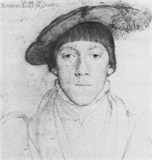
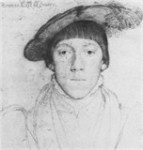
Henry Howard, Earl of Surrey
The other subject of my genealogy research this week has been my own Confederate soldier ancestors and the ownership of slaves. I have searched through census records before the Civil War and learned that my 3rd great-grandmother owned land before the war in Old Cahawba, Alabama. This is now suburban Selma. Her husband died young and she had a patent on119.91 acres of land in the old capital of Dallas County. Her family lived with her until after the war, when they all moved to Texas. The family arrived in Texas by oxcart and bought land with gold. Her son and grandson both served the Confederacy, but there is no sign that this family ever owned slaves. I looked back in time until I did find slaves in Mississippi on the maternal side, but the Taylors were too poor or morally opposed to the idea. When they moved to Texas they started a church and deeded part of their property to the church. I have wondered a lot about the journey and the gold, but now that I know how difficult story poems are to write, have not dedicated myself to telling this history in a poem.

Elizabeth Armer’s land
Thanks for hanging out this weekend in our imaginary coffee house. I look forward to hearing your stories and finding out how you are feeling this week. I appreciate sharing this delicious time with you, gentle reader.


This week in #ROW80 I found a world of information and poetry in apps and podcasts. This vast free library of poems and poets would keep me occupied forever, but I have started a new ritual that is intended to create an atmosphere conducive to creating poetry. I now listen to my daily podcast poems while I draw my first art piece of the day. I am also, for an unrelated reason, soaking my feet in hot water with epsom salts for about an hour while I drink tea and coffee. I am not sure which element is most important, but I am enjoying the soaking in both hot water and poetic streams first thing in the morning. The Poetry Foundation features information about poets’ lives. I was curious to find Frances DeVere, wife of Henry Howard, in the data base. She is missing, but he is a very big figure in the history of poetry. I started to read his work and study the details of his life. His maternal grandfather was beheaded before him in the Tower. His father narrowly escaped death because the king died the day before his scheduled execution. This non-fiction story is full of twists. There is shocking drama in this real history of my DNA.
In the court of Henry VIII life could be very opulent, but all that could turn in the blink of an eye. Henry was capricious to say the least. The most famous of all the English monarchs wielded power with great vigor. In the year 1547 my was charged with treason. He was beheaded on Tower Hill after a one day trial. When he was under house arrest he wrote poetry. When he was sentenced to die, he wrote poetry and translated the Bible. He was a real troubadour in Tudor England. Some scholars believe he created the sonnet and was first to use free verse in English. His wife Frances was also a poet, but I have not found any of her work. I think the double whammy of dualing poets in the Tudor court should be a big advantage to me. I should be able to make some poems about them, or somehow inspired by their lives. During the next week I plan to make some stabs at this idea. The anniversary of his beheading is in 5 days. Maybe I can come up with a tribute of sorts.
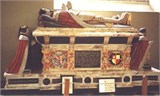
St Michael’s at Framlingham
Henry Howard (1517 – 1547)
is my 15th great grandfather
Thomas Howard (1536 – 1572)
son of Henry Howard
Margaret Howard (1561 – 1591)
daughter of Thomas Howard
Lady Ann Dorset (1552 – 1680)
daughter of Margaret Howard
Robert Lewis (1574 – 1645)
son of Lady Ann Dorset
Robert Lewis (1607 – 1644)
son of Robert Lewis
Ann Lewis (1633 – 1686)
daughter of Robert Lewis
Joshua Morse (1669 – 1753)
son of Ann Lewis
Joseph Morse (1692 – 1759)
son of Joshua Morse
Joseph Morse (1721 – 1776)
son of Joseph Morse
Joseph Morse III (1752 – 1835)
son of Joseph Morse
John Henry Morse (1775 – 1864)
son of Joseph Morse III
Abner Morse (1808 – 1838)
son of John Henry Morse
Daniel Rowland Morse (1838 – 1910)
son of Abner Morse
Jason A Morse (1862 – 1932)
son of Daniel Rowland Morse
Ernest Abner Morse (1890 – 1965)
son of Jason A Morse
Richard Arden Morse (1920 – 2004)
son of Ernest Abner Morse
Pamela Morse
I am the daughter of Richard Arden Morse
On this day in history, the 19th January 1547, the poet, courtier and soldier Henry Howard, Earl of Surrey and son of Thomas Howard, 3rd Duke of Norfolk, was executed by beheading on Tower Hill. He was laid to rest at All Hallows-by-the-Tower (All Hallows Barking) but was moved in 1614 by his son Henry, Earl of Northampton, to a beautiful tomb in the family church, St Michael’s at Framlingham.
He had been found guilty of treason on the 13th January 1547 at a common inquest at Guildhall, where evidence was given “which concerned overt conspiracy as well as the usurpation of the royal arms”1. It was alleged that “he had on 7 October 1546 at Kenninghall displayed in his own heraldry the royal arms and insignia, with three labels silver, thereby threatening the king’s title to the throne and the prince’s inheritance”2, yet when he had been arrested in December the questions had focused on “his determination for the rule of the prince; his procuring his sister to be the royal mistress; his slandering of the royal council; and his plans to flee the realm”3, not his use of the royal arms and insignia. His trial lasted a day and he gave a spirited defence but it was no good, he was found guilty and sentenced to death.
Historian Susan Brigden writes of how Surrey spent his last days in the Tower writing, paraphrasing Psalms 55, 73 and 88, “the prayers of the psalmist abandoned and betrayed, thinking upon death and judgment”4. His work showed not only his sense of betrayal but also his evangelical religious beliefs.
He was executed on Tower Hill on the 19th January 1547 but his father, the Duke of Norfolk, who had also been setenced to death for treason, escaped execution because Henry VIII died before his scheduled execution. Norfolk was released and pardoned by Mary I in 1553 and died naturally on 25th August 1554.
Susan Brigden writes of how Surrey was “the first poet in English to explore what might be said without rhyme” and he is viewed as one of the founders of English Renaissance poetry and “Father of the English Sonnet”, along with Thomas Wyatt and, I believe, George Boleyn. You can find Surrey’s poetry and also his paraphrases of Psalms 55 and 88 at Luminarium: Anthology of English Literature5. I’ll leave you with one if his poems:-
Set me whereas the sun doth parch the green…
Set me whereas the sun doth parch the greenOr where his beams do not dissolve the ice,
In temperate heat where he is felt and seen;
In presence prest of people, mad or wise;
Set me in high or yet in low degree,
In longest night or in the shortest day,
In clearest sky or where clouds thickest be,
In lusty youth or when my hairs are gray.
Set me in heaven, in earth, or else in hell;
In hill, or dale, or in the foaming flood;
Thrall or at large, alive whereso I dwell,
Sick or in health, in evil fame or good:
Hers will I be, and only with this thought Content myself although my chance be nought.
Notes and Sources
Susan Brigden, ‘Howard, Henry, earl of Surrey (1516/17–1547)’, Oxford Dictionary of National Biography, Oxford University Press, 2004
Luminarium: Anthology of English Literature