mermaidcamp
Keeping current in wellness, in and out of the water
You can scroll the shelf using ← and → keys
You can scroll the shelf using ← and → keys

pomegranate
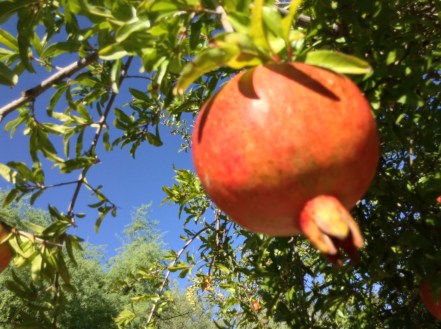
pomegranate
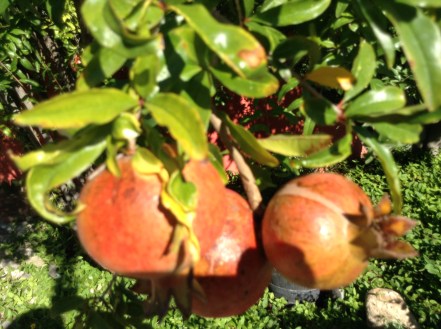
pomegranates
One of the most symbolic of all the foods we harvest in the fall is the pomegranate. This is the fruit of the dead Hades gave the goddess Persephone before she was retuned to her mother. The pomegranate seeds she ate in the underworld created a magical bond she could not break. She was doomed to return to Hades for three months each year. This complicated story is about birth and death, cycles and seasons, sabotage and fate. She was kidnapped and raped by her husband Hades who planned to keep her forever. Persephone’s mother, Demeter, goddess of fertility, went into such a tizzy about her daughter’s kidnapping that Zeus, her husband, finally relented and brought Persephone back to her. The entire incident could have ended at that, but the pomegranate seeds she ate magically sealed her relationship with Hades and the underworld. She was, after all, since her kidnapping and rape, the queen of the underworld. Now we have three months of winter, and during that time Demeter will not produce crops or warmth for the land. Each spring when Persephone returns from her underground realm life begins anew and Demeter gets busy providing ample food for humans.
The ruby red color and the delicious taste of the pomegranate makes an exotic ingredient in all kinds of dishes and drinks. Here are a few ways to honor Persephone and enjoy the season:
Pomegranate molasses is available at Middle Eastern grocery stores, and is a wonderful ingredient. It is very handy at the bar. This beautiful alcohol free drink is named after the queen of the underworld:
Last but certainly not least I leave you with a recipe for an exotic cocktail with chocolate covered pomegranate seeds:
Enjoy!!!

IRS
The first and the only rule in whistle blowing is: Never stop!!!! The second rule that I have learned is: Contact the Department of the Treasury. I have had to blow the same whistle about the same crimes being committed by the same people in the same place for over a decade. Finally, I think I have reached an organization interested in enforcing the law. The United States Department of the Treasury has seen it all, and knows from experience how corrupt government can be. The Royal Canadian Mounties may always get their man, but the IRS always gets their (our) money. I have been frustrated that none of our public officials or law enforcement agencies is interested in stopping obvious crime, but I now have a more realistic view of what to expect from the people I pay to enforce the law. It is naive to think that intense corruption that obstructs justice and fails the public trust does not exist at every level of our government.
I have lived next door to a charity scam operated by our HOA board for more than 10 years. My first request for help was to the local city Council member, Karin Uhlich. She never responded to dozens of requests over more than 5 years. Her assistant, who lives around the corner from me and is a “neighborhood outreach” employee has never been able to respond to the many requests I made for her to look at the evidence. I contacted John McCain two or three times with no response. I called and e mailed Ron Barber to try to get some help for the crime situation in our neighborhood. His office had the nerve to ask me how I liked the customer service from his office when I contacted it. I said I gave them an F since they never responded at all. They never responded to that either. The Tucson Police Department has willfully denied these crimes by creating a fake neighborhood watch comprised of only the criminals involved in the HOA board. They then go ahead and ask for a grant from the Feds to willfully ignore federal crimes and call that neighborhood policing. Dozens of requests to the TPD have been willfully ignored until last spring when Lt Frank Hand begrudgingly admitted that charity scamming is criminal and gave me the correct form to contact the IRS to claim a reward and stop the crimes. I had made attempts to tell the IRS many times, but Lt. Frank gave me the secret key to success…they only respond to the correct form. I filed the form and within about 3 months I had a response. This was heavenly after so many years. If I had it to do again I would physically camp at the IRS until I had a chance to submit evidence. I completely understand why Edward Snowden chose to tattle outside the country. Doing so to the agency invested in the corruption can only end in heartache.
The neighbors here petitioned the mayor of Tucson, who is a lawyer and should be able to discern crime from charity, for two years before officer Frank called me. The cops are not lawyers, so we think the mayor has responsibility to end obstruction of justice rather than participate in it. The sad news is that our government is not open to hearing evidence that will show how unethical it is. It will go to great lengths to deny reality if that reality includes crimes committed in broad daylight by our public officials. It is a shared deluded consciousness that endangers our society. Who knew you could be made so happy by a letter from the Internal Revenue Service???

fall colors
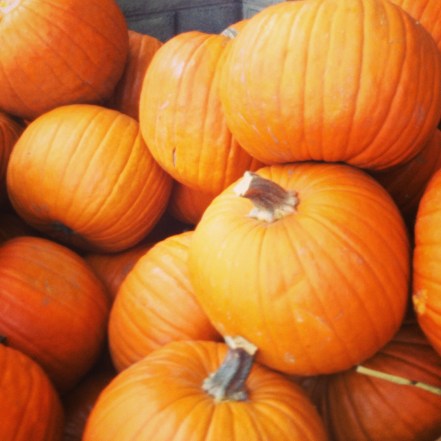
pumpkins in the house
The Fall Equinox is a time to reflect, budget, delete, and take stock of what we have. In modern times our personal harvest is less crucial to our survival than it was hundreds of years ago. We import and ship what we want all over the world. Because so much of our food costs are transportation related this might be a time to take stock of what we have in our local market or garden that can be a substitute for imported or processed foods. We like convenience, but may be able to find better priced locally made foods, goods, and services of superior quality. We like to be served, but can save money and enhance creativity by doing more of our own food preparation and preservation. It is time to create, prosper and appreciate. Do you have practices to note the day when the whole world has an equal amount of darkness and light? Normally the moon rises about 50 minutes later than the previous night. On the equinox it rises only about 10 minutes later, and the effect is that of almost standing still for a few days.
In ancient Greece this time of year was the time for grand rituals known as the Eleusian rites. From the equinox until the end of the month processions and rites to the goddess Demeter were performed. The elaborate rites involved bathing in the sea, building an altar around a tree, blessing the earth with wine and special potions, and a giant party to honor Demeter, goddess of the earth. Holy Night, on September 28, when the goddess Koré would turn from maiden to krone, and then into the young queen of the underworld. Some of the celebrants were granted the chance to see their own deaths on the Holy Night in order to free themselves from fear of the afterlife. The following day was a sports and games day before the final eighth day of the festival returns to solemn ritual to signify spiritual rebirth. This was very different from football season or American festivities for fall because everything was viewed as sacred. The rituals were believed to be an important spiritual gift to mankind. Can you find a way to honor that seasonal shift in your life this year? I would love to hear any ideas you have, gentle readers. I believe we have instinctive spiritual patterns that evolve, but are also part of historical beliefs and rites. We are still connected to Demeter even if we don’t know who she is.
In our dreams characters, including ourselves, play grand archetypes. Last night as I dreamed military factions were fighting it out in a prolonged battle. The warrior rarely appears in my dream life so I have considered it as a signal of some kind of change. The dream did not really upset or frighten me. In fact, after a while awake I fell back into sleep and dreamed about the same theme for a while again, which is very rare in my life. I normally do not go back to sleep, but I felt there was a story I needed to finish. Nobody won the war and I believe there were more than two fighting factions, sort of like Syria today. The warrior is an important archetype without which we would all be too vulnerable. Protection is something everyone needs, from within as well as from others.
In yoga the warrior pose is a wonderful strengthening posture. When one masters it one truly does feel like a warrior and a hero. To be a warrior archetype does not always mean to be a soldier or professional in the business of protection. The best attributes of this archetype are skill, strength, discipline and self sacrifice in the conquest over ego. The best warrior is stoic and possesses a tough will to conquer. The worst warrior is indifferent to the suffering of others. The shadow practice of this soldier in the dark is trading ethics for victory at any cost. The hero as well as the heel are contained within the warrior archetype. Loyalty and invincibility are identified with this character. Mercenaries and gunslingers are also part of the tribe.
I wondered today if thinking about my ancestors and the Civil War in the United States might be part of this dream’s arrival. I have been studying and considering how my family moved from Selma, Alabama to East Texas after the war and bought property with gold. They traveled by oxcart to get there. Both my 2nd great grandfather and his father-in-law were in the war, the older man conscripted to make steel in Birmingham Alabama to provide munitions to the Confederacy. The Confederate money was worthless after the war, so I wonder how they managed to have enough gold to buy property in Texas. Many southern cotton farmers had moved to the area, so the majority of the population was black, as a remnant of slavery and cotton. My people were religious and donated land for a church in the area. I have been thinking about what it is like to fight in a war like that and be on the loosing side, then move to a new place. They had to handle a lot of change and hardship during one lifetime, and the period after the war may have been as difficult as the war itself.
My relationship with this dream is asking me to be stronger and more disciplined. I have done very little self-sacrifice or tough willed commitment during my time on earth. I know few soldiers in my real life, and have no contact with war and the risk of loosing a loved one. As war explodes around the globe I stay relatively insulated until someone new invades Tucson. We all depend on cops, soldiers, and sailors to keep us safe from harm, but I normally give them little thought. War is hell, and most of us defer that hell to warriors and prefer not to know much about the details. Historical wars seem to me to be linked to spiritual warfare. How do you relate to the warrior archetype? Do you take the role of protector in your life? Who protects you?
I have drained my water barrel and am preparing for a storm of mighty proportions. Arizona has had a good year of rain during our monsoon season this year, but the last round was too intense. There was flooding all over the state, but Phoenix was hit hardest because the major freeway through that city was flooded and closed. There were disasters and deaths by drowning during our recent storms. Today we are bracing for what we are told will be 5 inches of rain in about 3 days. At this time the predictors are off a bit because it was to have rained all day today. We had some light sprinkles in the morning, but the deluge has not yet arrived. I took the dog for a walk early because I was convinced we would be trapped by rain all day. The sky is grey and the air very humid. The smell of wet creosote bush confirms that summer rains are still in gear. We normally welcome rain in all forms and amounts, but this is on the scary side. There is nothing to be done except get some sand bags ready for the back door just in case we need to protect our home.
I am thinking of it as a baptism. The rain can wash away all the recent violence in our neighborhood and cleanse the air. I hope people will pay attention to safety and stop themselves before driving into washes to be swept away to drowning death. As natural disasters go floods are swift and powerful. I am hoping our washes and rivers will stay within their bounds and that nobody will loose life or home. All we can do is be careful. Have you ever lived through a flood?


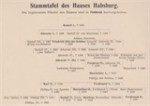
My 22nd great-grandfather was born and died in present day Aargau,Switzerland. He married in Germany in about 1200. The Habsburg family was known for making very strategic marriages. His grandson Rudolf moved the family power base to Austria and became Holy Roman Emperor. They did very well for themselves.
Father: ALBRECHT 111 the rich VON GRAF HABSBURG b: ABT 1132 in Habsburg,Aargau,Switzerland
Mother: Ita Von PFULLENDORF b: ABT 1141 in Pfullendorf,Konstanz,Baden
Marriage 1 AGNES VON STAUFEN b: BEF 1178 in of A.D.H. Blankenberg Am Rhein,Brunswick,Germany
Married: ABT 1200
Children
ALBRECHT 1V VON GRAF HABSBURG b: ABT 1188 in Schloss Limburg A.D. Rhein,Freidberg,Baden,
Gertrud Von HABSBURG b: 1191 in Schloss Limburg A.D. Rhein,Freidberg,Baden,
Heilwig HABSBURG Countess b: 1195 in Schloss Limburg A.D. Rhein,Freidberg,Baden,
Rudolf 1 Habsburg LAUFENBURG count b: ABT 1198 in Schloss Limburg A.D. Rhein,Freidberg,Baden,
Rudolf II Count der Gutige Old graf Der Schweigsame Von Habsburg (1158 – 1232)
is my 22nd great grandfather
Albert IV “The Wise” Count of Habsburg (1188 – 1240)
son of Rudolf II Count der Gutige Old graf Der Schweigsame Von Habsburg
Rudolf IV King of Germans, Holy Roman Emperor Habsburg (1218 – 1291)
son of Albert IV “The Wise” Count of Habsburg
Albert I King of Germany Habsburg (1248 – 1308)
son of Rudolf IV King of Germans, Holy Roman Emperor Habsburg
Albrecht Albert II ‘The Wise’ Duke of Austria Habsburg (1298 – 1358)
son of Albert I King of Germany Habsburg
Leopold III “Duke of Austria” Habsburg (1351 – 1386)
son of Albrecht Albert II ‘The Wise’ Duke of Austria Habsburg
Ernst I “Ironside” Archduke of Austria Habsburg (1377 – 1424)
son of Leopold III “Duke of Austria” Habsburg
Katharina Archduchess Austria Von Habsburg (1420 – 1493)
daughter of Ernst I “Ironside” Archduke of Austria Habsburg
Christof I VanBaden (1453 – 1527)
son of Katharina Archduchess Austria Von Habsburg
Beatrix Zahringen (1492 – 1535)
daughter of Christof I VanBaden
Sabine Grafin VonSimmern (1528 – 1578)
daughter of Beatrix Zahringen
Marie L Egmond (1564 – 1584)
daughter of Sabine Grafin VonSimmern
Richard Sears (1590 – 1676)
son of Marie L Egmond
Silas Sears (1638 – 1697)
son of Richard Sears
Silas Sears (1661 – 1732)
son of Silas Sears
Sarah Sears (1697 – 1785)
daughter of Silas Sears
Sarah Hamblin (1721 – 1814)
daughter of Sarah Sears
Mercy Hazen (1747 – 1819)
daughter of Sarah Hamblin
Martha Mead (1784 – 1860)
daughter of Mercy Hazen
Abner Morse (1808 – 1838)
son of Martha Mead
Daniel Rowland Morse (1838 – 1910)
son of Abner Morse
Jason A Morse (1862 – 1932)
son of Daniel Rowland Morse
Ernest Abner Morse (1890 – 1965)
son of Jason A Morse
Richard Arden Morse (1920 – 2004)
son of Ernest Abner Morse
Pamela Morse
I am the daughter of Richard Arden Morse
House of Habsburg CountryAustria, Kingdom of Germany, Holy Roman Empire, Sicily, Naples, Spain, Hungary-Croatia, Bohemia, and Portugal
Titles
Holy Roman Emperor
Emperor of Austria
Emperor of Mexico
President of the German Confederation
King of the Romans
King of Germany
King of Spain
King of Aragon
King of Sicily
King of Naples
King of Castile
King of Hungary
King of Bohemia
King of Croatia
King of Portugal
King of Dalmatia
King of Galicia and Lodomeria
King of England
Grand Prince of Transylvania
Archduke of Austria
Grand Duke of Tuscany
Duke of Burgundy
Duke of Parma
Count of Habsburg
Founding11th century: Radbot, Count of Habsburg
Dissolution1780
The House of Habsburg (pron.: /ˈhæbs.bɜrɡ/; German pronunciation: [ˈhaːbs.bʊʁk]), also spelled Hapsburg[1] and also known as House of Austria, is one of the most important royal houses of Europe, The Habsburgs are best known for being Holy Roman Emperors for most of the time between 1438 and 1806, as well as rulers of the Austrian Empire and Spanish Empire and several other countries.
The House takes its name from Habsburg Castle, a fortress built around 1020–1030 in present day Switzerland by Count Radbot of Klettgau, who chose to name his fortress Habsburg. His grandson, Otto II, was the first to take the fortress name as his own, adding “Count of Habsburg” to his title. The House of Habsburg gathered dynastic momentum through the 11th, 12th and 13th centuries.
By 1276, Count Radbot’s seventh generation descendant, Rudolph of Habsburg, had moved the family’s power base from Habsburg Castle to the Duchy of Austria. Rudolph had become Roman-German King in 1273, and the dynasty of the House of Habsburg was truly entrenched in 1276 when Rudolph became ruler of Austria, which the Habsburgs ruled until 1918.
A series of dynastic marriages enabled the family to vastly expand its domains, to include Burgundy, Spain, Bohemia, Hungary, and other territories into the inheritance. In the 16th century, the family separated into the senior Habsburg Spain and the junior Habsburg Monarchy branches, who settled their mutual claims in the Oñate treaty.
The House of Habsburg became extinct in the male line in the 18th century. The Spanish branch ended upon the death of Charles II in 1700 and was replaced by the Anjou branch of the House of Bourbon in the person of his great-nephew Philip V. The Austrian branch went extinct in the male person in 1740 with the death of Charles VI and in the female person in 1780 with the death of his daughter Maria Theresa and was succeeded by the Vaudemont branch of the House of Lorraine in the person of her son Joseph II. The new successor house styled itself formally as House of Habsburg-Lorraine (German: Habsburg-Lothringen), although it was often referred to as simply the House of Habsburg.
Principal roles
Their principal roles were as:
King of the Romans
Holy Roman Emperors
King of Germany
Rulers of Austria (as Dukes, Archdukes after 1453)
King of Bohemia (1306–1307, 1437–1439, 1453–1457, 1526–1918),
Kings of Hungary and Croatia (1526–1918),
Kings of Spain (1516–1700),
King of Portugal (1580–1640),
King of Galicia and Lodomeria (1772–1918), and
Grand Prince of Transylvania (1690–1867).
Numerous other titles were attached to the crowns listed above.
History Counts of Habsburg
The Habsburg dominions around 1200 in the area of modern day Switzerland are shown as Habsburg, among the houses of Savoy, Zähringer and Kyburg
The progenitor of the House of Habsburg may have been Guntram the Rich, a count in Breisgau who lived in the 10th century. His grandson Radbot, Count of Habsburg founded the Habsburg Castle, after which the Habsburgs are named. The origins of the castle’s name, located in what is now the Swiss canton of Aargau, are uncertain. Most people assume the name to be derived from the High German Habichtsburg (Hawk Castle), but some historians and linguists are convinced that the name comes from the Middle High German word “hab/hap” meaning ford, as there is a river with a ford nearby. The first documented use of the name by the dynasty itself has been traced to the year 1108.[3][4][5] The Habsburg Castle was the family seat in the 11th, 12th and 13th centuries.
The Habsburgs expanded their influence through arranged marriages and by gaining political privileges, especially countship rights in Zürichgau, Aargau and Thurgau. In the 13th century, the house aimed its marriage policy at families in Upper Alsace and Swabia. They were also able to gain high positions in the church hierarchy for their members. Territorially, they often profited from the extinction of other noble families such as the House of Kyburg.
Kings of the Romans
By the second half of 13th century, count Rudolph IV (1218–1291) had become one of the most influential territorial lords in the area between Vosges mountains and Lake Constance. Due to these impressive preconditions, on 1 October 1273 Rudolph was chosen as the King of the Romans and received the name Rudolph I of Germany.[6]
In 1282, the Habsburgs gained the rulership of the Duchy of Austria, which they then held for over 600 years, until 1918. Through the forged Privilegium Maius document (1358/59), a special bond was created between the House and Austria. The document, forged at the behest of Rudolf IV, Duke of Austria (1339–1365), also attempted to introduce rules to preserve the unity of the family’s Austrian lands. In the long term, this indeed succeeded, but Rudolph’s descendants ignored the rule, leading to the separation of the Albertian and Leopoldian family lines in 1379.
By marrying Elisabeth of Luxembourg, the daughter of Holy Roman Emperor Sigismund in 1437, Duke Albert V (1397–1439) became the ruler of Bohemia and Hungary, expanding the family’s political horizons. The next year, Albert V was crowned as the King of the Romans as Albert II. After his early death in war with the Turks in 1439, and after the death of his son Ladislaus Postumus in 1457, the Habsburgs lost Bohemia and Hungary again. National kingdoms were established in these areas, and the Habsburgs were not able to restore their influence there for decades.







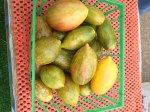


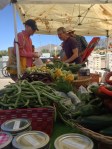


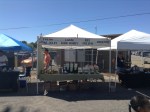
In September Arizona agriculture is peaking with abundance. There are crops that grow well in serious heat, like melons and okra, that are finishing the season. Many more crops enjoy the long slow slide into winter that we have and will be ready soon. The grapes for wine are soon to be harvested, the apples in Wilcox are being picked, and some date varieties are now starting to be ripe and ready to eat. There are a large variety of squash being grown around Arizona that are never seen in regular grocery stores, and you can even get fresh squash blossoms to prepare. More vendors come out in the cooler weather as more customers show up to shop and dine at the food trucks. We like to go for unusual gourmet finds as well as for entertainment. We see people we know and sometimes take the dog. It makes a good outing and supports the local farmers in the process. Today we came home with some very special smoked salsa homemade by smoking all the vegetables on mesquite wood before combining them. We bought a baby blue Hubbard squash..a mini version of the giant winter squash with the rich flavor. I got some cayenne, garlic and some extra hot jalapeño chiles because our own chiles in the garden are ripe and ready to go to become salsa at home. I will use the little green tomatoes, the garlic and the chiles to round out the flavor and make different levels of picante for different tastes. We are drinking fresh apple cider today from Wilcox. The little lemon cucumbers will make a sparkle in salads and the light colored pickling cucumbers are good straight up why themselves as a snack. We did not get dates because I have a few I need to use from last season before I start on this year’s. I don’t mind paying extra in order to put the mooney right into the hand of the person who grew or made it.
How is the farmers’ market scene where you live? Are you able to get to one on a regular basis? I like both the specialty prepared foods and the fresh produce. They both serve the local farming community and let us have some extra special meals enhanced by products and produce not to be found at standard grocery shopping outlets. When I travel I make it a point to attend a local market if at all possible. I think they are growing in popularity and in variety of available products. Some have musical entertainment. It is fun to meet the farmer and know your food is as fresh as it can be.
I am so thrilled with my relationship with my new Fitbit. It arrived two days ago and changed my life. It is everything I hoped it would be and much more. It synchs with your computer (Phone/device) to give you a complete picture of your daily activities. It shows graphs that measure your steps ( and or exertion) in real time, and your calories burned. The food log is simple to use and includes all foods I have eaten so far on a menu with calories counted upon entering. The activity log is available if you care to detail which you have done when . Hiking, biking, running, walking and swimming are listed. You can also create your own categories. I have made a Floatli category because I can’t wear the Fitbit in the water (separation anxiety does occur), but I can record the time I have spent on my computer log. It is brilliant!
This weekend we are planning a pizza party for ourselves and maybe others. I will need to earn the pizza slices that will greatly effect my graph. We decided to put it off until tomorrow, and I am pleased because I can burn baby burn today to be on my goal. The Fitbit is making me think ahead to calculate a plan eat pizza rather than banning it forever and indulging impulsively by jumping off the prohibition of pizza wagon. I love it. It makes me feel the need to deposit calories burned before I eat them!!! I have tracked food on a list and divided into food groups before, but this data is so complete and visually compelling that it makes writing it down seem primitive. The deal in fitness and health is that if you are not having a good time you will not act in your own best interests all the time. Movement, exercise, whatever you choose to call it, is just using the body you have to enjoy life. Measuring it gives you a powerful motivation to improve. Some folks join groups, or compare their performance to the entire population using the Fitbit. I don’t need that because I am most competitive with myself. I have become inspired and enthused to keep all my graphs green and my steps increasing daily.
My Fitbit Flex model also measures my sleep. Last night I had a particularly unsound sleep pattern. The night before I had a few restless seconds and a three short times awake during the night. Last night I spent a long time awake, during 9 different sessions. I was aware of it at the time, and was thinking this will look bad on my sleep graph. I think that in itself is pretty funny. I am even concerned about how my Fitbit scores my performance when I am in bed at night. I think most of my nights will read like my first one, since I do sleep well. The other funny thing about night time is that upon awakening I saw that the gin and tonic I poured for watching television which we do in bed) was almost full. I instantly thought how sad, I wrote that down in my food log and didn’t even drink it. All this concern could make a person crazy, but I believe this is a good crazy. I recommend this kind of crazy to anyone.

No Kid Hungry
This week you can dine lavishly so that others may simply dine. We have a problem feeding hungry children in the United States. This should be an embarrassment to the wealthy. If you feel that you can help this worthy cause by just taking your restaurant business to a participating local partner this week, please do. Just enter the zip code where you live and you will discover which places are involved in your area. When you mention the program your partner restaurant will make a donation to No Kid Hungry based on the amount you spend. In our area the participating businesses are mostly bagels, Denny’s, and pizza. One of the pizza places making donations is near our home and we have never eaten their famous coal fired pizza.
Grimaldi’s Coal Fired Brick Oven will be whipping out some weekend party food for our house. They are a chain, but a relatively small one. Here is a glimpse of the Grimaldi’s in Denver:
I look forward to trying the crispy crust, but even more I will keep them in mind because they are supporting this very worthy cause. I like to spend my money where my mouth is…in this case many mouths will benefit. Join me this week to help end childhood hunger, while I deal with our adult hunger in a creative and tasty way.
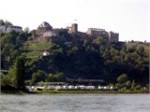
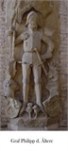

My 16th great-grandfather had an extremely lavish wedding when he wed my 16th great-grandmother. They had three children together and then the Pope gave Count Philipp a divorce. This divorce by Pope thing was popular at the time for nobility. His father, Johann IV, the Count of Katzenelnbogen, gave the world riesling grapes and wine. His sons died before he did, so the male line ended with his death. One of the castles the family owned, Rheinfels, is the largest on the Rhine. Today there is still a ruin that can be visited.
Rheinfels Castle (German: Burg Rheinfels) is a castle ruin located above the left (West) bank of the Rhein in Sankt Goar, Germany. It was started in 1245 by Count Diether V of Katzenelnbogen. After expansions, it was the largest fortress in the Middle Rhein Valley between Koblenz and Mainz. It was slighted by French Revolutionary Army troops in 1797. It is the largest castle overlooking the Rhine,and historically covered five times its current area.
In the year 1435 the Rüsselsheim castle administrator Klaus Kleinfisch began a new wineyard. His annual account shows the purchase of riesling Setzreben for 22 shilling. This kind of wine had a higher quality than the other french wines, was more aromatic but also frost-resistant. His new choice was – wineyards can exist more than onehundred years – the turningpoint in winehistory. Up to this point the old documents only reported red, white or black wine according to their colour. Even in the year 1402 the electoral prince of mainz ordered to grow no other wines than his french wines. After the rüsselsheim vintage Riesling quickly showed up all the way down the river rhine. Up to the year 1600 riesling became top wine. In the castle of Darmstadt count Johann IV united the two most powerful counties of the “holy roman empire of the german nation” in one of the most beautiful medieval marriages of his son Philipp d. Ältere of Katzenelnbogen with countess Anna of Württemberg. Even his son-in-law landgrave Heinrich III of Hessen was enthusiastic about this amount of gold , silver and wine. In 1427 the 10 most important katzenelnbogen castles were consuming about 200 000 liters of wine a year and in 1436 storing 1.5 million l wine in mainz . The counts were remarkably rich supporting arts and could afford rewarding medieval singers like Walther von der Vogelweide with a diamond. They created the most powerful castle, the first undefeatable german “bollwerk” Auerbach, defended themselves on the largest german castle with the largest german wine-cellar the Rheinfels castle. They loved the power but were sophisticated. Thanks to their correct book-keeping we can read about their live, family affaires and trading. One vase of china and one tankard is all they left. But the writings tell us and still want to be searched.
They gave us the riesling wine, one symbol of pride worth to be honoured.
The successors may have formed a modern top wine out of the riesling plant, but the documented first grower of the most important german and one of the most important international wines was Johann IV, the Count of Katzenelnbogen.
Additional the county customs writer noticed the first bratwurst export to cologne in 1410, the records listed bratwurst for 1gulden on a boat loaded with wine. This is the first proof of the traditional german bratwurst. The size is defined by pork casings. The transport itself tells us katzenelnbogen bratwurst must have been widely known.
Philip I of Katzenelnbogen (1402 – 1479), also known “Philip the Elder” was Count of Katzenelnbogen from 1444 to 1479 and was the last male descendant of the Counts of Katzenelnbogen (his two sons died before him). His parents were John IV, Count of Katzenelnbogen (younger line) and Anne of Katzenelnbogen (older line), who merged the two lines of the family back together in 1402.
Marriage and issue
Philip married on 24 February 1422 in Darmstadt with Anna of Württemberg (1408–1471), daughter of Eberhard IV “the Younger” of Württemberg. In 1456, he obtained from the Pope a divorce from bed-and-board. In 1474 Philip married Anna of Nassau-Dillenburg.
Philip had three children with his first wife:
Philip the Younger (* 1427; † 27 February 1453), married in 1450 Ottilie of Nassau. In 1453 they had a daughter Ottilie of Katzenelnbogen.
Eberhard († 1456), canon of Cologne, was stabbed in Bruges (Flanders).
Anna (* 5 September 1443; † 16 February 1494), married in 1458 margrave Henry III of Hesse (15 October 1441 — 13 January 1483). In 1471, they had a son William III, who was the last male descendant of this line of the House of Hesse.
Legacy
In 1444 Philip initiated a major renovation of the collegiate church of Sankt Goar.
In 1449 he bought off the rights on St. Goar held by abbot John of the Abbey at Prüm.
In 1470 he handed Upper Katzenelnbogen and its seat Darmstadt to his son-in-law Henry III of Hesse.
Philip’s sons Eberhard and Philip the younger died before his death, so when Philip died in 1479, the Katzenelnbogen died out in the male line. The County of Katzenelnbogen fell to the Landgraviate of Hesse, which was ruled at the time by Philip’s son-in-law Henry III of Hesse in Marburg.
This article incorporates information from the German Wikipedia.
Philipp l Count of Katzenelnbogen (1402 – 1479)
is my 16th great grandfather
Philipp VonKatzenelnbogen (1427 – 1453)
son of Philipp l Count of Katzenelnbogen
Ottilie Countess Katzenelnbogen vonKatzenelnbogen (1453 – 1517)
daughter of Philipp VonKatzenelnbogen
Beatrix Zahringen (1492 – 1535)
daughter of Ottilie Countess Katzenelnbogen vonKatzenelnbogen
Sabine Grafin VonSimmern (1528 – 1578)
daughter of Beatrix Zahringen
Marie L Egmond (1564 – 1584)
daughter of Sabine Grafin VonSimmern
Richard Sears (1590 – 1676)
son of Marie L Egmond
Silas Sears (1638 – 1697)
son of Richard Sears
Silas Sears (1661 – 1732)
son of Silas Sears
Sarah Sears (1697 – 1785)
daughter of Silas Sears
Sarah Hamblin (1721 – 1814)
daughter of Sarah Sears
Mercy Hazen (1747 – 1819)
daughter of Sarah Hamblin
Martha Mead (1784 – 1860)
daughter of Mercy Hazen
Abner Morse (1808 – 1838)
son of Martha Mead
Daniel Rowland Morse (1838 – 1910)
son of Abner Morse
Jason A Morse (1862 – 1932)
son of Daniel Rowland Morse
Ernest Abner Morse (1890 – 1965)
son of Jason A Morse
Richard Arden Morse (1920 – 2004)
son of Ernest Abner Morse
Pamela Morse
I am the daughter of Richard Arden Morse
Katzenelnbogen originated as a castle built on a promontory over the river Lahn around 1095. The lords of the castle became important local magnates, acquiring during the centuries some key and highly lucrative customs rights on the Rhine. The Counts of Katzenelnbogen also built Burg Neukatzenelnbogen and Burg Rheinfels on the Rhine. The German family died out in 1479, while the Austrian lineage continued, and the county became disputed between Hesse and Nassau. In 1557, the former finally won, but when Hesse was split due to the testament of Philipp the Magnanimous, Katzenelnbogen was split as well, between Hesse-Darmstadt and the small new secondary principality of Hesse-Rheinfels. When the latter line expired in 1583, its property went to Hesse-Kassel (or Hesse-Cassel), which added the inherited part of Katzenelnbogen to its side-line principality of Hesse-Rotenburg. After the Congress of Vienna, this part of Katzenelnbogen was given to Nassau in exchange for property that had been taken away from it; after the War of 1866, with all Nassau, it became part of Prussia.
In 1945, Hesse-Darmstadt was united with most of the Prussian province of Hesse-Nassau, which included the former Hesse-Kassel along with Nassau and the formerly Free City of Frankfurt, to form the federal state of Hesse. Thus, Hesse now includes the larger part of former county of Katzenelnbogen. A smaller part of Nassau, including the old castle and village bearing the name of Katzenelnbogen, ended up as part of Rhineland-Palatinate (part of the Rhein-Lahn and Westerwaldkreis districts). One of the titles of the Queen of the Netherlands (the House of Orange-Nassau) is that of Countess of Katzenelnbogen.
Etymology
The name Katzenelnbogen derives from the old Cattimelibocus. It consists of the ancient Germanic tribal name of the Chatti and Melibokus, the Roman name of any mountains, like the Harz or the Teutoburg Forest. Over the centuries the name changed to Katzenelnbogen: “cat’s elbow”.
History of wine
In the history of wine, Katzenelnbogen is famous for the first documentation of Riesling grapes in the world: this was in 1435, when the storage inventory of Count John IV of Katzenelnbogen, a member of the Holy Roman high nobility, lists the purchase of vines of “Rieslingen”.

