mermaidcamp
Keeping current in wellness, in and out of the water
You can scroll the shelf using ← and → keys
You can scroll the shelf using ← and → keys
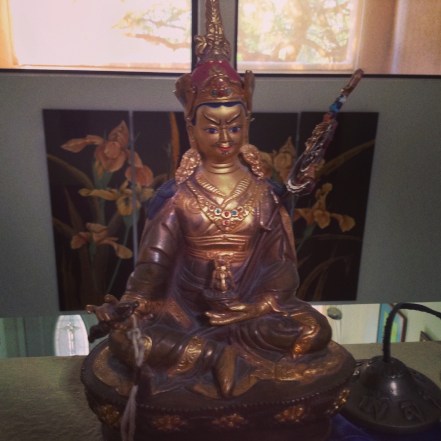
Padmasambhava
The following quote from the famous Dr Carl Jung explains the unconscious inheritance of unsolved and unanswered mysteries from our ancestors. My intense study of all the branches of my family tree that still bear data leads me to conclude that Dr. Jung was onto something. There are certainly themes that run in families, if not a shared fate. We have more than our immediate family to thank for the belief system we have been handed. The religious, cultural, and sociological forces that inspired our ancestors to take action and undertake dangerous missions and travels have not evaporated into thin air. They are passed on as attitudes if not as law.
“I feel very strongly that I am under the influence of things or
questions which were left incomplete and unanswered by my
parents and grandparents and more distant ancestors. It often seems
as if there were an impersonal karma within a family which is
passed on from parents to children. It has always seemed to me
that I had to answer questions which fate had posed to my
forefathers, and which had not yet been answered, or as if I had to
complete, or perhaps continue, things which previous ages had left
unfinished.”~ Dr. Carl Jung , Memories, Dreams, Reflections
I wonder why my addition to my family fortune and mindset will be. History changes the perception of everything, but when we learn about our ancestors we are instantly on their side, no matter what they were doing. With few very crazy exceptions I find I am sympathetic with all of my relations in history because I would not be alive if it had not for their ability to survive. I admire their adventurous natures, and am embarrassed by slaveholding, war mongering, and some elite royal behaviors of my people as they managed to survive. I identify with them and their struggles, trying to imagine myself alive in much more primitive conditions. I wonder how I would have managed in heavily religious times, or times of extreme violence and conflict. Trauma as well as enlightenment is inherited. Distrust as well as confidence is passed down to the next generation. Self image as well as ethics are part of the ethical will we are given. Our national identity contains within it preferences and prejudices that last for many generations. Can you think of belief systems you have that you never questioned? Have you ever wondered if the thoughts in the minds of your family members before your birth have influenced your thinking? How do you explain the collective consciousness?














While the butterfly exhibit is on hold for the summer the Tucson Botanical Gardens has a small but impressive display of flesh eating plants in the tropical greenhouse. It is easier to handle since the USDA does not require full time guards as they do on the butterfly species. The small and well appointed display teaches us that there are many forms that plants use to lure in insect prey for their food. We know about some of the obvious styles, like fly trap and pitcher, but the cute little flowers on bladderwort and butterworts are there to attract the insects that will be killed and consumed when stuck to the flypaper type leaves. The diminutive sundews produce extra sticky dew drops that never release the bug that gets too close. They are all botanically interesting and some very pretty to see. Imagine the poor bug’s life ending as it is called to investigate one of these exotic traps. Survival depends on more than fitness of body. In the wild we must have the good sense to leave attractive menaces alone.
Party time on Empire Avenue!! Great weekend to join the fun of EA Leaders!!
What is a spiritual crisis? They are all over the biblical stories and the parables we are taught about heroes. Some power that is not explained in the regular time bound reality has an influence on the character. Through hardship, or magic, or stressful change the hero, or the hero people, become stronger than the force that had power over them. There must be a zillion versions of this in video gaming. Comic superhero figures and stories are based on supernatural battles in altered states with magical super powers thrown into the mix. We see our religion and entertainment in terms of spiritual crisis pending or resolving, or causing trauma. Why do we think of our everyday world as void of spiritual energy? What makes us draw a line between reality and spirit? Why do we think only shamans or monks have obligations to the spirit world? Just as prayer and meditation will not repair the roof, tar and roofing tiles alone will not restore peace and security inside a home that has been bombed. Everyone has both an earthly reality to tend and a higher meaning to life.
Looking at world events as evolving from a spiritual rather than scientific or political causes might change the way we act and react. Our own souls have certain obligations or tasks that coincide with the talents we have been given. It is time to find right livelihood and spend our time and energy uplifting those who need help and who are seeking spiritual guidance. At the end of life, no matter how and when that comes, we will not be concerned about how many insignificant tasks we have completed or how many hours we put on the clock doing busy work. We will wonder if we have done what we have the talent to do, and if we have contributed the gift that was ours to create. Much ado is being made about the suicide of Robin Williams this week. Without diagnosing him or making light of all the circumstances (which I don’t know) I see this incident as a crisis of spirit, like the wars around the world. It makes me sad, but I view it as a call for profound change. We need to shift our outlook, about 2 octaves higher.

effigy at Church of St Nicholas, Castle Hedingham, Essex
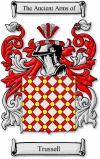
Trussel coat of arms
I have yet another buried in the church ancestor to seek and find when I go to Britain on the dead people tour. My 16th great-grandmother was sold into marriage at age 13, but she became a countess and has an effigy in a church.
Elizabeth de Vere (née Trussel), Countess of Oxford (1496 – before July 1527) was an English noblewoman. Through her daughter Frances, she was the mother-in-law of celebrated poet Henry Howard, Earl of Surrey.
Elizabeth was born in Kibblestone, Staffordshire, England on an unknown date in 1496 to Sir Edward Trussel and Margaret Dun. On 10 April 1509 at the age of about thirteen, she became the second wife of John de Vere, 15th Earl of Oxford. His first wife, Christian Foderingey had died about ten years earlier without having produced children. Together John and Elizabeth had seven children.
Elizabeth Trussell, born in 1496,was the daughter of Edward Trussell (c.1478 – 16 June 1499) of Elmesthorpe, Leicestershire, only son of Sir William Trussell (d. before 24 June 1480) of Elmesthorpe, Knight of the Body for King Edward IV, by Margaret Kene. The Trussells were a “very ancient Warwickshire family”;Elizabeth’s ancestor, Sir Warin Trussell, was of Billesley, Warwickshire.
Elizabeth Trussell’s mother was Margaret Donne, the daughter of Sir John Donne (1450–1503) of Kidwelly, Carmarthenshire, and Elizabeth Hastings (c.1450 – 1508), daughter of Sir Leonard Hastings and Alice Camoys, and sister of William Hastings, 1st Baron Hastings.[6] Sir John Donne’s mother, Joan Scudamore, was the granddaughter of the Welsh rebel, Owain Glyndŵr.
Elizabeth had a brother, John Trussell (d.1499), to whom she was heir.
Through her father’s family, Elizabeth was a descendant of King Henry II by his mistress, Ida de Tony.
Elizabeth Trussell’s grandfather, Sir John Donne, from the Don triptych by Hans Memling.
Elizabeth’s father, Edward Trussell, had been a ward of William Hastings, 1st Baron Hastings, and at Hastings’ death in 1483 was still a minor. In his will, Hastings expressed the wish that Trussell’s wardship be purchased by Hastings’ brother-in-law, Sir John Donne:
Also I will that mine executors give to my sister Dame Elizabeth Don 100 marks . . . Also where I have the ward and marriage of Edward Trussell, I will that it be sold and the money employed to the performing of this my will and for the weal of my soul; and if my brother Sir John Don will buy the said ward, I will that he be preferred therein before any other by £10.
After her father’s death on 16 June 1499 and the death of her brother, John, in the same year, Elizabeth Trussell became a royal ward. Her wardship and marriage were initially purchased from King Henry VII by George Grey, 2nd Earl of Kent (d. 21 December 1503), who intended her as a bride for Sir Henry Grey (d. 24 September 1562), the 2nd Earl’s son by his second marriage to Katherine Herbert, daughter of William Herbert, 1st Earl of Pembroke, by Anne Devereux, the daughter of Sir Walter Devereux. However after the 2nd Earl’s death, Richard Grey, 3rd Earl of Kent, the 2nd Earl’s eldest son and heir by his first marriage to Anne Woodville, abducted Elizabeth Trussell, a crime for which the King levied a heavy fine against him:
Aged at least twenty-five when he succeeded his father in 1503, [the 3rd Earl] wasted his family’s fortunes — possibly, as Dugdale says, he was a gambler. In a striking series of alienations he gave away or sold most of the lands, principally in Bedfordshire, that he had inherited . . . The earl also fell quickly into debt to the king: he failed to pay livery for his father’s lands, and he was fined 2500 marks for abducting Elizabeth Trussell, whose wardship the second earl had left to Richard’s half-brother Henry; he then failed to keep up the instalments laid down for the payment of the fine.
As a result of these events Elizabeth Trussell’s wardship and marriage again came into the hands of the King, who sold it on 29 April 1507 to John de Vere, 13th Earl of Oxford, and his cousin John de Vere, later 15th Earl of Oxford, for an initial payment of 1000 marks and an additional £387 18s to be paid yearly, less £20 a year for Elizabeth’s maintenance. The annual value of Elizabeth’s lands had been estimated in the inquisition post mortem taken after her brother John’s death at £271 12s 8d a year.
Marriage and issue
Between 29 April 1507 and 4 July 1509 Elizabeth became the second wife of John de Vere, 15th Earl of Oxford, whose first wife was Christian Foderingey (born c. 1481, died before 4 November 1498), the daughter and co-heiress of Thomas Foderingey (c. 1446 – 1491) of Brockley, Suffolk, by Elizabeth Doreward (c. 1473 – 1491), daughter of William Doreward of Bocking, Essex, by whom the 15th Earl had no issue.
By her marriage to the 15th Earl of Oxford, Elizabeth had four sons and three daughters:
John de Vere, 16th Earl of Oxford (1516 – 3 August 1562), who married firstly, Dorothy Neville (died c. 6 January 1548),[16] second daughter of Ralph Neville, 4th Earl of Westmorland, by whom he had a daughter, Katherine de Vere, who married Edward Windsor, 3rd Baron Windsor. The Earl married secondly, Margery Golding (d. 2 December 1568),[17] by whom he had a son, Edward de Vere, 17th Earl of Oxford, and a daughter, Mary de Vere.
Aubrey de Vere (d. 1580), who married firstly Margaret Spring, the daughter of John Spring of Lavenham, by whom he had a daughter, Jane, who married Henry Hunt of Gosfield,Essex, and a son, Hugh Vere,[18] who married Eleanor Walsh, the daughter of William Walsh. Hugh Vere and Eleanor Walsh had a son, Robert, who inherited the title as 19th Earl of Oxford. Aubrey de Vere married secondly, Bridget Gibbon, the daughter of Sir Anthony Gibbon of Lynn, Norfolk.[19]
Robert de Vere (died c. 1598), who married firstly, Barbara Berners, by whom he had a son, John Vere,[20] and a daughter, Mary Vere, and secondly, Joan Hubberd, sister of Edward Hubberd (d. 1602), by whom he had no issue.
Geoffrey Vere (d. 1572), who in 1556 married Elizabeth Hardekyn (d. December 1615), daughter of Richard Hardekyn (d. 1558) of Wotton House near Castle Hedingham, by whom he had four sons, John Vere (c. 1558 – 1624) of Kirby Hall near Castle Hedingham, Sir Francis Vere (born c. 1560), Robert Vere (b. 1562), and Sir Horatio Vere (b. 1565), and a daughter, Frances Vere (born 1567), who married, as his second wife, the colonial adventurer and author, Sir Robert Harcourt (1574/5–1631), of Nuneham on 20 March 1598.
Elizabeth de Vere (born c. 1512), who married, as his second wife, Thomas Darcy, 1st Baron Darcy of Chiche (d. 28 June 1558), by whom she had three sons, John Darcy, 2nd Baron Darcy of Chiche (d. 3 March 1581), Aubrey (d. 1558–68) and Robert (died c. 1568), and two daughters, Thomasine and Constance, of whom the latter married Edmund Pyrton (died c. 1609).
Anne de Vere, (born c. 1522, died c. 14 February 1572), who married firstly, Edmund Sheffield, 1st Baron Sheffield of Butterwick, Lincolnshire, second but eldest surviving son of Sir Robert Sheffield by Margaret Zouche, by whom she had a son and three daughters. Edmund Sheffield was slain 31 July 1549 during the suppression of Kett’s rebellion. Anne de Vere married secondly, John Brock, esquire, of Colchester, Essex, son and heir of John Brock of Little Leighs, Essex, by Agnes Wiseman, by whom she had no issue.
Frances de Vere (c. 1517 – 30 June 1577), who married firstly, Henry Howard, Earl of Surrey, by whom she was the mother of Jane Howard, Thomas Howard, 4th Duke of Norfolk, Margaret Howard, Henry Howard, 1st Earl of Northampton, and Katherine Howard. Frances de Vere married secondly, Thomas Steynings, by whom she had no issue.
Elizabeth died before July 1527, and was buried in the Church of St Nicholas, Castle Hedingham, Essex, where her effigy can be seen on the black marble tomb erected for Elizabeth and her husband, the 15th Earl.
Footnotes
Jump up^ She is usually said to have been born at the Trussell manor of Cubleston or Kibblestone near Barlaston and Stone, Staffordshire.
Elizabeth Trussel (1494 – 1527)
is my 16th great grandmother
Frances DeVere (1517 – 1577)
daughter of Elizabeth Trussel
Thomas Howard (1536 – 1572)
son of Frances DeVere
Margaret Howard (1561 – 1591)
daughter of Thomas Howard
Lady Ann Dorset (1552 – 1680)
daughter of Margaret Howard
Robert Lewis (1574 – 1645)
son of Lady Ann Dorset
Robert Lewis (1607 – 1644)
son of Robert Lewis
Ann Lewis (1633 – 1686)
daughter of Robert Lewis
Joshua Morse (1669 – 1753)
son of Ann Lewis
Joseph Morse (1692 – 1759)
son of Joshua Morse
Joseph Morse (1721 – 1776)
son of Joseph Morse
Joseph Morse III (1752 – 1835)
son of Joseph Morse
John Henry Morse (1775 – 1864)
son of Joseph Morse III
Abner Morse (1808 – 1838)
son of John Henry Morse
Daniel Rowland Morse (1838 – 1910)
son of Abner Morse
Jason A Morse (1862 – 1932)
son of Daniel Rowland Morse
Ernest Abner Morse (1890 – 1965)
son of Jason A Morse
Richard Arden Morse (1920 – 2004)
son of Ernest Abner Morse
Pamela Morse
I am the daughter of Richard Arden Morse



Vitex is a tree with powerful medicinal uses. It stimulates and normalizes the pituitary gland, regulating progesterone. It can produce opposite effects at different times and in different subjects, which is known as an amphoteric remedy. As a hormone balancer it is used for menopausal changes as well as to regulate the body after using birth control pills. The common names of the plant, chaste tree, or monk’s pepper indicate that it is an anaphrodesiac, but in some circumstances it will act as an aphrodisiac. The berries and the purple flowers are the parts of the plant most commonly used medicinally. The berries are brewed as an infusion and drunk 3 times a day, or a tincture is made with alcohol as the carrier agent. It both looks and smells a little like cannabis, but is not to be smoked.
The vitex agnus castus plant is ornamental and spreads easily by seed. It likes well drained soil and plenty of sun to do well. I have two growing in my garden, and a baby that has come up from seed. I have not thought about selling the fruits and seeds, although when I price the product it makes me wonder if I should. The herbal remedy has been used for centuries, and today there are many preparations and capsules created using vitex. Weather you like it for the colorful floral display or for the medicine, vitex is a valuable addition to the garden.
I have recently watched footage from 1968 in a museum exhibit which included the Democratic convention in Chicago and other riots. As I see St Louis now drenched in violence over the shooting of another unarmed teenager of color I have a deja vu feeling. The riots of Watts and Detroit in the 60s were about the same issues we face today. When the narrator speaks in the black and white footage shot 46 years ago he reveals the culture of the broadcast universe at the time. Today news footage flashes across twitter at the speed of digital finger snapping, allowing a more complete story to emerge instantly. The new cameraperson is the bystander who is ready to capture what happens with a phone. The new commentary is done live on the scene by everyone. The facts come out quicker and opinions are shouted out on Youtube before you can say network newscast. People have the facts caught on camera and distributed throughout the world before you can say Jessie Jackson. Justice must now take into account the fact that everyone is now a reporter and every phone is an official source of news. The editorial department has swelled to include anyone who has an opinion and chooses to voice it. Do you think this democratic version of news reporting will be a remedy for social injustice? Have you ever whipped out your phone to record evidence as something happened in front of you? Do you think we will know the truth and the truth will us us free, or do so many versions of the truth make the world more contentious? What does the camera toting public change? Do you feel safer now?




cosmetic acupuncture
I have just completed a series of acupuncture treatments to rejuvenate my face. Jessica Breton completed studies with Mei Zen Cosmetic Acupuncture System to add to her skills and offerings but was not convinced of the efficacy of the treatment. She asked some of her friends to do a test as her models to look for results, and all reported looking and feeling better. Each person has a unique experience but everyone benefits in several ways. Skin texture improves because the use of very superficial needles stimulates collagen and elastin to flow from within the body to the face. Wrinkles smooth out for the same reason. Cheeks lift and the jawline firms. This is a gradual improvement that lasts for many months after completion.
The series includes 10 sessions with full body acupuncture to address personal state of health in general and an elaborate placement of many needles in the skin of the face. One normally does two treatments a week until finished, but I took a couple of vacation weeks off with no ill effect. I decided to do it because my thermography indicated inflammation in my face, sinus, head area. Acupuncture is powerfully good medicine to bring balance and better all around health. I decided the face needles would surely address that inflammation I saw around my head that concerned me. To be honest it is a little bit difficult to have those needles in your face without wiggling or itching or disturbing them, but the experience taught me more meditative patience and focus. It doesn’t really hurt, but it requires some ability to chill and take your mind off the obvious (needles in your face). The results are very good in terms of the look and feel of my face, but my over all health is the big winner. I followed through with a third session each week for my body as well, so I have had a lot of extra help balancing my chi. Jessica told me several clients at Zylla Acupuncture have started as cosmetic clients and continued to come because they discovered the value of regular acupuncture treatment. I am pleased that I decided to try the cosmetic side of her practice and would recommend it to anyone.

full flavor of dessert
I have been reading a lot about amaros in the blogging universe. These herbal digestive concoctions, mostly from Italy, have become a new darling star of the cocktail bar scene. Some bloggers are making their own mixtures by infusing brandy with combinations from their own gardens. This is super appealing to me. Typically served after dinner to aid in the digestive process, straight up or over a couple of ice cubes, the syrupy taste is a delight with a rich dessert. I saw a selection of amaros on the menu at Feast and decided to try one with a malted chocolate cake with rich dense creamy caramel filling. We rarely eat dessert, so sharing one slice was plenty of sweet richness for both of us. Bob tasted the amaro, but I sipped it throughout the dessert course between bites of the dense, full chocolate flavors in the cake. The cake was garnished with candied grapefruit peel, which added another dimension of bitter and sweet to the finish.
I have not been a fan of bitter herbs or any kind of digestive tonic. Since making my own bitters and shrubs this summer I have come to appreciate the ways bitterness enhances both health and flavor. The liberal use of bitters in cooking is fun, and adds extra dimension that is hard to describe, but fills out the profile of any food. More importantly, the flavor bitter stimulates the liver to produce bile, which one needs to digest fat. I am not sure how many grams of fat were in my cake, but it felt like pure butter on the tongue. I am guessing the count in butterfat was very high, but we only had a few bites which we enjoyed. The sipping of the amaro did open up kind of a new way to feel and sense the whole process of dessert. I have had after dinner drinks with brandy, eau de vie, or coffee, but have never sipped an amaro before. I recommend it to anyone who wants to expand their sense of taste. It happens to be good for digestion at the same time. Cheers, to a slightly bitter ending to your meal!

Amaro with 2 cubes of ice



Albert IV Habsburg married an heiress from Zurich. He died on a crusade in a place near Tel Aviv. How wise was it for him to be on a crusade? This guy Theobald from Navarre that was leading the Crusade sounds like one of my ancestors too. How crazy for them to trot off to the Holy Land as if they had some business there. This is what it took to be called wise at the time.
Albrecht IV Count Of HABSBURG was born about 1188 in Of Schloss Limburg, A.d. Rh., Freiburg, Baden. He died on 22 Nov 1240. He married Hedwige Countess Of KYBURG.
Hedwige Countess Of KYBURG was born about 1192 in Of, Kyburg, Zurich, Switzerland. She died on 30 Apr 1260. She married Albrecht IV Count Of HABSBURG.
They had the following children: F i Kunigunde Von HABSBURG was born about 1208 in Of Schloss Limburg, A.d. Rh., Freiburg, Baden. She died in 1228 in Kl. Adelhausen, Freiburg, , Baden.
M ii Hartmann Von HABSBURG was born about 1222 in Of Schloss Limburg, A.d. Rh., Freiburg, Baden. He died in 1252.
M iii Albrecht V Count Of HABSBURG was born about 1220 in Of Schloss Limburg, A.d. Rh., Freiburg, Baden. He died on 1 Jan 1256.
F iv Kunigunde Countess Of HABSBURG was born about 1226 in Of Schloss Limburg, A.d. Rh., Freiburg, Baden.
M v Rudolf I King Of The GERMANS was born on 1 May 1218. He died on 15 Jul 1291.
Albert IV “The Wise” Count of Habsburg (1188 – 1240)
is my 21st great grandfather
Rudolf IV King of Germans, Holy Roman Emperor Habsburg (1218 – 1291)
son of Albert IV “The Wise” Count of Habsburg
Albert I King of Germany Habsburg (1248 – 1308)
son of Rudolf IV King of Germans, Holy Roman Emperor Habsburg
Albrecht Albert II ‘The Wise’ Duke of Austria Habsburg (1298 – 1358)
son of Albert I King of Germany Habsburg
Leopold III “Duke of Austria” Habsburg (1351 – 1386)
son of Albrecht Albert II ‘The Wise’ Duke of Austria Habsburg
Ernst I “Ironside” Archduke of Austria Habsburg (1377 – 1424)
son of Leopold III “Duke of Austria” Habsburg
Katharina Archduchess Austria Von Habsburg (1420 – 1493)
daughter of Ernst I “Ironside” Archduke of Austria Habsburg
Christof I VanBaden (1453 – 1527)
son of Katharina Archduchess Austria Von Habsburg
Beatrix Zahringen (1492 – 1535)
daughter of Christof I VanBaden
Sabine Grafin VonSimmern (1528 – 1578)
daughter of Beatrix Zahringen
Marie L Egmond (1564 – 1584)
daughter of Sabine Grafin VonSimmern
Richard Sears (1590 – 1676)
son of Marie L Egmond
Silas Sears (1638 – 1697)
son of Richard Sears
Silas Sears (1661 – 1732)
son of Silas Sears
Sarah Sears (1697 – 1785)
daughter of Silas Sears
Sarah Hamblin (1721 – 1814)
daughter of Sarah Sears
Mercy Hazen (1747 – 1819)
daughter of Sarah Hamblin
Martha Mead (1784 – 1860)
daughter of Mercy Hazen
Abner Morse (1808 – 1838)
son of Martha Mead
Daniel Rowland Morse (1838 – 1910)
son of Abner Morse
Jason A Morse (1862 – 1932)
son of Daniel Rowland Morse
Ernest Abner Morse (1890 – 1965)
son of Jason A Morse
Richard Arden Morse (1920 – 2004)
son of Ernest Abner Morse
Pamela Morse
I am the daughter of Richard Arden Morse
Albert IV (or Albert the Wise) (ca. 1188 – December 13, 1239) was Count of Habsburg in the Aargau and a progenitor of the royal House of Habsburg.
He was the son of Count Rudolph II of Habsburg and Agnes of Staufen. About 1217 Albert married Hedwig (Heilwig), daughter of Count Ulrich of Kyburg (died 1237) and Anna of Zähringen. Upon the death of his father in 1232 he divided his family’s estates with his brother Rudolph III, whereby he retained the ancestral seat at Habsburg Castle. A follower of Emperor Frederick II of Hohenstaufen, he died on the 1239 crusade of King Theobald I of Navarre near Ashkelon.
Albert was the father of King Rudolph I of Germany, and a mutual ancestor of Archduke Franz Ferdinand of Austria and of his wife Sophie, Duchess of Hohenberg. He is also an ancestor of Queen Elizabeth II of the United Kingdom.
Notes
^ Ferdinand was descended from Rudolph I and Sophie was descended from Rudolph’s sister Elisabeth.
Albert IV, Count of Habsburg
Spouse
Hedwig of Kyburg
Father
Rudolph II, Count of Habsburg
Mother
Agnes of Staufen
Born
c. 1188
Died
13 December 1239
Ashkelon
 mermaidcamp