mermaidcamp
Keeping current in wellness, in and out of the water
You can scroll the shelf using ← and → keys
You can scroll the shelf using ← and → keys
When I go to the pool to play I follow no set of exercises. I generally go to the deep end and do a lot of twisting and large movements. To Floatli is to find balance and then play your way to fitness and sporty fun. Right now I have injured my foot by walking too much on holiday. It only hurts when I put weight on it, so the deep end is the place for me. I can still enjoy full range of motion (and beyond what gravity will allow) while keeping that tired tendon in my foot from overworking while it heals. I was getting kind of cranky on the last few days of my vacation when my aching feet slowed down my pace and I was away from my pool that I love so much. Water is both healing and soothing. The deep end of the pool is a lot like the deep end of life. It is best to know when you can handle depth, and when it is a good idea to stay in the shallow end of things. I am happy and lucky to have my own private deep end to use as I see fit. It keeps my mood up while I recover full use of my footsies. Gravity is fine, but has limits, especially if we are injured. What do you like to do when your body needs to heal?





Invasive botanical species are like untended social problems. If they are ignored they will take over and eliminate the native species because they are powerful and destructive. Rhus Lancea is an invasive species that is taking over midtown Tucson. It was brought here as a landscape plant, but quickly got out of control. It is a relative of poison ivy, and causes some people to have serious allergic reactions, either respiratory or as a skin rash. It spreads by producing abundant seeds as well as by spreading underground by suckers. If there is irrigation water, rhus lancea will be very likely to sprout and grow, taking nutrients and moisture from the native or landscape plants. Since it develops such a network underground the tree is very difficult to kill. Cutting it down will not kill it, but will encourage spreading through the roots. It is like a street gang, very undesirable and hard to eliminate.
I have been thinking about how these invasive plants are like crime. If everyone ignores crime like tagging, vandalism, and gang activity it sucks the nutrients and value out of the neighborhood. If drug dealing and other crimes are tolerated they blend into the scene making the whole place less valuable and less safe. With no awareness, or worse, willful blindness to criminal and anti social activity we can only expect the environment to fill with undesirable behaviors. We have a vivid illustration of this right outside my front door. We pay landscaping company to kill our landscaping plants and waste large amounts of water each day. We (the owners of shares of our HOA) have just paid to have what was described as a dying mesquite tree removed from our sidewalk. Since it is not dying and is a rhus lancea, we have paid these gardeners to encourage the growth of all of the children of the tree, that have been left in place. The stump will probably grow back again too. If actions we take are based on ignorance we will not arrive at a better situation. Can you think of situations like this that remind you of government? Working against our own interests seems to be so common these days.


Pietro Gradenigo (1251 – 13 August 1311) was the 49th Doge of Venice, reigning from 1289 to his death.
When he was elected Doge, he was serving as the podestà of Koper / Capodistria in Slovenia. Venice suffered a serious blow with the fall of Acre, the last Crusader stronghold in the Holy Land, to the Mamluks of Egypt in 1291. A war between Venice and Genoa began in 1294, and Venice sustained some serious losses: it lost a naval battle, its possessions in Crete were pillaged and the Byzantine emperor,Andronikos II, arrested many Venetians in Constantinople. In response, the Venetian fleet sacked Galata and threatened the imperial palace of Blachernae, but in 1298 they lost again – this time at Curzola. Eventually, in 1299 the two republics signed a peace treaty.
Doge Gradenigo was responsible for the so-called Serrata del Maggior Consiglio, the Locking of the Great Council of Venice. This new law, passed in February 1297, restricted membership of the future Councils only to the descendants of those nobles who were its members between 1293 and 1297. This move created a virtuallyoligarchic system, disenfranchising a great majority of the citizens and provoking some unrest.
In 1308, during Gradenigo’s reign as doge, Venice became involved in war with the Papacy over the control of Ferrara and on 27 March 1309 the Republic was excommunicated by Pope Clement V, barring all Christians from trading with Venice. The Doge’s policy, seen by many as disastrous, led to a plot to depose him and the Great Council, led by Bajamonte Tiepolo and other members of the aristocratic families. On 15 June 1310, the coup failed and its leaders were severely punished. Tiepolo’s plot led to the creation of the Council of Ten, initially as a temporary institution, which later evolved into the permanent body which in reality governed the Republic.
On 13 August 1311, Gradenigo died, and, since Venice was under interdict and the religious ceremonies could not be held, he was buried in an unmarked grave on Murano.
Preceded by
Giovanni Dandolo Doge of Venice
1289–1311Succeeded by
Marino Zorzi
Pietro De Gradenigo (1252 – 1311)
is my 21st great grandfather
Elisabetta Gradenigo (1275 – 1311)
daughter of Pietro De Gradenigo
Taddea DeCarrara (1304 – 1351)
daughter of Elisabetta Gradenigo
Regina Beatrice Della Scala (1321 – 1384)
daughter of Taddea DeCarrara
Veridis Duchess Austria Visconti (1352 – 1414)
daughter of Regina Beatrice Della Scala
Ernst I “Ironside” Archduke of Austria Habsburg (1377 – 1424)
son of Veridis Duchess Austria Visconti
Katharina Archduchess Austria Von Habsburg (1420 – 1493)
daughter of Ernst I “Ironside” Archduke of Austria Habsburg
Christof I VanBaden (1453 – 1527)
son of Katharina Archduchess Austria Von Habsburg
Beatrix Zahringen (1492 – 1535)
daughter of Christof I VanBaden
Sabine Grafin VonSimmern (1528 – 1578)
daughter of Beatrix Zahringen
Marie L Egmond (1564 – 1584)
daughter of Sabine Grafin VonSimmern
Richard Sears (1590 – 1676)
son of Marie L Egmond
Silas Sears (1638 – 1697)
son of Richard Sears
Silas Sears (1661 – 1732)
son of Silas Sears
Sarah Sears (1697 – 1785)
daughter of Silas Sears
Sarah Hamblin (1721 – 1814)
daughter of Sarah Sears
Mercy Hazen (1747 – 1819)
daughter of Sarah Hamblin
Martha Mead (1784 – 1860)
daughter of Mercy Hazen
Abner Morse (1808 – 1838)
son of Martha Mead
Daniel Rowland Morse (1838 – 1910)
son of Abner Morse
Jason A Morse (1862 – 1932)
son of Daniel Rowland Morse
Ernest Abner Morse (1890 – 1965)
son of Jason A Morse
Richard Arden Morse (1920 – 2004)
son of Ernest Abner Morse
Pamela Morse
I am the daughter of Richard Arden Morse
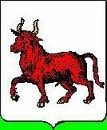

Squarcino Borri, also called Scarsini (1230-1277) was an Italian condottiero and lord of the lands of Santo Stefano Ticino.
Born in Santo Stefano Ticino in 1230, Squarcina was the son of Lanfranco of Borri (end of 12th – early 13th century), the local feudal lord of the city of Santo Stefano Ticino. The Borri family was one of the most respected in Milan, and counted among its ranks a saint, Monas of Milan, Bishop of Milan. Even in his youth, Squarcina (unlike his father) undertook a military career and placed himself at the head of the noble exiles from Milan after the Torriani took power in Milan. He remained a faithful supporter of the Visconti family and distinguished himself as a captain in the service of Ottone Visconti in the famous Battle of Desio in January 1277.
In 1254, he married Antonia (1236-?) of an unknown lineage, and they had a daughter Bonacossa Borri, who in 1269 married Matteo I Visconti, a future Lord of Milan. At the same time the family Borri were reconfirmed in their feudal rights over their lands, and the same Squarcina also became lord of the lands of Castellazzo de’ Stampi in Corbetta in 1275 and remained in office until his death in Invorio in 1277.
Squarcino Borri (1222 – 1277)
is my 21st great grandfather
Bonacossa Borri (1254 – 1321)
daughter of Squarcino Borri
Stefan Visconti (1289 – 1327)
son of Bonacossa Borri
Bernabo Lord Milan di Visconti (1319 – 1385)
son of Stefan Visconti
Veridis Duchess Austria Visconti (1352 – 1414)
daughter of Bernabo Lord Milan di Visconti
Ernst I “Ironside” Archduke of Austria Habsburg (1377 – 1424)
son of Veridis Duchess Austria Visconti
Katharina Archduchess Austria Von Habsburg (1420 – 1493)
daughter of Ernst I “Ironside” Archduke of Austria Habsburg
Christof I VanBaden (1453 – 1527)
son of Katharina Archduchess Austria Von Habsburg
Beatrix Zahringen (1492 – 1535)
daughter of Christof I VanBaden
Sabine Grafin VonSimmern (1528 – 1578)
daughter of Beatrix Zahringen
Marie L Egmond (1564 – 1584)
daughter of Sabine Grafin VonSimmern
Richard Sears (1590 – 1676)
son of Marie L Egmond
Silas Sears (1638 – 1697)
son of Richard Sears
Silas Sears (1661 – 1732)
son of Silas Sears
Sarah Sears (1697 – 1785)
daughter of Silas Sears
Sarah Hamblin (1721 – 1814)
daughter of Sarah Sears
Mercy Hazen (1747 – 1819)
daughter of Sarah Hamblin
Martha Mead (1784 – 1860)
daughter of Mercy Hazen
Abner Morse (1808 – 1838)
son of Martha Mead
Daniel Rowland Morse (1838 – 1910)
son of Abner Morse
Jason A Morse (1862 – 1932)
son of Daniel Rowland Morse
Ernest Abner Morse (1890 – 1965)
son of Jason A Morse
Richard Arden Morse (1920 – 2004)
son of Ernest Abner Morse
Pamela Morse
I am the daughter of Richard Arden Morse

Alma Llanera
There are not many stores that cater to sewing today because there are very few people who know how to sew. I always enjoyed the selection process as well as the craft and fitting. Now I feel like a kind of special agent of fashion because I know how to sew. You do reap what you sew. You also wear what you sew. It can be the best way to truly express unique fashion choices. I like to wear something that nobody else has, or even has seen. I also have a funny commemorative way of dressing that harkens back to days when I did long trips all over the place. I would assemble my trip wardrobe with great care and anticipation, thinking about weather and activities. Time permitting I would sew something for the trip that would make a debut on the road. I liked to associate certain clothing with certain places where I thought they looked their best. I no longer globe trot at such a pace, nor do I plan so many back to back obligations when I travel now. My wardrobe is casual like it is at home, with few exceptions.
Last year when I attended a reunion party at my old junior high I sewed a special skirt in honor of the home economics teacher who gave me a D on my apron in seventh grade. She was not in attendance, but I had something to prove when I went on a tour of my old school with my old classmates. The skirt turned out okay and I had my triumphant secret moment in the hallway where Mrs. G had been the hall monitor daily. I swished right by her imaginary self and let her know that I could sew. This year when I attended a reunion party in Austin with a group who lived in Venezuela in the 1960’s I made a signature pair of pants. I found some fabric with little skeleton cards portraying Day of the Dead figures. Tucson has a very big celebration of this holiday each year, so I decided to make a pair of pants as a conversation piece about my home town. The pants are fine, and on the first day in Texas I found a tee shirt that matched perfectly and had a purple longhorn, too. I was stylin’ and not too hot since the pants were loose fitting cotton. I received many compliments on them during my visit, and then wore them to the Venezuela reunion party. It was National Dance Day and I was ready. Here I am singing and dancing in my fancy pants, which I will forever associate with this party. While I don’t think it would be good to try to have your clothes match everything you do, sometimes it is fun. That is why I sew.
Two of the internet’s most darling substances are having their national recognition months in August. Before twitter I can’t imagine how people stayed filled up with bacon and coffee. Now there is a digital sip and a crunchy imaginary bite around every corner. To tweet with no coffee is to tweet a dull stream. A month of coffee celebrations could leave the nation jittery, but the addition of bacon means we are risking putting on some porky pounds in the process. I imagine that National Bacon Month will attract the seriously obsessed, while the coffee month will go mostly unnoticed outside of Starbucks. The good news about both of these months is that you do not need to indulge in or purchase any bacon or coffee to party with your digital friends. The use of both digital bacon and digital coffee is ubiquitous. To refuse it or to mention your dietary restrictions is very silly when all you have to do is digitally toast your coffee and share your bacon. The official International Bacon Day is the Saturday before Labor Day. Can you think of the best festive way to cheer up all your friends this month by serving coffee and bacon, or dressing up like these items? Here are some dedicated posts ready to stir your creativity about bacon.
If you had to go to a desert island and have only coffee or only bacon for a month, which one would you choose? I would go with coffee. Are you planning to celebrate either of these special occasions? What are your plans? What could be more important than this?
My 23rd great-grandfather was a knight in Scotland who inherited power and a castle by marrying his wife Isabell. The family did well.
Sir Gilchrist Mure
Born: Cir 1200
Marriage: Isabel Cumming
Died: 1280 aged 80
General Notes:
Rowallan had been in possession of the Mures previous to the reign of Alexander III., from which they were dispossessed by the powerful house of Cuming, and the owner, Sir Gichrist More, was ” redacted for his safty to keep close in his castle of Pokellie.” After the battle of Largs, however, upon which occasion Sir Gilchrist received the honour of Knighthood in reward of his bravery, he “was reponed to his whole inheritance.” ” Sir Gilchrist,” continues the author, ” for preventing of more creation of trouble, and for settling of his owne securitie and firmer peace made allyance with this partie of power, and married Isabell, his only daughter and heire, by accession of whose inheritance, to witt of the lands of Cuminside, Draden, and Harwoods, his estate being enlarged.” The editor, however, remarks, that it is ” fully as probable, even from his own showing, that Polkelly was the more ancient inheritance of his family, and that Rowallan was acquired solely by the marriage of the heiress, Isabell, as is generally held.” But to follow our author – ” After the death of Sir Walter Cumine, Sir Gilchrist now secured not onlie in the title and full possession of his old inheritance, but also in his border lands wherein he succeeded to Sir Walter forsaid within the Sheriffdom of Roxburgh, being sensible and mindfull of the deserving of his freinds and followers in time of his troubles, deals with all of them as became a man of honour, bestowing upon each some parcell of land according to his respect, interest or (happly) promise to the person. He disponed to his kinsman Ranald More, who had come purposlie from Ireland for his assistance in time of his troubles, and tooke share with him of the hazard of the battell, the lands of Pokellie,” &c. Now there is evidently a complete jumbling of times and circumstances here. In the reign of David II Maurice Mur- ray had a charter “of the waird of Walter Cuming of Rowallan, in vic. de Roxburgh, with the lands thereof.” It is thus apparent that the Rowallan lands in Roxburghshire were not in possession of Sir Gilchrist at this period and it is next to impossible that the same Sir Gilchrist Mure, who fought at the battle of Largs, could have been alive in the reign of David II. Indeed he is stated by the author to have died in 1280. No reliance, therefore, is to be placed on the “Historie” by Sir William farther back than can be corroborated by concurrent testimony.
He is said, as already mentioned, to have disponed the lands of Polkelly to his kinsman, Ranald More, but of this there is no evidence. The author of the “Historie” refers to a charter ” extant, granted by him to his daughter Anicia, of the lauds of Cuthsach, Gulmeth, Blaracharsan, with the woods thairof purchast from Molid, together with Garnegep and Calder, rowmes now not knowne by these names. The pasturage thairin specifyed being bounded upon the north side from Drwmbwy dicth by Swinstie burne, rnaks evident that the lands of Pokellie have been at that time in the hands of the disponer, and a proper part of the mure of Rowallane,” &e. With his daughter Anicia, married to Richard Boyle of Kelbume, he is said to have given the lands of Polruskane, ” for payment of ane pound of Comine seed in name of blensch ferme yearlie from these times, till by God’s good providence they are now brought in againe, to the house by lawfull purchase. He gifted likewise the lands of Ardoeh (now Crawfurdland,) to Johne Crawfurd and aires, for service of waird and reliefe, and to Edward Arnot the two finnicks for yearlie payment of ane pair of gloves at St Lawrence Chapelland of ane pair of spurs at St Michaell’s Chapell, embleames of reddie service. Last it is recorded that he builded the Mures Ile at Kilmarnock, and decored the same with funerall monuments, and mortified for maintainance of the Priest who did officiat at the altar thairin, to the Abacie of Killwining, the lands of Skirnalland, for which reasone the nomination of the priest forsaid (a custome which constantlie continued till the restoring of religion) was proper to him and his successors.” Sir Gilchrist, who had evidently been the means of vastly increasing the family estates, although there is no evidence of his being in the possession of Rowallan, is said to have died “about the year 1280, neer the 80 year of his age.” He was buried, says the historian, “with his forfathers in his owne buriell place in the Mures Isle at Kilmarnock,” a statement certainly involving an anachronism. If he was the builder of the Isle, he could not well have been buried with his forefathers, unless they had been disinhumed for the purpose. He had, by his lady, Isabcll Cumine:-

Rowallan Castle
Gilchrist Mure (1200 – 1280)
is my 23rd great grandfather
ARCHIBALD Mure (1231 – 1297)
son of Gilchrist Mure
William Mure (1265 – 1348)
son of ARCHIBALD Mure
Adam More (1290 – 1380)
son of William Mure
Elizabeth Mure (1320 – 1355)
daughter of Adam More
Robert Scotland Stewart (1337 – 1406)
son of Elizabeth Mure
James I Scotland Stewart (1394 – 1434)
son of Robert Scotland Stewart
Joan Stewart (1428 – 1486)
daughter of James I Scotland Stewart
John Gordon (1450 – 1517)
son of Joan Stewart
Robert Lord Gordon (1475 – 1525)
son of John Gordon
Catherine Gordon (1497 – 1537)
daughter of Robert Lord Gordon
Lady Elizabeth Ashton (1524 – 1588)
daughter of Catherine Gordon
Capt Roger Dudley (1535 – 1585)
son of Lady Elizabeth Ashton
Gov Thomas Dudley (1576 – 1653)
son of Capt Roger Dudley
Anne Dudley (1612 – 1672)
daughter of Gov Thomas Dudley
John Bradstreet (1652 – 1718)
son of Anne Dudley
Mercy Bradstreet (1689 – 1725)
daughter of John Bradstreet
Caleb Hazen (1720 – 1777)
son of Mercy Bradstreet
Mercy Hazen (1747 – 1819)
daughter of Caleb Hazen
Martha Mead (1784 – 1860)
daughter of Mercy Hazen
Abner Morse (1808 – 1838)
son of Martha Mead
Daniel Rowland Morse (1838 – 1910)
son of Abner Morse
Jason A Morse (1862 – 1932)
son of Daniel Rowland Morse
Ernest Abner Morse (1890 – 1965)
son of Jason A Morse
Richard Arden Morse (1920 – 2004)
son of Ernest Abner Morse
Pamela Morse
I am the daughter of Richard Arden Morse





Travel is exciting and broadens the mind. I love to go, but I love to come home even more. When I compare my ease and comfort at home with life on the road, even at wonderful places, I am always pleased that I live where I do. My midtown location makes it simple and fast for me to shop for anything I want. I am surrounded with very high quality body workers and Chinese Medicine practitioners. My esthetician is the best in the world, and her practice is just blocks from my home. I miss my pool and giant jacuzzi when I travel because it is private and rarely used by anyone but me. I go in the morning during the summer and have the water all to myself every day. I do like the pools at my health club, the Tucson Racquet Club, in the winter months because they are heated and next to a steam room. This time of year (August) nothing pleases me more than to walk around the corner and have hours with the private pool all to myself. I have never been anyplace else where this is true.
I am happy to be back in my kitchen. Dining and tasting all over town has its merits, but whipping up anything you want to eat because you can is better. I am a good cook, and have brought some of the flavor ideas home with me that I learned in my neighborhood of East Austin. I met more than one great craft cocktail maker who have given me new ideas for shrubs, punches, and custom soda drinks. I tasted some pickled veggies that made sandwiches pop, and are very easy to prepare and keep on hand in the fridge. I was served the best mac and cheese which was baked in the same black cast iron pans I use at home to bake bread. I will knock off the black bean, jicama, avocado, romaine salad from El Chilito and it will be as if I never had to leave Manor Rd.
The University of Arizona students will come flooding back into town, but there are fewer of them than at University of Texas. While I was on holiday the new tram opened downtown which will make our transportation system much fancier and desirable. The students will now be able to tram all over downtown to drink, then tram back home without getting behind the wheel. This new attraction will be fun for us also. We plan to ride down to check out some of the new businesses along the tram line very soon. There is still plenty to discover right here in Tucson. I am shocked at how much I love my hometown.
I spend a lot of time studying history, usually by learning about my own ancestry. The knowledge of my own family in different time periods has really helped me to get a better understanding of significant events and political movements. I began with some curiosity about how my own parents developed their ideas and culture, and now I can’t stop. I guess I don’t think about my own place in history, but a visit to the University I attended when I was 17 has given me both flash backs and chills. The anti-war movement and what was known as the free speech movement were obvious choices for me as a teen. I disagreed with all forms of violence, and my parents not only practiced violence in their personal lives, but firmly believed that military might and hatred were American privileges. I see now that my own reaction to their way of thinking not only changed my life, but changed history.
Now we find ourselves in a highly militaristic and war torn world. Racism has not disappeared, but has gone underground. Poverty and lack of education and health care are in about the same situation as the 1950’s. The effects of the laws, the programs, and the ideals that lifted America to a better place have virtually vanished into thin air. We have more descent about politics then I have seen in my lifetime. Our people are addicted to debt and squandering resources mindlessly. Greed has replaced most other motives, and corporations can buy any government they want. I will not form any philosophy around this decay and lowering of standards for the greater good because it has been happening since the dawn of time. Our recurrent situation, fighting in wars in foreign lands for no logical purpose is no different from the Crusades, or the devastation of Native America. Power may not beget evil, but the cycles of tragedy follow the cycles of power. We can only analyze the past after time has passed and those cycles become clear. In my youth I thought that ending the Vietnam War would end all wars. I have to wonder if this feeling also has occurred in young people forever. The idea that when we finally have power we will change the world to make it better for everyone could not possibly have been originated by hippies. I am sure there have always been those who wanted to give peace a chance. Things have to hit bottom before they bounce, just like real estate. I can only hope that bottom is once again in sight, and that the end of my life will resemble the beginning, with an attitude of hope and conviction that we can do better.
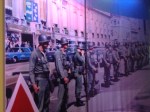
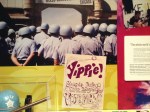
I came to the University of Texas as a freshman in 1968, a very turbulent year in American history. The Texas History Museum is currently showing an exhibit about that year. It makes me wonder why we never hear anybody say “fascist pig” any more. I was clearly against the war in Viet Nam, and went to see Hubert Humphrey when he came to campus to speak. I did not particularly like him but was only 17 so I had no voting rights. As students we were not very tied into current events because we had studying and partying to do. We also mistrusted news sources that were conventional. This was the era of the underground newspaper. It was also the era of protest for political change. The campus was divided. The football, sorority, fraternity people were already invested in status quo. The rest of us were rallying to stop the war in Viet Nam because it had no earthly purpose, and was destructive. I came to school in September and Richard Nixon was elected in November. There was much to protest. I remember on very symbolic gesture that illustrated our differences. A group of students wanted to raise money to buy The Texas Longhorn, Bevo, and send him to Biafra to feed the starving people. “Send Bevo to Biafra” was actually a moral pivotal point in student organizing. It had only been 2 years since Charles Whitman, a Nam vet, shot people on the mall from the UT tower. To the anti war faction the shooter was not seen as a victim or a sufferer of post traumatic military issues. He was seen as typical of the “other side”. Some of us liked killing and some of us thought war was not healthy for children and other living things. We believed Charles Whitman was doing what we thought all Nam vets wanted to do, kill people with a big gun. He was a capitalist imperialist pig, and that was all there was to it. Things were so simplistic in 1968, but somehow I feel that nothing has changed.
Martin Luther King and Bobby Kennedy were assassinated in 1968. Lyndon was president when I came to school in Austin. Even though he signed the Civil Rights Act he was not seen as a progressive hero by the youth. He was seen as a crooked politician who sent kids to war. Lady Bird, who wanted people to stop throwing garbage out the windows of their cars, was seen as a wet blanket. Garbage throwing was perceived as a birthright, just like owning a gun or hating other races. Her “Beautify America” campaign was the foundation for today’s ecology movements. Museums and libraries document history and put matters into perspective for those who were not alive or old enough to know what happened. When I walked through the 1968 exhibit it brought back memories as well as a sense of struggle. For a while it seemed that the struggle resulted in peace and harmony. It did not last. Where were you in 1968? Were you on the bus or off the bus?


















 mermaidcamp