mermaidcamp
Keeping current in wellness, in and out of the water
You can scroll the shelf using ← and → keys
You can scroll the shelf using ← and → keys

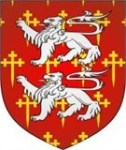
My 19th great-grandfather was Justice of the Peace. He died at the age of 29, perhaps of the black plague, as many of his forefathers had done. The family had very bad luck with the black death.
John Lestrange, 4th Lord Strange (of Blackmere)
b. circa 1332, d. 12 May 1361
John Lestrange, 4th Lord Strange (of Blackmere) was born circa 1332 at Whitchurch, Hampshire, England. He was the son of John Lestrange, 2nd Lord Strange (of Blackmere) and Ankaret Boteler. He married Mary FitzAlan, daughter of Edmund Fitzalan, 9th Earl of Arundel and Alice de Warenne.1 He died on 12 May 1361.4
He was Justice of the Peace (J.P.) Salop 1360.5 He was also known as John le Strange. He gained the title of 4th Lord Strange, of Blackmere.1 He was created 1st Lord Lestrange in 1360. On 3 April 1360 1st LORD (Baron) STRANGE or LESTRANGE of a new created by writ of summons.
Children of John Lestrange, 4th Lord Strange (of Blackmere) and Mary FitzAlan
Joh n Lestrange, 5th Lord Strange (of Blackmere)+4 b. c 1353, d. 3 Aug 1375
Ankaret Lestrange+ b. c 1361, d. 1 Jun 1413
Citations
[S6] G.E. Cokayne; with Vicary Gibbs, H.A. Doubleday, Geoffrey H. White, Duncan Warrand and Lord Howard de Walden, editors, The Complete Peerage of England, Scotland, Ireland, Great Britain and the United Kingdom, Extant, Extinct or Dormant, new ed., 13 volumes in 14 (1910-1959; reprint in 6 volumes, Gloucester, U.K.: Alan Sutton Publishing, 2000), volume I, page 244. Hereinafter cited as The Complete Peerage.
[S6] Cokayne, and others, The Complete Peerage, volume XII/1, page 343.
[S37] Charles Mosley, editor, Burke’s Peerage, Baronetage & Knightage, 107th edition, 3 volumes (Wilmington, Delaware, U.S.A.: Burke’s Peerage (Genealogical Books) Ltd, 2003). Hereinafter cited as Burke’s Peerage and Baronetage, 107th edition.
[S6] Cokayne, and others, The Complete Peerage, volume XII/1, page 344.
[S37] Charles Mosley, Burke’s Peerage and Baronetage, 107th edition, volume 3, page 3473.
John IV Lord Strange 7th Lord Blackmere Le Strange (1332 – 1361)
is my 19th great grandfather
Ankaret Baroness le Strange (1361 – 1413)
daughter of John IV Lord Strange 7th Lord Blackmere Le Strange
General John Talbot * (1384 – 1453)
son of Ankaret Baroness le Strange
John Talbot (1413 – 1460)
son of General John Talbot *
Isabel Talbot (1444 – 1531)
daughter of John Talbot
Sir Richard Ashton (1460 – 1549)
son of Isabel Talbot
Sir Christopher Ashton (1493 – 1519)
son of Sir Richard Ashton
Lady Elizabeth Ashton (1524 – 1588)
daughter of Sir Christopher Ashton
Capt Roger Dudley (1535 – 1585)
son of Lady Elizabeth Ashton
Gov Thomas Dudley (1576 – 1653)
son of Capt Roger Dudley
Anne Dudley (1612 – 1672)
daughter of Gov Thomas Dudley
John Bradstreet (1652 – 1718)
son of Anne Dudley
Mercy Bradstreet (1689 – 1725)
daughter of John Bradstreet
Caleb Hazen (1720 – 1777)
son of Mercy Bradstreet
Mercy Hazen (1747 – 1819)
daughter of Caleb Hazen
Martha Mead (1784 – 1860)
daughter of Mercy Hazen
Abner Morse (1808 – 1838)
son of Martha Mead
Daniel Rowland Morse (1838 – 1910)
son of Abner Morse
Jason A Morse (1862 – 1932)
son of Daniel Rowland Morse
Ernest Abner Morse (1890 – 1965)
son of Jason A Morse
Richard Arden Morse (1920 – 2004)
son of Ernest Abner Morse
Pamela Morse
I am the daughter of Richard Arden Morse
“The case of the le Strange family demonstrates well what the Black Death and the courts could do to an unlucky upper-class family. The le Stranges lived in Whitchurch in Shropshire in the black-earth, high-grain-yielding country intensely competed for by gentry families. The rich le Stranges were ambitious and on the rise, and because of their upward mobility were starting to make marriages in some instances with younger daughters of the nobility.
“But the le Strange family was exceptionally unlucky in losing male family members during three successive outbreaks of the plague—two in 1349, and one each in 1361 and 1375. By 1375 not even the relative fecundity of the family in producing sons for the next generation could help them escape extinction in the male line. The plague had eliminated sons and left ambitious dowagers.
“The le Stranges going back to the 1330s were not originally a great gentry house. They were a family on the make, principally through marriages with rich women, plus good estate management. The enhancement of family fortunes was launched by the marriage of John le Strange the First [a.k.a. John, 2nd Lord Blackmere] to a wealthy gentry heiress, Anakretta [sic] le Botiler. In the next two generations the le Strange heirs married into the nobility. This raised their social and political profile and with luck would have accrued vast landed wealth to the family.
“But the Black Death countered that luck. Fulk le Strange, John I’s eldest son, married Elizabeth, the daughter of Earl Ralph of Stafford. Earl Ralph drove a hard marriage bargain. Fulk’s father, Ralph Stafford insisted, had to settle land worth two hundred marks a year (about a half-million dollars) jointly on the couple. This meant that if both John I and Fulk died close in time to each other and Fulk’s marriage to the heiress Elizabeth Stafford was short, the le Strange estate would be affected severely by loss of income from land held as dower for the widow.
“Fulk le Strange died in the Black Death on August 30, 1349. But Elizabeth Stafford lived to a ripe old age by medieval standards, not dying until 1376. During those three decades Elizabeth not only collected dower from her deceased husband’s estate but remarried twice, taking with her the succulent property that John I le Strange had to settle jointly on his son Fulk and Elizabeth Stafford to get Earl Ralph’s permission for the marriage. The land thus eventually passed to the family of Reginald, Lord Cobham, Elizabeth Stafford’s third husband.
“The story gets worse and more complicated for the pathetic le Stranges. Not only did Fulk le Strange, the elder son and prime heir of John I, die in the Black Death in August 1349, but the old man himself, John I le Strange of Whitchurch, had died of the plague only five weeks earlier. For a rich gentry family this blow was equivalent to a 60 percent crash in the stock market today—if every single asset was held in stock.
“Anakretta le Botiler survived her husband, John I le Strange, until the next visitation of the plague in 1361. This meant that there were now two living dowagers, Anakretta le Botiler le Strange and Elizabeth Stafford le Strange, both women from families powerful enough to get their full dower rights and then some. For the twelve years of her widowhood Anakretta held the family house at Whitchurch in Shropshire (contrary to custom, by which she should have vacated it within forty days of her husband’s death). She held on to one estate that came with her dowry, since it was jointly visited upon her and John I. For another piece of land she paid her son John II le Strange and his estate the modest sum of twenty marks (thirty thousand dollars) a year.
“This medieval soap opera in the age of the Black Death gets worse still for the le Strange gentry. John II le Strange got back some of his father’s lands when his mother, Anakretta, died in 1361, but he himself died of the plague in the same year. This left a third dowager to be taken care of from the le Strange lands, a great lady indeed, Mary, daughter of the earl—later duke—of Arundel [a.k.a. Mary FitzAlan].
“Mary Arundel le Strange had to be taken care of in the lifestyle she had come to expect as a product of the high aristocracy and as a lady dominating local society. She took possession of most of the income or actual real estate of the le Strange inheritance, dying in 1396. After the dowager Mary died, the remaining le Strange lands passed to Richard, Lord Talbot, who was married to Anakretta, the daughter of John II le Strange.
“The le Strange name thus disappeared from gentry history.”
From Cantor, Norman (2001) In the Wake of the Plague: The Black Death and the World it Made, pp. 130-134. New York: HarperCollins.
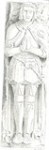
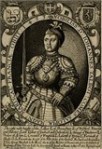

My 17th great-grandfather was the first Earl of Shrewsbury. There is still an Earl of Shrewsbury in England today. He was a military man who died fighting for king and country.
The death of John Talbot at the Battle of Castillon.
John Talbot, 1st Earl of Shrewsbury (1384/1390 – 17 July 1453) was an important English military commander during the Hundred Years’ War, as well as the only Lancastrian Constable of France.
Family
He was second son of Richard, 4th Baron Talbot, by Ankaret, heiress of the last Lord Strange of Blackmere.
Talbot was married on 12 March 1406 to Maud Nevill, daughter and heiress of Thomas Nevill, 5th Baron Furnivall, the son of John Neville, 3rd Baron Neville de Raby. He was summoned to Parliament in her right from 1409.
Children
The couple had four children:
Lady Joan Talbot
John Talbot, 2nd Earl of Shrewsbury (c. 1413 – 11 July 1460)
Sir Christopher Talbot (d. 10 July 1460)
Hon. Thomas Talbot (died before his father in Bordeaux)
In 1421 by the death of his niece he acquired the Baronies of Talbot and Strange.
2nd Marriage
He married, secondly, Lady Margaret Beauchamp, daughter of Richard de Beauchamp, 13th Earl of Warwick and Elizabeth de Berkeley, on 6 September 1425 and had four children:
Sir Lewis Talbot
John Talbot, 1st Viscount Lisle (c. 1426 – 17 July 1453)
Sir Humphrey Talbot (before 1453 – c. 1492)
Lady Elizabeth Talbot (before 1453). She married John de Mowbray, 4th Duke of Norfolk.
Lady Eleanor Talbot (d. 1468) married to Thomas Butler and King Edward IV of England.
Early career
From 1404 to 1413 he served with his elder brother Gilbert in the Welsh war or the rebellion of Owain Glyndŵr. Then for five years from February 1414 he was lieutenant of Ireland, where he held the honour of Wexford. He did some fighting, and had a sharp quarrel with the Earl of Ormonde. Complaints were made against him both for harsh government in Ireland and for violence in Herefordshire. From 1420 to 1424 he served in France. In 1425, he was lieutenant again for a short time in Ireland.
Service in France
So far his career was that of a turbulent Marcher Lord, employed in posts where a rough hand was useful. In 1427 he went again to France, where he fought with distinction in Maine and at the Siege of Orléans. He fought at the Battle of Patay where he was captured and held prisoner for four years.
He was released in exchange for the French leader Jean Poton de Xaintrailles. Talbot was a daring and aggressive soldier, perhaps the most audacious Captain of the Age. He and his forces acted as a kind of fire brigade ever ready to retake a town and to meet a French advance. His trademark was rapid aggressive attacks. In January 1436 he led a small force including Kyriell and routed La Hire and Xaintrailles at Ry near Rouen. The following year at Crotoy, after a daring passage of the Somme, he put a numerous Burgundian force to flight. In December 1439, following a surprise flank attack on their camp, he dispersed the 6000 strong army of the Constable Richemont, and the following year he retook Harfleur. In 1441 he pursued the French army 4 times over the Seine and Oise rivers in an unavailing attempt to bring it to battle.
The English Achilles
He was appointed in 1445 by Henry VI of England (as king of France) as Constable of France. Taken hostage at Rouen in 1449 he promised never to wear armour against the French King again, and he was true to his word. He was defeated and killed in 1453 at the Battle of Castillon near Bordeaux, which effectively ended English rule in the duchy of Gascony, a principal cause of the Hundred Years’ War. His heart was buried in the doorway of St Alkmund’s Church, Whitchurch, Shropshire.[1]
The victorious French generals raised a monument to Talbot on the field called Notre Dame de Talbot. And the French Chroniclers paid him handsome tribute:
“Such was the end of this famous and renowned English leader who for so long had been one of the most formidable thorns in the side of the French, who regarded him with terror and dismay” – Matthew d’Escourcy
Although Talbot is generally remembered as a great soldier, some have raised doubts as to his generalship. In particular, charges of rashness have been raised against him. Speed and aggression are key elements in granting success in medieval war, and Talbot’s numerical inferiority necessitated surprise. Furthermore, he was often in the position of trying to force battle on unwilling opponents. At his defeat at Patay in 1429 he was advised not to fight there by Sir John Fastolf, who was subsequently blamed for the debacle, but the French, inspired by Joan of Arc, showed unprecedented fighting spirit – usually they approached an English position with great circumspection. The charge of rashness is perhaps more justifiable at Castillon where Talbot, misled by false reports of a French retreat, attacked their entrenched camp frontally – facing wheel to wheel artillery and a 6 to 1 inferiority in numbers.
He is portrayed heroically in William Shakespeare’s Henry VI, Part I: “Valiant Lord Talbot, Earl of Shrewsbury, Created, for his rare success in arms”
Political officesPreceded by
New CreationLord High Steward of Ireland
1446–1453Succeeded by
The Earl of ShrewsburyPeerage of EnglandPreceded by
New CreationEarl of Shrewsbury
1442–1453Succeeded by
John TalbotPreceded by
Ankaret TalbotBaron Talbot
1421–1453Succeeded by
John TalbotBaron Strange of Blackmere
1421–1453Peerage of IrelandPreceded by
New CreationEarl of Waterford
1446–1453Succeeded by
John TalbotCultural influence
John Talbot is shown as a featured character in Koei’s video game known as ‘Bladestorm: The Hundred Years’ War’, appearing as the left-arm of Edward, the Black Prince, in which he assists the former and the respective flag of England throughout his many portrayals.
Talbot appears as one of the primary antagonists in the PSP game Jeanne d’Arc.
Battle of Castillon
Date17 July 1453LocationCastillon-la-Ba taille, GasconyResult Decisive French victory
Belligerents Kingdom of England vs Kingdon of France and Duchy of Brittany
Commanders – John Talbot, Earl of Shrewbury vs Jean Bureau
Strength – 6,000-7,000 7,000-10,000
Casualties and losses – 4,000, mainly wounded or captured – 100 dead or wounded
The Battle of Castillon of 1453 was the last battle fought between the French and the English during the Hundred Years’ War. This was the first battle in European history where cannons were a major factor in deciding the battle.[
After the French capture of Bordeaux in 1451, the Hundred Years’ War appeared to be at an end. However, after three hundred years of English rule the citizens of Bordeaux considered themselves English and sent messengers to Henry VI of England demanding he recapture the province.
On 17 October 1452, the Earl of Shrewsbury landed near Bordeaux with a force of 3,000 men-at-arms and archers. The French garrison was ejected by the citizens of Bordeaux, who then gleefully opened the gates to the English. Most of Gascony followed Bordeaux’s example and welcomed the English home.
During the winter month Charles VII of France gathered his armies in readiness for the campaigning season. When spring arrived Charles advanced toward Bordeaux simultaneously along three different routes with three armies.
Preparation
Talbot, the Earl of Shrewsbury, received another 3,000 men to face this new problem, but it was still an inadequate number to hold back the thousands of Frenchmen on Gascony’s borders. When the leading French army laid siege to Castillon, Talbot abandoned his original plans (acceding to the pleas of the town commanders) and set out to relieve it. The French commander, Jean Bureau, in fear of Talbot, ordered his 7,000 to 10,000 men to encircle their camp with a ditch and palisade, and deployed his 300 cannon on the parapet. This was an extraordinarily defensive setup by the French, who enjoyed great numerical superiority. They had made no attempt to invest Castillon.
Talbot approached the French camp on 17 July 1453, arriving before his main body of troops with an advance guard of 1,300 mounted men. He routed a similar sized force of French francs-archers (militia) in the woods before the French encampment, giving his men a large boost of morale.
Main battle
A few hours after this preliminary skirmish, a messenger from the town reported to Shrewsbury’s resting troops (they had marched through the night) that the French army was in full retreat and that hundreds of horsemen were fleeing the fortifications. From the town walls a huge dust cloud could be seen heading off into the distance. Unfortunately for him, they were only camp followers ordered to leave the camp before the upcoming battle.
Shrewsbury hastily reorganised his men and charged down towards the French camp, only to find the parapets defended by thousands of archers and crossbowmen and hundreds of cannons. Surprised but undaunted, Shrewsbury gave the signal to attack the French army. Shrewsbury didn’t take part in the battle directly. He had been previously captured and paroled, thus was not allowed to take arms against the French.
English troops charged the camp, across a ditch, only to be met with a hail of arrows and quarrels, and a fierce gun, cannon and small arms fire. The concentrated fire could be explained by the fact that the ditch followed, probably by accident, the former bed of a small stream, giving a bastionned look to defences.
Once battle started, Shrewsbury received a thin trickle of men from his leading footmen. After an hour the cavalry of the Breton army sent by the Duke of Brittany arrived and charged his right flank. The English gave way, pursued instantly by the French main body of troops.
During the rout Shrewsbury’s horse was killed by a cannon ball and he fell trapped beneath it, until a Frenchman, a Francs Archer, recognised him and killed him with a hand-axe. His death, and the subsequent recapture of Bordeaux three months later, effectively brought the Hundred Years’ War to a close.
Aftermath
Following Henry VI’s episode of insanity in 1453, the subsequent outbreak of the Wars of the Roses and the evident loss of military ascendancy to the French, the English were no longer in any position to pursue their claim to the French throne and lost all their land on the continent (except for the city of Calais, the last English possession in France, finally lost in 1558).
General John Talbot * (1384 – 1453)
is my 17th great grandfather
John Talbot (1413 – 1460)
son of General John Talbot *
Isabel Talbot (1444 – 1531)
daughter of John Talbot
Sir Richard Ashton (1460 – 1549)
son of Isabel Talbot
Sir Christopher Ashton (1493 – 1519)
son of Sir Richard Ashton
Lady Elizabeth Ashton (1524 – 1588)
daughter of Sir Christopher Ashton
Capt Roger Dudley (1535 – 1585)
son of Lady Elizabeth Ashton
Gov Thomas Dudley (1576 – 1653)
son of Capt Roger Dudley
Anne Dudley (1612 – 1672)
daughter of Gov Thomas Dudley
John Bradstreet (1652 – 1718)
son of Anne Dudley
Mercy Bradstreet (1689 – 1725)
daughter of John Bradstreet
Caleb Hazen (1720 – 1777)
son of Mercy Bradstreet
Mercy Hazen (1747 – 1819)
daughter of Caleb Hazen
Martha Mead (1784 – 1860)
daughter of Mercy Hazen
Abner Morse (1808 – 1838)
son of Martha Mead
Daniel Rowland Morse (1838 – 1910)
son of Abner Morse
Jason A Morse (1862 – 1932)
son of Daniel Rowland Morse
Ernest Abner Morse (1890 – 1965)
son of Jason A Morse
Richard Arden Morse (1920 – 2004)
son of Ernest Abner Morse
Pamela Morse
I am the daughter of Richard Arden Morse
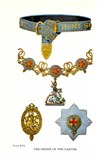
Order of the Garter
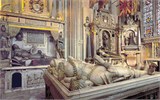
tomb
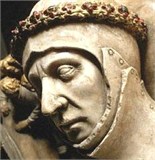
John Beaufort
It is a good thing I have picked up a copy of the book Royal Panoply to figure out what those royal Brits were doing because I seem to be descended from John of Gaunt at least 3 different ways. This makes the tree confusing to trace. The 1st Earl of Somerset was a Royal Bastard.
John Beaufort , 1st Earl of Somerset (1371 – 1410)
is my 18th great grandfather
Joan Beaufort (1407 – 1445)
daughter of John Beaufort , 1st Earl of Somerset
Joan Stewart (1428 – 1486)
daughter of Joan Beaufort
John Gordon (1450 – 1517)
son of Joan Stewart
Robert Lord Gordon (1475 – 1525)
son of John Gordon
Catherine Gordon (1497 – 1537)
daughter of Robert Lord Gordon
Lady Elizabeth Ashton (1524 – 1588)
daughter of Catherine Gordon
Capt Roger Dudley (1535 – 1585)
son of Lady Elizabeth Ashton
Gov Thomas Dudley (1576 – 1653)
son of Capt Roger Dudley
Anne Dudley (1612 – 1672)
daughter of Gov Thomas Dudley
John Bradstreet (1652 – 1718)
son of Anne Dudley
Mercy Bradstreet (1689 – 1725)
daughter of John Bradstreet
Caleb Hazen (1720 – 1777)
son of Mercy Bradstreet
Mercy Hazen (1747 – 1819)
daughter of Caleb Hazen
Martha Mead (1784 – 1860)
daughter of Mercy Hazen
Abner Morse (1808 – 1838)
son of Martha Mead
Daniel Rowland Morse (1838 – 1910)
son of Abner Morse
Jason A Morse (1862 – 1932)
son of Daniel Rowland Morse
Ernest Abner Morse (1890 – 1965)
son of Jason A Morse
Richard Arden Morse (1920 – 2004)
son of Ernest Abner Morse
Pamela Morse
I am the daughter of Richard Arden Morse
John Beaufort, 1st Earl of Somerset (1373 – 16 March 1410) was the first of the four illegitimate children of John of Gaunt, 1st Duke of Lancaster, and his mistress Katherine Swynford, later his wife. Beaufort was born in about 1371 and his surname probably reflects his father’s lordship of Beaufort in Champagne, France.
The family emblem was the portcullis which is shown on the reverse of a modern British 1p coin. John of Gaunt had his nephew Richard II declare the Beaufort children legitimate in 1390, Gaunt married their mother in January 1396. Despite being the grandchildren of Edward III, and next in the line of succession after the Lancasters, their father’s legitimate children, by agreement they were barred from the succession to the throne.
Early life
In May to September of 1390 Beaufort served in Louis II, Duke of Bourbon’s crusade in North Africa. In 1394 he was in Lithuania serving with the teutonic Knights
In 1396, after his parents’ marriage, John and his siblings were legitimated by a papal bull. Early the next year, their legitimation was recognized by an act of Parliament, and then, a few days later, John was created Earl of Somerset (10 February 1397).[5]
That summer the new Earl was one of the noblemen who helped Richard II free himself from the power of the Lords Appellant. As a reward on 29 September he was created Marquess of Dorset, and sometime later that year he was made a Knight of the Garter and appointed Lieutenant of Ireland. In addition, two days before his elevation as a Marquess he married the King’s niece, Margaret Holland, sister of the 3rd Earl of Kent, another of the counter-appellants.[5]
He remained in the King’s favour even after his half-brother Henry Bolingbroke (later Henry IV) was banished. In February 1397 he was appointed Admiral of the Irish fleet, as well as constable of Dover and Warden of the Cinque Ports. In May his Admiralty was extended to include the northern fleet.
Later career
After Richard II was deposed by Henry Bolingbroke in 1399, the new king rescinded the titles that had been given to the counter-appellants, and thus John Beaufort became merely Earl of Somerset again. Nevertheless, he proved loyal to his half-brother’s reign, serving in various military commands and on some important diplomatic missions. It was he who was given the confiscated estates of the Welsh rebel leader Owain Glyndwr in 1400, although Beaufort could not effectively come into these estates until after 1415. In 1404 he was Constable of England.
Family
John Beaufort and his wife Margaret Holland, the daughter of the Earl of Kent, had six children; his granddaughter Lady Margaret Beaufort married a son, (Edmund Tudor, 1st Earl of Richmond), of dowager queen Catherine of Valois by Owen Tudor — thus creating a powerful branch of the Lancastrian family which enabled the issue of that (Beaufort) marriage, Henry Tudor, ultimately to claim the throne, as Henry VII, in spite of the agreement barring the Beaufort family from the succession.
Somerset died in the Hospital of St Katharine’s by the Tower. He was buried in St Michael’s Chapel in Canterbury Cathedral.
His children included:
Henry Beaufort, 2nd Earl of Somerset (1401 – 25 November 1418)
John Beaufort, 1st Duke of Somerset (baptized 25 March 1404 – 27 May 1444)
Joan Beaufort, Queen of Scotland (1404 – 15 July 1445) married James I, King of Scots.
Thomas Beaufort, Count of Perche (1405 – 3 October 1431)
Edmund Beaufort, 2nd Duke of Somerset (1406 – 22 May 1455)
Margaret Beaufort, Countess of Devon (1409 – 1449) married Thomas de Courtenay, 13th Earl of Devon.



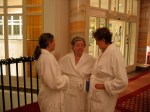








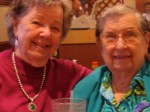
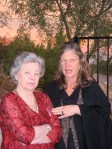
Ruby Lea Taylor was an orphan from Humble Texas who married my dad and escaped poverty. She never intended to look back or return to her roots. She visited her siblings, but retained distance both geographically and philosophically. She was ready to go anywhere at a moment’s notice, and adventured into anything my father proposed. They were world travelers and jet setters before there were jets. I always thought my parents were heavily repressive when I was at home, but in retrospect I know they came a long way, baby. They even tuned in turned on (with alcohol) and dropped out in the 60’s to travel around the Caribbean. They surprised me when they moved to Texas so my father could take up computer science before there was really any computer science. Ruby was a pioneer environmentalist while my father was busy perfecting fracking. She had a very green thumb, and followed first lady Ladybird into the Clean Up America campaign. Her love of gardens, botany, and flowers lasted a lifetime. When she was near the end of her life she adored spending time in her garden, and all other gardens. She died at home in Tucson, right around the corner from where I live now. The college aged girls who live in her house now told me they have a ghost, and that she is friendly. They say she likes to dance and party. That would definitely be my mother. I am pleased she has those college girls to keep her entertained. She doesn’t visit us because we are probably not lively enough for her.
I saw a doctor and a veteran on the national news who said the way to solve the VA problem is to dissolve it. I agree completely. I volunteered at the VA because I still believed I could raise the standard of care when I did it. Not only was it impossible to raise the standard of care for just one person to whom I was assigned, the entire institution is unethical and scary as hell. The electronic medical records system is abused constantly, as are the patients. As a taxpayer I was shocked and upset at the use of funds to do nothing for the patients. Money is used liberally, but the outcomes and the patients are the least of the agency’s concern. As featured in the recent Phoenix scandal, the employees at the VA are shooting for big bonuses rather than improving the lives of the Vets. They are so far off course that it can’t be remedied. There is a culture of extreme abuse and fraud. Those Veterans can just go to doctors of their choice and we can run it like the congressional health care system. We don’t need to institutionalize abuse any more than we already have.
I was assigned to visit patients at home. My fist dude lived at home with his wife. After he died I was assigned to my second patient who lived in a care home. Both of them mentioned problems with health care and thought I could help them. I thought so too, until I tried. The premise was that we would report unsafe of undesirable conditions, which the VA could fix. The problem was that no matter how much money was spent they never addressed the issues. They simply did something, with no consideration of the needs of the patient. It was a waste-o-rama. When I met my second patient I could hear the feedback from his hearing aid across the room. He asked if I might be able to help him get hearing aids that did not screech. That seemed simple enough, but after more than a year and several long hard visits to the hospital his hearing aid was still loud enough for me to hear it from across the room. He was suicidal and talked frequently about it, but after a few attempts at helping him with other VA problems I knew it was a mistake to tell them anything that would make them torture him any more. I finally threw in the VA towel when they directed me to leave him as I found him one day, unconscious and unresponsive in his care home. I had called a nurse, who looked at him for about a minute and left. I was instructed by the VA not to call 911 or take any action to save his life. I had to quit my official position and visited him myself without doing any reports to the VA. His health was in severe decline and he was not able to wake up most of the time, so I eventually stopped visiting him because it was emotionally draining and frustrating. Nothing he or I asked the VA to do for him was done, but plenty of people received salaries milling around pretending to care for him. I called the local senior care advocate to help him get out of some of his problems, which did work. The VA told me that was a conflict of interest, and I was never to seek real help for him from other institutions. I was working against my own beliefs by representing the VA, so I had to end that.
Being left on a waiting list for care is unacceptable, but sadly, so is the care given when they finally manage to give it. I have heard of those who have had good experiences with VA health care, but nothing recent. There is no reason to have a separate, corrupt and highly unregulated system that does not serve the patents well. If we can reform health care, we can eliminate the waste and abuse that the VA contains. Those who have risked everything deserve the best. Taxpayers deserve to know we are giving them the best care available. This situation is highly symbolic to me of the disrespect government frequently displays for the citizens who pay for it. I am a pacifist, so my concern for the soldiers is moral and ethical. I did not want to send them off to war, but since it has happened I sincerely believe we need to honor that sacrifice they made.

Sir Thomas
My 20th great-grandfather was a member of the Order of the Garter. He was a military commander and member of Parliament. The Hundred Years’ War was a huge drag because it lasted for 100 years. He fought in Flanders and in France for Britain.
Sir Thomas de Holand Wake Kent (1314 – 1360)
is my 20th great grandfather
Sir Thomas Holand Knight deHolland (1350 – 1397)
son of Sir Thomas de Holand Wake Kent
Margaret DeHoland (1385 – 1439)
daughter of Sir Thomas Holand Knight deHolland
Joan Beaufort (1407 – 1445)
daughter of Margaret DeHoland
Joan Stewart (1428 – 1486)
daughter of Joan Beaufort
John Gordon (1450 – 1517)
son of Joan Stewart
Robert Lord Gordon (1475 – 1525)
son of John Gordon
Catherine Gordon (1497 – 1537)
daughter of Robert Lord Gordon
Lady Elizabeth Ashton (1524 – 1588)
daughter of Catherine Gordon
Capt Roger Dudley (1535 – 1585)
son of Lady Elizabeth Ashton
Gov Thomas Dudley (1576 – 1653)
son of Capt Roger Dudley
Anne Dudley (1612 – 1672)
daughter of Gov Thomas Dudley
John Bradstreet (1652 – 1718)
son of Anne Dudley
Mercy Bradstreet (1689 – 1725)
daughter of John Bradstreet
Caleb Hazen (1720 – 1777)
son of Mercy Bradstreet
Mercy Hazen (1747 – 1819)
daughter of Caleb Hazen
Martha Mead (1784 – 1860)
daughter of Mercy Hazen
Abner Morse (1808 – 1838)
son of Martha Mead
Daniel Rowland Morse (1838 – 1910)
son of Abner Morse
Jason A Morse (1862 – 1932)
son of Daniel Rowland Morse
Ernest Abner Morse (1890 – 1965)
son of Jason A Morse
Richard Arden Morse (1920 – 2004)
son of Ernest Abner Morse
Pamela Morse
I am the daughter of Richard Arden Morse
Thomas Holland, 1st Earl of Kent, 1st Baron Holand, KG (c. 1314 – 26 December 1360) was an English nobleman and military commander during the Hundred Years’ War.
He was from a gentry family in Upholland, Lancashire. He was a son of Robert de Holland, 1st Baron Holand and Maud la Zouche. One of his brothers was Otho Holand, who was also made a Knight of the Garter.Military Career
In his early military career, he fought in Flanders. He was engaged, in 1340, in the English expedition into Flanders and sent, two years later, with Sir John D’Artevelle to Bayonne, to defend the Gascon frontier against the French. In 1343, he was again on service in France. In 1346, he attended King Edward III into Normandy in the immediate retinue of the Earl of Warwick; and, at the taking of Caen, the Count of Eu and Guînes, Constable of France, and the Count De Tancarville surrendered themselves to him as prisoners. At the Battle of Crécy, he was one of the principal commanders in the van under the Prince of Wales and he, afterwards, served at the Siege of Calais in 1346-7. In 1348 he was invested as one of the founders and 13th Knight of the new Order of the Garter.
Around the same time as, or before, his first expedition, he secretly married the 12-year-old Joan of Kent, daughter of Edmund of Woodstock, 1st Earl of Kent and Margaret Wake, granddaughter of Edward I and Margaret of France. However, during his absence on foreign service, Joan, under pressure from her family, contracted another marriage with William Montacute, 2nd Earl of Salisbury (of whose household Holland had been seneschal). This second marriage was annulled in 1349, when Joan’s previous marriage with Holland was proved to the satisfaction of the papal commissioners. Joan was ordered by the Pope to return to her husband and live with him as his lawful wife; this she did, thus producing 4 children by him.
Between 1353 and 1356 he was summoned to Parliament as Baron de Holland.
In 1354 Holland was the king’s lieutenant in Brittany during the minority of the Duke of Brittany, and in 1359 co-captain-general for all the English continental possessions.
His brother-in-law John, Earl of Kent, died in 1352, and Holland became Earl of Kent in right of his wife.
He was succeeded as baron by his son Thomas, the earldom still being held by his wife (though the son later became Earl in his own right). Another son, John became Earl of Huntingdon and Duke of Exeter.
Children
Thomas and Joan of Kent had four children:
Thomas Holland, 2nd Earl of Kent
John Holland, 1st Duke of Exeter
Joan Holland, who married John V, Duke of Brittany
Maud Holland, married Waleran III of Luxembourg, Count of Ligny
The liberator serves others in political and sometimes military capacities. Freeing others from injustice and adverse conditions is the role played by the archetype. The words terrorist and liberty have been used and diluted to the point that we are weary as well as wary of news of political freedom. Shadow liberation is often substitution of one violent group for another equally intolerant one. The kidnapping of the school girls in Nigeria has galvanized world opinion on the need for urgent action to find and free them. Jesus, Muhammad, and Buddha were liberators in their places and times in history. The goddess Tara is known as the swift liberator because her nature is to answer very quickly when she is called.
Mantra is a way to meditate and call on Tara to teach us to be free of the 8 fears. Green Tara is pictured with her right foot in front of her because she is symbolically ready to hurry to those who call her. If sound meditation is new to you, the power of it may come as a surprise. We need the swift and sure guidance of Tara to reach the girls and bring them to safety. The mantra above is easy to learn, but even if you simply listen with the idea of freeing the kidnappers as well as the girls from the situation, it is positive. Please join us, gentle reader, to #BringBackOurGirls. Let us create a worldwide mantra of liberation that will reach into the African jungle to bring them home.

Flagon and Trencher Society
My 11th great-grandfather was a tailor who sailed to America with his family in 1639. He was a tavern keeper and a deacon in Sudbury, MA. His tavern, licensed in 1653, was operated continuously as the Parmenter Tavern until 1880:
John PARMENTER Dea. was born about 1588 in England. In a publication (ParmenterStory) by Roland A Dahir, at the 400th birthday of Dea. John Parmenter he writes that, according to a Parmenter descendant, Marjorie J Parmenter and George M Parmenter, Dea. John was born in Sible Hedingham County Essex, England on 12 Jan 1588; he m Bridget in Little Yeldham on 12 Jun 1609; she was born at Bures St. Mary, Country Essex on 12 Feb 1589. He was buried on 1 May 1671 in Roxbury, Suffolk, MA.2,15
John and both children are mentioned in his father (William) Will in 1613, but he inherited no lands or tenements from his father. Following his father’s death in 1617 John moved to about eight miles from Little Yeldham into Bures St. Mary. John’s connection to Bures St. Mary can be seen in his association with Philemon Whale and Herbert Pelham, residents of Bures St. Mary who emigrated to Sudbury [The Puritan village, Sumner Chilton Powell, Appendix I, Wesleyan Univ. Press, 1963] A comparison of the signature of John Parminter as a witness in the original will of Henry Loker of Bures St. Mary with an autograph signature of Dea. John Parmenter as a commissioner of Sudbury, MA, 6 Jan 1639/40 shows that the two signatures were made by the same hand. [Suffolk Co. Court files, Boston, NO.162004]
In 1639 John Parmenter emigrated to New England with his wife Bridget and children Mary and John Jr; in his party were the widow Elizabeth Loker and her children. The name of the ship or port of departure is not known. John Parmenter was one of the original proprietors of Sudbury, and was assigned lands May 1640 by the General Court of the Massachusetts Bay colony [Suffolk court files, vol. I, No. 304, microfilm #A360, Univ MA, Amherst]. John was chosen early as a Selectman; then Deacon, and Commissioner; he desired to be made Freeman 13 May 1640 [NEHGS Reg. Vol 13, 261], and made freeman 10 May 1643.
Following the death of his first wife, he married Annis (Bayford)(Chandler) Dane and relocated to Roxbury where he died on 1 May 1671; his will was dated 25 Mar 1671, and proved 25 Jul 1671.
John PARMENTER Dea. and Bridget were married about 1609 in England.2,3 Bridget was born before 1599 in England. 2,3
Found on http://www.parmenter-fam-assn.org/PPA2%20Cln%20090105.PDF
John Parmenter (1588 – 1671)
is my 11th great grandfather
Mary Parmenter (1610 – 1690)
daughter of John Parmenter
John Woods (1641 – 1716)
son of Mary Parmenter
Lydia Woods (1672 – 1738)
daughter of John Woods
Lydia Eager (1696 – 1735)
daughter of Lydia Woods
Mary Thomas (1729 – 1801)
daughter of Lydia Eager
Joseph Morse III (1752 – 1835)
son of Mary Thomas
John Henry Morse (1775 – 1864)
son of Joseph Morse III
Abner Morse (1808 – 1838)
son of John Henry Morse
Daniel Rowland Morse (1838 – 1910)
son of Abner Morse
Jason A Morse (1862 – 1932)
son of Daniel Rowland Morse
Ernest Abner Morse (1890 – 1965)
son of Jason A Morse
Richard Arden Morse (1920 – 2004)
son of Ernest Abner Morse
Pamela Morse
I am the daughter of Richard Arden Morse
John and Bridget Parmenter
John – b. about 1588, probably at Little Yeldham, Essex, England; d. June 1, 1671, Roxbury, MA. Son of William PARMENTER and Margery. John, a tailor by trade, arrived with his family in New England from Great Yarmouth in 1639. He became freeman May 13, 1640 and served as a deacon and selectman of Sudbury, MA. By 1654, John PARMENTER was authorized by the town of Sudbury “to keep a house of common entertainment and that the court shall be moved on his behalf to grant a license to him” (Colonial Tavernrkeepers, Vol. 5, edited by Harriet Stryker-Rodda, 1982, page 19). His will, dated Mar. 25, 1671 and proved Jul. 25, 1671, names his second wife, son-in-law John WOOD, grandson John PARMENTER, and cousins CHEEVERS and John STIBBINS. John married second Aug. 9, 1660 at Roxbury, MA, Annis BAYFORD (d. Mar. 15, 1682/3, Roxbury, MA; bur. there Mar. 17, 1682/3), widow of William CHANDLER and John DANE. John and Bridget were married about 1609, probably at Bures St. Mary, Suffolk, England.
Bridget – b. probably at Bures St. Mary, Suffolk, England; d. Aug. 6, 1660, Sudbury, MA. She was probably the sister of Elizabeth, wife of Henry LOKER. Bridget and Elizabeth may have been daughters of William PERRY or of John SIMPSON, who both had daughters with their names baptized at Bures St. Mary between 1585 and 1593.
Children of John and Bridget Parmenter
Mary – b. about 1610, probably at Bures St. Mary, Suffolk, England; d. Aug. 17, 1690, Marlborough, MA. Married John WOODS.
John – b. about 1611, probably at Bures St. Mary, Suffolk, England; d. Apr. 12, 1666, Sudbury, MA. Married about 1638 in England to Amy. Son: John married Anna CUTLER.
Isis is the mother goddess from Egypt. She rules intuition, magic, and medicine. In our celebration of Mother’s Day let us give thanks for our second sense. Knowing without the reason to know is a gift that can be developed and fine tuned. Notice that certain places, people or objects grab your attention and keep it. Other people and things can come and go without striking up much meaning or memory. The unconscious mind absorbs energy and makes primal instinctive responses. Our emotions are part observation and part deep underground images that are brought to light in various ways. In dreams we only see faces we have seen during our lives. We may not recognize them as we dream, but they represent a symbol, an image, or a story that has meaning for us. The symbols and images we find in dreams and synchronous encounters are encrypted messages from the unconscious.
A centered person has a rich inner sense of spirit, grounded by soul. A balance between rational and intuitive mind is important for emotional wellbeing. As we grow older we may find that more psychic experiences become natural to us. The environment in which we live will determine how freely we can express ourselves on these matters. I think some cases of modern depression result from a tension and polarity between reason and intuition. Our psychic abilities, such as they are, may be a surprise gift. This year for Mother (human or Mother Earth) be grateful for all the gut feelings and saving graces you have had in your life. Be open to more instant insight and enlightenment.
Our own characters often resemble mythological beings in classic stories. Do we portray one myth more than any other? Are we stuck in a certain drama until we finally understand the meaning of it? The study of archetypes is a study of mythology. Metaphor and symbolism create stories that resonate with meaning in our lives. The admirable goddess qualities include wisdom, physical grace and strength, sensuality, beauty, and guidance. In our world today there are many shadow goddesses. The overly indulged celebrities can reflect the shadow goddess. There is commercial pressure to imitate the unhealthy, perfectionist, unkind diva. It may be helpful to learn more about the positive myths.
Do you know the stories of any of these goddesses?
The associations with female power and myth have been twisted in some modern contexts. Some study and meditation on the energy of these female figures in mythology can bring us closer to understanding our lives. Our relationship with Mother Earth could use some work. Do you bring the goddess concept into your meditations, gentle reader? Do you have a favorite goddess?
 mermaidcamp