mermaidcamp
Keeping current in wellness, in and out of the water
You can scroll the shelf using ← and → keys
You can scroll the shelf using ← and → keys
Americans have started to rebound from the culture of excess. The Tiny House Movement is a valid reaction to the waste and lack of awareness of the past. It is a growing trend with new options sprouting up all the time. There are rolling versions that replace the old trailer model of mobile home. There are plans to build your own as well as contractors who specialize in this kind of construction. The biggest advantage I can see is the tiny amount of time it would require to keep it clean. It would be impossible to leave any clutter I should imagine, since you have to see it constantly if you are not organized. I am so far from being able to contain myself like this. I own a barn and have an entire extra lot in which to garden. I do think it is an admirable goal, so I have started to think about what it would take for me to get tiny. I must start by selling many of my treasures that I no longer treasure. How hard would it be for you to go tiny?
The medicinal use of gin to prevent kidney problems in the tropics was made popular by the British. It was invented in the 17th century by Dutch medical professor Dr Franciscus Sylvius who called it Genever. It was pure alcohol flavored with juniper berries. The medicinal qualities of the berries treated the expatriate Dutch kidney complaints, since juniper is a diuretic. William of Orange made it popular in the UK. For almost the entirety of the eighteenth century half the population of England was guzzling gin. The cheapness and availability made it the curse of lower class London.
Gin and tonic also came about for medicinal treatment, for malaria. Quinine in tonic water was effective in prevention of malaria for the Brits in tropical parts of the Empire. One of the greatest fans of this medicinal drink was a medical doctor himself. Graham Chapman of Monty Python stayed drunk with Keith Moon of the Who for the decade of the 1970’s in an homage to the eighteenth century, I suppose. Dr. Chapman calculated how much gin and tonic would kill a person, and consumed just short of that amount each day. That is a scientific view of self destruction that is unusual. It took a toll. Now for Python lovers there will be a revival called One Down Five to Go in London.
Most luxury goods from ice cream to cars are marketed as being self-indulgent. The idea that we deserve some luxury is a tried and true method used to sell overpriced goods. Obviously luxury has to mean different things to each one of us, and our fortunes limit what we include in our worldly possessions. We do have to choose and over time our choices change. We move into a new phase or environment or hobby and find that what was a big treat in the past is not even interesting now. We may own something we thought we needed and wanted that now we no longer like. This is natural.
I am in favor of self-indulgence if it is done in a true spirit of enhancing the self. Self care and self-awareness are valid and necessary for a healthy balanced personality. To make good long-term investments in self ask yourself:
There may be another element to consider when finding a reward for yourself that will reap future dividends. Would I enjoy this time/money/thing more if I gave it away or shared it with others in some other way? I personally can think of at least a million things I would rather own than the yacht A, and a million people who could make good use of a more reasonable boat. Everything is relative. To each her own. Choose wisely, gentle reader.
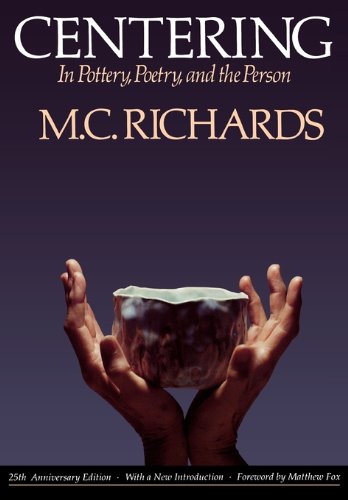
Centering by Mary Richards
I made pottery on the wheel when I was young. Two books were read by almost all the potters I knew in those days, Clay and Glazes for the Potter by Daniel Rhodes, and Centering by MC Richards. The first technical manual often called simply Rhodes gave formulas and facts needed to produce pottery. The centering book was all about zen and becoming one with the clay in the middle of the wheel. I used to think the centering book was too silly, but now I think it is brilliant. I have not thrown pots for at least 30 years, but the practice did make a difference in my philosophy. To center the clay one must be centered. All work is exactly like that. If you are not centered, balanced, able to focus, your clay will be hard to manage. Your vision will not quite be achieved because of distraction. With clay it is possible to endlessly recycle it if it has not been fired. However, if one works for too long on a thrown piece it is very likely to collapse. Brevity and self assurance are the essence of throwing pots.
Centering was taken from an inspirational speech given to fellow craftsmen. Mary Richards was asked to elaborate on that talk in a book. The 25th anniversary edition is out so I have zapped it into my Kindle. In her introduction Ms Richards states, “The imagery of centering is archetypal. To feel the whole in every part.” Chapter one begins, “CENTERING: that act which precedes all others on the potter’s wheel.” This seems obvious, but the metaphors are many. Whatever raw materials we have must be treated as a whole to make the most of them. Many mediums are not as forgiving as clay. Once wood or fabric has been cut it can’t be thrown into a slip barrel and become new. An unfired pot that does not meet standards can begin as a new lump of clay. Sensitivity and refined touch are the main skills needed to center and throw pots. Porcelain has different feel and qualities to stoneware. Each clay body has potential and personality. Each will take glazes differently. The chemical process of fusing glaze to pot happens at high heat and must be cooled slowly to avoid cracking and crazing. There is technical accuracy, just as in distillation. One follows a recipe and keeps a firing log in order to attain exact desired results on a regular basis. There will sometimes be pots that are ruined in the kiln, and this is a fact that must be accepted. Not every pot will survive.
Mary Richards quotes Emerson who said the law is: “Do the thing, and you shall have the power. But they who do not the thing, have not the powers.” When I read this book about centering today I know that being a potter early in my life gave me an appreciation for practice and balanced design in all things. I enjoy making my own clothes, growing my own food, and designing my own life. The concept of centering means connecting from my center to the center of others, touching the core. That is the essence of life. Stay centered, my friend.
Tomorrow, 5 March, 2014, use #VenezuelaMuereTuCallas to share concern for the violence in Venezuela. Brutality has broken out all around the globe lately, and none of it was spontaneous. The seeds of ugly war have been planted long before they bear fruit this bitter and horrid. It is hard to know if violence has been reduced or increased as a result of YouTube, twitter, and all digital formats. What is surely true is that we are exposed to it in direct ways that were not possible in the past. We shall know the truth and the truth will set us free…That is what I learned from reading the University of Texas tower, and I believe it.
The call to action bringing attention to the expanding crisis in this Caribbean nation with petroleum and a history of corruption is close to my heart. I still have friends who live there. With the violence heating up I am concerned for their safety. It is the least I can do to spend some time tomorrow tweeting leaders in Washington. You can use hash tags now on Facebook too, for those of you who don’t tweet. You just type it all as one word #VenezuelaMuereTuCallas. It means Venezuela is dying and you are mute. Please speak up and become informed, gentle readers.
The extraordinary power of the people’s evidence locker, YouTube, is changing the world at a rapid pace. The police in Rialto, CA are using shoulder mounted cameras to improve their service to the community. They also have tools for predictive policing. Since this technology exists and helps reduce waste in the law enforcement budget why are we not outfitting all the cops in the country with these cameras and these crime maps? Criminals today are tech savvy and steal up to and including people’s identities without even physically looking at them. Let us act smarter with our law enforcement resources.
Cyclovia Tucson is looking for a few good volunteers. This twice a year event is held to encourage the use of our public streets for alternative uses. I used to travel to Lugano, Switzerland in the summer to visit the lakeside city. Once a week for an evening the center of town was closed to motor traffic and skates, skateboards, bikes, and other self propelled transportation filled the streets. This was a great opportunity to get out and share the warm nights with locals as they rolled. Now Tucson has joined an American movement to follow a similar plan. Last year I was out of town for Cyclovia, but my friends who attended told me it was excellent. On April 6, 2014 a route that will include downtown will be opened for Cyclovia. Super volunteers can assist during the event and others are invited to participate by rolling through all or part of the route. Entertainment and local color are on display. It will be fun to join the moveable feast. I hope the concept catches on and becomes a more frequent part of our culture in Tucson.

exchange of gold coins
My 28th great-grandfather was a Count of Barcelona who fought the Moors in northern Spain:
Ramon Berenguer I the Old (née in French: Ramond Berenger LeVieux, in Catalan: el Vell) (1023–1076 AD) was Count of Barcelona in 1035–1076. He promulgated the earliest versions of a written code of Catalan law, the Usages of Barcelona.
Born in 1024, he succeeded his father, Berenguer Ramon the Crooked in 1035. It is during his reign that the dominant position of Barcelona among other Catalan counties became evident.
Ramon Berenguer campaigned against the Moors, extending his dominions as far west as Barbastro and imposing heavy tributes (parias) on other Moorish cities. Historians claim that those tributes helped create the first wave of prosperity in Catalan history. During his reign Catalan maritime power started to be felt in Western Mediterranean. Ramon Berenguer the Old was also the first count of Catalonia to acquire lands (counties of Carcassonne and Razés) and influence north of the Pyrenees.
Another major achievement of his was beginning of codification of Catalan law in the written Usatges or Usatici of Barcelona which was to become the first full compilation of feudal law in Western Europe. Legal codification was part of the count’s efforts to forward and somehow control the process of feudalization which started during the reign of his weak father, Berenger Ramon. Another major contributor was the Church acting through the institution of the Peace and Truce of God. This established a general truce among warring factions and lords in a given region for a given time. The earliest extant date for introducing the Truce of God in Western Europe is 1027 in Catalonia, during the reign of Ramon Berenguer the Old.
Ramon Berenguer I together with his third wife Almodis also founded the Romanesque cathedral of Barcelona, to replace the older basilica presumably destroyed by Almanzor. Their velvet and brass bound wooden coffins are still shown in the Gothic cathedral which replaced Ramon Berenguer’s building.
He was succeeded by his twin sons Ramon Berenguer II and Berenguer Ramon II.
Family and issue
First wife, Isabel/Elisabeth of Narbonne or of Béziers
Berenguer (died young)
Arnau (died young)
Pere Ramon (1050-1073?), murdered his father’s wife, Almodis, and was exiled
Second wife, Blanca de Narbonne , daughter of Wolf Ato Zuberoa and Ermengarda of Narbonne.
Third wife, Almodis de La Marche, countess of Limoges
Berenguer Ramon II, Count of Barcelona the Fratricide (1053/54-1097)
Ramon Berenguer II, Count of Barcelona the Towhead (1053/54-1082)
Agnes, married Guigues II of Albon
Sancha, married William Raymond, count of Cerdanya
References
Charles Julian Bishko (1968–9), “Fernando I and the Origins of the Leonese-Castilian Alliance with Cluny,” Studies in Medieval Spanish Frontier History (Variorum Reprints), 40.
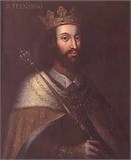
Ramon
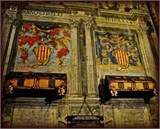
caskets
Ramon Berenguer I of Barcelona (1023 – 1076)
is my 28th great grandfather
Ramon Berenguer II Barcelona (1055 – 1082)
son of Ramon Berenguer I of Barcelona
Ramon Berenguer III (“the Great”) Count of Barcelona, Girona and Osana (1080 – 1131)
son of Ramon Berenguer II Barcelona
Berenguela Raimundo De Barcelona (1113 – 1148)
daughter of Ramon Berenguer III (“the Great”) Count of Barcelona, Girona and Osana
Sancha of Castile (1139 – 1177)
daughter of Berenguela Raimundo De Barcelona
Blanche Of Navarre (1180 – 1229)
daughter of Sancha of Castile
Teobaldo I Navarre (1201 – 1253)
son of Blanche Of Navarre
Henry I Enrique I LeGros Navarre (1244 – 1274)
son of Teobaldo I Navarre
Joan I Navarre (1273 – 1305)
daughter of Henry I Enrique I LeGros Navarre
Lady Isabella England D Capet (1292 – 1358)
daughter of Joan I Navarre
Edward Plantagenet (1312 – 1377)
son of Lady Isabella England D Capet
John Gaunt Plantagenet (1340 – 1399)
son of Edward Plantagenet
Elizabeth Plantagenet (1364 – 1425)
daughter of John Gaunt Plantagenet
John Holland (1395 – 1447)
son of Elizabeth Plantagenet
Henry Holland (1430 – 1475)
son of John Holland
Henry Holland (1485 – 1561)
son of Henry Holland
Henry Holland (1527 – 1561)
son of Henry Holland
John Holland (1556 – 1628)
son of Henry Holland
Francis Gabriell Holland (1596 – 1660)
son of John Holland
John Holland (1628 – 1710)
son of Francis Gabriell Holland
Mary Elizabeth Holland (1620 – 1681)
daughter of John Holland
Richard Dearden (1645 – 1747)
son of Mary Elizabeth Holland
George Dearden (1705 – 1749)
son of Richard Dearden
George Darden (1734 – 1807)
son of George Dearden
David Darden (1770 – 1820)
son of George Darden
Minerva Truly Darden (1806 – 1837)
daughter of David Darden
Sarah E Hughes (1829 – 1911)
daughter of Minerva Truly Darden
Lucinda Jane Armer (1847 – 1939)
daughter of Sarah E Hughes
George Harvey Taylor (1884 – 1941)
son of Lucinda Jane Armer
Ruby Lee Taylor (1922 – 2008)
daughter of George Harvey Taylor
Pamela Morse
I am the daughter of Ruby Lee Taylor

Elisabeth of Tirol
Elisabeth of Gorizia-Tyrol was a Queen of Germany whose husband was murdered by his nephew. After his murder she joined a monastery.
Consort Elisabeth the Romans Carinthia (1263 – 1313)
is my 19th great grandmother
Albrecht Albert II ‘The Wise’ Duke of Austria Habsburg (1298 – 1358)
son of Consort Elisabeth the Romans Carinthia
Leopold III “Duke of Austria” Habsburg (1351 – 1386)
son of Albrecht Albert II ‘The Wise’ Duke of Austria Habsburg
Ernst I “Ironside” Archduke of Austria Habsburg (1377 – 1424)
son of Leopold III “Duke of Austria” Habsburg
Katharina Archduchess Austria Von Habsburg (1420 – 1493)
daughter of Ernst I “Ironside” Archduke of Austria Habsburg
Christof I VanBaden (1453 – 1527)
son of Katharina Archduchess Austria Von Habsburg
Beatrix Zahringen (1492 – 1535)
daughter of Christof I VanBaden
Sabine Grafin VonSimmern (1528 – 1578)
daughter of Beatrix Zahringen
Marie L Egmond (1564 – 1584)
daughter of Sabine Grafin VonSimmern
Richard Sears (1590 – 1676)
son of Marie L Egmond
Silas Sears (1638 – 1697)
son of Richard Sears
Silas Sears (1661 – 1732)
son of Silas Sears
Sarah Sears (1697 – 1785)
daughter of Silas Sears
Sarah Hamblin (1721 – 1814)
daughter of Sarah Sears
Mercy Hazen (1747 – 1819)
daughter of Sarah Hamblin
Martha Mead (1784 – 1860)
daughter of Mercy Hazen
Abner Morse (1808 – 1838)
son of Martha Mead
Daniel Rowland Morse (1838 – 1910)
son of Abner Morse
Jason A Morse (1862 – 1932)
son of Daniel Rowland Morse
Ernest Abner Morse (1890 – 1965)
son of Jason A Morse
Richard Arden Morse (1920 – 2004)
son of Ernest Abner Morse
Pamela Morse
I am the daughter of Richard Arden Morse
Tenure
1299-1 May 1308
Spouse
Albert I of Germany
Issue
Rudolph I of Bohemia
Frederick the Fair
Leopold I, Duke of Austria
Albert II, Duke of Austria
Otto, Duke of Austria
Anna, Duchess of Breig
Agnes, Queen of Hungary
Elisabeth, Duchess of Lorraine
Catherine, Duchess of Calabria
Judith, Countess of Öttingen
House
House of Habsburg
Father
Meinhard, Duke of Carinthia
Mother
Elisabeth of Bavaria
Born
c.1262
Died
28 October 1312
Monastery of Königsfelden
Burial
Monastery of Königsfelden
Elisabeth of Gorizia-Tyrol (c. 1262 – 28 October 1312 was Queen of the Romans, Queen of Germany and Duchess of Austria by marriage. She is also known as Elisabeth of Tirol.
Family
She was the eldest daughter of Meinhard, Duke of Carinthia, Count of Gorizia and Tyrol.
Her mother was Elisabeth of Bavaria, daughter of Otto II Wittelsbach, Duke of Bavaria and his wife Agnes, herself daughter of Henry V, Count Palatine of the Rhine and Agnes of Hohenstaufen. Her mother was also the widow of Conrad IV of Germany. Therefore, the young Elisabeth was a half-sister of Conradin, King of Jerusalem and Duke of Swabia.
Marriage
She was married in Vienna on 20 December 1274 to the future Albert I of Germany, one of the founders of the House of Habsburg, thus becoming daughter-in-law of the King of the Romans. Her husband, then a Count of Habsburg, was invested as Duke of Austria and Styria in December 1282 by his father King Rudolf. They solidified their rule in what was to become the Habsburg patrimony, also with the help of Elisabeth’s father who in his turn in 1286 was created Duke of Carinthia.
Elisabeth was in fact better connected to powerful German rulers than her husband: a descendant of earlier kings, for example Henry IV, Holy Roman Emperor, she was also a niece of dukes of Bavaria [1], Austria’s important neighbours.
In 1298, her husband was finally elected king upon the end of the reign of Adolf of Nassau. In 1299 she was Nuremberg was crowned Queen of Germany and the Romans. Her husband was murdered on 1 May 1308 by his nephew John “the Parricide” in Windisch, located in modern-day Switzerland.
After the murder of her husband, Elisabeth joined the monastery of Königsfelden were she died 28 October 1312 and was later buried.
Elisabeth was a shrewd and enterprising woman who had some commercial talents. The construction of the Saline plant in Salzkammergut goes back to her suggestion.
Their children were:
Rudolph III (ca. 1282–4 July 1307, Horazdiowitz), Married but line extinct and predeceased his father.
Frederick I (1289–13 January 1330, Gutenstein). Married but line extinct.
Leopold I (4 August 1290–28 February 1326, Strassburg).
Albert II (12 December 1298, Vienna–20 July 1358, Vienna).
Heinrich (1299–3 February 1327, Bruck an der Mur). Married but line extinct.
Meinhard, 1300 died young.
Otto (23 July 1301, Vienna–26 February 1339, Vienna). Married but line extinct.
Anna 1280?, Vienna–19 March 1327, Breslau), married:
in Graz ca. 1295 to Margrave Hermann of Brandenburg;
in Breslau 1310 to Duke Heinrich VI of Breslau.
Agnes (18 May 1281–10 June 1364, Königsfelden), married in Vienna 13 February 1296 King Andrew III of Hungary.
Elisabeth (d. 19 May 1353), married 1304 Frederick IV, Duke of Lorraine.
Catherine (1295–18 January 1323, Naples), married 1316 Charles, Duke of Calabria.
Jutta (d. 1329), married in Baden 26 March 1319 Count Ludwig VI of Öttingen.

Albert I King of Germany
My 19th great grandfather was born in current day Switzerland and married well:
Albert I of HabsburgKing of Germany
(formally King of the Romans)Reign27 July 1298 – 1 May 1308CoronationUncrownedGermanAlbrecht I, römisch-deutscher König, Herzog von Österreich und der Steiermark, Markgraf von MeißenTitlesDuke of Austria
Duke of Styria
Margrave of MeißenBornJuly , 1255
Rheinfelden, Free Imperial CityDiedMay 1, 1308 (aged 52)
Königsfelden, Breisgau, Further AustriaPredecessorAdolf of NassauSuccessorHenry VII, Count of LuxembourgConsortElisabeth of Gorizia-TyrolOffspringRudolph I, King of Bohemia
Frederick the Fair, King of the Romans
Leopold I, Duke of Austria
Albert II, Duke of Austria
Anna, Duchess of Brieg
Agnes, Queen of Hungary
Elisabeth, Duchess of Lorraine
Catherine, Duchess of Calabria and three others Royal HouseHouse of HabsburgFatherRudolph I, King of the RomansMotherGertrude of Hohenburg
Albert I of Habsburg (German: Albrecht I) (July 1255 – May 1, 1308) was King of the Romans, Duke of Austria, and eldest son of German King Rudolph I of Habsburg and Gertrude of Hohenburg.
He was the founder of the great house of Habsburg invested with the duchies of Austria and Styria, together with his brother Rudolph II, in 1282. In 1283 his father entrusted him with their sole government, and he appears to have ruled them with conspicuous success. Rudolph I was unable to secure the succession to the German throne for his son, and on his death in 1291, the princes, fearing Albert’s power, chose Adolf of Nassau-Weilburg as king. A rising among his Swabian dependents compelled Albert to recognize the sovereignty of his rival, and to confine himself for a time to the government of the Habsburg territories.
He did not abandon his hopes of the throne, however, which were eventually realised. In 1298, he was chosen German king by some of the princes, who were dissatisfied with Adolf. The armies of the rival kings met at the Battle of Göllheim near Worms, where Adolf was defeated and slain. Submitting to a new election but securing the support of several influential princes by making extensive promises, he was chosen at Frankfurt on July 27, 1298, and crowned at Aachen on August 24.
Albert married Elisabeth, daughter of Meinhard II, count of Gorizia and Tyrol, who was a descendant of the Babenberg margraves of Austria who predated the Habsburgs’ rule. The baptismal name Leopold, patron saint margrave of Austria, was given to one of their sons. Elisabeth was in fact better connected to mighty German rulers than her husband: a descendant of earlier kings, for example Emperor Henry IV, she was also a niece of dukes of Bavaria, Austria’s important neighbors.
Although a hard, stern man, Albert had a keen sense of justice when his own interests were not involved, and few of the German kings possessed so practical an intelligence. He encouraged the cities, and not content with issuing proclamations against private war, formed alliances with the princes in order to enforce his decrees. The serfs, whose wrongs seldom attracted notice in an age indifferent to the claims of common humanity, found a friend in this severe monarch, and he protected even the despised and persecuted Jews. Stories of his cruelty and oppression in the Swiss cantons did not appear until the 16th century, and are now regarded as legendary.
Albert sought to play an important part in European affairs. He seemed at first inclined to press a quarrel with France over the Burgundian frontier, but the refusal of Pope Boniface VIII to recognize his election led him to change his policy, and, in 1299, he made a treaty with Philip IV of France, by which his son Rudolph was to marry Blanche, a daughter of the French king. He afterwards became estranged from Philip, but in 1303, Boniface recognized him as German king and future emperor; in return, Albert recognized the authority of the pope alone to bestow the imperial crown, and promised that none of his sons should be elected German king without papal consent.
Albert had failed in his attempt to seize Holland and Zeeland, as vacant fiefs of the Empire, on the death of Count John I in 1299, but in 1306 he secured the crown of Bohemia for his son Rudolph on the death of King Wenceslaus III. He also renewed the claim made by his predecessor, Adolf, on Thuringia, and interfered in a quarrel over the succession to the Hungarian throne. His attack on Thuringia ended in his defeat at Lucka in 1307 and, in the same year, the death of his son Rudolph weakened his position in eastern Europe. His action in abolishing all tolls established on the Rhine since 1250, led the Rhenish archbishops and the count palatine of the Rhine to form a league against him. Aided by the towns, however, he soon crushed the rising.
He was on the way to suppress a revolt in Swabia when he was murdered on May 1, 1308, at Windisch on the Reuss River, by his nephew John of Swabia, afterwards called “the Parricide” or “John Parricida”, whom he had deprived of his inheritance.
Titles
Albert, by the grace of God king of the Romans, duke of Austria and Styria, lord of Carniola, over the Wendish Mark and of Port Naon, count of Habsburg and Kyburg, landgrave of Alsace
Family
Albert and his wife Elizabeth had twelve children:
Rudolph III (ca. 1282 – 4 July 1307, Horažďovice), Married but line extinct and predeceased his father.
Frederick I (1289 – 13 January 1330, Gutenstein). Married but line extinct.
Leopold I (4 August 1290 – 28 February 1326, Strassburg). Married, had issue.
Albert II (12 December 1298, Vienna – 20 July 1358, Vienna).
Heinrich (1299 – 3 February 1327, Bruck an der Mur). Married but line extinct.
Meinhard, 1300 died young.
Otto (23 July 1301, Vienna – 26 February 1339, Vienna). Married but line extinct.
Anna 1280?, Vienna – 19 March 1327, Breslau), married:
in Graz ca. 1295 to Herman, Margrave of Brandenburg-Salzwedel;
in Breslau 1310 to Duke Henry VI the Good.
Agnes (18 May 1281 – 10 June 1364, Königsfelden), married in Vienna 13 February 1296 King Andrew III of Hungary.
Elisabeth (d. 19 May 1353), married 1304 Frederick IV, Duke of Lorraine.
Catherine (1295 – 18 January 1323, Naples), married Charles, Duke of Calabria in 1316.
Jutta (d. 1329), married Ludwig V, Count of Öttingen in Baden, 26 March 1319.
Ancestry
Ancestors of Albert I of Germany 16. Albert III, Count of Habsburg 8. Rudolph II, Count of Habsburg 17. Ida von Pfullendorf 4. Albert IV, Count of Habsburg 18. Gottfried von Staufen 9. Agnes of Staufen 2. Rudolph I of Germany 20. Hartmann III, Count of Kiburg and Dillingen 10. Ulrich, Count of Kiburg and Dillingen 21. Richenza von Lenzburg 5. Heilwig of Kiburg 22. Berthold IV, Duke of Zähringen 11. Anna von Zähringen 23. Heilwig of Frohburg 1. Albert I of Germany 24. Burckhard III, Count of Hohenburg 12. Burckhard IV, Count of Hohenburg 6. Burckhard V, Count of Hohenburg 3. Gertrude of Hohenburg 28. Rudolph I, Count Palatine of Tübingen 14. Rudolph II, Count Palatine of Tübingen 29. Mechtild of Gleiberg, Countess of Giessen 7. Mechtild of Tübingen 30. Henry, Margrave of Ronsberg 15. unnamed 31. Udilhild of Gammertingen [edit] References and external linksWikimedia Commons has media related to: Albert I of Habsburg
This article incorporates text from a publication now in the public domain: Chisholm, Hugh, ed (1911). Encyclopædia Britannica (Eleventh ed.). Cambridge University Press.
Albert I of Germany
House of Habsburg
Born: 1255 Died: 1308German royaltyRegnal titlesPreceded by
AdolfKing of Germany(formally King of the Romans)
1298–1308Succeeded by
Henry VIIMargrave of Meißen
1298–1307
With: Dietrich II (1291–1307)Friedrich I (1291–1323)Succeeded by
Friedrich IIPreceded by
King Rudolph IDuke of Austria and Styria
1282–1308
With: Rudolph II (1282–83)Rudolph III (1298–1307)Succeeded by
Frederick III the Fairand Leopold I
Albert I King of Germany Habsburg (1248 – 1308)
is my 19th great grandfather
Albrecht Albert II ‘The Wise’ Duke of Austria Habsburg (1298 – 1358)
son of Albert I King of Germany Habsburg
Leopold III “Duke of Austria” Habsburg (1351 – 1386)
son of Albrecht Albert II ‘The Wise’ Duke of Austria Habsburg
Ernst I “Ironside” Archduke of Austria Habsburg (1377 – 1424)
son of Leopold III “Duke of Austria” Habsburg
Katharina Archduchess Austria Von Habsburg (1420 – 1493)
daughter of Ernst I “Ironside” Archduke of Austria Habsburg
Christof I VanBaden (1453 – 1527)
son of Katharina Archduchess Austria Von Habsburg
Beatrix Zahringen (1492 – 1535)
daughter of Christof I VanBaden
Sabine Grafin VonSimmern (1528 – 1578)
daughter of Beatrix Zahringen
Marie L Egmond (1564 – 1584)
daughter of Sabine Grafin VonSimmern
Richard Sears (1590 – 1676)
son of Marie L Egmond
Silas Sears (1638 – 1697)
son of Richard Sears
Silas Sears (1661 – 1732)
son of Silas Sears
Sarah Sears (1697 – 1785)
daughter of Silas Sears
Sarah Hamblin (1721 – 1814)
daughter of Sarah Sears
Mercy Hazen (1747 – 1819)
daughter of Sarah Hamblin
Martha Mead (1784 – 1860)
daughter of Mercy Hazen
Abner Morse (1808 – 1838)
son of Martha Mead
Daniel Rowland Morse (1838 – 1910)
son of Abner Morse
Jason A Morse (1862 – 1932)
son of Daniel Rowland Morse
Ernest Abner Morse (1890 – 1965)
son of Jason A Morse
Richard Arden Morse (1920 – 2004)
son of Ernest Abner Morse
Pamela Morse
I am the daughter of Richard Arden Morse
 mermaidcamp