mermaidcamp
Keeping current in wellness, in and out of the water
You can scroll the shelf using ← and → keys
You can scroll the shelf using ← and → keys
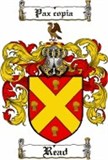
Read Coat of Arms
My 13th great grandfather was
Lord Chief Justice of the Common Pleas from 1506-1519
Originally, the three high common law courts, the Court of Common Pleas, the Court of the King’s (or Queen’s) Bench, and the Court of the Exchequer, each had their own Chief Justice. That of the Exchequer Court was styled as the Lord Chief Baron of the Exchequer, and that of the Common Pleas was Chief Justice of the Common Pleas, leaving the head of the King’s (or Queen’s) Bench to be known simply as the Lord Chief Justice. The courts, however, were combined in 1873, leaving a single Chief Justice.
Robert Read (1440 – 1519)
is my 13th great grandfather
Dorothy Reade (1489 – 1529)
daughter of Robert Read
Sir Knight THOMAS Wooton (1521 – 1587)
son of Dorothy Reade
Thomas Wooton (1585 – 1668)
son of Sir Knight THOMAS Wooton
Elizabeth Wooton (1610 – 1690)
daughter of Thomas Wooton
Sarah Perkins (1657 – 1745)
daughter of Elizabeth Wooton
Mercy Bradstreet (1689 – 1725)
daughter of Sarah Perkins
Caleb Hazen (1720 – 1777)
son of Mercy Bradstreet
Mercy Hazen (1747 – 1819)
daughter of Caleb Hazen
Martha Mead (1784 – 1860)
daughter of Mercy Hazen
Abner Morse (1808 – 1838)
son of Martha Mead
Daniel Rowland Morse (1838 – 1910)
son of Abner Morse
Jason A Morse (1862 – 1932)
son of Daniel Rowland Morse
Ernest Abner Morse (1890 – 1965)
son of Jason A Morse
Richard Arden Morse (1920 – 2004)
son of Ernest Abner Morse
Pamela Morse
I am the daughter of Richard Arden Morse
The History and Topographical Survey of the County of Kent: Volume 3
by Edward Hasted, published 1797
Pages 210-227
British History Online
About the 43d year of king Edward III. he conveyed this manor, with much other land in this county and in Warwickshire, to Sir Walter de Paveley, knight of the Garter, in whose family it remained until the latter end of the reign of king Richard II. when it was conveyed to Vaux, of the county of Northampton, in which name it staid till the reign of king Henry VI. when it was alienated to John Alphegh, or Alphew, of Bore-place, in this parish, who bore for his arms, Argent, a fess between three boars heads couped, sable. He died in 1489, and lies buried in this church, leaving by Isabel, his wife, daughter of Richard Petit, esq. two daughters and coheirs; Elizabeth, who was twice married, first to George Gainsford, esq. a younger son of Sir John Gainsford, of Crowhurst, in Surry; (fn. 8) and secondly to William Brograve, esq. of Beckenham; and Margaret, who married Sir Robert Read, who had this manor allotted to him on the division of their inheritance. He was descended from an antient family in the county of Northumberland, and being bred to the law, was, in 1507, made chief justice of the common-pleas, (fn. 9) and was so highly esteemed by king Henry VII. that he had made him one of his executors. Sir Robert Read bore for his arms, Gules, on a fess wavy, three pheasant cocks sable; which coat, impaling Alphew, is still remaining in a window, in Sergeant’s-inn.
By Margaret, his wife, Sir Robert had one son, Edmund, who was one of the justices of the King’s bench, and dying before him, without issue, in 1501, lies buried in this church, and four daughters; Bridget, wife of Sir Thomas Willoughby; Jane, of John Caryll, esq. sergeant at law; Mary, of Sir William Barringtyne; and Dorothy, of Sir Edward Wotton. He died about the 10th year of the reign of Henry VIII. without issue male; so that his four daughters became his coheirs, and on the partition of their inheritance, this manor, with other estates in this parish, was allotted to the share of Sir Thomas Willoughby and Bridget his wife.
Sir Thomas Willoughby was the fifth and youngest son of Sir Christopher Willoughby, and younger brother of William Lord Willougby, ancestor of the present baroness Willoughby of Eresby, and of Christopher, ancestor of the lords Willoughby of Parham, now extinct; the origin of the family in this kingdom being Sir John de Willoughby, a Norman knight, who had the lordship of Willoughby, in Lincolnshire, by the gift of the Conqueror.
Sir Thomas Willoughby being bred to the law, was knighted in the 29th year of king Henry VIII. was made a chief justice of the common pleas, (fn. 10) and by his wife Bridget, as above mentioned, became entitled to this manor of Chidingstone Burghersh, with his seat called Bore-place, and other estates in this parish. (fn. 11) In the 31st year of that reign he, among others, by an act then passed, procured his lands to be disgavelled.
He died in the 37th year of king Henry VIII. and lies buried with Bridget, his wife, in this church. His arms, being Gules, on a bend wavy argent, three birds sable, impaling argent, a fess between three boars heads couped sable, are still remaining in one of the windows of Sergeant’s inn, in Fleet-street.
His grandson, Sir Thomas Willoughby, was sheriff of this county in the 15th and 32d years of queen Elizabeth, and bore for his arms, Or, fretty azure. He marriedCatharine, daughter of Sir Percival Hart, of Lullingstone, by whom he left several sons and daughters; of whom Percival, the eldest, succeeded to these estates, and was, on the accession of King James I. knighted by that prince. He married Bridget, eldest daughter and coheir of Sir Francis Willoughby of Wollaton-hall, in Nottinghamshire, by which means he not only possessed that mansion, but a large estate in that county, for which he was elected to serve in the first parliament of King James, and was ancestor of the present Henry Willoughby lord Middleton. Being desirous of increasing his interest in Nottinghamshire, he alienated the manor of Chidingstone Burghersh to Mr. John and Robert Seyliard, of Delaware, from whom it descended to John Seyliard, esq. of Delaware, who was created a baronet in 1661, and from him to Sir Thomas Seyliard, bart. who, about the year 1700, conveyed it, with Delaware, above mentioned, to Henry Streatfeild, esq. and he, at his death, bequeathed it to his youngest son, Thomas Streatfeild, esq. of Sevenoke, who devised it to his nephew, Henry Streatfeild, esq. of High-street house, in this parish; since whose death, in 1762, the inheritance of it is become vested in his eldest son, Henry Streatfeild, esq. of High-street house.
BORE-PLACE is a seat here, which, with the MANOR OF MILBROKE, was antiently, as high as the reign of King Henry III. the estate of a family, which assumed its surname from hence, and was called Bore, and assumed a boar for its arms. In the name of Bore this seat and manor continued till John Bore; in the reign of king Henry VI. conveyed them by sale to John Alphew, who rebuilt Bore-place, and died possessed of them both in 1489, leaving two daughters and coheirs; one of whom, Margaret, became the wife of Sir Robert Read, lord chief justice of the common pleas, of whom a full account has already been given; and on a division of their inheritance entitled him to this seat and manor, as well as the rest of her father’s estate in this parish. He resided at Bore-place, which he much enlarged, and dying without male issue surviving, his four daughters became his coheirs; of whom Bridget, the eldest, was married to Sir Thomas Willoughby, chief justice of the common pleas, and on the partition of his estates, had this seat, Milbroke, and his other possessions in this parish, allotted for her share.
Sir Thomas Willoughby likewise resided at Boreplace, and added much to the buildings of it. His grandson, Sir Percival Willoughby, in the beginning of the reign of King James I. alienated Bore-place and Milbroke, to Mr. Bernard Hyde, of London, after wards one of the commissioners of the customs to king Charles I. who was a charitable benefactor, by his will, to several parishes in London, as well as others, in trust to the Skinners company. (fn. 12) His descendant, Bernard Hyde, esq. alienated them about fifty years ago to Henry Streatfeild, esq. of Highstreet house, in this parish; since whose death, in 1762, the inheritance of both Bore-place and Milbroke are become vested in his eldest son, Henry Streatfeild, of High-street house, esq.
There is a court baron held for the manor of Milbroke.
Bowzell, antiently called Boresell, is a manor, the greatest part of which lies in the adjoining parish of Chevening, under which indeed it ought more properly to have been described. It was antiently part of the possessions of that branch of the Cobhams settled at Sterborough castle, in Surry.
Reginald de Cobham died possessed of this manor in the 35th year of Edward III. as did Joane his wife in the 43d year of that reign; from them it descended down to Sir Thomas Cobham, who died possessed of it in the 11th year of king Edward IV. whose only daughter and heir carried it in marriage to Sir Edward Borough, of Gainsborough, in Lincolnshire; she survived her husband, and died anno 20 king Henry VIII. being then possessed, as appears by the inquisition taken after her death, of this manor, among others, held of William, archbishop of Canterbury, as of his honour of Otford, by knights service. (fn. 13) Their descendant, Sir Thomas Borough, lord Burgh, and knight of the Garter, died possessed of it in the 40th year of queen Elizabeth, leaving four daughters his coheirs; Elizabeth, married to George Brooke, esq. brother of Henry lord Cobham; Frances to Francis Coppinger, esq. whose direct descendant, Fysh Coppinger, esq. of West Drayton, in the year 1790, had a licence, under the king’s sign manual, to assume the name of Burgh; Anne, to Sir Drew Drury; and Catharine, afterwards the wife of Thomas Knyvett, esq. by which, though the heir male of this family endeavoured to succeed to the barony, yet he failed in it, and it still continues in abeyance. They some years afterwards, to defray debts and other uses, joined in the sale of it to Thomas of Whitley, near Sevenoke, from which name it again passed by sale to Waterson; from whom, by a female, it was carried in marriage to Bonnell, whose descendant, James Bonnell, esq. of London, about the year 1784, alienated it to the Rev. Richard Rycrost, D.D. rector of Penshurst, in this county; who, on Dec. 10, 1783, was created a baronet. He died possessed of this manor, in 1786; and his son, Sir Nelson Rycrost, bart. is the present owner of it.
Ranesley, formerly spelt Rendesley, is a manor in this parish, lying near the boundaries of Penshurst, the owners of which were in antient deeds, written both Rendesley and Rennesley, but before the end of king Henry VI.’s reign, this family was extinct here, and the possession of it was alienated to Alphew of this parish, whose descendant, John Alphew of Bore-place, dying in 1489, without male issue, one of his daughters and coheirs, Margaret, carried it in marriage toSir Robert Read, chief justice of the common pleas, on the partition of the inheritance, of whose daughters and coheirs this manor fell to the share ofBridget, married to Sir Thomas Willoughby, chief justice likewise of the common-pleas, whose descendant, Robert Willoughby, esq. alienated it to Bond, and Mrs. Anne Bond possessed it in the 1st year of Edward VI. (fn. 14) Her heirs conveyed it to Nathaniel Studley, esq. the son of John Studley of Emborne Minster, in Yorkshire, who bore for his arms, Argent, on a fess vert three stags beads caboshed or. His only son and heir, Nathaniel, succeeded his father in this manor, and in the time of the civil wars of king Charles I. alienated it to Mr. Christopher Knight of Cowdham, (fn. 15) on whose death it came into the possession of his son, Mr. Michael Knight of Westerham; to whom Sir Edward Byshe, clarencieux, in 1662, granted these arms, Party per chevron engrailed sable and argent, three griffins passant, counterchanged, armed, and langued gules. From this family this manor passed, by sale, to Robert Sidney earl of Leicester; after which it continued in his descendants, in like manner as the rest of his estates in this parish, till with them it came into the possession of two female coheirs, Mary and Elizabeth, daughters of colonel Thomas Sidney, and heirs general of Robert earl of Leicester, who was the grandson of Robert, who purchased this manor, and they carried it, by marriage, to Sir Brownlow Sherard, bart. and William Perry, esq. who possessed it in undivided moieties. (fn. 16) The former died in 1748, without issue, and his widow possessed one moiety of this manor till her death, in 1758, when she, by her will, gave it to Anne, widow of Sir William Yonge, bart. with remainder to her son, Sir George Yonge, bart. of Escot, in Devonshire. William Perry, esq. died possessed of the other moiety of this manor in 1757, leaving his wife surviving, who in 1770, purchased of lady Yonge, and her son Sir George, their moiety of it, and thus became owner of the whole of this manor, which she gave by her will, at her death in 1783, to her eldest grandson, John Shelley Sidney, esq. who is the present owner of it.
Footnotes:
10 Coll. Peer. vol. v. p. 559, et seq. Dugd. Bar. vol. ii. p. 33, 83. Hist. Grevile, 70, et seq.
12 Strype’s Stow’s Survey, book ii. p. 36, 46, 48, 64, 81, 170; book iii. p. 62, 100; book v. p. 67.
13 Inquis. post Mort. Harris’s Hist. Kent, p. 75.
14 See particulars of chantries, Aug. Off. title Penshurst chapel.
15 Philipott, p. 114. Visit. Co. Kent, p. 1619. Guillim, 394.
16 See more particular account of the Sidneys, and the descent of their estates, under Penshurst.
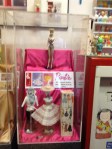
PEZ is an Austrian product which originally came in only one flavor, Pfeffermintz..thus the name, an abbreviation of peppermint in German language. E-Bay credits the start of the business to PEZ because the first E-Bay site was created for the wife of the founder to trade her PEZ collection on line. More than 800 distinct designs have been produced since 1950. At the Burlingame Museum of PEZ Memorabilia you can view all 800 of them. The gift shop has all the latest and some vintage dispensers for sale. There are also PEZ flavors with which to fill them, of course. I am an enthusiastic fan of the museum even though owning PEZ dispensers does not really call to me. For collectors I am sure this is a true Mecca.
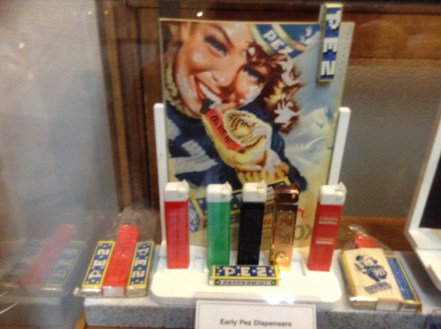
originals

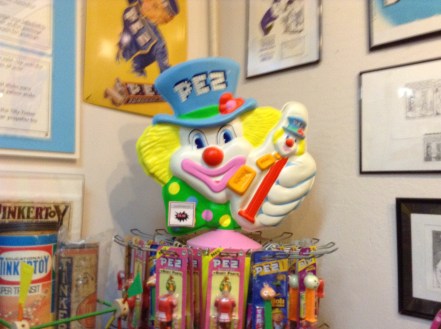
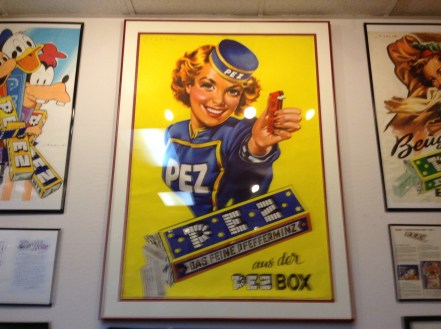
50’s PEZ

early cartoon PEZ

PEZ gun
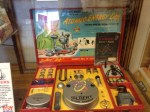
I visited and had the tour, then convinced my friend Donna to experience the museum the following day. I was graciously admitted again, given an extension on my first ticket, to join them on the tour. The great thing about collecting tiny objects is that many can fit in a small space. The museum is packed with PEZ and PEZ art as well as classic toys still in production like Lincoln Logs, and a set of toys that have been taken off the shelves for safety reasons. My favorite of the banned toys is the atomic lab that came with real radioactive material for your child to use. I had all kinds of science kits as a kid, and probably would have had my own atomic lab if my father had known about it.







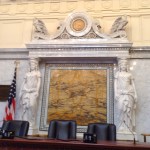
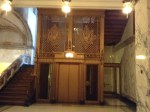
Just when I thought the Federal government had no redeeming qualities I was proven wrong. My friends and I had the privilege of touring one of the classiest buildings the US taxpayer owns, the US Court of Appeals of the 9th Circuit in San Francisco. We were invited by my friend, appellate commissioner Peter Shaw , who has worked in the building for many years. We knew we would see one of the oldest buildings in the city, but none of us was prepared for how cool it actually is. When it was built it also served as the main post office, so some of the teller windows and details that belonged to the post office era have been included in the design today. We met very gracious people who were distinguished and personable to us. The courtrooms are ornate and full of fine stone carving, wooden furniture, and mosaics. The metal throughout the building is beautifully formed. Many of the lighting fixtures are brass, shined to perfection. We truly loved the feeling of being treated to the luxury of the surroundings without being involved in a court case. The big thrill of the day was dressing in Peter’s robe and sitting for photos on the bench, flanked by the babes of justice. He had done this before so he knew how popular this would be. We felt like the luckiest taxpayers in the country. The commissioner is more than an esteemed member of the court. He has a pride and sense of history that he was able to convey to us as we examined the evidence he presented. We all felt much better about our government, if only for an afternoon. I will always remember this opportunity to peek into the distinguished and artful world of jurisprudence.














psyche

psyche
Your health is like a bank account. You deposit and withdraw from your inherited constitution. If you need a loan, there is no place to apply. Your account, like the number of days you will live, is subject to your habits and practices. Diminishing returns are built into the model. Some of us are genetically lucky, while many start life with disadvantages. Accidents and disasters cause permanent damage, mental and physical. There is no way to know how much one will need to withdraw due to illness.
Prehabilitation is more cost effective than rehabilitation because once a system is depleted it may never fully recover. There are ways to make deposits over time that will earn interest. These reserves affect your immune system and your ability to remain calm under pressure. Health is your only real wealth, in the words of Dr. Bronner. Changing lifestyle habits results in changing wellbeing. We need not aim for perfection, since that in itself is cause for stress. Logical, simple additions can be made to daily routine that add up to better health in the long run.
Investments made today will accrue interest as long as you live.
The Avenger character is a masked marvel. Crusades for righteousness and fairness are the territory of this archetype. Comic book characters and super heroes use the avenger character to tell stories about balancing the scales of justice . The obvious shadow attribute the avenger can possess is the willingness to use violence to defend a cause. Frequently we see the misguided avenger on the loose; That is called the loose cannon because the lack of control is too obvious. They may be warriors or politicians, but their primary motive is to represent causes for the sake of others. They are aggressive.
Religious zealots in history have often convinced others to seek revenge or fight a holy war. Terrorism and family feuds are examples of avengers gone bad. When nations or political factions square off to avenge some perceived wrong this is the archetype in control. When the Republicans and the Democrats cut off all their noses to spite all their faces they are doing it because they believe they are finding vengeance. They tell the taxpayers they are fighting for us, but they are isolated in their own cartoon, unaware of the roles they play in our big drama. They fight because they feel entitled, and because we have allowed them to become so extreme. Their capes and masks must be recalled.

avenger card

Quaker
Jeffrey Horney was a Quaker born in Maryland. His father was a planter who left his estate to his children in 1738. Jeffrey inherited “Cottingham”:
Horney, Jeffery, planter,Talbot Co.,11th Jan., 1737;
27th Mch., 1738.
To son William and hrs., “Dixon’s Gift,” Queen Anne’s Co.; and personalty.
To son Jeffery and hrs., “Cottingham,” sd. son dying without issue sd. tract to son Philip and hrs.; and personalty.
To sons Philip, James and daus. Jane and Prissillia, personalty, some of which des. as bou. of John Carslake. Residue of personal estate to 4 sons and 4 daus. divided equally.
Son Jeffery, ex., to have care of sons Philip and James until they come to age of 18.
Test: Robert Harwood, John Regester, Edward Perkins. 21. 861. MARYLAND CALENDAR OF WILLS: Volume 7
Since I have ancestors born in Maryland named Nichols, I was very interested to learn about the Nicholite movement, also known as New Quakers. The Nichols in my tree marry into the family about 100 years later in Pennsylvania.
Jeffrey Horney (1723 – 1779)
is my 8th great grandfather
Mary Horney (1741 – 1775)
daughter of Jeffrey Horney
Esther Harris (1764 – 1838)
daughter of Mary Horney
John H Wright (1803 – 1850)
son of Esther Harris
Mary Wright (1816 – 1873)
daughter of John H Wright
Emiline P Nicholls (1837 – )
daughter of Mary Wright
Harriet Peterson (1856 – 1933)
daughter of Emiline P Nicholls
Sarah Helena Byrne (1878 – 1962)
daughter of Harriet Peterson
Olga Fern Scott (1897 – 1968)
daughter of Sarah Helena Byrne
Richard Arden Morse (1920 – 2004)
son of Olga Fern Scott
Pamela Morse
I am the daughter of Richard Arden Morse
Jeffrey Horney [III] was born before 1720 in Talbot County, Maryland. He married Deborah Baynard outside of the Quaker faith without the consent of the Friends. Their marriage license was dated October 6, 1739 in Talbot County, Maryland. Eight years later in 1747, Jeffrey and Deborah Horney would sell their land in Talbot County and move to Dorchester [now Caroline] County. On the 27th of October 1747, Jeoffery and Deborah Horney sold fifty acres of Cottingham in Talbot County to William Thomas, Gentleman. Less than one month later, on the 12th of November 1747, Jeffrey Horney of Talbot County purchased Piersons Chance [Pearsons Chance] from John Pierson of Dorchester County, formerly laid out for Thomas Pierson. The property was in two parts; one part contained 100 acres and the other part contained 50 acres. The land was located on Watts Creek, off of the Choptank riverjust south of Denton in what is now Caroline County, Maryland. As the crow flies, Piersons Chance was less than 15 miles northeast of Cottingham and was about 5 miles from the Delaware line of Kent County, Delaware.
Nov 12, 1747 John Pierson of Dor Co, planter, to Jeofrey Horney of Talb co, planter: two parts of a tract formerly laid out for Thomas Pierson called “Piersons Chance,” conveyed by said Thomas to said John by separate deeds, on Watts Creek, one part containing 100 a. and the other part containing 50 a. more or less. Wit: T. Waite, Jno. Caile, Hall Caile. Ackn by John Pierson and Elizabeth his wife before Thos. Foster abd Benj Keene, Justices. (See receipt, Dorchester County Land Records 14 Old 169).
For the first seven years of their marriage, Jeffrey and Deborah Horney lived at Cottingham, and any of their children born within the first seven years between 1740 and 1747 were born at Cottingham in Talbot County. After November 1747 when Jeffrey and Deborah purchasedPiersons Chance in Dorchester County, any subsequent children they may have had were born in Dorchester County, Maryland. This land now lies in Caroline County Maryland which was not established until 1773 from parts of Dorchester and Queen Anne’s Counties. This explains why Jeffrey and Deborah Horney and their children are subsequently found in Caroline County records. The land on which they were living from November 1747 onward,Pierson’s Chance, was once in Dorchester County in an area that became Caroline County in 1773. At least three of their children, John, Philip and William Horney, left Maryland between the 1780s and 1790’s when they may have followed the Nicholite movement into the Deep River section of Guilford County, North Carolina. Some lines would remain in North Carolina while others would move onto Ohio, Illinois and beyond.
There is a local legend surrounding the area on Watts Creek where Jeffrey and Deborah settled. It was believed that in the 1600s and early 1700s notorious pirates and privateers, such as Captain William Kidd and Edward Teach [Thatch, Thach, Thache], otherwise known asBlackbeard, may have hid or buried treasure along the shores of Watts Creek. A local legend began to circulate (or re-circulate) in 1916 when Swepson Earle wrote Manor houses on the Eastern Shore. He claimed that “Tradition says [Watts Creek, south of Denton] once provided refuge for Captain Kidd, whose ‘buried treasure’ has been sought on its banks.” Later, in the 1940s when Hulbert Footner wrote his book, Rivers of the Eastern Shore, he related that“There is such a hole near the mouth of Watts Creek that is ninety feet deep. It is called Jake’s Hole. Its exact depth is known because it’s been sounded often enough, and I’ll tell you why. There was aplenty pirates round here in the old time. The one that mostly cruised in these waters was Blackbeard; Edward Teach was his right name. Well, Blackbeard picked Jake’s Hole for one of his caches, and dropped an oaken chest bound round with copper bands in there. It’s still there. God knows what’s inside it!”However, according to Donald Shomette who more recently wrote Pirates of the Chesapeake, neither Blackbeard or Captain Kidd ever sailed into the Bay, but their legends did.
Whether or not the legends of Watts Creek spun by the old-timers were fact or fiction, there were pirates and privateers who sailed in and around the Chesapeake Bay. Among them, Roger Makeele, was found in Maryland records in 1685 when he and his band of pirates lured the crews of tobacco sloops to their camp on Watts Island. They would seize the crew and confiscate their sloops before leaving the men in the Marshes of Dorchester County. Makeele sailed the Choptank river which separated Dorchester County from Talbot County where the early Horney’s lived. Incidentally, that same year Jeffrey Honey [Horney] was testator to the will of Emanuel Jenkinson of Talbot County Maryland. It is likely the early Horney men, as well as other settlers in the area, heard of these pirates and were in peril of loosing their tobacco crops and their sloops to the pirates of the Chesapeake.
During this time, local Indians lived in the area. Their ancestors arrived in the area long before the European settlers. When John Burnyeat appointed a general meetingfor all of the Friends in the province of Maryland. George Fox wrote about that meeting in his journal, (Two Years in America 1671-1673 Chapter XVIII) It was upon me from the Lord to send to the Indian emperor and his kings to come to that meeting. The emperor came and was at the meeting. His kings, lying further off, could not reach the place in time. Besides the Horneys who married into Quaker families, other religions would later play a part in their lives. Among the early churches and societies, early Horney families were or became Puritans, Anglicans and Episcopalians. In 1760, when Joseph Nichols of Kent County, Maryland and Delaware founded the Nicholites [New Quakers], at least one branch of Horney’s were found in Nicholite Petitions. [Most likely Jeffrey and Deborah Horney and/or their descendants.] The early Horney’s also became Methodist and Methodist-Episcopal. On June 17, 1703 John Wesley, the founder of Methodism, was born in Epworth, Lincolnshire, England. By 1771, John Wesley’s teachings reached the Eastern Shore of Maryland. When Francis Asbury came to Maryland to spread Wesley’s word, the Methodist religion took a strong hold in Maryland. More than a few Horney families converted to Methodism. However, Wesley’s Tory beliefs may not have sat well with the Horney’s who served [on the American side] in the Revolutionary War.
The rivers on Maryland’s Eastern Shore defined the early transportation routes of religion. During their lifetime, the settlers of the area, did much of their traveling on the rivers, tributaries, creeks and branches which crossed the Eastern Shore of Maryland, east of the Chesapeake Bay. They lived near and traveled many of these waterways including the Choptank, Wye, St. Michaels, (now Miles),Tred Avon (Third Haven), and Tuckahoe Rivers. The Tred Avon was and still is the location of Third Haven Meeting House near what is now Easton, Talbot County, Maryland. The St. Michaels, (now Miles) River was the location ofBetty’s Cove Meeting House.
To see photos of the Choptank and Tuckahoe river areas in Talbot and Caroline counties where the Horney families lived and traveled, select the pdf file from the Upper Choptank and Tuckahoe River Cultural Resources Inventory. Another helpful tool is the Choptank and Tuckahoe Rivers Sections Map. Take a two day canoe trip on the Choptank River Sojourn, a journey of Maryland’s Eastern Shore through areas where the earliest Horneys settled and the route that Jeffrey Horney III and his wife Deborah Baynard traveled and settled after 1747. Areas mentioned throughout this river journey are Choptank, Denton, Dover Bridge, Greensboro, Hillsboro, Tuckahoe and Watts Creek. All of these locations were found in 1600 – 1700 HORNEY records in Caroline, Talbot, and Dorchester Counties, Maryland. The journey described was a likely route traveled by Jeffrey Horney III and his wife, Deborah Baynard and their children as they left Talbot County, Maryland and settled in Dorchester [now Caroline] County, Maryland.
Each of us has a child archetype within our psyche. Carolyn Myss outlines six kinds of archetypal children. They are:
The eternal child has an attachment to youth and immaturity. The positive eternal child is the stuff that ads are made of, enthusiastic, fresh and free. The shadow eternal child has a resistance to responsibility and rejection of the aging process. The need to stay youthful may lead to extreme dependence on others for security. The puer aeternus is a man who never accepts responsibility. He is frequently a character in fiction, and sadly appears often in real life. Peter Pan is a modern eternal youth story with Tinkerbell playing the puella aeterna. Clinging to youth can prevent one from reaching the full range of emotions and insights. Youthful enthusiasm and a willingness to make fresh starts are the positive aspects of this child persona. Adults who are consistently unreliable or dependent on others reflect the worst aspects of the eternal child.
 Peter Pan
Chivalry is one of those double edged swords. Knights are loyal and honorable as an ideal; love and honor do not always triumph. The good knight is brave in service to a higher calling or just ruler. The shadow knight is romantically delusional and may serve a corrupt ruler. Self image is all important to the knight, since he needs to be seen as helpful and brave. He may find himself drawn into needless drama to save damsels and others who signal distress. This may become a pattern in life, endlessly saving others.
Today the knight may be spiritually correct, always defending worthy causes. His love of honor and his loyalty to cause or leader can be very confusing in this character. If the leader demands self sacrifice and self neglect, this archetype can feel self righteous about taking this shadowy path. Loyalty to destructive or greedy powers can be the undoing of the modern knight, just as it was in history. Romantic notions of service can be a cover for the absence of chivalry and honor. It is usually easy to spot the knight riding either a black horse or a white one that symbolizes intent. This archetype distinguishes itself from all the characters by being loyal as well as romantic. The knight displays his loyalty above all else, since it is the source of his identity. Do you know any knights in your life?

jet
I have learned to budget time by planning many trips for myself and travel clients. When tour companies take groups out on an excursion the itinerary is published to give all a sense of unity. Planning time for commuting in a city or check in at a strange terminal must be done with precision and plenty of lead time. I think travelers are often too optimistic about the amount of time it really takes to get across town or out of town. Being on time for appointments or performances is essential to enjoying a visit. I also think free unstructured time to explore is an important element of happy tourism.
Here are the ways I like to expand my world when I travel. I use time in new ways:
I learn before I go. My research into options can take weeks for some destinations. I study maps and transit systems, look up details and make notes if there is something I want to make sure I see. No matter what I learn from reference materials I always ask for a local’s opinion if I can. Once I have made the arrangements for the elements of the trip, lodging, transportation, dining, and exploration I believe it is important to give in to serendipity as much as possible. I find that being open in both mood and schedule allows the magic of the place to speak to me. Sometimes I meet cool people who inform me; other times I am called by special architecture or botany. I find that when I plan and inform myself just enough to know where I am, but not too much to make assumptions, time is my ally. It expands and allows me to turn a few days into an exciting yet easy to accomplish new adventure of discovery. I am working on turning next week in San Francisco into just that. If you know about something special I need to know before I go, please pipe up, gentle reader. I do enjoy the unusual, and already know about many of the usual highlights of the bay area. I am open to learn more.

healthy food
The way words are used has a big effect on culture and expectations. The words health care have come to mean prescription drugs and medical procedures. Wellness has come to mean any kind of body work, cleanse, or restrictive diet. What is even more debilitating to the public health is that insurance policies determine the care most people use. There is abuse on both sides, by wellness quacks and medical losers. Wellness or health coaches are essentially practicing counseling in everything from nutrition to psychiatry. The unhealthy American population is vulnerable and guilty, willing to jump to all kinds of conclusions, buying into all kinds of cures and programs. The market is so crowded the consumer has been confused by all the possibilities. Now the public will need to understand how health insurance functions. This is a giant leap for the citizens, a shock to the system.
I made a living teaching and promoting health and wellness through water for many years. I have enjoyed waters and spas all over the world and had the pleasure of teaching many wonderful students. I have a strong healthy body that I treat to the best food and body work I can afford to give it. Since I love movement, I move. I don’t take any prescription drugs; my plan is to avoid them. The reasons I am keeping my insurance policy as it is, and not vexing myself trying to read all the options are:

