mermaidcamp
Keeping current in wellness, in and out of the water
You can scroll the shelf using ← and → keys
You can scroll the shelf using ← and → keys

Sears family graveyard
My 10th great grandmother married a Mayflower Pilgrim, Richard Sears. Dorothy Jones was born about 1603, daughter of George and Agnes (_____) Jones of Dinder, Somerset. She married Richard Sears of Plymouth Colony by 1637. “Cady [i.e., Goody] Seares was buried the 19th of March [16]78[/9]” at Yarmouth.Their 3 children: i PAUL, b. about 1637 (d. Yarmouth 20 February 1707/8 in 70th year [gravestone]); m. by 1659 Deborah (eldest child aged thirteen on 3 July 1672, said to be daughter of George Willard. ii DEBORAH, b. about 1639 (d. Yarmouth 17 August 1732 “within about one month of 93 years of age;” m. by 1661 Zachariah Paddock (eldest child aged seventeen on 2 February 1678. iii SILAS, b. say 1641; m. by about 1665 Anna, probably daughter of James Bursell of Yarmouth

steps

flippers

stylin gear

play on steps

small group

lots of floatation

shade

deep end inspiration


watch and learn

options

facing mom
Confidence and floatation are close relatives. To swim is to move across the water, and it requires coordination and skill. To make learning both fun and effective for young swimmers they need to feel very good most of the time, and challenged to practice some of the time. I have learned from teaching hundreds of kids (and adults) to swim that the confidence it takes to control the breath is the heart of the swimming game. You honestly can’t teach breath control to tiny kids, and you would be foolish to use words like breath control or face in the water to older kids. You need to first recognize that you have completely different agendas.
Kids want to go off the diving board, do underwater flips and go touch the bottom. Very few kids care if they swim properly or master stroke technique. The ones who are fine technical swimmers usually don’t care about that at all. They just like to have fun at the pool. If a swim teacher wants to have fun at the pool that natural desire must be harnessed, never rushed. Making a drill too harsh or demands too tough can be a turn off for a shy student. It is important to alternate between what is already easy and what is yet to be learned. My new students are ideal because they already know each other. This saves much wear and tear since the girls are friends and know what to expect from each other. The older, taller ,more confident one is ready and able to inspire the younger more timid one without any showing off or ill temper. Lucky me. I am also fortunate that our young new swimmer is always in the pool with a parent, so she will not feel stranded in a new situation.
We also have the major stylin’ gear. The mermaid kick board, the floating raft, the matching pink goggles and the flippers are all worth trying. Some work better than others, and some are just there to make them feel they are real swimmers with real swimmer items. I believe in using all the tools and gear that might be helpful, but not allow the stuff to become the major focus, as it can easily with kids. It is natural and easy to switch from kick board exercises to floating to practicing bubbles while walking across the pool. One activity or tool does not become stale when you move through the lesson offering enough variety. Know that they only want to learn enough to swim away, so provide a safe setting in which they can do that. Keep it light because, after all, floating is all about trust and ease.
We have been liberated from long boring presentations we don’t watch anyhow. The new 15 second rule is not about food that has been on the floor. It is about editing. If you can’t express your idea in 15 seconds, you need editing. Instagram has met the public where their attention span is. It is a fun , effortless way to find if you really have content or if you are just taking up digital space. Artemisia, coon hound, was keen to try it out to portray her content.
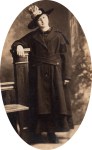
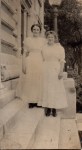

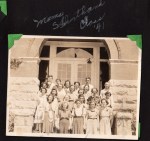


My grandmother, Olga Scott Morse, was a teacher of business skills. She graduated with her masters in education after she had four kids. She left them at home on the oil lease with their dad during the week to attend classes at Oklahoma State University. I believe that in the 1930s this was a bold feminist move. After graduation from OSU she taught typing and shorthand at a junior college near their home in Tonkawa,OK. Learning to type was a bold femenist move, believe it or not. Her students learned shorthand and typing and other current secretarial skills. The school to day is called Northern Oklahoma College. I stopped at the campus when I went to Oklahoma on an ancestry hunt a few years ago. I found her name in an old yearbook in the library, which was fun. I also looked through a lot of photos from the history of the school, where my dad and his brothers were students, but I did not find them. I walked around on campus, taking a break in my drive. Later, I found a picture of her with her students in the 1930’s in front of the central building at my uncle’s house in Wichita. I easily recognized the building since I had just been there.
Her mother, Sarah Helena Byrne, was a teacher and her great-grandfather , Amos Nichols,was also. My father was a university professor. The teacher archetype is all over my father’s family. I wonder if this is a DNA situation or all the reading and discipline that teachers represent. She was a farmer when I met her, having long since retired, but I remember her typewriter on the farm that had black keys..no letters. She could wail on that thing, but she had little reason to to so. I asked her to because I liked to watch her do it. She was a woman of many skills and talents, including flower and vegetable gardening. Most of the fruits and vegetables we ate in the winter in Pittsburgh were grown on my grandparents’ farm in Arkansas and frozen. I picture her in a sun bonnet, like all her friends wore, on the farm. Visiting the college where she taught before I was born was a really cool experience that showed me a part of her I never knew. For her day and place she was super highly educated and accomplished.
Olga Fern Scott (1897 – 1968)

British flag
Hannah Mead was widowed in England before she sailed to America. She arrived in Boston in 1637 with her son Isaac:
John BEECHER was born on 28 Mar 1594 in Kent, England. He died in 1637/38 in New Haven, Connecticut. He immigrated on 26 Jun 1637 to Boston Harbor. Arrived April 26, 1637 from Steldhurst County, Kent, England. In Governor Eaton’s Company. The first Beecher to reach New England was John Beecher, who came from Kent, England in 1637. He was in the company led by Rev. John Davenport and Theophilus Eaton who had been the Ambassador to Denmark and Deputy-Governor of India. The company crossed the ocean on the “Hector” and another sister-ship. These two ships, after a two month voyage, dropped anchor in Boston harbor. The company consisted of 50 men and 200 women and children and was the most prosperous that ever arrived in New England. Unfortunately, they landed in the midst of a quarrel about Anne Hutchinson who had set herself up as a preacher, irregardless of her sex. Not wishing to become involved, they sent out a scouting party to find another location to settle. They decided upon Quinnipiack on the Long Island Sound, the site of present day New Haven, Conn. The party built a hut and left seven of their men to hold the post for the winter and to prepare for the arrival of the rest of the company in the spring. John Beecher was one of the seven and he failed to survive the winter. Hannah arrived in the spring with her son Isaac and found her husband in an unmarked grave. Since she was the only midwife among them, and thus relied upon by the others in the company, she was given her husband’s allotment of land for herself and her son Isaac. One hundred and twelve years later, in 1750, when David Beecher was a boy of twelve, workmen who were digging a cellar for a house at the corner of George and Meadow Streets in New Haven came upon human bones, believed to be those of John Beecher.
(43) Hannah Beecher sailed from England with her son Isaac and was a widow at the time she left England. Husband John Beecher, one of the seven whom Eaton sent to New Haven in advance of the colony ,died before the colony arrived. He did not survive the first winter. It is established that this ship load of people was rather wealthy landowners from Steldhurst County, Kent, England. Since the company was rather young, it was felt that Hannah’s services of midwife would be greatly needed. She therefore was offered her husband’s land right in the new world if she would agree to go and fulfill this need, which she did. ——————————————————————————The will of Hannah Beecher was proved April 5, 1659 and is recorded in first part, vol i., p 80 of New Haven Probate Records as follows: “I Hannah Beecher of New Haven, expectying my great change do make this my last will and testament, I bequeath my soul unto the hands of my Lord Jesus Christ by whose meritt I hope to be saved and my body to be burried at the discretion of my Son William Potter my Executor. And for my worldly goods I give unto John Potter my Grand child twenty shillings and to Hannah Blackly, my Grand child twenty shillings to be paid to them within three months after my decease. And for the rest of my estate I give one third part to my son Isaac Beecher and two thirds to my eldest son William Potter, making him my Executor, desiring him to be as a father to his younger brother and his children. And in dividing my goods my will is that my son William should have my feather bed with that belongeth to it, unto his part and that the rest be divided at the discretion of my Overseers with the assistance of Sister Wakeman and sister Rutherford and I desire my loving friends Mr Mathew Gilbert and Job Wakeman to be overseers of this my last will whereunto I have set my hand this 13th day of June, Anno 1657. Witnesses, the mark of Mathew Gilbert, Hannah Becher John Wakeman, Sarah Rutherford. This source also indicates that the inventory of Hannah’s estate following her death in 1659 amounted to 55 pounds, 5 shillings, and 6d. ——————————Hannah (Potter) Beecher appears in early New Haven as a widow with sons: John Potter, William Potter, and Isaac Beecher. She has been considered to be the mother of Isaac Beecher, for she calls him her son in her will and gave him one third of her property, but recent investigations (source unproven ) suggest that Isaac was a step son, the son of her second husband by a former wife. SEE NOTE ON ISAAC BEECHER ENTRY. ————————————————– Note: There was in New Haven, says G.F. Tuttle, as early as 1641, a widow Hannah Potter, known as widow Potter the midwife. In 1643 she had two persons in the family, thirty pounds estate and twenty and one quarter acres of land. She is called “sister Potter the midwife,” in seating the meeting house in 1646. She is supposed to have been akin to the other Potters, but there is no record to show it. She has often been confounded with the widow Hannah Beecher, but the records clearly show that they were two different persons. ————————————————— Per “Families of Ancient New Haven”
Hannah Mead (1584 – 1659)
is my 10th great grandmother
William Potter (1608 – 1684)
son of Hannah Mead
Hannah Potter (1636 – 1700)
daughter of William Potter
Benjamin Mead (1666 – 1746)
son of Hannah Potter
Mary Mead (1724 – 1787)
daughter of Benjamin Mead
Abner Mead (1749 – 1810)
son of Mary Mead
Martha Mead (1784 – 1860)
daughter of Abner Mead
Abner Morse (1808 – 1838)
son of Martha Mead
Daniel Rowland Morse (1838 – 1910)
son of Abner Morse
Jason A Morse (1862 – 1932)
son of Daniel Rowland Morse
Ernest Abner Morse (1890 – 1965)
son of Jason A Morse
Richard Arden Morse (1920 – 2004)
son of Ernest Abner Morse
Pamela Morse
I am the daughter of Richard Arden Morse
The question of Hannah’s parents is not fully resolved:
Mrs. BEECHER was voted a portion of land by the New Haven colony for her services as physician and midwife. The land remained in the BEECHER family until 1879. The New Haven Hospital, built in the late 1800s stood on part of it, about a half mile west of the old Green.
SURNAME CONFUSION
One researcher has Hannah’s surname as BEECHER. But it is clear that she married a BEECHER, and I think someone confused BEECHER as her surname. I believe that Hannah was a MEAD who married a POTTER before BEECHER.
But another source claims she was Ann/Hannah LANGFORD. This Hannah was also born in Kent, ENG. But she died FEB 1658 in New Haven, New Haven, Connecticut, USA. (I need to determine which was the right Hannah. They were both listed as midwives.
Hannah was widowed in England and married a second time there. She is believed to have married John Beecher who was a member of the advance party which was sent to prepare for the settling of New Haven, CT. John died in New Haven before the arrival of the colony. The well known Beecher family (Henry Ward Beecher and Harriet Beecher Stowe, being two of the clan) descend from Hannah’s son Isaac Beecher.
Apple is a legend and a brand. It has fans and detractors. I have always loved and used Apple products., and have considered buying the new MacBook Pro. I know I am in emotional attatchementville at the time of the new release, so I am not taking action. I have filled in the order in the cloud, and have not pulled the trigger. I am happy with all my stuff, but am attracted to some mystic upgrade I might perceive with a new super power as my tool. Still, none of my purchases has ever for a moment given me buyer’s regret. I have no iPhone and no plans to have one. I just bought iPod 5 that is a tiny iPad with Siri in it. I like it because nobody can call or text me, but I have everything else in a tiny package. Siri, so far, does not seem like such a genius, but I haven’t asked her much. I am Apple faithful as well as a shareholder in the company. In weighing the options I am keeping my money in the bank while I hear more from all the new users. I am a fan, but not sucker.

Southworth Coat of Arms

Plimouth Colony
My 9th great-grandmother was born and died in Plymouth Colony. She married Joseph Howland, who was also born in Plymouth.
Joseph Howland [Parents] was born about 1637 in Plymouth, Mass.. He died in Jan
1703 in Plymouth, Mass.. He married Elizabeth Southworth on 7 Dec 1664 in
Plymouth, Ma..
  NOTE: Hubert Kinney Shaw, Families Of The Pilgrims; ; Massachusetts Society of
  Mayflower Descendants; pg. 6; ;
  MARRIAGE:Hubert Kinney Shaw, Families Of The Pilgrims; ; Massachusetts
  Society of Mayflower Descendants; pg. 6; ;
Elizabeth Southworth [Parents] was born in 1645. She died in Mar 1717 in
Plymouth, Ma.. She married Joseph Howland on 7 Dec 1664 in Plymouth, Ma..
  NOTE: Hubert Kinney Shaw, Families Of The Pilgrims; ; Massachusetts Society of
  Mayflower Descendants; pg. 6; ;
  MARRIAGE:Hubert Kinney Shaw, Families Of The Pilgrims; ; Massachusetts
  Society of Mayflower Descendants; pg. 6; ;
They had the following children:
         MiThomas Howland
         MiiJames Howland
         FiiiSarah Howland was born in 1673 in Plymouth, Ma.. She died on 23 Dec
        1703 in Plymouth, Ma..
         FivLydia Howland
         FvElizabeth Howland
         FviMercy Howland
         MviiNathaniel Howland
         MviiiBenjamin Howland was born on 7 Sep 1689 in Plymouth, Ma.. He died
        on 7 Sep 1689 in Plymouth, Ma..
         MixJoseph Howland was born on 8 Jul 1689 in Barnstable, Ma.. He died on
        8 Jul 1689 in Barnstable, Ma..
         FxMary Howland
         FxiElizabeth Howland was born in 1665 in Plymouth, Ma.. She died on 15
        Feb 1723.
Elizabeth Southworth (1645 – 1716)
is my 9th great grandmother
Elizabeth Howland (1673 – 1724)
daughter of Elizabeth Southworth
Eleazer Hamblin (1699 – 1771)
son of Elizabeth Howland
Sarah Hamblin (1721 – 1814)
daughter of Eleazer Hamblin
Mercy Hazen (1747 – 1819)
daughter of Sarah Hamblin
Martha Mead (1784 – 1860)
daughter of Mercy Hazen
Abner Morse (1808 – 1838)
son of Martha Mead
Daniel Rowland Morse (1838 – 1910)
son of Abner Morse
Jason A Morse (1862 – 1932)
son of Daniel Rowland Morse
Ernest Abner Morse (1890 – 1965)
son of Jason A Morse
Richard Arden Morse (1920 – 2004)
son of Ernest Abner Morse
Pamela Morse
I am the daughter of Richard Arden Morse
We see that she is a progenitor of Teddy Roosevelt, and that her roots are Plantagenetial:
1. Theodore Delano Roosevelt 1882-1945 32nd United States President
2. James Roosevelt 1828-1900
3. Mary Rebecca Aspinwall 1809-1886
4. Susan Howland 1779-1852
5. Joseph Howland 1749-1836
6. Nathaniel Howland 1705-1766
7. Nathaniel Howland 1671-1746
8. Elizabeth Southworth 1645-1717
9. Thomas Southworth 1616-1669
10. Edward Southworth 1590-1621
11. Thomas Southworth 1548-1616
12. Sir John Southworth 1526-1595
13. Margarey Boteler 1500-1546
14. Sir Thomas Boteler 1461-1522
15. Margaret Stanley 1433-1481
16. Joan Goushill 1404-1460
17. Elizabeth Fitzalan 1366-1385
18. Elizabeth De Bohun 1350-1385
19. William De Bohun 1312-1360
20. Elizabeth Plantagenet 1282-1316
21. Edward I Longshanks King of Enlgand, Plantagenet 1239-1397
22. Henry III King of England, Plantagenet 1207-1272
23. John of Lackland King of England, Plantagenet 1167-1216
24. Henry II King of England, Plantagenet 1132-1189

single hibiscus
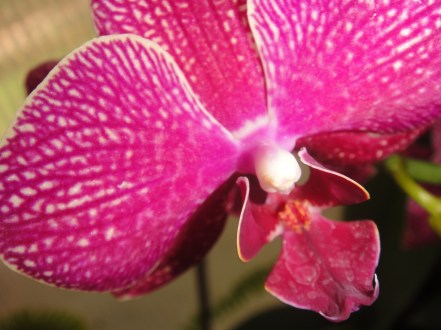
single orchid

solo

privacy

free time
Privacy and free time are the only true luxury items, in my book. They will not arrive on their own and they will not stay if not managed with care. We all have a privacy policy, and it is not like the one you get from your doctor. We either announce to the world where we are and what we are doing or not. The other branch of privacy is availability. Each of us decides if we are available to be called or texted all day and night. We let people know how and when to reach us, and based on those parameters our privacy policy is established.
I love technology and enjoy many facets of the world wide web and the power it contains. I do not use GPS or smartphone. I do not want to be tagged and given a free beer when I am in the hood. I would rather retain the privacy. I do no use my cell phone at all except for travel and odd circumstances. I use Skype or my landline to make calls. I do not text or receive texts. There are some on my ancient cell phone, but I will never read them because they are from Virgin Mobile. Some of my friends think this practice is wildly eccentric, and I suppose it is in 2013. The reason I do not live my life connected to the internet or the phone is that I value my freedom and private life.
My filters and boundaries are clear to me, and obvious to others. I publish 2 blogs, one of which is now mostly art. I interact on various social media and in Triberr with a wide array of personalities and specialties. I am active and interactive all over the world in this way. I am a great navigator who does not use GPS because I think navigation is good for the soul. I could never imagine giving up the thrill of knowing where I am and trusting some voice who has no idea where I am. I had GPS given to me in a rental car once, and it sent us drastically out of our way. I did not even turn it on after that..how silly. I have the same phone number at my home that I have had for about 20 years. There is a message system that works, and I respond when I hear messages that are for me. I eliminate the spam and move on with life.






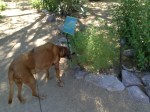







Artemisia, red bone coon hound, is a new canine member of the Tucson Botanical Gardens. On Tuesdays dog members and their families are welcome all day. This was a very special day because professional pet photographer, Vicky Stromee was set up to take pictures against a green backdrop. She and her assistant made the shoot quick and easy. We strolled through the shady paths for a few minutes, stopping for a drink at the cafe, which was closed. She smelled the door and wished it was open. Her shady and relatively cool experience today will be followed by her card and collar ring which will arrive in the mail. The dog membership is valid May through September. We have been family members for years, and now we are officially all part of the garden family. Artemisia recommends this reasonably priced membership to all Tucson dogs because of the shade. She liked it so much she sent an instagram.
# is a symbol. It has meaning, and it conveys something like punctuation. It says, “This is digital, not linear, not even physical.” It says, “2013 is all about #.” Yet there are those who never use it and maybe do not grasp the power contained in the #. It is clearly and obviously a make-believe entity, the digital reality. If anthropologists of the future go through the twitter accounts of the most famous people in the 21st century to learn about our culture, they will be flabbergasted.
Knowing the code, from secret societies to Morse code has always been significant. Writing code to make the computer world exist is a skill, an art, and a secret to those who do not know how to do it. The dewey decimal system was the grandparent to the #. We no longer have a paper file at the library, and there is no need to go to a library to find reference materials. If we Google, Bing, or # we go straight to the stuff we seek. Hide and seek is not played outdoors, but in search. I have often expressed the opinion here that there is nothing evil about technology. There is a big question about the morality of those who have access to the best technology to act in the best interests of society.
There is no conspiracy to push wealth away from most people and into the pockets of those who have the most data and the fastest computers. The shift from placing value on material goods to mining information about people’s habits has been in play for a long time. The society has participated in this shift willingly, and now is starting to wonder where the path leads. I believe it takes the individual where they intend to go, much like telegraphs and libraries. The choice is wider, but the choice of how to use and misuse is still a personal issue. The broader society, however, is suffering from the concentration of wealth and power in too few #’s.
 mermaidcamp