mermaidcamp
Keeping current in wellness, in and out of the water
You can scroll the shelf using ← and → keys
You can scroll the shelf using ← and → keys

Southworth Coat of Arms

Plimouth Colony
My 9th great-grandmother was born and died in Plymouth Colony. She married Joseph Howland, who was also born in Plymouth.
Joseph Howland [Parents] was born about 1637 in Plymouth, Mass.. He died in Jan
1703 in Plymouth, Mass.. He married Elizabeth Southworth on 7 Dec 1664 in
Plymouth, Ma..
  NOTE: Hubert Kinney Shaw, Families Of The Pilgrims; ; Massachusetts Society of
  Mayflower Descendants; pg. 6; ;
  MARRIAGE:Hubert Kinney Shaw, Families Of The Pilgrims; ; Massachusetts
  Society of Mayflower Descendants; pg. 6; ;
Elizabeth Southworth [Parents] was born in 1645. She died in Mar 1717 in
Plymouth, Ma.. She married Joseph Howland on 7 Dec 1664 in Plymouth, Ma..
  NOTE: Hubert Kinney Shaw, Families Of The Pilgrims; ; Massachusetts Society of
  Mayflower Descendants; pg. 6; ;
  MARRIAGE:Hubert Kinney Shaw, Families Of The Pilgrims; ; Massachusetts
  Society of Mayflower Descendants; pg. 6; ;
They had the following children:
         MiThomas Howland
         MiiJames Howland
         FiiiSarah Howland was born in 1673 in Plymouth, Ma.. She died on 23 Dec
        1703 in Plymouth, Ma..
         FivLydia Howland
         FvElizabeth Howland
         FviMercy Howland
         MviiNathaniel Howland
         MviiiBenjamin Howland was born on 7 Sep 1689 in Plymouth, Ma.. He died
        on 7 Sep 1689 in Plymouth, Ma..
         MixJoseph Howland was born on 8 Jul 1689 in Barnstable, Ma.. He died on
        8 Jul 1689 in Barnstable, Ma..
         FxMary Howland
         FxiElizabeth Howland was born in 1665 in Plymouth, Ma.. She died on 15
        Feb 1723.
Elizabeth Southworth (1645 – 1716)
is my 9th great grandmother
Elizabeth Howland (1673 – 1724)
daughter of Elizabeth Southworth
Eleazer Hamblin (1699 – 1771)
son of Elizabeth Howland
Sarah Hamblin (1721 – 1814)
daughter of Eleazer Hamblin
Mercy Hazen (1747 – 1819)
daughter of Sarah Hamblin
Martha Mead (1784 – 1860)
daughter of Mercy Hazen
Abner Morse (1808 – 1838)
son of Martha Mead
Daniel Rowland Morse (1838 – 1910)
son of Abner Morse
Jason A Morse (1862 – 1932)
son of Daniel Rowland Morse
Ernest Abner Morse (1890 – 1965)
son of Jason A Morse
Richard Arden Morse (1920 – 2004)
son of Ernest Abner Morse
Pamela Morse
I am the daughter of Richard Arden Morse
We see that she is a progenitor of Teddy Roosevelt, and that her roots are Plantagenetial:
1. Theodore Delano Roosevelt 1882-1945 32nd United States President
2. James Roosevelt 1828-1900
3. Mary Rebecca Aspinwall 1809-1886
4. Susan Howland 1779-1852
5. Joseph Howland 1749-1836
6. Nathaniel Howland 1705-1766
7. Nathaniel Howland 1671-1746
8. Elizabeth Southworth 1645-1717
9. Thomas Southworth 1616-1669
10. Edward Southworth 1590-1621
11. Thomas Southworth 1548-1616
12. Sir John Southworth 1526-1595
13. Margarey Boteler 1500-1546
14. Sir Thomas Boteler 1461-1522
15. Margaret Stanley 1433-1481
16. Joan Goushill 1404-1460
17. Elizabeth Fitzalan 1366-1385
18. Elizabeth De Bohun 1350-1385
19. William De Bohun 1312-1360
20. Elizabeth Plantagenet 1282-1316
21. Edward I Longshanks King of Enlgand, Plantagenet 1239-1397
22. Henry III King of England, Plantagenet 1207-1272
23. John of Lackland King of England, Plantagenet 1167-1216
24. Henry II King of England, Plantagenet 1132-1189

single hibiscus
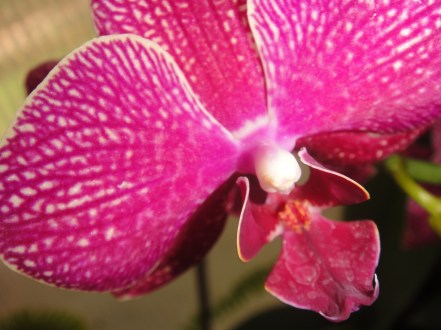
single orchid

solo

privacy

free time
Privacy and free time are the only true luxury items, in my book. They will not arrive on their own and they will not stay if not managed with care. We all have a privacy policy, and it is not like the one you get from your doctor. We either announce to the world where we are and what we are doing or not. The other branch of privacy is availability. Each of us decides if we are available to be called or texted all day and night. We let people know how and when to reach us, and based on those parameters our privacy policy is established.
I love technology and enjoy many facets of the world wide web and the power it contains. I do not use GPS or smartphone. I do not want to be tagged and given a free beer when I am in the hood. I would rather retain the privacy. I do no use my cell phone at all except for travel and odd circumstances. I use Skype or my landline to make calls. I do not text or receive texts. There are some on my ancient cell phone, but I will never read them because they are from Virgin Mobile. Some of my friends think this practice is wildly eccentric, and I suppose it is in 2013. The reason I do not live my life connected to the internet or the phone is that I value my freedom and private life.
My filters and boundaries are clear to me, and obvious to others. I publish 2 blogs, one of which is now mostly art. I interact on various social media and in Triberr with a wide array of personalities and specialties. I am active and interactive all over the world in this way. I am a great navigator who does not use GPS because I think navigation is good for the soul. I could never imagine giving up the thrill of knowing where I am and trusting some voice who has no idea where I am. I had GPS given to me in a rental car once, and it sent us drastically out of our way. I did not even turn it on after that..how silly. I have the same phone number at my home that I have had for about 20 years. There is a message system that works, and I respond when I hear messages that are for me. I eliminate the spam and move on with life.







Artemisia, red bone coon hound, is a new canine member of the Tucson Botanical Gardens. On Tuesdays dog members and their families are welcome all day. This was a very special day because professional pet photographer, Vicky Stromee was set up to take pictures against a green backdrop. She and her assistant made the shoot quick and easy. We strolled through the shady paths for a few minutes, stopping for a drink at the cafe, which was closed. She smelled the door and wished it was open. Her shady and relatively cool experience today will be followed by her card and collar ring which will arrive in the mail. The dog membership is valid May through September. We have been family members for years, and now we are officially all part of the garden family. Artemisia recommends this reasonably priced membership to all Tucson dogs because of the shade. She liked it so much she sent an instagram.
# is a symbol. It has meaning, and it conveys something like punctuation. It says, “This is digital, not linear, not even physical.” It says, “2013 is all about #.” Yet there are those who never use it and maybe do not grasp the power contained in the #. It is clearly and obviously a make-believe entity, the digital reality. If anthropologists of the future go through the twitter accounts of the most famous people in the 21st century to learn about our culture, they will be flabbergasted.
Knowing the code, from secret societies to Morse code has always been significant. Writing code to make the computer world exist is a skill, an art, and a secret to those who do not know how to do it. The dewey decimal system was the grandparent to the #. We no longer have a paper file at the library, and there is no need to go to a library to find reference materials. If we Google, Bing, or # we go straight to the stuff we seek. Hide and seek is not played outdoors, but in search. I have often expressed the opinion here that there is nothing evil about technology. There is a big question about the morality of those who have access to the best technology to act in the best interests of society.
There is no conspiracy to push wealth away from most people and into the pockets of those who have the most data and the fastest computers. The shift from placing value on material goods to mining information about people’s habits has been in play for a long time. The society has participated in this shift willingly, and now is starting to wonder where the path leads. I believe it takes the individual where they intend to go, much like telegraphs and libraries. The choice is wider, but the choice of how to use and misuse is still a personal issue. The broader society, however, is suffering from the concentration of wealth and power in too few #’s.

British flag
My 8th great-grandfather came from England to Virginia in the 1600’s. We don’t know much about him except that he arrived early in America. He was a large landowner and his wife inherited land from her brother as well. These early settlers in Virginia had plenty of obstacles to overcome to just survive.
Capt John Gregory born: 1623 in Stockwith, England died: 1676 Rappahannock County, Virginia Officer in the Colonial Militia. Emigrated to Virginia prior to 1656; settled on the north side of the James River in Charles County. 20 February 1663 had a grant of 600 acres in Rappahannock County. Vestryman in 1665.
Capt John Gregory(1623 – 1676)
is my 8th great-grandfather
Mary Gregory (1665 – 1747)
daughter of Capt John Gregory
John Taylor (1685 – 1776)
son of Mary Gregory
John Taylor (1727 – 1787)
son of John Taylor
John Taylor (1747 – 1781)
son of John Taylor
John Nimrod Taylor (1770 – 1816)
son of John Taylor
John Samuel Taylor (1798 – 1873)
son of John Nimrod Taylor
William Ellison Taylor (1839 – 1918)
son of John Samuel Taylor
George Harvey Taylor (1884 – 1941)
son of William Ellison Taylor
Ruby Lee Taylor (1922 – 2008)
daughter of George Harvey Taylor
Pamela Morse
I am the daughter of Ruby Lee Taylor
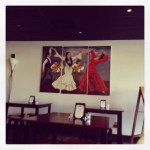
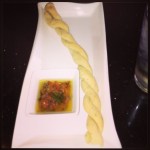

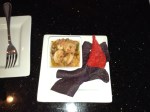

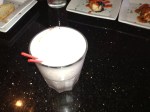





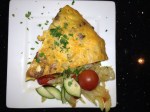
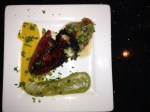
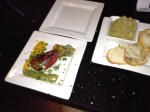





We are happy to have a tapas restaurant in our neighborhood. Tapas Fusion is our new favorite place to go for food and cocktail adventure. We had brunch there last Sunday with good results, so we returned yesterday for happy hour. Firey Friday features flambé drink specials. I tried one, and then had a pisco sour, both new to me.
It was a blast. The crew, including the friendly owner Mary Bellin, make you feel welcome. The happy hour pricing and the all you can eat tapas menu has something for everyone. I am vegetarian, and Bob is not, so we each ordered small dishes until we were full. The cuisine has many layers of flavor, with creative garnishes and fresh sauces making each dish pop. The flavorful variety gives your tastebuds a lot of intrigue for the size of the plates and the total of the bill. We are huge fans, and will return to try more of the menu. Mary has a generous frequent diner offer, and she doubles the points on Tuesdays or Wednesdays. For summer the restaurant will be closed on Mondays. She offers the all you can eat tapas menu every day, and it includes a lot of choices. Additional menu items are available a la carte. So far, we liked everything we ordered…a lot!!
People who undergo cancer treatments or surgery often suffer from permanent damage to the lymphatic system. There is a process they can use, combined with movement, to restore the flow of lymph by sending it through new pathways. Justine Robbins has many years of experience working with cancer patients as a lymphatic drainage therapist. She wishes more people had more knowledge, especially those who have cancer and lymphoma. It is very common to overlook this gentle treatment while the patient suffers great pain from swelling. Justine explains why this simple technique can provide relief and healing for many who do not know it exists. Supportive Care for Healing at the U of A Cancer Center offers this treatment at a very reasonable price.
I go regularly to Justine Robbins for lymph drainage treatments. I look at it as boosting my immune system. This little known activity in the body is essential for good health. Understanding how the lymph nodes are connected and what they do might illustrate why this treatment can make a big difference in overall your wellbeing and resiliency. In Europe it is more common to find this kind of therapy because there is generally more knowledge available on the benefits. I am so lucky and happy to have access to supportive care for healing and Justine.

sunflowers
Nunta, the Cherokee goddess of the sun and health has power to bring healing or illness. Remedy is remembering in her world. Health emanates from the same source as pain. Adversaries carry strong medicine, and sometimes must be faced in order to be free of an affliction. Willingness to meet an adversary for the purpose of healing sounds like fairy tale of fear and loathing. The struggle is full of possible outcomes, including death. Intuitively our bodies know which ones of our patterns is the most harmful. Allowing an accumulation of foggy emotional distraction to cover the truth only leads to more complicated side effects. The enemy of your good health is denial. Nunta is the bright sunlight of awareness illuminating the medicine you need to remember.
Your personal happiness is unique and known only to you. Taking a big dose of your own medicine is a step towards wholeness and health.
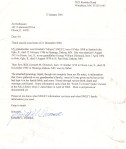


While studying my tree I noticed that one of the branches had some discrepancies. The Sweet family of Rhode Island is a favorite of mine now that I have visited the state. Consulting family written documents, my suspicions were confirmed that I had the wrong Sweet in the wrong spot. I was sad because I had become attached to these people who would no longer be related to me, which itself is a ridiculous thought. Now I have spent time to repair the error, and with a bit of luck I did get back to the correct ancestor in just 3 generations. I had listed his brother John in this generation, an erroneous idea I found in other profiles on ancestry.com. Lucky for me, I do have family written references on this part of my fam. My new, revised 8th great grandfather is from a Sweet family of famous physicians known as the bonesetters. They carried on for generations in this capacity. I am now just as happy with the doctors as I was with the fancy politicians I gave up in the process. I have also been informed about Rhode Island history, which is fascinating.
James Sweet (1622 – 1695)
is my 8th great-grandfather
Benoni Sweet (1663 – 1751)
son of James Sweet
Dr. James Sweet (1686 – 1751)
son of Benoni Sweet
Thomas Sweet (1732 – 1813)
son of Dr. James Sweet
Thomas Sweet (1759 – 1844)
son of Thomas Sweet
Valentine Sweet (1791 – 1858)
son of Thomas Sweet
Sarah LaVina Sweet (1840 – 1923)
daughter of Valentine Sweet
Jason A Morse (1862 – 1932)
son of Sarah LaVina Sweet
Ernest Abner Morse (1890 – 1965)
son of Jason A Morse
Richard Arden Morse (1920 – 2004)
son of Ernest Abner Morse
Pamela Morse
I am the daughter of Richard Arden Morse
The second son of JOHN & MARY SWEET, James Sweet came with his parents to America in 1632. He worked at a grist mill with his step-father, Ezekiel Holliman. He was an inhabitant of Warwick in 1648, Commissioner in 1653/1658/1659, freeman in 1655, juryman in 1656 and lived at the estate of the late William Congdon at the foot of Ridge Hill. He married MARY GREENE, daughter of JOHN GREENE & JOANE (TATTERSOL) GREENE, about 1654 in Providence, RI. On Sept. 30, 1660, he sold to Thomas Greene, the lot he had received from the town of Warwick along with meadow land. Later, the family moved to Prudence Island in Portsmouth Twp. about four miles soutwest of Bristol in 1664 being one of the first families to live on the island from 1664 to about 1685. Several family members are buried in the old family burying ground in the center of the island.On November 8, 1686, he deeded his land in Providence that he had inherited from his father to eldlest son, Philip of Prudence Island. On the same date, he deeded to son, Benoni, certain land in Mashiantatack, and to son, James of Prudence Island, Valentine of Kingstown, and Samuel & Mary Sweet living with their parents, land in Mashiantatack. In 1695, James deposed and gave his age as 73. He died at age 93 years.All the “bone-setter” family lines originate with James Sweet and his wife, Mary, who learned the art of bone-setting from her surgeon father, JOHN GREENE. James Sweet & his brother, John Sweet were interpreters to the Indians for first settlers and their names can be found on early Indian deeds. James Sweet signed with his mark.

