mermaidcamp
Keeping current in wellness, in and out of the water
You can scroll the shelf using ← and → keys
You can scroll the shelf using ← and → keys

reflection
The hand that is drawn is only the whisper of what will be
Each play has a meaning, although this is never obvious
While the game proceeds to the end of the deck we discover
That some of the cards we have discarded were essential
To our self confidence and poise
It is too late to reverse, and too early to fold

desert in water
Encircled by time and memory the distance grows
The positive lessons that have tumbled over glass
Until the seeds of the teaching are shredded to bits
Look clear in the bottom of the river bed of sorrow
Revelation comes in a series of events that shock the system

patterns
Myth covers the past and rigid belief shrouds the future
Caverns of unexplored possibilities overflow with danger
The dark and murky waters of political polls and pacts
Leave us more than ever way too informed, without facts
Emotional Attachment is something we all experience in life. In the first house of Aries we make an emotional attachment to certain belief systems, concepts, theories, and thinking patterns passed down from generation to generations. This may be religious/spiritual, political, psychological, educational, social class, and we take-action based on what knowledge, wisdom, and insight is […]
via Emotional Attachments & the Twelve Houses of Astrology — Fushion ~ Light

river
The sounds are all drowned, muffled by roaring thunder
As the speakers and the spoken words flow like a torrent
Swirling around rapids, churning up silt that washed down
When the mountains were flooded with bitterness and fear
These times are all uncertain and these places in danger
We watch the currents of resentment carve pathways
Through the river beds of stone where gold was once found
There is a tide of turning thoughts that create deeds
The makers come out of the dark with new patterns
They see no lighted path from the past to the moment
In which we now find ourselves seeking some truth
Time has been passing while cultural fads take up space
The crossing of streams, all vivid reality with pastel dreams
Days turn to seasons we speed up, then slow down the pace

What remains is the dregs of the process
The sediment of crystalized thoughts
Wearing away the mind’s own nature
Free of motivations and fears, clear and calm


Oct 1, 2018 | Posted by Archeia Aurora | 5D Daily Updates, Astrology Updates FCGCT Commentary: We are moving from the mind, to the Heart… not the balancing of the two. The mind conflicts with the Heart, and is the cause for imbalance, pain, fear, suffering and more. The mind… the ego, blocks the Heart, […]

Intuitive Astrology Forecast for September 2018 by Tanaaz September holds the vibration of number 9. In numerology, number 9 represents the completion phase before a new cycle begins, and that is exactly what September has in store for us all.
via Intuitive Astrology Forecast for September 2018 — In a Love World
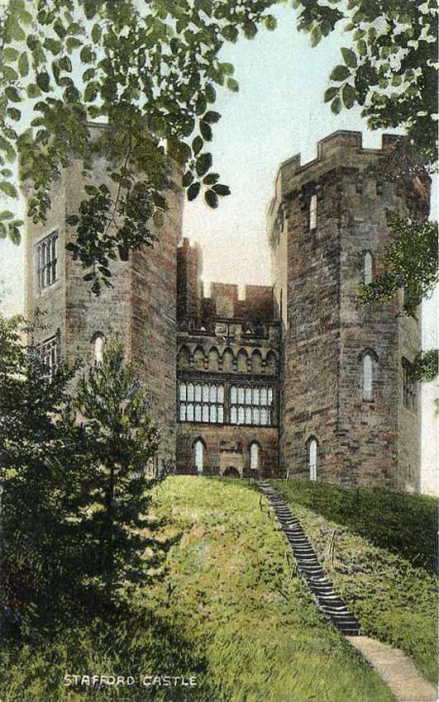 Stafford Castle
Humphrey married Margaret Beaufort, daughter of Edmund Beaufort, 2nd Duke of Somerset and Eleanor Beauchamp. Her maternal grandparents were Richard de Beauchamp, 13th Earl of Warwick and his first wife, Elizabeth Beauchamp, 4th Baroness Lisle. She was also a first cousin to Anne Neville, 16th Countess of Warwick and through her cousin-by-marriage to Richard Neville, 16th Earl of Warwick, the so-called “Kingmaker” during the Wars of the Roses. Humphrey and Margaret had a single son Henry Stafford, 2nd Duke of Buckingham (4 September 1455 – 2 November 1483).
Humphrey fought under his father-in-law in support of the House of Lancaster during the First Battle of St Albans. He appears to have been badly wounded at this battle but actually survived for a least another 2–3 years. This may account for his disappearance from the contemporary records of the time. In 1458 he died from the plague.
The First Battle of St Albans, fought on 22 May 1455 at St Albans, 22 miles (35 km) north of London, traditionally marks the beginning of the Wars of the Roses. Richard, Duke of York and his ally, Richard Neville, Earl of Warwick, defeated the Lancastrians under Edmund, Duke of Somerset, who was killed. York also captured Henry VI, who appointed him Constable of England.
The Lancastrian army of 2,000 troops arrived at St Albans first, and proceeded to defend it by placing troops along the Tonman Ditch and at the bars in Sopwell Lane and Shropshire Lane. The 3,000-strong Yorkist army arrived and camped in Keyfield to the east. Lengthy negotiations ensued with heralds moving back and forth between the rival commanders. After several hours, Richard, despairing of a peaceful solution, decided to attack. The bulk of Henry’s forces were surprised by the speed of Richard’s attack; most of the army was expecting a peaceful resolution similar to the one at Blackheath in 1452. However, two frontal assaults down the narrow streets against the barricades made no headway and resulted in heavy casualties for the Yorkists.
Warwick took his reserve troops through an unguarded part of the town’s defences, through back lanes and gardens. Suddenly the Earl appeared in the Market Square where the main body of Henry’s troops were talking and resting. There is evidence they were not yet expecting to be involved in the fighting, as many were not even wearing their helmets. Warwick charged instantly with his force, routing the Lancastrians and killing the Duke of Somerset.
On the Earl’s orders, his archers then shot at the men around the King, killing several and injuring the King and the Duke of Buckingham. The Lancastrians manning the barricades realised the Yorkists had ouflanked them, and fearing an attack from behind abandoned their positions and fled the town.
The First Battle of St Albans was relatively minor in military terms, but politically was a complete victory for York and Warwick: York had captured the King and restored himself to complete power, while his rival Somerset and Warwick’s arch-enemies Henry Percy, 2nd Earl of Northumberland, and Lord de Clifford both fell during the rout.

.
His maternal grandparents were Ralph de Neville, 1st Earl of Westmorland and Joan Beaufort, Countess of Westmorland. His maternal uncles included (among others) Richard Neville, 5th Earl of Salisbury (father ofWarwick, the Kingmaker), Robert Neville who was first Bishop of Salisbury and then Bishop of Durham, William Neville, 1st Earl of Kent and Edward Nevill, 3rd Baron Bergavenny. His most prominent maternal aunt was Cecily Neville, wife of Richard Plantagenet, 3rd Duke of York and mother to among others Edward IV of England, Edmund, Earl of Rutland, George Plantagenet, 1st Duke of Clarence and Richard III of England.
Lord Stafford fought under his father-in-law in support of the House of Lancaster during the First Battle of St Albans. He appears to have been badly wounded at this battle, but either eventually died of his wounds or from the plague, predeceasing his own father in 1458.
Stafford married Lady Margaret Beaufort, daughter of Edmund Beaufort, 2nd Duke of Somerset and Lady Eleanor Beauchamp. Her maternal grandparents were Richard de Beauchamp, 13th Earl of Warwick and his first wife Elizabeth Berkeley. By her father, she was a niece of Joan Beaufort, Queen of Scots and a cousin to Lady Margaret Beaufort (mother of King Henry VII). By her mother, Lady Margaret was a niece of Anne de Beauchamp, 16th Countess of Warwick and as such, a cousin to Isabel, Duchess of Clarence and queen consort Anne Neville.
Lord and Lady Stafford had a single son, Henry (4 September 1455 – 2 November 1483). Henry was styled Earl of Stafford on his father’s death, and succeeded his paternal grandfather as Duke of Buckingham in June 1473, following the latter’s death at the Battle of Northampton on 10 July 1460.
 mermaidcamp