mermaidcamp
Keeping current in wellness, in and out of the water
You can scroll the shelf using ← and → keys
You can scroll the shelf using ← and → keys

gold
Golden reflections of sunset over the ocean took over my senses and transported me back to the first time I saw this place. My memories of this place stretch for miles and pleasant miles along the Pacific Coast Highway. I started to visit these beaches when I worked as an illegal alien in Tecate, BC, Mexico. I crossed the border to party and go to the beach in San Diego on a regular basis while I was teaching at a spa for Americans in the beer border town known as TKT in local lingo. As a wetback gringa I enjoyed easy free passage through the border. My employers bribed the Mexican aduana, and the US side was much different before 2001. We had an ideal way of life that included being paid to live at a destination spa. I made the most of it while it lasted, and am always happy that I did. Those days will never return. I kept crossing into Mexico to work until 2003, when I decided it had become too violent and scary to continue. The good old days were gone forever. Mexico lingo y querido had vanished forever.
Standing on a cliff in Encinitas I watch the surfers below me catch a few waves at the end of the day. I stop to watch the horizon for a green flash when the sun meets the water. A pelican glides in front of the light, fishing. The natural beauty of this stunning place in nature has endured through many political upheavals. I thought about the pelican and his flock needing no visa to cross the border. I wonder if man is conquering nature or nature has conquered man. FLASH!!! There is a moment of bright green that marks the end of this day. Most of us consider the green flash to be a sign of good luck. I am optimistic.
This is a story inspired by Sue Vincent’s photo prompt. Please visit Sue at the Daily Echo to read, write, or just enjoy posts from around the world interpreting this image. Every Thursday we take on a new image.
#writephoto

PCH
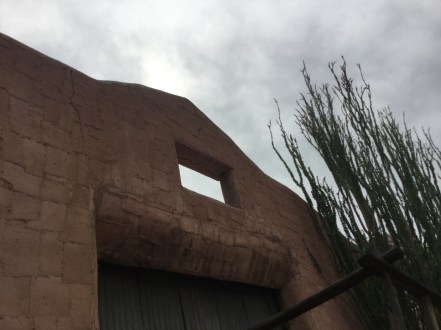
facade
What is the worst band of torture ever known to human kind?
I believe it is tedium, designed to numb the mind.
The orders and the triplicate files of meaningless transactions
Fill the time and suck the life out of the worker bees who serve
The whimsey of the ruling class with the resources and the nerve
To spend without repentance, to waste, to make improvidence
A privilege they perceive is granted to them for outstanding cognizance


A breeze blew through our dining room, lifting curtains made of lace
We caught a glimpse of a horse and rider moving by at a galloping pace
The lawn filled up with curious geese squawking as they ran
Shedding down like snow flurries, they covered the corpse of the man
Who died suddenly from mysterious causes but then returned to life
His presence disturbed horses who all began to spook and bolt
Ghost riders dressed in fancy chaps mounted the steeds and rode them into the sky
Outlaw gunslingers broke through the kitchen door in a flash of flames and smoke
We had lost hope, trembling under the dinner table in mortal fear when I awoke.


The phrase self care is popular these days. I personally am very happy to see this concept become a trend. For far too long high maintenance has been praised as a status to which we should all aspire. Personal trainers, stylists, shoppers,, chefs, and spin doctors of every sort are employed taking care of the needy and the wealthy who have no life skills to care for themselves. I enjoy personal care and attention as much as the next person, but I believe that by turning over too much personal care to professionals one becomes a product more than a zesty, lively expression of our own personality. It is vital to get down to basics when we define self care. It must be different for each individual because we each prefer unique ways of being soothed, pampered, or restored. By taking responsibility for one’s own pampering one discovers new and valuable ways to keep our bodies and minds healthy. There is no single formula, but there are elements that work well in combination to create a self care ritual or practice.
Personal time to recharge and invigorate can be used in all kinds of ways. Here are some ideas to try:
I had to mention the bath because this is the classic way people think of self care. I agree that a long soak in a tub with some essential oils can be just what is needed to restore vitality. Not everyone is a bath person. I encourage you to look around for ways to take care of yourself as only you can. I enjoy trying photography in nature. Sometimes I even produce something worth sharing. Enjoy, gentle reader. You are in charge of you.

horseshoes

horseshoes
If we were having coffee this weekend I would invite you to relax and take in the jasmine scent, still going strong in my front yard. I have ordered more tea (not that I was in need), so the selection has grown to epic proportion. The lazy Susan pantry literally groans under the weight of all the tea. I am digging a new blend called Hugs and Kisses, with a rose/caramel aftertaste that drives me wild. I also ordered a black passion fruit flavored tea that tastes delicious iced. We drink iced tea all year, but in summer I brew in the sun daily and we consume mass quantities. If you like, I can brew you a hot cup of roiboos jasmine to go with the flowers in the yard. It is one of my favorites, and there is a little chill this morning that will make a hot beverage feel just right. Please, make yourself at home while I fetch your drink of choice, and tell me how your life is. I want to hear what you have been doing, and how your writing is proceeding.
I have been trying to finish a non-fiction story that has unfolded over many years by creating a happy ending in real life. This is the nature of non-fiction, being just the truth. It limits one to facts. As I struggle to make my real life ending happen I am writing some fiction and poetry as a relief. I am a neophyte at both genres, and, if I do say so myself, pretty shitty at both. I like to practice to improve because I do find it liberating to just make up stories rather than try to influence hard reality in favor of a heroic outcome. It is so much easier to imagine an alternative vision than it is to bring one into being on the earth.
I spend a lot of time investigating my genealogy, discovering facts about my family tree. I have attempted some short historical fiction based on some factual data I know about my ancestors. I think this is a direction in which I could take my writing that would not only make use of the years of research I have done, but also allow me to create stories based on facts, but not limited strictly to them. All that has happened already, so there will be no changing the historical facts. Embellishing the truth, imagining the dialog and the settings, then bringing them to life seems like something I could really enjoy. I have a very famous poet ancestor, in whose honor I write 30 poems in 30 days in April as part of #NaPoWriMo. It is a challenge, but I think I owe it to her to give it a whirl for one month a year. She provided her DNA and poetry about her life and children (of which I am one). She was religious and wrote in olde English, so there is that. There are a couple other poets in the tree who lived in Tudor England. One was beheaded by Henry VIII. I tried to write a comedic ditty about his death a couple of years ago..it was one of my worst poems ever…but I published it. When I become an accomplished poet I will edit and spend much more time finishing each piece. Reaching a conclusion for a poem should be creative journey that has a universal ring. Someday I aspire to do that. My poetic muse has a short attention span that needs to be expanded. The fiction one is in the same boat. They are lazy, so they like to jump to conclusions rather than work it.
This year I am gearing up by writing some warm up poems and collecting some interesting images to use for illustration and inspiration. All I do is publish a poem each day. I only hope to improve over time and stir my genetic muse to awaken and say something profound and poetic. I keep the bar very low for quality, but do find lots of great ideas by reading the work of the other participants. I have finally finished my tax preparation and have returned to some written correspondence with a my new pen pals from February. I loaded up on stamps and plan to hand write and mail some of my shitty poems to my pen pals as a fusion of #NaPoWriMo and #InCoWriMo. They will be on great post cards, so even if the poems suck the presentation will be artful. This is the major lesson learned from the #InCoWriMo peeps, who tend to also be bullet journal, #BuJo, peeps…presentation counts, so don’t slack in that department.
Please join us on the weekend to sip and savor digital beverages with kindred spirits around the globe. Nerd in the Brain hosts this jolly group of writers. Please visit the party here to read, comment or submit your own post.

#WeekendCoffeeShare
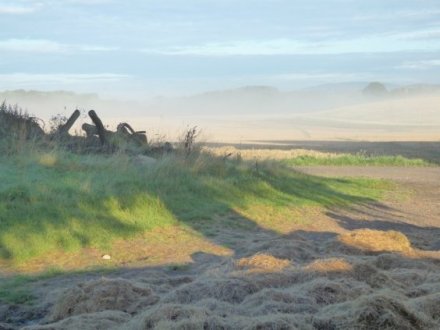
empty sandy beach
The sandy beach was sunlit and appealing as we stepped ashore. We had all been on a picnic party out to the island that had become a bit too rowdy for some of us. We left our jolly drinking friends to make their own way back, since they had become argumentative and feisty in a rude way. We could see that they had more than enough rum left to bring the evening to some kind of roaring conclusion, but we had roared quite enough with the crowd. They were always the same. We rowed the short distance back to mainland and felt the peace descend gently just as the sun sunk lower on the horizon, reflecting in the water.
I like to watch the sun go down from those dunes when the summer is starting to warm up. The sailing and kayaking pick up as weather permits. The bay becomes crowded with vessels, visitors, pretenders, and kings. The cottages are rented or opened for the just summer by those who can afford multiple dwellings. The visitors employ plenty of staff in the kitchens, gardens and drawing rooms. There are chauffeurs and butlers hanging out at the tavern in town late at night telling all the stories of their households to the other servants.
No secret lasted long, and no juicy gossip traveled on unembellished. Stories of wild lavish parties, intrigue and financial ruin were the daily bread of this summer society. They did not separate themselves from city life to be out of touch with all the news. They savored the tales of family strife or business struggles with relish. We enjoy a week at the cottage my aunt lends to us every year at this time. We do go to a few parties, like the picnic today, but we don’t really come for the social life. We like the beach when it is empty. Our pleasures are simple and all our needs are easily met. We pull our green rowboat out of the water and lift it over our heads to carry it back to the boathouse. The day is complete.
This story is based on the inspiration drawn from Sue Vincent’s photo prompt. Please join us to submit a poem or story, read, or comment on last week’s photo here.
#writephoto

sky
Tomorrow I might decide to fight but now I am inclined
To let the ship of fools sail out of the harbor without a word
They have enough rope and madness has made them blind
There is no stopping the clueless, no redemption for the herd
There is a stampede rumbling and roaring over the cliff so steep
The fog hides their destiny, Davey Jones awaits them in the deep
Neptune will have his way with them, drowning, gasping death
Takes them from the perils of living, choking out their last breath
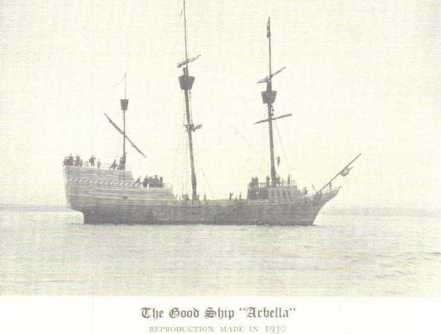
The Arabella
My eleventh great-grandfather was an early settler in Cambridge, Massachusetts. The records of the Massachusetts Bay Colony are extensive, so we know quite a bit about his life in America.
MIGRATION: 1630
FIRST RESIDENCE: Cambridge
FREEMAN: Requested 19 October 1630 (as “Mr. Edmond Lockwood”) and admitted 18 May 1631 (as “Mr. Edmond Lockewood”) [MBCR 1:79, 366].
OFFICES: Trial jury in case of Walter Palmer (as “Mr. Edmond Lockwood”), 9 November 1630 [MBCR 1:81]; “Mr. Lockwood” deputy to General Court for Cambridge, 9 May 1632 [MBCR 1:95]; “Mr. Edmond Lockwood” constable for Cambridge, 9 May 1632
ESTATE: 3 March 1634/5: “It is ordered, that Ruth Lockwood, widow, shall bring all the writings that her husband left in her hands to John Haynes, Esq., & Simon Bradstreete, on the third day of the next week, who shall detain the same in their hands till the next Court, when they shall be disposed of to those to whom they belong”
7 April 1635: “It is referred to the church of Waterton, with the consent of Rob[er]te Lockwood, executor of Edmond Lockwood, deceased, to dispose of the children & estate of the said Edmond Lockwood, given to them, to such persons as they think meet, which if they perform not within fourteen days, it shall be lawful for the Governor, John Hayne, Esq., & Simon Bradstreete, to dispose of the said children & estates as in their discretion, they shall think meet, as also to take an account of the said Rob[er]te Lockwood, & give him a full discharge”
2 June 1635: “In the cause of the children & widow of Edward Lockwood, (the elders & other of the church of Waterton being present,) and upon consideration of the order of Court in April last made in the case, which was found not to have been observed, because the estate was not computed & apportioned, it is now ordered, with consent of all parties, viz:, the church of Waterton, the widow of the said Edmond living, & the executor having consented to the former order, that the present Governor & the Secretary shall have power to call parties & witnesses for finding out the true estate, having consideration of the uncertainty of the will, & the debts, & other circumstances, to apportion the remainder of the estate to the wife & children, according to their best discretion; & then the church of Waterton is to dispose of the elder children & their portions as shall be best for their Christian education & the preservation of their estate” [MBCR 1:151].
BIRTH: By about 1600 based on estimated date of marriage (but see COMMENTS below).
DEATH: Cambridge between 9 May 1632 [MBCR 1:95, 96] and 3 March 1634/5 [MBCR1:134] (and probably closer to the earlier date, since Edmund Lockwood does not appear in any of the recorded Cambridge land grants beginning in August 1633).
MARRIAGE: (1) By about 1625 _____ _____; she may have died in England before 1630.
(2) By 1632 Elizabeth Masters, daughter of JOHN MASTERS; she married (2) Cary Latham of Cambridge.
CHILDREN:
With first wife
i EDMUND, b. England say 1625; m. Stamford 7 January 1655[/6] Hannah Scott, daughter of Thomas Scott [FOOF 1:381].
ii Child (one or more additional children by first wife implied by court order to the Watertown church “to dispose of the elder children” [MBCR 1:151]); no further record.
With second wife
iii JOHN, b. Cambridge November 1632 (“son of Edward Lockwood & Elisabeth his wife”) [NEHGR 4:181]; d. at New London in 1683, unmarried [Lockwood Gen 10].
ASSOCIATIONS: Although no record states the relationship explicitly, Edmund and Robert Lockwood were almost certainly brothers.
COMMENTS: The oft-stated origin of the Lockwood brothers in Combs, Suffolk, seems to be based on nothing more than finding the right names at about the right time. Further research is needed before this origin can be accepted.
In a discussion of financial transactions, John Winthrop wrote to his son John in Groton 23 July 1630 saying “If money be brought to you or your Uncle Downinge for Goodman Lockwood, let Mr. Peirce be paid his bill of provisions for him, and bring the rest with you” [WP 2:306].
“Mr. Edmond Lockwood” was the third in the list of eight “Newtowne Inhabitants” which is found at the beginning of the Cambridge town records, and probably dates from 1632 [CaTR2].
After NICHOLAS KNAPP was fined for quackery on 1 March 1630/1, “Mr. Will[ia]m Pelham and Mr. Edmond Lockewood hath promised to pay to the Court the sum of £5” [MBCR 1:83].
BIBLIOGRAPHIC NOTE: The 1889 Lockwood genealogy (Frederic A. Holden and E. Dunbar Lockwood, Descendants of Robert Lockwood, History of the Lockwood Family in America[Philadelphia 1889]) was deservedly described by Jacobus as “a genealogical atrocity” [TAG31:222]. By lumping all the descendants of the first Edmund under his brother Robert, the posterity of this family through eldest son Edmund was misplaced.
Donald Lines Jacobus began to sort the family out properly in 1930, with further contributions made in 1955 [FOOF 1:380-81; TAG 31:222-24]. In 1978 Harriet Woodbury Hodge published detailed arguments for a rearrangement of the Lockwood families that would restore to Edmund Lockwood his children [Some Descendants of Edmund Lockwood (1594-1635) of Cambridge, Massachusetts, and his son Edmund Lockwood (c. 1625-1693) of Stamford, Connecticut (New York 1978), cited above as Lockwood Gen].
Edmund Lockwood (1574 – 1634)
11th great-grandfather
Eliner Lockwood (1592 – 1658)
daughter of Edmund Lockwood
Caleb Knapp (1637 – 1684)
son of Eliner Lockwood
Sarah Knapp (1669 – 1750)
daughter of Caleb Knapp
Ebenezer Mead (1692 – 1775)
son of Sarah Knapp
Deacon Silas Meade (1730 – 1807)
son of Ebenezer Mead
Abner Mead (1749 – 1810)
son of Deacon Silas Meade
Martha Mead (1784 – 1860)
daughter of Abner Mead
Abner Morse (1808 – 1838)
son of Martha Mead
Daniel Rowland Morse (1838 – 1910)
son of Abner Morse
Jason A Morse (1862 – 1932)
son of Daniel Rowland Morse
Ernest Abner Morse (1890 – 1965)
son of Jason A Morse
Richard Arden Morse (1920 – 2004)
son of Ernest Abner Morse
Pamela Morse
I am the daughter of Richard Arden Morse
 mermaidcamp