mermaidcamp
Keeping current in wellness, in and out of the water
You can scroll the shelf using ← and → keys
You can scroll the shelf using ← and → keys

Saturn
The Roman god of agriculture, Saturn, rules Saturday. This is the only day that retains the original Latin in the English name today. For many it is a day of rest, and for some it has religious context. The golden age on earth which is celebrated at Saturnalia was a time when Cronos, the Greek Titan, escaped and ruled from Rome for a time. Cronos ate his own children, and was eventually defeated and expelled from Olympus by his son Zeus. Saturn and Cronos represent the same energy, and modern father time is symbolic of both of them. He frequently has a sickle in his left hand and wheat in his right to show his mastery of planting and harvest. He is said to have brought a golden age to Italy by showing the previously wild population how to grow food.
The holiday Saturnalia began 17 December and lasted for a week. All businesses were closed and slaves were served by the masters during this symbolic restoration of the Alchemy of Consciousness, the golden age. Good will and gifting, banquets and gatherings, all resembled the December festivities of now. Saturn is the judge as well as the treasurer. Saturn bestows wealth and has the ability to dissolve social hierarchy. His powers pertain to limitations. Time is a seriously limiting force, and Saturn reminds us of that fact. When Saturday rolls around every week we are another week older, and accounting is in order for all of us. What have we grown this week? What will be the harvest?
Saturn wants us to build on success with full awareness of all of our limitations.
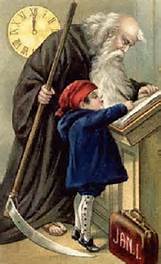
father time
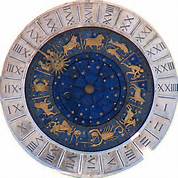
signs in order
The days of the week are assigned to planets. Friday is the day of Venus, the goddess of love, known to the Greeks as Aphrodite. Since it is the final day of work in most western countries it holds special meaning. Thank God It’s Friday, and Piss Off Early Tomorrow’s Saturday are acronym phrases invented to celebrate the arrival the free time on the weekend. Happy hours, romantic dining, and entertainment beckon to workers as they finish the tasks in front of them. The magic of payday often happens on Friday too. In the ancient world the 40 hour work week was unknown, but the day had meaning as a weekly holiday dedicated to art, beauty and love. Today I like the idea of setting aside time for art, beauty and love. In our home I take time every Friday to follow some small but significant rituals.
That is all it takes to make my weekend start with a bang. The clean house and the food treats make home feel like a trip to a resort. Home is where the heart is, gentle reader. What are your Friday rituals?

planet Venus sign

View from the exercise bike, JCC
My life has changed dramatically in the last two weeks. I have been looking forward to Medicare because it saves me a significant chunk of cash each month. I shopped and researched wildly, reaching the conclusion that the new Iora Primary Care is right for me. I am signed up with Humana on a Medicare Advantage plan that costs me nothing and offers benefits I can really use. I went to my first appointment with Dr Julia Jernberg, my new primary care physician, on Monday. She is the smartest, coolest doctor I have ever seen. She gave me a simple practice I can do at home to relieve a chronic pain I have had in the front of my ankle. She specialized in this orthopedic technique at University of Arizona School of Alternative Medicine. She nailed the diagnosis (always key to success), then taught me how to do my own simple hands on healing. I find a position of comfort and gently coax my muscle out of trauma for about three minutes at a time, twice a day. It is ridiculously easy to do, but she cautioned me not to be too zealous and overdo my remedy. She nailed the zealous diagnosis too. I have followed her instructions for three days and believe I can feel improvement. Dr. Julie is truly my dream doctor, a teacher of self care. She is assisted by the best staff in the most well designed environment. I could not be more pleased with this fantastic upgrade to my health care.
My Silver Sneakers card arrived in the mail this week too. This card provides free membership privileges to Medicare recipients at health clubs all over the country. In Tucson many clubs participate in the program, but each one offers a different set of privileges. I am already a very happy member at Tucson Racquet Club, and have arranged to pay a fee over and above my Silver Sneakers membership (covered by my insurance company). I think it is worth paying $22 a month to be able to attend all the classes at my club. However, I took my Sneakers card to the newly remodeled Jewish Community Center and was given full membership privileges. The JCC does not restrict me to Silver Sneakers classes with my special membership. They offer a wide array of fitness options. This thrills me, but not as much as the fabulous Zuckerman Family Wellness Center does. The gym is the feature I use the most at a club. This one is spacious, modern, well staffed and super clean. The view from the equipment room is spectacular, and like the Racquet Club, it is situated right on the Rillito River walk. They have new state of the art equipment and professional trainers. There is free high-speed WiFi which I used to read some magazines on my iPad while I peddled the new age exercise bike. The bike even has arm rests.
I am highly impressed with the quality of the operation, but my favorite part of the JCC gym is the special needs population. Some special needs individuals work out independently and some come to the J with care givers who encourage and help them. I watched a young man who appeared to have Down Syndrome have such a great time on the TRX equipment that he inspires me to try it. He was so comfortable and happy swinging on the rings and attempting super difficult moves that I decided I can do that too. I think it is really fun to share the gym with the special population, and it is the first time I have experienced that cool thing. You just go, JCC!!!

Third Haven Meeting House
My 9th great-grandfather sailed to America with his parents in 1685. His family may have been fleeing religious persecution, common for Quakers in England. He seems to have prospered in his new home in Maryland.
Jeffrey was called a planter as were most of the early English immigrants; they were here to plant a new nation. Jeffrey and Elizabeth were in Easton, Maryland in 1685, and were of the Nicholite pursuasion (sometimes called Quakers or reffered to as Friends.) Jeffrey Horney assisted in Erecting the Friends Meeting House in 1685, the Third Haven Friends Meeting.
Jeffrey owned land in Kent (now Queen Anns) Co., Maryland on the north side of Chester River and on the west side of Unicorn Branch of Willmore’s Fork, which was called “Dixon’s Gift.” A tract of 900 acres known as “cottingham” was purchased from Isaac Abrams 20 Nov 1712. Other Maryland land records show him with 200 acres, “the Freshes”, surveyed 15 May 1681. Talbot Co. records show “… the provisiions for workmen to be pressed at Jeffrey Horney’s July 25, 1685.”
Jeffrey Horney (1675 – 1738)
is my 9th great-grandfather
Jeffrey Horney (1723 – 1779)
son of Jeffrey Horney
Mary Horney (1741 – 1775)
daughter of Jeffrey Horney
Esther Harris (1764 – 1838)
daughter of Mary Horney
John H Wright (1803 – 1850)
son of Esther Harris
Mary Wright (1816 – 1873)
daughter of John H Wright
Emiline P Nicholls (1837 – )
daughter of Mary Wright
Harriet Peterson (1856 – 1933)
daughter of Emiline P Nicholls
Sarah Helena Byrne (1878 – 1962)
daughter of Harriet Peterson
Olga Fern Scott (1897 – 1968)
daughter of Sarah Helena Byrne
Richard Arden Morse (1920 – 2004)
son of Olga Fern Scott
Pamela Morse
I am the daughter of Richard Arden Morse
Jeffrey Horney I was born. circa 1675, in England. He was the son of Geoffrey Horney and Juliana . Jeffrey Horney I emigrated in 1685 from England. He married Elizabeth Harwood, daughter of Elizabeth Garey, circa 1696 at Talbot, Maryland. Jeffrey Horney I died before 27 March 1738 at Talbot, Maryland.8
Family
Elizabeth Harwood b. c 1680, d. b Jan 1737/38
Children
William Horney b. 1718
Jeffery Horney II+ b. 1720, d. b 8 Jun 1779
Phillip Horney b. c 1723
James Horney b. c 1725
Prisillia Horney b. c 1726
Jane Horney b. c 1728
Liddy Horney b. c 1728
Ann Horney b. c 1729

Haley in the greenhouse
I am excited to have lived long enough to make it into Medicare. I have expert guidance and very good luck in my choice of providers. Iora Primary Care recently opened very near my home. I will go to my first appointment next week, but yesterday I met my new Paraclete. Her name is Haley and I like her a lot. She will be my helper/guide/uplifter at the medical practice. We visited the Tucson Botanical Garden yesterday while getting to know each other. I am an enthusiastic new patient of this brand new model for Medicare Advantage clients who are insured by Humana.
Haley has experience in different kinds of yoga and fitness. She is assigned to me as a coach. The problems with using the word coach are various. For one thing everyone and their dog is a coach now. It is impossible to know what the term is supposed to mean in each case. Also coaching implies some kind of external pressure rather than helper by one’s side. We tried out the word paraclete on some people we met at the gardens. It does sound exactly like parakeet, and nobody knows what it means, so it is high comedy. We met the botanist in charge of the butterfly greenhouse, whose first language is Italian. He was able to guess the meaning, but I think it will be an uphill struggle to get this word into common use. Religious people use it to connote Holy Spirit. I like the idea that Haley is my personal Paraclete, provided and paid for by Medicare. Whatever we call her she is the bomb. This was worth the wait.

Haley in the greenhouse

Haley at the Gardens

Haley at the Gardens
This is an all too common ailment in our world…
I am re-reading Margaret Heffernan’s ” Willful Blindness” and was reminded about the Febreeze (I think) ad that depicts how we can go nose blind to the odours around us because the become part of the soup we are swimming in. What would be the Febreeze solution to not seeing other possibilities as possible because we have such a great investment in continuing the current practice? What spray could get rid of (not mask) the stench of complacency? How do we break the confirmation bias mold and launch into the unknown?

Maybe it happens by playing against tendencies. I am going to explore ‘taking the other path’ this month and will report in when I am stunned, surprised or disturbed by the results. I will try to persistently think about my decisions and when faced with a fork, take the one that my ‘instincts’ reject. Today, I don’t know what…
View original post 26 more words
There are several reasons to follow Jessica Seinfeld (aka Mrs. Jerry Seinfeld) on instagram. The most obvious is that she is at least as funny if not funnier than her famous husband, the comic. She is also a mother and cookbook author. She has two dachshunds who appear in her stream in costumes with modulated voices. The effect is stunning. They sound a little bit like the Chipmunks, but funnier. She always entertains, but she is also very instructive:
Her no nonsense approach to eating and her high comedy make her my favorite stream to watch. I highly recommend her work to anyone. You get to see the world with the Seinfeld family and share their ups, downs, and jokes. I hope you will enjoy it as much as I do, gentle reader.
We went out to eat in our neighborhood today to celebrate the new year. I was thinking of eggs Benedict but we arrived after the breakfast menu had been retired. Much to my delight the lunch menu had been updated since our last visit to include many new dishes that are right up my culinary alley. The Arizona Inn is a very classy place to dine, stay, or do just about anything. I used to take my mother there all the time because she loved the ambiance. I am also a fan of the reserved, quiet atmosphere and the historic style. In Tucson nobody really needs to put up a Christmas tree at home because the Inn provides a fabulous super tree in the library every year for all of us to enjoy. They keep the wood fire going and the charm flowing for hotel guests, so off the street visitors are treated to the same upgraded style. We love the dining room, but the Audubon Bar is adjacent which has a patio where the full menu is also available. The entire space is elegant and designed for classic leisure. I am not sure if many remember classic leisure, but it includes well designed surroundings, croquet, and fabulous service.
I was surprised to see the jackfruit Korean tacos so I ordered them. My starter of vegetarian spring rolls was fresh and delicious. The salad on which the rolls were served was the most sumptuous part of the dish, adding texture and another layer of flavor to go with the dipping sauces. To be honest I would have been satisfied after that course, but the tacos arrived and they really excited me. I finished my soba noodles and two of my tacos, which took me past the point of sensible portions. I am guilty of overeating on New Years Day!! Well, I made no resolutions, so I guess I did not break any. Bob was not able to finish his paella after his starter of corn and cauliflower chowder. I tasted the chowder, another vegetarian item, and really like it too. Bob ordered take out dessert, so the experience lives on in the fridge as two kinds of cake.
Our service was delivered with impeccable precision and grace by Mike Yaugor who has worked at the Inn for six years and likes it. I try not to hound waiters with my lacto-ovo vegetarianism by asking too many questions, but I need specificity. Mike was proactively ready to serve anyone, even vegans. He knew everything about everything on the menu. When Bob ordered paella, which normally is served after 5 pm, he proactively found out that the kitchen could accommodate the order at lunch time. Mike is my kind of guy, a happy, attentive, detail oriented server, comfortable with his colleagues and his guests. He did not mind asking the chefs to don the toques to come out for kudos on camera. Nathan Brown and Mathew Patton were holding down the kitchen on 1 January, 2016. They kicked out a lunch that made our celebration special and memorable. We are both impressed with the innovative new twists to the offerings. We’ll be back! This is, by far, the best restaurant in my neighborhood at the moment.

The tree

Happy New Year!!

Mike Yaugor

Korean jackfruit tacos

spring rolls



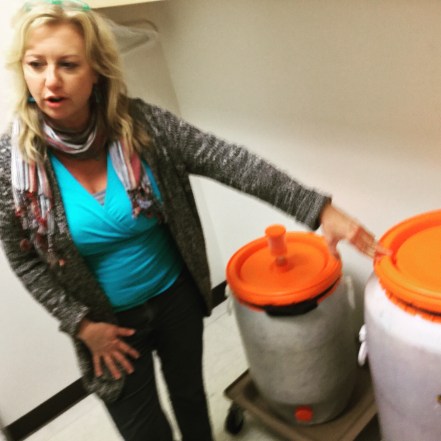
Suzette in her kitchen
Chris Brogan was my first teacher of social media by way of his books. He is very smart in my opinion, and constantly evolves. One of his practices for which he is now very well known is finding three words to inspire at the first of every year. To replace resolutions, the words are meant to inspire and represent goals. On January 1 Chris will drop his words, as is his custom, for the eleventh year in a row. Well done, Brother Brogan. I know I am not the only one who appreciates your leadership in this exercise. Three is plenty if they are kept alive daily for an entire year. That is the idea of having only a few….. no excuse not to work on them. I am looking forward to a happy and fun 2016. My words are:
I plan to combine forces with a wonderful woman I met in Phoenix by chance. She makes the best artisanal sauerkraut I have ever tasted. The Garden Goddess was planning to expand her distribution to Pima County, where I live, when we met. There are some logistical issues to work out, but we are looking at an arrangement that is extremely simplistic and independent. I am very interested in the teaching part of the concept because I have become a fermented foods crusader and believer. I am reading books and experimenting like a mad scientist in my own kitchen as well as eating Suzette’s kraut daily. This is a very exciting adventure for me. I know most people might not be so turned on about teaching others to make their own sauerkraut, but I feel a complete sense of mission to teach the world to ferment raw food and feel so much better. Fermented foods themselves are a simple, independent adventure you can enjoy at home. It is an explosive and exciting new hobby/passion I look forward to cultivating in 2016.

fermenting artisanal kraut

Perkins COA
My 10th great-grandmother was born in England and died in Massachusetts. She sailed to the new world with her parents and settled in Ipswich. She probably met her husband there. They moved to Newbury and then to Amesbury, MA, where they laid down some very litigious history in the records of the courts of that town. It seems her husband was the more litigious of the two, but I am grateful for the records, so we know something about them today.
Elizabeth came to America with her family aboard the Lyon, William Pierce, master on 1 December 1630 for its first trip to the New World. They embarked in Bristol, England and arrived in Nantasket, Suffolk co., MA on 5 February 1631.
The Sargent family were some of the original settlers of the Agawam section of Ipswich, Essex co., MA, with William receiving 12 acres in the 1634 Ipswich Land Grant. The family later moved to Newbury, Essex co., MA; Hampton, Rockingham co., NH; Salisbury, Essex co., MA and finally Amesbury, Essex co., MA. Remember that NH & ME were all part of MA at the time. The family moved from Newbury to Hampton because “…’Willli[am] Sergant’ was amongst the list of petitioners mostly Newbury men who were headed by Stephen Bachiler, who were on 6 September 1638 granted ‘liberty to begin a plantation at Winnacunnet [what is now Hampton, Rockingham co., NH]..” And “Will[iam] Sargent” is listed as one of the married men in the list of first comers to Hampton.
The Sargents found themselves in court over disputes with their neighbors on many occasions. Given the fact that this pattern of contentiousness continued after Eliabeth’s death, I contend that William was the fractious party in the area. On 26 December 1643, William “Sargeant” sued Mr. William Hook of Salisbury for 56s. in corn[67,68]. William acknowledged the court’s judgment in favor of Mr. Jonathan Wade on 26 September 1648. Michael Spencer sued him for detaining corn and other goods on 2 January 1650.
But the biggest battles were reserved for their near neighbors, the Martins. Either William or his namesake son was sued for slander on 13 April 1669, because the Sargent in question had called Martin’s wife “a witch”. The bad blood transcended generations, for Martin later sued William’s son Thomas Sargent “…for saying that his son George Martin was a bastard and that Richard Martin was Goodwife Martin’s imp…”
In 1672, William Sargent and Joanna his second wife sued Christopher Osgood for debt due part of the estate of Joanna’s late husband, Valentine Rowell. However, Joanna was curiously not mentioned in his will, although she had married him a few months earlier. To contemporary credible researchers, this strongly suggests that there was a pre-nuptial agreement between them which left Joanna nothing.
Elizabeth Judith Perkins (1611 – 1670)
is my 10th great-grandmother
Mary Sargent (1634 – 1716)
daughter of Elizabeth Judith Perkins
John Challis (1655 – 1741)
son of Mary Sargent
Mary Challis (1699 – 1739)
daughter of John Challis
Amos Nicholls (1740 – )
son of Mary Challis
Amos Nicholls (1780 – )
son of Amos Nicholls
Amos Nicholls (1808 – 1868)
son of Amos Nicholls
Emiline P Nicholls (1837 – )
daughter of Amos Nicholls
Harriet Peterson (1856 – 1933)
daughter of Emiline P Nicholls
Sarah Helena Byrne (1878 – 1962)
daughter of Harriet Peterson
Olga Fern Scott (1897 – 1968)
daughter of Sarah Helena Byrne
Richard Arden Morse (1920 – 2004)
son of Olga Fern Scott
Pamela Morse
I am the daughter of Richard Arden Morse
Elizabeth PERKINS was christened/baptized on 3 MAR 1611 in Hillmorton, Warwickshire, England. She immigrated on 1 DEC 1630 from England to America. She died on 18 SEP 1670 at Amesbury, Essex County, Massachusetts. She has Ancestral File Number 7TTF-7J. Elizabeth’s father came from England in the ship “Lyon” with Roger Williams, in 1631; lived in Boston two years; settled in Ipswich in 1633;
Sailed on the “LYON”, William Peirce, Master, from Bristol December 1, 1630, and arrived February 5, 1631, with about twenty passengers and two hundred tons of goods.
SOURCE: 1. Ancestral File (TM), data as of 2 January 1996, Family History Library, 35 North West Temple, Salt Lake City, Utah 84150
2. Perkins Family in Ye Olden Times. p 78-79 (B11C27)
3. Old Families of Salisbury & Amesbury, Mass by Hoyt, p 281 (Mass S&)
4. Dawes & Allied Families by Mary Walton Ferre, p 484-85 (B12F12)
5. Planters of the Commonwealth, Charles E. Banks 1930
6. Hoyt’s “Old Families of Salisbury and Amesbury” page 281/282 (John Perkins #12)


