mermaidcamp
Keeping current in wellness, in and out of the water
You can scroll the shelf using ← and → keys
You can scroll the shelf using ← and → keys
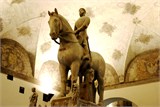
Bernabo
My 18th great-grandfather probably poisoned his brother for territory. He was surely excommunicated, and was the object of the anger of the Holy Roman Emperor, Charles IV. This is exactly when my knowledge of Euro history is fuzzy. Venice was once a giant kingdom that included much of Austria….Bernabo was born in Milan. Holy Roman Empire, Batman, this is confusing!!!!!
Bernabo Lord Milan di Visconti (1319 – 1385)
is my 18th great grandfather
Veridis Duchess Austria Visconti (1352 – 1414)
daughter of Bernabo Lord Milan di Visconti
Ernst I “Ironside” Archduke of Austria Habsburg (1377 – 1424)
son of Veridis Duchess Austria Visconti
Katharina Archduchess Austria Von Habsburg (1420 – 1493)
daughter of Ernst I “Ironside” Archduke of Austria Habsburg
Christof I VanBaden (1453 – 1527)
son of Katharina Archduchess Austria Von Habsburg
Beatrix Zahringen (1492 – 1535)
daughter of Christof I VanBaden
Sabine Grafin VonSimmern (1528 – 1578)
daughter of Beatrix Zahringen
Marie L Egmond (1564 – 1584)
daughter of Sabine Grafin VonSimmern
Richard Sears (1590 – 1676)
son of Marie L Egmond
Silas Sears (1638 – 1697)
son of Richard Sears
Silas Sears (1661 – 1732)
son of Silas Sears
Sarah Sears (1697 – 1785)
daughter of Silas Sears
Sarah Hamblin (1721 – 1814)
daughter of Sarah Sears
Mercy Hazen (1747 – 1819)
daughter of Sarah Hamblin
Martha Mead (1784 – 1860)
daughter of Mercy Hazen
Abner Morse (1808 – 1838)
son of Martha Mead
Daniel Rowland Morse (1838 – 1910)
son of Abner Morse
Jason A Morse (1862 – 1932)
son of Daniel Rowland Morse
Ernest Abner Morse (1890 – 1965)
son of Jason A Morse
Richard Arden Morse (1920 – 2004)
son of Ernest Abner Morse
Pamela Morse
I am the daughter of Richard Arden Morse
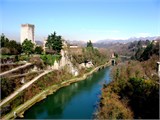
Visconti castle
Bernabò Visconti (also called Barnabò) (1323 – 18 December 1385) was an Italian soldier and statesman, who was Lord of Milan.
Life
He was born in Milan, the son of Stefano Visconti and Valentina Doria. From 1346 to 1349 he lived in exile, until he was called back by his uncle Giovanni Visconti. On 27 September 1350 Bernabò married Beatrice Regina della Scala, daughter of Mastino II, Lord of Verona and Taddea da Carrara, and forged both a political and cultural alliance between the two cities. His intrigues and ambitions kept him at war almost continuously with Pope Urban V, the Florentines, Venice and Savoy. In 1354, at the death of Giovanni, he inherited the power of Milan, together with his brothers Matteo and Galeazzo. Bernabò received the eastern lands (Bergamo, Brescia, Cremona and Crema), that bordered the Veronese territories. Milan itself was to be ruled in turn by the three brothers. The vicious Matteo was murdered in 1355 at the order of his brothers, who divided his inheritance between them.
In 1356, after having offended the emperor, he pushed back a first attack upon Milan by the imperial vicar Markward von Raudeck, imprisoning him. In 1360 he was declared heretic by Innocent VI at Avignon and condemned by Emperor Charles IV. The ensuing conflict ended with a dismaying defeat at San Ruffillo against the imperial troops under Galeotto I Malatesta (29 July 1361). In 1362, after the death of his sister’s husband, Ugolino Gonzaga, caused him to attack also Mantua. Warring on several different fronts, in December of that year he sued for peace with the new pope, Urban V, through the mediation of King John II of France. However, having Barnabò neglected to return the papal city of Bologna and to present himself at Avignon, on 4 March 1363 he was excommunicated once more, together with his children, one of whom, Ambrogio, was captured by the Papal commander Gil de Albornoz. With the peace signed on 13 March 1364, Visconti left the occupied Papal lands, in exchange for the raising of the ban upon a payment of 500,000 florins.
In spring 1368 Visconti allied with Cansignorio della Scala of Verona, and attacked Mantua, still ruled by Ugolino Gonzaga. The situation was settled later in the year through an agreement between him and emperor. Two years later he besieged Reggio, which he managed to acquire from Gonzaga in 1371. The following war against the Este of Modena and Ferrara raised again Papal enmity against the Milanese, now on the part of Gregory XI. In 1370, he ordered the construction of the Trezzo Bridge, then the largest single-arch bridge in the world.
In 1373, the pope sent two papal delegates to serve Bernabò and Galeazzo their excommunication papers (consisting of a parchment bearing a leaden seal rolled in a silken cord). Bernabò, infuriated, placed the two papal delegates under arrest and refused their release until they had eaten the parchment, seal, and silken cord which they had served him. He managed to resist, despite also the outbreak of a plague in Milan, whose consequences he suppressed with frantic energy.[2] In 1378 he allied with the Republic of Venice in its War of Chioggia against Genoa. His troops were however defeated in September 1379 in the Val Bisagno.
Bernabò, whose despotism and taxes had enraged the Milanese — he is featured among the exempla of tyrants as victims of Fortune in Chaucer’s[3] Monk’s Tale as “god of delit and scourge of Lumbardye” — was deposed by his nephew Gian Galeazzo Visconti in 1385. Imprisoned in the castle of Trezzo, he was poisoned in December of that year.
The funerary monument of Bernabò Visconti, with an equestrian statue, together with that of his consort, had been made beforehand, in 1363. The sculptures by Bonino da Campione were intended for the church of San Giovanni in Conca. They now stand in the Castello Sforzesco in Milan.
Children
Bernabò was an ally of Stephen II, Duke of Bavaria: three of his daughters were married with Stephen’s descendants. His issue include:
Viridis (1352- 1414), married Leopold III, Duke of Inner Austria and were the parents of Ernest, Duke of Austria the father of Frederick III, Holy Roman Emperor.
Agnese (1362- executed 1391), married Francesco I Gonzaga
Taddea (1351-28 September 1381), married Stephen III, Duke of Bavaria. She was the mother of Louis VII of Bavaria and Isabeau of Bavaria.
Marco (November 1353- 1382), married Elisabeth of Bavaria.
Ludovico (1358- 7 March 1404), married Violante Visconti (1353- November 1386), daughter of Galeazzo II Visconti, and widow of Lionel of Antwerp.
Rodolfo (d.1388), Lord of Parma
Carlo (September 1359- August 1403), married Beatrice, daughter of John II of Armagnac and sister of John III of Armagnac.
Valentina (d.1393), married Peter II of Cyprus
Caterina (1361- poisoned 17 October 1404,[4]) married her cousin Gian Galeazzo Visconti as his second wife. She was the mother of Gian Maria Visconti and Filippo Maria Visconti, successive dukes of Milan. She acted as regent for her son Gian Maria during his minority.
Lucia Visconti (1372- 14 April 1424), betrothed 1. Louis II of Anjou and married 2. Edmund Holland, 4th Earl of Kent
Maddalena (1366- 17 July 1404), married Frederick, Duke of Bavaria and was mother of Henry XVI of Bavaria.
Mastino (d.1404), married Antonia della Scala (d. 1400), daughter of Cangrande II della Scala.
Anglesia (d.12 October 1439), married Janus of Cyprus
Giammastino (1370- 19 June 1405), married Cleofa (d.1403) daughter of Cangrande II della Scala.
Elisabetta (1374- 2 February 1432), married Ernest, Duke of Bavaria and was the mother of Albert III, Duke of Bavaria.
Antonia (1360-26 March 1405), married Eberhard III, Count of Württemberg
His illegitimate offspring by Donnina del Porri, legitimated in a ceremony after the death of his wife in 1384,[5] were as follows:
Palamede (d. 1402).
Lancelloto.
Sovrana, married Giovanni da Prato.
Ginevra, married Leonardo Malaspina (d. 1441).
Enrica, married Franchino Rusca.
In addition, Bernabò had other illegitimate offspring by other mistresses:[6]
—With Beltramola Grassi:
Ambrogio (1343 – killed in battle Caprino Bergamasco, 17 August 1373), condottiero and Governor of Pavia.
Isotta (d. 1388), married in 1378 to Count Lutz von Landau, condottiero under the name of Lucio Land (d. 1398).
Ettore (d. 1413), who briefly took the Lordship of Milan (16 May – 12 June 1412), married Margherita Infrascati.
Riccarda, married Bernard, Seigneur de La Salle (d. 1391).
—With Montanina de Lazzari:
Sagramoro (d. 1385), Lord of Brignano, married Achiletta Marliani.
Donnina (1360 – 1406), married in 1377 to Sir John Hawkwood.
—With Giovanolla Montebretto:
Bernarda (d. 1376), married Giovanni Suardi.
Valentia, married Antonio Gentile Visconti, Lord of Belgioioso.
Bibliography
Pizzagalli, Daniela (1994). Bernabò Visconti. Milan: Rusconi.
Footnotes
^ Girolamo Porro, engraved title page in Scipion Barbuo, Sommario delle vite de’ duchi di Milano, cosi Visconti, come Sforzeschi (Venice: Girolamo Porro, 1574)
^ For his plague regulations for Milan, see Rosemary Horrox, The Black Death(1994) III.65, p 203.
^ Chaucer had been sent to Lombardy in 1378 on behalf of the young King Richard II to seek the support of Bernabò and Sir John Hawkwood on behalf of the English war effort against France. His epistola metrica III.29 was tacitly addressed to Bernabò (Ernest H. Wilkings, The ‘Epistolae Metricae’ of Petrarch, (Edizioni di Storia e Letteratura), p. 11.
^ Charles Cawley, Medieval Lands, Lords of Milan
^ ” Bernabò Visconti seems to have gone through some sort of marriage ceremony to legitimate his children by Donnina del Porri” (H.S. Ettlinger, “Visibilis et Invisibilis: The Mistress in Italian Renaissance Court Society”, Renaissance Quarterly, 1994.
^ Complete Genealogy of the House of Visconti
Persondata Name Bernabò Visconti Alternative names Short description Lord of Milan Date of birth 1323 Place of birth Date of death Place of death 1385 Preceded by
Cardinal Giovanni Visconti, Archbishop of Milan Lord of Milan
1349–1385 Succeeded by
Gian Galeazzo Viscont
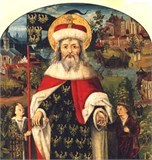
Leopold III
I was trained by Austrian Tourism as an expert in Austria. The training included classroom study for two full days and extensive travel around the country. In the classroom we learned about the Habsburgs who married all the most eligible monarchs in Europe to expand their holdings. I did not suspect at the time that these were my people. However, I specifically noticed that Austrian over-the-top castles and music halls thrilled me, whereas French over-the-top design always made me think of them as wasteful. I did have a certain strong feeling for the architecture, especially in Vienna and Salzburg.
Monarchs of the House of Habsburg
A word about the coats of arms: the Habsburg Empire was never composed of a single unified and unitary state as Bourbon France, Hohenzollern Germany, or Great Britain was. It was made up of an accretion of territories that owed their historic loyalty to the head of the house of Habsburg as hereditary lord. The Habsburgs had mostly married the heiresses of these territories, most famously of Spain and the Netherlands. They used their arms then as a statement of their right to rule all these territories. As there were many territories, so their arms were complex and reflected the waxing and waning position of the Habsburgs within European power politics. It was not until the 19th century (see below Arms of Dominion of the Austro-Hungarian Empire) that the arms began to take on their own life as symbols of a state which may have an existence outside of the Habsburg dynasty.

Leo
Leopold III “Duke of Austria” Habsburg (1351 – 1386)
is my 17th great grandfather
Ernst I “Ironside” Archduke of Austria Habsburg (1377 – 1424)
son of Leopold III “Duke of Austria” Habsburg
Katharina Archduchess Austria Von Habsburg (1420 – 1493)
daughter of Ernst I “Ironside” Archduke of Austria Habsburg
Christof I VanBaden (1453 – 1527)
son of Katharina Archduchess Austria Von Habsburg
Beatrix Zahringen (1492 – 1535)
daughter of Christof I VanBaden
Sabine Grafin VonSimmern (1528 – 1578)
daughter of Beatrix Zahringen
Marie L Egmond (1564 – 1584)
daughter of Sabine Grafin VonSimmern
Richard Sears (1590 – 1676)
son of Marie L Egmond
Silas Sears (1638 – 1697)
son of Richard Sears
Silas Sears (1661 – 1732)
son of Silas Sears
Sarah Sears (1697 – 1785)
daughter of Silas Sears
Sarah Hamblin (1721 – 1814)
daughter of Sarah Sears
Mercy Hazen (1747 – 1819)
daughter of Sarah Hamblin
Martha Mead (1784 – 1860)
daughter of Mercy Hazen
Abner Morse (1808 – 1838)
son of Martha Mead
Daniel Rowland Morse (1838 – 1910)
son of Abner Morse
Jason A Morse (1862 – 1932)
son of Daniel Rowland Morse
Ernest Abner Morse (1890 – 1965)
son of Jason A Morse
Richard Arden Morse (1920 – 2004)
son of Ernest Abner Morse
Pamela Morse
I am the daughter of Richard Arden Morse

Leopold III
Duke Leopold III of Austria (November 1, 1351 – July 9, 1386) from the Habsburg family, was Duke of Austria from 1365 to 1379, and Duke of Styria and Carinthia (Inner Austria) in 1365–1386.
Life
Born in Vienna, Leopold was a younger son of Duke Albert the Wise, and younger brother of the Dukes Rudolf the Founder and Albert the Pigtail. His mother, Joanna of Pfirt, was 51 when she gave birth to him and died shortly after. He was firstly the administrator of Tyrol, and was jointly charged with the rule of the Habsburg lands with Albert after Rudolf’s death. However, by the Treaty of Neuberg of September 9, 1379, he became the exclusive ruler of Styria (including Wiener Neustadt), Carinthia, Carniola, the Windic March, Gorizia, the Habsburgs’ possessions in Friuli, Tyrol and Further Austria. In 1368 he acquired Freiburg im Breisgau, in 1375 Feldkirch and in 1382 Trieste.
However, his attempts to expand his position in Switzerland and Swabia failed, when he died in the Battle of Sempach in 1386.
Family and children
He was married, on 23 February 1365, to Viridis Visconti (1352–1414), second daughter of Barnabò Visconti, Lord of Milan, and Beatrice Regina della Scala, and had the following children:
William the Courteous
Leopold the Fat
Ernest the Iron
Frederick of the Empty Pockets
Elisabeth (1378–1392)
Catherine (1385–?), Abbess of St. Klara in Vienna
He was succeeded by his eldest son William. Other sons included Leopold, future Duke of Further Austria, Ernest the Iron, future Duke of Inner Austria, and Frederick, future Duke of Further Austria.
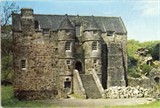
Rowallan Castle
Rowallan Castle is an ancient castle located near Kilmaurs, at NS 4347 4242, about 5 kilometres (3.1 mi) north of Kilmarnock, East Ayrshire, Scotland. The castle stands on the banks of the Carmel Water, which may at one time have run much closer to the low eminence upon which the original castle stood. The castle and barony has been owned or held by the medieval Mure family, the (Boyle) Earls of Glasgow, the (Campbell) Earls of Loudoun, the (Corbett) Barons Rowallan, and by Historic Scotland. It is said that the earliest piece of Lute music was written at Rowallan. It is said to have been visited by the unfortunate King James I of Scotland when on his way from Edinburgh to England. The first Mure holder, Sir J. Gilchrist Mure was buried in the Mure Aisle at Kilmarnock The original castle is thought to date back into the 13th century. Rowallan was said to be the birth place of Elizabeth Mure(Muir), first wife of Robert, the High Steward, later Robert II of Scotland.[6] She was mother to the Duke of Albany, and the Earls of Carrick, Fife and Buchanan. In 1513 the Rowallan Estate took its present day form. In about 1690 the estate was home to the Campbells of Loudoun, who held it into the 19th century
Row Allan, row!
A tale is told of one Allan of Stewarton
who was rowing a Scottish
chief off the Ayrshire coast.
The weather made a turn for
the worse and the chief became
anxious. The chief in his fear of
the ocean said to Allan, Row, Allan row! Bear me to safety and you will have the
rich lands of Carmelside,
wuth silver to build yourself
a castle. Hill and valley and
rivers of fish will be yours …. but just row, Allan, row!
Allan won his prize and named
the estate ‘Rowallan’ after his
adventure. The same story is
told in the form of a poem written
by the Rev. George Paxton from
Kilmaurs, pastor of a Secession Church from 1789 – 1807
…David de More, of the house of Polkelly, Renfrewshire, appears as a witness to a charter of Alexander II. Willielmi de Mora and Laurentii de Mora also occur in two charters granted by Robert the Bruce.The first on record of the family is stated to have been the above-named David de More. His successor is supposed to have been Sir Gilchrist More, the first of the name mentioned in the family ‘Historie.’
In the beginning of the reign of Alexander III., Sir Walter Cumyn took forcible possession of the house and living of Rowallan, “the owner thereof, Gilchrist More, being redacted for his safety to keep close in his castle of Pokellie.”The latter distinguished himself at the battle of Largs in 1263, and for his bravery was knighted. “At which time,” says the ‘Historie,’ “Sir Gilchrist was reponed to his whole inheritance, and gifted with the lands belonging to Sir Walter Cuming before mentioned, a man not of the meanest of that powerful tribe, which for might and number have scarcelie to this day been equaled in this land.”
He married Isobel, daughter and heiress of the said Sir Walter Cumyn, and in the death of his father-in-law, he found himself secured not only in the title and full possession of his old inheritance, but also in the border lands wherein he succeeded to Sir Walter Cuming, within the sheriffdom of Roxburgh. Sir Gilchrist “disponed to his kinsman Ranald More, who had come purposlie from Ireland for his assistance: in the time of his troubles, and also at the battle of Largs, the lands of Polkellie, which appear to have been the original inheritance of the family.
He died “about the year 1280, near the 80 year of his age,” and was buried “with his forfathers in his own buriell place in the Mures Isle at Kilmarnock.”
He had a son, Archibald, and two daughters, Elizabeth, the wife of Sir Godfrey Ross, and Anicia, married to Richard Boyle of Kelburne, ancestor of the earls of Glasgow.In the Ragman Roll, among those barons who swore fealty to Edward I. in 1296, we find the names of Gilchrist More of Craig and Reginald More de Craig, that is, the Craig of Rowallan. The former is stated to have been the ancestor of the Mures of Polkellie, who, Nisbet thinks, were “the stem of the Mures, and an ancienter family than the Rowallan.” The latter was in 1329 chamberlain of Scotland.
William More, the son and successor of Archibald, married a daughter of the house of Craigie, then Lindsay, and with two daughters, had a son, Adam, who succeeded him. Of William honourable mention is made in an indenture of truce with England in the nonage of King David, wherein he is designated Sir William.
He died about the time when King David was taken prisoner at the battle of Durham, fought 17th October 1346. There is supposed to have been an older son than Adam, named Reynold. The editor of the ‘Historie,’ on the authority of Crawford’s Officers of State, (vol. i. p. 290), says in a note: Reynold, son and heir of Sir William More, was one of the hostages left in England at David’s redemption.
This is certainly the same Sir William mentioned above, but whether of Rowallan seems still doubtful; If so, he must have lived long after 1348. There is a William More, Miles, mentioned in M’Farlane’s MS., as living in 1363. Supposing this Sir William More to have been of Rowallan, Reynold probably never returned from England, and thus the estate may have fallen to Sir Adam, a younger son. During the long protracted payment of the king’s ransom, many of the hostages died in confinement.
Sir Adam More, who, “in his father’s auld age,” had the management of all his affairs, both private and public, considerably enlarged and improved the estate. He married, in his younger years, Janet Mure, heiress of Polkellie, granddaughter of Ranald More, and thus restored that estate to the family. By this marriage he had two sons, Sir Adam, his successor, and Andrew, and a daughter, Elizabeth, married in 1348, to Robert, the high steward, afterwards King Robert II.
She was a lady of great beauty and rare virtues, and attracted the high steward’s regard in his younger years when living in concealment about Dundonald castle during Edward Baliol’s usurpation.
There was long considerable doubt as to this marriage, and Buchanan and earlier historians were of opinion that none had ever taken place. The fact of her marriage, however, is now set beyond all question, and the author of the ‘Historie’ says, “Mr. John Learmonth, chaplain to Alexander, archbishop of St. Andrews, hath left upon record, in a deduction of the descent of the house of Rowallan, collected by him at command of the said archbishop, that Robert, great steward of Scotland, having taken away the said Elizabeth, drew to Sir Adam her father ane instrument that he should take her to his lawful wife, which myself have seen, saith the collector, as also ane testimonie, written in Latin by Roger M’Adam, priest of our Ladie Marie’s chapel, (‘Our Lady’s Kirk of Kyle,’ in the parish of Monktown,) that the said Roger married Robert and Elizabeth foresaids.”
The editor of the ‘Historie’ remarks in a note: “Mr. Lewis Innes, principal of the Scots college at Paris, first completely proved the fallacy of Buchanan’s account of King Robert’s marriages, by publishing in 1694, a charter granted by him in 1364, which charter showed that Elizabeth More was the first wife of Robert, and made reference to a dispensation granted by the pope for the marriage. That dispensation was long sought for in vain, but was at length discovered in 1789, at which time a dispensation for the marriage with Euphemia Ross was also found. These discoveries have decided the question. The dispensation for the marriage with Elizabeth More is dated in December, in the sixth year of the pontificate of Clement VI. He was elected pope in 1342; this dispensation must therefore have been granted in December 1347. The dispensation for the marriage with Euphemia Ross is dated in the third year of the pontificate of Innocent VI. He was elected pope in 1352; this dispensation must therefore have been given in 1355.”
Sir Adam, the eldest son, had on his own resignation, a new charger from Robert III., of the barony of Rowallan and whole lands holden of the crown, as also of the barony of Polkellie, &c., with very ample privileg4es, the designation given him by the king being ‘consanguineus.’
He married Joan, daughter of Danielston of that ilk, and by her had three sons. “Caried away,” says the ‘Historie,’ “as appears with emptie surmises and hopes founded on court favors, he made unawares a new rent in his estate and provided his second son, Alexander, to the barronie of Pokellie, together with the lands of Limflare and Lowdonehill, wherein his lady was infeft in liferent, and wer given out by him, now the second time, to the great damage and prejudice of his house and posteritie. However, at that time the court seemed to smile upon him, his proper estate considerable, his friendship strong, and of the greatest of these times. He gave a quartered coat of the arms of Mure and cumin.
The hoarseness and asperitie of the Irish pronunciation of his title and lands is forgot, and Rigallane is now Rowallane, Pothkellath is now Pokellie, &c., and More is now Mure by the court dialect.

Elizabeth Mure
Elizabeth Mure (1320 – 1355)
Elizabeth Mure (died before May 1355) was mistress and then wife of Robert, High Steward of Scotland, and Guardian of Scotland (1338 – 1341 and from October 1346), who later became King Robert II of Scotland.
History
Elizabeth Mure (Muir) was said to be born at Rowallan Castle. Her parents were Sir Adam Mure of Rowallan and Joan Cunningham.
She initially became the Steward’s mistress. He married her in 1336 but the marriage was criticised as uncanonical, so he remarried her in 1349 following a papal dispensation dated at Avignon 22 November 1347.
She died before her husband inherited the crown at the rather advanced age of 54, and he married again (Papal Dispensation dated 2 May 1355), so she was never queen of Scotland.
On 27 March 1371, “–The Lord John (who later took the title of King Robert III, changing his name because of what he saw as John de Baliol’s unpatriotic desecration of the name John), Earl of Carrick and Steward of Scotland, first-born son of King Robert II–” was declared heir to the Crown by Parliament in Scone Abbey.
They had at least ten children – some accounts say thirteen. Doubts about the validity of her marriage led to family disputes over her children’s right to the crown.
* Robert III, born John Stewart, Earl of Carrick
* Walter Stewart, Lord of Fife
* Robert Stewart, Duke of Albany
* Andrew Stewart, Earl of Buchan
* Margaret Stewart, married John of Islay, Lord of the Isles
* Marjorie Stewart, married (1), John Dunbar, 5th Earl of Moray, and (2), Alexander Keith
* Johanna Stewart, married (1), Sir John Keith, (2), Sir John Lyon, and (3) in 1384, Sir James Sandilands.
* Isabella Stewart, married (1), James Douglas, 2nd Earl of Douglas, and (2), David Edmonstone
* Katherine Stewart, married Sir Robert Logan of Grugar and Restalrig, Lord High Admiral of Scotland
* Elizabeth Stewart, married Sir Thomas Hay, Lord High Constable of Scotland

Alexander Stewart

tartan
The Stewart Stewards of Scotland were powerful. Alexander took over as Steward from his father. Although there is some question about the parentage of his wife, there is no doubt about his children:
ALEXANDER Stewart, son of WALTER FitzAlan High Steward of Scotland & his wife — (-1283). The Liber Pluscardensisnames “dominus Alexander Stevart de Dundonald, pronepos primi Walteri Stewart”[1101]. The Visitation of Cambridge 1575 names “Alexander Stuart secundo genitus Gualt, Senescalli Scotie”[1102]. He succeeded his father as High Steward of Scotland. “Alexander filius Walteri Scotie senescallus” donated flour from “firma mea de Inchynnan” to Paisley monastery by charter dated Jan 1286 (presumably misdated)[1103]. The seal of “Alexandri filii Walterii senescalli regis Scotie” is appended to a charter under which “Alexander Stuart” donated lands at Machline and Carentabel to Melrose by charter dated to [1226] (presumably misdated)[1104]. John of Fordun´s Scotichronicon (Continuator) records the death in 1281 of “Alexander senescallus Scotiæ, avus…Walteri generi domini Roberti Bruce regis”[1105].
m JEAN, daughter of —. Balfour Paul names Jean of Bute heiress of the Isles of Bute and Arran, daughter of James Lord of Bute and Arran & his wife —, and records her marriage to Alexander Stewart, but does not cite the corresponding primary source[1106]. Andrew McEwen suggests that there is no evidence to indicate that the wife of Alexander Stewart was the daughter of James Lord of Bute[1107]. He adds that what evidence there is “suggests a double marriage alliance…about 1240 between Sir Walter fitz Alan II and Richard Comyn by which the Steward´s son and heir Alexander married Comyn´s daughter Joanna, while Comyn´s son and heir John married Sir Walter´s daughter Eva”, but he does not cite the nature of the evidence in question[1108].
Alexander Stewart & his wife had [six] children:
1. [JAMES Stewart (-young). The Visitation of Cambridge 1575 names “Jacobus Styward” as eldest son of “Alexander Stuart secundo genitus Gualt, Senescalli Scotie”, adding that he died young[1109].
2. JAMES Stewart ([1243]-16 Jul 1309). The Visitation of Cambridge 1575 names “Johannes Steward” as second son of “Alexander Stuart secundo genitus Gualt, Senescalli Scotie”, adding that he was killed in battle “ad variu´ Sacella”[1110]. He succeeded his father as High Steward of Scotland. He was appointed one of the six guardians of the kingdom on the death of King Alexander III in 1286[1111]. King Edward I confirmed the grant of “castro de Roo” made by “Ricardus de Burgo comes Ultoniæ et dominus Connactensis” to “Jacobo Senescallo Scotiæ et Egidiæ sorori ipsius comitis” by charter dated 10 Oct 1296[1112]. John of Fordun´s Scotichronicon (Continuator) records the death “XVII Kal Aug” in 1309 of “dominus Jacobus senescallus Scotie, pater…Walteri, generi regis Roberti Bruce”[1113]. [m firstly CECILIA de Dunbar, daughter of PATRICK Earl of Dunbar & his wife Cecilia —. Symson records that James Stewart married “Cecilia daughter to Patrick Earl of Dunbar…the first of that family who quitted that title and assumed that of March”, adding that Cecilia was the mother of James´s children. without citing the corresponding primary source[1114]. Andrew McEwen indicates that “no documentary evidence has been found” to support this statement, but adds that “though hardly free from error, Symson´s work is always deserving of respect”, and highlights that “it is highly unlikely that Muriel of Strathearn, whom he married in 1278, was James´s first wife”[1115].] [m secondly (before Jan 1279, [divorced before 1291]) as her second husband, MURIEL of Strathearn, widow of WILLIAM Earl of Mar, daughter of MALISE Earl of Strathearn & his first wife Marjory de Muschamp of Wooler ([1244]-[16 May/12 Nov] 1291). The evidence for this possible second marriage is indicated by an assize roll dated “7 Edw I” [Nov 1278/Nov 1279] which records a claim relating to the barony of Muschamp brought by “Jacobus filius Alexandri et Muriella uxor eius” and “Maria uxor Nicholai de Grame”, both represented by “Stephanum de Muschaump vel Thomam de Hagarston”, against “Thomam de Rok”[1116]. Pleas taken at Newcastle 20 Jan 1279 (N.S.) include a jury finding that “the heirs of Muschampe hold their barony by service of four knights, and making suit to the county of Newcastle”[1117]. Andrew MacEwen indicates that “Muriella…Maria” were the two daughters of Malise Earl of Strathearn by his first wife Marjory de Muschamp, and identifies “Jacobus filius Alexandri”, the husband of Muriel, as James Stewart the future High Steward of Scotland, although he cites no primary source which confirms that the latter identification is correct[1118]. The absence of any reference to Muriel´s husband “James” in the document dated 16 May 1291, which records the homage sworn to King Edward by “Muriellæ quæ fuit uxor Willelmi quondam comitis de Mar, filiæ et heredis Margeriæ filiæ Roberti de Muschaumps defunctæ” for the lands of “Margeria mater sua”[1119], suggests that her second marriage to “James” must have terminated before that date by divorce or annulment.] m [thirdly] EGIDIA de Burgh, daughter of WALTER de Burgh Earl of Ulster & his wife Aveline FitzJohn ([1260/70]-). King Edward I confirmed the grant of “castro de Roo” made by “Ricardus de Burgo comes Ultoniæ et dominus Connactensis” to “Jacobo Senescallo Scotiæ et Egidiæ sorori ipsius comitis” by charter dated 10 Oct 1296[1120]. The Visitation of Cambridge 1575 records that “Johannes Steward”, second son of “Alexander Stuart secundo genitus Gualt, Senescalli Scotie”, married “heredem de Bouthill”[1121]. According to Burke, James Stewart married “Cecilia, daughter of Patrick de Dunbar 7th Earl of Dunbar & March” by whom he fathered Walter Stewart[1122]. James Stewart & his [third] wife had [five] children:
a) ANDREW Stewart ([after 1290]-after 25 Aug 1306). The fact that Andrew was his father´s oldest [surviving] son is confirmed by a notarial confirmation dated 9 Aug 1306 which attested the verity of various documents, including one indicating that William Bishop of St Andrews had delivered “Andrew son and heir of Sir James the Steward of Scotland” to Robert de Brus[1123]. Malise Earl of Strathearn and John de Inchmartyn were ordered to produce “Andrew son of the Steward of Scotland and John son of John Earl of Athol” by charter dated 25 Aug 1306[1124]. These two documents presumably indicate that Andrew was still a minor in 1306, which confirms that he must have been from his father´s marriage to Egidia de Burgh.
b) WALTER Stewart ([1292]-9 Apr [1326/29]). The Liber Pluscardensis names “dominus Alexander Stevart de Dundonald, pronepos primi Walteri Stewart” as “proavus…nobilis Walteri Stevart qui filiam Roberti de Broys desponsavit”[1125]. He succeeded his father as High Steward of Scotland.
c) EGIDIA Stewart . Her parentage and marriage are confirmed by the charter under which “Alexandro de Meyners militi et Egidie Senescalli sponse sue” renounced “totam baroniam de Dorsidere” {Durrisdeir} in favour of her brother James, dated to [1315/21][1126]. m ALEXANDER de Meyners, son of —.
d) [JOHN Stewart (-killed in battle Dundalk 1318). “…Johe Senescallo…” witnessed a charter dated 9 Jul 1316 under which “Thomas Ranulphi comes Morauie et dns Mannie” confirmed a donation to Newbattle abbey[1127]. Andrew McEwen states that “if there was such a son [John], he must have been illegitimate”, but he does not explain his reasoning for this statement[1128].]
e) JAMES Stewart of Durisdeer (-after Nov 1330). “…Domino Malcolmo Flemyng, domino Jacobo senescallo fratre quondam domini Walteri quondam senescalli Scotie, domino Alano Senescallo…” subscribed the charter dated Nov 1330 under which “Malcolmus comes de Levenax” donated “ecclesiam de Kylpatrick” to Paisley monastery[1129].
3. ELIZABETH Stewart . The primary source which confirms her parentage and marriage has not yet been identified. Balfour Paul records her parentage and marriage without citing a precise source[1130]. The marriage is suggested by Barbour´s The Brus which records that “Walter Steward” and “Douglas” were “cosynis in ner degre”[1131]. m as his first wife, Sir WILLIAM Douglas “the Hardy” of that Ilk, son of Sir WILLIAM Douglas of Douglas & his wife — (-London in prison 1298).
4. [ANDREW Stewart (-after 1350). m — Beith, daughter of JAMES Beith & his wife —. The Visitation of Cambridge 1575 records the marriage of “Andreas Stuard iunior filius” (of Alexander Stuart secundo genitus Gualt, Senescalli Scotie) and “filiam Jacobi Bethe”, adding that he was decorated with a military swordbelt by “Johanne Francor´ Rege” and naming “Alexander Styward unicus filius Andree” who was awarded military honours by “Carolus rex Francor” (together with eight generations of Alexander´s alleged descendants in East Anglia)[1132]. The chronology of this entry is extremely shaky and it is unlikely that Andrew was the son of Alexander.]
5. Sir JOHN Stewart of Bonkyl (-killed in battle Falkirk 1298). A charter dated 15 May 1296 records the submission of “Johan le Seneschal frere Mons James Seneschal d Escoce” to Edward I King of England[1133]. m as her first husband, MARGARET Bonkyl, daughter and heiress of Sir ALEXANDER Bonkyl of that Ilk & his wife —. She married secondly as his first wife, David de Brechin. Sir John & his wife had six children:
a) Sir ALEXANDER Stewart of Bonkyl (-1317). m —. The name of Sir Alexander’s wife is not known. Sir Alexander & his wife had one child:
i) JOHN Stewart (-9 Dec 1331). He succeeded his father in 1319 at Bonkyl, co. Berwick. He was created Earl of Angus before 15 Jun 1329, when he is styled as such in a charter[1134].
Alexander 4th High Steward Stewart (1214 – 1298)
Alexander Stewart (c.1214-c.1283) was the hereditary High Steward of Scotland from c.1241 until his death. He was a member of the House of Stewart (later known as Stuart). Alexander was a son of Walter Stewart, 3rd High Steward of Scotland and his wife Bethóc of Angus. Bethóc was daughter of Gille Críst, Earl of Angus.
Alexander Stewart was instrumental in the Battle of Largs on October 2, 1263.
Marriage and Issue
The Stewart married Jean, daughter of James, Lord of Bute. They were parents to at least three children:
James Stewart, 5th High Steward of Scotland (c. 1243 – 1309).
Sir John Stewart, Lord of Bonkyl (before 1269 – 1298). Killed while fighting in the Battle of Falkirk.
Elizabeth Stewart.(d. before 1288) Married Sir William Douglas the Hardy, mother of the Good Sir James Douglas
Through their eldest son James, Alexander and Jean were the great-grandparents of King Robert II, the first Stewart to be King of Scots, and thus an ancestor of all subsequent Scottish monarchs and the later and current monarchs of Great Britain.
Alexander and Jean were also the direct male-line ancestors, through their second son, of Henry Stuart, Lord Darnley.

Roslin Castle ruins
My 24th great grandfather probably died in the Tower of London after Edward I took over Scotland:
1296 Edward I Invades Scotland & the Battle of Dunbar
When the Scots signed a treaty with England’s old enemy, France, King Edward I decided it was time to crush the Scots once and for all…thus started the wars of independence.
In 1296 an English army, said to number 35,000 men, marched up the East Coast of England on their way to invade Scotland. They crossed the Scottish border at the small town of Coldstream and then marched north onto the town of Berwick. The English sacked Berwick, then a rich Scottish burgh, slaughtering 16,000 of its inhabitants: men, women and children.
After sacking Berwick the English continued along the coast heading for the town of Dunbar. Before reaching Dunbar, Edward was met by a large but inexperienced Scottish army, which was heavily defeated by Edward at the Battle of Dunbar (1296). From then on there was very little to stop Edward and the English who soon occupied much of Scotland, advancing all the way to Elgin. The disputed King of Scotland, Balliol, surrendered at Brechin, earning his nickname Toom Tabard – empty coat – and was stripped of his office.
Edward took over control of Scotland, installing English garrisons in many castles. He eventually returned south, taking with him the Stone of Destiny and Coronation Chair, on which the kings of Scotland had been inaugurated, Edward stripped Scotland of many of it’s treasures.
Edward forced over 2,000 nobles, churchmen and landholders to swear allegiance to him. The list of their names became known as The Ragman Roll, after the ragged look of all the different seals and ribbons.
The Scots where now under English rule, Scotland had no king, no army and no weapons.
The good news is that the castle that stands on my ancestral home is now a holiday accommodation, so when I go to Scotland I can stay there:
Roslin Castle (sometimes spelt Rosslyn) is a partially ruined castle near the village of Roslin in Midlothian, Scotland. It is located around 9 miles south of Edinburgh, on the north bank of the North Esk, only a few hundred metres from the famous Rosslyn Chapel.
There has been a castle on the site since the early 14th century, when the Sinclair family, Earls of Caithness and Barons of Roslin, fortified the site, although the present ruins are of slightly later date. Following destruction during the War of the Rough Wooing of 1544, the castle was rebuilt. This structure, built into the cliffs of Roslin Glen, has remained at least partially habitable ever since. The castle is accessed via a high bridge, which replaced an earlier drawbridge. Roslin was renovated in the 1980s and now serves as holiday accommodation
William Sinclair (1230 – 1297)
is my 24th great grandfather
Annabel Sinclair (1269 – 1304)
daughter of William Sinclair
Michael Wemyss (1295 – 1342)
son of Annabel Sinclair
Margaret Wemyss (1322 – 1342)
daughter of Michael Wemyss
Isabel Inchmartin (1340 – 1399)
daughter of Margaret Wemyss
Margaret Erskine (1357 – 1419)
daughter of Isabel Inchmartin
Isabel Glen (1380 – 1421)
daughter of Margaret Erskine
Isabel Ogilvie (1406 – 1484)
daughter of Isabel Glen
Elizabeth Kennedy (1434 – 1475)
daughter of Isabel Ogilvie
Isabella Vaus (1451 – 1510)
daughter of Elizabeth Kennedy
Marion Accarson (1478 – 1538)
daughter of Isabella Vaus
Catherine Gordon (1497 – 1537)
daughter of Marion Accarson
Lady Elizabeth Ashton (1524 – 1588)
daughter of Catherine Gordon
Capt Roger Dudley (1535 – 1585)
son of Lady Elizabeth Ashton
Gov Thomas Dudley (1576 – 1653)
son of Capt Roger Dudley
Anne Dudley (1612 – 1672)
daughter of Gov Thomas Dudley
John Bradstreet (1652 – 1718)
son of Anne Dudley
Mercy Bradstreet (1689 – 1725)
daughter of John Bradstreet
Caleb Hazen (1720 – 1777)
son of Mercy Bradstreet
Mercy Hazen (1747 – 1819)
daughter of Caleb Hazen
Martha Mead (1784 – 1860)
daughter of Mercy Hazen
Abner Morse (1808 – 1838)
son of Martha Mead
Daniel Rowland Morse (1838 – 1910)
son of Abner Morse
Jason A Morse (1862 – 1932)
son of Daniel Rowland Morse
Ernest Abner Morse (1890 – 1965)
son of Jason A Morse
Richard Arden Morse (1920 – 2004)
son of Ernest Abner Morse
Pamela Morse
I am the daughter of Richard Arden Morse
Sir William Sinclair of Roslin, of the territorial Barony, of which he was granted a charter by Alexander II 14 Sep 1280 on the resignation of Henry de Roskelyn (probably Sir William’s father in law); opposed Edward I’s invasion of Scotland 1296-99; married Amicia, (probably) daughter of Henry de Roskelyn, and died (probably as a prisoner in the Tower of London). [Burke’s Peerage]
Note that Burke’s Peerage does not mention a second marriage to Matilda of Orkney, but I am retaining it.
Burke’s Peerage indicates that the parent of William Sinclair is Robert Sinclair, a Norman, and not Henry Sinclair of Rosslyn as much of the Rootsweb information on the internet states. However, according to Burke’s Peerage, William did marry Amicia daughter of Henry de Roskelyn, lord of Roslin/Rosslyn and was given charter to Rosslyn by Alexander II of Scotland. This puts the name of the entire ancestry of Henry in doubt, but I assume that the persons are the same. Thus I am keeping the same ancestry for Henry de Roskelyn, father-in-law of William, that many people have for Henry Sinclair, father of William.

Sancha of Castile

Sancha of Castile
Sancha of Castile was daughter of Alfonso VII of León and Castile and his first wife Berenguela of Barcelona. She was a member of the Castilian House of Burgundy.Sancha was the fifth child of seven born to her parents, and sister of Sancho III of Castile, Ferdinand II of León, Constance, Queen of France, and half-sister of Sancha, Queen of Aragon and predecessor as queen consort, Urraca the Asturian .
In 1157, Sancha married Sancho VI of Navarre. His reign was full of clashes with Castile and Aragon. He was a monastic founder and many architectural accomplishments date to his reign. He is also responsible for bringing his kingdom into the political orbit of Europe.
Sancho and Sancha had six children:
Sancho VII of Navarre
Ferdinand
Ramiro, Bishop of Pamplona
Berengaria of Navarre (died 1230 or 1232), married Richard I of England
Constance
Blanca of Navarre, married Count Theobald III of Champagne, then acted as regent of Champagne, and finally as regent of NavarreSancha died in 1179, aged forty and she left her husband a widower, he never remarried.

Margaret Audley
My 14th great-grandmother was Duchess of Norfolk. Elizabeth I beheaded her husband, who was her 5th cousin. She is buried in a church in Norwich.
Lady Margaret Howard 1540-1563/4
“The Virtuous Lady Margaret” was the daughter and sole heir of Thomas, Lord Audley of Walden and Elizabeth Grey. Lord Audley was a prominent Politician whose roles included Lord Chancellor to Henry VIII. Her first husband Lord Henry Dudley died before she was eighteen.
She subsequently married her cousin, Thomas Howard, 4th Duke of Norfolk, who had been widowed in 1557. Thomas was extremely rich and powerful and has been described as the “Premier Peer” in England between 1558 – 1568. The marriage was initially delayed whilst Norfolk’s lawyer negotiated in Rome for a Papal dispensation that would allow him to marry his cousin. Following the death of Queen Mary in 1558 and the accession of the protestant Queen Elizabeth the marriage went ahead without Papal approval. Subsequently in Elizabeth’s first parliament in 1559 the marriage received statutory ratification. Margaret brought a rich inheritance to the alliance, including Audley End in Essex.
During her short marriage she bore five children: two sons and three daughters. She died on 10th January 1564 three weeks after giving birth to her second son Lord William Howard, born on 19th December 1563. The monument, however, states she died 7th February 1563 ! This could be because although Margaret was buried with great dignity on the North Side of the Chancel in St John Maddermarket , she had no memorial there until this tablet was erected in 1791 by her descendant Lord John Howard of Walden. Although the monument here is very plain her effigy lies beside that of the Duke’s first wife Mary Fitzalan, on a splendid tomb in St Michael’s church, Framlingham Suffolk. A space had been left between the two figures, presumably for the effigy of their husband. He was never placed here having brought disgrace to the family and being beheaded for treason by Elizabeth I because of his attempts to marry Mary Queen of Scots.
‘
The Monument
This rather humble tablet was erected by Lord John Howard of Walden in 1791 in a style typical of the time; it was restored by Lord Howard de Walden in 1903.
Under the shield is quoted the Howard family motto ” Sola Virtus Invicta” – which translates to “Bravery Alone is Invincible.” The reference to “The virtuous Lady Margaret” on the monument could, however, be reference to an alternative translation “Virtue Alone is invincible”
Margaret Audley (1545 – 1564)
is my 14th great grandmother
Margaret Howard (1561 – 1591)
daughter of Margaret Audley
Lady Ann Dorset (1552 – 1680)
daughter of Margaret Howard
Robert Lewis (1574 – 1645)
son of Lady Ann Dorset
Robert Lewis (1607 – 1644)
son of Robert Lewis
Ann Lewis (1633 – 1686)
daughter of Robert Lewis
Joshua Morse (1669 – 1753)
son of Ann Lewis
Joseph Morse (1692 – 1759)
son of Joshua Morse
Joseph Morse (1721 – 1776)
son of Joseph Morse
Joseph Morse III (1752 – 1835)
son of Joseph Morse
John Henry Morse (1775 – 1864)
son of Joseph Morse III
Abner Morse (1808 – 1838)
son of John Henry Morse
Daniel Rowland Morse (1838 – 1910)
son of Abner Morse
Jason A Morse (1862 – 1932)
son of Daniel Rowland Morse
Ernest Abner Morse (1890 – 1965)
son of Jason A Morse
Richard Arden Morse (1920 – 2004)
son of Ernest Abner Morse
Pamela Morse
I am the daughter of Richard Arden Morse
Source: Wikipedia
Margaret Howard (née Audley), Duchess of Norfolk (1540 – 1564) was the sole surviving child[1] of Thomas Audley, 1st Baron Audley of Walden and Lady Elizabeth Grey, daughter of Thomas Grey, 2nd Marquess of Dorset and Margaret Wotton. Lady Elizabeth Grey was the aunt of Lady Jane Grey, de facto Queen of England for nine days in 1553 and, therefore, Margaret and Queen Jane were first cousins.
Margaret was a wealthy heiress and married first, without issue, Lord Henry Dudley, son of John Dudley, 1st Duke of Northumberland. Henry Dudley was killed at the Battle of St. Quentin, 20 August 1557
In December 1558, she became the second wife of Thomas Howard, 4th Duke of Norfolk, who was her fifth cousin, through their descent from Jacquetta of Luxembourg and Richard Woodville. Margaret’s line of descent came from the marriage of Elizabeth Woodville and John Grey, while Thomas Howard’s line of descent came through Elizabeth Woodville’s sister, Catherine, who had married Henry Stafford. They had four children, Elizabeth (who died as a child), Thomas Howard, 1st Earl of Suffolk, William, and Margaret. She died 9 January 1564, three weeks after the birth of her last child. She was buried at St. John the Baptist’s church at Norwich.


Henry the Fat was my 20th great-grandfather on my mother’s side. He is also found on my father’s side of the tree. He was in the obesity vanguard..actually suffocated on his own fat long before it was fashionable. It was notable that he was the Count of Champagne and Brie. He sounds like a human foie gras experiment.
Henry I the Fat (French: Henri le Gros, Spanish: Enrique el Gordo) (c. 1244 – 22 July 1274) was the Count of Champagne and Brie (as Henry III) and King of Navarre from 1270. After a brief reign, characterised, it is said, by dignity and talent, he died in July 1274, suffocated, according to the generally received accounts, by his own fat.
Henry was the youngest son of Theobald I of Navarre and Margaret of Bourbon. During the reign of his older brother Theobald II he held the regency during many of Theobald’s numerous absences and was declared heir by his childless brother, whom he succeeded in December 1270. His proclamation at Pamplona, however, did not take place till March of the following year (1271), and his coronation was delayed until May 1273. His first act was the swear to uphold the Fueros of Navarre and then go to perform homage to Philip III of France for Champagne.
In 1269 Henry had married Blanche of Artois, daughter of Robert I of Artois and niece of Louis IX of France. He was thus in the “Angevin” circle in international politics. He came to the throne at the height of an economic boom in Navarre that was not happening elsewhere in Spain at as great a rate. But by the Treaty of Paris (1259), the English had been ceded rights in Gascony that effectively cut off Navarrese access to the ocean (since France, Navarre’s ally, was at odds with England).
Henry allowed the Pamplonese burg of Navarrería to disentangle itself from the union of San Cernin and San Nicolás, effected in 1266. He also granted privileges to the towns of Estella, Arcos, and Viana, fostering urban growth. His relations with the nobility were, on the whole, friendly, though he was prepared to maintain the peace of his realm at nearly any cost.
Henry initially sought to recover territory lost to Castile by assisting the revolt ofPhilip, brother of Alfonso X of Castile, in 1270, but eventually declined, preferring to establish an alliance with Castile through the marriage of his son Theobald to a daughter of Alfonso X. This failed with the death of the young Theobald in after he fell from a battlement at the castle of Estella in 1273.
Henry did not long outlive his son. He died with no male heir; the male line of the house of Champagne became extinct. He was thus succeeded by his only legitimate child, a one-year-old daughter named Joan, under the regency of her mother Blanche. Joan’s 1284 marriage to Philip the Fair, the future King of France, in the same year united the crown of Navarre to that of France and saw Champagne devolve to the French royal domain.
In the Divine Comedy, Dante Alighieri, a younger contemporary, sees Henry’s spirit outside the gates of Purgatory, where he is grouped with a number of other European monarchs of the 13th century. Henry is not named directly, but is referred to as “the kindly-faced” and “the father-in-law of the Pest of France”.
References
Henry I Enrique I LeGros Navarre (1244 – 1274)
is your 20th great grandfather
JOANNA NAVARRE (1273 – 1305)
daughter of Henry I Enrique I LeGros Navarre
Isabella France DeFrance House Capet (1292 – 1358)
daughter of JOANNA NAVARRE
Edward III – King of England – Plantagenet (1312 – 1377)
son of Isabella France DeFrance House Capet
John of Gaunt – Duke of Lancaster – Plantagenet (1340 – 1399)
son of Edward III – King of England – Plantagenet
Joan DeBeaufort (1375 – 1440)
daughter of John of Gaunt – Duke of Lancaster – Plantagenet
Duchess of York Lady Cecily DeNeville (1415 – 1495)
daughter of Joan DeBeaufort
Henry Holland (1485 – 1561)
son of Duchess of York Lady Cecily DeNeville
Henry Holland (1527 – 1561)
son of Henry Holland
John Holland (1556 – 1628)
son of Henry Holland
Francis Gabriell Holland (1596 – 1660)
son of John Holland
John Holland (1628 – 1710)
son of Francis Gabriell Holland
Mary Elizabeth Holland (1620 – 1681)
daughter of John Holland
Richard Dearden (1645 – 1747)
son of Mary Elizabeth Holland
George Dearden (1705 – 1749)
son of Richard Dearden
George Darden (1734 – 1807)
son of George Dearden
David Darden (1770 – 1820)
son of George Darden
Minerva Truly Darden (1806 – 1837)
daughter of David Darden
Sarah E Hughes (1829 – 1911)
daughter of Minerva Truly Darden
Lucinda Jane Armer (1847 – 1939)
daughter of Sarah E Hughes
George Harvey Taylor (1884 – 1941)
son of Lucinda Jane Armer
Ruby Lee Taylor (1922 – 2008)
daughter of George Harvey Taylor
Pamela Morse
I am the daughter of Ruby Lee Taylor
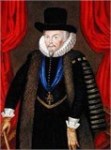


John Neville, 3rd Baron Neville de Raby
John Neville Baron Neville de Raby Spouse (s) Maud Percy
Elizabeth Latimer, 5th Baroness Latimer Issue Ralph Neville, 1st Earl of Westmorland
Thomas Neville, 5th Baron Furnivall
Elizabeth Neville
Alice Nevile
Maud Neville
Eleanor Neville
John Neville, 6th Baron Latimer
Elizabeth Neville Noble family House of Neville Father Ralph Neville, 2nd Baron Neville de Raby Mother Alice Audley Born 1328 Died 17 October 1388
John Neville, 3rd Baron Neville de Raby, KG (1328 – 17 October 1388) was born at Castle Raby, County Durham, England to Ralph Neville, 2nd Baron Neville de Raby and Alice de Audley. He fought in the Battle of Neville’s Cross on 17 October 1346 as a Captain in his father’s division. He was Knighted in 1360 and after his father’s death in 1367 he succeeded to the title of 3rd Baron Neville of Raby. In 1368 he served as the English ambassdor to France. He was Admiral of the King’s fleet and served in the wars against the Scots and French. He was made a Knight of the Garter in 1369. Neville married Maud Percy, daughter of Henry de Percy, 2nd Baron Percy and Idoine de Clifford. After Maud died in 1379 John married a second time to Elizabeth Latimer, daughter of William Latimer, 4th Baron Latimer.
Children
Six children by Maud Percy
Ralph de Neville, 1st Earl of Westmorland (1364–1425)
Thomas de Nevill, 5th Baron Furnivall (1377–1406)
Elizabeth de Neville (b. 1379)
Alice de Nevile (1379–1433)
Maud de Neville (b. 1379)
Eleanor de Neville (1379–1441), married Ralph de Lumley, 1st Baron Lumley. They were parents to Catherine de Lumley.
Two Children by Elizabeth Latimer
John de Neville, 6th Lord Latimer (1382–1430)
Elizabeth de Neville, Baroness Latimer (b. 1388)
Baron Percy
References
thePeerage.com Accessed May 13, 2007
Peerage of England Preceded by
Ralph Neville Baron Neville de Raby
1367–1388 Succeeded by
Ralph Neville
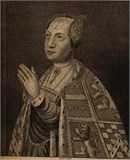
Maude
My 17th great-grandmother is buried in Nottinghamshire, England. She was a baroness. I can tell we are headed for confusion because my mother is also related to these de Nevilles. My mother’s ended up in Jamestown, Virginia, while these Nevilles on my dad’s side are all ancestors of the poet, Anne Dudley Bradstreet.
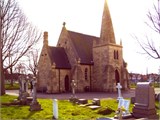
resting place
Maud NEVILLE , 6th Baroness Furnival Sex: F Birth: ABT 1392 in Worksop, Nottinghamshire, England Death: ABT 1423 in Worksop Priory, Nottinghamshire, England
Maud, Baroness Furnivall(e) in her own right according to later doctrine (d. c 1423), daughter and heiress of Thomas Neville, 5th Lord (Baron) Furnivall(e) in right of his 1st wife. [Burke’s Peerage]
Maud de Nevill(e), de jure Baroness Furinvall(e) in her own right; b. c 1392; m. by 12 Mar 1306/7, as his 1st wife, Sir John Talbot, 1st Earl of Shrewsbury and Waterford, who, however, before his creation as Earl in 1442 was called to Parliament as Lord (Baron) De Furnyvall or De Halomshire (sic.) in right of his wife 26 Oct 1409, and d. c 1423. [Burke’s Peerage, p. 2241]
————————-
Maud de Neville, Lady Furnivall, b. c 1392, d. c 1423, daughter of Thomas Nevill, Lord Furnivall, by his wife, Joan Furinvall, Lady Furnivall. [Magna Charta Sureties]
————————-
He [John Talbot] m. 1stly, bef. 12 Mar 1406/7, Maud, according to modern doctrine suo jure Baroness Furnivalle, elder daughter of Thomas (Neville), Lord Furnivalle, and only child and heir of (his 1st wife) Joan, according to modern doctrine suo jure Baroness Furnivalle, only daughter and heir of William (de Furnivalle), Lrod Furnivalle. She, who was b. c 1392 sat at Queen Katherine’s Coronation banquet in Westminster Hall, 21 Feb 1420/1. She d. about 1423 and was buried in Worksop Priory, Notts. [Complete Peerage XI:698-704]
————————-
BARONY of FURNIVALLE (VI)
MAUD NEVILLE, suo jure Baroness FURNIVALLE, elder daughter and heir of Thomas NEVILLE, LORD FURNIVALLE, and only child of her mother Joan, daughter and heir of William, LORD FURNIVALLE. She married, before 12 March 1406/7, as 1st wife, John TALBOT, 2nd son of Sir Richard TALBOT, of Goodrich [LORD TALBOT], by Ankarette, his wife. She was aged 15 and more at her father’s death. On 3 May 1407 the King took the fealty of John Talbot, and John and his wife, the said Maud, had livery of all the lands which her father had held by the courtesy after the death of Joan his wife, and also of Maud’s moiety of the tenements which her father had held in his demesne as of fee. [Complete Peerage V:591, (transcribed by Dave Utzinger)]
From jweber site
Maud Neville , 6th Baroness Furnival
The article on Maud in CP V reads (in full):
FURNIVALLE
BARONY BY WRIT.
VI. 1407. 1. Maude Neville, elder da. and h. of Thomas Neville, Lord Furnivalle, and only child of her mother, Joan, da. and h. of William, Lord Furnivalle, all above named. She m., before 12 Mar. 1406/7, as 1st wife, John Talbot, 2nd son of Sir Richard Talbot, of Goodrich [LORD TALBOT], by Ankarette, his wife, both above named. She was aged 15 and more at her father’s death. On 3 May 1407 the King took the fealty of John Talbot, and John and his wife, the said Maud, had livery of all the lands which her father had held by the courtesy after the death of Joan his wife,(d) and also of Maud’s moiety of the tenements which her father had held in his demesne as of fee.(e) John Talbot was sum. to Parl. from 26 Oct. (1409) 11 Hen. IV to 26 Feb. (1420/1) 8 Hen. V, by writs directed _Johanni Talbot_, with the additions, _domino de Furnyvall’, de Furnyvall’_, or _de Halomshire_. He was heir of his niece, Ankarette, da. of his elder br., Sir Gilbert Talbot, of Goodrich and Whitchurch [Lord Talbot]: she d. 13 Dec. 1421,(f) after which date the writs summoning him to Parl. were directed _Johanni Talbot_, with the addition of _militi_ or _chivaler_, only. His 1st wife, the said Maud, was bur. in Worksop Priory.(g) On 20 May 1442 he was cr. EARL OF SHROPSHIRE, but is commonly known as Earl of Shrewsbury. He was slain in battle at Castillon on the Dordogne, 17 July 1453, and was bur. at Whitchurch, Salop: M.I.* See Shrewsbury, Earldom.
(d) _Fine Roll_, 8 Hen. IV, m. 11.
(e) All Thomas Neville had thus held was three messuages and a virgate of land in Peaton and Diddlebury, in Corve, Dale, Salop. (_Close Roll_, 8 Hen. IV, m. 12).
(f) Ch. _Inq. p. m._ (on Ankarette, da. and h. of Gilbert Talbot chr.), Henry V, file 58, no. 44. See Talbot. [Ref: CP V:591]
(g) _Monasticon_, vol. vi, p. 123.
Maude de Neville (1392 – 1421)
is my 17th great grandmother
John Talbot (1413 – 1460)
son of Maude de Neville
Isabel Talbot (1444 – 1531)
daughter of John Talbot
Sir Richard Ashton (1460 – 1549)
son of Isabel Talbot
Sir Christopher Ashton (1493 – 1519)
son of Sir Richard Ashton
Lady Elizabeth Ashton (1524 – 1588)
daughter of Sir Christopher Ashton
Capt Roger Dudley (1535 – 1585)
son of Lady Elizabeth Ashton
Gov Thomas Dudley (1576 – 1653)
son of Capt Roger Dudley
Anne Dudley (1612 – 1672)
daughter of Gov Thomas Dudley
John Bradstreet (1652 – 1718)
son of Anne Dudley
Mercy Bradstreet (1689 – 1725)
daughter of John Bradstreet
Caleb Hazen (1720 – 1777)
son of Mercy Bradstreet
Mercy Hazen (1747 – 1819)
daughter of Caleb Hazen
Martha Mead (1784 – 1860)
daughter of Mercy Hazen
Abner Morse (1808 – 1838)
son of Martha Mead
Daniel Rowland Morse (1838 – 1910)
son of Abner Morse
Jason A Morse (1862 – 1932)
son of Daniel Rowland Morse
Ernest Abner Morse (1890 – 1965)
son of Jason A Morse
Richard Arden Morse (1920 – 2004)
son of Ernest Abner Morse
Pamela Morse
I am the daughter of Richard Arden Morse
pedigree
 mermaidcamp