mermaidcamp
Keeping current in wellness, in and out of the water
You can scroll the shelf using ← and → keys
You can scroll the shelf using ← and → keys

Burial: Abbey of Valloires Argoules Departement de la Somme Picardie, France
My 23rd great-grandmother was born Apr. 19, 1199. She was a noblewoman. Her title was Countess of Ponthieu and Montreuil. She was the only child and heiress of Guillaume II de Ponthieu and Alix de France. She married Simon de Dammartin and bore him four daughters. In 1241 she remarried Matthieu de Montmorency who was killed in the Battle of Mansurah in 1250. She died Sep.,1250


Maria Jeanne, Countess of Ponthieu & Montreuil, Dammartin (1199 – 1250)
23rd great-grandmother
Queen Consort Joan (Castile and León) (Countess Ponthieu) DeDammartin (1216 – 1279)
daughter of Maria Jeanne, Countess of Ponthieu & Montreuil, Dammartin
Eleanor Castille Princess of Castille and Leon (1241 – 1290)
daughter of Queen Consort Joan (Castile and León) (Countess Ponthieu) DeDammartin
Elizabeth of Rhuddlan Princess of England Plantagenet (1282 – 1316)
daughter of Eleanor Castille Princess of Castille and Leon
William Earl of Northampton De Bohun (1312 – 1360)
son of Elizabeth of Rhuddlan Princess of England Plantagenet
Lady Elizabeth Countess Arundel Countess DeBohun (1350 – 1385)
daughter of William Earl of Northampton De Bohun
Elizabeth Duchess Norfolk Fitzalan (1366 – 1425)
daughter of Lady Elizabeth Countess Arundel Countess DeBohun
Lady Joan De Goushill Baroness Stanley (1402 – 1459)
daughter of Elizabeth Duchess Norfolk Fitzalan
Countess Elizabeth Sefton Stanley (1429 – 1459)
daughter of Lady Joan De Goushill Baroness Stanley
Thomas Sir 8th Earl of Sefton Molyneux (1445 – 1483)
son of Countess Elizabeth Sefton Stanley
Lawrence Castellan of Liverpool Mollenaux (1490 – 1550)
son of Thomas Sir 8th Earl of Sefton Molyneux
John Mollenax (1542 – 1583)
son of Lawrence Castellan of Liverpool Mollenaux
Mary Mollenax (1559 – 1598)
daughter of John Mollenax
Gabriell Francis Holland (1596 – 1660)
son of Mary Mollenax
John Holland (1628 – 1710)
son of Gabriell Francis Holland
Mary Elizabeth Holland (1620 – 1681)
daughter of John Holland
Richard Dearden (1645 – 1747)
son of Mary Elizabeth Holland
George Dearden (1705 – 1749)
son of Richard Dearden
George Darden (1734 – 1807)
son of George Dearden
David Darden (1770 – 1820)
son of George Darden
Minerva Truly Darden (1806 – 1837)
daughter of David Darden
Sarah E Hughes (1829 – 1911)
daughter of Minerva Truly Darden
Lucinda Jane Armer (1847 – 1939)
daughter of Sarah E Hughes
George Harvey Taylor (1884 – 1941)
son of Lucinda Jane Armer
Ruby Lee Taylor (1922 – 2008)
daughter of George Harvey Taylor
Pamela Morse
I am the daughter of Ruby Lee Taylor
Marie de Ponthieu (before 17 Apr 1199-Sep 1250). Daughter of Guillaume II “Talvas” de Ponthieu and Alix de France. The De Rebus Hispaniæ of Rodericus Ximenes names “Mariam…mater Joannæ Reginæ Castellæ et Legionis” as the daughter of “Comitis de Pontivo” and his wife “Adelodis” daughter of “Ludovico Regi Francorum” (and his wife “Elisabeth”, an error for Constanza). “Willelmus comes Pontivi et Monstreoli” donated property to the church of Saint Giosse, with the consent of “Marie filie mee et Aelis uxoris mee”, by charter dated 1205. “Willelmus comes Pontivi et Monstreoli…et Aalais uxor mea comitissa Pontivi et Maria filia mea” granted concessions by charter dated 1207. “Willelmus comes Pontivi et Monstreoli” granted rights to one of his vassals, with the consent of “Aalis, uxoris mee Ludovici regis filie et Marie filie mee”, by charter dated Aug 1208. “Renaldus comes Bolonie” confirmed the marriage contract between “Guillelmum comitem Pontivi et Mariam eiusdem comitis filiam” and “Simonem fratrem meum” by charter dated Sep 1208. “Willelmus comes Pontivi et Monstreoli” granted rights to the commune of Maioc, with the consent of “Aalis, uxoris mee et Symonis de Bolonia, generis mei, et Marie filie mee, uxoris eius”, by charter dated 1209. “Guilelmus comes Pontivi et Monstrolii” donated property to Saint-Maurice d’Agaune, for the souls of “Alaidis uxoris meæ et Mariæ filiæ meæ”, by charter dated Mar 1210. “Willaume comte de Pontieu et de Montreuil” agreed a concession made by one of his vassals, with the consent of “Aalis sa femme et de Marie leur fille” by charter dated Nov 1211.
She succeeded her father in 1221 as Countess de Ponthieu. Louis VIII King of France confirms an agreement with “consanguinea nostra Maria comitissa Pontivi” related to rights of her “filios et filios quos susceperat a Simone fratre comitis Renaldi Bolonie” by charter dated 1225. “Symon comes Pontivi et Monsteroli et Maria uxor mea” confirmed a donation of property to the abbey of Notre-Dame d’Ourscamp by “Johannes comes Pontivi” by charter dated 2 Mar 1230. “Maria comitissa Pontivi et Monstreoli” donated property to the church of Boulogne in memory of “Symon comes Pontivi et Monstreoli…maritus meus” by charter dated Oct 1239. “Matheus comes Pontivi et Monstreoli et Maria uxor eius, comitissa” noted property sales by charter dated Sep 1242. “Matheus de Montemorenc. comes Pontivi et Monsterolii dominus de Atechi” donated property, with the consent of “Maria comitissa Pontivi et Monsterolii uxor mea”, by charter dated Feb 1246.
Married firstly (contract Sep 1208) Simon de Dammartin, Comte de Aumale, son of Aubry II, Comte de Dammartin & his wife Mathilde [Mabile] de Clermont-en-Beauvaisis ( – 21 Sep 1239). Comte Simon & his wife had four children: Jeanne, Mathilde, Phillipa and Marie.
Married secondly (Sep 1240/15 Dec 1241) Mathieu de Montmorency, Seigneur d’Attichy, son of Mathieu II, Seigneur de Montmorency ( – killed in Battle Mansurah 8 Feb 1250).

Elizabeth’s pedigree
Both of my parents appear to descend from the Plantagenets of England. The princess daughters of Edward I, Joan and Elizabeth, are my 22nd and 21st great-grandmothers. I have found double ancestry before in my tree in the past. I am not so concerned about inbreeding since this happened to my parents’ families in the 1200’s and they did not marry until 1942.
Princess Joan was born in Syria while her parents were on a crusade to the holy land. Elizabeth was born in Wales. There is a 10 year difference in their ages. Joan and Elizabeth both married twice. After her first husband died young Joan married a commoner, my ancestor, who would be killed in battle.
Princess Elizabeth Plantagenet of England
Youngest Daughter of Edward I
Not much is written about Elizabeth. In medieval times, unless she became queen, a woman had little hope of being remembered in history. Rich or poor, most women faded into obscurity upon their death, never to be thought of again. So, what can be drawn from the known tidbits of Elizabeth’s life as a princess?
All little girls at one time or another dream of being a princess -no matter which country, culture, language, or religion; around the world, this is a universal fantasy for very young girls. Oddly enough however, the fantasy has nothing to do with the realities of medieval life, which was arguably coarse, unpaved, and uncomfortable for several hundred years. Rather, in a little girl’s mind, being a princess would mean spendiing money like it was going out of style, buying lavish wardrobes, dating all the good looking guys who always hang around the king in those ‘not particularly accurate’ movies about the middle ages -not to mention that we’d have a maid, meaning we’d never have to do household chores again. But, the lives of medieval noble women in actuality were far from idyllic.
A Princess’s Life
Elizabeth Plantagenet was born in August of 1282 at Rhuddlan Castle in North Wales. Her father, King Edward I, was on a millitary campaign in Wales, and Queen Eleanor had accompanied him, as was her custom.
Like moons locked in orbit around a domineering star, generally their fathers or husbands, there was no escape for medieval noble women. Their lives were often planned years in advance.
Frankly, it was the men in Elizabeth’s life who shaped her as a person. Fist, her father Edward, whom she loved dearly. Like all the other possessions belonging to her father, as a princess, Elizabeth was a tool in the making of Edward’s foreign policy.
But then, a Princess was not consulted with regard to her feelings on the matter. After all, in her father’s eyes, it was none of her business who she married. She was simply expected to do as the king requested.
Elizabeth Plantagenet was first married to John I, Count of Holland, in 1297.
After his death, she married Humphrey de Bohun on Nov. 14th, 1302. Although never done in continental royalty, a few daughters of the English Plantagenet Kings did marry commoners, such as in the case of Elizabeth. This fact is what permits any of the commoners of today to have a royal line of descent. Elizabeth had 6 sons and 4 daughters with Humphrey de Bohun, which included the twins William and Edward.
Elizabeth is reported to have been the most strong-headed of her sisters. She could be stuborn, confrontational, and openly argumentative, qualities that are traditionally discouraged in a princess. But, Elizabeth also knew how to get at least some of what she wanted in life -through superficial charm and flattery.
In fact, when Elizabeth and her other sisters wanted something, they used to gang up on their father the king, complimenting him, capitalizing on topics they knew to be ego boosters for him, turning him into malleable taffy, all the better to wrap him around their fingers. Poor Edward was a sucker for a beautiful girl, batting her eyes, fawning over him, making him feel like a pampered man. But, the decisions he made concerning his daughters’ futures were sober, carefully thought out ones. He was determined to have them married to his choice of men, for his reasons only -personal feelings notwithstanding.
Husband #1 -John I, Count of Holland
John I (1284-1299) was count of Holland and son of Count Floris V. After a campaign in 1287-1288 Cloris finally defeated the Frisians. In the meantime he had received Zeeland-bewester-Schelde (the area that controls access to the Scheldt river) as a loan from the Holy Roman King in 1287, but the local nobility sided with the count of Flanders who invaded in 1290. Floris arranged a meeting with count Guy of Flanders, but he was taken prisoner and was forced to abandon his claims and then set free.
Floris immediately wanted to resume war, but King Edward I of England, who had an interest in access to the great rivers for wool and other English goods, convinced Floris to stop hostilities with Flanders. Then Edward I moved his trade in wool from Dordrecht in Holland to Mechelen in Flanders and, in 1296. he prohibited all English trade on Holland and conspired with count Guy of Flanders to have Floris kidnapped and taken to France.The humiliated lords Gijsbrecht IV of Amstel and Hendrik of Woerden enter the scene again as part of the conspiracy.
Together with Gerard of Velzen they capture Count Floris during a hunting party. The news of his capture spreads quickly and the small group of knights is stopped by an angry mob of local peasants. In panic Gerard of Velzen kills the count, and the knights flee. Gerard of Velzen is later captured and killed in Leiden.
Having rid himself of both these irritants, Edward then arranges Elizabeth’s marriage to the dead man’s son John. In many ways, Edward I outdid his predescessors by developing his own dispicable brand of viciousness.
Elizabeth was the most strong willed of her sisters and was not afraid to argue with her father. Nonetheless, whether or not she agreed with the decision, she did as she was asked and married John, Count of Holland. And he wasn’t that bad of a catch for her. John inherited the county in 1296 after Edward practically arranged for the murder of his father. In the following year, he married Princess Elizabeth. At the wedding, Edward I threw her coronet into the fire, apparently unhappy at some aspect of wedding planning.
The marriage was not to last as John died soon afterwards in 1299, only fifteen years-old. With his death without descendents, Elizabeth was free to marry again.
Husband #2 -Earl Humphrey VIII of Hereford-Essex
The marriage of Humphrey VII to Elizabeth Plantagenet, daughter of Edward I was the very pinnacle of the DeBohun dynastic rise to power. Sir Humphrey was a favorite of Edward’s. Like the Claypools to follow, the DeBohun’s were Social climbers. They were among the people who sought their fortune by getting as close as they possibly could to the sovreign on the throne at any given time. Indeed, many fortunes were made and lost in just this way throughout the centuries in England.
Although he may have loved her, Humphrey was more concerned with how his marriage improved his social standing and the extent to which it could improve his landholdings and profits. This worked out great when Edward I was king. Unfortunately, when Edward II -Elizabeth’s brother- took the helm, Humphrey suddenly had some stiff competition in the way of Piers Gaveston and the Despencers. (The Claypooles also share a line with the Despencers.)
Needless to say Sir Humphrey did a great deal of complaining. Although he was married to Edward II’s sister and carried the sceptre with the cross at his coronation, Humphrey was to die, a proclaimed traitor, from the thrust of a Welshman’s lance at the battle of Boroughbridge. This would be the ignoble end of Elizabeth’s second and final husband.
Brotherly Influence -Edward II and His Sister Elizabeth
Close to the same age, Elizabeth had a strong sibling relationship with her brother Edward, later to be the ill-fated King Edward II. Elizabeth Plantagenet died c. May 5, 1316, and was buried at Walden Priory in Essex. King Edward I was born on June 17th, 1239, the son of King Henry III and Eleanor of Provence. He acceded to the throne on Nov. 16th, 1272. During Edward’s long reign, he became the outstanding English king of the middle ages.
He married Eleanor, daughter of King Ferdinand III of Castile and Leon, at Las Huelgas in 1254. Edward and Eleanor had 14 children, with Elizabeth being the 12th, and the future Edward II the 13th. Eleanor of Castile died in 1290; and after her funeral procession from Lincolnshire marked by the famous Eleanor Crosses, she was buried in London at Westminster Abbey. Edward I later married Margaret of France as his second wife in 1299. While on a military campaign against the Scots, Edward I died July 7th, 1307, at the border site of Burgh-on-the-Sands near Carlisle. He also was buried at Westminster Abbey. The tombs of Edward and Eleanor can be visited at the Abbey to the present day.
Edward II was more than just an ineffectual king, he was a jerk and people simply didn’t like him. England suffered under many ineffectual leaders in the middle ages, but a monarch who committed what his subjects viewed as ‘abominible acts’ was something the English couldn’t stomach. Without the hearts and minds of the people, such a monarch is doomed, no matter how good or bad a sovreign he or she may be. Elizabeth was on her brother’s side for quite a while. However, Edward’s behavior eventually got completely out of hand, and her continued support for him made things increasingly awkward for her, considering her marriage into the DeBohun family. So, what exactly did Edward do that was so terrible?
Was it that he was a murderer? No. While murder is a heinous thing, his subjects did not consider it an ‘abominible act’ for a king to commit. Instead, what Edward did was thought to be a sin against nature and God -Edward II was openly homosexual. Not that there hadn’t been gay princes and kings in the past -Richard I was notoriously attracted to same sex relationships. It’s the idea that he was not discreet about it. He didn’t do what princes of the past had done -marry and keep any extracurricular relationships, whether they be with men or women, out of the public eye. Edward pushed the bounds of decency, even at formal events when the eyes of the world were upon him.
At his own coronation in 1324, Edward horrified the nobility and visitiing French royalty with he blatently flirted with Piers Gaveston, completely ignoring his wife, Queen Isabella. Not that his preferring the company of a man his own age to that of his twelve-year-old spouse was so strange, but he wasn’t just conversing with him. Edward was treating Gaveston as if he were talking to the opposite sex.
It was extremely embarrassing for his family members present. Such behavior dangerously flauted social convention of the day, which was heavily influenced by the Church and its draconian notions of propriety and sin. Elizabeth, who had been on her brother’s side, was placed in an awkward postion. She loved Edward her brother, but she was also married to one of the chief plaintiffs where Gaveston and the Despencers were concerned. That, coupled with the openess with which Edward displayed his sexuality, made the world nervous and ultimately forced her to withdraw her support as well. [Above and Left: Edward II, King of England]
Like many kings before him, Edward II’s reign was perverted by the counsel of evil favorites. Favorites were, in any case, a considerable threat to magnates’, such as Sir Humphrey, possibilities of bettering themselves, or of even surviving. Those magnates rich and important enough to frequent the court were always haunted by the fear that their power, based on a quasi-monopoly of royal favor and patronage, might be eroded by the arrival of newcomers or monopolized by one or two individuals.
This meant not only the loss of land grants but of possibilities of finding the best marriages for themselves and their children. And these favorites -are they gracious to others in their new found fortune? -Hardly. Favorites tend to not only absorb a lot of royal wealth, but also develop a hostility or contemptuous attitude toward the nobility. This portrait of ugliness is a perfect depiction of Piers Gaveston and the Despencers.
The Plantagenet Bloodline
Although the women of the king’s household never were allowed to wield any actual power per se over the kingdom, oddly enough, because of wars, assassinations, and sometimes just general bad luck, it was the women who were the ones, more often than not, to carry on the family bloodline. In the case of Edward and his sister Elizabeth, it was Elizabeth who would become the great progenetor of subsequent generations of noble children through her marriage to Humphrey DeBohun.
Edward, was eventually imprisoned at Kenilworth Castle, and a parliament met at Westminster in January 1327, which chose his son to be king as Edward III. It was thought prudent to compel the captive king to resign the crown, and on January 20 Edward was forced to renounce his office before a committee of the estates.
The government of Isabella, Edward’s wife, and Mortimer, a former baronial exile, was so precarious that they dared not leave the deposed king alive. On April 3 he was secretly removed from Kenilworth and entrusted to the custody of two dependants of Mortimer. After various wanderings he was imprisoned at Berkeley Castle in Gloucestershire. Every indignity was inflicted upon him, and he was systematically ill-treated in the hope that he would die of disease. When his strong constitution seemed likely to prevail he was secretly put to death on September 21. The popular legend is that his murder was by a red-hot poker thrust up his anus through a hollow tube, considered by his captors as an appropriate punishment for his homosexuality, which would show no outward signs of violence. It was announced that he had died a natural death, and he was buried in St Peter’s Abbey at Gloucester, now the cathedral, where his son afterwards erected a magnificent tomb.
Elizabeth, on the other hand, went on to bear her husband, Humphrey, several children, one of which was William DeBohun, 1st Earl of Northampton, who in turn had a daughter named Elizabeth DeBohun, who married Richard Fitalan KG, 11th/4th Earl of Arundel, Earl of Surry, English nobleman, naval and miltary commander. Richard was the grandson of Baron Hugh Despencer, fierce rival of Humphrey DeBohun, who was his wife’s grandfather. In this way, marriage and money held powerful sway over family aliances and enmities. Quite often the need to increase fortunes and landholdings led natural enemies to eventually join households, pursuant to building an exponentially more powerful noble house than the two ever could have been as separate entities.
My paternal line looks like this:
Joan Plantagenet (1272 – 1307)
22nd great-grandmother
Lady Margaret De Clare Baroness Audley (1292 – 1342)
daughter of Joan Plantagenet
Lady Alice De Audley Baroness Neville (1315 – 1373)
daughter of Lady Margaret De Clare Baroness Audley
Sir John ‘3rd Baron de Raby’ Neville, Admiral of the Kings Fleet (1341 – 1388)
son of Lady Alice De Audley Baroness Neville
Thomas De Neville (1362 – 1406)
son of Sir John ‘3rd Baron de Raby’ Neville, Admiral of the Kings Fleet
Maude de Neville (1392 – 1421)
daughter of Thomas De Neville
John Talbot (1413 – 1460)
son of Maude de Neville
Isabel Talbot (1444 – 1531)
daughter of John Talbot
Sir Richard Ashton (1460 – 1549)
son of Isabel Talbot
Sir Christopher Ashton (1493 – 1519)
son of Sir Richard Ashton
Lady Elizabeth Ashton (1524 – 1588)
daughter of Sir Christopher Ashton
Capt Roger Dudley (1535 – 1585)
son of Lady Elizabeth Ashton
Gov Thomas Dudley (1576 – 1653)
son of Capt Roger Dudley
Anne Dudley (1612 – 1672)
daughter of Gov Thomas Dudley
John Bradstreet (1652 – 1718)
son of Anne Dudley
Mercy Bradstreet (1689 – 1725)
daughter of John Bradstreet
Caleb Hazen (1720 – 1777)
son of Mercy Bradstreet
Mercy Hazen (1747 – 1819)
daughter of Caleb Hazen
Martha Mead (1784 – 1860)
daughter of Mercy Hazen
Abner Morse (1808 – 1838)
son of Martha Mead
Daniel Rowland Morse (1838 – 1910)
son of Abner Morse
Jason A Morse (1862 – 1932)
son of Daniel Rowland Morse
Ernest Abner Morse (1890 – 1965)
son of Jason A Morse
Richard Arden Morse (1920 – 2004)
son of Ernest Abner Morse
Pamela Morse
I am the daughter of Richard Arden Morse
The maternal line is:
Elizabeth of Rhuddlan Princess of England Plantagenet (1282 – 1316)
20th great-grandmother
William Earl of Northampton De Bohun (1312 – 1360)
son of Elizabeth of Rhuddlan Princess of England Plantagenet
Lady Elizabeth Countess Arundel Countess DeBohun (1350 – 1385)
daughter of William Earl of Northampton De Bohun
Elizabeth Duchess Norfolk Fitzalan (1366 – 1425)
daughter of Lady Elizabeth Countess Arundel Countess DeBohun
Lady Joan De Goushill Baroness Stanley (1402 – 1459)
daughter of Elizabeth Duchess Norfolk Fitzalan
Countess Elizabeth Sefton Stanley (1429 – 1459)
daughter of Lady Joan De Goushill Baroness Stanley
Thomas Sir 8th Earl of Sefton Molyneux (1445 – 1483)
son of Countess Elizabeth Sefton Stanley
Lawrence Castellan of Liverpool Mollenaux (1490 – 1550)
son of Thomas Sir 8th Earl of Sefton Molyneux
John Mollenax (1542 – 1583)
son of Lawrence Castellan of Liverpool Mollenaux
Mary Mollenax (1559 – 1598)
daughter of John Mollenax
Gabriell Francis Holland (1596 – 1660)
son of Mary Mollenax
John Holland (1628 – 1710)
son of Gabriell Francis Holland
Mary Elizabeth Holland (1620 – 1681)
daughter of John Holland
Richard Dearden (1645 – 1747)
son of Mary Elizabeth Holland
George Dearden (1705 – 1749)
son of Richard Dearden
George Darden (1734 – 1807)
son of George Dearden
David Darden (1770 – 1820)
son of George Darden
Minerva Truly Darden (1806 – 1837)
daughter of David Darden
Sarah E Hughes (1829 – 1911)
daughter of Minerva Truly Darden
Lucinda Jane Armer (1847 – 1939)
daughter of Sarah E Hughes
George Harvey Taylor (1884 – 1941)
son of Lucinda Jane Armer
Ruby Lee Taylor (1922 – 2008)
daughter of George Harvey Taylor
Pamela Morse
I am the daughter of Ruby Lee Taylor
Both families landed in America in the 1600’s.

Central Burial Grounds Boston
My 10th great-grandfather was banished from the colony of Massachusetts, and signed the Portsmouth Compact. He did not stay in Rhode Island for very long, but returned to live in Boston, where he was one of the citizens who purchased the Boston Common and donated it to the town. I am not sure how he became un-banished, but his case is not the only un-banishment in our family. He kept his property in Rhode Island and had extensive holdings in Boston as well. He was in the wool business.

Portsmith Compact
Samuel Wilbore and wife Ann, came to America before 1 December, 1633 and lived in Boston. May have come 4 September, 1633 on ship “Griffin” He was a merchant, had a ship, probably sold cloth and lumber and was in the wool business.
He and 6 men under him guarded the gate at Roxbury. He sold his home on what is now Washington St. to Samuel Sherman. In 1634, he and William Blackstene bought “Boston Commons” and gave it to the town. Made “Freeman” 4 March 1633/4 and with John Porter and Philly Sherman bought Aquidneck Island, (Rhode Island). He was banished from Boston 30 August 1637, and disarmed 20 November 1637 and went to Portsmouth, R.I. because of his association with a religious group lead by Anne Hutchinson, Mr. Wheelwright and possibly Roger Williams. Anne Hutchinson was the unauthorized Puritan preacher of a dissident church discussion group.
Rhode Island had become a haven for persecuted religious sects. These people, called Antinomians, believed that the moral laws as taught by the Church of England were of no value and that the only law that should be followed was that of the Gospel. Quakers, who eventually merged with the Antinomians, established a meeting house on Aquidneck in 1657.
11 January 1638/9 he was constable at Portsmouth. He owned land at Nt. Wolliston (now Quincy). With Ralph Earle he built a planing mill at Portsmouth,1640. By 1645 was back in Boston, though he kept his Portsmouth and Taunton land, and lived on Mill Street. He was wealthy and gave to the 1st free school in America. The early spelling was “Welleboro”, a Norman name. In 1626 he was a “juror” in Sible Hedington, Essex, England.
Samuel Wilbore (1595 – 1656)
10th great-grandfather
Dorothy Wilbore (1617 – 1696)
daughter of Samuel Wilbore
Elizabeth Albro (1646 – 1720)
daughter of Dorothy Wilbore
Benjamin Congdon (1676 – 1756)
son of Elizabeth Albro
William Congdon (1711 – 1755)
son of Benjamin Congdon
Frances Congdon (1738 – 1755)
daughter of William Congdon
Thomas Sweet (1765 – 1844)
son of Frances Congdon
Valentine Sweet (1791 – 1858)
son of Thomas Sweet
Sarah LaVina Sweet (1840 – 1923)
daughter of Valentine Sweet
Jason A Morse (1862 – 1932)
son of Sarah LaVina Sweet
Ernest Abner Morse (1890 – 1965)
son of Jason A Morse
Richard Arden Morse (1920 – 2004)
son of Ernest Abner Morse
Pamela Morse
Samuel Wilbore was born in Jan 1595 in Sible Hedingham, Essex, England. He died on 29 Sep 1656 in Boston, Suffolk, Massachusetts. Samuel married Ann Smith on 13 Jan 1619/1620 in Sible, Hedingham, Essex, England.
Samuel Wildbore, said to have been born in 1585, came to Boston not later than 1633, and was admitted to the First Church of Boston on December 1/1633. His house was on the neck of land between the island and the mainland, now called Washington St. and later Milk Street. In 1634 Samuel and others bought the Boston Common for the town, from William Blackstone whose ownership was acknowledged by an entry in the Town Records as early as 1633 by which it was agreed that William Blackstone shall have 50 acres set off to him near his house in Boston. The Town Records have the following statement in reference to Samuel Wildbore’s share in the purchase of the Common. “The 10th day of the 9th month 1654: Item, Edmund Quinsey, Samuel Wildbore, William Baulston, Edward Hutchinson the elder, and William heesborough, constable, shall make and assess all the rates, viz, a rate of œ30 to William Blackstone”. Blackstone sold the whole parcel of land except 6 acres immediately adjoining his house. On August 6/1635, Samuel gave œ10 towards a free school, the first in America. Governor Winthrop gave a like amount, and none other gifts exceeded this amount. Samuel also had a piece of land on Essex St., near where the Touraine Hotel now stands. Samuel married in 1620, at Sibley Hedringham, England, Ann Smith. Most genealogies wrongly give her name as Ann Bradford. Samuel was made freeman on March 4/1634. He bought much property in Taunton and likewise possessed considerable holdings in Boston, evidently dividing his place of residence between the two places. While in Taunton, he with others, embraced the “dangerous doctrines” as they were then called, of Cotton and Wheelwright, for which in 1637 he was banished from the Massachusetts Colony. Acting upon the advice of Roger Williams, he and seventeen others fled to Providence, R.I., where they purchased the island of Aquidnec, (now Rhode Island) from the Naragansett Indians, and early in 1638 moved his family there and formed a colony on March 7/1638. Full details of the purchase and history of this action is contained in the Genealogies quoted, but too long to insert here. He did not remain in Rhode Island for long, and returned to Boston in 1645 and built the first iron furnace in New England at Taunton, now Raynham, on the main road from Tilicut to Taunton. He was clerk of the town board in 1638, Constable in 1639, Sergeant in 1644. He married, 2nd, before November 29/1645, Elizabeth Lechford, widow of Thomas Lechford. Date of his second marriage and date of death of his first wife Ann are not known. Samuel died July 24/1656. After his death Elizabeth married, 2nd, on December 20/1656, Henry Bishop who died in 1664: Elizabeth died in 1665. Samuel was a man of wealth and he was of very respectable standing in society, exerting a wide influence in each of the places he dwelt. His will was dated April 30/1656.
Ann SMITH-8832 was born on 13 Jan 1598 in Sible, Hedingham, Essex, England. She died on 24 Sep 1636 in Taunton, Bristol, Massachusetts. Ann married Samuel WILDBORE-8833 on 13 Jan 1619/1620 in Sible, Hedingham, Essex, England.
They had the following children.
MiSamuel WILBORE-8830 was born on 10 Apr 1622. He died in 1697. MiiWilliam WILBORE-8838 was born on 21 May 1630. He died on 15 Apr 1710.

Day of the Dead
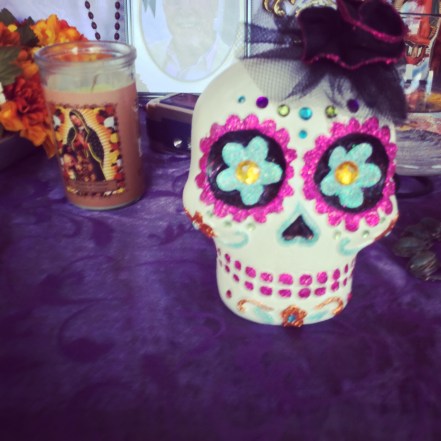
Day of the Dead
Beliefs about death and afterlife vary, but we all share the knowledge that we will die. If you have helped anyone with end of life issues you know each departure is unique. If you are close to anyone who has departed you have had the experience of some eternal bond that is not broken by that exit. Some essential part of your relationship remains and feels alive. I started to study my ancestry after both of my parents were dead. I had a few brief conversations with them about their families in history, but they had little information. My dad said he was Scotch Irish, which is true. My mother thought she was a relative of Zachary Taylor, which does not seem to be a fact. I believe they would have been very fascinated to learn about their ancestors, but maybe now they are one with all our relations.
My dad died in a a hospital setting, but my other died in her own home. She had severe dementia at the end of her life. We had excellent help from hospice for the last months of her existence. The hospice nurses know all about death since it is their specialty. They let us know that it is common to have visitations like my mother did before she passed. Some people have brief encounters but my mother had large crowds of visitors for months. It was clear that she was in touch with other beings, and sometimes we had the sensation of feeling their presence also. They were not ghosts, but were the ones who had come to accompany her across the bridge. She was able to die peacefully in her bed after all the interaction.
This week celebrations mark the remembrance of the dead. As we in the northern hemisphere journey deeper into winter and darkness the departed are free of time. Neither global warming nor the stock market has power over them. They are in an eternal state we will know someday.

Day of the Dead
Blue laws in Plymouth Colony were created to keep Sabbath exactly the way the Puritans wanted it to be kept. The Puritans had no tolerance for other religious views, or for slacker Puritans. The criminal justice system was used to fine and persecute those found guilty of profaning the Lord’s day. It did not take much to arouse the ire of these founding fathers. The laws evolved very slowly over time, but still represent a will to control what happens on Sunday. In Plymouth you would be fined for walking anywhere but to church from Saturday at sundown until Sunday at sundown. This was a no laughing/no smiling kind of religious day and they were serious about preserving it. The Pilgrims of the Mayflower would freak right out about the televised football games, a tradition many associate with Thanksgiving.

Hammond Coat of Arms
My 10th great-grandfather was an early settler of Watertown, Massachusetts. His father died and he was declared bankrupt in England before he emigrated. William brought part of his family to America to settle before sending for his wife and younger children. By April 1634 they had all arrived in the colony. He frequently was fined for religious infractions and may have been a secret Quaker.
William Hammond
Birth: 1575, Lavenham, Suffolk, England.
Baptized: 30 Oct 1575, Lavenham, Suffolk, England.
Death: 8 Oct 1662, Watertown, Massachusetts. “Aged about ninety-four.
Father: Thomas Hammond, born and died in England.
Mother: Rose Trippe, born and died in Lavenham, Suffolk, England.
1629: On 26 Feb 1629/30, William Hammond was declared bankrupt in England.
1629: On “the 20th of November after that date, he departe[d] the land and fleeth into New England. Information from a 1656 law suit against William Hammond, citing this occurance. This would place him on the “Lyon” which sailed from Bristol on 1 Dec 1630/1631, and arriving in New England the following February.
Emigration: 1631. See above.
The Hammond family came to New England in at least three stages. In late 1630 or early 1631, John Winthrop Jr. noted receipt of £7 5s. from “Goody Hammond to send her husband.” This supports the conclusion that William Hammond was a passenger on the “Lyon” when it sailed from Bristol in late 1631.
On 26 Sept 1633, Governor John Winthrop, wrote to Sir Simonds D’Ewes, informing him that “Yours by young Hamond I received,” indicating that William Hammond Jr. probably sailed for New England in one of the ships that arrived in the fall of 1633. His sister Anne and brother Thomas may also have come at this time, because they are not included, a year later, in the passenger list of the “Francis”, which sailed from Ipswich, in the spring of 1634, with Elizabeth Hammond, (aged 47); Elizabeth Hammond, (aged 15); Sarah Hammond, (aged 10); and John Hammond, (aged 7) on board.
First Residence: William’s first residence was Watertown, Massachusetts.
Occupation: Husbandman.
Religion: Admitted to Watertown Church prior to 25 May 1636, (implied by freemanship.)
1636: Admitted as a Freeman, 25 May 1636.
1636: In his record of admissions to Scituate Church, Rev. John Lathrop, entered on 14 Apr 1636, “Elizabeth Hammon, my sister, having a dismission from the church at Watertown.”
1636: On 25 Jul 1636, William Hammond was granted forty acres in the Great Dividend.
1637: Granted eight acres in the Remote Meadows, 26 Jun 1637.
1641: Granted a farm of one hundred fifty-five acres, 10 May 1642.
1645: In the “year 1645 Rose his mother dyeth … but now in the year 1647 his son Thomas come from New England to be admitted to the land.”
1647: On 22 Nov 1647, “W[illia]m Hamond granted a letter of attorney unto Thomas Hamond, his son, to ask demand of the lord of the manor the possession of certain lands in Lavenham, in Suffolk which were the possession of Rose Steward, his mother.”
1647: William was a Watertown Selectman, 8 Nov 1647.
1656: Along with Isaac Stearns, William was an arbiter in a dispute between John Wincoll and Benjamin Crisp.
1656: “Old Goodman Hammond” was appointed to a committee to assign seats in the meeting house, 17 Nov 1656.
1660: On 6 Non 1660, Watertown Selectmen sent the constables to “Old Hamond to let him know, that contrary to order of town, he had entertained into his family such a person as is likely to prove chargeable, do therefore desire him to rid the town of such an encumbrance or otherwise to bear the burden thereof himself.”
In William’s will, dated 1 Jul 1662 and proved 16 Dec 1662:
“William Hammond of Watertowne … now about ninety years of age” bequeathed to “my loving dear wife Elizabeth Hammond my whole estate” for life;
and after her death, to “my son John Hammond all my houses, lands;”
to “Thomas Hammond son of my son Thomas Hammond, deceased,” £40 when twenty-one, but if he dies before that then “the £40 to be equally divided between the children of my daughter House, daughter Barnes, [i.e., Barron’s], children”; to “daughter Barnes” £30;
to “the four children of my daughter Elizabeth House deceased” £5 apiece; to “Adam Smith son of my daughter Sarah … one mare colt”
and to “my daughter Sarah Smith” £5.
The inventory of the estate of William Hammond totalled £467 16s. 9d., including £318 in real estate:
one dwelling house, an orchard £24;
23 acres of pasture land, £69;
11 acres of broken-up land, £48;
15 acres of meadow, £90;
8 acres of meadow remote, £15;
18 acres of land in lieu of township, £6;
1 Great Dividend, 40 acres, £40;
1 farm, 160 acres, £20; and
a part of a barn, £6.
His inventory also included “one great Bible and 3 other books” valued at 13s.
Married: Elizabeth Paine, baptized in Lavenham 22 Sep 1586. She was the daughter of William and Agnes Neves Paine. Elizabeth arrived in New England in 1634 on the “Francis” with her three youngest children. Elizabeth died 27 Sep 1670, in Watertown, Massachusetts, “aged about ninety years .”
Marriage: 9 Jun 1605, in Lavenham, Suffolk, England.
Children of William Hammond and Elizabeth Paine Hammond:
William Hammond (1575 – 1662)
is my 10th great grandfather
Elizabeth Hammond (1620 – 1703)
daughter of William Hammond
Elishua Crowell (1643 – 1708)
daughter of Elizabeth Hammond
Yelverton Gifford (1676 – 1772)
son of Elishua Crowell
Ann Gifford (1715 – 1795)
daughter of Yelverton Gifford
Frances Congdon (1738 – 1755)
daughter of Ann Gifford
Thomas Sweet (1765 – 1844)
son of Frances Congdon
Valentine Sweet (1791 – 1858)
son of Thomas Sweet
Sarah LaVina Sweet (1840 – 1923)
daughter of Valentine Sweet
Jason A Morse (1862 – 1932)
son of Sarah LaVina Sweet
Ernest Abner Morse (1890 – 1965)
son of Jason A Morse
Richard Arden Morse (1920 – 2004)
son of Ernest Abner Morse
Pamela Morse
I am the daughter of Richard Arden Morse
WILLIAM HAMMOND – ELIZABETH PAINE
(1575-1662) (1586-1676)
William, the emigrant ancestor of this branch of the family in America, was born in Lavenham, County of Suffolk, England, where he was baptized October 30, 1575. He was the only surviving son of Thomas Hammond and Rose Trippe, his younger brother, Thomas, having died in infancy. He was left an orphan by the death of his father in 1589. He married Elizabeth there June 9, 1605 and their children were all born in Lavenham. Elizabeth was born 1586, also in Lavenham, daughter of William Paine.
William, along with his older children, came to America before his wife and younger children, though the exact year is not known. Elizabeth, aged 47 years, with children Elizabeth, aged 15, Sarah, aged 10 and John, aged 7 years embarked at Ipswich, England, in the ship, “Francis,” John Cutting, Master, in April, 1634, and joined her husband in New England.
William Hammond was admitted freeman in Watertown, May 25, 1636, and was grantee of seven lots and purchaser of three lots before 1644. His homestead of 40 acres was situated on the west of Common Street. It was bounded on the east and north by lands of his brother-in-law, Dr. Simon Eire, on the west by John Simson, Isaac Sterne and John Warren, and on the south by Thomas Boyden. Bond’s Hist. of Watertown (p. 1088) says, “It is probable that William Hammond settled first on the Cambridge Road, very near the Cambridge line. Whether this was a grant to him the records do not show. He sold it early and settled on his 40-acre homestall, situated east of Pequusset meadow. He also owned three small lots in Pequusset meadow, one of these granted to him and the other two purchased. This homestall passed to his son (grandson) Thomas.” March 10, 1642, in the division of lands, he was granted lot No. 76, in the 4th Division, containing 165 acres, and this, with his other holdings, made him one of the largest land owners in the town.
The records do not show that he was often an office holder in the town and this may have been due to his independence in religious matters, which may have made him unpopular with his more puritanical neighbors, although he does not appear to have been so unpopular as some of his most intimate friends. His near neighbor and most intimate friend appears to have been John Warren, who came from the same locality in Suffolk County, England, and between whose family and his own there appears to have been considerable intimacy for several generations prior to the settlement in America.
On occasion there were fines “for an offense against the laws concerning baptism,” and “for neglect of publick worship” 14 Sabbaths at 5 shillings each. Warnings were given “for not attending publick worship”.
May 27, 1661, the houses of “old Warren and goodman Hammond” were ordered to be searched for Quakers, for whom they were known to have considerable sympathy. Considerable independence in religious matters, great love of liberty and sympathy for all who are persecuted for conscience sake seem to have been inherent family traits for generations past. It is probable that William Hammond and his intimate friend, Warren, were both inclined toward the religious teaching of Roger Williams, but were too conservative to subject themselves to the persecution that his more radical followers were compelled to endure. This view is supported by the fact that many of their descendants were rigid adherents of the Baptist Church. The tendency, however, in this family has been toward great liberty of thought in religious matters and many of the descendants have been connected with the Unitarian and Universalist denominations, while many in the later generations have held membership in no church.
The will of William Hammond is on file at East Cambridge, Mass., (Middlesex Probate No. 7167), dated July 1662; proved Dec. 16, 1672. He leaves to wife Elizabeth his whole estate during her life. To son, John, all lands, & after her death. To Thomas Hamond, “sonne of my sonne, Thomas Hamond, deceased,” œ40 at the age of 21 years. “If said Thomas, or any for him, oppose this will,” then he is not have the œ40. “Unto daughter (Hannah) Barnes, œ30, the same to remain unto her children.” “In case she again become a widow” she to have wood from his lands during her widowhood. To four children of my daughter, Elizabeth House, deceased, various sums of money. “To Adam Smith, son of daughter, Sarah, if he behave obediently to my wife after my decease, one mare, colt and œ20.” To daughter, Sarah Smith, œ5. Appoints widow, Elizabeth and John executors.
Witnesses– Matthew Bridge and Thomas Longhorne.
Inventory by Hugh Mason and Thomas Hastings, Dec. 16, 1662; œ457-16-9. Contains the following list of real estate:
25 acres of fallow land, 15 acres of broken land, 15 acres of meadow, 60 acres of meadow, &c.,
16 acres of land in low of ye town right, 40 acres in great dividend, 160 acres in a farm. Total, 331 acres.

Rhode Island native
My 5th great-grandfather was born in Rhode Island. He was a blacksmith by trade, which is fascinating to me because items he made may still be buried in Rhode Island and New York. We will never know. He was in the militia during the Revolution, but his son served in his place for most of his time. He sold his shop and moved to upstate New York in 1779, where his granddaughter would meet and marry Daniel Rowland Morse. The rest is history.
Thomas Sweet (1732 – 1813)
is my 5th great grandfather
Thomas Sweet (1765 – 1844)
son of Thomas Sweet
Valentine Sweet (1791 – 1858)
son of Samuel Thomas Sweet
Sarah LaVina Sweet (1840 – 1923)
daughter of Valentine Sweet
Jason A Morse (1862 – 1932)
son of Sarah LaVina Sweet
Ernest Abner Morse (1890 – 1965)
son of Jason A Morse
Richard Arden Morse (1920 – 2004)
son of Ernest Abner Morse
Pamela Morse
I am the daughter of Richard Arden Morse
Thomas Sweet, son of James and Mary Sweet was a blacksmith, born in North Kingston, RI.
South Kingston, RI Deed Book 5 p. 639 dated 4-21-1757 states Daniel Stedman yeoman of S. Kingston for 160 pounds in bill of old tenor deeded 2 acres of land in So. Kingston to Thomas Sweet, blacksmith. April 1766 Thomas Sweet freeman of So. Kingston, RI Book 6 p. 383 Indenture 6-19-1766 between Thomas sweet blacksmith of S. Kingston and John Robinson for 150 pounds paid by Robinson – mortgages land in So. Kingston which dwelling house, blacksmith shop and Cole house. Paid in full, signed by John Robinson in 1769.
In 1779 Thomas Sweet sold the land, house and blacksmith shop to Thomas Champlin, Jr. for 1050 pounds. He moved to Albany Co. NY which became Rensselaer County. “Thomas Sweet, a Blacksmith, settled early at South Berlin” and “A blacksmith shop was opened by Thomas Sweet on the east side of the road, a short distance north of Sweet’s Corners”.
He was in the Militia of Rhode Island during the Revolutionary War period, but his son William substituted for him in all but one month in Newport, when William stated in his pension application that his father went for himself. His service is accepted by the DAR, my application approved, A819
Thomas served as a Corporal from RI in the Militia, under Capt. Samuel Potter. RI State Archives Index of Mil. & Nav. Recs. He resided in South Kingston, Washington Co., RI during the war.
He married first possibly Hannah Congdon by 1757, had one child, Thomas Jr., prior to his marriage to Frances Congdon in 1760, in RI.
He died in Rensselaer Co., NY March 26, 1813, in an accident by a falling tree in Little Hoosick, NY.
References:
Declaration of service for Revolutionary War of his son William Sweet.
Compendium of American Genealogy Vol. Vii p. 508
1790 US Census; NY; Albany Co;, StephenTown; p. 286; 1 male over age 16 in household
1800 Census NY, Rensselaer Co., Hoosick p. 16A
History of Rensselaer Co., town of Berlin
DAR Patriot Index Centennial Edition p. 2867.

Like his father Ebenezer served as Justice of the Peace in Fairfield County, Connecticut. He also served in the military and as deputy in the assembly. Late in life he married a very young woman.
Ebenezer Mead II was born in Greenwich on October 25, 1692, the eldest son of Ebenezer Mead and Sarah Knapp.
He was married on December 12, 1717, to Hannah Brown, the daughter of Peter Brown of Rye NY, and they had Ebenezer, Silas, Abraham, Jonas, Solomon, Deliverance, Amos, Edmund, Hannah, Jabez, Jared and Abraham.
On May 9, 1728, Ebenezer was commissioned a Lieutenant of the East Company, or Train-band, at Horseneck. On May 11, 1738, he was commissioned a Captain of the same company.
He was a Justice of the Peace for Fairfield County from 1733 to 1758, and was a deputy to the assembly in 1733, 1734, 1737 and 1738.
Late in life, in 1759, when he was approaching 70, he was married for a second time, this time to Naomi Weed, the daughter of Abraham Weed. She was about twenty years old at the time.
Ebenezer Mead’s will was dated June 3, 1772, and probated June 15, 1775. In it he mentions his wife Naomi and children Deliverance, Jared, Silas, Jonas, Solomon, Amos, Abraham, Jr.; his grandson Enoch Mead, granddaughter Hannah, and grandson Ebenezer, the children of his son Ebenezer, who had predeceased him. His executor was his son Jared. The witnesses were Daniel Smith, Joshua Smith, and Jesse Parsons.
Ebenezer Mead (1692 – 1775)
is my 7th great grandfather
Deacon Silas Meade (1730 – 1807)
son of Ebenezer Mead
Abner Mead (1749 – 1810)
son of Deacon Silas Meade
Martha Mead (1784 – 1860)
daughter of Abner Mead
Abner Morse (1808 – 1838)
son of Martha Mead
Daniel Rowland Morse (1838 – 1910)
son of Abner Morse
Jason A Morse (1862 – 1932)
son of Daniel Rowland Morse
Ernest Abner Morse (1890 – 1965)
son of Jason A Morse
Richard Arden Morse (1920 – 2004)
son of Ernest Abner Morse
Pamela Morse
I am the daughter of Richard Arden Morse
Alex Seotewa was our guide to the mission church he had painted in Zuni pueblo. We had driven there to see the interior of the mission church with the spectacular kachina murals which I had seen once briefly with a Catholic priest. My fascination with this epic work of art started when I saw a television special, maybe even the program above, about Zuni, kachinas, and Alex. I convinced my erstwhile father-in-law to land his private plane in Zuni to see the mural. At that time the church was locked and there was a heavy smell of smoke damage because there had been a fire in the building. I guess that was about 1988. A priest had the key and showed us the inside of church for about 10 minutes, with no background information. There were buffalo heads on sides of the altar. It struck me as not only amazing art but a highly sacred place. It was obviously not in use, and the priest did not expect it would be used in the future.
I tried to see it once again, while driving back to Tucson from a ski trip in Colorado. I jumped out of the car in my pink fluffy ski jumpsuit and asked the people at the convenience store at the turn off for Zuni on the highway for directions to get to the church to see the interior. They insisted there was no church with kachinas. I was adamant that I had been to it. They became highly annoyed with me. I finally got the message that I had behaved badly in that culture and was not welcome. I was confused, but nothing ventured, nothing gained. The mystery of the access to the kachinas in that mission church continued to intrigue me. On my third visit the kachinas themselves must have arranged special treats for us. We had a loft bedroom at a small hotel run by a French guy who runs the general store. We arrived in the late evening. At the tourist office in town I asked the young woman at the desk how I could see the kachina mural in the mission church. She said she had never seen it, so I had little chance of being so lucky. This was a real surprise, since she was a member of the tribe about 20 years old. I wondered why it was so difficult.
In the morning I headed downstairs for coffee and encountered fellow residents gearing up to go hunting with a Zuni guide. They were eating breakfast, so I joined them for a cup of coffee. The group had flown in from Atlanta for the privilege of hunting there. They were all excited because they would be in the company of the local expert, which one of them had done previously. I asked this hunting guide if he had any idea how I could arrange to see the inside of the mission, since that was our mission. He made a phone call to his wife and arranged for his father, Alex Seotewa, to meet us at the church and give us a tour. He left us a phone number to reach his father later, since it was only about 6 am, then took the happy hunters off in his truck. I knew this intervention had to be a special reward for holding the images of the kachinas in my mind for so many years. They must have answered my desire to see them again.
Alex was in poor health, but obviously enjoyed telling the story of his art work, his tribal culture, and his calling to preserve his traditional heritage. He spent about an hour with us answering questions and telling us about his life and work. I will cherish the time we spent in his presence because the kachinas came to life with his explanations. There has been controversy and dissent within the community between Catholic and traditional use of the mission. When Alex’s father was a child the church was in disrepair, but it had punitive kachinas painted on the walls. An agreement was made to restore the images between Alex and a priest who thought it was a good idea. Subsequent Catholic clerics have not been as enthusiastic about preserving Zuni religious practice within, or consecutively with their own practices. Alex stopped attending services held by Catholics, but continued to feel his work depicting the kachinas was eucharistic, and a gift given from above. He was a buffalo dancer in ceremony. He described choosing the buffalo to kill and creating the heavy mask he wore for hours. He told us what the importance of the buffalo was to his people, and why it was his responsibility not just to wear that mask, but to become a buffalo in spirit to keep his religion alive. I have a strong memory of the authenticity of his thinking, his truly welcoming appreciation of our visit, and of the moment he showed us his spirit as a buffalo. The old man turned his head away from us then slowly brought his upper body to face us with a steady, fierce gaze. This was not an impersonation of an animal spirit…it was the spirit inside the man. It was touched and grateful to be given the special gift. I consider our time with Alex to be a kind of miracle. Have you ever had an experience of an extraordinary spiritual nature?
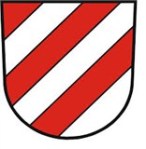
Richenza of Berg (c. 1095 – 27 September 1125) was the wife of Vladislav I of Bohemia and the Duchess of Bohemia. She was the daughter of count Henry I of Berg and his wife Adelheid of Mochental.
Richenza married Vladislav before 1111; her sister Sophie of Berg married another Přemyslid, Otto II the Black, in 1114. The third sister, Salomea of Berg, married the Duke of Poland Bolesław III Wrymouth in 1115.
In 1125 the dying Vladislav I chose his relative Otto II the Black as his successor, which was also the wish of Vladislav’s wife Richenza. Only the intervention of his mother Świętosława changed his mind, and Vladislav reconciled with his brother Soběslav.
After Vladislav’s death the disappointed Richenza wanted to move to Zwiefalten monastery, but died on the way on 27 September 1125. She is buried in Reichenbach.
Issue
Svatava
Vladislav II of Bohemia (c.1110 – January 18, 1174), King of Bohemia
Děpolt (- August 1167)
Jindřich
[edit] Literature
KAREŠOVÁ, Z.; PRAŽÁK, J. Královny a kněžny české. Prague : X-Egem, 1996.
[edit] References
^ KAREŠOVÁ, Z.; PRAŽÁK, J. Královny a kněžny české. Prague : X-Egem, 1996.
Richza vonBerg Schelklingen (1080 – 1125)
is my 25th great grandmother
Vladislav Bohemia (1117 – 1175)
son of Richza vonBerg Schelklingen
Fredrich Bohemia (1141 – 1189)
son of Vladislav Bohemia
Lidmila Bohemia (1170 – 1240)
daughter of Fredrich Bohemia
OTTO II Wittelsbach of Bavaria (1206 – 1253)
son of Lidmila Bohemia
Elisabeth Wittelsbach Duchess Bavaria (1227 – 1273)
daughter of OTTO II Wittelsbach of Bavaria
Consort Elisabeth the Romans Carinthia (1263 – 1313)
daughter of Elisabeth Wittelsbach Duchess Bavaria
Albrecht Albert II ‘The Wise’ Duke of Austria Habsburg (1298 – 1358)
son of Consort Elisabeth the Romans Carinthia
Leopold III “Duke of Austria” Habsburg (1351 – 1386)
son of Albrecht Albert II ‘The Wise’ Duke of Austria Habsburg
Ernst I “Ironside” Archduke of Austria Habsburg (1377 – 1424)
son of Leopold III “Duke of Austria” Habsburg
Katharina Archduchess Austria Von Habsburg (1420 – 1493)
daughter of Ernst I “Ironside” Archduke of Austria Habsburg
Christof I VanBaden (1453 – 1527)
son of Katharina Archduchess Austria Von Habsburg
Beatrix Zahringen (1492 – 1535)
daughter of Christof I VanBaden
Sabine Grafin VonSimmern (1528 – 1578)
daughter of Beatrix Zahringen
Marie L Egmond (1564 – 1584)
daughter of Sabine Grafin VonSimmern
Richard Sears (1590 – 1676)
son of Marie L Egmond
Silas Sears (1638 – 1697)
son of Richard Sears
Silas Sears (1661 – 1732)
son of Silas Sears
Sarah Sears (1697 – 1785)
daughter of Silas Sears
Sarah Hamblin (1721 – 1814)
daughter of Sarah Sears
Mercy Hazen (1747 – 1819)
daughter of Sarah Hamblin
Martha Mead (1784 – 1860)
daughter of Mercy Hazen
Abner Morse (1808 – 1838)
son of Martha Mead
Daniel Rowland Morse (1838 – 1910)
son of Abner Morse
Jason A Morse (1862 – 1932)
son of Daniel Rowland Morse
Ernest Abner Morse (1890 – 1965)
son of Jason A Morse
Richard Arden Morse (1920 – 2004)
son of Ernest Abner Morse
Pamela Morse
I am the daughter of Richard Arden Morse
RICHINZA (-27 Sep 1125). Berthold’s Chronicon of Zwiefalten names (in order) “Richinza ductrix Boemiæ, Sophia ductrix Moraviæ, Salome ductrix Poloniæ” as sisters of “Heinricus comes [et] Rapot”, specifying in the subsequent paragraph that Richinza was “uxor Vlatizlaus qui et Lauzlan dux Boemiæ” [942]. The necrology of Zwiefalten records the death “V Kal Oct” of “Richinza ductrix Boemie filie Heinrici comitis senioris” [943]. m ([1110]) VLADISLAV I Duke of the Bohemians, son of VRATISLAV II Duke of the Bohemians & his third wifeSwiętoslawa [Svatana] of Poland (-12 Apr 1125, bur Prague St Maria).
 mermaidcamp