mermaidcamp
Keeping current in wellness, in and out of the water
You can scroll the shelf using ← and → keys
You can scroll the shelf using ← and → keys

enchanted spring
Before we leave on the long pilgrimage to our forefathers’ homeland we gather vessels to fill with the water from the magical spring. Although it is heavy to carry on the slippery mountain trails we consider the water to be lucky. It is pure and clear, arising form deep within the earth, filtered through the sandy aquifer, arriving crystal clear and delicious. In the old days there was a superstition about drinking the water to be invited to return. When visitors arrived in the town that were undesirable to the townspeople they were all given beer to drink. The locals believed that once a person drank water from their enchanted spring, they would never leave. They had discovered this the hard way, and wanted to keep their precious resource to themselves. They became isolationists just when the rest of the world was hooking up with transportation, commerce, trade, and immigration. The elders wanted to maintain the purity of the water as well as the people’s thoughts.
These purity campaigns rarely result in a better environment. Somehow the strict rules, the isolation and control of learning, social recreation, and dress customs, had the effect for freezing time. The population survived, but only through sacrifice and very hard labor. They freely allowed anyone to leave, but continued to tell strangers there was no water in town, only beer. After a while the visitors stopped and the population dwindled. The few old true believers still living in the area were now too feeble to climb up to fetch the water from the spring for themselves, and nobody was left to do it for them. The enchantment was now completely wasted on them because it was just out of their reach. It was still flowing copiously as it had done for centuries, but only a handful of people even knew where the spring was.
When the last surviving elder was on his last legs a young girl wandered into town and asked for a drink of water. The old man broke down in tears while asking her who she was. She replied that she was a descendent of someone who had lived in the village in the previous century. She had heard stories about the miracle cures and the enchantment of the spring water that was legendary. She came because she was curious. She had fought through some dense forrest to arrive, traveling alone. She carried with her a copper cup with some inscribed symbols and a name. This cup had once belonged to her ancestor who left the village to live in the modern world. Now her curiosity about the cup brought her to this undiscovered part of her inheritance. The old man saw the cup hanging from her belt and asked to see it. He recognized the clan symbols inscribed on the side, but when he drew the copper close to his eyes he was able to see the name. He overflowed with emotion as he read the name of his own maternal great-grandmother on the cup. This was the last miracle the spring delivered to him. He perished in tears of grief and relief after he showed this youthful distant relative how to find the trail to the spring. When she returned with her vessels full of water, his body had turned to a pile of colored dust. She realized he had been sustaining his own life with leftover magic from the time when he could still climb to the spring to wait for her arrival. He had fulfilled his duty, and spent all of his extra lives. Now the responsibility was hers to share the enchantment of the spring. Her hike back out of the forrest was somber indeed.
This short fiction is written based on the fabulous photo prompt from Sue Vincent. Please join us to read, comment, or submit your own take on this picture.
#writephoto
birthplace, Turnberry Castle


This is one of the ways I descend from the famous badass, Robert the Bruce:
Robert Bruce (1274 – 1329)
21st great-grandfather
Marjorie Bruce (1297 – 1316)
daughter of Robert Bruce
Robert II, King of Scotland, Stewart (1316 – 1390)
son of Marjorie Bruce
Robert Scotland Stewart (1337 – 1406)
son of Robert II, King of Scotland, Stewart
James I Scotland Stewart (1394 – 1434)
son of Robert Scotland Stewart
Joan Stewart (1428 – 1486)
daughter of James I Scotland Stewart
John Gordon (1450 – 1517)
son of Joan Stewart
Robert Lord Gordon (1475 – 1525)
son of John Gordon
Catherine Gordon (1497 – 1537)
daughter of Robert Lord Gordon
Lady Elizabeth Ashton (1524 – 1588)
daughter of Catherine Gordon
Capt Roger Dudley (1535 – 1585)
son of Lady Elizabeth Ashton
Gov Thomas Dudley (1576 – 1653)
son of Capt Roger Dudley
Anne Dudley (1612 – 1672)
daughter of Gov Thomas Dudley
John Bradstreet (1652 – 1718)
son of Anne Dudley
Mercy Bradstreet (1689 – 1725)
daughter of John Bradstreet
Caleb Hazen (1720 – 1777)
son of Mercy Bradstreet
Mercy Hazen (1747 – 1819)
daughter of Caleb Hazen
Martha Mead (1784 – 1860)
daughter of Mercy Hazen
Abner Morse (1808 – 1838)
son of Martha Mead
Daniel Rowland Morse (1838 – 1910)
son of Abner Morse
Jason A Morse (1862 – 1932)
son of Daniel Rowland Morse
Ernest Abner Morse (1890 – 1965)
son of Jason A Morse
Richard Arden Morse (1920 – 2004)
son of Ernest Abner Morse
Pamela Morse
I am the daughter of Richard Arden Morse
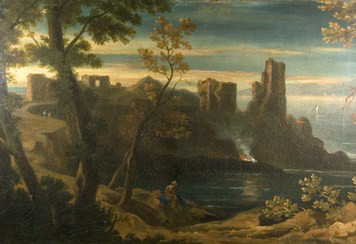
Robert The Bruce was born on 11 July 1274, probably in Turnberry Castle. He was descended from Scots, Gaelic and English nobility. His mother, Countess Marjorie of Carrick, was heir to a Gaelic earldom.
Robert’s grandfather, Robert Bruce ‘The Competitor’, was one of the claimants to the Scots throne. Bruce’s father, Robert de Brus of Annandale, fought in Wales for Edward I, was made governor of Carlisle Castle and fought on Edward’s side at the Battle of Dunbar in 1296. The Bruces refused to support John Balliol’s kingship and stayed close to Edward I. Balliol gave Bruce lands to the Comyns.
In 1298 Robert the Bruce became a guardian of Scotland alongside his great rival John ‘Red’ Comyn of Badenoch, and William Lamberton, Bishop of St Andrews. When Bruce and Comyn quarrelled Bruce resigned as guardian. In 1302 Bruce submitted to Edward I and returned ‘to the King’s peace’. Bruce married Elizabeth de Burgh.
Robert the Bruce’s father died in 1304. Bruce now had a viable claim to the throne. On 10 February 1306 Bruce met John Comyn of Badenoch at Greyfriars Kirk in Dumfries. A fight broke out, daggers were drawn and Bruce killed Red Comyn by the altar. The Pope excommunicated Bruce but Robert Wishart, Bishop of Glasgow, absolved him and made plans for Bruce to quickly take the throne. On 27 March 1306, Isobel of Fife, Countess of Buchan, crowned Bruce at Scone. His inauguration was small and hastily arranged but Robert Bruce was now King of Scots.
To Edward I the usurper King Robert was a rebel to be crushed. Edward’s reprisals were swift and brutal. Bruce was defeated at Methven. His wife, daughter and sisters were captured and imprisoned in England. Countess Isobel was locked in an iron cage at Berwick while Bruce’s brothers were hanged, drawn and beheaded. Bruce fled Edward’s wrath and spent a long winter hiding on the islands off the west coast and Ireland.
Bruce began a guerrilla war and struck at his enemies. His forces defeated Edward’s men at Glen Trool and Loudon Hill, then Edward I finally died in July 1307 – Bruce now faced Longshanks’ son, Edward II.
Bruce attacked his Scots enemies – destroying Comyn strongholds along the Great Glen and harrowing Buchan and the north east. His men cut a bloody swathe through Galloway and the south west.
One by one Scotland’s castles fell to Bruce and his supporters. Bruce had the castles ‘slighted’ – walls were torn down and defences were raised to the ground – the fortresses were made useless to an invading English army. As more castles fell more nobles pledged support to Bruce.
In 1314 Bruce watched Edward II’s army march toward Stirling Castle. Edward II had been given a year to relieve the besieged English force at Stirling or surrender the castle. Their forces met at the Battle of Bannockburn on 23 and 24 June 1314. Thousands died as the Scots defeated Edward’s army. The river was choked with the dead as Edward II fled the field and returned to England.
Bannockburn was not the end of Bruce’s struggle but it was a turning point. Captured English nobles were traded for his family and King Robert I gained international recognition. The Scots took the final English stronghold at Berwick in 1318 but Edward II still claimed overlordship of Scotland. Two years later the Scots sent a letter to the Pope – the Declaration of Arbroath – as part of an ongoing battle of words.
In 1327 Edward II was deposed by his Queen, Isabella. He was murdered in captivity. The English made peace with the Scots and renounced their claim of overlordship. The Black Rood, taken by Edward I, was returned to the Scots. It seemed that Bruce had finally won.
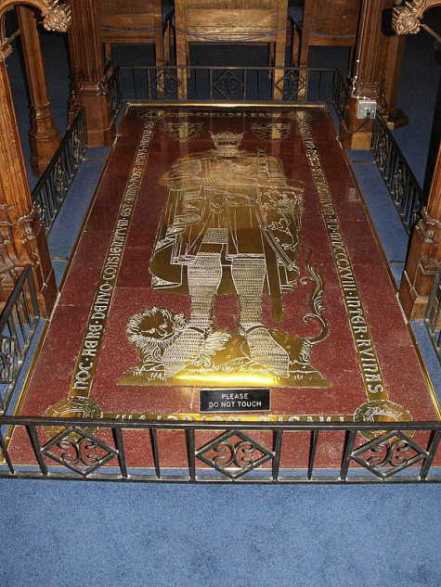
Robert the Bruce retired to Cardross near Dumbarton on the Firth of Clyde. He lived peacefully in a comfortable mansion house until his death on 7 June 1329. He asked that James Douglas take his heart on crusade. Bruce’s body was buried at Dunfermline Abbey, by his wife Elizabeth’s side, beneath an alabaster tomb. Bruce’s heart was finally buried at Melrose Abbey.
In the 1370s the Scots poet John Barbour wrote of Bruce, the hero-king, in ‘The Brus’.
Robert I, known as Robert the Bruce, was the king of the Scots who secured Scotland’s independence from England.
Here is another lineage:
Robert I “The Bruce” Bruce, King of Scotland (1274 – 1329)
21st great-grandfather
Margaret Bruce (1307 – 1346)
daughter of Robert I “The Bruce” Bruce, King of Scotland
John Glen (1349 – 1419)
son of Margaret Bruce
Isabel Glen (1380 – 1421)
daughter of John Glen
Isabel Ogilvie (1406 – 1484)
daughter of Isabel Glen
Elizabeth Kennedy (1434 – 1475)
daughter of Isabel Ogilvie
Isabella Vaus (1451 – 1510)
daughter of Elizabeth Kennedy
Marion Accarson (1478 – 1538)
daughter of Isabella Vaus
Catherine Gordon (1497 – 1537)
daughter of Marion Accarson
Lady Elizabeth Ashton (1524 – 1588)
daughter of Catherine Gordon
Capt Roger Dudley (1535 – 1585)
son of Lady Elizabeth Ashton
Gov Thomas Dudley (1576 – 1653)
son of Capt Roger Dudley
Anne Dudley (1612 – 1672)
daughter of Gov Thomas Dudley
John Bradstreet (1652 – 1718)
son of Anne Dudley
Mercy Bradstreet (1689 – 1725)
daughter of John Bradstreet
Caleb Hazen (1720 – 1777)
son of Mercy Bradstreet
Mercy Hazen (1747 – 1819)
daughter of Caleb Hazen
Martha Mead (1784 – 1860)
daughter of Mercy Hazen
Abner Morse (1808 – 1838)
son of Martha Mead
Daniel Rowland Morse (1838 – 1910)
son of Abner Morse
Jason A Morse (1862 – 1932)
son of Daniel Rowland Morse
Ernest Abner Morse (1890 – 1965)
son of Jason A Morse
Richard Arden Morse (1920 – 2004)
son of Ernest Abner Morse
Pamela Morse
I am the daughter of Richard Arden Morse
Both connect with Anne Dudley, my famous poet ancestor. One went through the Gordons for many generations, and the other went though the Kennedy family.
Robert’s grave
Robert was born on 11 July 1274 into an aristocratic Scottish family. Through his father he was distantly related to the Scottish royal family. His mother had Gaelic antecedents. Bruce’s grandfather was one of the claimants to the Scottish throne during a succession dispute in 1290 – 1292. The English king, Edward I, was asked to arbitrate and chose John Balliol to be king. Both Bruce and his father refused to back Balliol and supported Edward I’s invasion of Scotland in 1296 to force Balliol to abdicate. Edward then ruled Scotland as a province of England.
Bruce then supported William Wallace’s uprising against the English. After Wallace was defeated, Bruce’s lands were not confiscated and in 1298, Bruce became a guardian of Scotland, with John Comyn, Balliol’s nephew and Bruce’s greatest rival for the Scottish throne In 1306, Bruce quarrelled with Comyn and stabbed him in a church in Dumfries. He was outlawed by Edward and excommunicated by the pope. Bruce now proclaimed his right to the throne and on 27 March was crowned king at Scone. The following year, Bruce was deposed by Edward’s army and forced to flee. His wife and daughters were imprisoned and three of his brothers executed. Robert spent the winter on the island off the coast of Antrim (Northern Ireland).
Returning to Scotland, Robert waged a highly successful guerrilla war against the English. At the Battle of Bannockburn in June 1314, he defeated a much larger English army under Edward II, confirming the re-establishment of an independent Scottish monarchy. Two years later, his brother Edward Bruce was inaugurated as high king of Ireland but was killed in battle in 1318. Even after Bannockburn and the Scottish capture of Berwick in 1318, Edward II refused to give up his claim to the overlordship of Scotland. In 1320, the Scottish earls, barons and the ‘community of the realm’ sent a letter to Pope John XXII declaring that Robert was their rightful monarch. This was the ‘Declaration of Arbroath’ and it asserted the antiquity of the Scottish people and their monarchy.
Four years later, Robert received papal recognition as king of an independent Scotland. The Franco-Scottish alliance was renewed in the Treaty of Corbeil, by which the Scots were obliged to make war on England should hostilities break out between England and France. In 1327, the English deposed Edward II in favour of his son and peace was made with Scotland. This included a total renunciation of all English claims to superiority over Scotland. Robert died on 7 June 1329. He was buried at Dunfermline. He requested that his heart be taken to the Holy Land, but it only got as far as Spain. It was returned to Scotland and buried in Melrose Abbey.
Virginia Colony
My seventh great-grandmother’s grandfather was John Washington of Surry Co, VA. (See the Washington information from Louise Ingersoll’s book.) She inherited 200 acres of Surry Co. land from her father. That land was sold 2/19/1734. After Sampson died, she went into NC to live with her son James. On 22 Nov 1757 Edward Goodrich, Isaac Rowe Walton and John Maclin, gentlemen, laid off and assigned to Elizabeth Lanier, widow of Sampson Lanier, deceased her dower of said Sampson’s estate.
She remarried after Sampson died. Marriage bond, dated 23 July 1758 on file Brunswick Co, VA, shows Elizabeth Lanier,widow, marrying Cuthbert Smith, and an order dated
27 Feb 1759 appointed Cuthbert Smith guardian of Rebecca Lanier,orphan of Sampson Lanier, and an order dated 5 Sept 1759 appointing Lemuel Lanier as guardian for Burwell Lanier, Buckner Lanier, Winifred Lanier, Martha Lanier and Anne Lanier.
My seventh great-grandfather, Sampson Lanier, was born in 1681 and died in 1743.
Third son of John Lanier, Jr. born Charles City County 1681 (by deposition made in Surry Co. March 21, 1738), first appears in contemporary records as a “Tithable” in the upper end of Surry County above Stony Run in 1701. Richard Washington’s will leaves 200 acres of land to his daughter, Elizabeth, and leaves to his son-in-law, 200 acres lying in the Isle of Wight. Sampson Lanier sold this land which is now a part of Southhampton County; in February of 1734, Sampson
and Elizabeth Lanier sold the 200 acres of land given her by her father. They moved to Brunswick County before 1740. Sampson Lanier was a Justice, a Vestryman of St. Andrews, and, at one time, on the School Board. His will, dated 8 Jan. 1743, was proved on 5 May 1743. It lists their children as Thomas, Lemuel, Sampson, Richard, Elizabeth, and James. He married about 1706 in Surry, Elizabeth, daughter of Richard Washington (1660 Virginia – 1725 Virginia) & Elizabeth Jordan of Surry County, VA, and granddaughter of Major John Washington (born England 1632) of Surry County, VA. (See pp 40-41, Ingersoll.) She died in Pitt County, NC. Major John Washington was first cousin to Colonel John Washington of Westmoreland County, VA and was the Great Grandfather of George Washington, first President of the United States.
Elizabeth Washington (1689 – 1773)
7th great-grandmother
Elizabeth Lanier (1719 – 1795)
daughter of Elizabeth Washington
Martha Burch (1743 – 1803)
daughter of Elizabeth Lanier
David Darden (1770 – 1820)
son of Martha Burch
Minerva Truly Darden (1806 – 1837)
daughter of David Darden
Sarah E Hughes (1829 – 1911)
daughter of Minerva Truly Darden
Lucinda Jane Armer (1847 – 1939)
daughter of Sarah E Hughes
George Harvey Taylor (1884 – 1941)
son of Lucinda Jane Armer
Ruby Lee Taylor (1922 – 2008)
daughter of George Harvey Taylor
Pamela Morse
I am the daughter of Ruby Lee Taylor
Richard Washington’s will, dated November 9, 1724, leaves 200 acres of land to his daughter Elizabeth Lanier, “land where she now lives”; he leaves to his son-in-law, Sampson Lanier, 200 acres lying in the Isle of Wight. On March 23, 1732, Sampson Lanier sold the above 200 acres to the Vestry of Nottingham Parish, now Southampton County. On February 19, 1734, Sampson and Elizabeth Lanier sold the 200 acres of land given her by her father, and before 1740 they had moved to Brunswick County, Virginia. Sampson was a Justice, a Vestryman of St. Andrews, and at one time he was on the school board.
Sampson Lanier died about May 15, 1743 in Brunswick County, Virginia. Elizabeth died about 1773 in Pitt County, North Carolina.
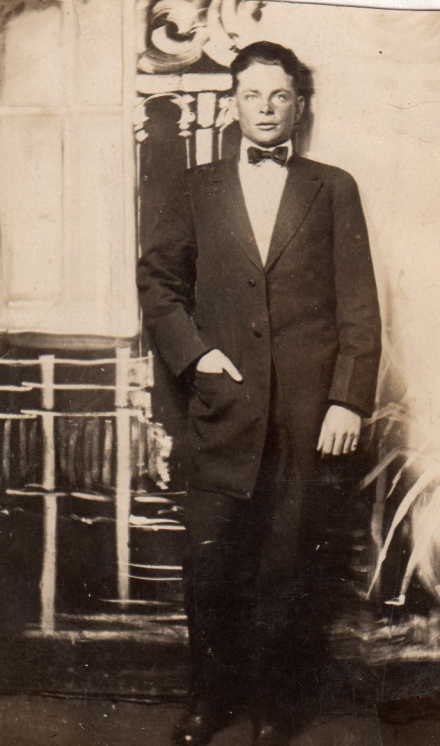
Ernie in Coffeeville
The perfectly manicured green grass shimmers in the bright morning sun as we take out the lawn bowling set that belonged to our great-grandfather. He was both a lawn perfectionist and a lawn bowler, a rare combination none of his children or grandchildren has encountered again in life. He took great pains to keep the crabgrass out and the healthy green grass trimmed evenly. His yard was his pride and joy. His children were enslaved in landscaping work during the time they lived in their father’s home. Like Claude Monet it appeared that Jason cared more about his garden than he did about his children’s happiness. Because of his particular love of lawn perfection and startling indifference to humans his children called him Crab Grass behind his back.
When my grandfather was young he left home with his brother because they were not fond of Crab Grass, and even less fond of his wife, their stepmother. She claimed to be a witch , but she was known as a con artist. She was a Cherokee woman who would arrive in a town saying she knew where Tecumseh had buried gold in the vicinity. She would then scam the townspeople to bankroll an expedition to find the hidden treasure, then leave. When she met our great-grandfather he was a snake oil salesman. He peddled patent medicine and introduced his second wife to his family as a witch capable of harming them. The boys’ birth mother had died young, leaving them with old Crab Grass and this con woman/witch, living on the Cherokee Nation. Ernie and his brother Ralph ran away to become migrant workers, picking corn and doing other agricultural work all over the Midwest. They worked in the season, then returned to their grandparents’ farm in Kansas during the winters. They rarely visited their father, who lived in a nearby town in Oklahoma.
When great-grandfather Jason died his wife wanted to get rid of the lawn bowling set because she said it was haunted. Nobody recalls which member of our family accepted the large burlap bag full of heavy balls that he had used almost every day of his life. The family did not give it a second thought until the spooky feeling that accompanied the bag became obvious. A family meeting had been called to decide what to do with this creepy inherited game set. It was decided that the bag would travel from home to home, staying for a period of a year each time. Since 1927 this lawn bowling set has brought tragedy, mystery, and wealth to our family. It has acted as a Ouija board, seeming to be directed by spooks, to foretell the future. It seems to be inhabited by the spirit of our ancestor. His restless soul still wants to play his favorite game. Since he is not longer incarnate we figure it can’t hurt to keep the game going for his amusement. As we play on our own lawns now we wonder exactly what we inherited from all our relations. It is far from clear.

In this inventory- Jeanette Armour gets a years support-Her son Andrew is the person who did the inventory.
My seventh great-grandfather was born in Surry, Virginia in 1685. His father, William Sr, was born in Massachusetts Colony and migrated to Virginia. There is a William Little in Surry County by 1687 when he and Edward Napkin are convicted of not going to church. Even earlier, in 1673, a William Little is listed in those who took part in the Lawne’s Creek Church uprising, the first tax strike. According to Elizabeth Wright, a William Little is found on the tax rolls as early as 1674. A John Little appears in 1688.
William Little Sr. was involved in the early colonial tax strike in Surry County, Virginia in 1674. Upon his death, he left his son, William Little II, his plantation and 200 acres upon which William II lived. He also set his slaves free (source: Michael C. Little, 2004).
William Little Jr. was born about 1685. He is listed in his father’s will as the oldest son. Thigpen Tribe lists his birth in 1685. He owned Bought land in 1738 in Surry Co. VA. He owned land that sold on 18 Feb 1755 in Surry Co. VA. William sold 100 acres to Buford Pleasant ” it being part of a tract of land granted by patent to Phillip Hunniford bearing date the 17 Day of May 1666 which was left to the said John Little by his Father in his last will and testament it is part of the tract of land which William Little the father of the sd John Little purchased of Edward Napkin junr” on 5 Jan 1709. He was living on 23 Jun 1755 in Surry Co. VA. 10 Jan 1755 William Little and wife Mourning of Surry Co. to Thomas Davis of Elizabeth City Count 300 acres (being the land William Hart sold him on 16 Mar 1738) bounded by the Mill Swamp, the Meadow Branch, Mile Branch, Benjamin Bell, and the Hog Pen Branch. Witnesses were Thomas Wilson, Benjamin Little, Jacob Little, Joseph Holleman.
On 23 Jun 1755 Mourning Little, wife of William Little, relinquished her Right of Dower in the 300 acres sold to Thomas Davis of Elizabeth City County
In the 1755 tax list for Beaufort; Wm. Little, Abraham Little, James Little, John Little, and Thomas Little were listed. William and Abraham were listed together with only 2 polls (themselves). Amos Atkinson was also listed.
In 1762; Isaac, James, John, Joseph, and Robert Little were listed. He moved before Sep 1755 to Beaufort Co. NC. September 1755, William Little of Surry Co. VA received 300a on Cheeks Mill Swamp to pay a 40 pound obligation from James Cheek in Halifax precinct NC. Deed was witnessed by Amos Atkinson and Abraham Little. He died in Mar 1756 in Beaufort Co. NC. Beaufort Co. NC March Court, 1756. Son Abraham 100 acres where he now dwells, Thos Sharp, Cheek’s Mill Creek, James Hearn; 12lb to survey the land I bought from James Cheek & then to make a title to his 2 brothers. Son William & James – the remainder of sd tract of land which I bought from James Cheek. Son Jacob – 100 acres where I now dwell joining the Dividing Branch. Son John – 100 acres on north side of sd Dividing Branch except my daughter Jane Moring to have the use of where she now dwells during her lifetime. Son Isaac – pot. Son Joseph 10L VA. Wife Morning – rest of my estate during her lifetime & then to my 5 youngest sons Jacob, William, James, Joseph & John. Wife: Morning. Executors sons Isaac and Jacob Little. Witnesses Amos Atkinson, Mary Judkins, Jane Atkinson
He was married to Morning Kimborough . It is likely that Morning is not the mother of Abraham, Isaac, and Jane. William’s will gives Abraham the land where he now lives, Isaac only a pot, and Jane the right to live where she is now living. He makes other specific requests to Jacob and John. He then gives the balance to Morning as long as she lives and then to be divided between his youngest 5 sons. I believe this indicates these are Morning’s children and the other three are not.
(Notes from Jane M. Lindsay 1/3/99 and updated 2002)
William II was involved as a North Carolina commissioner helping settle the Virginia/North Carolina border in 1728, resulting in North Carolina becoming a royal colony.
William Little Jr (1685 – 1756)
7th great-grandfather
Jane Jeanette Little (1713 – 1764)
daughter of William Little Jr
Andrew Armour (1740 – 1801)
son of Jeanette Little
William Armor (1775 – 1852)
son of Andrew Armour
William Armer (1790 – 1837)
son of William Armor
Thomas Armer (1825 – 1900)
son of William Armer
Lucinda Jane Armer (1847 – 1939)
daughter of Thomas Armer
George Harvey Taylor (1884 – 1941)
son of Lucinda Jane Armer
Ruby Lee Taylor (1922 – 2008)
daughter of George Harvey Taylor
Pamela Morse
I am the daughter of Ruby Lee Taylor


St. Martin-in-the-Fields Church
My eleventh great-grandfather was probably born in Sanderstead,Surrey, England in 1539. He died in Surrey May 10, 1586. He married Olive Harman at St. Martins, London on 30 Jan 1569. (Olive Harman was born in 1548 in Sanderstand, Surrey, England,81 died in 1603 in Elstree Church, Herefordshire, England 81 and was buried in 1603 in Elstree Church, Herefordshire, England.)
Nicholas was baptized at All Saints’ Sanderstead. His parents were John Hewson Attewood and Margaret Grenville.
Nicholas Atwood was assistant of the Queens Carriages. Due to the estate being left to Nicholas eldest son Harman, the younger brother John (Jonanem) sued Harman for the Estate but lost. (See Generation 10 for details of how the estate
passed to Harman)..
Here lyeth Nicholas Wood thirde sonne/ of John At wood of Sanderstead Corte who
served/ Queen Elizabeth sens the second year of her/ rayne & deceased the XIIIth
of May 1586 and left/ behind him a wife & children ix vii sonns HARMON/JOHN
NICHOLAS THOMS. JAMES JOHN RICHARD ALLIS & SUAN.
Olive Harman was born in 1548 in Sanderstead, Surrey, She was the daughter of James Harman. She also Married William Marleville and John Buck.
Nicholas Atwood (1539 – 1586)
11th great-grandfather
John Atwood (1582 – 1644)
son of Nicholas Atwood
John Thomas Wood (1614 – 1675)
son of John Atwood
Margaret Wood (1635 – 1693)
daughter of John Thomas Wood
Elizabeth Manchester (1667 – 1727)
daughter of Margaret Wood
Dr. James Sweet (1686 – 1751)
son of Elizabeth Manchester
Thomas Sweet (1732 – 1813)
son of Dr. James Sweet
Samuel Thomas Sweet (1765 – 1844)
son of Thomas Sweet
Valentine Sweet (1791 – 1858)
son of Samuel Thomas Sweet
Sarah LaVina Sweet (1840 – 1923)
daughter of Valentine Sweet
Jason A Morse (1862 – 1932)
son of Sarah LaVina Sweet
Ernest Abner Morse (1890 – 1965)
son of Jason A Morse
Richard Arden Morse (1920 – 2004)
son of Ernest Abner Morse
Pamela Morse
I am the daughter of Richard Arden Morse
A Chancery suit includes a statement that the Court Roll in 1547 show Nicholas Atwood to have then been the heir of Sanderstead Manor. Nicholas Atwood, was born before 1539, most likely at Sanderstead Court. He served Queen Elizabeth after the second year of her reign, as Assistant Sergeant of the Queen’s Carriages with his cousin, John Ownstead as Sergeant.
At St. Martin’s, 30 Jan 1569, he married Olive Harman (1548-1603), daughter and heiress of James Harman. Most of their children were baptized at St. Martin’s. When in the country, they resided at Court farm and here one night, when roads were especially bad, the Queen returning from one of her trips, spent the night at Court Farm.
Nicholas died 10 May 1586, in Sanderstead and was buried in St. Martin’s, 14 May 1586. His wife, Olive married for a second and third time. Her monument in Elstree Church names her Atwood children.
~Ye Ole Atte Wode Annals, pp. 3, 5
• Background Information. 179
~History of the Atwood Family, in England and the United States: To which is Appended a Short Account of the Tenney Family, p. 4, Nycholas Wood, died 1586, was the third son of John Atwoode, who died in 1520, and the father of Harman Attwood, also written Attwoodd. Harman Attwood is called Harman Woode until the entry of the baptism of his third child in the Saunderstead register. The Atte Woodes or Atwoods had many different spelling for their name in the records that can be found.
• Epitath. 110
“Here lyeth Nycholas Wood, the third son of John At Wood of Sanderstead corte, who served Queene Elizabeth seus the second yeare of her rayne, and deceased the 14 of may, 1586, leaving behind him a wyfe and children, – 7 sons, Harman, John, Nicholas, Thomas, James, John, Richard, Allis, Susan.”
~History of the Atwood Family, in England and the United States: To which is Appended a Short Account of the Tenney Family, p. 6
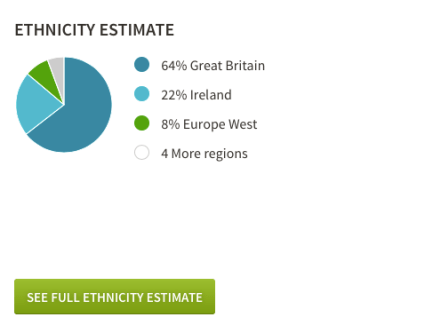
brother’s estimate

my estimate
The subject of DNA testing has become more and more popular since Ancestry.com directed some television programming at discovering the ethnicity of celebrities. Many folks are surprised to learn their DNA reveals a different or much more complex ethnic background than they had assumed. It is particularly poignant for black people to trace their ancestors back to slavery and find out how much non-African DNA they have. The show and the advertising have increased the number of people sending samples to the database at Ancestry.com. This has the effect of defining all of us in the database with more precision. I think that this is one way to eradicate racism. Our connections are much more complicated than any of us have been thinking.
The more DNA they have to compare, the more specific they can be. When I first took the test the program was new and not well known. My profile initially told me I was 98% from the British Isles, and trace elements. I was not very impressed. As the database grew my profile showed more specificity including western Europe. Recently my brother sent in his saliva in order to help a man find his birth father. He has distant DNA links to our family and asked us for some help with his own research. Male DNA reveals more than female, so my brother complied with his request. I had heard this before, but when I studied my brother’s DNA results I was surprised to see he had more detail than I did. We had the same parents for sure. My partner said it is because my brother is a later model, but this makes no sense. I think it is because he is a male. I will get to the bottom of this. In the meantime I have started to investigate some of the 550 DNA matches that Ancestry has compiled for me over the years while I basically ignored this feature. It is really interesting and fun. They send me new connections all the time with charts about the lineage. I am into it, and have made progress on my tree. I have confirmed some sketchy connections in my research, and found many new ones. DNA is where it is happening for my investigations right now. It is yielding progress. I paid my annual subscription fees this month, but feel really good about all the value I get from Ancestry.com. The more DNA they collect the better it is for me, so send your spit to my database, please.
DNA testing for the public is a huge growth market. It is also the talk of the town. When I ran into my friend who is a doctor and knows she has Swedish ancestry did the test at 123 and Me recently. She did it because it is possible to test for genetic predisposition to disease as well as for contraindicated medications. She wanted to know which meds are going to harm her. I did not know that was part of the information being shared, but that does sound incredibly useful. I need to check back with her to see what she learned beyond what she knows from that old family bible in Swedish that tells part of her story. Everyone finds surprises. Have you done any DNA tests yet, gentle reader? What have you discovered? What made you decide to do it?
Immigrant to Virginia Colony
My eighth great-grandfather Nicholas Morris “the Immigrant” was born in England in 1605. He died in St Stephens Parish, Northumberland Co. Virginia on 20 Jan 1663. He was a Justice of the Court by profession. His wife, Martha, was born in England about 1609. She remarried after Nicholas died.
Nicholas Morris owned land on the Great Wicomico River before 1651. His near neighbor and associate was John Mottram, an English Protestant who had frequent visitors among those who had been banished from the colony of Maryland.
Nicholas and his wife, Martha (poss.Mottram) were living in the Virginia Colony by 1641, and first lived on land leased from John Upton. By April 1652, Nicholas was well-established in Northumberland County and was appointed a justice along with John Haynie.
Will probabted, in Virginia, data from familysearch.com per Ancestral File, ver. 4.19. According to Tidewater Virginia Families by Virginia Lee Hutcheson Davis, his will was presented in court in Northumberland Co.,VA on 20 Jan 1664, so he had to have died previous to that. He left his son, Anthony Morris, the plantation on which he lived, containing 550 acres and his wife, the land called “ye Island, being 506 acres”. He also bequeathed to his daughter, Jane (Morris) Haynie, one cow and to each of his three grandchildren, Martha, Elizabeth and Richard Haynie, one yearling heifer.
Martha Morris later married Thomas Lane, a wealthy land owner of Northumberland Co.
She signed her Morris inheritance over to her son, Anthony, on 15 July 1665.
Children:
Thomas Morris
John Morris
George Morris
Abraham Morris
Mary Morris
Elizabeth Morris
Edward Morris b. Bet. 1626 – 1652
Nickolas Morris b. Bet. 1626 – 1652
William Morris b. Bet. 1628 – 1642
Jane Morris b. About. 1630 in VA
Anthony Morris b. 1645 in Northumberland Co., VA m.Dorothy Samford (Wife) Marriage: 1665
Nicholas Morris (1605 – 1664)
8th great-grandfather
John Morris (1633 – 1713)
son of Nicholas Morris
William Morris (1659 – 1727)
son of John Morris
Thomas Morris (1678 – 1741)
son of William Morris
Thomas Morris (1730 – 1791)
son of Thomas Morris
Joanna Morris (1762 – 1839)
daughter of Thomas Morris
John Samuel Taylor (1798 – 1873)
son of Joanna Morris
William Ellison Taylor (1839 – 1918)
son of John Samuel Taylor
George Harvey Taylor (1884 – 1941)
son of William Ellison Taylor
Ruby Lee Taylor (1922 – 2008)
daughter of George Harvey Taylor
Pamela Morse
I am the daughter of Ruby Lee Taylor
Nicholas Morris served as a Justice of the Northumberland County Court eighteen times between 10 July 1652 and 21 Feb 1658/59 (Northumberland County Order Book 1650-1652, p. 64 and 1652-1665). He also signed the Great Oath (Northumberland County Order Book 1650-1652 p. 139b) VIRGINIA GENEALOGICAL SOCIETY QUARTERLY NOV 1986. When he died, he left and estate of 1000 acres in his 1664 will.

1900 Census
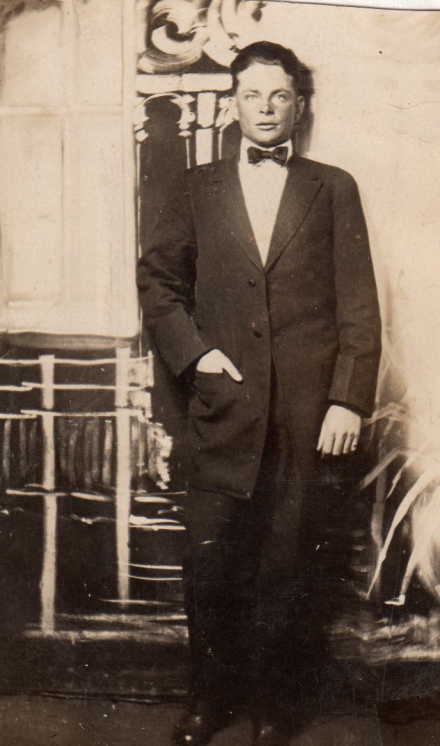
My grandpa Ernie
I will soon celebrate my anniversary as a student of my family history. I joined Ancestry.com during the financial crash of 2008. I had just inherited some stocks and bonds when they began to vanish into thin air before my very eyes. I was watching a website following the stock market when I saw an ad for the Ancestry site. I decided to take the free offer of two weeks because I was sure I could learn everything I needed to know in that two weeks. I had not planned to stay on for the paying contract. The first piece of evidence I found was the 1900 census taken on Indian Territory in Oklahoma. My grandfather lived there with his father and step mother. The census taker recorded him and his brother Ed as children of this Cherokee woman who was my grandfather’s second wife. This lady, Annie, turned out to be a relatively famous Cherokee con woman. In this census she says she was born in New Mexico in 1854. That is pretty suspicious since she says her parents were born in Georgia and North Carolina, a place where the Cherokees originated. She would be under very special circumstances to be born as a Cherokee in New Mexico in 1854. Later she says in other census records that she was born in Florida. She did have a reputation within the Morse family as a witch. I did not know any of this when I saw this record of my grandpa on the Cherokee Nation at the age of 10. I started searching madly to learn more about him and all my other ancestors. I became fascinated with all the history I learned and the puzzle of matching up the data with the tree. When the two weeks had passed I signed up for a permanent membership, and never looked back.
Now that I am a relatively sophisticated investigator of my ancestry I would urge beginners to follow some simple guidelines in order to have the best results:
There are more records available all the time. Since I joined the DNA study at Ancestry I have found new information and connections. My yearly subscription to this vast database is the best entertainment value for my dollar. I thought I would be done in 2 weeks, but now I know I can’t quit until I reach Adam and Eve. Have you ever looked into your own family history, gentle reader? What surprised you?

Burial:
St Mary Churchyard
Warwick
Warwick District
Warwickshire, England

Sir Thomas in his grave

Sir Thomas and Lady Katherine
My 19th great-grandfather was born in Warwick Castle in Warwickshire, England Feb. 14, 1313. He was the 11th Earl of Warwick. He died of the plague on Nov. 13, 1369 in Calais, Departement du Pas-de-Calais, Nord-Pas-de-Calais, France
He was English nobility. He was one of the Founder Knights of the Order of the Garter in 1348. He was related to the Kings of England and held many offices under them including: Hereditary Chamberlain of the Exchequer, Hereditary Sheriff of Worcestershire, Warden of the Scottish Marches, Marshall of England, and Sheriff of Warwick and Leicester counties. He was known for his military prowess and fought in many battles: in Scotland, in France in command at Valenciennes, and with the King at Tournai, at the Battles of Crecy and seige of Calais, and in Lithuania as a crusader from 1362 to 1365. He married Katherine de Mortimer after a dispensation was granted for being related in the 3rd degree ,after February 22 1324. They had fifteen children, including Thomas, Knight, Knight of the Garter and his successor as Earl of Warwick. He died testate of the plague at Calais, France. (bio by: Michael Schwing) from Find a Grave
Thomas DeBeauchamp (1314 – 1369)
19th great-grandfather
WILLIAM BEAUCHAMP (1358 – 1411)
son of Thomas DeBeauchamp
Joan Elizabeth Beauchamp (1396 – 1430)
daughter of WILLIAM BEAUCHAMP
Elizabeth Butler (1420 – 1473)
daughter of Joan Elizabeth Beauchamp
Isabel Talbot (1444 – 1531)
daughter of Elizabeth Butler
Sir Richard Ashton (1460 – 1549)
son of Isabel Talbot
Sir Christopher Ashton (1493 – 1519)
son of Sir Richard Ashton
Lady Elizabeth Ashton (1524 – 1588)
daughter of Sir Christopher Ashton
Capt Roger Dudley (1535 – 1585)
son of Lady Elizabeth Ashton
Gov Thomas Dudley (1576 – 1653)
son of Capt Roger Dudley
Anne Dudley (1612 – 1672)
daughter of Gov Thomas Dudley
John Bradstreet (1652 – 1718)
son of Anne Dudley
Mercy Bradstreet (1689 – 1725)
daughter of John Bradstreet
Caleb Hazen (1720 – 1777)
son of Mercy Bradstreet
Mercy Hazen (1747 – 1819)
daughter of Caleb Hazen
Martha Mead (1784 – 1860)
daughter of Mercy Hazen
Abner Morse (1808 – 1838)
son of Martha Mead
Daniel Rowland Morse (1838 – 1910)
son of Abner Morse
Jason A Morse (1862 – 1932)
son of Daniel Rowland Morse
Ernest Abner Morse (1890 – 1965)
son of Jason A Morse
Richard Arden Morse (1920 – 2004)
son of Ernest Abner Morse
Pamela Morse
I am the daughter of Richard Arden Morse

Warwick Castle
 mermaidcamp