mermaidcamp
Keeping current in wellness, in and out of the water
You can scroll the shelf using ← and → keys
You can scroll the shelf using ← and → keys
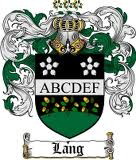
Lang Coat of Arms
My 9th great-grandmother was born in Dedham, Essex, England and died in Portsmouth, Rhode Island. She arrived in Salem with her second husband by 1630, but had a hard life in the new world. Her husband abandoned her, but she won a suit against him for support in Rhode Island:
June 5, 1665 Rhode Island Records
“ Wheras ther hath ben a petition presented to this presant Asembly margrett porter the wife of John porter of This jurisdicyion of Rhod Iland &c; in which The said margrett doth most sadly Complaine that her said husband is destitute of all Conjugall Love towards her, and sutable Care of her; is gone from her and hath Left her in such a nessesetous stat that unavoydably she is Brought to a meane dependance upon her Children for her Dayly suply, to her very great griffe of heart. and the Rather Considering that ther is in the hands of her said husband a very Competant Estat for both ther subsistance; and Thervpon the said margrett hath most Earnnestly Requested this gennerall asembly to take Care of her and to take her deplorable Estate Into your serious Consideration, as to make some sutable provition for her Reliefe out of the Estate of her husband, and that spedily before both hee and it be Convayed away.
“The Court therfore Taking the matter in to ther serioues Consideration and being Thoroughly satisfied, both by Common fame and otherwise, That the Complaints are True; and that the feares premised of convaying at least his Estate away are not without grownds; and haueing a deep sence upon ther hearts of this sad Condition which this poore anciante matrone is by this menes Reduced into…bee it by the said Court and the authority thereof decreed and Enacted that all the Estate, bothe personall and Reall of the above said John porter, Lying and Being in this Jurisdiction is hearby secured as if actually seazed upon and deposited for The Reliefe of the aforesaid Complainant…untill hee hath settled a Competent Reliefe upon his ageed wife to her full satisfaction…”
Rhode Island colonial records
The following is excerpted from an article in The American Genealogist, July, 1998, Vol. 73, No. 3, p.180,
“Reconstructing Sarah (Odding) Sherman, wife of Philip Sherman of Portsmouth, Rhode Island,” by Patricia Law Hatcher :
The life of Margaret Lang Odding Porter was not one of stability. She was probably born by 1590 and married by 1610 to William Oddyn, a weaver.
In 1612 she was left with a small daughter, Sarah. Sometime before 1633, probably before 1629, she married John Porter, likely in Braintree. John and Margaret had a daughter, Hannah, probably born in England.
John, Margaret, Sarah and Hannah came to Roxbury during 1633, where they joined the church late that year. John Porter and his son-in-law, Philip Sherman ( Sarah’s husband ) were amongst those who broke from the Roxbury church.
Margaret was uprooted again, moving to Portsmouth, RI by 1638. Her life there was not a happy one as John abandoned her by 1665, moving to Pettaquamscutt and apparently taking up with another woman. Margaret was obliged to petition the court for relief. This court action was the last mention of her in the records.”
Margaret Lang (1590 – 1671)
is my 9th great grandmother
Sarah Odding (1609 – 1681)
daughter of MARGARET Lang
Eber Sherman (1634 – 1706)
son of Sarah Odding
Mary Sherman (1688 – 1751)
daughter of Eber Sherman
Thomas Sweet (1732 – 1813)
son of Mary Sherman
Thomas Sweet (1765 – 1844)
son of Thomas Sweet
Valentine Sweet (1791 – 1858)
son of Thomas Sweet
Sarah LaVina Sweet (1840 – 1923)
daughter of Valentine Sweet
Jason A Morse (1862 – 1932)
son of Sarah LaVina Sweet
Ernest Abner Morse (1890 – 1965)
son of Jason A Morse
Richard Arden Morse (1920 – 2004)
son of Ernest Abner Morse
Pamela Morse
I am the daughter of Richard Arden Morse

Home in Rhode Island
My 8th great-grandmother was born in 1609 in Cornwall, England and died in Rhode Island in 1681. She sailed to America with her mother, step father, and husband in 1633. The group left Roxbury for Rhode Island because they probably were already Quakers. The Pilgrims made life hard for Quakers.
Sarah ODDYN or ODDING, daughter of William ODDYN or ODDING and Margaret Lang (parents from England). Details on vitals still being confirmed: Birth 05 Feb 1609 in Madron, Cornwall, England; Death 05 Feb 1681 in Kingston, Washington Co., Rhode Island.
Sarah Odding (1609 – 1681)
is my 8th great grandmother
Eber Sherman (1634 – 1706)
son of Sarah Odding
Mary Sherman (1688 – 1751)
daughter of Eber Sherman
Thomas Sweet (1732 – 1813)
son of Mary Sherman
Thomas Sweet (1765 – 1844)
son of Thomas Sweet
Valentine Sweet (1791 – 1858)
son of Thomas Sweet
Sarah LaVina Sweet (1840 – 1923)
daughter of Valentine Sweet
Jason A Morse (1862 – 1932)
son of Sarah LaVina Sweet
Ernest Abner Morse (1890 – 1965)
son of Jason A Morse
Richard Arden Morse (1920 – 2004)
son of Ernest Abner Morse
Pamela Morse
I am the daughter of Richard Arden Morse – (not you?)
Sarah married Phillip Sherman (Shearman), son of Samuel Sherman and Philippa Ward.
Mr Phillip Shearman was one of the 23 signers of the Portsmouth Compact dated 07 March 1638 (13th signer) … a document 138 years older than our Declaration of Independence in 1776.
Sarah and Phillip had perhaps 12 children (other source says they had 11 children and all survived to adulthood):
Eber Sherman1634 – 1706
Sarah (md Mumford) Sherman1636 – 1718
Peleg Sherman Sr. 1638 – 1719
Mary Sherman1639 – 1700
Samson Sherman1641 – 1718
Edmund Sherman1641 – 1718
Sarah Sherman1641 – ?
William Sherman1643 – 1646
John Sherman1644 – 1734
Hannah Sherman1647 – 1717
Samuel Sherman1648 – 1717
Mary (2nd one) Sherman1652 – 1729
Philip Sherman1652 – 1731
*Source: Ancestry.com
References to Phillip Shearman and his wife Sarah Odding (Oddyn) being Quakers:
• “After Phillip Shearman went to Rhode Island he left the Congregational Church and united with the Society of Friends.” (Representive of Men and Old Families of Rhode Island, Volume 1, publisher Jeff Beers & Co, Chicago c1908, page 210).
• “In the meantime, Phillip Shearman, became a member of another religious order, the Society of Friends (Quakers).” (Going to Palmyra: Sherman Deeds, by Margaret Sherman Lutzvick, 1997, page 38).
• “Philip and Sarah Sherman joined the Society of Friends as did their children and their children’s children for two hundred years.” (A New England Heritage, by Frederick Barreda Sherman, c1969, page 64).
• “After he removed to Rhode-Island he left the Congregational Church and united with the Society of Friends.” (New England Historic Genealogical Society, Vol 24 Jan 1870 page 66: Article titled The Sherman Family, By Rev David Sherman).
*SOURCE: Alonzo Sherman (descendant)
Family and descendants:
While still living in Roxbury, in the Massachusetts colony, Sherman married Sarah Odding, the daughter of William and Margaret Odding. He and Sarah had a large family of at least 11 children, most of whom survived childhood, married, and had large families.
Sherman’s mother-in-law, Margaret Odding, married secondly John Porter, another signer of the Portsmouth Compact. With Margaret, Porter had one child, Hannah, who married Samuel Wilbur, Jr., whose father, Samuel Wilbore was another signer of the compact.
Among the many descendants of Philip and Sarah Sherman are former United States Presidents George H. W. Bush and George W. Bush. Other descendants include James S. Sherman, Susan B. Anthony, Janis Joplin, Sir Winston Churchill, Lyndon LaRouche, Conrad Aiken, Mamie Eisenhower, and possibly Marilyn Monroe.
*Source: Wikipedia summary of sources.
Family links:
Spouse:
Phillip Sherman (1610 – 1687)
Burial:
Portsmouth Friends Churchyard
Portsmouth
Newport County
Rhode Island, USA
SARAH ODDING
In the list of admissions to Roxbury church, member #95 was “Sarah Odding. She was step daughter to John Porter & came with her parents & was after married to Philip Sharman of this church”.
COMMENTS: This admission was late in 1633, but her parents were much earlier in the list, and the family probably came to New England on one of the ships that arrived during the early summer. See JOHN PORTER and PHILIP SHERMAN.
In 1998 Patricia Law Hatcher discovered that Sarah Odding was born by 1612, daughter of “William Oddyn” of Braintree, Essex.
Blue laws in Plymouth Colony were created to keep Sabbath exactly the way the Puritans wanted it to be kept. The Puritans had no tolerance for other religious views, or for slacker Puritans. The criminal justice system was used to fine and persecute those found guilty of profaning the Lord’s day. It did not take much to arouse the ire of these founding fathers. The laws evolved very slowly over time, but still represent a will to control what happens on Sunday. In Plymouth you would be fined for walking anywhere but to church from Saturday at sundown until Sunday at sundown. This was a no laughing/no smiling kind of religious day and they were serious about preserving it. The Pilgrims of the Mayflower would freak right out about the televised football games, a tradition many associate with Thanksgiving.

Hammond Coat of Arms
My 10th great-grandfather was an early settler of Watertown, Massachusetts. His father died and he was declared bankrupt in England before he emigrated. William brought part of his family to America to settle before sending for his wife and younger children. By April 1634 they had all arrived in the colony. He frequently was fined for religious infractions and may have been a secret Quaker.
William Hammond
Birth: 1575, Lavenham, Suffolk, England.
Baptized: 30 Oct 1575, Lavenham, Suffolk, England.
Death: 8 Oct 1662, Watertown, Massachusetts. “Aged about ninety-four.
Father: Thomas Hammond, born and died in England.
Mother: Rose Trippe, born and died in Lavenham, Suffolk, England.
1629: On 26 Feb 1629/30, William Hammond was declared bankrupt in England.
1629: On “the 20th of November after that date, he departe[d] the land and fleeth into New England. Information from a 1656 law suit against William Hammond, citing this occurance. This would place him on the “Lyon” which sailed from Bristol on 1 Dec 1630/1631, and arriving in New England the following February.
Emigration: 1631. See above.
The Hammond family came to New England in at least three stages. In late 1630 or early 1631, John Winthrop Jr. noted receipt of £7 5s. from “Goody Hammond to send her husband.” This supports the conclusion that William Hammond was a passenger on the “Lyon” when it sailed from Bristol in late 1631.
On 26 Sept 1633, Governor John Winthrop, wrote to Sir Simonds D’Ewes, informing him that “Yours by young Hamond I received,” indicating that William Hammond Jr. probably sailed for New England in one of the ships that arrived in the fall of 1633. His sister Anne and brother Thomas may also have come at this time, because they are not included, a year later, in the passenger list of the “Francis”, which sailed from Ipswich, in the spring of 1634, with Elizabeth Hammond, (aged 47); Elizabeth Hammond, (aged 15); Sarah Hammond, (aged 10); and John Hammond, (aged 7) on board.
First Residence: William’s first residence was Watertown, Massachusetts.
Occupation: Husbandman.
Religion: Admitted to Watertown Church prior to 25 May 1636, (implied by freemanship.)
1636: Admitted as a Freeman, 25 May 1636.
1636: In his record of admissions to Scituate Church, Rev. John Lathrop, entered on 14 Apr 1636, “Elizabeth Hammon, my sister, having a dismission from the church at Watertown.”
1636: On 25 Jul 1636, William Hammond was granted forty acres in the Great Dividend.
1637: Granted eight acres in the Remote Meadows, 26 Jun 1637.
1641: Granted a farm of one hundred fifty-five acres, 10 May 1642.
1645: In the “year 1645 Rose his mother dyeth … but now in the year 1647 his son Thomas come from New England to be admitted to the land.”
1647: On 22 Nov 1647, “W[illia]m Hamond granted a letter of attorney unto Thomas Hamond, his son, to ask demand of the lord of the manor the possession of certain lands in Lavenham, in Suffolk which were the possession of Rose Steward, his mother.”
1647: William was a Watertown Selectman, 8 Nov 1647.
1656: Along with Isaac Stearns, William was an arbiter in a dispute between John Wincoll and Benjamin Crisp.
1656: “Old Goodman Hammond” was appointed to a committee to assign seats in the meeting house, 17 Nov 1656.
1660: On 6 Non 1660, Watertown Selectmen sent the constables to “Old Hamond to let him know, that contrary to order of town, he had entertained into his family such a person as is likely to prove chargeable, do therefore desire him to rid the town of such an encumbrance or otherwise to bear the burden thereof himself.”
In William’s will, dated 1 Jul 1662 and proved 16 Dec 1662:
“William Hammond of Watertowne … now about ninety years of age” bequeathed to “my loving dear wife Elizabeth Hammond my whole estate” for life;
and after her death, to “my son John Hammond all my houses, lands;”
to “Thomas Hammond son of my son Thomas Hammond, deceased,” £40 when twenty-one, but if he dies before that then “the £40 to be equally divided between the children of my daughter House, daughter Barnes, [i.e., Barron’s], children”; to “daughter Barnes” £30;
to “the four children of my daughter Elizabeth House deceased” £5 apiece; to “Adam Smith son of my daughter Sarah … one mare colt”
and to “my daughter Sarah Smith” £5.
The inventory of the estate of William Hammond totalled £467 16s. 9d., including £318 in real estate:
one dwelling house, an orchard £24;
23 acres of pasture land, £69;
11 acres of broken-up land, £48;
15 acres of meadow, £90;
8 acres of meadow remote, £15;
18 acres of land in lieu of township, £6;
1 Great Dividend, 40 acres, £40;
1 farm, 160 acres, £20; and
a part of a barn, £6.
His inventory also included “one great Bible and 3 other books” valued at 13s.
Married: Elizabeth Paine, baptized in Lavenham 22 Sep 1586. She was the daughter of William and Agnes Neves Paine. Elizabeth arrived in New England in 1634 on the “Francis” with her three youngest children. Elizabeth died 27 Sep 1670, in Watertown, Massachusetts, “aged about ninety years .”
Marriage: 9 Jun 1605, in Lavenham, Suffolk, England.
Children of William Hammond and Elizabeth Paine Hammond:
William Hammond (1575 – 1662)
is my 10th great grandfather
Elizabeth Hammond (1620 – 1703)
daughter of William Hammond
Elishua Crowell (1643 – 1708)
daughter of Elizabeth Hammond
Yelverton Gifford (1676 – 1772)
son of Elishua Crowell
Ann Gifford (1715 – 1795)
daughter of Yelverton Gifford
Frances Congdon (1738 – 1755)
daughter of Ann Gifford
Thomas Sweet (1765 – 1844)
son of Frances Congdon
Valentine Sweet (1791 – 1858)
son of Thomas Sweet
Sarah LaVina Sweet (1840 – 1923)
daughter of Valentine Sweet
Jason A Morse (1862 – 1932)
son of Sarah LaVina Sweet
Ernest Abner Morse (1890 – 1965)
son of Jason A Morse
Richard Arden Morse (1920 – 2004)
son of Ernest Abner Morse
Pamela Morse
I am the daughter of Richard Arden Morse
WILLIAM HAMMOND – ELIZABETH PAINE
(1575-1662) (1586-1676)
William, the emigrant ancestor of this branch of the family in America, was born in Lavenham, County of Suffolk, England, where he was baptized October 30, 1575. He was the only surviving son of Thomas Hammond and Rose Trippe, his younger brother, Thomas, having died in infancy. He was left an orphan by the death of his father in 1589. He married Elizabeth there June 9, 1605 and their children were all born in Lavenham. Elizabeth was born 1586, also in Lavenham, daughter of William Paine.
William, along with his older children, came to America before his wife and younger children, though the exact year is not known. Elizabeth, aged 47 years, with children Elizabeth, aged 15, Sarah, aged 10 and John, aged 7 years embarked at Ipswich, England, in the ship, “Francis,” John Cutting, Master, in April, 1634, and joined her husband in New England.
William Hammond was admitted freeman in Watertown, May 25, 1636, and was grantee of seven lots and purchaser of three lots before 1644. His homestead of 40 acres was situated on the west of Common Street. It was bounded on the east and north by lands of his brother-in-law, Dr. Simon Eire, on the west by John Simson, Isaac Sterne and John Warren, and on the south by Thomas Boyden. Bond’s Hist. of Watertown (p. 1088) says, “It is probable that William Hammond settled first on the Cambridge Road, very near the Cambridge line. Whether this was a grant to him the records do not show. He sold it early and settled on his 40-acre homestall, situated east of Pequusset meadow. He also owned three small lots in Pequusset meadow, one of these granted to him and the other two purchased. This homestall passed to his son (grandson) Thomas.” March 10, 1642, in the division of lands, he was granted lot No. 76, in the 4th Division, containing 165 acres, and this, with his other holdings, made him one of the largest land owners in the town.
The records do not show that he was often an office holder in the town and this may have been due to his independence in religious matters, which may have made him unpopular with his more puritanical neighbors, although he does not appear to have been so unpopular as some of his most intimate friends. His near neighbor and most intimate friend appears to have been John Warren, who came from the same locality in Suffolk County, England, and between whose family and his own there appears to have been considerable intimacy for several generations prior to the settlement in America.
On occasion there were fines “for an offense against the laws concerning baptism,” and “for neglect of publick worship” 14 Sabbaths at 5 shillings each. Warnings were given “for not attending publick worship”.
May 27, 1661, the houses of “old Warren and goodman Hammond” were ordered to be searched for Quakers, for whom they were known to have considerable sympathy. Considerable independence in religious matters, great love of liberty and sympathy for all who are persecuted for conscience sake seem to have been inherent family traits for generations past. It is probable that William Hammond and his intimate friend, Warren, were both inclined toward the religious teaching of Roger Williams, but were too conservative to subject themselves to the persecution that his more radical followers were compelled to endure. This view is supported by the fact that many of their descendants were rigid adherents of the Baptist Church. The tendency, however, in this family has been toward great liberty of thought in religious matters and many of the descendants have been connected with the Unitarian and Universalist denominations, while many in the later generations have held membership in no church.
The will of William Hammond is on file at East Cambridge, Mass., (Middlesex Probate No. 7167), dated July 1662; proved Dec. 16, 1672. He leaves to wife Elizabeth his whole estate during her life. To son, John, all lands, & after her death. To Thomas Hamond, “sonne of my sonne, Thomas Hamond, deceased,” œ40 at the age of 21 years. “If said Thomas, or any for him, oppose this will,” then he is not have the œ40. “Unto daughter (Hannah) Barnes, œ30, the same to remain unto her children.” “In case she again become a widow” she to have wood from his lands during her widowhood. To four children of my daughter, Elizabeth House, deceased, various sums of money. “To Adam Smith, son of daughter, Sarah, if he behave obediently to my wife after my decease, one mare, colt and œ20.” To daughter, Sarah Smith, œ5. Appoints widow, Elizabeth and John executors.
Witnesses– Matthew Bridge and Thomas Longhorne.
Inventory by Hugh Mason and Thomas Hastings, Dec. 16, 1662; œ457-16-9. Contains the following list of real estate:
25 acres of fallow land, 15 acres of broken land, 15 acres of meadow, 60 acres of meadow, &c.,
16 acres of land in low of ye town right, 40 acres in great dividend, 160 acres in a farm. Total, 331 acres.

King’s Colors
My 10th great-grandmother was a midwife who outlived two husbands before she arrived in America. I am a descendant of her first husband, John Potter who died in England. Her immigration to America was tragic, and she survived to the age of 75. The reason the colonists gave her the land belonging to her dead husband was her profession as a midwife. Since they needed her services they wanted her to stay.
John BEECHER was born on 28 Mar 1594 in Kent, England. He died in 1637/38 in New Haven, Connecticut. He immigrated on 26 Jun 1637 to Boston Harbor. Arrived April 26, 1637 from Steldhurst County, Kent, England. In Governor Eaton’s Company. The first Beecher to reach New England was John Beecher, who came from Kent, England in 1637. He was in the company led by Rev. John Davenport and Theophilus Eaton who had been the Ambassador to Denmark and Deputy-Governor of India. The company crossed the ocean on the “Hector” and another sister-ship. These two ships, after a two month voyage, dropped anchor in Boston harbor. The company consisted of 50 men and 200 women and children and was the most prosperous that ever arrived in New England. Unfortunately, they landed in the midst of a quarrel about Anne Hutchinson who had set herself up as a preacher, irregardless of her sex. Not wishing to become involved, they sent out a scouting party to find another location to settle. They decided upon Quinnipiack on the Long Island Sound, the site of present day New Haven, Conn. The party built a hut and left seven of their men to hold the post for the winter and to prepare for the arrival of the rest of the company in the spring. John Beecher was one of the seven and he failed to survive the winter. Hannah arrived in the spring with her son Isaac and found her husband in an unmarked grave. Since she was the only midwife among them, and thus relied upon by the others in the company, she was given her husband’s allotment of land for herself and her son Isaac. One hundred and twelve years later, in 1750, when David Beecher was a boy of twelve, workmen who were digging a cellar for a house at the corner of George and Meadow Streets in New Haven came upon human bones, believed to be those of John Beecher. Hannah Mead was born in 1600 in Spaldhurt, Kent, England. She died on 5 Apr 1658/59 in New Haven, Connecticut.
Hannah Beecher sailed from England with her son Isaac and was a widow at the time she left England. Husband John Beecher, one of the seven whom Eaton sent to New Haven in advance of the colony ,died before the colony arrived. He did not survive the first winter. It is established that this ship load of people was rather wealthy landowners from Steldhurst County, Kent, England. Since the company was rather young, it was felt that Hannah’s services of midwife would be greatly needed. She therefore was offered her husband’s land right in the new world if she would agree to go and fulfill this need, which she did.
The will of Hannah Beecher was proved April 5, 1659 and is recorded in first part, vol i., p 80 of New Haven Probate Records as follows: “I Hannah Beecher of New Haven, expectying my great change do make this my last will and testament, I bequeath my soul unto the hands of my Lord Jesus Christ by whose meritt I hope to be saved and my body to be burried at the discretion of my Son William Potter my Executor. And for my worldly goods I give unto John Potter my Grand child twenty shillings and to Hannah Blackly, my Grand child twenty shillings to be paid to them within three months after my decease. And for the rest of my estate I give one third part to my son Isaac Beecher and two thirds to my eldest son William Potter, making him my Executor, desiring him to be as a father to his younger brother and his children. And in dividing my goods my will is that my son William should have my feather bed with that belongeth to it, unto his part and that the rest be divided at the discretion of my Overseers with the assistance of Sister Wakeman and sister Rutherford and I desire my loving friends Mr Mathew Gilbert and Job Wakeman to be overseers of this my last will whereunto I have set my hand this 13th day of June, Anno 1657. Witnesses, the mark of Mathew Gilbert, Hannah Becher John Wakeman, Sarah Rutherford. This source also indicates that the inventory of Hannah’s estate following her death in 1659 amounted to 55 pounds, 5 shillings, and 6d.
Hannah (Potter) Beecher appears in early New Haven as a widow with sons: John Potter, William Potter, and Isaac Beecher. She has been considered to be the mother of Isaac Beecher, for she calls him her son in her will and gave him one third of her property, but recent investigations (source unproven ) suggest that Isaac was a step son, the son of her second husband by a former wife.
Note: There was in New Haven, says G.F. Tuttle, as early as 1641, a widow Hannah Potter, known as widow Potter the midwife. In 1643 she had two persons in the family, thirty pounds estate and twenty and one quarter acres of land. She is called “sister Potter the midwife,” in seating the meeting house in 1646. She is supposed to have been akin to the other Potters, but there is no record to show it. She has often been confounded with the widow Hannah Beecher, but the records clearly show that they were two different persons. -Per “Families of Ancient New Haven”
Hannah Mead (1584 – 1659)
is my 10th great grandmother
William Potter (1608 – 1684)
son of Hannah Mead
Hannah Potter (1636 – 1700)
daughter of William Potter
Benjamin Daniel Mead (1667 – 1746)
son of Hannah Potter
Mary Mead (1724 – 1787)
daughter of Benjamin Daniel Mead
Abner Mead (1749 – 1810)
son of Mary Mead
Martha Mead (1784 – 1860)
daughter of Abner Mead
Abner Morse (1808 – 1838)
son of Martha Mead
Daniel Rowland Morse (1838 – 1910)
son of Abner Morse
Jason A Morse (1862 – 1932)
son of Daniel Rowland Morse
Ernest Abner Morse (1890 – 1965)
son of Jason A Morse
Richard Arden Morse (1920 – 2004)
son of Ernest Abner Morse
Pamela Morse
I am the daughter of Richard Arden Morse
I am descended from Hannah two different ways. She is also my 11th great-grandmother. Two of her second great grandsons, Ebenezer and Benjamin Daniel, have contributed to my DNA.
Hannah Mead (1582 – 1659)
is my 11th great grandmother
William POTTER (1608 – 1684)
son of Hannah Mead
Hannah Potter (1636 – 1700)
daughter of William POTTER
Ebenezer Mead (1663 – 1728)
son of Hannah Potter
Ebenezer Mead (1692 – 1775)
son of Ebenezer Mead
Amos Mead (1730 – 1807)
son of Ebenezer Mead
Abner Mead (1749 – 1810)
son of Amos Mead
Martha Mead (1784 – 1860)
daughter of Abner Mead
Abner Morse (1808 – 1838)
son of Martha Mead
Daniel Rowland Morse (1838 – 1910)
son of Abner Morse
Jason A Morse (1862 – 1932)
son of Daniel Rowland Morse
Ernest Abner Morse (1890 – 1965)
son of Jason A Morse
Richard Arden Morse (1920 – 2004)
son of Ernest Abner Morse
Pamela Morse
I am the daughter of Richard Arden Morse
This is always tricky and requires a lot of switching and updating to make the tree accurate. The Meads and the Potters married each other, and so did the Meads and the Meads. It is too late now to worry about inbreeding. This happens more than once in my ancestry.

Hammond Coat of Arms
My 10th great-grandfather was born and went bankrupt in England. His family sailed to America at different times, William himself probably arriving in 1631 on the ship Lyon. He lived in Watertown, MA. raising animals. We have a record of his will.
William Hammond (1575 – 1662)
is my 10th great grandfather
Elizabeth Hammond (1620 – 1703)
daughter of William Hammond
Elishua Crowell (1643 – 1708)
daughter of Elizabeth Hammond
Yelverton Gifford (1676 – 1772)
son of Elishua Crowell
Ann Gifford (1715 – 1795)
daughter of Yelverton Gifford
Frances Congdon (1738 – 1755)
daughter of Ann Gifford
Thomas Sweet (1759 – 1844)
son of Frances Congdon
Valentine Sweet (1791 – 1858)
son of Thomas Sweet
Sarah LaVina Sweet (1840 – 1923)
daughter of Valentine Sweet
Jason A Morse (1862 – 1932)
son of Sarah LaVina Sweet
Ernest Abner Morse (1890 – 1965)
son of Jason A Morse
Richard Arden Morse (1920 – 2004)
son of Ernest Abner Morse
Pamela Morse
I am the daughter of Richard Arden Morse
William HammondBirth: 1575, Lavenham, Suffolk, England.
Baptized: 30 Oct 1575, Lavenham, Suffolk, England.
Death: 8 Oct 1662, Watertown, Massachusetts. “Aged about ninety-four [sic].
Father: Thomas Hammond, born and died in England.
Mother: Rose Trippe, born and died in Lavenham, Suffolk, England.
1629: On 26 Feb 1629/30, William Hammond was declared bankrupt in England.
1629: On “the 20th of November after that date, he departe[d] the land and fleeth into New England. Information from a 1656 law suit against William Hammond, citing this occurance. This would place him on the “Lyon” which sailed from Bristol on 1 Dec 1630/1631, and arriving in New England the following February.
Emigration: 1631. See above.
The Hammond family came to New England in at least three stages. In late 1630 or early 1631, John Winthrop Jr. noted receipt of £7 5s. from “Goody Hammond to send her husband.” This supports the conclusion that William Hammond was a passenger on the “Lyon” when it sailed from Bristol in late 1631.
On 26 Sept 1633, Governor John Winthrop, wrote to Sir Simonds D’Ewes, informing him that “Yours by young Hamond I received,” indicating that William Hammond Jr. probably sailed for New England in one of the ships that arrived in the fall of 1633. His sister Anne and brother Thomas may also have come at this time, because they are not included, a year later, in the passenger list of the “Francis”, which sailed from Ipswich, in the spring of 1634, with Elizabeth Hammond, (aged 47); Elizabeth Hammond, (aged 15); Sarah Hammond, (aged 10); and John Hammond, (aged 7) on board.
First Residence: William’s first residence was Watertown, Massachusetts.
Occupation: Husbandman.
Religion: Admitted to Watertown Church prior to 25 May 1636, (implied by freemanship.)
1636: Admitted as a Freeman, 25 May 1636.
1636: In his record of admissions to Scituate Church, Rev. John Lathrop, entered on 14 Apr 1636, “Elizabeth Hammon, my sister, having a dismission from the church at Watertown.”
1636: On 25 Jul 1636, William Hammond was granted forty acres in the Great Dividend.
1637: Granted eight acres in the Remote Meadows, 26 Jun 1637.
1641: Granted a farm of one hundred fifty-five acres, 10 May 1642.
1645: In the “year 1645 Rose his mother dyeth … but now in the year 1647 his son Thomas come from New England to be admitted to the land.”
1647: On 22 Nov 1647, “W[illia]m Hamond granted a letter of attorney unto Thomas Hamond, his son, to ask demand of the lord of the manor the possession of certain lands in Lavenham, in Suffolk which were the possession of Rose Steward, his mother.”
1647: William was a Watertown Selectman, 8 Nov 1647.
1656: Along with Isaac Stearns, William was an arbiter in a dispute between John Wincoll and Benjamin Crisp.
1656: “Old Goodman Hammond” was appointed to a committee to assign seats in the meeting house, 17 Nov 1656.
1660: On 6 Non 1660, Watertown Selectmen sent the constables to “Old Hamond to let him know, that contrary to order of town, he had entertained into his family such a person as is likely to prove chargeable, do therefore desire him to rid the town of such an encumbrance or otherwise to bear the burden thereof himself.”
In William’s will, dated 1 Jul 1662 and proved 16 Dec 1662:
“William Hammond of Watertowne … now about ninety years of age” bequeathed to “my loving dear wife Elizabeth Hammond my whole estate” for life;
and after her death, to “my son John Hammond all my houses, lands;”
to “Thomas Hammond son of my son Thomas Hammond, deceased,” £40 when twenty-one, but if he dies before that then “the £40 to be equally divided between the children of my daughter House, daughter Barnes, [i.e., Barron’s], children”; to “daughter Barnes” £30;
to “the four children of my daughter Elizabeth House deceased” £5 apiece; to “Adam Smith son of my daughter Sarah … one mare colt”
and to “my daughter Sarah Smith” £5.
The inventory of the estate of William Hammond totalled £467 16s. 9d., including £318 in real estate:
one dwelling house, an orchard £24;
23 acres of pasture land, £69;
11 acres of broken-up land, £48;
15 acres of meadow, £90;
8 acres of meadow remote, £15;
18 acres of land in lieu of township, £6;
1 Great Dividend, 40 acres, £40;
1 farm, 160 acres, £20; and
a part of a barn, £6.
His inventory also included “one great Bible and 3 other books” valued at 13s.
Married: Elizabeth Paine, baptized in Lavenham 22 Sep 1586. She was the daughter of William and Agnes Neves Paine. Elizabeth arrived in New England in 1634 on the “Francis” with her three youngest children. Elizabeth died 27 Sep 1670, in Watertown, Massachusetts, “aged about ninety years [sic].”
Marriage: 9 Jun 1605, in Lavenham, Suffolk, England.
Children of William Hammond and Elizabeth Paine Hammond:

Flagon and Trencher Society
My 11th great-grandfather was a tailor who sailed to America with his family in 1639. He was a tavern keeper and a deacon in Sudbury, MA. His tavern, licensed in 1653, was operated continuously as the Parmenter Tavern until 1880:
John PARMENTER Dea. was born about 1588 in England. In a publication (ParmenterStory) by Roland A Dahir, at the 400th birthday of Dea. John Parmenter he writes that, according to a Parmenter descendant, Marjorie J Parmenter and George M Parmenter, Dea. John was born in Sible Hedingham County Essex, England on 12 Jan 1588; he m Bridget in Little Yeldham on 12 Jun 1609; she was born at Bures St. Mary, Country Essex on 12 Feb 1589. He was buried on 1 May 1671 in Roxbury, Suffolk, MA.2,15
John and both children are mentioned in his father (William) Will in 1613, but he inherited no lands or tenements from his father. Following his father’s death in 1617 John moved to about eight miles from Little Yeldham into Bures St. Mary. John’s connection to Bures St. Mary can be seen in his association with Philemon Whale and Herbert Pelham, residents of Bures St. Mary who emigrated to Sudbury [The Puritan village, Sumner Chilton Powell, Appendix I, Wesleyan Univ. Press, 1963] A comparison of the signature of John Parminter as a witness in the original will of Henry Loker of Bures St. Mary with an autograph signature of Dea. John Parmenter as a commissioner of Sudbury, MA, 6 Jan 1639/40 shows that the two signatures were made by the same hand. [Suffolk Co. Court files, Boston, NO.162004]
In 1639 John Parmenter emigrated to New England with his wife Bridget and children Mary and John Jr; in his party were the widow Elizabeth Loker and her children. The name of the ship or port of departure is not known. John Parmenter was one of the original proprietors of Sudbury, and was assigned lands May 1640 by the General Court of the Massachusetts Bay colony [Suffolk court files, vol. I, No. 304, microfilm #A360, Univ MA, Amherst]. John was chosen early as a Selectman; then Deacon, and Commissioner; he desired to be made Freeman 13 May 1640 [NEHGS Reg. Vol 13, 261], and made freeman 10 May 1643.
Following the death of his first wife, he married Annis (Bayford)(Chandler) Dane and relocated to Roxbury where he died on 1 May 1671; his will was dated 25 Mar 1671, and proved 25 Jul 1671.
John PARMENTER Dea. and Bridget were married about 1609 in England.2,3 Bridget was born before 1599 in England. 2,3
Found on http://www.parmenter-fam-assn.org/PPA2%20Cln%20090105.PDF
John Parmenter (1588 – 1671)
is my 11th great grandfather
Mary Parmenter (1610 – 1690)
daughter of John Parmenter
John Woods (1641 – 1716)
son of Mary Parmenter
Lydia Woods (1672 – 1738)
daughter of John Woods
Lydia Eager (1696 – 1735)
daughter of Lydia Woods
Mary Thomas (1729 – 1801)
daughter of Lydia Eager
Joseph Morse III (1752 – 1835)
son of Mary Thomas
John Henry Morse (1775 – 1864)
son of Joseph Morse III
Abner Morse (1808 – 1838)
son of John Henry Morse
Daniel Rowland Morse (1838 – 1910)
son of Abner Morse
Jason A Morse (1862 – 1932)
son of Daniel Rowland Morse
Ernest Abner Morse (1890 – 1965)
son of Jason A Morse
Richard Arden Morse (1920 – 2004)
son of Ernest Abner Morse
Pamela Morse
I am the daughter of Richard Arden Morse
John and Bridget Parmenter
John – b. about 1588, probably at Little Yeldham, Essex, England; d. June 1, 1671, Roxbury, MA. Son of William PARMENTER and Margery. John, a tailor by trade, arrived with his family in New England from Great Yarmouth in 1639. He became freeman May 13, 1640 and served as a deacon and selectman of Sudbury, MA. By 1654, John PARMENTER was authorized by the town of Sudbury “to keep a house of common entertainment and that the court shall be moved on his behalf to grant a license to him” (Colonial Tavernrkeepers, Vol. 5, edited by Harriet Stryker-Rodda, 1982, page 19). His will, dated Mar. 25, 1671 and proved Jul. 25, 1671, names his second wife, son-in-law John WOOD, grandson John PARMENTER, and cousins CHEEVERS and John STIBBINS. John married second Aug. 9, 1660 at Roxbury, MA, Annis BAYFORD (d. Mar. 15, 1682/3, Roxbury, MA; bur. there Mar. 17, 1682/3), widow of William CHANDLER and John DANE. John and Bridget were married about 1609, probably at Bures St. Mary, Suffolk, England.
Bridget – b. probably at Bures St. Mary, Suffolk, England; d. Aug. 6, 1660, Sudbury, MA. She was probably the sister of Elizabeth, wife of Henry LOKER. Bridget and Elizabeth may have been daughters of William PERRY or of John SIMPSON, who both had daughters with their names baptized at Bures St. Mary between 1585 and 1593.
Children of John and Bridget Parmenter
Mary – b. about 1610, probably at Bures St. Mary, Suffolk, England; d. Aug. 17, 1690, Marlborough, MA. Married John WOODS.
John – b. about 1611, probably at Bures St. Mary, Suffolk, England; d. Apr. 12, 1666, Sudbury, MA. Married about 1638 in England to Amy. Son: John married Anna CUTLER.

Netherlands
Mary Priest was born in the Netherlands. Her father Degory was a hatter who sailed to America on the Mayflower, and died in Plymouth Colony shortly after his arrival. His wife and children, including Mary, came later to Plymouth to inherit his allotment:
DEGORY PRIEST
ORIGIN: Leiden, Holland
MIGRATION: 1620 on Mayflower
FIRST RESIDENCE: Plymouth
OCCUPATION: Hatter (when admitted as a citizen of Leiden) [Leiden 216].
ESTATE: In the 1623 Plymouth land division “Cudbart Cudbartsone” received six acres as a passenger on the Anne in 1623 [ PCR 12:6]; four of these six shares would be for the deceased Degory Priest, his widow Sarah and his two daughters. In the 1627 Plymouth cattle division “Marra Priest” and “Sarah Priest” were the tenth and eleventh persons in the second company, just after their mother and stepfather [PCR 12:9].
BIRTH: About 1579 (aged about forty in 1619 [ Dexter 630]).
DEATH: Plymouth 1 January 1620/1 [ Prince 287].
MARRIAGE: Leiden 4 November 1611 [NS] “Sara Vincent, widow of Jan Vincent” [ MD 7:129-30; Leiden 216]; Priest is said to be of London. She was sister of ISAAC ALLERTON and married (3) Leiden November 1621 (betrothed 25 October 1621 [NS]) GODBERT GODBERTSON [Leiden 101].
CHILDREN:
i MARY, b. say 1612; m. by about 1630 PHINEAS PRATT.
ii SARAH, b. say 1614; m. by about 1632 JOHN COOMBS.
COMMENTS: Bradford includes “Digory Priest” in his list of those on the Mayflower, and in his accounting of 1651 says that Priest “died soon after … arrival in the general sickness,” but “had his wife and children sent hither afterwards, she being Mr. Allerton’s sister” [ Bradford 443, 447].
In 1957 John G. Hunt published the 1582 baptism for a “Digorius Prust” in Hartland, Devonshire [ NEHGR 111:320]; although there is nothing to connect this with Degory Priest of London, Leiden and Plymouth, it is a useful clue.
BIBLIOGRAPHIC NOTE: Degory Priest and his descendants have been given full and definitive treatment in the eighth volume of the Five Generations project of the General Society of Mayflower Descendants, compiled by Mrs. Charles Delmar Townsend, Robert S. Wakefield and Margaret Harris Stover, and edited by Robert S. Wakefield (Plymouth 1994). The Great Migration Begins
Sketches
PRESERVED PURITAN View Full Context

Mayflower increase
Mary Priest (1613 – 1689)
is my 12th great grandmother
Daniel Pratt (1640 – 1680)
son of Mary Priest
Henry Pratt (1658 – 1745)
son of Daniel Pratt
Esther Pratt (1680 – 1740)
daughter of Henry Pratt
Deborah Baynard (1720 – 1791)
daughter of Esther Pratt
Mary Horney (1741 – 1775)
daughter of Deborah Baynard
Esther Harris (1764 – 1838)
daughter of Mary Horney
John H Wright (1803 – 1850)
son of Esther Harris
Mary Wright (1816 – 1873)
daughter of John H Wright
Emiline P Nicholls (1837 – )
daughter of Mary Wright
Harriet Peterson (1856 – 1933)
daughter of Emiline P Nicholls
Sarah Helena Byrne (1878 – 1962)
daughter of Harriet Peterson
Olga Fern Scott (1897 – 1968)
daughter of Sarah Helena Byrne
Richard Arden Morse (1920 – 2004)
son of Olga Fern Scott
Pamela Morse
I am the daughter of Richard Arden Morse
She married Phineas Pratt, a joiner, who was part of a group that got into trouble with both Pilgrims and Natives:
Phineas Pratt was a member of a company of men sent from England by Thomas Weston. They arrived in New England in 1622 on three ships : the Sparrow, Charity and Swan (Pratt was a passenger on the Sparrow, the first to arrive). The approximately 67 men, many of them ailing, arrived with no provisions. The Pilgrims supported them throughout the summer of 1622.
In the fall of 1622, the Weston men left to colonize an area north of Plymouth called Wessagusset. They soon fell into difficulties through behaving, generally, in a very foolish and improvident fashion. They also severely angered the local Native Americans by stealing their corn.
Massasoit, sachem of the Wampanoags, informed the Plymouth colonists that there was a conspiracy among the Natives of the Wessagusset area to massacre the Weston men. Myles Standish prepared to head north with a small company of Plymouth men to rescue Weston’s men.
The same message was also delivered by one of Weston’s men, who came to Plymouth in March of 1623 “from the Massachusetts with a small pack at his back.”
Phineas Pratt was the man with the backpack. He had secretly snuck out of the Wessagusset settlement, traveling for several days without food through a snowy landscape on his 25-mile journey.
Myles Standish and a small contingent (minus Phineas, who was still recovering from his arduous journey) headed to Wessagusset to recognize Weston’s men. The Plymouth contingent killed several Native Americans in the process (for which, they were roundly scolded by their pastor, John Robinson). Soon afterwards, Weston’s group abandoned Wessagusset. Sometime in late 1623, Phineas joined the Plymouth settlement.
Sometime before May of 1648, when he purchased a house and garden in Charlestown (now a part of Boston), Pratt left Plymouth. In 1662, Pratt presented to the General Court of Massachusetts a narrative entitled “A declaration of the affairs of the English people that first inhabited New England” to support his request for financial assistance. The extraordinary document is Phineas Pratt’s own account of the Wessagusset settlement and its downfall.
Phineas Pratt was by profession a “joiner.” “Joining” was the principle method of furniture construction during the 17th century. “Joiners” were highly skilled craftsmen who specialized in this work; their skills were valued more highly than those of a carpenter.
Phineas Pratt married Mary Priest, daughter of Degory and Sarah Allerton Vincent Priest (the sister of Mayflower passenger Isaac Allerton, Sarah had been married to Jan Vincent and widowed before she married Degory Priest). Degory Priest journeyed to Plymouth on the Mayflower, his wife and two daughters intended to join him later. Priest died during the first winter. Before sailing for America, the widowed Sarah Allerton Vincent Priest married Godbert Godbertson, who became Mary Priest’s stepfather. The family (mother, stepfather and two daughters) were among the passengers of the Anne and Little James, arriving in Plymouth in 1623.
Phineas was probably born about 1593, Mary was probably born about 1612. It seems likely, given the probably age of their oldest child at the time of her death, that they married about 1631 or 1632. Phineas and Mary Pratt had 8 children.
According to his gravestone in the old Phipps Street Cemetery, in the Charlestown area of Boston, “Phinehas Pratt, agd about 90 yrs, decd April ye 19, 1680 & was one of ye first English inhabitants of ye Massachusetts Colony.” (Mayflower Descendant, Vol. 6, p. 1-2).

Priest and Pratt

coat of arms
My 9th great grandfather was born in Barnstable in 1648, the son of English immigrants. He fought in King Philip’s was against my Wampanoag ancestors. His parents were Pilgrims who settled in Barnstable. His father left England alone to come to America because of religious problems. He sent for his family to join him after arrival.
Eleazer Hamblen (1648 – 1698)
is my 9th great grandfather
Isaac Hamblin (1676 – 1710)
son of Eleazer Hamblen
Eleazer Hamblin (1699 – 1771)
son of Isaac Hamblin
Sarah Hamblin (1721 – 1814)
daughter of Eleazer Hamblin
Mercy Hazen (1747 – 1819)
daughter of Sarah Hamblin
Martha Mead (1784 – 1860)
daughter of Mercy Hazen
Abner Morse (1808 – 1838)
son of Martha Mead
Daniel Rowland Morse (1838 – 1910)
son of Abner Morse
Jason A Morse (1862 – 1932)
son of Daniel Rowland Morse
Ernest Abner Morse (1890 – 1965)
son of Jason A Morse
Richard Arden Morse (1920 – 2004)
son of Ernest Abner Morse
Pamela Morse
I am the daughter of Richard Arden Morse
Page 526 – Eleazer Hamblin, son of James, was a soldier in Capt. John Gorham’s company in King Philip’s war, and an original proprietor of the town of Gorham, in Maine. I have not carefully examined his record, and know but little of his history. His wife was an early member of the church, and he joined in 1686. I think he resided at Hamblen’s Plain. The Eleazer Hamblins patronized the lawyers more than all others of the name ; but I may be
GENEALOGICAL NOTES OP BAKNSTABLE FAMILIES. 527
doing injustice in making the remark in connection with the elder
Eleazer.
He married 15 Oct. 1675, Mehitabel, daughter of John Jenkins,
and had six children born in Barnstable :
The two last probably died young aud therefore their names do
not appear on the town record.

Colonel Augustine Warner II (1642-1681)
Colonel Augustine Warner II succeeded his father and became political friends with Nathaniel Bacon, who was educated at Oxford and a Barrister in London. Bacon staged the first actual American Revolution in 1676, as he organized an army of three hundred to four hundred pioneers to cope with the Indians North of the York River. He was involved in a private fur deal spanning the entire Virginia frontier. By the end of the decade, Bacon’s troops had taken care of all the Indian tribes. They marched on Jamestown as Governor William Burkeley fled, and sailed to the Eastern Shore. Nathaniel Bacon and his troops soon set up their headquarters at Warner Hall after the burning of Jamestown in 1676. This Virginia Colony was in charge of matters North of the York to the Potomac River. Beyond the Potomac, lay the Maryland Colony. It was at Warner Hall, where he sent notices for the people to assemble to take the “Oath of Fidelity” of his fellow countrymen. Bacon contracted Malaria and died within a year his troops then fleeing the Colony.
Augustine Warner II inherited Warner Hall at the death of his father in 1674. He married Mildred Reade, the daughter of George Reade, founder of Yorktown, and after her death, Elizabeth Martian. Augustine II was speaker of the House of Burgesses during Bacon’s Rebellion in 1676, and also was a member of the Council.
When Augustine Warner II died, he left three daughters his son dying June 19, 1681. Mary became the wife of John Smith, of Purton, on the York, and their son Augustine Smith was said to have been one of the Knights of the Golden Horseshoe with Governor Spotswood, on his famous expedition across the Blue Ridge in 1716. Mildred, another daughter of Augustine Warner II, married Lawrence Washington, of Westmoreland, and her second husband was George Gale. Her three Washington children were John, who built Highgate, Augustine, father of George Washington (first President of the United States), and Mildred. Augustine Washington married Mary Ball, and named his son George for his great grandfather, George Reade, who founded Yorktown.
Elizabeth, the third daughter of Augustine Warner II, became the wife of John Lewis and inherited Warner Hall. Their son, John Lewis II was a member of His Majesty’s Council, and was prominent in the county. For generations the Lewises lived here, and members of the family emigrated to all parts of the United States. Their descendants built Belle Farm, Eagle Point, Abingdon, Severby, and Severn Hall, all in Virginia. Elizabeth and John Lewis I’s grandson, Colonel Fielding Lewis, of Belle Farm, married Catherine Washington, and after her death married Elizabeth Washington, also known as Betty, sister of George. He built beautiful Kenmore for her, in Fredericksburg.
Ideally situated at the head of the Severn River in Gloucester County, the manor house at Warner Hall stands on a neck of land that has been occupied and built upon continually from the mid-17th century. Referred to as “Austin’s Desire” in the 1642-land patent, the original six hundred-acre plantation site was established by Augustine Warner as a “land grant” from the British Crown. Augustine Warner received the acreage in exchange for bringing twelve settlers across the Atlantic Ocean to the Jamestown Settlement, a colony desperately in need of manpower to survive in the New World.
The two families associated with the property from this early period until well into the 19th century, the Warners and the Lewises, were among the most prominent families in Colonial Virginia. Over the years, Warner Hall Plantation thrived, as did the descendants of Augustine Warner. Some of the most recognized names in American history are direct descendents of Augustine Warner – George Washington, the first president of the United States, Robert E. Lee, the most famous Civil War General and Captain Meriwether Lewis, renowned American explorer of the Lewis & Clark expedition. George Washington was a frequent visitor to his grandparent’s plantation.
Queen Elizabeth II, the current monarch of England, is a direct descendent of Augustine Warner through the Bowes-Lyon family and the Earl of Strathmore. In England, Warner Hall is referred to as “The home of the Queen’s American ancestors”. In 1957, in conjunction with her trip to Jamestown, VA, for the 350th anniversary of the settlement, Queen Elizabeth II visited Warner Hall Plantation. The Queen was photographed placing a wreath on the grave of Augustine Warner.
Warner Hall is also significant for the part it played in the drama of Bacon’s rebellion, one of the most important events in early Virginia history. After leading a 1676 rebellion against the British governor and burning Jamestown, Bacon retreated to Warner Hall Plantation. At the time, Augustine Warner II, who was Speaker of the House of Burgesses and a member of the King’s Council, was in residence and very likely agitated that his plantation was taken over by opponents of the Crown.
Today, Warner Hall consists of a Colonial Revival manor house (circa 1900) which was rebuilt on the earlier 17th and 18th century foundation. Like the previous structures at Warner Hall, all of which indicated the prominence of their owners, the Colonial Revival core is a grand architectural gesture. The original 17th century west wing dependency (the plantation schoolroom and tutor’s quarters) has been completely restored and offers a rare glimpse into the past. Historic outbuildings include 18th century brick stables, a dairy barn and smokehouse. The Warner-Lewis family graveyard, maintained by the Association for the Preservation of Virginia Antiquities, offers a remarkable collection of 17th and 18th century tombstones.
 mermaidcamp