mermaidcamp
Keeping current in wellness, in and out of the water
You can scroll the shelf using ← and → keys
You can scroll the shelf using ← and → keys
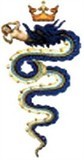
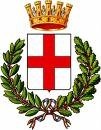
Visconti Coat of Arms
Coat of Arms of the Visconti of Milan depicting the biscione, a serpent who appears to be swallowing a human.
The effectual founder of the Visconti of Milan, Ottone, wrested control of the city from the rival Della Torre family in 1277.
The family, once risen to power, loved to claim legendary versions about its origins. Fancy genealogies were en vogue at the time, while established facts reflect quite sober and almost humble beginnings in the lesser nobility. The branch of the Visconti family that came to rule Milan was originally entrusted with the lordship of Massino (nowadays Massino Visconti), a hamlet in lovely position over Lago Maggiore, where they were in charge since the twelfth century as archiepiscopal vassals.
It is thought that the Milanese Visconti had their origins in a family of capitanei (cfr. the modern surname Cattaneo) whom archbishop Landulf of Milan (978-998) had granted certain feudal holdings known as caput plebis (at the head, likely in geographical and not hierarchical sense, of the pieve, an ecclesiastical lesser subdivision). A document from the year 1157 says the Visconti were holders of the captaincy of Marliano (today Mariano Comense); late chronicler Galvano Fiamma confirms this version. Decades before that, surely before 1070, they had gained the public office of viscount, to be later inherited down the male line (Biscaro, ASL, “I maggiori dei Visconti di Milano”). Soon the family dispersed into several branches, some of which were entrusted fiefs far off from the Lombard metropolis; the one which gave the Medieval lords of Milan is said to be descended from Umberto (d. in the first half of the 12th century).
The Visconti ruled Milan until the early Renaissance, first as Lords, then, from 1395, with the mighty Gian Galeazzo who almost managed to unify Northern Italy and Tuscany, as Dukes. Visconti rule in Milan ended with the death of Filippo Maria Visconti in 1447. He was succeeded, after a short-lived republic, by his son-in-law Francesco I Sforza, who established the reign of the House of Sforza.
Visconti rulers of Milan
Ottone Visconti, Archbishop of Milan (1277 – 1294)
Matteo I Visconti (1294 – 1302; 1311 – 1322)
Galeazzo I Visconti (1322 – 1327)
Azzone Visconti (1329 – 1339)
Luchino I Visconti (1339 – 1349)
Bernabò Visconti (1349 – 1385)
Galeazzo II Visconti (1349 – 1378)
Matteo II Visconti (1349 – 1355)
Gian Galeazzo Visconti (1378 – 1402) {1st Duke of Milan & nephew of Bernabò Visconti}
Giovanni Maria Visconti (1402 – 1412)
Giacomo Visconti (1412 – 1447)

Obizzo Visconti
Obizzo Visconti (1198 – 1266)
is my 22nd great grandfather
Theobald Visconti (1220 – 1276)
son of Obizzo Visconti
Matteo I Visconti (1250 – 1322)
son of Theobald Visconti
Stefan Visconti (1289 – 1327)
son of Matteo I Visconti
Bernabo Lord Milan di Visconti (1319 – 1385)
son of Stefan Visconti
Veridis Duchess Austria Visconti (1352 – 1414)
daughter of Bernabo Lord Milan di Visconti
Ernst I “Ironside” Archduke of Austria Habsburg (1377 – 1424)
son of Veridis Duchess Austria Visconti
Katharina Archduchess Austria Von Habsburg (1420 – 1493)
daughter of Ernst I “Ironside” Archduke of Austria Habsburg
Christof I VanBaden (1453 – 1527)
son of Katharina Archduchess Austria Von Habsburg
Beatrix Zahringen (1492 – 1535)
daughter of Christof I VanBaden
Sabine Grafin VonSimmern (1528 – 1578)
daughter of Beatrix Zahringen
Marie L Egmond (1564 – 1584)
daughter of Sabine Grafin VonSimmern
Richard Sears (1590 – 1676)
son of Marie L Egmond
Silas Sears (1638 – 1697)
son of Richard Sears
Silas Sears (1661 – 1732)
son of Silas Sears
Sarah Sears (1697 – 1785)
daughter of Silas Sears
Sarah Hamblin (1721 – 1814)
daughter of Sarah Sears
Mercy Hazen (1747 – 1819)
daughter of Sarah Hamblin
Martha Mead (1784 – 1860)
daughter of Mercy Hazen
Abner Morse (1808 – 1838)
son of Martha Mead
Daniel Rowland Morse (1838 – 1910)
son of Abner Morse
Jason A Morse (1862 – 1932)
son of Daniel Rowland Morse
Ernest Abner Morse (1890 – 1965)
son of Jason A Morse
Richard Arden Morse (1920 – 2004)
son of Ernest Abner Morse
Pamela Morse
I am the daughter of Richard Arden Morse
OBIZZO Visconti (-after 1258). m FIORINA Mandelli, daughter of RUFFINO Mandelli & his wife Aldesia Pietrasanta. Obizzo & his wife had two children:
a) TIBALDO Visconti (-beheaded Gallarate 1276). The Annales Mediolanenses record that “Archiepiscopum Ottonem…Tibaldi nepotis sui” was beheaded “in Galerate” in 1276 . m ANASTASIA Pirovano, niece of Cardinal Uberto Pirovano Archbishop of Milan, daughter of — (-1276, bur [Milan San Eustorgio]). The primary source which confirms her parentage and marriage has not yet been identified. Tibaldo & his wife had [four] children:
i) MATTEO [I] Visconti (Invorio 15 Jul 1250-Crescenzago 28 Jun 1322). Giovanni di Musso´s Chronicon Placentinum records that “Dominus Mafæus Vicecomes nepos Domini Ottonis Vicecomitis Archiepiscopi Mediolani” was installed as “Populi Mediolani Capitaneus” in 1287 and shortly after as “Dominus Generalis civitatis Mediolani” . Lord of Milan.
– see below.
ii) UBERTO Visconti (-22 Apr 1315, bur Milan Dominican Church). The Annales Mediolanenses record the death in 1315 of “Nobilis Miles Ubertus Vicecomes frater magni Matthæi Vicecomitis” and his burial “in conventu Fratrum Prædicatorum”.
iii) [STEFANO Visconti (-1327, bur Milan San Eustorgio). The Annales Mediolanenses record the death in 1327 of “nobilis Miles Stephanus Vicecomes” and his burial “apud Sanctum Eustorgium cum matre sua” . The source does not specify Stefano´s parentage but it is possible that he was another otherwise unrecorded brother of Matteo [I] Visconti Lord of Milan.]
iv) [OTTORINO Visconti ([12/14] Oct 1336, bur Milan San Eustorgio). The Annales Mediolanenses record the death in 1336 of “nobilis Miles Ottorinus Vicecomes” and his burial “in ecclesia Sancti Eustorgii” 15 Oct. His place of burial suggests that Ottorino may have been the brother of Stefano Visconti.]
b) PIETRO Visconti (-after 1301). The Annales Mediolanenses record that “Petrus Vicecomes Dominus Seprii et frater patris Matthæi” rebelled against “Matthæum Vicecomitem Dominum civitatis Mediolani” in 1301 but was captured and held “in castro de Serezano” . m —. The name of Pietro´s wife is not known. Pietro & his wife had one child:
i) daughter . Her parentage and marriage are confirmed by the Annales Mediolanenses which record that “Petrus Vicecomes Dominus Seprii et frater patris Matthæi” incited “Ruscam Dominum civitatis Cumanæ generum suum” to rebel against Matteo [I] Visconti Lord of Milan in 1301, the succeeding passage recording “Conradus Rusca Dominus civitatis Cumanæ” among the rebels . m CORRADO “Rusca” Signore di Cuma, son of — (-after 1301).

coat of arms
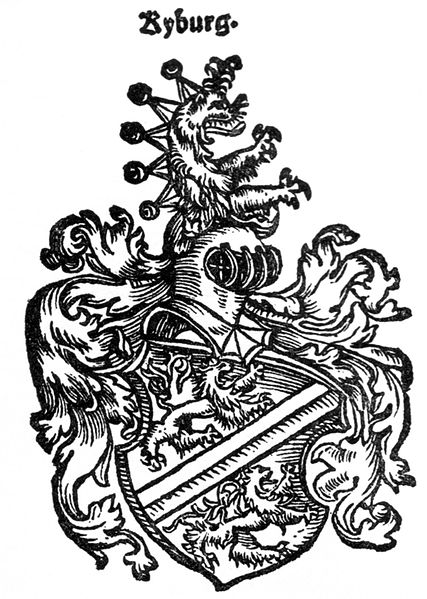
Grafen von Kyburg
Ulrich X von Kyburg* (1162 – 1227)
is my 22nd great grandfather
Hedwige VonKyburg (1192 – 1260)
daughter of Ulrich X von Kyburg*
Rudolf IV King of Germans, Holy Roman Emperor Habsburg (1218 – 1291)
son of Hedwige VonKyburg
Albert I King of Germany Habsburg (1248 – 1308)
son of Rudolf IV King of Germans, Holy Roman Emperor Habsburg
Albrecht Albert II ‘The Wise’ Duke of Austria Habsburg (1298 – 1358)
son of Albert I King of Germany Habsburg
Leopold III “Duke of Austria” Habsburg (1351 – 1386)
son of Albrecht Albert II ‘The Wise’ Duke of Austria Habsburg
Ernst I “Ironside” Archduke of Austria Habsburg (1377 – 1424)
son of Leopold III “Duke of Austria” Habsburg
Katharina Archduchess Austria Von Habsburg (1420 – 1493)
daughter of Ernst I “Ironside” Archduke of Austria Habsburg
Christof I VanBaden (1453 – 1527)
son of Katharina Archduchess Austria Von Habsburg
Beatrix Zahringen (1492 – 1535)
daughter of Christof I VanBaden
Sabine Grafin VonSimmern (1528 – 1578)
daughter of Beatrix Zahringen
Marie L Egmond (1564 – 1584)
daughter of Sabine Grafin VonSimmern
Richard Sears (1590 – 1676)
son of Marie L Egmond
Silas Sears (1638 – 1697)
son of Richard Sears
Silas Sears (1661 – 1732)
son of Silas Sears
Sarah Sears (1697 – 1785)
daughter of Silas Sears
Sarah Hamblin (1721 – 1814)
daughter of Sarah Sears
Mercy Hazen (1747 – 1819)
daughter of Sarah Hamblin
Martha Mead (1784 – 1860)
daughter of Mercy Hazen
Abner Morse (1808 – 1838)
son of Martha Mead
Daniel Rowland Morse (1838 – 1910)
son of Abner Morse
Jason A Morse (1862 – 1932)
son of Daniel Rowland Morse
Ernest Abner Morse (1890 – 1965)
son of Jason A Morse
Richard Arden Morse (1920 – 2004)
son of Ernest Abner Morse
Pamela Morse
I am the daughter of Richard Arden Morse
ULRICH von Dillingen und Kiburg, son of HARTMANN [III] Graf von Dillingen und Kiburg & his wife Richenza von Lenzburg (-1227, bur Schänis). Graf von Kiburg. Crusader 1190. Vogt von Schänis, Beromünster und Glarus 1212. “…Ulricus comes de Kiburc et filii eius Wernerus et Hardemannu…” witnessed a charter of Friedrich II King of Germany dated 31 Mar 1213 [393].
m ANNA von Zähringen, daughter of BERTHOLD IV Herzog von Zähringen & his first wife Heilwig [von Froburg] (-after 1226). The Chronicle of Alberic de Trois-Fontaines names “ducem Bertoldum…et duas sorores” as children of “ducem Bertoldum” & his wife, specifying that the younger daughter was “comitissa Kiburgensis” and had many children [394]. This is confirmed by the charter dated 1226 under which “Haimonem dominum de Fucignie” reached an agreement with the bishop of Lausanne concerning the advocacy of the church of Lausanne, which Aimon claimed had been granted by “comitibus de Ciburc”, which names “comitibus de Kibor Vuernerio et Armanno…quia filii erant sororis Bertoldi ducis Faringie” [395].
Graf Ulrich & his wife had six children:
1. WERNER [I] (-Acre 1228). “…Ulricus comes de Kiburc et filii eius Wernerus et Hardemannu…” witnessed a charter of Friedrich II King of Germany dated 31 Mar 1213 [396]. The contract of marriage between “Thomas comes Savoyæ…filiam suam Margaritham…infra nubiles annos” and “comiti Hartmanno filio comitis Ulrici de Kyburg” is dated 1 Jun 1218, stating that “Dni Bertholdi comitis de Novocastro et Dni Wilhelmi de Stavayé” acted as guarantors, and with the consent of “Ulricus comes de Kyburg et comes Garnerius frater eius et comitissa uxor comitis de Kyburg” [397]. His parentage is confirmed by the charter dated 1226 under which “Haimonem dominum de Fucignie” reached an agreement with the bishop of Lausanne concerning the advocacy of the church of Lausanne, which Aimon claimed had been granted by “comitibus de Ciburc”, which names “comitibus de Kibor Vuernerio et Armanno…quia filii erant sororis Bertoldi ducis Faringie” [398]. Graf von Kiburg. m as her first husband, ALIX [Bertha] de Lorraine, daughter of FERRY II Duke of Lorraine & his wife Agnes de Bar (-[Apr/29 Sep 1242], bur Clairlieu). The Chronicle of Alberic de Trois-Fontaines names “Aaliz relictam comitis Kyburgensis sororem ducis Lotharingie Mathei” when recording her second marriage to “Galtherus de Vangionis Rivo…filius Galtherius” [399]. She married secondly (before Nov 1229) Gautier [II] Sire de Vignory. Graf Werner [I] & his wife had three children:
a) HARTMANN [V] (-3 Sep 1263, bur Wettingen). Graf von Kiburg. Seigneur de Fribourg. The Community of “Uriburt” promised to observe the donation by “Conte Hartmano di Kibourg” with the consent of “Conte Hartmano Giuniore” to “Dama Margarita Moglie del detto Conte H. Seniore” by charter dated 1241 [400]. The necrology of Wettingen records the death “III Non Sep 1263” of “Hermannus com iunior de Kiburg et Anna uxor eius” [401]. The index of benefactors of Wettingen records the death in 1263 of “Hartmannus com de Kiburg iunior…benefactor” and his burial “apud sacellum beatæ Mariæ Virginis” [402]. The necrology of Fraubrunnen records the death “IV Non Sep” of “Graf Hartman der jünger” [403]. m firstly (before 9 Feb 1248) ANNA von Rapperswil, daughter of RUDOLF II [VIII] Graf von Rapperswil (-30 May 1253). The necrology of Wettingen records the death “III Kal Jun” of “domina Anna de Kiburg”, recalled in the later entry “III Non Sep 1263” of “Hermannus com iunior de Kiburg et Anna uxor eius” [404]. m secondly (contract 27 Jan 1254) ELISABETH de Chalon, daughter of HUGUES de Chalons Sire de Salins Comte Palatin de Bourgogne & his wife Alix von Andechs-Merano Ctss Palatine de Bourgogne (-9 Jul 1275). The primary source which confirms her parentage and marriage has not yet been identified. She became a Clarissan nun at Freiburg. Graf Hartmann [V] & his first wife had one child:
i) WERNER (-after 4 Jun 1253).
Graf Hartmann [V] & his second wife had two children:
ii) ANNA . The charter dated 1263, under which the town of Fribourg placed itself under the protection of “Dominum Comitem Rudolfum de Habisburg Landgravium Alsatie” also names “Anna ipsius domini neptis, domina nostra, quondam filia…domini nostri comitis Hartmanni junioris de Kyburgo” [405]. Dame de Fribourg. “Anna quondam filia comitis…Hartmanni de Kiburgo junioris et…Eberhardus comes de Habisburg maritus eiusdem domine” confirmed the privileges of the town of Fribourg by charter dated Mar 1275 [406]. “Domini…Eberhardi comitis de Habsburch et…dominæ…Annæ uxoris suæ” confirmed the donation to the abbey of Frienisberg by “Petrus de Viviers” by charter dated Oct 1275 [407]. The necrology of Fraubrunnen records the death “XII Kal Dec” of “Frow Anna gräfin von Kiburg” [408]. m ([30 Oct/12 Dec] 1271) EBERHARD Graf von Habsburg-Laufenburg, son of RUDOLF I “der Schweigsame” Graf von Habsburg-Laufenburg & his wife Gertrud von Regensberg (-1284, before 2 Jun). Graf von Kiburg.
iii) son (posthumously 1264-before 7 Feb 1265).
b) CLEMENTIA . 1248/49. m firstly RUDOLF [I] Graf von Montfort (-[Oct 1244/1247]). m secondly — Graf von Hohenberg .
c) ADELHEID . 1258. m (before 29 Sep 1242) FRIEDRICH [III] Graf von Leiningen in Dagsburg und Hardenburg, son of FRIEDRICH [II] Graf von Leiningen & his wife Agnes von Eberstein (-1287).
2. HARTMANN [III] (-27 Nov 1264, bur Wettingen). “…Ulricus comes de Kiburc et filii eius Wernerus et Hardemannu…” witnessed a charter of Friedrich II King of Germany dated 31 Mar 1213 [409]. His parentage is confirmed by the charter dated 1226 under which “Haimonem dominum de Fucignie” reached an agreement with the bishop of Lausanne concerning the advocacy of the church of Lausanne, which Aimon claimed had been granted by “comitibus de Ciburc”, which names “comitibus de Kibor Vuernerio et Armanno…quia filii erant sororis Bertoldi ducis Faringie” [410]. Graf von Kiburg. The necrology of Wettingen records the death “V Kal Dec 1262” of “com Hartmannus senior de Kiburg” [411]. m (contract Mouden 1 Jun 1218) MARGUERITE de Savoie, daughter of THOMAS I Comte de Savoie & his wife Marguerite [Beatrix] de Genève (1212-1/2 Sep 1270 or 1273 [412]). The contract of marriage between “Thomas comes Savoyæ…filiam suam Margaritham…infra nubiles annos” and “comiti Hartmanno filio comitis Ulrici de Kyburg” is dated 1 Jun 1218, stating that “Dni Bertholdi comitis de Novocastro et Dni Wilhelmi de Stavayé” acted as guarantors, and with the consent of “Ulricus comes de Kyburg et comes Garnerius frater eius et comitissa uxor comitis de Kyburg” [413]. Her marriage date is confirmed by the charter dated 1230 under which her husband “H. comes de Kiburch” confirmed donations “propter nuptias uxori sue filie comitis Sabaudie”, with the consent of “fratris sui Ul. Constantiensis canonici et H. filii fratris sui beate memorie Wer. quondam comitis de Kiburch” [414]. The Chronicon Colmarense records that “comes…[Kiburc]” married “filiam comitis de Sabaudia” [415]. “Amedeus comes Sabaudie et marchio Italie” granted “castrum…Monteys” {Montheys} to “sorori mee Margarete comitisse de Kiborch” by charter dated 16 Oct 1239 [416]. “Amedeus comes Sabaudie et in Italie marchio…cum…genetrice sua et fratribus suis B. Bellicensi Electo et Philippo Metensi Primicerio” granted “villam S. Mauritii de Chablaisio” {Saint-Maurice de Chablais} to “soror illorum Margareta comitissa de Kiborch” by charter dated 24 Feb 1240 [417]. “H. comes de Kyburch” granted “castra Windegge, Oltingen…advocatiam et predium in Shennis, Wizennanc et Kemanatvn” to “uxori mee” by way of dower, with the consent of “fratruelis mei H”, by charter dated 28 May 1241 [418]. The same collection includes several other charters relating to this grant, dated between 9 Jul 1241 and 1243 [419]. Her parentage is confirmed by the 1264 testament of her brother Boniface [420]. According to Europäische Stammtafeln [421], Marguerite de Savoie married secondly Eberhard von Habsburg-Laufenburg, son of Rudolf III Graf von Habsburg-Laufenburg & his wife Gertrud von Regensberg. Apart from the unlikelihood of Graf Eberhard (who at the time must have been at least 40 years old) marrying as his first wife a lady over 50 years old, his marriage to Anna heiress of Kiburg is recorded [422] as having taken place in [30 Oct/12 Dec] 1271 when Marguerite was still alive. In addition, the Chronicle of Hautecombe refers to Marguerite as ‘Margarita comitissa de Quiborch in Alemania’ when she died, with no mention of Habsburg-Laufenburg. The necrology of Waldens records the death “Kal Sep” of “Margareta com de Kuberg” [423]. The necrology of Fraubrunnen records the death “1 Kal Sep” of “Her Hartman graf von Kyburg und frow Margreta sin gemachel” [424], the date apparently referring to the death of Marguerite. The necrology of Wettingen records the death “IV Non Sep” of “Margareta com de Kiburch” [425].
3. ULRICH (-17 Jun 1237). His parentage is confirmed by the charter dated 1230 under which her husband “H. comes de Kiburch” confirmed donations “propter nuptias uxori sue filie comitis Sabaudie”, with the consent of “fratris sui Ul. Constantiensis canonici et H. filii fratris sui beate memorie Wer. quondam comitis de Kiburch” . Canon at Basel Cathedral 1223. Canon at Konstanz Cathedral 1229. Provost of Beromünster and Imperial chaplain 1231/34. Bishop of Chur 1233.
4. HEILWIG ([1192]-30 Apr 1260, bur Muri). The Ellenhardi Chronicon refers to the wife of “Alberti comitis in Habichburg…lantgravius Alsatie superioris” as “filia comitis in Kiburch” [427]. A Habsburg genealogy names “Heilwigam filiam Uolrici comitis de Chiburg” as the wife of “Alberctus” [428]. m ([1217]) ALBRECHT [IV] “der Weise” von Habsburg, son of RUDOLF II “der Alte” Graf von Habsburg, Herr zu Laufenburg & his wife Agnes von Staufen (-Ascalon, Palestine 22 Nov 1240). He succeeded his father in 1232 as Graf von Habsburg.
5. MECHTILD . 1232. m RUDOLF [I] Graf von Rapperswil (-1250). The index of benefactors of Wettingen records the death in 1250 of “Rudolphus com de Raperschwyl, patruus fundatoris” and his burial at Wettingen .
6. ADELHEID (-1231 or after). The primary source which confirms her parentage and marriage has not yet been identified. m GERHARD [IV] Graf von Dollnstein und Hirschberg, son of GERHARD [II] Graf von Dollnstein & his wife — (-1225).
he House of Kyburg was family of Grafen or counts from Zürich in Switzerland. The family was one of the three most powerful noble families in the Swiss plateau beside the Habsburg and the House of Savoy during the 11th and 12th Centuries. With the extinction of the male line in 1263, Rudolph of Habsburg laid claim to the Kyburg lands and annexed them to the Habsburg holdings, which marked the beginning of the Habsburg rise to power.
The first line of counts of Kyburg were influential in local politics during the 1020s but the male line died out in 1078. Kyburg castle, southeast of Winterthur (in the modern canton of Zürich), passed on to the Swabian counts of Dillingen.[1] Through the marriage of Hartmann von Dillingen († 1121) with a certain Adelheid the House of Dillingen acquired the old Kyburg possessions as well as territorial claims in the Thurgau. The exact origin of Adelheid is unclear. She is either the granddaughter of the Count of Grüningen-Winterthur or from a cadet branch of the Winterthur family, the Counts of Nellenburg. She might also be the daughter of Adalbert II von Winterthur, the last knight from Winterthur, who died in 1053 at the Battle of Civitate against the Normans.
Expansion of the Kyburg lands
The Kyburg land continued to be part of the possessions of the House of Dillingen until the grandson of Hartmann von Dillingen, Hartmann III († 1180), split the Dillingen lands.[2] Adalbert received the Swabian territories, while Hartmann III von Dillingen got the Swiss lands and became Hartmann I of Kyburg. The House of Kyburg were vassals of the Duke of Swabia, who was of the House of Hohenstaufen and would become the Kings of Germany from 1138-1254. When the House of Lenzburgdied out in 1172/73, the Kyburgs together with the Hohenstaufen and Zähringen split the Lenzburg possessions between them. The Kyburg family acquired the allodial title to the Vogtei of Windegg or Gaster (today 7 municipalities in the See-Gaster Wahlkreis of St. Gallen) and land around Baden. Later additional Lenzburg territories, the Schänis Abbey and Beromünster, were also acquired by the House of Kyburg.
In 1180 the family began to consolidate their power. They founded the cities of Diessenhofen and Winterthur to help spread their power. They also appointed many of the Lenzburg, and later Zähringen, vassals to be unfree knights or Ministerialis for the Kyburg family.
When the Zähringen family died out in 1218, the Kyburgs grabbed another chance to expand. Anna von Zähringen, the sister of the last Duke of Zähringen, Berthold V, was the wife of Ulrich III von Kyburg (†1227). From the Zähringen line the Kyburgs acquired land west of the Rhine and in Burgundy including the cities of Fribourg,Thun and Burgdorf as well as estates in the canton of Zurich. However, the House of Hohenstaufen, the family of the Holy Roman Emperors, refused to support the Kyburg claims on the city of Zurich and in 1226 on the Abbey of St. Gall. As a result, they turned increasingly away from the Hohenstaufens and in 1243 and were one of the mainstays of the pro-Pope and anti-Holy Roman Emperor Party.
Around 1220 they started to make claims on property and rights that had unclear ownership and was near property that they already owned. In 1225 they founded a burial site for the Chorherrenstift Heiligberg in the center of the property of the former Freiherr von Weisslingen at Winterthur, and in 1233 founded Töss Abbey west of Winterthur. Both sites were endowed with property that they had taken from the Weisslingen and Rossberg families. These two properties served to define the borders between the Kyburg and Rapperswil families.[3]
At the same time the Kyburg family attempted to strengthen themselves through marriage. Hartmann V, a grandson of Ulrich III was engaged to Anna of Rapperswil in 1227. His uncle, Hartmann IV, called the Elder, married Margaret of Savoy while his sister Heilwig, the future mother of King Rudolf I von Habsburg, married Albert IV of Habsburg
Even though the family continued to found cities and expand, they were declining in power. In 1230 they founded Zug and Baden, then Frauenfeld, Aarau, Lenzburg, and Mellingen. In 1250 they founded Sursee, Weesen and the fortified towns of Kyburg and Laupen. The last two were Richensee and Huttwil which they lost shortly thereafter.
Suffix Graf von Kyburg Birth of, Kyburg, Zürich, Switzerland Gender Male AFN WRQG-ST Ecclesiastic 1212 [ 4] Vogt von Schänis Beromünster u Glarus Name AKA Ulrich Count of Kyburg [ 5] Name AKA Ulrich III [ 6] Died 1227 [ 6, 7] Buried Schäntis Beromünster, Luzern, Switzerland [ 4] Person ID I50509 Europe: Royal and Noble Houses with Colonial American Connections Last Modified 24 Jul 2011
Father Hartmann III, Graf von Kyburg-Dillingen, d. Aft 22 Aug 1180 Mother Richenza von Lenzburg, d. Abt 24 Apr 1172 Family ID F185946 Group Sheet
Family Anna von Zähringen, d. Yes, date unknown Married Y [ 6] Children
1. Werner, Graf von Kyburg, d. 1228, Acre, Palestine
2. Heilwig von Kyburg, b. Abt 1192, of, Kyburg, Zürich, Switzerland , d. 30 Apr 1260, of, Kyburg, Zurich, Switzerland
3. Hartmann III “der Ältere”, Graf von Kyburg, d. 27 Nov 1264
4. Ulrich von Kyburg, Bischof von Chur, d. 17 Jun 1237
5. Mechtilde von Kyburg, d. Aft 1232
6. Adelheid von Kyburg-Dillingen, d. Aft 1231
Last Modified 15 Jul 2011 Family ID F148606 Group Sheet
Notes
MILITARY: In the Crusades in 1190. NOTE: Was the count of Kyburg, Leutzburgh and Baden. A descendant from the Dukes of Zahringen.

effigy at Church of St Nicholas, Castle Hedingham, Essex
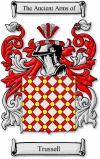
Trussel coat of arms
I have yet another buried in the church ancestor to seek and find when I go to Britain on the dead people tour. My 16th great-grandmother was sold into marriage at age 13, but she became a countess and has an effigy in a church.
Elizabeth de Vere (née Trussel), Countess of Oxford (1496 – before July 1527) was an English noblewoman. Through her daughter Frances, she was the mother-in-law of celebrated poet Henry Howard, Earl of Surrey.
Elizabeth was born in Kibblestone, Staffordshire, England on an unknown date in 1496 to Sir Edward Trussel and Margaret Dun. On 10 April 1509 at the age of about thirteen, she became the second wife of John de Vere, 15th Earl of Oxford. His first wife, Christian Foderingey had died about ten years earlier without having produced children. Together John and Elizabeth had seven children.
Elizabeth Trussell, born in 1496,was the daughter of Edward Trussell (c.1478 – 16 June 1499) of Elmesthorpe, Leicestershire, only son of Sir William Trussell (d. before 24 June 1480) of Elmesthorpe, Knight of the Body for King Edward IV, by Margaret Kene. The Trussells were a “very ancient Warwickshire family”;Elizabeth’s ancestor, Sir Warin Trussell, was of Billesley, Warwickshire.
Elizabeth Trussell’s mother was Margaret Donne, the daughter of Sir John Donne (1450–1503) of Kidwelly, Carmarthenshire, and Elizabeth Hastings (c.1450 – 1508), daughter of Sir Leonard Hastings and Alice Camoys, and sister of William Hastings, 1st Baron Hastings.[6] Sir John Donne’s mother, Joan Scudamore, was the granddaughter of the Welsh rebel, Owain Glyndŵr.
Elizabeth had a brother, John Trussell (d.1499), to whom she was heir.
Through her father’s family, Elizabeth was a descendant of King Henry II by his mistress, Ida de Tony.
Elizabeth Trussell’s grandfather, Sir John Donne, from the Don triptych by Hans Memling.
Elizabeth’s father, Edward Trussell, had been a ward of William Hastings, 1st Baron Hastings, and at Hastings’ death in 1483 was still a minor. In his will, Hastings expressed the wish that Trussell’s wardship be purchased by Hastings’ brother-in-law, Sir John Donne:
Also I will that mine executors give to my sister Dame Elizabeth Don 100 marks . . . Also where I have the ward and marriage of Edward Trussell, I will that it be sold and the money employed to the performing of this my will and for the weal of my soul; and if my brother Sir John Don will buy the said ward, I will that he be preferred therein before any other by £10.
After her father’s death on 16 June 1499 and the death of her brother, John, in the same year, Elizabeth Trussell became a royal ward. Her wardship and marriage were initially purchased from King Henry VII by George Grey, 2nd Earl of Kent (d. 21 December 1503), who intended her as a bride for Sir Henry Grey (d. 24 September 1562), the 2nd Earl’s son by his second marriage to Katherine Herbert, daughter of William Herbert, 1st Earl of Pembroke, by Anne Devereux, the daughter of Sir Walter Devereux. However after the 2nd Earl’s death, Richard Grey, 3rd Earl of Kent, the 2nd Earl’s eldest son and heir by his first marriage to Anne Woodville, abducted Elizabeth Trussell, a crime for which the King levied a heavy fine against him:
Aged at least twenty-five when he succeeded his father in 1503, [the 3rd Earl] wasted his family’s fortunes — possibly, as Dugdale says, he was a gambler. In a striking series of alienations he gave away or sold most of the lands, principally in Bedfordshire, that he had inherited . . . The earl also fell quickly into debt to the king: he failed to pay livery for his father’s lands, and he was fined 2500 marks for abducting Elizabeth Trussell, whose wardship the second earl had left to Richard’s half-brother Henry; he then failed to keep up the instalments laid down for the payment of the fine.
As a result of these events Elizabeth Trussell’s wardship and marriage again came into the hands of the King, who sold it on 29 April 1507 to John de Vere, 13th Earl of Oxford, and his cousin John de Vere, later 15th Earl of Oxford, for an initial payment of 1000 marks and an additional £387 18s to be paid yearly, less £20 a year for Elizabeth’s maintenance. The annual value of Elizabeth’s lands had been estimated in the inquisition post mortem taken after her brother John’s death at £271 12s 8d a year.
Marriage and issue
Between 29 April 1507 and 4 July 1509 Elizabeth became the second wife of John de Vere, 15th Earl of Oxford, whose first wife was Christian Foderingey (born c. 1481, died before 4 November 1498), the daughter and co-heiress of Thomas Foderingey (c. 1446 – 1491) of Brockley, Suffolk, by Elizabeth Doreward (c. 1473 – 1491), daughter of William Doreward of Bocking, Essex, by whom the 15th Earl had no issue.
By her marriage to the 15th Earl of Oxford, Elizabeth had four sons and three daughters:
John de Vere, 16th Earl of Oxford (1516 – 3 August 1562), who married firstly, Dorothy Neville (died c. 6 January 1548),[16] second daughter of Ralph Neville, 4th Earl of Westmorland, by whom he had a daughter, Katherine de Vere, who married Edward Windsor, 3rd Baron Windsor. The Earl married secondly, Margery Golding (d. 2 December 1568),[17] by whom he had a son, Edward de Vere, 17th Earl of Oxford, and a daughter, Mary de Vere.
Aubrey de Vere (d. 1580), who married firstly Margaret Spring, the daughter of John Spring of Lavenham, by whom he had a daughter, Jane, who married Henry Hunt of Gosfield,Essex, and a son, Hugh Vere,[18] who married Eleanor Walsh, the daughter of William Walsh. Hugh Vere and Eleanor Walsh had a son, Robert, who inherited the title as 19th Earl of Oxford. Aubrey de Vere married secondly, Bridget Gibbon, the daughter of Sir Anthony Gibbon of Lynn, Norfolk.[19]
Robert de Vere (died c. 1598), who married firstly, Barbara Berners, by whom he had a son, John Vere,[20] and a daughter, Mary Vere, and secondly, Joan Hubberd, sister of Edward Hubberd (d. 1602), by whom he had no issue.
Geoffrey Vere (d. 1572), who in 1556 married Elizabeth Hardekyn (d. December 1615), daughter of Richard Hardekyn (d. 1558) of Wotton House near Castle Hedingham, by whom he had four sons, John Vere (c. 1558 – 1624) of Kirby Hall near Castle Hedingham, Sir Francis Vere (born c. 1560), Robert Vere (b. 1562), and Sir Horatio Vere (b. 1565), and a daughter, Frances Vere (born 1567), who married, as his second wife, the colonial adventurer and author, Sir Robert Harcourt (1574/5–1631), of Nuneham on 20 March 1598.
Elizabeth de Vere (born c. 1512), who married, as his second wife, Thomas Darcy, 1st Baron Darcy of Chiche (d. 28 June 1558), by whom she had three sons, John Darcy, 2nd Baron Darcy of Chiche (d. 3 March 1581), Aubrey (d. 1558–68) and Robert (died c. 1568), and two daughters, Thomasine and Constance, of whom the latter married Edmund Pyrton (died c. 1609).
Anne de Vere, (born c. 1522, died c. 14 February 1572), who married firstly, Edmund Sheffield, 1st Baron Sheffield of Butterwick, Lincolnshire, second but eldest surviving son of Sir Robert Sheffield by Margaret Zouche, by whom she had a son and three daughters. Edmund Sheffield was slain 31 July 1549 during the suppression of Kett’s rebellion. Anne de Vere married secondly, John Brock, esquire, of Colchester, Essex, son and heir of John Brock of Little Leighs, Essex, by Agnes Wiseman, by whom she had no issue.
Frances de Vere (c. 1517 – 30 June 1577), who married firstly, Henry Howard, Earl of Surrey, by whom she was the mother of Jane Howard, Thomas Howard, 4th Duke of Norfolk, Margaret Howard, Henry Howard, 1st Earl of Northampton, and Katherine Howard. Frances de Vere married secondly, Thomas Steynings, by whom she had no issue.
Elizabeth died before July 1527, and was buried in the Church of St Nicholas, Castle Hedingham, Essex, where her effigy can be seen on the black marble tomb erected for Elizabeth and her husband, the 15th Earl.
Footnotes
Jump up^ She is usually said to have been born at the Trussell manor of Cubleston or Kibblestone near Barlaston and Stone, Staffordshire.
Elizabeth Trussel (1494 – 1527)
is my 16th great grandmother
Frances DeVere (1517 – 1577)
daughter of Elizabeth Trussel
Thomas Howard (1536 – 1572)
son of Frances DeVere
Margaret Howard (1561 – 1591)
daughter of Thomas Howard
Lady Ann Dorset (1552 – 1680)
daughter of Margaret Howard
Robert Lewis (1574 – 1645)
son of Lady Ann Dorset
Robert Lewis (1607 – 1644)
son of Robert Lewis
Ann Lewis (1633 – 1686)
daughter of Robert Lewis
Joshua Morse (1669 – 1753)
son of Ann Lewis
Joseph Morse (1692 – 1759)
son of Joshua Morse
Joseph Morse (1721 – 1776)
son of Joseph Morse
Joseph Morse III (1752 – 1835)
son of Joseph Morse
John Henry Morse (1775 – 1864)
son of Joseph Morse III
Abner Morse (1808 – 1838)
son of John Henry Morse
Daniel Rowland Morse (1838 – 1910)
son of Abner Morse
Jason A Morse (1862 – 1932)
son of Daniel Rowland Morse
Ernest Abner Morse (1890 – 1965)
son of Jason A Morse
Richard Arden Morse (1920 – 2004)
son of Ernest Abner Morse
Pamela Morse
I am the daughter of Richard Arden Morse
I spend a lot of time studying history, usually by learning about my own ancestry. The knowledge of my own family in different time periods has really helped me to get a better understanding of significant events and political movements. I began with some curiosity about how my own parents developed their ideas and culture, and now I can’t stop. I guess I don’t think about my own place in history, but a visit to the University I attended when I was 17 has given me both flash backs and chills. The anti-war movement and what was known as the free speech movement were obvious choices for me as a teen. I disagreed with all forms of violence, and my parents not only practiced violence in their personal lives, but firmly believed that military might and hatred were American privileges. I see now that my own reaction to their way of thinking not only changed my life, but changed history.
Now we find ourselves in a highly militaristic and war torn world. Racism has not disappeared, but has gone underground. Poverty and lack of education and health care are in about the same situation as the 1950’s. The effects of the laws, the programs, and the ideals that lifted America to a better place have virtually vanished into thin air. We have more descent about politics then I have seen in my lifetime. Our people are addicted to debt and squandering resources mindlessly. Greed has replaced most other motives, and corporations can buy any government they want. I will not form any philosophy around this decay and lowering of standards for the greater good because it has been happening since the dawn of time. Our recurrent situation, fighting in wars in foreign lands for no logical purpose is no different from the Crusades, or the devastation of Native America. Power may not beget evil, but the cycles of tragedy follow the cycles of power. We can only analyze the past after time has passed and those cycles become clear. In my youth I thought that ending the Vietnam War would end all wars. I have to wonder if this feeling also has occurred in young people forever. The idea that when we finally have power we will change the world to make it better for everyone could not possibly have been originated by hippies. I am sure there have always been those who wanted to give peace a chance. Things have to hit bottom before they bounce, just like real estate. I can only hope that bottom is once again in sight, and that the end of my life will resemble the beginning, with an attitude of hope and conviction that we can do better.




I am a visitor in the neighborhood of East Austin, Texas for a couple of weeks. On the first day of my visit I was walking down my street and met Jewel Thomas Lusk sitting on her front porch. She is the neighborhood watch, the historian, the social director, and godmother to some of the kids around here. If you live here you know her, or at least she knows all about you. I like talking to her about the way the neighborhood developed. She has lived here for more than 58 years, so she is well informed on the subject. I wanted to interview her on video but she would not give her consent. She has a strong accent and told me she does not want anyone making fun of her. She also has a job working at a law office once a week and does not want any kind of publicity to mess up her deal with the lawyers. I do understand, but I still wish she had agreed to talk to the gentle readers.
She is a Baptist who enjoys dressing up sharp and singing on Sundays. This weekend there is some big to do a the Tabernacle that will include all the Baptist churches around here. She is planning to wear a fancy green outfit with a brimmed hat. I do wish I could see her all dressed up because I am sure it is impressive. She also enjoys Coors silver bullets, which she informed me she was responsible for finally getting in this town. We had a little difference of opinion about when Coors actually arrived in Austin, but sometime in the 1960’s is correct. This beer was highly prized and personally imported ( that’s right, imported) from Colorado, which was the only state where you could buy it. Jewel told me she used to buy it in Ft. Worth and bring it down here, but was finally able to convince the mayor of the city to help her bring Coors to Austin. I have no doubt that this story is true. She can literally tell you everything about everyone who has lived around here. I do hope somebody will talk her into recording her stories on video so that they will not be lost.
When I went to college here I was 17 and could not get into bars to hear music…with one exception. The black clubs on 6th Street did not discriminate against the white youth, and let us into their clubs. I got to see BB King and Bobby Blue Bland one night playing about 10 feet in front of us. We were 4 or 5 teen white chicks in an all black club having a wonderful time. No problem. I can’t remember if they served us alcohol or not, because we were not really drinkers, just BB fans. Jewel and I reminisced about those clubs and that music for a while, and I wondered if she and I had ever danced together back then. She still likes to dance, but says for dancing she switches to Crown Royal because beer is not the thing for dancing. She is a remarkable woman, representing a front porch attitude that has faded with time….but not on her corner of the world. I am grateful to be her neighbor for a couple of weeks. She is the essence of cool.

Oakwood Cemetery
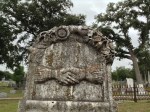
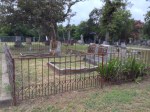
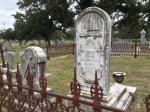
My own fascination with dead people is neither religious nor political. I study my own ancestry to get a broader understanding of history and how I came into being. When I travel I love nothing better than to check out cemeteries to meet the locals and see what they have been doing. I am lucky right now to be situated between two very old and very large grave yards. All of these people have died in Austin, Texas over the span of hundreds of years. I notice what similar features the plots and monuments have in common, and then notice what makes each grave distinct. The designs and the grand expenditures tell one part of the tale, but if you let yourself imagine what their lives were like and how they made the journey here history becomes a real human story. Some might think graves are macabre, but to me they are clues to the ongoing conditions of cultural change. The dead at Oakwood express themselves in a few ways:
The handshake:


The private yard:
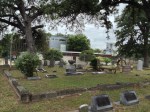
The Texan:
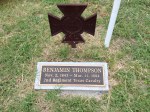


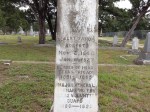

I learned that some of the important people in history in Oakwood have QR codes on the grave to give you the entire story of their lives. I did not have my phone with me today, so I will go back and try this super smart way to get more out of a grave yard visit. The grounds are lovely and well maintained. I count this one as a top destination for those of us who love graves, topped only by all the people who fell off the Matterhorn who are buried in Zermatt (still the best I have seen), and the one in Salzburg at the monastery. Y’all come and discover these dead Texans for yourselves. They are cute and friendly.

My 20th great-grandmother was the ancestor of many famous people:
The PEDIGREE of
Bonacossa (Bonacosta) BORRI
Born: abt. 1249 Died: 1321
HM George I’s 9-Great Grandmother. HRE Ferdinand I’s 6-Great Grandmother. U.S. President’s 18-Great Grandmother. PM Churchill’s 19-Great Grandmother. HM Margrethe II’s 17-Great Grandmother. Gen. Pierpont Hamilton’s 19-Great Grandmother. Otto von Bismarck’s 15-Great Grandmother. Red Baron' Richthofen's 16-Great Grandmother.the Great’ VISCONTI
Husband/Partner: Matteo I
Children: Stefano (di) VISCONTI ; Galeazzo I VISCONTI
She and several members of her family are buried in Milan in a chapel. This would be a very special grave to visit.
Bonacossa Borri (1254 – 1321)
is my 20th great grandmother
Stefan Visconti (1289 – 1327)
son of Bonacossa Borri
Bernabo Lord Milan di Visconti (1319 – 1385)
son of Stefan Visconti
Veridis Duchess Austria Visconti (1352 – 1414)
daughter of Bernabo Lord Milan di Visconti
Ernst I “Ironside” Archduke of Austria Habsburg (1377 – 1424)
son of Veridis Duchess Austria Visconti
Katharina Archduchess Austria Von Habsburg (1420 – 1493)
daughter of Ernst I “Ironside” Archduke of Austria Habsburg
Christof I VanBaden (1453 – 1527)
son of Katharina Archduchess Austria Von Habsburg
Beatrix Zahringen (1492 – 1535)
daughter of Christof I VanBaden
Sabine Grafin VonSimmern (1528 – 1578)
daughter of Beatrix Zahringen
Marie L Egmond (1564 – 1584)
daughter of Sabine Grafin VonSimmern
Richard Sears (1590 – 1676)
son of Marie L Egmond
Silas Sears (1638 – 1697)
son of Richard Sears
Silas Sears (1661 – 1732)
son of Silas Sears
Sarah Sears (1697 – 1785)
daughter of Silas Sears
Sarah Hamblin (1721 – 1814)
daughter of Sarah Sears
Mercy Hazen (1747 – 1819)
daughter of Sarah Hamblin
Martha Mead (1784 – 1860)
daughter of Mercy Hazen
Abner Morse (1808 – 1838)
son of Martha Mead
Daniel Rowland Morse (1838 – 1910)
son of Abner Morse
Jason A Morse (1862 – 1932)
son of Daniel Rowland Morse
Ernest Abner Morse (1890 – 1965)
son of Jason A Morse
Richard Arden Morse (1920 – 2004)
son of Ernest Abner Morse
Pamela Morse
I am the daughter of Richard Arden Morse
Bonacossa Borri, also known as Bonaca, or Bonaccossi Bonacosta (1254–1321), was Lady of Milan by marriage from 1269 to 1321.
Biography
Bonacossa was the daughter of Squarcina Borri (1230–1277, also called Scarsini), captain of exiles from Milan fom the advent of the Torriani family, and a loyal supporter of the Visconti, and Antonia (1236 -?), of unknown lineage, who married in 1254. Borri’s family, originally from the town of Santo Stefano Ticino together with some feudal lands of nearby Corby. The Borri family was one of the most respected of Milan, and counted among its ranks a saint, Monas of Milan, Bishop of Milan.
Once the Visconti had conquered Milan, Squarcina Borri gave his daughter in marriage to Matteo I Visconti, Lord of Milan in 1269 to cement those bonds essential to maintaining the rule of the Visconti.
Bonacossa and her husband co-founded of the chapel of St. Thomas in the Basilica of Sant’Eustorgio of Milan, where they were buried, along with their son Stefano and his two daughters Beatrice and Catherine, and the brother of Matteo, Uberto III Visconti.
She died in Milan on 13 January 1321 .
Descendents
Galeazzo I Lord of Milan. He married Beatrice d’Es
Beatrice (b. 1280)
Caterina (b. 1282)
Luchino (b. 1285) Lord of Milan, married Violante di Saluzzo
Stefano (b. 1287) Count of Arona , married Valentina Doria
Marco (b. 1289)
Giovanni (b. 1291), Archbishop of Milan
Zaccaria (b. 1295)

Empress Irini Augusta Dukaina Dukas
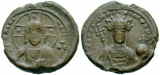
Empress Irini Augusta Dukaina Dukas’ seal
My 29th great-grandmother was married when she was 11 years old. By this marriage she became Empress Mother of the Byzantine Empire. Her daughter Anna recorded history, perhaps revisionist. Empress Irini is an ancestor of Ann Dudley Bradstreet, another woman who recorded history and wrote poetry. I have noticed that Mistress Bradstreet has the most impressive pedigree of important powerful women. This one, like many other royals who are embroiled in political intrigue, landed in a convent under mild house arrest at the end of her life.
Irene Doukaina or Ducaena (Greek: Ειρήνη Δούκαινα, Eirēnē Doukaina) (c. 1066 – February 19, 1123 or 1133) was the wife of the Byzantine emperor Alexios I Komnenos, and the mother of the emperor John II Komnenos and of the historian Anna Komnene.
Empress Irini Augusta Dukaina Dukas (1066 – 1133)
is my 29th great grandmother
Theodora Comnena (1096 – 1116)
daughter of Empress Irini Augusta Dukaina Dukas
Andronikos Dukas Angelos (1122 – 1185)
son of Theodora Comnena
Alexios Emperor Byzantine Empire (1153 – 1204)
son of Andronikos Dukas Angelos
Empress Anna Komnene Angelina Nicaea (1176 – 1212)
daughter of Alexios Emperor Byzantine Empire
MARIA Laskarina (1206 – 1270)
daughter of Empress Anna Komnene Angelina Nicaea
King of Hungary Stephen V (1240 – 1277)
son of MARIA Laskarina
Marie DeHungary (1257 – 1323)
daughter of King of Hungary Stephen V
Marguerite Sicily Naples (1273 – 1299)
daughter of Marie DeHungary
Jeanne DeVALOIS (1294 – 1342)
daughter of Marguerite Sicily Naples
Philippa deHainault (1311 – 1369)
daughter of Jeanne DeVALOIS
John of Gaunt – Duke of Lancaster – Plantagenet (1340 – 1399)
son of Philippa deHainault
Philippa Plantagenet (1370 – 1415)
daughter of John of Gaunt – Duke of Lancaster – Plantagenet
Beatrix DePinto (1403 – 1447)
daughter of Philippa Plantagenet
John Fettiplace (1427 – 1464)
son of Beatrix DePinto
Richard Fettiplace (1460 – 1511)
son of John Fettiplace
Anne Fettiplace (1496 – 1567)
daughter of Richard Fettiplace
Mary Purefoy (1533 – 1579)
daughter of Anne Fettiplace
Susanna Thorne (1559 – 1586)
daughter of Mary Purefoy
Gov Thomas Dudley (1576 – 1653)
son of Susanna Thorne
Anne Dudley (1612 – 1672)
daughter of Gov Thomas Dudley
John Bradstreet (1652 – 1718)
son of Anne Dudley
Mercy Bradstreet (1689 – 1725)
daughter of John Bradstreet
Caleb Hazen (1720 – 1777)
son of Mercy Bradstreet
Mercy Hazen (1747 – 1819)
daughter of Caleb Hazen
Martha Mead (1784 – 1860)
daughter of Mercy Hazen
Abner Morse (1808 – 1838)
son of Martha Mead
Daniel Rowland Morse (1838 – 1910)
son of Abner Morse
Jason A Morse (1862 – 1932)
son of Daniel Rowland Morse
Ernest Abner Morse (1890 – 1965)
son of Jason A Morse
Richard Arden Morse (1920 – 2004)
son of Ernest Abner Morse
Pamela Morse
I am the daughter of Richard Arden Morse
Succession of Alexios and Irene
Irene was born in 1066 to Andronikos Doukas and Maria of Bulgaria, granddaughter of Ivan Vladislav of Bulgaria. Andronikos was a nephew of Emperor Constantine X and a cousin of Michael VII.
Irene married Alexios in 1078, when she was still eleven years old. For this reason the Doukas family supported Alexios in 1081, when a struggle for the throne erupted after the abdication of Nikephoros III Botaneiates. Alexios’ mother, Anna Dalassene, a lifelong enemy of the Doukas family, pressured her son to divorce the young Irene and marry Maria of Alania, the former wife of both Michael VII and Nikephoros III. Irene was in fact barred from the coronation ceremony, but the Doukas family convinced the Patriarch of Constantinople, Kosmas I, to crown her as well, which he did one week later. Anna Dalassene consented to this but forced Kosmas to resign immediately afterwards; he was succeeded by Eustratios Garidas.
Alexios’ mother Anna continued to live in the imperial palace and to meddle in in her son’s affairs until her death 20 years later; Maria of Alania may have also lived in the palace, and there were rumours that Alexios carried on an affair with her. Anna Komnene vociferously denied this, although she herself was not born until December 1, 1083, two years later.
Character
Anna may have been whitewashing her family history; she has nothing but praise for both of her parents. She describes her mother in great detail:
“She stood upright like some young sapling, erect and evergreen, all her limbs and the other parts of her body absolutely symmetrical and in harmony one with another. With her lovely appearance and charming voice she never ceased to fascinate all who saw and heard her. Her face shone with the soft light of the moon; it was not the completely round face of an Assyrian woman, nor long, like the face of a Scyth, but just slightly oval in shape. There were rose blossoms on her cheeks, visible a long way off. Her light-blue eyes were both gay and stern: their charm and beauty attracted, but the fear they caused so dazzled the bystander that he could neither look nor turn away…Generally she accompanied her words with graceful gestures, her hands bare to the wrists, and you would say it was ivory turned by some craftsman into the form of fingers and hand. The pupils of her eyes, with the brilliant blue of deep waves, recalled a calm, still sea, while the white surrounding them shone by contrast, so that the whole eye acquired a peculiar lustre and a charm which was inexpressible.”
It “would not have been so very inappropriate,” Anna writes, to say that Irene was “Athena made manifest to the human race, or that she had descended suddenly from the sky in some heavenly glory and unapproachable splendour.”
Irene was shy and preferred not to appear in public, although she was forceful and severe when acting officially as empress (basileia). She preferred to perform her household duties, and enjoyed reading hagiographic literature and making charitable donations to monks and beggars. Although Alexios may have had Maria as a mistress early in his reign, during the later part of his reign he and Irene were genuinely in love (at least according to their daughter Anna). Irene often accompanied him on his expeditions, including the expedition against Prince Bohemund I of Antioch in 1107 and to the Chersonese in 1112. On these campaigns she acted as a nurse for her husband when he was afflicted with gout in his feet. According to Anna she also acted as a sort of guard, as there were constant conspiracies against Alexios. Alexios’ insistence that Irene accompany him on campaigns may suggest that he did not fully trust her enough to leave her in the capital. When she did remain behind in Constantinople, she acted as regent, together with Nikephoros Bryennios, Anna’s husband, as a counselor.
Death of Alexios
Irene frequently suggested that Alexios name Nikephoros and Anna as his heirs, over their own younger son John. According to Niketas Choniates, who depicts her more as a nagging shrew than a loving wife, she “…threw her full influence on the side of her daughter Anna and lost no opportunity to calumniate their son John… mocking him as rash, pleasure-loving, and weak in character.” Alexios, preferring to create a stable dynasty through his own son, either ignored her, pretended to be busy with other matters, or, at last, lost his temper and chastized her for suggesting such things.
Irene nursed Alexios on his deathbed on 1118, while at the same time still scheming to have Nikephoros and Anna succeed him. Alexios had already promised the throne to John, and when John took his father’s signet ring Irene accused him of treachery and theft. When Alexios finally died, she felt genuine grief, and wore the mourning clothes of her daughter Eudokia, whose own husband had died previously. However, she soon conspired with Anna against John, but their plots were unsuccessful and both Irene and Anna were then forced into exile at the monastery of Kecharitomene, which Irene had founded a few years previously. It was not a harsh exile, and Irene lived there in peace, distributing food to the poor and educating young orphan girls. Irene may have inspired the history written by her son-in-law Nikephoros Bryennios and corresponded with or patronized several important literary figures, including Theophylact of Ohrid and Michael Italikos.
In Literature
The great modern Greek poet Constantine Cavafy includes a reference to Irene Doukaina in his poem “A Byzantine Nobleman in Exile Composing Verses”, which refers to Doukaina “that viper Irini Doukaina” and that as the cause of the titular nobleman’s exile, “may she be cursed”. It is a clear reference to her reputation as a plotter.
Children
Irene died on February 19, in either 1123 or 1133, most likely the latter. With Alexios I Komnenos she had nine children:
Anna Komnene (1083–1153)
Maria Komnene
John II Komnenos (1087–1143)
Andronikos Komnenos
Isaac Komnenos
Eudokia Komnene
Theodora Komnene, who married Constantine Angelos. Among their children were John Doukas (who took his grandmother’s surname) and Andronikos Angelos, father of the emperors Alexios III Angelos and Isaac II Angelos.
Manuel Komnenos
Zoe Komnene
Sources
The Oxford Dictionary of Byzantium, Oxford University Press, 1991.
Anna Comnena, The Alexiad, trans. E.R.A. Sewter. Penguin Books, 1969.
Nicetas Choniates, O City of Byzantium: Annals of Niketas Choniates, trans. Harry J. Magoulias. Wayne State University Press, 1984.
Georgina Buckler, Anna Comnena: A Study. Oxford University Press, 1929.
Thalia Goumia-Peterson, “Gender and Power: Passages to the Maternal in Anna Komnene’s Alexiad “, in Anna Komnene and Her Times, ed. Thalia Goumia-Peterson. Garland Publishing, 2000.
Warren Treadgold, A History of the Byzantine State and Society. Stanford University Press, 1997.
Royal titles
Preceded by
Maria of Alania
Byzantine Empress consort
1081–1118
Succeed ed by
Piroska of Hungary
Empress-Mother of the Byzantine Empire
1118–February 19, 1133
Shared title with Piroska of Hungary from 1122 until 1133.
 Basil
BasilThere is a long history of perfumes and incense used in ceremony and in popular culture. The Ancient Egyptians used many fragrant oils in the embalming process. It is said that when King Tut’s tomb was opened 3000 years after it had been sealed the urns still gave off the fragrance of frankincense and other spices. Ancient Greeks called all the aromatic products they used aromata. Athletes were anointed with scented oils before competing, and bay leaves were burned at Delphi to induce trance in the priestesses who foretold the future. The Romans raised the popularity and awareness of aromatherapy to new heights. Scented oil massage was the ritual ending at the communal baths in Julius Caesar’s time. Many Roman holidays involved great quantities of scented materials. Rose petals were strewn before men of stature as they walked, and perfume was sprayed on spectators at games. In China the herbal tradition is rich and deep, and it includes the use of oils extracted from plants. They believed that the extraction of the oil liberated the soul of the plant.
Artemisia vulgaris is used in Chinese medicine for moxibustion. In ancient China some people could afford a special room for childbirth. It was called the Artemisia room because the plant was burned during labor to attract kind spirits to the mother and child. The first uses of romantic plants in Chinese healing practices date back to about 2000 BC in The Yellow Emperor’s Book of Chinese Medicine. In Japan incense and the formal art of burning it is taken seriously and used in religion. Special schools, still in existence today, teach the art of Kodo, or perfumery.
Druids burned incense for ceremonial rites, and the Celtic people continued the use. Juniper was used frequently to banish spirits for healing or magic. In Britain monasteries grew medicinal herbs and shared knowledge of plants with other monks. The Crusades brought new plants and remedies traveling back from the Holy Land with the Knights Templar and others. The plague was a time when aromatic plants were used in amulets and strewn to deter fleas, the carriers of the dread disease. The Renaissance brought even wider use of perfumery and aromatic oils in healing.
Today we have many products and options available to us. The availability of pure essential oils is much more widely enjoyed than it was 10 years ago. Products for skin and hair that contain pure oils also abound. Bath sachets, herbal teas, and hair rinses are easy water based ways to absorb botanicals through the skin. Using oils can be simple too. Simply place a few drops on a cotton ball or piece of cloth and take a whiff. Here are a couple of common and inexpensive oils to try:

My 25th great-grandmother as born in Constantinople and died in Bursa, Turkey. Her first husband met with an unfortunate demise, but she remarried. Her father was the Byzantine emperor. Her second husband was emperor of Nicaea.
Empress Anna Komnene Angelina Nicaea (1176 – 1212)
is my 25th great grandmother
MARIA Laskarina (1206 – 1270)
daughter of Empress Anna Komnene Angelina Nicaea
King of Hungary Stephen V (1240 – 1277)
son of MARIA Laskarina
Marie DeHungary (1257 – 1323)
daughter of King of Hungary Stephen V
Marguerite Sicily Naples (1273 – 1299)
daughter of Marie DeHungary
Jeanne DeVALOIS (1294 – 1342)
daughter of Marguerite Sicily Naples
Philippa deHainault (1311 – 1369)
daughter of Jeanne DeVALOIS
John of Gaunt – Duke of Lancaster – Plantagenet (1340 – 1399)
son of Philippa deHainault
Philippa Plantagenet (1370 – 1415)
daughter of John of Gaunt – Duke of Lancaster – Plantagenet
Beatrix DePinto (1403 – 1447)
daughter of Philippa Plantagenet
John Fettiplace (1427 – 1464)
son of Beatrix DePinto
Richard Fettiplace (1460 – 1511)
son of John Fettiplace
Anne Fettiplace (1496 – 1567)
daughter of Richard Fettiplace
Mary Purefoy (1533 – 1579)
daughter of Anne Fettiplace
Susanna Thorne (1559 – 1586)
daughter of Mary Purefoy
Gov Thomas Dudley (1576 – 1653)
son of Susanna Thorne
Anne Dudley (1612 – 1672)
daughter of Gov Thomas Dudley
John Bradstreet (1652 – 1718)
son of Anne Dudley
Mercy Bradstreet (1689 – 1725)
daughter of John Bradstreet
Caleb Hazen (1720 – 1777)
son of Mercy Bradstreet
Mercy Hazen (1747 – 1819)
daughter of Caleb Hazen
Martha Mead (1784 – 1860)
daughter of Mercy Hazen
Abner Morse (1808 – 1838)
son of Martha Mead
Daniel Rowland Morse (1838 – 1910)
son of Abner Morse
Jason A Morse (1862 – 1932)
son of Daniel Rowland Morse
Ernest Abner Morse (1890 – 1965)
son of Jason A Morse
Richard Arden Morse (1920 – 2004)
son of Ernest Abner Morse
Pamela Morse
I am the daughter of Richard Arden Morse
Anna Komnene Angelina or Comnena Angelina (c. 1176 – 1212) was a daughter of the Byzantine Emperor Alexios III Angelos and of Euphrosyne Doukaina Kamatera.
Her first marriage was to the sebastokratōr Isaac Komnenos, a great-nephew of the emperor Manuel I Komnenos. They had one daughter, Theodora Angelina. Soon after Anna’s father became emperor, in 1195, Isaac Komnenos was dispatched to combat the Vlach-Bulgarian Rebellion. He was captured, became a pawn between rival Bulgarian and Vlach factions, and died in chains.
Her second marriage to Theodore Laskaris, eventually emperor of Nicaea, was celebrated in a double wedding in early 1200 (the other couple was Anna’s sister Irene and Alexios Palaiologos). Anna and Theodore had three daughters and two sons:
Nicholas Laskaris (died c. 1212)
John Laskaris (died c. 1212)
Irene Doukaina Komnene Laskarina, who married first the general Andronikos Palaiologos and then John III Doukas Vatatzes
Maria Laskarina, who married King Béla IV of Hungary
Eudokia Laskarina, engaged to Robert de Courtenay, married bef. 1230 Anseau de Cayeux, Latin Governor of Asia Minor
Sources
K. Varzos, I genealogia ton Komninon (Thessalonica, 1984).
O city of Byzantium: annals of Niketas Choniates tr. Harry J. Magoulias (Detroit: Wayne State University Press, 1984) especially pages 255–258, 280.
 mermaidcamp