mermaidcamp
Keeping current in wellness, in and out of the water
You can scroll the shelf using ← and → keys
You can scroll the shelf using ← and → keys

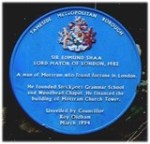
My 13th great-grandfather was Lord Mayor of London and a wealthy, influential goldsmith. My mother was always crazy about gold and jewelry. She would have been pretty excited to learn one of her ancestor’s healing rings is in the British Museum. I am excited myself.
Edmund Shaw (1434 – 1487)
is my 13th great grandfather
Elizabeth Shaw (1460 – 1493)
daughter of Edmund Shaw
Thomas Poyntz (1480 – 1562)
son of Elizabeth Shaw
Lady Susanna Elizabeth Poyntz (1528 – 1613)
daughter of Thomas Poyntz
Elizabeth Saltonstall (1557 – 1621)
daughter of Lady Susanna Elizabeth Poyntz
Henry Wyche (1604 – 1678)
son of Elizabeth Saltonstall
Henry Wyche (1648 – 1714)
son of Henry Wyche
George Wyche (1685 – 1757)
son of Henry Wyche
Peter Wyche (1712 – 1757)
son of George Wyche
Drury Wyche (1741 – 1784)
son of Peter Wyche
Mary Polly Wyche (1774 – 1852)
daughter of Drury Wyche
John Samuel Taylor (1798 – 1873)
son of Mary Polly Wyche
William Ellison Taylor (1839 – 1918)
son of John Samuel Taylor
George Harvey Taylor (1884 – 1941)
son of William Ellison Taylor
Ruby Lee Taylor (1922 – 2008)
daughter of George Harvey Taylor
Pamela Morse
I am the daughter of Ruby Lee Taylor
Dictionary of National Biography, 1885-1900, Volume 51Shaw, Edmund
by Charles Welch
SHAW or SHAA, Sir EDMUND (d 1487?), lord mayor of London, was the son of John Shaa of Dunkerfield in Cheshire. He was a wealthy goldsmith and prominent member of the Goldsmiths’ Company, of which he served the office of master. He was elected sheriff in 1474, and on his presentation the members of his company escorted him to Westminster (Herbert, Twelve Great Livery Companies, ii. 219). Shaa became alderman, and in 1485 migrated to the ward of Cheap, on the death of Sir Thomas Hill through the ‘sweating sickness.’ He was elected mayor in 1482, and towards the close of his mayoralty he took an active part in influencing the succession to the crown on the death of Edward IV. Shaa probably had financial dealings with the crown, and his intimacy with Edward IV appears from a bequest in his will for an obit for the soul of that ‘excellent prince’ and his sister, the Duchess of Exeter. He became nevertheless a strong supporter of Richard III, who made him a privy councillor, and whose claims to the throne he and his brother (see below) were doubtless largely instrumental in inducing the citizens to adopt. Shaa appears to have resided in Foster Lane, where, and in the neighbouring West Chepe, the goldsmiths kept their shops. He possessed, and probably occupied, the great mansion, with its adjoining tenements, in Foster Lane, in which Sir Bartholomew Reid had lived (ib. ii. 253).
He died about 1487, and was buried in the church of St. Thomas of Acon, where he founded a chantry for the souls of his wife Juliana (who died in 1493), his son Hugh, and others (Sharpe, Calendar of Husting Wills, ii. 612). This trust, with many singular injunctions attached, he placed under the charge of the Mercers’ Company (Watney, Account of the Hospital of St. Thomas of Acon, pp. 51–3). His will, dated 20 March 1487, was proved in the P. C. C. (Milles 12). Full effect was given to his intentions under the will of Stephen Kelk, goldsmith, who administered Shaa’s bequest under an agreement with his executors (Watney, p. 53; Prideaux, Goldsmiths’ Company, i. 33–4). One of these executors, John Shaa, goldsmith, may have been the Sir John Shaa (knighted on Bosworth Field and made a banneret by Henry VII) who was lord mayor in 1501, or a near relative. By another will, not enrolled, Shaa left four hundred marks for rebuilding Cripplegate, which was carried out by his executors in 1491. He also left property in charge of the Goldsmiths’ Company, producing an annual sum of 17l., to found a school ‘for all boys of the town of Stockport and its neighbourhood,’ in which place his parents were buried. This school was considerably developed and its advantages extended by the Goldsmiths’ Company (Herbert, ii. 252–3). Shaa also directed by his will that sixteen gold rings should be made as amulets or charms against disease, chiefly cramp. One of these rings, found in 1895 during excavations in Daubeney Road, Hackney, is now in the British Museum. On the outside are figures of the crucifixion, the Madonna, and St. John, with a mystical inscription in English; the inside contains another mystical inscription in Latin.
The lord mayor’s brother, Ralph or John Shaw (d. 1484), styled John by More and Holinshed, and Raffe by Hall and Fabyan, may without much doubt be identified with Ralph Shaw, S. T. B., who was appointed prebendary of Cadington Minor in the diocese of London on 14 March 1476–7, and was esteemed a man of learning and ability. He was chosen by the Protector (afterwards Richard III) to preach a sermon at St. Paul’s Cross on 22 June 1483, when he impugned the validity of Edward IV’s marriage with Elizabeth Woodville, and even asserted, according to More, that Edward IV and his brother Clarence were bastards. Fabyan states that he ‘lived in little prosperity afterwards,’ and died before 21 Aug. 1484 (Gairdner, Life of Richard III, 1878, pp. 100–4; FFabyan, Chronicle, 1811, p. 669; More, Life of Richard III, ed. Lumby, pp. 57, 70; Holinshed, Chronicles, ed. Hooker, iii. 725, 729; Hall, Chronicle, 1809, p. 365; Le Neve, Fasti Ecclesiæ Anglicanæ, ii. 372).
[Orridge’s Citizens of London and their Rulers, pp. 116–20; Sharpe’s London and the Kingdom, i. 320–2; Price’s Historical Account of the Guildhall, p. 186; Watney’s Hospital of St. Thomas of Acon, pp. 51–3; Sharpe’s Calendar of Husting Wills, ii. 612–17; Prideaux’s Memorials of the Goldsmiths’ Company, 1896, passim; Notes and Queries, 8th ser. xii. 345.]
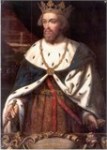
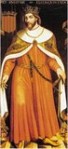
Jaime I Mallorc is my ancestor two times. Two of his children became my ancestors, Isabella and Peter, both leading to Ann Dudley, Pilgrim poet. She has the most royal of pedigrees. This is just one of them. She wrote about God and religion, but her DNA contained the royal history of Europe, crusades and all. Jaime was one of those royals who had his first marriage annulled when he wanted to marry another woman.
Jaime I Mallorc (1207 – 1276)
is my 23rd great grandfather
Isabella DeAragon (1247 – 1271)
daughter of Jaime I Mallorc
Charles DeValois (1270 – 1325)
son of Isabella DeAragon
Jeanne DeVALOIS (1294 – 1342)
daughter of Charles DeValois
Philippa deHainault (1311 – 1369)
daughter of Jeanne DeVALOIS
John of Gaunt – Duke of Lancaster – Plantagenet (1340 – 1399)
son of Philippa deHainault
Philippa Plantagenet (1370 – 1415)
daughter of John of Gaunt – Duke of Lancaster – Plantagenet
Beatrix DePinto (1403 – 1447)
daughter of Philippa Plantagenet
John Fettiplace (1427 – 1464)
son of Beatrix DePinto
Richard Fettiplace (1460 – 1511)
son of John Fettiplace
Anne Fettiplace (1496 – 1567)
daughter of Richard Fettiplace
Mary Purefoy (1533 – 1579)
daughter of Anne Fettiplace
Susanna Thorne (1559 – 1586)
daughter of Mary Purefoy
Gov Thomas Dudley (1576 – 1653)
son of Susanna Thorne
Anne Dudley (1612 – 1672)
daughter of Gov Thomas Dudley
John Bradstreet (1652 – 1718)
son of Anne Dudley
Mercy Bradstreet (1689 – 1725)
daughter of John Bradstreet
Caleb Hazen (1720 – 1777)
son of Mercy Bradstreet
Mercy Hazen (1747 – 1819)
daughter of Caleb Hazen
Martha Mead (1784 – 1860)
daughter of Mercy Hazen
Abner Morse (1808 – 1838)
son of Martha Mead
Daniel Rowland Morse (1838 – 1910)
son of Abner Morse
Jason A Morse (1862 – 1932)
son of Daniel Rowland Morse
Ernest Abner Morse (1890 – 1965)
son of Jason A Morse
Richard Arden Morse (1920 – 2004)
son of Ernest Abner Morse
Pamela Morse
You are the daughter of Richard Arden Morse
James I of Aragon (Spanish: Jaime I, Catalan: Jaume I) (Montpellier February 2, 1208 � July 27, 1276), surnamed the Conqueror, was the king of Aragon, count of Barcelona and Lord of Montpellier from 1213 to 1276.
He was the only child of Peter II of Aragon and Marie of Montpellier. As a child he was a pawn of power politics in Provence, where his father was engaged in struggles in the wars between the Cathars of Albi and Simon de Montfort. Peter endeavoured to placate the northern crusaders by arranging a marriage between his son James and Simon’s daughter, entrusting the boy to be educated in Montfort’s care in 1211, but Peter was soon forced to take up arms against them, and he was slain at the Battle of Muret September 12, 1213. Montfort would willingly have used James as a means of extending his own power. The Aragonese and Catalans, however, appealed to the pope, who forced Montfort to surrender him in May or June 1214.
James was now entrusted to the care of Guillen de Monredon, the head of the Knights Templar in Spain and Provence. The kingdom was given over to confusion till in 1216 the Templars and some of the more loyal nobles brought the young king to Saragossa.
He first married, in 1221, Leonor, daughter of Alfonso VIII of Castile, and then after having the marriage annulled (though a son was declared legitimate), in 1235, Yolande of Hungary, daughter of Andrew II of Hungary. His children were:
Alfonso (1229-1260), married Constanza de Moncada, Countess of Bigorre
Violante of Aragon (1236-1301), married Alfonso X of Castile
Peter III of Aragon
Constanza of Aragon (1239-1269), married Juan Manuel of Castile, son of Ferdinand III of Castile
James II of Majorca
Isabella of Aragon, married Philip III of France
Sancho, Archbishop of Toledo (1250-1279)
After a false start at uniting Aragon with Navarre through a scheme of mutual adoption, James turned to the south and the Mediterranean, conquered the Balearic Islands (from 1228 over the following four years) and Valencia (the city capitulated September 28, 1238).
With the French, James endeavoured to form a state straddling the Pyrenees, to counterbalance the power of France north of the Loire. As with the earlier Visigothic attempt, this policy was victim of physical, cultural and political obstacles. As in the case of Navarra, he was too wise to launch into perilous adventures. By the Treaty of Corbeil, with Louis IX, signed May, 1258, he frankly withdrew from conflict with the French king, and was content with the recognition of his position, and the surrender of antiquated and illusory French claims to the overlordship of Catalonia.
During his remaining two decades, James warred with the Moors in Murcia, on behalf of his son-in-law Alphonso the Wise of Castile. As a legislator and organizer he occupies a high place among the Spanish kings. The favor he showed his bastards led to protest from the nobles, and to conflicts between his sons legitimate and illegitimate. When one of the latter, Fernan Sanchez, who had behaved with gross ingratitude and treason to his father, was slain by the legitimate son Peter, the old king recorded his grim satisfaction.
At the close of his life King James divided his states between his sons by Yolande of Hungary, Peter receiving the Hispanic possessions on the mainland and James, the Kingdom of Majorca (the Balearic Islands and the counties of Roussillon and Cerdagne) and the Lordship of Montpellier, a division which inevitably produced fratricidal conflicts. The king fell very ill at Alcira, and resigned his crown, intending to retire to the monastery of Poblet, but died at Valencia July 7, 1276.
King James wrote or dictated at various stages a chronicle of his own life, “Llibre Dels Fets” in Catalan, which is the first self-chronicle of a Christian king. As well as a fine example of autobiography the “Book of Deeds” expresses concepts of the power and purpose of monarchy, examples of loyalty and treachery in the feudal order, the growth of national sentiment based on homeland, language and culture, and medieval military tactics.
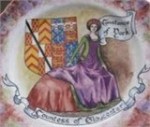

Constance of York Plantagenet had an affair with Edmund Holland after her husband was beheaded. Their daughter Eleanor is my ancestor.
Constance Plantagenet Despencer (1374 – 1416)
is my 17th great grandmother
Eleanor DeHoland (1405 – 1452)
daughter of Constance Plantagenet Despencer
Ann Touchet (1441 – 1503)
daughter of Eleanor DeHoland
Anna Dutton (1449 – 1520)
daughter of Ann Touchet
Lawrence Castellan of Liverpool Mollenaux (1490 – 1550)
son of Anna Dutton
John Mollenax (1542 – 1583)
son of Lawrence Castellan of Liverpool Mollenaux
Mary Mollenax (1559 – 1575)
daughter of John Mollenax
Francis Gabriell Holland (1596 – 1660)
son of Mary Mollenax
John Holland (1628 – 1710)
son of Francis Gabriell Holland
Mary Elizabeth Holland (1620 – 1681)
daughter of John Holland
Richard Dearden (1645 – 1747)
son of Mary Elizabeth Holland
George Dearden (1705 – 1749)
son of Richard Dearden
George Darden (1734 – 1807)
son of George Dearden
David Darden (1770 – 1820)
son of George Darden
Minerva Truly Darden (1806 – 1837)
daughter of David Darden
Sarah E Hughes (1829 – 1911)
daughter of Minerva Truly Darden
Lucinda Jane Armer (1847 – 1939)
daughter of Sarah E Hughes
George Harvey Taylor (1884 – 1941)
son of Lucinda Jane Armer
Ruby Lee Taylor (1922 – 2008)
daughter of George Harvey Taylor
Pamela Morse
I am the daughter of Ruby Lee Taylor
Constance of York (c. 1374 – 29 November 1416) was the only daughter of Edmund of Langley, 1st Duke of York and his wife Isabella of Castile, daughter of Pedro of Castile and Maria de Padilla. On about 7 November 1379, Constance married Thomas le Despenser, 1st Earl of Gloucester (22 September 1373 – 16 January 1400). He would be eventually be beheaded at Bristol.
She was involved in an affair with Edmund Holland, 4th Earl of Kent and had a daughter by him, Eleanor de Holland. Eleanor was later married to James Tuchet, 5th Baron Audley.
In 1405, during the rebellion of Owain Glyndŵr, Constance, who held Caerphilly Castle, arranged the escape of Edmund Mortimer, 5th Earl of March, from Windsor Castle, apparently intending to deliver the young earl, who had the best claim to the throne of any of Henry IV’s rivals, to his uncle Edmund who was married to Glyndwr’s daughter. The earl was recaptured before entering Wales.
When Constance died in 1416, she was buried at the High altar in Reading Abbey.
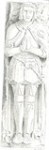
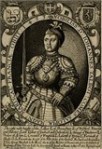

My 17th great-grandfather was the first Earl of Shrewsbury. There is still an Earl of Shrewsbury in England today. He was a military man who died fighting for king and country.
The death of John Talbot at the Battle of Castillon.
John Talbot, 1st Earl of Shrewsbury (1384/1390 – 17 July 1453) was an important English military commander during the Hundred Years’ War, as well as the only Lancastrian Constable of France.
Family
He was second son of Richard, 4th Baron Talbot, by Ankaret, heiress of the last Lord Strange of Blackmere.
Talbot was married on 12 March 1406 to Maud Nevill, daughter and heiress of Thomas Nevill, 5th Baron Furnivall, the son of John Neville, 3rd Baron Neville de Raby. He was summoned to Parliament in her right from 1409.
Children
The couple had four children:
Lady Joan Talbot
John Talbot, 2nd Earl of Shrewsbury (c. 1413 – 11 July 1460)
Sir Christopher Talbot (d. 10 July 1460)
Hon. Thomas Talbot (died before his father in Bordeaux)
In 1421 by the death of his niece he acquired the Baronies of Talbot and Strange.
2nd Marriage
He married, secondly, Lady Margaret Beauchamp, daughter of Richard de Beauchamp, 13th Earl of Warwick and Elizabeth de Berkeley, on 6 September 1425 and had four children:
Sir Lewis Talbot
John Talbot, 1st Viscount Lisle (c. 1426 – 17 July 1453)
Sir Humphrey Talbot (before 1453 – c. 1492)
Lady Elizabeth Talbot (before 1453). She married John de Mowbray, 4th Duke of Norfolk.
Lady Eleanor Talbot (d. 1468) married to Thomas Butler and King Edward IV of England.
Early career
From 1404 to 1413 he served with his elder brother Gilbert in the Welsh war or the rebellion of Owain Glyndŵr. Then for five years from February 1414 he was lieutenant of Ireland, where he held the honour of Wexford. He did some fighting, and had a sharp quarrel with the Earl of Ormonde. Complaints were made against him both for harsh government in Ireland and for violence in Herefordshire. From 1420 to 1424 he served in France. In 1425, he was lieutenant again for a short time in Ireland.
Service in France
So far his career was that of a turbulent Marcher Lord, employed in posts where a rough hand was useful. In 1427 he went again to France, where he fought with distinction in Maine and at the Siege of Orléans. He fought at the Battle of Patay where he was captured and held prisoner for four years.
He was released in exchange for the French leader Jean Poton de Xaintrailles. Talbot was a daring and aggressive soldier, perhaps the most audacious Captain of the Age. He and his forces acted as a kind of fire brigade ever ready to retake a town and to meet a French advance. His trademark was rapid aggressive attacks. In January 1436 he led a small force including Kyriell and routed La Hire and Xaintrailles at Ry near Rouen. The following year at Crotoy, after a daring passage of the Somme, he put a numerous Burgundian force to flight. In December 1439, following a surprise flank attack on their camp, he dispersed the 6000 strong army of the Constable Richemont, and the following year he retook Harfleur. In 1441 he pursued the French army 4 times over the Seine and Oise rivers in an unavailing attempt to bring it to battle.
The English Achilles
He was appointed in 1445 by Henry VI of England (as king of France) as Constable of France. Taken hostage at Rouen in 1449 he promised never to wear armour against the French King again, and he was true to his word. He was defeated and killed in 1453 at the Battle of Castillon near Bordeaux, which effectively ended English rule in the duchy of Gascony, a principal cause of the Hundred Years’ War. His heart was buried in the doorway of St Alkmund’s Church, Whitchurch, Shropshire.[1]
The victorious French generals raised a monument to Talbot on the field called Notre Dame de Talbot. And the French Chroniclers paid him handsome tribute:
“Such was the end of this famous and renowned English leader who for so long had been one of the most formidable thorns in the side of the French, who regarded him with terror and dismay” – Matthew d’Escourcy
Although Talbot is generally remembered as a great soldier, some have raised doubts as to his generalship. In particular, charges of rashness have been raised against him. Speed and aggression are key elements in granting success in medieval war, and Talbot’s numerical inferiority necessitated surprise. Furthermore, he was often in the position of trying to force battle on unwilling opponents. At his defeat at Patay in 1429 he was advised not to fight there by Sir John Fastolf, who was subsequently blamed for the debacle, but the French, inspired by Joan of Arc, showed unprecedented fighting spirit – usually they approached an English position with great circumspection. The charge of rashness is perhaps more justifiable at Castillon where Talbot, misled by false reports of a French retreat, attacked their entrenched camp frontally – facing wheel to wheel artillery and a 6 to 1 inferiority in numbers.
He is portrayed heroically in William Shakespeare’s Henry VI, Part I: “Valiant Lord Talbot, Earl of Shrewsbury, Created, for his rare success in arms”
Political officesPreceded by
New CreationLord High Steward of Ireland
1446–1453Succeeded by
The Earl of ShrewsburyPeerage of EnglandPreceded by
New CreationEarl of Shrewsbury
1442–1453Succeeded by
John TalbotPreceded by
Ankaret TalbotBaron Talbot
1421–1453Succeeded by
John TalbotBaron Strange of Blackmere
1421–1453Peerage of IrelandPreceded by
New CreationEarl of Waterford
1446–1453Succeeded by
John TalbotCultural influence
John Talbot is shown as a featured character in Koei’s video game known as ‘Bladestorm: The Hundred Years’ War’, appearing as the left-arm of Edward, the Black Prince, in which he assists the former and the respective flag of England throughout his many portrayals.
Talbot appears as one of the primary antagonists in the PSP game Jeanne d’Arc.
Battle of Castillon
Date17 July 1453LocationCastillon-la-Ba taille, GasconyResult Decisive French victory
Belligerents Kingdom of England vs Kingdon of France and Duchy of Brittany
Commanders – John Talbot, Earl of Shrewbury vs Jean Bureau
Strength – 6,000-7,000 7,000-10,000
Casualties and losses – 4,000, mainly wounded or captured – 100 dead or wounded
The Battle of Castillon of 1453 was the last battle fought between the French and the English during the Hundred Years’ War. This was the first battle in European history where cannons were a major factor in deciding the battle.[
After the French capture of Bordeaux in 1451, the Hundred Years’ War appeared to be at an end. However, after three hundred years of English rule the citizens of Bordeaux considered themselves English and sent messengers to Henry VI of England demanding he recapture the province.
On 17 October 1452, the Earl of Shrewsbury landed near Bordeaux with a force of 3,000 men-at-arms and archers. The French garrison was ejected by the citizens of Bordeaux, who then gleefully opened the gates to the English. Most of Gascony followed Bordeaux’s example and welcomed the English home.
During the winter month Charles VII of France gathered his armies in readiness for the campaigning season. When spring arrived Charles advanced toward Bordeaux simultaneously along three different routes with three armies.
Preparation
Talbot, the Earl of Shrewsbury, received another 3,000 men to face this new problem, but it was still an inadequate number to hold back the thousands of Frenchmen on Gascony’s borders. When the leading French army laid siege to Castillon, Talbot abandoned his original plans (acceding to the pleas of the town commanders) and set out to relieve it. The French commander, Jean Bureau, in fear of Talbot, ordered his 7,000 to 10,000 men to encircle their camp with a ditch and palisade, and deployed his 300 cannon on the parapet. This was an extraordinarily defensive setup by the French, who enjoyed great numerical superiority. They had made no attempt to invest Castillon.
Talbot approached the French camp on 17 July 1453, arriving before his main body of troops with an advance guard of 1,300 mounted men. He routed a similar sized force of French francs-archers (militia) in the woods before the French encampment, giving his men a large boost of morale.
Main battle
A few hours after this preliminary skirmish, a messenger from the town reported to Shrewsbury’s resting troops (they had marched through the night) that the French army was in full retreat and that hundreds of horsemen were fleeing the fortifications. From the town walls a huge dust cloud could be seen heading off into the distance. Unfortunately for him, they were only camp followers ordered to leave the camp before the upcoming battle.
Shrewsbury hastily reorganised his men and charged down towards the French camp, only to find the parapets defended by thousands of archers and crossbowmen and hundreds of cannons. Surprised but undaunted, Shrewsbury gave the signal to attack the French army. Shrewsbury didn’t take part in the battle directly. He had been previously captured and paroled, thus was not allowed to take arms against the French.
English troops charged the camp, across a ditch, only to be met with a hail of arrows and quarrels, and a fierce gun, cannon and small arms fire. The concentrated fire could be explained by the fact that the ditch followed, probably by accident, the former bed of a small stream, giving a bastionned look to defences.
Once battle started, Shrewsbury received a thin trickle of men from his leading footmen. After an hour the cavalry of the Breton army sent by the Duke of Brittany arrived and charged his right flank. The English gave way, pursued instantly by the French main body of troops.
During the rout Shrewsbury’s horse was killed by a cannon ball and he fell trapped beneath it, until a Frenchman, a Francs Archer, recognised him and killed him with a hand-axe. His death, and the subsequent recapture of Bordeaux three months later, effectively brought the Hundred Years’ War to a close.
Aftermath
Following Henry VI’s episode of insanity in 1453, the subsequent outbreak of the Wars of the Roses and the evident loss of military ascendancy to the French, the English were no longer in any position to pursue their claim to the French throne and lost all their land on the continent (except for the city of Calais, the last English possession in France, finally lost in 1558).
General John Talbot * (1384 – 1453)
is my 17th great grandfather
John Talbot (1413 – 1460)
son of General John Talbot *
Isabel Talbot (1444 – 1531)
daughter of John Talbot
Sir Richard Ashton (1460 – 1549)
son of Isabel Talbot
Sir Christopher Ashton (1493 – 1519)
son of Sir Richard Ashton
Lady Elizabeth Ashton (1524 – 1588)
daughter of Sir Christopher Ashton
Capt Roger Dudley (1535 – 1585)
son of Lady Elizabeth Ashton
Gov Thomas Dudley (1576 – 1653)
son of Capt Roger Dudley
Anne Dudley (1612 – 1672)
daughter of Gov Thomas Dudley
John Bradstreet (1652 – 1718)
son of Anne Dudley
Mercy Bradstreet (1689 – 1725)
daughter of John Bradstreet
Caleb Hazen (1720 – 1777)
son of Mercy Bradstreet
Mercy Hazen (1747 – 1819)
daughter of Caleb Hazen
Martha Mead (1784 – 1860)
daughter of Mercy Hazen
Abner Morse (1808 – 1838)
son of Martha Mead
Daniel Rowland Morse (1838 – 1910)
son of Abner Morse
Jason A Morse (1862 – 1932)
son of Daniel Rowland Morse
Ernest Abner Morse (1890 – 1965)
son of Jason A Morse
Richard Arden Morse (1920 – 2004)
son of Ernest Abner Morse
Pamela Morse
I am the daughter of Richard Arden Morse
My 26th great-grandmother had a famous mother who was nicknamed Dangereuse because she was such a tart. This matrilineal danger ran deep. These women were powerful, each in her own way:
Aenor ( aka Eleanor) of Châtellerault, duchess of Aquitaine (Châtellerault, Vienne, France, c. 1103, – March 1130 in Talmont) was the mother of Eleanor of Aquitaine, arguably the most powerful woman in Europe of her generation.
Aenor was a daughter of Viscount Aimery I of Châttellerault and his wife, Dangereuse de L’ Isle Bouchard (d. 1151). Aenor married William X of Aquitaine, the son of her mother’s lover, and had three children with him:
Eleanor of Aquitaine, Duchess of Aquitaine, and wife of both Louis VII of France, and Henry II of England. Petronilla of Aquitaine, wife of Raoul I, Count of Vermandois.
William Aigret (who died at the age of four) The county “Châtelherault” later became a title belonging to the Dukes of Hamilton.


Eleanor DeChatellerault (1105 – 1130)
is my 26th great grandmother
Eleanor of Aquitane (1130 – 1204)
daughter of Eleanor DeChatellerault
Eleanor Spain Plantagenet (1162 – 1214)
daughter of Eleanor of Aquitane
Berenguela CASTILE LEON (1181 – 1244)
daughter of Eleanor Spain Plantagenet
Saint Ferdinand Castile amp Leon (1199 – 1252)
son of Berenguela CASTILE LEON
Alfonso X Wise Castile Leon amp Galicia (1221 – 1284)
son of Saint Ferdinand Castile amp Leon
Sancho Brave Castile Leon (1258 – 1295)
son of Alfonso X Wise Castile Leon amp Galicia
Beatrice Sanchez Infanta Castile (1293 – 1359)
daughter of Sancho Brave Castile Leon
Peter I Portugal Cruel Algarve (1320 – 1367)
son of Beatrice Sanchez Infanta Castile
John I DePinto (1358 – 1433)
son of Peter I Portugal Cruel Algarve
Beatrix DePinto (1403 – 1447)
daughter of John I DePinto
John Fettiplace (1427 – 1464)
son of Beatrix DePinto
Richard Fettiplace (1460 – 1511)
son of John Fettiplace
Anne Fettiplace (1496 – 1567)
daughter of Richard Fettiplace
Mary Purefoy (1533 – 1579)
daughter of Anne Fettiplace
Susanna Thorne (1559 – 1586)
daughter of Mary Purefoy
Gov Thomas Dudley (1576 – 1653)
son of Susanna Thorne
Anne Dudley (1612 – 1672)
daughter of Gov Thomas Dudley
John Bradstreet (1652 – 1718)
son of Anne Dudley
Mercy Bradstreet (1689 – 1725)
daughter of John Bradstreet
Caleb Hazen (1720 – 1777)
son of Mercy Bradstreet
Mercy Hazen (1747 – 1819)
daughter of Caleb Hazen
Martha Mead (1784 – 1860)
daughter of Mercy Hazen
Abner Morse (1808 – 1838)
son of Martha Mead
Daniel Rowland Morse (1838 – 1910)
son of Abner Morse
Jason A Morse (1862 – 1932)
son of Daniel Rowland Morse
Ernest Abner Morse (1890 – 1965)
son of Jason A Morse
Richard Arden Morse (1920 – 2004)
son of Ernest Abner Morse
Pamela Morse
I am the daughter of Richard Arden Morse

La Scala
My 21st great grandfather was Lord of Verona. His father was a wool dealer with political connections that helped him gain power and wealth. His family became influential. Alberto’s great grand daughter married into the ruling family of Milan, and her descendant married into the Habsburg dynasty. Influence and power followed them all the days of their lives.
Alberto I DeScala (1241 – 1301)
is my 21st great grandfather
Alboino De La Scala Lord (1284 – 1311)
son of Alberto I DeScala
Mastino Della Scala (1300 – 1351)
son of Alboino De La Scala Lord
Regina Beatrice Della Scala (1321 – 1384)
daughter of Mastino Della Scala
Veridis Duchess Austria Visconti (1352 – 1414)
daughter of Regina Beatrice Della Scala
Ernst I “Ironside” Archduke of Austria Habsburg (1377 – 1424)
son of Veridis Duchess Austria Visconti
Katharina Archduchess Austria Von Habsburg (1420 – 1493)
daughter of Ernst I “Ironside” Archduke of Austria Habsburg
Christof I VanBaden (1453 – 1527)
son of Katharina Archduchess Austria Von Habsburg
Beatrix Zahringen (1492 – 1535)
daughter of Christof I VanBaden
Sabine Grafin VonSimmern (1528 – 1578)
daughter of Beatrix Zahringen
Marie L Egmond (1564 – 1584)
daughter of Sabine Grafin VonSimmern
Richard Sears (1590 – 1676)
son of Marie L Egmond
Silas Sears (1638 – 1697)
son of Richard Sears
Silas Sears (1661 – 1732)
son of Silas Sears
Sarah Sears (1697 – 1785)
daughter of Silas Sears
Sarah Hamblin (1721 – 1814)
daughter of Sarah Sears
Mercy Hazen (1747 – 1819)
daughter of Sarah Hamblin
Martha Mead (1784 – 1860)
daughter of Mercy Hazen
Abner Morse (1808 – 1838)
son of Martha Mead
Daniel Rowland Morse (1838 – 1910)
son of Abner Morse
Jason A Morse (1862 – 1932)
son of Daniel Rowland Morse
Ernest Abner Morse (1890 – 1965)
son of Jason A Morse
Richard Arden Morse (1920 – 2004)
son of Ernest Abner Morse
Pamela Morse
I am the daughter of Richard Arden Morse
Alberto I della Scala (died September 3, 1301) was lord of Verona from 1277, a member of the Scaliger family.
The son of Jacopino della Scala, he was podestà of Mantua in 1272 and 1275. In 1277, after the assassination of his brother Mastino, inherited the seigniory of Verona.
Alberto died in Verona in 1301. His son Bartolomeo succeeded him. His other sons Alboino and Francesco (Cangrande) were also lord of Verona from 1304 and 1312, respectively.
Sources
Carrara, M. (1966). Gli Scaligeri. Varese: Dell’Oglio.
From the time we learned our first Dr Seuss rhyme we were being educated by poets. Nursery rhymes and fairy tales are used to teach morals and ethics to children. There is value in the use of language to enchant and stick in the memory. Poets are feeding the artistic as well as the language skills of readers. Our own stories can only be told by our own voice. To develop a voice as a writer or a poet one simply needs to start. Children are ready to rhyme and laugh at almost any word. Adults often loose enthusiasm for word play as they grow older. Since poetry stimulates creativity, and is a tool to jog the memory it makes sense to read and write poems. Often hidden meaning can be found in song and story, as it is in Calypso. Political protest can be carried out in a rhyme using allegory to mask the obvious. Some of our nursery rhymes today were once hot treason against authorities. What kind of symbolic words would you use to write a poetic protest today?
The word cocktail originally meant a drink made with bitters and distilled spirits, but this has changed over time. There are many versions of how the name was derived, including a drink that was served with a garnish of feathers from a rooster. The bartender was more of a pharmacist, and the elements of the drinks were medicinal in the 1800’s. Morphine and heroin were sold on the open market and included in patent medicines in the early 1900’s, so mixed spirits were hardly the most dangerous potions one could use at that time. Bitters were concocted by bartender/pharmacists with the herbs and fruits they had on hand, with whatever knowledge they possessed about the healing qualities of those plants.
Today Angostura and Fee brothers are still producing bitters from ancient recipes while other new producers are entering the commercial market. It is easy to make your own bitters with flavors that work for you. I made a citrus vanilla infusion using an Alice Waters recipe and our organic grapefruit and Meyer lemons this winter which is delightful and has inspired me to dabble in bitters. The process is simple. Add flavors to vodka which is stored in the dark and shaken regularly for two weeks. Strain the herb/fruit/flower mixture and boil it in water to create a strong tea. Store both the vodka infusion and the strong tea for another two weeks, shaking the herbal tea frequently. Combine the tea and vodka after removing the solids and you have bitters. There are several mixtures of flavoring and bittering agents that appeal to me. I think I will make peach bitters when my peaches get ripe just to get started. The bitters can be used in non alcoholic drinks as well as in cooking. I often use Angostura bitters in food. It adds depth of flavor with great subtlety. I did not drink or make cocktails until about 3 years ago but I have become a student of the history and resurgence of the art of mixology. I enjoy seasonal fresh ingredients and the creativity of trying new combinations. What is your favorite cocktail, Gentle Reader?
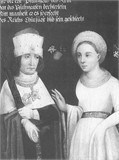
Otto and Agnes
Agnes Countess Of Rhein (1202 – 1267)
is my 21st great grandmother
Elisabeth Wittelsbach Duchess Bavaria (1227 – 1273)
daughter of Agnes Countess Of Rhein
Consort Elisabeth the Romans Carinthia (1263 – 1313)
daughter of Elisabeth Wittelsbach Duchess Bavaria
Albrecht Albert II ‘The Wise’ Duke of Austria Habsburg (1298 – 1358)
son of Consort Elisabeth the Romans Carinthia
Leopold III “Duke of Austria” Habsburg (1351 – 1386)
son of Albrecht Albert II ‘The Wise’ Duke of Austria Habsburg
Ernst I “Ironside” Archduke of Austria Habsburg (1377 – 1424)
son of Leopold III “Duke of Austria” Habsburg
Katharina Archduchess Austria Von Habsburg (1420 – 1493)
daughter of Ernst I “Ironside” Archduke of Austria Habsburg
Christof I VanBaden (1453 – 1527)
son of Katharina Archduchess Austria Von Habsburg
Beatrix Zahringen (1492 – 1535)
daughter of Christof I VanBaden
Sabine Grafin VonSimmern (1528 – 1578)
daughter of Beatrix Zahringen
Marie L Egmond (1564 – 1584)
daughter of Sabine Grafin VonSimmern
Richard Sears (1590 – 1676)
son of Marie L Egmond
Silas Sears (1638 – 1697)
son of Richard Sears
Silas Sears (1661 – 1732)
son of Silas Sears
Sarah Sears (1697 – 1785)
daughter of Silas Sears
Sarah Hamblin (1721 – 1814)
daughter of Sarah Sears
Mercy Hazen (1747 – 1819)
daughter of Sarah Hamblin
Martha Mead (1784 – 1860)
daughter of Mercy Hazen
Abner Morse (1808 – 1838)
son of Martha Mead
Daniel Rowland Morse (1838 – 1910)
son of Abner Morse
Jason A Morse (1862 – 1932)
son of Daniel Rowland Morse
Ernest Abner Morse (1890 – 1965)
son of Jason A Morse
Richard Arden Morse (1920 – 2004)
son of Ernest Abner Morse
Pamela Morse
I am the daughter of Richard Arden Morse
AGNES ([1201]-16 Nov 1267, bur Scheyern). The Notæ Sancti Emeranni record the marriage of “Otto dux Bawarie” and “filiam Heinrici palatine Rheni”. The Altahenses Annales name “Agnes ducissa Bawarie” when recording the birth of her son Ludwig.
m (Worms May 1222) OTTO von Bayern, son of LUDWIG I Duke of Bavaria, Pfalzgraf bei Rhein & his wife Ludmila of Bohemia (Kelheim 1206-Landshut 29 Nov 1253, bur Scheyern). Pfalzgraf bei Rhein 1228. He succeeded his father in 1231 as OTTO II “der Erlauchte” Duke of Bavaria.
The medicinal use of gin to prevent kidney problems in the tropics was made popular by the British. It was invented in the 17th century by Dutch medical professor Dr Franciscus Sylvius who called it Genever. It was pure alcohol flavored with juniper berries. The medicinal qualities of the berries treated the expatriate Dutch kidney complaints, since juniper is a diuretic. William of Orange made it popular in the UK. For almost the entirety of the eighteenth century half the population of England was guzzling gin. The cheapness and availability made it the curse of lower class London.
Gin and tonic also came about for medicinal treatment, for malaria. Quinine in tonic water was effective in prevention of malaria for the Brits in tropical parts of the Empire. One of the greatest fans of this medicinal drink was a medical doctor himself. Graham Chapman of Monty Python stayed drunk with Keith Moon of the Who for the decade of the 1970’s in an homage to the eighteenth century, I suppose. Dr. Chapman calculated how much gin and tonic would kill a person, and consumed just short of that amount each day. That is a scientific view of self destruction that is unusual. It took a toll. Now for Python lovers there will be a revival called One Down Five to Go in London.
 mermaidcamp