mermaidcamp
Keeping current in wellness, in and out of the water
You can scroll the shelf using ← and → keys
You can scroll the shelf using ← and → keys

Dr Kenny
In May I was asked to draw a time line of my spiritual life. The participants in Thomas Moore’s workshop at Kripalu gathered in small groups to discuss what we found drawing the timelines. The brief discussion among 3 students was revealing and gave me much to ponder. One of us had been drawn to church and attending mass by herself as a child, with no particular parental support for her daily devotion to Catholic ritual. The other woman in my group had been influenced heavily by her environment and felt trapped without a known exit strategy. My own timeline referred to my parents and briefly to church (because I only had to be a Sunday school student for a couple of years) but after the age of 16 had nothing to do with formal religion. The exercise was quite challenging, finding the major spiritual events or pivotal points in the soul’s journey.
My studies in Sacred Contracts with Carolyn Myss also includes assignments to create archetype timelines. I am finding this practice to be the most powerful of all the exercises I have ever used. It seems we warp the past and forget much of what seems extraneous, storing symbols that represent the events or people rather than storing an accurate version of reality in the past. I went to my elementary school a few months ago in the company of the people with whom I attended elementary school. We reminded each other of the past, but we had different versions edited and stored in our vaults of memory. When we toured the auditorium I knew it was the scene of one of my first encounters with the rebel archetype. On the occasion of my third polio shot I became violent with the nurse, principal and staff who were trying to inoculate me. I curled up in a chair in the front row and used my feet to strike out at the adults. I won the battle and did not get that shot. The school never informed my parents, so I was 3rd vaccination free until the oral type came out and we all took it again. Victory was sweet, and I felt that I had vanquished a dangerous and vicious foe. It was Valentine’s Day. I returned to my classroom uninoculated in my little red and white dress. A rebel was born.
When I saw the auditorium as an adult I found myself walking next to a classmate who has become a medical doctor. I also found myself giving Dr. Kenny, who was extremely popular and cool as a kid, a very hard time about his decision to practice medicine. I don’t dislike Kenny at all, but was completely involved in a highly displaced freak out over medical procedures I do not trust. This rebel theme continues throughout my life with a special concern over medical professionals and everything they do. Rational or not, my mistrust for all things allopathic has grown and I believe it has served me well. What I have discovered by creating timelines to assist my memory is that these themes that started early in life have shaped our lives and decisions in profound ways. Opposite my rebel archetype is the teacher archetype who wants to teach others healthy alternatives and self care. Duality is inherent in looking into the past. We are the actor, director, and the script writer of our own dramas. Once we have edited the memory of events it is likely we have hidden our own shadow qualities from ourselves. To make peace with past agreements and commitments gone sour it is necessary to find what part one played at the time. Timelines are like story boards that illustrate the flow of events and emotions that created our past. Our futures will be defined by our understanding of the past. I think I am having a big breakthrough realizing that Kenny would never hurt me, and maybe I have vexed myself unnecessarily over fear of medical professionals giving me shots. I can probably stop striking out at the adults with my patent leather shoes. Thanks, Dr. Kenny, for the fabulous Jungian analysis. I feel much better now.
St George Cross
My 23rd great grandmother was the sister of Saint Thomas Becket, Archbishop of Canterbury. She is the ancestor of Margaret Tyndale, whose husband was burned at the stake for reading the bible in English. Although they spend several generations as the official bottlers to the royal Brits (a much more entertaining and lucrative employment), they revert to religion like salmon swimming upstream. They go on crusades and get crazy over the crown and religion. My own great grandfather Taylor was a preacher and a Confederate soldier. You might say it is in the blood.
Lady Gilberta Godiva le Becket (1100 – 1186)
my 23rd great grandmother
Hervey Butler (Boteler) (1130 – 1190)
son of Lady Gilberta Godiva le Becket
Theobald I FitzWalter, 1st Chief Butler of Eng & Ire, de Butler (Boteler) (1170 – 1206)
son of Hervey Butler (Boteler)
Theobald II le Boteler (1200 – 1230)
son of Theobald I FitzWalter, 1st Chief Butler of Eng & Ire, de Butler (Boteler)
Lady Maud Matilda DeVerdun Countess DeBoteler Countess Arundel (1225 – 1283)
daughter of Theobald II le Boteler
Matilda Tideshall FitzAlan Baroness Corbet De Arundel (1244 – 1309)
daughter of Lady Maud Matilda DeVerdun Countess DeBoteler Countess Arundel
Sir Thomas Corbet of Moreton, Knight of The Bath Corbet (1281 – 1310)
son of Matilda Tideshall FitzAlan Baroness Corbet De Arundel
Knight Sir Robert XII Corbet, Lord of Moreton Corbet (1304 – 1375)
son of Sir Thomas Corbet of Moreton, Knight of The Bath Corbet
Sir Roger XIII (Lord of Morton) Corbet (1330 – 1396)
son of Knight Sir Robert XII Corbet, Lord of Moreton Corbet
Robert Corbet (1383 – 1440)
son of Sir Roger XIII (Lord of Morton) Corbet
Blanche Corbet (1423 – 1458)
daughter of Robert Corbet
Humphrey Coningsby (1458 – 1535)
son of Blanche Corbet
Amphyllis Coningsby (1478 – 1533)
daughter of Humphrey Coningsby
Margaret Tyndale (1510 – 1555)
daughter of Amphyllis Coningsby
Thomas Taylor (1548 – 1588)
son of Margaret Tyndale
Thomas Taylor (1574 – 1618)
son of Thomas Taylor
James Taylor (1608 – 1698)
son of Thomas Taylor
John Taylor (1685 – 1776)
son of James Taylor
John Taylor (1727 – 1787)
son of John Taylor
John Taylor (1747 – 1781)
son of John Taylor
John Nimrod Taylor (1770 – 1816)
son of John Taylor
John Samuel Taylor (1798 – 1873)
son of John Nimrod Taylor
William Ellison Taylor (1839 – 1918)
son of John Samuel Taylor
George Harvey Taylor (1884 – 1941)
son of William Ellison Taylor
Ruby Lee Taylor (1922 – 2008)
daughter of George Harvey Taylor
Pamela Morse
I am the daughter of Ruby Lee Taylor
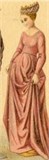
Maud
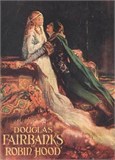
Maud as Maid Marian
My 21st grandmother married two husbands, the second of which (not my grandfather), was Robin Hood:
Maud le Vavasour, Baroness Butler
Following the death of Theobald in early February 1206, Maud returned to England into the custody of her father, who, having bought the right of marrying her at the price of 1200 marks and two palfrys, gave her in marriage, on 1 October 1207, to Fulk FitzWarin.[3] Fulk was the son of Fulk FitzWarin and Hawise de Dinan, who subsequent to a violent quarrel with King John of England, sought refuge in the woods and became an outlaw. Maud accompanied him. The legendary figures of Robin Hood and Maid Marian are said to be based on Fulk and Maud.
By FitzWarin, Maud had a son and a daughter:
DeathMaud le Vavasour died sometime before 1226. She had numerous descendants including the Earls of Ormond, the Earls of Arundel, Anne Boleyn, Mary Boleynand Elizabeth I.In fiction
Maud is the main protagonist in Elizabeth Chadwick’s The White Castle, which relates in highly fictional form, her life and adventures as the wife of Fulk FitzWarin.
References
Maud le Vavasour (1187 – 1282)
is my 21st great grandmother
Theobald II le Boteler (1200 – 1230)
son of Maud le Vavasour
Lady Maud Matilda DeVerdun Countess DeBoteler Countess Arundel (1225 – 1283)
daughter of Theobald II le Boteler
Matilda Tideshall FitzAlan Baroness Corbet De Arundel (1244 – 1309)
daughter of Lady Maud Matilda DeVerdun Countess DeBoteler Countess Arundel
Sir Thomas Corbet of Moreton, Knight of The Bath Corbet (1281 – 1310)
son of Matilda Tideshall FitzAlan Baroness Corbet De Arundel
Knight Sir Robert XII Corbet, Lord of Moreton Corbet (1304 – 1375)
son of Sir Thomas Corbet of Moreton, Knight of The Bath Corbet
Sir Roger XIII (Lord of Morton) Corbet (1330 – 1396)
son of Knight Sir Robert XII Corbet, Lord of Moreton Corbet
Robert Corbet (1383 – 1440)
son of Sir Roger XIII (Lord of Morton) Corbet
Blanche Corbet (1423 – 1458)
daughter of Robert Corbet
Humphrey Coningsby (1458 – 1535)
son of Blanche Corbet
Amphyllis Coningsby (1478 – 1533)
daughter of Humphrey Coningsby
Margaret Tyndale (1510 – 1555)
daughter of Amphyllis Coningsby
Thomas Taylor (1548 – 1588)
son of Margaret Tyndale
Thomas Taylor (1574 – 1618)
son of Thomas Taylor
James Taylor (1608 – 1698)
son of Thomas Taylor
John Taylor (1685 – 1776)
son of James Taylor
John Taylor (1727 – 1787)
son of John Taylor
John Taylor (1747 – 1781)
son of John Taylor
John Nimrod Taylor (1770 – 1816)
son of John Taylor
John Samuel Taylor (1798 – 1873)
son of John Nimrod Taylor
William Ellison Taylor (1839 – 1918)
son of John Samuel Taylor
George Harvey Taylor (1884 – 1941)
son of William Ellison Taylor
Ruby Lee Taylor (1922 – 2008)
daughter of George Harvey Taylor
Pamela Morse
I am the daughter of Ruby Lee Taylor
On September 21 the ancient Greek feast celebrating life, beauty, death, and rebirth began. The Rites of Eleusis resembled All Saints/Thanksgiving/Christmas is some obvious ways. Harvest celebrations started on the equinox and continued until the end of September, with ritual and a secret sacred mystery school. The drama of Demeter and Persephone was reenacted to symbolize the descent of the queen of the underworld every fall, and her rebirth every spring. These celebrations were well attended by people from all over Europe who came to participate in a secret initiation. Rituals celebrating goddess power continued day and night until September 30 when the last of the initiations were performed, deep in caves of the temple.
The British occultist Aleister Crowley produced his own version in 1910 in London, which later seems to have become a rock opera:
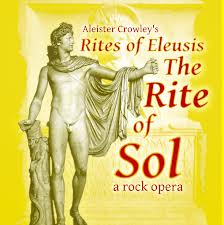
Rites of Eleusis
How do you celebrate the end of summer and the return of darkness? Octoberfest?
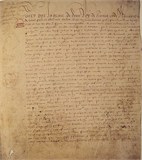
Edict of Nantes
My 9th great-grandmother was born in France and died in Northern Ireland. As usual ,this exodus was inspired by an escape from religious persecution. Her family would later settle in South Carolina as Presbyterian religious and military leaders. She married into a family called Pickens, or Picon:
The Pickens Story. as told by Stuart Clark Pickens.
About 870 a.d. the Viking “Stirgud the Stout” and his men landed in the Orkneys and Northern Scotland. They came from Norway in an effort to expand. The Pickens name comes from this group of Vikings.
Later, under their Earl, Thorfinn Rollo, they invaded France about 910 AD. They held Paris under siege until the French King, Charles the Simple, conceded defeat and granted Northern France to Rollo, who became the first Duke of Normandy.
A descendant of Duke Rollo was Duke William who invaded England in 1066. William had a census taken in England in 1086 and compiled the Domesday Book. This Listing of names has Picken listed and many variations of the spelling as well. Most notably “Pinkeny” which in the 1200’s lived in Picquigny in the Somme in the arrondisement of Amiens in Normandy.
Ghilo Pinkeny was a Domesday book tenant in chief in the county of Northampton and others, and his son Ghilo, founded the Priory of Weedon in Northampton which was a branch of the original Priory at St. Lucien in Beauvais near Picquigny. They branched into Yorkshire and acquired Shrover Hall where they were landed gentry. They also established a seat in Oxfordshire where the name was Pinke.
The Pickens name emerged as a notable English family name in the county of Northampton where they were recorded as “a family of great antiquity seated as Lords of the Manor and Estates in that shire.”
In the late 1200’s many of the Norman families of England moved north to Scotland following Earl David of Huntingdon (who later became the second King of Scotland). They expanded into Scotland where the names were Pinkie, Pickie, and Picken. They settled in Inveresk in Midlothian, Scotland. Peter Pinkie was listed as a follower of Robert the Bruce in 1303. They flourished on these estates for several centuries spreading throughout Scotland.
There were Pickenses at the battle of Bannockburn in 1314 defeating the English who outnumbered them 5 to 1, gaining Scottish Independence. This battle was the first of many major victories giving the Scots a good reputation for winning battles.
In 1328 the Treaty of Northhampton was signed between the English King, Edward III and Robert I (Bruce) officially recognizing Scottish independence and Robert Bruce as it’s king. The following year, Earl David was crowned King upon the death of Robert the Bruce and Scotland was well on its way thanks in part to the efforts of the Pickens family.
In 1521 on May the 26th , Martin Luther was banned by the edict of Worms for his religious beliefs. Any deviation from Catholicism was considered blasphemous. There was a tremendous effort throughout Europe to spread Catholicism and keep these Protestant dissidents from converting the masses.
The Scottish would not be told how to think and so would not stand for any religious persecution. On the English border the Scotch Presbyterians were treated as low life and so the border was a hard place to live. They were forced into guerilla warfare just to survive. These “Border Reevers” became the best frontier fighters in the world. There were many of the Edinburgh Pickenses among this group of fighting farmers. The Border raids were finally quieted when the Scottish king James IV took the English throne as James I in 1603. These fighters were later used by the English to quiet the Irish.
The French huguenots in the mid 1500’s felt the same as the Scottish about religious persecution, and this common belief of religious freedom forged a friendship between the Scots and the French that lasted until 1685.
It was during this time, the late 1500’s, that one Robert Picken/Picon from Scotland went to France during the reign of King Henry IV (1589 – 1610). He held a diplomatic post in the Kings Court until 1610 when Louis XIII took the crown. He then returned to Scotland near the English border and lived there until his death. He had family in Edinburgh, Stewarton, Glasgow, and the Kintyre Peninsula. The border had become a friendly place at the time because a Scottish King sat on the English throne. (James I was also James VI of Scotland and the son of Mary, Queen of Scots). This made for what Robert thought would be an easy retirement.
When his son Andrew was born in 1624, the political climate was getting difficult. Charles I began his reign over England in 1625 and some of the attitudes changed toward the “Wily Border Reevers of Scotland”, so called because of the old hatred between the two countries under Elizabeth I (1558 – 1603). The Covenanters were also uprising against the English crown and England’s religious civil war was reaching into Scotland. The Scottish king James was no longer king and old hatreds built up again atop new hatreds. But it was still a tolerable life for Robert Picken/Picon because of his diplomatic status. Robert Senior died in 1644 and is buried in Lowland Scotland.
There were other Pickenses (Pickan) in Edinburgh who were believed to be Robert Picon’s (Pickens) brothers. A lot of their children moved to Ulster in the 1620’s and 1630’s. This was a colonization effort of the English to make Ireland “civilized”. (See Ulster History).
In 1644 Andrew had a son Robert named after Andrew’s father. Robert was born in Scotland according to LDS records. He went to France with his father at a young age. While in France, Robert met the young widow of a Frenchman named Jean Bonneau. Her name was Esther Jeane Benoit and she was from a Protestant huguenot family. They began a family there. Among Robert’s children were William Henry Pickens, who was born in 1669 (LDS) in France. His other sons were Andrew, John, Robert, Israel, and Thomas, and a daughter who married a Davis.
In 1651 Oliver Cromwell defeated Charles and began the commonwealth. The Irish Catholic rebellion was in full swing in Ireland and the English sent the Presbyterian/Covenanter Scottish armies (who called themselves God’s army) to stop them.
Catholicism was outlawed in Ireland and the Scots (fighting for the English) tried to convert the Irish Catholic Papists to the Presbyterian faith. That failed because the Scots didn’t want to tell people what to believe. So Cromwell’s army took over to enforce the English law.
Andrew Picken/Picon still believed, as most Scots did, in religious freedom and wanted to avoid that war because it seemed to him to be hypocritical. So he took his family to France to the town that his father had previously lived in.
The families enjoyed a peaceful existence in France until 1685 when they revoked the Edict of Nantes. There was no more religious freedom in France unless you were Catholic. This was a good reason for Andrew and his family to return to Scotland and find their relatives. So Robert and Esther, his parents and his children, and a host of French friends all went to Scotland to practice the Presbyterian faith. They became split on the subject of becoming Covenanters. Most believed that everyone should have the freedom to choose their religion. The Covenanters believed only in the right to be Presbyterian. The Catholics believed they were the one true religion.
This is what David Cody, Assistant Professor of English, Hartwick College had to say about the Covenanters.
“The Covenanters were supporters of the Scottish Covenant of 1638, which was a national protest against the ecclesiastical innovations in the Scottish Church imposed at Edinburgh and subscribed to by various nobles, ministers, and burgesses. Those who signed the Covenant, which was initially neither anti-royalist nor anti-Episcopalian, though it became both, declared that they would defend their religious beliefs against any changes not mandated by free assemblies and the Scottish Parliament. The term was also applied to their spiritual heirs who opposed the reintroduction of episcopacy in 1662.
“Some Covenanters were also signatories of the Apologetical Declaration which declared war on all established political officials, soldiers, judges, conformist ministers, and informers. This document, however, provoked a response upon the part of the authorities which became known as the Killing Times: during 1684-85, at least 78 persons were summarily executed for refusing to retract their allegiance to the declaration, and many others were executed after trial. Despite often brutal repression, especially during the period between 1678 and 1685, the excluded ministers, supported by the local aristocracy and independent peasantry, maintained an underground church in the south-western parts of Scotland.”
South Western Scotland is where our ancestors moved to at the time, Kintyre.
But in England the Covenanters were quelled and the Presbyterians were the lowest of second class citizens. Presbyterian marriages were considered not valid and they were labeled as fornicators. Anyone seen with a Presbyterian Covenanter was arrested with him and whole prisons were built to house them. It was a bad time near the border for humble Scottish cattle ranchers who were just trying to make a living.
Their land could no longer support them due to the ravages of war, and the English demanded outrageous taxes and rents. This caused so many people to leave Scotland that whole towns were left deserted. The massive emigration was compared to great swarms of bees rising out of the field.
A lot of the Pickenses went to the faraway tip of the Kintyre Peninsula to escape the strife and farm new land. It was 140 miles to the nearest city (Glasgow) along a thin strip of land, and it was only 14 miles across the water to Ireland (Ulster). Eventually Campbeltown became a busy port for refugees.
Then came the revolution of 1688 and Presbyterianism was restored as the state religion in Scotland.
In 1685, when the Pickenses arrived back in Scotland from France, they found that all their relatives had moved to Ulster, Northern Ireland. In the search for peace and religious freedom most of them followed the rest of their Clan to Ulster by way of Campbeltown, Argyll, Scotland. It seems that on their way through Scotland some members of the family stayed in the towns the went through.
CHILDREN OF ROBERT ANDREW PICKENS AND ESTHER JEAN BENOIT1. WILLIAM Henry born in France in 1669 went to Ireland with his father by way of Campbeltown, married Margaret Pike in 1693 in Ireland and had the following children all in Ireland: Israel born 1693; Margaret born 1695; Andrew born 1699; Robert Pike born 1697; William born 1705; John born 1710; Israel born 1712; Gabriel born 1715; and Lucy born 1718. All were born in Ireland and all moved to America in the spring of 1719. They appear in 1719 in Bensalem Church in Bucks County Pennsylvania as recent Immigrants from Ireland. 2. ANDREW moved to Fenwick and married Jane Mitchall; they had a daughter named Bessie who was christened May 13, 1705. 3. JOHN Stayed at Campbeltown and married Anne Colvine on June 2, 1691. They had at least 2 sons, James born March 20, 1692; and Alexander born July 9, 1693. 4. ROBERT moved to Glasgow and married Janet Corsby; they had at least 2 sons, Robert Christened June 5, 1707; and Alexander Christened August 27, 1721. 5. ISREAL born in France in 1676 went to Ireland with his father by way of Campbeltown, married and had at least 2 sons; William born in 1720, and Thomas born in 1730. 6. THOMAS stayed in Campbeltown and married a ? Clark; they had a daughter named Martha christened June 5 1692. 7. ?? A daughter who married a Davis. In Ulster in the 1690’s, the Irish papists, who were still mad at the Scots for Cromwell’s war 40 years earlier, banned Presbyterian services, and outlawed their ministers. So the Scotch/Irish Presbyterians had to have their services in the woods with guards posted at the corners to keep their ministers from being arrested. Hence the phrase, “They read their bibles with their guns cocked.”
The Irish cities of Derry and Coleraine were supposed to be English cities given to Lord Abercorn as a result of the Nine Years War. The Scots built a 20-foot wall around Derry to defend it from the English siege in the brutal winter of 1688-1689. The Scots lost the siege but were not displaced and so they took over Coleraine. Then came the Battle of the Boyne, on July 1, 1690.Click for a Map of the BattleAfter that the Protestants had no rights anymore. Ulster was so full of Scots that they outnumbered the English by 20 to 1. The Irish were happy that the English were being replaced by Scots, but still didn’t want so many Protestants in their country. Life was becoming just as hard for the Scots in Ireland as it was near the English border. This makes three generations that had to relocate because of religious persecution. They were tired of it.
They had heard of Pennsylvania.
There was a land where no one would tell you what to think or how to live. This land is not only rich farmland, but it is free for the taking! You could preach or worship any religion you want, Right next to someone preaching another religion. No tax, No Tithes, No rents, and No persecution. Imagine, Just walk into the frontier and claim a farm. Run it for only yourself and raise a family. Start a small village of just friends and family. If you’re a criminal – leave it behind. If you’re poor – leave it behind. If you’re afraid of being arrested for an “idea” – leave it behind. There is peace, prosperity and freedom on the frontier in the New World.
And all you have to do is get there.
There had been no harvest for 5 years due to the ravages of war and several severe winters. This recreated the need for emigration in the early days of the 1700’s. Many paid passage by agreeing to 4 years as indentured servants in order to take advantage of the fertile and free land in America.
Passage to America was not cheap, and to move your whole family (which was quite large back then) plus all your livestock, would cost a bundle. One could only go by ship and the voyage was tough enough without kids and livestock, if you could even get passage for livestock which wasn’t likely. If you could not afford passage, the only way was indentured servitude. There were rich American plantation owners who would pay for a man’s passage if he would work for a year. If he brought his family he would have to work four years. Unfortunately, some emigrants would literally jump from the ship to avoid the servitude altogether. They would disappear into the frontier and the plantation owner was out a considerable sum of money.
There were many references to bad ocean voyages, and even in the best of trips, which lasted 2 to 3 weeks; the ships were overloaded with people, the rations were short or just barely enough, the food was vermin ridden, and the water was stagnant and green with life. Many were blown off course northward. The weather would turn very cold and even icebergs were sighted. Hunger and thirst reduced them to shadows. Many killed themselves by drinking salt water or their own urine. Their journey lasted up to 13 weeks or 3 1/2 months. The disembarkation process at their destination was also harsh. First the ones who could pay full price were allowed to pay and get off the boat. Next the healthy ones were sold to their new masters for the full fee. Then unhealthy ones were sold at auction. This process often took several weeks. If one of the family died, the rest of the family members were held accountable for passage fees of the deceased. However, the Ulstermen thought they had found the Promised Land.
The Scots/Irish who had indentured themselves to reach the US, set out for the frontier immediately on fulfilling their Indenture. The “Frontier” was 40-50 miles west of Philadelphia. Across the Susquehanna River was the Alleghenies which marked the frontier. This is where the German Palatines settled. The Scots usually settled as far out as possible to be far enough from society so as to make their own kind of living. Just beyond the Ohio River lay the rich Cumberland Valley. Eventually, a ferry opened the Cumberland Valley to the Scots/Irish and it became their heartland. The French claimed to own the frontier beyond the Ohio River but there was no way to stem the flow of Scots/Irish to the area. Our ancestors settled in what was known as the “Seven Ranges” area, just beyond the Ohio River. They renamed the area “Scotch Ridge”. Scots were famous for being the furthest out on the frontier. They marked their property by cutting their initials in trees on their boundaries. Then cut circles in the bark to kill the tree. They refused to pay for the land, since God owned it. The wives spun flax, milled the corn, worked in the fields and bore 10-15 children. They also educated their own children. Homemade whiskey was important for trade and made a harsh frontier life more tolerable. The Whiskey also made the Indians more friendly to the Scots than the Germans or English. So the Scots made a good barrier between the Indians and the settled areas
Ester Jeanne Bonneau (1644 – 1699)
is my 9th great grandmother
William Pickens (1670 – 1735)
son of Ester Jeanne Bonneau
Anne Pickens (1680 – 1750)
daughter of William Pickens
Nancy Ann Davis (1705 – 1763)
daughter of Anne Pickens
Jean PICKENS (1738 – 1824)
daughter of Nancy Ann Davis
Margaret Miller (1771 – 1853)
daughter of Jean PICKENS
Philip Oscar Hughes (1798 – 1845)
son of Margaret Miller
Sarah E Hughes (1829 – 1911)
daughter of Philip Oscar Hughes
Lucinda Jane Armer (1847 – 1939)
daughter of Sarah E Hughes
George Harvey Taylor (1884 – 1941)
son of Lucinda Jane Armer
Ruby Lee Taylor (1922 – 2008)
daughter of George Harvey Taylor
Pamela Morse
I am the daughter of Ruby Lee Taylor
THE FRENCH TRADITION: General Andrew Pickens in his letter t General Lee in 1811 madethe following statement: “My father and mother came from Ireland. My father’s progenitors emigrated f rom France after the revocation of the Edict of Nantes. (Appendix No. I)” NOTE: Recently, I had someone check the listing of emigree from\ France after the Edict. There is not any listing for a Robert or Andre (Andrew) Pickin, Picken, Picon, Pican. Neither is there any listing for a Lady Ester J BONNEAU. It is my assumption that Robert married and moved to Ireland BEFORE the Edict, probably before 1667. I believe that the Robert showing in the Hearth Tax of 69 is in reality the same as William and Israel’s father. There seems to be some support for the claim that one Robert PICON, a Scotchman or Briton at the court of France was a Protestant who fled from Scotland in 1661 to avoid peresecution of Charles II. He may have gone to France in the days when there was a close alliance between Scotland and France. In France he is said to have married Madam Jean Bonneau, also a protestant. They fled France after the revocationof the Edict of Nantes by Louis XIV in 1685, annulling all privaledges granted to Prostestants by his grandfather Henry IV. Tradition continues that they went to Scotland, later to Northern Ireland, among their religious kinsmen, the Presbyterians
In each tree there are challenging branches. My own difficult ancestor to whom I have dedicated untold number of hours in research is Thomas Peterson. He is special because he is mentioned in the handwritten notes I had to begin my whole search. His granddaughter, Sarah Helena Byrne, wrote facts and her own opinions about family members, said he is Pennsylvania Dutch. She also mentions that his nephew, James Peterson, married my grandmother Scott after her first husband died. This seems simple enough, but I am stumped because I can’t find a record of Thomas’ birth in Indiana in 1825. His parents are alleged to be born in Pennsylvania, but I know facts were sometimes recorded incorrectly in the census. What were his parents doing way out west before the Civil War? Who were they, and where in Pennsylvania were they born? This all remains unanswered. It makes me crazy…
Thomas Peterson (1825 – ?)

Sears family graveyard
My 10th great grandmother married a Mayflower Pilgrim, Richard Sears. Dorothy Jones was born about 1603, daughter of George and Agnes (_____) Jones of Dinder, Somerset. She married Richard Sears of Plymouth Colony by 1637. “Cady [i.e., Goody] Seares was buried the 19th of March [16]78[/9]” at Yarmouth.Their 3 children: i PAUL, b. about 1637 (d. Yarmouth 20 February 1707/8 in 70th year [gravestone]); m. by 1659 Deborah (eldest child aged thirteen on 3 July 1672, said to be daughter of George Willard. ii DEBORAH, b. about 1639 (d. Yarmouth 17 August 1732 “within about one month of 93 years of age;” m. by 1661 Zachariah Paddock (eldest child aged seventeen on 2 February 1678. iii SILAS, b. say 1641; m. by about 1665 Anna, probably daughter of James Bursell of Yarmouth
My visit to Cape Cod and Plymouth to uncover the history of my ancestors was an adventure and a surprise. When I learned that the Wampanoag tribe had lost almost 200 years of the data, graves, and details of the history of their people I was confused and upset. Next I visited the museum complex at Plimouth Plantation where the culture and historical way of life of the Wampanoag tribe is demonstrated. It is an attempt to redress and correct some misinformation that has been passed down for a long time. The young people who work there enjoy their jobs teaching people about their ancestors.

Forster Coat of Arms
My 13 Great Grandfather was born in England and died in Long Island. He came to America at the age of about 35. He was a founder of the town of Lynn,MA before moving to New York.
Christopher Foster — He came from England in the “Abigail”, in 1635, age 32, with his wife Frances, age 25, and children Rebecca, Nathaniel, and John. The “Abigail” embarked from London, June 4, 1635 and arrived in Boston about Oct. 8, 1635 with small pox aboard. He was made Freeman in Boston, April 17, 1637. In the same year, he was a resident of Lynn, MA, where in 1638, sixty acres of land were alloted to him. He came to Southampton in 1651. He had a previous spouse name unknown who died in 1628. Sally’ s Family Place-Wheeler Christopher Foster was born in July 1603 (Ewell, Surrey, England); He married there 24 Dec 1628 Frances Stevens, born 1 July 1610 daughter of Alice Stevens (will 1645) of Ewell in Surrey, England. Chrostopher Foster styled himself a husbandman on his shipping, embarked in London, June 17, 1635 in the “Abigail.” “In the Abigail from the minister of their conformitie and from the Justices, that they are no susidy men. Christopher foster ae 32, Bxofr ffrancis ffoster ae 25, Rabecca ffoster ae 5, Nathaniel ffoster ae 2, Jo, ffoster ae1, Alice Steevens 11, Tho Steevens 12. New pp. C. E. Banks in the book Planter of the Commonwealth, “which traces 2,646 emigrants to America for whom there is a clear record says that Christoper Fostrer was a “husbandman (farmer) of Ewell, County Surrey,” and that Alice Stevens was “probably sister of Mrs. Foster.” He adds the following about the “Abigail” on which others of the passengers were John Winthrop Jr. age 27 and his wife Elizabeth and son Deane. “Abigail of London, Richard Hackwell, Master. She listed passengers fo New England from June 4 until July 24, and sailed from Plymouth as her last port of departure about Aug 1, with two hundred and twenty persons aboard, and many cattle. She arrived in Boston about Oct. 8, 1635, infected with smallpox. among those coming in this ship, but not listed, were Sir Henry Vane, son and heir to Sir Henry Vane, Comptroller of the King’s Household, traveling incognite, the Revernd Hugh Peter, pastor of the English Church at Rotterdam, and the Reverend John Wilson, who was returning to Boston, with his wife, hr first appearance in New England. They were part of the Puritan migration and Hugh Peters, later Cromwell’s chaplain, was on the same ship and helped form the church congregation to which Christopher belonged. Some of the passengers with Christopher Foster are also connected to Sir Thomas Foster. Sir Henry Vane’s son who is the Comptroller of the King’s Household is connected to Sir Thomas Foster household because of the Comtroller for King Henry VIII is entombed next to Sir Thomas Foster. This is amking a clear connection to the royal family especially with Governor Winthrop’s son aboard also and Christopher Foster with them. Further Info on Christopher: He was made a freeman at Boston (or Lynn) April 17 1637. In the same year he was a resident of Lynn where in 1638 sixty acres were allotted to him. At one time, the Fosters lived in Nahant St., Lynn. In 1647, he went to Hempstead, and then to Southampton in 1650, both in New York. In October of 1650, we find him as a townsman or selectman to manage the affairs of the town, being one of the 41 propietors. He mny have been part of the originlal Lynn group that setled Southampton LI; Christopher first appears in records of Southampton in 1651 and he was living there in 1670. His son Nathaniel removed to Hungington LI and their resided. Christopher Foster died 1687; he resided Lynn, MA. and Southamptoin LI (Long Island, NY).
Christopher Lynn Foster (1603 – 1687)
is my 13th great grandfather
John Christopher Foster (1634 – 1687)
son of Christopher Lynn Foster
Rachel Foster (1675 – 1751)
daughter of John Christopher Foster
Abraham Sr Reeves (1699 – 1761)
son of Rachel Foster
Hannah Reeves (1720 – 1769)
daughter of Abraham Sr Reeves
John McGilliard Jr (1759 – 1832)
son of Hannah Reeves
John McGilliard III (1788 – 1878)
son of John McGilliard Jr
Mary McGill (1804 – 1898)
daughter of John McGilliard III
John Wright (1800 – 1870)
son of Mary McGill
Mary Wright (1814 – 1873)
daughter of John Wright
Emiline P Nicholls (1837 – )
daughter of Mary Wright
Harriet Peterson (1856 – 1933)
daughter of Emiline P Nicholls
Sarah Helena Byrne (1878 – 1962)
daughter of Harriet Peterson
Olga Fern Scott (1897 – 1968)
daughter of Sarah Helena Byrne
Richard Arden Morse (1920 – 2004)
son of Olga Fern Scott
Pamela Morse
I am the daughter of Richard Arden Morse
He first came to Boston, where he was a Freemen on 17 April 1637. In 1638, he moved to Lynn, Massachusetts. In 1647, he went to Hempstead, and then to Southampton in 1650, both in New York. In October of 1650, we find him as a townsmen or selectmen to manage the affairs of the town, being one of the 41 proprietors.
HISTORY: Christopher Lynn Foster is the son of Sir Knight Thomas Foster (FORSTER). He (Thomas)changed his name because he married a close cousin named Susanna FORSTER. They had the same Great Great Great Grandfather. This family tree goes back to Sir Knight John Forster and Sir Knight Richard Foster. Sir John rode with King Richard I the Lion Heart to Palestine in the late 1100’s. This family was given the Bamburg Castle by Queen Elizabeth I. The family went bankrupt in the 1700 or 1800 hundreds and sold the castle the the Armstrong family of Adderstone, Northumberland, England which is where the castle is located. The FORSTER FAMILY came to England in the 1000 AD time frame to escape the Saxon invasion into Flanders. The Forster family changed from FORESTER (THE FAMILY were the Counts of Flanders) and evolved from the de FORRESTER of Belgium. The de FORRESTER FAMILY was by record the Prince of Dijon, Belgium in 740 AD. The Counts of Flanders (Anacher Great FORESTER, BALWIN I through the V, Arnulf Forester had marriages to Princess of England, Princess of France, Princess of Luxemboroug, etc. One of the Baldwin’s daughters married William the Conquer. Her name was Matilda. (Info received from Leroy Foster Nov 2002)
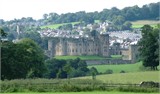
Alnwick Castle
My 16th great grandfather was born into a fancy Scottish family. Politics, diplomacy and treason were part of life in Scotland under King James III:
Robert Boyd (d.c.1470) Lord Boyd, was a Scottish Statesman.
A son of Sir Thomas Boyd (d. 1439), Robert Boyd belonged to an old distinguished family, of which one earlier Sir Robert Boyd, had fought with Sir William Wallace and Robert the Bruce.
Created Lord Boyd in 1454, he was one of the Regents during the minority of King James III, in 1460. He conspired with his brother, Sir Alexander Boyd, and obtained possession of the King’s person in 1466 and was made by Act of Parliament sole Governor of the Realm.
He negotiated the marraige between James and Margaret of Norway in 1469 and secured with it the cession of the Orkney Islands by Norway. He was appointed Great Chamberlain for life, and Lord Justice General in 1467.
Conflict broke out between the King and Boyd family. Robert, and his son Thomas Boyd, 1st Earl of Arran (who was married to Princess Mary), were out of the country involved in diplomatic activities when their regime was overthrown. Robert, 1st Lord Boyd was pronounced guilty of treason and fled firstly to Alnwick, Northumberland. His brother and assistant, Sir Alexander Boyd, was captured and beheaded on November 22, 1469.
Robert 1st Lord Boyd fought in the English service in the French wars, and died in exile.
He married Mariotta, daughter of Sir John Maxwell of Calderwood, and had numerous issue. One of his daughters, Elizabeth, married Archibald Douglas, 5th Earl of Angus.
Robert Boyd (1425 – 1470)
Lord Boyd conspired with his brother, Sir Alexander Boyd, and obtained possession of the young King’s person in 1466 and was made by Act of Parliament sole Governor of the Realm; and Great Chamberlain for life, and Lord Justice General in 1467.[4] Early in that year he procured the marriage of his eldest son, Thomas, (created Earl of Arran for that occasion) with Mary, elder sister of James III, which aroused the jealousy of the other nobles[1] and made his eventual downfall inevitable since the King regarded the marriage as an unforgivable insult.
Lord Boyd obtained the cession of the Orkney Islands to Scotland, 8 September 1468, from Christian I, King of Norway, for whose daughter Margaret, he negotiated a marriage with James III. While absent for that purpose he and his son Thomas (the Earl of Arran) and his brother (and coadjutor) Sir Alexander Boyd, were attainted for high treason, whereby his peerage became forfeited. He was living Easter 1480/1, and died before October 1482, it is said, at Alnwick in Northumberland where he had fled in 1469.[1]
James III’s biographer sums Boyd up as an unscrupulous political gambler and an inveterate optimist. To forcibly assume guardianship of an underage King was, indeed, a familiar path to power in mediaeval Scotland, but it was also a dangerous path. Boyd underestimated the dangers, overestimated his support, and made the fatal mistake of marrying his son to the King’s sister, an insult the King would not forgive.[5]
FamilyRobert Boyd belonged to an old and distinguished family, of which one earlier Sir Robert Boyd, had fought with Sir William Wallace and Robert The Bruce.[4] He was the son and heir of Sir Thomas Boyd of Kilmarnock (died 9 July 1439).[1] Robert married Mariot (or Janet), daughter of Sir Robert Maxwell of Calderwood. She died after 25 June 1472, apparently early in 1473.[1] They had three sons:[6]
[ edit] References
Attribution
 This article incorporates text from a publication now in the public domain: Chisholm, Hugh, ed. (1911). “Boyd, Robert Boyd”. Encyclopædia Britannica. 4 (11th ed.). Cambridge University Press. pp. 353,354. http://www.archive.org/stream/encyclopaediabri04chisrich#page/353/mode/1up. This article incorporates text from a publication now in the public domain: Cokayne, George Edward, ed. (1912). Complete peerage of England, Scotland, Ireland, Great Britain and the United Kingdom, extant, extinct or dormant (Bass to Canning). 2. London: The St. Catherine Press, ltd.. pp. 260,261. http://www.archive.org/details/completepeerageo02coka. This article incorporates text from a publication now in the public domain: Balfour, Paul, James (1904). The Scots peerage; founded on Wood’s edition of Sir Robert Douglas’s peerage of Scotland; containing an historical and genealogical account of the nobility of that kingdom. 5. Edinburgh: D. Douglas. pp. 145,146.
Peerage of ScotlandPre ceded byNew Creation Lord Boyd1454–1482Succeeded byJames Boyd
 mermaidcamp