mermaidcamp
Keeping current in wellness, in and out of the water
You can scroll the shelf using ← and → keys
You can scroll the shelf using ← and → keys



This holiday season I have decided to create a diet plan. Each year we splurge eating outside of our normal diet to enjoy some seasonal goodies both at home and out and about. I think it is silly to deny yourself all relatively unhealthy foods since it creates a special power around the food. You can taste almost anything, then put it down and walk away without harming yourself. Moderation in all things may seem stingy in comparison to the commercial holiday cheer with merchandise at the base of it all. Gifting or not gifting is easy at our house. We like experiences better than items so very few presents are given unless they are special yard sale finds. We love art, but filled our home already, so we have to go to galleries and museums to see anything new. Our tradition involves making treats and attending special events. This season I am mindfully setting a budget, not so much in dollars, but in calories, alcohol, and fat.
If I allow myself to be mindless at the supermarket I end up with a lot of unhealthy treat ingredients that will become cookies, etc. I have become a creative bartender and now have a vast array of interesting liquor with which to mix cocktails. The idea of the taste profile of the cocktail is to enhance your snacks or meal. I enjoy creating new cocktails from recipes and sometimes by experiment. Since I enjoy taking risks in the kitchen, my bar tending is a natural extension of that exploratory spirit. I am carried away with using seasonal ingredients and the fruit from my garden in cocktail recipes. I could not work at a bar since I know few classic drinks, but in terms of kinky creations I get better all the time. Therein lies the problem. These tasty spirits take over the situation and decide that moderation is out the window for the night. One good taste leads to another. Last winter I did allow the spirit of alcohol to leave the barn door open for the spirit of sugar and other inferior foods to enter my body in mass quantities. My general health suffered from this overdose, and required reform of my diet in order to recover.
This winter as the nights grow longer and the wood stove glows I am starting a written log of what I eat and drink. This is not for publication, but for my own information. I will not allow sneaky spirits, holiday or otherwise, make me fat this winter. They have no power over me. I never drank hard alcohol until a couple of years ago when I bought some cheap bourbon to pour on my dad’s grave on All Soul’s Day. My parents both loved to cocktail way too much, which was responsible for many of their health problems. I have chosen to have a different relationship with alcoholic spirits. Cheers! Happy Holidays! Think before you drink!!!

burial place

coat of arms
William Walker received a grant of land in 1639 in Hingham, Massachusetts and was among the first settlers there. He was with Richard, James, and Sarah Walker when they came to New England in the “Elizabeth” in April 1635. He later removed to Eastham where he was admitted to freedom June 3, 1656.
William Walker was born in 1620 at England. He immigrated in 1635. He immigrated in 1643 to Plymouth, MA. He married Sarah Snow, daughter of Nicholas Snow and Constance Hopkins, on 25 February 1654 at Eastham, MA (25 Jan 1655 per #494). William Walker’s name is on the list of those able to bear arms in 1643 and he was admitted as a freeman 8 June 1656 at Eastham, Barnstable, MA. He was in COURT/CIVIL on 3 March 1663 at Plymouth Colony: Ralph Smith of Eastham, fined 3s, 4p for breaking the peace in striking William Walker. He was in COURT/CIVIL on 5 June 1671 at Plymouth: William Walker was charged with stealing cloth from Thomas Clark, “of Boston” and was sentenced to pay double for the cloth and for telling a lie about it, was fined 10 Pounds. He died in 1703.
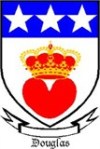
My 19th great grandfather died in battle defending Scotland against the English..Think bloody brutal….think crusaders…think crazy people…..

Battle of Halidon Hill
Although Robert the Bruce’s reign in Scotland resulted in recognition of Scotland as a separate nation by Edward III in 1328, further wars with England were soon to follow. The deep animosity between England and Scotland that hardened after the wars of Independence, led to intermittent warfare for much of the next three hundred years. Scotland was handicapped in that, sometimes when a strong king was needed, they ended up have a weak king or a minor on the throne. This power vacuum at the top, helped to create an environment where the more noble families of Scotland vied for the power. The Earls of Douglas (the Black Douglases), the Earls of Angus (the Red Douglases), the Hamiltons and the Lennox Stewarts, were all related to the Scottish crown by marriage and battled for the power behind the throne. On Bruce’s death in 1329, he was succeeded by his 5 year old son, David II. England lost little time in taking advantage of the presence of a minor on the Scottish throne. Edward III provided encouragement and active support to Edward Balliol, the son of John Balliol, for claiming the throne. In 1332, Edward Balliol invaded Scotland with a mainly English force and was crowned King at Scone, after routing a much larger Scots army under Donald, Earl of Mar as Guardian, at Dupplin Moor near Perth. The disastrous defeat was due to incompetency of Mar, the use of long bows and their devastating effect by the English, and a guide with local knowledge, provided by a Murray of Tullibardine. The following year, 1333, saw the Scots suffer an even more disastrous defeat at Halidon Hill, near Berwick. In an effort to end the siege of the town of Berwick by the English, Sir Archibald Douglas, who had succeeded Mar as Guardian, ignored reasonable battle tactics. They advanced across a bog, against a strongly held position on Halidon Hill, under heavy fire from the English archers with their deadly longbows. They suffered enormous casualties and failed to even reach the English. Douglas, and most of the other leading Scots nobles and fighting men were left dead on the field. In 1334, Balliol acknowledged Edward III’s overlordship and ceded the southern half of Scotland, from East Lothian to Dumfries, to England, an act which was to mean over a hundred years of warfare before they were recovered. This resulted in the Lochmaben Castle being given to the English. It also affected Thomas Carruthers, 1st Laird of Mouswald. For his earlier support of Robert the Bruce, Thomas Carruthers had received in about 1320, a charter for all the lands of “Musfald et de Appiltretwayt cum pertinenciis”. This Thomas also received in the same year, a charter of half of all the lands, with pertinents, which belonged to “Robert de Applingdene in valle Anandie”, due to his marriage to one of Robert de Applynden’s daughters, Joan. These lands formed the kernel of what was to become just 4 generations later, the 1st Carruthers Barony – Mouswald, which is located just a few miles south of Dumfries. With Edward Balliol ceding the land of Dumfries to Edward III, Thomas Carruthers accepted an office under Edward III of England and relocated there, leaving his Mouswald land to his next oldest brother, William, now 2nd Lord Mouswald. Thomas is assumed to be the founder of the Carruthers family in England, where the family appeared at an early date in Cumberland, Northumberland, Durham, and Yorkshire.
Sir Archibald Tyneman Regent Douglas:
The younger son of Sir William “le Hardi” Douglas, the Governor of the castle at Berwick-upon-Tweed, and his wife, Eleanor de Lovaine. Douglas was also half-brother of “the Good” Sir James Douglas, King Robert the Bruce’s deputy.
Douglas is first heard of in 1320 when he received a charter of land at Morebattle in Roxburghshire and Kirkandrews in Dumfriesshire from King Robert. In 1324, he was recorded as being granted the lands of Rattray and Crimond in Buchan and the lands of Conveth, Kincardineshire, already being possession of Cavers in Roxburghshire, Drumlanrig and Terregles in Dumfriesshire, and the lands of West Calder in Midlothian. By the time of his death, he was also in possession of Liddesdale.
History then keeps quiet about Douglas except whilst serving under his older brother, James, in the 1327 campaign in Weardale, where his foragers “auoint curry apoi tot levesche de Doresme”– overran nearly all the Bishopric of Durham. (Scalacronica)
Following the death of King Robert I and his brother’s crusade with the dead king’s heart, Douglas once again becomes of note. He was made guardian of the kingdom since he was “the principal adviser in…the confounding of the king” as much as he was heir to his brothers influence after Murray’s capture. Archibald’s success in local raids though, did not prepare him for full scale conflict.
During the Second War of Scottish Independence, Edward Baliol, son of King John of Scotland, had invaded Scotland with the backing of Edward III of England, inflicting a defeat on the Scots at the Battle of Dupplin Moor. Douglas served under the dubious leadership of Patrick V, Earl of Dunbar leader of the second army that aimed to crush the smaller Balliol force. Following the rout of the Earl of Mar’s force Dunbar did not engage the disinherited but retreated allowing Edward Balliol to be crowned at Scone. Following this battle, and as a sweetener to the English, Edward Baliol agreed to cede the county, town and castle of Berwick to England in perpetuity. However Douglas led a Bruce loyalist defeat on Balliol at theBattle of Annan, forcing him to flee back to England.
Battle of Halidon Hill
Edward III himself came north to command his army, and laid siege to Berwick. However, a temporary truce was declared with the stipulation that if not relieved within a set time, Sir Alexander Seton, the governor, would deliver the castle to the English. Douglas raised an army to relieve the beleaguered defenders of Berwick. As a feint to draw the English away he invaded Northumberland, but was forced to return to Berwick when the English refused to be lured. On 19 July, Edward’s army took positions at the summit of Halidon Hill, a summit some mile and a half north of the town with commanding views of the surrounding country. Douglas’ numerically superior force was compelled to attack up the slope and were slaughtered by the English archers, a prelude, perhaps, to the battles of Crécy and Agincourt. The English won the field with little loss of life, however by the close of the fight, countless Scots common soldiery, five Scots Earls and the Guardian Douglas lay dead. The following day Berwick capitulated.
Archibald was succeeded by his son, William Douglas, 1st Earl of Douglas.
Sir Archibald Douglas married Beatrice Lindsay, daughter of Sir Alexander Lindsay of Crawford, an ancestor of the Earls of Crawford. They had three children.
Sir Archibald Tyneman Regent Douglas (1289 – 1333)
is my 19th great grandfather
Baroness Catherine Douglas (1320 – 1360)
daughter of Sir Archibald Tyneman Regent Douglas
John de Vaux Barnbarroch (1365 – 1384)
son of Baroness Catherine Douglas
John De Vaux (1402 – 1456)
son of John de Vaux Barnbarroch
Isabella Vaus (1451 – 1510)
daughter of John De Vaux
Marion Accarson (1478 – 1538)
daughter of Isabella Vaus
Catherine Gordon (1497 – 1537)
daughter of Marion Accarson
Lady Elizabeth Ashton (1524 – 1588)
daughter of Catherine Gordon
Capt Roger Dudley (1535 – 1585)
son of Lady Elizabeth Ashton
Gov Thomas Dudley (1576 – 1653)
son of Capt Roger Dudley
Anne Dudley (1612 – 1672)
daughter of Gov Thomas Dudley
John Bradstreet (1652 – 1718)
son of Anne Dudley
Mercy Bradstreet (1689 – 1725)
daughter of John Bradstreet
Caleb Hazen (1720 – 1777)
son of Mercy Bradstreet
Mercy Hazen (1747 – 1819)
daughter of Caleb Hazen
Martha Mead (1784 – 1860)
daughter of Mercy Hazen
Abner Morse (1808 – 1838)
son of Martha Mead
Daniel Rowland Morse (1838 – 1910)
son of Abner Morse
Jason A Morse (1862 – 1932)
son of Daniel Rowland Morse
Ernest Abner Morse (1890 – 1965)
son of Jason A Morse
Richard Arden Morse (1920 – 2004)
son of Ernest Abner Morse
Pamela Morse
I am the daughter of Richard Arden Morse

Richard landing with Pilgrims
Oct. 1665, John Cooke and his Brother-In-Law Nathaniel Warren, were appointed by Plymouth Colony to “treat with Philip the Sagamore about the sale of such lands as are to be sold by him, and to purchase them in the behalf of the country.” Philip the Sagamore, sometimes called Metacom, was the son or grandson of Massasoit, and leader of the Wampanoag Indians. He would later be dubbed “King Philip” during the Wampanoag’s war he led against the English in 1676.
His prepared his will in 1661 to resolve disputes over his father’s estate.
From the book “Mayflower Families Through Five Generations” Richard Warren, Volume Eighteen Part 1 – Third Edition by the General Society of Mayflower Descendants 2004
On June 11 1653 Jane Collyare (Collier) on behalf of her grandchild Sara, the wife of Nathaniel Warren. Elizabeth Warren and Nathaniel Warren agreed to let the court resolve their differences over certain lands of Mr. richard Warren deceased.
Nathaniel Warren became a Freeman 3 June 1657. On 1 June 1658 he was a Deputy from Plymouth, a position he frequently held.
On 15 oct 1661 Nathaniell Warren “aged thirty seaven yeares or thereabouts” made a deposition. NOTE: spelling in the ( )’s are exactly the way it was written back in 1661.
The will of Nathaniel Warren Sr. of Plymouth, dated 29 June 1667, codicil dated 16 July 1667, names wife Sarah; dau. Hope who is lame; other children (not named); the codicil mentions mother Elizabeth Warren; brother Joseph Warren; sisters Mary Bartlett, Sr., Ann Little, Sarah Cooke, Elizabeth Church and Abigail Snow. The inventory was taken 21 Oct 1667, sworn by widow Sarah Warren who was granted administration 30 Oct 1667.
On 9 Jan. 1689/90, Sarah Warren sold land in Plymouth to her son James Warren. On 9 Jan. 1689/90, the other heirs of Nathaniel Warren consented to the sale, they were: Richard Warren; Nathaniel Warren; Jabiz Warren; Elizabeth Green; Sarah Blackwell; Thomas Gibbs and wife Alice; Jonathan Delano and wife Mercy Delano.
On 19 Sept. 1694 Jabiz Warren of Plymouth, yeoman, sold to John Gibbs land in Middleboro which was bought by his father Nathaniel Warren.
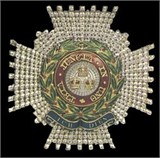
Order of the Bath
SIR JOHN TYNDALL KT., the only son of Sir ‘William by Mary Mondeford, was ten years old when his father died, and was then already contracted to marry one of the daughters of Humphrey Coningsby, Serjeant-at-Law (afterwards a Knight and a Judge of the King’s Bench), to whom his wardship and marriage had been sold by his father.
He married accordingly Amphillis Coningsby, who died before him on 18th Jan. 1532-3, leaving nine children. A gray marble slab in the chancel of Hockwold Church bears the effigies in brass of a lady and nine children, with this inscription:
Qui~quis ens qin transieris sta. perlege, plora,
Sum quod ens, fuciainque quod es, pro me piecor ora
Obitus Amfelicie Tendall decimo octavo die Mensis Januar. A I). MccccoXXXi j”
Sir John Tyndall was one of the Knights of the Bath created on 31st May 1533 at the coronation of Queen Anne Boleyn, (30) and married secondly in 1534 Lady Winifred Fermor, the widow of Sir Henry Fermor Kt., of’ East Barsham in Norfolk. Their marriage settlement is dated 14th Dec. 26l ien. VII I. (1534), whereby Sir John charged the manor of Scales hail in Hockwold with the payment. of 421. per annum by way of jointure to Dame Winifred) She was the daughter of Thomas Cawse, an Alderman of Norwich,and was thrice married, for her first husband was Henry- Dynne Esq. of Heydon in Norfolk. She had no issue by her third husband, whom she outlived.
Sir John Tyndall died on 1st Oct. 1539 at the age of 53, seised of the following manors and estates, which were valued at 223l 10s. per annum beyond all reprises (32)
Norfolk, The manor of Hickling, value per annum
The manor and advowson of Pudding-Norton
The manor of Redenhall in Harlston . The manors of Ilsington and Clenchwarton with the advowson of Clenchwarton .
Cambridgeshire, The manor of Haslingfield
Northants, The manor of Helpston ~
Norfolk Lands called Bainys, Lands lying in Colston . The manor of Mondeford, Scale, and Stewkeys, with East Lexham and
the advowson of Hockwold
(Research of Mark W Gardner, “Gardner’s Roots, RootsWeb.com)
In the Middle Ages, knighthood was often conferred with elaborate ceremonies. These usually involved the knight-to-be taking a bath (possibly symbolic of spiritual purification), during which he was instructed in the duties of knighthood by more senior knights. He was then put to bed to dry. Clothed in a special robe, he was led with music to the chapel where he spent the night in a vigil. At dawn, he made confession and attended Mass, then retired to his bed to sleep until it was fully daylight. He was then brought before the King, who, after instructing two senior knights to buckle the spurs to the knight-elect’s heels, fastened a belt around his waist, then struck him on the neck (with either a hand or a sword), thus making him a knight. It was this “accolade” which was the essential act in creating a knight, and a simpler ceremony developed, conferring knighthood merely by striking or touching the knight-to-be on the shoulder with a sword, or “dubbing” him, as is still done today. In the early medieval period, the difference seems to have been that the full ceremonies were used for men from more prominent families.
From the coronation of Henry IV in 1399, the full ceremonies were restricted to major royal occasions such as coronations, investitures of the Prince of Wales or royal Dukes, and royal weddings. Knights so created became known as Knights of the Bath. Knights Bachelor continued to be created with the simpler form of ceremony. The last occasion on which Knights of the Bath were created was the coronation of Charles II in 1661.
From at least 1625, and possibly from the reign of James I, Knights of the Bath were using the motto Tria iuncta in uno (Latin for “Three joined in one”), and wearing as a badge three crowns within a plain gold oval. These were both subsequently adopted by the Order of the Bath; a similar design of badge is still worn by members of the Civil Division. Their symbolism, however, is not entirely clear. The ‘three joined in one’ may be a reference to the kingdoms of England, Scotland and either France or Ireland, which were held (or claimed in the case of France) by British monarchs. This would correspond to the three crowns in the badge. Another explanation of the motto is that it refers to the Holy Trinity. Nicolas quotes a source (although he is sceptical of it) who claims prior to James I, the motto was Tria numina iuncta in uno, (three powers/gods joined in one), but from the reign of James I the word numina was dropped and the motto understood to mean Tria [regna] iuncta in uno (three kingdoms joined in one).

coat of arms Tyndale
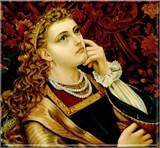
Lady Mary Davenport
Lady Mary Davenport Countess Cheshire (1287 – 1361)
is my 19th great grandmother
William Mainwaring (1316 – 1364)
son of Lady Mary Davenport Countess Cheshire
Randle Mainwaring (1367 – 1456)
son of William Mainwaring
CLEMENCE MAYNWARYNGE (1390 – 1414)
daughter of Randle Mainwaring
Thomas Beeston (1414 – 1477)
son of CLEMENCE MAYNWARYNGE
John Beeston (1441 – 1498)
son of Thomas Beeston
Baron Tochett Beeston (1458 – 1518)
son of John Beeston
John Beeston (1478 – 1543)
son of Baron Tochett Beeston
Mary Beeston (1503 – )
daughter of John Beeston
Richard Wyche (1525 – 1594)
son of Mary Beeston
Richard Wyche (1554 – 1621)
son of Richard Wyche
Henry Wyche (1604 – 1678)
son of Richard Wyche
Henry Wyche (1648 – 1714)
son of Henry Wyche
George Wyche (1685 – 1757)
son of Henry Wyche
Peter Wyche (1712 – 1757)
son of George Wyche
Drury Wyche (1741 – 1784)
son of Peter Wyche
Mary Polly Wyche (1774 – 1852)
daughter of Drury Wyche
John Samuel Taylor (1798 – 1873)
son of Mary Polly Wyche
William Ellison Taylor (1839 – 1918)
son of John Samuel Taylor
George Harvey Taylor (1884 – 1941)
son of William Ellison Taylor
Ruby Lee Taylor (1922 – 2008)
daughter of George Harvey Taylor
Pamela Morse
I am the daughter of Ruby Lee Taylor
A fellow Davenport compiled this documentation about the family. Mary comes in at number 6. I am very grateful for this because I too am descended from her son William:
My Davenport ancestors
The following history on the Davenport line includes segments from these books: “Medieval English Ancestors of Robert Abell” , “Kin of Mellcene Thurman Smith”
Davenport is situated about five miles northeast of Sandbach, in a sequestered part of the hundred. The hall is a low building of various materials, still used as a residence of a gentleman’s family and doubtless retaining in its walls many relics of the ancient mansion which occupied its site. It stands on high ground above a range of rich meadows, through which the Dane flows rapidly. It is in the most pleasing scenery of the hundred and must have held no ordinary charm for the ancient chiefs of Davenport, the forest hills of Macclesfield, the scene of their favorite sports and feudal power. The manorial history of the township of Davenport involves a subject of rare occurrence even in this country–the descent of a family in one uninterrupted male line from the time of the Norman Conquest until today, possessing the feudal powers with which it was at first invested and preserving in its own archives, in a series of original documents, the proofs of its ancient importance and its unbroken line.
01. Orme de Davenport, the ancestor of the Davenports, assumed the local name Davenport, and the manorial history of the present time gives the date assigned to Orme de Davenport as 20 of William I, which would be 1086. This is proved by four pedigrees in the British Museum. He was a witness to a charter of enfranchisement by Gilbert de Venables during the reign of either King William II or King Henry I.
02. Richard de Davenport shown as son of Orme in Ormerod’s pedigree [3:68], which was based on deeds, Pleas and Recognizance Rolls, inquisitions post mortem and other evidence. He married Amibilia Venables, daughter of the 2nd Gilbert Venables and sister of Hugh Venables, rector of Eccleston in 1188, whose acknowledged minority gives the only means of calculating the time of Orme de Davenport. He was appointed supreme forester of the earl’s forests of Leek and Macclesfield, Cheshire, sometime between 1153 and 1181. (Note: Omerod’s History of Chester inserted Thomas de Davenport as next generation followed by another Richard de Davenport.)
03. Vivian de Davenport, son of Richard was probably born before 1190, but certainly before 1205. He was living in 1254 but died in 1260. He was Richard’s successor as Lord of Davenport and Marton in Cheshire, England. He had a grant of the magisterial serjeancy of the forests of the hundred of Macclesfield and Leeds from Randle Blunderville, Earl of Chester. The powers of this office were the highest the Earl could bestow, as it placed in several cases at this disposal of the serjeant the lives of his subjects without delay and without appeal. Vivian married Beatrix De Hulme, daughter of Bertrand de Hulme. He held rents of the constable of Chester, Edmund de Lacy. This showed a connection to the Lacy family, the Barons of halton and Earls of Lincoln. He also witnessed a number of charters with leading members of the county society. He witnessed over forty charters.
04. Roger de Davenport, son of Vivian and Beatrix was probably an adult in the period 1245 to 1249. He married Mary Salemon, daughter of Robert Salemon of Wythington. He held the serjeancy of Macclesfield. He exchanged lands in Marton for lands in Bramhall and Hillcroft, and became influential in the northern part of the Hundred of Macclesfield, so that he was able to make extensive grants to other members of his own family. He died between 1291 and 1297.
05a. Henry Davenport, son of Roger and Mary had lands in Macclesfield, Cheshire in 1294.
06. Mary Davenport, daughter of Henry married William Mainwaring. I descend from son William Mainwaring who married Elizabeth Leycester.
05b. Thomas Davenport, son of (#4) Roger and Mary was born abt. 1253. He married Agnes Macclesfield, daughter of Thomas Macclesfield abt. 1280 in Macclesfield, Cheshire, England. Thomas died abt. 1320.
06. Thomas Davenport, son of Thomas and Agnes was born abt. 1283. He married Elizabeth abt 1315.
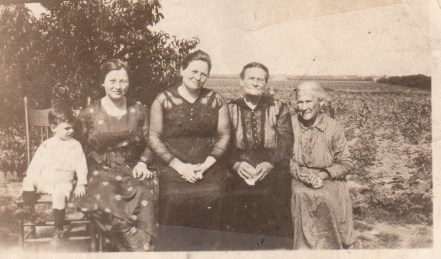
My Grandmothers
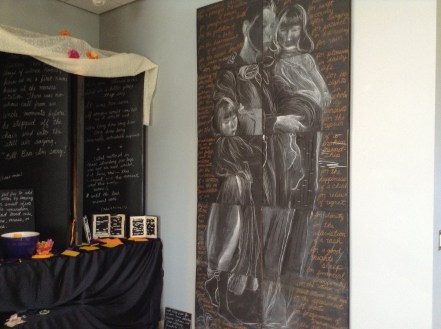
UA Poetry Center
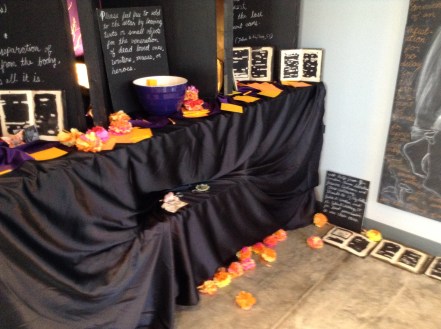
altar to honor the dead

art in chalk
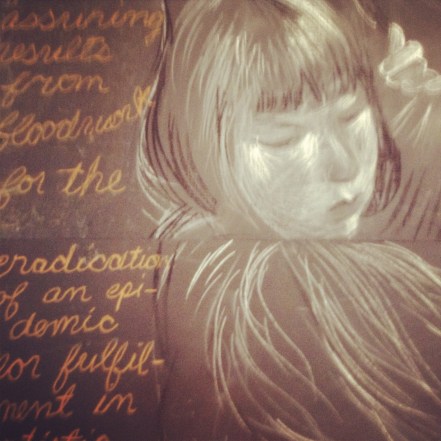
images and words
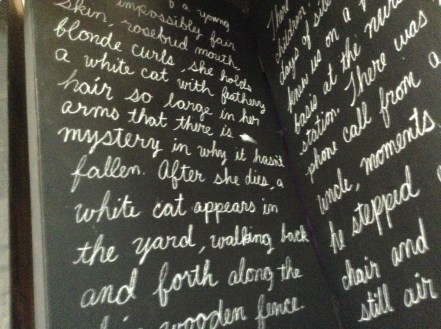
poem in chalk
I went to the U of A Poetry Center to leave an offering I made for my mom at the altar. While I was there I found my paternal ancestor’s book of poems and read for a while. Mistress Bradstreet had a style that showed her knowledge of history, astrology, and nature. She offered meditations to her son to guide him in the future when she was no longer alive. I truly had to wonder if she had ever thought her 9th great granddaughter might read her work and try to imagine her living presence. Knowing facts about the lives of my ancestors is fun, but the creative writing of my grandmother is more personal. I wrote an ode to all of the people who survived in order for me to exist today.
Ancestry Garden
Rows of ancestors spread out in the garden of research
Roots reveal; Some conceal, the same deal
What do they leave for us?
What do we keep as our own?
They still offer, they still have wisdom
Connected by birth/death/recognition.
They tell us the secrets of mortality.
My 9th great grandmother was the first woman poet to be published in America:
Anne Bradstreet (1612-1672) is one of the most important figures in the history of American Literature. She is considered by many to be the first American poet, and her first collection of poems, “The Tenth Muse Lately Sprung Up in America, By a Gentlewoman of Those Parts”, doesn’t contain any of her best known poems, it was the first book written by a woman to be published in the United States. Mrs. Bradstreet’s work also serves as a document of the struggles of a Puritan wife against the hardships of New England colonial life, and in some way is a testament to plight of the women of the age. Anne’s life was a constant struggle, from her difficult adaptation to the rigors of the new land, to her constant battle with illness.
It is clear to see that Anne’s faith was exemplary, and so was her love for children and her husband, Governor Simon Bradstreet. Anne’s poems were written mainly during the long periods of loneliness while Simon was away on political errands. Anne, who was a well educated woman, also spent much time with her children, reading to them and teaching them as her father had taught her when she was young. While it is rather easy for us to view Puritan ideology in a bad light because of it’s attitude towards women and strict moral code, her indifference to material wealth, her humility and her spirituality, regardless of religion, made her into a positive, inspirational role model for any of us.
Another one of Anne’s most important qualities was her strong intuition, although only subtly hinted at in her work, probably for fear of reprisal from the deeply religious Puritan community, one cannot help but feel her constant fascination with the human mind, and spirit, and inner guidance.
Her style is deceptively simple, yet speaks of a woman of high intelligence and ideals who was very much in love, and had unconditional faith. While it was difficult for women to air their views in the 17th Century, Anne Bradstreet did so with ease, as her rich vocabulary and polyvalent knowledge brought a lyrical, yet logical quality to her work which made it pleasant for anyone to read.








Anne Dudley Bradstreet was protected by her father and husband at a time when women were not supposed to think, let alone write poetry. She wrote history as she lived it as an Englishwoman in New England. I visited the University of Arizona Poetry Center this week to see the word shrine for the dead. I was very happy to also find a big blue book by Anne Bradstreet on the shelves. I enjoyed the wonderful space and visited with my ancestor by reading her works for about an hour. I had seen some of the work before, but since I was thinking of ancestry I really enjoyed the note she wrote to her son Simon (brother of my own ancestor). There is a copy preserved in her own hand, which I love to see. It gives me some intuition into her soul’s journey. Being a Pilgrim was not easy, but if your father and husband were governors you had some obvious advantages.
It is a wonderment of synchronicity to find my ancestor’s work preserved at the Poetry Center very near my home where I can go visit and read her any time.
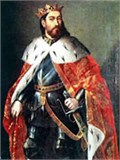
Jaime I Aragon and Mallorc
James I of Aragon was known as the conqueror because he defeated the Moors at Valencia.
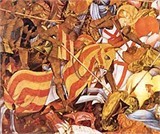
James the Conqueror
Jaime I Pedrez of Aragon and Mallorc (1207 – 1276)
James I the Conqueror (Catalan: Jaume el Conqueridor, Aragonese: Chaime lo Conqueridor, Spanish: Jaime el Conquistador, Occitan: Jacme lo Conquistaire; 2 February 1208 – 27 July 1276) was the King of Aragon, Count of Barcelona, and Lord of Montpellier from 1213 to 1276. His long reign saw the expansion of the Crown of Aragon on all sides: into Valencia to the south, Languedoc to the north, and the Balearic Islands to the east. By a treaty with Louis IX of France, he wrested the county of Barcelona from nominal French suzerainty and integrated it into his crown. His part in the Reconquista was similar in Mediterranean Spain to that of his contemporary Ferdinand III of Castile in Andalusia.
As a legislator and organiser, he occupies a significant place among the Spanish kings. James compiled the Libre del Consulat de Mar,[1] which governed maritime trade and helped establish Aragonese supremacy in the western Mediterranean. He was an important figure in the development of Catalan, sponsoring Catalan literature and writing a quasi-autobiographical chronicle of his reign: the Llibre dels fets.
Contents
1 Early life and reign until majority
2 Acquisition of Urgell
3 Relations with France and Navarre
4 Reconquest
5 Crusade of 1269
6 Patronage of art, learning, and literature
7 Succession
8 Marriages and children
9 Ancestry
10 Notes
11 References
12 External links
Early life and reign until majority
James was born at Montpellier as the only son of Peter II and Mary, heiress of William VIII of Montpellier and Eudokia Komnene. As a child, James was a pawn in the power politics of Provence, where his father was engaged in struggles helping the Cathar heretics of Albi against the Albigensian Crusaders led by Simon IV de Montfort, Earl of Leicester, who were trying to exterminate them. Peter endeavoured to placate the northern crusaders by arranging a marriage between his son James and Simon’s daughter. He entrusted the boy to be educated in Montfort’s care in 1211, but was soon forced to take up arms against him, dying at the Battle of Muret on 12 September 1213. Montfort would willingly have used James as a means of extending his own power had not the Aragonese and Catalans appealed to Pope Innocent III, who insisted that Montfort surrender him. James was handed over, at Carcassonne, in May or June 1214, to the papal legate Peter of Benevento.
James was then sent to Monzón, where he was entrusted to the care of William of Montredon, the head of the Knights Templar in Spain and Provence; the regency meanwhile fell to his great uncle Sancho, Count of Roussillon, and his son, the king’s cousin, Nuño. The kingdom was given over to confusion until, in 1217, the Templars and some of the more loyal nobles brought the young king to Zaragoza.[2]
In 1221, he was married to Eleanor, daughter of Alfonso VIII of Castile and Leonora of England. The next six years of his reign were full of rebellions on the part of the nobles. By the Peace of Alcalá of 31 March 1227, the nobles and the king came to terms.[3]
Acquisition of Urgell
In 1228, James faced the sternest opposition from a vassal yet. Guerau IV de Cabrera had occupied the County of Urgell in opposition to Aurembiax, the heiress of Ermengol VIII, who had died without sons in 1208. While Aurembiax’s mother, Elvira, had made herself a protegée of James’s father, on her death (1220), Guerao had occupied the county and displaced Aurembiax, claiming that a woman could not inherit.
James intervened on behalf of Aurembiax, whom he owed protection. He bought Guerau off and allowed Aurembiax to reclaim her territory, which she did at Lleida, probably also becoming one of James’ earliest mistresses.[4] She surrendered Lleida to James and agreed to hold Urgell in fief from him. On her death in 1231, James exchanged the Balearic Islands for Urgell with her widower, Peter of Portugal.
Relations with France and Navarre
From 1230 to 1232, James negotiated with Sancho VII of Navarre, who desired his help against his nephew and closest living male relative, Theobald IV of Champagne. James and Sancho negotiated a treaty whereby James would inherit Navarre on the old Sancho’s death, but when this did occur, the Navarrese nobless instead elevated Theobald to the throne (1234), and James disputed it. Pope Gregory IX was required to intervene.[5] In the end, James accepted Theobald’s succession.
James endeavoured to form a state straddling the Pyrenees, to counterbalance the power of France north of the Loire. As with the much earlier Visigothic attempt, this policy was victim to physical, cultural, and political obstacles. As in the case of Navarre, he was too wise to launch into perilous adventures. By the Treaty of Corbeil, signed in May 1258, he frankly withdrew from conflict with Louis IX of France and was content with the recognition of his position, and the surrender of antiquated and illusory French claims to the overlordship of Catalonia.
Reconquest
After his false start at uniting Aragon with the Kingdom of Navarre through a scheme of mutual adoption, James turned to the south and the Mediterranean Sea, where he conquered Majorca on 10 September in 1229 and the rest of the Balearic Islands; Minorca 1232; Ibiza 1235) and where Valencia capitulated 28 September 1238. Chroniclers say he used gunpowder in the siege of Museros castle.
During his remaining two decades after Corbeil, James warred with the Moors in Murcia, on behalf of his son-in-law Alfonso X of Castile. On 26 March 1244, the two monarchs signed the Treaty of Almizra to determine the zones of their expansion into Andalusia so as to prevent squabbling between them. Specifically, it defined the borders of the newly-created Kingdom of Valencia. James signed it on that date, but Alfonso did not affirm it until much later. According to the treaty, all lands south of a line from Biar to Villajoyosa through Busot were reserved for Castile.
[edit] Crusade of 1269
The “khan of Tartary” (actually the Ilkhan) Abaqa corresponded with James in early 1267, inviting him to join forces with the Mongols and go on Crusade.[6] James sent an ambassador to Abaqa in the person of Jayme Alaric de Perpignan, who returned with a Mongol embassy in 1269.[7] Pope Clement IV tried to dissuade James from Crusading, regarding his moral character as sub-par, and Alfonso X did the same. Nonetheless, James, who was then campaigning in Murcia, made peace with Mohammed I ibn Nasr, the Sultan of Granada, and set about collecting funds for a Crusade. After organising the government for his absence and assembling a fleet at Barcelona in September 1269, he was ready to sail east. The troubadour Olivier lo Templier composed a song praising the voyage and hoping for its success. A storm, however, drove him off course and he landed at Aigues-Mortes. According to the continuator of William of Tyre, he returned via Montpellier por l’amor de sa dame Berenguiere (“for the love his lady Berengaria”) and abandoned any further effort at a Crusade.
James’ bastard sons Pedro Fernández and Fernán Sánchez, who had been given command of part of the fleet, did continue on their way to Acre, where they arrived in December. They found that Baibars, the Mameluke sultan of Egypt, had broken his truce with the Kingdom of Jerusalem and was making a demonstration of his military power in front of Acre. During the demonstration, Egyptian troops hidden in the bushes ambushed a returning Frankish force which had been in Galilee. James’ sons, initially eager for a fight, changed their minds after this spectacle and returned home via Sicily, where Fernán Sánchez was knighted by Charles of Anjou.
Statue of James I at the Sabatini Gardens in Madrid (J. León, 1753).
Patronage of art, learning, and literature
James built and consecrated the Cathedral of Lleida, which was constructed in a style transitional between Romanesque and Gothic with little influence from Moorish styles.[8]
James was a patron of the University of Montpellier, which owed much of its development to his impetus.[9] He also founded a studium at Valencia in 1245 and received privileges for it from Pope Innocent IV, but it did not develop as splendidly.[10] In 1263, James presided over a debate in Barcelona between the Jewish rabbi Nahmanides and Pablo Christiani, a prominent converso.
James was the first great sponsor and patron of vernacular Catalan literature. Indeed, he may himself be called “the first of the Catalan prose writers.”[11] James wrote or dictated at various stages a chronicle of his own life, Llibre dels fets in Catalan, which is the first self-chronicle of a Christian king. As well as a fine example of autobiography the “Book of Deeds” expresses concepts of the power and purpose of monarchy; examples of loyalty and treachery in the feudal order; and medieval military tactics. More controversially, some historians have looked at these writings as a source of Catalan identity, separate from that of Occitania and Rome.
James also wrote the Libre de la Saviesa or “Book of Wisdom”. The book contains proverbs from various authors going back as far as King Solomon and as close to his own time, such as Albert the Great. It even contains maxims from the medieval Arab philosophers and from the Apophthegmata Philosophorum of Honein ben Ishak, which was probably translated at Barcelona during his reign. A Hebrew translator by the name of Jehuda was employed at James’s court during this period.[12]
Though James was himself a prose writer and sponsored mostly prose works, he had an appreciation of verse.[13] In consequence of the Albigensian Crusade, many troubadours were forced to flee southern France and many found refuge in Aragon. Notwithstanding his early patronage of poetry, by the influence of his confessor Ramon de Penyafort, James brought the Inquisition into his realm in 1233 to prevent any vernacular translation of the Bible.[14]
[edit] Succession
The favour James showed his illegitimate offspring led to protest from the nobles, and to conflicts between his sons legitimate and illegitimate. When one of the latter, Fernán Sánchez, who had behaved with gross ingratitude and treason to his father, was slain by the legitimate son Peter, the old king recorded his grim satisfaction.
In his Will James divided his states between his sons by Yolanda of Hungary: the aforementioned Peter received the Hispanic possessions on the mainland and James, the Kingdom of Majorca (including the Balearic Islands and the counties of Roussillon and Cerdanya) and the Lordship of Montpellier. The division inevitably produced fratricidal conflicts. Always the home de fembres (“lady’s man”), he eloped with the wife of one of his vassals in his final years and was excommunicated for his efforts by Pope Gregory X. In 1276, the king fell very ill at Alzira and resigned his crown, intending to retire to the monastery of Poblet, but he died at Valencia on 27 July.
Mummified head of James, exhumed in 1856
Marriages and childrenAragonese and Valencian Royalty
House of Barcelona
Alfonso IIChildren include Peter (future Peter II of Aragon) Alfonso II, Count of ProvencePeter IIChildren include James (future James I of Aragon, Valencia and Majorca)James I Peter (future Peter III of Aragon and I of Valencia and Sicily) James II of Majorca Violant, Queen of Castile Constance, Infanta of Castile Isabella, Queen of FrancePeter III (I of Valencia and Sicily)Children include Alfonso (future Alfonso III of Aragon and I of Valencia) James (future James I of Sicily and II of Aragon and Valencia) Frederick II of Sicily Elizabeth, Queen of Portugal Yolanda, Duchess of CalabriaAlfonso III (I of Valencia)James II (I of Sicily)Children include Alfonso (future Alfonso IV of Aragon and II of Valencia)Alfonso IV (II of Valencia)Children include Peter (future Peter IV of Aragon and II of Valencia)Peter IV (II of Valencia)Children include Constance, Queen of Sicily John (future John I of Aragon and Valencia) Martin (future Martin II of Sicily and I of Aragon and Valencia) Eleanor, Queen of Castile Isabella, Countess of UrgelGrandchildren include Ferdinand (future Ferdinand I of Aragon, Valencia and Sicily) Isabella, Countess of Urgel and CoimbraJohn I Yolande, Queen of FranceMartin I (II of Sicily)
James first married, in 1221, Eleanor, daughter of Alfonso VIII of Castile and Leonora of England. Though he later had the marriage annulled, his one son by her was declared legitimate:
Alfonso (1229–1260), married Constance of Montcada, Countess of Bigorre
In 1235, James remarried to Yolanda, daughter of Andrew II of Hungary by his second wife Yolande de Courtenay. She bore him numerous children:
Yolanda, also known as Violant, (1236–1301), married Alfonso X of Castile
Constance (1239–1269), married Juan Manuel, Lord of Villena, son of Ferdinand III
Peter (1240–1285), successor in Aragon, Catalonia, and Valencia
James (1243–1311), successor in Balearics and Languedoc
Ferdinand (1245–1250)
Sancha (1246–1251)
Isabella (1247–1271), married Philip III of France
Mary (1248–1267), nun
Sancho, Archbishop of Toledo (1250–1279)
Eleanor (born 1251, died young)
James married thirdly Teresa Gil de Vidaure, but only by a private document, and left her when she developed leprosy.
James (c.1255–1285), lord of Xèrica
Peter (1259–1318), lord of Ayerbe
The children in the third marriage were recognised in his last Will as being in the line of Successon to the Throne, should the senior lines fail.
James also had several lovers, both during and after his marriages, and a few bore him illegitimate sons.
By Blanca d’Antillón:
Ferran Sanchis (or Fernando Sánchez; 1240–1275), baron of Castro
By Berenguela Fernández:
Pedro Fernández, baron of Híjar
By Elvira Sarroca:
 Eleanor of Aquitane
My 25th great-grandmother was extremely powerful. She married the king of France, and then the king of England. She ruled for her son, Richard the Lionhearted, while he was off crusading.
Eleanor of Aquitane (1130 – 1204)
is my 25th great grandmother
Eleanor Spain Plantagenet (1162 – 1214)
daughter of Eleanor of Aquitane
Berenguela CASTILE LEON (1181 – 1244)
daughter of Eleanor Spain Plantagenet
Saint Ferdinand Castile amp Leon (1199 – 1252)
son of Berenguela CASTILE LEON
Alfonso X Wise Castile Leon amp Galicia (1221 – 1284)
son of Saint Ferdinand Castile amp Leon
Sancho Brave Castile Leon (1258 – 1295)
son of Alfonso X Wise Castile Leon amp Galicia
Beatrice Sanchez Infanta Castile (1293 – 1359)
daughter of Sancho Brave Castile Leon
Peter I Portugal Cruel Algarve (1320 – 1367)
son of Beatrice Sanchez Infanta Castile
John I DePinto (1358 – 1433)
son of Peter I Portugal Cruel Algarve
Beatrix DePinto (1403 – 1447)
daughter of John I DePinto
John Fettiplace (1427 – 1464)
son of Beatrix DePinto
Richard Fettiplace (1460 – 1511)
son of John Fettiplace
Anne Fettiplace (1496 – 1567)
daughter of Richard Fettiplace
Mary Purefoy (1533 – 1579)
daughter of Anne Fettiplace
Susanna Thorne (1559 – 1586)
daughter of Mary Purefoy
Gov Thomas Dudley (1576 – 1653)
son of Susanna Thorne
Anne Dudley (1612 – 1672)
daughter of Gov Thomas Dudley
John Bradstreet (1652 – 1718)
son of Anne Dudley
Mercy Bradstreet (1689 – 1725)
daughter of John Bradstreet
Caleb Hazen (1720 – 1777)
son of Mercy Bradstreet
Mercy Hazen (1747 – 1819)
daughter of Caleb Hazen
Martha Mead (1784 – 1860)
daughter of Mercy Hazen
Abner Morse (1808 – 1838)
son of Martha Mead
Daniel Rowland Morse (1838 – 1910)
son of Abner Morse
Jason A Morse (1862 – 1932)
son of Daniel Rowland Morse
Ernest Abner Morse (1890 – 1965)
son of Jason A Morse
Richard Arden Morse (1920 – 2004)
son of Ernest Abner Morse
Pamela Morse
I am the daughter of Richard Arden Morse
Eleanor of Aquitaine
(in French: Aliénor d’Aquitaine, Éléonore de Guyenne) (1122 or 1124 – 1 April 1204) was one of the wealthiest and most powerful women in Western Europe during the High Middle Ages. As well as being Duchess of Aquitaine in her own right, she was queen consort of France (1137-1152) and of England (1154-1189). Eleanor of Aquitaine is the only woman to have been queen of both France and England, with the exception of Margaret of Anjou whose status as Queen of France is disputed. She was the patroness of such literary figures as Wace, Benoît de Sainte-More, and Chrétien de Troyes.
Eleanor succeeded her father as suo jure Duchess of Aquitaine and Countess of Poitiers at the age of fifteen, and thus became the most eligible bride in Europe. Three months after her accession she married Louis VII, son and junior co-ruler of her guardian, King Louis VI of France. As Queen of France, she participated in the unsuccessful Second Crusade. Soon after the Crusade was over, Louis VII and Eleanor agreed to dissolve their marriage, because of Eleanor’s own desire for divorce and also because the only children they had were two daughters – Marie and Alix. The royal marriage was annulled on 11 March 1152, on the grounds of consanguinity within the fourth degree. Their daughters were declared legitimate and custody of them awarded to Louis, while Eleanor’s lands were restored to her.
As soon as she arrived in Poitiers, Eleanor became engaged to Henry II, Duke of the Normans, her cousin within the third degree, who was nine years younger. On 18 May 1152, eight weeks after the annulment of her first marriage, Eleanor married the Duke of the Normans. On 25 October 1154 her husband ascended the throne of the Kingdom of England, making Eleanor Queen of the English. Over the next thirteen years, she bore Henry eight children: five sons, three of whom would become king, and three daughters. However, Henry and Eleanor eventually became estranged. She was imprisoned between 1173 and 1189 for supporting her son Henry’s revolt against her husband, King Henry II.
Eleanor was widowed on 6 July 1189. Her husband was succeeded by their son, Richard the Lionheart, who immediately moved to release his mother. Now queen dowager, Eleanor acted as a regent for her son while he went off on the Third Crusade. Eleanor survived her son Richard and lived well into the reign of her youngest son King John. By the time of her death she had outlived all of her children except for King John and Eleanor, Queen of Castile.
 mermaidcamp